Polycystic ovary syndrome (PCOS) and COVID-19: an overlooked female patient population at potentially higher risk during the COVID-19 pandemic ...
←
→
Page content transcription
If your browser does not render page correctly, please read the page content below
Kyrou et al. BMC Medicine     (2020) 18:220
https://doi.org/10.1186/s12916-020-01697-5

 OPINION                                                                                                                                            Open Access

Polycystic ovary syndrome (PCOS) and
COVID-19: an overlooked female patient
population at potentially higher risk during
the COVID-19 pandemic
Ioannis Kyrou1,2,3 , Emmanouil Karteris4, Tim Robbins1,5, Kamaljit Chatha6, Fotios Drenos4,7
and Harpal S. Randeva1,2,3*

  Abstract
  Background: In women of reproductive age, polycystic ovary syndrome (PCOS) constitutes the most frequent
  endocrine disorder. Women with PCOS are considered to typically belong to an age and sex group which is at
  lower risk for severe COVID-19.
  Main body: Emerging data link the risk of severe COVID-19 with certain factors such as hyper-inflammation,
  ethnicity predisposition, low vitamin D levels, and hyperandrogenism, all of which have known direct associations
  with PCOS. Moreover, in this common female patient population, there is markedly high prevalence of multiple
  cardio-metabolic conditions, such as type 2 diabetes, obesity, and hypertension, which may significantly increase
  the risk for adverse COVID-19-related outcomes. This strong overlap of risk factors for both worse PCOS cardio-
  metabolic manifestations and severe COVID-19 should be highlighted for the clinical practice, particularly since
  women with PCOS often receive fragmented care from multiple healthcare services. Comprehensively informing
  women with PCOS regarding the potential risks from COVID-19 and how this may affect their management is also
  essential.
  Conclusion: Despite the immense challenges posed by the COVID-19 outbreak to the healthcare systems in
  affected countries, attention should be directed to maintain a high standard of care for complex patients such as
  many women with PCOS and provide relevant practical recommendations for optimal management in the setting
  of this fast moving pandemic.
  Keywords: Polycystic ovary syndrome, PCOS, COVID-19, Severe acute respiratory syndrome coronavirus-2, SARS-
  CoV-2, Diabetes, Obesity, Hypertension, Androgens, Vitamin D

* Correspondence: Harpal.Randeva@warwick.ac.uk
1
 Warwickshire Institute for the Study of Diabetes, Endocrinology and
Metabolism (WISDEM), University Hospitals Coventry and Warwickshire NHS
Trust, Coventry CV2 2DX, UK
2
 Aston Medical Research Institute, Aston Medical School, Aston University,
Birmingham B4 7ET, UK
Full list of author information is available at the end of the article

                                        © The Author(s). 2020 Open Access This article is licensed under a Creative Commons Attribution 4.0 International License,
                                        which permits use, sharing, adaptation, distribution and reproduction in any medium or format, as long as you give
                                        appropriate credit to the original author(s) and the source, provide a link to the Creative Commons licence, and indicate if
                                        changes were made. The images or other third party material in this article are included in the article's Creative Commons
                                        licence, unless indicated otherwise in a credit line to the material. If material is not included in the article's Creative Commons
                                        licence and your intended use is not permitted by statutory regulation or exceeds the permitted use, you will need to obtain
                                        permission directly from the copyright holder. To view a copy of this licence, visit http://creativecommons.org/licenses/by/4.0/.
                                        The Creative Commons Public Domain Dedication waiver (http://creativecommons.org/publicdomain/zero/1.0/) applies to the
                                        data made available in this article, unless otherwise stated in a credit line to the data.
Kyrou et al. BMC Medicine (2020) 18:220 Page 2 of 10
Background Indeed, depending on the utilized PCOS definition and
The global outbreak of the new disease (COVID-19) the demographics of studied populations, up to 75% of
caused by the novel severe acute respiratory syndrome women with PCOS also have obesity, with increased cen-
(SARS) coronavirus-2 (SARS-CoV-2) has reached pan- tral adiposity even independently of the underlying body
demic status in March 2020 [1, 2]. Although asymptom- mass index (BMI) [19, 23]. This common PCOS pheno-
atic or mild in most cases, COVID-19 may cause severe type is linked to heightened insulin resistance and hyper-
illness with increased mortality in high-risk patients [3]. androgenism; thus, women with PCOS exhibit markedly
This has forced governments in affected countries to im- increased prevalence of impaired glucose tolerance (IGT),
pose various degrees of quarantine and self-isolation T2DM, and metabolic syndrome [19, 23, 24]. Overall,
measures in order to reduce the COVID-19 incidence meta-analysis data suggest a 4-fold higher T2DM preva-
and mortality [4]. An increasing body of clinical evi- lence among women with PCOS which is both additive
dence indicates that the incidence of severe COVID-19 and independent to obesity [26, 27]. As such, it is clear
is significantly higher in older vs. younger adults and in that cardio-metabolic diseases which are common in
men vs. women [5–12]. Certain pre-existing comorbidi- women with PCOS [19, 23, 24] exhibit significant overlap
ties, including chronic cardio-metabolic diseases such as with the risk factors predisposing to severe COVID-19
diabetes, obesity, and hypertension, have also been (Fig. 1) [11, 13–17]. This overlap between the adverse
widely recognized as key risk factors for severe COVID- cardio-metabolic profile of women with PCOS and key
19 [11, 13–17]. identified risk factors for worse clinical outcomes of
In women of reproductive age, polycystic ovary syn- COVID-19 suggests that this common female patient
drome (PCOS) constitutes the most frequent endocrine population is potentially at higher than expected risk if
disorder with a prevalence which may reach or even ex- confronted with a SARS-CoV-2 infection. Notably, in the
ceed 10–15%, depending on the studied population and context of the fragmented management of PCOS, super-
the applied diagnostic criteria [18–20]. Following exclu- imposed comorbidities such as T2DM often “overshadow”
sion of related disorders (e.g., hyperprolactinemia, the underlying PCOS diagnosis in affected women; hence,
hypothyroidism, and non-classic congenital adrenal the latter should not be neglected when considering the
hyperplasia), both ovarian dysfunction (i.e., chronic comorbidities in female COVID-19 patients, so that accur-
oligo- or anovulation) and hyperandrogenism (clinical, ate characterization of the pre-existing risk profile of these
i.e., hirsutism, and/or biochemical, i.e., increased free women is documented in relevant records/databases.
testosterone or free androgen index) are the key features
in order to establish the diagnosis of PCOS [18–20]. Hyperandrogenism
Polycystic ovary morphology on ultrasound has also Compelling evidence indicates that, compared to
been introduced as another potential feature for diag- women, men exhibit higher predisposition to developing
nosing PCOS according to the Rotterdam PCOS diag- severe COVID-19, independent of age [8, 12]. The mo-
nostic criteria [18–20]. Of note, despite the high lecular mechanisms which may facilitate this male pre-
prevalence of PCOS, its underlying etiology and patho- disposition for severe COVID-19 are currently
physiology are still not fully clarified, while PCOS man- investigated, with particular focus placed on the role of
agement in routine clinical practice remains fragmented angiotensin-converting enzyme 2 (ACE-2) which is acti-
(e.g., between general practitioners, endocrinologists, vated by the SARS-CoV-2 spike proteins and acts as one
and gynecologists), and with significant knowledge gaps of the key mediators for SARS-CoV-2 entry into host
among physicians regarding the diagnosis, treatment, cells [8, 28–30]. As such, attention is drawn on the po-
and breadth of PCOS features [19–22]. As such, it is not tential effects of sex hormones on ACE-2 expression,
uncommon for women with PCOS to fall between the with animal data indicating that ACE-2 expression and
gaps of relevant healthcare services even in the absence activity is influenced by sex hormones in various tissues,
of the extreme pressure applied to clinical practice by such as the myocardium, adipose tissue, and kidneys [8].
the COVID-19 pandemic. Interestingly, a preliminary observation has been re-
cently published regarding the high frequency of male
Overlap between common PCOS features and pattern hair loss in hospitalized COVID-19 men, further
identified risk factors for severe COVID-19 suggesting that androgens might be implicated in
Cardio-metabolic comorbidity COVID-19 severity [31]. Indeed, prompted by the evi-
PCOS is a complex and partly heterogeneous endocrine dence that male sex predisposes to severe COVID-19
disorder, often exhibiting a close association with obes- and by the fact that male sex hormones impact on the
ity, insulin resistance, type 2 diabetes (T2DM), hyperten- ACE-2 pathway which facilitates the entry of SARS-
sion, dyslipidemia, obstructive sleep apnea (OSA), and CoV-2 into host cells [8, 28–30], Goren et al. docu-
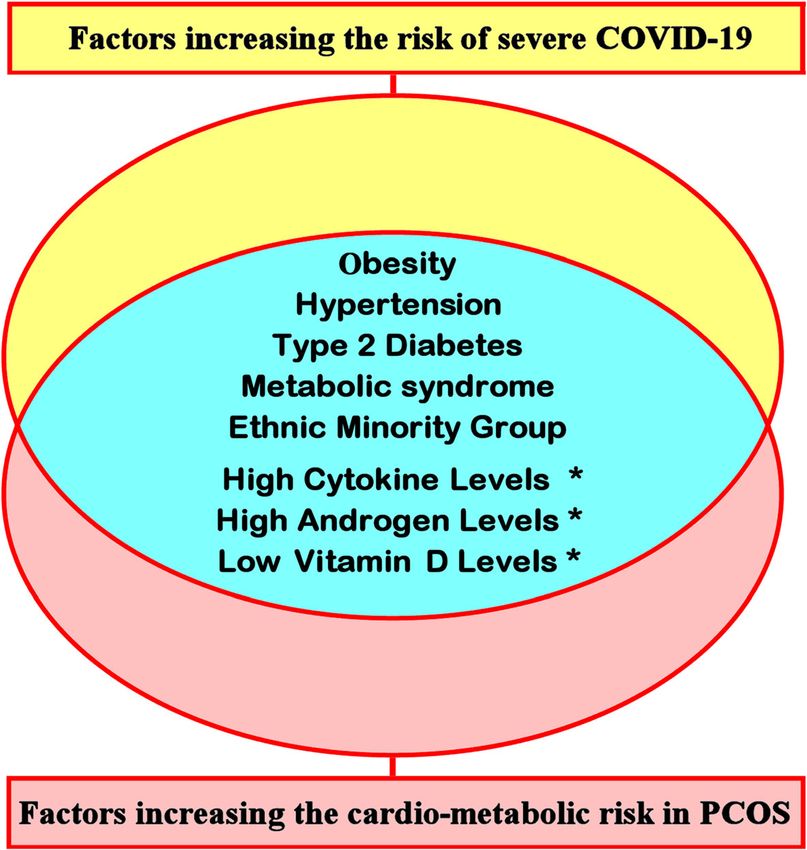
non-alcoholic fatty liver disease (NAFLD) [19, 23–25]. mented that significant androgenic alopecia was aKyrou et al. BMC Medicine (2020) 18:220 Page 3 of 10 Fig. 1 Overlap between common factors which promote an unfavorable cardio-metabolic profile in women with polycystic ovary syndrome (PCOS) and factors which, based on the existing data, appear to increase the risk for severe COVID-19 (*further research is required to clarify the potential links between adverse COVID-19-related outcomes and hyper-cytokinemia, hyperandrogenemia, and vitamin D deficiency) common feature (71%) in a small cohort of hospitalized equivalent syndrome that are both linked to coexisting co- male COVID-19 patients [n, 41; mean age (range), 58 (23– morbidities (e.g., T2DM, obesity, and hypertension) which, 79) years] [31]. Accordingly, a potential association between as aforementioned, predispose to severe COVID-19. androgens and COVID-19 severity appears plausible and However, it should be also noted that at the time of could further support the hypothesis that anti-androgens writing, there is a pre-print publication of a retrospective might represent an additional potential intervention against study from Germany which reports that severe testoster- severe COVID-19 [31–34]. This hypothesis also becomes one and dihydrotestosterone deficiencies were noted in a relevant in the context of PCOS, since women with PCOS small cohort of critically ill COVID-19 men [n, 35; me- on one hand exhibit hyperandrogenism (e.g., androgenic dian age (range), 62 (31–80) years] [38]. Moreover, in alopecia), while on the other hand may already be under the small number of female COVID-19 patients of this treatment with anti-androgens (e.g., spironolactone or fi- study [n, 10; median age (range), 67.5 (54–84) years], a nasteride) [19, 20, 35]. At the moment, there is a paucity of positive correlation was noted between testosterone data regarding anti-androgen therapy in women with PCOS levels and pro-inflammatory cytokines (e.g., IL-6) [38]. in the context of COVID-19; hence, this is an additional as- As the publications, including pre-prints, of small cohort pect of the PCOS management which should be studied studies on COVID-19 are increasing exponentially [39], during this pandemic. Of note, a male PCOS equivalent it becomes clear that further systematic research is re- syndrome has been proposed, which is characterized by quired to clarify the potential links between adverse early-onset androgenic alopecia in combination with one or COVID-19 outcomes and factors such as circulating an- more manifestations such as worse gonadal steroidogenesis, drogens in both male and female COVID-19 patients. decreased sex hormone binding globulin (SHBG), and in- creased dehydroepiandrosterone sulphate (DHEAS) circu- Hyper-inflammation lating levels, as well as insulin resistance, T2DM, obesity, It is noteworthy that the severity of COVID-19 in certain and hypertension [36, 37]. As such, there is a potential ana- cases seems to also relate to predisposition for develop- logy between women with PCOS and a male PCOS ing a cytokine storm syndrome with excessive release of
Kyrou et al. BMC Medicine   (2020) 18:220                                                                        Page 4 of 10

pro-inflammatory cytokines (e.g., tumor necrosis factor-        mortality, such as higher rates of the aforementioned
α, chemokines, and interleukins such as IL-6, IL-7, IL-8,       cardio-metabolic comorbidities and inequalities due to
IL-2, and IL-1β) at the infected lung tissue [40, 41]. In-      lower socio-economic status, as well as behavioral and
deed, available data suggest that this syndrome may in-         cultural differences (e.g., inter-generational cohabitation
duce self-sustaining hyper-inflammation reactions in a          with less social distancing at households) [47, 50]. The po-
sub-group of patients with severe COVID-19, leading to          tential role of various genetic factors in this association
respiratory and multi-organ failure [40]. Of note, hyper-       has also been hypothesized, including ethnicity-related dif-
cytokinemia and activated pro-inflammatory pathways             ferences in genetic variations of the androgen receptor
are also considered to promote the pathogenesis and             [32, 47]. In this context, it should be highlighted that sub-
cardio-metabolic complications of PCOS, particularly            stantial ethnic variation has also been documented regard-
when combined with central obesity [19, 23]. It is now-         ing the diagnosis and presentation of PCOS [27, 51, 52].
well established that women with PCOS and obesity ex-           Again significant overlap exists here with the noted ethnic
hibit marked adipose tissue dysfunction and dysregu-            predisposition for adverse COVID-19 outcomes, with in-
lated adipokine/cytokine secretion (e.g., increased release     creasing data showing that particularly women of African
of leptin, tumor necrosis factor-α, and IL-6) which result      American, Hispanic, Middle Eastern, and South Asian ori-
in a chronic pro-inflammatory state [19, 23]. Furthermore,      gin exhibit more frequent and worse cardio-metabolic fea-
compared to healthy controls, women with PCOS seem to           tures of PCOS [27, 51, 52]. Moreover, certain IL-6
frequently have polymorphisms in genes encoding pro-            polymorphisms appear to influence PCOS susceptibility in
inflammatory cytokines, such as tumor necrosis factor-α         Caucasians, while certain tumor necrosis factor-α poly-
and IL-6 [42, 43]. Both the latter cytokines have also been     morphisms might influence PCOS susceptibility in Asians
reported to induce theca cell steroidogenesis by upregulating   [43]. As such, clinicians should not overlook the fact that
enzymes involved in ovarian androgen synthesis [19], while      BAME background may also be added to the overlapping
ACE-2 is widely expressed in the ovary [44]. Of note, the       factors which promote both an unfavorable cardio-
androgen receptor is also known to play a role in adaptive      metabolic profile in women with PCOS and severe
and innate immunity, particularly in macrophage and             COVID-19 (Fig. 1).
neutrophil recruitment, which are closely linked with
COVID-19 in the lungs [40]. Therefore, it is plausible that     Low vitamin D levels
chronic inflammation may constitute another aspect of the       Since COVID-19 has been declared a pandemic, potential
PCOS pathophysiology which may be of relevance to               links between low vitamin D levels and COVID-19 sever-
COVID-19-related hyper-inflammation (Fig. 1), as has also       ity have been hypothesized [53–61]. This was triggered by
been suggested for diabetes [45].                               the fact that this pandemic evolved rapidly in several
                                                                Northern hemisphere countries (e.g., Italy, Spain, France,
Ethnic background                                               and UK) during and shortly after winter when sun expos-
Recent mortality data strongly indicate that Black, Asian,      ure and vitamin D levels are typically lowest, while
and Minority Ethnic (BAME) groups are at increased risk         COVID-19 cases remained relatively low in the Southern
of death from COVID-19 even after adjusting for multiple        hemisphere during the end of summer [55–58]. Moreover,
other covariates [9, 10, 46, 47]. Indeed, an analysis of        existing evidence indicates that vitamin D deficiency can
COVID-19-related deaths by ethnic group in England and          contribute to acute respiratory distress syndrome (ARDS),
Wales from the UK Office for National Statistics has            while COVID-19-related mortality increases with both
shown that the risk of COVID-19-related death is signifi-       older age and cardio-metabolic comorbidity which also
cantly higher in adults of Black, Bangladeshi and Pakistani,    exhibit positive associations with lower vitamin D levels
Indian, and mixed ethnicities compared to that of adults        [55–58]. Interestingly, a recent cross-sectional analysis of
of White ethnicity [48]. Although less prominent, this risk     data on vitamin D levels and COVID-19 morbidity/mor-
remained significantly increased after accounting for age       tality for 20 European countries showed negative correla-
and other socio-demographic characteristics, as well as         tions between mean vitamin D levels and both the
measures of self-reported disability and health [48]. This      number of COVID-19 cases and COVID-19 mortality in
further indicates that the difference in COVID-19               each country [60]. Of note, particularly low vitamin D
mortality between ethnic groups is only partly explained        levels were noted in the aging populations of Italy and
by socio-economic disadvantage and other related param-         Spain, which were among the main epicenters of the
eters [48]. Notably, it has also been documented that 63%       COVID-19 pandemic in Europe [60]. However, such
of a series of 106 healthcare workers who have died from        cross-sectional data have obvious limitations, while a re-
COVID-19 were of BAME background [49]. Multiple                 cent UK Biobank-based study (data on UK Biobank par-
factors are considered to contribute to the noted higher        ticipants, aged 37–73 years, of whom 449 had confirmed
risk of BAME groups for COVID-19 severity and                   COVID-19) showed that vitamin D was associated with
Kyrou et al. BMC Medicine (2020) 18:220 Page 5 of 10
COVID-19 univariably, but not after adjustment for con- Table 1 Potential COVID-19-related implications on aspects of
founders [62]. Hence, this study concluded that these find- polycystic ovary syndrome (PCOS) management (in women
ings do not support a potential link between COVID-19 with PCOS who are diagnosed with COVID-19, a relevant risk
and vitamin D levels [62]. Nevertheless, vitamin D is a assessment should be performed by the treating physician and
well-known pleiotropic hormone which modulates the any existing treatment should be promptly re-evaluated and
optimized, as clinically indicated)
adaptive and innate immune responses, and can regulate
A) For women with PCOS on off-label metformin treatment: it is advisable
the IL-6 activity and suppress the pro-inflammatory cyto- to consider discontinuing metformin when diagnosed with COVID-19,
kine response of macrophages and respiratory epithelial particularly when symptoms of severe COVID-19 are present and if they
cells to various viruses [53, 54, 57, 58]. Thus, the potential become unstable, as also recommended for patients with diabetes
role of low vitamin D levels in COVID-19 severity and the B) For women with PCOS and diabetes:
development of a related cytokine storm syndrome merits - Should consider discontinuing sodium-glucose co-transporter-2
further well-designed research [53, 54, 57, 58]. Notably, inhibitors (SGLT2i) when COVID-19 is diagnosed, particularly when
growing data support an inverse association between vita- symptoms of severe COVID-19 are present
min D and the severity of multiple PCOS manifestations, - Should continue and optimize insulin therapy, as clinically indicated
including hyperandrogenism, infertility, insulin resistance, - Can continue the use of dipeptidyl peptidase-4 (DPP4) inhibitors
and cardio-metabolic disease [63, 64]. Furthermore, meta- where clinically indicated (the dose of certain DPP4 inhibitors may
need adjustment if renal function is affected in severe COVID-19)
analysis data indicate that vitamin D supplementation in
women with PCOS might significantly decrease total tes- - Should consider avoiding/optimizing the use of sulfonylureas when
COVID-19 is diagnosed, particularly when symptoms of severe
tosterone and C-reactive protein circulating levels, while it COVID-19 are present, due to the risk of hypoglycemia
can increase the level of total antioxidant capacity [65, 66].
C) Women with PCOS and known or suspected insulin resistance (known
Taken together, these data suggest that women with type 2 diabetes or prediabetes) who receive glucocorticoid treatment for
PCOS may be at potentially higher risk for severe COVID-19 may exhibit overt glucocorticoid-induced glucose/metabolic
dysregulation
COVID-19 also due to low vitamin D levels (Fig. 1), which
may be further aggravated by reduced sun exposure due D) Women with PCOS and hypertension may continue treatment with
common antihypertensive drugs [angiotensin converting enzyme (ACE)
to COVID-19-related quarantine measures. inhibitors, angiotensin-receptor blockers (ARBs), thiazide diuretics,
calcium-channel blockers and beta-blockers], as indicated, since available
Potential COVID-19-related implications on data so far indicate that these appear to not substantially increase the
risk for testing COVID-19 positive and for severe COVID-19
aspects of PCOS treatment
In addition to the aforementioned frequent conditions/ E) Women with PCOS and obstructive sleep apnea (OSA) may continue
home use of continuous positive airway pressure (CPAP) therapy, but,
factors which are common in PCOS and may increase the particularly in cases of home self-isolation due suspected or confirmed
risk for severe COVID-19 in this female patient COVID-19, these patients should consider either taking strict quarantine
population, it is also important to highlight certain points measures from other household members (e.g., use of separate bed-
rooms and bathrooms where feasible) or discontinuing CPAP therapy
which have been the subject of discussion in the recent for a short period, due to potential risk of SARS-CoV-2 aerosolized
scientific literature in relationship to COVID-19 and transmission from the CPAP use. During any such temporary CPAP
which also relate to aspects of PCOS treatment (Table 1). therapy discontinuation, sedating medications and alcohol should be
avoided, while other measures to reduce OSA can also be considered,
such as positional therapy during sleep, nasal congestion treatment, and
Metformin treatment dental appliance use where possible
In several countries, metformin is frequently prescribed
off-label for the management of women with PCOS and impairment in severe COVID-19; hence, women with
increased BMI, even without co-existing T2DM, since it PCOS under metformin treatment is advisable to con-
can improve both reproductive and metabolic outcomes sider stopping this agent when symptomatic with
in these patients [19, 20]. Historically, it is noteworthy COVID-19, particularly if they become unstable, as also
that metformin was essentially rediscovered in the 1940s recommended for patients with diabetes [69–71].
during the search for anti-malarial agents, when it was
shown useful to treat influenza and also to lower blood Other glucose lowering medications
glucose as a side effect [67]. Giver the former use, it is As with metformin, women with PCOS and diabetes
not surprising that metformin has been considered should follow the recent practical recommendations and
among the drugs which could be repurposed against guidelines issued for antidiabetic medications in view of
COVID-19, with potential antiviral effects through acti- COVID-19 [69, 70]. Accordingly, due to the related risk
vation of the AMP-activated protein kinase (AMPK) of diabetic ketoacidosis and dehydration from sodium-
pathway that would cause changes in the ACE-2 glucose co-transporter-2 inhibitors (SGLT2i), discon-
receptor and block the entry of SARS-CoV-2 into host tinuing these agents should be considered when
cells [68]. However, metformin use can promote lactic COVID-19 is diagnosed, particularly in symptomatic
acidosis in the context of marked dehydration and renal patients [69–71]. Conversely, insulin therapy should beKyrou et al. BMC Medicine (2020) 18:220 Page 6 of 10
continued and optimized, while it remains the treatment the adverse cardio-metabolic profile of these patients
of choice for severely ill patients with diabetes and [19, 25, 80, 81]. As OSA may cause various degrees of
COVID-19 [69–71]. Furthermore, the use of dipeptidyl reduced arterial oxygen saturation and additional
peptidase-4 (DPP4) inhibitors seems to be mostly well- cardio-metabolic complications, routine CPAP home
tolerated and can also be continued where indicated (the use is often indicated in women with PCOS and OSA
dose of certain DPP4 inhibitors may need to be adjusted [19, 25, 80, 81]. However, because CPAP is regarded as
depending on whether the renal function is affected in a high-risk aerosol-generating procedure which may in-
severe COVID-19) [69–71]. Interestingly, the ubiqui- crease the risk of SARS-CoV-2 transmission to other
tously expressed membrane-associated human DPP4 ap- household members, routine CPAP therapy at home
pears to be a functional receptor for the Middle East has been the subject of recent debate [82–84]. Particu-
respiratory syndrome coronavirus (MERS-CoV), but not larly for any OSA patient with suspected or confirmed
for SARS-CoV-2 [71]. Finally, due to the related in- COVID-19 who is self-isolating at home, it is reason-
creased risk of hypoglycemia, avoiding/optimizing the able to consider discontinuing CPAP therapy for a
use of sulfonylureas should also be considered in pa- short period due to the potential risk of SARS-CoV-2
tients with severe COVID-19 [71]. aerosolized transmission from the CPAP use to other
In the context of glucose control in women with household members [82, 85]. Alternatively, strict dis-
PCOS and IGT or T2DM, a note should also be made tancing measures within the household (e.g., changing
regarding potential glucocorticoid treatment which is bedrooms and using different bathrooms where feas-
administered in certain hospitalized COVID-19 patients ible) should be taken in order to protect household
[72]. Indeed, such glucocorticoid treatment for COVID- contacts [82, 85]. During any period of necessary CPAP
19 may aggravate the glucose and metabolic homeostasis discontinuation, OSA patients should be informed of
[17, 73], particularly in women with PCOS who may the related risk/consequences and avoid sedating medi-
have significant underlying (and often undiagnosed) in- cations and alcohol use [82]. In addition, during such
sulin resistance [19, 23, 24]. As such, in these cases periods of temporary CPAP discontinuation, other
treating physicians should be on high alert regarding the practical measures to reduce OSA-related symptom-
potential glucocorticoid-induced glucose/metabolic dys- atology can be also considered, such as positional ther-
regulation and mitigate this as indicated. apy during sleep (head elevated at least 30° or side
sleeping), nasal congestion treatment, and dental appli-
Antihypertensive medications ance use where possible [82].
Given the role of ACE-2 in facilitating the entry of
SARS-CoV-2 into host cells, the use of ACE inhibitors Practical recommendations for the management
for hypertension treatment in the setting of COVID-19 of PCOS during the COVID-19 pandemic
has been another point of recent debate [74–78]. There- Given the aforementioned overlap between risk factors
fore, as hypertension is also common in women with for severe COVID-19 and common PCOS features, and
PCOS [19, 20, 24], it is important to note that a recent the implications that a COVID-19 diagnosis may have
study with relevant data on five common antihypertensive on various aspects of PCOS care, it is crucial for the
drug classes, namely ACE inhibitors, angiotensin-receptor clinical practice to recognize that closer monitoring and
blockers (ARBs), thiazide diuretics, calcium-channel revised management plans may be required for this fe-
blockers, and beta-blockers, showed no substantial in- male patient population during this pandemic. As such,
crease in the risk for testing COVID-19 positive and for clinicians treating women with PCOS, irrespective of
severe COVID-19 [74]. Overall, increasing data so far their specialty, should assess the risk profile of these pa-
show no evidence that ACE inhibitors or ARBs increase tients in relationship to COVID-19. Depending on the
the risk of COVID-19, supporting current guidelines outcome of this risk assessment regarding coexisting co-
recommending to continue the use of these drugs as indi- morbidities which may predispose to severe COVID-19,
cated despite this pandemic [74–78]. Of note, additional relevant advice should be provided about issues such as
data from two cohorts of men and women with heart fail- shielding and self-isolation, as well as practical recom-
ure showed that treatment with ACE inhibitors or ARBs mendations for treatment changes/optimization like
was not associated with higher plasma ACE-2 [79]. those outlined in Table 1. For example, women with
PCOS and T2DM and/or hypertension should be in-
Home use of continuous positive airway pressure (CPAP) formed of the potential higher risk for severe COVID-
therapy 19, and if diagnosed with COVID-19, their treatment
OSA exhibits high prevalence among women with should be promptly re-evaluated and optimized, as indi-
PCOS and obesity, attributed at least partly to hyperan- cated (Table 1). Further clinical input may also be re-
drogenism and central adiposity, and further aggravates quired in order to apply a more individualized care planKyrou et al. BMC Medicine (2020) 18:220 Page 7 of 10
for women with PCOS who may have additional manage- Overall, despite the immense challenges posed by the
ment issues during this pandemic. Indeed, the rates of COVID-19 outbreak in affected countries, attention
certain pregnancy complications (e.g., preterm birth, should be directed to maintain a high standard of care
cesarean delivery, miscarriage, gestational diabetes, and for complex patients, such as many women with PCOS,
pregnancy-induced hypertension and preeclampsia) are and provide relevant practical recommendations for op-
higher in this female patient population [86–89]. There- timal management in the setting of this fast moving
fore, taking into account that based on recent meta- pandemic.
analysis data the so far reported rates of preterm birth and
Abbreviations
cesarean delivery are higher in pregnant women with ACE-2: Angiotensin-converting enzyme 2; AMPK: AMP-activated protein
COVID-19 (although their clinical picture may not differ kinase; ARBs: Angiotensin-receptor blockers; ARDS: Acute respiratory distress
from the non-pregnant population) [90], closer antenatal syndrome; BAME: Black, Asian, and Minority Ethnic; BMI: Body mass index;
CPAP: Continuous positive airway pressure; DHEAS: Dehydroepiandrosterone
and perinatal monitoring is required in pregnant women sulphate; DPP4: Dipeptidyl peptidase-4; IGT: Impaired glucose tolerance;
with PCOS, particularly when hypertension and/or dia- IL: Interleukin; MERS-CoV: Middle East respiratory syndrome coronavirus;
betes are also present. Furthermore, women with PCOS NAFLD: Non-alcoholic fatty liver disease; OSA: Obstructive sleep apnea;
PCOS: Polycystic ovary syndrome; SARS-CoV-2: Severe acute respiratory
also exhibit higher risk for mental health problems (e.g., syndrome coronavirus-2; SGLT2i: Sodium-glucose co-transporter-2 inhibitors;
anxiety and depression) [19, 20]. Such problems may be SHBG: Sex hormone binding globulin; T2DM: Type 2 diabetes mellitus
triggered and/or exacerbated in the setting of the COVID-
Acknowledgements
19 pandemic (e.g., due to issues relating to prolonged IK and HR acknowledge and thank the General Charities of the City of
shielding, isolation, job insecurity, and fear of ill health) Coventry for their support. This review is also dedicated to all of the
[91]. Thus, clinicians should recognize this risk in this vul- healthcare professionals fighting against the COVID-19 pandemic.
nerable female patient population and offer appropriate
Authors’ contributions
mental health support for prevention and treatment as IK, EK, TR, KC, FD, and HR contributed to the literature search and drafted
needed. Moreover, it should be mentioned that COVID- sections of this manuscript. IK and HR combined and edited the drafts and
supervised the manuscript. All authors subsequently revised and approved
19 appears to predispose to thrombosis [92, 93], and so a
the final manuscript.
COVID-19 diagnosis should also prompt heightened vigi-
lance for potential thromboembolic complications in Funding
women with PCOS who may already be at increased There was no specific funding for this manuscript.
thrombotic risk, particularly when additional pro- Availability of data and materials
thrombotic factors are also present (e.g., obesity, treat- Not applicable.
ment with combined oral contraceptives) [94]. Finally, as
Ethics approval and consent to participate
COVID-19 is a new disease which is now being studied Not applicable.
systematically, clinicians should keep in mind that there
may be unpredictable, longer term consequences follow- Consent for publication
Not applicable.
ing a SARS-CoV-2 infection which are yet unknown (e.g.,
long-term dysregulation of endocrine functions and meta- Competing interests
bolic homeostasis) [95]. Therefore, follow-up of women The authors declare that they have no competing interests.
with PCOS who recover from COVID-19 should also be
Author details
implemented in clinical practice in order to promptly 1
Warwickshire Institute for the Study of Diabetes, Endocrinology and
diagnose and treat any such potential long-term complica- Metabolism (WISDEM), University Hospitals Coventry and Warwickshire NHS
tions of COVID-19 [95]. Trust, Coventry CV2 2DX, UK. 2Aston Medical Research Institute, Aston
Medical School, Aston University, Birmingham B4 7ET, UK. 3Warwick Medical
School, University of Warwick, Coventry CV4 7AL, UK. 4College of Health and
Conclusions Life Sciences, Brunel University London, Uxbridge UB8 3PH, UK. 5Institute of
At a first glance, women with PCOS appear to belong to Digital Healthcare, WMG, University of Warwick, Coventry CV4 7AL, UK.
6
Department of Biochemistry and Immunology, University Hospitals Coventry
an age and sex group which is considered as less affected and Warwickshire NHS Trust, Coventry CV2 2DX, UK. 7Institute of
by COVID-19. However, it should be highlighted that Cardiovascular Science, University College London, London, UK.
within this common female patient population there is
Received: 26 May 2020 Accepted: 2 July 2020
high prevalence of numerous conditions/factors which
may significantly increase the risk for worse COVID-19-
related outcomes. This strong overlap should not be References
1. Cucinotta D, Vanelli M. WHO declares COVID-19 a pandemic. Acta Biomed.
overlooked in clinical practice, particularly since women 2020;91(1):157–60.
with PCOS often receive fragmented care from multiple 2. World Health Organization, WHO. Coronavirus disease 2019 (COVID-19):
healthcare services. In parallel, informing women with situation report, 51. 2020. https://www.who.int/emergencies/diseases/novel-
coronavirus-2019/situation-reports. Accessed 20 May 2020.
PCOS regarding the potential risks from COVID-19 and 3. Yuki K, Fujiogi M, Koutsogiannaki S. COVID-19 pathophysiology: a review.
how this may affect their management is also necessary. Clin Immunol. 2020:108427. https://doi.org/10.1016/j.clim.2020.108427.Kyrou et al. BMC Medicine (2020) 18:220 Page 8 of 10
4. Nussbaumer-Streit B, Mayr V, Dobrescu AI, Chapman A, Persad E, Klerings I, MDText.com, Inc.; 2018. https://www.ncbi.nlm.nih.gov/books/NBK278973/.
et al. Quarantine alone or in combination with other public health Accessed 20 May 2020.
measures to control COVID-19: a rapid review. Cochrane Database Syst Rev. 24. Randeva HS, Tan BK, Weickert MO, Lois K, Nestler JE, Sattar N, et al.
2020;4:CD013574. https://doi.org/10.1002/14651858.CD013574. Cardiometabolic aspects of the polycystic ovary syndrome. Endocr Rev.
5. Wu Z, McGoogan JM. Characteristics of and important lessons from the 2012;33(5):812–41.
coronavirus disease 2019 (COVID-19) outbreak in China: summary of a 25. Kahal H, Kyrou I, Tahrani AA, Randeva HS. Obstructive sleep apnoea and
report of 72314 cases from the Chinese Center for Disease Control and polycystic ovary syndrome: a comprehensive review of clinical interactions
Prevention. JAMA. 2020;323(13):1239–42. and underlying pathophysiology. Clin Endocrinol. 2017;87(4):313–9.
6. Guo W, Li M, Dong Y, Zhou H, Zhang Z, Tian C, et al. Diabetes is a risk 26. Moran LJ, Misso ML, Wild RA, Norman RJ. Impaired glucose tolerance, type
factor for the progression and prognosis of COVID-19. Diabetes Metab Res 2 diabetes and metabolic syndrome in polycystic ovary syndrome: a
Rev. 2020;31:e3319. https://doi.org/10.1002/dmrr.3319. systematic review and meta-analysis. Hum Reprod Update. 2010;16(4):347–63.
7. Cai H. Sex difference and smoking predisposition in patients with COVID-19. 27. Kakoly N, Khomami M, Joham A, Cooray S, Misso M, Norman R, et al.
Lancet Respir Med. 2020;8(4):e20. https://doi.org/10.1016/S2213-2600(20)30117-X. Ethnicity, obesity and the prevalence of impaired glucose tolerance and
8. La Vignera S, Cannarella R, Condorelli RA, Torre F, Aversa A, Calogero AE. type 2 diabetes in PCOS: a systematic review and meta-regression. Hum
Sex-specific SARS-CoV-2 mortality: among hormone-modulated ACE2 Reprod Update. 2018;24(4):455–67.
expression, risk of venous thromboembolism and hypovitaminosis D. Int J 28. Magrone T, Magrone M, Jirillo E. Focus on receptors for coronaviruses with
Mol Sci. 2020;21(8):E2948. https://doi.org/10.3390/ijms21082948. special reference to angiotensin-converting enzyme 2 as a potential drug
9. Docherty AB, Harrison EM, Green CA, Hardwick HE, Pius R, Norman L, et al. target-a perspective. Endocr Metab Immune Disord Drug Targets. 2020.
Features of 16,749 hospitalised UK patients with COVID-19 using the ISARIC https://doi.org/10.2174/1871530320666200427112902.
WHO Clinical Characterisation Protocol. 2020. Preprint at https://www. 29. Hoffmann M, Kleine-Weber H, Schroeder S, Krüger N, Herrler T, Erichsen S,
medrxiv.org/content/10.1101/2020.04.23.20076042v1. et al. SARS-CoV-2 cell entry depends on ACE2 and TMPRSS2 and is blocked
10. Williamson E, Walker AJ, Bhaskaran KJ, Bacon S, Bates C, Morton CE, et al. by a clinically proven protease inhibitor. Cell. 2020;181(2):271–280.e8.
The OpenSAFELY Collaborative. OpenSAFELY: factors associated with 30. Dalpiaz P, Lamas A, Caliman I, Ribeiro R Jr, Abreu G, Moyses M, et al. Sex
COVID-19-related hospital death in the linked electronic health records of hormones promote opposite effects on ACE and ACE2 activity, hypertrophy
17 million adult NHS patients. 2020. Preprint at https://www.medrxiv.org/ and cardiac contractility in spontaneously hypertensive rats. PLoS One.
content/10.1101/2020.05.06.20092999v1. 2015;10(5):e0127515. https://doi.org/10.1371/journal.pone.0127515.
11. Guan WJ, Ni ZY, Hu Y, Liang WH, Ou CQ, He JX, et al. Clinical characteristics 31. Goren A, Vano-Galvan S, Wambier CG, McCoy J, Gomez-Zubiaur A, Moreno-
of coronavirus disease 2019 in China. N Engl J Med. 2020;382(18):1708–20. Arrones OM, et al. A preliminary observation: male pattern hair loss among
12. Jin J-M, Bai P, He W, Wu F, Liu X-F, Han D-M, et al. Gender differences in hospitalized COVID-19 patients in Spain–a potential clue to the role of androgens
patients with COVID-19: focus on severity and mortality. Front Public Health. in COVID-19 severity. J Cosmet Dermatol. 2020. https://doi.org/10.1111/jocd.13443.
2020; https://doi.org/10.3389/fpubh.2020.00152. 32. McCoy J, Wambier CG, Vano-Galvan S, Shapiro J, Sinclair R, Müller Ramos P,
13. Li X, Xu S, Yu M, Wang K, Tao Y, Zhou Y, et al. Risk factors for severity and et al. Racial variations in COVID-19 deaths may be due to androgen
mortality in adult COVID-19 inpatients in Wuhan. J Allergy Clin Immunol. receptor genetic variants associated with prostate cancer and androgenetic
2020. https://doi.org/10.1016/j.jaci.2020.04.006. alopecia. Are anti-androgens a potential treatment for COVID-19? J Cosmet
14. Zuin M, Rigatelli G, Zuliani G, Rigatelli A, Mazza A, Roncon L. Arterial Dermatol. 2020. https://doi.org/10.1111/jocd.13455.
hypertension and risk of death in patients with COVID-19 infection: 33. Wambier CG, Goren A. Severe acute respiratory syndrome coronavirus 2
systematic review and meta-analysis. J Infect. 2020. https://doi.org/10.1016/j. (SARS-CoV-2) infection is likely to be androgen mediated. J Am Acad
jinf.2020.03.059. Dermatol. 2020. https://doi.org/10.1016/j.jaad.2020.04.032.
15. Klonoff DC, Umpierrez GE. COVID-19 in patients with diabetes: risk factors 34. Wambier CG, Goren A, Vaño-Galván S, Ramos PM, Ossimetha A, Nau G, et al.
that increase morbidity. Metabolism. 2020;7:154224. https://doi.org/10.1016/ Androgen sensitivity gateway to COVID-19 disease severity. Drug Dev Res.
j.metabol.2020.154224. 2020. https://doi.org/10.1002/ddr.21688.
16. Richardson S, Hirsch JS, Narasimhan M, Crawford JM, McGinn T, Davidson 35. Quinn M, Shinkai K, Pasch L, Kuzmich L, Cedars M, Huddleston H. Prevalence
KW, et al. Presenting characteristics, comorbidities, and outcomes among of androgenic alopecia in patients with polycystic ovary syndrome and
5700 patients hospitalized with COVID-19 in the New York City area. JAMA. characterization of associated clinical and biochemical features. Fertil Steril.
2020. https://doi.org/10.1001/jama.2020.6775. 2014;101(4):1129–34.
17. Bornstein SR, Dalan R, Hopkins D, Mingrone G, Boehm BO. Endocrine and 36. Di Guardo F, Cerana MC, D'urso G, Genovese F, Palumbo M. Male PCOS
metabolic link to coronavirus infection. Nat Rev Endocrinol. 2020. https:// equivalent and nutritional restriction: are we stepping forward? Med
doi.org/10.1038/s41574-020-0353-9. Hypotheses. 2019;126:1–3. https://doi.org/10.1016/j.mehy.2019.03.003.
18. Rotterdam ESHRE/ASRM-Sponsored PCOS Consensus Workshop Group. 37. Cannarella R, Condorelli RA, Dall'Oglio F, La Vignera S, Mongioì LM, Micali G,
Revised 2003 consensus on diagnostic criteria and long-term health risks et al. Increased DHEAS and decreased total testosterone serum levels in a
related to polycystic ovary syndrome. Fertil Steril. 2004;81(1):19–25. subset of men with early-onset androgenetic alopecia: does a male PCOS-
19. Kyrou I, Weickert MO, Randeva HS. Diagnosis and management of equivalent exist? Int J Endocrinol. 2020;2020:1942126. https://doi.org/10.
polycystic ovary syndrome (PCOS). In: Ajjan R, Orme SM, editors. 1155/2020/1942126 eCollection 2020.
Endocrinology and Diabetes Springer London; 2015. p. 99–113. 38. Schroeder M, Tuku B, Jarczak D, Nierhaus A, Bai T, Jacobsen H, et al. The
20. Teede HJ, Misso ML, Costello MF, Dokras A, Laven J, Moran L, et al. majority of male patients with COVID-19 present low testosterone levels on
Recommendations from the international evidence-based guideline for the admission to Intensive Care in Hamburg, Germany: a retrospective cohort
assessment and management of polycystic ovary syndrome. Hum Reprod. study. 2020. Preprint at https://www.medrxiv.org/content/10.1101/2020.05.
2018;33(9):1602–18. 07.20073817v1.
21. Gibson-Helm M, Dokras A, Karro H, Piltonen T, Teede HJ. Knowledge and 39. Kupferschmidt K. Preprints bring ‘firehose’ of outbreak data. Science. 2020;
practices regarding polycystic ovary syndrome among physicians in Europe, 367(6481):963–4.
North America, and internationally: an online questionnaire-based study. 40. Fagone P, Ciurleo R, Lombardo SD, Iacobello C, Palermo CI, Shoenfeld Y,
Semin Reprod Med. 2018;36(1):19–27. et al. Transcriptional landscape of SARS-CoV-2 infection dismantles
22. Dokras A, Saini S, Gibson-Helm M, Schulkin J, Cooney L, Teede H. Gaps in pathogenic pathways activated by the virus, proposes unique sex-specific
knowledge among physicians regarding diagnostic criteria and differences and predicts tailored therapeutic strategies. Autoimmun Rev.
management of polycystic ovary syndrome. Fertil Steril. 2017;107(6):1380– 2020:102571. https://doi.org/10.1016/j.autrev.2020.102571.
1386.e1. 41. Mehta P, McAuley DF, Brown M, Sanchez E, Tattersall RS, Manson JJ. COVID-
23. Kyrou I, Randeva HS, Tsigos C, Kaltsas G, Weickert MO. Clinical Problems 19: consider cytokine storm syndromes and immunosuppression. Lancet.
Caused by Obesity. In: Feingold KR, Anawalt B, Boyce A, Chrousos G, 2020;395(10229):1033–4.
Dungan K, Grossman A, Hershman JM, Kaltsas G, Koch C, Kopp P, Korbonits 42. Guo R, Zheng Y, Yang J, Zheng N. Association of TNF-alpha, IL-6 and IL-
M, McLachlan R, Morley JE, New M, Perreault L, Purnell J, Rebar R, Singer F, 1beta gene polymorphisms with polycystic ovary syndrome: a meta-
Trence DL, Vinik A, Wilson DP, editors. Endotext [Internet]. South Dartmouth: analysis. BMC Genet. 2015;16:5. https://doi.org/10.1186/s12863-015-0165-4.Kyrou et al. BMC Medicine (2020) 18:220 Page 9 of 10
43. Zhang Y, Che L, Zhang M, He J. Common cytokine polymorphisms and 64. Reis GV, Gontijo NA, Rodrigues KF, Alves MT, Ferreira CN, Gomes KB. Vitamin
predisposition to polycystic ovary syndrome: a meta-analysis. Endocr J. D receptor polymorphisms and the polycystic ovary syndrome: a systematic
2020. https://doi.org/10.1507/endocrj.EJ19-0558. review. J Obstet Gynaecol Res. 2017;43(3):436–46.
44. Jing Y, Run-Qian L, Hao-Ran W, Hao-Ran C, Ya-Bin L, Yang G, et al. Potential 65. Azadi-Yazdi M, Nadjarzadeh A, Khosravi-Boroujeni H, Salehi-Abargouei A.
influence of COVID-19/ACE2 on the female reproductive system. Mol Hum The effect of Vitamin D supplementation on the androgenic profile in
Reprod. 2020:gaaa030. https://doi.org/10.1093/molehr/gaaa030. patients with polycystic ovary syndrome: a systematic review and meta-
45. Maddaloni E, Buzzetti R. Covid-19 and diabetes mellitus: unveiling the analysis of clinical trials. Horm Metab Res. 2017;49(3):174–9.
interaction of two pandemics. Diabetes Metab Res Rev. 2020:e33213321. 66. Akbari M, Ostadmohammadi V, Lankarani KB, Tabrizi R, Kolahdooz F, Heydari
https://doi.org/10.1002/dmrr.3321. ST, et al. The effects of Vitamin D supplementation on biomarkers of
46. Aldridge RW, Lewer D, Katikireddi SV, Mathur R, Pathak N, Burns R, et al. inflammation and oxidative stress among women with polycystic ovary
Black, Asian and Minority Ethnic groups in England are at increased risk of syndrome: a systematic review and meta-analysis of randomized controlled
death from COVID-19: indirect standardisation of NHS mortality data. trials. Horm Metab Res. 2018;50(4):271–9.
Wellcome Open Res. 2020;5:88 https://doi.org/10.12688/wellcomeopenres. 67. Bailey CJ. Metformin: historical overview. Diabetologia. 2017;60(9):1566–76.
15922.1. 68. Sharma S, Ray A, Sadasivam B. Metformin in COVID-19: a possible role
47. Pareek M, Bangash MN, Pareek N, Pan D, Sze S, Minhas JS, et al. Ethnicity beyond diabetes. Diabetes Res Clin Pract. 2020;164:108183. https://doi.org/
and COVID-19: an urgent public health research priority. Lancet. 2020; 10.1016/j.diabres.2020.108183.
395(10234):1421–2. 69. Bornstein SR, Rubino F, Khunti K, Mingrone G, Hopkins D, Birkenfeld AL,
48. UK Office for National Statistics. Coronavirus (COVID-19) related deaths by et al. Practical recommendations for the management of diabetes in
ethnic group, England and Wales: 2 March 2020 to 10 April 2020. https:// patients with COVID-19. Lancet Diabetes Endocrinol. 2020. https://doi.org/
www.ons.gov.uk/peoplepopulationandcommunity/ 10.1016/S2213-8587(20)30152-2.
birthsdeathsandmarriages/deaths/articles/ 70. Rayman G, Lumb A, Kennon B, Cottrell C, Nagi D, Page E, et al. Guidelines
coronavirusrelateddeathsbyethnicgroupenglandandwales/2march2020to1 for the management of diabetes services and patients during the COVID-19
0april2020. Accessed 20 May 2020. pandemic. Diabet Med. 2020. https://doi.org/10.1111/dme.14316.
49. Cook T, Kursumovic E, Lennane S. Exclusive: deaths of NHS staff from covid- 71. Drucker DJ. Coronavirus infections and type 2 diabetes—shared pathways
19 analysed. Health Serv J. 2020; https://www.hsj.co.uk/exclusive-deaths-of- with therapeutic implications. Endocr Rev. 2020;41(3):bnaa011. https://doi.
nhs-staff-from-covid-19-analysed/7027471.article. Accessed 20 May 2020. org/10.1210/endrev/bnaa011.
50. Liverpool L. Why are ethnic minorities worse affected? New Sci. 2020; 72. Zhang W, Zhao Y, Zhang F, Wang Q, Li T, Liu Z, et al. The use of anti-
246(3279):11. https://doi.org/10.1016/S0262-4079(20)30790-9. inflammatory drugs in the treatment of people with severe coronavirus
51. Ding T, Hardiman PJ, Petersen I, Wang FF, Qu F, Baio G. The prevalence of disease 2019 (COVID-19): the experience of clinical immunologists from
polycystic ovary syndrome in reproductive-aged women of different China. Clin Immunol. 2020;214:108393. https://doi.org/10.1016/j.clim.2020.
ethnicity: a systematic review and meta-analysis. Oncotarget. 2017;8(56): 108393.
96351–8. 73. Kaiser UB, Mirmira RG, Stewart PM. Our response to COVID-19 as
52. Wang S, Alvero R. Racial and ethnic differences in physiology and clinical endocrinologists and diabetologists. J Clin Endocrinol Metab. 2020;105(5):
symptoms of polycystic ovary syndrome. Semin Reprod Med. 2013;31(5): dgaa148. https://doi.org/10.1210/clinem/dgaa148.
365–9. 74. Reynolds HR, Adhikari S, Pulgarin C, Troxel AB, Iturrate E, Johnson SB, et al.
53. Silberstein M. Vitamin D: a simpler alternative to tocilizumab for trial in Renin-angiotensin-aldosterone system inhibitors and risk of Covid-19. N
COVID-19? Med Hypotheses. 2020;140:109767. https://doi.org/10.1016/j. Engl J Med. 2020. https://doi.org/10.1056/NEJMoa2008975.
mehy.2020.109767. 75. Sriram K, Insel PA. Risks of ACE inhibitor and ARB usage in COVID-19:
54. Tian Y, Rong L. Letter: Covid-19, and vitamin D. Authors’ reply. Aliment evaluating the evidence. Clin Pharmacol Ther. 2020. https://doi.org/10.1002/
Pharmacol Ther. 2020;51(10):995–996. doi: https://doi.org/10.1111/apt.15764. cpt.1863.
55. Panarese A, Shahini E. Letter: Covid-19, and vitamin D. Aliment Pharmacol 76. Mancia G, Rea F, Ludergnani M, Apolone G, Corrao G. Renin–angiotensin–
Ther. 2020;51(10):993–5. https://doi.org/10.1111/apt.15752. aldosterone system blockers and the risk of Covid-19. N Engl J Med. 2020.
56. Rhodes JM, Subramanian S, Laird E, Kenny RA. Editorial: low population https://doi.org/10.1056/NEJMoa2006923.
mortality from COVID-19 in countries south of latitude 35 degrees North 77. Zhang P, Zhu L, Cai J, Lei F, Qin J-J, Xie J, et al. Association of inpatient use
supports vitamin D as a factor determining severity. Aliment Pharmacol of angiotensin converting enzyme inhibitors and angiotensin II receptor
Ther. 2020. https://doi.org/10.1111/apt.15777. blockers with mortality among patients with hypertension hospitalized with
57. Marik PE, Kory P, Varon J. Does vitamin D status impact mortality from COVID-19. Circ Res. 2020. https://doi.org/10.1161/CIRCRESAHA.120.317134.
SARS-CoV-2 infection? Med Drug Discov. 2020:100041. https://doi.org/10. 78. Mehta N, Kalra A, Nowacki AS, Anjewierden S, Han Z, Bhat P, et al.
1016/j.medidd.2020.100041. Association of use of angiotensin-converting enzyme inhibitors and
58. Grant WB, Lahore H, McDonnell SL, Baggerly CA, French CB, Aliano JL, et al. angiotensin II receptor blockers with testing positive for coronavirus disease
Evidence that vitamin D supplementation could reduce risk of influenza 2019 (COVID-19). JAMA Cardiol. 2020. https://doi.org/10.1001/jamacardio.
and COVID-19 infections and deaths. Nutrients. 2020;12(4):E988. https://doi. 2020.1855.
org/10.3390/nu12040988. 79. Sama IE, Ravera A, Santema BT, van Goor H, ter Maaten JM, Cleland J, et al.
59. Jakovac H. COVID-19 and vitamin D-is there a link and an opportunity for Circulating plasma concentrations of angiotensin-converting enzyme 2 in
intervention? Am J Physiol Endocrinol Metab. 2020;318(5):E589. https://doi. men and women with heart failure and effects of renin–angiotensin–
org/10.1152/ajpendo.00138.2020. aldosterone inhibitors. Eur Heart J. 2020:ehaa373 https://doi.org/10.1093/
60. Ilie PC, Stefanescu S, Smith L. The role of vitamin D in the prevention of eurheartj/ehaa373.
coronavirus disease 2019 infection and mortality. Aging Clin Exp Res. 2020. 80. Kahal H, Kyrou I, Uthman O, Brown A, Johnson S, Wall P, et al. The
https://doi.org/10.1007/s40520-020-01570-8. association between obstructive sleep apnea and metabolic abnormalities
61. Garg M, Al-Ani A, Mitchell H, Hendy P, Christensen B. Editorial: low in women with polycystic ovary syndrome: a systematic review and meta-
population mortality from COVID-19 in countries south of latitude 35 analysis. Sleep. 2018;41(7). https://doi.org/10.1093/sleep/zsy085.
degrees North - supports vitamin D as a factor determining severity. 81. Kahal H, Kyrou I, Uthman OA, Brown A, Johnson S, Wall PDH, et al. The
Authors’ reply. Aliment Pharmacol Ther. 2020. https://doi.org/10.1111/apt. prevalence of obstructive sleep apnoea in women with polycystic ovary
15796. syndrome: a systematic review and meta-analysis. Sleep Breath. 2020;24(1):
62. Hastie CE, Mackay DF, Ho F, Celis-Morales CA, Katikireddi SV, Niedzwiedz CL, 339–50.
et al. Vitamin D concentrations and COVID-19 infection in UK Biobank. 82. Lance C. PAP therapy increases the risk of transmission of COVID-19. Cleve
Diabetes Metab Syndr. 2020;14(4):561–5. Clin J Med. 2020. https://doi.org/10.3949/ccjm.87a.ccc003.
63. Muscogiuri G, Mitri J, Mathieu C, Badenhoop K, Tamer G, Orio F, et al. 83. Baker JG, Sovani M. Case for continuing community NIV and CPAP during
Mechanisms in endocrinology: vitamin D as a potential contributor in the COVID-19 epidemic. Thorax. 2020;75(5):368. https://doi.org/10.1136/
endocrine health and disease. Eur J Endocrinol. 2014;171(3):R101–10. thoraxjnl-2020-214913.Kyrou et al. BMC Medicine (2020) 18:220 Page 10 of 10
84. Barker J, Oyefeso O, Koeckerling D, Mudalige NL, Pan D. COVID-19: community
CPAP and NIV should be stopped unless medically necessary to support life.
Thorax. 2020;75(5):367. https://doi.org/10.1136/thoraxjnl-2020-214890.
85. Craig S, West S. British Thoracic Society. Guidance regarding coronavirus
(COVID-19) and obstructive sleep apnoea (OSA): for people who routinely
use continuous positive airway pressure (CPAP), their families and health
care workers, 2020. https://www.brit-thoracic.org.uk/media/455098/osa-
alliance-cpap-covid-19-advice-20-3-20-v10.pdf. Accessed 20 May 2020.
86. Naver KV, Grinsted J, Larsen SO, Hedley PL, Jørgensen FS, Christiansen M,
et al. Increased risk of preterm delivery and pre-eclampsia in women with
polycystic ovary syndrome and hyperandrogenaemia. BJOG. 2014;121(5):
575–81. https://doi.org/10.1111/1471-0528.12558.
87. Bahri Khomami M, Joham AE, Boyle JA, Piltonen T, Silagy M, Arora C, et al.
Increased maternal pregnancy complications in polycystic ovary syndrome
appear to be independent of obesity-a systematic review, meta-analysis,
and meta-regression. Obes Rev. 2019;20(5):659–74. https://doi.org/10.1111/
obr.12829.
88. Yu HF, Chen HS, Rao DP, Gong J. Association between polycystic ovary
syndrome and the risk of pregnancy complications: a PRISMA-compliant
systematic review and meta-analysis. Medicine (Baltimore). 2016;95(51):
e4863. https://doi.org/10.1097/MD.0000000000004863.
89. Mills G, Badeghiesh A, Suarthana E, Baghlaf H, Dahan MH. Polycystic ovary
syndrome as an independent risk factor for gestational diabetes and
hypertensive disorders of pregnancy: a population-based study on 9.1
million pregnancies. Hum Reprod. 2020:deaa099. https://doi.org/10.1093/
humrep/deaa099.
90. Matar R, Alrahmani L, Monzer N, Debiane LG, Berbari E, Fares J, et al. Clinical
presentation and outcomes of pregnant women with COVID-19: a
systematic review and meta-analysis. Clin Infect Dis. 2020:ciaa828. https://
doi.org/10.1093/cid/ciaa828.
91. Serafini G, Parmigiani B, Amerio A, Aguglia A, Sher L, Amore M. The
psychological impact of COVID-19 on the mental health in the general
population. QJM. 2020:hcaa201. https://doi.org/10.1093/qjmed/hcaa201.
92. Fletcher-Sandersjöö A, Bellander BM. Is COVID-19 associated thrombosis
caused by overactivation of the complement cascade? A literature review.
Thromb Res. 2020;194:36–41. https://doi.org/10.1016/j.thromres.2020.06.027.
93. Al-Ani F, Chehade S, Lazo-Langner A. Thrombosis risk associated with
COVID-19 infection. A scoping review. Thromb Res. 2020;192:152–60.
https://doi.org/10.1016/j.thromres.2020.05.039.
94. Gariani K, Hugon-Rodin J, Philippe J, Righini M, Blondon M. Association
between polycystic ovary syndrome and venous thromboembolism: a
systematic review and meta-analysis. Thromb Res. 2020;185:102–8. https://
doi.org/10.1016/j.thromres.2019.11.019.
95. Mongioì LM, Barbagallo F, Condorelli RA, Cannarella R, Aversa A, La Vignera
S, et al. Possible long-term endocrine-metabolic complications in COVID-19:
lesson from the SARS model. Endocrine. 2020;68(3):467–70. https://doi.org/
10.1007/s12020-020-02349-7.
Publisher’s Note
Springer Nature remains neutral with regard to jurisdictional claims in
published maps and institutional affiliations.You can also read


