Porsche Engineering - Intelligent . Connected. Digital - Magazine
←
→
Page content transcription
If your browser does not render page correctly, please read the page content below

Porsche Engineering                                                                    Magazine
                                                                                       Issue
                                                                                       2/2021

www.porsche-engineering.com

                              T H E P AT H T O T H E A U T O M O T I V E F U T U R E

             Intelligent . Connected. Digital
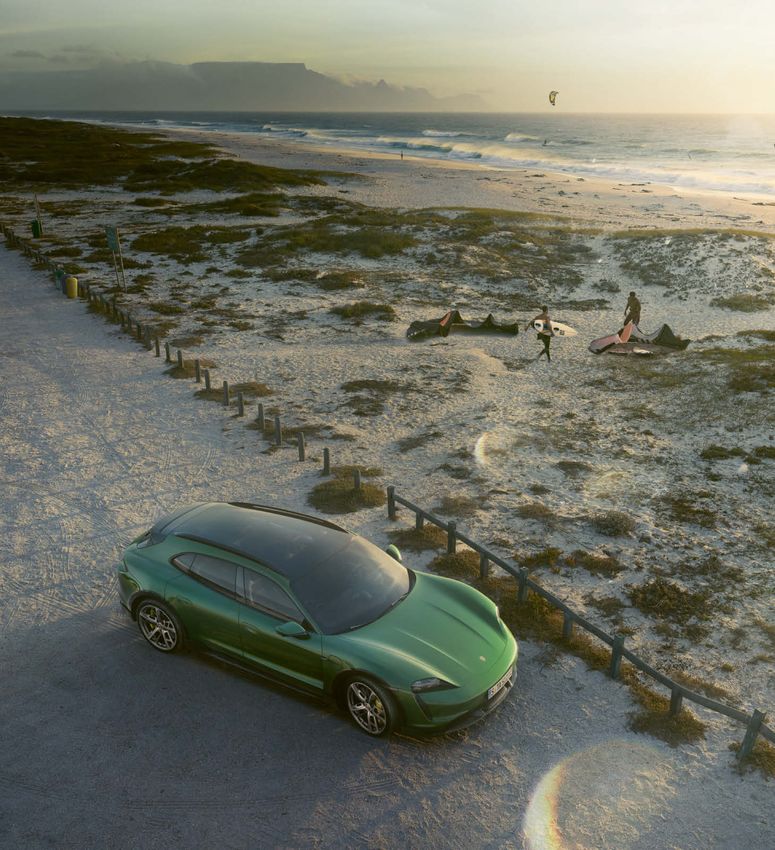
Technically it’s an electric car.
But it’s actually fuelled by adventure.
The new Taycan Cross Turismo. Soul, electrified.

Electricity consumption (in kWh/100km) combined 29.4; CO₂ emissions (in g/km) combined 0
Porsche Engineering Magazine 2/2021                                        Editorial                                                                            3

                                                                           dear reader,
                                                                           A pioneering spirit has shaped Porsche’s history from its very inception.
                                                                           This is just as true for engineering services by Porsche as it is for the
                                                                           sports car manufacturer Porsche. Since the founding of the Porsche
                                                                           engineering office 90 years ago, we have dedicated ourselves to technical
                                                                           challenges with passion and inventiveness. Our aim is always to develop
                                                                           the innovations of tomorrow.

                                                                           What Ferdinand Porsche began with pioneering work such as the
                                                                           Volkswagen, we are carrying forward today with the development of
                                                                           technologies for the intelligent and connected vehicle of the future.
                                                                           In the process, we pay close attention to specific market requirements
                                                                           for digital functions. Hence the theme of the current issue of our
                                                                           magazine: "Intelligent. Connected. Digital".

                                                                           Our report on the Big Data Loop shows the potential that artificial
                                                                           intelligence holds in store for new driving functions. Learning in the
                                                                           cloud will make it possible to optimize driving functions largely auto-
                                                                           matically even after a vehicle has been delivered, thus offering customers
                                                                           added value. What we were able to demonstrate in the proof of concept
                                                                           using the example of adaptive cruise control will be of interest for many
                                                                           other driving functions as well. The Big Data Loop is also a good example
                                                                           of the increasing importance of connectivity. We use data from all the
                                                                           vehicles in a fleet to optimize each of them individually.

                                                                           We are taking a connected and local approach to automotive develop-
                         dr. Peter Schäfer
              Managing Director of Porsche Engineering
                                                                           ment in China. Here, on the one hand—as in other markets—we need
                                                                           to connect vehicles as seamlessly as possible with the digital ecosystem
                                                                           of their users. On the other hand, it is also important to take into account
                                                                           the special features of the local infrastructure and the services of
                                                                           domestic technology companies such as Tencent or Alibaba. As Porsche
                                                                           Engineering has been active in China for more than 20 years, we are
                                                                           ideally positioned to make these connections a reality.

                                                                           The combination of intelligent and local approaches is also the focus of the
                                                                           AI Delta Learning project. Here, the goal is to selectively teach intelligent
                                                                           driving functions something new. This is particularly important if we want
                                                                           to adapt vehicles to local conditions with as little effort as possible.

                                                                           "Intelligent. Connected. Digital": And we will continue to dedicate
                                                                           ourselves to the technologies of tomorrow, and our tradition of innova-
                                                                           tion, in the future as well.

                                                                           I hope you enjoy reading this issue of the magazine.

                                                                           Best regards,
                                                                           Peter Schäfer

aBoUt PorSCHE ENGiNEEriNG: Porsche Engineering Group GmbH is an international technology partner to the automotive industry. The subsidiary of
Dr. Ing. h.c. F. Porsche AG is developing the intelligent and connected vehicle of the future for its customers—including functions and software. More than
1,500 engineers and software developers are dedicated to the latest technologies, for example in the fields of highly automated driving functions, e-mobility and
high-voltage systems, connectivity, and artificial intelligence. They are carrying the tradition of Ferdinand Porsche’s engineering office, founded in 1931, into
the future and developing the digital vehicle technologies of tomorrow. In doing so, they combine in-depth vehicle expertise with digital and software expertise.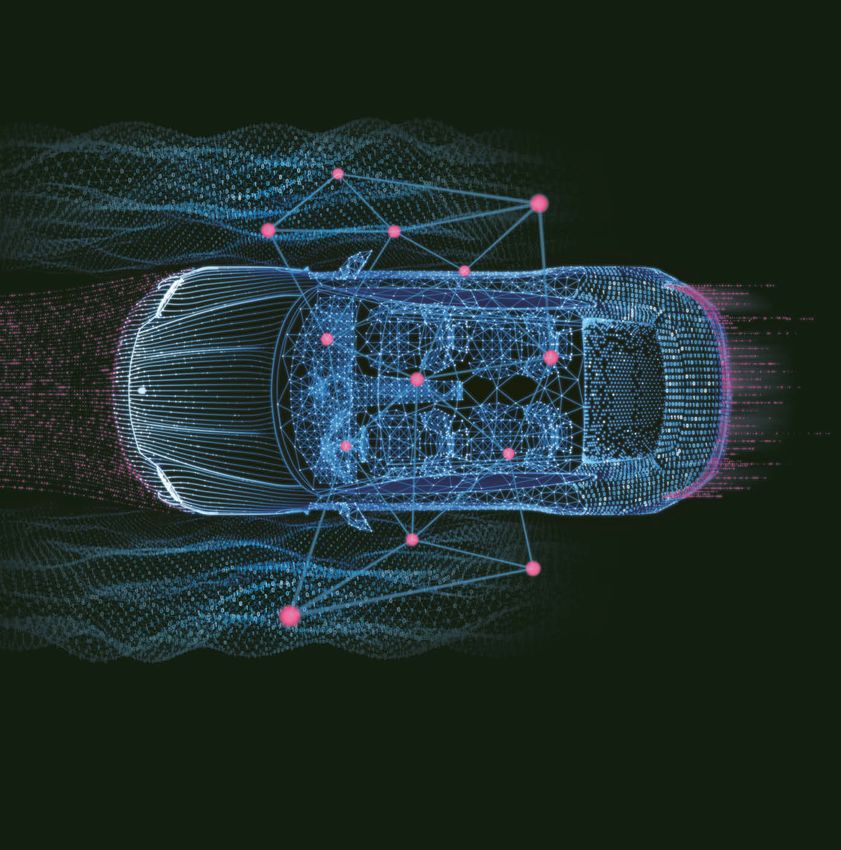
Big Data lake
16   China expert:
     Dr. Jens Puttfarcken
     (pictured) talks with
     Dr. Peter Schäfer
     and Kurt Schwaiger
                                                                                                                                                                                       !
     about China’s role in
     automotive devel-
     opment                                                         DOSSIER

                                                                    08 – 33

                                                                                                                                         Vehicle an
                                                                                                                                                      d connec
                                                                                                                                                                      tivity EC
                                                                                                                                                                                  Us
                                                                                                                                              Shadow
                                                                                                                                 A           Uplink & mode
                                                                                                                           A   MD                    downlin
                                                                                                                                                             k
                                                                      08    Circuit: Data from
                                                                            vehicles is used in                                               Full drivi
                                                                                                                                                           ng stac
                                                                                                                                                                           k
                                                                            the cloud to improve
                                                                            driving functions—
                                                                            the Big Data
                                                                            Loop makes
                                                                            it possible

                                                                                                   Ultraso
                                                                                                             und
                                                                                                                                 Camer
                                                                                                                                         a
                                                                                                             S enso                                   Other
                                                                                                                      rs                                      senso
                                                                                                                                                                      rs

       48    At the forefront: Employees in Ostrava are as
             proficient in traditional automotive technology
             as they are in the latest IT technologies

                                                               40   Pioneer: Ferdinand Porsche (left) has had a decisive influence on the
                                                                    development of automotive technology for decades
Porsche Engineering                                                                  Magazine
                                                                                                     Issue
                                                                                                     2/2021

                                                 03      Editorial
                                                 04      Contents
                                                 06      News

DOSSIER: INTELLIGENT.
CONNECTED. DIGITAL                          08           The Big Loop
                                                         With the Big Data Loop, AI-based vehicle functions can be continuously
                                                         improved—even after delivery

                                            14           “Becoming more agile during development”
                                                         A conversation about the Big Data Loop and the role it plays
                                                         in the automotive industry

                                            16           “Keeping a close eye on current developments and implementing them quickly”
                                                         An expert discussion on China's role in automotive development and
                                                         on collaboration between Porsche China and Porsche Engineering

                                            24           Perfect replica
                                                         Hardware-in-the-loop helps test functions earlier and more efficiently

                                            28           The little difference
                                                         AI Delta Learning enables neural networks to learn without having to be
                                                         completely retrained

TRENDS AND
TECHNOLOGIES                                34           A country electrified
                                                         Norway is a pioneer in e-mobility

ANNIVERSARY                                 40           90 years of future
                                                         From an engineering office in Stuttgart to an internationally active
                                                         engineering company

PERFORMANCE
AND EXPERTISE                               48           From coal mining to data mining
                                                         In Ostrava, Czech Republic, three Porsche Engineering teams are
                                                         working on the interface between the vehicle and its electronics

                                            54           Everything at a glance
                                                         The complexity of on-board diagnostics is increasing. Specially
                                                         developed tools from Porsche Engineering increase efficiency

PORSCHE AND
PRODUCT                                     58           The all-rounder among e-sports cars
                                                         The new Porsche Taycan Cross Turismo also cuts a fine figure offroad

OUTSIDE THE BOX                             62           Outside the box
                                                         Recommendations for thinkers, tinkerers, and geeks

A LOOK BACK                                 64           The beginning of a success story
                                                         Wanderer-Werke placed the first order with Ferdinand Porsche.
                                                         It was the beginning of a long collaboration

Authors           08   Florian Müller: The illustrator         48    Aleš Král: The photographer and          34   Eric Røkeberg used to be an
                       from Vienna created the                       videographer is studying bioengi-             automotive journalist. Today, the
                       infographics for the article on               neering at the University of Chem-            Norwegian writes for Porsche
                       the Big Data Loop.                            istry and Technology in Prague.               and other vehicle manufacturers.
6                                                      News

NTC Academy and
misuse tests of batteries

The Nardò Technical Center
expands its services
The Nardò Technical Center (NTC) Acad-
emy, founded at the beginning of the year,
offers premium quality driving training to
drivers and technicians from the automo-
tive industry. At the wheel of high-per-
formance sports cars, they can improve
their skills and driving capabilities at the
proving ground. In various training levels,
they are taught comprehensive driving
knowledge—from the basics of vehicle
control to high-performance and super
sports training. Participants benefit from
the NTC’s extensive testing experience
and driving dynamics expertise, as well as
unique and tailored training sessions by a
qualified team of instructors and engineers.
For those who wish to further improve their
professional driving skills, the NTC Driving
Academy offers the complete package
of training courses. They are conducted
on the Lorry Dynamic Platform while
advanced trainings are held on one of the
most challenging tracks at the proving
ground, the Handling Track.
In addition, the NTC has expanded its
portfolio of expertise and services to
include misuse testing of batteries. The fire
resistance tests according to UNECE100
are carried out at the Fire Test Site at
temperatures of up to 700 degrees Celsius
and monitored in real time by cameras.
A quarantine container is available for
batteries or e-vehicles in a critical state.                                           Driving Academy (above):
On request, the devices to be tested can be                                          Performing driving maneuvers
equipped with temperature and pressure                        Up to                   during the training session.

                                                700
sensors. The NTC engineering department
offers pre-test simulations. Post-process-                                           Battery tests: NTC firefighters
                                                                                      fill a tub with the amount of
ing of the data is automatic and fast thanks
                                                                                      fuel required by UNECE100
to analysis routines developed in-house.                                                         standards.
At the end, customers receive a report with
test results, including photographic and          degrees Celsius are applied
high-resolution video documentation.            during the battery tests in Nardò.
Porsche Engineering Magazine 2/2021                                                                                                         7

Load test under extreme conditions

MAY sunshades in the wind tunnel
Due to their large contact surfaces, sunshades are subject
to strong forces even at low wind loads. In addition, dynamic
excitations due to turbulence cause the structure to vibrate,
which can lead to failure. Above all, the dynamic behavior can
often only be determined inadequately by calculation. In order
to ensure the stability of the individual components and the
overall construction, Porsche Engineering subjected the MAY
sunshades to load testing under extreme conditions in the
wind tunnel for quality assurance purposes. MAY has been
supplying premium sun protection systems “Made in Germany”
for the commercial and private sectors since 1983. As part
of the aerodynamics testing, it was analyzed, for example,
whether outriggers and suspensions could bend or even break
and whether the fabric covering was at risk of tearing.

Solid growth despite the coronavirus crisis                                                          Donation by
                                                                                                     Porsche Engineering
Porsche Engineering Romania continues to expand
                                                                                                     Support for the local
Porsche Engineering’s Romanian subsidiary          Engineering Romania. “This involved invest-
has grown in 2020 and is hiring new skilled        ments in technology as well as training.” In      community
workers. The company is primarily looking          making the switch to working from home,
for specialists and engineers in the field of      the site benefited from the experience of its
software development. The goal is to reach         employees. “One of the main advantages of
280 employees by the end of 2021. Porsche          our young and tech-savvy team is that they
Engineering Romania expects demand for             were already used to working offline and
its services and technologies to continue          online,” says Mihailovici. “Our previous online
growing, particularly in the areas of virtual      experiences with other Porsche Engineering
testing, software and function development,        offices around the world helped us a lot in
and automated driving. To protect its              the transition.” In addition, a package of
employees, the company relies on working-          measures has been implemented at the Cluj
from-home models and preventive health             office for employees who need to be in the
measures. “We reacted immediately to the           office due to the nature of their work. These
new situation in March 2020 and made all           include Plexiglas partitions, limiting the        Porsche Engineering has made a donation
the necessary arrangements to enable our           number of employees in the office, marked         to the Habila workshop for the disabled
employees to work from home,” says Marius          areas to ensure a safe distance, disinfec-        in Markgröningen and the Theo Lorch
Mihailovici, Managing Director of Porsche          tants, masks, and medical thermometers.           Workshops in Bietigheim-Bissingen. In
                                                                                                     addition, the Porsche Engineering Works
                                                                                                     Council is donating to the Sterneninsel
                                                                                                     children’s and young people’s hospice and
                                                                                                     to the Schlupfwinkel facility, a drop-in
                                                                                                     and counseling center for children and
                                                                                                     young adults aged 12 to 25. “We are
                                                                                                     very pleased to be able to give back
                                      “We reacted immediately to the new                             and support the local community,” said
                                                                                                     Michael Merklinger, Director Human
                                      situation in March 2020 and made all                           Resources, Corporate Communications &
                                                                                                     Strategy, as he presented a check to the
                                          the necessary arrangements.”                               Habila workshops. The facility provides
                                                                                                     disabled people in Baden-Württemberg
                                                       Marius Mihailovici,                           with individual assistance for social
                                        Managing Director of Porsche Engineering Romania             participation and self-determination.
8                                           InTELLIgEnT. ConnECTED. DIgITAL

                            The Big Loop
                                                    Text: Constantin Gillies
                                   Contributors: Philipp Wustmann, Dr. Joachim Schaper
                                                 Illustrations: Florian Müller

           The vehicles of the future will feature many systems that are constantly
           improving themselves. In the “Big Data Loop” proof of concept, Porsche
       Engineering has successfully demonstrated the principle using the example of
       an adaptive cruise control system. However, automatic feedback loops are also
       interesting for other functions. CARIAD is actively advancing the development
           of the Big Data Loop for a wide variety of complex application purposes.

    A           driver is constantly learning and develops
    a kind of intuition over time. For example, if you are
    driving in the fast lane and see a car ahead in the right
                                                                resembles a circuit: Data from the vehicle is transmit-
                                                                ted wirelessly to the cloud, where it is used to further
                                                                train the AI. Afterwards, the improved algorithm is
    lane slowly pulling to the left, you will automatically     tested and fed back again.
    let off the gas—even if the other car has not yet put
    on its turn signal. Any experienced driver suspects         Detecting lane changes at an earlier stage
    that the other car is about to change lanes.
                                                                The test object in the project is a vehicle equipped with
    How can an autonomous vehicle learn from experi-            an enhanced Adaptive Cruise Control (ACC) system.
    ence in the same way and also react intuitively?            The regular series-production driver assistance system
    Porsche Engineering addressed this question                 ensures that a safe distance to the vehicle in front is al-
    together with Porsche AG and CARIAD, a software             ways maintained. To do this, the ACC must detect early
    and technology company of the VW Group, as part             when other road users are cutting in. The aim is now
    of a Big Data Loop proof of concept. The software           to use AI to detect precisely this behavior at an earlier
    specialists at CARIAD are now pushing ahead with            stage: In the test vehicle, a neural network developed
    series development within the Group. The proof of           in-house takes over this task, which is continuously
    concept was intended to demonstrate how all                 further trained with real scenes from the test drives.
    functions based on artificial intelligence (AI) can be      This creates an endless cycle of observation and learn-
    continuously developed in the future. The solution          ing that continuously improves the performance of the
Porsche Engineering Magazine 2/2021 THE BIG LO OP 9
Big Data Loop proof of concept
A new software version is
created and validated.
6
3
Big Data Lake
Data is collected
in the cloud.
New
software
version
Measured data
Virtually calculated !
data
4
5
In the PEVATeC
The neural network is
simulation environment,
retrained on the basis
variants of the real
of the scenarios.
situations are generated,
thus increasing the
amount of data.
Vehicle a
n d c onne c
tivity EC
Us
Shadow
A Uplink & mode
A MD Downlin
2 k
Automated Measurement
Data Analytics (AMDA)
selects data on infrequent
Full Driv 7
maneuvers and transfers it in g St ack
to the cloud. The new version is
transferred back to the
vehicle and activated.
Vehicle sensors
such as cameras
or radar provide
current measured
values.
1 In the proof of concept,
this data is now the basis
for improved control of
actuators such as the
Rad ar motor and brake.
Ultras
onic
C ame Not very relevant data
ra
S enso Other
Very relevant data
rs senso
rs
10                                                         InTellIgenT. COnneCTed. dIgITal

                                                                           Case example: true positive
ACC. “A likely lane change is detected half a second                   The cut-in detection system should correctly predict whether
to a second earlier—the equivalent of 30 meters of                   another vehicle is about to change lanes. If so, the Adaptive Cruise
driving on the motorway,” reports Dr. Joachim Schaper,
                                                                                 Control (ACC) can brake gently and early.
Senior Manager AI and Big Data at Porsche Engineering.

Every modern vehicle with assistance systems pro-
duces enormous amounts of data (Big Data), including
evaluated camera signals or information from radar
                                                                                                    Target object
sensors—so there is plenty of material to train a neural
network. What appears to be a simple idea at first
glance, however, turns out to be a real challenge when
                                                                                     Ego vehicle
it comes to implementation. “For example, we only
want to record the data that really helps the system                                                                          3
move forward,” says project manager Philipp Wust-
mann, an expert in longitudinal and lateral control at
                                                                 1   The scene detection module detects
Porsche Engineering. “That's no easy task, because
                                                                     an object change.
radar sensors and cameras generate an immense
amount of data, most of which is not relevant to the
function under consideration.” Driving on an empty
highway, for example, offers no learning opportunities
for a distance controller. Moreover, evaluating all the
data would be far too time-consuming.

That's why we select specific scenes from which the
AI can learn something. This task is performed by                                                                             2
something called a SceneDetector in the Taycan test
vehicle: This algorithm uses the interpreted camera
signals on the vehicle bus. These are not raw video im-          2   The cut-in module calculates a high
                                                                     cut-in probability.
ages, but information about which objects are at what
distance from the vehicle. The SceneDetector filters
out those scenes from the current traffic situation
in which the ACC is not yet reacting optimally—for                                                                                  Target object
example, when the vehicle cutting in is detected too
late or incorrectly. In addition, it is technically possible
to have the program record what are known as corner
cases, meaning borderline cases that rarely occur                                                                             1
in everyday driving. For example, if a vehicle in front
swerves in its lane without actually changing it, the al-                                                             Ego vehicle
gorithm could mark this scene. The same applies to a
situation in which the camera does not detect the lane           3   The ACC system adjusts the desired distance
markings. This detection of specific scenes is handled               to the new object at an early stage.
by special software called Automated Measurement
Data Analytics (AMDA).

Propagation of data by simulation                                        In this example, the cut-in detection functioned correctly.
                                                                          This case occurs very often and is therefore less relevant
Once the SceneDetector has found five potentially in-                                       for the Big Data Loop.
structive cut-in events, it transmits the associated data
to a server via mobile radio. In the cloud, the amount of
illustrative material is increased: To do this, the data is
first fed into a simulation that uses a game engine, the                                       AMDA
                                                                      Signals                                       Object change            True
                                                                                            SceneDetector
same technology that computer games use to generate                  from the                                                              positive
their images. With the help of the Porsche Engineering                vehicle                                                               Scene
Virtual ADAS Testing Center (PEVATeC), virtual test                     bus             AI-based cut-in             High cut-in            detected
                                                                                           prediction               probability
drives can be produced in which the vehicles in the
Porsche Engineering Magazine 2/2021 THE BIG LO OP 11
Case example: false positive
Cut-in detection should also detect that a vehicle is drifting to computer physically behave like their real counterparts
the right, but will still not cut in. This helps to avoid unnecessary on the asphalt. The simulation results in measurements
that correspond to those of the real vehicle bus.
braking maneuvers.
In the PEVATeC simulation environment, different
variants of the recorded cut-in process are created,
again automatically, on the basis of the real mea-
Target object surements—in other words, a re-simulation of the
real situation takes place. In each case, the simulated
cut-in processes differ only minimally: In one version
the other road user pulls to the left more quickly, in an-
Ego vehicle
other he is traveling at a greater distance. These vari-
3 ations generate more training data within a very short
time without additional test drives. It also improves
the generalizability of the AI model. It recognizes not
1 The scene detection module does not
only standard situations, but also those that occur less
detect an object change.
frequently. That’s essentially the nature of the tech-
nology: Neural networks acquire new skills exclusively
through observation. The more examples they see, the
better they become. The simulation environment also
allows critical or atypical situations to be recreated to
broaden the range of training data.
After all the visual scenarios have been created, the
2 actual learning begins: All the real and simulated
cut-in events are used to train a neural network in the
cloud. By observing, it learns to recognize the signs
2 The cut-in module nevertheless calculates of an approaching lane change in a similar way to a
a high cut-in probability.
human driver. This allows the ACC to brake smoothly,
almost exactly like a human driver. Or as the expert
Schaper puts it: “We are replicating intuition in AI.” In
Target object the long run, the vehicle could literally develop a sense
for the behavior of other road users and, for example,
recognize an aggressive driving style that suggests
risky lane changes. Porsche Engineering uses the
1 Volkswagen Group’s cloud platform GroupMDM (MDM
stands for Measured Data Management) to store and
Ego vehicle process the data.
3 However, the vehicle does not cut in.
The ACC system brakes unnecessarily.
In this example the cut-in detection did not work correctly.
“A likely lane change is
This case is rare and therefore very relevant for detected half a second to a
optimization in the Big Data Loop.
second earlier—equivalent
to 30 meters of travel on
AMDA No object
Signals
from the
SceneDetector change False
positive
the motorway.”
vehicle Scene
bus AI-based cut-in High cut-in detected Dr. Joachim Schaper, Senior Manager AI and
prediction probability
Big Data at Porsche Engineering12 InTellIgenT. ConneCTed. dIgITAl
Training and validation of new AI models
The new AI model is automatically trained with an improved dataset and
validated with an existing validation dataset. If it is better than the previous
model, it is used for further testing in the vehicle.
Data acquisition and propagation: The SceneDetector uses the interpreted camera signals
on the vehicle bus and filters out those scenes from the traffic events in which the ACC
does not yet react optimally. In the PEVATeC simulation environment, different variations
of the recorded cut-in event are automatically generated on the basis of the real mea-
surements. These variations generate more training data within a very short time without
additional test drives.
Training a new model: All real and simulated cut-in events are used to train a neural
network in the cloud. By observing, it learns to recognize the signs of an approaching
lane change in a similar way to a human driver. In the long run, the vehicle could develop a
sense of the behavior of other road users, allowing it to detect, for example, an aggressive
driving style that experience has shown to indicate a propensity for risky lane changes.
Validation of the new model: At the end of the training in the cloud, new software for the
adaptive cruise control system is automatically created and validated. The software is only
transferred to the vehicle if it proves itself unequivocally.
! Rolling out the new model: After validation, the new model is transferred to the vehicle.
The driver then sees a dialog box and can activate the new release. As soon as he has done
so, the enhanced vehicle function starts working.
For the Big Data Loop, new scenarios are continuously recorded
and simulated to expand the size of the training dataset.
Initial distribution within the training data set Improved distribution within the training data set
Large distance Large distance
Low speed High speed Low speed High speed
Recording of
new scenes,
simulation of
Small distance Medium distance Small distance Medium distance
further variants
Medium speed Medium speedPorsche Engineering Magazine 2/2021 THE BIG LO OP 13
The driver can activate a new release
Once training is complete, new software for the adap-
tive cruise control system is automatically created
and validated. What that means is that it must be able
to reliably recognize cut-ins in a large number of un-
known test scenarios. Only if the software proves itself
unequivocally is it transferred to the vehicle. Then the “The technology could also be
driver sees a dialog box with the text: “A new release is
available. Do you want to activate it?" If the driver then interesting for lateral
presses “OK,” the enhanced adaptive cruise control
starts working.
guidance, for example for the
It would also be possible to test the new ACC module
lane keeping system."
in the background (ShadowMode) in the vehicle first:
While driving, the enhanced model receives the same Philipp Wustmann, Project Manager for Longitudinal and
sensor data as the existing on-board system and must Lateral Control at Porsche Engineering
react accordingly. However, the old ACC continues
to control the accelerator and brake. Meanwhile,
software monitors the quality of the predictions. If, for
example, the “advanced” AI predicts a cut-in process
that does not take place (“false positive”), it would of the VW Group. This proof of concept will provide
be disqualified. Only when it becomes clear that the valuable insights.
neural network trained in the cloud is really superior
in its predictions does it go into live operation. Once the necessary technology is standard in all
delivered vehicles, learning will also be faster—be-
In this proof of concept, the push of a button by cause there will be more digital visual material: After
which the driver activates the new version of ACC all, while today a single test vehicle is on the highway
represents the only manual step in the learning collecting cut-in maneuvers, in the future every vehi-
cycle. “What's new is that everything is automated,” cle will be able to send data back to the manufacturer
Schaper emphasizes. The recognition of the rele- if the customer agrees. Project manager Wustmann
vant scenes in the vehicle happens without human is excited by this prospect: “Getting direct feedback
intervention, as does the propagation of the learning from customer fleets in different countries would save
scenes in the simulation environment. A computer an immense amount of time, money and testing."
also controls the training of the neural network in
the cloud and the update back to the vehicle. The Cut-in recognition represents only one part of the
developers only check things. “The vehicle optimizes road to a lifelong learning vehicle. In the future, neural
itself,” Wustmann summarizes. networks will be used in many places in the vehicle,
and they could all be improved by automatic feedback
Proof of concept in just four months loops. “The technology could also be interesting for
lateral guidance, for example for the lane keeping
Porsche Engineering was able to implement the system,” Wustmann reports.
self-learning adaptive cruise control system in just
four months. A patent application was filed for part of
the technology. The proof of concept demonstrated
that the technical approach works. The architecture
used here is already being used in other development
projects, for example to test and validate a new sensor
generation as a replacement for existing sensors.
The next step will be to bring the Big Data Loop into IN BRIEF
series production. There are still a few challenges to
The Big Data Loop allows AI-based vehicle functions to be
be met here, for example corner case detection or fully continuously developed. The approach has proven itself in
automated function optimization. CARIAD is currently a proof of concept and is already being used in other devel-
working on a series application of the Big Data Loop in opment projects. It could be an important step towards the
the overall context of automated driving for the brands lifelong learning vehicle.14 IntellIgent. ConneCted. dIgItal
“Becoming
more agile during
development”
Text: Christian Buck Photo: Martin Wagenhan
In this interview, Joachim Bischoff, Director Intelligent Connected Vehicle
at Porsche engineering, explains what role the Big data loop plays
for the automotive industry and the customer experience in the vehicle.
Why is the Big data loop so important for the optimize a function using artificial intelligence (AI),
entire automotive industry? and transfer the new status back to the vehicle for
JOACHIM BISCHOFF: All manufacturers are facing validation in just a few minutes. This noticeably
the same challenge: Ever shorter development reduces the time to market.
cycles and the desire of customers to always have
up-to-date and individualized functions in their What role does this approach play after the
vehicles. If you want to be a technological pioneer vehicles are delivered?
and successful in the market, you have to focus on BISCHOFF: Here, the Big Data Loop enables us to
customer satisfaction and, in particular, on individ- continuously optimize vehicle functions even while
ualization. This is where the Big Data Loop helps us: our customers are using them. They benefit from
It can be used to personalize the customer expe- regular software updates, for example. But one
rience even more. The other brands in the Volks- thing is very important to me: We will not turn
wagen Group also benefit from these developments. our customers into beta testers. Before any new
software is installed in the vehicle, it will continue
What else are you using the Big data loop for? to be extensively validated. This is how we ensure
BISCHOFF: Among other things, to become more high quality and avoid undesirable side effects in
agile during development. Our customers expect other vehicle systems. However, we can reduce the
the latest functions to always be available to them duration and number of tests through the high level
in the vehicle—just as they are used to from their of automation in the Big Data Loop.
smartphones. Until now, however, the development
cycles of the automotive industry and consumer What are the biggest challenges with the
electronics have been very different. The Big Big data loop?
Data Loop helps us to become faster. It allows us BISCHOFF: The consistency and context of data
to transfer data from the vehicles to the cloud, collection plays a crucial role: With them, inPorsche Engineering Magazine 2/2021 THE BIG LO OP 15
addition to the actual measured values from the
vehicle sensors, the boundary conditions such as
weather, geography, road conditions, and day and
night situations are also important. The evaluation
of the data not only makes it possible to improve
driver assistance functions, but also to continuous-
ly optimize the powertrain or high-voltage battery
system, for example.
What role does artificial intelligence play in
the Big Data Loop?
BISCHOFF: A central role: It helps us select data
and optimize vehicle functions—especially for non-
deterministic functions such as cut-in detection.
And of course it is the basis of numerous driver
assistance systems as well as highly automated
driving in general.
What are Porsche Engineering's unique
selling points?
BISCHOFF: As a wholly owned subsidiary of an
automobile manufacturer, we understand the
complete vehicle. This distinguishes us from many
Tier 1 suppliers, who are skilled in their dedicated
areas. Equally important are our strong software
expertise and skills in the latest AI methods. Today,
digital topics and e-mobility account for more than
half of all activities at Porsche Engineering. This
means we can do both: Vehicle and software. We
also have tools developed in-house that we use to
accelerate development. With our Car Data Box
based on an NVIDIA architecture, we can test new
features—based on AI methods, for example—in
the vehicle. And in all our activities, we make sure
that data protection is “Made in Germany.”
New functions have to be adapted to local
conditions. Are they trained differently from
region to region?
BISCHOFF: In principle, the technologies used should
be the same globally. But it is true: We also have to
take local peculiarities into account, such as right-
hand or left-hand traffic. That’s why we use a cloud
“With the Big Data Loop, for the Big Data Loop and train the functions for
different markets with different data.
the customer experience can
Finally, a personal question: Would you feel com-
be personalized even more.” fortable in a vehicle that is continuously optimized
even after delivery?
BISCHOFF: Since a final test will take place before
every update for the foreseeable future, I'm not
worried in terms of quality and safety. On the
contrary: Through the Big Data Loop, my car will be
able to benefit from the experiences of the entire
Joachim Bischoff worked at Nokia and Harman Becker
after studying communications engineering. In 2010,
fleet in the future. This makes my own product
he joined Porsche Engineering as Senior Manager Systems progressively safer and safer. That's why my clear
Development and currently heads the Intelligent Connected answer is: I would feel absolutely comfortable in
Vehicle department. such a vehicle.16 INTELLIGENT. CONNECTED. DIGITAL Futuristic: Porsche China’s headquarters in Shanghai. Today, China is setting the pace in many development topics.
Porsche Engineering Magazine 2/2021                             INTERVIE W                                                                       17

     “Keeping a close eye on
    current developments and
   implementing them quickly”
                                      Text: Jost Burger   Photos: Yolanda vom Hagen, Martin Stollberg

                               China is on track to take a leading role in many developments.
                        In this interview, Dr. Jens Puttfarcken (President & CEO of Porsche China),
                          Dr. Peter Schäfer (Managing Director of Porsche Engineering), and Kurt
                      Schwaiger (Managing Director of the Porsche Engineering branch in Shanghai)
                              report on the latest trends and their collaboration in the country.

                                                                                               Expert panel: Dr. Jens Puttfarcken, Dr. Peter Schäfer,
                                                                                                                     and Kurt Schwaiger (from left).
18 INTELLIGENT. CONNECTED. DIGITAL
In China, the smartphone plays a key role in with 5G since last fall. For example, facial recogni-
daily life. Which Chinese app is particularly tion is becoming increasingly important for unlock-
important for you? ing vehicles. Finally, the advancement of artificial
DR. JENS PUTTFARCKEN: My two most important apps intelligence should make existing technologies and
are WeChat and Alipay. I use Alipay to pay for things applications even more user-friendly.
and to gain access to buildings. But I can also use SCHWAIGER: In terms of vehicle development, 5G in
the app to book a bike or call a taxi. particular plays a very important role, for exam-
KURT SCHWAIGER: I’ve been leaving my wallet at ple for autonomous driving. Many start-ups here
home for a long time. Beyond WeChat and Alipay, are working on solutions such as robot taxis and
the navigation app on my phone is very important self-driving vehicles. Porsche Engineering is locat-
to me. It tells me exactly where I am allowed to go ed in Jiading, where there is a 30-square-kilometer
with my license plate and has never let me down.
DR. PETER SCHÄFER: A translation app helps me
communicate with people on location in China.
It’s fascinating and enriching to use it to engage in
5G
is already available in all major
test area. It is fully equipped with 5G infrastructure.
Autonomous driving is allowed in public and tests
with the technology take place daily.
SCHÄFER: It’s important to note that in China the
cities in China. The new mo-
direct communication with people. bile communications technol- communication between vehicles and the infra-
ogy plays an important role in structure will be crucial. The aforementioned
Apps represent only a small sample of technologi- autonomous driving. technologies therefore lead to new possibilities, for
cal developments in China. What else is going on example in driver assistance systems or automated
at the moment? driving. China is enabling incredibly fast develop-
PUTTFARCKEN: The expanding connectivity, for one ment in this area, while at the same time customers
thing. The major cities have all been fully equipped here are also demanding new solutions of this type.
Digital on the move: Dr. Jens Puttfarcken and Kurt Schwaiger pay in China only by app, such as with Alipay.Porsche Engineering Magazine 2/2021 INTERVIE W 19
PUTTFARCKEN: Another major topic is electronic Chinese society is also changing. In what ways
components. There is currently an acute shortage does that manifest itself?
of chips, which is why China wants to become PUTTFARCKEN: On average, our customers are
more independent from the outside world, for 35 years old and almost half of them are women.
example by producing its own chips. It may there- If this continues, in five to ten years most Porsche
fore be the case that in a few years the country buyers will be members of Generation Z, i.e. born
has built up its own technology and then makes between 1995 and 2010. Like everywhere else
technological demands on chips that are geared to in the world, this generation has grown up with
the domestic market and cannot easily be met by digitalization. Constant networking is completely
the Western world. normal for these young Chinese. What is specific
to China, however, is that this generation has never
What role does government play in this?
PUTTFARCKEN: It sets the framework with its
five-year plans. It’s important to understand that
today, a five-year plan is something like a cor-
35
years old are Chinese
known bad times. Rising prosperity is a matter of
course for them, and consumption in the premi-
um and luxury segment in particular is viewed
positively. Strong economic growth and certainly
Porsche customers on
porate strategy. It defines strategic goals, the average—and almost also the successful handling of the coronavirus
implementation of which is entrusted to individual half of them are women. pandemic confirm this generation in its belief that
government agencies, but also to provinces or it lives in the world’s best system, which will also
companies. The implementation of these targets guarantee growth and consumption in the future.
flows into the evaluation of Senior Executives of
SOEs (State-owned enterprises) or party secre- What are the implications for the automotive
taries, and is therefore an important factor in their industry?
careers. Against this backdrop, you can understand SCHÄFER: Young customers expect digital functions
the speed with which things are implemented in their vehicles that they are also used to from
here. In the latest five-year plan, three issues are their smartphones. In addition, we are generally
important to us. First, China wants to strengthen experiencing a rapid change in trends and technol-
domestic purchasing power and increase demand ogies: Generation Z will change their requirements
in the premium sector in particular. At the same at ever shorter intervals. Our challenge here is to be
time, it wants to open up to foreign investment flexible and fast—and to go with these trends. For
and increase exports. All of this goes hand in hand this reason, we need short innovation cycles. Being
with the tendency to decouple from Western
technologies and rely increasingly on domestic
developments. Second, China aims to stop the
rise in carbon dioxide emissions by 2030 and be
“We get first-hand information
CO2-neutral by 2060. Third, the government wants
to promote technologies such as artificial intelli-
gence more strongly in order to become the market
leader in this area.
SCHWAIGER: We can see the detachment from
here in China and this flows into
Western standards in e-mobility, for example with
China-specific standards for charging technology. development and testing
that we carry out locally together
And the strong promotion of domestic e-cars is
also clear, for example through the support by the
state of start-ups in this field. At the same time,
China is creating major incentives for consumers to
buy an electric vehicle—financially, but also by the
with Porsche Engineering.”
fact that in the future you may only be allowed to
drive in the inner cities with an electric vehicle. Dr. Jens Puttfarcken
Dr. Jens Puttfarcken has headed Porsche China Dr. Peter Schäfer has been Chairman of the Execu- Kurt Schwaiger has lived in China for eleven years
and Porsche Hong Kong since July 2018. He was tive Board of Porsche Engineering since 2019. The and has been Managing Director of Porsche Engi-
previously Chairman of the Executive Board of mechanical engineer has worked for the Porsche neering’s Shanghai branch since 2015. Previously,
Porsche Deutschland GmbH and Vice Preseident of Group since 2003 and was, among other things, he worked as Director E/E at Qoros Auto (Shang-
After Sales and Customer Relations at Porsche AG. Vice President of Complete Vehicle Development. hai). He has also worked for BMW and Siemens.20 INTELLIGENT. CONNECTED. DIGITAL
here on the ground is also an essential requirement.
This is the only way the industry can understand
Chinese customers and develop and test new tech-
nologies. We are well positioned for this with our
location in Shanghai. We are developing the digital
vehicle technologies of the intelligent and connect-
ed vehicle of the future there.
PUTTFARCKEN: We have to remain relevant to our
Generation Z customers. That means keeping a
close eye on current developments and imple-
menting them quickly. That’s why the collaboration
with Porsche Engineering and Porsche Digital is so
important. Because it is precisely in the digital area
that we see the greatest demands from the market.
Three megatrends are e-mobility, connectivity,
and autonomous driving. What’s happening in
these areas?
PUTTFARCKEN: China is the largest market for
battery electric vehicles: more than 1.5 million
e-cars are on the roads here. Roughly 50 percent
of them are basically scooters with four wheels and
a slightly larger passenger compartment. But here,
too, the trend is now towards larger models from
the C and E segments (medium and executive cars,
respectively). What the newer vehicles in particular
have in common is a high degree of standard digi-
talization: they offer, for example, facial recognition
and autonomous parking, as well as features that
are not necessary from a Western perspective,
such as light concerts visible from afar on the
radiator and rear, or individual color and lighting
concepts in the interior.
SCHWAIGER: In the past ten years, China has learned Building bridges: Porsche Engineering sees itself as a link between
to build cars of high quality. OEMs now develop the development center in Weissach and the activities in China.
their own standard components. The next stage
involves intelligent electronic systems that are
very highly connected with the infrastructure. The
trend in China is clearly moving in the direction of
“We know the Chinese market internet-based cars.
How is Porsche addressing these trends and
very well and can combine this challenges?
PUTTFARCKEN: In the future, we will integrate the
knowledge with our specific requirements from the Chinese market into our
processes even more extensively and at an even
expertise in automotive and earlier stage. We get first-hand information here in
China and this flows into the development and test-
software development.”
ing that we carry out locally together with Porsche
Engineering. We cannot develop products for the
Chinese transport infrastructure in Germany.
Dr. Peter Schäfer
What approach is Porsche Engineering taking
in China?
SCHÄFER: We have a long tradition of collabora-Porsche Engineering Magazine 2/2021 INTERVIE W 21
Long-standing partnership: Porsche China intends to intensify its cooperation with Porsche Engineering in the future.
tion with Chinese customers. As we have been
active locally for more than 20 years, we know
the Chinese market very well and can combine this
knowledge with our specific expertise in automo-
tive and software development. In order to meet
“Porsche Engineering in
the requirements of innovation drivers such as con-
nected driving and intelligent software solutions, Shanghai plays an important
we are continuously expanding our collaboration
with our Chinese partners and also with Porsche
AG locally. We see ourselves as a link between the
role in the development and
development center in Weissach and the activities
in China. In this way, we play a significant role in the validation of functions for the
China-specific features and functions that go into a
Porsche vehicle. Chinese market.”
SCHWAIGER: Porsche Engineering Shanghai devel-
ops solutions for Chinese OEMs and the VW Group,
Kurt Schwaiger
including Porsche. There are currently around
100 engineers working at Anting in all areas of
automotive mobility. In the future, we will develop22 INTELLIGENT. CONNECTED. DIGITAL
Intercontinental: The interview took place digitally at the Bietigheim-Bissingen and Shanghai sites.
even more China-specific digital functions. The to turn left. You can only test that here in China.
idea is to integrate the functions of mobile devices SCHWAIGER: It is also not allowed to bring geo-
into the vehicle, such as WeChat or Alipay. We based data or video data outside the country.
Local peculiarities of the are also working intensively on highly automated Porsche Engineering in Shanghai therefore plays an
Chinese market require a driving. This can only be developed and tested in important role in the development and validation of
local presence. Porsche the transport infrastructure available here. functions for the Chinese market.
Engineering has been in
PUTTFARCKEN: For us, this is an ideal setup.
China for more than 20
years and can look back Porsche China has the task of bringing our vehicles What will the Chinese automotive market look like
on a long tradition of to market. To do this, however, we also need the in 2030?
cooperation with Chinese technical expertise of Porsche Engineering in PUTTFARCKEN: The entire automobile market will
customers. China. The collaboration offers us an excellent continue to grow at considerable rates, with the
opportunity to implement wishes from the market number of new registrations rising to 30 million
locally. We intend to intensify this fruitful coopera- in the coming years. The premium and luxury
tion in the future. segment is likely to perform even better than the
market as a whole. At the same time, we will see a
So local development and testing in China is significant push with battery electric vehicles be-
essential? cause they make it easier to get started with digital
PUTTFARCKEN: Yes, because different traffic rules networking and digital services. This is the best
apply here, and there are also big differences in way for carmakers to connect their products with
driving. Think of the elevated roads or the fact that the reality of their customers’ lives, which is heavily
you sometimes have to drive all the way to the right influenced by networking.Porsche Engineering Magazine 2/2021 INTERVIE W 23
How important are collaborations with the scien- share their respective experience, promote science
tific community in your work? and education, and advance technologies.
SCHWAIGER: Very important. Porsche Engineering
has a long-standing collaboration with Tongji Uni- Finally, a personal question: What is your favorite
versity. In 2018, we launched the Tongji Porsche 30 food in China?
Engineering Symposium, which brought togeth-
er top managers from the Chinese automotive million PUTTFARCKEN: Food is almost like a religion in China.
Everything is of high quality and tastes great. Here
industry and unfortunately had to be postponed new registrations are in Shanghai, I especially like the dumplings. As for
expected in China over the
in 2020 due to the coronavirus. We also support China as a whole, my favorite is Szechuan cuisine
next few years. The premium
Tongji University’s DIAN student racing team with and luxury segments are with its spiciness and sophistication.
our knowledge in the development of their e-vehi- expected to grow even faster SCHÄFER: I am fascinated by the incredible variety
cle for Formula Student Electric. Our experts also than the overall market. of Chinese cuisine. My favorite is vegetables of all
hold lectures there to teach students about the kinds. It’s a special treat for me every time.
latest developments. And finally, we support the SCHWAIGER: What appeals to me most is the Chi-
Intelligent and Connected Vehicles professorship. nese culture of sharing. Food is always understood
Together with Porsche China, a first-class collab- as communal. I really appreciate this open way of
oration has been established in which both sides eating—it encourages exchange and dialog.
Integrated: Connected vehicles must be seamlessly connected to the customers’ reality of life.24 IntellIgent. ConneCted. dIgItal
Perfect replica
Text: Andreas Burkert
With hardware-in-the-loop (Hil), developers can use
electronic control units (eCUs) almost as they would in a vehicle.
this can reduce the number of prototypes in early development
phases, and functions can be developed more efficiently and
tested earlier. Porsche engineering uses Hill systems at various
locations worldwide—including to adapt vehicle functions
to local requirements. In the future, the cloud and artificial
intelligence will play an important role in this.
t he development of a new automobile involves
extensive test drives totaling several million kilome-
ters with prototypes in the various stages of develop- Roughly
Porsche Engineering. In many projects, experts there
use hardware-in-the-loop (HiL), a method that has
proven itself in component tests and is increasingly
100
ment. This is the only way to put all systems through being used for highly complex systems as well.
their paces. In practice, such tests are still an integral
part of the overall development process, but advances Hardware-in-the-loop is the link between software
HiL test benches are in
in modern driver assistance systems call for different and the target hardware in the vehicle. The HiL test
use by Porsche Engineering
strategies. After all, just to test a semi-autonomous worldwide, including 60 at
bench acts as a replica of the real environment of
driving function, engineers would have to test it on the the international locations an ECU or an ECU network. The electronics of the
road for several years. That's why computer simula- in Shanghai, Prague, connected ECU are supplied with electrical control
tions are increasingly coming into focus. Including at Ostrava, and Cluj. signals, while the signals of the bus systems arePorsche Engineering Magazine 2/2021 PErfEct rEPlica 25 Proven technology: Hardware-in-the-loop is increasingly being used for highly complex systems in addition to component tests.
26                                                         IntellIgent. ConneCted. dIgItal

supplied by a residual bus simulation. For the ECU,                                                  ical processes in the vehicle is very computationally
this state cannot be distinguished from operation in                                                 intensive and requires an appropriate infrastructure.
the vehicle. For test purposes, it is also possible to                                               “We have installed several very powerful computers
selectively apply incorrect information to the vehicle’s                                             in the HiL test benches and can thus now easily
sensor interfaces and data buses, for instance to                                                    reproduce individual submodels physically correctly in
simulate the effects of a defective crankshaft or the                                                real time. There are also models of the entire vehicle
complete failure of another vehicle system, as a means                                               network, the driver, and the environment. But in some
of validating the ECU’s diagnostics.                                                                 complex processes, such as the entire combustion
                                                                                                     cycle in the engine, we currently still have to find a
library with simulation models                                                                       workaround,” says Jörg Turowski, who is the specialist
                                                                                                     project manager at Porsche Engineering responsible
The basis for the HiL simulations is detailed math-                                                  for powertrain HiL systems.
ematical software models, which are created with
Matlab/Simulink and reproduce the physical pro-                     “Some of our Hil                 That’s why the HiL experts use neural networks,
cesses in the vehicle. They are stored in libraries from                                             which require significantly less computing power
                                                                     tests would be
which the modelers can extract suitable modules—                                                     than physical models. Among other things, they are
for example based on the engine variant or chassis                  associated with                  used to simplify physical models. In a simulation
type—and combine them to form an overall simula-                      a high risk of                 model of an engine, for example, the sequence of the
tion model. Among other things, the library contains                                                 combustion process is calculated from the control
                                                                     personal injury
models for the behavior of an intake system or the                                                   signals of the engine control unit. The simulation
combustion chamber, but also complex models of                        and property                   provides values such as the generated torques and
various chassis with or without adaptive air sus-                    damage in the                   sensor signals as output variables, which are fed
pension, anti-roll stabilization, and a wide variety                    vehicle.”                    back into the engine control unit. By using a neural
of wheels. Access to the libraries means that not                                                    network, these output values do not have to be calcu-
every HiL simulation model has to be reprogrammed.                  Jörg Turowski, Specialist        lated using a physically correct formula. Instead, the
Instead, it is sufficient to configure and parameterize               Project Manager for            neural network provides them in real time. To do this,
the existing modules. However, replicating the phys-                powertrain HiL systems           however, it must first be trained with the data from a

Measurement and control
Sensors supply the input for the electronic control unit, which then compares
the measured actual values with target values. If the actual values deviate
from the target values, the control unit initiates corrections via actuators.

                                                 Target value                                        Control unit
                                             (reference variable)

                                     Actual value       Control difference                                Control variable
                   Sensor                                                               Controller                                       Actuator

              e. g. lambda probe                                                                                                  e. g. fuel injector

                                                                         e. g. engine
                        Control variable                                                                            Actuating variable
                                                                        Control path

                                                                    Disturbance variables
Porsche Engineering Magazine 2/2021 PErfEct rEPlica 27
real prototype engine or a physical model that is not
capable of real-time execution. Porsche Engineering
has been using neural networks very successfully in
its simulation models for years.
The possibilities for validating software are almost
unlimited thanks to HiL test benches. “With hardware-
in-the-loop, even test cases that are very difficult to
examine on the road or in field tests can be analyzed,”
explains Heiko Junker, Senior Manager Powertrain
Electronics at Porsche Engineering. This applies in
particular to the study of extreme situations. "Some of
these tests would involve a high risk of personal injury
and property damage in the vehicle,” adds Turowski.
“With hardware-in-the-loop, on the other hand, they
can be repeated as often and exactly as desired.” As
examples, he cites tests at high speeds, deliberately
exceeding limits, and testing software responses
to signals that are only triggered in the event of an
accident. “This is important, for example, to validate
protective functions,” says Turowski.
Expertise: When using HiL, Porsche Engineering benefits from
When using hardware-in-the-loop, Porsche Engineer- its many years of experience with simulations.
ing benefits from its many years of experience in the
field of simulation. In addition, the identical simula-
tion models are used in the complete validation and
integration process. “This allows us to exploit many
synergies,” says Junker. “We are also aided by fully
automated processes, from the specifications to the simulation models and the integration and teaching
test result. We use test specification generators and of neural networks.
test case generators for this.” Customers benefit from
a one-stop service: Porsche Engineering offers them “We can also take advantage of the time difference
a complete package—from the concept to design and between Germany and China,” Junker says. “If we find
commissioning to residual bus simulation and physical an error in the simulation model here during HiL tests,
modeling. Added to this is a detailed analysis of the it can be analyzed overnight in Shanghai.” There, as
test results, including recommendations on possible well as at the other international locations in Cluj,
remedial measures. Prague, and Ostrava, Porsche Engineering maintains
laboratory space with a total of more than 60 HiL
intercontinental cooperation test benches. In addition, there are another 40 or so
based on the same processes, test benches in Germany, making it possible to meet
the steadily increasing demand for testing. In the
techniques and methods
future, the use of hardware-in-the-loop technology
Several Porsche Engineering locations work closely “We are will continue to increase, as the trend toward fewer
together on HiL projects. This intercontinental coop- continuously and fewer real prototypes will continue. "This is why
eration on the basis of the same processes, tech- we are continuously expanding our HiL capacities,”
expanding our
niques, and methods gives Junker and Turowski the says Junker.
opportunity to distribute tasks worldwide according Hill capacities.”
to the availability of resources and expertise and with The computing power required for highly complex
due regard for the special features of the markets. Heiko Junker, simulation models is available, as it can be increased
Senior Manager
For example, while the site in Mönsheim provides Powertrain Electronics
almost indefinitely by moving parts of the model to the
the hardware-in-the-loop test benches on site for cloud. “Moreover, the ECUs at the test benches are al-
component and function developers and develops the ready connected to the backend today,” says Turowski.
concepts for future HiL systems, the tools for auto- “So cloud functions can also be validated at an early
mated test case implementation and evaluation are stage.” Even the complete replacement of prototypes
continuously optimized in Prague, as well as in-house seems conceivable: “We are working on connecting
HiL systems for test case execution. Shanghai, on several component HiL systems in the cloud to form
the other hand, specializes in the creation of physical a virtual complete vehicle,” says Junker.You can also read


