The Journal of Contemporary Administration (RAC)'s 2018-2021 Managerial Report and a Farewell
←
→
Page content transcription
If your browser does not render page correctly, please read the page content below
Revista de
                                  Administração
                                  Contemporânea
                                  Journal of Contemporary Administration                                                                                          e-ISSN: 1982-7849

Editorial

The Journal of Contemporary Administration (RAC)’s
2018-2021 Managerial Report and a Farewell
Relatório de Gestão da Revista de Administração Contemporânea 2018-2021,
e Farewell

                                                                                                                                                           Wesley Mendes-da-Silva*1,2

        This is the last editorial that I am writing as the Editor-                                    de Janeiro/Brazil), and the Tutorial Article and Open Data
 in-Chief of the Journal of Contemporary Administration                                                Editor Henrique Martins (Pontificia Universidade Catolica
 (RAC), completing my predefined voluntary pro bono                                                    do Rio de Janeiro/Brazil). I would also like to thank associate
 mandate (2018-2021). I would like to take this moment to                                              editors Eduardo Flores (Universidade de São Paulo/Brazil),
 thank and recognize the professional work of several people                                           Emílio Arruda Filho (Universidade da Amazonia/Brazil),
 with whom I’ve had the great opportunity to work and                                                  Fabio Caldieraro (Ebape/Fundação Getulio Vargas/Brazil),
 learn from during the past three years. In saying farewell                                            Gilnei L. Moura (Universidade Federal de Santa Maria/
 to this position, I will leave you with a brief summary of                                            Brazil), and Paulo Matui. I would especially like to recognize
 the work we have performed from June 2018 to May 2021                                                 the guest editors of our Special Issues: Airton Cardoso
 in order to follow the editorial best practice of providing                                           Cançado (Universidade Federal do Tocantins/Brazil),
 information (Bandi & Patton, 2019; Kumar & Zattoni,                                                   Ali Rostron (University of Liverpool/United Kingdom),
 2019).                                                                                                Angela Paladino (University of Melbourne/Australia),
                                                                                                       Aureliano Angel Bressan (Universidade Federal de Minas
         Conscious of the duties and responsibilities inherent                                         Gerais/Brazil), Benilde Oliveira (Universidade do Minho/
 in the role of Editor-in-Chief (Aguinis & Vaschetto, 2011),                                           Portugal), Cristiana Fernandes de Muylder (Universidade
 at the RAC, I have constantly sought to prioritize the                                                FUMEC/Brazil), Cristiana Leal (Universidade do Minho/
 interests of the Brazilian business community in countless                                            Portugal), Eduardo Schiehll (HEC Montréal/Canada), Elin
 initiatives during my tenure. To accomplish this, I have                                              M. Oftedal (University of Stavanger/Norway), Emiliano
 counted on the invaluable collaboration of people of rare                                             A. Valdez (University of Connecticut/USA), Evelyn Lanka
 dedication and a rare sense of professional duty, among                                               (EAESP/Fundação Getulio Vargas/Brazil), Giovanna
 whom I would like to name: Case Study Editor Paula                                                    Bertella (UiT The Arctic University of Norway/Norway),
 Chimenti (CoppeAd/Universidade Federal do Rio de                                                      Ines Branco-Illodo (University of Stirling/United Kingdom),
 Janeiro/Brazil), who has expanded on the work started by                                              Jairo Laser Procianoy (Universidade Federal do Rio Grande
 Victor Almeida (CoppeAd/Universidade Federal do Rio                                                   do Sul/Brazil), João Vinícius Carvalho (Universidade de São

* Corresponding Author.                                                                                Cite as: Mendes-da-Silva, W. (2021). The Journal of Contemporary Administration (RAC)’s 2018-
                                                                                                       2021 managerial report and a farewell. Revista de Administração Contemporânea, 25(6), e210100.
1. Fundação Getulio Vargas, Escola de Administração de Empresas de São Paulo, São Paulo, SP, Brazil.
2. Editor-in-chief of the Journal of Contemporary Administration (RAC).                                https://doi.org/10.1590/1982-7849rac2021210100.en

Revista de Administração Contemporânea, v. 25, n. 6, e-210100, 2021 | doi.org/10.1590/1982-7849rac2021210100.en| e-ISSN 1982-7849 | rac.anpad.org.br                                                    1
The Journal of Contemporary Administration (RAC)’s 2018-2021 Managerial Report
                                                                                                                                               W. Mendes-da-Silva
and a Farewell

Paulo/Brazil), Luiz Ricardo Kabbach de Castro (University                             to submit the RAC to the indices that did not include
of Florida/USA), Małgorzata Grzegorczyk (University of                                it. A series of these indices accepted the journal without
Lodz/Poland), Marcelo S. Perlin (Universidade Federal do                              difficulty. However, the two with the greatest international
Rio Grande do Sul/Brazil), María Luisa Esteban Salvador                               recognition, Scopus and the Web of Science, presented (in
(Universidad de Zaragoza/Spain), Pallavi Singh (Sheffield                             their responses a few months later) a variety of concerns
Hallam University/United Kingdom), Petra Molthan-Hill                                 that included the fact that we did not have an English
(Nottingham Trent University/United Kingdom), Ruby                                    version of the website (hindering a better understanding of
Roy Dholakia (University of Rhode Island/USA), and                                    the journal’s activities) and even the layout of the published
Sanjay Lanka (EAESP/Fundação Getulio Vargas/Brazil).                                  articles.
       I would also like to register my sincere and honest                                   Given the concerns presented by the indices, we
acknowledgement of the tireless work of the individuals who                           began to work on meeting these demands, and this effort
have ensured the seamless functioning of RAC’s Editorial                              led us to achieve the following principal advances (some
Office: Kler Godoy, Nadia Machuca (who is no longer a                                 of them are registered in the 2018-2019 managerial report
member of Anpad), and Simone Rafael. I would also,                                    (Mendes-da-Silva, 2019c), among others that I will not list
naturally, like to thank Anpad for the confidence they have                           due to a lack of space:
placed in me and the independence I have been granted. I
would like to thank my colleagues who work in institutions                               1. The construction of a new expanded RAC website on
outside of Brazil, who accepted being part of the editorial                                 the Open Journals platform, which made it possible
team during my time here: John L. Campbell (University of                                   to: reduce costs and response time, have greater
Georgia), Marcus Cunha Jr. (University of Georgia), James                                   flexibility in the journal’s managerial process, have
Robert Moon Junior (Georgia Tech), Erica Piros Kovacs                                       greater autonomy for the editorial staff, and have a
(Kelley School of Business, Indiana University), Julian                                     better professional presentation of the journal.
Cardenas (Frei University/Germany), and Elin Merethe
                                                                                         2. A reform of the Scientific Editorial Board to reduce
Oftedal (University of Stavanger/Norway).
                                                                                            endogeneity on various levels.
       Finally, we know that few understand the nature of
                                                                                         3. The offering of English and Spanish versions of the
academic work, especially in terms of the time dedicated
to performing professional activities for the community,                                    entire RAC website’s content, especially in terms of
and therefore it is only fitting that I thank my family for                                 new editorial policies, in order to ensure more and
their understanding of my absences while managing and                                       better communication with international players,
furthering the RAC’s editorial process.                                                     e.g., readers, authors, and indexing agents.
                                                                                         4. The redefinition and consolidation of the innovative
A BRIEF SUMMARY                                                                             scope of the RAC as a journal of international
                                                                                            reputation focused on themes of regional interest.
       At the end of the first semester of 2018, I received                              5. The initiation of maintenance procedures for the
the responsibility of producing articles pertaining to RAC’s                                certification of the Editor-in-Chief of the RAC by
editorial process (Kimura, 2018). As soon as I assumed the                                  the Council of Science Editors (CSE).
position of Editor-in-Chief at the RAC, I sought to make
clear the path I would follow during my tenure from 2018                                 6. An increase in communication with colleagues from
to 2021: promoting transparency in the editorial process                                    other countries through invitations to edit special
and especially in the research published by the journal, with                               issues in line with the Sustainable Development
the intention of replacing discourse with action (Mendes-                                   Goals of the United Nations (https://sdgs.un.org/
da-Silva, 2018a). Thus, from the first issue, we began                                      goals retrieved on March 11, 2021). This led to
publishing articles with open data, in order to position the                                greater use of the RAC by researchers in the United
journal in the vanguard in terms of the adoption of the                                     States, the United Kingdom, Germany, Portugal,
precepts of open science within the Brazilian context of                                    Spain, and Norway, among other nations.
business studies. Gradually over time the open science policy                            7. The creation of the Tutorial Article section, one of
has been reflected by peer review, the Tutorial Articles, and                               a new class of relevant publications whose focus is
the Executive Letters, which our editorials have detailed in                                methodology, in a way that permits autonomous
advance for the knowledge of our community.                                                 learning on the part of researchers, and a reduction
       In parallel to the typical activities of the position, in                            in the redundant effort made in research. It also
order to begin executing the plan presented to Anpad when                                   promotes the effective sharing of ideas, in line with
I was recruited as the journal’s Editor-in-Chief, I sought                                  the practices of open education within the context

Revista de Administração Contemporânea, v. 25, n. 6, e-210100, 2021 | doi.org/10.1590/1982-7849rac2021210100.en| e-ISSN 1982-7849 | rac.anpad.org.br                2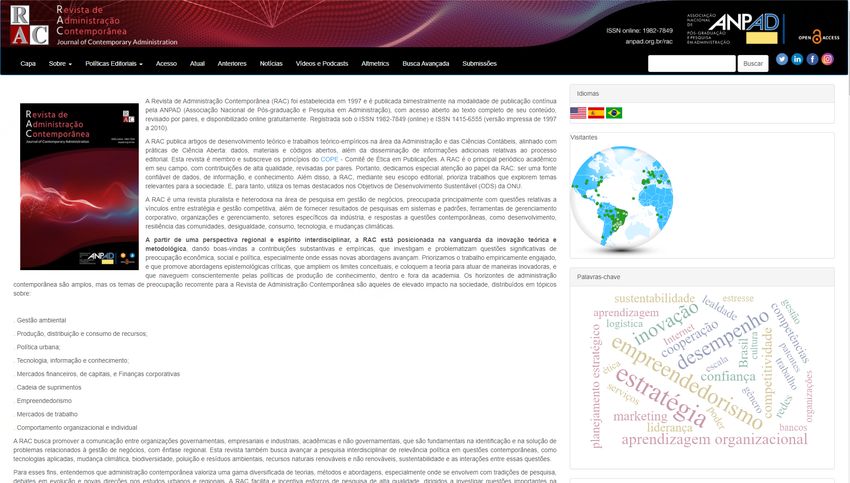
The Journal of Contemporary Administration (RAC)’s 2018-2021 Managerial Report
                                                                                                                                               W. Mendes-da-Silva
and a Farewell

         of the principles of open science (Martins, 2020;                              14. The submission and entrance of the RAC in
         Mendes-da-Silva, 2018a, 2019b).                                                    international indices as a way to increase the diffusion
   8. The creation and redefinition of editorial policies in                                of the journal’s published works, for example:
      relation to indexation and ensuring the quality of                                      a.    CiteFactor
      the editorial process, as requested by the COPE —                                       b.    COPE
      Committee on Publication Ethics.
                                                                                              c.    Econpapers/Ideas (RePEc)
   9. The construction and adoption of a new layout for the                                   d.    ERIHPlus
      documents published by the RAC (here I would like
      to note the professional work of Ms. Kler Godoy),                                       e.    Europub
      in order to permit the quicker, more professional,                                      f.    ICI Index Copernicus International
      and efficient communication of content (Mendes-da-                                      g.    Latindex. Catalog v2.0
      Silva, 2019a). In this area, we can also mention: (a) the                               h.    MIAR
      JEL code (the classification system developed by the
      Journal of Economic Literature) of each article, (b) the                                i.    Redib
      number of invitations sent to the reviewers until the                                   j.    Sherpa/RoMEO
      editorial decision was deemed viable, (c) the adoption                                  k.    CARHUS Plus+
      of structured summaries and the annotation of the
                                                                                        15. Successive submissions until the RAC was accepted
      contributions of each participating individual within
                                                                                            (at the end of 2020) for the COPE listing, which
      the authorship according to the CRediT taxonomy,
      and (d) four levels of classification (discipline, theme,                             represented a concrete indication to indices and the
      sector of activity, region) for the Case Studies in order                             RAC audience of the quality and rigor of the editorial
      to facilitate the rapid identification of the preferred                               process practiced by the journal.
      audience for each Case Study.                                                     16. The publishing (in volume 25, number 4, 2021) of
   10. The adoption of the policy to publish all documents                                  the Executive Letters section, which increases the
       in English to establish the journal’s position, not                                  communication with Administration practitioners
       in terms of the languages it adopts, but rather its                                  and at the same time provides relevant information
       thematic scope, helping construct a distinctive                                      to the research community regarding content
       identity for the RAC.                                                                that deserves the highest priority in the eyes of
                                                                                            the individuals working on the cutting edge of
   11. The establishment of the Open Science Editorial                                      Administration.
       policy that managed the journal’s interests in terms
       of its everyday and strategic activities in the editorial                     Establishment of a distinctive identity and
       process, which sought to consolidate the RAC as a
       reference in open science.                                                    an innovative scope for the RAC
   12. The gradual opening up of data, codes, material,                                     The identity of the RAC has evolved over time as
       and reviews of works published by the RAC of a                                has been narrated by Rossoni and Rosa (2020). However,
       quantitative or qualitative nature. In addition to                            something that appears to be true is that the journal has
       the traditional arguments in favor of open science,                           achieved relative success in positioning itself as a notable
       we have also sought to describe an externality that                           journal, even though this does not imply that there is no
       we turned into something positive: inhibiting the                             work to be done in terms of delineating and consolidating
       practice of salami science (Mendes-da-Silva & Leal,                           the journal’s distinctive identity, including its scope. Thus,
       2021).                                                                        in order to make sure that we do not fail to highlight the
   13. The addition of an environment on the RAC                                     RAC’s archive and community, in this editorial cycle, we
       website that is dedicated to organizing and                                   will seek to attribute clearer frontiers to the scope and the
       disseminating audiovisual material related to the                             contributions of the journal to society. As our first activity
       journal’s activities as a way of collaborating with                           at the beginning of my editorial tenure, I opted to invest
       the increasing use of social media to increase                                effort in the definition of a visual identity that would
       the diffusion of the journal and its publications                             better characterize the RAC, including the construction
       (https://rac.anpad.org.br/index.php/rac/media                                 of an entirely new website that was more informative and
       retrieved on March 11, 2021).                                                 responsive (Figure 1).

Revista de Administração Contemporânea, v. 25, n. 6, e-210100, 2021 | doi.org/10.1590/1982-7849rac2021210100.en| e-ISSN 1982-7849 | rac.anpad.org.br                3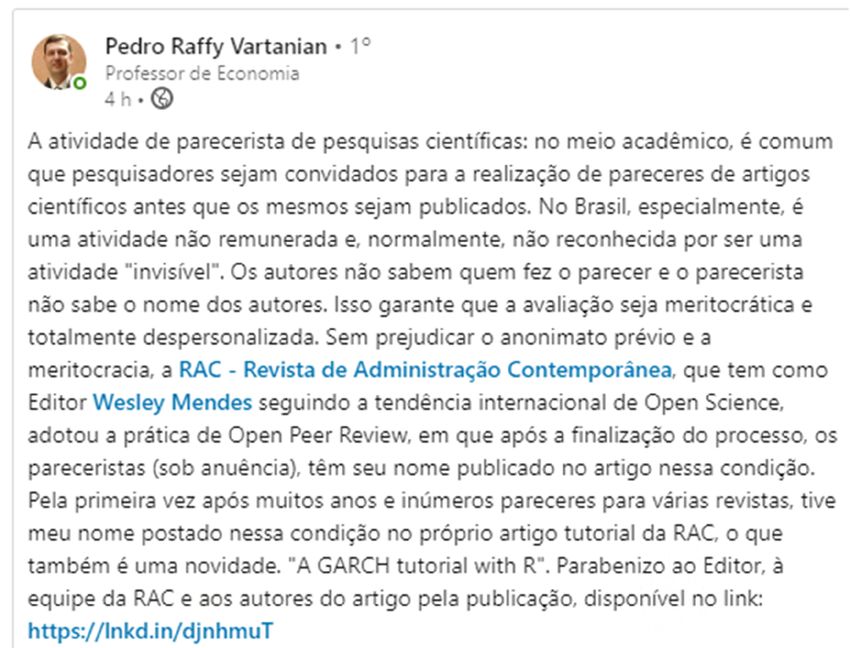
The Journal of Contemporary Administration (RAC)’s 2018-2021 Managerial Report
                                                                                                                                               W. Mendes-da-Silva
and a Farewell

Figure 1. View of the Journal of Contemporary Administration (RAC) website.
Source: The RAC website, accessed on March 9, 2021. This figure is available at: http://doi.org/10.5281/zenodo.4591556.

       Beyond the aesthetic aspects and the graphic                                              lessons learned during the COVID-19 pandemic in
presentation, there was a special concern with indicating to                                     Brazil, published in volume 25, Special Issue of 2021
the community what the RAC intended to publish at that                                           (Marques, Chimenti, & Mendes-da-Silva, 2021).
time, i.e., works aligned with the principles of open science
and works that contributed to the debate about the SDG                                     6. Business Models at the Crossroad of Responsible
agenda, and this implied the adoption of a group of new                                       Innovation, Sustainability and Resilience (Oftedal,
planned special issues, as follows:                                                           Bertella, Grzegorczyk, Hill, & Lanka, 2020):
                                                                                              published in volume 25, number 3, 2021.
   1. Nudging and Choice Architecture (Leal, Oliveira,
      Branco-Illodo, & Salvador, 2020): underway.                                          7. Tutorial Articles: Guiding the Practice of Quantitative
   2. Research Methods in Qualitative Management                                              Research (Martins, 2019): published in volume 25,
      Research (Lanka, Lanka, Ronstron, & Singh, 2019):                                       number 1, 2021.
      underway.                                                                            8. Corporate Governance in Family Businesses
   3. Insurance Industry (Carvalho, Flores, & Valdez,                                         (Mendes-da-Silva, 2018b): published in volume
      2020): underway.                                                                        23, number 6, 2019. I would like to register here
                                                                                              an acknowledgement of the partnership established
   4. Data Reuse: What New Information Can We Learn
      from Used Data? (Martins & Perlin, 2020). No article                                    between the RAC and the Brazilian Institute of
      was selected. We suspect that more publicizing and                                      Corporate Governance (IBGC) in the production of
      better community information about the potential                                        this special RAC issue.
      reuse of data for new works could be valuable inducers                               9. Technology Perspectives and Innovative Scenarios
      of the reuse of data.                                                                   Applied in the Amazon Region (Arruda Filho,
   5. COVID-19’s Impact on Businesses (Chimenti                                               Muylder, Cançado, Dholakia, & Paladino, 2019):
      & Marques, 2020): 16 Case Studies dedicated to                                          published in volume 23, number 5, 2019.

Revista de Administração Contemporânea, v. 25, n. 6, e-210100, 2021 | doi.org/10.1590/1982-7849rac2021210100.en| e-ISSN 1982-7849 | rac.anpad.org.br                4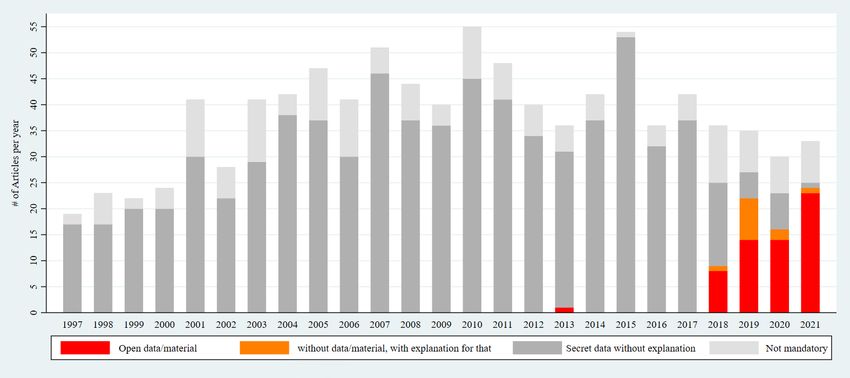
The Journal of Contemporary Administration (RAC)’s 2018-2021 Managerial Report
                                                                                                                                                   W. Mendes-da-Silva
and a Farewell

       During my editorial tenure, I have sought to                                               Keeping this movement in mind, work continues at
optimize the quality of the journal within the context of its                              the RAC in this sense, and the editors of the RAC voluntarily
distinctive identity. In this sense, I would like to emphasize                             accept invitations or answer requests regarding practices
that aspects that have been derived from this, such as                                     and knowledge, as was the case with the 8th Annual Scielo
                                                                                           Meeting (Figure 2), the Anpad meetings, local scientific
internationalization, have not been treated as an end per se,
                                                                                           events, and other journals edited in Brazil whose individual
but rather as an external consequence. That is, the premise                                editors are interested in adopting and emphasizing the
was to do what has to be done, and the scientific journal                                  practices of open science.
naturally will assume its position in concert with periodicals
                                                                                                   However, the effort spent on open science has
of quality (in the sense of contributing to society beyond the
                                                                                           also required an alignment with reasonably established
research community).                                                                       international practices. In this sense, the RAC has sought to be
       In terms of the practices of open science, notably the                              in close contact with relevant individuals and organizations
sharing of data and material, with there being no unanimity                                in the academic community to accompany the modern
                                                                                           practices that are classified as the most appropriate. An
among the relevant authors, editors, and players, such
                                                                                           illustration of this has been the customary participation of
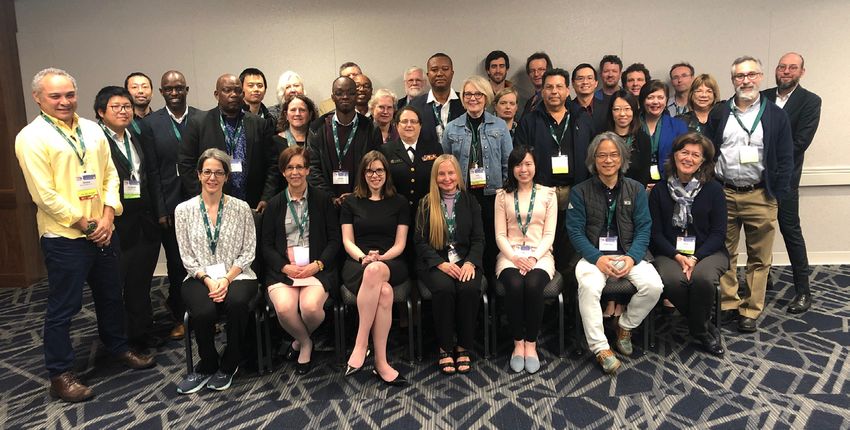
as Scielo and COPE, we expressed explicit guidelines to                                    the RAC in the Council of Science Editors — CSE Meeting
promote the gradual and irreversible public sharing of data,                               2019 (Figure 3), an event in which researchers, editors, and
material, collection codes, data analyses, evaluator reports,                              publishers from diverse areas of knowledge meet regularly to
and other portions of the editorial process.                                               exchange ideas.

                             Figure 2. The Journal of Contemporary Administration (RAC) presentation at the 8th Annual
                             Scielo Meeting in 2019, speaking about open science practices adopted by the RAC.
                             Source: Gallery of photos from the 8th Annual Scielo Meeting (São Paulo, December 13, 2019). Available
                             at: http://eventos.scielo.org/viiireuniaoscielo/galeria-de-fotos/. The presentation can be seen in its entirety at:
                             http://doi.org/10.5281/zenodo.3574011.

Revista de Administração Contemporânea, v. 25, n. 6, e-210100, 2021 | doi.org/10.1590/1982-7849rac2021210100.en| e-ISSN 1982-7849 | rac.anpad.org.br                    5
The Journal of Contemporary Administration (RAC)’s 2018-2021 Managerial Report
W. Mendes-da-Silva
and a Farewell
Figure 3. Participants in the Scientific Editor Course at the 2019 Council of Science Editors Meeting.
Source: Kindly provided by Christine G. Casey (Centers for Disease Control and Prevention), one of the participants in the
2019 Council of Science Editors Meeting, May 4-5, 2019 in Columbus, Ohio.
As open science practices have become established at evaluation process, and happily a significant portion of
the RAC and new articles have been published, gradually the works (Articles and Case Studies) reveal the identities of the
identity of the journal has taken on a clearer shape, which individual evaluators and especially the entire content of the
has resulted in its editorial positioning and its contribution
reports. This enables our new evaluators and authors to use
to society as a source of knowledge and reliable data. Based
on its increased importance, which still requires further this new and valuable content to develop their abilities. The
development, we have begun to see signs of the impact of recognition of the voluntary work of evaluators (Mendes-da-
some RAC practices and initiatives. Silva, 2018c) is a point that deserves special attention from
An example of this is giving authors and reviewers the the editor, and these practices have had a positive impact on
option to make their dialogue public during the manuscript the reviewers at the RAC (Figure 4).
Figure 4. Reproduction of a social network post published by a voluntary
reviewer at the Journal of Contemporary Administration (RAC).
Source: Post published by Professor Pedro Raffy Vartanian (ORCID: https://orcid.org/0000-
0002-1492-7128) on a social network regarding the OPR adopted by the RAC.
Revista de Administração Contemporânea, v. 25, n. 6, e-210100, 2021 | doi.org/10.1590/1982-7849rac2021210100.en| e-ISSN 1982-7849 | rac.anpad.org.br 6The Journal of Contemporary Administration (RAC)’s 2018-2021 Managerial Report
W. Mendes-da-Silva
and a Farewell
It is evident that we need to invest strongly in the & Prashantham, 2019). As highlighted in the previous
training of reviewers, and the RAC is even thinking of editorial (Mendes-da-Silva, 2019b, p. 3): “It is already
supporting a free structured and formalized program to possible to perceive in the international community
develop and certify reviewers, similar to the successful initiatives to classify journals according to the typical
ACS Reviewer Lab of the American Chemical Society replicability of their published research, for example:
(2017). We all know the relevance of good evaluations, but https://replicationindex.com/tag/replicability/”.
unfortunately, we still do not have a system that permits
the structured instruction of individuals to produce good That is, the benefits that come from the sharing of
reports, and we need to invest in this professionalization data and material do not come exclusively from quantitative
and recognition agenda as a community. studies or from replicability: (a) they constitute an attribute
that applies to any study, which implies the possibility of
When we look specifically at the RAC’s open data an individual researcher being interested in repeating the
archive, we can observe that of the 948 articles published research in terms of which level of replication is under
by the RAC between January 1997 and December 2021, consideration, or (b) are a way to ensure that the minimum
almost 60 have open data and/or material. The data policy requirements attest to the reliability and validity of the
was adopted in May 2018, and it was gradually encouraged results of a qualitative study (Ethiraj, Gambardella, &
until it became mandatory for submitted works at the end Helfat, 2016; Lecompte & Goetz, 1982; Mendes-da-Silva,
of 2020. 2019b; Tsang & Kwan, 1999). However, we cannot forget
Authors who wish to check open data and/or that in the final analysis the researcher is responsible for
material for articles published in the RAC before May 2018 the appropriate use and storage (and/or sharing) of his or
can do so without difficulty by following the instructions her research data.
provided by the RAC’s Editorial Office. An example of this In terms of interest from other countries in content
is a work by Mendes-da-Silva, Onusic and Giglio (2013), published in the RAC, we may observe Figure 6, in which
which originally did not offer open data, but came to offer we can verify that in terms of the volume of visits to the
open data in 2018 (see the year 2013 in Figure 5). Thus, journal’s website, the United States (around 8,500 visits)
there is room for a portion of the articles already published and Portugal (around 6,500 visits) have been the countries
by the RAC to be in line with the modern policy of open with the most visits, followed by Panama, Mozambique, the
science (PLOS Media, 2021). United Kingdom, Angola, Mexico, Colombia, Germany,
and Spain.
A LITTLE BIT ABOUT NUMBERS In terms of the RAC still not being on the list of the
journals of the highest quality, which personally I imagine
For close to 25 years, the RAC has published a variety may be rectified very soon, it is possible to note the great
of documents that range from scientific articles to our attention received by the journals on these lists. In this
recent Executive Letters. During this time, almost 950 new respect, in the Brazilian journals listed on Scopus, works
scientific articles have been made available to society for published in the RAC have been cited more than 1,600
free, with almost 60 of them offering free access to the data times. Figure 7 presents the frequency of Scopus citations
and/or material used in developing the research (Figure 5), by country (left side in Figure 7), and by journal (right side
which can assist new researchers. As we can see in Figure in Figure 7).
5, since 2018 the number of articles with open data and/or
material has been growing quickly. In contrast, the number The proportion of the citations that come from
of articles that do not have at least an explanation from the Portugal, the United States, and the United Kingdom
authors of the work for not sharing the data (secret data) is notable. Even so, in terms of journals, the RAC is still
has gradually diminished and recently (at the end of 2020) relatively restricted to citations from journals published in
the RAC, in complying with the procedures adopted by Brazil (especially the Revista de Administração Mackenzie,
Scielo, and in line with COPE, has made the sharing of Revista de Administração de Empresas and Revista de
data mandatory. Administração Pública), it is probably reasonable to expect,
with the recent adoption of the publication of the archive
In certain situations, the data may not end up being in its entirety in English and with the full establishment
shared, but in these cases, the analysis code always has to be
of the open science policy, a gradual increase in the total
shared, in case there has been some type of analysis, even
of citations and the portion coming from other countries.
if it is qualitative. One aspect that deserves attention and
development is the intensification of the open data and When we observe the number of citations received
material policy for studies of a qualitative nature (Aguinis by the RAC originating from another relevant international
& Solarino, 2019; Moravcsik, 2014; Plakoyiannaki, Wei, index, the Web of Science, we find 872 works published in
Revista de Administração Contemporânea, v. 25, n. 6, e-210100, 2021 | doi.org/10.1590/1982-7849rac2021210100.en| e-ISSN 1982-7849 | rac.anpad.org.br 7The Journal of Contemporary Administration (RAC)’s 2018-2021 Managerial Report
W. Mendes-da-Silva
and a Farewell
the RAC, which have received 3,321 citations as of March that soon the journal will appear on these lists, which will
3, 2021. Table 2 presents a list of the 50 most often cited likely lead to an increase in the quantity and quality of the
documents in the Web of Science as of the beginning of articles published by this journal.
March 2021, with the text titled “Construindo o conceito
Even though it is not the main reason for this
de competência,” published in volume 5, a special issue in
editorial management report, it should be noted that the
2001, having the most citations with 107.
EIC does not have any decision-making power in terms of
Therefore, in the two platforms that count the financial management of editorial activities, either in
international citations, Scopus and the Web of Science, the budgetary planning or in its execution. The management
RAC displays a substantial number of citations. This fact, of these aspects has been restricted to the president and
together with a number of advances in a variety of aspects directors of Anpad during my tenure (May 2018 to May
in the editorial process, makes it reasonable to suppose 2021).
Figure 5. Evolution of the number of articles published by the RAC and the proportion of articles with open data and/or material (1997-2021).
Source: Prepared by the author based on data provided by the RAC’s Editorial Office. Note: This figure presents the evolution of the number of articles published by the RAC
since its founding (1997), identifying the proportion of articles that share data and/or material. The open data policy began in June 2018, and one article published in 2013
made its data open in 2018. The author examined the content of each of the 948 articles to classify them in one of the four categories reported here. This figure is available at:
http://doi.org/10.5281/zenodo.4591556.
Revista de Administração Contemporânea, v. 25, n. 6, e-210100, 2021 | doi.org/10.1590/1982-7849rac2021210100.en| e-ISSN 1982-7849 | rac.anpad.org.br 8The Journal of Contemporary Administration (RAC)’s 2018-2021 Managerial Report
W. Mendes-da-Silva
and a Farewell
United States
Portugal
Others
Panama
Mozambique
United Kingdom
Angola
Mexico
Colombia
Germany
Spain
Ecuador
Peru
Canada
Norway
China
India
Japan
Chile
Argentina
Philippines
France
Australia
Italy
Netherlands
Ukraine
Cape Verde
Russia
Ireland
Indonesia
0 1,000 2,000 3,000 4,000 5,000 6,000 7,000 8,000 9,000
# of Visits
Figure 6. List of the 30 countries that have visited the RAC website most often (October 2018 to February 2021).
Source: Editorial Office of the Journal of Contemporary Administration (RAC). This figure presents the 30 countries that have visited the RAC website most often from October
2018 to February 2021. Brazil, which is absent from this figure, had 475,190 visits. The country with the second highest frequency was the United States with 8,520 visits, with
the leading cities being respectively Redmond, WA; Atlanta, GA; Chicago, IL; and San Jose, CA. Besides the United States, Portugal (6,541), Panama (1,426), and Mozambique
(1,051) are the countries with at least 1,000 visits. The ‘Other’ category had 2,168 visits from countries with at least 124 visits, which is the number that was registered for
Indonesia. This figure is available at: http://doi.org/10.5281/zenodo.4591556.
Figure 7. Scopus index citations of the Journal of Contemporary Administration (RAC) in terms of the journal and the citation’s country of origin †.
Source: Prepared by the author based on data kindly collected by Professor Luciano Rossoni on the Scopus platform (on March 3, 2021). This figure presents in decreasing order
the 40 most frequent sources among the citations of the RAC on the Scopus platform. The most frequent countries, led by Portugal with 109 citations and the United States
with 69, appear on the left. † Brazil, for better visualization of the scale, is absent from the figure on the right, with there being 1,600 citations from this country. The journals
appear on the right led by the Revista de Administração Mackenzie. The RAC over time came to publish its entire archive in the English language beginning in January 2020. This
figure is available at: http://doi.org/10.5281/zenodo.459155.
Revista de Administração Contemporânea, v. 25, n. 6, e-210100, 2021 | doi.org/10.1590/1982-7849rac2021210100.en| e-ISSN 1982-7849 | rac.anpad.org.br 9The Journal of Contemporary Administration (RAC)’s 2018-2021 Managerial Report
W. Mendes-da-Silva
and a Farewell
The RAC’s editorial process occurs through a by indicators. Below in Table 1 we summarize the main
collaboration between authors, reviewers, and editors as well indicators of the work performed by the RAC between the
as the actions of the RAC’s Editorial Office, proofreading first semester of 2019 and the second semester of 2020. We
service providers, and support in the preparation of can observe a gradual reduction (~54%) in the editorial
alternative document formats to meet the indices’ criteria.
cycle, which is mainly due to the alacrity with which
These players together end up determining how quick and
demanding the work is, which results in the published the reviewers reported their opinions on the submitted
documents. Thus, it is a never-ending work that is always works, as well as a decrease in the number of articles that
evolving. Therefore, we need to pay special attention to underwent peer review in order to save the time and effort
the various phases of the process that are characterized of the evaluators and especially the authors.
Table 1. Characterization of the speed of the editorial process at the Journal of Contemporary Administration (RAC) (first semester of 2019 to
second semester of 2020).
Semester
Indicator 2019/1 2020/1 2020/2 Δ%
Total number of articles submitted 150 167 175 16.7
Articles under evaluation 100 63 50 -50.0
Articles accepted and published 12 15 12 0.0
Articles accepted for publication 8 10 30 275.0
Average time (days) between submission and publication 133 78 61 -54.1
Note. Source: Editorial Office of the Journal of Contemporary Administration (RAC), reflecting the position of editorial management as of March 11, 2021. The last column
displays the percentage variation between the first and last periods.
FUTURE CHALLENGES FOR THE RAC like to register here my recognition of the work developed by
my predecessors: Clóvis Machado-da-Silva — 1997-2001,
Considering indications that the shortest stay of an César Gonçalves Neto — 2001-2002, Tomás de Aquino
editor in charge of a journal results in a better use of the Guimarães — 2002-2005, Rogério Hermida Quintella —
learning acquired by the editor and an improvement in the 2006-2012, and Herbert Kimura — 2012-2018, who have
editorial process of the journal, personally I believe that run the RAC since its founding).
remaining as editor for more time may end up being negative
overall. This may occur because during this time one may: . Developing the quality and velocity of the received
not take advantage of the energy that new (not necessarily reports. Anonymous evaluators constitute an essential
younger) editors may provide, miss taking advantage of new part of the editorial process and should receive special
ideas and concepts that are latent in the community, induce attention. The RAC counts on hundreds of people
complacency in the editor and Editorial Office’s rhythm of who donate their time to this role, but we do need
work, and prevent the editor from reflecting on his or her to diversify, expand, train, and recognize the work of
experience in other spheres of the community, which may these people who are becoming rarer and rarer.
offer synergy with the experience acquired in the editorial . Consolidating the open science policy. The initiative
management process.
of promoting transparency, which was introduced
For this reason, it is undeniable that even if the in the middle of 2018, constitutes a key to growth
journal has advanced in several areas, it is inevitable that and consolidation of the RAC’s reputation, so that
the development process will be permanent, and there will the journal will be in line with the modern editorial
always be much to do, especially when resources are scarce. practices that have been adopted around the world.
Therefore, challenges are part of the work of an editor. With
the intention of making a small contribution to the future . Exploring the potential of expanding the journal
work agenda, here are a few aspects that I believe deserve (in a professional and structured manner) via social
special attention based on the RAC’s mission with the media. In order to affect society, the convenience of
community’s patrimony, which have been constructed based strategies and professional practices (which are not
on the collaboration between editors and authors (I would random or on a case-by-case basis) provided by social
Revista de Administração Contemporânea, v. 25, n. 6, e-210100, 2021 | doi.org/10.1590/1982-7849rac2021210100.en| e-ISSN 1982-7849 | rac.anpad.org.br 10The Journal of Contemporary Administration (RAC)’s 2018-2021 Managerial Report
W. Mendes-da-Silva
and a Farewell
media is undeniable, and this implies the allocation of this editor, to establish the identity of a scientific
of resources (and not only financial resources). journal based on the language in which the works
are published. Instead, we should seek to emphasize
. By consolidating the journal’s reputation as a source
the delineation of the journal’s scope and mission.
of reliable data, we should witness a positive effect
During my tenure, great efforts have been made to
of an open science policy that is the accumulation adopt a scope that more clearly contributes to the
of material shared by our authors. As a result, the community, even if this means satisfying the demands
journal will become a source of data for conducting of international indices and certification bodies with
research. This may lead to various positive results, which the RAC has sought to communicate in order
e.g.: a reduction in the costs of conducting new to achieve a closer relationship by shining a light on
studies, the introduction of new researchers who its role.
experience difficulties in accessing data, and the
attraction of new individuals to RAC’s audience (such . Investing effort into identifying alternative ways to
as the business press). achieve financial sustainability, bearing in mind the
growing financial restrictions that limit the growth
. Establishing consistent communication channels and professionalization of this journal. Even though
with society, which together with an open data and the efforts made to overcome these difficulties are
material policy, the use of social media, diversification laudable, we need to reflect on how to diversify the
in our corps of evaluators, and the attraction of authors risk of financially sustaining the RAC, e.g., permitting
to new contexts, will become viable considering our the perception of donations by individuals and
intention of turning the RAC into an axis between organizations without compromising the smoothness
the research community and society. of the editorial process.
. The attraction of submissions from other countries . Structure follows strategy. In terms of the challenges
should naturally receive a boost when the RAC enters facing the RAC, I leave the suggestion that not only
the indices of greatest international relevance after should the journal’s ends be clearly defined, but it
our communication efforts with the indices, e.g., should also be structured based on its various kinds
its listing in the COPE, our English version of the of resources.
website, the journal’s integral publication in English,
I hope we will emerge from this pandemic with
and invitations to foreign colleagues to edit special
our health and greater knowledge. I wish to thank the
issues, among other initiatives.
community very much for its trust and for having been
. The establishment of its editorial identity. It does given the opportunity to learn. See you soon, and good luck
not appear to be reasonable, at least in the opinion to the new Editor-in-Chief of the RAC!
Table 2. Articles published in the RAC most frequently cited in the Web of Science (as of March 3, 2021).
# of
No. Title URL for direct access to the article
citations
1 Construindo o conceito de competência https://doi.org/10.1590/S1415-65552001000500010 107
Content analysis as a qualitative data analysis technique in the field of
2 https://doi.org/10.1590/S1415-65552011000400010 69
administration: potentials and challenges
3 Research process and bibliometric analysis: bank service quality assessment https://doi.org/10.1590/S1415-65552013000300005 39
Produção científica em administração de empresas: provocações, insinuações e
4 https://doi.org/10.1590/S1415-65551999000100009 34
contribuições para um debate local
5 What is a theoretical essay? https://doi.org/10.1590/S1415-65552011000200010 33
Patterns of productivity of Brazilian authors in accounting magazines and
6 https://doi.org/10.1590/S1415-65552008000200011 25
congress: a study bibliometric
7 The field of studies of inter-organizational cooperation networks in Brazil https://doi.org/10.1590/S1415-65552010000300005 22
8 A tradição anglo-saxônica nos estudos organizacionais brasileiros https://doi.org/10.1590/S1415-65552001000500005 21
A bibliometric approach to Brazilian scientific production on corporate social
9 https://doi.org/10.1590/S1415-65552009000500006 20
responsibility – CSR
10 A proposição de uma taxonomia para análise da gestão ambiental no Brasil https://doi.org/10.1590/S1415-65552004000400005 20
11 Um modelo para o compartilhamento de conhecimento no trabalho https://doi.org/10.1590/S1415-65552006000200005 19
(Continues)
Revista de Administração Contemporânea, v. 25, n. 6, e-210100, 2021 | doi.org/10.1590/1982-7849rac2021210100.en| e-ISSN 1982-7849 | rac.anpad.org.br 11The Journal of Contemporary Administration (RAC)’s 2018-2021 Managerial Report
W. Mendes-da-Silva
and a Farewell
Table 2. (Continued)
# of
No. Title URL for direct access to the article
citations
Corporate Governance and determinants of capital structure: empirical
12 https://doi.org/10.1590/S1415-65552008000300008 18
evidence from Brazilian markets
Scientific cooperation among graduate programs in the field of business in
13 https://doi.org/10.1590/S1415-65552009000300003 17
Brazil: structural evidence in four thematic areas
Environmental sustainability: a meta-analysis of production in brazilian
14 https://doi.org/10.1590/S1415-65552013000300007 17
management journals
15 Competitiveness models for tourist destinations into the sustainability context https://doi.org/10.1590/S1415-65552008000300009 16
16 Happiness at work: relations with organizational support and social support https://doi.org/10.1590/S1415-65552010000700005 16
17 Entrepreneurial profile and organizational performance https://doi.org/10.1590/S1415-65552009000300007 16
Perfil das pesquisas em contabilidade de custos apresentadas no EnANPAD no
18 https://doi.org/10.1590/S1415-65552007000300009 15
período de 1998 a 2002
19 Avaliação e seleção de fundos de investimentos: um enfoque sobre múltiplos atributos https://doi.org/10.1590/S1415-65552001000300002 15
O processo de internacionalização na ótica da escola nórdica: evidências empíricas
20 https://doi.org/10.1590/S1415-65552003000100006 15
em empresas brasileiras
21 Aplicação dos princípios da governança corporativa ao sector público https://doi.org/10.1590/S1415-65552007000200002 15
22 Dynamic Capabilities: What Are They and How to Identify Them? https://doi.org/10.1590/1982-7849rac20141289 15
23 Indicadores de desempenho como direcionadores de valor https://doi.org/10.1590/S1415-65552003000100003 15
Pesquisa de satisfação de clientes: o estado-da-arte e proposição de um método
24 https://doi.org/10.1590/S1415-65551998000100007 15
brasileiro
25 Ativos intangíveis, ciclo de vida e criação de valor https://doi.org/10.1590/S1415-65552006000300005 14
Consumidores satisfeitos, e então? Analisando a satisfação como antecedente da
26 https://doi.org/10.1590/S1415-65552004000200004 14
lealdade
27 Fatores determinantes da estrutura de capital para empresas latino-americanas https://doi.org/10.1590/S1415-65552003000100002 14
Tecnologias de informação móveis, sem fio e ubíquas: definições, estado-da-arte e
28 https://doi.org/10.1590/S1415-65552007000400009 14
oportunidades de pesquisa
29 Pesquisa científica da área de marketing: uma revisão histórica https://doi.org/10.1590/S1415-65552006000200010 14
30 The crossroads of organizational learning: a multiparadigmatic view https://doi.org/10.1590/S1415-65552010000200008 13
O discurso e a prática: o que nos dizem os especialistas e o que nos mostram as
31 https://doi.org/10.1590/S1415-65552 13
práticas das empresas sobre os modelos de gestão de recursos humanos
The strategic dimension of the horizontal networks of SMOs: theorizations
32 https://doi.org/10.1590/S1415-65552004000500011 12
and evidences
33 Entrepreneurship and economic growth: some empirical evidence https://doi.org/10.1590/S1415-65552008000400005 12
Confiança, valor percebido e lealdade em trocas relacionais de serviço: um estudo
34 https://doi.org/10.1590/S1415-65552005000200008 12
com usuários de Internet Banking no Brasil
Interorganizational relationships and results: a study in a network of horizontal
35 https://doi.org/10.1590/S1415-65552011000100003 12
cooperation of the central region of Paraná
Gestão de pessoas por competências: o caso de uma empresa do setor de
36 https://doi.org/10.1590/S1415-65552000000100009 12
telecomunicações
37 A identidade e o contexto organizacional: perspectivas de análise https://doi.org/10.1590/S1415-65552003000500004 12
Estratégia, fatores de competitividade e contexto de referência das organizações:
38 https://doi.org/10.1590/S1415-65552002000300002 12
uma análise arquetípica
39 A prática social de gerentes universitários em uma instituição pública https://doi.org/10.1590/S1415-65552005000300002 12
Social networks in the scientific production of postgraduate programs of
40 https://doi.org/10.1590/S1415-65552011000100004 12
accounting sciences in Brazil
Responsabilidade social corporativa: uma investigação sobre a percepção do
41 https://doi.org/10.1590/S1415-65552007000300005 12
consumidor
42 Corporate reputation: formative constructs and implications for management https://doi.org/10.1590/S1415-65552010000200004 12
(Continues)
Revista de Administração Contemporânea, v. 25, n. 6, e-210100, 2021 | doi.org/10.1590/1982-7849rac2021210100.en| e-ISSN 1982-7849 | rac.anpad.org.br 12The Journal of Contemporary Administration (RAC)’s 2018-2021 Managerial Report
W. Mendes-da-Silva
and a Farewell
Table 2. (Continued)
# of
No. Title URL for direct access to the article
citations
Tangibility and intangibility in determining the persistent performance of
43 https://doi.org/10.1590/S1415-65552010000500007 11
Brazilian firms
Factors that influence the university-industry technology transfer process: the
44 https://doi.org/10.1590/S1415-65552012000100005 11
case of PUCRS
Proposta para avaliação da gestão do conhecimento em entidade filantrópica: o caso
45 https://doi.org/10.1590/S1415-65552003000400009 11
de uma organização hospitalar
Modelagem de equações estruturais e satisfação do consumidor: uma investigação
46 https://doi.org/10.1590/S1415-65552000000300007 11
teórica e prática
The effect of the degree of internationalization on the international competences
47 https://doi.org/10.1590/S1415-65552012000300007 11
and financial performance of Brazilian SMEs
The Brazilian management graduate program network: analysis of academic
48 https://doi.org/10.1590/S1415-65552009000400004 11
relationships and the attributes of programs
49 Estrutura de controle das companhias brasileiras de capital aberto https://doi.org/10.1590/S1415-65552002000100002 11
Avaliação da satisfação do consumidor utilizando o método de equações estruturais:
50 https://doi.org/10.1590/S1415-65552004000400002 11
um modelo aplicado ao setor elétrico brasileiro
Note. Source: Prepared by the author based on data kindly collected by Professor Luciano Rossoni on the Web of Science platform on March 3, 2021.
REFERENCES
Aguinis, H. & Solarino, A. M. (2019). Transparency and replicability Ethiraj, S., Gambardella, A., & Helfat, C. (2016). Replication in
in qualitative research: The case of interviews with elite strategic management. Strategic Management Journal,
informants. Strategic Management Journal, 40(8), 1291- 37(11), 2191-2192. https://doi.org/10.1002/smj.2581
1315. https://doi.org/10.1002/smj.3015
Kimura, H. (2018). Editorial: O aprendizado em editoração
Aguinis, H., & Vaschetto, S. J. (2011). Editorial responsibility: científica. Revista de Administração Contemporânea, 22(3),
Managing the publishing process to do good and do well. 1-3. https://doi.org/10.1590/1982-7849rac2018180104
Management and Organization Review, 7(3), 407–422.
https://doi.org/10.1111/j.1740-8784.2011.00223.x Kumar, P., & Zattoni, A. (2019). Farewell editorial: Exiting editors’
perspective on current and future challenges in corporate
American Chemical Society. (2017, October 17). Introduction governance research. Corporate Governance an International
to ACS reviewer lab [Video file]. Video posted to Review, 27(1), 2–11. https://doi.org/10.1111/corg.12268
https://www.youtube.com/watch?v=6ZlQmBq-ry4
Lanka, E., Lanka, S., Rostron, A., & Singh, P. (2019). Research
Arruda Filho, E. J. M., Muylder, C. F., Cançado, A. C., Dholakia, methods in qualitative management research.
R. R., & Paladino, A. (2019). Technology perspectives Revista de Administração Contemporânea. Zenodo.
and innovative scenarios applied in the Amazon region. http://doi.org/10.5281/zenodo.3934265
Revista de Administração Contemporânea, 23(5), 607-618.
https://doi.org/10.1590/1982-7849rac2019190303 Leal, C. C., Oliveira, B., Branco-Illodo, I., & Salvador, M. L. E.
(2020). Call for papers: Nudging and choice architecture.
Bandi, F. M., & Patton, A. J. (2019). Farewell editorial. Revista de Administração Contemporânea. Zenodo.
Journal of Financial Econometrics, 17(3), 339–340. http://doi.org/10.5281/zenodo.3900050
https://doi.org/10.1093/jjfinec/nbz023
Lecompte, M., & Goetz, J. P. (1982). Problems of
Carvalho, J. V. F., Flores, E., & Valdez, E. A. (2020). reliability and validity in ethnographic research.
Call for papers: Insurance industry. Revista Review of Educational Research, 52(1), 31-60.
de Administração Contemporânea. Zenodo. https://doi.org/10.3102/00346543052001031
http://doi.org/10.5281/zenodo.3900264
Marques, L., Chimenti, P., & Mendes-da-Silva, W. (2021).
Chimenti, P., & Marques, L. (2020). Teaching Covid-19’s Impact Teaching COVID-19’s impact on businesses. Revista
on Business. Revista de Administração Contemporânea. de Administração Contemporânea, 25(Spe), e210064.
Zenodo. http://doi.org/10.5281/zenodo.3744800 https://doi.org/10.1590/1982-7849rac2021210064.en
Revista de Administração Contemporânea, v. 25, n. 6, e-210100, 2021 | doi.org/10.1590/1982-7849rac2021210100.en| e-ISSN 1982-7849 | rac.anpad.org.br 13The Journal of Contemporary Administration (RAC)’s 2018-2021 Managerial Report
W. Mendes-da-Silva
and a Farewell
Martins, H. (2019). Tutorial articles: Guiding the Mendes-Da-Silva, W., & Leal, C. C. (2021). Salami science
practice of quantitative research. Revista de na era do open data: Déjà lu e accountability
Administração Contemporânea. Zenodo. na pesquisa em gestão e negócios. Revista de
http://doi.org/10.5281/zenodo.3558928 Administração Contemporânea, 25(1), e200194.
Martins, H. C. (2020). Tutorial-articles: The https://doi.org/10.1590/1982-7849rac2021200194
importance of data and code sharing. Revista de Mendes-da-Silva, W., Onusic, L. M., & Giglio, E. M.
Administração Contemporânea, 25(1), e200212.
https://doi.org/10.1590/1982-7849rac2021200212 (2013). Rede de pesquisadores de finanças no Brasil:
Um mundo pequeno feito por poucos. Revista de
Martins, H. C., & Perlin, M. S. (2020). Call for papers: Data Administração Contemporânea, 17(6), 739-763.
reuse: What new information can we learn from used https://doi.org/10.1590/S1415-65552013000600007
data? Revista de Administração Contemporânea. Zenodo.
https://doi.org/10.5281/zenodo.3858031 Moravcsik, A. (2014). Transparency: The revolution in qualitative
research. PS: Political Science & Politics, 47(1), 48-53.
Mendes-da-Silva, W. (2018b). Chamada especial governança https://doi.org/10.1017/S1049096513001789
corporativa de empresas familiares-RAC. Zenodo.
https://doi.org/10.5281/zenodo.2247752 Oftedal, E., Bertella, G., Grzegorczyk, M., Hill, P. M., & Lanka, S.
(2020). Call for papers: Business models at the crossroad
Mendes-Da-Silva, W. (2018a). The promotion of transparency
and the impact of research on business. Revista de of responsible innovation, sustainability and resilience.
Administração Contemporânea, 22(4), 639-649. Revista de Administração Contemporânea. Zenodo.
https://doi.org/10.1590/1982-7849rac2018180210 http://doi.org/10.5281/zenodo.3754339
Mendes-da-Silva, W. (2018c). Reconhecimento da Plakoyiannaki, E., Wei, T., & Prashantham, S. (2019).
contribuição do avaliador anônimo. Revista Rethinking qualitative scholarship in emerging markets:
de Administração Contemporânea, 22(5), 1-13. Researching, theorizing, and reporting. Management
https://doi.org/10.1590/1982-7849rac2018180281 and Organization Review, 15(Spe. 2), 217-234.
https://doi.org/10.1017/mor.2019.27
Mendes-da-Silva, W. (2019a). Convergência, comunicação,
e impacto da pesquisa em negócios. Revista Plos Media (2021, March 16). Thank you for practicing Open Science
de Administração Contemporânea, 23(1). [Video file]. Video posted to https://youtu.be/Igsi8c4BjI8)
https://doi.org/10.1590/1982-7849rac2019180346
Rossoni, L., & Rosa, R. A. (2020). Genesis, impact, and identity
Mendes-da-Silva, W. (2019b). Have we been transparent enough?
Challenges in replicability and credibility in business of the Journal of Contemporary Administration. Revista
research. Revista de Administração Contemporânea, 23(5). de Administração Contemporânea, 24(5), 448-473.
https://doi.org/10.1590/1982-7849rac2019190306 https://doi.org/10.1590/1982-7849rac2020200126
Mendes-Da-Silva, W. (2019c). Relatório de gestão da Revista Tsang, E. W., & Kwan, K.-M. (1999). Replication and theory
de Administração Contemporânea 2018-2019. development in organizational science: A critical realist
Revista de Administração Contemporânea, 23(6), 1-10. perspective. Academy of Management Review, 24(4), 759-
https://doi.org/10.1590/1982-7849rac2019190356 780. https://doi.org/10.2307/259353
Revista de Administração Contemporânea, v. 25, n. 6, e-210100, 2021 | doi.org/10.1590/1982-7849rac2021210100.en| e-ISSN 1982-7849 | rac.anpad.org.br 14The Journal of Contemporary Administration (RAC)’s 2018-2021 Managerial Report
W. Mendes-da-Silva
and a Farewell
Authorship Paula Castro Pires de Souza Chimenti (UFRJ/Coppead, Rio de Janeiro,
Brazil)
Wesley Mendes-da-Silva* Paulo César Matui (UniGranRio, Rio de Janeiro, Brazil)
Fundação Getulio Vargas, Escola de Administração de Empresas
de São Paulo. Scientific Editorial Board
Rua Itapeva, 474, 8º andar, 01332-000, São Paulo, SP, Brazil. André Luiz Maranhão de Souza-Leão (UFPE, Recife, Brazil)
E-mail address: rac.wesley.mendes@gmail.com Aureliano Angel Bressan (CEPEAD/UFMG, Belo Horizonte, Brazil)
https://orcid.org/0000-0002-5500-4872 Bryan Husted (York University, Canada)
Carlos M. Rodriguez (Delaware State University, USA)
* Corresponding Author Cristiana Cerqueira Leal (Universidade do Minho, Portugal)
Diógenes de Souza Bido (Mackenzie, São Paulo, Brazil)
Conflict of Interest Erica Piros Kovacs (Kelley School of Business/Indiana University, USA)
The author have stated that there is no conflict of interest. Elin Merethe Oftedal (University of Stavanger, Norway)
Fábio Frezatti (FEA/USP, São Paulo, Brazil)
Copyrights Felipe Monteiro (INSEAD Business School, USA)
RAC owns the copyright to this content. Howard J. Rush (University of Brighton, United Kingdom)
James Robert Moon Junior (Georgia Institute of Technology, USA)
Plagiarism Check John L. Campbell (University of Georgia, USA)
The RAC maintains the practice of submitting all documents José Antônio Puppim de Oliveira (United Nations University, Yokohama,
approved for publication to the plagiarism check, using specific Japan)
tools, e.g.: iThenticate. Julián Cárdenas (Freie Universität, Berlin, Germany)
Lucas A. B. de Campos Barros (FEA/USP, São Paulo, Brazil)
Luciano Rossoni (UniGranRio, Rio de Janeiro, Brazil)
SCIENTIFIC EDITORIAL BOARD AND EDITORIAL M. Philippe Protin (Université Grenoble Alpes, France)
TEAM FOR THIS ISSUE: Paulo Estevão Cruvinel (Embrapa Instrumentação, São Carlos, Brazil)
Rodrigo Bandeira de Mello (Merrimack College, USA)
Editorial Council Rodrigo Verdi (MIT Massachusetts Institute of Technology, Cambridge,
Anielson Barbosa da Silva (UFPB, João Pessoa, Brazil) USA)
Antonio Carlos Gastaud Maçada (UFRGS, Porto Alegre, Brazil) Valter Afonso Vieira, (UEM, Maringá, Brazil)
Ely Laureano Paiva (FGV, São Paulo, Brazil) Wagner Kamakura (Jones Graduate School of Business, Rice University,
Rogério Hermida Quintella (NPGA/UFBA, Salvador, Brazil) Houston, USA)
Valmir Emil Hoffmann (UnB, Brasília, Brazil) Editing
Wesley Mendes-da-Silva (FGV/ EAESP, São Paulo, Brazil) Typesetting and normalization to APA standards: Kler Godoy
Editor-in-Chief (ANPAD, Maringá, Brazil); Simone L. L. Rafael (ANPAD, Maringá,
Brazil).
Wesley Mendes-da-Silva (FGV/ EAESP, São Paulo, Brazil)
Frequency: Continuous publication.
Associate Editors
Eduardo da Silva Flores (FEA/USP,, São Paulo, Brazil) Circulation: Free open access to the full text.
Emílio José M. Arruda Filho (UNAMA, Belém, Brazil) Indexing and Directories
Fabio Caldieraro (EBAPE/FGV, São Paulo, Brazil) Scielo, Redalyc, DOAJ, Latindex, Cengage/GALE, Econpapers,
Gilnei Luiz de Moura (UFSM, Santa Maria, Brazil) EBSCO, MIAR, Proquest, SPELL, Cabell's, Ulrichs,
Henrique Castro Martins (IAG PUC-Rio, Rio de Janeiro, Brazil) CLASE, DIADORIM, ERIHPlus, EZB, EuroPub, OasisBR,
Ismael Ali Ali (Kent State University, Ohio, USA) WorldWideScience, Google Scholar, Capes/Qualis, Citefactor.org,
Marcus Cunha Junior (University of Georgia, USA) Index Copernicus International, Sherpa Romeo.
RAC is a member of, and subscribes to the principles of the Committee on Publication Ethics (COPE) for scholarly publication
Revista de Administração Contemporânea, v. 25, n. 6, e-210100, 2021 | doi.org/10.1590/1982-7849rac2021210100.en| e-ISSN 1982-7849 | rac.anpad.org.br 15You can also read


