Time-of-Day-Dependent Effects of Bromocriptine to Ameliorate Vascular Pathology and Metabolic Syndrome in SHR Rats Held on High Fat Diet
←
→
Page content transcription
If your browser does not render page correctly, please read the page content below
International Journal of
               Molecular Sciences

Article
Time-of-Day-Dependent Effects of Bromocriptine to Ameliorate
Vascular Pathology and Metabolic Syndrome in SHR Rats Held
on High Fat Diet
Michael Ezrokhi, Yahong Zhang, Shuqin Luo and Anthony H. Cincotta *

                                           VeroScience LLC, Tiverton, RI 02878, USA; Michael_Ezrokhi@veroscience.com (M.E.);
                                           Yahong_Zhang@veroscience.com (Y.Z.); Shuqin_Luo@veroscience.com (S.L.)
                                           * Correspondence: Anthony_Cincotta@veroscience.com; Tel.: +1-401-816-0525

                                           Abstract: The treatment of type 2 diabetes patients with bromocriptine-QR, a unique, quick re-
                                           lease micronized formulation of bromocriptine, improves glycemic control and reduces adverse
                                           cardiovascular events. While the improvement of glycemic control is largely the result of improved
                                           postprandial hepatic glucose metabolism and insulin action, the mechanisms underlying the drug’s
                                           cardioprotective effects are less well defined. Bromocriptine is a sympatholytic dopamine agonist
                                           and reduces the elevated sympathetic tone, characteristic of metabolic syndrome and type 2 diabetes,
                                           which potentiates elevations of vascular oxidative/nitrosative stress, known to precipitate cardio-
                                           vascular disease. Therefore, this study investigated the impact of bromocriptine treatment upon
                                           biomarkers of vascular oxidative/nitrosative stress (including the pro-oxidative/nitrosative stress
                                           enzymes of NADPH oxidase 4, inducible nitric oxide (iNOS), uncoupled endothelial nitric oxide

                                    synthase (eNOS), the pro-inflammatory/pro-oxidative marker GTP cyclohydrolase 1 (GTPCH 1),
Citation: Ezrokhi, M.; Zhang, Y.; Luo,
                                           and the pro-vascular health enzyme, soluble guanylate cyclase (sGC) as well as the plasma level of
S.; Cincotta, A.H. Time-of-Day-            thiobarbituric acid reactive substances (TBARS), a circulating marker of systemic oxidative stress), in
Dependent Effects of Bromocriptine         hypertensive SHR rats held on a high fat diet to induce metabolic syndrome. Inasmuch as the central
to Ameliorate Vascular Pathology and       nervous system (CNS) dopaminergic activities both regulate and are regulated by CNS circadian
Metabolic Syndrome in SHR Rats             pacemaker circuitry, this study also investigated the time-of-day-dependent effects of bromocriptine
Held on High Fat Diet. Int. J. Mol. Sci.   treatment (10 mg/kg/day at either 13 or 19 h after the onset of light (at the natural waking time
2021, 22, 6142. https://doi.org/           or late during the activity period, respectively) among animals held on 14 h daily photoperiods
10.3390/ijms22116142                       for 16 days upon such vascular biomarkers of vascular redox state, several metabolic syndrome
                                           parameters, and mediobasal hypothalamic (MBH) mRNA expression levels of neuropeptides neu-
Academic Editor: Murri Mora
                                           ropeptide Y (NPY) and agouti-related protein (AgRP) which regulate the peripheral fuel metabolism
                                           and of mRNA expression of other MBH glial and neuronal cell genes that support such metabolism
Received: 23 April 2021
Accepted: 4 June 2021
                                           regulating neurons in this model system. Such bromocriptine treatment at ZT 13 improved (reduced)
Published: 7 June 2021                     biomarkers of vascular oxidative/nitrosative stress including plasma TBARS level, aortic NADPH
                                           oxidase 4, iNOS and GTPCH 1 levels, and improved other markers of coupled eNOS function, in-
Publisher’s Note: MDPI stays neutral       cluding increased sGC protein level, relative to controls. However, bromocriptine treatment at ZT 19
with regard to jurisdictional claims in    produced no improvement in either coupled eNOS function or sGC protein level. Moreover, such ZT
published maps and institutional affil-    13 bromocriptine treatment reduced several metabolic syndrome parameters including fasting insulin
iations.                                   and leptin levels, as well as elevated systolic and diastolic blood pressure, insulin resistance, body
                                           fat store levels and liver fat content, however, such effects of ZT 19 bromocriptine treatment were
                                           largely absent versus control. Finally, ZT 13 bromocriptine treatment reduced MBH NPY and AgRP
                                           mRNA levels and mRNA levels of several MBH glial cell/neuronal genes that code for neuronal
Copyright: © 2021 by the authors.          support/plasticity proteins (suggesting a shift in neuronal structure/function to a new metabolic
Licensee MDPI, Basel, Switzerland.         control state) while ZT 19 treatment reduced only AgRP, not NPY, and was with very little effect on
This article is an open access article     such MBH glial cell genes expression. These findings indicate that circadian-timed bromocriptine
distributed under the terms and            administration at the natural circadian peak of CNS dopaminergic activity (that is diminished in
conditions of the Creative Commons
                                           insulin resistant states), but not outside this daily time window when such CNS dopaminergic activity
Attribution (CC BY) license (https://
                                           is naturally low, produces widespread improvements in biomarkers of vascular oxidative stress that
creativecommons.org/licenses/by/
                                           are associated with the amelioration of metabolic syndrome and reductions in MBH neuropeptides
4.0/).

Int. J. Mol. Sci. 2021, 22, 6142. https://doi.org/10.3390/ijms22116142                                         https://www.mdpi.com/journal/ijms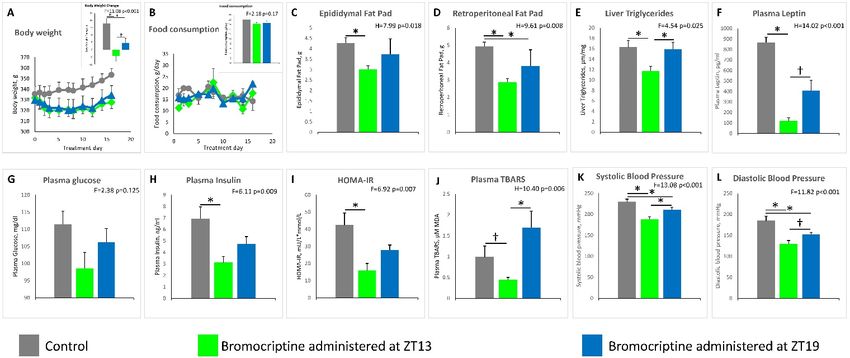
Int. J. Mol. Sci. 2021, 22, 6142                                                                                                   2 of 23

                                   and gene expressions known to facilitate metabolic syndrome. These results of such circadian-timed
                                   bromocriptine treatment upon vascular pathology provide potential mechanisms for the observed
                                   marked reductions in adverse cardiovascular events with circadian-timed bromocriptine-QR therapy
                                   (similarly timed to the onset of daily waking as in this study) of type 2 diabetes subjects and warrant
                                   further investigations into related mechanisms and the potential application of such intervention to
                                   prediabetes and metabolic syndrome patients as well.

                                   Keywords: circadian; neuroendocrine; resetting; bromocriptine; dopamine; diabetes; insulin resis-
                                   tance; metabolic; vascular

                                   1. Introduction
                                         Circadian rhythms of central nervous system (CNS) dopaminergic activity have been
                                   implicated in modulating peripheral fuel metabolism via influences on (a) the hypothalamic
                                   regulation of the neuroendocrine axis targeting peripheral metabolic organs such as liver,
                                   adipose, endocrine pancreas, and muscle [1–5], and (b) striatal neurophysiology that
                                   manifests feeding behavior [6–8]. Typically, a diminution in the natural circadian peak in
                                   CNS dopaminergic activity facilitates the insulin resistant, obese state that is associated
                                   with cardiovascular disease, while the subsequent reinstatement of CNS circadian rhythm
                                   of dopaminergic activity reverses this condition [1–3,9–11].
                                         Bromocriptine-QR is a unique quick release formulation of micronized bromocriptine,
                                   a potent dopamine D2 receptor agonist, which is FDA-approved to treat type 2 diabetes
                                   (T2D), indicated to be administered within 2 h of waking in the morning (the onset of
                                   daily locomotor activity and the natural peak of CNS dopaminergic activity) [12]. This
                                   circadian dopamine agonist therapy for type 2 diabetes provides only a brief morning
                                   pulse of dopamine agonist to the circulation, and yet reduces postprandial hyperglycemia
                                   across the three major meals of the day (i.e., up to 12 h after its administration) without
                                   raising the plasma insulin level [1]. The mechanisms operative in this response, as derived
                                   from preclinical studies, include (1) an amelioration of hypothalamic glucose sensing neu-
                                   rons’ loss of responsiveness to hyperglycemia required for post meal (insulin-stimulated)
                                   glucose disposal [3]; (2) a reduction in elevated sympathetic tone to reduce hepatic and
                                   peripheral insulin resistance [2,11,13]; (3) a reduction in leptin resistance [2,11,13], and (4)
                                   a simultaneous reduction in hypothalamic overactive neuropeptide Y and corticotropin
                                   releasing hormone (CRH) functions to improve peripheral glucose disposal [14]. Notably,
                                   this circadian anti-diabetes therapy has also been observed to rapidly (within 1 year) and
                                   markedly reduce (by 40–55%) adverse cardiovascular events in a large randomized trial of
                                   T2D subjects [15–18].
                                         How these cardiovascular effects are manifested is not presently well understood.
                                   Inasmuch as circadian rhythms of neuroendocrine events, including autonomic balance,
                                   within the cardiovascular system play major roles in cardiovascular health including con-
                                   trol of blood pressure, vascular endothelial function, cardiomyocyte biology, and daily
                                   cardiac rhythmicity [19–25], it was postulated that such neuroendocrine modulation by
                                   bromocriptine-QR may contribute to its observed beneficial effects on adverse cardiovascu-
                                   lar outcomes. Since the impact of bromocriptine-QR on cardiovascular disease (CVD) was
                                   so rapid and increases or decreases in vascular oxidative and nitrosative stress can rapidly
                                   and significantly worsen or improve cardiovascular health, respectively, in individuals
                                   with dysmetabolism [26–32] (insulin resistance, obesity, T2D, or metabolic syndrome (a
                                   composite of obesity, dyslipidemia, hypertension, and associated low grade systemic in-
                                   flammation)), this study investigated the potential impact of circadian-timed bromocriptine
                                   administration to improve vascular oxidative/nitrosative pathology in hypertensive SHR
                                   rats induced to generate metabolic syndrome by maintenance on a high fat diet. The SHR
                                   rat is well described to exhibit vascular reactive oxygen species/reactive nitrogen species
                                   (ROS/RNS) stress and arteriosclerosis [33–37].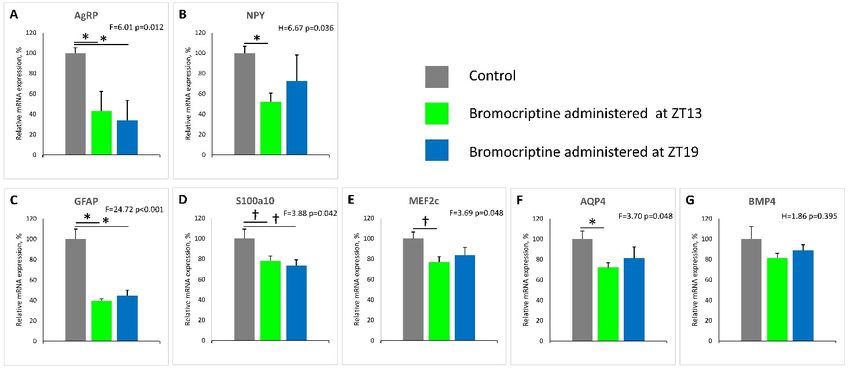
Int. J. Mol. Sci. 2021, 22, 6142                                                                                           3 of 23

                                         Specifically, this study investigated the impact of such treatment upon aortic tissue
                                   (endothelium, smooth muscle cell) biomarkers of (a) vascular oxidative and nitrosative
                                   stress, including vascular NADPH oxidase 4 and inducible nitric oxide synthase (iNOS)
                                   protein levels, enzymes whose overactivation contributes to increase ROS/RNS [31,38–47]
                                   and (b) endothelial nitric oxide synthase (eNOS) uncoupling. Vascular eNOS uncoupling
                                   is a phenomenon of pathologically oxidative-induced altered eNOS structure resulting in
                                   the eNOS attenuation of nitric oxide (NO) production (the main cardioprotective product
                                   of eNOS that stimulates sGC) and simultaneous eNOS amplification of multiple ROS
                                   and subsequent RNS production [48–52], actions known to be potent inducers of rapid
                                   cardiovascular damage [26–32]. Such eNOS uncoupling is observed in hypertensive, insulin
                                   resistant, and T2D animals and humans, and is believed to represent the initial insult to the
                                   vasculature leading to CVD [26–32].
                                         Secondly, in this animal model system, the time-of-day-dependent effects of bromocrip-
                                   tine (administered either at the daily peak of CNS dopaminergic activity in healthy animals
                                   on regular chow (Zeitgeber time (ZT) 13 h after light onset on daily 14 h photoperiods
                                   (which is diminished by high fat feeding)) or at the daily trough of CNS dopaminergic
                                   activity in healthy animals (ZT 19 h after light onset on daily 14 h photoperiods (which is
                                   abnormally elevated by high fat feeding))) on this vascular endpoint and additionally upon
                                   a) the composite of hyperinsulinemia, insulin resistance, liver lipid accretion, hypertension,
                                   hyperleptinemia, obesity, and plasma biomarker of increased systemic oxidative stress
                                   (the hallmarks of metabolic syndrome known to potentiate vascular pathology) and b)
                                   MBH mRNA expression of neuropeptide Y (NPY) and agouti related protein (AgRP), and
                                   associated glial cell genes that support such metabolism-regulating neurons, that potentiate
                                   metabolic syndrome [53–57], were investigated as well.

                                   2. Results
                                   2.1. Effect of ZT 13 versus ZT 19 Bromocriptine Treatment on Aortic Levels of Enzymes
                                   Regulating Tissue Redox Status
                                        Bromocriptine treatment at ZT 13 reduced aorta tissue protein levels of the ROS/RNS
                                   generating enzymes iNOS (12%, p < 0.05) and NADPH oxidase 4 (33%, p < 0.03) relative
                                   to controls. Moreover, such ZT 13 bromocriptine treatment also reduced aortic protein
                                   level of the oxidative/nitrosative stress response protein, GTPCH 1 (71%, p < 0.05) versus
                                   control. Finally, ZT 13 bromocriptine treatment reduced aorta eNOS protein level (24%,
                                   p < 0.05) while simultaneously increasing aortic sGC protein level (32%, p < 0.02) versus
                                   control. Contrariwise, ZT 19 bromocriptine treatment did not significantly change aorta
                                   eNOS or iNOS protein levels and actually numerically reduced the sGC level, though not
                                   significantly. The assessment of NADPH oxidase 4 and GTPCH 1 were not obtained from
                                   the ZT 19 bromocriptine-treated animal samples due to the inadvertent loss of material for
                                   Western blot (Figure 1).
Int. J. Mol. Sci. 2021, 22, 6142 4 of 23
Int. J. Mol. Sci. 2021, 22, x FOR PEER REVIEW 4 of 23
Figure 1.
Figure 1. Impact of timed daily bromocriptine (at ZT 13 or ZT 19) or control treatment
treatment for
for 16
16 days
days on
on markers
markers of
of vascular
vascular
pathology. *—p
pathology. *—pFigure 2. Impact of the timed daily bromocriptine (at ZT 13 or ZT 19) or control treatment for 16 days on metabolic syn-
drome parameters. Effects were examined using 1-way ANOVA (F) followed by pairwise post hoc (Holm–Sidak method)
for normally distributed data, or Kruskal–Wallis (H) one-way analysis of variance on ranks test followed by Dunn’s pair-
Int. J. Mol.
wiseSci. 2021, 22,comparison
multiple 6142 procedures test for non-normal data, see Methods. Significant pairwise comparisons revealed5 of 23
from post hoc analysis or Dunn’s test are indicated by horizontal bars with *—p < 0.05, 2-sided; †—p < 0.05, 1-sided (see
Results for details of individual parameter comparison p values).
Figure 2. Impact of the timed daily bromocriptine (at ZT 13 or ZT 19) or control treatment for 16 days on metabolic syndrome
Bromocriptine treatment
parameters. Effects were at ZT 13 reduced
examined the epididymal
using 1-way ANOVA (F) fat pad by
followed by29% (frompost
pairwise 4.27hoc
± 0.26 to 3.01 ± 0.17
(Holm–Sidak g, pInt. J. Mol. Sci. 2021, 22, 6142 6 of 23
Int. J. Mol. Sci. 2021, 22, x FOR PEER REVIEW 6 of 23
Figure 3.
Figure 3. Impact
Impactofoftimed
timeddaily
dailybromocriptine
bromocriptine (at(at
ZTZT13 or
13 ZT
or 19)
ZT or
19)control treatment
or control for 16for
treatment days
16 on
daysmediobasal hypo-
on mediobasal
thalamic (MBH) gene expression. Effects were examined using 1-way ANOVA (F) followed by pairwise
hypothalamic (MBH) gene expression. Effects were examined using 1-way ANOVA (F) followed by pairwise post hoc post hoc (Holm–
Sidak method)method)
(Holm–Sidak for normally distributed
for normally data, or data,
distributed Kruskal–Wallis (H) one-way
or Kruskal–Wallis analysis analysis
(H) one-way of variance on ranks on
of variance testranks
followed
test
by Dunn’s pairwise multiple comparison procedures test for non-normal data, see Methods. The significant pairwise com-
followed by Dunn’s pairwise multiple comparison procedures test for non-normal data, see Methods. The significant
parisons revealed from post hoc analysis or Dunn’s test are indicated by horizontal bars with *—p < 0.05, 2-sided; †— p<
pairwise comparisons revealed from post hoc analysis or Dunn’s test are indicated by horizontal bars with *—p < 0.05,
0.05, 1-sided (see results for details of individual parameter comparison p values).
2-sided; †— p< 0.05, 1-sided (see results for details of individual parameter comparison p values).
3. Discussion
3. Discussion
This study is the first to demonstrate that circadian-timed bromocriptine administra-
This study is the first to demonstrate that circadian-timed bromocriptine adminis-
tion at the daily peak of CNS dopaminergic activity in healthy animals (ZT 13; that is
tration at the daily peak of CNS dopaminergic activity in healthy animals (ZT 13; that
diminished
is diminished in in
insulin-resistant
insulin-resistant states [1–3]),
states cancan
[1–3]), attenuate
attenuate multiple
multiple in vivo
in vivoenzymatic
enzymatic bi-
omarkers of vascular tissue ROS and RNS stress, endothelial
biomarkers of vascular tissue ROS and RNS stress, endothelial eNOS uncoupling, and eNOS uncoupling, and total
circulating
total oxidative
circulating stressstress
oxidative (TBARS level),level),
(TBARS and such stressstress
and such statusstatus
is known to collectively
is known to collec-
precipitate CVD (Figures 1 and 2). Moreover, such ZT 13 time-of-day-dependent
tively precipitate CVD (Figures 1 and 2). Moreover, such ZT 13 time-of-day-dependent bromo-
criptine effects upon reductions in vascular pathology were
bromocriptine effects upon reductions in vascular pathology were coupled to time-of- coupled to time-of-day-de-
pendent bromocriptine
day-dependent reductions
bromocriptine in (a) multiple
reductions pathophysiological
in (a) multiple components
pathophysiological of met-
components
abolic syndrome including hyperinsulinemia, insulin resistance,
of metabolic syndrome including hyperinsulinemia, insulin resistance, hyperleptinemia, hyperleptinemia, hyper-
tension, increased liver TG content, and obesity, and (b) mediobasal
hypertension, increased liver TG content, and obesity, and (b) mediobasal hypothalamic hypothalamic NPY
and AgRP
NPY and AgRPmRNA mRNA expression,
expression, overactivations
overactivations of of
which
which are
areknown
knownto toinduce metabolic
induce metabolic
syndrome [53–56].
syndrome [53–56]. By By contradistinction,
contradistinction,ZT ZT1919bromocriptine
bromocriptine treatment,
treatment, though
though produc-
producing
ing reductions in body weight, retroperitoneal fat pad weight, and
reductions in body weight, retroperitoneal fat pad weight, and systolic and diastolic blood systolic and diastolic
blood pressure
pressure (yet though
(yet though none tonone to the degree
the degree of ZT 13 ofbromocriptine
ZT 13 bromocriptinetreatment) treatment)
did not did not
signifi-
significantly alter (improve) the levels of vascular eNOS, iNOS
cantly alter (improve) the levels of vascular eNOS, iNOS or sGC protein, plasma TBARS, or sGC protein, plasma
TBARS, epididymal
epididymal fat store
fat store level, liverlevel, liver fatfasting
fat content, content, fasting
plasma plasma
glucose, glucose,
insulin insulin or
or HOMA-IR
HOMA-IR
(Figures (Figures
1 and 1 and 2). while
2). Moreover, Moreover,ZT 13while ZT 13 bromocriptine
bromocriptine treatment reducedtreatment reduced
both MBH
both MBH
AgRP AgRP
and NPY and NPY
mRNA mRNA
levels, ZT 19levels, ZT 19 bromocriptine
bromocriptine treatment only treatment
reducedonly MBH reduced
AgRP
MBH AgRPwithout
expression expression effectwithout
on NPY effect
mRNA on NPY
(FiguremRNA3). (Figure 3).
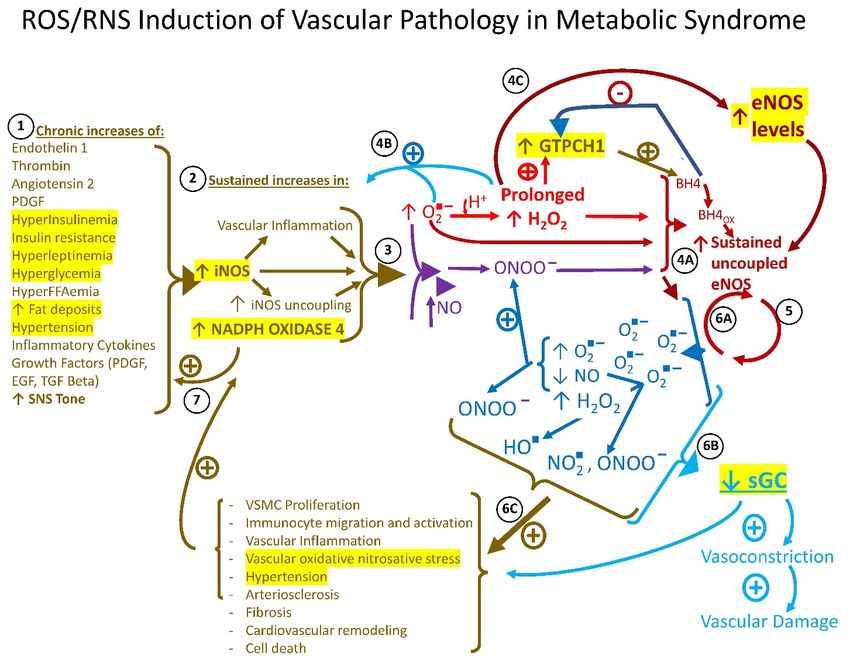
The pathophysiology of chronic vascular vascular tissue
tissue ROS/RNS
ROS/RNS stress stress encompasses
encompasses a vis-
cous positive feedback loop among several enzymes that work in concert concert to to continually
continually
amplify vascular tissue ROS and RNS leading to CVD [26–32,38–52]. As it relates to the the
specific investigations of this study, this pathophysiology may be summarized as follows.
Under normal
normalhealthy
healthycircumstances,
circumstances, vascular
vascular tissue redox
tissue statestate
redox exists as a balance
exists between
as a balance be-
moderate prooxidative
tween moderate species activities
prooxidative that promote
species activities that normal
promote cell functions
normal cell such as growth,
functions such
repair, and repair,
as growth, energy and production and host defense
energy production and hostagainst
defense pathogens
against on the one hand
pathogens on theviaonea
low level of oxidative species (oxygen free radical (O − ), hydrogen−peroxide (H O ), per-
hand via a low level of oxidative species (oxygen free 2 radical (O2 ), hydrogen 2peroxide 2
oxynitrite (ONOO− ) and
(H2O2), peroxynitrite (ONOOseveral others)
−) and and others)
several anti-oxidative activities thatactivities
and anti-oxidative prevent athatchronic
pre-
over-amplification of such prooxidative
vent a chronic over-amplification of such activities
prooxidativethat are damaging
activities thattoare
thedamaging
vasculature on
to theInt. J. Mol. Sci. 2021, 22, 6142 7 of 23
the other hand [58,59]. Vascular (endothelial and smooth muscle cell) NADPH oxidase 4
generates low levels of ROS that normally function to stimulate numerous transcription
factors involved in gene expressions that are critical in the normal regulation of cellular
biology. However, under chronic stimulation from a metabolic syndrome milieu includ-
ing obesity, hyperglycemia, hyperinsulinemia, hyperFFAemia, hypertension, increased
circulating levels of growth factors such as transforming growth factor β, platelet-derived
growth factor, and epidermal growth factor, and increased circulating and local vascular
immunocyte inflammatory cytokines such as tumor necrosis factor α, IL1, and IL6 and
increased thrombin and angiotensin II, all which increase NADPH oxidase 4 expression, the
enzyme generates sustained high levels of ROS O2 − and subsequent H2 O2 [31,38–41,58,60].
The NADPH oxidase 4-derived O2 − can also react with NO to generate ONOO− via O2 −
reaction with immediate vicinity NO (which is derived from overexpressed iNOS activity)
which, along with sustained high levels of O2 − and H2 O2 , collectively damage the vas-
culature [26–32,38–52,60–62] (see below). Similarly, vascular iNOS, a smooth muscle cell
and immunocyte enzyme that exists as a homodimer that converts arginine and oxygen
to citrulline and NO, normally produces acute moderate amounts of NO and ROS when
induced by cytokines or bacteria to facilitate normal smooth muscle cell function (including
vasodilation) and immunocyte bactericidal activity, respectively. However, the chronic
stimulation of iNOS by the metabolic syndrome milieu leads to markedly increased levels
of NO and O2 − which react to form ONOO− , a potent prooxidant, which along with
O2 − and H2 O2 , uncouples the iNOS dimer to alter its functional activity to inappropri-
ately generate even higher levels of O2 − [41–47]. Under situations of chronically elevated
NADPH oxidase 4 and iNOS levels and activities, the increased generation of their ROS
and RNS products, particularly H2 O2 and peroxynitirite, at high levels can function to
directly and indirectly (via growth factor stimulation) feedback to stimulate their own
and each other’s further enzyme expression and subsequent further ROS/RNS generating
action [60–65]. Additionally, the chronic elevation/activation of these ROS/RNS products
from these two ROS/RNS generating enzymes feedforward to alter endothelial eNOS
activity to both increase its expression level and to uncouple the enzyme (as with iNOS)
and subsequently increase ROS production (see below) [60–62,66–69]. Moreover, these
iNOS and NADPH oxidase 4 ROS/RNS products can directly inhibit the expression and
activity of sGC, the vasodilatory and vascular health-promoting enzyme of the vasculature
that is stimulated by eNOS-derived NO. Vascular eNOS under the influence of the cofactor
tetrahydrobiopterin (BH4 ), exists as a homodimer that converts arginine and oxygen to
citrulline and NO. At constitutively low levels, eNOS-derived NO acts (in part via the
stimulation of sGC) to inhibit several local inflammatory processes, vascular smooth cell
proliferation, excessive adhesion molecule aggregation, apoptosis, and arterial stiffness, to
stimulate endothelial cell health and vessel relaxation [59,61]. However, under the chronic
condition of the metabolic syndrome milieu described above, with its incident overexpres-
sion of vascular tissue iNOS and NADPH oxidase 4 that act to sustain increases in local
ROS and RNS, the eNOS dimer also becomes uncoupled in part due to the ROS/RNS
oxidation of BH4 (to BH2 ), changing eNOS enzymatic activity to attenuate NO and amplify
O2 − production. This subsequent increased O2 − production again facilitates increased
H2 O2 and RNS (peroxynitrite and nitrogen dioxide, among others) generation that all
induce the further expression and subsequent uncoupling of eNOS [48–52,60–63] and the
positive feedback loops become amplified with each cycle (Figure 4). Resultantly, the car-
dioprotective effects of the low-level activity of these enzymes (NADPH oxidase 4, iNOS,
and eNOS) are converted by the metabolic syndrome milieu factors to a cardiovascular
damaging status via an enzymatic interplay of self-sustaining high-level activity.Int. J. Mol. Sci. 2021, 22, 6142 8 of 23
Int. J. Mol. Sci. 2021, 22, x FOR PEER REVIEW 8 of 23
Int. J. Mol. Sci. 2021, 22,
Int.
Int. J.J.
Int. Mol.
J.J.
Mol. Sci.
Mol.
Sci. 2021,
Sci. 22,
2021,
2021, xx
22,
22, FOR
xxFOR
FOR PEER
FOR REVIEW
PEER
PEER REVIEW
REVIEW 8888of88of 23
of 23
Int.
Int.Int.
Int.
Int.
Int.
Int. J.J.
J.J.J. Mol.
Mol.
Mol. Mol.
Mol.
J.Mol. Sci.
Sci.
Sci.
Mol.Sci.
Sci.
Sci. 2021,
2021,
Sci.2021,
2021, 22,
22,
2021, 22,
22,
2021,
2021, 22,
22,
22, xxxxx
FOR FOR
xFOR
FOR
FORPEER
PEER
FOR PEER
PEER
PEER
PEER
PEER REVIEW
REVIEW
REVIEW
REVIEW
REVIEW
REVIEW
REVIEW 8888of
ofof
of
of
of 23
23
of 23
2323
23
2323
Figure 4.
Figure 4. ROS/RNS
ROS/RNS induction induction of of vascular
vascular pathology pathology in in metabolic metabolic syndrome. syndrome. Chronic Chronic increases increases in in several
several humoral, humoral, neural, neural,
and metabolic
and metabolicfactors factorsofofmetabolic metabolicsyndrome syndrome listed listed inin 1 potentiate1 potentiate sustained
sustained increases
increases in the in the expressions
expressions of NADPH of NADPH oxidase oxi-
dase 4 and iNOS. 2. Such increases in NADPH oxidase 4 and iNOS activities produce increases in oxygen free radical (O− 2−)
Figure 4. ROS/R
4Figure
Figure
Figure
Figure and4. 4.iNOS.
4.ROS/RNS
4.
ROS/RNSROS/RNS
ROS/RNS 2. Such induction
induction
inductionincreases
induction of
of of in
vascular
of NADPH
vascular
vascular
vascular pathology
pathology
pathologyoxidasein
pathology in 4
in in and
metabolic
metabolic iNOSsyndrome.
metabolic
metabolic activities
syndrome.
syndrome.
syndrome. produce
Chronic
Chronic
Chronic
Chronic increases
increases
increases
increases
increases inin
inin inoxygen
several
several
several
several free
humoral, humoral,
humoral,
humoral, radical neural,−neural,
neural,
neural, (O2 and ) metabolic fa
Figure
Figure
Figure
that
Figure
Figure4.4.ROS/RNS
Figure 4.
can 4.4.
4. ROS/RNS
ROS/RNS
ROS/RNS
react
ROS/RNS
ROS/RNSinduction with induction
induction
induction
H + to form
induction
induction
+ to form ofofof vascular
vascular
vascular
hydrogen
of vascular
ofofvascular
vascularpathology pathology
pathology
pathology
peroxide
pathology
pathologyininmetabolic (H in in in in
2 metabolic
O metabolic
metabolic ) and
metabolic
2 with
metabolicsyndrome. syndrome.
syndrome.
syndrome.
nitric
syndrome.
syndrome.Chronic oxide Chronic
Chronic
Chronic (NO)
Chronic
Chronicincreases increases
increases
increases
to form
increases
increasesininseveral in
in in several
several
several
peroxynitrite
in several
severalhumoral, humoral,
humoral,
humoral, (ONOO
humoral,
humoral,neural, neural,
neural,
neural, ).
neural,
neural, 3. All− ).
and that
and metabolic can
metabolic react factorswith
factors Hof metabolic
of metabolic hydrogen
syndrome
syndrome peroxidelisted listed in (H
in1 O
potentiate ) and with
sustained nitric oxide
increases (NO) in theto form
expressions peroxynitrite of NADPH (ONOO oxi- dase 4 and iNOS
and
and
and
and three
and
and
andand metabolicmetabolic
metabolic
metabolic of O2−, factors
metabolic
metabolic
metabolic
metabolic factors
factors
H
factors2O2, and
factors
factors
factors
factors − , of
of
of ofof
of
of metabolic
of metabolic
metabolic
ONOO
metabolic
metabolic
metabolic
metabolic
metabolic syndrome
syndrome
syndrome
- lead
syndrome
syndrome
syndrome to −eNOS
syndrome
syndrome listed
listedlisted
listed uncoupling
listed
listed
listedlisted in
inin in
inin in in 11potentiate
111111potentiate
2 potentiate
potentiate
potentiate2
via oxidation
potentiate
potentiate
1potentiate
potentiate sustained
sustained
sustained
sustained
sustained
sustained
sustained
sustained
sustained increases
of increases
increases
increases
tetrahydrobiopterin
increases
increases
increases
increases
increases in
in
inin
in
in ininthe
in the
the
the the
the
the
the the expressions
expressions (BH4 toof
expressions
expressions
expressions
expressions
expressions
expressions
expressions ofof
ofof
BH of
of
of NADPH
NADPH
ofNADPH NADPH
NADPH
NADPH
NADPH
NADPH
NADPH
4ox (BH2)) oxi-
oxi-oxi-
oxi- oxi-
and
oxi-
oxi-
oxi- oxi-
dase
dase3.
dase
dase
dase All
4 4
44444and and4
and three
andand iNOS.
iNOS.
iNOS. iNOS. of
iNOS. O2.
2.
2. 2.
2 Such
2.
SuchSuch
Such H
Such 2 O
increases
increases ,
increases
increases2 and
increases ONOO
in
in
inin NADPH
in
NADPH NADPH
NADPH
NADPH lead oxidase
oxidase to
oxidase
oxidase
oxidase eNOS
can4444also 4 4 and
and4 uncoupling
and
and iNOS
iNOS iNOS
iNOS activities
activities
activities
activities via oxidation
produce
produce
produce
produce of
increases
increasestetrahydrobiopterin
increases
increases in
inin oxygen
in
oxygenoxygen
oxygen free
freefreefree (BH
radicalradical
radical
radical
4 to (O
(O BH (O (O
2 −−)− −that can react w
) )
222222−22)−−2)−2))−)−))
4ox
− −
daseseveral
dase
dase
dase
dase 4andand
and
4andandother iNOS. iNOS.
iNOS.
iNOS. iNOS. mechanisms.
2. 2.
2.
2. Such
2. Such
Such
Such Such increases
increases
increases 4A. These
increases
increases in in
in
in inNADPHNADPH
NADPH
NADPHNADPHROS/RNS oxidase
oxidase
oxidase
oxidase
oxidase 4and
4and and
and
4and and iNOS
feedback
iNOS
iNOS
iNOS
iNOSiNOS activities
activitiesto indirectly
activities
activities
activities
activities produce
produce
produce
produce
produce
produce increases
potentiate increases
increases
increases
increases
increases in
further
in in
in
in oxygen
in oxygen
oxygen
oxygen
oxygen
oxygen increasesfree
free free
free
free free radicalin NADPH
radical
radical
radical
radical
radical (O (O (O(O(O
(O2 − 2
that
that(BH
that
that
that can
can
can can ))react
can and
react react
react
react with
several
with with
with
with HH
H H++ to
other
+H ++++to
+++to
to toform
form
form formform hydrogen
mechanisms.
hydrogenhydrogen
hydrogen
hydrogen peroxide
4A. peroxide
peroxide
peroxide
peroxide These in(H (H
(H (H 22O
ROS/RNS
(H O 22O 2222O)22))2)stimulate
and2)
)and and
and with
withcan
with
with nitric
also nitric
nitric
nitric oxide
feedback
oxide
oxide
oxide (NO)
(NO) to
(NO)
(NO) to
indirectly
toto form
toform form
form peroxynitrite
potentiate
peroxynitrite
peroxynitrite
peroxynitrite (ONOO
further
(ONOO (ONOO
(ONOO −−).
increases
−−−). −−3.
−−).−3.).). 3. All
3.
AllAll All in three of O2−, H2
thatoxidase
that
that
that
that cancan 2can
can can react4react
react
react
react and withwith
with
with iNOS.
with H HH HH ++to 4B.
to
+to
to toform form
form
form Prolonged
form hydrogen
hydrogen
hydrogen
hydrogen
hydrogen increases peroxide
peroxide
peroxide
peroxide
peroxide H
(H(H
(H (H
(H222O22O 2O 2O 2O O 2222)and )and
2)2andand
and
) and with
withwith
with
withwith nitric
an nitricincrease
nitric
nitric
nitric
nitric oxide
oxide
oxide
oxide
oxide
oxide (NO)
in eNOS
(NO)
(NO)
(NO)
(NO)
(NO) to
to
toto toform
to expression
formform
form
formform peroxynitrite
peroxynitrite
peroxynitrite
peroxynitrite
peroxynitrite
peroxynitrite that ultimately (ONOO
(ONOO(ONOO
(ONOO
(ONOO(ONOO ).
−−).).
). 3.
−becomes
).3. 3. 3. 3.All
All
3. All
All
All All
three
three
threethree
three
NADPH
uncoupled
three ofof
of ofofO
ofO
O O22O
2O
−−,− H
− 2− ,
oxidase − , −, 2H
H
222222,−−2,−2,,H
2 H O O
22O
,under
H 2 O2,
2
OO and
and
2, 4
and
2, and
and
theand
and ONOO
ONOO
ONOOONOO ONOO
iNOS.
concurrent
ONOO
-- lead
- - - - lead
-lead
lead
4B.
--lead lead to
to
to to to
Prolonged
environment
to eNOS
eNOS
eNOS eNOS
eNOS
eNOS uncouplinguncoupling
uncoupling
uncoupling
increases
uncoupling of increased
uncoupling in via
via
H
viaviavia
via Ooxidation
oxidation
oxidation
oxidation
stimulate
oxidation
ROS/RNS.
oxidation of
of
ofof
4C. tetrahydrobiopterin
of
an
of tetrahydrobiopterin
tetrahydrobiopterin
tetrahydrobiopterin
increase
tetrahydrobiopterin
The increased levels
tetrahydrobiopterin in eNOS (BH
(BH
(BH(BH
expression
(BH (BH 4 to
to
of4444444to
4 4totoBH
BH
BH
uncoupled
to BH BH
BH that
4ox 4ox (BH
(BH
(BH
4ox (BH
(BH ))
))
ultimately
(BH 2
eNOS222))
2 ))2 and
))and
and and and de- several other m
2)) and
− -
three
three
three
three ofofofof OOO O − −H,H
H 2
2H 22O 2O
22O
2,
O
2,
22,
2,2,
2,
2,
2, andand
and
2,
2, and ONOO
ONOO
ONOO ONOO - -lead
-lead
lead
lead to
toto to eNOS
eNOS
eNOS
eNOS uncoupling
uncoupling
uncoupling
uncoupling via
via
via2via oxidation
2oxidation
oxidation
oxidation ofof
of oftetrahydrobiopterin
tetrahydrobiopterin
tetrahydrobiopterin
tetrahydrobiopterin (BH
(BH
(BH(BH 4 4toto
4to to BH
BHBH BH 4ox
4ox
4ox
4ox 4ox
4ox
4ox
4ox
4ox (BH
4ox (BH
(BH (BH 2
22)) 2))
22)) )) and
and
and and
several
several
several
several
becomes
several
creaseother
several
several other
otherother
other
its
other
other uncoupled
NO mechanisms.
mechanisms.
mechanisms.
mechanisms.
mechanisms.
production
mechanisms.
mechanisms. under 4A.
4A.
4A.4A.
and
4A. 4A.
the
4A. These
These
TheseThese
These
concurrent
generate
These
These ROS/RNS
ROS/RNS
ROS/RNS ROS/RNS
ROS/RNS increased
ROS/RNS
ROS/RNS environment can
can
cancan
can can
can also
also
Oalso also
also − also
also levels feedback
of feedback
feedback
feedback
feedback increased
feedback
feedback that again to
to
to to
to to
to indirectly
indirectly
indirectly
indirectly
ROS/RNS.
indirectly
react with
indirectly
indirectly potentiate
potentiate
potentiate
potentiate
potentiate
4C.
H and
potentiate
potentiate + The further further
further
further
further
increased
NO to form
further
further increasesincreases
increases
increases
increases levels
increases
increases H2O2of in
in
inin
,in
ONOO
inNADPH
inNADPH
NADPHNADPH
uncoupled
NADPH
NADPHNADPH − , hy- oxidase 4 and iN
several
several
several other
other
other mechanisms.
mechanisms.
mechanisms. 4A.
4A. 4A. These
These
These ROS/RNS
ROS/RNS
ROS/RNS can
can can 2also
also also feedback
feedback
feedback to
to to indirectly
indirectly
indirectly potentiate
potentiate
potentiate further
further
further increases
increases
increases in
in in NADPH
NADPH NADPH
oxidase
oxidase
oxidase
oxidase
oxidase
droxyl4decrease 44 4 and
4
and and and iNOS.
iNOS. iNOS.
iNOS. 4B.
4B. 4B. 4B. ProlongedProlonged
Prolonged
Prolonged increases
increases
increases
increases inin in inH H H O
22H O O 22O stimulate
stimulate stimulate
stimulate an
anan
− anincrease
increase
increase
increase in
inin eNOS
in
eNOS eNOS
eNOS expression
expression
expression
expression that
that that
that
+ ultimately
ultimately
ultimately
ultimately becomes
becomesbecomes
becomes uncoupled und
oxidase
oxidase
eNOS
oxidase
oxidase
oxidase 44and
44radical
4andand
and andand iNOS.
iNOS. (OH
iNOS.
iNOS.
iNOS. its NO
iNOS. 4B.
− ),4B.
4B. 4B.
4B.4B. Prolonged
nitrogen Prolonged
Prolonged
production
Prolonged
Prolonged
Prolonged increases
dioxide increases
increases
and
increases
increases
increases (NO
generate inin in
2in − )in
in HH
Hand
H H22O
2H 2
22O
22O
2
22O
increased
2O O 2
22stimulate
2222several
2
2stimulatestimulate
stimulate
stimulate
2stimulate O2an
other an an
an
ananincrease
ROS/RNS
increase
increase
levels
increase
increase
increase that in
in in
in
in eNOS
species.
in eNOS
eNOS
again
eNOS
eNOS
eNOS expression
react 5. These
expression
expression
expression
expression
expression with uncoupledHthat that
that
thatand
that
that ultimately
ultimately
ultimately
NO
ultimately
ultimately
ultimately eNOS-generated
to form becomes
becomes
becomes
becomes
becomes
becomes H2 O2 ,
uncoupled
uncoupled
uncoupled
uncoupled
uncoupled
uncoupled
uncoupled
ROS/RNS
uncoupled − under
under
underunder under
under
under
feedback
under the
the
thethethe
the
the the concurrent
to concurrent
concurrent
concurrent
concurrent
concurrent
concurrent uncouple
concurrent environment
− environment
environment
environment
environment
environment
environment
more
environment eNOS; of
of
of of
of
of
6A,increased
ofincreasedincreased
increased
increased
increased
increased and ROS/RNS.
ROS/RNS.
ROS/RNS.
ROS/RNS.
ROS/RNS.
ROS/RNS.
ROS/RNS.
feedforward
− 4C.
4C.
4C.
(in 4C.
4C.
4C.
4C. The
The The
The
The
The
The
conjunction increased
increased
increased
increased
increased
increased
increased with levelslevels
levels
levels
levels
levels
levels
decreased of
ofof
of
of ofofuncoupleduncoupled
uncoupled
uncoupled
uncoupled
uncoupled
uncoupled NO) to eNOS
eNOS
eNOS eNOS
eNOS
eNOS
eNOS
decrease de-
de- de-
de-
de- de-
de- the crease its NO p
uncoupled
uncoupled
ONOO , hydroxyl under underthe the concurrent
concurrent
radical (OH environment environment
), nitrogen dioxide ofof increased
ofincreased increased (NO2 ROS/RNS. ROS/RNS.
)ROS/RNS.
and several 4C.4C.
4C.The The
other increased
Theincreased
increased
ROS/RNS levels
levels
levelsspecies. ofof uncoupled
ofuncoupleduncoupled
5. These uncoupled eNOS
eNOS
eNOS de- de-
de-
crease
crease
crease
crease
crease
crease
crease
expression
crease its
itsits
its
its
its NO
its
itsNO
NONONO
NO NONO production
and production
production
production
production
production
production activity
production and
and
of and
and
and
and
and and generate
soluble generate
generate
generate
generate
generate
generate
generate guanylate increased
increased
increased
increased
increased
increased
increased
increased cyclase O
O
O O OO22O
O
−− −levels − levels
−2−−2−−−2−levels
levels
levels levels
levels
(sGC),
levels that
that
that that
that
that
that
that againagain
again
again
again
again
again
resulting again react
reactreact
react
react
react
react
in a
react with
with with
with
with
with
with
decreased
with H
H
H HH++ and
H+H + and
++++and
and
andand
+and
effect NO
NO
NO
NO NONO
NO ofto
to
to to
totoform
to
theform form
form
form
form
form sGC HH
HHHH22HOO
O O O2O
product,
2 ,
22O,
,2,ONOO
ONOO
, , ONOO
ONOO
2,ONOO
ONOOONOO cGMP,
−−,−hy- −, hy-
−−−,,−−,−−,−hy-
,hy-
hy- hy-
hy- to droxyl radical (
creaseits
crease
eNOS-generated itsNO NOproduction production
ROS/RNS andand generate
generate
feedback toincreasedincreased
uncouple O 2
more O
222222levels
2 −− levels
eNOS; thatthat
6A, again
againand react reactwith
feedforward withHH +
H ++
(in
+ and
andand NO
conjunctionNO
NOtoto toformform
form with HH 2H2 O
222O22222,22,ONOO
O2 2
2222decreased ,ONOO
ONOO NO) , ,hy-
− , hy- hy- to
droxyl
droxyl
droxyl
droxyl
droxyl
droxyl
promote
droxyl
droxyl radical
radical
radical
radical
radical
radical
radical
radical vascular (OH
(OH
(OH(OH
(OH (OH(OH
(OH
−−),
−−−),
−−),
),
−nitrogen
−),
tissue
),
− ), nitrogen
nitrogen
nitrogen
nitrogen
nitrogen
), nitrogen
nitrogen vasodilation dioxide
dioxide
dioxidedioxide
dioxide
dioxide
dioxide
dioxide (NO
(NO
(NO(NO
and
(NO (NO
(NO
(NO 22−−−2)
−−2)
)
−−2)−and
health.
) ) )
−and
and
) and
and and
and
and several
several
several several
several
several
6B.
severalseveral These other
other other
other
other
otherother
other ROS/RNS
ROS/RNS
ROS/RNS
ROS/RNS
ROS/RNS
ROS/RNS
uncoupledROS/RNS
ROS/RNS species.
species.
species.
species.
species.
species.
eNOS-generated
species.
species. 5.
5.
5.5.5. 5.These
5.
These
5. These
These
These
These
TheseThese uncoupled
uncoupled
uncoupled
uncoupled
uncoupled
uncoupled
ROS/RNS uncoupled
uncoupled eNOS-generated
products, eNOS-generated
eNOS-generated
eNOS-generated
eNOS-generated
eNOS-generated
eNOS-generated
eNOS-generated along with ROS/RNS feedb
droxylradical
droxyl
decrease radical
the (OH (OH),),nitrogen
expression
−
− − nitrogenand activity dioxide
dioxide of (NO (NO
soluble
2 2
2 −−2−
222 2) )and − andseveral
guanylate several otherROS/RNS
other
cyclase ROS/RNS
(sGC), species.
species.
resulting 5.a5.These
inwith Theseuncoupled
decreased uncoupled
effect eNOS-generated
ofeNOS-generated
the sGC product,
ROS/RNS
ROS/RNS
ROS/RNS
ROS/RNS
ROS/RNS
those formed
ROS/RNS
ROS/RNS feedback
feedback
feedback
feedback
feedback feedback
feedback via to to
to to
increased
to touncouple
to uncouple
uncouple
uncouple
uncouple
uncouple
uncouple NADPH more
more
moremore
more
more
more eNOS;
eNOS;
eNOS; eNOS;
eNOS;
oxidase
eNOS;eNOS; 6A,
6A,
6A, 6A,
6A, 46A,
6A, and
and
and
and and
and and
and feedforward
feedforward
feedforward
iNOS feedforward
feedforward feedforward
feedforward
feedforward (in
(in
(in (in
(in (inconjunction
(in conjunction
conjunction
conjunction
conjunction
to also directly
conjunction
conjunction with
with
with with
with
with decreased
decreased
decreased
decreased
decreased
cause
decreased
decreased damage NO)
NO)
NO) NO)
NO) NO)
NO) toto
to
to
to to todecrease
the
to decrease
decrease
decrease
decrease vasculature
decrease
decrease the
the
the the
the the
the expression and
ROS/RNS
ROS/RNS
ROS/RNS feedback
feedback feedback to
to to uncouple
uncouple
uncouple more
more
more eNOS;
eNOS;
eNOS; 6A,
6A, 6A, and
and and feedforward
feedforward
feedforward (in(in(in conjunction
conjunction
conjunction with
with
with decreased
decreased
decreased NO)
NO) NO) to
to to decrease
decrease
decrease the
the the
cGMP,
expression
expression
expression
expression to and promote
and and and activity
activity
activity vascular
activity of
of of soluble
of tissueguanylate
soluble
soluble
soluble vasodilation
guanylate
guanylate
guanylate cyclase
cyclase and health.
cyclase
cyclase (sGC),
(sGC), (sGC), (sGC), 6B.
resultingThese uncoupled
resulting
resulting
resulting inin in a
ina a decreased
a decreased
decreased
decreased eNOS-generated
effect
effect effect
effect of
ofof the
ofthe
thetheROS/RNS
sGC
sGC
sGC sGC product,
product,
product,
product, products, cGMP,
cGMP,cGMP,
cGMP, along to
to to to promote vascul
expression
(endothelium
expression
expression
expression
expression
expression and andand and
andand activity
andactivity
activity
activity
activity
activity smooth ofof
of of of
ofsoluble muscle
soluble
soluble
soluble
soluble
soluble guanylate
cells) ascyclase
guanylate
guanylate
guanylate
guanylate
guanylate listed
cyclase cyclase
cyclase
cyclase
cyclase in (sGC),
(sGC), 6C.
(sGC),
(sGC),
(sGC), (sGC), 7.resulting
Inflammatory
resulting
resulting
resulting
resulting
resulting in in in
in
in aaaadecreased
in cytokines
aadecreased
decreased
decreased
decreased
decreased effect and
effect
effect
effect
effect
effect of
growth
of of
of
of the
ofthethe
the
thethe sGC
sGC factors
sGC
sGC
sGC sGC product,
product,
product,
product,
product,
product, fromcGMP, infiltrating
cGMP,
cGMP,
cGMP,
cGMP,
cGMP, to to
to to to to
with
promote
promote
promote
promote
promote
immunocytes those vascular
vascular
vascular
vascular
vascular formed and tissue
tissuevia
tissue
tissue
tissue increased
proliferatingvasodilation
vasodilation
vasodilation
vasodilation
vasodilation NADPH and
vascularand
andand and oxidase
health.
health.health.
health.
health.
smooth 6B.
6B.
6B. 4
6B. 6B.and
muscle These
These
TheseThese TheseiNOS feedforward
uncoupled
uncoupled
uncoupled
uncoupled
uncoupled
cells to
eNOS-generated
eNOS-generated
further eNOS-generated also
eNOS-generated
eNOS-generated
stimulate directly
NADPH cause
ROS/RNS
ROS/RNS
ROS/RNS
ROS/RNS
ROS/RNS damage
oxidaseproducts, products,
products,
products,
products,
4products,
and iNOS to the vasculature
along
alongalong
along
along andwith with
with withwith
these those formed vi
promote
promote
promote
promote
promote vascular
vascular
vascular
vascular
vascular tissue
tissue
tissue
tissue
tissue vasodilation
vasodilation
vasodilation
vasodilation
vasodilation and
and and
andand health.
health.
health.
health.
health. 6B. 6B.
6B.
6B. 6B. These
These These
These
These uncoupled
uncoupled
uncoupled
uncoupled
uncoupled eNOS-generated
eNOS-generated
eNOS-generated
eNOS-generated
eNOS-generated ROS/RNS
ROS/RNS
ROS/RNS
ROS/RNS
ROS/RNS products,
products,
products,
products, along
along
along
along
along with with
with
with with
those
(endothelium
thosethose
those
thoseenzymes
those
those formed
formedformed
formed
formedformed
formed also via
via
via
via
via and
via increased
feedback
via smooth
increased
increased
increased
increased
increased
increased NADPH
muscle
NADPH
to stimulate NADPH
NADPH
NADPH
NADPH NADPH oxidase
cells)
oxidase oxidase
oxidase
oxidase
these oxidase
oxidase as same 4
listed
4 4 and
44444and 4
and
andand
actions.
and iNOS
in iNOS
iNOS iNOS iNOS
6C.
iNOS feedforward
7.
The Inflammatory
feedforward
feedforward
feedforward
feedforward
metabolic to
feedforward to
to to also
toalso
syndrome
to also
also
also
also directly
cytokines directly
directly
directly
directlymilieu
directly andcause
cause
cause cause growth
cause
initiates
cause damagedamage
damage
damage
damage
damage factors
and maintains to
to
toto to
to the
the
the from
thethe
the vasculature
infiltrating
vasculature
vasculature
vasculature
vasculature
the vascu-
vasculature (endothelium an
those
those
those formed
formed
formed via
via via increased
increased
increased NADPH
NADPH NADPH oxidase
oxidase
oxidase 4and
and
and and iNOS
iNOSiNOS iNOS feedforward
feedforward
feedforward
feedforward toto
to to also
also
also
also directly
directly
directly
directly causecause
cause cause damage
damage
damage
damage toto
to to the the
the the vasculature
vasculature
vasculature
vasculature
(endothelium
(endothelium
(endothelium
(endothelium
immunocytes
(endothelium
lar production
(endothelium
(endothelium and
and
and
and
and and
and smooth
smooth
ofsmooth smooth
smooth
proliferating
ROS/RNS
smooth
smooth muscle
muscle
muscle muscle
muscle via multiple
muscle
muscle cells)
cells)
cells)
cells)
vascular
cells)
cells)
cells) as
as
asas
as as
as listed
listed
listed
smooth
listed
internal
listed listed
listed in
in
ininin in6C.
6C.
muscle
in 6C.
positive 6C. 6C. 6C.
6C. 7.7.
7.7.
7. Inflammatory
7.
7.cellsInflammatory
Inflammatory
Inflammatory
Inflammatory
feedback further
Inflammatory
Inflammatory cytokines
cytokines
cytokines
cytokines
stimulate
and cytokines
feedforward
cytokines
cytokines and
and
NADPH
and
and and
and lops
and growth
growth
growthgrowth
growthoxidase
growth
growth factors
factors
factors
factors
factors
that ultimately factors
factors 4 and from
from
fromfrom
from from
iNOS
lead
from infiltrating
infiltrating
infiltrating
infiltrating
to and
infiltrating vascular
infiltrating
infiltrating these immunocytes an
(endothelium
(endothelium
(endothelium and
and and smooth
smooth
smooth muscle
muscle
muscle cells)
cells)
cells) as
as as listed
listed listed in in in 6C. 6C. 6C. 7.
7. 7. Inflammatory
Inflammatory
Inflammatory cytokines
cytokines
cytokines and
and and growth
growth
growth factors
factors
factors from
from from infiltrating
infiltrating
infiltrating
immunocytes
immunocytes
immunocytes
immunocytes
immunocytes
immunocytes
enzymes alsoand and
and
and
and and
feedback proliferating
proliferating
proliferating
proliferating
proliferating
proliferating to stimulate vascular
vascular
vascular
vascular
vascular
vascular thesein smooth
smoothsmooth
smooth
smooth
smooth
same 2O2actions.
muscle
muscle
musclemuscle
muscle
muscle The cells
cellscells
cells
cells
cells furtherfurther
further
further
further
further
metabolic stimulate
stimulate
stimulate
stimulate
stimulate
stimulate
syndrome NADPH
NADPHNADPH
NADPH
NADPH
NADPH
milieu oxidase
oxidase
oxidase
oxidase
oxidase
oxidase
initiates and 44 4 4
4444andand
4
and and
andand iNOS
iNOSiNOS
iNOSiNOSiNOS and
and
and
and and
and these
these
these thesethese
these enzymes also fe
damage and
immunocytes
immunocytes
immunocytes
immunocytes CVD.
and
and and
and Prolonged
proliferating
proliferating
proliferating
proliferating increases
vascular
vascular
vascular
vascular H
smooth
smoothsmooth
smooth production
musclemuscle
musclemuscle cells from
cells
cells
cells furtherNADPH
further
further
further stimulate oxidase
stimulate
stimulate
stimulate NADPH4, iNOS,
NADPH
NADPH
NADPH and
oxidase
oxidase
oxidase
oxidase uncoupled 4maintains
and
andand
and iNOS
iNOS eNOS
iNOS
iNOS the
and
andand
and vascular
stimulate these
these these
these
enzymes
enzymes
enzymes
enzymes
enzymes
enzymes
enzymes
the
enzymes increased also
also
also
also
also also
also
also feedback
feedback
feedback
feedback
feedback
feedback
feedback
expression
feedback to
to
to
to to
to tostimulate
stimulate
stimulate
stimulate
stimulate
stimulate
stimulate
of GTPCH these
thesethese
these
these
these
these 1, thesame
same
samesame
same
same
same rate-limiting actions.
actions.
actions.
actions.
actions.
actions.
actions. TheThe
The The
The TheThe
enzyme metabolic
metabolic
metabolic
metabolic
metabolic
metabolic
metabolic in BH syndrome
syndrome
syndrome
syndrome
syndrome
syndrome
syndrome
synthesis, milieu
milieu
milieu
milieu
milieu
milieu
milieu
and BHinitiates
initiatesinitiates
initiates
initiates
initiates
initiates is itselfand
and
and
and and
and
and an maintains
maintains
maintains
maintains
maintains
maintains
maintains
end product, the
the
the
the the
the
the vascu-
vascu-
vascu-
vascu- vascu-
vascu-
vascu-
negative lar production o
production
enzymesalso
enzymes also offeedback
ROS/RNS
feedback toto stimulate
via
tostimulate
stimulate multiple these
these
these same
internal
samesameactions. actions.
positive
actions. The Thefeedback
The metabolic
metabolic
metabolic and syndrome
feedforward
syndrome
syndrome
4 milieu
milieu
milieu lops initiates
that ultimately
initiates
initiates
4 and
andandmaintains maintains
maintains lead the tothe
the vascularvascu-
vascu- vascu-
lar
lar
lar
lar
lar lar
lar production
production
production
production
feedback
lar production
production
production
production inhibitor of
of
of ofofofROS/RNS
of
of ROS/RNS
ROS/RNS
ROS/RNS
ROS/RNS
ROS/RNS
ROS/RNS of
ROS/RNS GTPCH via
viavia
via
via viavia
via multiple
1. multiple
multiple
multiple
multiple
multiple
multiple
As
multiple BH internal
internal
internal
internal
internal
internal
internal
becomes
internal positive
positivepositive
positive
positive
positive
positive
oxidized
positive feedback
feedback
feedback
feedback
feedback
feedback
feedback
by
feedback the and
andand
and
and
and and
prevailing
and feedforward
feedforward
feedforward
feedforward
feedforward
feedforward
feedforward ROS/RNS
feedforward lops
lops
lops lops
lops
lops
lops stress,
lops that
that that
that
that
that
that that ultimately
less ultimately
ultimately
ultimately
ultimately
ultimately
ultimately
of
ultimately it is lead
leadleadlead
lead
lead
lead
available lead to
toto
to
to to
tovascular
to
vascularvascular
vascular
vascular
vascular
vascular
to
vascular inhibit damage and CV
larlarproduction
damage production and CVD. ofofROS/RNS ROS/RNS
Prolonged via via multiple
multiple
increases 4 internal
ininternal
H2 O2 production positivefeedback
positive feedback
from NADPH and andfeedforward
feedforward
oxidase 4, iNOS, lopsthat
lops that ultimatelylead
andultimately
uncoupled lead
eNOS totovascularvascular
stimulate
damage
damage
damage
damage
damage
damage
GTPCH
damage
damage and
and
andand
and and
and
and1. CVD.
CVD.
CVD. CVD.
CVD.
CVD.
Increased
CVD.
CVD. Prolonged
Prolonged
Prolonged
Prolonged
Prolonged
Prolonged
Prolonged
Prolonged levels increases
increases
increases
increases
increases
increases
of GTPCH
increases
increases in
in
in inin
in
inH
in
H
H
1H H
H22H
H O
O
O
are22O
O 2222O
O O production
a production
2production
2production
production
production
biomarker
production
production from
from
from from
from
from
of
from
from NADPH
NADPH
NADPH
NADPH
NADPH
NADPH
tissueNADPH
NADPH oxidase
oxidase
oxidase
oxidase
oxidase
oxidase
pro-oxidative/nitrosative
oxidase
oxidase 4,
4,
4,4,
4, iNOS,
4,4,
iNOS,
4, iNOS,iNOS,
iNOS,
iNOS,
iNOS,iNOS, and
and
and
and and
and
and
and uncoupled
uncoupled
uncoupled
uncoupled
uncoupled
uncoupled
and
uncoupled
uncoupled proinflammatory eNOS
eNOS
eNOS
eNOS eNOS
eNOS
eNOS eNOS stimulate
stimulate
stimulate
stimulate
stimulate
stimulate
stimulate
stimulate state. the increased ex
damage
damage
the increased and andCVD. CVD.
expression Prolonged
Prolonged of GTPCH increases
increases 1, the ininHrate-limiting
2H2
2222O 2 2O 2
2 2 2 2 production
222production enzyme fromfrom NADPH
NADPH
in BH4 synthesis, oxidaseand
oxidase 4,4,iNOS, iNOS,
BH4 and isand uncoupled
uncoupled
itself an end product, eNOS eNOSstimulate stimulate
negative
the
the
the
the the
NO
the increased
increased
increased
increased increased
2 —nitrogen
-
increased expression
expression
expression
expression
expression
expressiondioxide; of
of
of of GTPCH
of
GTPCH
GTPCH
OH
of GTPCH
GTPCH
GTPCH − —hydroxyl 1,
1,
1, 1,the
1,
the
the
1, the the
the rate-limiting
rate-limiting
rate-limiting
rate-limiting
rate-limiting
radical;
rate-limiting enzyme
enzyme
enzyme
PDGF—platelet-derived enzyme
enzyme
enzyme in
in
in in BH
in
BH
BH
in BHBH
BH 4
4 synthesis,
synthesis,
synthesis,
synthesis,
444444synthesis,
4
synthesis, growth and
and and
and
and and BH
BH
BH BH
factor;BH
BH 4 is is
444444is
4 is
4 itself
is
is itself
itself
itself
itself an
an
an
EGF—epidermal
itself anan
anend
end
end end end product,
product,
product,
product,
product, growth negativenegative
negative
negative
negative factor; feedback inhibit
the
the
thethe
feedback
increased
feedback
feedback
feedback
feedback
increased
increased increased inhibitor
inhibitor
inhibitor
inhibitor
inhibitor
expression
expression
expression
expression
of
of ofofGTPCH
ofGTPCH GTPCH
GTPCH
GTPCH
ofofof ofGTPCH
GTPCH
GTPCHGTPCH
1.
1. 1.1.
As
1.
As AsAs
AsBH
BH
1,
BH
1,
1,
BH
BH
the
1, the
the the
44 becomes
rate-limiting
rate-limiting
44becomes
becomes
rate-limiting
rate-limiting
becomes
becomes oxidized
oxidized
oxidized
oxidized
oxidized
enzymeenzyme
enzyme enzyme
by
bybyby
bythe
the the
the
in
the
in
in BH
inBH
BH BH
prevailing
prevailing
prevailing
prevailing
prevailing
44synthesis,
4synthesis,
synthesis,
4synthesis,
ROS/RNS
ROS/RNS
ROS/RNS
ROS/RNS
ROS/RNS
and
and
andand BH BHBHBH
stress, stress,
stress,
stress,
stress,
44is
4is
4is itself
is itself
less
less
itself
itselfless
less
less of
an
of
an
an
of
an
of
it
of
it
end
it itend
end
end
is
it
is
end
is
product,
product,
product,
isavailable
is
product,
product,
available
available
available
available to
toto tonegative
negative
negative
negative
negative
inhibit
toinhibit inhibit
inhibit
inhibit GTPCH 1. Incre
feedback
TGFβ—transforming
feedback
feedback
feedback
feedback
feedback inhibitor
inhibitor
inhibitor
inhibitor
inhibitor
inhibitor of
ofof of
of GTPCH
of GTPCH growth
GTPCH
GTPCH
GTPCHGTPCH 1.1.1.
1. 1.As
factor
As
1. As
As
As As BH
BH
BH
BH BH
BH 44444becomes
beta;4 SNS—sympathetic
becomes
44becomes
4becomes
becomes
4becomes oxidized
oxidized
oxidized
oxidized
oxidized
oxidized by
by by
by
by bythe
thethe
the
the the prevailing
nervous prevailing
prevailing
prevailing
prevailing
prevailing system; ROS/RNS
ROS/RNSVSMC—vascular
ROS/RNS
ROS/RNS
ROS/RNS
ROS/RNS stress,
stress,
stress,
stress,
stress,
stress, less less
less
less
less
less of
of of
of
of ititititit
smooth
of is is
itis available
isis muscleto
available
available
is available
available
available cell;
toto
to toinhibit
to inhibit
inhibit
inhibit BH4—
inhibit
inhibit
GTPCH
GTPCH
GTPCHGTPCH
GTPCH 1.
1.1. 1.
Increased
1.Increased Increased
Increased
Increased levels
levels levels
levels
levels of
of of ofGTPCH
ofGTPCH GTPCH
GTPCH
GTPCH 11 1 1
are
1
are are
areare aa a abiomarker
a biomarker
biomarker
biomarker
biomarker of
of of
ofof tissue
tissuetissue
tissue
tissue pro-oxidative/nitrosative
pro-oxidative/nitrosative
pro-oxidative/nitrosative
pro-oxidative/nitrosative
pro-oxidative/nitrosative and
and
andand
and proinflammatory
proinflammatory
proinflammatory
proinflammatory
proinflammatory state.
state.state. state.
state. NO 2-—nitrogen
GTPCHtetrahydrobiopterin;
GTPCH
GTPCH
GTPCH
GTPCH
GTPCH 1.
1.1.
1. 1. Increased
1. Increased Increased
Increased
Increased
Increased levels BH
levels
levels
levels
levels
levels 4 oxof
ofofofof
ofGTPCH
—oxidized
GTPCHGTPCH
GTPCH
GTPCHGTPCH 111tetrahydrobiopterin;
11are
1areare
are
are are aaaaabiomarker biomarker
abiomarker
biomarker
biomarker
biomarker of
of
of of
ofof ↑—increases;
tissue
tissue
tissue
tissue
tissue
tissue pro-oxidative/nitrosative ↓—decreases; ⊕—stimulates;
pro-oxidative/nitrosative
pro-oxidative/nitrosative
pro-oxidative/nitrosative
pro-oxidative/nitrosative
pro-oxidative/nitrosative and
andand
and
andand proinflammatory
proinflammatory
proinflammatory
proinflammatory
proinflammatory
proinflammatory ⦵—inhibits; state.
state. state.
state.
state. state. ⤻,
NO NO --—nitrogen -− —nitrogen dioxide; dioxide; OH OH
−−—hydroxyl− —hydroxyl radical; radical; PDGF—platelet-derived
PDGF—platelet-derived growth growth factor; factor; EGF—epidermal
EGF—epidermal growth factor;
—nitrogen dioxide; OH levels andgrowth factor; TGFβ—transfor
NO −—hydroxyl radical; PDGF—platelet-derived growth factor; EGF—epidermal growth factor;
NO 2-222—nitrogen
-—nitrogen dioxide;
dioxide; OH OH −−−—hydroxyl radical; PDGF—platelet-derived growth factor; EGF—epidermal growth factor;
-2---2 −−—hydroxyl radical; PDGF—platelet-derived growth factor; EGF—epidermal growth factor;
NO
NONO
NO ⤹,2222↗,
NO
NO -—nitrogen →, ↘, ⤸,
--—nitrogen
2—nitrogen
2—nitrogen
2-—nitrogen
—nitrogen ⤣,
dioxide;
dioxide;⤤, ⤴,
dioxide;
dioxide;
dioxide;
dioxide; OH OH OH
OH ⤷
OH
OH —hydroxyl
leads −−—hydroxyl
−−—hydroxyl
—hydroxyl
−—hydroxyl
—hydroxylto; }►, }►{ radical;
radical;
radical;
radical; collectively
radical;
radical; PDGF—platelet-derived
PDGF—platelet-derived
PDGF—platelet-derived
PDGF—platelet-derived
PDGF—platelet-derived
PDGF—platelet-derived leads to these collective growth
growth
growth
growth
growth
growth factor;
events. factor;
factor;
factor;
factor;
factor; Enzyme EGF—epidermal
EGF—epidermal
EGF—epidermal
EGF—epidermal
EGF—epidermal
EGF—epidermal growth
cardiometabolic
growth
growth
growth
growth growth factor;
factor; factor;
factor;
factor; factor;
TGFβ—transforming
TGFβ—transforming
TGFβ—transforming
TGFβ—transforming
TGFβ—transforming
parameters measured
TGFβ—transforming growth
growth
growth growth
growthin thefactor
growth factor
factor factor
factor
study
factor beta;
beta;beta;
beta;
beta;
are
beta; SNS—sympathetic
SNS—sympathetic
SNS—sympathetic
SNS—sympathetic
SNS—sympathetic
highlighted
SNS—sympathetic in yellow. nervous
nervous
nervous
nervous
nervous
nervous system;
system; system;
system;
system; system; VSMC—vascular
VSMC—vascular
VSMC—vascular
VSMC—vascular
VSMC—vascular
VSMC—vascular smooth
smooth
smooth
smooth
smooth
smooth musclemuscle
muscle
muscle
muscle
muscle cell;
cell;cell;
cell;
cell;
cell; BH
BH
BH BH BH
BH 44— —
444—4 — 4 — — tetrahydrobiopt
TGFβ—transforming
TGFβ—transforming
TGFβ—transforming
TGFβ—transforming growth
growth
growth
growth factor
factor
factorfactor beta;
beta;
beta;
beta; SNS—sympathetic
SNS—sympathetic
SNS—sympathetic
SNS—sympathetic nervous
nervous
nervous
nervous system;
system;
system;
system; VSMC—vascular
VSMC—vascular
VSMC—vascular
VSMC—vascular smooth
smooth
smooth
smooth muscle
muscle
muscle
muscle cell;
cell;
cell;
cell; BHBHBH BH 44— 4—
44— 4 4— —
tetrahydrobiopterin;
tetrahydrobiopterin;
tetrahydrobiopterin;
tetrahydrobiopterin;
tetrahydrobiopterin; BH
BH BH BH
BH 44 ox —oxidized
—oxidized
—oxidized
—oxidized
—oxidized tetrahydrobiopterin;
tetrahydrobiopterin;
tetrahydrobiopterin;
tetrahydrobiopterin;
tetrahydrobiopterin; ↑—increases;
↑—increases;
↑—increases;
↑—increases;
↑—increases;
↑—increases;
—increases;
↑—increases; ↓—decreases;
—decreases; ⊕—stimulates;
↓—decreases;
↓—decreases;
↓—decreases;
↓—decreases;
↓—decreases;
↓—decreases; ⊕—stimulates;
⊕—stimulates;
⊕—stimulates;
⊕—stimulates;
⊕—stimulates;
—stimulates;
⊕—stimulates; ⦵—inhibits;
—inhibits; ⤻,
⦵—inhibits;
⦵—inhibits;
⦵—inhibits;
⦵—inhibits;
⦵—inhibits;
⦵—inhibits;
⦵—inhibits; ⤻,
⤻, ⤻,⤻,
⤻, ⤻,
,⤻, ⤹,, ↗, →, ↘, ⤸, ⤣
tetrahydrobiopterin;
tetrahydrobiopterin;
tetrahydrobiopterin;
tetrahydrobiopterin;
tetrahydrobiopterin;
tetrahydrobiopterin; BHBHBHBH
BHBH 4ox
4444ox 4ox
4ox
444ox
ox ox
ox —oxidized
—oxidized
—oxidized
ox
—oxidized
—oxidized
—oxidized
ox
ox
4oxox tetrahydrobiopterin;
tetrahydrobiopterin;
tetrahydrobiopterin;
tetrahydrobiopterin;
tetrahydrobiopterin;
tetrahydrobiopterin; ↑—increases;
↑—increases;
↑—increases; ↓—decreases;
↓—decreases;
↓—decreases; ⊕—stimulates;
⊕—stimulates;
⊕—stimulates; ⦵—inhibits;
⦵—inhibits; ⤻, ⤻,
⤹,
⤹,⤹,
⤹,⤹, ⤹,
↗,
↗,
⤹, ↗, ↗, →,
→, →,
→,→, ↘,
↘, ↘, ↘, ⤸,
⤸,⤸,
⤸,
⤸, ⤣,
⤸,⤸,
⤣,
⤣, ⤣, ⤣,
⤣,⤤,
⤣,
⤤,
⤤, ⤤,
⤤,⤤, ⤤,
⤴,
⤴, ⤴, ⤴, ⤷⤷
⤷ ⤷ ⤷ ⤷ ⤷
leads
leads leads
leads to;
to;to; }►,
to;}►, }►,
}►, }►{
}►{ }►{}►{ collectively
collectively
collectively
collectively leads
leads leads leads to
to to these
tothesethese
these collective
collectivecollective
collective events.
events.
events.
events. EnzymeEnzyme
Enzyme
Enzyme levelslevels
levels
levels and
and andand cardiometabolic
cardiometabolic
cardiometabolic
cardiometabolic parameters mea
⤹,⤹,⤹,↗,
↗,↗,↗,
↗,↗, , →, →,→, →,
→, ↘,
↘,
, ↘, ↘,↘,↘, , ⤸,,⤸,⤸,⤣,⤣, , ⤤,⤤,
⤣, ⤤,⤴,
⤴,
, ⤴, ⤴,⤴,
⤴, ,⤷⤷⤷leads leads
leads
leadsleads
leadsto; to;
to; to;
to; }►,
}►,
}►,
to;}►,}►, }►{
}►,}►{ }►{}►{
, }►{ collectively
collectively
collectively
collectively
}►{collectively
collectivelyleads leads
leads
leads leads to
leadstoto toto these
these
thesethese
tothese collective
collective
collective
thesecollective collective
collectiveevents. events.
events.
events.
events.
events.Enzyme Enzyme
Enzyme
Enzyme
Enzyme
Enzymelevels levels
levels
levels
levels
levelsand and and
and and cardiometabolic
cardiometabolic
cardiometabolic
cardiometabolic
andcardiometabolic
cardiometabolic
cardiometabolic
parameters
parameters
parameters
parameters
parameters
parameters
parameters
parameters measured
measured
measured measured
measured
measured
measured
measured in
in
in
in in
in the
in
inthe
thethethethe
the
the study
study
study study
study
study
study study are
are
are are
are
are
areare highlighted
highlighted
highlighted
highlighted
highlighted
highlighted
highlighted
highlighted in
in
in ininininyellow.
in yellow.
yellow. yellow.yellow.
yellow.
yellow.yellow.
parametersmeasured
parameters
parameters measuredinin
measured inthe thestudy
the studyare
study arehighlighted
are highlightedin
highlighted in inyellow. yellow.
yellow.You can also read


