UnPredictions 8 Retail Marketing Priorities for 2021 - Rackcdn.com
←
→
Page content transcription
If your browser does not render page correctly, please read the page content below
unPredictions
8 Retail Marketing Priorities
for 2021

Insights from:

unPredictions

          Content
          Introduction                                                 3

          #1 Customers Must Be the Priority                            4

          #2 Customer Data, Policies & Privacy Are Rapidly Changing    9

          #3 Earn the Right to Use Customer Data                      14

          #4 Loyalty Is More Than Points and Prizes                   20

          #5 Omnichannel CX Is Fundamental                            26

          #6 Intelligent Personalization Anywhere                     35

          #7 Break Down Your Operational and Data Silos               43

          #8 Growth Lies in Customer Lifetime Value                   48

          Final Thoughts                                              53

8 Retail Marketing Priorities for 2021                                     2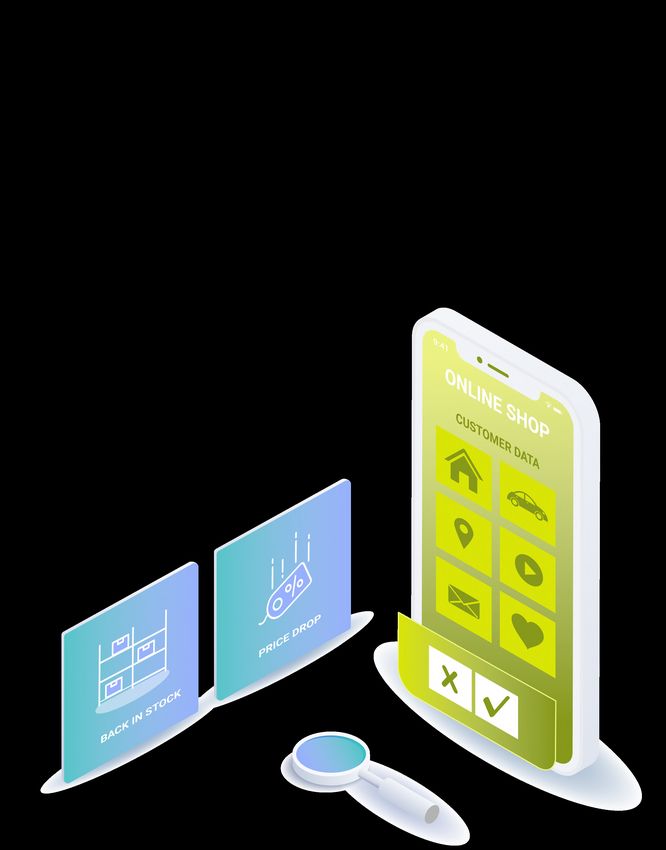
unPredictions

          With five years’ worth of e-commerce growth in less than a year,
          brands have had to quickly adapt to survive. There is uncertainty
          everywhere, but in a marketer’s world, the focus should be
          clearer than ever — doubling down was a key theme of 2020.

          So, this year, no lofty trends. After all, the change has already
          happened.

          We bring you a set of “unPredictions” — your priorities for 2021
          — with enough of the why, but much more of the what and the
          how (including the necessary strategy, planning, and key actions)
          which will enable you to provide the superior brand experiences
          your customers desire, and the growth and revenue you’re tasked
          with delivering as a marketer.

                            “If we’re looking at the average marketer and the
                            average piece of technology they’ve got right now,
                            it’s almost impossible to make sure that a customer
                            goes to where you want them to go. Customers
                            are fragmented in terms of where they spend
   Alex Timlin
   SVP Verticals            their time and how they interact with your brand…
                            Our customers are everywhere, but they’re very,
                            very demanding, and they’re expecting a really
                            personalized and really informative experience at
                            all [the] different touchpoints.”

8 Retail Marketing Priorities for 2021                                            3
#1
Customers
Must Be the Priority
Deliver Personalized Experiences
and You WILL Drive Growth

unPredictions

          With so many brands competing for the same audience,
          customers have limited tolerance for a status quo experience.

             Stats you need to know

          ▸ Brands at higher digital maturity witness an average of 11%
             incremental uplift and 18% cost efficiency. (Boston Consulting
             Group x Google)

          ▸ 41% of customer-obsessed companies grew their revenues at
             more than 10% annually, compared to only 10% of customer-
             naïve companies. (Forrester)

          ▸ Digital transformation and a focus on customer experience can
             increase customer satisfaction by 20%-30% and revenue gains
             of 20%-50%. (McKinsey)

          Shopping has changed, and e-commerce growth has accelerated
          as new buyers have moved online over this past year.

8 Retail Marketing Priorities for 2021                                        5
unPredictions

         10 years of e-commerce growth in 8 weeks
         US e-commerce Penetration (% of Retail Sales)                                                              (% of Retail Sales)

          30%
                                                                                                          27.0%

                                                                                                                  s
                                                                                                               eek
          20%

                                                                                                             8W
                                                                                                  16.0%
                                                                                          14.4%
                                                                                  13.2%
                                                                          11.8%
                                                                  10.7%
          10%                                             9.7%
                                                   8.8%
                                            8.0%
                                     7.2%
                              6.4%
                                                                    ars
                       5.6%
                                                            10 Ye

          0%
                              2010          2012          2014             2016             2018             2020

         Source: Bank of America & Department of Commerce 2020.

          While the shift to digital is huge, brands (retailers and pure players
          alike) compete on the quality of the customer experience. If that
          experience is poor, customers will quickly jump to another brand
          that provides an experience they desire.

                                 “We then have to think about how to make shopping
                                 easier at every step of the journey. So how slick is
                                 your mobile checkout? How integrated are your online
                                 and in-store experiences? Is your mobile site easy to
   Beth Horn
   Director, Head of
                                 read? Are you using messaging to connect with your
   Industry, Retail              customers? So getting obsessed with removing
   & Ecommerce
                                 friction from the customer journey is key here.”

8 Retail Marketing Priorities for 2021                                                                                                    6
unPredictions

          It’s vital to place customers at the center of everything your
          brand does, focus on what they want and need, and double down
          on personalization. Many marketers will personalize one single
          element in an otherwise one-size-fits-all engagement (say, a first
          name, gender-based product, etc.), but that’s not enough.

          True personalization requires using all of a customer’s unique
          attributes, behaviors, and preferences — drawn from your various
          data sets — to create and deliver a one-of-a-kind experience that
          is highly relevant and valuable (and scalable). It’s the only way
          to ensure your customers receive the satisfying, exceptional
          experiences that entice them to continue shopping with you again
          and again.

          Everything you need to do strategically in order to deliver
          business results in 2021 will hinge on having a customer-centric
          approach to marketing. If your brand can’t do this, enough of your
          competitors can.

                            “Customer obsession is deliberately a little bit different
                            than customer focus or customer service. If you think
                            about something you are obsessed with, it is the
                            thing you can’t get out of your mind. The thing that —

   Shar VanBoskirk
                            even when you try — comes to the front and center of
   VP and Principal         everything you do. Customer obsession is putting the
   Analyst
                            customer at the center of your leadership strategy and
                            operations.”

8 Retail Marketing Priorities for 2021                                                   7
unPredictions

          Actions:

                  Revise your marketing strategy to place the customer front
                  and center, and then consider which channels they are using
                  when engaging with your brand.

                  Determine if your technology stack / ecosystem is integrated
                  and open in a way that lets you connect to other systems
                  unhindered, so that you can unlock the full value in all your
                  data sets and scale efficiently.

                  Make sure your data is unified and accessible to other
                  applications and systems, because executing true
                  1:1 personalization, at scale, requires access to
                  multiple data sources.

8 Retail Marketing Priorities for 2021                                            8
#2
Customer Data,
Policies & Privacy
Are Rapidly Changing
You Must Build a First-Party,
Permission-Based,
Data-Driven Strategy

unPredictions

          Marketing permission is tightening as new laws, regulations,
          and stricter privacy controls continue to emerge.

             Stats you need to know

          ▸ 59% of brands say they are meeting GDPR requirements,
             leaving lots of room for improvement. (Data Privacy Manager)

          ▸ Only 10% of US companies are actively working to comply with
             50 or more privacy laws. (TrustArc)

          When it comes to their data, customers have increasingly greater
          expectations for privacy, and those expectations are being met.

          The passing of regulations like the General Data Protection
          Regulation (GDPR) in Europe, the California Consumer Privacy Act
          (CCPA) in the US, and the Personal Data Protection Act (PDPA)
          in Singapore, among others, has led to 107 countries drawing up
          their own data privacy policies. Apple’s recently released iOS 14
          includes privacy controls such as with the “opt-in for IDFA” option
          (set to be switched on in 2021) that will allow a customer to
          restrict the amount of their data shared with companies.

          In addition to data privacy regulations, marketers have to be ready
          for the impending end of web-tracking cookies. Apple’s Safari
          and Mozilla’s Firefox now block third-party cookies, and Google

8 Retail Marketing Priorities for 2021                                          10
unPredictions
will be doing away with third-party cookies by 2022, making pixel
tracking impossible. Going forward, marketers have no way to
glean insights from customer behavior unless the customer
provides explicit permission to track and use first-party data.
If you don’t have permission, you have no way to personalize the
experience.
With greater control over data now shifting to the customer,
brands have to develop a data permissions approach that
allows them to legally communicate with customers, and more
importantly, clearly explains the legitimate value customers will
receive in exchange for sharing their data.
“Right now I believe that marketers have a huge
opportunity to get on the front foot with regard to
customer data, how they gather and use it, and how
they explain and demonstrate the value to customers
David Eldridge for giving them the permission to use that for a
Chairman
period of time ... Marketers are absolutely thinking
& Co-Founder
about their data strategy and how they’re going to
move into that totally different mindset.”
Processing permissioned data correctly across multiple systems
and countries is difficult enough, fraught with legal and technical
8 Retail Marketing Priorities for 2021 11unPredictions
challenges. But the tech stacks of many companies are siloed,
which renders them unable to cope with the impending change
in data ownership, and makes it difficult for brands who deal with
external barriers outside of the marketing team’s control:
▸ It’s labor-intensive when web browsers require permission for
every type of data.
▸ Desktop commerce in Europe is moving to two-factor
authorization (2FA).
So with all these impending changes to the data landscape,
you will need to be clear in your plan to gain the necessary
permissions for acquiring a customer's data, and for managing,
processing, and enabling that data in a safe, compliant way.
“Data is the new sexy and the reason that data is the
new sexy is because you cannot create great customer
experiences without a great data strategy. Take a look
at some of these numbers here. 48% say they’re data-
Brendan Witcher driven. That’s probably where most people try to get to.
VP/Principal Analyst
Again, that’s good. It’s not great. Data-led organizations
of Digital Business
are what’s great. What is the difference? Well, data-led
organizations avoid preconceived notions about the
customer, preconceived notions about their business,
and they make strategic, not tactical, strategic decisions
based on that data.”
8 Retail Marketing Priorities for 2021 12unPredictions
Actions:
Have a strategy in place to identify more customers and
capture their consent.
To secure a customer’s consent (and to ensure they don’t
revoke it), clearly define the value a customer will receive
in exchange, such as more personalized, tailor-made
experiences, loyalty incentives, etc.
Customer consent may be owned
by your legislation or data protection
teams, but you need a plan that will
enable all teams within the business
to access and use the same customer
data (and the right customer data).
8 Retail Marketing Priorities for 2021 13#3 Earn the Right to Use Customer Data Make It Your Competitive Edge
unPredictions

          First-party and zero-party customer data allows you to provide
          1:1 interactions and personalized customer journeys that your
          competitors can’t.

             Stats you need to know

          ▸ Marketers who use customer data in marketing outperform
             peers by 85% in sales growth and more than 25% in gross
             margin. (Google)

          ▸ 75% of consumers are more likely to buy from a retailer that
             recognizes them by name, recommends options based on past
             purchases, or knows their purchase history. (Instapage)

          Undoubtedly, stricter data privacy regulations make marketing
          efforts more difficult. Customers are increasingly empowered in
          a way that allows them to be more judicious with who they share
          their data with, and to what extent. Brands must earn the right to
          connect with customers by observing their privacy and ensuring
          they have explicit permission to market to them.

8 Retail Marketing Priorities for 2021                                         15
unPredictions
Data Collection Is Changing
Collecting data is no longer a one-way deal, as a customer has a
right to view the information a brand collects on them. Collection
isn’t a one-time interaction as a brand must continue delivering
value to customers or risk them revoking your permission (yes,
this can happen).
If your brand doesn’t take data permission seriously, there will be
consequences beyond paying a penalty fee:
▸ Customers may lose trust in your brand, which increases their
risk of churning.
▸ Customers who have a bad experience will jump to another
brand, and they are likely to leave a negative review in a public
forum.
▸ Once a customer withdraws permission for you to use their data,
it’s impossible to retrieve it, as all identifiers are removed. This
means you’ll have to spend more of your acquisition budget to
try and re-acquire them.
The Best Data Is Earned
You learn a great deal about your customer based on how
they interact with your brand. Web browsing behavior, SMS
interactions, email CTRs, etc., manifest in the form of first-party
8 Retail Marketing Priorities for 2021 16unPredictions
data. Much of what you do as a marketer requires this actionable
data, but you have to earn the right to use it.
Fortunately, the customer’s desire for highly individualized content
is increasing. So if you are upfront about how you’ll use and
protect their data, and what value you will offer the customer in
terms of truly personalized experiences, they are likely to give you
the necessary consent.
Moreover, if you establish a clear benefit for the customer, they
may willingly offer data you couldn’t have collected otherwise.
This zero-party data — information a customer shares with your
brand directly, such as purchase preferences, etc. — is particularly
powerful as it eliminates the guesswork in determining how to
market to them, because they are telling you explicitly.
“This has become pretty table stakes in most
e-commerce stores now, since 64% of consumers
do ask for personalized offers from retailers and
brands. And even in a world of heightened privacy,
Fatima Yusuf
90% of consumers are willing to share behavioral data
Director of
Partnerships if it benefits them and provides them with an easier
shopping experience.”
8 Retail Marketing Priorities for 2021 17unPredictions
Your Data Is Also Your Competitive Advantage
The first-party and zero-party data you obtain is unique to your
brand. Thus, if you know how to leverage it, you’ll be able to
differentiate yourself from competitors and unearth unique
business opportunities.
For example, you can easily identify product trends, and then
deploy programs like “Back In Stock” and “Price Drop” for quick
wins in sales and revenue. You can readily spot buying patterns,
and then run campaigns to win back customers, inspire their next
purchase, and move them further in the customer lifecycle —
targeting a customer with the right incentive, at the right time, and
on the right channel to drive first-time to repeat purchases, and
ultimately, create more loyal customers.
These are golden opportunities that your competitors won’t have,
because they won’t be working with the same data.
8 Retail Marketing Priorities for 2021 18unPredictions
Actions:
Follow the strategy you’ve put in place to identify more
customers.
Provide clear value in exchange for customers allowing you to
collect and use their data. The power to be marketed to
now lies with customers. If they say no,
you can’t identify them.
ON
LIN
Use pre-built use cases proven ES
CU HO
to drive more customers further
ST
OM P
ER
DA
TA
down the lifecycle — this will save
you valuable time and resources in
execution.
x
8 Retail Marketing Priorities for 2021 19#4 Loyalty Is More Than Points and Prizes Create Meaningful Value Exchanges That Deliver Personalized Experiences
unPredictions

          Loyalty goes beyond points in exchange for a purchase — it’s all
          about building long-lasting customer relationships that lead to
          greater revenue.

             Stats you need to know

          ▸ 80% of profits come from 20% of a brand’s customers. (Forbes)

          ▸ A 5% increase in customer retention correlates with at least a
             25% increase in profit. (Bain & Company)

          How important is loyalty? Loyal customers have a 306% higher
          lifetime value and will recommend a brand at a rate of 71%.

          Loyalty is no longer a nice-to-have program. It's a vital opportunity
          for a brand to deliver true 1:1 personalized experiences, and the
          most effective way for maintaining an ongoing relationship with a
          customer.

8 Retail Marketing Priorities for 2021                                            21
unPredictions
True Brand Loyalty Is Built on Experiences
Loyalty doesn’t mean just discounts and free gifts. Consider what
value-adding experiences you can offer your customers in return
for being loyal to your brand:
▸ Prioritized customer service
▸ Personalized shopping
▸ Early access to new products or sales
▸ Behind-the-scenes access or content
▸ Premium shopping experience reserved for the best customers
You may always have a use for discounts in your marketing
strategy. But focusing on members-only experiences lets you
break away from indiscriminate discounting, while still providing
attractive, high-value experiences that earn a customer’s
continued loyalty.
“In our stores, when one of our loyalty customers comes
in, we can identify them at POS through a loyalty ID that’s
attached to their profile. So, from that, our stores can
engage with a customer on a first name level. They know
Elisse Jones
what tier they’re in, what trade they are, what products
National Loyalty they may have recently purchased, or also to better
Manager
recommend products that they may be interested in,
because they know who that customer is, and they’ve
really built up that relationship. And for us, it’s all about
that personalized experience, because if you only lead by
8 Retail Marketing Prioritiesprice and
for 2021 product, you’ll really lose relevance.” 22unPredictions
Loyalty Success
Contorion: The German e-commerce business serving B2B
craftsmen and B2C customers implemented a loyalty program
to enhance their current marketing efforts to achieve several
ambitious goals. Within one month of launching their loyalty
program, Contorion saw:
▸ 62% more repeat purchases
▸ 12.7% higher average order value
▸ 34% higher conversion rate from first-time to second-time buyer
▸ 5% more activity on their website
“What we have found is the customers in the loyalty
(program) becoming much more active, they were
visiting the website 5% more often. Customers who
joined loyalty made 62% more purchases than non-
Christian Efendic members, the AOV increased by 12.7% and we could
Head of CRM see that the conversion from 1st time buyer to 2nd time
buyer increased by 34%.”
8 Retail Marketing Priorities for 2021 23unPredictions
Gebrüder Götz: This shoe retailer decided to be more strategic
about how they use discounts. By offering discount vouchers
only to customers who sign up for the loyalty program, Gebrüder
Götz still processed the same dollar amount as they did with
indiscriminate discounts, but in the long run, these customers
were more loyal shoppers.
As an added bonus, Gebrüder Götz leveraged their loyalty
program to help identify more customers online and in-store, in
particular, identifying 50% of their customers from the use of
loyalty membership cards alone.
“As a brand, we needed to drive repeat purchases and
convert more first-time customers. Although we could
do that with indiscriminate discounting, we knew a
loyalty program would be a better strategy… Within two
Marcel Heck
months of launching Emarsys Loyalty, we were able to
Head of CRM see positive business results, and within the first week,
average cart value increased by 10%.”
8 Retail Marketing Priorities for 2021 24unPredictions
Actions:
Re-evaluate your use of indiscriminate discounting as the
primary means of driving customers further down the lifecycle.
Give your customer a reason to come back to your brand
besides the discounts alone.
Ensure a customer’s loyalty to your brand (and their continued
consent to use their data) by delivering high-value experiences,
such as early access to new products, free shipping, VIP
shopper status, etc.
Fully integrate loyalty into your
marketing execution, with use
cases that are designed to move
customers further along the
lifecycle — such as price drop,
back-in-stock, etc.
8 Retail Marketing Priorities for 2021 25#5 Omnichannel CX Is Fundamental Connect Customer Engagement Across Any Touchpoint
unPredictions

          Connect 1:1 with customers wherever they interact with your
          brand, and deliver consistent, seamless, and personalized
          experiences to customers both online and in-store.

             Stats you need to know

          ▸ 71% of customers confirm they want a consistent experience
             across channels, but only 29% say they get it. (Forbes)

          ▸ Shoppers that buy in-store and online have a 30% higher lifetime
             value than those who shop using only one channel. (Google)

          The two biggest changes in omnichannel retail this past year are that:

            1          Customers have had to turn to e-commerce and rapidly
                       embrace more digital channels than ever before (and in
                       many cases, now prefer them).

                       In response to changes in the market and customer
            2
                       demand, many retailers had to quickly shift their
                       business to a digital-first approach, and become
                       more customer-centric. Retailers that had already
                       established a strong digital foundation prior to 2020
                       experienced better outcomes.

8 Retail Marketing Priorities for 2021                                             27
unPredictions
With the rise in cross-device shopping, you need to find a platform
solution that sits right next to all your other omnichannel data.
Everything you do, every channel, every bit of customer data can be
maximized to create 1:1 personalized experiences across any channel.
But simply having the means to reach a customer on every
channel isn’t enough. Those personalized experiences must
be crafted in such a way that the customer has a continuous,
seamless experience along every touchpoint. What’s more, the
modern customer is more savvy and demanding than ever. They
move quickly and effortlessly between multiple channels like your
website, your mobile site, and your mobile app. This makes it
imperative to deliver interactions at precisely the right moment, on
the right channel, with the right content — all in real time.
“We wanted to deliver that unified customer
experience, something that was connected and
seamless and frictionless. We wanted to respond in
real time too, so trade tools are needs-based products,
Elisse Jones they're not one space. If a plumber gets called out to
National Loyalty
Manager your house to fix a job, they need tools now to do that
job. So we wanted to make sure that we could really
coordinate our messaging across the channels, so
when a customer shows interest in a particular product,
we can support them in that moment of need.”
8 Retail Marketing Priorities for 2021 28unPredictions
When leveraged properly, every channel can yield revenue
opportunities. Consider how you’ll use the following channels
within your omnichannel strategy so you can cultivate consistent
customer journeys with your brand:
Email
This might be surprising, but 70% of brands fail to use
personalized emails. That presents a huge opportunity to wield a
personalized email program as a competitive advantage, as long
as you have the customer’s permission to send them an email.
With 3.9 billion email users in the world, email remains one of
the most effective ways to engage customers for the following
reasons:
▸ This past Black Friday (2020), 21% more promotional emails
were distributed than the previous year, with a 12% increase in
click-throughs.
▸ Personalized emails deliver 6X higher transaction rates.
(Instapage)
Website
As the main brand interface that customers engage with, your
website is as critical as a brick-and-mortar store, especially in
cases where stores have closed. 89% of digital businesses are
investing in web personalization for good reason:
8 Retail Marketing Priorities for 2021 29unPredictions
▸ 80% of brands report an uplift after implementing web
personalization. (Econsultancy)
▸ Personalized, dynamic homepage promotions influence 85% of
customers to purchase. (Instapage)
▸ Product recommendations can provide an uplift in sales of
11.2% YoY. (Fresh Relevance)
Keep in mind, customers will move quickly between channels,
and you’ll need to seize the moment when it comes to engaging
them. In order to convert them, you’ll want technology in place
that allows you to send automated real-time, relevant, and
personalized messages based on their on-site or in-app behavior.
Social Media
In growing numbers, customers discover brands and products via
social media ads as well as social recommendations.
54% of customers research products using social media before
purchasing, and positive comments and likes influence customers
to purchase. What’s more, influencer marketing has become an
increasingly popular way to engage customers.
Today, out of the 4.57 billion people who have access to the
internet, 346 million arrived online within the last 12 months. The
following stats show how crucial it is to serve these new and
existing customers:
8 Retail Marketing Priorities for 2021 30unPredictions
▸ 49% of consumers say that they depend on influencer
recommendations. (Four Communications)
▸ B2B organizations prefer to use LinkedIN, while B2C companies
use Facebook.
▸ Pre-pandemic, people spent an average of 2 hours and 22
minutes a day on social media. (GlobalWebIndex)
Mobile and Mobile Apps
With 52% of all web traffic coming from mobile, the mobile web
experience is more critical today than ever before. If it’s not
mobile-friendly, 50% of customers will stop shopping with a brand,
even if they like the company.
Mobile apps offer a single point of brand-customer interaction,
giving the brand:
▸ Better customer insights
▸ Simpler permission handling
▸ Stronger loyalty
▸ Better overall CX
▸ Easier downstream CX integration, delivery scheduling, and
feedback ratings
Much like with your website, your mobile site and mobile app
are important touchpoints for conversion, particularly when
customers are using these channels to browse your products.
8 Retail Marketing Priorities for 2021 31unPredictions
Here’s where you need technology to enable automated programs
that, when triggered by a customer’s actions, will send highly
relevant, personalized content to help move that customer further
along their journey with your brand.
SMS
Like email and mobile, SMS continues to be a strong channel for
brands to connect with customers. In 2020, the channel rewarded
brands with the following:
▸ Omnichannel campaigns that include SMS are 47.7% more likely
to convert. (SuperOffice)
▸ Average click-through rates for SMS is over 14%. (SuperOffice)
▸ On average, e-commerce brands are seeing more than 2,700%
ROI from SMS. (SuperOffice)
In-Store
Technology has been the savior for brands this year, specifically
in extending the offline in-store experience to include an online
component, from research and recommendations to ordering
online and picking up at the store.
At the very least, in-store strategies can track individual device IDs
and, as long as you have permission to use the customer’s data,
you can build a complete profile of each shopper.
8 Retail Marketing Priorities for 2021 32unPredictions
Direct Mail
Tried and true, direct mail is having a resurgence, even as digital
channels are becoming the most viable means of engagement.
The fact that this physical touchpoint can also be highly
personalized can make for a particularly impactful customer
experience, and lead a customer to more interactive, digital
channels, like your website or mobile app.
Using your first-party data to create a personalized letter, package,
or gift can serve as a core part of a campaign, and a stand-out
touchpoint along a customer’s journey with your brand.
“We use [Emarsys] as our enhanced SCV, and we link this
with our other agencies and channels for contact. Then
we go on to the channel that the customer purchases
on. So whenever they purchase in-store, online, or the
call center, that purchase behavior is fed into that one
Simon Rowlands
Head of Customer single source. And having all that data in the one single
Marketing & Comms
source, that allows us then to interrogate that data, to
make decisions whether to reward or target customers
through whatever channel then best resonates with that
customer. Having that breadth of channels available to
us allows us to be sure that we are hitting the customer
where they want to see the most relevant message.”
8 Retail Marketing Priorities for 2021 33unPredictions
Actions:
Ensure your tech stack is fully integrated with an open
architecture where you can connect to any system, all relevant
data, and any digital and physical customer touchpoint.
Personalize for the customer first, regardless of which
channel they choose for engaging with your brand. Offer them
contextually relevant, real-time personalization through their
preferred channels.
Use proven omnichannel strategies that
allow you to connect with customers in
a highly personalized way no matter
the channel, with an emphasis
on delivering value at every
touchpoint to increase CLTV.
8 Retail Marketing Priorities for 2021 34#6 Intelligent Personalization Anywhere Invest in AI to Power Relevant and Contextual Experiences Across All Touchpoints
unPredictions

          The zero-party and first-party data within your organization can
          be used to provide a more personalized omnichannel shopping
          experience that’s tailored to the individual… no matter if they’re
          shopping online or in-store.

             Stats you need to know

          ▸ Companies that use advanced personalization are seeing a $20 return
             for every $1 spent, and 95% of companies that implement personalization
             see 3X ROI in the year after the personalization investment.

          ▸ 75% of consumers are more likely to buy from a retailer that
             recognizes them by name, recommends options based on past
             purchases, or knows their purchase history. (Instapage)

          Basic personalization doesn’t cut it anymore. For solid and
          consistent engagement, your personalization has to access the
          right data (with permission) and draw the right insights about past
          purchases, preferences, and behavior, and you have to be able to
          do it consistently across all your brand’s touchpoints and provide
          relevant offers and content.

8 Retail Marketing Priorities for 2021                                          36
unPredictions
360-degree view of the customer
Demographics
▸ Age
▸ Gender
Affinity ▸ Ethnicity Profile
▸ Memberships ▸ Income ▸ Identity
▸ Networks ▸ Accounts /IDs
▸ Affiliations ▸ Tech use
▸ Purchases ▸ Aliases
Attitude Behavior
▸ Preferences ▸ Marketing responses
▸ Disposition ▸ Testing responses
▸ Emotions ▸ Interactions
▸ Beliefs ▸ Transactions
Context External
▸ Time/location ▸ Social data
▸ Situation ▸ Public records
▸ Journey/activity Sentiment ▸ Third-party data
▸ Environment ▸ Language ▸ CGC
▸ Surveys
▸ Customer service
▸ Ratings/opinions
Even though marketers still shape strategy and define goals,
technology plays a big role in truly personalizing the customer
experience. You cannot scale your 1:1 engagement without
technology. For example, one of the best uses of technology is
personalized shopping cart recommendations which influence
92% of shoppers online to buy products.
8 Retail Marketing Priorities for 2021 37unPredictions
“Whether it’s something simple like using a first name
in a certain way when you’re talking about an offer or
telling a story, [personalization] has been so impactful for
us. One of the great examples we’ve had earlier this year
was our birthday sale … The other huge promotion that
Allie Donovan
Director of Email we tend to run and we tell kind of a story that was like
and Retention
how many nights you’ve slept on Brooklinen, your most
coveted item, things that you’ve had in your cart. So that
we could really kind of start nurturing that relationship. It
was very functional data… I think it might have been the
highest generating email we’ve ever had.”
Personalization ROI
Investing in personalization technology is a growth strategy.
In fact, 77% of retail marketing executives intend to use
personalization to drive ongoing customer relationships, such as
loyalty, repeat purchases, and customer retention.
Going forward, the most important things you want to do
as a marketer, and all the ways you look to build meaningful
relationships with your customers, require personalization. And
the businesses using the most advanced forms of personalization
will see the best results (and reap the greatest rewards).
8 Retail Marketing Priorities for 2021 38unPredictions
Live Chat Personalization
Marketing technology and access to customer data makes it
easy and frictionless for a customer to get help through live chat
on a brand’s website. If a customer wants to buy a dress, but is
unsure about color or sizing, she can go to the website and have
a live chat representative answer questions and perhaps provide
recommendations if the item she wants is out of stock.
The live chat rep can bring up the customer’s data, product
affinity, preferences, and even unused discount vouchers to
provide efficient and more informed assistance to the customer.
Personalizing your call center is crucial in providing a complete
and consistent experience.
AI-Driven Personalization
Deep personalization, also called hyper personalization, runs
on customer, product, and sales data and allows a brand to go
beyond basic personalization. Customers clearly want more
complex personalized experiences. With AI, machine learning,
and strategic automations running in the background, deep
personalization matches up permissioned data with individual
customers no matter which channel they come through.
You can go a step further with advanced AI technology to personalize
nearly every aspect of a customer's journey… in real time.
8 Retail Marketing Priorities for 2021 39unPredictions
Recommend products to shoppers based on their unique tastes
and preferences — a level of personalization that even Amazon
can’t achieve:
Of that 14%, Of that 14%,
14% 25% 63%
of buyers purchased did this for did this more during
a virtual version of the first time the pandemic than
something that can during the they did before the
also be done in person. pandemic. pandemic.
Deep Personalization
Advanced AI can help personalize web and mobile experiences
for the customer in the moment, or deliver a highly relevant loyalty
incentive at just the right time, bringing the real-time element into
your marketing.
Watch for increasingly advanced AI-driven virtual experiences over
the next year. For example, Sports Direct has implemented an
automated data-driven AI Stylist that, in many cases, is as good as
8 Retail Marketing Priorities for 2021 40unPredictions
if not better and faster than a human chat representative. It uses Google
Cloud’s image recognition technology to analyze the tactile properties
of each product, citing specific characteristics that humans might not
detect. It can also denote behaviors of each customer to determine
preferences for certain features, and track products viewed or purchased
to define genuine interest in a product.
“It’s about shifting from thinking about broad terms
like ‘demand’ to the individual preferences and need
of individual customers. One of the things that COVID
Paul Gunn highlighted was the fact that trends are very difficult [to
Head of Digital
Marketing and CRM
identify] if you’re always looking at them in retrospect,
and AI Stylist enables us to automate in a way that
recognizes trends as they’re being created.”
8 Retail Marketing Priorities for 2021 41unPredictions
Actions:
Make sure your data is organized and unified within your
tech stack so you can unlock the full value of your customer,
product, and sales data — use this to enrich the deeply
personalized experiences you can offer.
Determine what is unique about your data, your customer, your
products, and campaigns — be data-driven in determining the
personalization use cases that align with organizational
objectives.
Track and measure the results of your
personalization efforts so you’ll
understand what impact it has on your
business.
8 Retail Marketing Priorities for 2021 42#7 Break Down Your Operational and Data Silos Unlock Personalization and Experience Potential
unPredictions

          Seamless end-to-end experiences customers demand only happen
          when silos are dissolved, and your data is organized, unified, and
          centralized in a way that allows it to be fully utilized.

             Stats you need to know

          ▸ Nearly 90% of leading marketers say they are building teams that solve
             for end-to-end customer experiences, and journeys, across channels and
             devices. (Google)

          ▸ 84% of CMOs believe data collection, management, and analytics that
             drive consumer insight are important to future success, but only 49%
             believe they are effectively delivering on that today. (eMarketer)

          Over the last year, we’ve seen most companies recognizing there’s
          a silo problem. Not only are data silos more expensive for a brand
          to manage, they are also one of the greatest obstacles preventing
          brands from achieving true customer-centric marketing. So long
          as teams and their respective data sets are siloed, the view of the
          customer will be fragmented.

8 Retail Marketing Priorities for 2021                                            44
unPredictions
“One of the biggest challenges that we had in our
existing environment is that our channel data was
in silos, so we couldn’t deliver that coordinated
communication or conversation with our customer. Now
Elisse Jones ... we’ve been able to combine all of our data. So our sales
National Loyalty data, the big ones — offline and online — loyalty profiles,
Manager
product catalogues, web interactions, email engagement
data, [are] all in one central location in the CDP.”
Customer-Centricity Requires a Single Source
of Truth
Many brands built their companies around their business or
industry, not the customer. They ended up with departments
and leaders that were cut off from each other. Sales, services,
marketing, and analytics were islands. But if all these teams have
their own data (and thus a different view) of the customer, how
can they obtain a complete 360-degree view of the customer?
By unifying your product, sales, and first-party data into a single
platform where everyone’s dealing with the same truth, you keep
the customer at the center of your marketing.
Holistic View of the Customer’s Journey
Operational silos, by their nature, keep teams focused on only one
aspect of a customer’s engagement with the brand.
8 Retail Marketing Priorities for 2021 45unPredictions
But the goal is to work in concert to obtain a holistic view of the
entire customer lifecycle.
The service team should be looking at the exact same data as the
sales team, and vice-versa, so they’ll know how to best engage the
customer, no matter where that customer is. Aligned teams help
reduce the cost of acquisition, create better customer experiences
(and more of them), and increase CLTV.
Silos Hinder Cohesion and Compliance
for the Business
CMOs and their teams are beholden to help deliver results for the
business. This makes attribution, and establishing marketing’s
impact on the bottom line, critical. Silos prevent teams from
collaborating and aligning on the broader business goals of
growth and revenue.
Remember, now that customer data consent, permission, and
privacy are mandatory, you’ll no longer be able to simply buy the
data you need to build a complete customer profile. You’ll have to
earn, capture, and store it yourself. So it’s imperative all teams are
sharing and working from an absolute source of customer data,
obtained with the necessary permissions, to form that complete
profile. If you have to ID the customer and continuously ask for
consent at every touchpoint, it’ll cause undue friction and create
an inferior experience.
8 Retail Marketing Priorities for 2021 46unPredictions
Actions:
Remove any barriers to data and analytics that prevent teams
in your company from achieving company-wide goals.
Get an integrated tech stack with an open architecture that will
connect to any system, any data source, and every digital and
physical customer touchpoint.
Ensure all teams are working with unified data that
provides a single source of truth about the customer.
8 Retail Marketing Priorities for 2021 47#8 Growth Lies in Customer Lifetime Value Market Across the Full Customer Lifecycle
unPredictions

          Successful brands are increasing purchase frequency and driving
          revenue by making the transition from sporadic transactional-based
          touchpoints to customer-focused lifecycle marketing.

             Stats you need to know

          ▸ Brands have a 60%-70% better chance of selling to
             an existing customer than to a new customer. (Altfeld)

          ▸ Repeat customers spend an average of 67% more when they
             have more than 30 months of loyalty with a brand. (Bain & Co)

          Lifelong value exchanges that build brand trust must replace
          intermittent, fragmented interactions that, candidly, too many
          retailers succumb to… even still today.

                            “Create value through engagement and relevance.
                            It’s not just a transactional mindset that e-commerce
                            businesses have. Now more than ever, consumers will
                            gravitate toward digital even for pre- or post-purchase
   Rick Almeida
                            experience from awareness to consideration to post-
   Vice President           purchase… how do first-timers perceive the brand… you’ve
   E-commerce
                            got to be thinking about creating value and loyalty from
                            start to finish. How we engage and communicate with
                            them is going to be very important in the future.”

8 Retail Marketing Priorities for 2021                                                 49
unPredictions
Acquiring and retaining are still important. But, these are becoming
secondary to identifying customers and keeping them enticed,
engaged, and educated until they’re ready to buy.
Lifecycle marketing is about:
Getting Giving
Hunting Helping
Selling Inspiring
Retailers that dominate — like Amazon, Apple, and Microsoft — get
customers to come to them. They don’t beg, and their marketing
doesn’t feel tacky. Whether it’s the customer’s first purchase with the
brand or a longtime customer making a return, the experience they
have is part of a fluid, helpful, enjoyable overall journey.
“Customer experience is absolutely central and at the
heart of everything we do, and we want every single
customer to feel like they have a great experience when
engaging with AO. So we're here to help those customers
navigate through that time, purchase the product and the
Jodie Gardner
Head of CRM services they need, and then have it delivered quickly. We
see it as though we're here to show them that the whole
journey can be quick and hassle-free. And then when they
do have that great online experience, they come back to
us again and again.”
8 Retail Marketing Priorities for 2021 50unPredictions
The scope of what constitutes customer experience includes
awareness, acquisition, first-time purchase, payment, delivery,
returns, second-time and repeat purchases, service, win-back and re-
engagement.
Companies like Zappos and Google are experience-oriented,
even internally. These customer-obsessed brands don’t organize
processes, people, or tech by function but by fulfilling lifecycle stages.
Customer lifecycle marketing means matching customers’
experiences with both reactive and proactive marketing strategies —
that includes personalized content — at every moment when, where,
and how customers interact in a truly channel-agnostic way.
If driving ongoing revenue is your goal, then you have to create a
lifelong bond with buyers.
Customer lifecycle marketing is one of the most undervalued
overarching strategies for e-commerce companies, and it should
be a priority in 2021. Avoid fragmented, disconnected customer
experiences, aim for value instead of volume, offer speedy and
seductive service, and provide unparalleled personalized marketing.
8 Retail Marketing Priorities for 2021 51unPredictions
Actions:
Don’t view acquisition as a single purchase; think more
about long-term engagement.
Change your perspective to customer-first and
business-second.
Switch from team ownerships (sales, marketing,
support) to experience ownership.
Ensure your customer experience is
powered by the right infrastructure
so that you can handle payment,
delivery, returns, and service.
8 Retail Marketing Priorities for 2021 52unPredictions
Final Thoughts
Customers have led brands to expand and strengthen their digital
channels. For marketers, that means putting the customer first,
with deep personalization across every channel and in some cases,
creating hybrid BOPIS services and policies to continue engaging
customers.
First-party data is a brand’s most valuable asset, but as cookies
die and greater data privacy regulations go into effect, you have
to guarantee that your customers will get a valuable experience in
return for allowing you to use their data. You also have to ensure
you’ve eliminated data silos, and a customer engagement platform
best solves that challenge.
“Essentially, [customers will] come back and want more
because, for us, it’s really not just selling a product to the
customer, it’s connecting in that whole experience. So
Lindsay Ball we leveraged the data to be an extension of our team, and
Sr. Digital Marketing
Manager really just expand[ed] when so many people within the
industry were under so many constraints.”
8 Retail Marketing Priorities for 2021 53unPredictions
Customers have chosen omnichannel shopping. Email, SMS, and
mobile are wildly successful channels and still growing, but don’t
forget about in-store, your loyalty program (a channel in itself), paid
media, and personalized web experiences.
Considering that 64% of customers gladly exchange purchase history
and preferences if retailers offer more personalized experiences,
brands don’t face a data problem. Instead, retailers and e-commerce
brands need to clearly communicate to customers what kind of added
value they’ll get in exchange for their data. Then brands can consistently
deliver the personalized shopping experience customers want.
“What’s in it for the customer? What’s in it for the
business? What data do I have available? What am I
going to do with that data responsibility that’s going
to be good, not just for the business, but good for the
customer as well? That takes people. It takes resources,
Alex Timlin
SVP Verticals and it takes a certain element of bravery in some brands
to be able to stand in front of people and say I want to
do something different. I want to do something better.”
“In periods of stress, it is the companies that are
customer-obsessed that will survive and thrive.”
Shar VanBoskirk
VP and Principal Analyst
8 Retail Marketing Priorities for 2021 54unPredictions
About Emarsys
Emarsys empowers digital marketing leaders and business
owners with the only omnichannel customer engagement
platform built to accelerate business outcomes.
By rapidly aligning desired business results with proven
omnichannel customer engagement strategies —
crowdsourced from leading brands across your industry —
our platform enables you to accelerate time to value, deliver
superior 1:1 experiences and produce measurable results …
fast.
Join more than 1,500 companies who trust Emarsys
to deliver the predictable, profitable outcomes that
their businesses demand and the highly personalized
omnichannel experiences that their customers deserve.
Watch our 3-minute demo
8 Retail Marketing Priorities for 2021 55© 2021 Emarsys. All rights reserved. Emarsys, the Emarsys Marketing Platform, Emarsys Artificial Intelligence Marketing and others are trademarks of Emarsys. The Emarsys logo and other creative assets are owned and protected under copyright and/or trademark law. www.facebook.com/emarsys www.twitter.com/emarsys www.linkedin.com/company/emarsys
You can also read


