2002-2016 Clean energy partnership - NOW GmbH
←
→
Page content transcription
If your browser does not render page correctly, please read the page content below
2002–2016   Clean Energy
            partnership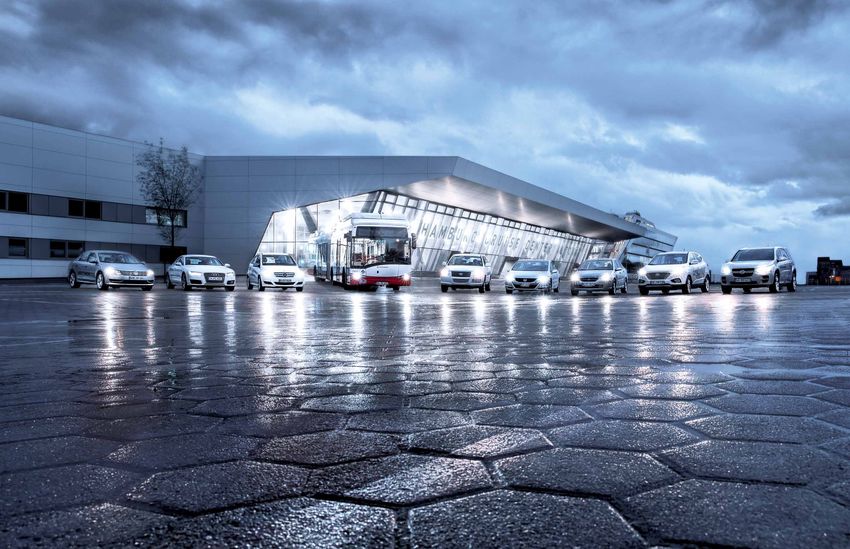
Clean Energy Partnership
c/o be: public relations gmbh
Phone: +49 (0)40 238 05 87 90
Fax:   +49 (0)40 238 05 87 96
Email: cep@bepr.de
www.cleanenergypartnership.de/en

www.facebook.com/cleanenergypartnership
www.youtube.com/cleanenergypartner
Hydrogen –
what kept us moving
2002–2016
content

   Foreword............................................................................................................................................................ 04

   Fourteen years of hydrogen mobility....................................................................................................... 06

   Knowledge and project management...................................................................................................... 08
   Developing solutions together..................................................................................................................... 08
   The focus is on customer friendliness......................................................................................................... 08
   What we are talking about............................................................................................................................ 09

   Production and storage................................................................................................................................. 10
   Crude glycerol pyrolysis.................................................................................................................................. 12
   Reforming process........................................................................................................................................... 12
   Water electrolysis............................................................................................................................................. 12
   Storing hydrogen.............................................................................................................................................. 15

   Infrastructure: A filling station network for Germany........................................................................ 18
   700-bar compression...................................................................................................................................... 20
   The H2 infrastructure is growing.................................................................................................................. 21
   Cryopump technology.................................................................................................................................... 21
   On-site production........................................................................................................................................... 24
   Filling station network for Germany........................................................................................................... 25
   Global fuelling standard................................................................................................................................. 25

   Mobility.............................................................................................................................................................. 28
   Hydrogen vehicles in everyday use.............................................................................................................. 30
   The fuel cell prevails........................................................................................................................................ 31
   The CEP fleet continues to grow.................................................................................................................. 32
   H2 in public transportation............................................................................................................................ 35
   Vehicle data....................................................................................................................................................... 36

   The public relations work of the CEP – Creating awareness for climate protection................... 38
   Target group-specific appeal......................................................................................................................... 38
   Active on all communication channels....................................................................................................... 38
   Explaining the bigger picture: energy transition with hydrogen........................................................ 39

   Milestones.................................................................................................................... 42

Foreword

                                                                                                                                                                        Photo: federal government / Kugler
     We are currently experiencing the greatest mobility           fuel-cell vehicles with hydrogen. After all, a tech-
     revolution since the invention of the automobile. Auto-       nology can only prevail if drivers can trust in being
     mated, connected driving is about to take off, and the        able to refill their car anytime and anywhere.
     switch to alternative drives has begun. This means that
     in the next five to ten years, mobility will change more      We promote innovations and put them on the road.
     than it has in any previous decade.                           The aim is to introduce innovative products of hy-
                                                                   drogen and fuel-cell technology for use in various
     Fuel cell technology, too, can become a key driver for        fields. These include: hydrogen buses in city traffic,
     the mobility of the future – with crucial competitive         vehicles in logistics and commercial traffic, and rail
     advantages over other drive trains: fast refuelling, ex-      vehicles in public transport.
     tensive range and optimum technology for large vehi-
     cles. It can help us take a real quantum leap forward in   The Clean Energy Partnership (CEP) is indispensable in
     the area of climate protection in the transport sector.    providing momentum for our hydrogen strategy and is
                                                                an important lighthouse project into which we have in-
     In order to seize our opportunities for growth and         vested 118 million euros to date. This public–private
     prosperity through mobility, we have a clear aim: to       partnership contributes crucially to the development
     develop and produce top-notch alternative drives           of uniform technical standards and the development
     and establish our technologies in the market. To           of a filling-station network. I would also like to take this
     achieve this, I have launched a comprehensive hydro-       opportunity to thank the National Organization for Hy-
     gen strategy – with three key points:                      drogen and Fuel Cell Technology (NOW), which coordi-
                                                                                                                                       Alexander Dobrindt MdB
                                                                nates and implements NIP.
                                                                                                                               Federal Minister of Transport and
        We continue the success story of the first National                                                                              Digital Infrastructure

        Innovation Programme Hydrogen and Fuel Cell             The future belongs to alternative drives. Germany is a
        Technology (NIP). In NIP II, we will invest around      trailblazer and pioneer in this field, bringing together
        250 million euros by 2019.                              more mobility with fewer emissions!

        We work with the private sector to create a nation-
        wide network of 400 filling stations by 2025 – and                  Your’s Alexander Dobrindt MdB
        invest a total of 350 million euros into constructing   Federal Minister of Transport and Digital Infrastructure
        the world’s first nationwide network for refuelling

04                                                                                                                                                                 05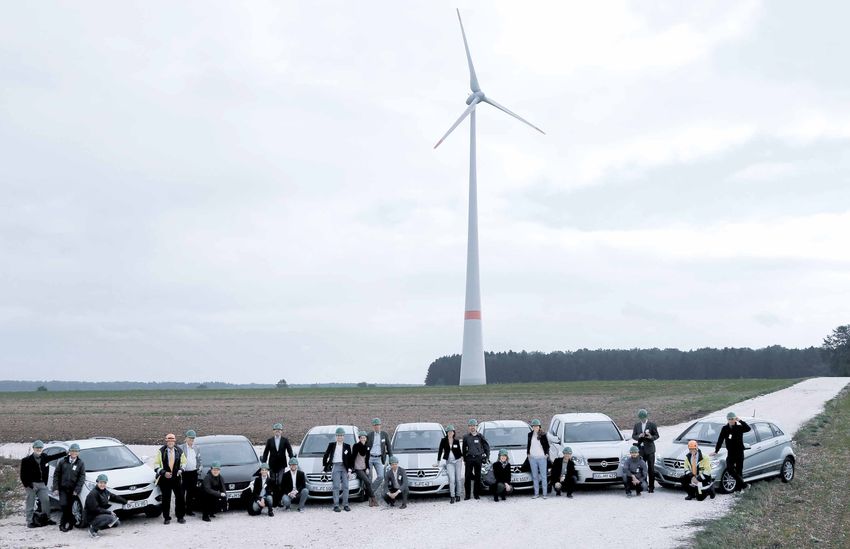
Fourteen                                                      We can say with some pride that we have achieved our              Since 2008, the CEP has been the biggest lighthouse

     years of hydrogen
                                                                   main goal: hydrogen has become a fuel that will make a            project of the National Hydrogen and Fuel Cell Technology
                                                                   significant contribution to the energy revolution, including      Innovation Programme (NIP) and is coordinated by the
                                                                   the mobility sector. The project partners have contributed        National Organisation for Hydrogen and Fuel Cell Technol-
                                                                   to this achievement with industrial research and develop-         ogy (NOW). Over time, its activities have been extended to

     mobility
                                                                   ment in a wide range of fields. They tested the suitability       other lighthouse regions: in Hamburg and Berlin, new sites
                                                                   and system capabilities of cars, filling stations and logistics   were built where entire fleets of cars and buses can refuel.
                                                                   for everyday use, and developed processes and technolo-           The state of North Rhine-Westphalia’s first public hydro-
                                                                   gies for the entire supply chain. Here are some examples:         gen filling station opened in Düsseldorf. In Baden-Wuert-
                                                                                                                                     temberg, the establishment of the network began with
                                                                      In 2003, the four car manufacturers BMW, Daimler,             sites in Stuttgart and Karlsruhe, and hydrogen filling
                                                                      Ford and Opel first began testing hydrogen in their            stations now exist in Hesse and Bavaria as well.
     At the end of phase 3 of the project, the time has come for      vehicles. Volkswagen joined them in 2006. In 2004, 16
     an interim stocktaking. What have we achieved in the             vehicles underwent demonstration and trial opera-              Where do we stand at the end of 2016?
     Clean Energy Partnership, and what still lies ahead?             tions. Today, there are more than 400 vehicles, most of        The first hydrogen-powered vehicles are now on the
                                                                      them customer owned.                                           market for private users, and others are being added. Fuel-
                                                                                                                                     ling and logistics have been tested to such an extent that
                                                                     	We integrated the first hydrogen station in an existing       H2 Mobility Deutschland – a joint venture between the CEP
                                                                       filling station on Messedamm, Berlin, in 2004. In March       partners Air Liquide, Daimler, Linde, OMV, Shell and Total –
                                                                      2006, the second CEP hydrogen filling station went             can take over the operation of the filling stations from 2017
                                                                      into operation in the Spandau district of Berlin where         and expand the Germany-wide network in the years ahead.
                                                                      hydrogen refuelling at 700 bar was technically tested
                                                                      for the first time. This pressure rating, which the CEP        The Clean Energy Partnership, too, will continue to take on
                                                                      was instrumental in promoting, is now considered the           important tasks, albeit to a modified extent: they range
                                                                      global standard for cars.                                      from further developing technologies and standards, to serv-
                                                                                                                                     ing as the independent knowledge platform for the German
                                                                     	At the same location, an electrolysis plant was installed     hydrogen industry through to increasing international coop-
                                                                       in 2004, which produced hydrogen from renewably               eration. We’re going places with hydrogen – join us!
                                                                      generated electricity. Compressed and stored, it was
                                                                      available for fuelling on-site without additional supply
                                                                      logistics. Today, half of the hydrogen at our filling                             Your’s Thomas Bystry
                                                                      stations is produced using renewable energy – an impor-                 Chairman of the Clean Energy Partnership
                                                                      tant contribution to lowering CO 2 emissions caused
                                                                      by road transport.

                                                                                                                                     Established in 2002 and managed by the German Federal
                                                                                                                                     Ministry of Transport and Digital Infrastructure (BMVI),
                                                                                                                                     the Clean Energy Partnership (CEP) has steadily grown.
                                                                                                                                     Today, it unites 20 partners from different sectors –
                                                                                                                                     energy, technology, automotive and transport – in the
                                                                                                                                     world‘s leading association of its kind.

06                                                                                                                                                                                             07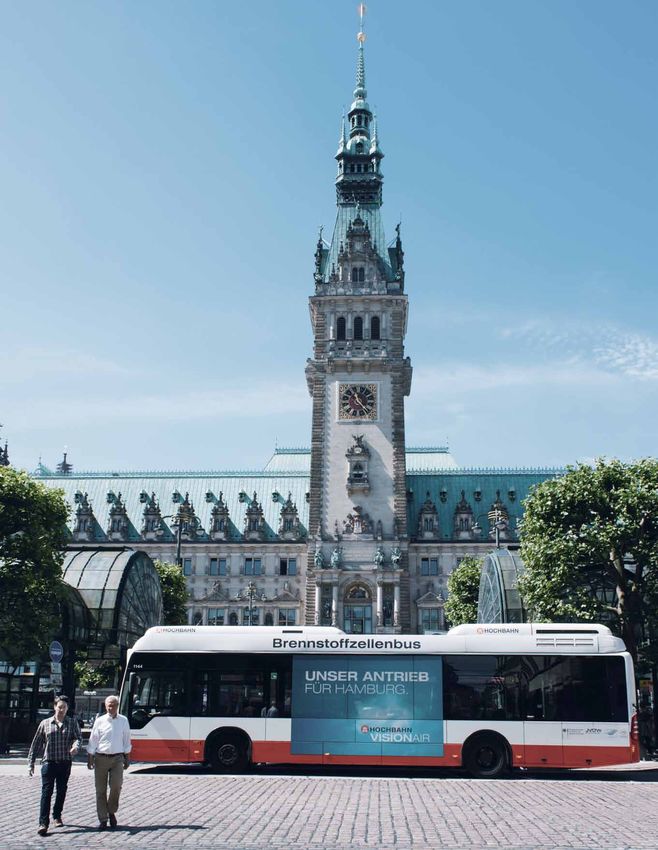
Knowledge
     and project
     management
     The nerve centre of the CEP is in
     the working groups.

     Since 2008, the individual activities are recorded and     for example, grants a differentiated insight into the
     processed in a comprehensive project and knowledge         system’s efficiency given the interaction of all compo-
     management. The so-called overarching module forms         nents and under varying operating conditions. This
     the basis for a seamless backing of research and devel-    gives protagonists valuable knowledge about the effi-
     opment processes. Using measures data, results are         ciency and optimisation potential of the current gener-
     worked out and consistently translated into action.        ation of service stations. With this internationally
                                                                appreciated expertise, the partnership has contributed
     Developing solutions together                              to the development of the uniform fuelling standard
     The continuous exchange among industry partners as         for 700-bar pressurised gas fuelling, SAE TIR J-2601,
     well as international networking with technology initi-    among other things. Today, the CEP has a globally              The representatives at the CEP plenary assembly

     atives and standardisation bodies worldwide were at        unparalleled database on the performance and effi-
     the centre of these activities. Within the CEP, various    ciency of available technologies.
     thematic working groups dealt with specific questions
     in the areas of mobility, infrastructure, production and   The focus is on customer friendliness
     communication. The working groups discussed matters        The partnership has also made it possible for custom-       What we are talking about                                   for the trade press as well as Campus Days at selected
     of technical detail as well as related topics. Several     ers to easily access the newly built hydrogen pumps.        In addition to these tasks, the CEP has engaged in inten-   universities. The importance of hydrogen as a storage
     groups of experts dealt with the practical challenges      Though initially the focus here was on technical test-      sive public relations work since 2008, with the aim of      medium and emission-free fuel in the age of decarboni-
     that had to be mastered on the path to market matu-        ing, today the pumps are as easy to use as conventional     effectively anchoring hydrogen in the public conscious-     sation was the central starting point for CEP’s commu-
     rity for the new technology.                               gas filling stations. To make life with a hydrogen car      ness as a fuel and energy store. The project’s PR working   nications. Thanks to the extensive experience and
                                                                easier for users from the start, an authorisation process   group developed a long-term communication strategy          sources of knowledge jointly acquired by the partners,
     On the basis of their joint work, the expansion of the     for customers including a card and billing system for       to inform the defined target groups about hydrogen          the CEP’s public relations work was able to illustrate the
     service station network was made concrete and a            hydrogen fuelling was introduced. A reporting system        mobility and get them excited about it. Traditional print   many uses of technology for specific target groups and
     comprehensive evaluation of the vehicle and facility       on service station availability was also established,       products, an informative and interactive web presence       make them accessible. The CEP test drive events, where
     operation data was undertaken. The energy data             which can be accessed online and provides live infor-       (www.cleanenergypartnership.de) and regular appear-         the technology of hydrogen-powered fuel cell vehicles
     collection now installed at most CEP service stations,     mation about CEP hydrogen filling stations.                 ances at trade fairs were supplemented by viral films,      could be experienced live, accompanied by experts,
                                                                                                                            social media activities, and special informative events     were especially popular.

08                                                                                                                                                                                                                                                   09
Production
     and storage
     Hydrogen (H2) has been used in industrial processes for more
     than 100 years. Because it occurs in so many natural
     compounds, it can be produced in a number of ways. One of the
     CEP’s concerns was and still is to generate hydrogen as
     sustainably as possible, so as to minimise CO2 emissions even
     before it is used in the vehicle. And so, over time, different
     methods of hydrogen production were tested by the CEP:
     electrolysis, the reforming process, and crude glycerol pyrolysis.

     Another major topic that the partnership dealt with was the
     question of the most appropriate storage method. Within the
     CEP, two techniques were tested: gaseous H2 storage under high
     pressure and the storage of cryogenic, liquefied hydrogen at a
     temperature of –253 °C.

     The CEP now focuses on gaseous storage for vehicles, while
     both methods are used for storage at service stations.

10                                                                        11
Hydrogen from renewable sources enables high
CO2 reductions. Which production methods and
storage options exist today?

Crude glycerol pyrolysis                                           Air Liquide successfully completed the certification of the
Since 2012, the Linde pilot plant in Leuna has supplied            ‘Blue Hydrogen’ production process as green hydrogen,
hydrogen sustainably produced from crude glycerol, which           according to CEP requirements / the TÜV SÜD CMS 70
is certified as green by the German Association for Techni-        standard. ‘Blue Hydrogen’ is centrally produced in an Air
cal Inspection (TÜV). The plant has thus helped to meet the        Liquide steam reformer in Dormagen by reforming bio-
CEP’s voluntary commitment to supply at least 50 per cent          methane, and can be supplied to the service stations via
renewable hydrogen. Crude glycerol pyrolysis was discon-           various Air Liquide filling plants using a mass balancing
tinued in 2015 for economic reasons. Also since 2012,              system. As with green energy, the balancing means that
Leuna has been testing another green production method             the service stations are indirectly supplied with green-
using bio-methane.                                                 certified hydrogen.

Reforming process                                                                                  Water electrolysis
Steam reforming is a proven
and cost-effective method
for producing the large
                                       hard Facts!                                                 Water electrolysis makes
                                                                                                   zero-emissions     hydrogen
                                                                                                   production possible if the
quantities of hydrogen that            At –423.17 °F, hydrogen condenses into a                    electricity needed for the
are needed particularly in             colourless liquid. The melting point of hydrogen            electrolysis is produced from
refineries and industrial              is –434.45 °F – only that of helium is lower.               renewable energy sources
applications. A hydrogen-              When hydrogen changes from a gaseous to a                   such as wind energy. In
containing synthesis gas is            liquid state in extremely low temperatures, its             water electrolysis, water
initially produced from                volume is reduced by 99.9 per cent.                         (H2O) is mixed with a liquid
natural gas to which steam                                                                         that improves the ion
and heat is added, which is                                                                        transport. Using electrical
then split until pure hydrogen forms. The gas has to be very       energy applied at two electrodes, the water is split into its
pure in order for the fuel cell to work properly. Hydrogen is      components, hydrogen (H2 ) and oxygen (O). The electrical
also produced as a by-product in chemical industry processes.      energy used is converted into chemical energy and stored
Even hydrogen produced from natural gas can serve to               in the hydrogen. Electrolysis can be carried out directly at
reduce carbon dioxide emissions: used in fuel cell vehicles, it    the service station (‘on-site’) or centrally at bigger power-
generates up to 30 per cent fewer CO 2 emissions than              to-gas plants and subsequently transported to the filling
modern diesel vehicles (comparison value 120 g/CO2 /km).           station. Both options have been tested by the CEP. In
                                                                   decentralised generation, the H 2 stations essentially oper-
If bio-methane instead of natural gas is used for the steam        ate self-sufficiently and produce their hydrogen on-site,
reforming, CO2 is reduced not only during use, but also            so there are no transport costs. However, the production
during production. The sustainably produced biogas comes           of large amounts of hydrogen at centralised plants is
from certified sustainable sources registered with the             usually the more economical solution. Above all, this
German Energy Agency (dena). The proportion of processed           option makes it easier to achieve cost-efficient economies
organic methane in the feed gas can be increased as needed,        of scale, which can positively affect the pricing of green
theoretically up to the plant’s maximum capacity.                  hydrogen.

12                                                                                                                                 13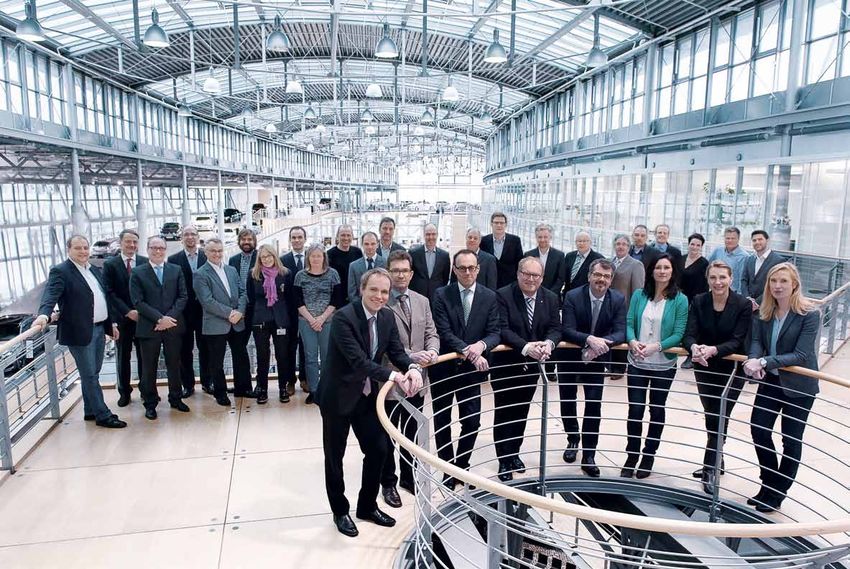
When the first CEP hydrogen station was being built on          form of hydrogen, and then be converted back into electri-     Both CHP plants and the wind turbines supply electricity         For storage in the vehicles, the CEP is focusing on gaseous
Messedamm in Berlin in 2004, an electrolyser with a capac-      cal energy or fed into the natural gas grid as needed.         which can be fed into the grid. When there is an oversupply      storage at 350 bar in buses and 700 bar in cars. Major
ity of 60 Nm/h was already installed by the then project                                                                       of electricity, this can be used to produce the gases oxygen     progress has been made in the energy-efficient realisation
partner StatoilHydro. To avoid CO2 emissions that would         One flagship project in this connection is the world’s first   and hydrogen from water by electrolysis; the gases are           of these high pressures over recent years. For instance,
affect the success of the project, only renewable electricity   hydrogen-wind-biogas hybrid power plant in Prenzlau. It        then stored in pressurised tanks. These tanks act as a store     thanks to modern compression technology, e.g. an ionic
certified by Vattenfall was used to operate the plant.          consists of three 2.3 MW Enercon E-82 E2 wind turbines         for periods when the wind is not strong enough to cover          compressor, specific energy consumption and space
                                                                and a 500 kW electrolysis plant. Two CHP plants can be run     consumers’ energy needs with ‘RE’ gas. Some of the CEP           requirements have been reduced considerably.
Over the years, the CEP refined the electrolysis technique,     on a mixture of hydrogen and biogas.                           service stations in Berlin are supplied with hydrogen
adapted it to requirements and improved it. Energiepark                                                                        produced there.                                                  Since mid-2015, cryo-compressed storage technology has
Mainz, a joint project by Siemens, Linde, Stadtwerke Mainz                                                                                                                                      also been tested, which works with liquid hydrogen.
and RheinMain University of Applied Sciences, started                                                                          Storing hydrogen                                                 Compression using cryogenic liquid hydrogen requires
operation in July 2015. This ‘power to gas’ plant uses eco-                                                                    Hydrogen is the lightest known element – 14 times lighter        only 10–20 per cent of the energy of a gas compressor.
friendly electricity, among other things from neighbouring          Patrick Schnell                                            than air. Its low density poses particular challenges for its
wind turbines, to generate up to 200 tons of green hydro-           vorsitzender CEP                                           storage in vehicles and at filling stations as well as for its
gen a year by electrolysis – enough to power around 2,000           2008–2015                                                  transport. When storing larger quantities at service
fuel cell cars for a year.                                                                                                     stations and during transport, hydrogen is stored in gase-
                                                                                                                               ous form under high pressure, or as cryogenic liquid hydro-
                                                                    For me, the combination of storing
Meanwhile, water electrolysis using renewable electricity           wind energy in form of hydrogen and                        gen at –253 °C. The appropriate option is selected based on
is relevant not only for the production of hydrogen as a            its use as fuel in fuel cell vehicles is a                 logistical, economic and energy aspects. Underground
fuel; it also represents an option for storing surplus elec-        trailblazer. With it, we resolve social,                   storage tanks are particularly suitable for relatively
tricity, which we will have more and more of as Germany’s           economic and ecological problems all                       confined spaces. For road distribution, 500-bar trailers are
power industry switches to renewable sources. Large                 in one go.                                                 currently the state of the art, and reduce the number of
amounts of volatile energy can be stored long-term in the                                                                      trips necessary (vs. the conventional 200-bar technology).

14                                                                                                                                                                                                                                                       15
Journalist event in 2014 in Baden-Wuerttemberg: “A look behind the scenes – hydrogen as fuel and energy storage” 16 17
Infrastructure:
     A FILLING STATION
     NETWORK
     FOR GERMANY
     Since its inception in 2002, the CEP has been blazing the trail for
     the construction of a hydrogen fuelling infrastructure in Germany.
     While the filling stations were initially used mainly for testing
     and demonstration purposes, the last phase of the project was
     increasingly guided by the practical needs of the market.

     Besides ongoing research and development, the focus today is
     mainly on improving the H2 supply.

18                                                                         19
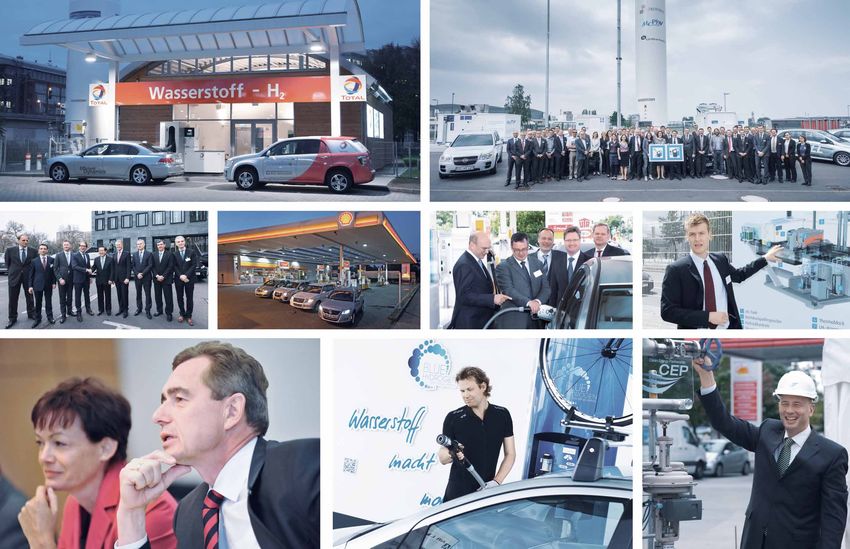
From the first research station to prototype of its electrolysis technology at the site,
the customer-friendly filling station designed with the idea of optimising it for use with vola-
Dr. Klaus Bonhoff
network CEP Chairman tile renewable energy. The electrolyser was to react very
flexibly to a changing energy supply at short notice. For
2005–2007
the first time, the storage was moved underground, to
At the end of 2004, the first CEP hydrogen filling station test solutions for filling stations with limited space. Total
went into operation on Messedamm in the Charlotten- In recent years, we have seen a cost commissioned the development and operation of a mini-
reduction in the fuel cell drives by 75 per cent
burg district of Berlin after several years of preparation. It CHP to use the evaporation quantities occurring in the
and in the hydrogen filling stations by 50 per
was a milestone in many respects: it was the world’s first LH 2 tank; it now supplies the filling station with energy
cent. At the same time, the technology has
full integration of hydrogen at a conventional filling and heat.
proven its suitability for everyday use.
station, a choice which had deliberately been made even The first vehicles in front of the filling station on Messedamm, Berlin, 2004
at this early stage. Rather than being pumped in an area It is foreseeable that fuel cell drives with hydrogen Cryopump technology
separate from the regular forecourt, hydrogen was as fuel are more economical for mobility with In a second stage of expansion from 2014, the facility was
included in the range as another product, alongside the Liquid hydrogen is still used for storing large volumes at large operating ranges and fast refuelling times retrofitted and equipped with the latest filling station
conventional fuels. Two H2 fuel pumps were installed to service stations. An advantage of this is that the energy- than other alternatives – and with zero technology, using cryogenic pump technology from Linde
test different fuelling technologies. While Opel and BMW intensive pre-cooling of hydrogen, which is required at emissions! to supply hydrogen at 700 bar.
opted for super-cooled liquid hydrogen in the vehicle in 700-bar fuelling in the interests of quick fuelling, can be
the interest of a high-energy density – and thus a greater dispensed with. In June 2011, Shell opened its first hydrogen filling station
range – Daimler and Ford tested pressurised-gas fuelling in Germany – the world’s highest-capacity hydrogen filling
at 350 bar. In the further course of the CEP, liquid fuel was In parallel to the liquid hydrogen pumps, the project Starting in June 2006, gaseous hydrogen was supplied station to date – on Sachsendamm in the Schöneberg
eventually abandoned entirely in favour of pressurised partner StatoilHydro built an electrolysis plant at the from steam reforming using propane and butane (liquid district of Berlin. Equipped with a cryogenic pump system,
gas fuelling. Messedamm site, which produced hydrogen on-site with gas), which was already stocked at the site for LPG fuelling it supplies up to 1,200 kg of GH2 per day. It offers pressur-
renewable electricity. Pressurised and stored, the anyway. However, extensive testing showed that an ised hydrogen at 350 bar and 700 bar, so that both cars
700-bar compression hydrogen was available for fuelling without additional economically sustainable production of hydrogen is not and buses can be fuelled.
From 2007, preparations began for the introduction of supply chain logistics. possible using this method.
700-bar compression, which was successively adopted by The car fuel pump is fully integrated into the forecourt.
all car and filling station manufacturers in the CEP as the 2006, the CEP partner Total opened the second CEP hydro- So from 2010, concepts for a supply of renewably produced The generous system capacity was essentially owed to
industry standard in the further course of the project. gen filling station on Heerstrasse in the Spandau district of hydrogen from the Uckermark region were developed and the Berlin Transit Authority (BVG) plans to substantially
Today, 350-bar pressure is used almost exclusively by buses. Berlin. The opening was attended by the then German and implemented together with the wind farm operator expand its test fleet. However, these plans had to be
French Transport Ministers, Wolfgang Tiefensee and Enertrag. abandoned after the bus manufacturer MAN discontin-
Dominique Perben. During the inauguration, Mr Tiefensee ued the further development of its hydrogen combus-
700-bar: refuelling within three minutes
announced the launch of an unprecedented research and The H 2 infrastructure is growing tion engine technology. The hydrogen for the
development programme – the National Hydrogen and Thanks to the experience gained with the available fuelling Sachsendamm filling station was initially supplied by the
Fuel Cell Technology Innovation Programme (NIP). technologies and various production and supply paths, Linde pilot production plant in Leuna, where hydrogen
the expansion of the infrastructure gained considerable was sustainably produced based on crude glycerol and
This second filling station, too, offered hydrogen at 350 bar momentum from 2010. thus certified as green by TÜV. As a result, the station
and in liquid form alongside conventional fuels. Later, an makes a substantial contribution to meeting the CEP’s
additional fuelling option for compressed hydrogen at 700 First, the filling station on Holzmarktstrasse in Berlin voluntary commitment to supply at least 50 per cent
bar was added, making this the first 700-bar filling station in opened in May 2010, a collaboration project between the renewable hydrogen.
Germany. In addition to the publicly accessible petrol pumps CEP partners Linde, Total and StatoilHydro. As a ‘multi-
at the Total station, the filling-station technology also energy service station’, alongside conventional fuels, On-site production
supplied another complete fuelling system at the adjacent natural gas, and LPG, it also supplies customers with Also in 2011, EnBW joined the CEP and built filling
premises of the Berlin Transit Authority (BVG), which has hydrogen in all available forms and pressures (LH 2 , GH 2 stations on Durlacher Allee in Karlsruhe and Talstrasse
fuelled its fleet of 14 hydrogen buses here since 2006. Both 350 bar, GH 2 700 bar). in Stuttgart in the CEP region Baden-Wuerttemberg.
facilities initially obtained their hydrogen from Linde, from a The energy supplier was especially motivated by the
17,600-litre liquid hydrogen storage tank. The evaporation At Holzmarktstrasse, various technical innovations were question of how renewable power can be usefully and
quantities were harnessed to operate two stationary fuel tested in research operations during the project phase up efficiently stored in hydrogen by means of on-site elec-
cells that supplied electricity and heat for the service station. to 2014. For instance, Statoil used a next-generation trolysis and sold as a fuel.
20 21HARD FACTS!
You can follow the current
planning status of hydrogen
filling stations online at the
NOW website.
The filling station that opened in
2011 on Sachsendamm, Berlin
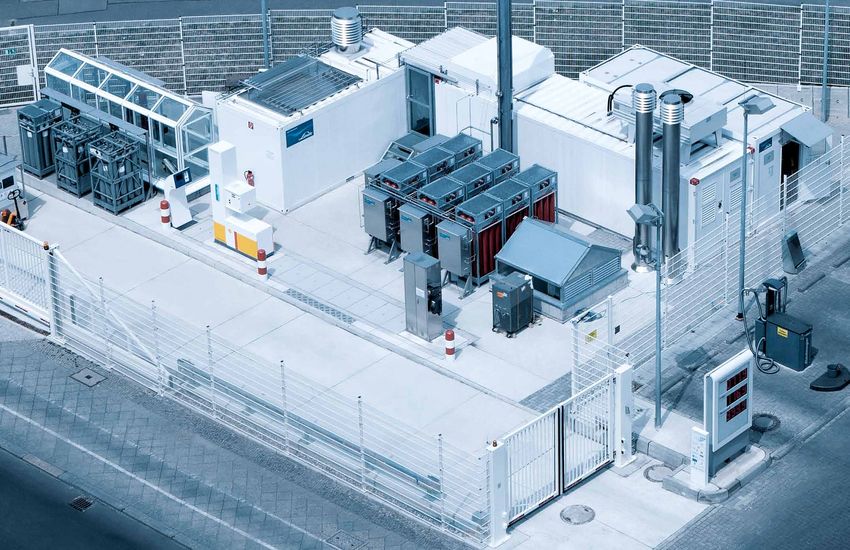
22 23Die Wasserstoffstation
The hydrogen station
in der
inHamburger
Hamburg’s HafenCity
besitzthas
eine
anElektrolyseanlage
electrolysis plant für
for die
theVor-Ort
on-site
Erzeugung
production
von grünofzertifiziertem
green-certified
Wasserstoff.
hydrogen.
Standardisation, efficiency and cost optimisation were
Patrick Schnell also the order of the day in the manufacturing of compres-
CEP Chairman sor stations – the technical heart of every H2 filling station.
2008–2015 The progress in all three areas was evident, among other
things, by the fact that Linde began the world’s first small-
For me as a Frenchman, it thrilled me.
series production of H2 filling stations in 2014.
to see that the French economy
minister Macron visited the filling station on
the Heidestrasse together with the German Global fuelling standard
economy minster Gabriel. I was very pleased to After members of H2 Mobility Deutschland had already
witness the prominent support given in our formulated requirements for the dimensioning of fuelling
field of hydrogen. equipment in advance of the company’s founding, the
establishment of a fuelling standard for 700-bar pressure
hydrogen fuelling was essential.
Peter Ramsauer, 2012 also marked the start of the market The CEP took over practical testing at selected locations. The
preparation phase, at the end of which Germany should findings eventually culminated in the publication of the
have a basic nationwide supply. Major challenges accom- current revision of SAE TIR J2601 (2014). It would have been
panied the network expansion over the years. While the impossible without the field testing conducted by the CEP.
first sites were largely standalone developments, the need
to simplify the further network and fleet construction From 2017, H2 Mobility Deutschland will manage the
through extensive standardisation of technologies, infrastructure’s further expansion. By 2018, there will be
components and processes very soon became apparent – a 100 stations in six major metropolitan areas and along the
process the plant manufacturers, operators and automo- axes connecting them. By 2023, H2 Mobility plans a
tive industry were equally involved in. By bringing all inter- network of up to 400 service stations, depending on the
est groups together around the same table, the CEP offered increase in the number of fuel cell vehicles.
Similar interests led Vattenfall to build the technologically a day. The gaseous hydrogen is stored at a medium pres- excellent conditions for effectively supporting the neces-
ambitious hydrogen filling station in Hamburg’s HafenCity sure of 200 bar in a 200 kg tank. The station has two sary standardisation processes.
in cooperation with Shell. Its redundant construction made dispensers at pressures of 350 & 700 bar. This site is the
it one of the most reliable service stations in Germany. Not first in a series of other sites currently being set up by
only is it very sophisticated from an architectural point of Air Liquide.
view, it also has an unusually prominent location in the
centre of the Hanseatic city, directly opposite the SPIEGEL In Berlin, other sites were built at the future Berlin
building on Oberbaumbrücke and a stone’s throw away Brandenburg Airport and on Heidestrasse within sight of
from Hamburg’s main railway station. Its on-site electro- the main railway station.
lytic hydrogen production uses certified electricity from
wind turbines that are less than six years old. Up to 20 The network expansion also progressed rapidly in the CEP
buses and several cars can be fuelled with a delivery capac- region of Baden-Wuerttemberg. With the opening of the
ity of approximately 750 kg of GH2 (at 350 bar and 700 OMV station in Metzingen in autumn, the federal state
bar). This is where Hamburger Hochbahn fuels its hydro- inaugurated its eighth hydrogen filling station. In North
gen buses, which have been in service since 2003. Rhine-Westphalia, the CEP partner company Westfalen
recently built a H2 station in the Amelsbüren district of
In September 2012, the first site in North Rhine-West- Münster.
phalia went into operation. The construction of the Air
Liquide public hydrogen filling station on Höherweg in Filling station network for Germany
Düsseldorf was funded by the federal state of North Rhine- With the agreement regarding the implementation of a
Westphalia – the third region after Berlin and Hamburg to 50-service station programme by the end of 2016, signed
become involved in the CEP. The capacity of the H2 filling in June 2012 by the CEP partners Air Liquide, Air Products,
station (about 200 kg/day) is enough to fuel up to 50 cars Daimler, Linde, Total and the Federal Transport Minister Dr
24 Opening of the Heidestrasse filling station with the 25
French Economy Minister Emmanuel Macron and the
German Economy Minister Sigmar Gabriel, 2015Go-ahead for the energy transition – State Secretary Reiche opens
the large-scale hydrogen plant in Berlin-Schönefeld, 2014
Hydrogen filling station,
Holzmarktstrasse, Berlin
Dr P. Blauwhoff, Chairman of the
Managing Board at Deutsche Shell
Holding GmbH, P. Schnell, CEP
Chairman, O. Reckenhofer, MD of Tim Heisterkamp, Manager Public Affairs at
H2 Mobility Congress with Federal Minister of Transport Linde Gas Deutschland, Dr K. The Linde Group explains the site on
and Digital Infrastructure Alexander Dobrindt and Opening of the filling station on Bonhoff, MD of NOW GmbH, 2012 Sachsendamm in Berlin, 2011
representatives of the industry, Berlin, 2016 Sachsendamm, Berlin, 2011
Hesse joins CEP, 2011: Hesse‘s Minister for Photo shoot at the first
Environment L.Puttrich with K.-F. Stracke, petrol station in North
Chairman of the Board at Adam Opel AG Rhine-Westphalia, 2012
Wolfgang Tiefensee at the
opening of the filling station on
Holzmarktstrasse, Berlin, 2010Mobility
The overriding objective of the energy revolution is to significantly
reduce greenhouse gases. As road transport is indisputably a
major emitter, industry and government have great hopes in the
potential of hydrogen. Accordingly, the aim of the Clean Energy
Partnership (CEP) was clearly defined: to prepare the ground for
a clean mobility of the future, emissions-free, silent, and without
restrictions on range.
Through their dedicated research and development and with
the support of Germany’s federal government, the partner
companies have been true trailblazers in creating an impressive
fleet of fuel-cell vehicles.
28 29Hydrogen – different storage
and drive concepts
In 2003, the four car manufacturers BMW, Daimler, Ford, Hydrogen vehicles in everyday use Prince Charles and Prince Haakon of Norway. Movie buffs The fuel cell prevails
and Opel began experimenting with hydrogen as an alter- In 2004, Ford joined the fuel-cell demonstration project for may also know that the Ford Focus was featured in the In 2004, Daimler introduced the A-Class F-Cell into the CEP.
native fuel. In early 2006, before the first phase of the the CEP with its Focus. The vehicle was already the fifth James Bond movie ‘Quantum of Solace’, even if only as the 60 units of this small-series fuel cell vehicle were built,
project had ended, a fifth automotive group joined: Volk- generation of Ford fuel-cell vehicles and is still undergoing engine sound used to dub the Bond girl’s car. With the representing the sixth generation of Daimler’s fuel cell
swagen. From the end of 2004, as many as 16 vehicles were long-term endurance tests to this day. A battery provides Explorer Hydrogen, Ford sent a second fuel cell vehicle out vehicles. This vehicle was tested as part of various interna-
driving through Berlin’s streets in demonstration and trial additional thrust during acceleration by boosting the onto the road. The SUV had two powerful electric motors tional collaboration projects in Europe, the United States,
operations. Shortly afterwards, in 2007, hydrogen-powered overall system performance and allows for recuperation for the front and rear axes, enabling four-wheel drive. Japan and Singapore. The F-Cell hydrogen used compressed
vehicles were also handed over to customers including during braking. What has proceeded to become the doyen gas at 350 bar; its fuel consumption was equivalent to 4
Deutsche Telekom, Vattenfall, the Federal Chancellery, of the CEP vehicle fleet has been driven by royals like BMW was also on board from the beginning, with the litres of diesel per 100 kilometres. The fuel-cell system is
Hermes, Berlin’s urban waste management, IKEA and vari- Hydrogen 7, a saloon based on the 7 Series with a modified housed in the ‘sandwich floor’ of the Mercedes-Benz
Prince Haakon of Norway with rally pro
ous ministries – thereby impressively demonstrating their petrol engine that let it run on liquid hydrogen (LH2 ) as well A-Class’s long wheel base.
Henning Solberg on the Viking Rally, Norway, 2009
technical maturity even at this early stage of the project. as petrol. The bivalent-drive vehicle was powered with LH2
cooled to -253 °C, stored in a highly insulated tank, and In 2007, the next generation arrived – the B-Class F-Cell,
In the early days of the CEP, the partners still worked on was considered from the outset suitable for everyday use. operated worldwide in a small series run of about 200
very different drive and storage concepts. Over the course units. Up to 90 vehicles were on the road in the CEP regions
of the project, the use of hydrogen in internal combustion BMW ceased operating the Hydrogen 7 in 2011, and turned of Berlin, Baden-Wuerttemberg and Hamburg. This gener-
engines was abandoned in favour of fuel-cell propulsion, its focus to developing the drive system and hydrogen stor- ation of the F-Cell in particular contributed significantly to
which had better energy efficiency, and has now reached age. In 2015, this resulted in a model based on the BMW 5 increasing the CEP fleet stock to well over 100 vehicles by
technical market maturity. The alternative storage of liquid GT, which relies entirely on fuel-cell technology. BMW is also the end of 2013. Daimler used 700-bar technology here for
hydrogen in the vehicle, as was tested by Opel and BMW, is testing a new storage technology in this vehicle, cryo- the first time. In 2011, three of these cars travelled around
no longer carried out in the vehicle itself, but only for larger compressed (CCH2 ) technology, where cryogenic liquefied the world as part of the F-Cell World Drive, each covering
quantities, i.e. at the service stations. Across all brands, hydrogen is directly compressed and fuelled at -40 °C, distances of about 30,000 km in 125 days. On the road,
compressed gaseous hydrogen has prevailed for use in giving it a greater capacity and range. Unlike in LH 2 Linde’s specially-built mobile refuelling unit served
vehicles with fuel-cell propulsion. technology, there are no evaporation losses with CCH 2 . almost 400 hydrogen refuellings.
30 31In 2017, Daimler will launch a fuel cell plug-in vehicle on VW Caddy HyMotion and Audi Q5 HFC had greater ranges project for the first time: Toyota and Honda. Shortly there- saloon is a 350-bar vehicle concept with a PEM fuel cell
the market with the Mercedes-Benz GLC F-Cell. from 2008, thanks to 700-bar tank technology. Perfor- after, the Korean carmaker Hyundai also joined the CEP. installed in the centre tunnel. Honda presented the succes-
mance peaks are covered by a lithium-ion battery beneath sor model, the Clarity Fuel Cell, in 2015 and its European
Opel added the HydroGen3 fuel-cell vehicle to the CEP the cargo floor of the boot, and the energy released during In Toyota’s fuel-cell hybrid vehicle FCHV-adv, a vehicle devel- market launch took place in 2016. Thus Honda has
fleet in 2004. Based on the Opel Zafira, it was already close braking is harnessed to recharge the battery. The fourth- oped close to series production-readiness, which was intro- succeeded in offering the world’s first production-model
to series production. The HydroGen3 liquid ran on cryo- generation HyMotion, the fuel-cell variant of a US Passat, duced in 2008 after having undergone several stages of saloon where the entire drivetrain including fuel cell is
genic liquid hydrogen and coped with all requirements also runs on gaseous hydrogen at 700 bar. In 2016, the development since 1992, the CEP gained a 700-bar vehicle housed in the engine compartment. Equipped with a
without an additional back-up battery thanks to its dynam- Audi brand took over VW Group’s fuel-cell activities, that already had all the main elements of market and series- 700-bar tank system, the vehicle has a lithium-ion battery
ically optimised fuel-cell system. making it the Volkswagen Group’s interface to the CEP. At production readiness. The vehicles were not available for and is suitable for everyday use without restrictions.
the Los Angeles Auto Show 2014, Audi presented the A7 customers at first, but were used for test and trial drives.
In 2008, the HydroGen3 was followed by the HydroGen4, a Sportback h-tron. This plug-in hybrid model combines the This was the last generation of trial vehicles for Toyota. Asia’s second-largest automotive group Hyundai was
vehicle based on the Chevrolet Equinox. This model was fuel cell with two electric motors for all-wheel drive. The already on the brink of entering the market the year it joined
driven by customers mainly in Berlin, but also in other CEP battery installed below the boot space stores the recuper- The Toyota Mirai has been available as a series production the CEP. In 2013, the ix35 Fuel Cell was added to the Group’s
regions. Well-known customers such as ADAC, Allianz, Coca- ation energy from the braking process, enabling an vehicle since 2014 in Japan, and since 2015 in the United product range on an equal footing alongside conventional
Cola, Hilton, Linde, Schindler, Axel Springer, Total and Veolia increase in performance. States and Germany. With the launch of the Toyota Mirai, series-production vehicles. Since mid-2015, this vehicle can
ensured high visibility for the vehicle on Berlin’s roads. an essential step on the way to the final establishment of also be purchased by private customers. By the end of 2015,
The CEP fleet continues to grow hydrogen as an alternative fuel was made. there were around 120 vehicles on the road in Germany. The
In 2006, the Volkswagen Group became the fifth vehicle After 2008, the Clean Energy Partnership became more and Hyundai ix35 Fuel Cell is also the fleet car of the world’s first
manufacturer to join the CEP, initially contributing the more internationally relevant, as evidenced by other mobil- Honda brought several units of the Honda FCX Clarity, car-sharing project with fuel cell vehicles that Linde initiated
Touran HyMotion to the project. The HyMotion3 successor ity partners coming on board, among other things. In 2011, which it had introduced in 2008, to Germany and is now in the summer of 2016: 50 emission-free vehicles are
generation with the vehicle models VW Tiguan HyMotion, for instance, two global Japanese companies joined the setting new standards in terms of range. The FCX Clarity currently on the road in Munich under the BeeZero brand.
The CEP vehicles and explainers in front of
the hybrid power plant in Prenzlau, where
green hydrogen is produced
32 33H2 in public transportation
In addition to cars, the CEP vehicle fleet also includes hydro- The ‘newcomers’ to public transport deliver high produc-
gen buses. At the beginning of the project the development tivity and flexibility as well as a good energy balance.
of technical maturity and suitability for everyday use was Progress continues to be made on the standardisation of
the focus of the collaboration with partner companies. In filling stations, bus depots, the establishment of a more
June 2006, MAN hydrogen buses were handed over to the cost-effective infrastructure, and the further technical
Berlin Transit Authority (BVG) in the presence of Environ- development of existing offers. The equipment of garages
ment Minister Sigmar Gabriel. They were the first buses in that work on fuel-cell vehicles has been standardised,
the CEP’s fleet. During the Football World Cup, the buses concepts for stronger sector networking are being drawn
were used as shuttles between the airport and the press up, and the CEP has made advances in the field of after-
centre at the Olympic Stadium for a great publicity boost. sales as well. Further key steps were taken towards market
maturity with the easy availability of spare parts, as well as
After the launch of the hydrogen-powered bus service, the development of reliable diagnostic tools for analysing
large-scale pilot projects in public transport followed in technical defects. The level of acceptance by passengers
other CEP regions. For instance, on the 109 ‘Innovation and the interest among high-ranking international visitors
Line’ in Hamburg, vehicles with innovative propulsion is already high. The Swedish royal couple, Princess Victoria
technologies were used to test different ones under and Prince Daniel, for example, expressed their enthusi-
comparable conditions. In addition to pure fuel-cell buses, asm about the sustainable technology during a visit to
battery-powered buses equipped with fuel cells as range Hamburg. Virtually silent and producing zero emissions,
extenders have been part of the Hamburg bus fleet since the buses are especially suitable for use in city centres or
December 2014, for example. residential areas.
From 2002 to 2016, the new buses in the city on the banks
of the river Elbe travelled a stretch of about half a million
kilometres. In Cologne, articulated buses with fuel-cell
drives have been on the road since 2011. In 2013, Baden-
Wuerttemberg launched scheduled services with the
second generation of fuel-cell hybrid buses. Two buses
have served as shuttles between the Karlsruhe Institute of
Technology (KIT) campuses since June 2013. Also in Stutt-
gart, fuel-cell buses have been on the road again since
2013 – the continuation of a fleet trial that already success-
fully tested the everyday viability of the buses in hilly
topography from 2003 to 2005.
Hydrogen bus in public transportation
at Stuttgart Airport
34 35Vehicle data Car
Audi Q5 HFC
Audi A7 h-tron quattro
Power Unit
Fuel Cell
Fuel Cell
Refuelling
gaseous hydrogen, 700 bar
gaseous hydrogen, 700 bar
power
100 kW
170 kW
Top Speed
160 km/h
200 km/h
Range
ca. 250 km
beyond 500 km
BMW Hydrogen 7 Otto- / combustion engine liquid hydrogen, petrol 191 kW 230 km/h 200 + 500 km
BMW GT 5 FCEV Fuel Cell cryogenic hydrogen, 350 bar > 150 kW 180 km/h ca. 700 km
BMW GT 5 FCEV Fuel Cell gaseous hydrogen, 700 bar > 150 kW 180 km/h ca. 500 km
Ford Focus Fuel Cell Fuel Cell gaseous hydrogen, 350 bar 65 kW 137 km/h 280 km
Ford Focus Fuel Cell Fuel Cell gaseous hydrogen, 700 bar 65 kW 137 km/h 400 km
Audi h-tron BMW 5er GT Hydrogen Fuel Cell Ford Explorer Fuel Cell
Ford Explorer Fuel Cell Fuel Cell gaseous hydrogen, 350 bar 100 kW 160 km/h 400 km
Mercedes-Benz A-Klasse F-Cell Fuel Cell gaseous hydrogen, 350 bar 65 kW 140 km/h 160 km
Mercedes-Benz B-Klasse F-Cell Fuel Cell gaseous hydrogen, 700 bar 100 kW 170 km/h 380 km
GM/Opel HydroGen3 liquid Fuel Cell liquid hydrogen 60 kW 160 km/h 400 km
GM/Opel HydroGen4 Fuel Cell gaseous hydrogen, 700 bar 94 kW 160 km/h 320 km
Ford Focus Fuel Cell Honda FCX Clarity Hyundai ix35 Fuel Cell
Honda FCX Clarity Fuel Cell gaseous hydrogen, 350 bar 100 kW 160 km/h 460 km
Hyundai ix35 Fuel Cell Fuel Cell gaseous hydrogen, 700 bar 100 kW 160 km/h ca. 600 km
Toyota FCHV-adv Fuel Cell-Hybrid gaseous hydrogen, 700 bar 90 kW 155 km/h ca. 600 km
Volkswagen Touran HyMotion Fuel Cell gaseous hydrogen, 350 bar 80 kW 140 km/h ca. 160 km
Volkswagen Tiguan HyMotion Fuel Cell gaseous hydrogen, 700 bar 100 kW 140 km/h ca. 230 km
Mercedes-Benz B-Klasse F-CELL Toyota FCHV-adv VW Passat HyMotion
Volkswagen Caddy Maxi HyMotion Fuel Cell gaseous hydrogen, 700 bar 90 kW 140 km/h ca. 500 km
Volkswagen US Passat Fuel Cell gaseous hydrogen, 700 bar 100 kW 160 km/h ca. 500 km
bus
Citaro FuelCell-Hybrid.
Fuel Cell gaseous hydrogen, 350 bar 120 kW 80 km/h ca. 350 km
from Daimler Buses
Citaro FuelCELL-H ybrid Citaro FuelCELL-Hybrid M.A.N. Bus
from Daimler Buses from Daimler Buses from BVG
Solaris Urbino 18,75.
Fuel Cell gaseous hydrogen, 350 bar 100 kW 80 km/h ca. 350 km
Electric
M.A.N. Buses .
with combustion engine. Otto- / combustion engine gaseous hydrogen, 350 bar 150 kW 80 km/h ca. 200 km
BVG
Phileas Fuel Cell-Hybridbus.
Fuel Cell gaseous hydrogen, 350 bar 150 kW 80 km/h ca. 300 km
from APTS
A330 FC.
KIT Mercedes-Benz Citaro Phileas Fuel Cell-Hybridbus RVK Van Hool A330FC Fuel Cell gaseous hydrogen, 350 bar 150 kW 80 km/h ca. 350 km
from Van Hool
FuelCELL Hybrid
36 37The public relations work of the CEP
Creating
awareness for
climate protection
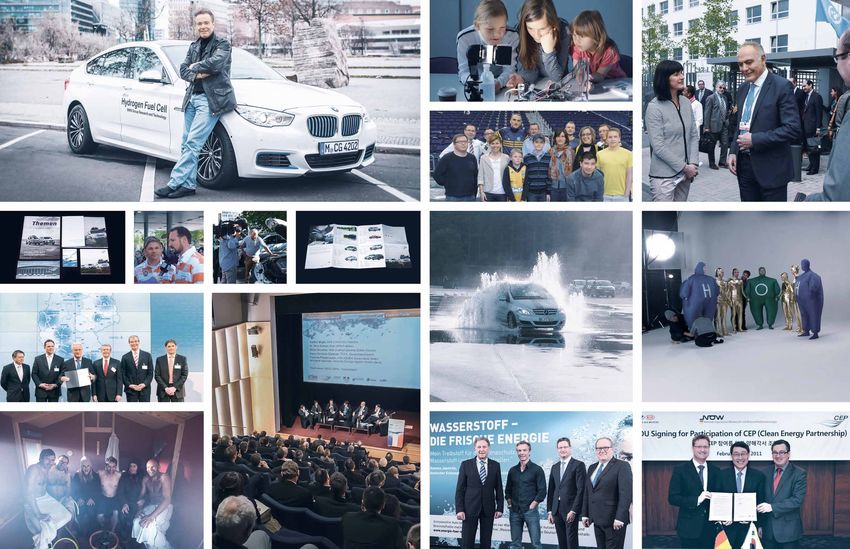
The Clean Energy Partnership. Whoever came up with and the wider public as well. The full range of modern properly, we needed placements in interviews, back- A growing number of service providers in photography,
the name must have been a visionary, because who communication instruments was employed. We made ground reports and advertorials. At integrated events, we film, the online and design sectors, as well partners on
would have thought in the noughties that ten years later the first films in which hydrogen-powered cars repre- showed journalists what sector interlinking meant. The the PR committee who have shown willing cooperation
‘clean energy’ would be a dictum in the energy sector. sent zero-emission mobility. The project film, which world’s first hybrid power plant in Prenzlau was the start- have helped to support joint, credible communications
explains the work and goals of the CEP in 90 seconds, ing point of a route at the wheel of various hydrogen- that tailored relevant and appropriate information to
The ‘Clean Energy Partnership’ is more than a name, it was created with the participation of all partners. In powered cars through the enchanting landscape of the fit their target groups – even when their own company
is the promise to redefine our world’s energy supply. the most elaborate scene, all the vehicle models drive Uckermark to the hydrogen filling station on Heidestrasse logo was not in the foreground.
The partners are collaborating to make transport, heat on a road in the Uckermark under rotating wind in Berlin. There, at the destination, the cars were refuelled
and electricity clean. The not-very-associative word turbines. No one who was involved in the filming will with green wind-powered hydrogen from the very In this way, the CEP grew into a highly acclaimed insti-
hydrogen is not even mentioned. And when fuel cells ever forget the surprised faces of villagers who watched production plant in Prenzlau from where the tour began. tution of knowledge, in which it was possible for the
are brought up, the atmosphere is usually laden with behind half-open curtains as unfamiliar vehicles rolled individual partners to work together – beyond their
question marks. These have been the communication from matt black low-loaders and then silently drove All of this took place in the company of the partnership’s business objectives and selling intentions – to further
challenges of the Clean Energy Partnership since the down the road in a convoy. experts who were happy to answer the media repre- the success of hydrogen as an alternative fuel. In the
beginning. How do you communicate an invisible gas? sentatives’ questions. In this manner and with similar foreseeable future of its market activation, there will
Project communications were called for that would Active on all communication channels events in other regions, a solid network of dedicated still be a need for a reliable source of information that
synthesise the results from research and development With the videos ‘Crime Scene: The Garden Shed’, ‘A Blonde journalists who believe in the topic’s urgency and rele- handles the increasing number of enquiries and
context and present these to the public in a way both Comes into the Library’ and ‘The Power-Full Neighbours’ vance was built up over the years. Other forms of knowl- supports further progress with appropriate communi-
technically correct and easy to understand. we virally disseminated the simple benefits of emissions- edge transfer included easy-to-understand explanatory cation measures until the market ramp-up.
free hydrogen mobility, garnering lots of clicks and fans videos about the technology, a comprehensive interac-
Target group-specific appeal on the social platforms. When Germany’s federal govern- tive website, lectures and workshops at universities, as When the public perceives hydrogen as a storage
In the early years, communications were mainly ment proclaimed the energy revolution, the communica- well as events for the general public, complete with medium and fuel equal to other technologies – that is
focused on the target group of government and deci- tion requirements changed. The public wanted to know test drives in fuel-cell vehicles. when CEP communications will have achieved its goal.
sion-makers, who were only too happy to come to the how the transition from fossil fuels to the fluctuating
first public filling stations to be shown the ‘cars of the renewables was going to be achieved. We showed the Explaining the bigger picture: energy transition
future’ and later reported with pride that they were entire cycle of the hydrogen economy, with hydrogen with hydrogen
allowed to witness a historic moment. From 2011, the mobility as an important building block in a changing Almost all the mainstream media that now report on
CEP’s public relations work was broadened and the energy economy based on renewable sources. Such hydrogen mobility stop in at the CEP communications
communication concepts focused on future customers complexity cannot be explained in one sentence; to do so office for in-depth knowledge, experience and evaluations.
38 39You can also read


