Bringelly Road Business Hub - Retail Demand and Economic Impact Assessment Prepared for the Western Sydney Parklands Trust - NSW ...
←
→
Page content transcription
If your browser does not render page correctly, please read the page content below
Bringelly Road Business Hub
Retail Demand and Economic Impact Assessment

Prepared for the Western Sydney Parklands Trust
December 2014
Bringelly Road Business Hub Retail Demand and Economic Impact Assessment

CONTENTS

Executive summary ..................................................................................................................... 7
   The Growing Demand for Retail Floorspace ........................................................................ 7
   Likely Impacts to Existing Centres ........................................................................................ 9
   Potential Impacts to Planned Centres ................................................................................ 10
   Additional Economic Benefits ............................................................................................ 11
1 Study Purpose and Approach ............................................................................................. 12
   The Subject Site .................................................................................................................. 12
2 Existing and Planned Centres ............................................................................................. 15
   Retail Hierarchy Overview .................................................................................................. 15
   Liverpool Regional City ....................................................................................................... 16
   Major Centres ..................................................................................................................... 16
        Campbelltown Macarthur ............................................................................................ 16
        Leppington North (Planned) ........................................................................................ 17
   Town Centres...................................................................................................................... 19
   LFR Clusters ........................................................................................................................ 20
        Crossroads.................................................................................................................... 20
        Warwick Farm .............................................................................................................. 21
        Orange Grove Stand Alone Shopping Centre............................................................... 21
        Blaxland Road .............................................................................................................. 21
        Gregory Hills................................................................................................................. 22
3 Retail Demand Assessment ................................................................................................ 23
   South West Growth Centre ................................................................................................ 23
   Trade Area Identification.................................................................................................... 25
   Demographic Characteristics.............................................................................................. 25
   Population Growth ............................................................................................................. 26
   Household Expenditure ...................................................................................................... 26
   Demand for Retail Floorspace ............................................................................................ 28
   Existing and Planned Supply ............................................................................................... 29
   Gap in LFR Demand and Supply.......................................................................................... 30
   Conclusion .......................................................................................................................... 31
4 Retail Impact Assessment................................................................................................... 33
   Relevant Statutory Considerations..................................................................................... 33
   Estimated Turnover of Proposal ......................................................................................... 34
   Loss of Trade to Existing Centres ........................................................................................ 34
   Significance of Impact......................................................................................................... 37
   Impacts over Time .............................................................................................................. 38
   Impacts on Proposed Centres ............................................................................................ 38
5 Additional Economic Benefits ............................................................................................ 40
   Construction Benefits ......................................................................................................... 40
        Construction Multiplier Impacts .................................................................................. 40
        Construction Related Employment .............................................................................. 42
        Other Construction Impacts......................................................................................... 42
   Post Construction Employment and Value Add ................................................................. 43
        Employment in Retail Operations ................................................................................ 43

Ref: BRBH Retail Demand and Economic Impact Assessment C14272                                                                      HillPDA Page 2 | 58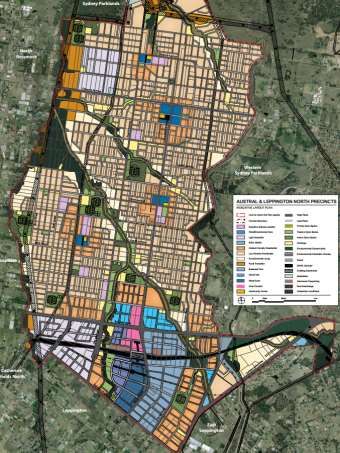
Bringelly Road Business Hub Retail Demand and Economic Impact Assessment

         Salaries ......................................................................................................................... 43
         Industry Value Add....................................................................................................... 43
    Benefits of the Subject Site for LFR .................................................................................... 43
    Benefits to Western Sydney Parklands .............................................................................. 45
Appendix A Demographic Analysis ....................................................................................... 46
Appendix B Planning Policy Context..................................................................................... 50
         NSW Draft Centres Policy (2009) ................................................................................. 50
         NSW Draft Competition SEPP (2010) ........................................................................... 52
         Metropolitan Plan for Sydney 2036 (2010) ................................................................. 52
         Draft Metropolitan Strategy for Sydney to 2031 (2013) ............................................. 53
         Draft South West Subregional Strategy (2007)............................................................ 54
         Liverpool Retail Hierarchy Review Version 2, July 2012 (2012)................................... 54
quality assurance ...................................................................................................................... 55
         Report Contacts ........................................................................................................... 55
         NICHOLAS HILL ............................................................................................................. 55
         Macquarie University (2012) ....................................................................................... 55
         Supervisor .................................................................................................................... 55
         ADRIAN HACK ............................................................................................................... 55
         Principal Urban and Retail Economics Adrian.Hack@hillpda.com. ............................. 55
         Quality Control ............................................................................................................. 55
         Report Details .............................................................................................................. 55
Disclaimer.................................................................................................................................. 56
         Sydney .......................................................................................................................... 58
         Melbourne ................................................................................................................... 58
         Brisbane ....................................................................................................................... 58

TABLES

Table 1 - The South West Growth Centre Precinct(s) ............................................................................. 24
Table 2 - Population Projections for the South West Subregion ............................................................. 26
Table 3 - Forecast Expenditure by Retail Store Type (2013 dollars) ....................................................... 27
Table 4 - Industry Benchmark Turnover Levels in 2014 (2013 dollars) ................................................... 28
Table 5 - Forecast Retail Floorspace Demand (sqm) ............................................................................... 29
Table 6 - LFR Demand v Supply in the South West Subregion (GLA sqm) ............................................... 30
Table 10 - Construction Multipliers ($m) ................................................................................................ 41
Table 11 - Construction Employment ...................................................................................................... 42
Table 12 - NSW Draft Centres Policy Key Principles ................................................................................ 51
Table 13 - Subregional Population and Dwelling Characteristics (2011)................................................. 46
Table 14 - Subregional Household Characteristics (2011) ...................................................................... 47
Table 15 - Subregional Employment and Income Characteristics (2011) ............................................... 48

Ref: BRBH Retail Demand and Economic Impact Assessment C14272                                                                         HillPDA Page 3 | 58
Bringelly Road Business Hub Retail Demand and Economic Impact Assessment

FIGURES

Figure 1- The BRBH site Location ............................................................................................................ 13
Figure 4 - Main Centres/Locations in the South West Subregional Retail Hierarchy ............................. 15
Figure 5 – Austral and Leppington North Indicative Layout Plan ............................................................ 19
Figure 6 - Retail Hierarchy around the BRBH .......................................................................................... 19
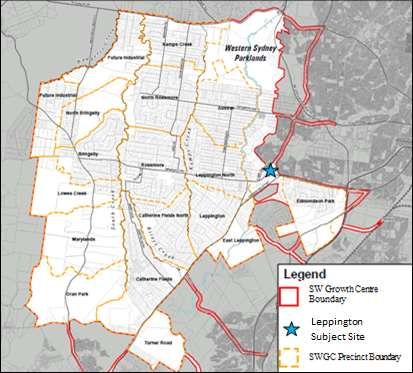
Figure 2 - Sydney Region Growth Centres Precinct Boundaries Map - South West Growth Centre ....... 23
Figure 3 - South West Growth Centre Structure Plan ............................................................................. 24

Ref: BRBH Retail Demand and Economic Impact Assessment C14272                                                                          HillPDA Page 4 | 58
Bringelly Road Business Hub Retail Demand and Economic Impact Assessment
ABBREVIATIONS AND DEFINITIONS
ABS Australian Bureau of Statistics
ANZSIC Australian and New Zealand Standard Industrial Classification
BG Bulky Goods
The NSW Standard Instrument Local Environmental Plan defines ‘bulky goods premises’ as:
“a building or place used primarily for the sale by retail, wholesale or auction of (or for the hire or
display of) bulky goods, being goods that are of such size or weight as to require:
a large area for handling, display or storage, and
direct vehicular access to the site of the building or place by members of the public for the
purpose of loading or unloading such goods into or from their vehicles after purchase or hire,
and including goods such as floor and window supplies, furniture, household electrical goods,
equestrian supplies and swimming pools, but does not include a building or place used for the
sale of foodstuffs or clothing unless their sale is ancillary to the sale or hire or display of bulky
goods.”
BRBH Bringelly Road Business Hub
BTS Bureau of Transport Statistics
DCP Development Control Plan
DDS Discount Department Store
DP&E NSW Department of Planning and Environment
EIA Economic Impact Assessment
ELDM Employment Lands Demand Model
FSR Floor Space Ratio
GDP Gross Domestic Product
GFA Gross Floor Area
GLA Gross Lettable Area
GLAR Gross Lettable Area Retail
GMA Greater Metropolitan Area
Ha Hectares
HES Household Expenditure Survey (ABS)
JTW Journey to Work
LEP Local Environmental Plan
LFR Large Format Retail
State planning guidelines for NSW do not have a universally accepted definition for Large Format
Retailing (LFR).
Ref: BRBH Retail Demand and Economic Impact Assessment C14272 HillPDA Page 5 | 58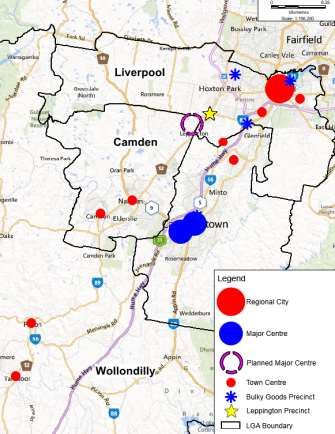
Bringelly Road Business Hub Retail Demand and Economic Impact Assessment

            For the purpose of this Study, and in particular for the purpose of the supply demand modelling, we
            have defined LFR as fabrics and soft goods, sports and camping stores, DIY and hardware, furniture,
            floor coverings, homewares, domestic and electrical appliances.

            Examples of retailers that are commonly associated with large format retail include Harvey Norman,
            Bunnings, Masters Home Improvement, IKEA, Freedom, Fantastic Furniture, Snooze, Beacon
            Lighting, JB Hi-Fi, Good Guys, OZ Design Furniture, Forty Winks and Barbeques Galore. The LFR
            Association (former Bulky Goods Retailers Association) also classifies Auto accessories, office
            supplies and pet supplies as LFR.

LGA         Local Government Area
MAT         Moving Annual Turnover
MTA         Main Trade Area
NLA         Net Leasable Area
PCA         Property Council of Australia
SEPP        State Environmental Planning Policy
SCN         Shopping Centre News
Sqm         Square metre
STA         Secondary Trade Area
SWGC        South West Growth Centre
TZ          Travel Zone
WSPT        Western Sydney Parklands Trust

Ref: BRBH Retail Demand and Economic Impact Assessment C14272                                       HillPDA Page 6 | 58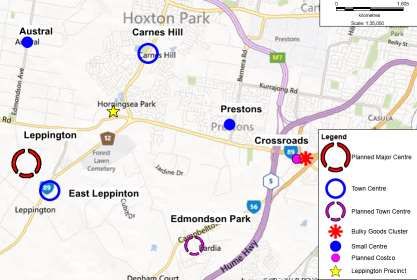
Bringelly Road Business Hub Retail Demand and Economic Impact Assessment

                        EXECUTIVE SUMMARY

                                            HillPDA was commissioned by the Western Sydney Parklands Trust
                                            (WSPT) to assess demand for, and the likely impacts of, a business hub in
                                            Horningsea Park adjacent to Sydney’s South West Growth Centre
                                            (SWGC).

                                            The 22ha proposed business hub site, hereafter referred to as the
                                            Bringelly Road Business Hub (BRBH), is located at the intersection of
                                            Cowpasture Road and Bringelly Road. The WSPT proposes to develop
                                            the BRBH site for large format retail (LFR) and light industrial. The
                                            proposed amount of LFR floorspace is 50,000sqm with the first
                                            retailers proposed to open their doors in 2017-181.

                                            For the purposes of this assessment we have defined LFR as:
New households generate
high demand for                             A building or place used primarily for the sale by retail, wholesale or
homemaker products that                     auction of (or for the hire or display of) goods that are of such size or
are largely provided by                     weight as to require a large area for handling, display or storage and
large format retailers.                     direct vehicular access to the site of the building or place by members
                                            of the public for the purpose of loading or unloading of such goods.

                                            The type of merchandise for sale, display and/or hire includes
The South West Growth                       furniture and floor coverings, DIY and hardware, homewares,
Centre is forecast to                       electrical products, whitegoods and home entertainment equipment,
experience a net                            fabrics and soft furnishings, sports and camping goods. Stores that
population growth of                        predominantly sell foods and apparel are excluded unless the sale of
300,000 people (110,000                     these items are ancillary.
new dwellings) in
addition to new retail                      On this basis, this Study quantifies the likely growth in demand for
centres and employment                      LFR in addition to any potential impacts the proposed BRBH might
lands.                                      have to existing and planned centres within the locality as well as
                                            existing out-of-centre retailers and bulky goods clusters.

                                            The Growing Demand for Retail Floorspace

                                            As a preliminary part of this assessment we have considered the
                                            existing and growing demand for retail within the vicinity of the BRBH
                                            Site. Our assessment has given particular consideration to the site’s
                                            location adjacent to the South West Growth Centre (SWGC). The
                                            SWGC is forecast to experience a net population increase of 300,000

                1
                    The first full year of trading has been assumed to end in mid-2018

                Ref: C14272                                                                                         Hill PDA Page 7 | 58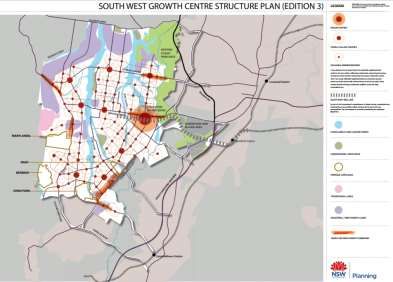
Bringelly Road Business Hub Retail Demand and Economic Impact Assessment

                                           people (110,000 new dwellings) in addition to new retail centres and
                                           employment lands2.

                                           The BRBH’s main trade area (MTA) is defined more broadly as the
                                           South West Region (the LGAs of Liverpool, Campbelltown, Camden
                                           and Wollondilly) although it is likely that some retail sales will come
                                           from households beyond the MTA depending on the type of retailers
                                           that occupy the space.

                                           Of particular importance, the population of the MTA is projected to
                                           more than double from 410,516 residents in 2006 to 932,750 in 2036,
                                           equivalent to an additional 522,234 residents or a 127% increase.
                                           Residents in the MTA generated $5.4b of retail expenditure in 2012
                                           across all retail store types. This is expected to grow to more than
                                           $14b from 2012 to 2036.

                                           This translates into demand for over 1.2m sqm of additional retail
The population of the                      floorspace in the South West Subregion over the 2012 to 2036
BRBH’s Main Trade Area is                  period. A quarter of this space (300,000sqm) is required for LFR.
projected to more than
double from 410,516                        The forecast undersupply of LFR floorspace in the Region in 2016 is
residents in 2006 to 932,750               27,000sqm Gross Lettable Area (GLA). This is forecast to increase
in 2036, equivalent to an                  further to 155,000sqm by 2026 without additional supply. The BRBH
additional 522,234 residents               is uniquely positioned to meet some of this unmet LFR demand yet
or a 127% increase.                        leave ample floorspace to allow complementary LFR developments
                                           within Leppington North and Gregory Hills over time.

                                           On this basis, Part A of this Study has ascertained that there is
                                           significant growth in demand for LFR in the South West Region,
                                           largely emerging out of population growth in the SWGC. The BRBH
                                           presents a prime opportunity and location to meet some of this
On the basis of population                 demand. LFR occupiers may otherwise encounter difficulties securing
growth alone, demand for                   alternative sites in the Region.
retail floorspace will grow                The State planning framework seeks to facilitate the growth of
by 1.2m sqm alone from                     existing centres and the development of new centres in line with
2012 to 2036. A quarter of                 demand. Overall economic impacts on the role and function of other
this space (300,000sqm) is
                                           existing and planned retail centres is a consideration in assessing new
required for LFR.
                                           retail centres. Impacts of proposed new retail centres on individual
                                           retailers are not relevant considerations, rather these impacts are
                                           considered a matter of competition.

                  2
                      http://growthcentres.planning.nsw.gov.au/TheGrowthCentres/SouthWestGrowthCentre.aspx

                  Ref: C14272                                                                                        Hill PDA Page 8 | 58
Bringelly Road Business Hub Retail Demand and Economic Impact Assessment
Likely Impacts to Existing Centres
In light of the significant existing and growing demand for LFR in the
South West Region and the location merits of the BRBH site, the
WSPT proposes the development of 50,000sqm of LFR floorspace. It
is proposed that the development application for the BRBH will be
staged with Stage 1 constituting up to 30,000sqm by 2017-18 and
Stage 2 a further 20,000sqm by 2019-2020.
On this basis we have considered the potential impacts to:
1. Existing and planned centres in the retail hierarchy; as well as
2. Retail clusters located in ‘out of centre’ locations.
It is assumed that the proposed BRBH Stage 1 will have its first year
of trading in 2017-18. In that year all existing centres and LFR
clusters are expected to be trading at, at least 90% of the level they
would have traded at if BRBH Stage 1 had not been constructed. In
other words, the difference in trading levels between the scenarios
By 2020 all retail centres (with BRBH Stage 1 and without) is estimated to be no greater than
and out-of-centre LFR 10%.
localities are expected to
trade at 15% greater than Importantly any such impacts or difference in trading between the
their 2014 trading levels scenarios would dissipate over time owing to the notable rate and
even with the operation of extent of population growth (and in turn retail demand) forecast to
the proposed 50,000sqm occur in the MTA. As a consequence by 2018 all existing centres and
BRBH. LFR clusters would experience positive growth in turnover from 2014.
More specifically, expenditure in LFR would increase in the trade area
by $360m between 2014 and 2021. With an expected turnover of
approximately $175m by 2020, the proposed LFR would meet
approximately half of this growth in demand. Beyond 2021 there
would be significantly more growth in demand that could be
accommodated by alternative locations such as Leppington (i.e. a
further 45,000sqm would be required between 2021 and 2026).
By 2020 all retail centres and out-of-centre LFR localities are
expected to trade at 15% greater than their 2014 trading levels even
with the operation of the proposed 50,000sqm BRBH.
Ref: C14272 Hill PDA Page 9 | 58Bringelly Road Business Hub Retail Demand and Economic Impact Assessment
Potential Impacts to Planned Centres
A number of new centres have been planned to meet the needs of
the South West Region’s rapidly growing population including the
proposed Edmondson Park Town Centre and North Leppington Major
Centre.
Edmondson Park will be developed in two stages. NSW Urban Growth
recently sought expressions of interest from the market for Stage 1
which is likely to provide a single supermarket with specialty retail.
The second stage is likely to incorporate an additional supermarket
and possibly a discount department store. The future major centre
for the suburb of Leppington North, to be located to the south of
Bringelly Road, will be staged over time as the SWGC grows over the
next three and half decades. This centre will eventually provide more
than 100,000sqm of retail space including department stores,
supermarkets, apparel stores and the like.
By 2021 the Southwest These centres will be traditional retail centres located in close
Region will demand over proximity to the associated train stations with limited retail offer in
70,000sqm more LFR than LFR categories. For this reason, the potential for competition
what is immediately between the BRBH site and the Leppington North Major Centre and
planned for. By 2026 that Edmondson Park Town Centre is expected to be minor and likely to
will increase to 140,000sqm. be more complementary rather than competitive.
Notwithstanding the above, the masterplan for Leppington North
provides for bulky goods on 25ha of land north of the major centre
on the north side of Bringelly Road. The timing of the delivery of this
Even with the proposed land for bulky goods uses is unknown at this stage but is most likely
BRBH development of to be post 2021. Whilst there would be competition between the LFR
50,000sqm, all centres and on this site and the BRBH site, our assessment finds that growth in
retail clusters would demand for retail floorspace over the next decade and a half would
experience growth in trade
support the development of LFR on both of these sites as well as the
from 2014 to 2018 as a
existing cluster at The Crossroads. By 2021 the South West Region
result of the significant
will demand over 70,000sqm more LFR than what is immediately
growth in demand from
planned for. By 2026 that will increase to 140,000sqm.
new households.
The BRBH is likely to be delivered earlier than the LFR land zoned
within Leppington North and serve the needs of the earlier residents
of the SWGC, prior to a sufficient population being achieved to
support the financial and commercial viability of LFR land at
Leppington North. In doing so, we consider that it would complement
rather than detract from the planned Leppington North Major
Ref: C14272 Hill PDA Page 10 | 58Bringelly Road Business Hub Retail Demand and Economic Impact Assessment
Centre, both as the Leppington North Major Centre is intended to be
largely a traditional retail centre and as the BRBH will be a draw for
future residents in the time prior to the development of the
Leppington North Major Centre.
Additional Economic Benefits
In addition to meeting the growing demand for LFR space, there are
several additional economic benefits that would be generated by the
proposed development of the BRBH as summarized below.
50,000sqm of the LFR component of the proposed development
would provide 208 job years directly in construction. Job years
provided both directly and indirectly, through production
induced and consumption induced multiplier impacts would total
7653.
The LFR component of the proposed development would provide
approximately 667 full time and part time jobs in retail
operations (based on 1 job per 75sqm of retail space)4 on site
upon completion. Total salaries resulting from the LFR
component would equate to approximately $23m and the
industry value add (contribution to GDP) would be in the order of
$29m per annum.
The BRBH is well located and suited to LFR uses and supporting
the need of the expanding SWGC. The BRBH site is in single
ownership at a major gateway into the Region near the
intersection of two arterial roads (Cowpasture Road and Bringelly
Road).
To achieve its Charter the WSPT must establish a sustainable
income stream to fund operations and improvements to picnic
areas, playgrounds, cycling and walking track networks and
sporting facilities, as well as help restore and expand natural
habitat throughout the Parklands. The proposed development
would assist in providing that income stream to the benefit of the
Parklands and its users.
3
One job year equates to one job for one person for 12 months
4
ABS Retail Survey 1998-99
Ref: C14272 Hill PDA Page 11 | 58Bringelly Road Business Hub Retail Demand and Economic Impact Assessment
1 STUDY PURPOSE AND APPROACH
The Western Sydney Parklands Trust (WSPT) proposes to develop a
business hub on Bringelly Road near the intersection with
Cowpasture Road, Horningsea Park to include 50,000sqm of large
format retail (LFR). LFR for the purposes of this Study has been
defined in the list of abbreviations and definitions in the introduction
of this Study (Please refer to pages 4 and 5).
HillPDA was engaged to firstly assess the growth in demand for retail
floorspace within the South West Region to better understand the
scale of demand for LFR floorspace.
Secondly we were engaged to consider what impact a 50,000sqm LFR
proposal would have to existing and planned centres in the locality.
For completeness we have also considered the potential impacts of
the proposal to out of centre retailers and retail clusters as well as its
broader economic benefits.
On the basis of these instructions we have prepared this Study in two
parts as follows.
Part A – Retail Demand Assessment – this part provides an overview of
existing and planned centres that are located within the BRBH’s trade
areas so as to inform the market demand and supply analysis and
determine the current and future need for retail floorspace.
Part B – Economic Impact Assessment – this part assesses the likely
economic impacts of the proposed development to existing and
proposed retail centres in the locality of the BRBH. This part also
considers the potential economic benefits of the proposal.
The Subject Site
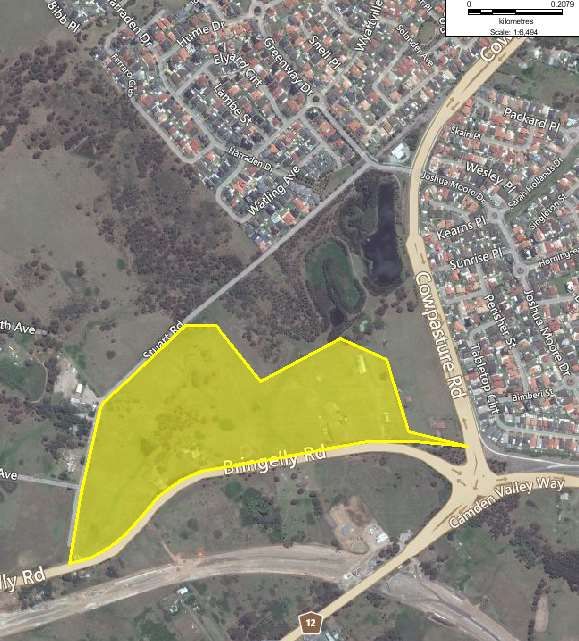
The 22ha Bringelly Road Business Hub (BRBH) site is located on
Bringelly Road near the intersection with Cowpasture Road. The site
is located on the eastern side of the planned suburb of Leppington
North, adjacent to the South West Growth Centre (SWGC) in the LGA
of Liverpool. Cowpasture Road is a major existing arterial route and
Bringelly Road will become the main east-west arterial road for
Leppington as well as the main entry point into the northern half of
the South West Growth Centre.
Ref: C14272 Hill PDA Page 12 | 58Bringelly Road Business Hub Retail Demand and Economic Impact Assessment
Our review of the BRBH site has identified a number of geographic
and ownership characteristics that support its suitability for retail
uses including:
Its immediate location - which provides a high degree of
exposure to passing traffic from two arterial roads;
Its broader location - which provides a high degree of accessibility
to a wide trade area (including Liverpool and Campbelltown LGAs
as well as the wider South West Region) that will increasingly
require home related retail as new homes are built; and
Its single ownership - which would result in not only a more
timely development outcome but a more viable one.
Exploring the last point further, the financial viability of a LFR
development can be challenging owing to the relatively lower returns
compared to other land uses (such as general retail and residential
uses). This challenge is in part addressed by the site’s single
ownership that overcomes the difficulties of land fragmentation to
the provision of LFR in the South West Region.
Figure 1- The BRBH Site Location
Source: HillPDA produced with MapInfo 11.0 software and Microsoft Bing (c) 2011 Microsoft Corporation
Ref: C14272 Hill PDA Page 13 | 58Bringelly Road Business Hub Retail Demand and Economic Impact Assessment
Part A
Retail Demand Assessment
This part provides an overview of existing and planned centres that are
located within the BRBH’s trade area so as to inform the market
demand and supply analysis and determine the current and future
needs for retail floorspace.
Ref: C14272 Hill PDA Page 14 | 58Bringelly Road Business Hub Retail Demand and Economic Impact Assessment
2 EXISTING AND PLANNED CENTRES
This Chapter profiles the existing location, role and function of the
larger retail centres in the South West Region (defined as the LGAs of
Liverpool, Campbelltown, Camden and Wollondilly).
The purpose of this Chapter is to gain an understanding of the
location and nature of existing and planned future retail provision,
identify market gaps and levels of undersupply so as to better
understand the role the BRBH could perform within this context.
Retail Hierarchy Overview
Figure 4 depicts the location and categorisation of the main retail
centres in the South West Region. Note that by ‘main retail centres’
we refer to the larger centres which are classified as ‘Major Centres’
in the hierarchy (or higher) by the draft South West Subregional
Strategy. Town centres and the main LFR clusters in the Subregion
are also identified. LFR clusters are not identified in planning policy as
‘centres’ but nevertheless are an important component of the retail
landscape.
Figure 2 - Main Retail Locations in the South West Region
Ref: C14272 Hill PDA Page 15 | 58Bringelly Road Business Hub Retail Demand and Economic Impact Assessment
Source: HillPDA, MapInfo 11.0
Liverpool Regional City
Liverpool Major Centre or CBD is the only Regional City in the South
West Region and is one of three in the Sydney Metropolitan Area.
Over and above the role of the centre in providing retail goods and
services Liverpool Major Centre serves important employment,
administrative and educational functions. Based on HillPDA’s 2011
floorspace survey Liverpool CBD provides approximately 150,000sqm
of gross leasable area (GLA)5 retail and commercial shopfront
floorspace (including vacant floorspace)6. Westfield Liverpool
accounts for 84,200sqm GLA7 retail and commercial floorspace in
Liverpool CBD.
Liverpool CBD draws from a wide trade area which includes all of
Liverpool and Fairfield LGAs and part of Campbelltown LGA. It is
anticipated that the role of Liverpool CBD will change over time.
Initially as the SWGC is developed, Liverpool CBD will experience
growth in the available pool of retail expenditure as population in the
trade area grows.
In the long term Liverpool may face some competition from
Leppington North Major Centre but nevertheless expenditure in the
Liverpool CBD is expected to increase due to population growth
across the LGA.
Major Centres
Campbelltown Macarthur
Campbelltown Macarthur is the largest centre, and the only Major
Centre, in the Macarthur Region (Campbelltown, Camden and
Wollondilly LGAs). In addition to providing retail goods and services
the centre also performs a range of employment, education,
administrative, medical and civic functions. The centre provides in
the order of 202,000sqm GLA of shopfront retail and commercial
5
Note: Gross Lettable Area – Gross Lettable Area (GLA) is the common measure used for lease and for other descriptive
purposes in retail centres and shops. It is usually defined as the total area of the lease and includes back of house,
storage, offices and mezzanine levels but usually excludes loading docks and common mall spaces. GLA is more commonly
used in the industry because it defines the area of the lease. Shopping centre owners report rents and turnover figures on
the leased area and benchmarking is usually made on the GLA. For the purpose of Hill PDA’s demand modelling all floor
areas expressed are in GLA.
6
Note: This has been adjusted downwards in this Study compared the figure quoted in the Liverpool Retail Centres
Hierarchy Review (Hill PDA, 2012) to reflect the reduction in floorspace recorded by in the NSW/ ACT Property Council of
Australia Shopping Centre Database for Westfield Liverpool from 94,500sqm in 2011/12 to 84,200sqm in 2012/13
7
Source: NSW/ ACT Property Council of Australia Shopping Centre Database 2012/13
Ref: C14272 Hill PDA Page 16 | 58Bringelly Road Business Hub Retail Demand and Economic Impact Assessment
floorspace8. The majority of this floorspace is provided in two
purpose built shopping centres: Macarthur Square (94,650sqm) and
Campbelltown Mall (41,000sqm).
Campbelltown Macarthur also contains Brands on Sale discount
factory outlet located on Queen Street. This outlet provides an
additional 16,000sqm of fashion outlet retail floorspace (gross floor
area or GFA9) as well as 2,000sqm GFA of LFR floorspace10.
Leppington North (Planned)
Leppington North which includes the Planned Leppington Major
Centre will be the principal new centre serving the SWGC. The
development of the centre is anticipated to commence in 2016
although it is likely to be developed over a number of stages in line
with growth in demand11. When fully developed it is anticipated that
Leppington North will accommodate at least 120,000sqm of retail and
commercial floorspace12 in addition to LFR floorspace along Bringelly
Road. The centre will also provide a civic precinct including a TAFE
campus, community and health care facilities.
Leppington North will serve a catchment largely encompassing the
SWGC and the suburbs of Liverpool LGA west of the M7, an area which
will eventually accommodate more than 300,000 residents.
The main LFR precinct in Leppington North is planned for the north side
of Bringelly Road, immediately north of the major centre. The purpose of
this precinct will be to accommodate LFR premises that require large
floor areas (compared to other retail store types).
Some areas fronting Cowpasture Road and Camden Valley Way are also
identified by the ‘Austral and Leppington North Precincts Post Exhibition
Report’ Final Indicative Layout Plan13 to be zoned B5 Business
Development. In our view, given the isolated nature of these precincts
and the limited connectivity to the retail core of Leppington, they are
likely to be developed for business and warehousing uses (also
permissible by the B5 Business Development zone) rather than LFR.
8
Source: Hill PDA floorspace survey January 2013
9
Note: Gross Floor Area – Gross Floor Area (GFA) is Gross Lettable Area plus common mall spaces (including amenities),
centre management area and plant rooms. In a typical indoor centre with at least one department store and supermarket
the GLA makes up around 72% to 75% of the GFA.
10
Source: Campbelltown City Council (email dated 04/01/2013)
11
“Retail floorspace capacity and staging project in the Austral, Leppington and Oran Park Precincts” by HillPDA for NSW
Growth Centres May 2010
12
Source: Leppington Major Centre Indicative Layout Plan (2011)
13
Source: Austral and Leppington North Precincts Post Exhibition Report, NSW DP&I (2012)
Ref: C14272 Hill PDA Page 17 | 58Bringelly Road Business Hub Retail Demand and Economic Impact Assessment
In total some 25ha of land is identified for LFR uses in Leppington
North excluding the BRBH14. The timing of the delivery of this land for
LFR uses is unknown at this stage however it is not unreasonable to
expect that delivery will be beyond 2021 given the sizeable
catchment which LFR operators typically require in order to be
commercially viable.
In Leppington North a LFR cluster of 60,000sqm to 70,000sqm is likely to
require approximately 20ha of land. This large land requirement is
reflective of the low site coverage required for LFR retailers and the high
demands for at grade car parking, access, servicing and loading space. In
addition other uses (non-retail) can also be attracted to, and
accommodated in the LFR precinct including recreational uses (for
example tenpin bowling, laser skirmish, golf simulations), places of
public worship (such as Hillsong Church in Norwest) etc. The close
proximity of the train station will increase the attractiveness and
appropriateness of Leppington North to accommodate these uses.
It is not clear at this stage whether delivery of Leppington North will
be left to the private sector and individual landowners or whether it
will be co-ordinated by a government agency to ensure that larger
land plots are delivered to the market.
14
Source: East Leppington Employment and Retail Study, NSW Department of Planning & Infrastructure (2013)
Ref: C14272 Hill PDA Page 18 | 58Bringelly Road Business Hub Retail Demand and Economic Impact Assessment
Figure 3 – Austral and Leppington North Indicative Layout Plan
Source: Department of Planning and Environment – Light Blue Bulky Goods
Town Centres
The three main town centres of relevance in the locality include
Carnes Hill and the planned centres for Edmondson Park and East
Leppington.
Carnes Hill Town Centre has 17,300sqm of retail floorspace and is
situated approximately 1.8km to the north of the BRBH15. It is
anchored by a Big W discount department store and a 4,500sqm
Woolworths Supermarket. It is one of the best performing centres of
its size achieving a turnover of $145m ($8,416/sqm) in 2013-14
making it the 9th highest turnover of all 144 similar sized centres
reported in Australia16.
15
Source: Hill PDA floorspace survey 2005
16
Shopping Centre News Mini Guns 2014 (centres 6,000 to 20,000sqm GLA)
Ref: C14272 Hill PDA Page 19 | 58Bringelly Road Business Hub Retail Demand and Economic Impact Assessment
Figure 4 - Retail Hierarchy around the BRBH
Source: Map produced by HillPDA using MapInfo 11.0 software and Microsoft Bing (c) 2011 Microsoft
Corporation
East Leppington Town Centre (Planned) will provide a maximum of
15,000sqm of retail floorspace to serve residents mainly in the East
Leppington precinct. It will be located on Camden Valley Road
approximately 3km (a 3 minute drive) south of the BRBH17.
Edmondson Park Town Centre (Planned) is proposed to be built near
the train station and staged with a supermarket and specialty
retailers in Stage 1. Stage 2 is likely to be completed around 2025 and
include a second supermarket and a possible discount department
store18. Total floor area is expected to be 25,000sqm GLA19. Note
that there are very few stores, if any, that would meet the definition
of LFR in the above centres.
LFR Clusters
In addition to the existing and planned centres above, the following
section profiles existing ‘out of centre’ LFR clusters and centres in the
locality.
Crossroads
The Crossroads Homemaker Centre is located on Camden Valley Way
in Casula. It provides some 50,300sqm GLA of LFR floorspace20.
Anchor tenants include Bunnings (12,560sqm), Kmart Garden Super
17
Source: Googlemaps
18
East Leppington Employment & Retail Study DP&1 2013
19
Liverpool Council
20
Source: NSW/ ACT Property Council of Australia Shopping Centre Database 2012/13
Ref: C14272 Hill PDA Page 20 | 58Bringelly Road Business Hub Retail Demand and Economic Impact Assessment
Centre (4,145sqm), The Good Guys (2,898sqm), Freedom Furniture
(2,235sqm) and Bing Lee (1,689sqm). A Costco large format retail unit
on land at Beech Road, Crossroads has recently been completed. The
Costco occupies a total GLA of a little over 13,000sqm21.
Given the quantum of retail floorspace provided at Crossroads it
serves a trade area incorporating Liverpool LGA in addition to the
northern part of Campbelltown LGA. It is well positioned to capitalise
on the market which will be created by the growth of the SWGC and
is expected to capture some of this future demand.
Warwick Farm
The Warwick Farm Homemaker Centre is located on Sappho Road
providing approximately 15,655sqm of LFR floorspace22. Retailers
represented in Warwick Farm include Fantastic Furniture, Lincraft,
Supercheap Auto, KFC, Hungry Jacks and SuperFurn.
Orange Grove Stand Alone Shopping Centre
Megacenta Liverpool is located on Orange Grove Road at Warwick
Farm. The centre has a total floor area of approximately 30,500sqm
GLA floorspace23. It is anchored by Harvey Norman (10,147sqm) and
Domayne (3,496sqm). The weekend markets site is located adjacent
to the Megacenta and provides in the order of 19,000sqm. The reuse
of this building for the purposes of a discount outlet centre has been
approved by Liverpool Council.
On the 28th of November 2012, Liverpool City Council resolved to change
the status of Orange Grove to a ‘Stand Alone Centre’24. This was
resolved to facilitate a wider range of retail uses at Orange Grove to
include ALDI, Kmart and other non-LFR retailers.
Blaxland Road
To the north of Campbelltown Macarthur CBD, Blaxland Road
comprises a large area of industrial zoned land which includes a
significant component of LFR floorspace estimated at some
55,700sqm25. LFR retailers in this area include Harvey Norman,
Domayne, Fantastic Furniture, Toys R Us, Forty Winks, The Good
21
Source: Liverpool Retail Centres Hierarchy Review Version 2, Hill PDA (July 2012)
22
Source: Hill PDA floorspace survey December 2011
23
Source: NSW/ ACT Property Council of Australia Shopping Centre Database 2012/13
24
Source: Minutes of the Ordinary Meeting Held on 28 November 2012, Liverpool City Council
25
Source: Campbelltown LGA Bulky Goods Retail Study, Hill PDA (2006)
Ref: C14272 Hill PDA Page 21 | 58Bringelly Road Business Hub Retail Demand and Economic Impact Assessment
Guys, Retravision and Bing Lee. There is also a Bunnings store in
Campbelltown CBD.
Gregory Hills
Gregory Hills is a new LFR precinct located at the intersection of
Camden Valley Way and Gregory Hills Drive in Camden LGA. Some
100ha of land is zoned in this area as IN1 General Industrial and B5
Business Development. The B5 Business Development zoning
permits LFR retailing. We understand that, in response to
representations from landowners, Camden Council has removed a
restriction on the total size of bulky goods floorspace permissible
in this location.
Gregory Hills is 12km to the south of Leppington and over time will
develop a separate trade area from Leppington as it will largely serve
demand emerging out of the southern part of the SWGC. Currently
the precinct provides a Masters home improvement centre of
13,500sqm of which some 7,800sqm GLA is main floor retail area (the
residual GLA comprises a café, outdoor furniture, delivery and trade
sales area)26. Adjacent to Masters is a planned homemaker centre of
30,000sqm GLA. Stage 1 is currently under construction and due for
completion in late 201427.
26
Source: Cordells 2013
27
Source: HomeCentre Gregory Hills
Ref: C14272 Hill PDA Page 22 | 58Bringelly Road Business Hub Retail Demand and Economic Impact Assessment
3 RETAIL DEMAND ASSESSMENT
This Chapter explores the existing and growing demand for LFR in the
locality. Whilst a high level of demand is generated by existing
residents in the South West Region, significant growth in demand will
occur as a result of urban expansion related to the SWGC. These new
households in particular will generate high demand for homemaker
products that are largely provided by large format retailers.
South West Growth Centre
The SWGC is located within the LGA boundaries of Liverpool, Camden
and Campbelltown. Once complete the SWGC will accommodate
110,000 new dwellings and 300,000 residents in addition to new retail
centres and employment lands28.
The SWGC comprises 18 separate precincts which are presently being
planned and will be released for development in stages. The location
of these precincts is depicted in the following figure.
Figure 5 - Sydney Region Growth Centres Precinct Boundaries Map - SWGC
Source: Sydney Region Growth Centres Precinct Boundaries Map - South West Growth Centre, DP&E,
amended by HillPDA (2013)
28
Source: http://growthcentres.planning.nsw.gov.au/TheGrowthCentres/SouthWestGrowthCentre.aspx
Ref: C14272 Hill PDA Page 23 | 58Bringelly Road Business Hub Retail Demand and Economic Impact Assessment
Figure 6 - South West Growth Centre Structure Plan
Source: Department of Planning and Environment
Edmondson Park, Oran Park and Turner Road are the first precincts
to be released to the market. Precinct planning for Austral,
Leppington and Leppington North as well as parts of Catherine Fields
have been advanced to rezoning. The anticipated size and
composition of the precincts is shown in Table 1.
Table 1 - The South West Growth Centre Precinct(s)
Precinct(s) Dwelling (dwg) / Population (pop) Targets Retail Centres Employment Land
Leppington Major Centre
220 hectares of
Austral and Leppington North 17,350 dwg 54,000 pop Community services
employment land
3 Neighbourhood Centres
1 Town Centre
Bringelly 5,000 dwg 14,000 pop
Several Neighbourhood Centres
1 Town Centre
Catherine Fields 5,000 dwg 14,000 pop Employment areas
Several Neighbourhood Centres
1 Town Centre
Catherine Fields North 9,500 dwg 26,000 pop Employment areas
Several Neighbourhood Centres
East Leppington 4,450 dwg 14,700 pop Neighbourhood Centre
Edmondson Park 6,000 dwg 18,000 pop 1 Town Centre
Kemps Creek 1,000 dwg 2,500 pop
1 Town Centre
Leppington 9,000 dwg 24,000 pop
Several Neighbourhood Centres
Lowes Creek 2,000 dwg 5,000 pop Several Neighbourhoods Employment areas
Marylands 9,000 dwg 25,000 pop Several Neighbourhood Centres Employment areas
1 Town Centre
North Bringelly 5,000 dwg 14,000 pop
Several Neighbourhood Centres
1 Town Centre
North Rossmore 6,500 dwg 18,000 pop
Several Neighbourhood Centres
1 50,000sqm Town Centre 18ha of employment
Oran Park 7,540 dwg 21,500 pop
2 Neighbourhood Centres land
1 Town Centre
Rossmore 9,000 dwg 25,000 pop Employment areas
Several Neighbourhood Centres
96ha of employment
Turner Road 2,000 dwg 12,000 pop 15,000sqm Town Centre
land
Employment Precinct 2 future employment precincts these have “yet to be released for planning”’
Source: The South West Growth Centres, the Department of Planning and Environment 2014
Ref: C14272 Hill PDA Page 24 | 58Bringelly Road Business Hub Retail Demand and Economic Impact Assessment
Trade Area Identification
A trade area can be defined as the area within which a proposed
centre or facility will draw the majority of its trade and will be the
main destination for the type of role or function that it performs.
The trade area served by any retail centre/ facility is determined by
consideration of:
The strength and attraction of the centre/ facility as determined
by factors such as the composition, layout,
ambience/atmosphere and car parking;
Competitive retail centres, particularly their proximity to the
subject centre/ facility and respective sizes, retail offer and
attraction;
The location and accessibility of the centre/facility including the
available road and public transport network and travel times; and
The presence or absence of physical barriers, such as rivers,
railways, national parks and freeways.
The starting point for undertaking retail demand modelling is to
define a trade area for the proposed centre / facility. Population
projections for the trade area over the period of analysis must then
be sourced.
The trade area for the BRBH would vary depending upon the
operator(s) but given the nature of LFR operators a trade area for the
BRBH would be extensive in comparison to the trade area for other
retail operators such as a newsagent, takeaway shop, supermarket
etc. For the purposes of this Study we have defined the trade area to
comprise the whole of the South West Region which comprises the
four LGAs of Liverpool, Campbelltown, Camden and Wollondilly.
Demographic Characteristics
Demand for retail floorspace is dependant not only on the number of
households in an area but also on the demographic characteristics of
those households. To inform this component of the Study, the
demographic characteristics of the Region have been analysed to
derive implications for retail market demand.
The demographic analysis has been based on information derived
from the 2011 ABS Census. Please refer to Appendix A Demographic
Ref: C14272 Hill PDA Page 25 | 58Bringelly Road Business Hub Retail Demand and Economic Impact Assessment
Analysis for further details of the demographic characteristics of the
trade area.
In summary the analysis finds that residents in the Region are likely
to be younger and live in larger households relative to residents
across Greater Sydney. Whilst residents in the South West Region are
more likely to be employed in blue collar professions and have
incomes below median levels (when compared to Greater Sydney)
they are more likely to be home owners and reside in detached
properties.
These demographic characteristics indicate that retail expenditure
may well be currently below average levels across the Region
compared to Greater Sydney. However owing to existing family
structures, residents may have a proportionally greater need for
family and dwelling related items and a greater demand for
affordable retail types / formats such as those delivered by LFR.
Population Growth
The latest population projections published by the NSW Bureau of
Transport Statistics (BTS) are the August 2012 release. These are
2006 ABS Census based and cover the period to 2036. The BTS
forecasts for the South West Region are shown in the following table.
Note that these include allowances for the future population of the
SWGC.
Table 2 - Population Projections for the South West Region
Change Growth
LGA 2006 2011 2016 2021 2026 2031 2036 2006-36 /ann (%)
Camden 50,940 63,158 99,299 129,111 178,910 229,323 261,886 210,946 5.6%
Campbelltown 147,440 157,887 172,647 191,286 209,770 228,161 245,699 98,259 1.7%
Liverpool 170,915 194,099 215,168 249,250 281,029 309,951 355,040 184,125 2.5%
Wollondilly 41,221 45,992 49,766 54,839 59,665 64,766 70,125 28,904 1.8%
Total Subregion 410,516 461,136 536,880 624,486 729,374 832,201 932,750 522,234 2.8%
Source: NSW Population Projections (August 2012 release), NSW Bureau of Transport Statistics
The Region is projected to experience significant population growth
between 2006 and 2036. The population of the Region will more than
double from 410,516 residents over this period to 932,750 in 2036,
equivalent to an additional 522,234 residents or a 127% increase.
Household Expenditure
To forecast demand over the 2012 to 2036 period household
expenditure was sourced from:
Ref: C14272 Hill PDA Page 26 | 58Bringelly Road Business Hub Retail Demand and Economic Impact Assessment
ABS Household Expenditure Survey (HES) 2003-04 (updated to
2009) which provides household expenditure by broad
commodity type by household income quintile; and
Marketinfo 2012 database which is generated by combining and
The South West Region updating data from the Population Census and the ABS HES using
generated $5.4bn of retail ‘microsimulation modelling techniques’.
expenditure in 2012 across
MarketInfo combines the data from the Census, HES and other
all retail store types with
expenditure likely to grow sources to derive total household expenditure by commodity type.
to $14.3bn by 2036. This data, which was validated using taxation and national accounts
figures, quantifies around 12 to 14% more expenditure than the ABS
HES Survey. Household expenditure by commodity type is then
applied to population forecasts for the trade area to determine total
demand for retail floorspace.
To convert expenditure by commodity type to retail sales by store
type, HillPDA used the results of the ABS Retail Survey 1998-99 (Cat
No. 8624.0). The ABS Retail Survey 1998-99 provides a cross
tabulation of store type (defined by ANZIC) by commodity type.
Multiplying the percentages in the cross tabulation by total dollars
spent generates household expenditure by retail store type.
Applying the population forecasts to the Marketinfo 2012
expenditure estimates for the South West Subregion the following
tables indicate total expenditure generated by retail store type.
Table 3 - Forecast Expenditure by Retail Store Type ($2013 in millions)
YEAR 2012 2016 2026 2036
Supermarkets & Grocery Stores 1,752 2,153 3,264 4,656
Specialty Food Stores 398 489 741 1,057
Fast-Food Stores 358 440 667 952
Restaurants, Hotels and Clubs* 422 519 786 1,122
Department Stores 385 473 717 1,023
Apparel Stores 399 490 743 1,059
LFR** 864 1,063 1,611 2,298
Other Personal & Household Goods
Retailing 676 831 1,260 1,797
Selected Personal Services*** 132 162 245 350
Total Retailing 5,385 6,620 10,033 14,314
* Turnover relating only to consumption of food and liquor (excludes all other types of revenue such as
accommodation, gaming and gambling)
** LFR including includes fabrics and soft goods, sports and camping stores, DIY and hardware and bulky
goods such as furniture, floor coverings, housewares and electrical appliances.
*** Selected Personal Services includes hair and beauty, laundry, clothing hire and alterations, shoe repair,
optical dispensing, photo processing and hire of videos
Forecast assumes 1.1% real growth in retail spend per capita per annum in line with historic trend since 1986.
Ref: C14272 Hill PDA Page 27 | 58Bringelly Road Business Hub Retail Demand and Economic Impact Assessment
The above table indicates that residents in the South West Region
generated $5.4bn of retail expenditure in 2012 across all retail store
types. On the basis of the referenced population projections, retail
expenditure is projected to grow to $14.3bn by 2036.
Demand for Retail Floorspace
Demand for retail floorspace is then derived by applying target
turnover rates (or industry benchmarks29) to the amount of retail
sales generated by households in the defined trade areas by retail
store type. The assumed target turnover rates are shown in the
following table. Note that these are consistent with those used to
inform the Liverpool Retail Centres Hierarchy Study which HillPDA
completed for Liverpool City Council in 2012.
Table 4 - Industry Benchmark Turnover Levels in 2014 ($2013)
Retail Store Type Target Turnover ($/sqm)^
Supermarkets & Grocery Stores 11,000
Specialty Food Stores 9,500
Fast-Food Stores 8,500
Restaurants, Hotels and Clubs* 5,000
Department Stores 3,500
Clothing Stores 6,000
LFR** 3,600
Other Personal & Household Goods 4,700
Selected Personal Services*** 3,500
Note: * Turnover relating only to consumption of food and liquor (excludes all other types of revenue such as
accommodation, gaming and gambling)
** LFR including includes fabrics and soft goods, sports and camping stores, DIY and hardware and bulky
goods such as furniture, floor coverings, houseware and electrical appliances.
*** Selected Personal Services includes hair and beauty, laundry, clothing hire and alterations, shoe repair,
optical dispensing, photo processing and hire of videos
^ Source: Various including ABS Retail Survey 1998-99 indexed to 2013 dollars, Shopping Centre News, Urbis
Retail Averages, various consultancy studies and HillPDA research. Target turnover levels are expected to
increase at a rate of 0.6% per annum in line with the historic trend.
The result of this method is the determination of demand for retail
floorspace by retail store type in the trade area over the 2012 to
2036 period. The table below calculates retail floorspace demand by
applying target turnover rates to retail expenditure.
29
Note: Derived from various sources including Urbis Retail Averages, ABS Retail Survey 1998-99 escalated at CPI to
$2009, Shopping Centre News, Hill PDA and various consultancy studies
Ref: C14272 Hill PDA Page 28 | 58You can also read


