Decarbonisation and its discontents: A critical justice perspective on four low-carbon transitions
←
→
Page content transcription
If your browser does not render page correctly, please read the page content below
Decarbonisation and its discontents: A
critical justice perspective on four low-
            carbon transitions

    Invited Seminar for the Center for Engineering
Sustainability and Resilience, Northwestern University,
          United States, January 21-22, 2021

                Benjamin K. Sovacool, Ph.D
                   Professor of Energy Policy
              Director of the Sussex Energy Group
         Director of the Center on Energy Technologies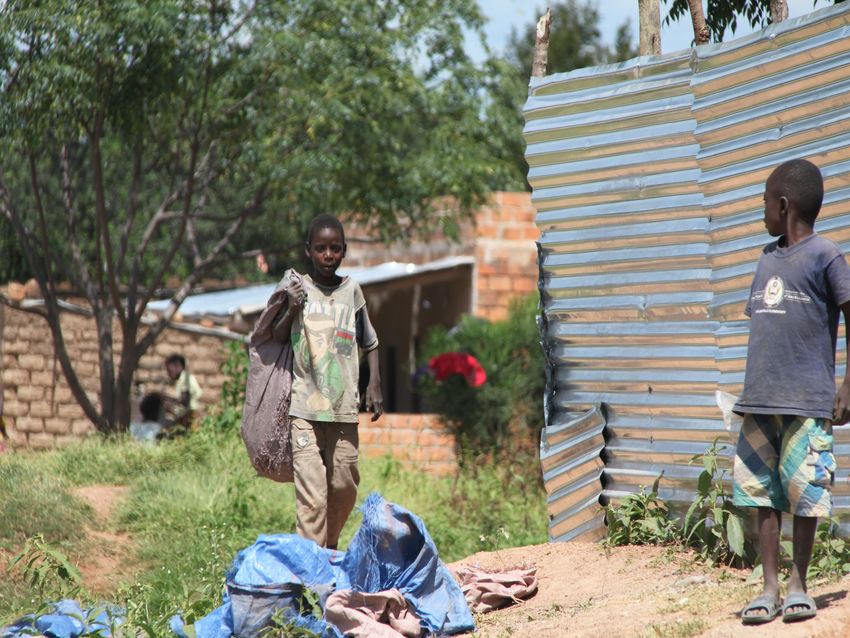
“Energy justice” involves:

Source: Darren McCauley, Global Energy Justice: Tackling Systems of Inequality in Energy Production
and Consumption, Springer, 2017
“Energy justice” involves:

• Costs, or how the hazards and externalities of the
  energy system are disseminated throughout
  society;
• Benefits, or how the ownership of and access to
  modern energy systems and services are
  distributed throughout society;
• Procedures, or ensuring that energy decision-
  making respects due process and representation;
• Recognition, or assessing the impact of energy
  systems on the poor, vulnerable, or marginalized.
 Source: Sovacool, BK, RJ Heffron, D McCauley, and A Goldthau. “Energy decisions reframed as
 justice and ethical concerns,” Nature Energy 16024 (May, 2016), pp. 1-6.
Applications within the field:

Dimension                     Definition                               Application to electric
                                                                       mobility
Distributive justice          Equitable or utilitarian distribution of Benefits and burdens of
                              social and economic benefits and         vehicle use, equity of access
                              burdens within and across different
                              generations
Procedural justice            Adherence to due process and fair Planning, due process, and
                              treatment of individuals under the       policy issues surrounding
                              law                                      incentives and regulations
Cosmopolitan justice          Universal respect for individual         Globally produced or
                              human rights regardless of one’s         distributed externalities
                              identity                                 including embodied emissions,
                                                                       pollution, and lifestyle impacts
Justice as recognition        Appreciation for the vulnerable,         Impacts on vulnerable groups,
                              marginalized, poor, or otherwise         especially women, children,
                              under-represented or                     minorities, or indigenous
                              misrepresented populations and           people
                              demographic groups

   Source: Sovacool, BK, Noel, LD, G Zarazua de Rubens, and J Kester. “Energy injustice and
   Nordic electric mobility: Inequality, elitism, and externalities in the electrification of vehicle-
   to-grid (V2G) transport,” Ecological Economics 157 (March, 2019), pp. 205-217
Applications within the field:

 Tenet             Evaluative                         Normative
 Distributional    Where are the injustices?          How should we solve them?

 Recognition       Who is ignored?                    How should we recognise?
                   Who is responsible?                How do we achieve
                                                      responsibility?
 Procedural        Is there fair process?             Which new processes?
 Cosmopolitanism   Is everyone afforded equal moral   How do we engage in global
                   rights?                            decision-making?
Applications within the field (principles):

Principle         Explanation
Availability      People deserve sufficient energy resources of high quality.
Affordability     All people, including the poor, should pay no more than 10 percent of
                  their income for energy services.
Due Process       Countries should respect due process and human rights in their
                  production and use of energy.
Transparency      All people should have access to high-quality information about energy
and               and the environment and fair, transparent, and accountable forms of
accountability    energy decision-making.
Sustainability    Energy resources should not be depleted too quickly.
Intragenerational All people have a right to fairly access energy services.
equity
Intergenerational Future generations have a right to enjoy a good life undisturbed by the
equity            damage our energy systems inflict on the world today.
Responsibility    All nations have a responsibility to protect the natural environment and
                  minimize energy-related environmental threats.
Resistance        Energy injustices must be actively, deliberately opposed.
Respect           Intersectional differences in knowledge and epistemic upbringing, culture
                  and experience, and race and gender have to be respected in energy
                  decision-making.

 Source: Sovacool, BK, M Burke, L Baker, CK Kotikalapudi, and H Wlokas. “New frontiers and
 conceptual frameworks for energy justice,” Energy Policy 105 (June, 2017), pp. 677-691.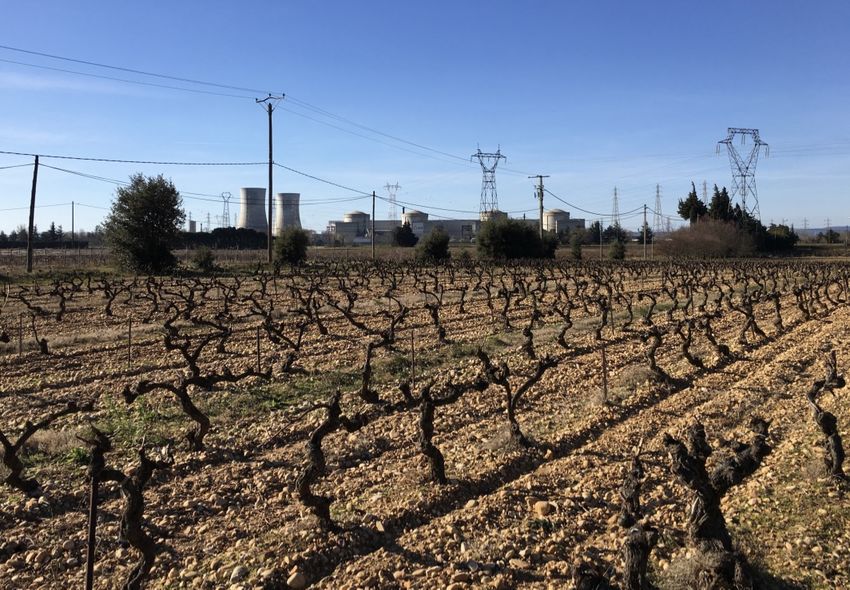
Applications within the field (selected principles)
                 Technological          Change in user
Case study                                                   Positive justice dimensions Negative justice dimensions
                 complexity             practices
                                                             Cost savings, more reliable
                                                                                             Some may be excluded from the
                                                             service, more predictable cost,
Energy services Incremental             Substantial                                          market (e.g. because they lack the
                                                             increased productivity of
                                                                                             internet, sensors or a smart phone)
                                                             subsidies
                                                                                             Less accessible to those without
                                                             Reduced carbon emissions
Electric vehicles Radical               Substantial                                          off-street parking, and/or those
                                                             and air pollution, fuel savings
                                                                                             who cannot afford a new car
                                                             Reduced electricity bills,      Limited to those who own their
Solar            Radical (especially
                                                             improved resilience and         own roof but subsidized by
photovoltaic     with storage and       Modest
                                                             potential revenue from feed in everyone and too difficult for some
panels           time-of-use tariffs)
                                                             tariffs                         to understand
                                                             Upgrading heating systems
                                                                                             Some lack the capital to invest in
                                                             and insulating homes can
                                                                                             upgrades or the ability to make the
Low carbon heat Incremental             Modest               raise property values and
                                                                                             decision because they rent their
                                                             improve the quality of indoor
                                                                                             home
                                                             environments

                            Energy service            Battery electric
                                                                             Solar PV panels           Low carbon heat
                            contracting               vehicles
Affordability               +++                       −                      +                         +/−
Sustainability              ++                        +/−                    ++                        +++
Equity                      −−−                       −−−                    −−−                       −
Respect                     −−                        −                      −                         −

Source: Sovacool, BK, M Lipson, and R Chard. “Temporality, vulnerability, and energy justice in household low carbon
innovations,” Energy Policy 128 (May, 2019), pp. 495-504.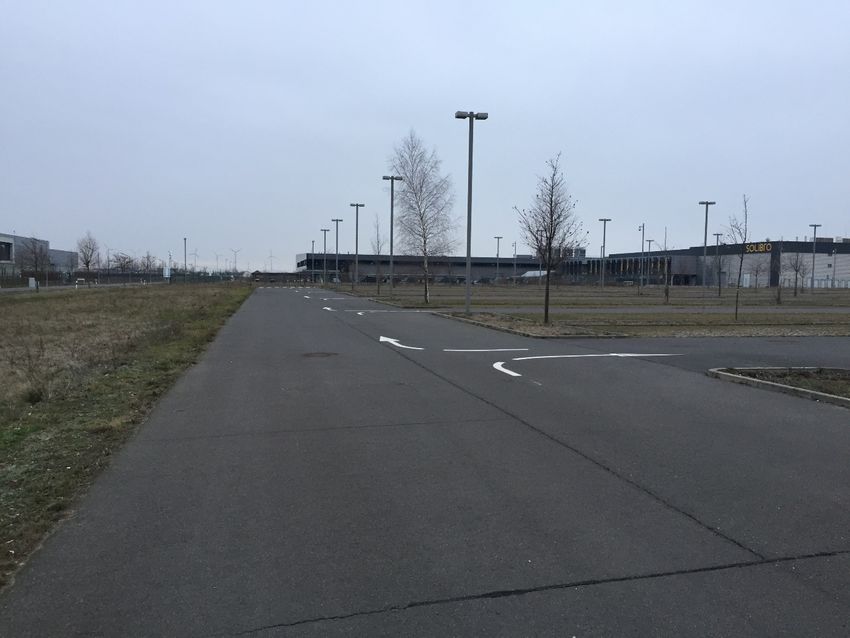
Healy et al. and “sacrifice zones” – but
  what about pro-climate interventions?

Source: Healy, N., Stephens, J. C., & Malin, S. A. (2019). Embodied energy injustices: Unveiling and
politicizing the transboundary harms of fossil fuel extractivism and fossil fuel supply chains. Energy
Research & Social Science, 48(June 2018), 219–234.
Case study selection: France (1970/80s),
Germany (1990s), Norway (2000s), UK (2010s)
Research design (mixed methods)

Sixty-four semi-structured expert research interviews
Country   Date        Illustrative Institutions
France    July 2018   CEA (Atomic Energy Commission of France), Electricité de
                      France, ESSEC Business School, Greenpeace, International
                      Energy Agency, Organization of Economic, Cooperation and
                      Development, WISE-PARIS
Germany   July 2018   BMWi (Federal Ministry for Economic Affairs and Energy),
                      Ecologic Institute, Fraunhofer Institute for Solar Energy Systems
                      ISE, German Solar Association (BSW-Solar), the German
                      Energy Agency, the German Solar Energy Society (DGS),
                      Zentrum für Sonnenenergie- und Wasserstoff-Forschung Baden-
                      Württemberg (ZSW)
Norway    June -      Energi Norge, Ministry of Transport and Communications,
          September   Norwegian Public Roads Administration, NTNU (Norwegian
          2018        University of Science and Technology), Statnett, the Norwegian
                      Electric Vehicle Association (NEVA), TOI (The Institute of
                      Transport Economics)
Great     August      Department for Business Energy & Industrial Strategy, Citizens
Britain   2018        Advice, Energy Saving Trust, Good Energy, Oxford University,
                      Smart Energy GB, University College London
Research design (mixed methods) Five focus groups: Lewes (Great Britain), Colmar (France), Freiburg (Germany, two of them), and Stavanger (Norway)
Research design (mixed methods)

Twelve internet forums (three per country, more than 2m total
members) with 58 further responses
Country   Forum                       Description                            Members Responses

Norway    Elbilforum.no               Norwegian EV forum                     20,487    7
Norway    Tesla motors club Norway    Online forum for Tesla owners in       N/A       4
                                      Norway
Norway    SpeakEV                     Online electric car forum for all EV   16,152    0
                                      owners and enthusiasts
Germany Photovoltaik forum.com        A solar forum in German                100,823   2
Germany Solarstrom-forum.de           Photovoltaic forum in German           2,329     0
Germany Building Technology Forum -   Online forum for all building          N/A       0
        Solar Energy                  technologies including solar
GB      Money Saving Expert           Consumer forum                         1,778,314 1
GB        Navitron                    Private company forum on a range of    7139      0
                                      energy issues
GB        OVO Energy                  Private company forum on a range of              0
                                      energy issues
GB        The IET                     The Institution of Engineering and     N/A       38
                                      Technology
France    Que Choisir                 Consumer forum                         130536    1
France    Forum photovoltaique        Energy forum                           42596     5
France    Droit Finances              Consumer finances forum                N/A       0
Findings: More detailed results in the
study … how many in total?
No. Injustice Description Supported Frequenc
bya yb
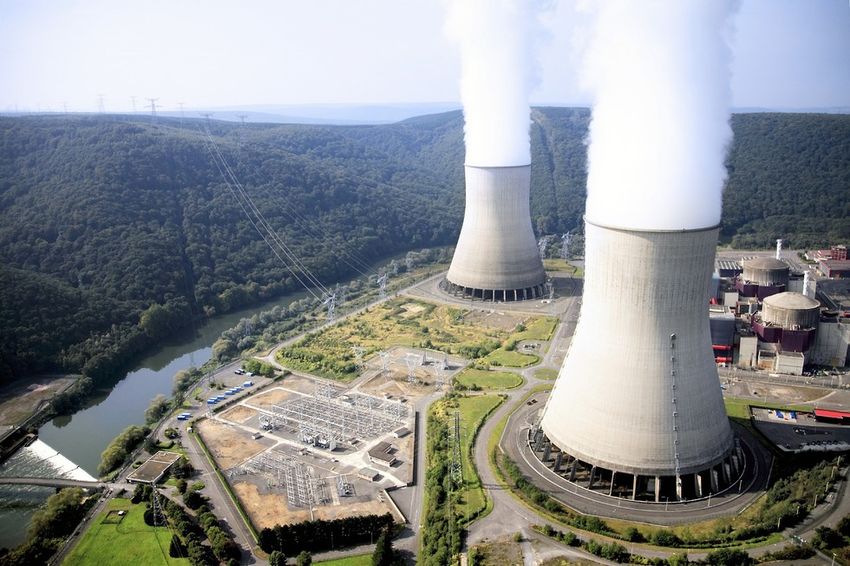
France 1 High long-term costs Future tax payers bearing burden RI, FG, IF 11
to tax payers of decommissioning and waste
management
2 Risk of accidents Economic and environmental RI, FG, IF 10
impacts of a serious incident or
accident
3 Crowds out other Future citizens will be locked into RI, FG 8
renewable investment, nuclear investments and denied
forestalling energy benefits of clean energy
transitions (in France
and beyond)
4 Nuclear waste burdens Future generations will face RI, FG, IF 8
statistically higher risk of pollution
due to growing amount of waste
5 Rising electricity costs Future energy consumers will RI 6
due to rising nuclear have to pay higher costs due to
costs rising costs of nuclear (plus the
costs of subsidizing renewables,
which lag behind because of
nuclear lock-in), complacency
around electricity consumptionFindings: summary of injustices (exhaustive “simple” list) • Our evidence accumulates into 120 (inductively or analytically) distinct energy injustices • Distributive injustices dominated (57), followed by recognition (32), cosmopolitan (18) and procedural (13) • Injustices were more evenly distributed with smart meters (34 injustices) entailing the most, followed by nuclear power (31 injustices), electric vehicles (31), and solar PV (24 Injustices). Sovacool, BK, A Hook, M Martiskainen, and LH Baker, “Decarbonisation and its discontents: A critical energy justice perspective on four low-carbon transitions,” Climatic Change 155(4) (August, 2019), pp. 581–619.
Whole systems energy justice impacts
  of European low-carbon transitions

Source: Sovacool, BK, A Hook, M Martiskainen, and LH Baker. “The whole systems energy injustice of four
European low-carbon transitions,” Global Environmental Change 58 (September, 2019), 101958, pp. 1-15.
Whole systems energy justice impacts
  of European low-carbon transitions

Source: Sovacool, BK, A Hook, M Martiskainen, and LH Baker. “The whole systems energy injustice of four
European low-carbon transitions,” Global Environmental Change 58 (September, 2019), 101958, pp. 1-15.
Phase 2 for the “lived experiences” of
   injustice
Method       Community         Respondents                                                  Illustrative Institutions or Locations
Expert       French wine       FER1-7 (mix of wine representatives, wine trade experts,     Commercial representatives of wineries, Syndicat général
research                       wine-specialized journalists, anti-nuclear associations)     des Côtes du Rhône, Université du Vin, Wine trade
interviews                                                                                  experts, Wine journalists, Sortir du Nucléaire, CRIIRAD

             German solar      GERE1-7 (mix of research institutes, private solar firms,    Fraunhofer ISF, municipalities, mayoral offices, private solar firms
                               mayoral offices, unions)
             Ghanaian e-       GER1-11 (mix of government, civil society, private sector,   Environment Protection Agency (EPA), Ministry of Environment,
             waste             and academic respondents)                                    Science, Technology and Innovation (MESTI), World Resources
                                                                                            Forum, Greater Accra Scrap Dealers Association (GASDA), Scrap
                                                                                            Dealers Association at Agbogbloshie, University of Ghana

             Congolese cobalt CER1-23 (mix of government, civil society, private sector,    Service d’Assistance et d’Encadrement du Small Scale Mining
             mining           and academic respondents)                                     (SAESSCAM, recently renamed SAEMAPE, the Ministry of Mines,
                                                                                            Deutsche Gesellschaft für Internationale Zusammenarbeit (GIZ),
                                                                                            Gécamines (state-owned mining company), 'entreprise minière
                                                                                            Congo Dongfang Mining (CDM mining), Tenke Fungurume Mining
                                                                                            (TFM), Glencore, and Ruashi Mining, Université de Kinshasa,
                                                                                            Université de Lubumbashi

Community    French wine       FCR1-6 (winegrowers and residents)                           Various local winegrowers, wineries, and bottlers in the Rhone and
research                                                                                    Grignan-les Adhémar regions
interviews
             German solar      GERC1-7 (local community members, ex-solar workers,          Ex-solar workers in the Bitterfeld region, other local affected
                               local journalists)                                           community members
             Ghanaian e-       GCR1-21 (e-waste scrapyard workers, their families, labor E-waste workers and communities throughout Agbogbloshie and
             waste             leaders, politicians, and those supporting e-waste via    the greater Accra area
                               marketing and vending)
             Congolese cobalt CCR1-48 (mix of artisanal cobalt miners as well as            Various artisanal mining teams, artisanal mining communities and
             mining           artisanal bosses or chiefs, crushers, carriers, drivers,      households across Kolwezi, Likasi, Fungerume, and Lubumbashi
                              refiners, safety inspectors, sorters, labor unions and
                              members of the mining police)
Phase 2: Site visits
Site visits French 7 vineyards (within and beyond Within AOCs Grignan-les Adhémar, Côtes
and wine AOC), wine du Rhône, Marcoule, Tricastin, Cruas-
naturalisti cellars, winemaking training Meysse
c centers and archives,
observati 3 nuclear sites, and 1 Wine Trade fair
on in Paris
German 8 solar manufacturing sites, affected Solar Valley, Bitterfeld-Wolfen, Halle,
solar communities, administrative decision- Magdeburg
making centers
Ghanaian 20 formal and informal scrapyards, Agbogbloshie scrapyard, Old Fadama
e-waste affiliated industries Market, Agbogbloshie Health Clinic, Accra
Compost & Recycling Plant, Akooshi
Recycling Centre, Dawa Steel Mill and
Export Zone, various electrical shops
Congolese 30 artisanal and industrial mines, legal Ruashi artisanal cobalt mine, Kasulu
cobalt and illegal mines, mines as well as artisanal mine, Depot 169, Depot 2, Depot
mining trading depots and processing centers 18, Depot 1000, Depot Thomas Boss Billy,
Solola and Kabica artisanal mines, Katanga
and Fungerume artisanal mines, Kawama
artisanal mineFrench winegrowers and vineyards • “wine growers … whose vineyards were in the vicinity of plants were affected. In other areas … there is radioactive material in the water supply.” • One winemaker: “we made the mistake of believing that this cohabitation with nuclear energy would be profitable.” • 40% loss of sales after incidents in AOC Côteaux du Tricastin Sovacool, BK, B Turnheim, A Hook, A Brock, and M Martiskainen. “Dispossessed by decarbonisation: Reducing vulnerability, injustice, and inequality in the lived experience of low-carbon pathways,” World Development 131 (January, 2021), 105116, pp. 1-14.
Eastern German solar workers
• “The real vulnerable group from the solar transition is not often
  talked about, namely 100,000 people who lost their jobs in the
  German solar sector over the past years. You have trade unions
  and government going, oh my goodness, we cannot shut down
  coal because of all the work and these regions. Yet Solar World
  and other big producers have shut down in the past years and
  they didn’t make a peep about those workers. Workers in the
  German renewable energy sector are a vulnerable population.”
• One local mayor said, “Berlin got the electricity, we got the ashes”

Sovacool, BK, B Turnheim, A Hook, A Brock, and M Martiskainen. “Dispossessed by decarbonisation: Reducing vulnerability,
injustice, and inequality in the lived experience of low-carbon pathways,” World Development 131 (January, 2021), 105116, pp. 1-14.
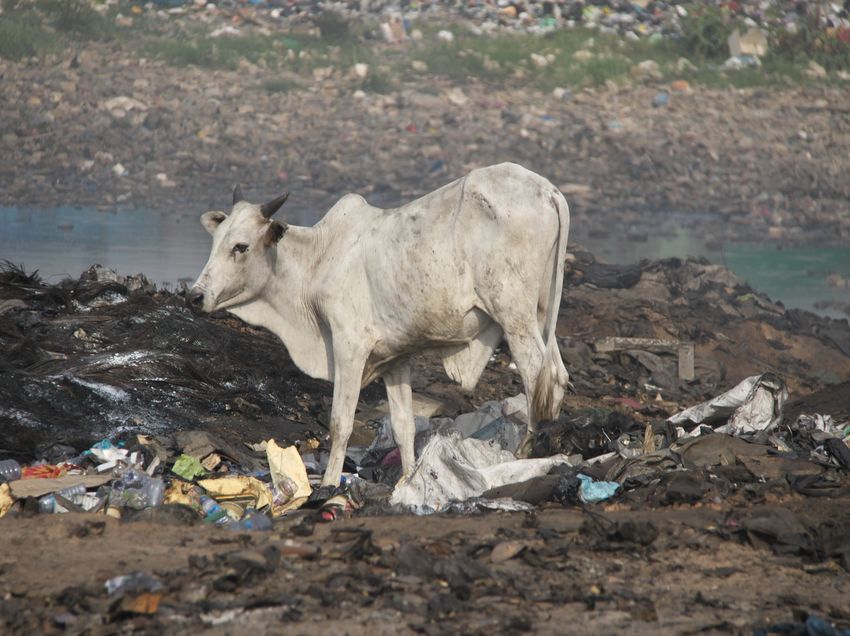
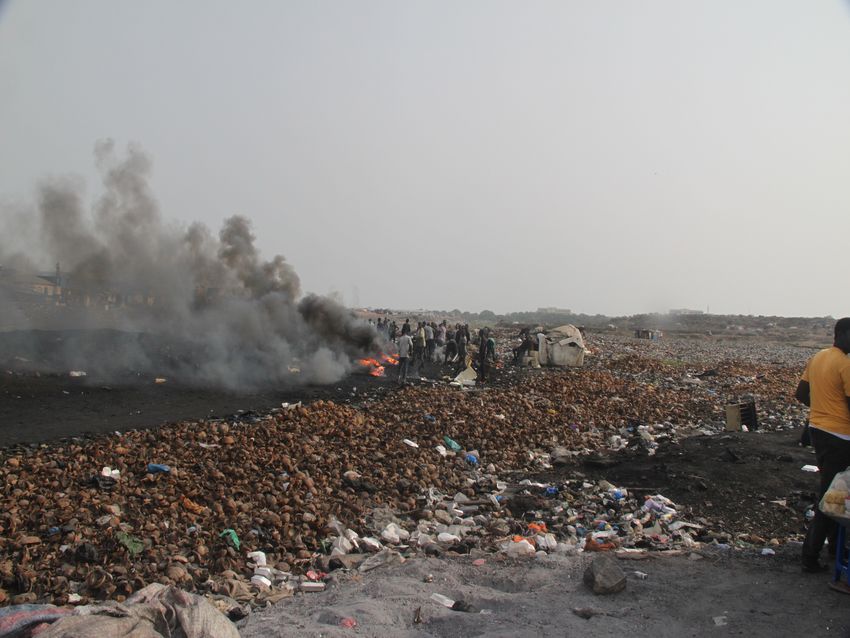
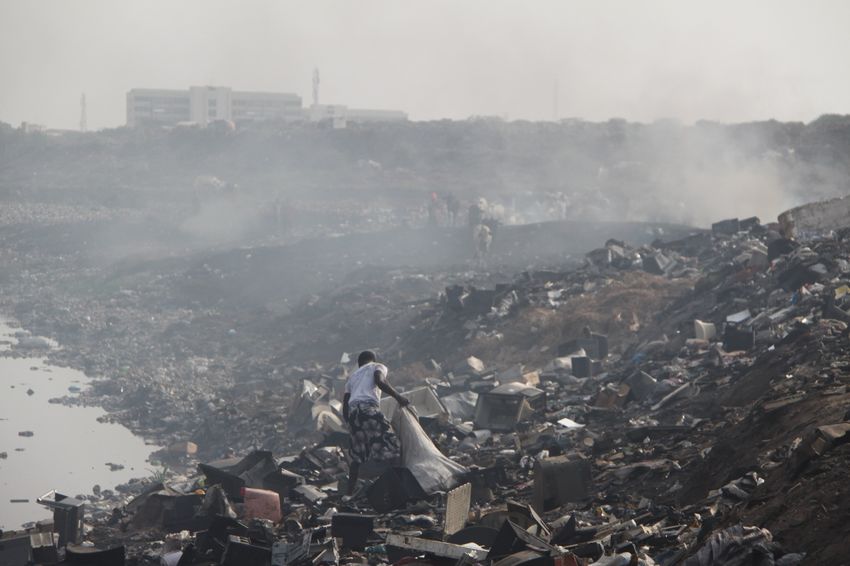
E-waste scrapyard workers in Ghana

Source: Sovacool, BK. “Toxic transitions in the lifecycle externalities of a digital society: The
complex afterlives of electronic waste in Ghana,” Resources Policy 64 (December, 2019),
101459, pp-1-21.
E-waste scrapyard workers in Ghana
  “More than 100,000 people live here in abject poverty, home to the
 biggest dump for scrap metal and e-waste in the world. Young boys
   and girls, children as young as six, seven, and eight years old are
engaged in this business. They miss school or end up dropping out of
    school, they go to the slum for a career, or they look for scrap to
  finance their own education. Even though they go to look for scrap
metal, they end up doing it for the rest of their life. I know a story of a
 young boy, who was not wearing any protective clothing, who got so
 damaged by the hazardous material he died at the age of 12. Others
see their life shortened by decades. They cough, get infected, and fall
sick. They dedicate their youth to renting a wooden structure to sleep
 at night, 5-6 children in a shack, close to the metal business so they
                          can work longer hours”

Source: Sovacool, BK. “Toxic transitions in the lifecycle externalities of a digital society: The
complex afterlives of electronic waste in Ghana,” Resources Policy 64 (December, 2019),
101459, pp-1-21.
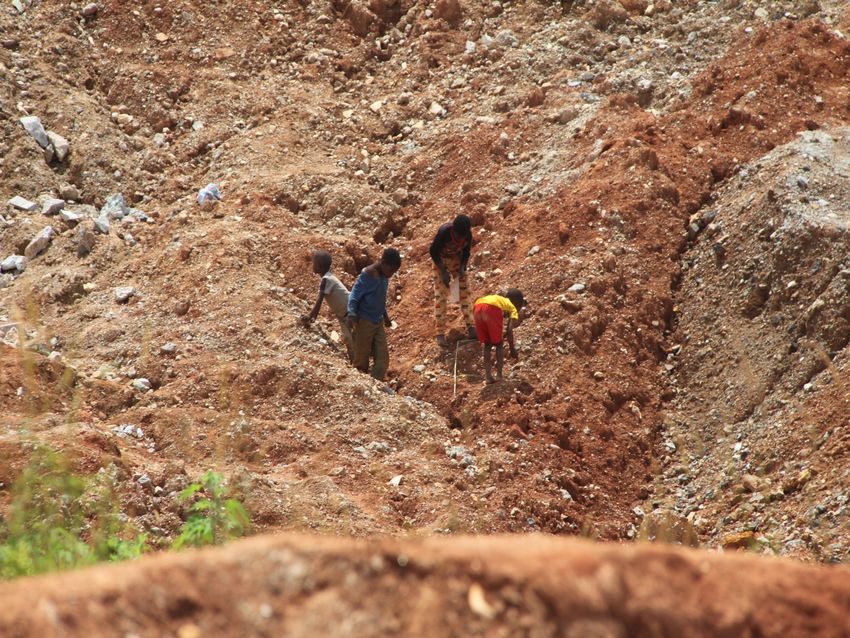
Congolese cobalt miners Source: Sovacool, BK. “The precarious political economy of cobalt: Balancing prosperity, poverty, and brutality in artisanal and industrial mining in the Democratic Republic of the Congo,” Extractive Industries & Society 6(3) (July, 2019), pp. 915-939.
Congolese cobalt miners
“ASM cobalt mining is not living, it’s dying. The moment
you step inside the mine, the clock starts ticking. You are
exposed to dust which can lead to silicosis, or be
poisoned by mercury. You can drown, or become trapped
in a mine collapse. You can get crushed by rocks, or
even contract diseases by people shitting or urinating into
the mine. You can suffer diseases from sitting in water
all day, such as cholera or malaria, or get bitten by
animals, as many miners will bring them into the mine.
This is especially the case when they remain
underground in deep shafts for 5 or even 7 days at a
time—it’s an underground circus at that point, full of
animal and human excrement, I’ve even heard of people
contracting the plague in such conditions … Even if such
things cannot kill you, they can still dismember or injure
or disable you. I know of people who lose arms or legs in
a collapse, they have to painfully break their bones to pull
free. Many then bleed to death in the jungle.

Source: Sovacool, BK. “The precarious political economy of
cobalt: Balancing prosperity, poverty, and brutality in artisanal
and industrial mining in the Democratic Republic of the Congo,”
Extractive Industries & Society 6(3) (July, 2019), pp. 915-939.
The picture can't be displayed.
Concluding thoughts and insights
• Low-carbon transitions in Europe are not net beneficial for all,
  can result in toxic, exploitative, patriarchal, discriminatory,
  environmentally destructive and patently unjust implications
  for some

Source: Sovacool, BK, A Hook, M Martiskainen, A Brock, and B Turnheim, “The decarbonisation divide:
Contextualizing landscapes of low-carbon exploitation and toxicity in Africa,” Global Environmental Change 60
(January, 2020), 102028, pp. 1-19.
Concluding thoughts and insights

Source: Sovacool, BK, A Hook, M Martiskainen, A Brock, and B Turnheim, “The decarbonisation divide:
Contextualizing landscapes of low-carbon exploitation and toxicity in Africa,” Global Environmental Change 60
(January, 2020), 102028, pp. 1-19.
Concluding thoughts and insights

• Injustices were not just dominated by centralized
  supply (nuclear); we also see it with decentralized
  supply (solar) as well as end-use devices (smart
  meters, EVs, displays, batteries), some of which will
  ironically be used to help eradicate fuel poverty (!)
• Procedural injustices remind us that issues of fairness,
  transparency, and decision-making can stand apart
  from a technology or program
   •   Exclusionary nature of German FiT
   •   Supplier led smart meter rollout in GB
   •   Secrecy surrounding French nuclear
   •   Elitism in Norwegian planning discussions (30,000)
Concluding thoughts and
 insights
• Cosmopolitan concerns remind us that justice impacts are
  multi-scalar and do not occur only in Europe
   • Nuclear reactor designs being exported, cheap electricity trade, uranium
     mining, and nuclear waste
   • Low-wage manufacturing in China, factory waste streams for solar
   • Copper and cobalt (DRC), e-waste (Ghana) for smart meters
   • Extractive industries (cobalt, lithium) for EVs, e-waste, cheaper/dirtier cars
     flooding other markets
• Clean energy may be a human right, but securing it currently
  forces tradeoffs with other human rights, leading to green on
  green and poor on poor conflict
• Pure energy justice may not be possible, it may pragmatically
  be picking your poison, or choosing winners
• We must avoid conceptual approaches or research designs
  that obscure or mask this emerging decarbonisation divide
Contact Information
Benjamin K. Sovacool, Ph.D
Professor of Energy Policy
University of Sussex
Jubilee Building, Room 367
Falmer, East Sussex, BN1 9SL
UK: 01273 877128
International: +44 1273 877128
B.Sovacool@sussex.ac.ukYou can also read


