GIS for Cadastre Management - ESRI GIS Technology in Europe
←
→
Page content transcription
If your browser does not render page correctly, please read the page content below

GIS for Cadastre Management
ESRI® GIS Technology in Europe

                                 MAPPING

                                 OWNERSHIP

                                 VALUATION

                                 COMPLIANCE

                                 E-GOVERNMENT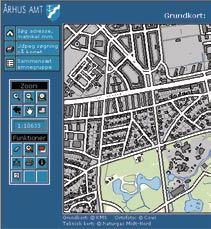
GIS for Cadastre Management
The Framework for Cadastre Systems

Since 1969, ESRI, a pioneer in geoprocessing tools, has      Survey
been helping people solve real-world geographic prob-
                                                             Cadastral Mapping
lems. Today, more than 100,000 organizations around the
world use ESRI® software because it uses leading ideas in    Land Records
technology for geographic information management.
                                                             Valuation
Many European countries are developing new strategies
                                                             Real Estate
to improve cadastre management. Geographic informa-
tion system (GIS) technology offers cadastres a method of    E-Government
quickly accessing and producing maps, leveraging database
information, and automating enterprise work processes.

Because ESRI's GIS software is an open system that
conforms to information technology standards, it adapts to
a variety of cadastre systems and responds to endless com-
binations of requirements and operations. The vocation of
the cadastre for all countries has become multipurpose:
serving administrative mandates, maintaining an up-to-
date database, assigning values for taxation, calculating
subsidies, addressing rural development and agrarian man-
agement, and providing products and services to citizens
and companies. GIS helps land information agencies fulfill
a variety of these services, from producing specialized
maps to providing complex schemes for integrating and
delivering spatial data services under the modern mode of
e-government.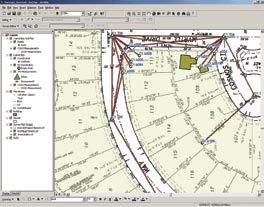
Providing a Foundation for Stability and Prosperity

                            Agriculture
                             Subsidy
         Banks               Payment
                                                   Property
        Mortgage
                                                   Taxation
       Application

Municipalities
Property Mgmt                                           Forest
 Survey Data                Cadastre                  Management
   Sharing

                                                  Ministry of
      Citizen Access                                Justice
          Portals                                 Land Titles
                             Utilities

The multipurpose cadastre uses GIS to access and process
data throughout public and private organisations.                  Data layers make cadastre information useful for many
                                                                   purposes such as zoning.

An effective and secure real property administration system        By building the architecture for shared data on standards, users
is essential for the welfare of a country's economy. Govern-       can access and use data in their own GIS. A spatial data infra-
ments at all levels require accurate and current land records      structure using ESRI's standards-based software can facilitate
for mapping the location and extent of landholdings,               sharing information on an enormous scale. ArcGIS® tools can
establishing the ownership of rights in real property, and         be used in a country's spatial data infrastructure to provide
determining the value of those rights.                             client access; create, manage, and serve metadata (support
                                                                   standards); and create, manage, and serve GIS information.
Many European countries’ cadastres have a direct
relationship with land register offices. The service of register    ESRI continues work with the international community in
is dedicated to guaranteeing real estate property rights,          defining data standards. For European cadastres to work
one of the basic pillars in a market society. The cadastre         in harmony with agencies within their own nations and to
offers a basic infrastructure that supports different social       integrate projects on the international level, an adherence to
and economic purposes. Cadastres work in harmony with              standards in database design and GIS is needed. This supports
land register agencies by providing graphic support. Other         interoperability of information systems so that nations can
cadastre objectives are to support land policies, fiscal            leverage the value of geospatial databases for policy making,
policies, and agricultural management.                             cost-effectiveness, work flow improvement, and service.

Some countries are creating National Spatial Data Infra-
structures that serve as geospatial information warehouses.
The cadastre is one of the base layers of a National Spatial
Data Infrastructure. ESRI has a well-documented history of
working with the international GIS community to develop
these national architectures for geospatial database access.
Automated Work Flow
ArcCadastre offers GIS routines for cadastre management.
Case Study—Sweden More sophisticated work flows steer the user through
different steps in a prescribed manner. User specific work
Lantmäteriet is responsible for Sweden's cadastral
flows can be developed by customization.
services, managing information for approximately 3.2
million properties. At the end of the 1990s, Lantmäteriet ArcCadastre has allowed Lantmäteriet to be more effi-
initiated a reformation of Sweden's cadastre system to cient in job management. Commands from a particu-
improve the efficiency of cadastre procedures. The refor- lar job are automatically stored and are available the
mation included both new technology and new working next time the job is opened. Users who are new to the
methods. As a result, Lantmäteriet has reduced costs 10 software can easily begin working with a project and suc-
to 15 percent and the time required to carry out cadastral cessfully find their place in a project's work flow.
procedures by 30 percent. Improvements to the system's
Lantmäteriet has applied ArcCadastre to the following:
productivity include new technical support routines and
modern field surveying methods based on global posi- • Real property formation
tioning systems (GPS) and GIS. • Production of cadastral index maps
In a cadastre, procedure documents are created to • Public utilities mapping
provide a geometrical description of property formation. • Surveying and mapping
Much of this work is time consuming with repetitive simi-
• Property management
lar routines for different jobs. Lantmäteriet developed
ArcCadastre based on ArcGIS, to introduce new GIS func- • Property tax assessment and property valuation
tions for managing and handling cadastral procedures • National, regional, and local planning
and map data. Software users put ArcCadastre to work in
Digital maps are becoming increasingly available as
a unified production line from fieldwork and computation
Swedish map archives are successively scanned and
to data processing and documents to the final storage of
added to the geodatabase. Less bound by routine,
the data in an object-oriented database environment.
Swedish cadastral professionals using ArcCadastre are
All work in ArcCadastre is done within the framework free to complete professional demands.
of a job and steered and monitored with the help of
work flows. For example, a work flow can be designed
to ensure that legally defined procedures are followed.
Deviation will cause the process to stop and wait for
approval. The simplest form of work flow is a checklist.Transfer
Cadastre Office Cadastral
Finance
Work Flow Mapping
Map Added to
Cadastral Layer and
Map/Survey Annotated
PIN Assigned
Business
Cadastral Geodatabase
Correlation/
Verification Map Server Public
Account Number
Assignment Cadastral Maps
Internet
(Tracking Number) Ownership Register
Valuation Data Other Agencies
Survey Control
Valuation
Imagery
Value of Land and
Digital Topography Improvements
Submission Established
Enhancing Work Flow More Data Options
From data processing to cartography, automated work flow is ArcGIS can read many native formats and contains many
modeled and carried out in GIS to improve accuracy and qual- data conversion and geoprocessing tools. ArcPad® takes data
ity and to save labor, time, and money. gathering and verification into the field and uses wireless tech-
nologies to enhance the speed of data updates. The ArcScan™
Enhancing the Entire Work Flow for ArcGIS extension supplies straightforward and controlled
vectorization of scanned documents and works with the spa-
GIS provides an integrated work flow for creating and updat-
tial tools available in core ArcGIS such as speed parcel editing
ing the parcel fabric that can be easily shared both within and
functions.
between organizations.
The ESRI family of software works together to handle the Incorporating Survey Data
entire work flow from data creation to information distribution
A new data type available with the ArcGIS Survey Analyst
in an environment that supports information technology (IT)
extension allows surveyors and engineers to build a survey
standards and interoperability with existing systems. Enterprise
information system within ArcGIS. Survey data is stored and
GIS, with the geodatabase, data models, and an array of appli-
managed by ArcCatalog™ but maintained separately from
cations on desktop server and thin clients, is revolutionizing
GIS layers; however, these GIS layers can still be edited using
land records management.
survey data. Existing spatial data can be made more accurate
on an incremental basis that does not disrupt the work flow.
Business Process Establish New Parcels
Land Division Land Division Tax Administration Updating Maps
Approval Recording
Assign PINs, update Map new parcels,
Accept, process, Record and index and establish archive old parcels, and
evaluate, and approve the new survey parent/child links, and generate maps for
a new survey update value records publication
Step 1 Step 2 Step 3 Step 4
work flow notification work flow notification work flow notification
GIS and RDBMS
data updates Shared, common data data updates
model implemented
with ArcSDE and
relational database Required Technology: land records object definitions,
Source: Gary Waters, NovaLIS Technologies land records functions, and work flow capabilities
The agencies listed here are typical departments of a local government responsible for these business steps.
However, considerable variation does exist in the organisation of local governments.Data Interchange Between Land Records Office
and Local Agencies
Case Study—Italy The spatial data engine software ArcSDE®, which facili-
tates storing and managing spatial data in a relational
Italy's cadastre information is managed by the Minis-
database management system, manages the interchange
try of Finance–Department of Territory. Italy's current
database. This makes it possible for users to directly
modernisation initiatives mandate information exchange
edit data stored in the relational database management
between agencies. Therefore, the Ministry of Finance has
system. A server that provides Internet mapping service
implemented a cadastre spatial data exchange system
and has an authoring environment, ArcIMS® makes it
using GIS technologies that support sharing information
possible to publish maps on the Internet using ArcGIS
between central and local agencies.
advanced cartography tools.
An exchange module called the Catasto–Cumini
Italy's first municipal departments to work with the
Interchange System facilitates a continuous information
Catasto–Cumini Interchange System were the urban
connection between cadastral and municipal offices.
planning, topographic naming, and fiscal fee depart-
Staff can update information and obtain cartographic
ments. The population registry office will soon be joining
information about territories by browsing and querying
the project. The Department of Territory is adding value
maps owned by individual offices.
to the services by providing access stations for govern-
ment professionals and notary publics.
Find a Parcel
The IKONOS satellite view of the territory is shown in combina-
tion with the buildings’ cadastral layer. The transparent layer
represents the town planning general scheme.
Cadastral indicators, such as session, sheet, cadastre system,
and identification number, are used to find and retrieve
parcels information. The user can access census property
information and add that data to the map.
Select a Street
The town planning general scheme (municipally owned information)
is shown in combination with the cadastral layer of buildings.
The user can select a street to locate all nearby buildings and
parcels. The selected street is then shown on the map through
points. The user can zoom on this portion of the map, locate one The town planning general scheme is overlaid on the IKONOS
or more properties of interest, and perform additional queries. satellite image.Building a Framework for Managing Resources
Contributing to Economic Health
Valuation and taxation systems based on land records are key
contributors to economic well being. Real property value is
used to raise capital for building infrastructure, purchasing
additional property, starting businesses, and maintaining other
capital-intensive activities. Internet GIS makes parcel informa-
tion and maps readily available to the public, businesses, and
other agencies.
By linking maps and legal descriptions to landownership
records, GIS provides an efficient method for identifying fraud-
ulent claims or errors in land recording. A GIS-based work flow
that uses the topology tools in ArcGIS helps eliminate errors
resulting from overlapping boundaries, incomplete parcel
descriptions, and other discrepancies in land records.
Topology tools in ArcGIS help eliminate errors resulting from
overlapping boundaries, incomplete parcel descriptions, and
other discrepancies in land records.
Value of Modeling
A cadastre derives more benefit from GIS by extending its
purposes. For example, central and local governments can use
land valuation models applied to the cadastre database to sup-
port land market values and assess taxation fees.
Multiuse Cadastre
A European multipurpose cadastre may include fiscal cadas-
tre (for tax reference), legal cadastre (title registry), planning
cadastre (city planning), and so forth. Common denominators
in these types of cadastres are the unambiguous identifica-
tion of spatial property and a standardised numbering scheme
that is uniformly referenced. This identification method allows
different vertical application areas, such as taxation, legal,
and planning offices, to refer to the same real property. Thus,
when the fiscal cadastre promulgates a change on the tax GIS can integrate data, such as aerial and satellite imagery,
record of a specific parcel, a GIS map shows the tax informa- that is a good source of current related information such as
tion changes on the same parcel for the legal cadastre. crop extent, new construction, flood hazards, and surface
permeability.
Going Global
Cadastre information is often considered one of the
essential data sets for modernizing government ser-
vices. The organization of GIS data and applications
throughout a country is commonly called a National
Spatial Data Infrastructure (NSDI). ESRI's ArcGIS family
of products provides the technology for building and
managing data and applications and for deploying
them on the Internet and Intranet. During the past
decade, a network of organizations from around the
world has begun to collaborate on a Global Spatial Data
Infrastructure (GSDI) supporting the publishing of an
open global library of digital geographic information.Land Valuation
Lithuania Value System automatically calculates tax formulas
in a GIS model.
Case Study—Lithuania
Lithuania uses GIS for cadastre management and extends
this technology and database management to com-
pute land valuation. The State Land Cadastre Enterprise
first formed its special GIS group in 1993. The group
produced its first digital cadastral maps using ArcInfo®.
In 1997, the State Enterprise Centre of Register (SECR)
began to integrate all of Lithuania's real estate records
and cadastre data into one system. Data from the land
register and data on buildings, constructions, premises,
and apartments were integrated into a single real prop-
erty information system. Legal, technical, and geographi-
cal records are managed in a single system under a single
organization. Land parcel data is grouped by characteristics essential to
land market value: value zones, purpose of use, agricul-
Today SECR's GIS department uses ArcGIS to design
tural land, size of the land parcel, productivity grade, and
applications that transform data from local coordinate
recreational use. These valuations are shown on a GIS
systems to the national system. GIS is used to adminis-
map, and the user can access more information in the
ter the central database, integrate data with attributes,
database through the map or through textual query.
and provide maps on the Internet. Thirty-three layers of
data are maintained with ArcSDE including administra- SECR's GIS facilitates the inclusion of many factors in the
tive boundaries, buildings' center points, address points, model. Tax formulas can be automatically applied and
real property value zones, topographic objects, land use, computed. The system is easily updated to reflect market
standard map sheets, and orthophoto maps. dynamics and change in ownership. Quality control
is ensured by comparing sales costs and appropriate
SECR also performs appraisals of real property. The valua-
values. Because GIS is database driven, it can access data
tion system strengthens real estate markets and supports
related to properties and calculate values using the tax
value-based taxation. GIS is an important component of
model. The model can be updated to reflect current tax
the mass appraisal system. By accessing parcel, regis-
fees and laws.
ter, and market information from a single database the
appraisal system is used to compute mass-values for The mass land valuation uses minimum additional techni-
property located in territories based on prescribed prin- cal, human, and financial resources; saves time; and
ciples within a defined timeframe using updated market produces quality valuation results. Land value maps and
data. It also allows for periodic reevaluation of property land parcel valuation models respect market valuation
values in response to market changes. and changes in tax legislation.Spatial analysis tools that generate value surfaces expedite
these types of monitoring tasks.
The Assessment Office viewer displays the property’s CAMA
detail. Map data is served through ArcSDE.
A Vertically Integrated System Case Study—Northern Ireland
Support for common data format and information technol- Valuation and Lands Agency (VLA) in Belfast, North-
ogy standards means that GIS helps government agencies ern Ireland, uses GIS for the domestic revaluation of
integrate information from many sources. These agencies more than 700,000 parcels. The computer-assisted
must also ensure that the boundaries of adjacent regional mass appraisal (CAMA) system built on ArcGIS is
jurisdictions align. Topology and spatial editing tools speed being implemented by NovaLIS Technologies, along
parcel edit and safeguard the integrity of the parcel fabric. with partners CDC, AGJD Associated Agents Ltd., and
ESRI (UK) Ltd. The outcome of their efforts is a robust
Focusing on Valuation system for valuation that includes a GIS-based valua-
tion toolset that allows the dynamics of real patterns
Land records management may include local or central
and trends to be accommodated within the modeling
government valuation activities. One goal of the valuation
process.
process is to identify and investigate anomalies in value.
ArcGIS supplies spatial analysis tools that generate value The VLA CAMA system is intended to be the founda-
surfaces to expedite these types of monitoring tasks. tion for the collection of taxes. The system will also
provide VLA with the ability to associate all property
Benefits for an Enterprise Cadastral System characteristics and ownership information directly
to the parcels of land in Northern Ireland. Statistical
ArcGIS supports all major cadastral applications and supplies
models are integrated into the solution to support
a comprehensive solution for converting, editing, mapping,
VLA personnel with assessing the market value for
managing, analyzing, and disseminating land records data.
properties. Northern Ireland assessment officials will
The geodatabase design allows the development of use the system to provide mass appraisal techniques
common data models that provide a standardised method to their domestic revaluation for 2006.
for developing and exchanging data. The ArcGIS Land Parcel
data model captures the collective experience gained from
more than 20 years of managing parcels using GIS. This
flexible and object-based model accommodates a range of
applications and parcel definitions.
Versioning Data Sets
Versioning in the geodatabase allows multiuser editing, his-
tory management, and disconnected editing and provides
replication solutions to manage large-scale GIS. Versioning
also allows agencies to supply tailored versions of the data
to different levels of government and the public.GIS for Multipurpose Cadastres
The DCDB has been designed to provide an up-to-date,
continuous cadastral map base to support cadastral
mapping and the land information system functions. The
database stores the current cadastral framework, thematic
overlays, and topographic data in a seamless form.
Spatial applications are based on ArcInfo, ArcView®, and
other ESRI GIS products and relational database man-
agement system technology, surveying packages, and
computer-aided design.
CILIS facilitates land transactions, improves and acceler-
ates valuation assessments, reduces duplication of land
administration work among government agencies, and
increases the ability of government to effectively manage
state lands and expedite acquisition and requisition orders.
Cassini map shows parcels and buildings.
Case Study—Cyprus
The Cyprus Department of Lands and Surveys (DLS) oper-
ates multipurpose cadastres partially on a manual and
partially on a computerized basis. The department records
a considerable amount of land-related data. Cadastral
plans are widely used as a fundamental graphic record
by a wide range of agencies. Information about develop-
ment, utilities, land use, water resources, geology, and
even statistical data for population, industry, agriculture,
and planning are recorded on, or closely related to, the
cadastral plans.
The DLS is performing a systematic resurvey of Cyprus
and uses this data to establish a fixed boundary coor-
dinate cadastre system. The geodatabase includes land
The Cyprus Integrated Land Information System shows
records, cadastral plans, and topographical maps. Various information for individual property units.
business systems are being used to support the survey,
registration, valuation, and management functions of the
DLS. This sets up the context for developing and imple-
menting a GIS called Cyprus Integrated Land Information
System (CILIS) where all agencies with land-related activi-
ties can share available data.
The survey database, the digital cadastral database, and
the topographical database constitute the spatial database
of CILIS. The survey database (SDB) stores information
related to the geodetic network and survey data. The SDB
is the repository of data from original source records of
surveys that underpin the cadastral framework. It is also
the reference system for applications that require dimen-
sions or accurate survey coordinates. SDB contains the
foundation data for the digital cadastral database (DCDB).Use Accurate Data
The most detailed land records data is maintained at the parcel
level by local and regional authorities. These offices use GIS
to assist in the maintenance of ownership deeds and titles;
planimetrics; orthophotos and/or satellite imagery; and topo-
graphic, flood delineation, land cover, and land use maps.
Toward Accurate Land Records
European cadastres often are multipurpose and can include a
fiscal register, legal cadastre, and planning cadastre. The mul-
tipurpose cadastre accesses its data for many map production
tasks.The integration of survey data in GIS through the use of
ArcGIS Survey Analyst has made it possible for cadastre agen-
Integrating survey data in GIS through the use of ArcGIS Survey cies to integrate survey data, cadastre data, and other layers of
Analyst allows local and national governments and private surveying spatial data (e.g., hydrography, topography, land use, and land
contractors to incrementally improve the accuracy of spatial data.
cover). New spatial data can be added with quality assurance
tools to ensure accuracy.
Registered Documents
Survey Plans Public
Digital
Submission
Titles and Business
Deeds Internet
Other
Agencies
Land Records/Assessment Office
RDBMS
Cadastral
Mapping Geodatabase
Recorded Documents/Maps Valuation
Parcel Maps Notification
Surveys
Appraisal/ Valuation Rolls
Valuation Assessment Rolls
Personal Property
Property Record Cards
Property Photos
Aerial Imagery
Maintaining local land records in GIS saves money by automating map
maintenance, speeding the enrollment of new parcels, and reducing
valuation challenges.National Cadastre GIS Extends to National
Spatial Data Infrastructure
Case Study—Belgium CADMAP georeferences and reorganises cadastral map
sheets and creates one seamless cadastral geodatabase
The Belgium national cadastral system is maintained by
managed by ArcSDE.
the Patrimony Documentation Department. It contains
the records of the country's 9.4 million land parcels and The tax office needs to provide citizens with Internet
one million registered strata or condominium units. This access to tax office requirements and information.
cadastre was initiated more than 200 years ago during Internet map server software ArcIMS is used to support
the French Revolution. At that time, the "constituante" interactive, Web-enabled geographic information on the
(the Constituante Assembly) created the land tax and, Web site.
consequently, the general cadastre and established proce-
Belgium's CADMAP application is the foundation for
dures for governing land information.
establishing an e-government framework that integrates
Today, Belgium's land information uses ESRI's ArcGIS related users such as notaries, banks, loan agencies, com-
software in a newly implemented cadastral map system munities, and cities. It provides efficient, prompt access to
called CADMAP. The system was born from the Belgium land data throughout the country.
government's strategic plan for the modernisation and
The national cadastral files will eventually be linked to
unification of its cadastre and lands registration agencies,
databases such as Belgium's inventory of the property of
a task requiring innovative technology.
the state, water management districts, polders (lowland
The cadastral mapping system is used to protected by dikes), Natura 2000 Network, and others.
• Update and manage vector cadastre map files.
• Improve the quality of local cadastre maps.
• Provide online access to cadastre data.
• Support the spatial data infrastructure for a national
cadastre GIS.
• Support national call centers and e-government
through Belgium's Centre de la Communication de la
Fiscalite Federale (tax office).
The Federal Public Service (FPS) Finance worked with ESRI
BeLux to design a system that uses ArcGIS. FPS Finance
customised the GIS to meet the national cadastre's goal
to provide GIS services to approximately 10 provincial
cadastre offices and 300 local survey offices. Com-
ponents of the ArcGIS suite—ArcView, ArcSDE, and
ArcIMS—have been incorporated into CADMAP. ArcMap™ accesses parcel identification information.
Local offices, responsible for creating and updating the
local plans and submitting updates to the provincial
offices, use ArcView in their plan designs and presenta-
tions. Attributes include cadastral boundaries, parcel
numbers, buildings, administrative boundaries, streets,
rivers, bridges, parcel monuments, municipality monu-
ments, and others.
Provincial offices use ArcGIS Survey Analyst to store and
manage their survey measurements in the geodatabase.
GIS technicians use this survey software to store survey
measurements to improve the accuracy of their data.
Managing a database with 39,000 cadastre map sheets
is a challenge. FPS Finance uses ArcSDE, a robust spatial
data server, to provide a gateway for storing and manag-
ing spatial data in its database management system. Infrastructure data sets are used to create comprehensive
thematic maps.E-Government Delivers Land Records Information
Danish ArcIMS Portal
E-government is a means of using Internet and GIS to create a
more effective government. Typically, land records information
is the most requested type of government information. The
combination of readily available Internet access and maps allows
governments to provide a new level of service, particularly
access to parcel information, to businesses and the public.
E-government is making collaboration between government
agencies possible in new and powerful ways. The strong data
integration abilities of GIS allow governments to capitalize on
data existing in legacy systems.
GIS-enabled Web sites can provide land-related services such
as agriculture parcel subsidy submission. Three categories of The Flemish Land Agency Department Support Centre GIS—Flan-
e-government applications have been developed—govern- ders uses its GIS Web site to provide multireferenced data sets. This
service stimulates collaboration among several government levels.
ment to business, government to citizens, and government to
government.
City of Madrid has a GIS-enabled Web site for public use.Land Parcel Identification System Supports
Agriculture Income
In the first phase of the project, aerial photography was
collected and digitized. A staff of 32 specialists managed
the data collection. GIS operators from the Regional
Departments of Agriculture delineated the physical blocks
according to natural boundaries. For subsidy compliance,
attribute relationships were defined by user relation-
ships rather than owner relationships. Staff also man-
aged extensive field verification with farmers to confirm
geographic extents, land use, and property ownership.
Throughout the digitizing process, checks were carried
out for operator quality ensuring that the national agricul-
Orthophotography maps with verified LPIS data are ture parcel foundation was the most accurate possible.
scanned and processed as transparent layers directly
in the GIS. LPIS includes information about internal The LPIS database digital orthophotography maps must
borders. Attributes are appended in the database. be less than five years old to be considered valid for
compliance. Therefore, much of the country needed to
be photographed. This task was performed by the com-
Case Study—Republic of Slovakia panies Eurosense and GEODIS. Photo flight timetables
The Republic of Slovakia's Land Parcel Identification were documented and mapped by geographic regions.
System (LPIS) is administered by the Ministry of Agricul- Aerial images were orthorectified with a GIS model that
ture as part of its Integrated Administration and Control included interactive break line detections, which ensured
System (IACS). An important goal of Slovakia's Ministry that the required geometric parameters of the digital
of Agriculture is to qualify for subsidies issued by the orthophoto maps and related LPIS blocks were used.
European Union (EU), which mandates aerial and satellite
images of subsidies linked to agricultural land. The EU LPIS is built on an ESRI platform with principal compo-
subsidizes 350,000 farmers across Slovakia. An outflow nents of ArcView, ArcEditor™, and ArcSDE. Data is stored
of this is that Slovakia is also able to use the imagery to in an Oracle database. Staff maintains the database by
produce a topical list of parcels. Georeferenced aerial verifying, scanning, and processing orthophotos in GIS.
images of these parcels are stored in a geodatabase, The SSCRI also adds data about terrain characteristics,
which is managed and manipulated using GIS. soil types, and crop information submitted by farmers.
The Ministry of Agriculture's Slovakia Soil Science and
Conservation Research Institute (SSCRI) was tasked to
develop the LPIS to meet IACS' mandates and ensure com-
pliance for EU subsidy regulations. The SSCRI contracted
with ArcGEO Information Systems s.r.o., the local ESRI rep-
resentative, to build the LPIS architecture. This architecture
includes ArcGIS Desktop, ArcSDE, and ArcIMS.
Orthophotos are combined with surveying coordinates within
each parcel. GIS identifies parcel attributes and owner.LPIS registers both parcel and agricultural data. In addition
to attribute layers indicating ownership information, GIS
produces themes that include terrain, water bodies, infra-
structures, soil types, and topographic data.
GIS supports IACS crop registration mandates and
performs subsidy calculations based on IACS criteria.
Because GIS is database driven, IACS' subsidy tables can
be imported and used to build a calculation model that Mountain Regions
includes geographic, crop, and monetary factors. The
user can join tables to parcel feature classes and save
joined data as thematic layers. GIS models can be built to
perform calculations for subsidies, valuations, taxations,
development, and so forth. Applications under develop-
ment include the design of an object data model for the
LPIS database and a project covering data integrity and
synchronization with the database of the Agricultural
Paying Agency.
With its landownership well documented in a relational
database, Slovakia's Ministry of Agriculture has an
efficient agriculture tool that is useful for more than just
meeting IACS' requirements. ArcGIS applications can
IACS Category Blocks, Terrain Characteristics, and Soil Typology
plan pesticide application, monitor animal health, assess
flood risk, estimate insurance, and so forth. The present
users of LPIS are farmers and civil servants who manage
and control the development of Slovak agriculture. Other
ministries in Slovakia will find that the same database can
be used in a variety of administrative areas.
Orthophoto of Lowland RegionA Framework for Cadastre Management
Click on parcel to see specific title information.
Working with a community of land records managers and
business partners, ESRI makes GIS data models available for International Federation of Surveyors
cadastre and land information GIS. Data model templates The International Federation of Surveyors (FIG) is a
make GIS more accessible to smaller organizations with limited nongovernmental organization whose purpose is to
budgets by providing a practical template for implementing support international surveying in all fields and applica-
GIS projects for a specific application or industry. tions. FIG has been quite strong in establishing survey
data standards including standards for geospatial data
ArcGIS Parcel Data Model cadastre survey mapping. ESRI is a corporate member of
Cadastre managers and GIS professionals can use the ArcGIS FIG and works with members to bridge the gap between
parcel data model as a starting point for defining parcel infor- surveying and GIS professionals. Based on FIG's Cadas-
mation and for planning migration strategies from existing tre 2014 concepts, scholars and cadastre practitioners
data designs to a geodatabase environment. The data model worked to create a sample Cadastre 2014 Data Model.
provides a quicker, less expensive solution to data migrations, This model represents the basic legal framework for
the longest and costliest part of a GIS project. Decision makers land matters with an open and flexible object-based
can apply the model to integrate landownership information data model. While the model is general and flexible, the
with other data. Land and GIS professionals can apply the unique needs of a variety of land administration and
definitions and structure of the model to establish consistent land management users can adapt it easily to the legal
and representative parcel information for data distribution. environment of their jurisdictions.
The purpose of the ArcGIS parcel model is to describe parcel
information to support local government and private sector
decision making. ESRI's ArcGIS software supports and is
compatible with the Cadastre 2014 Data Model as outlined by
the International Federation of Surveyors. Visit
www.esri.com/argisdatamodels for more information.
The Cadastre 2014 Data Model will be used to
create maps that show the complete legal situation
of land including public rights and restrictions.Acquiring and Integrating Data Data Interoperability Extension
ESRI GIS solutions offer the ability to incorporate a wealth of The ArcGIS Data Interoperability extension eliminates data
data sources from inside and outside an organisation. Data sharing barriers by providing direct data access, complex data
available from central and local agencies can be obtained transformation, and import/export capabilities. The extension
at low cost or through data sharing agreements with other allows GIS professionals to easily integrate data from multiple
jurisdictions. sources, organizations, and formats. ArcGIS Data Interoper-
Legacy data sets can be joined with others for use outside the ability allows GIS professionals to use standard GIS data within
specific department in which they were created. the ArcGIS Desktop environment, regardless of the format.
This means that users can directly read, display, and analyze
this data using all tools available within ArcGIS Desktop.
Internet Portals
Spatial data portals allow people to publish, share, and use
geographic data and services on the Web. They are made
available to private, public, and commercial users; data pub-
lishers; service providers; and developers around the world.
Content may be provided in the form of data, maps, or more
advanced services and solutions. For example, those interested
in economic development data can access ESRI's Geography
NetworkSM (www.geographynetwork.com) to find data about
streets, demographics, boundaries, points of interest, and
business listings.
ESRI's GIS Portal Toolkit provides all the necessary tools and
templates to create a GIS portal. GIS Portal Toolkit is a technol-
ogy and services solution for implementing local, regional,
national, and global spatial data infrastructure (SDI) portals. Use the ArcGIS Data Interoperability extension to read more than
70 data formats.
GIS portals organize content and services such as directories,
search tools, community information, support resources, data,
and applications. They provide capabilities to query metadata
records for relevant data and services and link directly to the
online sites that host content services. The content can be visu-
alized as maps and used in geographic queries and analyses.
The flow of information from the service provider to the user via a
GIS portalESRI's GIS Tools for
Enterprise Cadastre
Management
• ArcView focuses on comprehensive data use, mapping,
and analysis.
• ArcEditor adds advanced geographic editing and data
creation.
• ArcInfo is a complete, professional GIS desktop containing
ArcScan for ArcGIS—Converts raster scans of parcel
comprehensive GIS functionality including geoprocessing
maps into vector-based geodatabase feature classes
tools.
These optional extensions dramatically extend the functional
capabilities of ArcGIS for cadastre management.
ArcGIS Spatial Analyst Advanced spatial analysis using
raster and vector data
ArcGIS 3D Analyst™ Three-dimensional visualization,
topographic analysis, and surface
creation
ArcGIS Geostatistical Statistical tools for data exploration,
Analyst modeling, and advanced surface
generation and valuation analysis
ArcGIS Spatial Analyst—Advanced spatial analysis ArcGIS Survey Analyst Integration and management of
using raster and vector data to model the influence cost survey measurements in GIS
of location-specific data on value
ArcScan™ for ArcGIS Raster vectorization and simple
raster editing
ArcPad Mobile GIS software for data
collection in the field
ArcGIS Data Use of any standard GIS data within
Interoperability the ArcGIS Desktop environment,
regardless of the format
ESRI GIS Portal Toolkit Tools and templates to create a
GIS portal
Server GIS
ArcGIS 3D Analyst—Three-dimensional data visu- • ArcSDE is an advanced spatial data server, providing a gate-
alization and topographic analysis way for storing, managing, and using spatial data in a DBMS
for any client application (e.g., ArcIMS or ArcGIS Desktop).
• ArcIMS is a scalable Internet map server. It is widely used for
GIS Web publishing to deliver maps, data, and metadata to
many users on the Web.
• ArcGIS Server is a comprehensive GIS server platform for
enterprise and Web application developers. It is used to
build distributed and multitier enterprise information system
configurations based on ESRI ArcObjects™ core technology.
ArcGIS Geostatistical Analyst—Statistical tools for
data exploration, modeling, and advanced surface
creationESRI Business Partners Provide Cadastre Solutions
ILS NovaLIS Technologies
International Land Systems, Inc. (ILS), has developed innovative Established in 1992, NovaLIS Technologies designs and delivers
software tools and methodologies for cadastre management. software solutions that streamline land records management
ILS Land Titles Office and Land Register System tools address and improve access to information relating to property valua-
the challenge of land tenure and administration on more than tion and taxation, land tenure, cadastral mapping, permitting,
54 implementations worldwide. ILS also focuses on systems and land use planning. ESRI, ESRI Canada, and Leica Geosys-
design and implementation for land administration including tems jointly own NovaLIS. NovaLIS’ corporate headquarters
land (title) registration systems, land records (deeds registry) are in Charlotte, North Carolina, and Halifax, Nova Scotia.
systems, back file titles (legacy data), and deed conversion. NovaLIS is committed to providing land and government agen-
ILS provides a full range of professional consulting services to cies with outstanding business solutions. Through its network
support land administration systems worldwide. These services of partners, NovaLIS works with corporations, agencies, and
include business process analysis, system design, system instal- national, regional, and local governments worldwide. For more
lation, data conversion, and a full range of training programs. information visit www.novalistech.com.
For more information visit www.landsystems.com.
Lantmäteriet
To meet the needs of the rapidly expanding cadastral market,
Lantmäteriet (National Land Survey of Sweden) and ESRI
have developed ArcCadastre. ArcCadastre is basic cadastral
software that contains the greater part of the functionality
common to the cadastral work flow in different countries. It
takes into account the legal requirements for handling this
type of information. This cadastre system is built on ESRI's
ArcGIS and includes survey functionality with ESRI’s ArcGIS
Survey Analyst and format conversion with Safe Software’s
Feature Manipulation Engine. Numerous extensions and cus-
tomizations, united in one package, were developed with the
expertise of Lantmäteriet. For more information visit
www.arccadastre.com. This is an example of an integrated cadastre
(ArcCadastre software) and land registry
(ILS software) application.
NovaLIS technology is fully integrated with ESRI's
ArcGIS, ArcView, and MapObjects® software.For more than 35 years ESRI has been helping people manage and analyze geographic information. ESRI offers a
framework for implementing GIS technology in any organization with a seamless link from personal GIS on the desktop
to enterprisewide GIS client/server and data management systems. ESRI GIS solutions are flexible and can be customized to
meet the needs of our users. ESRI is a full-service GIS company, ready to help you begin, grow, and build success with GIS.
To contact your local ESRI distributor or call ESRI at 1-909-793-2853, extension 1-1235, or
ESRI Europe
visit their Web site at www.esri.com/international, or call ESRI Europe +31-10-217-7788
P.O. Box 29099
3001 GB Rotherdam
The Netherlands
Austria Germany Portugal
www.synergis.co.at www.esri-germany.de www.esri-portugal.pt
Telephone: +31-10-217-7788
Belgium and Greece and Cyprus Romania
E-mail: europe@esri.com or Luxembourg www.marathondata.gr www.esriro.ro
info@esri.com www.esribelux.com
Hungary Russia
Bosnia and www.esrihu.hu www.dataplus.ru
Herzegovina
www.gisdata.hr Iceland Slovak Republic
www.samsyn.is www.arcgeo.sk
Visit ESRI’s Web page at Bulgaria
www.esribulgaria.com Israel Slovenia
www.esri.com www.systematics.co.il www.gisdata.hr
Croatia
or www.gisdata.hr Italy Spain
www.esriitalia.it www.esri-es.com
www.esri.com/international Czech Republic
www.arcdata.cz Malta Sweden
www.geosys.com.mt www.esri-sweden.com
Denmark
www.informi.dk Moldova Switzerland
+373-22-716106 www.esri-suisse.ch
Estonia, Latvia,
and Lithuania The Netherlands Turkey
www.hnit-baltic.lt www.esrinl.com www.islem.com.tr
Finland Norway Ukraine
www.esri-finland.com www.geodata.no www.ecomm.kiev.ua
France Poland UK/Ireland
www.esrifrance.fr www.esripolska.com.pl www.esriuk.com
F.Y.R.O.M.
www.gisdata.com
Copyright © 2005 ESRI. All rights reserved. ESRI, the ESRI globe logo, Geography Network, www.geographynetwork.com, ArcObjects,
MapObjects, ArcMap, ArcGIS, ArcPad, ArcScan, ArcCatalog, ArcSDE, ArcIMS, ArcInfo, ArcView, ArcEditor, ArcExplorer, 3D Analyst,
@esri.com, and www.esri.com are trademarks, registered trademarks, or service marks of ESRI in the United States, the European
Community, or certain other jurisdictions. Other companies and products mentioned herein are trademarks or registered trademarks
of their respective trademark owners.
Place ESRI business partner or distributor address here.
99376
XXX5M01/05sd Printed in USAYou can also read


