Multi LC-MS/MS and LC-HRMS Methods for Determination of 24 Mycotoxins including Major Phase I and II Biomarker Metabolites in Biological Matrices ...
←
→
Page content transcription
If your browser does not render page correctly, please read the page content below
toxins
Article
Multi LC-MS/MS and LC-HRMS Methods
for Determination of 24 Mycotoxins including Major
Phase I and II Biomarker Metabolites in Biological
Matrices from Pigs and Broiler Chickens
Marianne Lauwers 1,2 , Siegrid De Baere 1 , Ben Letor 2 , Michael Rychlik 3 , Siska Croubels 1
and Mathias Devreese 1, *
 1    Department of Pharmacology, Toxicology and Biochemistry, Faculty of Veterinary Medicine,
      Ghent University, 9820 Merelbeke, Belgium; marianne.lauwers@ugent.be (M.L.);
      siegrid.debaere@ugent.be (S.D.B.); siska.croubels@ugent.be (S.C.)
 2    Innovad, Postbaan 69, 2910 Essen, Belgium; b.letor@innovad-global.com
 3    Chair of Analytical Food Chemistry, Technische Universität München, Maximus-von-Imhof-Forum 2,
      85354 Freising, Germany; michael.rychlik@tum.de
 *    Correspondence: mathias.devreese@ugent.be; Tel.: +32-9-264-7527

 Received: 15 January 2019; Accepted: 12 March 2019; Published: 19 March 2019

 Abstract: A reliable and practical multi-method was developed for the quantification of mycotoxins
 in plasma, urine, and feces of pigs, and plasma and excreta of broiler chickens using liquid
 chromatography–tandem mass spectrometry. The targeted mycotoxins belong to the regulated
 groups, i.e., aflatoxins, ochratoxin A and Fusarium mycotoxins, and to two groups of emerging
 mycotoxins, i.e., Alternaria mycotoxins and enniatins. In addition, the developed method was
 transferred to a LC-high resolution mass spectrometry instrument to qualitatively determine phase I
 and II metabolites, for which analytical standards are not always commercially available. Sample
 preparation of plasma was simple and generic and was accomplished by precipitation of proteins
 alone (pig) or in combination with removal of phospholipids (chicken). A more intensive sample
 clean-up of the other matrices was needed and consisted of a pH-dependent liquid–liquid extraction
 (LLE) using ethyl acetate (pig urine), methanol/ethyl acetate/formic acid (75/24/1, v/v/v) (pig feces)
 or acetonitrile (chicken excreta). For the extraction of pig feces, additionally a combination of LLE
 using acetone and filtration of the supernatant on a HybridSPE-phospholipid cartridge was applied.
 The LC-MS/MS method was in-house validated according to guidelines defined by the European
 and international community. Finally, the multi-methods were successfully applied in a specific
 toxicokinetic study and a screening study to monitor the exposure of individual animals.

 Keywords: Biomarkers; exposure; LC-MS/MS; LC-HRMS; pig; broiler chicken; multi-mycotoxin

 Key Contribution: An LC-MS/MS multi-method was developed, validated and transferred to the
 LC-HRMS to determine mycotoxins and their metabolites in plasma, urine and feces of pigs and
 plasma and urine of broiler chickens. This method enables the determination of biomarkers for
 exposure to mycotoxins in biological samples.

1. Introduction
     The worldwide contamination of feed with mycotoxins is of major agro-economic importance.
In addition to crop and feed loss and damage, these mycotoxins can have a large impact on animal
health. Surveys show that mycotoxins occur in more than 70% of the tested feed samples and 38% of

Toxins 2019, 11, 171; doi:10.3390/toxins11030171                                www.mdpi.com/journal/toxins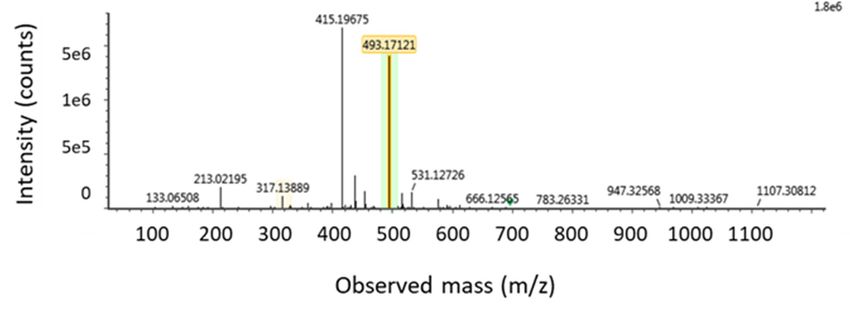
Toxins 2019, 11, 171                                                                                2 of 30

these samples contain multiple mycotoxins. Co-contamination of several mycotoxins can result in
additive or synergistic effects. Consequently, multi-methods are an asset in mycotoxin analysis [1].
      This study focused on the mycotoxins regulated by the European Union [2,3], as well as the
mycotoxins for which legislation is currently lacking but which reveal evident toxicity and high
prevalence in feed [4]. More specifically, aflatoxin B1 (AFB1), ochratoxin A (OTA), fumonisin B1 (FB1),
T2-toxin (T2), zearalenone (ZEN) and deoxynivalenol (DON), as well as enniatins (ENN), beauvericin
(BEA), alternariol (AOH) and tenuazonic acid (TeA) were included.
      Traditionally, mycotoxins are determined and regulated at the level of the feed. However, feed
analysis has some major disadvantages. First, the possible presence of mycotoxin hotspots, i.e., local
areas in the feed with a higher concentration, can cause an unequal distribution of mycotoxins
in the feed and make it difficult to obtain a representative sample [5]. Second, analyzing feed
gives no information about the individual exposure. Fluctuations can arise from differences in
food consumption or in absorption, distribution, biotransformation and excretion (ADME) processes
between the animals. Third, the risk associated with exposure can be underestimated because feed
analysis does not include alternative routes of exposure such as dermal and respiratory exposure [6,7].
Fourth, modified or conjugated forms, previously called masked mycotoxins, can convert back to
their free forms and hence contribute to the adverse effects related to mycotoxin exposure. This has
been demonstrated for 3- and 15-acetyldeoxynivalenol (3ADON and 15ADON, respectively) and
DON-3-glucoside (DON3G) in pigs and broiler chickens [8,9]. Therefore, both ADONs and DON3G
can be considered as toxic as DON itself. Detection of these modified forms in feed can be difficult and
is not always possible with conventional methods where the non-modified mycotoxin is determined.
This creates a possible mismatch between the feed contamination level and the exposure of the
animals [10]. Finally, clinical signs of mycotoxin exposure can appear when the contaminated feed
has already been consumed, thus complicating or preventing diagnosis of herd problems associated
with mycotoxins [11].
      These issues can be resolved by biomonitoring of the animals and determining the exposure to
mycotoxins in biological matrices with the use of so-called biomarkers of exposure. Biomarkers are
molecules related to the exposure and are often the mycotoxin itself, the in vivo formed metabolites or
interaction products with macromolecules such as nucleic acids or proteins [12,13].
      The selected mycotoxins and their phase I and II metabolites or interaction products
(e.g., aflatoxin-guanine) can be measured in several biological matrices. In this study, plasma, urine
and feces of pigs and plasma and excreta of broiler chickens were chosen as biological matrix since
combining these enables studying all the in vivo toxicokinetic parameters and the complete metabolic
profile. Moreover, these matrices can be used to determine the efficacy of mycotoxin detoxifiers
according to the guidelines of the European Food Safety Authority (EFSA) [14]. In addition, they can
be easily applied for the detection of mycotoxins in these animals under field conditions. Especially,
the non-invasive character of urine and feces collection can be of added value when sampling on farm.
      Nowadays, state-of-the-art equipment such as liquid chromatography (LC) coupled to a tandem
mass spectrometer (MS/MS) or a high-resolution mass spectrometer (HRMS) have become the
standard in determining mycotoxins in biological matrices. Indeed, several LC-MS/MS multi-methods
(≥2 mycotoxins) have already been developed for the determination of mycotoxins in biological
matrices of pigs and broiler chickens. However, most of these multi-methods are limited to one
group of mycotoxins. Such methods are available for (the metabolites of) DON [9,15–18], ZEN [19,20],
ENNs [21,22], T2 [23–25], AFB1 [26] and TeA [27]. Only few multi-methods combine mycotoxins from
different families. To the best of our knowledge, this is the case for urine [28–33] and plasma [33–35] of
pigs, and plasma [35] of broiler chickens. These multiclass methods are also available for other animal
species such as for fish plasma [36], human plasma and urine [5,37–40], and rat plasma and urine [39].
The methods for urine clean-up often apply immunoaffinity columns or solid phase columns [30–33].
This approach increases the sensitivity but also the cost of analyzing a large number of samples and it
limits the number of analytes that can be detected. To avoid these limitations, the dilute and shoot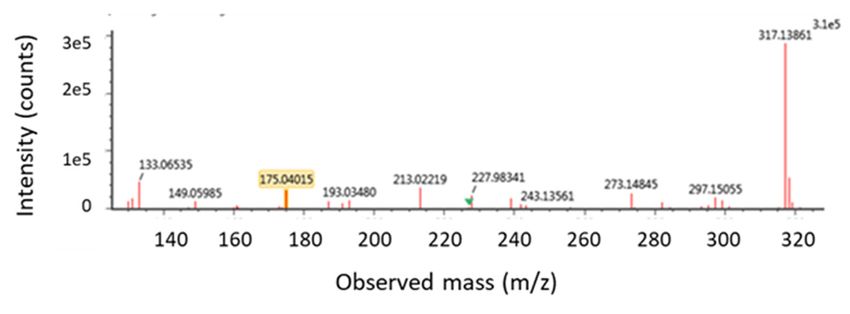
Toxins 2019, 11, 171                                                                               3 of 30

approach without further pre-treatment is frequently used [5,37,39,40]. However, this method demands
careful optimization of the dilution factor, and often matrix effects and interfering matrix peaks are
observed, which might decrease the sensitivity. Therefore, liquid–liquid extractions (LLE) are preferred
as urine sample preparation because they are easy to perform in large quantity and enough sensitivity
can be obtained. The developed plasma methods by Brezina et al. [41] and De Baere et al. [35] use
OASIS HLB columns that require conditioning before use, limiting the number of samples that can be
processed in a period of time. To increase the possible number of samples processed, LLE and protein
precipitation are preferred. This study therefore aimed to develop a practical, fast and cost-efficient
multi-method for analysis of plasma and urine of pigs and plasma of chickens, using LLE and protein
precipitation, avoiding the use of affinity/solid phase columns.
     Multi-methods are to the best of our knowledge currently not available for pig feces and excreta of
broiler chickens. This might be due to high matrix complexity and the diversity of the physicochemical
characteristics of the mycotoxins. Hence, the aim of this study was also to address these difficulties
and to develop a multi-method in these highly complex matrices.
     LC-HRMS is especially interesting to elucidate and determine phase I and II metabolites and
interaction products for which analytical standards are not easily available. Especially, since phase
II metabolites might be the most appropriate biomarkers for some mycotoxins due to the extensive
biotransformation by these pathways. The glucuronidated and sulfated metabolites of DON and ZEN,
as well as the metabolites formed after hepatic biotransformation of ENNB and B1 have already been
determined using LC-HRMS [9,20,22,42]. However, to our knowledge, these metabolites of several
toxins belonging to multiple classes have never been determined in a single chromatographic run
using LC-HRMS.
     Thus, the combination of LC-MS/MS and LC-HRMS enables not only determining mycotoxins
with an appropriate sensitivity in the lower ng/mL or ng/g range but also detecting a broad range of
mycotoxins, i.e., the mycotoxins and metabolites for which standards are readily available as well as
other phase I and II metabolites and interaction products. This is especially interesting when assessing
the most appropriate biomarker for exposure.
     Therefore, the aim of this study was to develop and validate multi-methods using LC-MS/MS
to determine relevant mycotoxins in biological matrices of pigs and broiler chickens. In addition,
the LC-MS/MS method was transferred to LC-HRMS to determine mycotoxins for which analytical
standards are not always commercially available. It is important to consider the main challenges
including the high complexity of the matrix, the large range of different physicochemical characteristics
of the mycotoxins and the need for a method with an appropriate sensitivity (in the lower ng/mL or
ng/g range), so that they can be used not only for specific toxicokinetic studies but also for screening
studies to monitor the exposure of individual animals.

2. Results and Discussion

2.1. Method Development

2.1.1. Sample Preparation and Extraction
     Three requirements were prioritized in the development of adequate sample pre-treatments for
the different matrices. First, the sample preparation should be simple and practical, thereby enabling
analysis of a large quantity of samples in a time and cost efficient way. Second, the sample preparation
should be as generic as possible, to allow the extraction of the 24 mycotoxins including some relevant
metabolites, which was a real challenge taking into account the various physicochemical properties of
the different classes of mycotoxins. Third, the method should be sensitive and, therefore, an LOQ of
1 ng/mL of ng/g was aimed for all analytes in all matrices.
     Initially, all methods started from the most generic and simple sample preparation:
deproteinization with an organic solvent. However, due to high matrix complexity and the large
variety in physicochemical characteristics of the different mycotoxins more complex methods were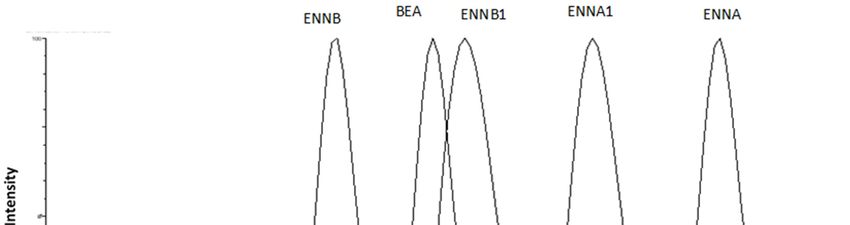
Toxins 2019, 11, 171                                                                              4 of 30

needed for urine, feces and excreta. A summary of the final protocols can be found in the flowchart
below (Figure 1).

Pig and Chicken Plasma
     Method development was started with the optimization of the extraction of the analytes
of interest from pig and chicken plasma. Proteins and phospholipids are often removed from
plasma samples before analysis on LC-MS/MS equipment to prevent clotting and contamination
of the equipment. Deproteinization can be accomplished using organic solvents, such as MeOH
and ACN. The elimination of phospholipids could be obtained using an Oasis Ostro® -plate or
HybridSPE® -phospholipid 30 mg/1 mL solid-phase extraction (SPE) tubes. The use of the Ostro® -plate
required the addition of 0.1% formic acid. Therefore, 0.1% formic acid was added to ACN and MeOH.
     For pig plasma, deproteinization with 0.1% formic acid in MeOH and 0.1% formic acid in ACN
were tested in triplicate on spiked pig plasma samples (analyte concentration: 10 ng/mL). In this
study, ACN was preferred as deproteinization solvent for pig plasma, compared to MeOH, since it
gave a clearer supernatant after centrifugation. This is in accordance with previous studies where
deproteinization with ACN was successfully applied to detect mycotoxins in pig plasma [20,34].
     Plasma of broiler chickens contains more phospholipids compared to pigs [43]. Therefore,
an additional removal of the phospholipids was necessary to obtain clear samples and to prevent
clogging of tubings of the LC-MS/MS and LC-HRMS instruments during routine sample analysis.
Spiked broiler chicken plasma samples (analyte concentration: 10 ng/mL) were extracted using the
Oasis Ostro® -plate or the hybrideSPE® phospholipid SPE tubes (n = 3 per protocol). As can be seen in
Figure 2, the use of SPE tubes resulted in a lower peak area, especially for ENNs, BEA, TEA, AME
and AOH. Consequently, for broiler chicken plasma, deproteinization with ACN and 0.1% formic acid
was combined with the Oasis Ostro® -plate to obtain the best results. This combination was already
successfully applied to detect mycotoxins in chicken plasma by our group [44].

Pig Urine
     Since methanol and ACN are mixable with urine, it was not possible to use the same method
for urine as for plasma. The use of immunoaffinity columns is avoided due to the high cost. Dilute
and shoot methods were eliminated to avoid matrix effects. Therefore, LLE was used to extract the
mycotoxins from urine. The main parameters affecting the extraction of all components were optimized:
type of extraction solvent, pH, solvent volume and extraction time. During initial experiments, ethyl
acetate was evaluated as extraction solvent at neutral pH as in literature extraction of mycotoxins from
human urine with this solvent can be found [5,28]. Next, the pH of extraction was optimized using
urine spiked at analyte concentrations of 10 ng/mL (n = 2 per protocol): acidic (pH 2), neutral (pH 8)
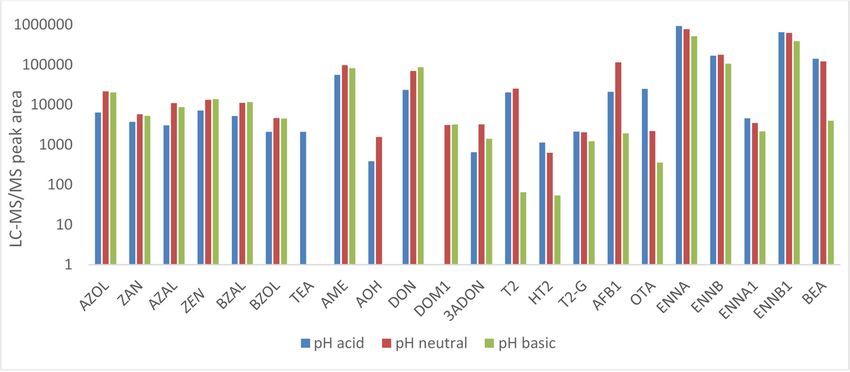
and basic (pH 10) extraction conditions were evaluated. Most components showed good extraction at
neutral pH (see Figure 3); only for TeA, HT2 and OTA neutral pH showed insufficient results. For these
components, significantly higher peak areas were observed at pH 2. This can be explained by the
pKa-values of these components. The pKa of TeA (4.5 ± 1) and OTA (3.2 ± 0.1) [45,46] indicate that
these components are weak acids and at pH 2 all these components will be neutral and can thus easily
be extracted. The pKa values and chemical formulas of the other toxins can be found in Supplementary
Table S12. As a result, it was decided to perform two extraction protocols for pig urine, i.e., one in
acidic medium (pH 2, tube 1) and another in neutral medium (pH 7, tube 2). Since the same internal
standard was used for TeA as for AME and AOH and these components were also detected in acidic
medium, they were also added to the acidic protocol. Finally, the volume of ethyl acetate and the
extraction time were also optimized. Different volumes (1.5, 3, 5, and 7.5 mL) and different extraction
times (15, 30, 45, and 60 min) were tested. It was found that extraction was optimal using a solvent
volume of 3 mL and an extraction time of 15 min (results not shown). The combination of both extracts
into one vial was not possible since DOM1 and ADON were no longer recovered.
Toxins 2019, 11,
Toxins 2019, 11, 171
x FOR PEER REVIEW 5 5of
of 31
30
Flowchartof
Figure1.1.Flowchart
Figure ofthe
thefinal
finalmethods
methodsto
todetermine
determinedifferent
different mycotoxins
mycotoxins in
in plasma,
plasma, urine
urine and
and feces
feces of
of pigs,
pigs, and
and plasma
plasma and
and excreta
excreta of
of broiler
broiler chickens.
chickens.Toxins 2019,11,
Toxins2019, 11,171
x FOR PEER REVIEW 66 of
of 30
31
10000000
1000000
LC-MS/MS peak area
100000
10000
1000
100
10
1
SPE OSTRO
Figure 2.
2. Comparison
Comparisonofofthethechromatographic
chromatographic peak
peak areas
areas of the
of the different
different mycotoxins
mycotoxins (mean(mean
+ SD)+after
SD)
after extraction
extraction from chicken
from broiler broiler chicken plasmaat(spiked
plasma (spiked at 10
10 ng/mL) ng/mL)
using Oasisusing ®
Ostro Oasis
plate Ostro ® ®
plate or
or hybrideSPE
hybrideSPE phospholipid
phospholipid ®
SPE tubes (n =SPE tubes
3 per (n = 3 per protocol).
protocol).
Figure 3.
Figure 3. Comparison
Comparison of of the
the chromatographic
chromatographic peak
peak areas
areas of
of the
the different
different mycotoxins
mycotoxins after
after extraction
extraction
with ethyl acetate (spiked at 10 ng/mL) from pig urine at three different pH levels: acid (pH 2),
with ethyl acetate (spiked at 10 ng/mL) from pig urine at three different pH levels: acid (pH 2), neutral neutral
(pH 8), and basic (pH 10)
(pH 8), and basic (pH 10) (n = (n = 2 per protocol).
protocol).
Chicken
Chicken Excreta
Excreta
For
For the
the excreta
excreta ofof broiler
broiler chickens,
chickens, the
the same
same solvents
solvents as as used
used forfor extraction
extraction of of urine
urine and
and
deproteinization of plasma were evaluated: ACN, MeOH and ethyl acetate.
deproteinization of plasma were evaluated: ACN, MeOH and ethyl acetate. The excreta samples The excreta samples
were
were
spiked spiked at an analyte
at an analyte concentration
concentration of 10(nng/g
of 10 ng/g (n =protocol).
= 3 per 3 per protocol). MeOH extraction
MeOH extraction of broilerofchicken
broiler
chicken
excreta excreta
did notdid not contain
contain all theallmetabolites
the metabolites of ZEN.
of ZEN. In addition,
In addition, thethe peakareas
peak areasofofthe
the measured
measured
metabolites
metabolites of ZEN and DON and AOH/AME were much lower. Next, the chromatograms after
of ZEN and DON and AOH/AME were much lower. Next, the chromatograms after
extraction
extraction with
with ethyl
ethyl acetate
acetate and
and ACN
ACN were
werecompared.
compared.The Theethyl
ethylacetate
acetateextract
extractshowed
showedaalower
lowerS/NS/N
ratio for ZEN and its metabolites. Moreover, the peak areas for the ENNs, AFB1
ratio for ZEN and its metabolites. Moreover, the peak areas for the ENNs, AFB1 and DON family and DON family were
much higherhigher
were much after extraction with ACN
after extraction compared
with ACN to ethyl
compared acetate
to ethyl (Figure
acetate 4). Therefore,
(Figure ACNACN
4). Therefore, was
chosen as optimal
was chosen extraction
as optimal solvent.
extraction However,
solvent. to improve
However, the recovery,
to improve the influence
the recovery, of the addition
the influence of the
of salts (MgSO
addition of salts and Na SO
4 (MgSO24 and ), acid (HCl), base (NaOH) and water on the extraction recovery
4 Na2SO4), acid (HCl), base (NaOH) and water on the extraction recovery was also
evaluated. The extraction
was also evaluated. recovery ofrecovery
The extraction TeA and ofOTATeAincreased
and OTA byincreased
a factor 100bybya adding
factor 100HCl,bywhereas
adding
for all the other components extraction with ACN alone showed the highest recovery.
HCl, whereas for all the other components extraction with ACN alone showed the highest recovery. Therefore, it was
Therefore, it was decided to perform the extraction of chicken excreta twice: with and without HClToxins 2019, 11, 171 7 of 30
Toxins 2019, 11, x FOR PEER REVIEW 7 of 31
decided
(only fortoTeA
perform the extraction
and OTA). of protocol
The final chicken excreta twice:
for broiler with and
chicken without
excreta usedHCl (only
1.5 mL offor
ACNTeAasand
an
OTA). The final protocol
extraction solvent. for broiler chicken excreta used 1.5 mL of ACN as an extraction solvent.
1000000
100000
LC-MS/MS peak areas
10000
1000
100
10
1
Ethylacetate ACN MeOH
Figure 4.
Figure 4. Comparison
Comparisonofofthe
thechromatographic
chromatographic peak
peak areas
areas of the
of the different
different mycotoxins
mycotoxins after after extraction
extraction from
from broiler
broiler chickenchicken excreta at
excreta (spiked (spiked at with
10 ng/g) 10 ng/g)
ethylwith ethyl
acetate, acetate, and
acetonitrile acetonitrile
methanol and
(n =methanol (n = 3
3 per protocol).
per protocol).
Pig Feces
Pig Feces
The extraction of mycotoxins from pig feces was initially evaluated using the same solvents as
for theTheoptimization
extraction of of mycotoxins
chicken excreta:
fromMeOH, ACN,
pig feces wasand ethylevaluated
initially acetate. However,
using thethese
samesolvents
solventsdid as
not give satisfactory results in recovery and the extracts were not sufficiently
for the optimization of chicken excreta: MeOH, ACN, and ethyl acetate. However, these solvents didclean to inject into the
instrument. Therefore,
not give satisfactory otherin
results extraction
recoverysolvents
and the (acetone, diethyl
extracts were notether) were also
sufficiently evaluated,
clean but the
to inject into the
recovery of the mycotoxins was still insufficient. This could be explained by the
instrument. Therefore, other extraction solvents (acetone, diethyl ether) were also evaluated, but the complexity of the
matrix.
recoveryThis challenge
of the was solved
mycotoxins by insufficient.
was still testing different
Thiscombination of solvents
could be explained andcomplexity
by the the combination
of the
of the different
matrix. solvents
This challenge with
was SPE by
solved columns. This led combination
testing different to a double of extraction
solvents procedure. The first
and the combination
extraction was a solvents
of the different liquid extraction
with SPE using MeOH/ethyl
columns. This ledacetate/formic acid (75/24/1;
to a double extraction v/v) toThe
procedure. extract
first
OTA, TeA, was
extraction AMEa and
liquidAOH. The second
extraction usingprotocol
MeOH/ethylto extract the other mycotoxins
acetate/formic acid (75/24/1;was a to
v/v) combination
extract OTA, of
aTeA,
liquid
AMEextraction
and AOH. withThe
acetone
secondandprotocol
a solid phase extraction
to extract withmycotoxins
the other a HybridSPE-phospholipid
was a combination column.
of a
All extraction
liquid extractionprocedures were and
with acetone tested in triplicate
a solid at analytewith
phase extraction concentrations of 10 ng/g.
a HybridSPE-phospholipid column.
Both fecesprocedures
All extraction and excretawereextraction
tested required theat
in triplicate use of a filtration
analyte step using
concentrations the
of 10 Millex® -LG filter
ng/g.
unit (0.2
Bothµm) to and
feces obtain samples
excreta that were
extraction sufficiently
required clean
the use of atofiltration
inject onstep
the using
equipment.
the Millex®-LG filter
For all matrices, the dried extract was reconstituted in 250 µL
unit (0.2 µm) to obtain samples that were sufficiently clean to inject on the equipment.(or 150 µL for chicken plasma)
of MeOH/water
For all matrices,(85/15; v/v). extract
the dried The combination of water
was reconstituted in and MeOH
250 µL wasµL
(or 150 crucial to redissolve
for chicken plasma)all of
mycotoxins with their various physicochemical characteristics.
MeOH/water (85/15; v/v). The combination of water and MeOH was crucial to redissolve all
mycotoxins with their various physicochemical characteristics.
2.1.2. Optimization of LC-MS/MS and HRMS Parameters
2.1.2.Four
Optimization of LC-MS/MS
different reversed and HRMS
phase columns Parameters
(Hypersil Gold 50 mm × 2.1 mm, dp: 1.9, Thermo Scientific,
Breda, The Netherlands; Zorbax Eclipse C18 50
Four different reversed phase columns (Hypersilmm × 2.1 Gold
mm, dp:50 1.8,
mmAgilent, Sint-Katelijne-Waver,
× 2.1 mm, dp: 1.9, Thermo
Belgium; Acquity BEH-C18 50 mm × 2.1 mm, dp: 1.7, Waters, Milford,
Scientific, Breda, The Netherlands; Zorbax Eclipse C18 50 mm × 2.1 mm, dp: 1.8,MA, USA; and Acquity HSS-T3
Agilent, Sint-
100 mm × 2.1 mm, dp: 1.8, Waters, Milford, MA, USA) were tested to achieve
Katelijne-Waver, Belgium; Acquity BEH-C18 50 mm × 2.1 mm, dp: 1.7, Waters, Milford, MA, USA; chromatographic
separation
and Acquity of HSS-T3
the selected
100 mmmycotoxins.
× 2.1 mm,Thedp:best
1.8, separation of all components
Waters, Milford, MA, USA) were wastested
obtained on the
to achieve
HSS-T3 column. separation of the selected mycotoxins. The best separation of all components was
chromatographic
obtained multi-methods
The were developed with two subsequent analytical runs, i.e., ESI+ and ESI−
on the HSS-T3 column.
modeTherespectively. This was
multi-methods were necessary to bewith
developed able to
two detect all the mycotoxins
subsequent analytical with
runs,sufficient
i.e., ESI+sensitivity
and ESI−
without increasing theThis
mode respectively. run time. Therefore, the
was necessary mobile
to be ablephases for each
to detect ionization
all the mode were
mycotoxins with optimized
sufficient
sensitivity without increasing the run time. Therefore, the mobile phases for each ionization mode
were optimized separately. In the literature, the most common mobile phases for mycotoxin detectionToxins 2019, 11, 171 8 of 30
Toxins 2019, 11, x FOR PEER REVIEW 8 of 31
separately.
consist In theand
of water literature,
an organicthe most
solventcommon
(such asmobile
ACNphases
or MeOH).for mycotoxin detection
These solvents consist
are often of water
combined
and an organic solvent (such as ACN or MeOH). These solvents are often
with mobile phase modifiers such as volatile acids (formic acid and acetic acid) and ammonium combined with mobile phase
modifiers
formate orsuch as volatile
ammonium acids[34,35].
acetate (formicDifferent
acid and combinations
acetic acid) and of ammonium
these solvents formate or ammonium
and modifiers were
acetate [34,35].
evaluated Different
to identify the combinations of thesefor
optimal combination solvents and modifiers
each ionization mode. were evaluated to identify the
optimal combination
In ESI− mode, ZEN, for each
AZEL, ionization
BZEL, AZAL,mode.BZAL, ZAN, TeA, AOH and AME were determined.
In ESI
Baseline − mode,among
separation ZEN, AZEL, BZEL, and
ZAN, AZEL, AZAL,BZEL BZAL,
as wellZAN, TeA, AOH
as between AZAL andandAME were
BZAL wasdetermined.
achieved
Baseline separation among ZAN, AZEL, and BZEL as well as between
using water (MP A) and ACN (MP B) as mobile phases [20]. The use of mobile phase with a pHAZAL and BZAL was achieved
close
using
to water
neutral (MP
led A) and
to an ACN (MP
impaired peakB) as mobile
shape phases
for TeA [47].[20].
TheThepeakuse of mobile
shape phase with
was optimal when a pH close1%
using to
neutral
acetic led Therefore,
acid. to an impaired peak shape
1% acetic acid infor TeA and
water [47].1%Theacetic
peakacid
shape
in was
ACNoptimal when using
were chosen 1%mobile
as final acetic
acid. Therefore,
phases, since this1% acetic acid in water
combination gave and 1% aceticresults
satisfactory acid in for
ACNallwere chosenFigure
analytes. as final 5a
mobile
showsphases,
the
since this combination
chromatographic gave satisfactory
separation results forinallESI−
of the mycotoxins analytes.
modeFigure
with 5a theshows the chromatographic
optimized parameters as
of the mycotoxins in ESI− mode with the optimized parameters as described here.
separationhere.
described
DON, DOM-1, 3-ADON,
DON, DOM-1, 3-ADON, 15-ADON,
15-ADON, T2, T2, HT2,
HT2, T2G,
T2G, OTA,
OTA, AFB1,
AFB1, AFM1,
AFM1, FB1,
FB1, ENNA,
ENNA, ENNA1,
ENNA1,
ENNB, ENNB1
ENNB, ENNB1 and and BEABEAwere weredetermined
determinedininESI+ ESI+mode.
mode. Taking
Taking intointo account
account all analytes,
all analytes, the
the combination of water (MP A) and MeOH (MP B) was most suitable
combination of water (MP A) and MeOH (MP B) was most suitable [34]. These mobile phases were [34]. These mobile phases
were further
further optimized
optimized using ammonium
using ammonium formate formate
and formic and formic
acid acid tothe
to evaluate evaluate
formationtheofformation
ammonium of
ammonium +
adducts (M +adducts
[NH4+]).(M + [NH
These 4 ]). These
adducts adducts easier
are generally are generally easierthan
to fragment to fragment than sodium
sodium adducts, thus
adducts, thus
enhancing theenhancing
sensitivitythe of sensitivity
the method. of the
Themethod. The final combination
final combination of mobile of mobilewas
phases phases
10 mMwas
10 mM ammonium
ammonium formateformate
and 0.3% and 0.3% acid
formic formic acid in(MP
in water waterA) (MP
and A) and in methanol
in methanol (MP B).(MP B). 5b,c
Figure Figure 5b,c
shows
shows
the the chromatographic
chromatographic separation
separation of theofmycotoxins
the mycotoxinsin ESI+in ESI+
mode mode
withwith the optimized
the optimized parameters
parameters as
as described
described here.
here.
(a)
Figure 5. Cont.Toxins 2019, 11, 171 9 of 30
Toxins 2019, 11, x FOR PEER REVIEW 9 of 31
(b)
(c)
Figure
Figure 5.5.(a) LC-MS/MS
(a) LC-MS/MS chromatogram
chromatogramshowing the separation
showing of tenuazonic
the separation acid (TeA, acid
of tenuazonic 6.16 min),
(TeA,
alternariol
6.16 min), alternariol (AOH, 6.45 min), α-zearalanol (AZAL, 7.34 min), α-zearalenolmin),
(AOH, 6.45 min), α-zearalanol (AZAL, 7.34 min), α-zearalenol (AZEL, 7.47 (AZEL,β-
zearalanol
7.47 min), (BZAL, 6.73 min),
β-zearalanol (BZAL,β-zearalenol (BZEL, 6.84 (BZEL,
6.73 min), β-zearalenol min), zearalanone (ZAN, 8.38 (ZAN,
6.84 min), zearalanone min),
zearalenone (ZEN, 8.47 min)
8.38 min), zearalenone (ZEN,and8.47
alternariol-monomethyl ether (AME, 8.52
min) and alternariol-monomethyl min)(AME,
ether at a concentration
8.52 min) atofa
10 ng/mL in broiler
concentration chickenin plasma;
of 10 ng/mL (b) LC-MS/MS
broiler chicken chromatogram
plasma; (b) showing the separation
LC-MS/MS chromatogram showing theof
deoxynivalenol (DON, 4.37 min), de-epoxy-deoxynivalenol (DOM1, 4.71
separation of deoxynivalenol (DON, 4.37 min), de-epoxy-deoxynivalenol (DOM1, 4.71 min), 3/15- min), 3/15- acetyl-
deoxynivalenol (3/15-ADON,
acetyl-deoxynivalenol 5.02 min),
(3/15-ADON, 5.02aflatoxin M1 (AFM1,
min), aflatoxin 5.20 min),
M1 (AFM1, 5.20aflatoxin B1 (AFB1,
min), aflatoxin 5.73),
B1 (AFB1,
HT2-toxin (HT2, 7.01
5.73), HT2-toxin (HT2,min),
7.01T2-glucoside (T2G, 7.08
min), T2-glucoside min),
(T2G, T2min),
7.08 toxin T2
(T2,toxin
8.27 (T2,
min),8.27
ochratoxin A(OTA ,
min), ochratoxin
9.28
A(OTAmin), beauvericin
, 9.28 (BEA) and
min), beauvericin the and
(BEA) enniatins (ENNA,
the enniatins A1, B and
(ENNA, B1)
A1, B in B1)
and broiler chicken
in broiler plasma
chicken at a
plasma
concentration
at a concentration of 10 ng/mL; and (c) enlargement of (b): LC-MS/MS chromatogram showing the
of 10 ng/mL; and (c) enlargement of (b): LC-MS/MS chromatogram showing the
separation
separation ofofBEA
BEAand andthethe enniatins
enniatins (ENNA,(ENNA,
A1, B A1, B and
and B1) B1) in
in broiler broiler
chicken chicken
plasma plasma at a
at a concentration
concentration
of 10 ng/mL. of 10 ng/mL.
Sinceananisotopically
Since isotopically labeled
labeled IS forISeach
forsingle
eachmycotoxin
single mycotoxin is tooand
is too expensive expensive and not
not commercially
commercially available, an IS labeled with [13 C] or [15 N] was used for each group of mycotoxins.
available, an IS labeled with [ C] or [ N] was used for each group of mycotoxins. [13C15]-
13 15
[13 C15 ]-deoxynivalenol
deoxynivalenol was used was used
as IS for as IS for
DON, DON, and
DOM-1 DOM-1 and 3/15ADON;
3/15ADON; [13 C17 ]-Aflatoxin
[13C17]-Aflatoxin B1 for AFB1 B1and
for
AFB1 and 13 13 FB1; [13 C6 15 N]-Tenuazonic
AFM1; [13CAFM1; [ C20 ]-Ochratoxin
20]-Ochratoxin A for OTA; [A13C for OTA; [ C34 ]-Fumonisin
34]-Fumonisin B1 for FB1; [13B1 for
C615 N]-Tenuazonic acid for TeA,
acid for
AME and TeA,
AOH;AME and
[13C AOH; [13 C18 ]-Zearalenone
18]-Zearalenone for ZEN, AZAL, for ZEN,
BZAL,AZAL,
AZEL,BZAL,BZELAZEL,
and ZAN; BZELandand[15ZAN;
N3]-
Enniatin B for ENNA, ENNA1, ENNB, ENNB1 and BEA. Hence, an optimal correction for matrixToxins 2019, 11, 171 10 of 30
and [15 N3 ]-Enniatin B for ENNA, ENNA1, ENNB, ENNB1 and BEA. Hence, an optimal correction
Toxins 2019,
for matrix 11, x FOR
effects andPEER REVIEW
losses during sample preparation was obtained, which was confirmed 10 of during
31
method validation (see Table 2, Tables S6–S9, and Results Section for accuracy and precision).
effects and losses during sample preparation was obtained, which was confirmed during method
Data acquisition
validation (see Tableon2,the high-resolution
Tables S6–S9, and Results massSection
spectrometer (HRMS)
for accuracy was done in the positive or
and precision).
negative Data
ESI resolution mode, using the MS E continuum scan function. The results were processed
acquisition on the high-resolution mass spectrometer (HRMS) was done in the positive or
usingnegative
the Unify ESI version 1.8mode,
resolution softwareusing(Milford, MA, USA)scan
the MSE continuum to determine theresults
function. The phasewereI andprocessed
II metabolite,
for which
using nothe commercial
Unify versionanalytical
1.8 software standards
(Milford,were available.
MA, USA) to determine the phase I and II metabolite,
for which no commercial
Metabolites known in the analytical standards
literature were were
addedavailable.
to the accurate mass—MSe screening method
and additionally a pathway profiling MS processing to
Metabolites known in the literature E were added the accurate
method mass—MSe
(the chemical screening
formulas and method
theoretical
and additionally a pathway profiling MS E processing method (the chemical formulas and theoretical
accurate masses were added) with additional adducts and transformations was made. Peaks were
accurate masses were added) with additional adducts and transformations was made. Peaks were
identified based on the found accurate mass in the low energy spectrum and the product ions generated
identified based on the found accurate mass in the low energy spectrum and the product ions
in the high energy spectrum. An additional confirmation criterion was the observed profile of peak
generated in the high energy spectrum. An additional confirmation criterion was the observed profile
areasofversus time,
peak areas seen time,
versus in theseensamples obtained
in the samples duringduring
obtained the toxicokinetic study.
the toxicokinetic study.AnAnexample
example of an
extracted
of an ion chromatogram
extracted of a glucuronidated
ion chromatogram metabolite
of a glucuronidated of ZEN
metabolite and and
of ZEN the corresponding
the corresponding low energy
low
and high energy spectra, which was detected in a plasma sample of a pig administered
energy and high energy spectra, which was detected in a plasma sample of a pig administered an an intra-gastric
bolusintra-gastric
of ZEN (3 bolusmg/kg bw), (3
of ZEN is mg/kg
shownbw), in Figure
is shown6. in Figure 6.
The TheUnifyUnify version1.8.
version 1.8. software
software(Waters,
(Waters, Milford, MA, MA,
Milford, USA) USA)
detected two peaks
detected two with the exact
peaks with the
exactmass
massofofZEN-glucuronide
ZEN-glucuronide [m/z[m/z494.1788]. However,
494.1788]. only the
However, MS/MS
only spectrumspectrum
the MS/MS of the secondof the peak
second
(4.68 min) showed the product ions [m/z 317 and 175] of ZEN-glucuronide
peak (4.68 min) showed the product ions [m/z 317 and 175] of ZEN-glucuronide as defined in the as defined in the literature
[19]. The first fragment ion (m/z = 317), corresponds with the loss of glucuronic acid (176 amu) and
literature [19]. The first fragment ion (m/z = 317), corresponds with the loss of glucuronic acid
the second at m/z = 175 results from the loss of the aglycone from the quasimolecular ion [48]. The
(176 amu) and the second at m/z = 175 results from the loss of the aglycone from the quasimolecular
data of the first peak can be found in Figure S1.
ion [48]. The data of the first peak can be found in Figure S1.
(A) Extracted Ion Chromatogram
(B) Low Energy spectrum
Figure 6. Cont.Toxins 2019, 11, 171 11 of 30
Toxins 2019, 11, x FOR PEER REVIEW 11 of 31
(C) High Energy spectrum
Figure
Figure 6. (A)
6. (A) LC LC high-resolutionextracted
high-resolution extracted mass
mass chromatogram
chromatogram of of
a plasma
a plasmasample that that
sample was taken
was taken
fromfrom a pig
a pig that
that receivedan
received an intra-gastric
intra-gastricbolus
bolusof zearalenone (ZEN)(ZEN)
of zearalenone (3 mg/kg
(3 bw);
mg/kgthe following
bw); themass-
following
to-charge (m/z) values, corresponding to the theoretical exact mass of the deprotonated molecular ions
mass-to-charge (m/z) values, corresponding to the theoretical exact mass of the deprotonated
[M − H]−, were extracted from the total ion chromatogram using Unify 1.8 software: ZEN-glucuronide:
molecular ions [M − H]− , were extracted from the total ion chromatogram using Unify 1.8 software:
[m/z 493.1788]. (B) In the low energy MS/MS spectrum, this mass was confirmed as m/z-value
ZEN-glucuronide: [m/z 493.1788]. (B) In the low energy MS/MS spectrum, this mass was confirmed
493.17121 (target mass error = 10 ppm). (C) In the high energy MS/MS spectrum, the corresponding
as m/z-value 493.17121
product ions (targetand
at m/z 317.13877 mass error =(target
175.04015 10 ppm). (C) =In10the
mass error high
ppm) are energy
shown. MS/MS spectrum,
the corresponding product ions at m/z 317.13877 and 175.04015 (target mass error = 10 ppm) are shown.
2.2. Method Validation
2.2. Method Validation
The most optimal extraction protocol for plasma, urine and feces of pigs and plasma of broiler
The most
chickens optimal
was extraction
not validated protocol for
for fumonisins dueplasma,
to low urine andTherefore,
recovery. feces of pigs
it wasand plasma
decided of broiler
to only
chickens wasfumonisin
validate not validated for fumonisins
B2 in broiler due hence
chicken excreta, to lowinrecovery.
this matrixTherefore,
25 mycotoxins it was
weredecided
validated. to only
validate fumonisin B2 incoefficient
The correlation broiler chicken excreta,
(r) and the hence in this
goodness-of-fit matrix
(g) are shown 25 in
mycotoxins
Table 1 as anwere validated.
average ±
standard deviation of three curves made across three different analysis days. The linearity
The correlation coefficient (r) and the goodness-of-fit (g) are shown in Table 1 as an average ± results for
the other
standard matrices
deviation of can
threebe curves
found in Tables
made S2–S5.three
across Theydifferent
ranged for pig plasma
analysis days. from
The0.993 to 0.998
linearity (r) for
results
and 9.0% to 17.5% (g); for pig urine from 0.995 to 0.999 (r) and 3.5% to 17.0% (g); for
the other matrices can be found in Tables S2–S5. They ranged for pig plasma from 0.993 to 0.998 (r) and pig feces from
0.993 to 0.999 (r) and 7.1% to 18.7% (g); for chicken plasma from 0.994 to 0.999 (r) and 5.9% to 17.7%
9.0% to 17.5% (g); for pig urine from 0.995 to 0.999 (r) and 3.5% to 17.0% (g); for pig feces from 0.993 to
(g); and for chicken excreta from 0.995 to 0.999 (r) and 5.1% to 16.80% (g). Most of the calibration
0.999 (r) and 7.1% to 18.7% (g); for chicken plasma from 0.994 to 0.999 (r) and 5.9% to 17.7% (g); and for
curves matched a linear calibration model with a 1/x weighing factor, except for the ENNs and BEA.
chicken
Theseexcreta from 0.995
components showtoa0.999 (r) and
quadratic 1/x 5.1% to Linearity
model. 16.80% (g). Mostofof
results thecomponent
each calibrationseparately
curves matched
for a
linearpig
calibration model with
plasma are shown in Table 1.a 1/x weighing factor, except for the ENNs and BEA. These components
show a quadratic 1/x model. Linearity results of each component separately for pig plasma are shown
in Table 1.Table 1. Validation results for linearity (linear range, correlation coefficient (r) and goodness-of-fit
coefficient (g)) and limit of quantification (LOQ) of 24 mycotoxins in pig plasma.
Table 1. Validation results for linearity (linear range, correlation coefficient (r) and goodness-of-fit
Linearity (n = 3 Different Days)
coefficient (g)) Analyte
and limit ofLinear
quantification (LOQ) of 24
Range (ng/mL) r ± mycotoxins
SD in±pig
g (%)
LOQ (ng/mL)
SD plasma.
ZEN 1–200 0.996 ± 0.003 12.9 ± 3.8 1.0
Linearity (n = 3 Different Days)
Analyte
AZEL 1–200 0.995 ± 0.002 15.0 ± 1.2 1.0 LOQ (ng/mL)
AZAL Linear Range
1–200 0.995±
r± SD 0.003 15.2 ± 3.6± SD
g (%) 1.0
BZAL (ng/mL)1–200 0.996 ± 0.001 10.7 ± 2.0 1.0
ZEN BZEL 1–200 1–200 ± 0.003
0.9960.996 ± 0.002 14.912.9 ± 3.8
± 3.7 1.0 1.0
AZEL ZAN 1–200 1–200 ± 0.002
0.9950.997 ± 0.001 16.315.0 ± 1.2
± 3.1 1.0 1.0
AZAL TEA 1–200 1–200 ± 0.003
0.9950.998 ± 0.001 12.015.2 ± 3.6
± 4.9 1.0 1.0
BZAL AOH 1–200 1–200 ± 0.001
0.9960.997 ± 0.002 12.910.7 ± 2.0
± 5.2 1.0 1.0
BZEL 1–200 0.996 ± 0.002 14.9 ± 3.7 1.0
AME 1–200 0.996± 0.004 13.1± 5.1 1.0
ZAN 1–200 0.997 ± 0.001 16.3 ± 3.1 1.0
DON 1–200 0.998 ± 0.002 13.9 ± 4.4 1.0
TEA 1–200 0.998 ± 0.001 12.0 ± 4.9 1.0
AOH DOM-1 1–200 1–200 0.9970.997 ± 0.003
± 0.002 16.912.9
± 2.5
± 5.2 1.0 1.0
AME 3/15 ADON 1–200 1–200 0.9960.998 ± 0.001
± 0.004 9.313.1
± 3.1± 5.1 1.0 1.0
DON T2 1–200 1–200 0.9980.998 ± 0.001
± 0.002 9.913.9
± 1.6± 4.4 1.0 1.0
DOM-1 HT2 1–200 1–100 ± 0.003
0.9970.993 ± 0.002 17.516.9 ± 2.5
± 2.8 1.0 1.0
3/15 ADON T2G 1–200 2–200 ± 0.001
0.9980.995 ± 0.003 14.49.3 ± 3.1
± 1.2 2.0 1.0
T2 AFB1 1–200 1–200 ± 0.001
0.9980.996 ± 0.002 12.79.9 ± 1.6
± 2.8 1.0 1.0
HT2 1–100 0.993 ± 0.002 17.5 ± 2.8 1.0
T2G 2–200 0.995 ± 0.003 14.4 ± 1.2 2.0
AFB1 1–200 0.996 ± 0.002 12.7 ± 2.8 1.0
AFM1 1–200 0.997 ± 0.002 13.8 ± 5.6 1.0
OTA 1–200 0.993 ±0.004 9.3 ± 2.9 1.0Toxins 2019, 11, 171 12 of 30
Table 1. Cont.
Linearity (n = 3 Different Days)
Analyte Linear Range LOQ (ng/mL)
r ± SD g (%) ± SD
(ng/mL)
ENNA1 1–200 0.998 ± 0.001 9.0 ± 0.9 1.0
ENNA 1–50 0.995 ± 0.003 13.9 ± 3.2 1.0
ENNB 1–100 0.993 ± 0.002 9.3 ± 1.2 1.0
ENNB1 1–100 0.998 ± 0.001 15.9 ± 2.3 1.0
BEA 1–100 0.998 ± 0.000 16.6 ± 4.5 1.0
Note: SD, standard deviation; acceptance criteria: r ≥ 0.990 and g ≤ 20.
The LOQ that was aimed for during method development was 1 ng/mL or ng/g. This could be
obtained for the majority of the components in the different matrices, with the following exceptions:
DOM1 (4 ng/mL) and T2G (2 ng/mL) in pig urine; T2G (2 and 5 ng/mL) in pig and broiler chicken
plasma; and T2G (2 ng/g), HT2 (4 ng/g) and FB2 (10 ng/g) in broiler chicken excreta. In pig feces,
the LOQ for ZEN, AZAL, AOH, DON, DOM-1, HT2 and T2G was established at 5 ng/g.
No peaks were detected at the retention time zone of the analytes of interest in the solvent sample
that was injected after the highest calibrator sample, thus demonstrating the absence of carry over.
Moreover, for none of the components a signal was observed at the elution zone of the analytes of
interest in a blank matrix sample. This indicates a good specificity of the method.
The results of the within-day and between-day precision and accuracy met the specifications for
all mycotoxins and matrices. The results can be found in Table 2 for pig plasma and Tables S6–S9 for
the other matrices.
The results for matrix effects (signal enhancement and suppression) and extraction recovery are
shown in the Tables S10 and S11. Most components gave acceptable results (range 60–140%). However,
for some components, matrix effects were more pronounced and recovery was rather low. However,
for all mycotoxins, an adequate internal standard and matrix-matched calibration curves were used,
resulting in validation results for accuracy and precision matching the acceptance criteria.
The validation results for the other matrices can be found in Tables S6–S9.
This resulted in a fully validated quantitative targeted LC-MS/MS method and additionally
a qualitative untargeted LC-HRMS method. Both methods together enable not only determining
mycotoxins with good sensitivity but also targeting a broad range of mycotoxins and their metabolites,
not limited by the commercial availability of standards. This approach makes is possible to determine
24 mycotoxins and their relevant metabolites in easily obtainable biological matrices (plasma, urine
and feces) of pigs and broiler chickens. This is the first time that a paper covers such a broad range
of matrices and mycotoxins with a simple and practical sample preparation. This leads to a general
applicable method that can be applied in, among others, in vivo toxicokinetic studies and screening
studies to investigate the exposure of individual animals to mycotoxins, as shown in Section 2.3.
2.3. Biological Samples: Toxicokinetic Study
2.3.1. Pigs
In the pig plasma samples, low concentrations (1–15 ng/mL) of DON and ZEN were found
using LC-MS/MS analysis. The plasma concentration–time curves for these components are shown in
Figure S2. However, analysis of the samples using the LC-HRMS instrument showed that DON-GlcA
and ZEN-GlcA are better biomarkers for exposure as their observed peak areas are much higher
than those of the respective parent components DON and ZEN [9,20]. Since no DON-GlcA and
ZEN-GlcA standards were available at our laboratory, these components were tentatively identified
using the LC-HRMS multi-method. DON-GlcA and ZEN-GlcA plasma response–time curves are
shown in Figure 7. The highest response for ZEN-GlcA was achieved at 30 min and for DON-GlcA at
4 h post-administration.Toxins 2019, 11, 171 13 of 30
Table 2. Results of the within-day and between-day precision and accuracy experiments for 24 mycotoxins in pig plasma.
Within-Day Precision and Accuracy (n = 6) Between-Day Precision and Accuracy (n = 3 × 3)
Theoretical Theoretical Concentration Theoretical Concentration Theoretical Theoretical Concentration Theoretical Concentration
Concentration LOQ 10 ng/mL 100 ng/mL Concentration LOQ 10 ng/mL 100 ng/mL
Analyte
Precision Accuracy Precision Accuracy Precision Accuracy Precision Accuracy Precision Accuracy Precision Accuracy
(RSD %) (%) (RSD %) (%) (RSD %) (%) (RSD %) (%) (RSD %) (%) (RSD %) (%)
ZEN 12.1 6.5 7.3 1 5.4 −1.5 13.4 2.7 7.5 2.4 5.7 −2.2
AZEL 6.5 19.7 13 2.3 7.4 6.6 35.4 −5.3 10.9 −0.7 11.6 1.5
AZAL 17.4 −14.5 7.7 −1.4 4.4 −0.4 20.9 −3.3 8.2 −5.2 8.1 −4.9
BZAL 5.2 7 3.5 8.2 2.9 8.9 9.3 6.2 3.9 6.6 10.7 4.2
BZEL 13.0 −9.2 5.1 −1.8 6.1 −2.4 15.9 −1.8 8.1 −4.9 6.6 −5.3
ZAN 11.7 −40.5 3.9 8.8 4.6 3.0 21.5 −32.4 3.6 9.8 7.1 0.4
TEA 2.8 19.0 3.2 8.2 3.6 4.5 10.7 18.2 3.4 8.7 5.8 4.8
AOH 17.6 −32.2 3.5 8.6 3.8 −0.4 26.9 −20.8 4.5 9.5 5.3 −3.1
AME 14.1 10.1 7.7 2.4 4.8 −12.3 18.7 −5.3 7.0 4.8 5.9 −11.9
DON 24.9 −8.0 6.9 1.0 5.6 −5.7 22.3 4.4 10.0 2.3 8 −4.6
DOM-1 17.5 −0.4 15.0 −3.3 5.9 −6.9 14.7 −2.0 14 −2.7 7.9 −7.3
3/15 ADON 15.6 7.5 5.2 5.2 6.4 −3.5 16.4 10.9 5.4 6.9 8.6 −3.5
T2 15.4 3.3 1.6 7.7 2.7 8.4 12.7 3.7 1.5 8.1 6.2 5.0
HT2 21.1 −29.8 6.5 −14.0 9.9 5.8 30.5 −21.4 10.0 −11.5 5.7 2.1
T2G 10.8 −3.8 7.8 6.9 7.0 1.3 23.8 −2.6 9.5 4.1 13.8 6.6
AFB1 13.1 −14.3 3.0 3.9 4.9 −2.0 16.4 −16.9 3.6 4.5 6.3 −2.8
AFM1 11.2 −38.8 10.6 −19.5 8.8 −15.6 28.0 −28.5 18.8 −7.1 20.2 −5.4
OTA 7.5 13.4 8.7 −13.3 4.5 −12.3 14.4 2.5 7.2 −12.5 9.2 −8.0
ENN A1 15.7 −11.3 12.6 −3.7 6.7 1.8 14.6 −2.3 10.8 −0.8 9.6 −0.9
ENNA 19.4 −1.0 9.4 −14.1 11.7 −14.7 41.7 −11.2 13.8 −6.8 13.5 −5.6
ENNB 16.7 −0.1 11.8 9.6 2.6 9.4 16.8 −1.4 13.9 −1.3 6.6 4.1
ENNB1 7.6 16.1 3.9 −0.1 3.5 −3.9 31.8 1.6 8.7 5.5 3.2 −3.2
BEA 13.3 −2.9 3.2 6.9 3.2 7.4 29.7 −6.3 2.3 7.2 11.9 8.5
Note: The acceptance criteria: Accuracy, ≤1 ng/mL: −50% to +20%; 1–10 ng/mL: −30% to +10%; ≥10ng/mL: −20% to +10%. Within-day precision: RSD% < RSDmax with RSDmax for
≥1 toToxins 2019, 11, x FOR PEER REVIEW 13 of 31
Toxins 2019, 11, 171 14 of 30
(A)
(B)
HRMS response–time
Figure 7. (A) HRMS response–time curve of deoxynivalenol-glucuronide
deoxynivalenol-glucuronide (DON-GlcA)
(DON-GlcA) in plasma after
intra-gastric administration of deoxynivalenol (DON,
intra-gastric administration of deoxynivalenol (DON, 36 µg/kg 36 µg/kg bw) to pigs
pigs (n
(n == 8). The mean ratio of
the HRMS 13
HRMS peak
peak areas
areasof ofDON-GlcA/
DON-GlcA/ C 13 C1515-DON
-DON++SD SD isis shown.
shown. (B)
(B) HRMS response–time curve of of
zearalenone-glucuronide
zearalenone-glucuronide(ZEN-GlcA)
(ZEN-GlcA)in in plasma after
plasma intra-gastric
after administration
intra-gastric of zearalenone
administration (ZEN,
of zearalenone
3(ZEN,
mg/kg bw) tobw)
pigsto(npigs
= 8).(nThe 13 C 13
3 mg/kg = 8).mean ratio of
The mean theof
ratio HRMS
the HRMSpeak areas of ZEN-GlcA/
peak areas of ZEN-GlcA/ 18 -ZEN + SD+
C18-ZEN
is shown.
SD is shown.
In
In pig
pig feces,
feces, no
no traces
traces of
of DON
DON were
were observed.
observed. This
This can
can be
be explained
explained byby the
the complete
complete absorption
absorption
and
and fast elimination of DON in urine, while only 1–3% of the administered dose is
fast elimination of DON in urine, while only 1–3% of the administered dose is reported
reported to
to be
be
excreted via feces [16]. The concentration–time profiles of ZEN and its phase I metabolites
excreted via feces [16]. The concentration–time profiles of ZEN and its phase I metabolites in feces in feces
showed
showed maximum
maximum levels
levels from
from the
the first
first 12
12 hh after
after exposure
exposure onwards
onwards (Figure
(Figure 8).
8). The
The highest
highest amounts
amounts
were
were excreted during 12–24 h. This is in line with the observations of Binder et al., who
excreted during 12–24 h. This is in line with the observations of Binder et al., who found
found the
the
highest amounts of ZEN and metabolites were excreted during
highest amounts of ZEN and metabolites were excreted during 24–48 h [19]. 24–48 h [19].Toxins 2019, 11, x FOR PEER REVIEW 14 of 31
Toxins 2019, 11, 171 15 of 30
(A) (B)
(C) (D)
Figure 8.
Figure 8. (A)
(A)Concentration–time
Concentration–time curvecurve
of zearalenone (ZEN) in (ZEN)
of zearalenone feces after
in intra-gastric
feces after administration
intra-gastric
of ZEN (3 mg/kg bw) to pigs (n = 8). The mean + SD is shown. (B) Concentration–time
administration of ZEN (3 mg/kg bw) to pigs (n = 8). The mean + SD is shown. (B) Concentration–time curves
of α-zearalenol
curves (AZEL)
of α-zearalenol in feces
(AZEL) afterafter
in feces intra-gastric administration
intra-gastric administration of of
ZENZEN (3(3mg/kg
mg/kg bw) to to pigs
pigs
(n==8).
(n 8).The
Themean
mean+ +SDSDis is shown.
shown. (C) (C) Concentration–time
Concentration–time curvecurve of β-zearalenol
of β-zearalenol (BZEL)
(BZEL) in after
in feces feces
after intra-gastric
intra-gastric administration
administration of ZEN of (3
ZEN (3 mg/kg
mg/kg bw) tobw)pigsto(n
pigs (n The
= 8). = 8).mean
The mean
+ SD +is SD is shown.
shown. (D)
(D) Concentration–time curve zearalanone (ZAN) in feces after intra-gastric administration
Concentration–time curve zearalanone (ZAN) in feces after intra-gastric administration of ZEN (3 of ZEN
(3 mg/kg
mg/kg bw)bw) to pigs
to pigs (n =(n
8).=The
8). The
meanmean
+ SD+isSD is shown.
shown.
In pig
In pig urine,
urine, DON,
DON, ZEN ZEN and
and ZEN-GlcA
ZEN-GlcA were were detected.
detected. TheThe maximum
maximum concentrations
concentrations were were
achieved after
achieved after 4–8
4–8 h
h for
for ZEN,
ZEN, ZEN-GlcA
ZEN-GlcA and andDON.
DON.Nagl Nagletetal.
al.also
alsodemonstrated
demonstrateda afast fastelimination
elimination of
DON in urine with a maximum concentration in the first 4 h. DON showed
of DON in urine with a maximum concentration in the first 4 h. DON showed to be the most to be the most important
urinary metabolite
important [16]. Binder
urinary metabolite [16].et al. also
Binder detected
et al. ZEN and
also detected ZENZEN-GlcA
and ZEN-GlcA in piginurine
pig urineafterafter
oral
administration
oral administrationof ZEN, with
of ZEN, ZEN-GlcA
with ZEN-GlcA as the major
as the metabolite.
major metabolite.In In
this study,
this study,thethe
response
response ratio of
ratio
ZEN-GlcA/IS was also much higher than the area ratio of ZEN/IS, indicating
of ZEN-GlcA/IS was also much higher than the area ratio of ZEN/IS, indicating ZEN-GlcA as a major ZEN-GlcA as a major
metabolite [19].
metabolite [19]. The
The concentration
concentration (or(or HRMS
HRMS response)–time
response)–timecurvescurvesofofthese
thesemolecules
moleculesare aredepicted
depicted in
Figure 9.
in Figure 9.
Inall
In allfeces
fecesand
andurine
urinesamples,
samples,low lowconcentrations
concentrations(or (orHRMS
HRMSresponse
responseareas)
areas)were
wereobserved
observedat at
thetime
the timeofofadministration
administrationdue duetotothethe presence
presence of of
lowlow levels
levels DON DONandandZEN ZEN in feed.
in the the feed. In urine,
In urine, this
this concentration was negligible, especially when compared to the concentration
concentration was negligible, especially when compared to the concentration after administration. Inafter administration.
In feces,
feces, the the effect
effect of of
thethe administration
administration waswas onlyseen
only seenafter
after1010h.h. Twelve
Twelvehours
hours fasting
fasting before
before
administrationwas
administration wasnotnotenough
enoughto toeliminate
eliminatethetheconcentration
concentrationof ofmycotoxins
mycotoxinsin infeces
fecesafter
afterlong-term
long-term
exposure in this study. However, blank samples were obtained in previous
exposure in this study. However, blank samples were obtained in previous studies, as shown studies, as shown in in
FigureS3.
Figure S3.Toxins 2019,
Toxins11, 17111, x FOR PEER REVIEW
2019, 16 of 30
15 of 31
(A)
(B)
(C)
FigureFigure
9. (A)9. (A) Concentration–time curves
Concentration–time curves ofof deoxynivalenol
deoxynivalenol (DON)
(DON) in in
urine
urineafter intra-gastric
after intra-gastric
administration
administration of DON
of DON (36 (36
µg/kgµg/kg bw)totopigs
bw) pigs(n
(n== 8).
8). The
Themean
mean+ +
SDSD
is shown
is shown(B) (B)
Concentration–time
Concentration–time
curvescurves of zearalenone
of zearalenone (ZEN)
(ZEN) in in urine
urine afterintra-gastric
after intra-gastric administration
administrationofof ZEN
ZEN (3 mg/kg
(3 mg/kg bw) bw)
to pigs
to pigs
(n = 8). The mean + SD is shown. (C) The HRMS response–time curves of zearalenone-glucuronide
(n = 8). The mean + SD is shown. (C) The HRMS response–time curves of zearalenone-glucuronide
(ZEN-GlcA) in urine after intra-gastric administration of ZEN (3 mg/kg bw) to pigs (n = 8). The mean
(ZEN-GlcA) in urine after intra-gastric administration of ZEN (3 mg/kg bw) to pigs (n = 8). The mean
ratio of the HRMS peak areas of ZEN-GlcA/13C18-ZEN + SD is shown.
ratio of the HRMS peak areas of ZEN-GlcA/13 C18 -ZEN + SD is shown.
2.3.2. Broiler Chickens
2.3.2. Broiler Chickens
AFB1 and OTA were detected in plasma, as well as in excreta samples. No other relevant
AFB1 and OTA were detected in plasma, as well as in excreta samples. No other relevant
metabolites were found by LC-HRMS. The concentration (response)–time curves are shown in Figure
metabolites
10. OTA were
andfound by LC-HRMS.
AFB1 showed The
a second concentration
peak (response)–time
in the plasma curves
concentration–time are around
curve shown 4inhFigure
p.a. 10.
OTA and
This can be attributed to enterohepatic recirculation, which has previously been described for OTA can
AFB1 showed a second peak in the plasma concentration–time curve around 4 h p.a. This
be attributed tomaximum
[49,50]. The enterohepatic recirculation,
concentration measuredwhich has was
for AFB1 previously
8.4 ng/mLbeen
and described
for OTA was for50OTA [49,50].
ng/mL,
The maximum concentration measured for AFB1 was 8.4 ng/mL and for OTA was 50 ng/mL, for both
toxins observed after 15 min. After administration of DON, only DON-sulfate was found in plasma
and excreta due to the high conversion rate of DON to DON-sulfate in broiler chickens, confirming
previous literature reports [9,16]. The maximum response was achieved after 30 min.You can also read


