Operation Manual for Small-to-Medium Scale Compost Centres Using the Takakura Composting Method - January 2020 Institute for Global Environmental ...
←
→
Page content transcription
If your browser does not render page correctly, please read the page content below
Operation Manual for Small-to-Medium
Scale Compost Centres Using the Takakura
Composting Method

January 2020
Institute for Global Environmental Strategies
Authors
Kohei Hibino1 , Koji Takakura 2, Febriansyah, Sudarmanto Budi Nugroho1 , Ryoko Nakano1 , Ria Ismaria 3 , Tati
Hartati3, Eric Zusman1, Junichi Fujino1

  1. Institute for Global Environmental Strategies (IGES)
  2. Takakura Environment Institute
  3. Cleansing Agency, Bandung City (PD Kebersihan Kota Bandung)

Published by
Institute for Global Environmental Strategies (IGES)
Copyright © 2020 Institute for Global Environmental Strategies. All rights reserved.
January 2020

Disclaimer
IGES is an international research institute conducting practical and innovative research for realising sustainable
development in the Asia-Pacific region. Inquiries regarding this publication copyright should be addressed to
IGES in writing. No parts of this publication may be reproduced or transmitted in any form or by any means,
electronic or mechanical, including photocopying, recording, or any information storage and retrieval system,
without the prior permission in writing from IGES.

Although every effort is made to ensure objectivity and balance, the publication of research results or
translation does not imply IGES endorsement or acquiescence with its conclusions or the endorsement of
IGES funders. IGES maintains a position of neutrality at all times on issues concerning public policy. Hence
conclusions that are reached in IGES publications should be understood to be those of the authors and not
attributed to staff-members, officers, directors, trustees, funders, or to IGES itself.

Citation
Hibino K, Takakura K, Febriansyah, Nugroho SB, Nakano R, Ismaria R, Hartati T, Zusman E, Fujino J          (2020)
Operation Manual for Small-to-Medium Scale Compost Centres Using the Takakura Composting Method.
Institute for Global Environmental Strategies.
Contents
1. Introduction .......................................................................................... 1
2. Basic Concept of the Takakura Composting Method ... 2
    2-1. Microorganisms ............................................................................ 3
    2-2. Air (oxygen) .................................................................................... 4
    2-3. Moisture .......................................................................................... 4
3. Facility and equipment ................................................................... 5
    3-1. Space requirement ...................................................................... 5
    3-2. Facility construction ................................................................... 6
    3-3. Equipment ...................................................................................... 8
4. Seed Compost ...................................................................................... 9
    4-1. Materials for seed compost .................................................... 9
    4-2. Procedure of making seed compost ................................ 10
    4-3. Alternative seed compost ..................................................... 11
5. Type and Scale ................................................................................... 12
    5-1. Basic type ...................................................................................... 12
    5-2. Long-pile type ............................................................................ 13
    5-3. Amount of daily waste input ............................................... 15
    5-4. Required space .......................................................................... 16
6. Daily Operation ................................................................................. 17
    6-1. Pre-treatment of organic waste .......................................... 17
    6-2. Quality and quantity of waste input ................................. 19
    6-3. Stirring of compost .................................................................. 21
    6-4. Shaping the compost piles ................................................... 25
    6-5. Controlling moist content ..................................................... 25
    6-6. Controlling the temperature ................................................ 28
    6-7. Controlling other factors ........................................................ 33
    6-8. Monitoring ................................................................................... 37
7. Compost Extraction ........................................................................ 38
    7-1. How to determine maturation of compost .................... 38
    7-2. Sieving and preservation ........................................................ 38
    7-3. Type of sifting .............................................................................. 39
8. Use and Distribution of Compost .......................................... 40
Acknowledgement ............................................................................... 43
References ................................................................................................. 43
ANNEX ......................................................................................................... 44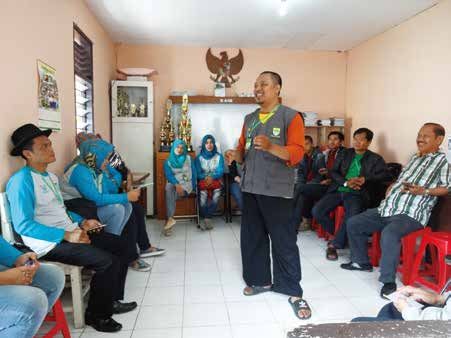
1. Introduction
Organic waste occupies more than 50% of the municipal solid waste in Indonesia and its
handling has been a big burden to municipalities who are responsible for management of
waste collection, treatment and final disposal. It is wet and heavy and generates bad odour.
Once it is dumped into landfill, it emits methane gas (CH4) which has 25 times the global
warming potential of carbon dioxide (CO2). However, if separated when it is still fresh and
treated appropriately, it has a good potential to be transformed into quality compost that can
be used for greening of the city and agricultural productions.

This manual was developed based on the needs of on-site operators of small-to-medium
scale composting centres (Input of organic waste: < 1 ton/day) in Bandung city in West Java
Province to improve their composting method and to provide a hands-on manual for their
daily operations. It was therefore designed to be as simple as possible with limited text and
many figures and tables. In addition, to make it a practical manual, the contents were based
on extensive on-site coaching and feedback during the process of upgrading the composting
centre at Babakansari TPS-3R (intermediate waste management facility with a function of 3R)
in Bandung city. The upgrading of composting centre was part of the “Waste Management
Support Project toward a Sustainable Resource Recycling Society in Bandung, Indonesia”, a
city-to-city collaboration project between Kawasaki city and Bandung city, funded by Japan
International Cooperation Agency (JICA)’s Grassroots Project during 2017-2020. The method
applied in this manual is the “Takakura composting method” and the detailed technical
guidance was provided by Dr. Koji Takakura, the inventor of the method, through multiple on-
site coaching and workshops.

By replicating functional small-to-medium scale composting centres throughout the city,
this manual is expected to contribute to the reduction of waste going to the landfill, improve
sanitation and the environment, enhance greening of the city, and reduction of spending of
waste management costs by the local government. It is also expected that it will contribute
to reduction of greenhouse gas (GHG) emissions and hence contribute to the achievement
of Indonesia’s National Determined Contributions (NDCs) to the Paris Agreement. These local
efforts and multiple effects are expected to contribute to the Sustainable Development Goals
(SDGs).

1
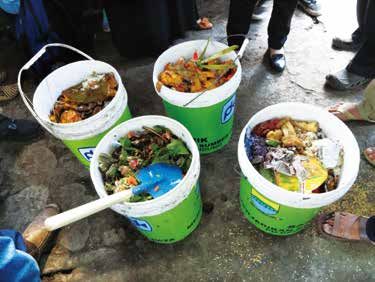
2. Basic Concept of the Takakura Composting Method

                     Why Small-to-Medium Composting Centres?
  In the JICA Grassroots Project 2017-2020 at Bandung city,
  raising the capacity of communities to separate waste at
  households was one of the four main components. In the
  programme, six target communities were selected, and
  source separation at households and on-site treatment of
  organic waste by communal composting were facilitated
  through mutual learnings. There were some good
  progresses in the source separation, while it was realized
  that the capacity of on-site treatment was generally
  limited and its stable operation was not so easy. Bandung
  city is dense in population, so the available space for on-
  site treatment in the communities and large land area
  for centralized processing were also limited. From these
  situation, developing a small-to-medium composting
  centres in a decentralised manner was considered to be
  the most appropriate strategy in treating organic waste
  in Bandung city.

2. Basic Concept of the Takakura Composting Method
The key features of Takakura composting method is to maximize the natural degradation
process of organic waste into fine compost. There are three key factors that you need to bear
in mind and control in order to avoid failures in aerobic composting.

                                                                                                             2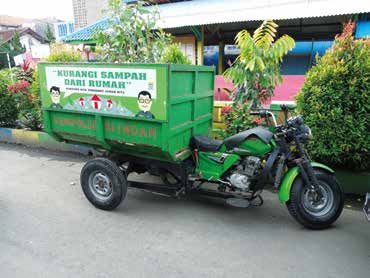
2-1. Microorganisms
Various kinds of fermentation microorganisms are necessary to complete decomposition
processes especially when organic waste consists of different kinds of materials, such as
kitchen waste, market waste, garden waste and organic industrial waste. At different stages
of decomposition process, different types of microorganisms become active. It is therefore
important that the compost bed contains various kinds of microorganisms. You can obtain
these microorganisms from locally available fermented foods, humus soil and mushrooms
(better with wild mushrooms).

3
2. Basic Concept of the Takakura Composting Method

2-2. Air (oxygen)
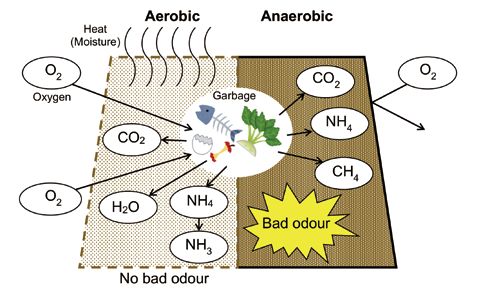
There are two types of fermentation – aerobic fermentation that decompose organics
by aerobic bacteria and facultative anaerobic bacteria under the presence of oxygen; and
anaerobic fermentation by anaerobic bacteria and facultative anaerobic bacteria that
decompose organics without oxygen. Under the presence of oxygen, aerobic fermentation
becomes active and decompose organic waste quickly; this is often accompanied by the
generation of heat that further accelerates decomposition. On the other hand, in the absence
of oxygen, the activity of bacteria is slow and produces various substances through anaerobic
fermentation. In other words, anaerobic fermentation is slow in decomposition of organic
waste and produces bad odour. Thus, daily stirring to provide enough oxygen inside compost
bed is important for enhancing decomposition of waste as well as avoiding bad odour.

2-3. Moisture
Maintaining the right moisture level will also enhance decomposition and avoid bad odour.
Aerobic bacteria needs moisture to actively decompose organics and the appropriate
moisture content is 40 – 60%. Limited moisture (too dry) will slow down decomposition while
too much moisture (too wet) will change the environment inside the compost to an anaerobic
condition and thereby causes a shift to anaerobic fermentation which generates bad odour.
The moisture content of fresh organic waste is about 80% which is too wet, so mixing with
drier compost bed will bring about a shift so that there is a balance in the moisture content.

                                                                                                    4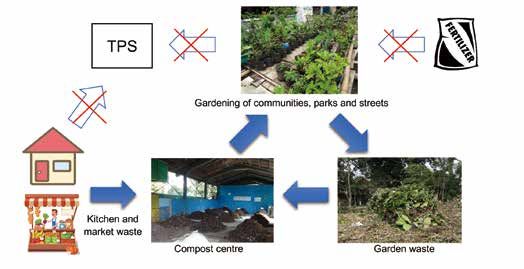
3. Facility and equipment

3-1. Space requirement
The space requirement for small-to-medium size compost centre using Takakura composting
varies depending on the amount of daily input of organic waste and types of piling method
applied. From the experiences in Surabaya city, space for composting centres were about 100
m2 per 1 ton/day of organic waste input. A larger space can accommodate more organic
waste input; for example, 200 m2 of space would be appropriate for 3 ton/day of organic
waste, and 300 m2 of space would be acceptable for 5 ton/day of organic waste. In general,
more space will allow easier operation.

5
3. Facility and equipment

3-2. Facility construction
The facilities for composting shall be designed not only based on the amount of daily organic
waste input but also from an operational perspective, especially in consideration of how to
control the moisture and aeration of the compost beds.

In case there are no existing facilities with a roof that you can use for composting in the
community, simply covering the compost bed with a plastic sheet (A) would be acceptable
if the amount of daily input of organic waste is not large (eg., less than 100 kg/day). If a
temporary tent (B) can be built, it will ease the operation and enhances ventilation of compost
beds, and thus can accommodate larger amounts of waste (eg., about 500 kg/day).

For larger amounts of organic waste processing, it would be more appropriate to have a
facility with a roof where rain, strong sun, and winds can be avoided. The basement does not
necessarily have to be a concrete floor – a floor made of dirt would be fine (See Figure C). In
the case of concrete floor construction, it would be advantageous to have a simple flat space
as much as possible to maximize the production efficiency. The building of any compartments
or other construction spaces will reduce efficient stirring of compost beds and the flexibility
of operation. A concrete floor can be fully flat or have a slight tilt to enable efficient drainage
of excess water from the compost as well as when cleaning the floor for improved sanitation
[NOTE: If the compost is in good condition, leachate is not expected to occur. The existence
of leachate indicates that there is too much water]. It would also be effective if the facility is
equipped with a tap of water and light (See Figure D).

                                                                                                    6
7
3. Facility and equipment

3-3. Equipment
For a small scale composting, all the process could be done manually. Equipment that would
be useful for handling and managing small scale compost centres are as follows:

If the amount of waste input gets larger, it would be useful to have a crusher for making the
organic materials smaller to accelerate its decomposition. A trommel for sieving compost to
get rid of plastics and other contaminants is also a useful tool.

                      Crusher                                       Trommel

                                                                                                     8
4. Seed Compost A seed compost is a specifically blended materials that nurtures various kinds of fermentation microorganisms that accelerates the decomposition of organic waste as a starter of compost making. In theory, once you make seed compost, you can use it repeatedly as a starter and you do not need to do it again. 4-1. Materials for seed compost In the Takakura composting method, a seed compost is made from locally available fermentation food and other materials that are inexpensive and/or easy to obtain. The materials for seed compost are selected considering its three major functions: ・Provide nutrition for proliferation of fermentation microorganisms (eg, rice bran, wheat flour, corn flour, feed for birds, etc.) ・Provide habitat for fermentation microorganisms and make space to enhance ventilation (eg, rice husk, wood chips, fallen leaves, corn core, rice/wheat straws, etc.) ・Enhance decomposition especially non-perishable and resistant materials such as garden waste (eg, mushroom, fallen leaves with white fungi, humus soil, etc.) 9
4. Seed Compost

4-2. Procedure of making seed compost

A)Preparation of fermentation liquid
  a. Clean buckets, pails and hands (contamination of bad bacteria into fermentation liquid
     may lead to failure)
  b. Crush brown sugar
  c. Open drinking water into bucket and mix brown sugar until it is sweet enough
  d. Add Ragi tape, Ragi tempe, yogurt
  e. Stir well
  f. Seal the bucket with a plastic sheet (make sure there are some open space in between the
    plastic sheet and fermentation liquid)
  g. Open after one week. If it smells good (like tape or tempe), it means it is in good
     condition. If it smells bad (rotten), it means it is contaminated and you need to try again.

                                                                                                10
B)Preparation of compost bed
a. Stir rice husk and rice bran (Materials B)
b. Stir fermentation liquid (Materials A) and other materials (Materials C)
c. Check moist content by hand. If it is too dry, add tapping water and adjust the moist
content
d. Cover the compost bed with mesh sheets
e. Check temperature and stir compost once a day
f. When the temperature rises to about 60 degrees and the smell is good (like tape or
tempe) after 2-3 days, it is a sign that fermentation bacteria have proliferated and are very
active. It is also a good sign to see white fungi covering the surface of the compost bed
g. You can start adding organic waste.
h. If the temperature does not rise and/or the smell is bad (rotten smell), it is a sign that you
have failed the preparation. Review the procedure and try again.
[NOTE: Period will be shorter when the temperature is higher and longer when temperature is lower]
4-3. Alternative seed compost
If there are enough mature compost that already contains lots of fermentation
microorganisms, it can readily be used as a seed compost and it is not necessary to make
new seed compost. Alternatively, humus soil from forest or farmland that contains lots of
fermentation microorganisms can also be used as seed compost. Humus soil is generally dark
brown and soft.
115. Type and Scale
5. Type and Scale
There are various type of methods for small-to-medium size compost centre using Takakura
composting method depending on the needs and circumstances of each site. In this manual,
an applied version of “rotation input” type which can be applied to wide range of waste
input and space availabilities will be explained. Other types are described in the ANNEX for
reference for wider application.
5-1. Basic type
Each unit of seed compost piles will receive different treatments over a week cycle, covering
a three weeks to complete the composting process. After the 3rd week, compost should
be extracted and sifted for use, while the remaining compost (1 m3 ) shall be shredded by a
crusher and used as seed compost.
125-1. Long-pile type The long-pile type of composting is an applied version of the basic type that combines the piles into a long pile to increase the volume of compost and the capacity within limited space and human resources. This type of composting also goes through the same 3 weeks cycle rotation procedure as the basic type. 13
5. Type and Scale

               14
5-3. Amount of daily waste input The appropriate amount of daily organic waste input can be estimated from the expected moisture content of the compost. More organic waste can be added when the initial volume of seed compost is larger, while the workload for stirring will become heavier and occupy more space. It is recommended to start from smaller volume of seed compost (eg, 1.0 m3 ) with less organic waste input amount (moisture content: 55%) and gradually increase the seed compost (eg, 1.5 m3 ) and/or daily input amount (moisture content: 60%) if necessary. Controlling the moisture content of the compost below 60% should be a priority. 1 Moisture content when adding 30 kg/day of waste to 1 m3 compost bed for 1 week: (400 x 0.4 + 30 x 7 x 0.8)/(400 + 30 x 7) x 100 = 53.8 2 Moisture content when adding 60 kg/day of waste to 1 m3 compost bed for 1 week: (400 x 0.4 + 60 x 7 x 0.8)/(400 + 60 x 7) x 100 = 60.5 15
5. Type and Scale

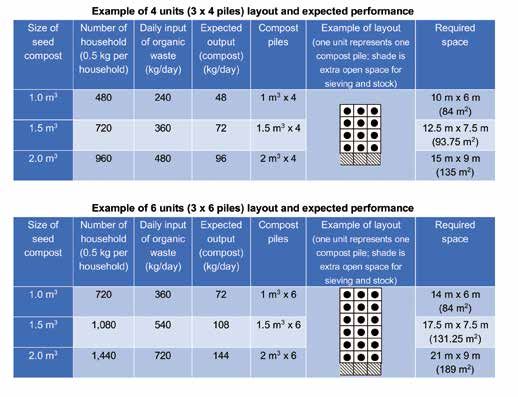
5-4. Required space
The required space for composting depends on the basic size of seed compost and number
of units (one unit = three compost piles). An extra open space is also needed for placing
a shredder, sieving and stocking the mature compost. For one compost pile, an indicative
required space depends on the volume as shown in the following diagrams:

                                                                                          16
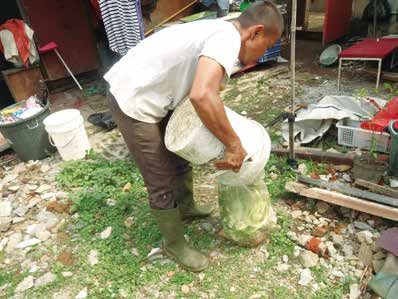
6. Daily Operation 6-1. Pre-treatment of organic waste In order to enhance the effectiveness of composting, pre-treatment of organic waste before mixing it into a compost pile is very important. In addition to source separation, removing persistent materials, shredding of large organic waste, and removing excess water will enhance decomposition and avoid failures. 17
5. Type and Scale

At compost centre
Pre-treatment of waste before processing for compost production is also important. If the
compost is contaminated with foreign materials such as plastics, it will be of poor quality.
It is therefore critical that those creating and managing the compost to check and put only
materials that are readily degradable to the greatest extent possible.

                                                                                             18
6-2. Quality and quantity of waste input 6-2-1. Quality of waste input A proper carbon to nitrogen ratio in the compost is an important parameter to enhance plant growth. This is difficult to measure and control. However, from past surveys and experiences, compost generated from food waste from household, market waste, and garden waste proved to satisfy the good balance of carbon to nitrogen ratio. 19
6. Daily Operation

6-2-2. Quantity of waste input
The appropriate quantity of organic waste to be added to compost bed is determined from
the moisture content of the compost. In other words, amount of organic waste should be
adjusted to keep the optimal level of moisture content for aerobic fermentation (ie., 40-60%).
As moisture content is subject to changes depending on the temperature, humidity (eg, dry
season or wet season), type and conditions of waste, etc., it requires daily adjustment based
on experience and monitoring.

The weight of organic waste input needs to be measured and recorded every time. The
weight of a bucket should be deducted from the measurement data. If the organic waste is
contained in a plastic bag, the weight of plastic bag can be ignored as it is not likely to weigh
much.

The amount of seed compost does not have to be measured ever y time, but it is
recommended to initially understand the approximate volume of compost equivalent to 1 m3
(or other target volume). For example, 1 m3 of volume can be measured using an existing box
container (or bucket) as follows:

                                                                                                20
Experiences in various locations and conditions suggests that it is safe to add 30 kg of organic waste daily to 1 m3 of compost bed. This should be considered as a rough indicator to determine the initial input amount and be adjusted depending on the needs and conditions of the compost through a series of trials. 6-3. Stirring of compost 6-3-1. Stirring and relocation of compost It is important to stir the compost daily. Stirring will provide oxygen to microorganisms inside the compost for active decomposition and will keep the compost homogenous. Without stirring, oxygen will be lacking inside the compost and anaerobic digestion will occur, which will create a bad smell. It will also result in uneven decomposition, leaving behind some undecomposed materials. In order to reduce time and energy, four actions (stir, relocate, add waste, and pile-up) can be done concurrently. Stirring beforehand and keeping waste fresh at the core of the compost over one night will also avoid a bad smell. 21
6. Daily Operation

               22
6-3-2. Frequency of stirring Appropriate frequency of stirring the compost differs depending on the situation. 6-3-3. Mechanical and passive ventilation Stirring of compost manually has the advantage of the through mixing of waste and compost but requires hard work. When the compost piles gets larger (eg, 1.5 m3 or 2.0 m3 ), the piles will be a lot heavier and turning over the compost will take a lot of time. In such a case, mechanical ventilation using a handy blower would be effective. Another cost-effective option is a passive ventilation system using PVC pipes. Mechanical ventilation 23
6. Daily Operation

Passive ventilation

When the temperature inside the compost increases (eg, 60 oC), an updraft of air is formed
in the compost bed, so the air will be slowly inhaled into the compost bed through the
ventilation pipe. However, the suction volume is very small so it should be considered as
complementary method for ventilation.

Mechanical ventilation with ventilation pipe
A combination of handy blower and ventilation pipe can enhance efficient ventilation inside
the compost bed. In this case, it is important to close the other end of the pipe in order to
maximize the supply of the blower air inside the compost bed.

                                                                                             24
6-4. Shaping the compost piles The decomposition of organic waste is faster at higher temperature. So the decomposition will become most efficient when the compost will be piled-up in a cylindrical shape due to efficient heat storage. Thus, by placing the fresh organic waste in the core of the compost bed, it will generate heat by fermentation, and the heat will be trapped inside. High temperatures will not just enhance decomposition of waste but also sterilize pathogenic bacteria (eg, E. Coli, Salmonella sp.), eggs of flies, etc. 6-5. Controlling moist content Moisture content is a key parameter to understand the condition of compost bed and should be monitored everyday. Maintaining the appropriate moisture content (50-60%) will accelerate decomposition of waste and keeps the compost in a good condition. Please be careful not to exceed 60% moisture. 6-5-1. How to check moist content You can easily check the moist content by using your hand. When you squeeze compost in your hand, and the compost becomes like a ball, it is a sign that the moist content is just right. If the compost does not stick together and drops easily, it indicates that it is too dry, while if water can be squeezed out of the compost, it is too wet. 25
6. Daily Operation

               26
6-5-2. How to adjust moist content If the compost is too dry, you can adjust the moisture content by pouring water. If it is too wet, the first thing you should do is to stop adding organic waste. The next thing you should do is to stir the compost well which will enhance the decomposition of waste, generate heat, and evaporate the moisture. You can also adjust the moisture content by adding dry organic materials. It would be useful to have a stock of some dry organic materials for adjusting the moisture content. 6-5-3. Dry compost for stocking After terminating the addition of organic waste, the temperature will decrease gradually and will reach a maturation stage. After that, the compost will gradually get dry if you do not add water. The bacteria will be inactive and reach a dormant state which is stable for stocking the compost. You can reactivate whenever you add organic waste and/or water. 27
6. Daily Operation

                                                                    Stable
                                                                    No bad smell
                                                                    Easy to handle (light)

6-6. Controlling the temperature
Temperature is another key parameter to understand the condition of compost bed and
should be monitored everyday. Adding organic waste and maintaining appropriate conditions
will raise internal temperature and keep the compost in a good condition.

6-6-1. How to check temperature
A compost thermometer is a useful tool to check the temperature inside the compost. If you
cannot afford a thermometer, you can roughly identify approximate temperature inside the
compost bed. After inserting a large knife into the compost bed, touch it with your hand. Or
put your hand directly into the compost bed. Extra care should be taken when touching the
compost to avoid burning your hand.

                                                                                             28
29
6. Daily Operation

6-6-2. Understanding temperature (What does it indicate?)
Active aerobic fermentation accompanies the generation of heat and keeps compost bed
a high temperature (above 60 oC). On the other hand, low temperature indicates that the
compost is either in a bad condition or in a dormant (maturation) state.

                                                                                          30
6-6-3. Understanding temperature (Difference in transition) The changes in temperature in the compost bed differs depending on how you operate the bed. Generally, the temperature of the compost bed will decrease as you add organic waste and/or stir the compost. However, if the organic waste is easily degradable organic waste (eg, kitchen garbage), the temperature of the compost bed will rise rapidly after a while (if it is a garden waste, the rise of temperature will take more time). If you do not add waste and repeat stirring, the temperature will gradually decrease and fade out, which is a sign of maturation (dormant) state. So you need to bear in mind these dynamics. 31
6. Daily Operation

6-6-4. How to control temperature
To maintain high temperature is a key strategy to enhance decomposition of organic waste
and sterilizes pathogenic bacteria and eggs of flies and other insects. In other words, if the
temperature is low, it is a sign that the compost bed is not in a good condition unless it is
shifting to maturation status. Here are some tips that you may try when temperature is not
getting high.

                                                                                              32
6-7. Controlling other factors 6-7-1. Checking smell The smell of compost is also a useful parameter to understand the condition of compost. If active fermentation is taking place, the compost smells like fermented foods (such as tempe, tape, yeast, etc.) and it suggests that the condition is good. 33
6. Daily Operation

6-7-2. State of decomposition of organic waste
The appearance of the surface of compost will also indicate the condition of compost. If it is
dominated by dark-brown fine particles (soil), it suggests that the organic waste is degrading
well and is in good condition. While if it is dominated by undecomposed organic waste, it
suggests that the amount of waste input is exceeding the ability of compost to decompose.
In this case, you could either: (a) crush large materials with a crusher, (b) add more seed
compost, or (c) stop adding waste (eg, for one week) and decrease the amount of input.

                                                                                              34
6-7-3. Use of additives If the condition of compost is not good, you may try to activate the compost by using some additives depending on the situation. It is not necessary to buy special additives. Rather, left- over fermentation food or other materials that are easy to obtain can be used. 35
6. Daily Operation

6-7-4. How to avoid flies and rats
Organic waste generates rotten smells and attracts flies and rats. It would be difficult to
completely avoid flies and rats, but the best strategy to avoid pests is to keep the compost
centre clean and well-maintained to the greatest extent possible. That will also contribute
to keeping the quality of compost, limit complaints from neighbouring communities, and
maintain the health of workers.

                                                                                            36
6-8. Monitoring Daily monitoring is an important activity for operating the compost centre. It is a useful source of information whenever there is a problem and necessary measures needs to be identified and taken. It also keeps track of the performance of the compost centre. The following basic parameters should be monitored on a daily basis. The daily monitoring data should be transferred to digital data that can be used on a personal computer (EXCEL file) immediately and necessary back-ups should be made to avoid a data loss. The accumulated data at each compost centre should be shared with the responsible government agency on a regular basis or through online and analysed for sharing and decision making. 37
7. Compost Extraction

7. Compost Extraction
After the temperature drops and sufficient time has passed for maturation, the compost is
ready for use as an organic fertilizer or can be used as a seed compost.

7-1. How to determine maturation of compost
Aside from the indicated time for compost maturation, you should check the temperature,
colour, looks, and smell of compost to determine whether it is mature enough to be used for
organic fertilizer or not.

7-2. Sieving and preservation
The mature compost should be sifted through mesh (about 4-5 mm) to get rid of inorganic
materials and undecomposed organic matter. To preserve the compost, the moisture content
should be low and dry. Undecomposed organic materials can be returned and used as seed
compost to be further decomposed and as an agent to provide microorganisms.

                                           Residue
                                           (plastics, metals, etc.)

                                                                                              38
7-3. Type of sifting Mechanical sifting “Trommel” is a mechanical sifting machine to separate compost (fine particles) and residue (large particles). When the production capacity is large (eg, 1-2 ton/day of organic input), it is advantageous to introduce trommel to reduce the work load and increase work efficiency. However, this requires an initial investment, fuel and other running costs. If the production capacity is not so large and/or trammel is not affordable, manual sifting is also possible. By suspending the mesh net (about 4-5 mm) frame on the ceiling or throwing the compost to the mesh net frame that is leaning obliquely to the wall, efficiency of sifting can be increased while the workload can be reduced. 39
8. Use and Distribution of Compost

8. Use and Distribution of Compost
The sales of compost in retail markets in Indonesia requires formal licencing from the central
government. The license is needed to comply with the technical standard of the Indonesia
National Standard (SNI) on domestic organic compost (SNI: 19-7030-2004). However, self-
consumption or free contract between the producer and consumer does not require a SNI
certificate. The most cost-effective way to use compost is self-consumption by the community
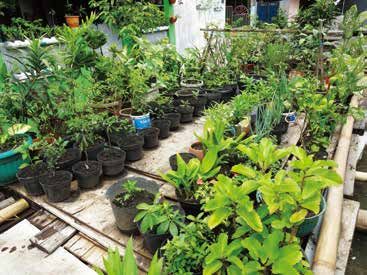
for gardening and farming or by the city’s landscaping department for greening of parks and
streets. Use of commercial fertilizers for landscaping public works can be replaced by the
compost and hence contribute to saving the city budget.

                                                                                                 40
The compost could also be used effectively as a tool to incentivise source separation. For example, providing free compost to household, schools, and/or other social entities as a reward for contribution to source separation and/or other green activities could increase awareness and can motivate more communities to participate. When there are more than enough compost production for self-consumption and reward purposes, extended use and distribution of compost could be explored. Bilateral contracts could be exchanged between the city and some reliable entities that require large amount of organic fertilizer and are willing to contribute to the city’s greening efforts. In exchange for accepting the compost at a reasonable price, the city could provide certificates to recognize the entity’s social contribution. The entity can then use the certificate to increase their corporate image and further enhance corporate responsibility. As such, it is expected that the reliability and branding of compost will increase. 41
8. Use and Distribution of Compost

                               42
Acknowledgement This manual was prepared as part of capacity building activities in the “Waste Management Support Project Toward a Sustainable Resource Recycling Society in Bandung, Indonesia”, a city-to-city collaboration project between Kawasaki city and Bandung city, funded by Japan International Cooperation Agency (JICA)’s Grassroots Project during 2017-2020. We would like to especially thank the Department of Environment and Hygiene (DLHK) of Bandung City who led and supported this initiative; facilitators of Kawasan Bebas Sampah (KBS) for encouraging and assisting the communities to separate waste at source; and all the community members in the six targeted communities (Balonggede RT03 RW 06, Gempolsari RT 04 RW 04, Cibangkong RT02 – RW1, Mengger RT6 - RW1, Batununggal Cluster Permai, and Batununggal Cluster Jelita) who contributed in the source separation of waste which were used in the compost centre at the Babakansari TPS-3R. References Koji Takakura (2019) Basic theory of composting – Improving waste management using Takakura Composting Method. https://jica-net-library.jica.go.jp/ [ 髙倉弘二(2019)コンポストの基本理論~高倉式コンポストを活用して廃棄物マネジメントの改 善を目指す~.https://jica-net-library.jica.go.jp/] Takakura Environment Research Institute (2018) Composting Manual - Let’s Start Organic Composting. Institute for Global Environmental Strategies. Shunrokuro Fujiwara (2003) How to make and use compost – From theory to practices. Rural Culture Association Japan. [ 藤原俊六郎(2003)堆肥のつくり方・使い方 原理から実際まで. 農山漁村文化協会.] 43
ANNEX

ANNEX
Based on various field testing and feedback in many cities, methods for small-to-medium size
compost centre using the Takakura composting method could be divided into following four
types depending on the amount of organic waste input, availability of space for processing,
and other conditions. The types described in the main text of this manual is an applied version
of the rotation input type. All types can be flexibly adjusted to various conditions, therefore,
there is no definitive rule on which type should be used under which circumstances.

3RT (rukun tentangga): Neighbourhood association; Lowest level administrative hierarchy for local governance in Indonesia
which typically consists of 30-50 households
4RW (rukun warga): Community association; Administrative hierarchy above RT for local governance in Indonesia which
typically consists of 100-150 households
5Kelurahan: Administrative villages under the sub-districts (kecamatan) for local governance in Indonesia which typically
consists of 500-1,000 households

                                                                                                                      44
TYPE 1: Continuous input A pile of seed compost with a size of 1 m3 will be prepared and 30 kg/day (Max: 50 kg/day) of organic waste will be continuously added and stirred daily. After 1 month, an excess amount of compost can be extracted, leaving behind 1 m3 for continuous use as a seed compost. The extracted compost will mature for about 2 weeks (frequency of stirring can be reduced to once per 2-3 days). 45
ANNEX

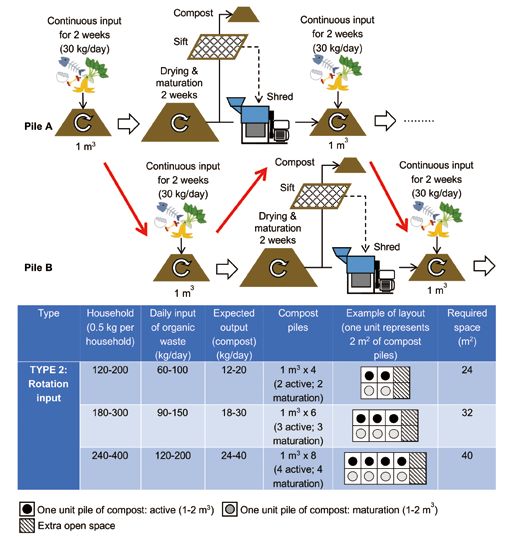
TYPE 2: Rotation input
This is a modified version of TYPE 1 (Continuous input). Two sets of seed compost piles with
a size of 1 m3 will be prepared. First, 30 kg/day (Max: 50 kg/day) of organic waste will be
added and stirred continuously in one pile (Pile A) for 2 weeks. Then, stop adding waste and
compost will mature, while start to add waste to another pile (Pile B). After 2 weeks of drying
and maturation (frequency of stirring to be reduced to once per 2-3 days), excess amount of
compost will be extracted and shredded, leaving behind 1 m3 for continuously adding waste.
As such, adding waste and maturation will take place alternately between the two piles.

                                                                                             46
TYPE 3: Batch A compost pile with a size of 1 m3 will be mixed with organic waste of about 1 m3 (about 500 kg). This 2 m3 pile will be mixed everyday for 1 week without any additional input of waste. After that, the frequency of stirring can be reduced to once per 2-3 days for the next two weeks. During the process, organic materials will be decomposed and excess moisture will evaporate, thus the volume of compost bed will gradually decrease. After 3 weeks, part of the compost will be shredded and sifted for compost use, and the remaining 1 m3 will be returned to the process as seed compost to be mixed again with fresh organic waste. 47
ANNEX

TYPE 4: Container
When the space is limited and/or there is a specific need for flexibly moving the location,
a method using a plastic container may be introduced. The same volume of compost and
organic waste (1 : 1) will be mixed, and put into mesh containers (40 L) covered with a cloth
for preventing compost leaking and attracting flies. After stirring the contents of containers
for three weeks, sift the compost for use and the remaining 1 m3 will be shredded and
returned to the process as a seed compost to be mixed again with a fresh organic waste. For
ease of operation, opening up the contents to an empty container will have a same effect
as stirring. Due to good ventilation in a mesh container, fermentation and drying can be
enhanced, and therefore the frequency of stirring of compost could be reduced to once per
2-3 days, or even be omitted.

                          Fermentation for 3
                         weeks (no waste input)

                                                                                            48
Institute for Global Environmental Strategies ( IGES ) 2108 - 11, Kamiyamaguchi, Hayama, Kanagawa, 240 - 0115, Japan https://iges.or.jp/
You can also read


