Regulative Mechanism of Guanidinoacetic Acid on Skeletal Muscle Development and Its Application Prospects in Animal Husbandry: A Review
←
→
Page content transcription
If your browser does not render page correctly, please read the page content below
REVIEW
                                                                                                                                             published: 12 August 2021
                                                                                                                                        doi: 10.3389/fnut.2021.714567

                                               Regulative Mechanism of
                                               Guanidinoacetic Acid on Skeletal
                                               Muscle Development and Its
                                               Application Prospects in Animal
                                               Husbandry: A Review
                                               Zhaoming Yan 1 , Zhaoyue Yan 2 , Shuangli Liu 1 , Yunju Yin 1 , Tai Yang 1 and Qinghua Chen 1*
                                               1
                                                College of Animal Science and Technology, Hunan Agricultural University, Changsha, China, 2 Chemistry Department,
                                               University of Liverpool, Liverpool, United Kingdom

                                               Guanidinoacetic acid is the direct precursor of creatine and its phosphorylated derivative
                                               phosphocreatine in the body. It is a safe nutritional supplement that can be used
                                               to promote muscle growth and development. Improving the growth performance of
                                               livestock and poultry and meat quality is the eternal goal of the animal husbandry, and
                                               it is also the common demand of today’s society and consumers. A large number
                                               of experimental studies have shown that guanidinoacetic acid could improve the
                             Edited by:
                                               growth performance of animals, promote muscle development and improve the health
                           Marcello Iriti,
                University of Milan, Italy     of animals. However, the mechanism of how it affects muscle development needs
                        Reviewed by:           to be further elucidated. This article discusses the physical and chemical properties
                 Giuseppe Annunziata,          of guanidinoacetic acid and its synthesis pathway, explores its mechanism of how
  University of Naples Federico II, Italy
              Tatiana Carlesso Santos,         it promotes muscle development and growth, and also classifies and summarizes
    State University of Maringá, Brazil        the impact of its application in animal husbandry, providing a scientific basis for this
                   *Correspondence:            application. In addition, this article also proposes future directions for the development
                        Qinghua Chen
                                               of this substance.
                   chqh314@163.com
                                               Keywords: guanidinoacetic acid, creatine, muscle development, gene regulate, livestock and poultry
                    Specialty section:
          This article was submitted to
                        Food Chemistry,        INTRODUCTION
                a section of the journal
                    Frontiers in Nutrition     The body composition of mammals includes skin, muscle, fat and bones, among which the
            Received: 25 May 2021              proportion of skeletal muscle is more than 40%, making it the largest organ in the body. In addition
            Accepted: 22 July 2021             to maintaining exercise capacity, body balance and respiratory function, skeletal muscle also acts
          Published: 12 August 2021            as an endocrine organ to secrete a variety of cytokines to mediate the interaction between cells and
                              Citation:        perform diverse biological functions (1, 2).
Yan Z, Yan Z, Liu S, Yin Y, Yang T and            The basic functional unit of skeletal muscle is myofiber, and its development is closely related
Chen Q (2021) Regulative Mechanism             to the identification and differentiation of myoblasts (3). The amount of protein consisted in
  of Guanidinoacetic Acid on Skeletal
                                               myofibers is about 50–75% of the total amount of protein in the animal body. Under normal
         Muscle Development and Its
      Application Prospects in Animal
                                               physiological conditions, the protein synthesis and degradation rates of myofibers are in a
                Husbandry: A Review.           relatively balanced state. When the state is out of balance, the efficiency of protein synthesis
                Front. Nutr. 8:714567.         is higher than degradation, an overall outcome of increased muscle mass will be shown. No
      doi: 10.3389/fnut.2021.714567            matter humans or animals, there are many factors that may disturb the equilibrium of the state,

Frontiers in Nutrition | www.frontiersin.org                                         1                                          August 2021 | Volume 8 | Article 714567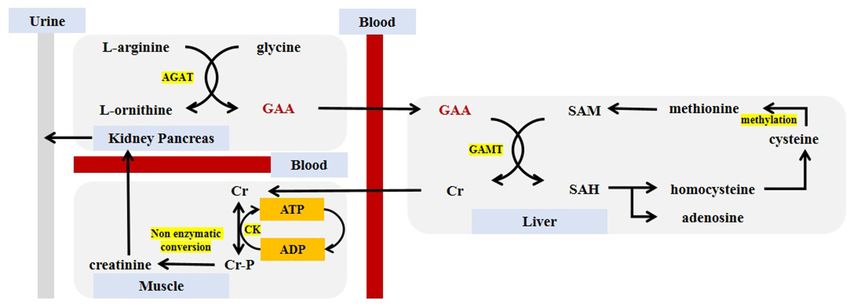
Yan et al.                                                                                           Guanidinoacetic Acid Promotes Muscle Development

including nutrition regulation, exogenous nutrient intervention,
and regular exercise. The method of exogenous nutrient
intervention has gradually grabbed increasingly attention in this
field (4).
    It is well-known that guanidinoacetic acid (GAA) could be
used as a nutritional supplement to promote muscle development
and increase the body’s energy reserves. Human dietary
supplementation with GAA helps to increase muscle strength                 FIGURE 1 | The structure formula of guanidinoacetic acid (GAA).
and endurance, and enhance athletic performance and release
fatigue (5). Currently, creatine (Cr) and its precursor GAA have
also been used in medical research for the treatment of muscle
atrophy and neurodegenerative diseases (6). Furthermore, with             exogenous intake of Cr supplementation is not recommended to
the continuous improvement of people’s living standards, the              somebody who has already been diagnosed with kidney disease
dietary structure has undergone significant changes, and the              (17). Other studies have also shown that Cr supplementation can
demand for meat product shifted from being quantity-satisfying            weaken the excitatory of parasympathetic nerve of the heart, and
to quality-ensuring. Therefore, improving the quality of meat             the autonomic dysfunction may arise in even severe cases (18).
products is an important task of today’s animal husbandry (7, 8).         However, in the process of livestock and poultry breeding, these
The addition of GAA in animal diets helps to delay the rate of            substances are used to improve animal-growth performance and
glycolysis on the basis of increasing muscle production so that           facilitate their muscle development and accumulation.
the meat quality could be improved (9, 10). However, at present,
the mechanism of GAA in promoting myofiber development and
growth has not been fully elucidated. This article reviews the            SYNTHESIS AND METABOLISM OF
physical and chemical properties, mode of action, application             GUANIDINOACETIC ACID
effects and prospective development of GAA. It is expected to
provide a theoretical basis for the application of GAA in human           GAA is a precursor of Cr, an important compound in high-
health and animal husbandry production.                                   energy phosphate bioenergetics. Its synthesis in the body
                                                                          mainly occurs in the kidneys, it is also synthesized in
                                                                          other tissues such as the pancreas, liver, and muscle (19).
PROPERTIES OF GUANIDINOACETIC ACID                                        The latest research hypothesized that the bacterial flora in
                                                                          the healthy gut can accelerate the synthesis of GAA by
GAA is an immediate precursor substance of Cr and its                     secreting enzyme guanidinoacetase (synthesis and hydrolysis
phosphorylated derivative (phosphocreatine, Cr-P) synthesized             occur simultaneously, synthesis > hydrolysis). If this hypothesis
in the body of animals (11). It was first isolated from the urine         is verified, then there’s a valid connection between the synthesis
of humans and dogs. Cr accepts pyrophosphate from adenosine               of GAA and microorganisms biological functions (20).
triphosphate (ATP) and reversibly form Cr-P. Cr and Cr-P form                 Generally speaking, the synthesis of GAA requires the
a creatine pool together, which plays a key role in the process           presence of glycine and L-arginine. Under the catalysis of L-
of energy storage and utilization. As an energy transporter, Cr           arginine:glycine amidinotransferase (AGAT), the two undergo
has higher mobility than ATP (12, 13). About 70 years ago,                amidino transfer to produce L-ornithine and GAA. GAA travels
medical scientists managed to use GAA to treat human metabolic            to the liver by the blood circulation through the portal vein,
disorders and improve the working ability of manual workers,              which sets the basis for the further formation of Cr. The
which directly proved that GAA has the effect in assisting the            source of GAA in the body comes from endogenous synthesis
treatment of certain diseases (14).                                       and food supplementation (negligible, 10 mg/kg of meat),
    With the progress of research, the physico-chemical properties        while the consumption of GAA is caused by the synthesis
of GAA have been analyzed in detail. Industrial GAA usually               of Cr and excretion by urine. The aim is to keep the GAA
appears as white or off-white crystalline powder without pungent          content stable at 2.6 ± 0.8 umol/L, which also constituted
odor. The chemical formula is C3 H7 N3 O2 (relative molecular             a theoretical model of GAA homeostasis (21). In the next
mass = 117.11 g/mol), and the structural formula is shown                 step, GAA and S-adenosyl-methionine (SAM) catalyzed by
in Figure 1. When the sample temperature reaches 190◦ C, the              guanidinoacetate N-methyltransferase (GAMT), in which GAA
chemical structure of GAA undergoes thermal decomposition,                combined with a methyl group to generate Cr, and released S-
and the crystal melts as the temperature rises above 284◦ C.              adenosyl-homocysteine (SAH) at meantime. This process mainly
GAA has a high degree of stability in water, and the shelf life           occurred in the liver, but also in the skeletal muscle, spleen, brain
can be as long as 2 years, which also makes GAA more widely               and genital organs (22). Finally, Cr is released into the blood
used than Cr (15).                                                        circulation and entered the cell through a specific transporter
    The safety of GAA and Cr have been verified, and they have            SLC6A8 (a Na+ /Cl− creatine co-transporter) located on the cell
entered the public eyes as health care products and are favored by        membrane (23). Since Cr can regulate the expression of AGAT
bodybuilders (16). Short or long-term intake of Cr will not harm          through a counter-regulatory mechanism but cannot counter-
kidney function or increase the risk of getting kidney disease, but       regulate the expression of GAMT, the synthesis order of GAA

Frontiers in Nutrition | www.frontiersin.org                          2                                          August 2021 | Volume 8 | Article 714567
Yan et al. Guanidinoacetic Acid Promotes Muscle Development
FIGURE 2 | Guanidinoacetic acid synthesis and metabolism. GAA, guanidinoacetic acid; Cr, creatine; Cr-P, phosphocreatine; SAM, S-adenosyl-methionine; SAH,
S-adenosyl-homocysteine; AGAT, L-arginine:glycine amidinotransferase; GAMT, guanidinoacetate N-methyltransferase; CK, creatine kinase; ATP, adenosine
triphosphate; ADP, adenosine diphosphate.
and Cr cannot be reversed (24). In cells, Cr and ATP undergo two types of skeletal muscles are also found in invertebrates
a reversible reaction with the catalysis of creatine kinase (CK) such as octopuses and crabs (30). Myofibers are cell units
to generate Cr-P and adenosine diphosphate (ADP) for energy that make up muscle tissues and gather into hundles, while
storage (25). The body continues to metabolize Cr and Cr-p, multiple muscle bundles gather to form muscles. In addition,
and about 1.7% of them are metabolized into the final product— the composition of myofibrils includes thin actin filaments
creatinine, which is transported from the blood to the kidneys and thick myosin filaments which are composed of specific
and is completely filtered by the glomerulus, and is excreted proteins (responsible for muscle contraction) and arranged
in the urine. It is an important indicator of kidney function regularly in the sarcoplasm (3). Based on the metabolic
testing and is also commonly used to diagnosis of certain capacity and contractility of myofibers, it can be summarized as
kidney diseases (26). The SAH produced during Cr production aerobic metabolism myofibers (type I myofibers) and glycolytic
can be reversibly hydrolyzed to homocysteine and adenosine. metabolism myofibers (type II myofibers, including IIa, IIb, IIx).
Homocysteine is further decomposed into cysteine, which Type I myofibers are rich in myoglobin and cytochromes showing
undergo the methylation reaction with its own methyl donors a brighter red color but have a slow contraction speed, while
such as vitamin B. The methionine was formed by methylation, type II myofibers contract fast and appear white, among all types
and then participates in the synthesis of Cr again (19). of type II myofibers, the type IIb has the fastest contraction
Figure 2 describes the synthesis and metabolism of GAA speed (31).
in detail.
Skeletal Muscle Development
THE REGULATION OF GUANIDINOACETIC A large number of studies have shown that the development
ACID ON SKELETAL MUSCLE of skeletal muscle includes the following four processes: the
DEVELOPMENT differentiation of amniotic mesoderm stem cells (32) to generate
myoblasts, the differentiation and fusion of myoblasts to generate
Skeletal Muscle Classification and myotubes, the formation of myofibers, and the maturation of
Structure myofibers (33). The number of myofibers in humans and animals
Taking the difference in biological function and structural has been determined before birth, but the expansion of their
composition as the classification basis, muscle tissue can be volume and the transformation of the types of myofiber depends
divided into two types: striated muscle and smooth muscle on acquired comprehensive factors (34). In the process of skeletal
(27). Smooth muscle is mainly distributed in blood vessel walls, muscle formation, the primary and secondary myotubes occur
respiratory tract, digestive tract and other internal organs. It is at different developmental stages (35). Primary myotubes are
an uncontrollable type of muscle regulated by autonomic nerves formed during the embryonic period and the number is closely
(28). The striated muscle is composed of skeletal muscle and related to genetic factors. The secondary myotubes begin to
myocardium. It is named because of the light and dark stripes develop in the fetal period, and the nutritional regulation during
that can be observed under the microscope, and the striated maternal pregnancy can significantly affect the development of
muscle are dually innervated by consciousness and the nervous muscle fibers (36–38). In addition, since the secondary myotube
system (29). grows around the primary myotube, the larger the diameter of
Skeletal muscles are also divided into fast muscles and slow the primary myotube, the more secondary myotubes can grow
muscles, and this classification is not limited to vertebrates. These around it (39). Some research have shown that the development
Frontiers in Nutrition | www.frontiersin.org 3 August 2021 | Volume 8 | Article 714567Yan et al. Guanidinoacetic Acid Promotes Muscle Development
of primary myotubes eventually generated slow-twitch fibers, but of Pax include regulating the behavior of myogenic progenitor
the secondary myotubes generated fast-twitch fibers (40). cells and the formation of skeletal muscle. Pax3 plays a dominant
After the fetus is born, the myofibers gradually mature. At role in the above processes. The lack of Pax3 has caused the early
this time, muscle growth only depends on the changes in the embryonic development to be restricted, and impaired muscle
volume of muscle fiber and the transformation between different regeneration in the later period (53, 54). And Pax3 can directly
types of muscle fiber (41). The reason for the increase in muscle regulate the expression of MyoD and Myf5, and indirectly act in
fiber volume is related to the proliferation and differentiation of the differentiation process of myogenic cells (55, 56). In contrast,
muscle satellite cells, which are muscle-derived stem cells that Pax7-missing led to slower muscle development, reduction of the
are normally in a resting state but have differentiation potential amount of muscle tissue, whereas there is no pathological change
(42). The reason for the increase in muscle fiber volume is related in the structure (57).
to the proliferation and differentiation of muscle satellite cells, Myostatin (MSTN) is an important member of transforming
which are muscle-derived stem cells that are normally in a resting growth factor superfamily, also known as growth differentiation
state but have differentiation potential (42). The muscle satellite factor-8 (GDF-8), which is mainly manifested in the negative
cells exist widely between the muscle cell membrane and the regulation of muscle growth and strength increase (58). MSTN
matrix membrane, and have the biological function of promoting can activate receptor function by binding to ALK4/5 and
myomuscle regeneration after being activated (43, 44). Moreover, ActR2A/B type receptors on the surface of muscle cells, and lead
myofiber are a type of multinucleated cells (nuclei can reach to the function of promoting protein degradation and inhibiting
several hundred), and each nucleus only controls certain part protein synthesis in muscle (59). Specifically, the mature MSTN
of the cytoplasm, referred to as myonucleus area (each cell fragment first binds to type II receptor (mainly ActRIIB) and
nucleus and controlled cytoplasm are called a DNA unit). Satellite starts the signal cascade in muscle cells, which makes ActRIIB
cells also have the ability to increase the number of myofiber autophosphorylate and bind to type I receptor (ALK4 and ALK5)
nuclei to maintain the balance of the ratio between nucleus and with low affinity to enhance the transcription process of target
cytoplasm (45). gene (60). In addition, MSTN can also inhibit the expression
of protein kinase B (AKT) and the transcriptional activity of
MyoD, and may lead to muscle atrophy and other diseases
Guanidinoacetic Acid Regulates Genes (61). However, the missing of MSTN or gene homozygous
Involved in Skeletal Muscle Development mutation result in abnormal accumulation of muscle mass and
In eukaryotes, differences in gene expression are the root cause proliferation of myofibers (62). In the research field of skeletal
of differences between individuals, gene expression is controlled muscle growth and development, MSTN is recognized as a
at different stages of individual development and is affected negative regulator with important physiological functions (63).
by many factors (46). There are many genes that regulate the GAA and its metabolite Cr have the effect of down-regulating
development of skeletal muscle, among which the myogenic the expression of MSTN and eliminating its inhibitory effect on
regulatory factors (MRFs) plays an important role in the growth muscle growth (64).
of skeletal muscle. It mainly includes four specific transcription Myocyte enhancer factor 2 (MEF2) gene family is another
factors, myogenic determining factor (MyoD), myogenic factor- gene family in the body that can directly regulate skeletal
5 (Myf5), myogenin (Myog), and muscle regulatory factor-4 muscle development in addition to the MRFs gene family. It
(MRF4 or Myf6). The expression of MyoD and Myf5 contributed is composed of four genes (65), MEF2a, MEF2b, MEF2c, and
to the directed differentiation of myogenic cells, while Myog and MEF2d, and is highly expressed in myoblasts. It functions mainly
MRF4 performed their functions in the differentiation process by recognizing a conserved A/T-rich elements in genes (66).
of myoblasts. It shows that different genes are expressed in the MEF2c and Myog co-stimulate MyoD expression to activate
sequence of time during muscle development (47, 48). There are the differentiation process of myoblasts (67, 68). Exogenous
few molecular studies of GAA on muscle growth. We can explain Cr supplementation helps the expression of MEF2 to improve
the effect of GAA on muscle growth from its metabolite Cr. muscle growth (69).
CR supplementation can improve the expression of MRFs, In addition, some scholars have found that peroxisome
especially in young individuals, but this effect gradually decreases proliferator-activated receptor gamma coactivator 1α
with the increase of age (49). After treating C2C12 myoblasts (PGC-1α) can increase the accumulation of skeletal muscle
with Cr, it was found that although the degree of influences on during exercise and regulate the transcription of some
the expression of MyoD, Myf5, Myog, and MRF4 genes were target genes (70).
different, they were all positive (50). Moreover, some studies MicroRNA (miRNA) is a very conservative non-protein
have shown that Myf5, MyoD, or MRF4 inactivation can produce coding RNA that can directly degrade target gene mRNA or
viable mice, but the absence of Myog causes the mice to die after inhibit its translation. It plays a key role as a post-transcriptional
birth (51). regulator in myogenesis (71). GAA induced the activation of
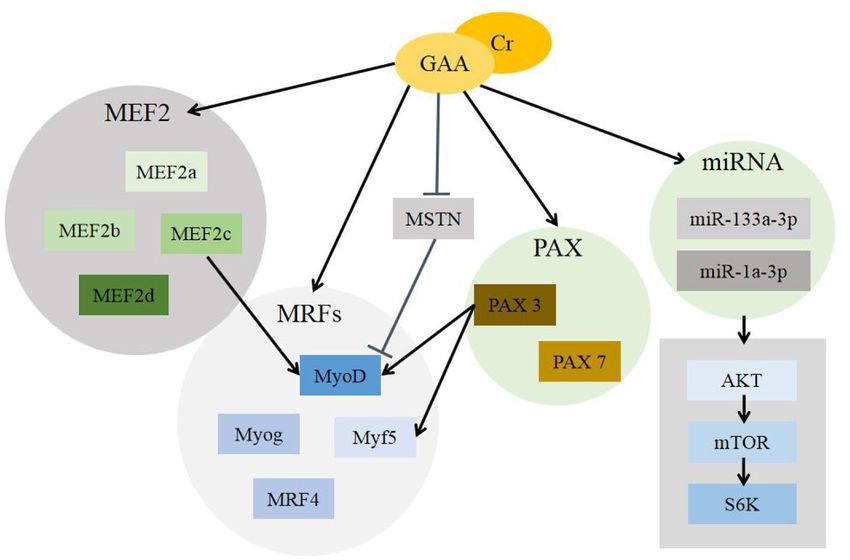
Pax gene family is involved in all stages of muscle cell growth AKT/mTOR/S6K signaling pathway through miR-133a-3p and
and differentiation, mainly including Pax3 and Pax7 (52). Pax miR-1a-3p to promote myoblast differentiation (72).
gene family is involved in various stages of muscle cell growth Figure 3 describes the pathways regulated by GAA/Cr during
and differentiation, including Pax3 and Pax7. The main functions their skeletal muscle development and growth.
Frontiers in Nutrition | www.frontiersin.org 4 August 2021 | Volume 8 | Article 714567Yan et al. Guanidinoacetic Acid Promotes Muscle Development
FIGURE 3 | Mechanisms of GAA/Cr promoting skeletal muscle development and growth. GAA, guanidinoacetic acid; Cr, creatine; MEF2, myocyte enhancer factor 2
(includes MEF2a, MEF2b, MEF2c and MEF2d); MRFs, myogenic regulatory factors (includes MyoD, Myog, Myf5, MRF4); MSTN, Myostatin; PAX, Pax gene family
(includes Pax3 and Pax7); miRNA, MicroRNA (includes miR-133a-3p and miR-1a-3p); AKT, protein kinase B; mTOR, mammalian target of rapamycin; S6K, S6 kinase.
APPLICATION OF GUANIDINOACETIC P38 and Akt/PKB cell pathways, which is manifested by the
ACID IN ANIMAL MODELS expression of myosin heavy chain type II, the increase in the
number of nuclei in the myotube, and promote the occurrence
Since researchers recognized the importance of Cr for muscle of the cell fusion process (75).
development, many studies have been carried out to evaluate Returning to the perspective of animal husbandry and
the effects of different amino acids and other substances on nutrition. With the development of the global economy and the
endogenous Cr metabolism. Researches added 1 g of GAA to continuous improvement of consumption levels, human being
the diet of the young rats in 1930s, and they found that the to pay more and more attention to the nutritional balance of
Cr level was increased by nearly 50% which reached the peak daily diet (76). Due to the demand for high-quality protein,
after 17–24 h. This effect was even higher than adding the the demand for high-quality meat is also increasing. Therefore,
equivalent amount of Cr (73). Vivo experiments proved that enhancing the amount and speed of muscle accumulation
when the mouse body lacks Cr, GAA can provide energy for in livestock and poultry is the most crucial section in the
the body under the catalysis of CK. It also shows that CK development of animal husbandry (77).
can use GAA and go through the phosphorylation pathway In addition to affecting the growth of muscles, the content
to fight against energy damage (24, 74). And the main reason of Cr in the animal body can also maintain the steady state of
why Cr contributes to the synthesis of muscle tissue protein, ATP and buffer the accumulation of lactic acid in the muscles
improves muscle energy reserves and muscle strength is that (78), and improve meat quality. The methods for animals to
it’s synthesized with the precursor substance GAA. As a obtain Cr can be categorized as endogenous and exogenous. The
supplement to the aforementioned regulation of genes related endogenous method mainly generates GAA through arginine
to skeletal muscle development, GAA and Cr also functions by and glycine, and then synthesizes Cr with methionine in the liver,
promoting the secretion of insulin-like growth factor-1 (IGF- but this does not meet the animals’ needs (79). Exogenous Cr
1) and growth hormone (GH) in the body (both IGF-1 and sources mainly include animal protein raw materials (meat and
GH are anabolic hormones that can increase muscle growth) bone meal) and fish protein raw materials (fish meal) (80), while
(64). Vitro experiments have shown that GAA can promote the plant raw materials lack Cr or its precursor. Combined with the
expression of MyoD and MyoG mRNA and increase the fusion analysis of animal feed composition and nutritional level, it can
rate of myotubes in C2C12 myoblasts. It can also affect the be found that animals cannot get enough Cr. So they can only
level of total myosin heavy chain (MyHC) protein to increase synthesize Cr at the cost of consuming endogenous amino acids,
myotube thickness and gastrocnemius cross-section area (72). resulting in the loss of amino acids (81). Especially taking the
Another in vitro experiment demonstrated that Cr can activate application of methionine in poultry production as an example,
the differentiation process of C2C12 myoblasts by activating the methionine is the first limiting amino acid of poultry and is
Frontiers in Nutrition | www.frontiersin.org 5 August 2021 | Volume 8 | Article 714567Yan et al. Guanidinoacetic Acid Promotes Muscle Development
TABLE 1 | The results of using GAA or Cr in livestock production.
Experiment material Compound Observed effects References
Duroc × Landrace × Yorkshire pigs GAA ADG↑, ADFI↑, lean meat percentage↑, back fat thickness↓, MYH4↑, (87)
MyoD↑, Myf5↑, MSTN↓.
Yucatan miniature pigs GAA or Cr Liver: both can cause the Cr concentration↑. Muscle tissue: GAA can cause (82)
the Cr concentration↑.
Duroc × Landrace × Yorkshire pigs GAA Muscle tissue: Cr↑, ATP↑, carcass weight and lean meat percentage↑. (88)
Finishing pigs GAA or CMH Both can cause the Cr↑, Cr-p↑, creatine transporter mRNA↑, myofibrillar (89)
protein solubility↑.
Duroc × Landrace × Large White GAA or GAA+betaine Meat quality↑, Cr↑, Cr-P↑, ATP↑, CK↑, creatine transporter mRNA↑. (90)
male pigs
Finishing pigs CMH Drip loss↓, meat color L*↑. (91)
Male Ross 708 chicks GAA Serum Cr↑, muscle Cr-P↑, glycogen↑, growth performance↑, muscle (92)
energy stores↑.
Male Ross 308 chicks GAA Weight gain↑, FCR↑, Heart and breast muscle ATP/AMP ratio↑. (93)
Broiler GAA Live weight↑, breast meat percentage↑, meat quality↑. (94)
Arbor Acres broiler CrPyr Live weight↑, breast meat weigh↑t, Cr↑, Cr-P↑, CK↑. (95)
Balady chicks CMH or CMH+Znic Live weight, weekly bodyweight gain, feed efficiency, carcass weight. (96)
CMH+Znic are better than CMH.
Mulard ducks GAA or GAA+Met Weight gain↑, IGF-1↑, GH↑, Myog↑, MSTN↓, GAA+Met better than GAA (97)
only.
ADG, the average daily gain; ADFI, the average daily feed intake; FCR, feed conversion ratio; GAA, guanidinoacetic acid; Cr, creatine; Cr-P, phosphocreatine; CMH, creatine monohydrate;
CrPyr, creatine pyruvate; Met, methionine; ATP, adenosine triphosphate; CK, creatine kinase; IGF-1, insulin-like growth factor-1; GH, growth hormone; MYH4, myosin heavy chain gene;
MyoD, myogenic determining factor; Myog, myogenin; MSTN, Myostatin. ↑up-regulation, ↓down-regulation, L*, lightness.
very beneficial to the growth of muscles and feathers, and the growth (99, 100). The safety of GAA as a dietary supplement
consumption of methionine in the process of Cr synthesis has was evaluated in the initial human studies, and subsequent
resulted in increased demand for methionine in poultry (82). clinical trials have also proved that GAA is a non-toxic and
Moreover, for young animals, arginine is an essential amino highly tolerable substance. Dietary GAA supplementation in
acid with growth promoting effect. Lack of arginine may easily humans leads to an increase in serum creatinine levels without
cause the slow growth of chicks, while adding GAA to arginine- impairment of renal function (15). Some studies also shown
deficient diets can significantly improve the growth performance that a small number of samples that take GAA will have an
of chicks. It is suggested that GAA can be a good substitute for enhancement of serum homocysteine. This might be a potential
dietary arginine (83). adverse effect, since hyperhomocysteinemia is considered as an
Using Cr as feed additive directly has problems of poor independent risk factor for cardiovascular and atherosclerotic
stability, high cost and low animal bioavailability. The use of GAA diseases (101). Exogenous intake of GAA mainly exhibits
will solve these problems (84). In addition, animals have a very antioxidant effects at low doses, while pro-oxidative effects and
high utilization efficiency of exogenous GAA. After experiments even oxidative stress appear at high doses (102). GAA is a kind
with colon-fistulated broilers, it was found that the digestibility- of pro-oxidant (103), but its metabolites such as Cr and arginine
rate of GAA reached 99% (85). GAA and its metabolite Cr all express anti-oxidant effects, so GAA is also regarded as an
not only improve animal growth performance and promote indirect antioxidant (104). However, the relationship between the
muscle growth, but also affect meat quality (10). It shows that level of GAA intake and the pro-oxidant-antioxidant properties
the drip loss of meat is reduced, the yellowness is increased, needs to be further elucidated.
and the activity of the free radical metabolism related enzymes
and the antioxidant enzymes (reducing lipid peroxidation) are PERSPECTIVES
improved (86).
Table 1 summarizes the results of using GAA or Cr in A large number of animal experiments and human clinical
livestock production. applications have proved that GAA has good effects in
Apart from synthesizing Cr to promote protein deposition improving muscle development and growth. Especially in animal
and muscle growth in the body, the apply of GAA also has the husbandry, it has been widely used, and has the advantages
effect of promoting insulin secretion to control blood glucose of low cost relative to Cr and arginine, and better growth
(98). Insulin is the only hormone in the body that plays a role promoting effect. However, the research on GAA are not very
in lowering blood glucose, and it is also the only hormone in-depth, directions such as its mechanism of promoting muscle
that contributes to glycogen, protein and fat synthesis. It links development, the determination of the effective dosage in animal
the regulatory effect of GAA intake on insulin with muscle production, and whether GAA has toxic effects or not have
Frontiers in Nutrition | www.frontiersin.org 6 August 2021 | Volume 8 | Article 714567Yan et al. Guanidinoacetic Acid Promotes Muscle Development
not been fully studied. Therefore, more detailed research work this study and wrote the manuscript. All authors have read and
are needed. approved the final manuscript.
AUTHOR CONTRIBUTIONS FUNDING
ZhaomY, ZhaoyY, and SL are the primary investigator in this This study was supported by Hunan
study. YY and TY are participated in literature collection and Province double first-class construction project
summary. ZhaoyY and QC revised the manuscript. QC designed (kxk201801004).
REFERENCES 17. Davani-Davari D, Karimzadeh I, Ezzatzadegan-Jahromi S, Sagheb MM.
Potential adverse effects of Creatine supplement on the kidney in athletes
1. Frontera WR, Ochala J. Skeletal muscle: a brief review of and bodybuilders. Iran J Kidney Dis. (2018) 12:253–60.
structure and function. Calcif Tissue Int. (2015) 96:183– 18. Mert K U, Ilgüy S, Dural M, Mert O, Ozakin E. Effects of creatine
95. doi: 10.1007/s00223-014-9915-y supplementation on cardiac autonomic functions in bodybuilders. Pacing
2. Schnyder S, Handschin C. Skeletal muscle as an endocrine Clin Electrophysiol. (2017) 40:721–7. doi: 10.1111/pace.13096
organ: PGC-1α, myokines and exercise. Bone. (2015) 80:115– 19. Edison EE, Brosnan ME, Meyer C, Brosnan JT. Creatine
25. doi: 10.1016/j.bone.2015.02.008 synthesis: production of guanidinoacetate by the rat and
3. Grefte S, Kuijpers-Jagtman AM, Torensma R, VondenHoff, JW. Skeletal human kidney in vivo. Am J Physiol Renal Physiol. (2007)
muscle development and regeneration. Stem Cells Dev. (2007) 16:857– 293:F1799–804. doi: 10.1152/ajprenal.00356.2007
68. doi: 10.1089/scd.2007.0058 20. Ostojic SM. Human gut microbiota as a source of guanidinoacetic acid. Med
4. Bongiovanni T, Genovesi F, Nemmer M, Carling C, Alberti G, Howatson Hypotheses. (2020) 142:109745. doi: 10.1016/j.mehy.2020.109745
G. Nutritional interventions for reducing the signs and symptoms of 21. Ostojic SM, Ratgeber L, Olah A, Betlehem J, Acs P. Guanidinoacetic
exercise-induced muscle damage and accelerate recovery in athletes: current acid deficiency: a new entity in clinical medicine?. Int J Med Sci. (2020)
knowledge, practical application and future perspectives. Eur J Appl Physiol. 17:2544. doi: 10.7150/ijms.47757
(2020) 120:1965–96. doi: 10.1007/s00421-020-04432-3 22. Nabuurs CI, Choe CU, Veltien A, Kan HE, van Loon LJC, Rodenburg
5. Ostojic SM, Premusz V, Nagy D, Acs P. Guanidinoacetic acid as RJT, et al. Disturbed energy metabolism and muscular dystrophy caused by
a novel food for skeletal muscle health. J Funct Foods. (2020) pure creatine deficiency are reversible by creatine intake. J Physiol. (2013)
73:104129. doi: 10.1016/j.jff.2020.104129 591:571–92. doi: 10.1113/jphysiol.2012.241760
6. Padilha CS, Cella PS, Salles LR, Deminice R. Oral creatine 23. Shi K, Zhao H, Xu S, Han H, Li W. Treatment efficacy of high-dose creatine
supplementation attenuates muscle loss caused by limb immobilization: supplementation in a child with creatine transporter (SLC6A8) deficiency.
a systematic review. Fisioterapia em Movimento. (2017) 30:831– Mol Genet Genomic Med. (2021) 9:e1640. doi: 10.1002/mgg3.1640
8. doi: 10.1590/1980-5918.030.004.ar01 24. Balestrino M, Adriano E. Presence of guanidinoacetate may compensate
7. Leroy F, De Smet S. Meat in the Human Diet: A Biosocial Perspective. More creatine absence and account for less statin-induced muscle damage in gamt-
than Beef, Pork and Chicken-The Production, Processing, and Quality Traits deficient compared to agat-deficient mice. Amino Acids. (2020) 52:667–
of Other Sources of Meat for Human Diet. Cham: Springer (2019). p. 1–19. 9. doi: 10.1007/s00726-020-02838-z
8. Yang C, Jiang X, Du H, Li Q, Zhang Z, Qiu M, et al. A review: 25. Marie, Joncquel-Chevalier, Curt, Pia-Manuela, Voicu, Monique, et al.
achievements and new obstacles in china’s food security revealed by grain Creatine biosynthesis and transport in health and disease. Biochimie. (2015)
and animal meat production. IOP Conf Series Earth Environ Sci. (2021) 119:146–65. doi: 10.1016/j.biochi.2015.10.022
705:012025. doi: 10.1088/1755-1315/705/1/012025 26. Post A, Tsikas D, Bakker S. Creatine is a conditionally essential nutrient
9. Zhang L, Li JL, Wang XF, Zhu XD, Gao F, Zhou GH. Attenuating effects in chronic kidney disease: a hypothesis and narrative literature review.
of guanidinoacetic acid on preslaughter transport-induced muscle energy Nutrients. (2019) 11:1044. doi: 10.3390/nu11051044
expenditure and rapid glycolysis of broilers. Poult Sci. (2019) 98:3223– 27. Steinmetz PRH, Kraus JEM, Larroux C, Hammel JU, Amon-Hassenzahl A,
32. doi: 10.3382/ps/pez052 Houliston E, et al. Independent evolution of striated muscles in cnidarians
10. Michiels J, Maertens L, Buyse J, Lemme A, Rademacher M, Dierick NA, and bilaterians. Nature. (2012) 487:231–4. doi: 10.1038/nature11180
et al. Supplementation of guanidinoacetic acid to broiler diets: effects on 28. Sanders KM, Ward SM, Koh SD. Interstitial cells: regulators
performance, carcass characteristics, meat quality, and energy metabolism. of smooth muscle function. Physiol Rev. (2014) 94:859–
Poult Sci. (2012) 91:402–12. doi: 10.3382/ps.2011-01585 907. doi: 10.1152/physrev.00037.2013
11. Bloch K, Schoenheimer R. The biological origin of the 29. Shadrin IY, Khodabukus A, Bursac N. Striated muscle function,
amidine group in creatine. J Biol Chem. (1940) 134:785– regeneration, and repair. Cell Mol Life Sci. (2016) 73:4175–
6. doi: 10.1016/S0021-9258(18)73239-0 202. doi: 10.1007/s00018-016-2285-z
12. Chen H, Zhang YHPJ. Enzymatic regeneration and conservation of 30. Ochiai Y, Ozawa H. Biochemical and physicochemical characteristics of
ATP: challenges and opportunities. Crit Rev Biotechnol. (2021) 41:16– the major muscle proteins from fish and shellfish. Fisheries Sci. (2020)
33. doi: 10.1080/07388551.2020.1826403 86:729–40. doi: 10.1007/s12562-020-01444-y
13. Ben-Sahra I, Puissant A. HER2 signaling hijacks the creatine 31. He J, Watkins S, Kelley DE. Skeletal muscle lipid content and oxidative
shuttle to fuel breast cancer cell growth. Cell Metab. (2018) enzyme activity in relation to muscle fiber type in type 2 diabetes and obesity.
28:805–7. doi: 10.1016/j.cmet.2018.11.009 Diabetes. (2001) 50:817–23. doi: 10.2337/diabetes.50.4.817
14. Borsook ME, Borsook H. Treatment of cardiac decompensation with betaine 32. Bryson-Richardson RJ, Currie PD. The genetics of vertebrate myogenesis.
and glycocyamine. Ann West Med Surg. (1951) 5:830–55. Nat Rev Genet. (2008) 9:632–46. doi: 10.1038/nrg2369
15. Ostojic SM. Guanidinoacetic acid as a performance-enhancing agent. Amino 33. Song T, Sadayappan S. Featured characteristics and pivotal roles of satellite
Acids. (2016) 48:1867–75. doi: 10.1007/s00726-015-2106-y cells in skeletal muscle regeneration. J Muscle Res Cell Motil. (2019) 41:341–
16. Smith RN, Agharkar AS, Gonzales EB. A review of creatine supplementation 53. doi: 10.1007/s10974-019-09553-7
in age-related diseases: more than a supplement for athletes. F1000Research. 34. Wigmore PM, Stickland NC. Muscle development in large and small pig
(2014) 3:222. doi: 10.12688/f1000research.5218.1 fetuses. J Anat. (1983) 137:235–45.
Frontiers in Nutrition | www.frontiersin.org 7 August 2021 | Volume 8 | Article 714567Yan et al. Guanidinoacetic Acid Promotes Muscle Development
35. Duxson MJ, Usson Y, Harris AJ. The origin of secondary myotubes in 55. Hernández-Hernández JM, García-González EG, Brun CE, Rudnicki MA.
mammalian skeletal muscles: ultrastructural studies. Development. (1989) The myogenic regulatory factors, determinants of muscle development,
107:743–50. doi: 10.1242/dev.107.4.743 cell identity and regeneration. Semin Cell Dev Biol. (2017) 72:10–
36. Zhang M, Mclennan IS. During secondary myotube formation, primary 8. doi: 10.1016/j.semcdb.2017.11.010
myotubes preferentially absorb new nuclei at their ends. Dev Dynam. (2010) 56. Daubas P, Buckingham ME. Direct molecular regulation of the myogenic
204:168–77. doi: 10.1002/aja.1002040207 determination gene Myf5 by Pax3, with modulation by Six1/4 factors,
37. Maley M, Davies MJ, Grounds MD. Extracellular matrix, growth factors, is exemplified by the-111 kb-Myf5 enhancer. Dev Biol. (2013) 76:236–
genetics: their influence on cell proliferation and myotube formation in 44. doi: 10.1016/j.ydbio.2013.01.028
primary cultures of adult mouse skeletal muscle. Exp Cell Res. (1995) 57. Florkowska A, Meszka I, Zawada M, Legutko D, Proszynski TJ, Janczyk-llach
219:169–79. doi: 10.1006/excr.1995.1217 K, et al. Pax7 as molecular switch regulating early and advanced stages of
38. Fiorotto ML, Davis TA. Critical windows for the programming effects of myogenic mouse ESC differentiation in teratomas. Stem Cell Res Ther. (2020)
early-life nutrition on skeletal muscle mass. Nestle Nutr Inst Workshop Ser. 11:1–18. doi: 10.1186/s13287-020-01742-3
(2018) 89:25–35. doi: 10.1159/000486490 58. Lee SJ. Regulation of muscle mass by myostatin. Annu Rev Cell Dev Biol.
39. Duxson MJ, Sheard PW. Formation of new myotubes occurs exclusively at (2004) 20:61–86. doi: 10.1146/annurev.cellbio.20.012103.135836
the multiple innervation zones of an embryonic large muscle. Dev Dynam. 59. Muramatsu H, Kuramochi T, Katada H, Ueyama A, Ruike Y, Ohmine K,
(1995) 204:391–405. doi: 10.1002/aja.1002040406 et al. Novel myostatin-specific antibody enhances muscle strength in muscle
40. Gros J, Scaal M, Marcelle C. A two-step mechanism for myotome formation disease models. Sci Rep. (2021) 11:1–16. doi: 10.1038/s41598-021-81669-8
in chick. Dev Cell. (2004) 6:875–82. doi: 10.1016/j.devcel.2004.05.006 60. Aiello D, Patel K, Lasagna E. The myostatin gene: an overview of mechanisms
41. Ren H, Li L, Su H, Xu L, Du L. Histological and transcriptome-wide of action and its relevance to livestock animals. Anim Genet. (2018) 49:505–
level characteristics of fetal myofiber hyperplasia during the second half 19. doi: 10.1111/age.12696
of gestation in Texel and Ujumqin sheep. BMC Genomics. (2011) 12:1– 61. Lee SJ, Reed LA, Davies MV, Girgenrath S, Goad ME, Tomkinson
18. doi: 10.1186/1471-2164-12-411 KN, et al. Regulation of muscle growth by multiple ligands signaling
42. Montecino F, González N, Blanco N, Ramírez MJ, Olguín H. c-Abl kinase is through activin type II receptors. Proc Nat Acad Sci. (2005) 102:18117–
required for satellite cell function through Pax7 regulation. Front Cell Dev 22. doi: 10.1073/pnas.0505996102
Biol. (2021) 9:606403. doi: 10.3389/fcell.2021.606403 62. Sharma M, Langley B, Bass J, Kambadur R. Myostatin in
43. Sambasivan R, Yao R, Kissenpfennig A, Van Wittenberghe L, Paldi A, muscle growth and repair. Exerc Sport Sci Rev. (2001) 29:155–
Gayraud-Morel B, et al. Pax7-expressing satellite cells are indispensable 8. doi: 10.1097/00003677-200110000-00004
for adult skeletal muscle regeneration. Development. (2011) 138:3647– 63. Ahad WA, Andrabi M, Beigh SA, Bhat RA, Shah RA.
56. doi: 10.1242/dev.067587 Applications of myostatin (MSTN) gene in the livestock animals
44. Lepper C, Partridge TA, Fan CM. An absolute requirement for Pax7- and humans: a review. Int J Curr Microbiol Appl Sci. (2017)
positive satellite cells in acute injury-induced skeletal muscle regeneration. 6:1807–11. doi: 10.20546/ijcmas.2017.609.222
Development. (2011) 138:3639–46. doi: 10.1242/dev.067595 64. Farshidfar FA Pinder MB Myrie S. Creatine supplementation and
45. Cramer AAW, Prasad V, Eftestøl E, Song T, Hansson KA, Dugdale HF, skeletal muscle metabolism for building muscle mass-review of the
et al. Nuclear numbers in syncytial muscle fibers promote size but limit potential mechanisms of action. Curr Protein Peptide Sci. (2017) 18:1273–
the development of larger myonuclear domains. Nat Commun. (2020) 11:1– 87. doi: 10.2174/1389203718666170606105108
14. doi: 10.1038/s41467-020-20058-7 65. Chen Z, Wang Q, Zhang H, Ma X, Wu W, Cheng N, et al.
46. Cipriano A, Ballarino M. The ever-evolving concept of the gene: the use Purification, crystallization, and X-ray diffraction analysis of myocyte
of RNA/protein experimental techniques to understand genome functions. enhancer factor 2D and DNA complex. Protein Expr Purif. (2021)
Front Mol Biosci. (2018) 5:20. doi: 10.3389/fmolb.2018.00020 179:105788. doi: 10.1016/j.pep.2020.105788
47. Kim K, Kim D, Min Y, Jeong D, Son YO, Do K. Myogenic regulatory factors 66. Shi Y, Mao X, Cai M, Hu S, Lai X, Chen S, et al. miR-194-
are key players in determining muscle mass and meat quality in Jeju native 5p negatively regulates the proliferation and differentiation of
and Berkshire pigs. Vet Med Sci. (2021) 7:735–45. doi: 10.1002/vms3.418 rabbit skeletal muscle satellite cells. Mol Cell Biochem. (2021)
48. Zammit PS. Function of the myogenic regulatory factors Myf5, 476:425–33. doi: 10.1007/s11010-020-03918-0
MyoD, Myogenin and MRF4 in skeletal muscle, satellite cells 67. Mohammadabadi M, Bordbar F, Jensen J, Du M, Guo W. Key genes
and regenerative myogenesis. Semin Cell Dev Biol. (2017) regulating skeletal muscle development and growth in farm animals.
72:19–32. doi: 10.1016/j.semcdb.2017.11.011 Animals. (2021) 11:835. doi: 10.3390/ani11030835
49. Candow DG, Forbes SC, Chilibeck PD, Cornish SM, Antonio J, Kreider 68. Arnold HH, Winter B. Muscle differentiation: more complexity to the
RB. Variables influencing the effectiveness of creatine supplementation network of myogenic regulators. Curr Opin Genet Dev. (1998) 8:539–
as a therapeutic intervention for sarcopenia. Front Nutr. (2019) 44. doi: 10.1016/S0959-437X(98)80008-7
6:124. doi: 10.3389/fnut.2019.00124 69. Ju JS, Smith JL, Oppelt PJ, Fisher JS. Creatine feeding increases GLUT4
50. Louis M, Van Beneden R, Dehoux M, Thissen JP, Francaux M. expression in rat skeletal muscle. Am J Physiol Endocrinol Metabol. (2005)
Creatine increases IGF-I and myogenic regulatory factor mRNA in 288:E347–52. doi: 10.1152/ajpendo.00238.2004
C2C12 cells. FEBS Lett. (2004) 557:243–7. doi: 10.1016/S0014-5793(03)0 70. Sugimoto T, Uchitomi R, Hatazawa Y, Miura S, Kamei Y.
1504-7 Metabolomic analysis on blood of transgenic mice overexpressing
51. Knapp JR, Davie JK, Myer A, Meadows E, Olson EN, Klein WH. Loss of PGC-1α in skeletal muscle. Biosci Biotechnol Biochem. (2021)
myogenin in postnatal life leads to normal skeletal muscle but reduced body 85:579–86. doi: 10.1093/bbb/zbaa059
size. Development. (2006) 133:601–10. doi: 10.1242/dev.02249 71. Mok GF, Lozano-Velasco E, Münsterberg A. microRNAs in
52. Thompson B, Davidson EA, Liu W, Nebert DW, Bruford EA, Zhao H, skeletal muscle development. Semin Cell Dev Biol. (2017)
et al. Overview of PAX gene family: analysis of human tissue-specific variant 72:67–76. doi: 10.1016/j.semcdb.2017.10.032
expression and involvement in human disease. Hum Genet. (2020) 140:381– 72. Wang Y, Ma J, Qiu W, Zhang J, Feng S, Zhou X, et al. Guanidinoacetic acid
400. doi: 10.1007/s00439-020-02212-9 regulates myogenic differentiation and muscle growth through miR-133a-3p
53. Kim HK, Ankamreddy H, Lee DJ, Kong KA, Ko HW, Kim MH, and miR-1a-3p co-mediated Akt/mTOR/S6K signaling pathway. Int J Mol
et al. Pax3 function is required specifically for inner ear structures Sci. (2018) 19:2837. doi: 10.3390/ijms19092837
with melanogenic fates. Biochem Biophys Res Commun. (2014) 445:608– 73. Beard HH, Barnes BO. The influence of feeding proteins, amino acids,
14. doi: 10.1016/j.bbrc.2014.02.047 and related substances upon creatine-creatinine metabolism. J Biol Chem.
54. Manandhar D. Methods for Comparative Analysis of Chromatin Accessibility (1931) 94:49–69.
and Gene Expression, with Applications to Cellular Reprogramming. Durham, 74. Lygate CA, Aksentijevic D, Dawson D, Ten Hove M, Phillips D, de Bono
NC: Duke University (2018). JP, et al. Living without creatine: unchanged exercise capacity and response
Frontiers in Nutrition | www.frontiersin.org 8 August 2021 | Volume 8 | Article 714567Yan et al. Guanidinoacetic Acid Promotes Muscle Development
to chronic myocardial infarction in creatine-deficient mice. Circ Res. (2013) and antioxidant function of broiler chickens. J Sci Food Agric. (2020) 97:890–
112:945–55. doi: 10.1161/CIRCRESAHA.112.300725 900. doi: 10.1002/JSFA.11036
75. Deldicque L, Theisen D, Bertrand L, Hespel P, Hue L, Francaux M. Creatine 93. Zarghi H, Golian A, Tabatabaei Yazdi F. Effect of dietary sulphur amino acid
enhances differentiation of myogenic C2C12 cells by activating both p38 levels and guanidinoacetic acid supplementation on performance, carcase
and Akt/PKB pathways. Am J Physiol Cell Physiol. (2007) 293:C1263– yield and energetic molecular metabolites in broiler chickens fed wheat-soy
71. doi: 10.1152/ajpcell.00162.2007 diets. Ital J Anim Sci. (2020) 19:951–9. doi: 10.1080/1828051X.2020.1809537
76. Chang X, DeFries RS, Liu L, Davis K. Understanding dietary and 94. Esser AFG, Taniguti TL, da Silva AM, Vanroo E, Kaneko IN., dos
staple food transitions in China from multiple scales. PLoS ONE. (2018) Santos TC, et al. Effect of supplementation of guanidinoacetic acid
13:e0195775. doi: 10.1371/journal.pone.0195775 and arginine in vegetable diets for broiler on performance, carcass
77. Minocha S, Makkar S, Swaminathan S, Thomas T, Webb P, yield and meat quality. Semina Ciências Agrárias. (2018) 39:1307–
Kurpad AV. Supply and demand of high quality protein foods 18. doi: 10.5433/1679-0359.2018v39n3p1307
in India: trends and opportunities. Global Food Security. (2019) 95. Zhao MM, Gao T, Zhang L, Li JL, Lv PA, Yu LL, et al. Effects of in ovo
23:139–48. doi: 10.1016/j.gfs.2019.05.004 feeding of creatine pyruvate on the hatchability, growth performance and
78. Lee S, Hong G, Park W, Lee J, Kim N, Park H, et al. The effect of short- energy status in embryos and broiler chickens. Animal. (2017) 11:1689–
term creatine intake on blood lactic acid and muscle fatigue measured by 97. doi: 10.1017/S1751731117000374
accelerometer-based tremor response to acute resistance exercise. Phys Act 96. Amer N, Hatab M, Sabic E. Efficacy of zinc/creatine supplementation on
Nutr. (2020) 24:29–36. doi: 10.20463/pan.2020.0006 improving growth performance of local balady chicks. Braz J Poultry Sci.
79. Negro M, Avanzato I, D’Antona G. Creatine in skeletal muscle (2018) 20:219–30. doi: 10.1590/1806-9061-2017-0562
physiology. Nonvitamin Nonmin Nutritional Suppl. (2019) 97. Ibrahim D, El Sayed R, Abdelfattah-Hassan A, Morshedy AM. Creatine
2019:59–68. doi: 10.1016/B978-0-12-812491-8.00008-4 or guanidinoacetic acid? Which is more effective at enhancing
80. Shomrat A, Weinstein Y, Katz A. Effect of creatine feeding on maximal growth, tissue creatine stores, quality of meat, and genes controlling
exercise performance in vegetarians. Eur J Appl Physiol. (2000) 82:321– growth/myogenesis in Mulard ducks. J Appl Anim Res. (2019)
5. doi: 10.1007/s004210000222 47:159–66. doi: 10.1080/09712119.2019.1590205
81. Fryer C, Rademacher M. Using a creatine source to improve broiler 98. Alsever RN, Georg RH, Sussman KE. Stimulation of insulin secretion by
performance: advertorial. AFMA Matrix. (2013) 22:29–31. guanidinoacetic acid and other guanidine derivatives. Endocrinology. (1970)
82. McBreairty LE, Robinson JL, Furlong KR, Brunton JA, Bertolo 86:332–6. doi: 10.1210/endo-86-2-332
RF, et al. Guanidinoacetate is more effective than creatine at 99. Qaid MM, Abdelrahman MM. Role of insulin and other related
enhancing tissue creatine stores while consequently limiting hormones in energy metabolism-A review. Cogent Food Agric. (2016)
methionine availability in Yucatan miniature pigs. PLoS ONE. (2015) 2:1267691. doi: 10.1080/23311932.2016.1267691
10:e0131563. doi: 10.1371/journal.pone.0131563 100. Dimitriadis G, Mitrou P, Lambadiari V, Maratou E, Raptis SA. Insulin
83. Dilger RN, Bryant-Angeloni K, Payne RL, Lemme A, Parsons CM. Dietary effects in muscle and adipose tissue. Diabetes Res Clin Pract. (2011) 93:S52–
guanidino acetic acid is an efficacious replacement for arginine for young 9. doi: 10.1016/S0168-8227(11)70014-6
chicks. Poult Sci. (2013) 92:171–7. doi: 10.3382/ps.2012-02425 101. Morris MS. Homocysteine and Alzheimer’s disease. Lancet Neurol. (2003)
84. Baker DH. Advances in protein-amino acid nutrition of poultry. Amino 2:425–8. doi: 10.1016/S1474-4422(03)00438-1
Acids. (2009) 37:29–41. doi: 10.1007/s00726-008-0198-3 102. Zugno AI, Stefanello FM, Scherer EBS, Mattos C, Pederzolli CD, Andrade
85. Lemme A, Tossenberger J, Ringel J. Digestibility and availability of the VM, et al. Guanidinoacetate decreases antioxidant defenses and total protein
creatine source guanidino acetic acid in broilers. J Dairy Sci. (2007) 90:153. sulfhydryl content in striatum of rats. Neurochem Res. (2008) 33:1804–
86. Wang LS, Shi BM, Shan AS, Zhang YY. Effects of guanidinoacetic acid on 10. doi: 10.1007/s11064-008-9636-6
growth performance, meat quality and antioxidation in growing-finishing 103. Aziza A, Mahmoud R, Zahran E, Gadalla H. Dietary supplementation of
pigs. J Anim Vet Adv. (2012) 11:631–6. doi: 10.3923/javaa.2012.631.636 guanidinoacetic acid improves growth, biochemical parameters, antioxidant
87. Lu Y, Zou T, Wang Z, Yang J, Li L, Guo X, et al. Dietary guanidinoacetic capacity and cytokine responses in Nile tilapia (Oreochromis niloticus). Fish
acid improves the growth performance and skeletal muscle development Shellfish Immunol. (2020) 97:367–74. doi: 10.1016/j.fsi.2019.12.052
of finishing pigs through changing myogenic gene expression and 104. Ostojic SM, Stojanovic MD, Olcina G. Oxidant-antioxidant capacity
myofibre characteristics. J Anim Physiol Anim Nutr. (2020) 104:1875– of dietary guanidinoacetic acid. Ann Nutr Metab. (2015) 67:243–
83. doi: 10.1111/jpn.13351 6. doi: 10.1159/000441198
88. He DT, Gai XR, Yang LB, Li JT, Lai WQ, Sun X, et al. Effects
of guanidinoacetic acid on growth performance, creatine and energy Conflict of Interest: The authors declare that the research was conducted in the
metabolism, and carcass characteristics in growing-finishing pigs. J Anim Sci. absence of any commercial or financial relationships that could be construed as a
(2018) 96:3264–73. doi: 10.1093/jas/sky186 potential conflict of interest.
89. Li J, Zhang L, Fu Y, Li Y, Jiang Y, Zhou G, et al. Creatine monohydrate and
guanidinoacetic acid supplementation affects the growth performance, meat Publisher’s Note: All claims expressed in this article are solely those of the authors
quality, and creatine metabolism of finishing pigs. J Agric Food Chem. (2018) and do not necessarily represent those of their affiliated organizations, or those of
66:9952–9. doi: 10.1021/acs.jafc.8b02534
the publisher, the editors and the reviewers. Any product that may be evaluated in
90. Liu Y, Li JL, Li YJ, Gao T, Zhang L, Gao F, et al. Effects of
this article, or claim that may be made by its manufacturer, is not guaranteed or
dietary supplementation of guanidinoacetic acid and combination of
guanidinoacetic acid and betaine on postmortem glycolysis and meat endorsed by the publisher.
quality of finishing pigs. Anim Feed Sci Technol. (2015) 205:82–
9. doi: 10.1016/j.anifeedsci.2015.03.010 Copyright © 2021 Yan, Yan, Liu, Yin, Yang and Chen. This is an open-access article
91. Bahelka I, Bučko O, Stupka R, Šprysl M, Cítek J. Effects of creatine distributed under the terms of the Creative Commons Attribution License (CC BY).
monohydrate diet on muscle metabolism, quality, sensory and oxidative The use, distribution or reproduction in other forums is permitted, provided the
stability of pork in female, entire and castrated male pigs. J Agric Sci original author(s) and the copyright owner(s) are credited and that the original
TechnolA. (2020) 10:78–85. doi: 10.17265/2161-6256/2020.02.004 publication in this journal is cited, in accordance with accepted academic practice.
92. Zhao W, Li J, Xing T, Zhang L, Gao F. Effects of guanidinoacetic acid and No use, distribution or reproduction is permitted which does not comply with these
complex antioxidant supplementation on growth performance, meat quality terms.
Frontiers in Nutrition | www.frontiersin.org 9 August 2021 | Volume 8 | Article 714567You can also read


