Supporting Subtlety with Deceptive Devices and Illusory Interactions
←
→
Page content transcription
If your browser does not render page correctly, please read the page content below
Supporting Subtlety with
                  Deceptive Devices and Illusory Interactions
                   Fraser Anderson1, Tovi Grossman1, Daniel Wigdor2, George Fitzmaurice1

                                 Research
                          1Autodesk                                                       2University
                                                                                                   of Toronto
              {firstname.lastname}@autodesk.com                                        daniel@dgp.toronto.edu

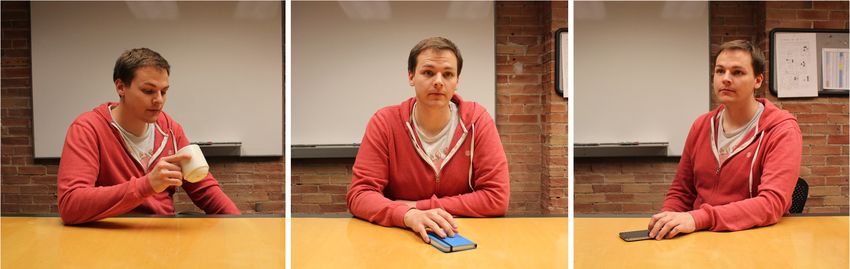
     Figure 1: Examples of subtle interactions achieved through the use of the presented gimmicks. From left to right: reading
                                    text messages, composing an email, and checking the time.

                                                                     INTRODUCTION
ABSTRACT
                                                                     Mobile devices enable always-available access to
Mobile devices offer constant connectivity to the world,
                                                                     information, supplying a perpetual connection to the world
which can negatively affect in-person interaction. Current
                                                                     outside our immediate surroundings. While compelling, it is
approaches to minimizing the social disruption and
                                                                     often inappropriate to use one’s phone or other electronic
improving the subtlety of interactions tend to focus on the
                                                                     device, be it for privacy or social reasons [22, 27]. In many
development of inconspicuous devices that provide basic
                                                                     situations, users wishing to access their mobile device resort
input or output. This paper presents a more general approach
                                                                     to simplistic methods, such as hiding their phone under a
to subtle interaction and demonstrates how a number of
                                                                     desk or turning down the screen brightness, to avoid
principles from magic can be leveraged to improve subtlety.
                                                                     detection. These methods have limited effectiveness as
It also presents a framework that can be used to classify
                                                                     observers often notice such behaviors.
subtle interfaces along with a modular set of novel interfaces
that fit within this framework. Lastly, the paper presents a         Our work focuses on the development of technologies that
new evaluation paradigm specifically designed to assess the          enable subtle interaction (Figure 1). We define subtle
subtlety of interactions. This paradigm is used to compare           interaction as providing input to, or receiving output from,
traditional approaches to our new subtle approaches. We find         systems without being observed. The primary goal is the
our new approaches are over five times more subtle than              development of a suite of technologies that enable users to
traditional interactions, even when participants are aware of        leverage always-available computing without compromising
the technologies being used.                                         privacy or social interaction.

In submission to ACM CHI 2015. Submission # 1086
                                                                     Previous commercial and research efforts have investigated
                                                                     approaches to subtle interaction. These efforts typically
                                                                     focus on miniaturization, or decreasing the cognitive load of
                                                                     interactions [3, 27]. Further, these efforts have largely
                                                                     produced technologies, which once known to an observer,
                                                                     are no longer subtle – that is, they can be readily noticed and
                                                                     observed. In contrast, our work focuses on developing
                                                                     technologies and techniques, which even if known, would
                                                                     not telegraph their use to others.

                                                                 1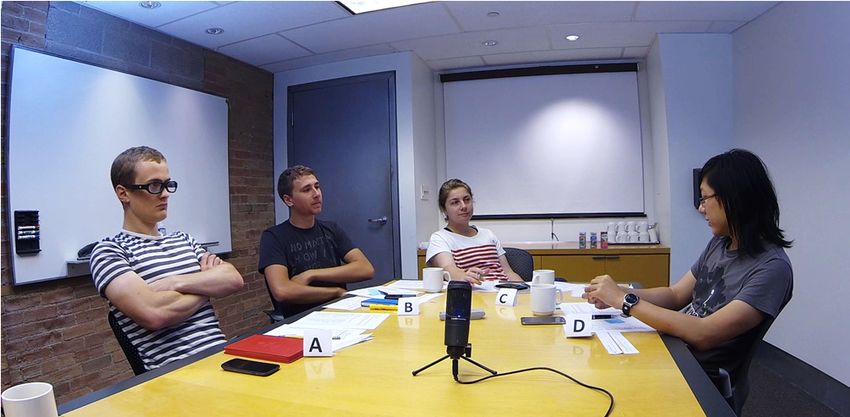
Efforts to advance subtle interfaces have also been hampered             A number of approaches provide subtle, low-bandwidth
somewhat by a lack of systematic identification of the space             input through novel hardware designs. ShoeSense made use
of subtle interaction or guiding principles for the design of            of a depth camera mounted on a shoe to sense gestures made
the devices. To help us in developing these, we focused on               by users [6], while ShoeSoleSense made use of pressure
the related domain of magic and illusion. Magicians have                 sensors and vibrotactile feedback to provide input and output
been developing and perfecting means of deceiving                        [20]. An approach by Sumitomo et al. used a strain sensor
observers for centuries, amassing a vast quantity of                     placed around the waist to allow users to input sequences by
knowledge. Their effects rely on established methods and                 contracting their abdomen [24]. Electromyogram sensors
principles that can be combined in various ways to conceal               have been used to enable users to interact hands-free, or
their true intent. While specific magic tricks are of little value       without visibly moving [10, 23]. Nenya was a magnetic ring
to designers of subtle interfaces, the principles upon which             that could be tracked by a wrist-worn sensor to allow users
they are built can be leveraged for subtle interactions.                 to subtly access menu items [3]. In other work, covert
This paper makes several contributions to the area of subtle             ‘duress’ signals were built into authentication schemes,
interfaces. First, we present a survey of the techniques that            allowing users to signal that the authentication is not genuine
users currently employ in the wild to achieve subtle                     using a small modification of their input sequence [18].
interaction. Next, we provide design guidelines for subtle               Clawson et al. described a scenario where devices could be
interfaces that are derived from established magic principles.           used to subtly send a signal from one party to the other [8].
We also provide a framework for the classification of subtle             With respect to subtle output, several approaches have made
interfaces. Leveraging the guidelines and framework, we                  use of small LEDs to provide low-bandwidth information
developed a system of subtle interfaces comprised of input               channels without being visible to observers [11, 13]. Toney
and output devices. Lastly, we present an evaluation method              et al. described a suit that integrated LEDs, vibrotactile
that can be used to quantify the subtlety of interactions.               feedback and an interactive watch [26]. Similarly, Lee
                                                                         developed wearable tactile displays that relayed alerts to the
RELATED WORK
                                                                         user [15]. To disguise output, Worddit and Timesify provide
The present work is inspired by research from intersection of
                                                                         tools that modify how Reddit and gossip websites were
magic and human-computer interaction (HCI) as well as
                                                                         rendered so they appeared to be Microsoft Word or the New
within wearable and ubiquitous computing.
                                                                         York Times webpage, respectively [29, 30].
Illusion and Deception in Human-Computer Interaction
                                                                         While these approaches contribute to the development of
Stage magic and HCI have many parallels [25], such as a
                                                                         novel devices, the use of the individual devices is not
need for consistency, the use of metaphors, and smoothness
                                                                         sufficient for truly subtle interaction. Just as there is more to
throughout the interactions. Busk et al. separated magical
                                                                         a great magician than their tricks, there is also more to subtle
knowledge into three layers of effects, methods, and                     interaction than the devices. In contrast to prior work, we
principles that can be used as a framework for magic-
                                                                         address the greater context of subtle interaction, and provide
inspired interfaces [7]. Marshall, Benford, and Pridmore
                                                                         guidelines derived from magic principles. We also explicitly
described a technology-based magic trick that applied the                evaluate the subtlety of our approaches. Lastly, we describe
principles of misdirecting attention and creating false
                                                                         how a system of devices can work together to improve the
expectations to deceive the user [19]. This prior work focuses
                                                                         overall subtlety of the interactions.
on high-level similarities between HCI and magic, rather
than adapting magical knowledge for subtle interactions.                 SURVEY OF EXISTING PRACTICES
                                                                         To increase our understanding of how technology is used
Adar, Tan, and Teevan discuss the uses and morality of
                                                                         subtly today, a crowd-sourced, online survey was conducted.
deception in computer interfaces [1]. They argue that
                                                                         The survey was intended to gauge interest in subtle
deception can be a useful feature of design, as in placebo
                                                                         interaction, as well as understand how users currently utilize
buttons, which give the operator a sense of control and
                                                                         their technology when they are attempting to be subtle. It also
decrease user frustration [28]. In contrast, our work focuses
                                                                         provided information on common use cases, enabling the
on systems that are designed to aid users in deceiving others,
                                                                         design of an evaluation that reflects realistic settings.
rather than systems that are designed to deceive the user.
                                                                         Survey Instrument
Wearable and Ubiquitous Computing
                                                                         The survey consisted of 19 questions with Likert-scale,
Subtle interactions for wearable interfaces typically focus on
                                                                         binary, and free form responses regarding aspects of subtle
actions with low cognitive load, so they can be performed
                                                                         interaction. The tasks people currently attempt to perform
without a perceived loss of attention, or small and fast
                                                                         subtly were probed, for example, as were the steps they take
movements, so they can be performed before observers
                                                                         to conceal their interactions, and their emotions towards
notice them [4]. Ashbrook introduced microinteractions for
                                                                         people who use technology subtly. The questions focused on
mobile interfaces [5], which can be initiated and completed
                                                                         both social and professional context and was posted on
in under four seconds. Holleis et al. evaluated the placement
                                                                         classified sites (e.g., Craigslist), as well as Mechanical Turk.
of fabric-based capacitive sensors, identifying locations that
are quick and easy to access, but not necessarily subtle [14].
                                                                     2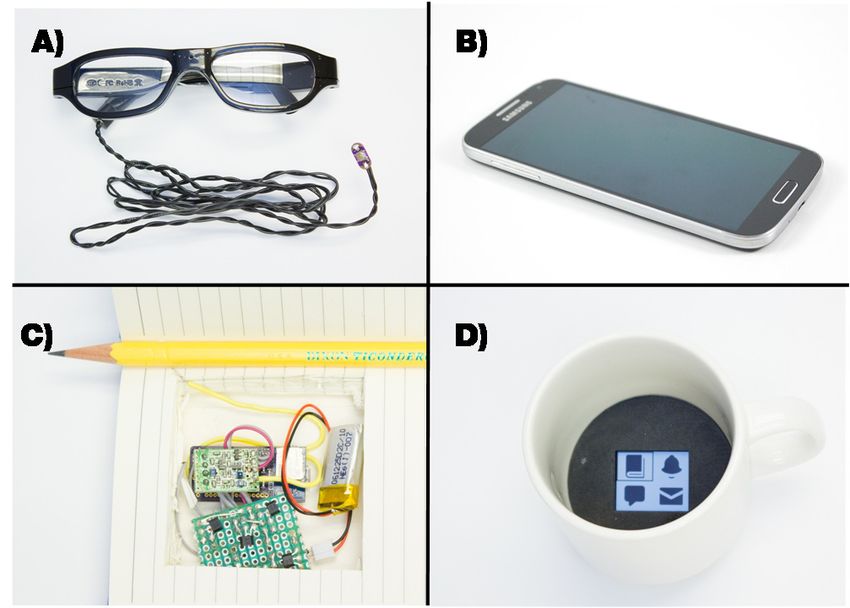
Responses The responses to the survey, indicated that users attempt to
In total, 227 responses were received. The age of respondents use technology subtly in many scenarios, and that they desire
ranged from 14-69 years (M = 30; 124 male), with technology that provides them with more discretion.
respondents located in North America (143), Asia (61), Additionally, the responses demonstrate that users are
Europe (20), and South America (3). willing to put conscious effort into concealing their
When asked which tasks were frequently performed, interactions from others to prevent others from being
checking the time, texting, and taking photos were the most disturbed or upset that they are using technology.
common (Figure 2). Most respondents, i.e., 86%, reported DESIGNING FOR SUBTLETY
that they attempt to use their mobile devices undetected As users desire technology that can disguise their actions, we
during meetings for tasks unrelated to the meeting, while looked to magic to inform the design of these technologies.
94% reported doing the same during social events. A less As magic requires expertise in deception and illusion, we
frequent, but commonly reported behavior was pretending to consulted with professional magicians, as well as the magic
receive a call or text message to leave a situation (73%). literature, to explore how magic could be leveraged for the
design of subtle interactions. As there are many aspects of
Check the time 94% magic (i.e., methods, principles and effects) that could be
Read a text/email 92% utilized, we initally present guidelines that are derived from
a subset of magic principles: user customization, modularity,
Send a text/email 84%
simulation and dissimulation, separating cause and effect
Take a photo 76% and user training. These principles were chosen because of
Surf the web 69% their broad applicability to many subtle interface designs.
Read Facebook/Twitter 62% P1) User Customization
we don’t need any more new tricks … we do need more tricks fitting the
Record video/audio 54% specific personalities.
Update Facebook/Twitter 53% D. Fitzkee [12]
For a convincing performance, magicians customize and
0% 20% 40% 60% 80% 100% tailor their tricks to their routine and character. Similarly,
Figure 2: Proportion of respondents who reported users that desire subtle interaction should be able to
performing each task subtly. customize their devices. A construction worker may look out
of place wearing a large ring that conceals a vibrotactile
Nearly all respondents (94%) reported being ‘caught’ using motor. However, if the vibrotactile motor was contained
technology where they were not supposed to (e.g., where within a more generic form-factor, it could be integrated into
interaction was prohibited by laws, employers, or social a pair of safety glasses or other object that is consistent with
norms). When asked about the primary reason for attempting the user’s character. More importantly, devices that are not
to using technology discreetly, the most frequent response customizable will be easily recognized once they are widely
was to avoid violating social norms (35%) followed by available. If a manufacturer develops a smart-ring with a
prohibition by their employers (25%) and prohibition by distinctive look, its functionality will be known and
location (e.g., at a museum, 18%). Almost all respondents observers will be weary of the users’ interactions with it.
(94%) responded that they would use technology to help
them interact with their devices more subtly. P2) Modularity
If the magician performs the same trick twice for the same audience,
When asked about the most common situations where subtle there is an increased chance that the audience will identify the method.
interaction was used, three general themes were evident. S. Macknik et al. [16]
Respondents reported using technology subtly to distract Using the same method to misdirect the audience’s attention
themselves from undesirable situations (e.g., “during can lead to revelation of the magician’s methods. Likewise,
moments when things get boring or awkward”). Another repeated use of a subtle device is likely to raise suspicion
common purpose was to record events or information (e.g., from observers. By varying the location, modality, and
“record a video from a meeting … I needed evidence”). method of input, users of subtle interfaces can improve their
Finally, several participants used subtle interactions to keep ability to interact undetected. For instance, if the user has a
others informed of their current situation (e.g., “I used [my] joystick that can be concealed in a pocket, up a sleeve, or
mobile phone to message my wife about the situation”). within a lapel, they can move the joystick between locations
Respondents also reported a variety of techniques they to prevent observers from becoming suspicious of the
adopted to facilitate subtle interaction. Respondents reported continued manipulation of their pocket, for example. Thus, a
hiding the device out of sight (e.g., “check the phone under modular system that provides redundancies allows users to
the desk”) or leave the area where they may be caught (“At vary their behavior and select the interaction technique most
work, I go to the washroom”). Others disguise their subtle for a given transaction. This, however, adds
interactions (e.g., “I pretend I'm trying to get reception … in complexity to interactions with the system
actuality I am snapping a photo”).
3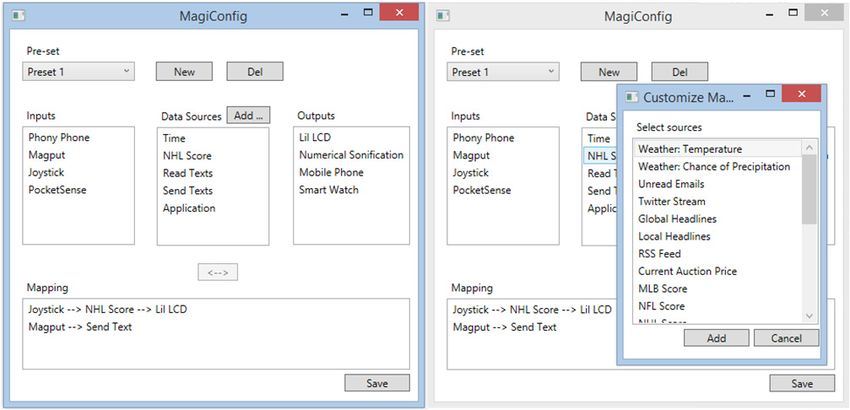
P3) Simulation and Dissimulation                                                    We have identified five factors that describe the functionality
  Where simulation is disguising a thing to make it appear similar to               of an interaction technique within the context of subtle
  something else, dissimulation is the act of making something appear to
  be dissimilar to what it truly is.
                                                                                    interfaces: the type of device, the customizability, the device
                                                          D. Fitzkee [12]           visibility, the interaction observability, and the task
                                                                                    transparency.
If a magician is attempting to convince the audience that a
box is empty, he must interact with the box and behave as if                                                         Type of device
                                                                                                                                                 Input

it were empty and weightless. Similarly, users who wish to                                                                                       Output

interact subtly must conceal the true nature of their devices                                                                                    On the fly
                                                                                                                     Customizability             Per user
and integrate their interactions with their natural behaviours.                                                                                  Not customizable
If a sensor is concealed within a baseball cap, then the                                                                                         Visible
interactions should be extensions of natural manipulations of                       Devices for subtle interaction
                                                                                                                     Device visibility           Hidden
                                                                                       can be categorized by
the cap, such as adjusting the angle of the brim. Additionally,                                                                                  Disguised
if users leverage existing technology to interact subtly, then                                                                                   Perceivable
efforts should be made to interact overtly with the device                                                           Interaction observability   Hidden
when it is appropriate to do so. This will lead observers to                                                                                     Disguised

believe their device is normal and unremarkable which will                                                                                       Transparent
aid in concealing its subtle functionality.                                                                          Task transparency           Semi-transparent
                                                                                                                                                 Opaque
P4) Separating Cause and Effect
  … introduce delays between the method behind a trick and its effect,                  Figure 3: Overview of the framework for subtle devices.
  preventing you from causally linking the two … the magician must
  separate the method from the magical effect.                                      The type of device references whether the interface provides
                                  S. Macknik & S. Martinez-Conde [17]               input or output capabilities.
Just as magicians introduce delays to misdirect the audience,                       The customizability refers to the degree that the interface can
designers of subtle interfaces can introduce temporal and                           be tailored by the end user. Techniques may be re-configured
spatial separations between an action and resultant effect to                       on-the-fly (e.g., modifiable during a meeting), for each user
misdirect observers. If a user adjusts his watchband and the                        (e.g., to match their personality or existing technology), or
screen immediately changes, observers may correlate the                             not customizable. Increased customizability increases the
watchband manipulation with the change in output.                                   potential for more subtle interaction.
However, if the user adjusts his watchband and thirty
seconds later his phone displays a notification, observers                          Device visibility represents whether or not the hardware
would have difficulty associating the input, which was                              associated with the device is visible, hidden, or disguised.
unremarkable at the time, with the output.                                          Visible devices, e.g., a traditional smartphone, are the least
                                                                                    subtle and must be used sparingly. Hidden devices are those
This separation is counter to traditional user-interface                            that can be used while out of sight of the observers, e.g.,
guidelines, which promote a tight coupling between cause                            within a pocket or a shoe. These are the most subtle but also
and effect to minimize the gulf of evaluation [21]. By                              have limited bandwidth and can be difficult for the user to
implementing this separation, interactions can become more                          operate. Disguised devices are those that are visible to the
subtle, but the user interface may become more cumbersome                           observer, but provide functionality beyond their appearance.
and usability may suffer as a result.
                                                                                    Interaction observability refers to how the observers may
P5) User Training
  I promise never to perform any illusion for any non-magician without
                                                                                    perceive the user’s interaction. This could be perceivable,
  first practicing the effect until I can perform it well enough to maintain        hidden, or disguised. Perceivable interactions are those that
  the illusion of magic.                                                            are noticeable by observers, but may enable subtle
                                                         Magician’s oath [17]       interaction if performed quickly enough. Hidden interactions
Just as practice is a critical component in the performance of                      are not able to be detected by observers, and as with hidden
magic, it is important with subtle interaction as well. Clumsy,                     devices, often provide maximal subtlety with minimal
untrained movements can cause erroneous input and be                                bandwidth. Disguised interactions may be observable but
spotted by observers quickly. To circumvent this, users                             could be identified as a normal behaviour.
should be aware of the necessity of training and be provided
                                                                                    Task transparency refers to how readily observers can detect
with tools to support that training. Guides can help train users
                                                                                    the task that is being performed by the user. This is
on how to efficiently provide input, such that behaviours
                                                                                    important, as some tasks may be acceptable for a given
become automatic and require less of the users’ attention.
                                                                                    scenario and others may not. Thus, by obscuring the task, the
DEVICE FRAMEWORK                                                                    user may be afforded additional subtlety. The task may be
While there are several devices that enable subtle interaction,                     transparent, in the case of a traditional watch with a single
there is no framework that can describe or categorize them                          function, or it may be opaque, in the case of a smart phone
in a useful manner that will facilitate future developments.                        that possesses a wide range of functionality. The task may

                                                                                4
also be semi-transparent if observers can identify a subset of device, the task is semi-transparent, as a knowing observer
potential tasks (e.g., they can observe that the user is could determine that the user was providing input but could
receiving a notification, but cannot determine the type). not identify the specific task. Phony Phone can provide a full
range of input supported by modern touch screen phones
SAMPLE DECEPTIVE DEVICES
(touches, swipes, gestural input) and can be customizable by
To explore the framework, several representative input and
the end user (i.e., the application can be deployed on their
output devices were constructed (Figure 4). Used
phone and does not require a specific, identifiable piece of
collectively, these devices demonstrate the utility of the
hardware). This device enables subtle interaction through the
design principle of Modularity (P2).
spatial separation of input and output (P4); the touches on
the screen have no visible effect on the device itself.
To implement Phony Phone, an Android application was
developed and was run on a Samsung Galaxy S5.
Magput
Five linear Hall Effect sensors mounted in an ‘x’ shape can
be used to sense the location of a magnet over the grid
enabling continuous 2D or gestural input in a small space
(Figure 4C). Magput can be placed within many common
objects to provide an input device that is easily disguisable.
For example, the device can be placed within a book with a
magnet inside of a pen, or it could be mounted inside a jacket
pocket with a magnet placed beneath an adhesive bandage.
In both cases, the sensors and magnet are disguised, and the
users’ interaction is disguised as idle doodling or casual
fidgeting with the device. As with Phony Phone, the task is
Figure 4: Subtle devices. A) Super Sneaky Spyglasses,
B) Samsung Galaxy S5 running Phony Phone, C) semi-transparent as expert observers could determine that
Magput in a book, and D) Lil LCD in a mug the user is providing input to the system but could not
determine the nature of the input. Magput can be customized
Input Devices on-the-fly (P1) by moving it between various locations on the
Super Sneaky Spyglasses user’s body, or amongst their accessories. To subtly interact
A small camera mounted inside a pair of glasses (Figure 4A) using EdgeWrite gestures, users must practice (P5) prior to
can allow the user to take photographs or record video. This use. To aid in this, a small, physical training guide was
disguised device can be triggered through hidden developed that can be placed over top of the sensor to provide
interactions, i.e., orienting their head then pressing a button the user with tactile cues to guide them to the correct
that is tethered to the frame of the glasses and concealed locations. While this is a simple device, training systems that
within a sleeve or a pocket of the user. The task is are more complex could be implemented (e.g., [2]).
transparent and not obfuscated at all, as knowledgeable
observers will be aware of the sole function of the device. In our implementation, the sensors are connected to a
The current form factor is not customizable. The success of Femtoduino BLE2, which relays sensor data via an RF link
this device relies on the user’s use of dissimulation (P3) to an Arduino Uno, which relays the data to a PC which is
when using the device, as they must treat the glasses as they tethered to the mobile phone via Bluetooth.
would unmodified glasses - they must not touch them Output Devices
excessively or prolong eye contact while taking photos. Lil LCD
To implement the Super Sneaky Spyglasses commercial Small, modular displays can be leveraged to provide
spyglasses1 were modified to include a tethered button rather repositionable, high-bandwidth output that could be
than the more obvious button mounted on their frame. concealed within innocuous objects. These displays can be
hidden inside a coffee cup form factor (Figure 4D), for
Phony Phone example, and allow for the subtle viewing of information
Phony Phone is a mobile application that renders a black during a meeting. The device, as well as the interactions with
screen on the cell phone (Figure 4B), providing the it, are disguised, as the user can place it out of sight and
appearance of a sleeping phone while still allowing input to casually glance at it when appropriate. If noticed, the task is
be recorded and processed. Users can interact with the device semi-transparent, observers are aware that there is some
by swiping and tapping on the black screen, disguising their information being obtained, but are not able to determine
interactions as idle fidgeting. Phony Phone is a disguised what that information is from a distance. Lil LCD is
1 2
http://www.newegg.com/Product/Product.aspx?Item=9SIA34P0ZN7835 www.femtoduino.com
5customizable on-the-fly, as the display can be relocated with The user begins the configuration process by creating a new
relative ease. By separating the output (P4) from the preset. A preset represents a set of mappings that are suitable
interaction, observers will have difficulty identifying when for the given context. For instance, the user may have one
the user is interacting. preset for casual meetings or social events where some use
of technology is appropriate, and another for formal
In our implementation, the module is comprised of a
meetings where interaction is restricted. In the current
waterproof Sony Smartwatch 2 display that is tethered via
system, there is no automatic detection of context, so users
Bluetooth to a mobile phone. To aid in concealment, custom
must manually select the active configuration.
3D printed ‘shells’ were printed and affixed to the module.
With each preset, users can create mappings between input
Numerical Sonification
triggers, a list of pre-defined data streams (e.g., incoming
To disguise numerical data, an audio alert can be used to
text messages, sports scores, or the weather), and output
encode numbers in a manner that could be mistaken for a
devices (e.g., the Lil LCD or Numerical Sonification). The
message or calendar notification. Four notes of increasing
functional capabilities of each device (e.g., what type of data
pitch can be used to signify the numbers 30, 15, 5, and 1
it is capable of generating or displaying) are encoded within
respectively and can be summed together to derive the
the program logic and simplify the user experience. As a user
encoded number. For instance, the note sequence ‘A C E E
selects a particular data stream, only those devices capable
G G’ could inform the user that it is 57 minutes past the hour
of triggering or displaying the data stream become active.
(30 + 15 + 5 + 5 + 1 + 1 = 57). The device used in this
While this interface does not expose the complete
approach is customizable per-user (P1) and disguised, as it
functionality of the modular system, it provides enough
is deployed on the user’s own mobile phone. Users can
flexibility to satisfy many common use cases.
further customize it by changing the timbre of the audio tones
to be more consistent with their existing notifications. The EVALUATION
interactions with the device are disguised and the task is While previous efforts have been made to develop subtle
semi-transparent as observers may be aware that the tones interactions, there is no accepted methodology for evaluating
convey information, but would not know if the information the subtlety of an interaction. In this section, we propose a
was the time, a sports score, or the number of unread emails novel evaluation methodology centered on the real-world
in the user’s inbox. To provide misdirection, the audio is context of a round-table meeting (Figure 6).
separated temporally (P4) from the input that triggers it by
adding a delay of five seconds.
To develop and test Numerical Sonification a number of
audio files were created and the playback functionality was
integrated into the Phony Phone application.
MANAGING ILLUSIONS
As the context of use rapidly changes with wearable and
mobile interactions, it is imperative that users have their
technology tailored to their immediate situation. The use of
a large number of highly configurable modules and devices
has the potential to overwhelm new users with the volume of Figure 6: Sample frame from the staged meeting videos.
potential combinations of devices. To address this, a
configuration system (Figure 5) was developed to allow We recorded video of a staged five-person meeting from the
users to assign actions and data to their various devices. perspective of one of the meeting attendees (Figure 6).
During the meeting, which was divided into a series of two-
minute clips, the four attendees (actors) within the view of
the camera would subtly interact with technology in some
way. After all recordings had been completed, the crowd-
sourced participants viewed the resultant videos and assessed
when the attendees were interacting with technology. In
contrast to the prior evaluation methods [9], this method
better reflects a real-world use case of subtle interaction and
allows for a wider range of hypotheses to be tested.
Additionally, our survey identified workplace meetings as
one a common scenario where subtle interaction is desired.
Figure 5: Configuration interface showing mappings Recording Procedure
between input devices, data, and output devices. Two blocks of ten two minute clips were recorded, resulting
in twenty total video clips. The content of each of the two-
minute clips was a game of ‘twenty questions’ played by all
6five attendees. During eight of the ten clips in each block, to paying attention to the meeting content. Participants in the
one of the on-camera attendees would interact with module knowledge condition were also shown the various
technology, while the remaining two rounds did not contain subtle modules that would be used (e.g., the Magput, the Lil
any interaction. The actors were instructed to behave LCD, etc.). Participants in the customization knowledge
naturally and to perform the tasks as they would in a regular condition were also shown how those modules would be
meeting (e.g., relatively discreetly). For each block each used within the experiment (e.g., embedded in a book, placed
actor was assigned two interaction techniques and was given at the bottom of a cup, etc).
time to familiarize themselves with their operation and to
Each participant watched a single block of ten videos, which
practice using them subtly. Between blocks, actors were re-
included two instances of each task (subtle and traditional),
assigned interaction techniques to ensure that the measured
along with two videos with no interactions. The presentation
subtlety was not due to an actor’s performance. The meetings
order of the videos was counterbalanced across participants
were recorded at 1080p, via a camera positioned at eye-level,
using a Latin-square design.
which captured all attendees within the frame (Figure 6).
Procedure
Subtle Tasks and Devices
After watching each video, participants indicated which
Four tasks were analyzed in the evaluation: checking the
meeting attendant, if any, interacted with technology during
time (check time), reading a text (read text), sending a text
the clip. Participants were also asked to specify the device,
(send text), and taking a picture (picture). These tasks are
the interaction, as well as the task that was being completed
representative of the range of input and output tasks most
by the identified attendant. Participants were asked to guess
commonly performed subtly today (Figure 2). Each of the
the item being described by the 20 questions. This ensured
four tasks was completed using currently available
that they were not focusing their attention solely on detecting
technology (traditional) as well as using interactions
technology use, which better reflects a real-world scenario.
designed to support subtle interaction (subtle).
RESULTS
Using traditional interaction, checking the time was
Responses to the post-video questionnaire were collected,
accomplished using a wristwatch, while reading and sending
and where appropriate, free-form text was manually coded.
texts, as well as taking photos was accomplished using
mobile phones (i.e., Samsung Galaxy Nexus, iPhone 4, and Measures
Nokia Lumia 1020). Unlock passcodes were removed from Three measures were captured to analyze the subtlety of each
the phones to minimize the amount of interaction needed. interaction technique: device subtlety, interaction subtlety,
and task subtlety. Task subtlety is defined as the proportion
To evaluate the subtle interactions, checking the time was of trials in which the participant correctly identifies the task
accomplished using numerical sonification in combination that was being performed subtly. Device subtlety is defined
with Phony Phone – the attendee tapped the black screen and as the proportion of trials in which the device that was being
five seconds later, a tone encoding the time played. Reading used was correctly identified. Interaction subtlety is defined
a text was accomplished using a modular display affixed to as the proportion of trials in which the observer correctly
the inside of a coffee cup. Sending a text was done using identified the attendee performing the interaction technique.
EdgeWrite-based input with Magput. The sensors were
placed inside a hollowed-out notebook and activated by a The results aggregated across task and condition (Figure 7)
magnet that was embedded in the back of a pencil or demonstrated that participants had trouble correctly
underneath an adhesive bandage on the finger. Taking a identifying the task in comparison to identification of the
picture was accomplished using the Super Sneaky device or the interactions. This is because it is difficult to
Spyglasses with the tethered button resting in the lap. observe the content of the phone’s screen from the viewpoint
of another meeting attendee so participants would have to
Participants
guess if the attendee was reading texts, sending texts, or just
Sixty participants, age 21-55 years (M = 34 years; 27 male)
surfing the web. In contrast, the device and the interaction
were recruited via crowd-sourcing to watch the videos and
were identified more readily, as they are recognizable from
determine when an actor was interacting with a device.
the vantage point of the recorded video. In addition, the
Design identification rates for both device and interaction were
A three-factor, mixed study design was used with a between- nearly identical, as observers have to see both the device and
subjects factor of Condition (i.e., no knowledge, module interaction to realize that the attendee is using technology.
knowledge, and customization knowledge) and within-
While participants had difficulty identifying the task being
subject factors of Task (i.e., check time, read time, send text,
performed across all interaction techniques, they were more
picture) and InteractionType (i.e., subtle, traditional).
accurate in determining the direction of the interaction (i.e.,
For each condition, a different introductory video was input or output) with the subtle devices. As input and output
shown. For participants in the no knowledge condition, an were separated for many of the techniques, they could, for
introductory video explained their task and informed them example, identify movements of the pencil on the book as
that they should be monitoring for technology use in addition
7being used to input data, but could not identify whether the correct identifications of the subtle interactions in the no
attendee was texting or triggering another device. knowledge condition stem from Numerical Sonification.
0.6 0.6
Proportion correctly identified
Proportion correctly identified
0.4 0.4
Traditional
Traditional
0.2 0.2
Subtle
Subtle
0
0
Task Device Interaction No Module Customization
knowledge knowledge knowledge
Figure 7: Correct identifications of task, device, and
Figure 8: Correct identifications by knowledge
interactions by device type, aggregated over all
condition and interaction type, aggregated over task.
knowledge conditions.
To examine the interaction between InteractionType and
In the analyses that follow, we consider an interaction to be
Task (Figure 9) separate Chi-square tests were performed.
correctly identified if the participant correctly identified
Task was found to significantly affect the identification of
either the device or the interaction.
traditional interactions, with checking the time being
Analysis identified significantly less often than the other tasks (χ2(3)
A loglinear analysis was conducted in SPSS on the cell = 25.73; p < 0.001). Task also affected noticeability of subtle
frequencies for the correct identification of the interaction interactions, with taking a photo being significantly less
using the factors of Condition (i.e., no knowledge, module noticeable than the other tasks (χ2(3) = 19.19; p < 0.001).
knowledge, customization knowledge), Task (i.e., check time,
read text, send text, picture), and InteractionType (i.e.,
Proportion correctly identified
traditional, subtle). The analysis demonstrated significant 0.6
main effects of Condition (χ2(2) = 53.99; p < 0.001), Task
(χ2(3) = 22.63; p < 0.001) and InteractionType (χ2(1) = 43.85;
p < 0.001), as well as significant interactions between 0.4
InteractionType and Condition (χ2(2) = 14.72; p < 0.001) and
Subtle
InteractionType and Task (χ2(3) = 34.17; p < 0.001). Due to
the interaction effects, the main effects of Condition, Task
Traditional
0.2
and InteractionType were not analyzed further.
To examine the interaction between InteractionType and 0
Condition (Figure 8), three separate Chi-square tests were Check time Read Text Send Text Picture
performed for each of the three conditions. The analyses
Figure 9: Correct identifications by interaction type
found significant differences between the noticeability of
and task, aggregated over all knowledge conditions.
traditional and subtle interaction for the no knowledge and
module knowledge conditions (χ2(1) = 25.31; p < 0.001; The interactions with the watch to check the time were rarely
χ2(1) = 25.58; p < 0.001 respectively). There was, however, noticed, as the meeting attendees could glance down at the
no significant difference between the traditional and subtle watch briefly. Similarly, taking photos with the spyglasses
interaction types within the customization knowledge required only a quick press of a button. In contrast, checking
condition (χ2(1) = 1.26; p = 0.26). It thus appears that the text messages required prolonged manipulation of the device
amount of knowledge a participant was given influenced in a relatively overt manner. With the exception of checking
how well they noticed the interactions. Those participants the time, the subtle techniques were less conspicuous than
with no knowledge, or knowledge of only the modules, were the traditional techniques. This is because the numerical
not able to reliably identify the subtle interactions, with sonification technique required touching a mobile device
participants only noticing 8-9% of interactions. In contrast, followed by an audible tone. In our evaluation paradigm, this
those same participants were able to notice 44% of stood out to observers, as none of the other technology
traditional interactions, representing a five-fold increase in generated audio notifications. However, in real-world use we
subtlety with the new approaches. It is worth noting that the expect this approach to be less noticeable.
8DISCUSSION more fluid transition in and out of social contexts, our
The results of our study demonstrate that our proposed buffered audio technique records audio in a short buffer, and
methodology can quantify the subtlety of various forms of replays it at 1.5x speed through a bone-conduction speaker
interaction, and distinguish these techniques with regards to on demand. This technique provides contextual awareness of
their level of subtlety. The results also show that the majority the situation, and helps conceal the user’s diverted attention
of the new approaches to subtle interaction are successful in using a deceptive device by bringing them back “up-to-
deceiving observers. speed” with the current conversation.
Knowledge of the Observers Ethics of Deception
The results for module knowledge are of particular interest as Adar et al. [1] discuss well-meaning uses of deception for
they demonstrate that end-user customization is a powerful interaction. What is being proposed with subtle interaction,
tool for subtle interactions. Despite being shown all of the however, could be perceived as ill meaning. Deceiving
devices, participants were not able to imagine using them in observers into believing you are cognitively present while
the manner that they were used in the video, allowing the you attend to remote information can have consequences.
meeting attendees to interact without being noticed. In We take the stance that users will interact with their devices
contrast, once participants were aware of the customization, regardless of the subtlety of the interaction. By supporting
they were able to identify the subtle interactions at nearly the interactions that are more secretive, we increase the
same rate as the traditional interactions, with the exception probability that such interaction goes unnoticed and the
of the spyglasses, which remained nearly imperceptible. observers remain un-offended. In this light, advances in
subtle interaction could be beneficial as users could check
Participants in the customization knowledge condition
the time, for example, without seeming as if they are bored
identified more of the traditional interactions then
with the current situation.
participants in the module or no knowledge conditions. This
could be the result of the participants being more attentive as Evaluation Limitations
they had a greater proportion of trials where they could While the study captures the visual and audio aspects of
successfully identify an interaction. It is possible that if interactions as well as changes in the user’s attention, it is not
modular subtle devices become prevalent, that the set of able to capture whether or not the behavior is consistent with
possible customizations may also become well known, and the user’s personality. To capture this, a study would have to
therefore easier for observers to spot. However, if this should intentionally deceive participants that were known to the
happen, then the set of possible customizations will be so experimenter. This type of study is logistically difficult and
great as to make observers suspicious of everyday actions. the results would be subjective. Additionally, the study did
not assess the utility of using a number of devices rather than
Supporting Devices
a single device. With a number of devices, we suspect the
Situational awareness and the knowledge of observer’s
overall subtlety of the interaction will increase as users can
attention is essential for successful subtle interaction, thus
interact with the most subtle interface given their situation.
we explored support devices for subtle interaction. While the
role of input and output devices is clear, these support Future work
devices are used in conjunction with other devices to This work should serve as a basis for the development of
increase the resulting subtlety of interactions. Support many future subtle interaction techniques that leverage the
devices are unexplored in the literature, and here we provide presented magical principles to improve the subtlety of the
two examples which may be used to drive future research. interfaces. We hope that researchers and practitioners seek
The first alerts the users when observers may be perceiving out magical principles and methods beyond what is presented
their interaction, the second provides smoother transitions here to develop novel interactions. Truly subtle interaction
into and out of social situations. relies on the existence of a multitude of customizable
modules to be successful, so the development of new
If a user is engaged with their device, their attention may be
approaches is critical to its success.
diverted from their environment. If an observer approaches
the user from behind, the user may be unaware and may There is also great potential for subtle interaction in non-
continue to interact with their device while the observer mobile scenarios. For instance, encoding dynamic
monitors their actions. To prevent this, a proximity sensor is information within presentations (e.g., augmenting on-
placed on the user’s shoulder facing away from the user and screen information such as slide numbers, or by encoding
provides pulsing vibrotactile feedback if an observer information within artificial errors) could provide valuable
approaches the user. As the approaching observer moves data to the presenter or knowing members of the audience.
closer the frequency of pulsing increases, giving the user an
CONCLUSION
awareness of the speed and distance of the observer.
The design of subtle interfaces extends beyond the design of
As the use of technology diverts the user’s attention from the imperceptible input and output devices. Driven by a desire
current situation, it may be difficult to follow and rejoin from users for more subtle interactions, we have leveraged
conversations when the interaction is complete. To enable a knowledge and techniques from the domain of magic to
9inform the design of subtle interfaces. We developed a 14. Holleis, P., Otto, F., Hussmann, H., & Schmidt, A.
framework to classify the various devices and techniques that (2007). Keystroke-level model for advanced mobile
support subtle interaction, and have built representative phone interaction. ACM CHI, 1505-1514.
interfaces that sample areas of the framework. Lastly, we 15. Lee, S. & Starner, T. (2010). BuzzWear: Alert
provided an evaluation paradigm by which the subtlety of Perception in Wearable Tactile Displays on the Wrist.
interactions can be explored and understood. ACM CHI, 433-442.
16. Macknik, S.L., King, M., Randi, J., Robbins, A., Teller,
REFERENCES
Thompson, J & Martinez-Conde S. (2008). Attention
1. Adar, E., Tan, D.S., & Teevan, J. (2013). Benevolent
and awareness in stage magic: turning tricks into
Deception in Human Computer Interaction. ACM CHI,
research. Nature Reviews Neuroscience 9, 11, 871-879.
1863-1872.
17. Macknik, S.L., Martinez-Conde, S., & Blakeslee, S.
2. Anderson, F., Grossman, T., Matejka, J., & Fitzmaurice,
(2010). Sleights of mind: What the neuroscience of
G. (2013). YouMove: Enhancing Movement Training
magic reveals about our everyday deceptions.
with an Augmented Reality Mirror. ACM UIST, 311-
Macmillan.
320.
18. Marques, D., Carrico, L., & Guerreiro, T. (2014).
3. Ashbrook, D., Baudisch, P., & White, S. (2011). Nenya:
Duress Unlock: Using Covert Signals to Restrict Access
Subtle and Eyes-free Mobile Input with a Magnetically-
to Mobile Devices. ACM CHI EA.
tracked Finger Ring. ACM CHI, 2043-2046.
19. Marshall, J., Benford, S., & Pridmore, T. (2010).
4. Ashbrook, D.L., Clawson, J.R., Lyons, K., Starner,
Deception and Magic in Collaborative Interaction. ACM
T.E., & Patel, N. (2008). Quickdraw: The Impact of
CHI, 567-576.
Mobility and On-body Placement on Device Access
20. Matthies, D.J.C., Müller, F., Anthes, C., &
Time. ACM CHI, 219-222.
Kranzlmüller, D. (2013). ShoeSoleSense: Proof of
5. Ashbrook, D.L. (2010). Enabling mobile
Concept for a Wearable Foot Interface for Virtual and
microinteractions. https://smartech.gatech.edu/
Real Environments. ACM VRST, 93-96.
handle/1853/33986.
21. Norman, D.A. (2002). The design of everyday things.
6. Bailly, G., Müller, J., Rohs, M., Wigdor, D., & Kratz, S.
Basic books.
(2012) ShoeSense: A New Perspective on Gestural
22. Profita, H.P. (2011). Social acceptability of wearable
Interaction and Wearable Applications. ACM CHI,
technology use in public: an exploration of the societal
1239-1248.
perceptions of a gesture-based mobile textile interface.
7. Busk, N.K., Forstholm, J.S., Lessél, L.S., & Sørensen,
Thesis, Georgia Institute of Technology.
S.G. (2012). Introducing Magical Experiences in UX.
23. Saponas, T.S., Tan, D.S., Morris, D., Balakrishnan, R.,
SIDeR, 21-24.
Turner, J., & Landay, J.A. (2009). Enabling Always-
8. Clawson, J., Patel, N., & Starner, T. (2010). Digital kick
available Input with Muscle-computer Interfaces. ACM
in the shin: on-body communication tools for couples
UIST, 167-176.
trapped in face-to-face group conversations. Workshop
24. Sumitomo, H., Katayama, T., Terada, T., & Tsukamoto,
on Ensembles of On-Body Devices, ACM MobileHCI.
M. (2014). Implementation and Evaluation on a
9. Costanza, E., Inverso, S.A., Allen, R., & Maes, P.
Concealed Interface Using Abdominal Circumference.
(2007). Intimate Interfaces in Action: Assessing the
ACM AH, 51:1-51:8.
Usability and Subtlety of Emg-based Motionless
25. Tognazzini, B. (1993). Principles, Techniques, and
Gestures. ACM CHI, 819-828.
Ethics of Stage Magic and Their Application to Human
10. Costanza, E., Inverso, S.A., & Allen, R. (2005). Toward
Interface Design. ACM CHI, 355-362.
Subtle Intimate Interfaces for Mobile Devices Using an
26. Toney, A., Mulley, B., Thomas, B.H., & Piekarski, W.
EMG Controller. ACM CHI, 481-489.
(2002). Minimal social weight user interactions for
11. Costanza, E., Inverso, S.A., Pavlov, E., Allen, R., &
wearable computers in business suits. IEEE ISWC, 57-
Maes, P. (2006). Eye-q: Eyeglass Peripheral Display for
64.
Subtle Intimate Notifications. ACM MobileHCI, 211-
27. Yi, B., Cao, X., Fjeld, M., & Zhao, S. (2012). Exploring
218.
User Motivations for Eyes-free Interaction on Mobile
12. Fitzkee, D. (1945). Magic by Misdirection. Saint
Devices. ACM CHI, 2789-2792.
Raphael House.
28. “Dummy” Thermostats Cool Down Tempers, Not
13. Hansson, R. & Ljungstrand, P. (2000). The Reminder
Temperatures. http://news.thomasnet.com/IMT/2003/
Bracelet: Subtle Notification Cues for Mobile Devices.
04/11/dummy_thermostat
ACM CHI EA, 323-324.
29. Timesify. http://www.timesify.com/.
30. Worddit Document. http://pcottle.github.io/MSWorddit.
10You can also read


