The Effect of Fucoidan from the Brown Alga Fucus evanescence on the Activity of α-N-Acetylgalactosaminidase of Human Colon Carcinoma Cells
←
→
Page content transcription
If your browser does not render page correctly, please read the page content below
marine drugs
Article
The Effect of Fucoidan from the Brown Alga Fucus
evanescence on the Activity of
α-N-Acetylgalactosaminidase of Human Colon
Carcinoma Cells
Irina Bakunina 1, *, Oksana Chadova 2 , Olesya Malyarenko 1        ID
                                                                        and Svetlana Ermakova 1
 1   Laboratory of Enzyme Chemistry of G.B. Elyakov Pacific Institute of Bioorganic Chemistry,
     Far Eastern Branch, Russian Academy of Sciences, Vladivostok 690022, Russia; vishchuk@mail.ru (O.M.);
     swetlana_e@mail.ru (S.E.)
 2   School of Natural Sciences, Far Eastern Federal University, Vladivostok 690091, Russia;
     chadova_9595@mail.ru
 *   Correspondence: bakun@list.ru; Tel.: +7-(432)-231-07-05-(3); Fax: +7-(432)-231-07-05-(7)

 Received: 30 March 2018; Accepted: 8 May 2018; Published: 10 May 2018

 Abstract: α-N-acetylgalactosaminidase (EC 3.2.1.49) (alpha-NaGalase) catalyzes the hydrolysis
 of N-acetamido-2-deoxy-α-D-galactoside residues from non-reducing ends of various complex
 carbohydrates and glycoconjugates. It is known that human cancer cells express an alpha-NaGalase,
 which accumulates in the blood plasma of patients. The enzyme deglycosylates the Gc
 protein-derived macrophage activating factor (GcMAF) and inhibits macrophage activity acting
 as an immunosuppressor. The high specific activity 0.033 ± 0.002 µmol mg−1 min−1 of the enzyme
 was found in human colon carcinoma cells DLD-1. The alpha-NaGalase of DLD-1 cells was isolated
 and biochemical characterized. The enzyme exhibits maximum activity at pH 5.2 and temperature
 55 ◦ C. The Km is 2.15 mM, V max –0.021 µmol min−1 mL−1 , kcat –1.55 min−1 and kcat /Km –0.72 min−1
 mM−1 at 37 ◦ C, pH 5.2. The effects of fucoidan from the brown alga Fucus evanescence on the activity of
 alpha-NaGalase in human colon carcinoma DLD-1 cells and on the biosynthesis of this enzyme were
 investigated. It was shown that fucoidan did not inhibit free alpha-NaGalase, however, it reduced
 the expression of the enzyme in the DLD-1 cells at IC50 73 ± 4 µg mL−1 .

 Keywords: brown alga; Fucus evanescence; fucoidan; α-N-acetylgalactosaminidase; alpha-NaGalase;
 colon carcinoma cells; DLD-1; macrophage activating factor

1. Introduction
     According to the statistics of the World Health Organization, the colon is the second organ
after lung in the human body, which is most often affected by cancer. Annually in the world about
600 thousand cases of colon cancer are fixed. Moreover, colon cancer is one of the most common
cancers with a high propensity to metastasize; 30–40% of patients have metastatic disease at the initial
diagnosis [1]. That’s why the improvement of colon cancer therapy is crucial task of oncology.
     α-N-Acetylgalactosaminidases (alpha-NaGalase) (EC 3.2.1.49) are exo-glycosidases. They catalyze
the hydrolysis of the terminal α-linked N-acetylgalactosamine residues from the non-reducing ends of
various complex carbohydrates and glycoconjugates. Glycolipids, glycopeptides, and glycoproteins,
blood group A erythrocyte antigens [2–4], lipopolysaccharides of the cell walls and capsules of
bacteria [5–7] are physiological substrates for alpha-NaGalase.
     These enzymes were found in the organs and tissues of human [8] and terrestrial mammals [9],
birds [10], invertebrates [11,12], and reddish worms [13]. To date, alpha-NaGalases were revealed in

Mar. Drugs 2018, 16, 155; doi:10.3390/md16050155                           www.mdpi.com/journal/marinedrugs
Mar. Drugs 2018, 16, 155 2 of 14
the anaerobic terrestrial fungi [14,15], bacterial human pathogens of Firmicutes [16,17] and Bacteroidetes
phylum [18]. In the marine environment, alpha-NaGalases have been isolated from the liver and
digestive organs of the marine invertebrate [12,19,20], fish [21] and in marine bacteria of the genus
Arenibacter [22–24]. Interesting to note the enzymes are not found in plants.
The enzymes take part in the catabolism of complex oligosaccharides. It was found that
the deficiency of lysosomal alpha-NaGalase in the human body causes a dangerous hereditary
Schindler/Kanzaki disease, which stimulated an intensive, comprehensive study of this enzyme [25].
alpha-NaGalase activity is an enzymatic basis for the fusion process and play dual roles
in viral infectivity of influenza and human immunodeficiency Type I virus, as well as in
immunosuppression [26,27].
According to the modern classification of carbohydrate active enzymes (CAZy), alpha-NaGalases
occur in the GH27 family, while the alpha-NaGalases of bacteria take place in the related GH36 family.
GH109 and GH129 families include exclusively the alpha-NaGalases of bacteria [28]. Structures and
mechanisms of action of enzymes from different GH families are significantly different.
As a rule, the immune response results from the activation of macrophages. The major macrophage
activation cascade involves participation of beta-galactosidase and sialidase of B and T lymphocytes,
respectively, and serum vitamin D3 -binding protein (Gc-protein). As results, macrophage activating
factor (MAF) is formed. This protein with N-acetylgalactosamine as the remaining sugar moiety is a
precursor of GcMAF-mediated macrophage activation cascade [29].
Alpha-NaGalase is universally detected in a blood plasma of a variety of cancer patients, but not
in healthy individuals [30]. Previously it was established that alpha-NaGalase produced by human
cancer cells and accumulated in the blood plasma was responsible for deglycosylation of Gc-protein
leading to immunosuppression in advanced cancer patients [31–33]. Mohamad S.B. and coworkers
had studied the biochemical characterization of alpha-NaGalase from several human tumor cell lines
and showed its involvement in decreasing of the potency of GcMAF on macrophage activation [34,35].
The ability of alpha-NaGalase to inhibit macrophage activity in patients with developing tumors,
acting as an immunosuppressor is of a great interest. Compounds inhibiting the activity of this enzyme
could serve as a base for creation of an immunomodulating drugs.
The anticancer mechanism of fucoidan remains unclear. The fucoidan is sulfated polysaccharide
from brown algae with wide range of biological activities including immunomodulating activity.
The immunomodulatory effect is one of the possible mechanisms of the protective effect of fucoidan
against cancer. The immunomodulating activity of fucoidans was described either on cellular or on
humoral levels. In vivo it was shown that fucoidan was able to increase the activity of natural killer
(NK) cells, which are contributed to tumor regression [36,37]. Cytotoxic T lymphocytes (CTL) are
known to play a major role in the adaptive cellular immune. The fucoidan was reported to increase the
amount of CTL [38]. Moreover, fucoidan was found to effectively stimulate the CTL cells associated
with the dendritic cell (DC) resulting high specific lysis of breast cancer cells [39]. In vivo study revealed
that fucoidan increased the production of IL-6 and IL-12 as well as TNF-α [40]. It was shown earlier
that fucoidans from Fucus vesiculosus, Ascophyllum nodosum, Sargassum wightii effectively inhibited
in vitro human pancreatic α-amylase and α-glucosidase, a key enzyme responsible for digestion and
absorption of glucose in the small intestine [41–43]. Action of these unique polysaccharides from
brown algae on cancer alpha-NaGalase previously was not investigated.
The study aimed to characterize the biochemical properties of alpha-NaGalase of human DLD-1
intestinal carcinoma and to estimate the effect of fucoidan on the activity of the free enzyme and on
expression of the enzyme by cancer cells.
2. Results and Discussion
In the present study several human cancer cell lines such as human melanoma SK-MEL-28 and
RPMI-7951, breast cancer T-47D and MDA-MB-231, and colon cancer DLD-1 and HT-29 were screened
for the activity of alpha-NaGalase. All cell lysates studied contained alpha-NaGalase. The highestMar. Drugs 2018, 16, 155 3 of 14
Mar. Drugs 2018, 16, x FOR PEER REVIEW 3 of 14
expression of the enzyme was determined in DLD-1 cell lines, which have not been studied before.
DLD-1 cells grew
highest rapidly,
expression andenzyme
of the in a larger amount, in
was determined enough
DLD-1 to
cellstudy, so this
lines, which type
have notof cancer
been cells was
studied
chosen for further
before. investigations.
DLD-1 cells grew rapidly, and in a larger amount, enough to study, so this type of cancer cells
was chosen for further investigations.
2.1. Isolation and Purification of Alpha-NaGalase from Cell Lysates
2.1. Isolation and Purification of Alpha-NaGalase from Cell Lysates
Alpha-NaGalase was isolated and purified from the biomass of these cells in accordance with
Alpha-NaGalase was isolated and purified from the biomass of these cells in accordance with
procedures shown on Figure 1A.
procedures shown on Figure 1A.
Figure 1. Purification of alpha-NaGalase from lysate of cancer cells DLD-1: (А) Scheme of enzyme
Figure 1. Purification of alpha-NaGalase from lysate of cancer cells DLD-1: (A) Scheme of enzyme
purification; (B) 12% SDS-PAGE of purified alpha-NaGalase (1), molecular mass markers (2).
purification; (B) 12% SDS-PAGE of purified alpha-NaGalase (1), molecular mass markers (2).
The purification quality was controlled by SDS-PAGE-electrophoresis (Figure 1B). A large
number of proteins was present in the cell lysate. Most proteins were precipitated in citrate buffer,
The purification quality was controlled by SDS-PAGE-electrophoresis (Figure 1B). A large number
pH 5.0. We cannot determine the activity of alpha-NaGalase in the lysate at pH 7.0, EDTA and
of proteins was present in the cell lysate. Most proteins were precipitated in citrate buffer, pH 5.0.
phosphate ions under conditions of strong dilution. After final stage of treatment we obtained 6 mL
We cannot determine the activity
of enzyme preparation with 0.63ofmg
alpha-NaGalase
of protein mL−1 andin specific
the lysate at pH
activity 7.0,μmol
= 0.033 EDTAmg−1and phosphate
min−1 in
ions under
0.05 conditions of strong
M sodium citrate buffer,dilution. After final
pH 5.0. According to thestage of treatment
electrophoresis data we
highobtained 6 mL of enzyme
purified preparation
of enzyme
preparation withhas major
0.63 mg bond kDa.−1 and specific activity = 0.033 µmol mg−1 min−1 in 0.05 M
of 55.6 mL
of protein
sodium citrate buffer, pH 5.0. According to the electrophoresis data high purified preparation of
2.2. Biochemical and Enzyme Properties of Alpha-NaGalase from Cell Lysates
enzyme has major bond of 55.6 kDa.
We studied the biochemical characteristic of alpha-NaGalase, isolated from human colon
carcinoma
2.2. Biochemical cellEnzyme
and lines DLD-1. This is of
Properties necessary for furtherfrom
Alpha-NaGalase studies involving
Cell Lysates the enzyme.
We studied the biochemical characteristic of alpha-NaGalase, isolated from human colon
carcinoma cell lines DLD-1. This is necessary for further studies involving the enzyme.
2.2.1. Determination of pH Optimum of the Alpha-NaGalase
Activity assays in a range of pH values 3.0–6.2 indicated that the enzyme is more than 50% active
between pH 4.0 and 5.5 and has an optimum at pH 5.0. However, at pH ≥ 6, the enzyme still retains
almost 40% of activity (Figure 2).Mar. Drugs 2018, 16, x FOR PEER REVIEW 4 of 14
2.2.1.
Mar. Determination
Drugs 2018, 16, x FOR of pHREVIEW
PEER Optimum of the Alpha-NaGalase 4 of 14
Activity assays in a range of pH values 3.0–6.2 indicated that the enzyme is more than 50% active
2.2.1. Determination
between
Mar. Drugs pH155
2018, 16, 4.0 andof5.5pH Optimum
and of the Alpha-NaGalase
has an optimum at pH 5.0. However, at pH ≥ 6, the enzyme still retains4 of 14
almost 40% of activity (Figure 2).
Activity assays in a range of pH values 3.0–6.2 indicated that the enzyme is more than 50% active
between pH 4.0 and 5.5 and has an optimum at pH 5.0. However, at pH ≥ 6, the enzyme still retains
almost 40% of activity (Figure 2).
Figure 2. pH-Dependence of alpha-NaGalase activity of DLD-1 human colon carcinoma cells, 0.05 M
Figure 2. pH-Dependence of alpha-NaGalase activity of DLD-1 human colon carcinoma cells, 0.05 M
sodium citrate buffer, 37 °C.
sodium citrate buffer, 37 ◦ C.
Figure 2. pH-Dependence of alpha-NaGalase activity of DLD-1 human colon carcinoma cells, 0.05 M
This feature
sodium of the 37
citrate buffer, enzyme
°C. from tumor cells is considered a pre-premise for the functioning of
This feature in
the enzyme ofthe
thebloodstream
enzyme from tumor cells
at neutral is considered
pH [34,35]. The more a pre-premise for the(pH
acidic pH optimum functioning
4.3 and pH of the
3.5)
enzyme in of
This action
thefeatureis characteristic
bloodstream for
at neutral
of the enzyme frompHthe lyzosomal
[34,35].
tumor The
cells is human liver
more acidic
considered alpha-NaGalases
pH optimum
a pre-premise of
(pH
for the GH27 family,
4.3 and pH
functioning of 3.5)
especially,
the
of action enzyme of
in human
is characteristic and
the bloodstream chicken
for the liver, respectively
at neutral
lyzosomal pH [34,35].
human [8,10].
The
liver moreBacterial
acidic alpha-NaGalases
alpha-NaGalases pH optimum
of GH27 (pH of4.3
GH36,
family, and 109
pH
especially,
andof
3.5)
of human 129
and are
actionactive
chicken atliver,
pH 6.8–7.5
is characteristic [16–18,22].
for
respectivelythe lyzosomal humanalpha-NaGalases
[8,10]. Bacterial liver alpha-NaGalases of GH27
of GH36, family,
109 and 129 are
especially, of human
active at pH 6.8–7.5 [16–18,22]. and chicken liver, respectively [8,10]. Bacterial alpha-NaGalases of GH36, 109
2.2.2.
and 129Effect of Temperature
are active on the
at pH 6.8–7.5 Alpha-NaGalase
[16–18,22].
Alpha-NaGalase
2.2.2. Effect of DLD-1
of Temperature on the human colon carcinoma cells act in wide range of temperatures.
Alpha-NaGalase
2.2.2. Effect
When oftheTemperature on the Alpha-NaGalase
assay temperature was varied, optimal alpha-NaGalase activity was found at 50 °C,
Alpha-NaGalase
while the enzymeofwasDLD-1 human at colon
morecarcinoma cells act in wideofrange of temperatures.
Alpha-NaGalase of 50%
DLD-1active
human acolon physiological
carcinoma cellstemperature 37 of
act in wide range °Ctemperatures.
(Figure 3). Alpha-
When
NaGalasethe
When wasassay temperature
completely
the assay was
inactivewas
temperature varied,
at temperatures optimal
below
varied, optimal alpha-NaGalase
10 °C.
alpha-NaGalase activity was foundwas
activity at 50found
°C, at
50 ◦ C, while the enzyme was 50% active at a more physiological temperature of 37 ◦ C (Figure 3).
while the enzyme was 50% active at a more physiological temperature of 37 °C (Figure 3). Alpha-
Alpha-NaGalase ◦
NaGalase waswas completely
completely inactive
inactive at temperatures
at temperatures below 10below
°C. 10 C.
Figure 3. Effect of temperature on the alpha-NaGalase activity of DLD-1 human colon carcinoma cells,
0.05 M sodium citrate buffer, pH 5.0.
Figure
Figure 3. Effect
3. Effect of temperature
of temperature ononthe
thealpha-NaGalase
alpha-NaGalase activity
activityofof
DLD-1 human
DLD-1 colon
human carcinoma
colon cells, cells,
carcinoma
0.05 M sodium citrate buffer, pH 5.0.
0.05 M sodium citrate buffer, pH 5.0.
It was shown that the enzyme is quite thermostable. Dependences of remaining activity of the
enzyme at different time of exposition are shown on Figure 4.It was shown that the enzyme is quite thermostable. Dependences of remaining activity of the
enzyme at different time of exposition are shown on Figure 4.
The alpha-NaGalase of DLD-1 human colon carcinoma cells kept activity up to 75 °C during 60
min exposition. At optimal temperature for catalysis 45 °C the enzyme showed a half-life of 60 min
(Figure
Mar. 4). Furthermore,
Drugs 2018, 16, 155 the purified preparation of the enzyme can be stored frozen for a month and
5 of 14
retains 100% activity after thawing.
Mar. Drugs 2018, 16, x FOR PEER REVIEW 5 of 14
It was shown that the enzyme is quite thermostable. Dependences of remaining activity of the
enzyme at different time of exposition are shown on Figure 4.
The alpha-NaGalase of DLD-1 human colon carcinoma cells kept activity up to 75 °C during 60
min exposition. At optimal temperature for catalysis 45 °C the enzyme showed a half-life of 60 min
(Figure 4). Furthermore, the purified preparation of the enzyme can be stored frozen for a month and
retains 100% activity after thawing.
Figure
Figure 4. 4. Temperaturestability
Temperature stabilityof
ofalpha-NaGalase
alpha-NaGalase of
of DLD-1
DLD-1human
humancolon
coloncarcinoma cells
carcinoma at at
cells different
different
exposition time; 1 and 6 correspond to 100% activity and 50% activity of the enzyme, respectively,
exposition time; 1 and 6 correspond to 100% activity and 50% activity of the enzyme, respectively,
0.05 M sodium citrate buffer, pH 5.0; graph 2, 3, 4, 5 correspond to 15, 30, 45 and 60 min of exposition,
0.05 M sodium citrate buffer, pH 5.0; graph 2, 3, 4, 5 correspond to 15, 30, 45 and 60 min of
respectively.
exposition, respectively.
2.2.3. Effect of Substrate Concentrations on Reaction Rate of Alpha-NaGalase of DLD-1 Human
TheCarcinoma
alpha-NaGalase ◦
Colon Cells of DLD-1 human colon carcinoma cells kept activity up to 75 C during
60 min exposition. At optimal temperature for catalysis ◦
45human
C thecolon
enzyme showed a different
half-life of 60 min
Figure 4. Temperature stability of alpha-NaGalase of DLD-1 carcinoma cells at
To determine Michaelis-Menten constant (Km) and maximal rate of reaction (Vmax) for
(Figure 4). Furthermore,
exposition time; 1 andthe6 purified
correspond preparation of the
to 100% activity andenzyme canofbethestored
50% activity frozen
enzyme, for a month and
respectively,
pNPNAGal
0.05 M
the substrate
sodium citrate
concentration
buffer, pH 5.0; graph
was
2, 3,
varied
4, 5
between
correspond to 15,
0.345and
30, and
2.0min
60
mM.
of
Dependence of
exposition,
retains 100% activity after thawing.
pNPNAGal hydrolysis rate on the concentration catalyzing by alpha-NaGalase of DLD-1 cancer cells
respectively.
in double
2.2.3. reciprocal
Effect of Substrate Lineweaver–Burk
Concentrations coordinates
on Reactionare Rateshown on Figure 5.
of Alpha-NaGalase of DLD-1 Human Colon
2.2.3. Effect
Carcinoma of Substrate Concentrations on Reaction Rate of Alpha-NaGalase of DLD-1 Human
Cells
Colon Carcinoma Cells Equation y = a + b*x
To determine Michaelis-Menten constant (Km ) and maximal rate of reaction (V max ) for pNPNAGal
To determine Michaelis-Menten constant (Km) Weight No Weightin
and maximal rate of reaction (Vmax) for
the substrate concentration was varied between 0.3 and 2.0 mM. Dependence of pNPNAGal hydrolysis
pNPNAGal the substrate concentration was varied Residual
between 0.3
12.54142 2.0 mM. Dependence of
and
rate on the concentration catalyzing by alpha-NaGalase of DLD-1 cancer cells in double reciprocal
pNPNAGal hydrolysis rate on the concentration catalyzing by alpha-NaGalase of DLD-1 cancer cells
Lineweaver–Burk coordinates are shown on Figure 5. Sum of
in double reciprocal Lineweaver–Burk coordinates are shown on Figure 5.
Squares
Pearson’s r y =0.99979
Equation a + b*x
Weight
Adj. R- No0.99945
Weightin
Residual
Square 12.54142
Sum of Value Standard Erro
Squares
a Intercept 48.46398 1.70513
Pearson’s
b r 0.99979
Slope 104.3045 1.22761
Adj. R- 0.99945
Square
Figure 5. Dependence of p-Nitrophenyl-N-acetyl-α-D-galactosaminide hydrolysis rate on the
Value Standard Erro
concentration catalyzing by alpha-NaGalase of DLD-1 cancer cells in double reciprocal Lineweaver–
a Intercept 48.46398 1.70513
b Slope 104.3045 1.22761
Figure 5. 5. Dependence
Figure p-Nitrophenyl-N-acetyl-α-
Dependenceofofp-Nitrophenyl-N-acetyl-α- D -galactosaminide
D-galactosaminide hydrolysis
hydrolysis rate on
rate on the
the concentration
concentration catalyzing
catalyzing by alpha-NaGalase
by alpha-NaGalase of DLD-1
of DLD-1 cancer cells incancer
double cells in double
reciprocal reciprocal
Lineweaver–
Lineweaver–Burk coordinates, 0.05 M sodium citrate buffer, pH 5.0, 37 ◦ C. The inset table shows
the results of liner fitting with using the computer program “Orijin 8.0”.Mar. Drugs 2018, 16, x FOR PEER REVIEW 6 of 14
Mar. Drugs
Burk2018, 16, 155 0.05 M sodium citrate buffer, pH 5.0, 37 °C. The inset table shows the results of liner6 of 14
coordinates,
fitting with using the computer program “Orijin 8.0”.
Variables x and y of the Equation in inset table (Figure 5) are reciprocal of a substrate concentration
Variables x and y of the Equation in inset table (Figure 5) are reciprocal of a substrate
(1/s, mM−1 ) and initial−1velocity of hydrolysis (1/v, µmol−1 min mL), −1respectively:
concentration (1/s, mM ) and initial velocity of hydrolysis (1/v, μmol min mL), respectively:
1/v1/v
= 1/V
= 1/V
max +K
max+ /Vmax
Kmm/V max ·1/s
∙1/s (1)
(1)
Coefficients aa(Intercept)
Coefficients (Intercept)and
andb b(Slope)
(Slope)ofoflinear
linear fitting
fitting areare corresponded
corresponded to K
to K m/Vmax and 1/Vmax,
m /Vmax and 1/V max ,
of Equation (1), respectively. Values of Km and Vmax and other parameters for commercial pNPNAGal
of Equation (1), respectively. Values of Km and V max and other parameters for commercial pNPNAGal
at 37
at 37 ◦°C
C and
and pH
pH 5.2 were calculated
5.2 were calculated and
and summarized
summarized in in Table
Table 1.
1.
Table 1. The
Table 1. The main
main characteristics
characteristics of
of alpha-NaGalase
alpha-NaGalase of
of DLD-1.
DLD-1.
Molecular Mass, kDa 55.6
Molecular Mass, kDa 55.6
Optimum pH range 4.6–5.0
Optimum pH range Optimum temperature range 4.6–5.0 50 °C
Optimum
Start oftemperature
inactivation range 5062◦ C°C
Temperature stability Start 62 ◦ C °C
Temperature stability 50% of inactivation
inactivation 63–67
50% inactivation 63–67 ◦ C
100%
100%inactivation
inactivation 7575◦ C°C
Km, mM 2.15
Km , mM 2.15
V
Vmax , μmol min−1 mL −1
mL−1
−1 0.021
0.021
Catalytic properties max , µmol min
Catalytic properties
kkcat
cat,, min
min
−11
− 1.55
1.55
kkcat − 1 − 1
m,, min
min mM 0.72
cat/Km −1 mM −1 0.72
Thus, based
Thus, based onon the
the above,
above, we
we can
can conclude
conclude that
that the
the biochemical
biochemical properties
properties ofof the
the investigated
investigated
enzyme are
enzyme are similar
similar to
to the
the enzyme
enzyme fromfrom cancer
cancer cells
cells described
described earlier
earlier [32–35].
[32–35]. The values of
The values of the
the
enzymatic reaction parameters were obtained at the first and were not discussed
enzymatic reaction parameters were obtained at the first and were not discussed for mammalian for mammalian
tumor cell
tumor cell alpha-NaGalases
alpha-NaGalases [34,35].
[34,35]. The
The V Vmax are significantly lower than for the enzymes of fungi of
max are significantly lower than for the enzymes of fungi of
GH27 family
GH27 family [14,15],
[14,15], as
as well
well as
as bacterial
bacterial enzymes
enzymes fromfrom thethe related
related GH36
GH36 family
family [15,17].
[15,17]. The
The rate
rate of
of
hydrolysis for commercial glycoside is low, probably because the substrate is not native.
hydrolysis for commercial glycoside is low, probably because the substrate is not native. The ability The ability
to cleave
to cleave the
the chromogenic
chromogenic glycoside
glycoside isis an
an indirect
indirect confirmation
confirmation that that the
the alpha-NaGalase
alpha-NaGalase studied
studied is
is aa
retaining exo-glycosidase
retaining exo-glycosidase [18].
[18].
2.2.4. Effect
2.2.4. of NaCl
Effect of NaCl and
and NaN
NaN33 on
on the
the Alpha-NaGalase
Alpha-NaGalase
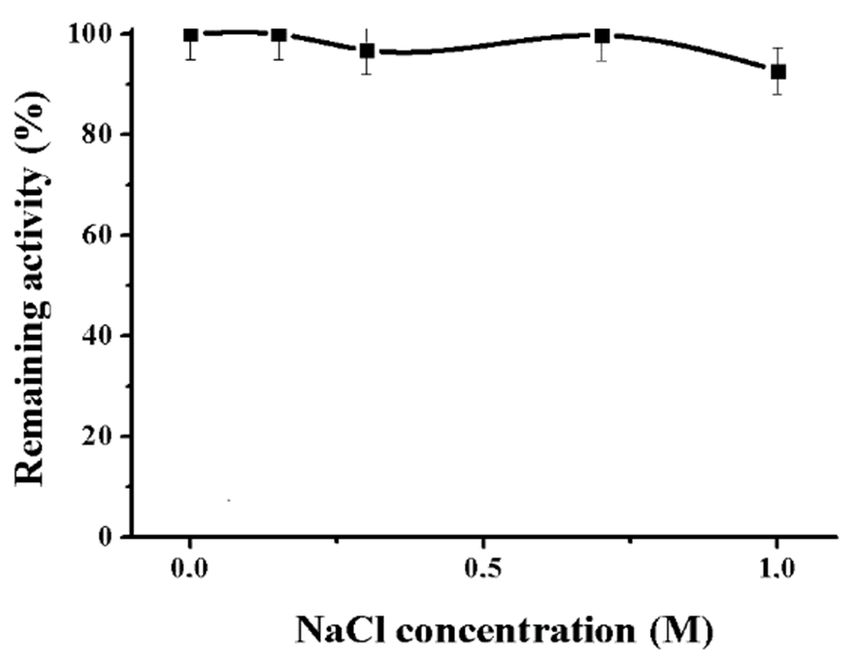
It was
It was found
found that
that NaCl
NaCl did
did not
not affect
affect the
the activity
activity of
of the
the enzyme
enzyme (Figure
(Figure 6).
6).
Figure 6. Effect of NaCl on the alpha-NaGalase of DLD-1 human colon carcinoma cells.
cells.
It is known that the resistance to high concentrations of salt is a characteristic feature of enzymes
It is known that the resistance to high concentrations of salt is a characteristic feature of enzymes
from marine organisms and human bacterial pathogens. High ionic strength is characteristic of the
from marine organisms and human bacterial pathogens. High ionic strength is characteristic of the
natural habitat of host organisms, for instance, bloodstream or seawater [18,23].
natural habitat of host organisms, for instance, bloodstream or seawater [18,23].Mar. Drugs 2018, 16, 155 7 of 14
Sodium-azide is used for conservation of the enzyme preparations for elongated keeping.
This agent reduces the activity of the cancer alpha-NaGalase (Table 2). Terefore it should not be
used as a conservative agent in this enzyme preparation.
Table 2. Effect NaN3 on activity of alpha-NaGalase.
Mar. Drugs 2018, 16, x FOR PEER REVIEW 7 of 14
NaN3 , % Remaining Activity, %
Sodium-azide is used for conservation
0 of the enzyme
100 preparations for elongated keeping. This
0.1 alpha-NaGalase
agent reduces the activity of the cancer 85 (Table 2). Terefore it should not be used as a
0.3
conservative agent in this enzyme preparation. 67
Table 2. Effect NaN3 on activity of alpha-NaGalase.
Sodium azide is well known true inhibitor of metallo-enzymes [44]. Alpha-NaGalase GH109
family from marine bacterium Arenibacter NaN3, %latericius
RemainingKMMActivity,
426%T and α-galactosidase GH36 family
0 100
from marine bacterium Pseudoaleromonas0.1sp. KMM 70685retained 100% activity for a long time at 4 ◦ C
and for a week at 20 ◦ C in the presence 0.3of 0.1% sodium 67 azide [45,46]. Sodium azide was used as
external nucleophile in chemical rescue experiments to probe the catalytic acid/base and the catalytic
Sodium azide is well known true inhibitor of metallo-enzymes [44]. Alpha-NaGalase GH109
nucleophile residues of the retaining glycoside hydrolases [47]. However, there are only several
family from marine bacterium Arenibacter latericius KMM 426T and α-galactosidase GH36 family from
reports of azide
marineanions
bacteriuminhibiting the enzyme
Pseudoaleromonas activity.
sp. KMM 706 retainedSodium azide
100% activity long timeBacillus
for ainhibit licheniformis
at 4 °C and
1,3;1,4-α-glucanase
for a week[48]
at 20and
°C intwo classes of
the presence chitin-degrading
of 0.1% enzymes
sodium azide [45,46]. Sodiumfrom
azidethe
wasmarine bacterium Vibrio
used as external
harveyi withnucleophile in chemical
distinct modes rescue experiments
of action to probe
[49]. As strong the catalytic azide
nucleophile acid/base and the
anions maycatalytic
bind not only
nucleophile residues of the retaining glycoside hydrolases [47]. However, there are only several
to the carboxyl groups of catalytic sites, but also to the other sites of active center of a glycoside
reports of azide anions inhibiting the enzyme activity. Sodium azide inhibit Bacillus licheniformis
hydrolase [49].
1,3;1,4-α-glucanase [48] and two classes of chitin-degrading enzymes from the marine bacterium
Vibrio harveyi with distinct modes of action [49]. As strong nucleophile azide anions may bind not
2.3. Effect of only
Fucoidan on the Activity
to the carboxyl groups ofof Alpha-NaGalase
catalytic sites, but also to the other sites of active center of a glycoside
hydrolase [49].
Previously we have isolated and determined the structural characteristics of the fucoidan from
brown alga F.2.3.evanescens.
Effect of Fucoidan on theshown
It was Activitythat
of Alpha-NaGalase
fucoidan from F. evanescens contained alternating (1 → 3)-
and (1 → 4)-α-L-fucose residues sulfated and partially
Previously we have isolated and determined the structural
acetylatedcharacteristics of the fucoidan
at C2 position. from sulfates
Additional
brown alga F. evanescens. It was shown that fucoidan from F. evanescens contained alternating (1 →
occupy C4 position in some 3-linked α-L-fucose residues [50,51]. The effect of fucoidan from the
3)- and (1 → 4)-α-L-fucose residues sulfated and partially acetylated at C2 position. Additional
Fucus occupy
brown alga sulfates evanescence on the
C4 position activity
in some 3-linkedofα-alpha-NaGalase in human
L-fucose residues [50,51]. The effectcolon carcinoma
of fucoidan from DLD-1
cells and onthe
the biosynthesis
brown of this enzyme
alga Fucus evanescence wereofinvestigated.
on the activity alpha-NaGalase in It human
was shown that fucoidan
colon carcinoma DLD- did not
1 cells and on the biosynthesis
inhibit free alpha-NaGalase, however, of this enzyme were
it reduced theinvestigated.
expression It was shown
of the that fucoidan
enzyme didcancer
in the not cells at
inhibit free−alpha-NaGalase,
1 (Figure 7). however, it reduced the expression of the enzyme in the cancer cells at
IC50 = 73 ± IC
4 50µg mL
= 73 ± 4 μg mL−1 (Figure 7).
Figure 7. Effect of fucoidan from brown alga Fucus evanescence on the production of alpha-NaGalase
Figure 7. Effect of fucoidan
in colon cancer cellsfrom
DLD-1brown
and on alga Fucusofevanescence
the activity on the production
the free alpha-NaGalase, of alpha-NaGalase
0.05 M sodium citrate
in colon cancer
buffer,cells DLD-1
pH 5.0, andwith
the enzyme on fucoidan
the activity of the for
was incubated free30 alpha-NaGalase, 0.05 M
min at 20 °C. Data are shown sodium citrate
as means
± standard
buffer, pH 5.0, deviation
the enzyme (SD)fucoidan
with of values from
wasthree independent
incubated experiments.
for 30 min at 20 The◦ C.
asterisk
Data(*)are
indicates
shown a as means
± standard deviation (SD) of values from three independent experiments. The asterisk (*) indicates
a significant decrease in activity of cellular alpha-NaGalase of DLD-1 cells treated with fucoidan
compared with the non-treated cells (** p < 0.01, *** p < 0.001.).Mar. Drugs 2018, 16, 155 8 of 14
It is known, that anti-cancer and anti-metastatic activities of plant polysaccharides are related
with ability directly or indirectly reduce the activity of macrophages [52,53]. Polysaccharides isolated
from the algae previously have been reported to enhance the phagocytic and secretory activity
of macrophages and induce the production ROS, NO and cytokines (TNF-a, IL-1 and IL-6) [54].
In addition, polysaccharides isolated from blue-green algae, Spirulina platensis, exhibited anti-tumor
and anti-metastatic activity [54]. Thus, it is likely that algal polysaccharides modulate macrophage
immune function. It has been shown, that ionogenic polysaccharides from an edible brown alga,
Hijikia fusiforme (Hijiki), have a possible enhancing activity for macrophage-dependent suppression
against tumor cell growth [55]. Finally, more recently, it has been shown that the immunomodulating
effect is one of the possible mechanisms of the protective action of fucoidan against carcinogenesis of
the breast [56].
3. Materials and Methods
3.1. Materials and Reagents
Roswell Park Memorial Institute Medium (RPMI 1640), phosphate buffered saline (PBS),
L -glutamine, penicillin-streptomycin solution, trypsine and fetal bovine serum (FBS), sodium
hydrocarbonate (NaHCO3 ) and agar were purchased from BioloT (Bolshoy Sampsonievsky Ave,
St. Petersburg, Russia), p-nitrophenyl-N-acetyl-α-D-galactosaminide (p-NPNAGal) were
purchased from Sigma-Aldrich (St. Louis, MO, USA), recombinant protein markers
SDS-PAGE-electrophoresis–from BioRad (1000 Alfred Nobel Drive, Hercules, CA, USA).
3.2. Brown Alga and Fucoidan Isolation
Brown alga Fucus evanescens C. Agardh (Fucales/Fucaceae) was collected by hand at littoral
zone from natural habitats of Kunashir Island (Pacific Coast) in August, 2012. Thallus of fresh algal
biomass was washed thoroughly with tap water, air-dried, and treated sequentially with ethanol,
acetone, and chloroform. Samples of defatted, air-dried and powdered algal fronds were extracted
twice with 0.1 M HCl for 2 h at 60 ◦ C. The extracts were collected by centrifugation, combined, dialyzed,
concentrated, and precipitated with four volumes of 96% ethanol. The precipitates were washed with
96% ethanol and air-dried. This powder of polysaccharide extract was stored at −80 ◦ C before its using
for isolation and purification of fucoidan. The fucoidan was isolated from brown alga F. evanescens,
purified and structural characterized as described in our previous studies [50,51].
3.3. Cell Cultured and Treated with Fucoidan
Human colon carcinoma DLD-1 cells (ATCC® no. CCL-221) were obtained from the American
Type Culture Collection (Manassas, VA, USA). DLD-1 cells were cultured in RPMI-1640 medium.
Culture media were supplemented with 10% FBS and 1% penicillin-streptomycin solution. The cell
cultures were maintained at 37 ◦ C in humidified atmosphere containing 5% CO2 .
3.3.1. Preparation of Cell Lysate
Every 3–4 days DLD-1 cells were rinsed in phosphate buffered PBS, detached from the tissue
culture flask by 1X trypsin/EDTA solution, harvested with RPMI-1640 medium and centrifuge at
500 rpm for 3 min. The culture media was discarding and cells pellet was resuspended in EDTA/Tris
solution and frozen at −80 ◦ C.
3.3.2. Fucoidan’s Treatment of Cells
DLD-1 cells (5 × 10⁵ cells/dish) were seeded in 60 mm dishes. After 24 h, the cells were
treated with a medium containing different concentrations of the fucoidan from F. evanescens (50, 100,
200 µg mL−1 ). After 24 h, the cells were harvested as described in Section 3.3.1. “Preparation of cellsMar. Drugs 2018, 16, 155 9 of 14
lysate”. After each procedure of treating cells with fucoidan, cell lysates were prepared, the enzyme
was extracted and its specific activity was determined, as described below in the Section 3.4.
3.4. Isolation and Purification of α-N-Acetylgalactosaminidase from Cell Lysates
Frozen lysates of cancer cells in the 15 mM Tris buffer, pH 7.0 containing 0.02% EDTA, defrosted
and sonicated using an ultrasonic homogenizer Bandelin Sonopuls (Bandelin electronic GmbH & Co.,
KG Heinrichstraße 3–4 12,207, Berlin, Germany) 10 times during 1 min with a break of 20 s. To remove
the cellular detritus, the cell homogenate was centrifuged at 4 ◦ C, 10,000 rpm, 30 min. The supernatant
proteins were precipitated with 70% ammonium sulfate, kept overnight at 4 ◦ C to form a pellet.
The protein pellet was collected by centrifugation (4 ◦ C, 10,000 rev/min, 30 min) and dissolved in
0.05 M sodium citrate buffer, pH 5.0. The extract was dialyzed with dialysis sacks Sigma-Aldrich
(St. Louis, MO, USA) against the same buffer, centrifuged to separate the insoluble precipitate.
The supernatant was used in further work as purified enzyme. The purification quality was controlled
by 12% Laemmli-SDS-PAGE-electrophoresis [57].
3.5. Biochemical and Enzyme Properties of α-N-Acetylgalactosaminidase from Cell Lysates
3.5.1. The Molecular Weight
The molecular weight of alpha-NaGalase was evaluated by 12% SDS-PAGE-electrophoresis using
recombinant protein markers 250, 150, 100, 75, 50, 37, 25, 20 kDa.
3.5.2. Enzyme Assay
To assay the alpha-NaGalase activity, the following standard procedure was used: 0.05 mL of
cell extract and 0.1 mL of substrate pNPNAGal in 0.05 M Na citrate buffer, pH 5.0, were placed in
cell of 96-well plate and incubated at 37 ◦ C for 30 min. The reaction was stopped by the addition
of 0.15 mL of a solution of 1 M Na2 CO3 . Absorbance was measured at 400 nm on PowerWave XS
microplate spectrophotometer (BioTek Instruments, Highland Park, Winooski, VT, USA). Results
were read with a computer program “Gen5” and treated with “ExCel” computer program. The unit
of activity (U) was defined as the amount of the enzyme catalyzing the formation of 1 µmol of
p-nitrophenol (ε400 = 18,300 M− 1 cm− 1 ) per 1 min under the conditions indicated. Specific activity (A)
was calculated as the enzyme activity (U) per 1 mg of protein. All calculations were based on reactions
with consumption of 10% of the chromogenic substrate. The protein concentrations were estimated by
the Bradford method [58]. Remaining activity (%) was calculated with formula:
Remaining activity (%) = A/A0 × 100, (2)
where A0 is the specific alpha-NaGalase activity in the absence of any influence factors, at 0.05 M Na
citrate buffer, pH 5.0.
3.5.3. pH Optimum of the Alpha-NaGalase
For determination of pH optimum, the mixture contained 0.025 mL of enzyme solution (after
the last step of purification), 0.025 mL of 0.1 M Na citrate of buffer pH 3.0–6.2 and 0.1 mL of the
substrate (1 mg/mL of H2 O). The enzyme activity was determined at 37 ◦ C after 30 min of incubation
as described above.
3.5.4. Effect of Temperature on the Alpha-NaGalase
To study an effect of temperature on the activity of NaGalase DLD-1 0.05 mL of the enzyme
solution in 0.05 M sodium citrate buffer pH 5.0, placed in a warmed cryo-tube, heated in a thermostatic
shakier (BioRad, 1000 Alfred Nobel Drive, Hercules, CA 94547, USA) at 20 to 74 ◦ C for 1 min,
then 0.1 mL of in advance heated p-nitrophenyl-α-N-acetyl-galactosaminide (2.93 mM) in a solutionMar. Drugs 2018, 16, 155 10 of 14
of the same buffer was added. The enzyme activity was determined at each temperature as described
above. For the alpha-NaGalase DLD-1 temperature stability study 0.05 mL of the enzyme solution was
heated for 15, 30, 45 and 60 min in the temperature range from 50 to 75 ◦ C. The samples were cooled
and their activity was determined as described above. From the dependences of the residual activity
(A/A0 ) on the incubation time at different temperatures (T ◦ K), the thermodynamic parameters of the
thermal inactivation of alpha-NaGalase were determined.
3.5.5. Effect of NaCl and NaN3 on the Alpha-NaGalase
To study an effect of NaCl on the activity of alpha-NaGalase DLD-1 0.05 mL of NaCl
solution at different concentration were added to 0.05 mL of substrate solution and 0.05 mL of
enzyme. The mixtures were incubated for 30 min at 37 ◦ C. The enzyme activity was determined as
described above.
To study an effect of NaN3 on the activity of alpha-NaGalase DLD-1 0.05 mL of the enzyme
was mixed with 0.005 and 0.015 mL of an aqueous solution of 1% NaN3 to obtain a concentration
of 0.1 and 0.3% of the agent in the test mixture. The mixtures were held for 30 min, then 0.095 mL
and 0.085 mL of substrate buffer solution (5 mM), respectively, were incubated for 30 min at 37 ◦ C,
the reaction was stopped by the addition of 0.15 mL of Na2 CO3 . The activity was determined as
described above. Mixtures of 0.05 mL of enzyme, 0.005 and 0.015 mL of water, as well as 0.095 mL and
0.085 mL of working buffer were used as a control.
3.5.6. Determination of Km and V max Values
For determination of Km and V max values of alpha-NaGalase the substrate solution in different
concentration was added to 0.05 mL of enzyme solution (0.63 mg mL-1 ) and incubated at 37 ◦ C
for 60 min. The final substrate concentrations were 0.39, 0.78, 1.17, 1.56, 1.95 mM in the incubation
mixtures. The reactions were stopped by the addition of 0.15 mL of Na2 CO3 . The activity was
determined as described above. The Michaelis-Menthen constant Km and V max were determined from
the coefficients of linear regression of the Lineweaver-Burke plot (double-reciprocal).
3.6. Effect of Fucoidan on Alpha-NaGalase
To elucidate the effect of fucoidan on alpha-NaGalase of DLD-1 cancer cells 0.025 mL of water
solution of fucoidan from brown alga Fucus evanescence were added to 0.025 mL of the enzyme solution.
Mixtures were incubated for 30 min, then 0.1 mL of substrate solution in sodium citrate buffer, pH 5.0,
were added and incubated for 60 min at 37 ◦ C. The enzyme activity was determined as described above.
The fucoidan concentrations were 50, 100, 200 µg/mL in incubation mixture. Mixture of 0.025 mL of
enzyme and 0.025 mL of water was used as a control of 100% activity.
4. Conclusions
In the present work, we isolated and purified the almost homogeneous preparations of the
alpha-NaGalase from colon cancer cell line DLD-1. The enzyme has been shown earlier deglycosylates
the GcMAF and inhibits macrophage activity acting as an immunosuppressor. Physicochemical and
catalytic properties of the enzyme were characterized using the standard chromogenic glycoside.
By its biochemical properties, the enzyme was similar to the known enzymes from cancer cells.
Previously the enzyme has been shown to deglycosylate the GcMAF and inhibits macrophage activity
acting as an immunosuppressor. Sulfated polysaccharide fucoidan from brown alga F. evanescens
possessing with wide range of biological activities including immunomodulating activity did not
inhibit free alpha-NaGalase but reduced the expression of the enzyme by DLD-1 cell lines. We have
assumed that the capacity to reduce the expression of an aggressive enzyme is one from side of
immunomodulating properties of the polysaccharide. However, further in vitro and in vivo studies
are needed to investigate the molecular mechanism of fucoidans inhibitory activity on alpha-NaGalase
expression. Overall, alpha-NaGalase from colon cancer DLD-1 cell lines and from other cancer cellMar. Drugs 2018, 16, 155 11 of 14
lines potentially may be used for searching of inhibitors from different marine hydrobionts, which can
serve a base for creation of novel anticancer drugs.
Author Contributions: I.B. conceived and designed the experiments; O.C. performed the experiments with
enzyme; O.M. and C.E. performed the experiments with cancer cells; I.B. and O.M. wrote the paper.
Acknowledgments: The work was carried out within the framework of the State Assignment of the PIBOC of the
FEB RAS No. 0266-2016-0002.
Conflicts of Interest: The authors declare no conflict of interest.
References
1. Santos-Pereira, J.M.; Muñoz-Galván, S. Biomarkers of colorectal cancer: A genome-wide perspective.
Cancer Transl. Med. 2016, 2, 182–188.
2. Clausen, H.; Hakomori, S.-I. ABH and related histo-blood group antigens; immunochemical differences in
carrier isotypes and their distribution. Vox Sang. 1989, 56, 1–20. [CrossRef] [PubMed]
3. Wu, A.M.; Wu, J.H.; Chen, Y.Y.; Tsai, M.S.; Herp, A. Forssman pentasaccharide and polyvalent
Galβ1→4GlcNAc as major ligands with affinity for Caragana arborescens agglutinin. FEBS Lett. 1999, 463,
223–230. [CrossRef]
4. Nakajima, H.; Kurosaka, A.; Fujisawa, A.; Kawasaki, T.; Matsuyana, M.; Nagayo, T.; Yamashina, I. Isolation
and characterization of a glycoprotein from a human rectal adenocarcinoma. J. Biochem. 1983, 93, 651–659.
[CrossRef] [PubMed]
5. Wu, A.M. Carbohydrate structural units in glycosphingolipids as receptors for Gal and GalNAc reactive
lectins. Neurochem. Res. 2002, 27, 593–600. [CrossRef] [PubMed]
6. Kenne, L.; Lindberg, B. Bacterial Polysaccharides. In The Polysaccharides; Aspinoll, G.O., Ed.; Academic Press:
New York, NY, USA, 1983; Volume 2, pp. 287–363.
7. Tomshich, S.V.; Isakov, V.V.; Komandrova, N.A.; Shevchenko, L.S. Structure of the O-specific polysaccharide
of the marine bacterium Arenibacter palladensis KMM 3961T containing 2-acetamido-2-deoxy-L-galacturonic
acid. Biochemistry 2012, 77, 87–91. [CrossRef] [PubMed]
8. Callahan, J.W.; Lassila, E.L.; Den Tandt, W.; Philippart, M. α-N-acetylgalactosaminidase: Isolation, properties
and distribution of the human enzyme. Biochem. Med. 1973, 7, 424–431. [CrossRef]
9. Weissman, B.; Hindrichsen, D.F. Mamalian α-N-acetylgalactosaminidase. Occurrence, partial purification
and action on linkage in submaxillary mucins. Biochemistry 1969, 8, 2034–2043. [CrossRef]
10. Hata, J.; Dhar, M.; Mitra, M.; Harmata, M.; Haibach, F.; Sun, P.; Smith, D. Purification and characterization of
N-acetyl-alpha-D-galactosaminidase from Gallus domesticus. Biochem. Int. 1992, 28, 77–86. [PubMed]
11. Tuppy, H.; Staudenbauer, W.L. The action on soluble blood group A substances of an
alpha-N-acetylgalactosaminidase from Helix pomatia. Biochemistry 1966, 5, 1742–1747. [CrossRef]
[PubMed]
12. Uda, Y.; Li, S.C.; Li, Y.T. α-N-Acetylgalactosaminidase from the limpet Patella vulgate. J. Biol. Chem. 1977, 252,
5194–5200. [PubMed]
13. Schauer, H.; Cottschalk, A. Studies on glycoproteins: XVII. Purification of O-seryl-N-acetylgalactosaminidine
glycohydrolase. Its complete separation from N-acetyl-β-D-hexosaminidase and proteases. Biochim. Biophis. Acta
1968, 156, 304–310. [CrossRef]
14. Ashida, H.; Tamaki, H.; Fujimoto, T.; Yamamoto, K.; Kumagai, H. Molecular cloning of cDNA encoding
α-N-acetylgalactosaminidase from Acremonium sp., and its expression in yeast. Arch. Biochem. Biophys. 2000,
384, 305–310. [CrossRef] [PubMed]
15. McDonald, M.J.; Bahl, O.P. [93a] α-N-acetylgalactosaminidase from Aspergillus niger. Methods Enzymol. 1972,
28, 734–738.
16. Levy, G.N.; Aminoff, D. Purification and properties of α-N-acetylgalactosaminidase from Clostridium
perfringens. J. Biol. Chem. 1980, 255, 11737–11742. [PubMed]
17. Hoskins, L.C.; Boulding, E.T.; Larson, G. Purification and characterization of blood group A-degrading
isoform of α-N-acetylgalactosaminidase from Ruminococcus torques strain IX-70. J. Biol. Chem. 1997, 272,
7932–7939. [CrossRef] [PubMed]Mar. Drugs 2018, 16, 155 12 of 14
18. Liu, Q.P.; Sulzenbacher, G.; Yuan, H.; Bennett, E.P.; Pietz, G.; Saunders, K.; Spence, J.; Nudelman, E.;
Levery, S.B.; White, T.; et al. Bacterial glycosidases for the production of universal red blood cells.
Nat. Biotechnol. 2007, 25, 454–464. [CrossRef] [PubMed]
19. Sadik, G.; Rashid, M.H.; Nashida, T.I.; Ishii, K.; Satoh, Y.; Shiraishi, T.; Uda, Y. Chemical and
Immunological Characterization of the two α-N-acetylgalactosaminidases from Squid (Todarodes pacificus)
Liver. Biol. Pharm. Bull. 2009, 32, 1469–1472. [CrossRef] [PubMed]
20. Rashid, M.H.; Matsuzawa, T.; Satoh, Y.; Shiraishi, T.; Ando, M.; Sadik, G.; Uda, Y. Purification and characterization
of α-N-Acetylgalactosaminidases I and II from Starfish, Asterina amurensis. Biosci. Biotech. Biochem. 2010, 74,
256–261. [CrossRef] [PubMed]
21. Nakagawa, H.; Asakawa, M.; Enomoto, N. Purification and characterization of α-N-acetylgalactosaminidase
from Skipjack liver. J. Biochem. 1987, 101, 855–862. [CrossRef] [PubMed]
22. Bakunina, I.Y.; Nedashkovskaya, O.I.; Kim, S.B.; Zvyagintseva, T.N.; Mikhailov, V.V. Diversity of glycosidase
activities in the bacteria of the phylum Bacteroidetes isolated from marine algae. Microbiology 2012, 81, 688–695.
[CrossRef]
23. Bakunina, I.Y.; Nedashkovskaya, O.I.; Kim, S.B.; Zvyagintseva, T.N.; Mikhailov, V.V. Distribution of
α-N-acetylgalactosaminidases among marine bacteria of the phylum Bacteroidetes, epiphytes of marine
algae of the Seas of Okhotsk and Japan. Microbiology 2012, 81, 375–380. [CrossRef]
24. Bakunina, I.Y.; Nedashkovskaya, O.I.; Balabanova, L.A.; Zvyagintseva, T.N.; Rasskasov, V.A.; Mikhailov, V.V.
Comparative analysis of glycoside hydrolases activities from phylogenetically diverse marine bacteria of the
genus Arenibacter. Mar. Drugs 2013, 11, 1977–1998. [CrossRef] [PubMed]
25. Van Diggelen, O.P.; Schindler, D.; Kleijer, W.J.; Huijmans, J.M.G.; Galjaard, H.; Linden, H.-U.;
Peter-Katalinic, J.; Egge, H.; Cantz, M. Lysosomal alpha-NaGalase deficiency: A new inherited metabolic
disease. Lancet 1987, 2, 804. [CrossRef]
26. Yamamoto, N.; Urade, M. Pathogenic significance of α-N-acetylgalactosaminidase activity found in the
hemagglutinin of influenza virus. Microbes Infect. 2005, 7, 674–681. [CrossRef] [PubMed]
27. Yamamoto, N. Pathogenic significance of α-N-acetylgalactosaminidase activity found in the envelope
glycoprotein gp160 of human immunodeficiency virus Type I. AIDS Res. Hum. Retroviruses 2006, 22, 262–271.
[CrossRef] [PubMed]
28. Lombard, V.; Ramulu, H.G.; Drula, E.; Coutinho, P.M.; Henrissat, B. The carbohydrate-active enzymes
database (CAZy) in 2013. Nucleic Acids Res. 2014, 42, D490–D495. [CrossRef] [PubMed]
29. Yamamoto, N.; Naraparaju, V.R. Vitamin D3 -binding protein as a precursor for macrophage activating
factor in the inflammation-primed macrophage activation cascade in rats. Cell Immunol. 1996, 170, 161–167.
[CrossRef] [PubMed]
30. Yamamoto, N.; Naraparaju, V.R.; Moore, M.; Brent, L.H. Deglycosylation of serum vitamin D3 -binding
protein by alpha-N-acetylgalactosaminidase detected in the plasma of patients with systemic lupus
erythematosus. Clin. Immunol. Immunopathol. 1997, 82, 290–298. [CrossRef] [PubMed]
31. Reddi, A.L.; Sankaranarayanan, K.; Arulraj, H.S.; Devaraj, N.; Devaraj, H. Serum α-N-acetylgalactosaminidase
is associated with diagnosis/prognosis of patients with squamous cell carcinoma of the uterine cervix.
Cancer Lett. 2000, 158, 61–64. [CrossRef]
32. Yamamoto, N.; Naraparaju, V.R.; Asbell, S.O. Deglycosylation of serum vitamin D3 -binding protein leads to
immunosuppression in cancer patients. Cancer Res. 1996, 56, 2827–2831. [PubMed]
33. Yamamoto, N.; Naraparaju, V.R.; Urade, M. Prognostic utility of serum alpha-N-acetylgalactosaminidase and
immunosuppression resulted from deglycosylation of serum Gc protein in oral cancer patients. Cancer Res.
1997, 57, 295–299. [PubMed]
34. Mohamad, S.B.; Nagasawa, H.; Uto, Y.; Hori, H. Tumor cell alpha-N-acetylgalactosaminidase activity and
its involvement in GcMAF-related macrophage activation. Comp. Biochem. Physiol. Part A 2002, 132, 1–8.
[CrossRef]
35. Matsuura, T.; Uematsu, T.; Yamaoka, M.; Furusawa, K. Effect of salivary gland adenocarcinoma cell-derived
α-N-acetylgalactosaminidase on the bioactivity of macrophage activating factor. Int. J. Oncol. 2004, 24,
521–528. [CrossRef] [PubMed]
36. Ale, M.T.; Maruyama, H.; Tamauchi, H.; Mikkelsen, J.D.; Meyer, A.S. Fucoidan from Sargassum sp. and Fucus
vesiculosus reduces cell viability of lung carcinoma and melanoma cells in vitro and activates natural killer
cells in mice in vivo. Int. J. Biol. Macromol. 2011, 49, 331–336. [CrossRef] [PubMed]Mar. Drugs 2018, 16, 155 13 of 14
37. Azuma, K.; Ishihara, T.; Nakamoto, H.; Amaha, T.; Osaki, T.; Tsuka, T.; Imagawa, T.; Minami, S.;
Takashima, O.; Ifuku, S.; et al. Effects of oral administration of fucoidan extracted from Cladosiphon
okamuranus on tumor growth and survival time in a tumor-bearing mouse model. Mar. Drugs 2012, 10,
2337–2348. [CrossRef] [PubMed]
38. Shimizu, J.; Wada-Funada, U.; Mano, H.; Matahira, Y.; Kawaguchi, M.; Wada, M. Proportion of murine
cytotoxic T-cells is increased by high molecular-weight fucoidan extracted from okinawa mozuku
(Cladosiphon okamuranus). J. Health Sci. 2005, 51, 394–397. [CrossRef]
39. Hu, Y.; Cheng, S.C.; Chan, K.T.; Ke, Y.; Xue, B.; Sin, F.W.; Zeng, C.; Xie, Y. Fucoidin enhances dendritic
cell-mediated T-cell cytotoxicity against ny-eso-1 expressing human cancer cells. Biochem. Biophys.
Res. Commun. 2010, 392, 329–334. [CrossRef] [PubMed]
40. Jin, J.O.; Zhang, W.; Du, J.Y.; Wong, K.W.; Oda, T.; Yu, Q. Fucoidan can function as an adjuvant in vivo
to enhance dendritic cell maturation and function and promote antigen-specific T-cell immune responses.
PLoS ONE 2014, 9, e99396. [CrossRef] [PubMed]
41. Kim, K.-T.; Rioux, L.-E.; Turgeon, S.L. Alpha-amylase and alpha-glucosidase inhibition is differentially
modulated by fucoidan obtained from Fucus vesiculosus and Ascophyllum nodosum. Phytochemistry 2014, 98,
27–33. [CrossRef] [PubMed]
42. Kim, K.-T.; Rioux, L.-E.; Turgeon, S.L. Molecular weight and sulfate content modulate the inhibition
of α-amylase by fucoidan relevant for type 2 diabetes management. PharmaNutrition 2015, 3, 108–114.
[CrossRef]
43. Kumar, T.V.; Lakshmanasenthil, S.; Geetharamani, D.; Marudhupandic, T.; Sujaa, G.; Suganyaa, P.
Fucoidan–A α-D-glucosidase inhibitor from Sargassum wightii with relevance to type 2 diabetes mellitus
therapy. Int. J. Biol. Macromol. 2015, 72, 1044–1047. [CrossRef] [PubMed]
44. Morozova, O.V.; Shumakovich, G.P.; Gorbacheva, M.A.; Shleev, S.V.; Yaropolov, A.I. Review: “Blue” laccases.
Biochemistry 2007, 72, 1136–1150. [PubMed]
45. Bakunina, I.Yu.; Kuhlmann, R.A.; Likhosherstov, L.M.; Martynova, M.D.; Nedashkovskaya, O.I.;
Mikhailov, V.V.; Elyakova, L.A. α-N-Acetylgalactosaminidase from marine bacterium Arenibacter latericius
KMM 426T removing blood type specificity of A erythrocytes. Biochemistry 2002, 67, 689–695. [PubMed]
46. Bakunina, I.Yu.; Sova, V.V.; Nedashkovskaya, O.I.; Kuhlmann, R.A.; Likhosherstov, L.M.; Martynova, M.D.;
Mikhailov, V.V.; Elyakova, L.A. α-Galactosidase of marine bacterium Pseudoalteromonas sp. KMM 701.
Biochemistry 1998, 63, 1420–1427.
47. Comfort, D.A.; Bobrov, K.S.; Ivanen, D.R.; Shabalin, K.A.; Harris, J.M.; Kulminskaya, A.A.; Brumer, H.;
Kelly, R.M. Biochemical analysis of Thermotoga maritima GH36 α-D-galactosidase (TmGalA) confirms the
mechanistic commonality of clan GH-D glycoside hydrolases. Biochemistry. 2007, 46, 3319–3330. [CrossRef]
[PubMed]
48. Viladot, J.L.; de Ramon, E.; Durany, O.; Planas, A. Probing the mechanism of Bacillus 1,3–1,4-β-D-glucan
4-glucanohydrolases by chemical rescue of inactive mutants at catalytically essential residues. Biochemistry
1998, 37, 11332–11342. [CrossRef] [PubMed]
49. Sirimontree, P.; Fukamizo, T.; Suginta, W. Azide anions inhibit GH-18 endochitinase and GH-20
exo-β-N-acetylglucosaminidase from the marine bacterium Vibrio harveyi. J. Biochem. 2016, 159, 191–200.
[CrossRef] [PubMed]
50. Vishchuk, O.S.; Ermakova, S.P.; Zvyagintseva, T.N. The fucoidans from brown algae of Far-Eastern seas:
Anti-tumor activity and structure–function relationship. Food Chem. 2013, 141, 1211–1217. [CrossRef]
[PubMed]
51. Anastyuk, S.D.; Shevchenko, N.M.; Ermakova, S.P.; Vishchuk, O.S.; Nazarenko, E.L.; Dmitrenok, P.S.;
Zvyagintseva, T.N. Anticancer activity in vitro of a fucoidan from the brown alga Fucus evanescens and its
low molecular fragments, structurally characterized by tandem mass-spectrometry. Carbohydr. Polym. 2012,
87, 186–194. [CrossRef]
52. Schepetkin, A.B.; Quinn, M.T. Botanical polysaccharides: Macrophage immunomodulation and therapeutic
potential. Int. Immunopharmacol. 2006, 6, 317–333. [CrossRef] [PubMed]
53. Ren, D.L.; Wang, J.Z.; Noda, H.; Amano, H.; Ogawa, S. The effects of an algal polysaccharide from Gloiopeltis
tenax on transplantable tumors and immune activities in mice. Planta Med. 1995, 61, 120–125. [CrossRef]
[PubMed]Mar. Drugs 2018, 16, 155 14 of 14
54. Mishima, T.; Murata, J.; Toyoshima, M.; Fujii, H.; Nakajima, M.; Hayashi, T.; Kato, T.; Saiki, I. Inhibition of
tumor invasion and metastasis by calcium spirulan (Ca-SP), a novel sulfated polysaccharide derived from a
blue-green alga, Spirulina platensis. Clin. Exp. Metastasis 1998, 16, 541–550. [CrossRef] [PubMed]
55. Okai, Y.; Higashi-Okai, K.; Ishizaka, K.S.; Yamashita, U. Enhancing effect of polysaccharides from an
edible brown alga, Hijikia fusiforme (Hijiki), on release of tumor necrosis factor-α from macrophages of
endotoxin-nonresponder C3H/HeJ Mice. Nutr. Cancer 1997, 27, 74–79. [CrossRef] [PubMed]
56. Xue, M.; Liang, H.; Tang, Q.; Xue, Ch.; He, X.; Zhang, L.; Zhang, Z.; Liang, Z.; Bian, K.; Zhang, L.; Li, Z.
The protective and immunomodulatory effects of fucoidan against 7,12-dimethyl benz[a]anthracene-induced
experimental mammary carcinogenesis through the PD1/PDL1 signaling pathway in rats. Nutr. Cancer 2017,
69, 1234–1244. [CrossRef] [PubMed]
57. Laemmli, V.K. Cleavage of structural proteins during of the head of bacteriophage T4. Nature 1970, 227,
680–685. [CrossRef] [PubMed]
58. Bradford, M.M. A rapid and sensitive method for the quantitation of microgram quantities of protein
utilizing the principle of protein-dye binding. Anal. Biochem. 1976, 72, 248–254. [CrossRef]
© 2018 by the authors. Licensee MDPI, Basel, Switzerland. This article is an open access
article distributed under the terms and conditions of the Creative Commons Attribution
(CC BY) license (http://creativecommons.org/licenses/by/4.0/).You can also read


