An Ensembling Architecture Incorporating Machine Learning Models and Genetic Algorithm Optimization for Forex Trading
←
→
Page content transcription
If your browser does not render page correctly, please read the page content below
Article
An Ensembling Architecture Incorporating Machine Learning
Models and Genetic Algorithm Optimization for Forex Trading
Leonard Kin Yung Loh † , Hee Kheng Kueh † , Nirav Janak Parikh † , Harry Chan † and Nicholas Jun Hui Ho
and Matthew Chin Heng Chua *

                                          Institute of Systems Science, National University of Singapore, 25 Heng Mui Keng Terrace,
                                          Singapore 119516, Singapore; e0508654@u.nus.edu (L.K.Y.L.); e0508653@u.nus.edu (H.K.K.);
                                          e0508674@u.nus.edu (N.J.P.); e0508631@u.nus.edu (H.C.); nicholas.ho@nus.edu.sg (N.J.H.H.)
                                          * Correspondence: mattchua@nus.edu.sg
                                          † These authors contributed equally to this work.

                                          Abstract: Algorithmic trading has become the standard in the financial market. Traditionally, most
                                          algorithms have relied on rule-based expert systems which are a set of complex if/then rules that
                                          need to be updated manually to changing market conditions. Machine learning (ML) is the natural
                                          next step in algorithmic trading because it can directly learn market patterns and behaviors from
                                          historical trading data and factor this into trading decisions. In this paper, a complete end-to-end
                                          system is proposed for automated low-frequency quantitative trading in the foreign exchange (Forex)
                                          markets. The system utilizes several State of the Art (SOTA) machine learning strategies that are
                                          combined under an ensemble model to derive the market signal for trading. Genetic Algorithm
                                          (GA) is used to optimize the strategies for maximizing profits. The system also includes a money
                                management strategy to mitigate risk and a back-testing framework to evaluate system performance.
                                   The models were trained on EUR–USD pair Forex data from Jan 2006 to Dec 2019, and subsequently
Citation: Loh, L.K.Y.; Kueh, H.K.;        evaluated on unseen samples from Jan 2020 to Dec 2020. The system performance is promising under
Parikh, N.J.; Chan, H.; Ho, N.J.H.;       ideal conditions. The ensemble model achieved about 10% nett P&L with −0.7% drawdown level
Chua, M.C.H. An Ensembling
                                          based on 2020 trading data. Further work is required to calibrate trading costs & execution slippage
Architecture Incorporating Machine
                                          in real market conditions. It is concluded that with the increased market volatility due to the global
Learning Models and Genetic
                                          pandemic, the momentum behind machine learning algorithms that can adapt to a changing market
Algorithm Optimization for Forex
                                          environment will become even stronger.
Trading. FinTech 2022, 1, 100–124.
https://doi.org/10.3390/
fintech1020008
                                          Keywords: ensemble model; deep reinforcement learning; deep learning; genetic algorithm;
                                          recommender system
Academic Editor: Domenico Talia

Received: 30 January 2022
Accepted: 23 March 2022
Published: 27 March 2022                  1. Introduction
Publisher’s Note: MDPI stays neutral
                                               Being able to make a profit consistently in Forex trading continues to remain a chal-
with regard to jurisdictional claims in   lenging endeavour, especially given the numerous factors that can influence price move-
published maps and institutional affil-   ments [1]. To be successful, traders have to not only predict the market signals correctly,
iations.                                  but also perform risk management to mitigate their losses in the event the market moves
                                          against them [2]. As such, there has been increasing interest in developing automated
                                          system-driven solutions to assist traders in making informed decisions on the course of
                                          action they should take given the circumstances [3]. However, these solutions tend to be
Copyright: © 2022 by the authors.         rule-based or require the inputs of subject matter experts (SMEs) to develop the knowledge
Licensee MDPI, Basel, Switzerland.        database for the system [4]. This approach would negatively impact the performance of
This article is an open access article    the system in the long run given the dynamic nature of the market, as well as making it
distributed under the terms and           cumbersome to update [5].
conditions of the Creative Commons
                                               Most recently, newer innovations have introduced more intelligent approaches through
Attribution (CC BY) license (https://
                                          the use of advanced technologies, such as ML algorithms [6]. Unlike the traditional rule-
creativecommons.org/licenses/by/
                                          based approach, machine learning is able to analyze the Forex data and extract useful
4.0/).

FinTech 2022, 1, 100–124. https://doi.org/10.3390/fintech1020008                                             https://www.mdpi.com/journal/fintech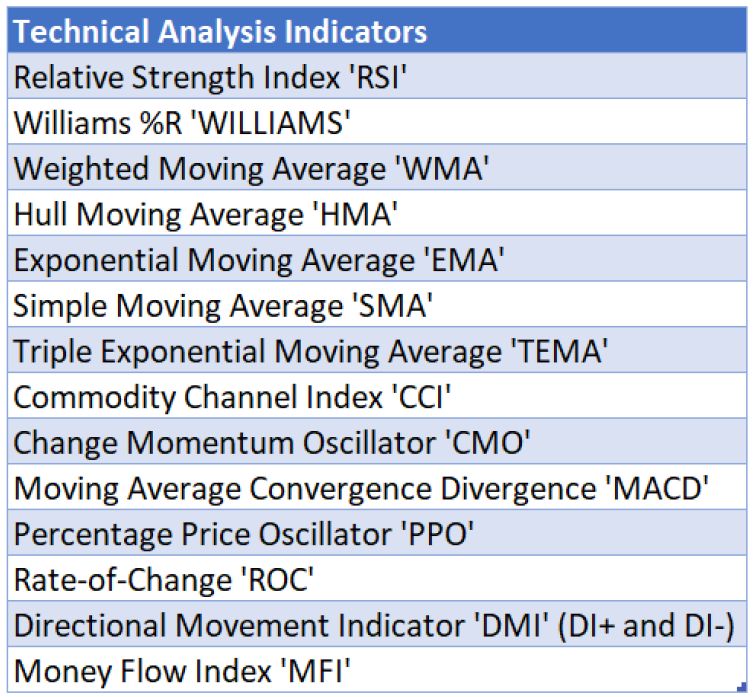
FinTech 2022, 1                                                                                              101

                  information from it to help traders make a decision [7]. Given the explosion of data and
                  how it is becoming more readily available nowadays, this has been a game-changer in
                  the field of Forex trading with its fast-paced automated trading since it requires little
                  human intervention and provides accurate analysis, forecasting, and timely execution of
                  the trades [8].
                        This study proposes a complete end-to-end system solution, coined as AlgoML, that in-
                  corporates both trade decisions as well as a risk and cash management strategy. The system
                  is able to automatically extract data for an identified Forex pair, predict the expected market
                  signal for the next day and execute the most optimal trade decided by the integrated risk
                  and cash management strategy. The system incorporates several SOTA reinforcement learn-
                  ing, supervised learning, and optimized conventional strategies into a collective ensemble
                  model to obtain the predicted market signal. The ensemble model gathers the output
                  predicted signal of each strategy to give an overall final prediction. The risk and cash
                  management strategy within the system helps to mitigate risk during the trade execution
                  phase. In addition, the system is designed such that it makes it easier to train and back test
                  strategies to observe the performance before actual deployment.
                        The paper is structured as follows: Section 2 explores related works on prediction
                  based models for the Forex market. Section 3 presents the high-level architecture of the
                  system and its individual modules. Section 4 elaborates on the ML model designs used in
                  the system. Section 5 provides the results on the performance of the system.

                  2. Related Works
                        Over the past decade, there have been a number of works in the literature proposing
                  various prediction-based models for trading in the Forex market. One of the most popular
                  time-series forecasting models was Box and Jenkins’ auto-regressive integrated moving
                  average (ARIMA) [3], which is still explored by other researchers for Forex prediction [9,10].
                  However, it is noted that ARIMA is a general univariate model and it is developed based
                  on the assumption that the time series being forecasted are linear and stationary [11].
                        With the advancement of machine learning, most of the research works have been
                  focused on the use machine learning techniques to develop the prediction models. One such
                  area is the use of supervised machine learning models. Kamruzzaman et al. investigated
                  artificial neural networks (ANNs)-based prediction modeling of foreign currency rates
                  and made a comparison with the best known ARIMA model. It was discoverd that the
                  ANN model outperformed the ARIMA model [12]. Thu et al. implemented a support
                  vector machine (SVM) model with actual Forex transactions, and outlined the advantages
                  of the use of SVM compared to transactions done without the use of SVM [13]. Decision
                  trees (DT) have also seen some usage in Forex prediction models. Juszczuk et al. created a
                  model that can generate datasets from real-world FOREX market data [14]. The data are
                  transformed into a decision table with three decision classes (BUY, SELL or WAIT). There
                  are also research works using an ensemble model rather than relying on single individual
                  models for Forex prediction. Nti et al. constructed 25 different ensembled regressors and
                  classifiers using DTs, SVMs and NNs. They evaluated their ensembled models over data
                  from various stock exchanges and showed that stacking and blending ensemble techniques
                  offer higher prediction accuracy of (90–100%) and (85.7–100%) respectively, compared
                  with that of bagging (53–97.78%) and boosting (52.7–96.32%). The root mean square error
                  (RMSE) recorded by stacking (0.0001–0.001) and blending (0.002–0.01) was also lower than
                  to that of bagging (0.01–0.11) and boosting (0.01–0.443) [15].
                        Apart from supervised machine learning models, another area of machine learning
                  technique that is employed for Forex prediciton is the use of Deep Learning models.
                  Examples of such models include long short-term memory (LSTM) and convolutional
                  neural networks (CNNs). Qi et al. conducted a comparative study of several deep learning
                  models, which included long short-term memory (LSTM), bidirectional long short-term
                  memory (BiLSTM) and gated recurrent unit (GRU) against a simple recurrent neural
                  network (RNN) baseline model [16]. They concluded that their LSTM and GRU models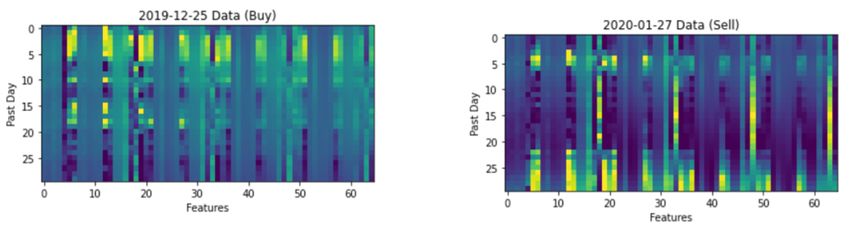
FinTech 2022, 1                                                                                            102

                  outperformed the baseline RNN model for EUR/GBP, AUD/USD and CAD/CHF currency
                  pairs. They also reported that their models outperformed those proposed by Zeng and
                  Khushi [17] in terms of RMSE, achieving a value of 0.006 × 10⁻³ as compared to 1.65 × 10⁻³
                  for the latter.
                       Some research works have attempted a hybrid approach by combining multiple deep
                  learning models together. Islam et al. introduced the use of a hybrid GRU-LSTM model.
                  They have tested their proposed model on 10-mins and 30-mins timeframes and evaluated
                  the performance based on MSE, RMSE, MAE and R2 score. They reported that the hybrid
                  model outperforms the standalone LSTM and GRU model based on the performance
                  metrics used [18].
                       Reinforcement learning (RL) is another area of interest that has been tapped for Forex
                  prediction. It involves training an agent to interact with the environment by sequentially
                  receiving states and rewards from the environment and taking actions to reach better
                  rewards. In the case of Forex trading, the reward function can be based on maximising
                  prediction accuracy or profit. Carapuço et al. developed a neural network with three
                  hidden layers of ReLU neurons are trained as RL agents under the Q-learning algorithm
                  by a novel simulated market environment framework, which includes new state and
                  reward signals. They tested their model on the EUR/USD market from 2010 to 2017,
                  and the the system yielded an average total profit of 114.0 ± 19.6% for an yearly average of
                  16.3 ± 2.8% over 10 tests with varying initial conditions [19]. Other works have been done
                  in deep reinforcement learning (DRL) techniques, which combines machine learning and
                  reinforcement learning. Thibaut and Ernst presented a deep reinforcement learning (DRL)
                  approach inspired by the popular Deep Q-Network (DQN) algorithm [20]. Yuan et al.
                  found that proximal policy optimization (PPO) is the most stable algorithm to achieve
                  high risk-adjusted returns, while (DQN) and soft actor critic (SAC) can beat the market
                  in terms of Sharp ratio [21]. Rundo proposed an algorithm that uses a deep learning
                  LSTM network with reinforcement learning layer for high-frequency trading in the Forex
                  market. The model was reported to achieve an accuracy of 85%. The algorithm was further
                  validated on the EUR/USD market, achieving a return of investment of 98.23% and reduced
                  drawdown of 15.97% [22].
                       Although there has been extensive research work done in trying to develop prediction
                  models for Forex prediction, especially in the use of machine learning techniques, it is
                  noted that the results are heavily focused on accuracy metrics. As such, there is a lack of
                  profitability results, which is important to consider as well since the main goal of Forex
                  trading is to generate profits. However, generating profits is not just dependent on the
                  model getting most of the predictions right. In a real-world trading context, there are many
                  other factors that come into play that can significantly impact profit such as transaction
                  costs [23,24], which can quickly erode profits if many trades are conducted in a short
                  time span. Furthermore, there is little to no research work conducted for a complete end-
                  to-end system solution that includes features such as comprehensive back testing and
                  optimization, which is important for actual deployment on the real world Forex trading
                  environment. Hence, this study aims to address the shortcomings identified in this field
                  through a proposed complete end-to-end system solution for Forex trading.

                  3. Methods
                  3.1. Overall Architecture
                        The high level architecture of the proposed system is illustrated in Figure 1, and con-
                  sists of the following 5 main modules:
                  •    System Interface module: UI interface that traders can use to communicate with
                       AlgoML to obtain trade action recommendation and execute trades through broker
                       websites.
                  •    Pre-processing module: includes the extract, load and transform pipeline together
                       with data cleaning, feature extraction and feature engineering
                  •    Action Predictor module: gives a final predicted buy/sell action output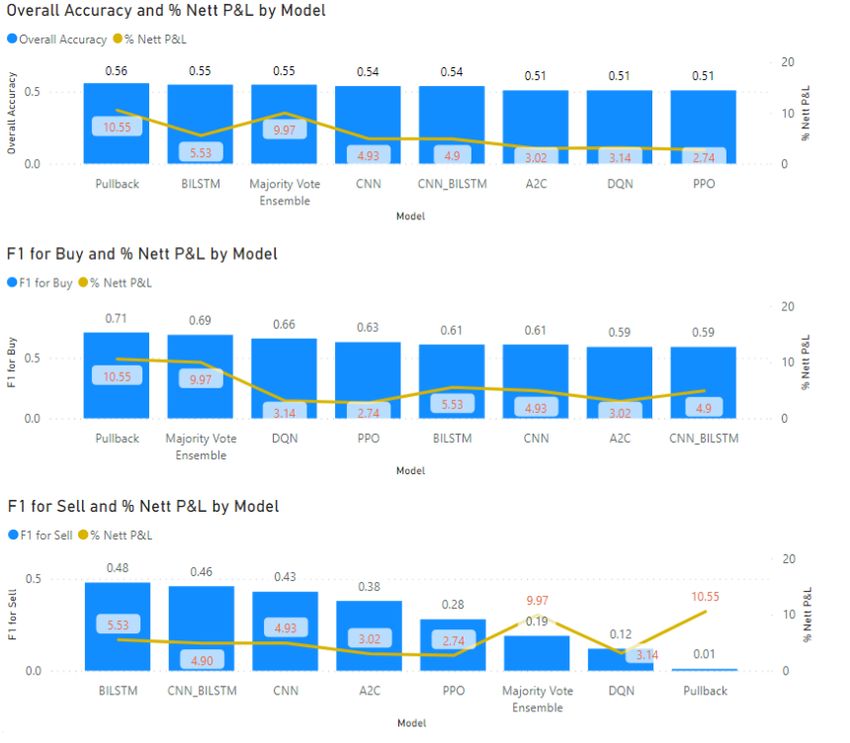
FinTech 2022, 1                                                                                             103

                  •    Trader module: simulator environment to replicate market trading and execute orders
                       based on model predictions. Also performs actual trade through broker websites
                  •    Optimizer module: optimizes parameters for strategies to improve system profitability

                  Figure 1. Overall system architecture.

                       With reference to Figure 1, the general process flow of the system starts out at the
                  System Interface module. Traders will use the UI to ask AlgoML to provide a recommended
                  action for their desired Forex pair. Upon receiving the request, the system proceeds to
                  the Pre-processing module, where market data is harvested through broker websites and
                  processed accordingly. The processed data is then passed into the Action Predictor module,
                  specifically into the various models/strategies included within it. Each model/strategy
                  takes in the processed data and outputs their predicted action to take. The predicted action
                  from each model/strategy is then collected into the ensemble model to obtain a single final
                  predicted action. The predicted action to take will then be reflected to the user via the
                  System Interface UI. Here, the user can choose to instruct AlgoML to execute the predicted
                  action on their behalf. If so, the system will proceed to the Trader module, which takes in
                  the predicted action signal and uses an included money management strategy to execute
                  the most optimal course of action to take. The result of the actual action taken by the Trader
                  module will be reflected back to the user through the UI. The Optimization module of the
                  system helps to optimize parameters for strategies within the system such as the money
                  management strategy in the Trader module, and those used in the Action Predictor module.
                  More details about how each module functions is explained in Sections 3.2–3.6 below.

                  3.2. System Interface Module
                       The System Interface module consists of a front-end UI built using Python’s tkinter
                  package. Using the UI, traders can select the Forex pair that they wish to trade using
                  AlgoML. After selecting the desired Forex pair, traders will command AlgoML to extract
                  the most update-to-date OHLCV data available for that Forex pair through broker websites.
                  After that, traders can request AlgoML to make a prediction of whether they should “BUY”
                  or “SELL” based on the data available at hand, which will be reflected on the UI once the
                  prediction is completed. If traders wish for AlgoML to execute the trade on their behalf, it
                  can be done so through the UI.

                  3.3. Pre-Processing Module
                  3.3.1. Data Preparation
                       The Pre-processing module first performs extract, transform and load (ETL) to obtain
                  the raw data of the identified Forex pair (EUR/USD) through the broker websites. Data
FinTech 2022, 1                                                                                                 104

                   that are extracted come in the form of “Open, High, Low, Close and Volume” (OHLCV).
                   In total, 8 years’ worth of daily OHLCV data from January 2010 to December 2018 were
                   selected as training data set, while test data were from January 2020 to December 2020.
                   Data from year 2019 were intended to leave as a gap between training and test data set
                   to prevent data leakage due to some technical indicators requiring lookback, for example
                   moving average.
                        Labels are generated to train the models. Since the expected market signal output
                   from the system is either a “BUY” or “SELL” signal, the labels are denoted as “1” for “BUY”
                   signals and “−1” for “SELL” signals. The labels are generated by taking the difference in
                  ‘Close’ price between the next day (t + 1) and current day (t) as shown in (1) and (2). If the
                   difference is positive, then the label is “1” since the close price is expected to go up the next
                   day. Otherwise, the label is “−1” since the close price is expected to go down the next day.

                                                    ∆Close = Closet+1 − Closet                                  (1)
                                                            (
                                                              1,  if ∆Close ≥ 0
                                                   Labelt =                                                     (2)
                                                              −1, otherwise
                        After generating the labels, it is important to check for class imbalance within the
                  data. This is to prevent biased performance of the trained model towards a certain set
                  of labels [25]. The presence of class imbalance can be observed by checking the labels
                  distribution for each year as shown in Figure 2. A good class distribution would have a
                  relatively similar number of labels for each year and overall total for the entire time range
                  as well, which can be observed from the graph. As such, class imbalance is not expected to
                  be major factor negatively affecting the performance of the trained supervised models.

                  Figure 2. Label distribution across years.

                  3.3.2. Eliminating Trend and Seasonality in Data
                       Times series data is different from independent and identically distributed (IID) data.
                  The conventional preprocessing methods cannot be applied directly to this data. Fur-
                  thermore, financial price data follows a stochastic process which adds a further level of
                  complexity. As such, it would be extremely difficult to model or forecast the data [26,27].
                  Hence, when dealing with time-series data, it is recommended to make the data stationary
                  before passing it into the model for training and testing. Stationary data is where the mean,
                  variance and autocorrelation structure do not change over time, which means that there
                  should be no clear trend observed within the data [28]. The motive behind making data
                  stationary is that ML models learn based on particular patterns. Due to regime changes
FinTech 2022, 1                                                                                                                 105

                  or external factors, the market changes and so do the patterns in the data. As such, pre-
                  dictive results are going to be worse, as the ML model is unable to generalize well to this
                  change in pattern. To test whether a time-series is truly stationary or not, the augmented
                  Dickey–Fuller (ADF) test is utilized [29]. The main objective of the test is to reject the null
                  hypothesis that the data is nonstationary. If the null hypothesis can be rejected, it means
                  that the data is stationary. The test consists of a Test Statistic and some Critical Values for
                  different confidence levels. If the ‘Test Statistic’ is less than the ‘Critical Value’, then the
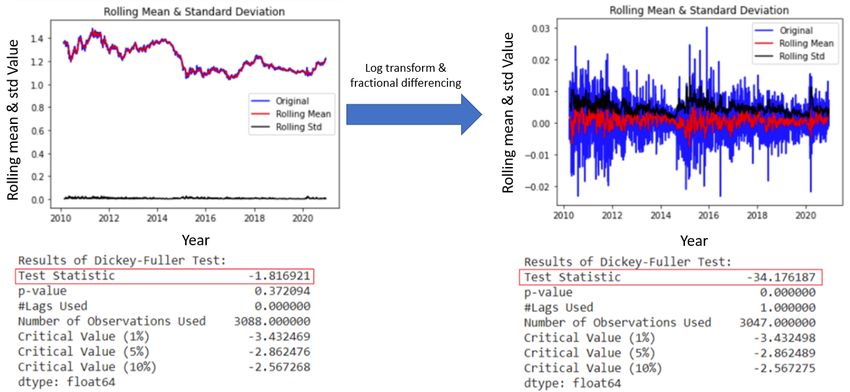
                  null hypothesis can be rejected. When applied to the raw OHLCV data, the results as seen
                  in Figure 3 show that the data is indeed nonstationary.

                  Figure 3. Result of augmented Dickey-Fuller test on raw OHLCV data.

                       To make the OHLCV data stationary, a combination of log transformation and frac-
                  tional differencing is used. The reason for this is that it was discovered that solely applying
                  a log transform does not make the data stationary based on the ADF test; thus, fractional
                  differencing was also used in conjunction to make the data stationary. Log transform
                  attempts to reduce trend and seasonality by penalizing higher values more than smaller
                  values. Fractional differencing is chosen instead of integer differencing because the latter
                  unnecessarily removes too much memory to achieve stationarity, which could affect the
                  predictive performance of the ML models. Thus, fractional differencing helps to achieve
                  stationarity while maintaining the maximum amount of memory compared to integer
                  differencing. The formula for fractional differencing [30] is outlined in (3).
                                                d ( d −1)          d(d−1)(d−2)
                   ∆ d y t = y t − d y t −1 +        2! yt−2   −        3!     y t −3   + · · · + (−1)k+1 d(d−1)∗···∗(
                                                                                                                 k!
                                                                                                                       d−k)
                                                                                                                            yt−k (3)

                  where ∆d denotes fractional differencing of order d.
                        Since the differencing order is fractional, each of the lags has a weight, and they
                  converge to zero in absolute value (faster convergence towards zero happens in higher
                  orders of differencing), a cutoff value is required for the absolute value of the coefficients
                  such that the series is not theoretically infinite. Larger time series would allow smaller
                  cutoff values in order to preserve more memory, it ends up being a trade-off between
                  memory conservation and computational efficiency. For this study, a differencing order of
                  0.8 is used, which will cut off around 2% of data entries from the raw nonstationary dataset.
                  This is to establish a good balance between making the data stationary and preserving as
                  much memory as possible. After applying both log transform and fractional differencing,
                  the results of the ADF test as seen in Figure 4 indicates that the the null hypothesis of the
                  test can be rejected and the data is now deemed to be stationary.
FinTech 2022, 1                                                                                                    106

                  Figure 4. Result of Dickey–Fuller test after performing log transform and fractional differencing.

                  3.3.3. Feature Engineering
                       In real world trading, traders do not just depend on analyzing OHLCV signals to
                  predict market movement. Instead, they also employ the use of technical indicators, which
                  are heuristic or pattern-based signals produced by the price or volume data. Examples of
                  commonly used technical indicators include moving average (MA), Bollinger bands (BB)
                  and Heikin Ashi candles. Some notable technical indicators that are used to train the ML
                  models in the system are seen in Figure 5, which have been used in other research works
                  for Forex trading as well [31,32]. The chosen technical indicators are mostly oscillators and
                  trend-based financial time-series filters which are used by [32]. In those studies, different
                  intervals are used for the technical indicators (3, 7, 14 and 20 days), which are commonly
                  preferred by short-to-medium-term traders. The conclusion drawn from [33] reveals that
                  using long-horizon forecasts potentially contributes to negative prediction results and
                  short-term results in better prediction. This is based on the fact that out of the 39 studies,
                  27 papers used both middle-term and short-term predictions. The technical indicators are
                  generated using Python packages finta [34] and pandas-ta [35].
                       The technical indicators selected from Figure 5 along with the Open, High, Low, Close,
                  Volume are being normalized using MinMax scaler from scikit-learn preprocessing library.
                  A total of 19 parameters were used to train the deep learning models.

                  Figure 5. Examples of technical indicators selected for model training.
FinTech 2022, 1                                                                                            107

                  3.4. Action Predictor Module
                        The Action Predictor module uses an ensemble technique, where results from sev-
                  eral ML models are combined together to give a final predicted buy/sell action output.
                  As compared to single-model based predictions, ensemble models have the advantage to
                  potentially reduce the variance of predictions and reduce generalization error, resulting
                  in better performance than the former approach [25]. This makes it applicable for the
                  Forex markets as they tend to be very volatile, which makes predictions very prone to
                  high-variance errors. Various works have incorporated ensemble methods to achieve state-
                  of-the-art performance [36,37]. Other studies involved in stock market price prediction
                  have reported that ensemble models produced a higher accuracy prediction as compared
                  to single models [38,39].
                        The three key criteria while designing the ensemble were the choice of base learners,
                  the combination techniques used to aggregate the predictions and the quantum of classifiers
                  to be ensembled. The Action Predictor module consists of two main parts: the base learner
                  module, which includes the various ML models, and the Ensemble module, to combine the
                  predictions and output a single final predicted action.
                        With reference to Figure 6, the base learner module consists of various machine
                  learning classifier models. All models/strategies will receive the preprocessed input from
                  the preprocessing module. The predicted output of each model/strategy will go into the
                  Ensemble model module to make the final prediction. A total of 7 models/strategies are
                  used in the ensemble for this study, which include:
                  •    DQN;
                  •    A2C;
                  •    PPO;
                  •    CNN;
                  •    CNN-BILSTM;
                  •    BILSTM;
                  •    Pullback (GA Optimized).

                  Figure 6. Base learner module flow process.

                       The Ensemble module then takes in all inputs from the models/strategies included in
                  the base learner and votes on the final prediction using a specified voting method. Possible
                  voting methods include:
                  •    Highest voting: uses the prediction with the highest probability score
                  •    Average voting: averages the predictions from each model
                  •    Majority voting: selects the final action which has the majority of predictions

                  3.5. Trader Module
                      The Trading Module also functions as a simulator environment that is used to replicate
                  market trading and execute orders based on model predictions. This is essential, as it not
FinTech 2022, 1                                                                                             108

                  only evaluates the actual P&L impact of trading predictions, but also works as the actual
                  trade environment to calculate rewards in the ML models and as a Fitness Function in the
                  Optimizer module. Furthermore, the Trading Module is also fully parameterized and con-
                  figurable to allow the Optimizer module to explore different combinations and determine
                  the optimal trading strategy, one that maximizes profits and not just prediction accuracy.
                        Supplementing the Trading module is the Money Management module which per-
                  forms risk management. This module overlays the Trading Strategy and provides Stop
                  Loss functions to minimize the down-side of false-positive predictions and Take Profit func-
                  tions to lock in profits of true positive predictions. These functions are also parameterized
                  and available to the GA module to optimize in conjunction with the underlying trading
                  strategy. Having a money management strategy is important in the context of real-life
                  trading, where many risk factors are considered behind the scenes of every buy/sell order
                  placed. For example, real-life traders have to consider the amount of capital they are
                  willing to risk per trade, as well as their take profit or stop loss margin. This is to ensure
                  that any negative impact of a Forex trade is manageable [40]. Many financial or trading
                  organizations have some sort of money management strategy in place to precisely weather
                  such situations [41–43]. Hence, it is important to define a money management strategy for
                  the system to improve profitability.
                        An important factor when executing trades is to limit negative risk. Therefore, the max-
                  imum drawdown of the model was restricted to a predetermined threshold. The module
                  is also designed to be sensitive to transaction costs, thus restricting the amount of the
                  transactions it can make. The predefined strategy inside the Money Management Strategy
                  algorithm will use the predicted result to make trading decisions whether to buy, to sell or
                  to hold. The overall process flow of the trader module can be visualized in Figure 7.

                  Figure 7. Trader module flow process.

                  3.6. Optimizer Module
                       There are many strategies that traders employ to trade in the Forex market. Some of the
                  popular ones include moving average strategies such as the 50-day moving average [44].
                  However, there is no guarantee that such strategies will always turn a profit despite
                  regime or market changes. In fact, depending on the market situation, using a different
                  moving average period other than the 50-day moving average might actually perform
                  better. The challenge is then to decide which parameter is most optimal for the strategy to
                  maximise profit gain. This can be viewed as an optimization problem, where the aim is to
                  optimize a set of rules that constitute a trading strategy. An example of an optimization
                  method to tackle this problem is the use of a GA. GAs are not good for finding patterns,
                  but excel in exploring the solution space to search for better parameters that optimize the
                  result. There have been past research works that attempt to use GA to optimize strategy-
                  trading rules in the Forex market [45,46]. In the context of Forex trading, the GA can be
                  broken down into the following components:
                  •    Gene: a feature parameter that defines the strategy (e.g., EMA Period);
                  •    Individual/Chromosome: represents a complete set of feature parameters to define
                       the strategy;
                  •    Population: a collection of possible sets of feature parameters;
                  •    Parents: two sets of feature parameters that are combined to create a new feature set;
FinTech 2022, 1                                                                                              109

                  •    Mating pool: a collection of parents that are used to create the next generation of
                       possible sets of feature parameters;
                  •    Fitness: a function that tells us how good the strategy performs based on the given
                       set of feature parameters, in this case the fitness is defined by the “P&L”;
                  •    Mutation: a way to introduce variation in our population by randomly swapping two
                       feature parameter value between two individuals;
                  •    Elitism: a way to carry the best individuals into the next generation;
                  •    CrossOver: combines parent chromosomes to create new offspring individuals.

                  4. System Model Design
                        Multiple types of supervised learning models were explored to be used in the system.
                  Ordinary machine learning models such as support vector machine (SVM) and random
                  forest classifier (RFC) models, which were the most common machine learning models
                  for stock market prediction were selected as possible candidates. Prophet from Facebook,
                  which is a time-series univariate type of model, was also explored as well. However,
                  the results for SVM, RFC and Prophet did not show much potential in terms of profit and
                  accuracy. As such, they are excluded from the results.
                        In addition, this study explored deep learning models such as CNN and LSTM, deep
                  reinforcement learning models and conventional GA-optimized models.

                  4.1. Deep Learning
                  4.1.1. Bi-Directional LSTM
                        Recurrent neural network (RNN) is a type of deep learning model where its weights
                  computed during training are adjusted based on current training example and output
                  from previous example which causes it to have a feedback loop [47]. This architecture
                  conforms perfectly with the time-series nature of stock price data. A hierarchy of deep
                  RNNs have been shown to perform well for prediction tasks as related to time-series
                  data [48]. The problem with RNN is the vanishing and exploding gradient problem due to
                  the long connections between the final output layer and hidden layers of previous data in
                  the sequence [47]. Long short-term memory (LSTM) was then designed to overcome the
                  vanishing gradient problem, where gates and memory units to remember the gradients
                  are being included [49]. Three types of gates are used in LSTM, the forget gates—remove
                  irrelevant past information and remember only the information that is relevant for the
                  current slot, the input gates—control the new information that acts as the input to the
                  current state of the network; and the output gates—produce predicted value computed by
                  the model for the current slot [47].
                        For this study, the bidirectional LSTM from [50] is utilized. This type of bidirectional
                  recurrent neural networks connects two hidden layers of opposite directions to the same
                  output thus it can learn from both the forward and backward time dependencies. With this
                  form of generative deep learning, the output layer can get information from past and
                  future states simultaneously. In a bidirectional LSTM, each unit is split into two units
                  having the same input and connected to the same output. One unit is used for the forward
                  time sequence and the other for the backward sequence. The common output does an
                  arithmetic operation such as sum, average or concatenation on both the units. Bidirectional
                  LSTM is thus useful when learning from long spanning time-series data [51]. This type of
                  bidirectional LSTM was also used in other research works for stock market closing price
                  prediction [52]. The general bidirectional LSTM framework is illustrated in Figure 8.
                        The input Forex data was shaped into a sequence of two-dimensional data (past day
                  and features) as shown in Figure 9. The features consist of OHLCV and technical indicators
                  data. In this study, 30 days of past-day data was used as the look-back input. This value
                  was selected based on a study where the authors created 30 days of sample chunks by
                  sliding window over time series to predict the value of the 31st day [53].
FinTech 2022, 1 110
Figure 8. General bidirectional LSTM architectural framework.
Figure 9. Shaping of Forex sequence into 2-D data format.
Figure 10 shows the bidirectional LSTM architecture used in this project. The return
sequence parameter is set to True to obtain all the hidden states at the first LSTM layer.
A drop out of 25% at the first dropout layer and 50% at the second dropout layer is added
to generalize the model while minimizing overfitting.
Figure 10. Bidirectional LSTM architectural framework used.
The BILSTM model was used as a regression model to predict the next day close price
to obtain the Forex close price movement direction, the result is then converted to a binary
Buy or Sell signal. An offset was observed between the predicted close price and the actual
close price but in a linear relationship as shown in Figure 11 below.FinTech 2022, 1 111
Figure 11. Predicted close price and its relationship with the actual close price.
Figure 12 shows the adjusted predicted close price versus the actual close by after
adjusting the predicted close price according to the linear function obtained. It is observed
that there is a lag between the predicted close price (orange line) and the actual close price.
This lagging phenomenon is explained in [54], where the point-by-point prediction seems
to closely match the real price curve However, this is deceptive in reality as the prediction
tends to simply repeat the trajectory of historical prices with a delay. The delay occurs
because the predicted price is close to the last time step of the input stock price sequence.
Figure 12. Adjusted close price after linear adjustment vs. ground truth.
4.1.2. Convolutional Neural Network (CNN)
CNN is the another deep learning regression model that was explored. Compared
to LSTM, CNN is a relatively new architecture used in financial time-series prediction.
The major advantage of CNN over other deep learning approaches is that it can model
more complex nonlinear relationships by increasing the number of layers but increasing
the number of feed-forward neural networks will cause overfitting due to the number ofFinTech 2022, 1 112
parameters increased from the given data. CNN is able to address this issue by convoluting,
downpooling and dropout operation which will allow for a deeper architecture [55].
A CNN consists of two major processing layers—the convolutional layers and the
pooling layers. The 2D convolutional layers are used for reading the inputs in the form
of a sequence of two-dimensional data. The results of the reading are projected into a
2D filter map that represents the interpretation of the input. In CNN, the filters are not
defined. The value of each filter is learned during the training process [56]. Every filter is
spatially small (in terms of width and height) but extends through the full depth of the
input volume. During the forward pass, each filter is moved across the width and height of
the input volume, and dot products are computed between the entries of the filter and the
input at any position. As the filter is moved over the width and height of the input volume,
a two-dimensional feature map that gives the responses of that filter is produced at every
spatial position [57]. The pooling layers operate on the extracted feature maps and derive
the most essential features by averaging (average pool) or max computing (max pooling)
operations. Figure 13 illustrates the high level architecture of a CNN model for Forex time
series applications.
Figure 13. Architecture flow of CNN model with market time series data.
To feed the time-series data into the CNN model, we reshaped the multivariate input
data, and the time-series features data was turned into images in sequence as shown in
Figure 14. An example of Forex features’ data presented in image form, with 30 days of
past day and features which consists of OHLCV and the technical indicators is presented in
Figure 15.
Figure 14. Reshaping of time-series market data into a 3D data format.
The CNN based regression model consists of four convolutional layers with kernel
sizes of 32, 64, 128 and 256 and with a filter size of 1 as shown in Figure 16. Dropout rates of
25% and 50% were introduced at the last two layers to generalize the model. The rectified
linear unit (ReLU) function has been used in the convolution and fully connected layer,
the performance of the layers is optimized by using ADAM optimizer, both the activation
and optimizer were chosen with reference to [47,51] CNN models used in stock price
prediction. For extracting deep features from the input sequence, the convolution and theFinTech 2022, 1 113
pooling layers may be repeated multiple times. The output from the last pooling layer is
sent to one or more dense layer(s) for extensive learning from the input data.
Figure 15. Image visualization of input time-series market data after reshaping.
Figure 16. CNN architectural framework used.
The size of the pooling layer is set as 1 (which is equivalent to no pooling) because [58]
claimed in the financial study that if a pooling layer is adopted, the information would
probably be lost. Specifically, the convolutional layer is designed for performing convolu-
tion operations on the input data. The convolution operation can be considered as a filter
used for the input data. The size of a filter suggests its coverage. Figure 17 shows how the
1 × 1 filter works in the three-dimensional input tensor [59].
Figure 17. Feature map creation by applying 1 × 1 filter on the input tensor.FinTech 2022, 1 114
4.1.3. CNN-BILSTM
A hybrid model, which comprised CNN for feature extraction and BILSTM for pre-
diction, was explored. This hybrid model has also been used by another research works
in stock market prediction [51,59]. A pure LSTM-based regression model reads the input
sequential data directly, and computes the internal state and state transitions to produce its
predicted sequence but a CNN-LSTM model extracts the features from the input sequence
using a CNN encoder submodel, and then interprets the output from the CNN models.
The output from the CNN model will be passed to LSTM as input. In contrast to these,
a convolutional LSTM model uses convolution operation to directly read a sequential input
into a decoder LSTM submodel [47]. Figure 18 illustrates the CNN-LSTM architecture.
The data was reshaped to 3D using the same methodology described for the CNN model.
Figure 18. Architecture flow of Hybrid CNN-BILSTM model with market time series data.
For the CNN-BILSTM hybrid model, three convolutional layers are used, and the num-
ber of filters for each convolutional layer is 128, 256 and 512, respectively. The number of
filters is based on the hybrid CNN-LSTM model used in [51]. The kernel size is one, which
is the same as CNN model and explained in Section 4.1.2. The output of the CNN submodel
will be flattened before connecting to the BILSTM submodel. The BILSM submodel here
is the same as the one described previously, with the same dropout rate of 25% and 50%
before the output layer. The architectural framework of the CNN-BILSTM model is shown
in Figure 19.
Figure 19. CNN-BILSTM model structure used in AlgoML.
4.2. Reinforcement Learning
Reinforcement learning (RL) is a type of machine learning technique that enables an
agent to learn in an interactive environment by trial and error using feedback mechanisms
from its own actions and experiences, reinforced by rewards given by the environment as a
result of the agent’s action [60]. Deep reinforcement learning (DRL) is an extension of RL,
which consists of a combination of both reinforcement learning and deep learning. SinceFinTech 2022, 1 115
the objective of financial trading is to maximise profit and minimise losses, this makes RL
very applicable in the context of financial trading.
For this study, a value-based algorithm (DQN: Deep Q-Networks), an actor–critic rein-
forcement learning algorithm (A2C: advantage actor critic) and a policy-based algorithm
(PPO: proximal policy optimization) were selected to be explored. The reason for these
selected approaches is to be able to observe and evaluate representative model from each
type of RL.
• Value-based RL: objective is to learn the state-value or state-action-value function to
generate the most optimal policy.
• Policy-based RL: aims to learn the policy directly (policy determines what action to
take at a particular state, it is a mapping from a state to an action) using parameter-
ized functions.
• Actor–critic RL: aims to learn both value and policy by deploying one neural network
as the actor which takes action and another neural network acting as the critic to adjust
the action that the actor takes.
The selected RL models are trained on EURUSD market data from 2017–2019, and sub-
sequently evaluated on 2020 data. All the RL models use 20 historical data points and
4 technical indicators (EMA20, RSI, MACD, and SIGNAL) taken from finta python library.
4.2.1. Deep Q-Networks (DQN)
DQN is based on Q-Learning to obtain the optimal policy (action-value function). In a
finite state, it is possible to obtain the q* which is the optimal policy for the agent to reap the
most possible reward. However, in real-world problems, the state of action-value is often
enormous and practically unlimited. This has made it impossible to store the action-value
pair for any possible state. Thus, DQN model utilises deep neural network as a universal
function approximator to replace the Q table. DQN has two separate networks with the
same architecture. One is to estimate the target and another one is to predict the Q values.
The result from the target model is utilised as the ground truth for the prediction network.
The prediction network’s weights are updated in every iteration whilst the target network’s
weights will be updated based on prediction network’s weights after a certain N number
of iterations, which is part of the model’s hyperparameter.
4.2.2. Advantage Actor Critic (A2C)
The A2C model is a reinforcement learning model which combines actor-only (policy-
based) and critic-only (value-based) approaches. An actor-only approach means having a
neural network learn the policy where policy represents a probability distribution of taking
a particular action given a state. A critic-only approach means using a Q-value function to
learn the optimal action-selection policy that maximizes the expected future reward given
the current state. Combining the above, an actor–critic approach behaves such that the
critic estimates the value function (which can be Q-value or state-value) and then the actor
updates the policy distribution in the direction suggested by the critic. The actor–critic
algorithm is represented as two networks, the actor network and the critic network which
work together to solve a particular problem. The A2C model utilizes advantage function to
reduce the variance of policy gradient. Advantage function is calculated by measuring the
temporal difference error (TD Error). TD error is calculated by the predicted value of all
future rewards from the current state S (TD Target) minus the value of the current state S.
4.2.3. Proximal Policy Optimization (PPO)
PPO Model uses policy gradient update in a controlled manner such that after an
update, as such the new policy should be not too far from the old policy. PPO controls
fluctuations by discouraging large policy changes using a clipping mechanism (clipped
interval) to improve the stability of policy networks training.FinTech 2022, 1 116
4.3. Genetic Algorithm (GA)
Trade optimization in the form of GA can be deployed with any conventional rule-
based trading algorithms. This will be a major advantage for trading houses to have the
ability to optimize their existing proven rule-based strategies. For this study, the conven-
tional pullback strategy was selected to be optimized.
Pullback Strategy
One of the most common ways to trade financial markets is the use of a pullback
strategy. A “pullback” is defined as a pause or moderate drop in a stock or commodities
pricing chart from recent peaks that occur within a continuing uptrend or downtrend [61].
The concept behind a pullback strategy is to identify when a pullback is going to occur,
which indicates a signal to “sell” since the price is expected to decrease, as well as when
the reversal of the pullback, which indicates a signal to “buy” since the price is expected
to increase.
One possible pullback strategy involves the use of exponential moving average (EMA)
and relative strength index (RSI) technical indicators. The EMA is used for trend direction
and a fast-period RSI is used to identify the onset of a pull back. The rules of this pullback
strategy at any certain point of time is as follows:
• If “Close price” > “EMA value” and “RSI value” < “RSI_buy_threshold_value”, THEN
“BUY”
• ELIF “RSI value” < “RSI_sell_threshold_value”, THEN “SELL”
• ELSE “BUY”
The pullback strategy parameters are modeled as GA chromosomes for the GA opti-
mizer. Optimization is done with a population size of 20 over 5 generations. The period
chosen to optimize parameters is on 2019 data. The fitness function used to define the
reward value is the P&L produced by trading during the period of the training dataset.
The optimized parameters after running the GA optimizer on the Pullback strategy is
outlined in Table 1:
Table 1. Optimized parameters for pullback strategy from GA optimizer.
Parameter Description Optimized Value
Exponential moving average
EMA Period 165
over n day period
Relative strength of market
RSI Period 17
over n day period
When RSI value reaches below
RSI buy_threshold_value the this value, a “BUY” signal 90
is triggered
When RSI value reaches above
RSI_sell_threshold_value the this value, a “SELL” signal 80
is triggered
5. Results
5.1. Experimental Setup
The dataset used for evaluation consists of OHLCV data for EURUSD Forex pair
ranging from January 2020 to December 2020 [62]. The raw data was harvested from
OANDA and pre-processed accordingly as described previously in Sections 3.3.2 and 3.3.3.
The preprocessed data is then passed into the strategy to obtain a predicted action, which
is then passed onto the trader module as described in Section 3.5 to execute the action.
For each strategy, accuracy and profitability metrics are extracted to evaluate the over-
all performance.
The key trading parameters used for the backtesting evaluation are listed in Table 2.FinTech 2022, 1 117
Table 2. Backtesting trade parameters.
Parameter Value Notes
Initial Trading Capital USD 5,000,000 -
Lot Size USD 10,000 (mini lot) -
Equivalent to USD 1,000,000
Maximum Position per trade 100 mini-lot
or 20% of capital size
If the capital has been reduced
Maximum Drawdown 50% below 50%, the simulated
trading will be stopped
Take Profit Pips 100 -
Stop Loss Pips 100 -
Funding Cost 0 Cost of holding capital
Equivalent to USD 100
Transaction Cost 1 pip for each mini lot
per transaction
5.2. Time-Series Univariate Results Analysis
The forecasting chart in Figures 20 and 21 shows the prediction result using the Prophet
model with a window period of 100 days and 300 days. Using a period of 100 days for the
window period, the predicted trend seems to be closer to the actual ground truth trend.
However, there is noise present within the predicted trend. In contrast, using a window
period of 300 days, the predicted trend becomes smoother, reducing the amount of noise.
However, this produces a notable lag between the predicted and actual trends as indicated
by the offset.
Figure 20. Prophet forecasting results with window period of 100 days.
Based on test data from the year 2020, the Prophet model with a 300-day window pe-
riod performed better, with an F1 score of 0.55 and 3.86% of Nett profit and loss. In contrast,
the Prophet model with a 100-day window period obtained an F1 score of 0.52 and only 1%
of Nett profit and loss.FinTech 2022, 1 118
Figure 21. Prophet forecasting results with window period of 300 days.
5.3. Strategies Performance Comparison
Since the system utilizes an ensemble method to predict the market signal for the next
day, the seven strongest-performing models are selected to be included inside the ensemble
with a simple majority voting mechanism. The number of models selected is purposely
made as an odd number so that at any point, there will always be a clear winner (either
Buy or Sell action). All the models achieve positive result for the test period of 2020 with
opening capital of 5,000,000. The performance results for each individual strategy as well
as the ensemble strategy is outlined below in Table 3:
Table 3. Performance for each strategy/model.
Max
Max
Draw-
Draw- Overall
ML- Training Gross Nett %Nett down F1 for F1 for
No Model down Accu-
Type Data P&L P&L P&L from Buy Sell
from racy
Open
Peak %
in %
2017–
1 RL DQN 207,930 156,830 3.14 −3.65 −7.25 0.51 0.66 0.12
2019
2017–
2 RL A2C 212,630 151,230 3.02 −1.20 −4.43 0.51 0.59 0.38
2019
2017–
3 RL PPO 196,440 137,140 2.74 −1.14 −4.34 0.51 0.63 0.28
2019
2006–
4 DL CNN 287,120 233,720 4.93 −2.41 −7.51 0.54 0.61 0.43
2018
CNN- 2006–
5 DL 289,560 232,360 4.90 −0.46 −7.30 0.54 0.59 0.46
BILSTM 2018
2006–
6 DL BILSTM 321,120 263,920 5.53 −0.34 −7.43 0.55 0.61 0.48
2018
2006–
7 GA Pullback 536,470 497,770 10.55 −3.38 −12.60 0.56 0.71 0.01
2018
Majority
8 Ensemble N.A 515,920 468,420 9.97 −0.68 −9.69 0.55 0.69 0.19
Vote
With regards to the profitability performance of the models, based on the results
visualization in Figure 22, it is noted that all models are able to achieve profitable results for
2020 test data samples. The best profitability is achieved by pullback strategy using genetic
algorithm technique, which obtained a 10.6% Nett P&L. Excellent result were also observed
for drawdown (maximum floating loss) as seen in Figure 23, where all models achievedFinTech 2022, 1 119
less than 5% drawdown from initial capital. In addition, by using an Ensemble approach
with simple majority vote, it resulted in profitability close to the best model (Pullback
strategy with GA) and with much better drawdown level (less floating loss percentage),
where drawdown was only −0.7% for the ensemble as compared to −3.4% drawdown for
pullback strategy.
Figure 22. Nett P&L for each strategy/model ordered left to right from the best to the worst.
Figure 23. Drawdown level with regards to percentage of the initial capital for each strategy/model
ordered left to right from the best to the worst.
With regards to the accuracy performance of the models, based on the results visualiza-
tion in Figure 24, it is noted that all models achieved an overall accuracy level of more than
50%, which means they have the edge to achieve profitability compared to a random guess.
In addition, all models’ F1 Scores for Buy are also higher than 0.5, signifying the edge of the
models’ predictive power over random guessing during 2020 test data. In a general sense,
with a higher accuracy and F1 score, it should lead to better profitability. The results for
overall accuracy and the F1 score for buy action show the above correlation. However the
F1 score for sell action does not show the correlation because the 2020 EUR/USD trading
data was in an upwards trend, thus it was more profitable for the models to perform the
buy action rather than sell action.FinTech 2022, 1 120
Figure 24. Composite charts for overall accuracy (1st bar chart, on top), F1 for buy (2nd bar chart,
in the middle) and F1 for sell (3rd bar chart, at the bottom) combined with Nett P&L result shown
by the yellow line, ordered left to right from the best to the worst as per the measure in each of the
respective bar chart.
6. Discussions and Conclusions
Predicting the market movement of Forex pair is a complex but necessary task in order
to generate profits. This study presents AlgoML, a complete end-to-end intelligent system
solution for automated Forex trading, which aims to improve upon pre-existing rule-based
systems to increase profitability through the use of ML-based decision making and a robust
money management strategy.
An ensemble approach is employed for the decision making of the system, where
each strategy takes in preprocessing technical data to output an independent buy or sell
signal. The strategies/models deployed include a mix of reinforcement learning, supervised
learning and GA-optimized conventional techniques. The signals from each strategy is
then collated into the ensemble model, which utilizes a majority voting logic to determine
the final predicted action to be taken. The final action is then passed into the money
management strategy to decide on the final trade action parameters, which the system
passes through a trade broker API to perform the actual trade. An intuitive front-end
integrated UI is developed to allow traders to easily use AlgoML to make predictions and
execute trades in a quick and systematic process. Based on backtest results, AlgoML has
demonstrated strong potential in achieving profitability.
In addition to showing high promise in being a profitable solution, the work presented
in this study outlines a flexible system architecture; where different strategies for predicting
market signal or money management can be easily plugged in and out to observe their
impact during backtesting evaluation. This means that other organizations or research
studies that might have already developed their own prediction or money managementFinTech 2022, 1 121
strategies can adapt it to AlgoML’s existing architecture. As such, it would serve as a good
foundation to build different automated Forex trading system solutions.
One area for future work to improve upon AlgoML is the development of a more
dynamic money management strategy. This could be in the form of more aggressive or
more conservative stances that the strategy would take. For example, if the market is
in an uptrend, the strategy could be willing to risk more due to the positive conditions.
In contrast, if the market is in a recession, the strategy would adopt a more conservative
stance to minimize losses amid the negative conditions.
Another possible area of future work is the exploration of strategies to analyze market
sentiment based on news reports. External events such as regime change or natural
disasters can have an impact on the currency pair exchange rate [63]. Thus, this opens
up the possibility to develop NLP-based strategies to analyze the sentiment and expected
impact on the Forex market through news reports on such events.
In summary, this study presents a complete end-to-end system for automated Forex
trading, along with a highly flexible architecture that can be utilized as a solid foundation
to develop and backtest different kinds of Forex trading system solutions. The results
show that high profitability of the system and that it can be deployed for actual real-life
trading purposes.
Author Contributions: Conceptualization, L.K.Y.L., H.K.K., N.J.P., H.C.; methodology, L.K.Y.L.,
H.K.K., N.J.P., H.C.; software, L.K.Y.L., H.K.K., N.J.P., H.C.; validation, L.K.Y.L., H.K.K., N.J.P., H.C.;
formal analysis, L.K.Y.L., H.K.K., N.J.P., H.C.; investigation, L.K.Y.L., H.K.K., N.J.P., H.C.; resources,
L.K.Y.L., H.K.K., N.J.P., H.C.; data curation, L.K.Y.L., H.K.K., N.J.P., H.C.; writing—original draft
preparation, L.K.Y.L., H.K.K., N.J.P., H.C.; writing—review and editing, L.K.Y.L., H.K.K., N.J.P., H.C.,
M.C.H.C., N.J.H.H.; visualization, L.K.Y.L., H.K.K., N.J.P., H.C.; supervision, M.C.H.C., N.J.H.H.;
project administration, M.C.H.C., N.J.H.H. All authors have read and agreed to the published version
of the manuscript.
Funding: This research received no external funding.
Institutional Review Board Statement: Not applicable.
Informed Consent Statement: Not applicable.
Data Availability Statement: Not applicable.
Acknowledgments: The authors would like to acknowledge PH7 for sponsoring this project and
providing subject matter expertise and guidance.
Conflicts of Interest: The authors declare no conflict of interest.
Abbreviations
The following abbreviations are used in this manuscript:
SOTA State of the Art
SME Subject Matter Expert
Forex Foreign Exchange Market
OHLCV Open, High, Low, Close, Volume
P&L Profit and Loss
ML Machine Learning
DL Deep Learning
RL Reinforcement Learning
DRL Deep Reinforcement Learning
RFC Random Forest Classifer
SVM Support Vector Machine
IID Independent and identically distributed
GA Genetic AlgorithmYou can also read


