Characterization of Strength and Quality of Cemented Mine Backfill Made up of Lead-Zinc Processing Tailings
←
→
Page content transcription
If your browser does not render page correctly, please read the page content below
ORIGINAL RESEARCH
                                                                                                                                               published: 14 September 2021
                                                                                                                                              doi: 10.3389/fmats.2021.740116

                                               Characterization of Strength and
                                               Quality of Cemented Mine Backfill
                                               Made up of Lead-Zinc Processing
                                               Tailings
                                               Ufuk Gokhan Akkaya 1*, Kenan Cinku 1 and Erol Yilmaz 2
                                               1
                                                 Department of Mining Engineering, Faculty of Engineering, Istanbul University-Cerrahpasa, Istanbul, Turkey, 2Department of Civil
                                               Engineering, Geotechnical Division, Recep Tayyip Erdogan University, Rize, Turkey

                                               Predicting the reactions of the backfill materials exposed to the effects of air and
                                               groundwater will eventually ensure an efficient and accurate mine fill system for
                                               sustainable mining operations. This paper reveals the effect of the mobility of sulfur
                                               ions within lead-zinc processing tailings on strength and quality of cemented mine
                                               backfills. Some laboratory tests such as X-ray diffraction, ion chromatography,
                                               scanning electron microscopy, combustion tests, chemical analysis, pH and zeta
                          Edited by:           potential measurements were performed to better characterize the backfill’s
                 Antonio Caggiano,
 Darmstadt University of Technology,           mechanical and microstructural properties. Moreover, CEM II/A-P Portland pozzolan
                           Germany             and CEM IV/A pozzolanic cements as ready-to-use cement products were used for
                         Reviewed by:          cemented mine backfill preparation. To ensure the carrier of the lead-zinc tailings and to
                         Mamadou Fall,
          University of Ottawa, Canada
                                               prevent the mobility of the sulfurous components, a binder content ranging from 3 to 7 wt
                                  Jie Xin,     % were employed in mine backfills. The experimental findings demonstrate that the used
 Institute of Rock and Soil Mechanics          cement type and proportions were insufficient and some fractures are occurred in the
                           (CAS), China
                           Wei-Ting Lin,       samples due to the sulfur ion mobility. Accordingly, one can state clearly that the elemental
        National Ilan University, Taiwan       analysis through the combustion test method can provide fast and reliable results in the
                   *Correspondence:            determination of sulfur within lead-zinc processing tailings.
                  Ufuk Gokhan Akkaya
                                               Keywords: sulphurous tailing, sulphate attack, mine backfill, hydraulic binder, mechanical strength
                    ufukhan@iuc.edu.tr

                    Specialty section:         INTRODUCTION
         This article was submitted to
                   Structural Materials,       Environmentally sensible mining requires finding different solutions for mineral processing tailings
               a section of the journal        (Qi and Fourie, 2019). Conventional methods such as tailings impoundments are not safe, and they
                  Frontiers in Materials       are insufficient to store large amounts of the generated tailings by conservative environmental
            Received: 12 July 2021             regulations (Chen et al., 2019; Cao et al., 2021). However, a huge amount of processing tailings can be
        Accepted: 27 August 2021               stored in large gaps or by using filling techniques environmentally friendly (Jiang et al., 2020; Liu
     Published: 14 September 2021
                                               et al., 2020). Cemented paste backfill (CPB) is a commonly-employed technique, especially in
                             Citation:         Canada, China and Australia, in which underground openings called stopes are supported by being
   Akkaya UG, Cinku K and Yilmaz E             filled with high voluminous tailings (Lu et al., 2018; Cao et al., 2021). In addition, ensuring the
  (2021) Characterization of Strength
                                               harmlessness and environmental compatibility of the processing tailings, the durability plays a key
and Quality of Cemented Mine Backfill
                Made up of Lead-Zinc
                                               role on the overall performance of CPB samples (Libos and Cui, 2020). Typically, CPB is prepared in
                  Processing Tailings.         a surface paste plant by dewatering fine tailings to form a filter cake, then a sufficient amount of
              Front. Mater. 8:740116.          mixing water and binder agents is added to create the mixture pumpable to underground stopes (Kou
    doi: 10.3389/fmats.2021.740116             et al., 2020). Since CPB offers several significant environmental, technical, and economic benefits, it is

Frontiers in Materials | www.frontiersin.org                                            1                                         September 2021 | Volume 8 | Article 740116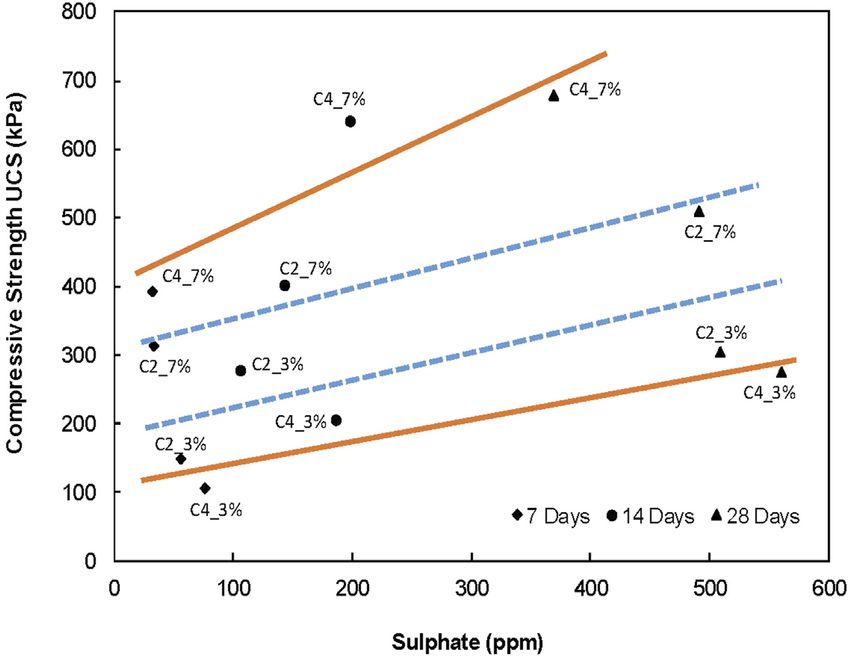
Akkaya et al.                                                                                                  Cemented Mine Backfill Processing Tailings

considered as one of the best available techniques in Europe for              Each pH value above 4 contributes to this process (Jiménez & Prieto,
the management of tailings (Chen et al., 2021). However, the                  2015). When pH is less than 4, AMD occurs through the contribution
physical and chemical properties of CPB should be explored                    of iron-oxidizing ferrooxidant bacteria (Levio-Raiman et al., 2021). The
exactly before delivering a cost-effective and high-performance               bacterium thiobacillus ferrooxidans increases the initial acidification
backfill to mines (Yang et al., 2020; Cavusoglu et al., 2021). Hence,          when the pH is above 4.5. Below pH 4.5, thiobacillus ferrooxidans
interactions between the adjacent environment and processing                  allows acidification to continue by oxidizing Fe2+ from pyritic materials
tailings must be considered for surface/underground mining                    (Shirin et al., 2021). Compounds of calcium (CaCO, CaMg(CO3)2),
operations.                                                                   iron (FeCO3, Fe(OH)3), and magnesium (MgCO3) are key factors for
    The tailings stored underground, especially in metal mining,              neutralizing AMD from mine tailings (Elghali et al., 2021). In near-
can cause harmful ion mobility and acid mine drainage (AMD)                   neutral mine waters, along with SO42, bicarbonate (HCO3−) is a
when they interact with oxygen and underground and/or rain                    significant anion. In addition, the concentrations of dissolved
waters (Koohestani et al., 2020). The risk of AMD is related to the           calcium (Ca2+) and magnesium (Mg2+) ions are generally elevated
presence of sulfidic minerals such as pyrite (FeS2) (Zhao, 2021).              relative to dissolved iron (Fe3+) and aluminum (Al3+), which precipitate
The presence of sulfides within cemented composites has a                      as the pH increases to above 4–5. Hydrolysis reactions cause many
deleterious effect on paste backfill strength due to sulfate                   metal ions to form the hydroxides with low solubility. Even dissolved
attack (Koohestani et al., 2021). Sulfate attack plays a main                 gases can undergo hydration. The hydration reactions of dissolved
role in the mechanical strength and service life of concrete                  carbon dioxide (CO2) and sulfur dioxide (SO2) form carbonic acid
(Liu et al., 2020). However, the mechanisms of sulfate attack                 (H2CO3) and sulfuric acid (H2SO3), respectively (Othmani et al., 2015).
on CPB are not quite similar to those on concrete. The sulfate                    Tricalcium aluminate (C3A) and tetra calcium aluminoferrite
attack on CPB is internal, whereas that on concrete is                        (C4AF) are the most critical compounds to be considered in
predominantly external. Moreover, in CPB, sulfate can be                      sulfate-rich processing tailings (Zheng et al., 2017). According to
adsorbed on the surface of C-S-H, thereby weakening the                       the ASTM C150-07 standard, the C3A content should not exceed
strength of CPB, since C-S-H is largely responsible for the                   5% in sulfate resisting cement, while the combined C3A+ C4AF
strength development of any cementitious material (Wang                       amount should be much lower than 25%. Both Portland and
et al., 2020; Alainachi & Fall 2020; Koohestani et al., 2018).                Portland-based cements have great importance in the
Conventional sulfate attack in mortar and concrete leads to the               immobilization and storage of hazardous wastes (Zheng et al.,
formation of expansive ettringite and gypsum (Eq. 1) (Jiang et al.,           2018). Ettringite is an important structure for immobilizing
2020).                                                                        contaminants. While the creation of ettringite at early stages is
                                                                              linked with the use of added sulfates to avoid flash sets, its
 2(3CaO.Al2 O3 .12H2 O) + 3(Na2 SO4 .10H2 O) →
                                                                              formation at later stages due to external sulfate attack or
 3CaO.Al2 O3 .3CaSO4 .31H2 O + 2Al(OH)3 + 6NaOH + 17H2 O
                                                                              delayed ettringite formation can cause degradation of concrete
                                                       (1)                    structures (Gu et al., 2019). In mine backfill applications, the
                                                                              cement is often used to prevent the AMD formation, and also
    Ettringite minerals cause expanding during sulfate attack in              to offer the mechanical strength, which is critical for the stability of
concrete, leading cracking, spalling, and spillage (Baquerizo et al.,         CPB (Hefni and Ali, 2021). To reduce/eliminate the negative effects
2016). The very low solubility of brucite shifts the above reaction           of AMD which is harmful to vegetation, aquatic life, wildlife,
to the right side and favors the consumption of calcium hydroxide             groundwater, and strength of mine backfill (Li et al., 2020;
(Park et al., 2019). This leads to a reduction in pH and, as a result,        Wang et al., 2021), many researchers have studied to reduce the
calcium silicate hydrate (C–S–H) becomes more susceptible to                  amount of the cement needed by using different types of cement
sulfate attack (Mafra et al., 2020). Sulfate attack is directly related       and additives (Xue et al., 2020; Yan et al., 2020; Huan et al., 2021).
to pH of the tailings and its surroundings (Belebchouche et al.,                  This paper presents an experimental investigation of sulfide-
2016). CPB includes iron, silicon, and aluminum hydroxides as                 bearing tailings and their possibility of utilization in CPB with
well as gypsum at pH values under 9 (Xiapeng et al., 2019). The               two different cement types (CEM II and CEM IV) and amounts (3
risks of contaminated neutral drainage within rocks that contain              and 7 wt%). The originality of this research paper lies in
carbonate compounds and AMD occur at moderate (6–8) and                       addressing the study of ion chromatography and combustion
low (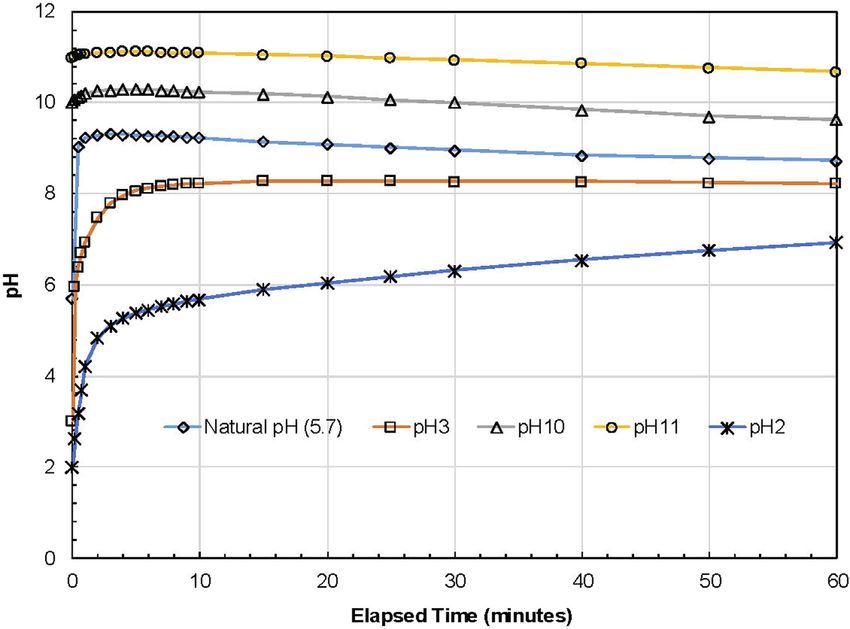
Akkaya et al.                                                                                                    Cemented Mine Backfill Processing Tailings

TABLE 1 | Chemical analysis of binders types used during the experiments.

Compounds                                                          CEM II/A-P Portland Pozzolan                                    CEM IV/A Pozzolanic

SiO2 (%)                                                                      17.84                                                         30.82
Al2O3 (%)                                                                      4.32                                                          6.53
Fe2O3 (%)                                                                      2.99                                                          4.00
CaO (%)                                                                       61.64                                                         49.64
MgO (%)                                                                        2.06                                                          2.01
SO3 (%)                                                                        2.93                                                          2.33
Cl (%)                                                                         0.01                                                          0.04
Na2O/K2O (%)                                                                    —                                                         0.68/0.93
CaO-free lime (%)                                                              1.68                                                          0.70
Insoluble residue (%)                                                          0.78                                                         14.13
Undefined (%)                                                                   2.45                                                          0.10
Loss of ignition (%)                                                           5.76                                                          2.92
Mineralogical composition (%)                                                   —                                                         7.58 (C3A)

diffraction (XRD), inductively coupled plasma mass                               mechanical behavior of CPB materials containing two types of
spectrometry (ICP-MS) and ion chromatography were                                different commercial and ready-to-use cement products (CEM II
performed for determining the mineralogical and chemical                         and CEM IV). For the UCS tests, 36 cylindrical samples were
composition of dry and wet tailings samples. To authenticate                     prepared in a length/diameter ratio of 2/1. These were formed
the state of the mineral phases visually, scanning electron                      with every 3 samples from both types of cement (CEM II and
microscopy (SEM) analyses were done. Since the particle size                     CEM IV), at two cement ratios (3 and 7 wt%), and three different
distribution may affect greatly the dissolution rate of the tailings,            curing times (7, 14, and 28 days). The slump values ranging from
the particle size distribution analysis was also conducted                       6 to 10 inches (15.24–25.40 cm) were used for the pumpability of
according to the TS 1,500 standard (equivalent to the ASTM                       the CPB material in a pipeline. The CPB slump recipes are given
D2487 standard) using the Malvern MS3000 particle size analyzer                  in Table 2.
which measures particles from 10 nm up to 3.5 mm.

                                                                                 Chemical and Microstructural
Characterization of Binder and Mixing                                            Measurements
Water                                                                            The elemental analysis by combustion (LECO 628 S), ion
pH measurements were done to reveal interactions between CPB                     chromatography tests (ICS 1100), and SEM analysis (Jeol JSM
and its storage environment (with the groundwater adjacent                       5600) was performed for investigating sulfide-rich compounds,
rocks and soils). Indeed, the zeta potential of particles is an                  ion release, and their effects on ettringite occurrence. To
important indicator of the interaction between them at different                 determine the amount of sulfur in ettringite, the elemental
pH values (Jiang et al., 2020; Xu et al., 2021). An increase in the              analysis by combustion and ion chromatography was carried
zeta potential increases the water retention ability of pastes that              out. Meanwhile, to determine the total sulfur in concrete that
are prepared in the particulate environment. The Zeta potential                  causes the SO3 and SO4 movement, the combustion tests was
measurements of each dry paste backfill materials were made by                    carried out.
concerning pH using a Brookhaven NanoBrook Zeta Plus zeta
potential analyzer.
   In order to investigate the interaction between the tailings                  RESULTS AND DISCUSSION
material (1 wt%) and its surroundings, the change in the pH of
the medium was determined with respect to time in pH profile
experiments. In these experiments, the HCl and NaOH solutions
                                                                                 Particle Size Distribution, XRD,
were used to adjust the ambient pH (2, 3, 5.7, 10, and 11).                      Conductivity, pH and Zeta Potential Results
   In this study, two types of Portland Pozzolan (CEM II/A-P)                    of Tailings
and Puzzolanic (CEM IV/A) type cement produced by Akcansa                        From the particle size distribution tests, the tailings were found to
Co. (Turkey) were used as hydraulic binders. Note that both of                   have 42 wt% particles finer than 20 μm, classifying the tailings as
them are suitable to employ in cementitious works conducted in                   medium size grained particles which seem to have lower strengths.
aggressive areas where the sulfate and chloride ions are relatively              It also provides the relatively high specific surface of the grains to
high. The specifications of these two cement types are presented                  ensure sufficient surface tension which enables the solids to hold
in Table 1.                                                                      water and offer a thin permanent lubricating film creating the
                                                                                 paste. Note that the grain size distribution of the tailings was
Preparation of Mine Backfills                                                     classified as a homogeneous distribution according to the TS EN
After the characterization tests, the unconfined compressive                      ISO14688-2 standard. The specific gravity of the tailings measured
strength (UCS) tests were conducted for determining the                          by using a helium pycnometer was found to have 3.2.

Frontiers in Materials | www.frontiersin.org                                 3                                 September 2021 | Volume 8 | Article 740116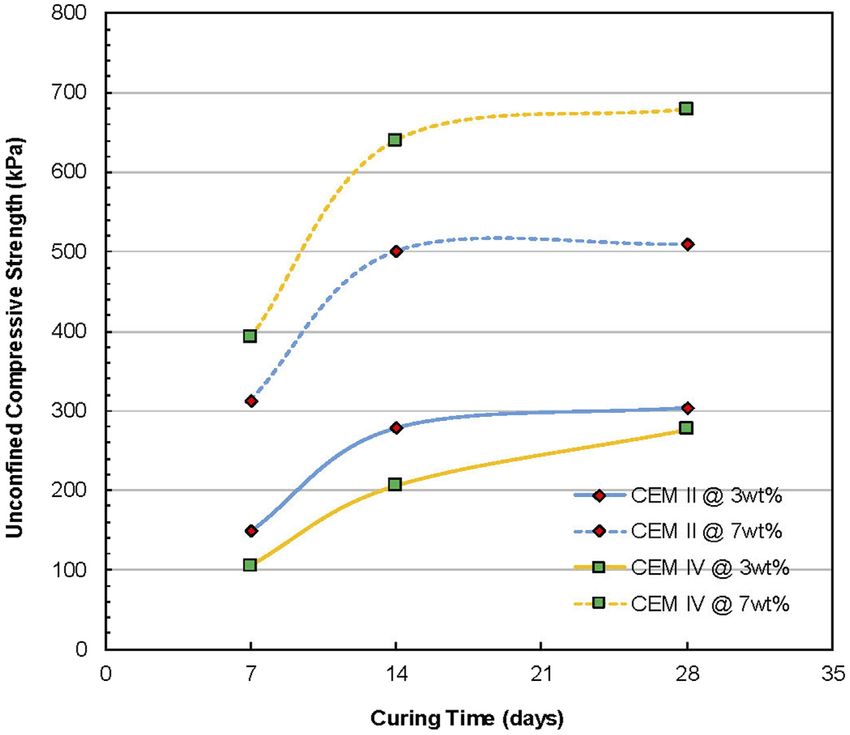
Akkaya et al.                                                                                                     Cemented Mine Backfill Processing Tailings

TABLE 2 | A summary of slump recipes of cemented mine backfills.

Cement type                                            Amount of solids                Cement content (3 wt%)                        Cement content (7 wt%)
                                                         + cement +
                                                          water (g)

CEM II/A-P Portland puzzolan                                Solids                              10,000                                       10,000
                                                           Cement                                 300                                          700
                                                            Water                                2,850                                        2,650
                                                       Slump value (cm)                           18.8                                         18.8

CEM IV/A puzzolanic cement                                  Solids                              10,000                                       10,000
                                                           Cement                                300                                           700
                                                            Water                               2,800                                         2,700
                                                       Slump value (cm)                          18.8                                          18.8

TABLE 3 | ICP MS results of the tailings.

Oxides (%)              Base and precious metal elements (ppm)                    Rare earth elements (ppm)              Radioactive elements (ppm) and
                                                                                                                                   others (%)

SiO2                36.19         Mo             5.7       Ba         404    La        30.4      Tm       0.27      Th          9         TOT/C        3.16
Al2O                 8.08         Cu           217.2       Co         15.7   Ce        57.2      Yb       1.58      U          6.4        TOT/S        7.49
Fe2O                13.58         Pb           1,500       Rb         76.4   Pr         6        Lu       0.23                             LOI         12.4
MgO                  2.54         Zn           1,548       Sn          11    Nd        20.9      Yb       17.2                             Sum        99.48
CaO                 23.26         Ni            29.4       Sr        191.3   Sm        3.86      Sc         7
Na2O                  0.2         As           601.8       V           62    Eu        0.99
K2O                  2.45         Cd             8.2       W         44.6    Gd        3.37
TiO2                 0.29         Sb            23.6       Zr         76.8   Tb        0.54
P 2O5                0.08         Bi            26.5       Hg         0.37   Dy        2.87
MnO                  0.38         Ag             3.7                         Ho        0.55
Cr2O3                0.01         Au           0.055                         Er        1.62

  FIGURE 1 | XRD profile result of the tailings sample.

   Table 3 lists the results of the ICP-MS analysis in the solids                  and tailings water according to the ICP-MS test. Earlier studies
and process water of the tailings materials. Samples includes                      have shown that a chemical reaction occurs in the presence of
relatively high quantities of CaO, Fe2O3, Zn, Pb, and K. The XRD                   sulfate and acid production and that as a consequence, the
results (Figure 1) are the good agreement with these findings. In                   mechanical strength of the backfill material decreases
addition, the sulfurous contents were high in both dry materials                   (Hamberg et al., 2017; Cao et al., 2019; Li et al., 2019).

Frontiers in Materials | www.frontiersin.org                                  4                                  September 2021 | Volume 8 | Article 740116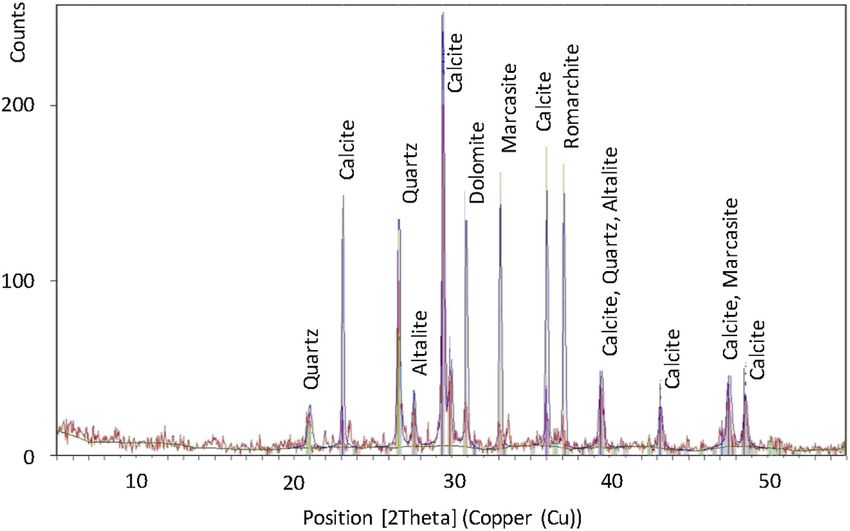
Akkaya et al.                                                                                                          Cemented Mine Backfill Processing Tailings

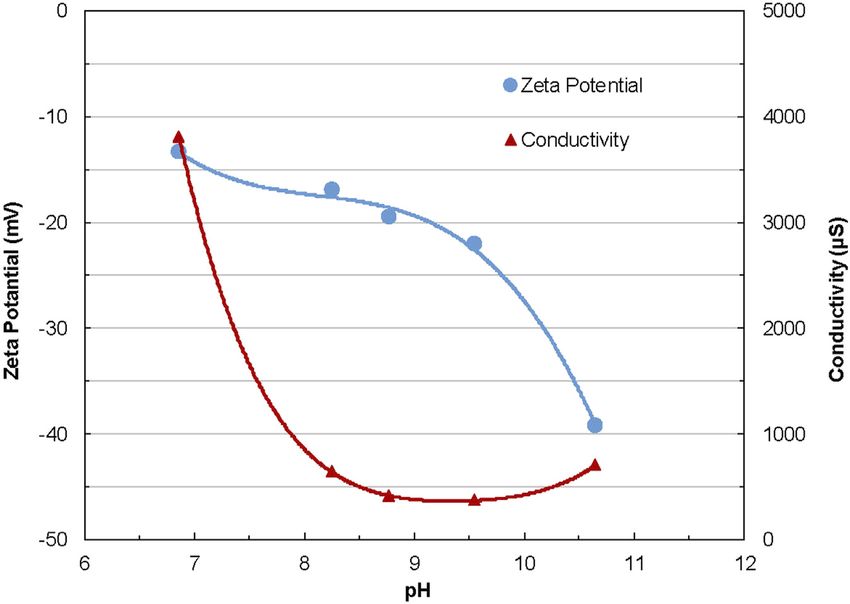
  FIGURE 2 | Conductivity and the zeta potential profile of the tailings sample.

Consequently, it can be expected that the sulfate ions affect the                     concentrations of NaOH were used to increase the pH of the
cement applications negatively.                                                       medium and the second reason is the excessive Ca2+, K+, and
    The binding of water molecules to fine particles at high zeta                      Mg2+ ions. It can also infer from the zeta potential and
potential values provides high retention of paste backfill in a                        conductivity results (Figure 2) that since pH became more
slump. The dry paste’s zeta potential was negative. The negative                      negative with increasing pH, OH− ions are the potential
character of dry paste was influenced by the relative abundance of                     determining ions.
Si4+, Al3+, Ca2+, K+, and Mg2+ ions dissolved from the tailings.                          The pH profile results are seen in Figure 3. As seen in
The zeta potential results of the tailings sample as a function of                    Figure 3, buffering tended to bring the environmental pH to
pH are given in Figure 2. It is clear from Figure 2 that the zeta                     around 8.5–9 within the first 10 min. It was observed that this
potential became more negative with the increasing pH. As the                         tendency occurs faster in the acidic medium and more slowly in
zeta potential of the particles becomes more negative with the                        the basic medium. Consequently, one can understand that the
increasing pH, the electrostatic repulsion forces increase.                           material possesses a buffering feature and tended to remain stable
    Thus, the particles repel each other. OH− ion increase resulting                  in this range. This means that the tailings will remain within the
from the pH rise caused zeta potential increase negatively. This                      allowable pH limits (pH 6–9) of the wastewater discharge range
proves that OH− is the potential determining ion and will assist in                   for the mining industry specified in the regulations (Turkish
the uniform distribution of particles in the CPB matrix. This                         Official Gazette No: 25,687), even when exposed to the effects of
refers that the tailings are electro-kinetically stable, and the                      rainwater and groundwater. It can be inferred from the zeta
particles will be easily dispersed in the tailings. These results                     potential and pH profile results that ion movement occurs in the
clearly show that the zeta potential-pH relationship plays a                          material. The use of lime to suppress the acidity of the tailings is
critical role in the stability and homogeneous distribution of                        one of the reasons for the excessive Ca2+ and OH− ions.
paste backfill.
    Considering the favorable pH range (pH 6–9) in the relevant
regulation (Turkish Official Gazette: No. 25687) to discharge, it                      UCS Test Results of Cemented Backfill
can be stated that the tested tailings-based material is in the stable                Samples
zone (above 25 mV) at pH values above 9. The increase in the pH                       Figure 4 indicates the results of the UCS test results. It is clear that
of the material with the addition of cement contributes to the                        the UCS test samples became brittle and dispersions occurred as a
backfill’s stability in the stable zone, and therefore to the                          result of the decreased cement content (3 wt%). The maximum
homogeneous distribution of the particles in the paste backfill                        UCS values (700 kPa) were obtained with 7 wt% CEMIV cement
matrix. In addition, the zeta potential results can be utilized to                    ratio at 28 curing days while the UCS values are varying between
identify the type of anionic or cationic chemicals present for                        0.05 and 4.35 MPa in previous studies (Jiang et al., 2020; Liu et al.,
further studies. There are two main reasons why the conductivity                      2020). Besides, the lowest UCS values (250 kPa after 28 days)
(Figure 2) values were high at low pH levels. First, high                             were obtained with 3 wt% CEM IV cement. The results showed

Frontiers in Materials | www.frontiersin.org                                      5                                   September 2021 | Volume 8 | Article 740116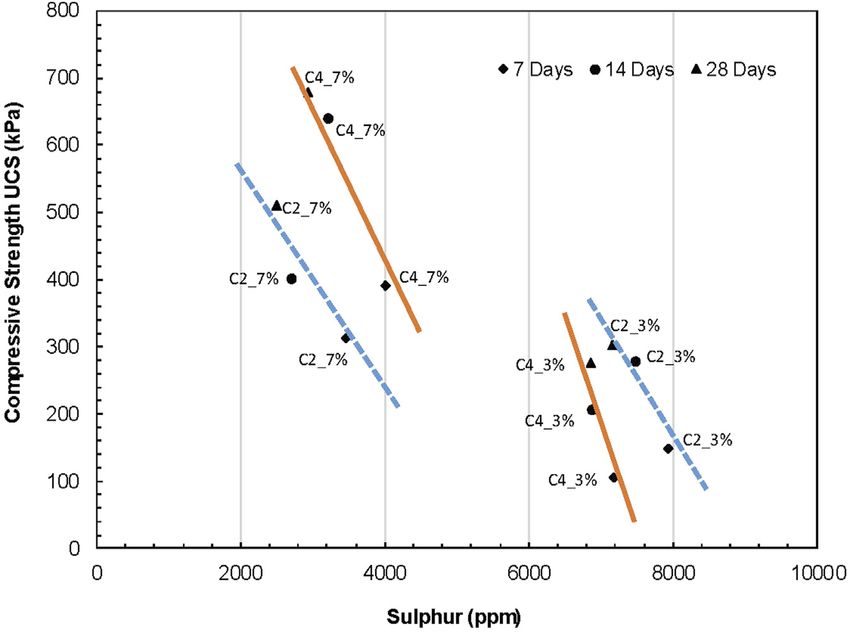
Akkaya et al.                                                                                                     Cemented Mine Backfill Processing Tailings

  FIGURE 3 | pH profile results for the tested mine tailings.

  FIGURE 4 | UCS test results of different CPB samples as a function of curing time.

that there was no major difference between OPC and blended                               The elemental analysis by combustion, ion chromatography,
cement in the sulfur-rich CPB, in line with the reference (Li & Fall                   and SEM were performed to investigate the sulfurous
2016).                                                                                 compounds, ion release, and their effects on ettringite

Frontiers in Materials | www.frontiersin.org                                     6                               September 2021 | Volume 8 | Article 740116
Akkaya et al.                                                                                             Cemented Mine Backfill Processing Tailings

  FIGURE 5 | The SEM micrograph of the tested CPB sample.

occurrence. The elemental analysis by combustion and ion                  at different rates increases. The amount of sulfur in CPB samples
chromatography were carried out to define the amount of                    decreased and the corresponding mechanical strength increased. The
sulfur in the ettringite. Meanwhile, the use of combustion tests          fact that the CaO content in CEM II cement type is higher than CEM
was investigated to determine the total sulfur in the concrete that       IV cement type suggests that secondary gypsum (CaSO4_2H2O)
causes the SO3 and SO4 movement. It is important to identify the          minerals may occur more within the cemented backfills.
combustion temperature is vital to obtaining the maximum sulfur
ratio. Jiménez and Prieto (Jiménez & Prieto, 2015) investigated
the dehydration of ettringite in natural and synthetic samples and        Analysis of Relationship Between UCS and
showed that the total weight loss in the thermo-gravimetric               Sulfate by Ion Analysis
analysis at 1,000°C was 45.5 and 40.5% for natural and                    When the results of the total sulfur and sulfate tests are compared, it
synthetic samples, respectively. It was also stated that for              can be seen that increasing the cement content from 3 to 7 wt%
synthetic samples, total weight losses of 32.6 and 35.6% were             diminished the total sulfur amounts due to the residual stiffness.
obtained at the temperatures of 190–300 and 650–800°C,                    Similarly, the sulfate dispersion in the concrete was reduced due to
respectively due to the decomposition of calcite at calcination           the stiff structure when the cement amount was increased. The
temperature. Moreover, the temperatures of 300, 600, 800, 1,000,          relationship between the obtained results and UCS is given in Figure 7.
and 1,350°C were tested with 0.5 and 1.0 g samples. As a result, it           It is apparent from Figure 7 that 3 wt% CPB samples
was observed that the backfill sample melted at 1,350°C, and the           containing CEM IV cement type provides the low mechanical
highest sulfur amount was achieved at 1,000 °C with an amount             strengths. This is mainly due to the high amount of Al in this
of 0.5 g.                                                                 cement at high sulfate content and the high formation of
                                                                          ettringite (3CaSO4_3CaO_Al2O3_32H2O) with high expansion
                                                                          potential. In high cement quantities, as the curing time increases,
Analysis of Relationship Between UCS and                                  the mobility of sulfate within the CPB sample and its conversion
Total Sulfur by Combustion Tests and SEM                                  to ettringite will slow down.
Figure 5 demonstrates the SEM micrograph of CPB samples.
Meanwhile, the results of the elemental analysis by combustion
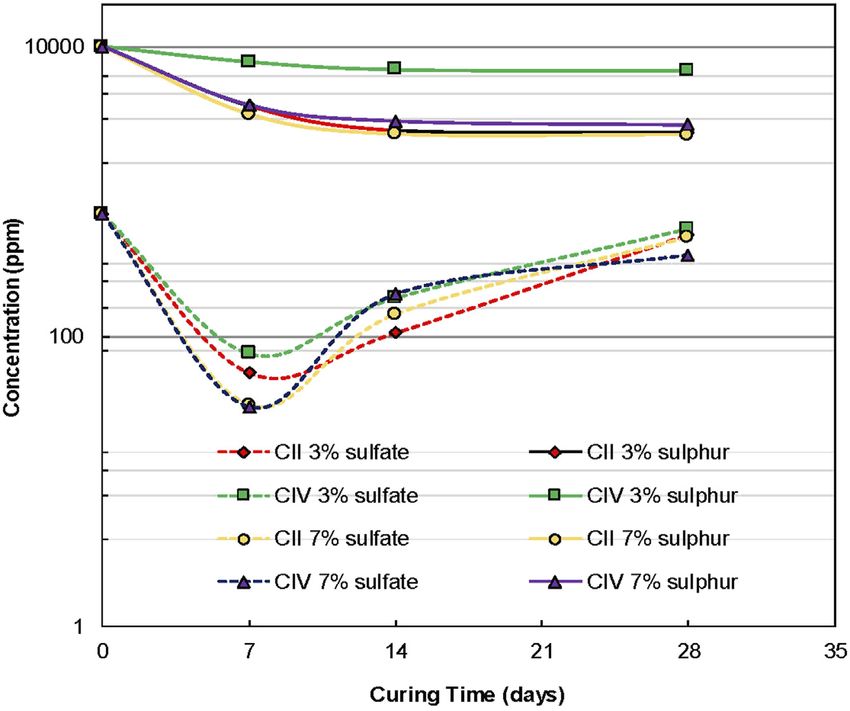
tests in Figure 6 and the ion analysis in Figure 7 indicated that         Analysis of Time-dependent Sulfate and
the reason for the low UCS values (
Akkaya et al. Cemented Mine Backfill Processing Tailings FIGURE 6 | The relationship between the UCS and total sulfur results (by combustion). FIGURE 7 | The relationship between UCS and sulfate results (by ion analysis). continuously, especially from the 7th day. Both findings are decelerate. The mineral phases (ettringite and gypsum) compatible with Li et al. (Li et al., 2019). resulting from the reactions of sulfates with hydration In the cementitious matrices subjected to sulfate attack, the products play a vital role on strength and quality of CPB amount of sulfate ions decreases as the reaction and curing time samples (Gu et al., 2019). The formation of ettringite could continues and thus the rate of sulfate attack is inclined to generate expansive pressure that tangibly harms CPB samples. Frontiers in Materials | www.frontiersin.org 8 September 2021 | Volume 8 | Article 740116
Akkaya et al.                                                                                                        Cemented Mine Backfill Processing Tailings

  FIGURE 8 | Time-dependent sulfate (by ion analysis) and sulfur (by combustion) concentrations.

In the presence of sulfates, calcium hydroxide created during the                       As a result of this study, it is suggested that the combustion test
cement hydration can lead to the making of gypsum (a source of                       will give fast and accurate results for future CPB applications. In
strength degradation) in CPB.                                                        today’s CPB applications, especially in high sulfur mines, it is
                                                                                     predicted that the use of cement at high dosages (greater than a
                                                                                     cement dosage of 7 wt%) and fast setting time can prevent the
CONCLUSION                                                                           formation of secondary gypsum mineral and ettringite.

In this study, the usability of Pb-Zn processing tailings in the paste
backfill form was investigated experimentally. Several laboratory                     DATA AVAILABILITY STATEMENT
experiments such as unconfined compressive strength, particle size
distribution, pH measurements, elemental analysis by combustion,                     The raw data supporting the conclusion of this article will be
ion chromatography, SEM, and the zeta potential were undertaken                      made available by the authors, without undue reservation.
on CPB samples. From the performed experimental tests, the
following main findings could be drawn:
                                                                                     AUTHOR CONTRIBUTIONS
   ✓ Although the tailings were mixed with blended cement, the
   mechanical strengths of paste backfill were relatively low due                     UA and KC conceived and designed the experiments and
   to expansive components and internal sulfate attack.                              samples; UA prepared samples and performed the tests; UA,
   ✓ The gypsum problem also occurred in the samples, as                             KC, and EY analyzed the data, UA and KC wrote the manuscript,
   discovered by the SEM analysis.                                                   UA and EY revised the manuscript. All authors read and
   ✓ As the amount of sulfur within the paste backfill material                       approved the final manuscript.
   decreased and the sulfate contents and mechanical strengths
   increased.
   ✓ The CEM IV type cement with a dosage of 7 wt% yielded                           FUNDING
   higher UCS values than the CEM II type cement with a dosage of
   3 wt%.                                                                            This research was supported by The Scientific Research Projects
   ✓ From the SEM images, one can conclude that the increase in                      Coordination Unit of Istanbul University–Cerrahpasa (Grant
   the sulfate content was due to the formation of ettringite,                       number: 40,888). Special acknowledgements are extended to
   which caused the strengths to remain at relatively low values.                    Prof. Dr. Nuray Tokgoz for her precious contributions.

Frontiers in Materials | www.frontiersin.org                                     9                                  September 2021 | Volume 8 | Article 740116
Akkaya et al. Cemented Mine Backfill Processing Tailings
REFERENCES Koohestani, B., Darban, A. K., Darezereshki, E., Mokhtari, P., Yilmaz, E., and
Yilmaz, E. (2018). The Influence of Sodium and Sulfate Ions on Total
Solidification and Encapsulation Potential of Iron-Rich Acid Mine Drainage
Alainachi, I., and Fall, M. (2020). Chemically Induced Changes in the Geotechnical in Silica Gel. J. Environ. Chem. Eng. 6 (2), 3520–3527. doi:10.1016/
Response of Cementing Paste Backfill in Shaking Table Test. J. Rock Mech. j.jece.2018.05.037
Geotechnical Eng. 13 (3), 513–528. doi:10.1016/j.jrmge.2020.11.002 Koohestani, B., Darban, A. K., Mokhtari, P., Darezereshki, E., Yilmaz, E., and
Baquerizo, L. G., Matschei, T., and Scrivener, K. L. (2016). Impact of Water Activity Yilmaz, E. (2020). Influence of Hydrofluoric Acid Leaching and Roasting on
on the Stability of Ettringite. Cement Concrete Res. 79, 31–44. doi:10.1016/ Mineralogical Phase Transformation of Pyrite in Sulfidic Mine Tailings.
j.cemconres.2015.07.008 Minerals 10 (6), 513. doi:10.3390/min10060513
Belebchouche, C., Moussaceb, K., and Aït-Mokhtar, A. (2016). Evaluation of the Koohestani, B., Mokhtari, P., Yilmaz, E., Mahdipour, F., and Darban, A. K. (2021).
Encapsulation of Nickel, Chromium and Lead-Rich Wastes in Cement Matrices Geopolymerization Mechanism of Binder-free Mine Tailings by Sodium
by TCLP Test. Eur. J. Environ. Civil Eng. 20 (7), 711–724. doi:10.1080/ Silicate. Construction Building Mater. 268, 121217. doi:10.1016/
19648189.2015.1061458 j.conbuildmat.2020.121217
Cao, S., Xue, G., Yilmaz, E., and Yin, Z. (2021). Assessment of Rheological and Kou, Y., Jiang, H., Ren, L., Yilmaz, E., and Li, Y. (2020). Rheological Properties of
Sedimentation Characteristics of Fresh Cemented Tailings Backfill Slurry. Int. Cemented Paste Backfill with Alkali-Activated Slag. Minerals 10 (3), 288.
J. Mining, Reclamation Environ. 35, 319–335. doi:10.1080/ doi:10.3390/min10030288
17480930.2020.1826092 Levio-Raiman, M., Briceño, G., Schalchli, H., Bornhardt, C., and Diez, M. C.
Cao, S., Xue, G., Yilmaz, E., Yin, Z., and Yang, F. (2021). Utilizing Concrete Pillars (2021). Alternative Treatment for Metal Ions Removal from Acid Mine
as an Environmental Mining Practice in Underground Mines. J. Clean. Prod. Drainage Using an Organic Biomixture as a Low Cost Adsorbent. Environ.
278, 123433. doi:10.1016/j.jclepro.2020.123433 Technol. Innovation 24, 101853. doi:10.1016/j.eti.2021.101853
Cao, S., Yilmaz, E., Song, W., and Xue, G. (2019). Assessment of Acoustic Emission Li, J., Yilmaz, E., and Cao, S. (2020). Influence of Solid Content, Cement/Tailings
and Triaxial Mechanical Properties of Rock-Cemented Tailings Matrix Ratio, and Curing Time on Rheology and Strength of Cemented Tailings
Composites. Adv. Mater. Sci. Eng. 2019, 1–12. doi:10.1155/2019/6742392 Backfill. Minerals 10 (10), 922. doi:10.3390/min10100922
Cavusoglu, I., Yilmaz, E., and Yilmaz, A. O. (2021). Additivity Effect on Properties Li, W., and Fall, M. (2016). Sulphate Effect on the Early Age Strength and Self-
of Cemented Coal Fly Ash Backfill Containing Water-Reducing Admixtures. Desiccation of Cemented Paste Backfill. Construction Building Mater. 106,
Construction Building Mater. 267, 121021. doi:10.1016/ 296–304. doi:10.1016/j.conbuildmat.2015.12.124
j.conbuildmat.2020.121021 Li, Y., Min, X., Ke, Y., Fei, J., Liu, D., and Tang, C. (2019). Immobilization Potential
Chen, Q., Tao, Y., Feng, Y., Zhang, Q., and Liu, Y. (2021). Utilization of Modified and Immobilization Mechanism of Arsenic in Cemented Paste Backfill.
Copper Slag Activated by Na2SO4 and CaO for Unclassified Lead/Zinc Mine Minerals Eng. 138, 101–107. doi:10.1016/j.mineng.2019.04.041
Tailings Based Cemented Paste Backfill. J. Environ. Manage. 290, 112608. Libos, I. L. S., and Cui, L. (2020). Effects of Curing Time, Cement Content, and
doi:10.1016/j.jenvman.2021.112608 Saturation State on Mode-I Fracture Toughness of Cemented Paste Backfill.
Chen, X., Shi, X., Zhou, J., Du, X., Chen, Q., and Qiu, X. (2019). Effect of Overflow Eng. Fracture Mech. 235, 107174. doi:10.1016/j.engfracmech.2020.107174
Tailings Properties on Cemented Paste Backfill. J. Environ. Manage. 235, Liu, L., Xin, J., Huan, C., Qi, C., Zhou, W., and Song, K.-I. (2020). Pore and Strength
133–144. doi:10.1016/j.jenvman.2019.01.040 Characteristics of Cemented Paste Backfill Using Sulphide Tailings: Effect of
Elghali, A., Benzaazoua, M., Bouzahzah, H., Abdelmoula, M., Dynes, J. J., and Sulphur Content. Construction Building Mater. 237, 117452. doi:10.1016/
Jamieson, H. E. (2021). Role of Secondary Minerals in the Acid Generating j.conbuildmat.2019.117452
Potential of Weathered Mine Tailings: Crystal-Chemistry Characterization and Liu, L., Xin, J., Qi, C., Jia, H., and Song, K.-I. (2020). Experimental Investigation of
Closed Mine Site Management Involvement. Sci. Total Environ. 784, 147105. Mechanical, Hydration, Microstructure and Electrical Properties of Cemented
doi:10.1016/j.scitotenv.2021.147105 Paste Backfill. Construction Building Mater. 263, 120137. doi:10.1016/
Gu, Y., Martin, R.-P., Omikrine Metalssi, O., Fen-Chong, T., and Dangla, P. (2019). j.conbuildmat.2020.120137
Pore Size Analyses of Cement Paste Exposed to External Sulfate Attack and Lu, H., Qi, C., Chen, Q., Gan, D., Xue, Z., and Hu, Y. (2018). A New Procedure for
Delayed Ettringite Formation. Cement Concrete Res. 123, 105766. doi:10.1016/ Recycling Waste Tailings as Cemented Paste Backfill to Underground Stopes
j.cemconres.2019.05.011 and Open Pits. J. Clean. Prod. 188, 601–612. doi:10.1016/j.jclepro.2018.04.041
Hamberg, R., Maurice, C., and Alakangas, L. (2017). Lowering the Water Mafra, C., Bouzahzah, H., Stamenov, L., and Gaydardzhiev, S. (2020). Insights on
Saturation Level in Cemented Paste Backfill Mixtures - Effect on the Release the Effect of Pyrite Liberation Degree upon the Acid Mine Drainage Potential of
of Arsenic. Minerals Eng. 112, 84–91. doi:10.1016/j.mineng.2017.05.005 Sulfide Flotation Tailings. Appl. Geochem. 123, 104774. doi:10.1016/
Hefni, M., and Ali, M. A. (2021). The Potential to Replace Cement with Nano- j.apgeochem.2020.104774
Calcium Carbonate and Natural Pozzolans in Cemented Mine Backfill. Adv. Myagkaya, I. N., Lazareva, E. V., Zaikovskii, V. I., and Zhmodik, S. M. (2020).
Civil Eng. 2021, 1–10. doi:10.1155/2021/5574761 Interaction of Natural Organic Matter with Acid Mine Drainage: Authigenic
Huan, C., Zhu, C., Liu, L., Wang, M., Zhao, Y., Zhang, B., et al. (2021). Pore Mineralization (Case Study of Ursk Sulfide Tailings, Kemerovo Region, Russia).
Structure Characteristics and its Effect on Mechanical Performance of J. Geochemical Exploration 211, 106456. doi:10.1016/j.gexplo.2019.106456
Cemented Paste Backfill. Front. Mater. 8, 700917. doi:10.3389/ Nordstrom, D. K., Blowes, D. W., and Ptacek, C. J. (2015). Hydrogeochemistry and
fmats.2021.700917 Microbiology of Mine Drainage: An Update. Appl. Geochem. 57, 3–16.
Jiang, D., Li, X., Jiang, W., Li, C., Lv, Y., and Zhou, Y. (2020). Effect of doi:10.1016/j.apgeochem.2015.02.008
Tricalcium Aluminate and Sodium Aluminate on Thaumasite Formation in Othmani, M. A., Souissi, F., Bouzahzah, H., Bussière, B., da Silva, E. F., and
Cement Paste. Construction Building Mater. 259, 119842. doi:10.1016/ Benzaazoua, M. (2015). The Flotation Tailings of the Former Pb-Zn Mine of
j.conbuildmat.2020.119842 Touiref (NW Tunisia): Mineralogy, Mine Drainage Prediction, Base-Metal
Jiang, H., Fall, M., Yilmaz, E., Li, Y., and Yang, L. (2020). Effect of Mineral Speciation Assessment and Geochemical Modeling. Environ. Sci. Pollut. Res. 22,
Admixtures on Flow Properties of Fresh Cemented Paste Backfill: Assessment 2877–2890. doi:10.1007/s11356-014-3569-1
of Time Dependency and Thixotropy. Powder Technol. 372, 258–266. Park, I., Tabelin, C. B., Jeon, S., Li, X., Seno, K., Ito, M., et al. (2019). A Review of
doi:10.1016/j.powtec.2020.06.009 Recent Strategies for Acid Mine Drainage Prevention and Mine Tailings
Jiang, H., Han, J., Li, Y., Yilmaz, E., Sun, Q., and Liu, J. (2020). Relationship between Recycling. Chemosphere 219, 588–606. doi:10.1016/j.chemosphere.2018.11.053
Ultrasonic Pulse Velocity and Uniaxial Compressive Strength for Cemented Qi, C., and Fourie, A. (2019). Cemented Paste Backfill for Mineral Tailings
Paste Backfill with Alkali-Activated Slag. Nondestructive Test. Eval. 35 (4), Management: Review and Future Perspectives. Minerals Eng. 144, 106025.
359–377. doi:10.1080/10589759.2019.1679140 doi:10.1016/j.mineng.2019.106025
Jiménez, A., and Prieto, M. (2015). Thermal Stability of Ettringite Exposed to Shirin, S., Jamal, A., Emmanouil, C., and Yadav, A. K. (2021). Assessment of
Atmosphere: Implications for the Uptake of Harmful Ions by Cement. Environ. Characteristics of Acid Mine Drainage Treated with Fly Ash. Appl. Sci. 11, 3910.
Sci. Technol. 49 (13), 7957–7964. doi:10.1021/acs.est.5b00536 doi:10.3390/app11093910
Frontiers in Materials | www.frontiersin.org 10 September 2021 | Volume 8 | Article 740116Akkaya et al. Cemented Mine Backfill Processing Tailings Wang, S., Song, X., Wei, M., Liu, W., Wang, X. X., Ke, Y., et al. (2021). Zhao, D. (2021). Reactive MgO-Modified Slag-Based Binders for Cemented Paste Experimental Study on the Effect of Alkalized Rice Straw Content on Backfill and Potential Heavy-Metal Leaching Behavior. Construction Building Mechanical Properties of Cemented Tailings Backfill. Front. Mater. (In- Mater. 298, 123894. doi:10.1016/j.conbuildmat.2021.123894 press). doi:10.3389/fmats.2021.727925 Zheng, J., Guo, L., SunLi, X. W., Li, W., and Jia, Q. (2018). Study on the Strength Wang, Y., Cao, Y., Cui, L., Si, Z., and Wang, H. (2020). Effect of External Development of Cemented Backfill Body from Lead-Zinc Mine Tailings with Sulfate Attack on the Mechanical Behavior of Cemented Paste Backfill. Sulphide. Adv. Mater. Sci. Eng. 2018, 1–8. doi:10.1155/2018/7278014 Construction Building Mater. 263, 120968. doi:10.1016/ Zheng, J., Guo, L., and Zhao, Z. (2017). Effect of Calcined Hard Kaolin Dosage on j.conbuildmat.2020.120968 the Strength Development of CPB of Fine Tailings with Sulphide. Adv. Mater. Xiapeng, P., Fall, M., and Haruna, S. (2019). Sulphate Induced Changes of Sci. Eng. 2017, 1–7. doi:10.1155/2017/8631074 Rheological Properties of Cemented Paste Backfill. Minerals Eng. 141, 105849. doi:10.1016/j.mineng.2019.105849 Conflict of Interest: The authors declare that the research was conducted in the Xu, W., Chen, W., Tian, M., and Guo, L. (2021). Effect of Temperature on Time- absence of any commercial or financial relationships that could be construed as a dependent Rheological and Compressive Strength of Fresh Cemented Paste potential conflict of interest. Backfill Containing Flocculants. Construction Building Mater. 267, 121038. doi:10.1016/j.conbuildmat.2020.121038 Publisher’s Note: All claims expressed in this article are solely those of the authors Xue, G., Yilmaz, E., Song, W., and Cao, S. (2020). Fiber Length Effect on Strength and do not necessarily represent those of their affiliated organizations, or those of Properties of Polypropylene Fiber Reinforced Cemented Tailings Backfill the publisher, the editors and the reviewers. Any product that may be evaluated in Specimens with Different Sizes. Construction Building Mater. 241, 118113. this article, or claim that may be made by its manufacturer, is not guaranteed or doi:10.1016/j.conbuildmat.2020.118113 endorsed by the publisher. Yan, B., Zhu, W., Hou, C., Yilmaz, E., and Saadat, M. (2020). Characterization of Early Age Behavior of Cemented Paste Backfill through the Magnitude and Copyright © 2021 Akkaya, Cinku and Yilmaz. This is an open-access article Frequency Spectrum of Ultrasonic P-Wave. Construction Building Mater. 249, distributed under the terms of the Creative Commons Attribution License (CC 118733. doi:10.1016/j.conbuildmat.2020.118733 BY). The use, distribution or reproduction in other forums is permitted, provided the Yang, L., Xu, W., Yilmaz, E., Wang, Q., and Qiu, J. (2020). A Combined original author(s) and the copyright owner(s) are credited and that the original Experimental and Numerical Study on the Triaxial and Dynamic publication in this journal is cited, in accordance with accepted academic practice. Compression Behavior of Cemented Tailings Backfill. Eng. Structures 219, No use, distribution or reproduction is permitted which does not comply with 110957. doi:10.1016/j.engstruct.2020.110957 these terms. Frontiers in Materials | www.frontiersin.org 11 September 2021 | Volume 8 | Article 740116
You can also read


