DESTINATION2025 - FEDERAL AVIATION ADMINISTRATION
←
→
Page content transcription
If your browser does not render page correctly, please read the page content below
Federal Aviation
Administration

Destination2025
Destination 2025
Executive Summary
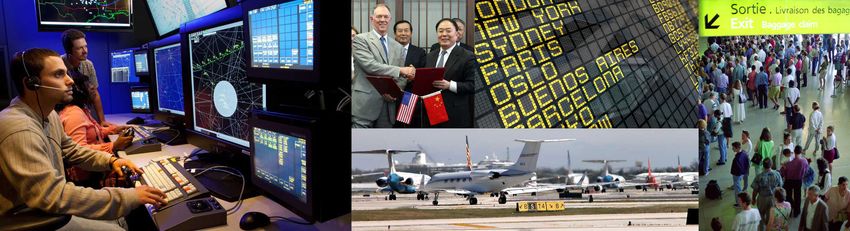
The Destination 2025 vision captures the ideal future we strive toward – a transformation of the Nation’s
aviation system in which air traffic will move safely, swiftly, efficiently, and seamlessly around the globe. Flights
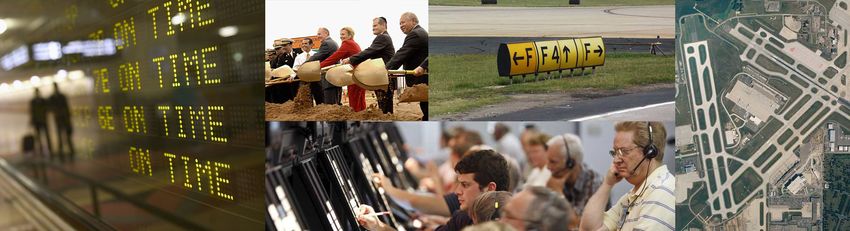
will take off and land on time, every time, without delay and there will be no fatal accidents. Air travel will be
routine and uneventful for everyone involved: passengers, crews, ground support, and communities. Costs
will be contained for both operators and passengers, and there will be no negative impact to the environment.
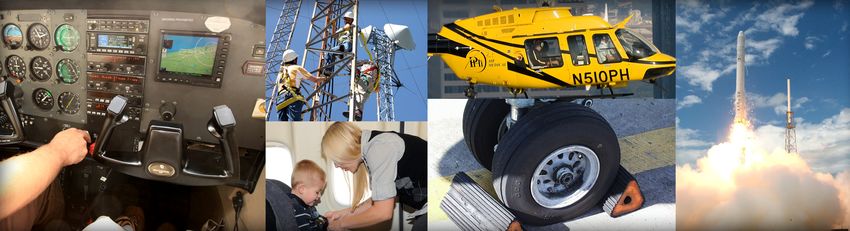
Manned and unmanned flights will each achieve safe flight, as will commercial launches to space. This is a
vision that captures the future we will strive to achieve – to transform the Nation’s aviation system by 2025.
The Federal Aviation Administration’s mission is to provide the safest, most efficient aviation system in the
world. What sets us apart is the size and complexity of our infrastructure, the diversity of our user groups,
our commitment to safety and excellence, and our history of innovation and leadership in the world’s aviation
community. Now we are working to develop new systems and to enhance a culture that increases the safety,
reliability, efficiency, capacity, and environmental performance of our aviation system. To meet our vision will
require enhanced skills, clear communication, strong leadership, effective management, innovative technology,
new equipment, advanced system oversight, and global integration.

Our primary focus in the past was increasing the safety of the aviation system and providing the necessary
capacity. Working together with our industry counterparts, we have been very successful. Since the
mid-1990s, the number of commercial air carrier fatal accidents has decreased nearly 80 percent. Since 2000,
new runways have opened at 16 large and medium hub airports, providing these airports with the potential to
accommodate more than 2 million annual operations. We have enhanced our own performance, putting in
place internal acquisition, planning, and financial systems and processes that have helped us account for and
save taxpayers’ money. We have also helped shape the growth of the global aviation system and the access
and opportunity afforded U.S. citizens. Yet, there is still more to be done.

        The Federal Aviation Administration’s mission is to provide
          the safest, most efficient aviation system in the world.

Building on this solid foundation, the FAA is heading into a time of unprecedented challenges as we work to
adapt to a rapidly changing aviation system in the presence of changing economic, social, environmental, and
energy needs of both our nation and our global partners. Like the rest of the federal government, the FAA faces
significant budget pressures that will shape our ability to maintain today’s system and respond to tomorrow’s
demands. The FAA must see the opportunities within these challenges that will enable aviation to be a
transportation choice that provides the traveling public, U.S. business and our global partners with safe,
secure, reliable, and environmentally sustainable air travel. Our vehicle for providing opportunities during this
transformation is the Next Generation Air Transportation System (NextGen).

NextGen is a series of inter-linked programs, systems, and policies that implement advanced technologies and
capabilities to dramatically change the way the current aviation system is operated. NextGen is satellite-based
and relies on a network to share information and digital communications so all users of the system are aware
of other users’ precise locations. It will make U.S. aviation safer, reduce delays, and mitigate impacts on the
environment. The system responds quickly as the types and performance of aircraft change and as weather
and routes change and congestion occurs. Hazards are identified and their associated risk mitigated before
they result in incidents or accidents. NextGen combines changes to the way aircraft are routed, with new, more
fuel-efficient technology and improved fuels to reduce aviation’s environmental “footprint.” NextGen must also
extend beyond our domestic airspace and be an integral part of the global aviation system. This will require
partnership and collaboration within the FAA, across government, with industry, both domestic and international,
and with the International Civil Aviation Organization (ICAO) and its contracting states.

The next 15 years promise to be a pivotal time in the history of air transportation, as the face of aviation is
transformed around the world. This is occurring even as we face challenging budget pressures that will shape
every aspect of FAA’s operations, plans, and workforce. Key components of NextGen programs are already
improving access to airports during inclement weather and are providing tangible improvements for passengers

                                                          1
and aviation stakeholders today. Setting metrics at 2018 provides us with a waypoint for measuring our
progress towards achieving our goals. From flight decks to control towers, our system is already changing. The
FAA is committed to ensuring America has the safest, most advanced and efficient, and sustainable avia-
tion system in the world. We must also work to make air transportation safe and efficient wherever U.S.
citizens travel.

Our aspirations:
Move to the Next Level of Safety                             Sustain Our Future
Safety is FAA’s top priority. We will transform the way      We will advance aviation in an environmentally
we assure safety by expanding our safety culture to          responsible and energy efficient manner. We will
enhance standards and oversight. We will take action         minimize noise and emission impacts on communities,
to manage risk by proactively identifying hazards and        reduce aviation’s carbon footprint, invest in new
risk based on continuous analysis of data.                   technology, foster sustainable alternative fuels
                                                             research, and advance other innovations that promote
Create Our Workplace of the                                  environmentally friendly solutions.

Future
                                                             Advance Global Collaboration
We can only create the future we envision through
the people of the FAA. NextGen will require not only         We will work with ICAO and other international
new technology and tools, but a skilled and dedicated        partners to improve global aviation safety and
workforce. Our continued success depends on creating         environmental performance around the world. We
a workplace of choice with integrity, fairness, diversity,   will encourage innovation while we work with our
and innovation as our professional hallmarks. We will        international partners to deploy seamless and efficient
train and enable our high performance workforce with         global air navigation through interoperable standards,
the adaptive skills and abilities required to reach and      procedures, and technologies, and harmonization of
sustain the NextGen levels of safety, efficiency, and        certification and regulation.
sustainability.

Deliver Aviation Access through
Innovation
We must serve the needs of the traveling public and
the aviation industry to provide unencumbered access
to the aviation system, whether the destination is
domestic or international. We will enhance aviation’s
value to the public by improving travel throughout the
National Airspace System, and beyond. This includes
reducing costs and energy use, minimizing delays,
preserving and securing needed infrastructure, and
matching capacity to demand to increase the eco-
nomic effectiveness of aviation.

                                                             2
Next level of Safety
Our Goal
By achieving the lowest possible accident rate and always improving safety, all users of our aviation
system can arrive safely at their destinations. We will advance aviation safety worldwide.

Outcomes
1                          2                          3                          4                     5
    No accident-related        Aviation risk is           There is a                 There are no          There are no
    fatalities occur on        reduced through            reduction in the           fatal accidents       fatalities resulting
    commercial service         all phases of flight       general aviation           on certificated       from commercial
    aircraft in the U.S.       (gate-to-gate).            fatal accident rate.       airports.             space launches.

Challenges
A forward-looking approach is needed to analyze                       Streamlining FAA’s certification, operational approval,
trends, data, and systems to manage risk before it                   and procedure design processes will be essential
leads to a future incident or accident. The FAA’s                    for timely implementation. Sustaining a high level of
current processes and systems have created a safe                    involvement, clear communication and collaboration
and efficient aviation system. To achieve the next level             with stakeholders, including operators, will also be
of safety, the FAA and the industry must augment                     necessary to ensure progress.
the traditional methods of analyzing the causes of
an accident or incident after the fact. The FAA and
the aviation community will build on today’s proactive                        We will take action to
accident prevention programs by adopting new tools                         manage risk by proactively
and metrics to further anticipate potential sources
of risk to identify and remove accident precursors
                                                                       identifying hazards and risk based
and contributors, and strategically manage safety                        on continuous analysis of data.
resources for maximum safety improvement in a
cost effective manner.                                               As we move into the future, Safety Management
                                                                     Systems (SMS) are essential to manage risk in the
A major challenge is integrating human factors with                  aviation system. FAA must be a leader in the design
NextGen technology and procedures to ensure                          and implementation of SMS. Technical challenges
safety. Identifying the human factor aspects of                      abound, including the ability to analyze massive
risk and proactive solutions provides opportunity                    amounts of data to provide useful information for
for moving forward for additional improvements in                    oversight and assessment of risk, both in the air
aviation safety. We must work with domestic and                      and at the nation’s airports. The FAA must continue
global stakeholders to stimulate cooperation for the                 to promote public confidence in the aviation safety
open reporting of safety concerns and collaboration                  system through use of SMS and effective oversight
in collection and use of data. NextGen will increase                 of the development and introduction of new aviation
situational awareness in the flight deck and on the                  products. Also, the FAA must meet the chal-
ground, and must support access to the system.                       lenge of fostering commitment and best safety
                                                                     practices that sustain or improve the level of safety
We must work with domestic and international stakeholders            across the globe.
to encourage cooperation for the open reporting of safety
concerns.
                                                                   3
Strategies Performance Metrics (2018)
• Use NextGen technologies to continually target • Reduce the commercial air carrier fatalities per
key risk areas. 100 million persons on board by 24 percent over
• Incorporate SMS principles into all FAA/industry 9-year period (2010-2018). No more than 6.2 in
operations to enhance the aviation safety culture. 2018.
• Promote and expand safety information sharing • Reduce the general aviation fatal accident rate to
efforts and safety practices, including better use no more than 1 fatal accident per 100,000 flight
of safety data mining to focus and prioritize hours by 2018.
safety efforts through enhanced capabilities for • Maintain the rate of serious runway incursions at
identification, analysis, and mitigation development or below 20 per 1000 events.
of incidents, accidents, and other safety related • Reduce risks in flight by limiting the rate of the
data, i.e., reports from users to address hazards most serious losses of standard separation to
before they lead to accidents. 20 or fewer for every thousand (.02) losses of
• Strengthen and improve technology, infrastructure, standard separation within the National Airspace
training, procedures, evaluation, analysis, testing, System.
and certification to reduce the risk of accidents • Implement 40 percent of mitigating strategies for
from all causes in all phases of operation. the top 5 airport risk areas.
• Foster efforts to ensure no degradation of safety • Ensure no cyber security event significantly
as new NextGen technologies or operations are degrades or disables a mission-critical FAA
introduced. system.
• Develop appropriate tools, metrics, and approaches • No fatalities, serious injuries, or significant
to reduce and limit the serious losses of standard property damage to the uninvolved public during
separation within the National Airspace System. licensed or permitted space launch and reentry
• Identify the top airport surface risks areas through activities.
data collection and analysis.
• Develop tools, guidance, and regulations for
reducing the safety risks for commercial space
launch and reentry operations, including those
involving human space flight.
4Workplace of Choice
Our Goal
We will create a workplace of choice marked by integrity, fairness, diversity, accountability, safety and
innovation. Our workforce will have the skills, abilities, and support systems required to achieve and
sustain NextGen.
Outcomes
1
FAA has the right people with the right skills in the right positions at the right time to achieve our goals.
2
FAA is widely recognized as a workplace of choice.
3
FAA workforce reflects the diversity of the nation.
4
FAA provides the safest and most secure facilities in which our employees and equipment operate.
Challenges
FAA must integrate and coordinate activities across continue our shift to systemic oversight of organiza-
multiple lines of business and develop plans and tions’ safety management systems, rather than focus on
programs to implement NextGen capabilities. In line individual services and products. This will change the
with the FAA value, “People are our strength,” we must needs, roles, and skill sets of our workforce. We need to
provide appropriate training, tools, and opportunities to strengthen our pipeline of candidates to fill new positions,
our workforce, while positively transforming ourselves including diversity throughout all levels of leadership.
and the work environment of the future FAA. We will
need to win the competition for talent by providing an We must train our current employees in critical skills,
attractive and challenging place to work. and attract employees with the right skill sets, while
supporting the transfer of knowledge as people retire or
leave the FAA. We must promote employee develop-
We can only create the ment and reward innovation. We must foster clear and
future we envision through effective communication among our workforce and with
our stakeholders. We must ensure that our workforce is
the people of the FAA. supported by exceptional secure information services,
financial management, contracting, procurement, human
We are moving from a cognitive based aviation control resource functions, and facilities.
system to a system with automated support for
decisions, which will require a collaborative work en- It is important to recognize the reality of today’s ever-
vironment. This has never been done before. We face tightening budget environment. Budget constraints will
the challenge of working in a more cross-organizational require the FAA to continue to manage its resources
and cross-functional manner while meeting an aggres- effectively, and be creative and innovative in managing
sive NextGen implementation schedule. This challenge resources to achieve our goals and support our people.
will be especially important as we hire, develop, retrain, Improving operational efficiencies and program manage-
and retain talented employees. As the complexity of ment will become critical to supporting future budget
systems and supplier networks increases, we must requests.
5Strategies Performance Metrics (2018)
• Provide employees and managers with the tools • The FAA is rated in the top 25 percent of places
needed to ensure collaborative leadership at to work in the federal government by employees.
all levels through training and development, • Achieve a 90% success rate in the areas of
mentoring/coaching, and opportunities to learn financial management and human resources
best practices from other organizations. management:
• Ensure the workforce has all the training, tools, Receive annual Unqualified Audits with no
secure systems, safe facilities, development material weaknesses.
opportunities, and financial accountability needed
to meet NextGen transformation. Maintain the competitive status of all FAA
employees within the federal personnel
• Create effective recruitment and talent system.
management strategies to attract, retain, and
develop a highly skilled and diverse pool of Improve the “effective leadership” index
employees and management. score on the OPM Employee Viewpoint
Survey by 8 percent.
• Leverage use of knowledge management
processes and social networking tools to inform, Improve the “talent management” index
engage, and solicit employee views and innovative score on the OPM Employee Viewpoint
solutions. Survey by 8 percent.
• Improve access to more environmentally-friendly
transportation and workplace alternatives to the
benefit of communities and future generations.
• Increase partnerships for Science, Technology,
Engineering and Math (STEM) with institutions of
higher education and high schools to enhance a
diverse FAA applicant pool.
6Delivering Aviation Access through Innovation
Our Goal
Enhance the flying experience of the traveling public and other users by improved access to and
increased capacity of the nation’s aviation system. Ensure airport and airspace capacity are more
efficient, predictable, cost-effective and matched to public needs.
Outcomes
1 2 3 4 5 6
System capacity System capacity, Air navigation NextGen Safety, funding, The general
and user demands performance, and infrastructure capabilities are airport infra- aviation airport
are matched to predictability are and associated fully implement- structure, and system sup-
ensure reliable, maintained during systems are ed and utilized environmen- ports the full
predictable, and adverse weather. flexible, reliable, based on U.S. tal issues are range of func-
cost-effective air cost effective, aviation com- advanced and tions for remote
navigation and and secure. munity leveraged by populations and
airport services. system needs. full utilization of emergency re-
NextGen capa- sponse capabili-
bilities. ties.
Challenges
One of our most complex challenges today is and protecting against development that limits air-
meeting the expectations for all system users for port operations and incompatible land use. Chal-
their operational needs, increasing capacity, lenges include how to fund the necessary projects in
efficiency, and predictability, while enhancing safety, a tight budgetary climate, change the culture of the
mitigating environmental impacts, and operating in system, have seamless operability with foreign na-
a seamless global environment. NextGen policies, tions, and manage transition of the system during
technologies, and procedures are necessary to a period with varying levels of equipage. We also
address flexibility for airspace uses, environmental face the challenge of integrating NextGen capabili-
and safety issues, and match demand and capacity ties through an extremely diverse set of airspace
to mitigate congestion. Balancing all these, sometimes users.
conflicting, aims will be a challenge.
Changes in the operational environment will also include
NextGen requires significant commitments within the introduction of new vehicles, such as unmanned
the government, as well as from aviation stake- aircraft systems and commercial space vehicles.
holders. This includes commitments for operational
changes, early investment in technology and These aircraft pose significant new challenges
training, environmental and safety performance, which must be addressed by certification and devel-
equipage of aircraft, and certification of crew opment of operational procedures, along with sup-
at required performance levels. In some cases, porting policies within the FAA and across the federal
airports will need to invest in new infrastructure while government.
maintaining and preserving current infrastructure,
7We must serve the needs of the traveling public and the
aviation industry to provide unencumbered access to the
aviation system, whether the destination is domestic or international.
Strategies Performance Metrics (2018)
• Use NextGen technologies and operational • Optimize airspace and Performance Based
improvements to reduce the average time it actually Navigation (PBN) procedures to improve efficiency
takes to go from one core airport to another. an average of 10 percent across core airports by
• Maximize delivery of early NextGen user benefits 2018.
to generate support for an aggressive NextGen • Increase throughput at core airports by 12
implementation schedule. percent to reduce delays by 27 percent using a
• Increase effective throughput in the National 2009 operations baseline.
Airspace System by implementing NextGen and • Improve flight predictability by reducing variances
policies to facilitate balance between capacity in flying time between core airports based on a
and demand at core airports. 2012 baseline.
• Increase the flexibility of the National Airspace • Improve throughput at core airports during
System to enable users to adapt according to adverse weather by 14 percent by 2018.
their own needs by implementing NextGen. • Maintain 90 percent of major system investments
• Implement automated NextGen architecture within 10 percent variance of current baseline
systems that provide secure, timely, and accurate total budget at completion.
information for all equipped system users. • Ensure Localizer Performance (LP) procedures
• Ensure federal resources such as the Airport are available at 5,218 runways in the NAS by
Improvement Program have sufficient programmatic 2018.
flexibility to invest in NextGen capacity projects • Achieve a 5 percent reduction in average taxi-time
that benefit the airport and the National Airspace at Core airports, identified by the Future Airport
System. Capacity Task 3 (FACT 3) for surface traffic
• Identify and implement procedures and management.
technology to improve current and predictive
weather information and reduce weather delays.
• Ensure the long-term viability and availability of
airports by helping airports of all sizes become
more financially self-sufficient.
• Establish a strategic approach to target federal
investments in support of the general aviation
airport infrastructure.
8Sustaining our Future
Our Goal
To develop and operate an aviation system that reduces aviation’s environmental and energy impacts
to a level that does not constrain growth and is a model for sustainability.
Outcomes
1 2 3
U.S. aviation sector is a model Community noise concerns are Aviation emissions do not
for sustainable growth. not a significant constraint on contribute to significant adverse
growth. health impacts.
4 5 6
Aviation’s carbon footprint does Aviation operations have no Airports will be environmentally and
not become a constraint to significant adverse effect on economically sustainable.
growth. water and air quality.
Challenges
Aviation has made significant strides in the last few U.S. general aviation and impacts the industry’s ability
decades in reducing its environmental impacts. Despite to meet broad environmental goals. In the commercial
this progress, a compelling need remains for manage- aviation world, solutions often involve trade-offs, as
ment and reduction of environmental impacts. Aircraft quieter and more fuel efficient airframes and engines may
noise can significantly impact people on or near airports produce more air quality pollutants. Airport owners and
and under flight paths. The impact of noise continues to operators have to find innovative ways to achieve coop-
be a challenge to aviation growth and operating flexibility. eration among a broad range of stakeholders including
Without action, aircraft noise exposure is expected to airlines and other user groups, neighboring communities,
increase as population and aviation demand continues contractors, concessionaires, and other state and local
to grow. A significant number of major U.S. airports are transportation agencies in order to reduce and minimize
located in areas with substandard air quality. There is environmental impacts.
an increasing focus on climate change, and aviation’s
contribution to greenhouse gas emissions is projected
to grow, spurring recommendations for national and We will advance aviation in an
international action. High fuel prices, energy supply, and environmentaly responsible
security all contribute to rising energy issues. Finally,
aviation activity adversely affects water quality with airport
and energy efficient manner.
storm water, aircraft and pavement deicing, aircraft fuel-
ing and maintenance, and airport construction. Taking full advantage of NextGen capabilities will require
airspace changes and environmental reviews that can be
FAA’s own facilities and infrastructure face significant costly and controversial. Internationally, there is a wide
challenges to meet goals in energy and environmental diversity of views on the relative priority of and appropri-
performance. Without the necessary investment and ate response to a number of environmental concerns
rationalization, it will prove difficult to achieve sustainabil- that could make it difficult to reach a consensus on a
ity goals. In the general aviation world, the lack of a safe path forward. Finally, creating solutions will require federal
alternative to leaded aviation gas creates a significant and private investment, both of which are far from certain
long-term challenge to operations of a large segment of given the budget pressures and economic uncertainties.
9Strategies Performance Metrics (2018)
• Improve scientific knowledge of environmental • The U.S. population exposed to significant
impacts and develop effective decision support aircraft noise around airports has been reduced
tools. to less than 300,000 persons.
• Accelerate NextGen technology and operational • A replacement fuel for leaded aviation gasoline is
improvements to reduce noise, fuel burn, and available by 2018 that is usable by most general
emissions even with continued growth in system aviation aircraft.
activity. • Improve NAS energy efficiency (fuel burned per
• Foster research and development to promote miles flown) by at least 2 percent annually.
and accelerate advances in engine, airframe, and • Aviation emissions contribute 50 percent less to
other appropriate technologies. significant health impacts and are on a trajectory
• Increase the development and use of sustainable for carbon neutral growth using a 2005 baseline.
alternative aviation fuels. • One billion gallons of renewable jet fuel is used by
• Develop sustainable airport facilities, ground aviation by 2018.
vehicles, and operational practices that reduce
emissions, reduce energy consumption, eliminate
water quality impacts, and achieve at least 50
percent reductions in un-recycled waste.
• Work with communities to eliminate or mitigate
incompatible land use.
• Direct federal funds to mitigate the adverse
impacts of aircraft noise in homes and schools
near airports.
• Develop appropriate policy approaches and
economic incentives to foster an integrated
approach to planning, decision-making, regulatory
compliance, and environmental cost-benefits of
operating the NextGen system.
• Ensure aviation stakeholders address environmental
sustainability in their planning and operations.
10Improved Global Performance through Collaboration
Our Goal
Achieve enhanced safety, efficiency, and sustainability of aviation around the world. Provide leadership in
collaborative standard setting and creation of a seamless global aviation system.
Outcomes
Achieve seamless
operations integrating
advanced technologies
and capabilities through
harmonized air navigation
Reduce aviation approaches.
accidents and fatalities 2
worldwide.
1
Provide effective global
Reduce aviation’s air navigation capacity.
environmental footprint
internationally. 4
3
Challenges
Seamless global air transport across borders as air transport represents an important generator of
with consistent levels of safety, efficiency, and economic activity. A central challenge, therefore, will
sustainability is the ultimate goal of international air be to identify means to assist international partners
transportation. However, each country and region
has unique requirements and resource challenges We will work with ICAO and
that can often frustrate global airspace planning and
development, safety collaboration, and sustainability other international partners
efforts. To achieve global success, we will face significant to improve global aviation
challenges addressing competing priorities around the
world. safety and environmental
performance around the world.
In the short, medium, and long terms, the capacities
of some States to address meaningfully safety, in meeting critical needs to build capabilities in order
efficiency, and sustainability matters will vary based to participate in the seamless global system. In the
on competing domestic priorities. As a result, long term, global demographic and economic
abilities to devote sufficient resources will vary, even developments point to increased air transport activity
11among several large emerging economies in Asia, the Middle East, and Latin America. While U.S. air transport
activity will continue to grow, it will represent a smaller share of overall global activity due to growth in these regions.
Several countries in these regions will see their operations and manufacturing capabilities continue to develop in
step with significant economic expansion, as well as their influence grow in regional and global venues, including
ICAO. To maintain or heighten the role of the United States in the development of a high-performance global
system over the long term, we must meet the challenge of investing in relationships with our emerging
international partners now so as to have a strong foundation from which to act in the future.
Equally important will be the challenge of strengthening our bonds with well-established partners in Europe,
North America, and the Pacific. Short-term competitive or policy differences – for example, over air
traffic management harmonization or environmental measures – may sometimes distract from shared,
long-range visions of a safe, efficient, and sustainable global aviation system. The challenge will be to reconcile
those short-term differences and shared long-term visions while accommodating the increasing role of our
fast-growing, emerging partners.
Strategies Performance Metrics (2018)
• Enhance international cooperation and harmonization • World-wide fatal aviation accident rate declines
in legislation, regulatory requirements, policies, and 10 percent compared to 2010.
procedures in civil aviation safety, air navigation, • 40 percent of all commercial aircraft from the top
and environmental mitigation. 25 aviation states are using fully interoperable
• Incorporate international considerations early in NextGen technologies and capabilities by 2018.
the FAA processes for the implementation of new • States representing 85 percent of international
technology and standards. activity are taking actions to contribute to ICAO’s
• Increase collaborative research, flight trials, 2 percent global annual fuel efficiency improve-
and extended demonstrations that support ment goal by 2018.
improvements to safety, efficiency, and environmental
performance.
• Secure sources of international funding to
support regional aviation safety initiatives,
aviation infrastructure upgrades, and development
of sustainable alternative fuels.
• Continue to provide high-performance, effective
safety regulation and air navigation services from
which emerging aviation leaders from international
partners around the world want to learn.
12You can also read


