Environmental Monitoring Report
←
→
Page content transcription
If your browser does not render page correctly, please read the page content below
Environmental Monitoring Report

Project Number: 49244-002
January–June 2021
September 2021

Armenia: Armenia–Georgia Border Regional Road
(M6 Vanadzor–Bagratashen) Improvement Project

Prepared by the “Road Department” State Non-Commercial Organization of the Ministry of
Territorial Administration and Infrastructure of the Republic of Armenia for the Asian
Development Bank.

This environmental monitoring report is a document of the borrower. The views expressed
herein do not necessarily represent those of ADB's Board of Directors, Management, or staff,
and may be preliminary in nature.

In preparing any country program or strategy, financing any project, or by making any
designation of or reference to a particular territory or geographic area in this document, the
Asian Development Bank does not intend to make any judgments as to the legal or other status
of any territory or area.
Semi-annual Environmental Monitoring Report

Project Number: 3449 - ARM
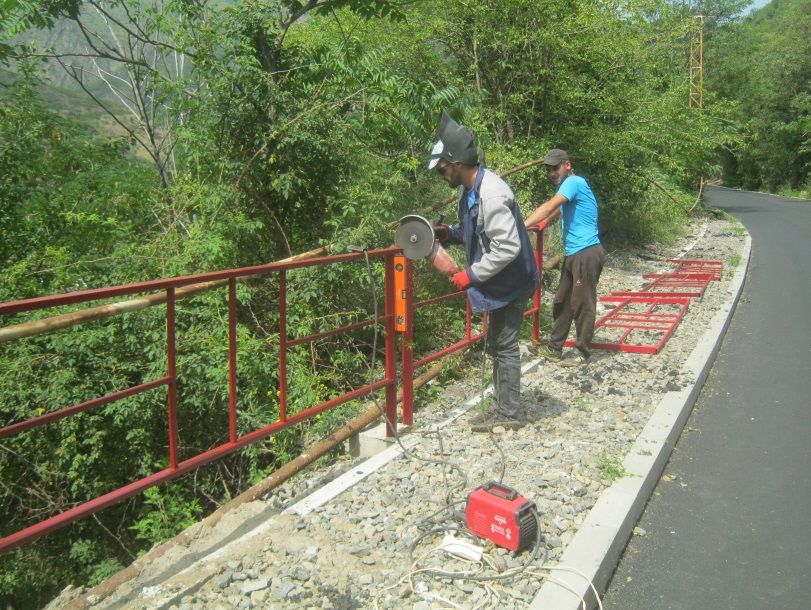
January-June 2021

Armenia: M6 Vanadzor-Alaverdi-Georgian Border Interstate
Road (Section Km 38+450 – Km 90+191)
(Financed by the ADB)

Prepared by the “Road Department” SNCO based on the monthly Environmental Monitoring Reports of the
Technical Supervision Consultant/Engineer
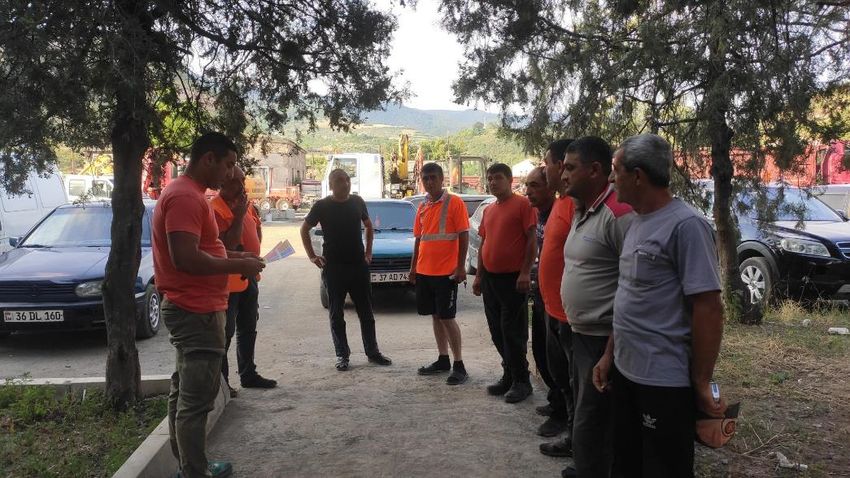
TABLE OF CONTENTS

1.   INTRODUCTION................................................................................................................... 4
2.   PROJECT DESCRIPTION AND CURRENT ACTIVITIES ..................................................... 5
3.   ENVIRONMENTAL SAFEGUARD ACTIVITIES .................................................................. 14
4.   RESULTS OF ENVIRONMENTAL MONITORING .............................................................. 15
5.   FUNCTIONS OF THE SEMP .............................................................................................. 22
6.   GOOD PRACTICE AND OPPORTUNITIES FOR IMPROVEMENT .................................... 24
7.   SUMMARY AND RECOMMENDATIONS ........................................................................... 25

ANNEXES

ANNEX 1: PHOTOS OF ACTIVITIES DURING THE REPORTING PERIOD
ANNEX 2: EHS + COVID-19 TRAININGS CONDUCTED IN ALAVERDI AND SHNOGH
COMMUNITIES
ANNEX 3. STATUS OF MEASUREMENTS ON DUST, NOISE, WATER QUALITY AND
VIBRATION IN THE REPORTING PERIOD
ANNEX 4: PHOTOS FROM THE TRAININGS CONDUCTED DURING THE REPORTING
PERIOD
ANNEX 5: LOT 3, VIBRATION ASSESSMENT REPORT N8 AND N9
LIST OF ABBREVIATIONS

ADB        Asian Development Bank

CEMP       Contractor’s Environmental Management Plan

CR         Completion Report

CAP        Corrective Action Plan

DNV        Dust, Noise and Vibration

EMP        Environmental Management Plan

IEE        Initial Environmental Examination

ES         Environmental Specialist

LARP       Land Acquisition and Resettlement Plan

LAR        Land Acquisition and Resettlement

MNP        Ministry of Environment

MTAI       Ministry of Territorial Administration and Infrastructure

MESCS      Ministry of Education, Science, Culture and Sport

NCN        Non-Compliance Notice

RD        “Road Department” SNCO

RS         Road Safety

SSEMP      Site Specific Environmental Management Plan

TMP        Traffic Management Plan

EMR        Environmental Monitoring Report
1. INTRODUCTION
1.1. Preamble
1.    This report represents the Semi-Annual Environmental Monitoring Review (SAEMR) for
      Rehabilitation and Improvement of the M6 Vanadzor-Alaverdi-Georgian Border Interstate Road
      (Section Km 38+450 – Km 90+191) (Loan No.: 3449-ARM).

1.2. Headline information
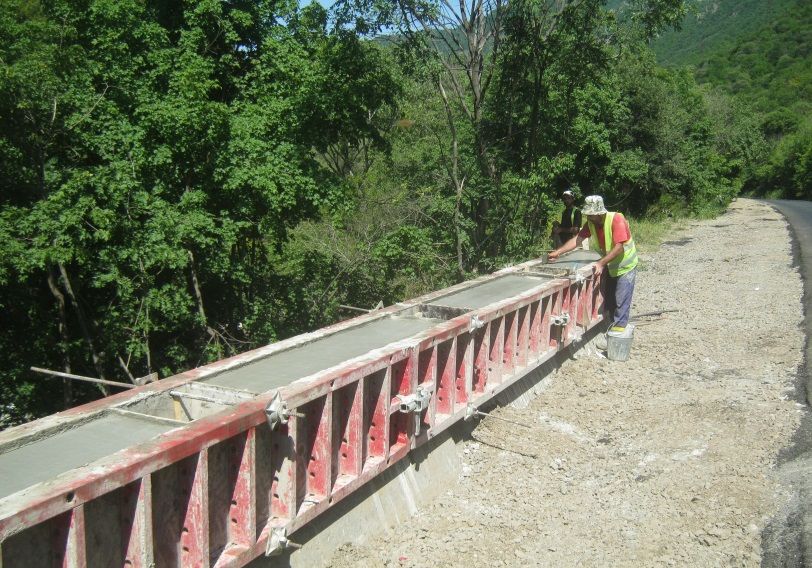
2.   As of June 30, 2021, the following road sections are handed over to the Contractors:
3.   Lot 1: km38+450 – km47+055; km47+065 - km48+140. The road sections km47+055 –
     km47+065 have not been handed yet. The section handover completion rate in Lot 1 is 99.9%.
4.   Lot 2: km48+140-62+300. The completion rate and section handover to the contractor in Lot 2
     is 100%.
5.   Lot 3: km62+300-km90+191. The completion rate of LARP implementation and section
     handover to the contractor in Lot 3 is 100%.
6.   Total 51.706 km (99.99%) has been handed over to the contractors. 10 meters, (in sections
     47+055-47+065) have not been handed over yet.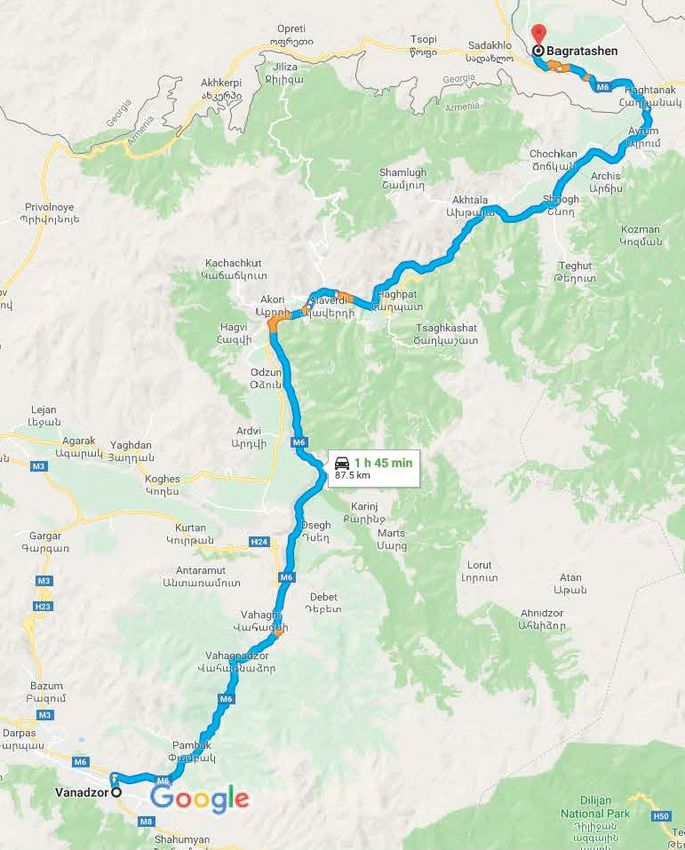
2. PROJECT DESCRIPTION AND CURRENT ACTIVITIES
2.1. Project Description
7.   The Republic of Armenia (hereinafter called "Borrower") has received financing from the Asian
     Development Bank (ADB) in a form of loan towards the costs for the Armenia – Georgia Border
     Regional Road (M6 Vanadzor–Bagratashen) Improvement Project. Actually, ADB has
     approved a $50 million loan to improve the transport efficiency and safety of the M6 Highway
     from Vanadzor in Armenia to the border with Georgia at Bagratashen, one of the strategic roads
     for internal and external trade. The Government is now giving priority to the rehabilitation of
     transport infrastructure and the proposed project is meant to promote economic development
     and support transit traffic, having in mind that the ports on the Black Sea, accessed through
     Georgia, provide one of the major access routes for this traffic.

           Map 2-1: M6 Vanadzor–Alaverdi–Georgian Border Interstate Road Rehabilitation and
                                     Improvement Project Area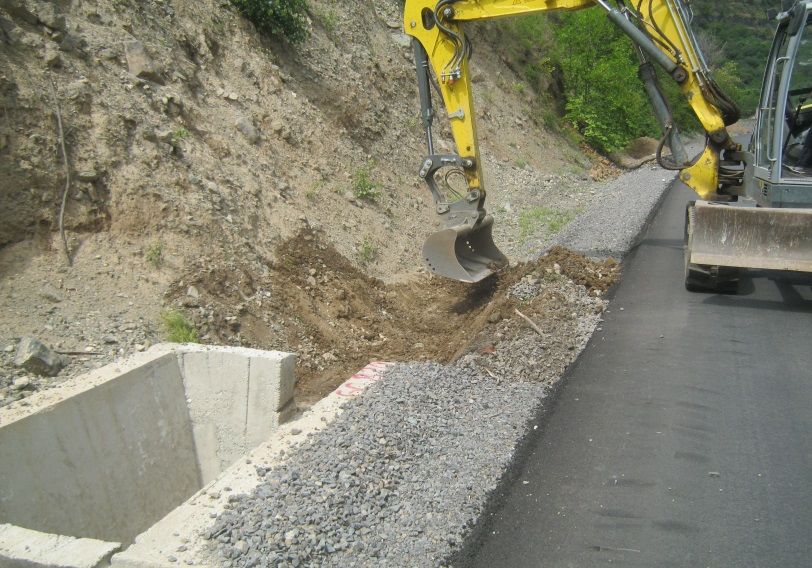
2.2. Project Contracts, Contact Details and Management

8.   The Employer/Client:        “Road Department” SNCO
                                 Address: Government House 3, Republic Square,
                                 0010 Yerevan, Armenia
                                 Email: info@armroad.am
                                 Tel: (+37412) 20-10-09, 20-10-10
                                 Webpage: www.armroad.am

9.   Contract for Construction Works:
             The Contractor: Horizon-95 LLC &Oberosler Cav Pietros SRL Joint Venture
                               Address: Amiryan 26, 0002 Yerevan, Armenia
                               Email: horizon@horizon.am
                               Tel: (+37410) 53-88-56, 53-88-52
                               Webpage: www.horizon.am
                        Lot 1 Civil works for rehabilitation/reconstruction of the existing M6
                               -Vanadzor-Alaverdi -Georgian border interstate road (km 38
                               +450 -Km 48 +140)
           Date of Signature: 30 November 2017
       Commencement Date: May 29, 2018
         Time for Completion: 900 days
     Defects Notification Period: 365 days
              The Contractor: Joint Venture: " Black Sea Group & AAB Project "
                                  Address: 39/1a Arabkir str., 0037 Yerevan, Armenia
                                  Email: info@aab.am
                                  Tel: (+37410) 25-92-59
                                  Webpage: www.aabconstruction.am
                           Lot 2 Civil works for rehabilitation/reconstruction of the existing M6
                                  -Vanadzor-Alaverdi -Georgian border interstate road (km 48
                                  +140 -Km -Km 62 +300)
             Date of Signature: 30 November 2017
         Commencement Date: May 29, 2018
           Time for Completion: 900 days
     Defects Notification Period: 365 days
              The Contractor: SUARDI JSC Armenian Branch
                                  Address: 2nd Inuastrial str., №24 Transport Enterprise,
                                  Abovyan, Armenia
                                  Email: mauro.dorazio@suardispa.am
                                  Tel: (+37499) 55-14-69
                                  Webpage: www.suardispa.it
                           Lot 3 Civil works for rehabilitation/reconstruction of the existing
                                   M6 -Vanadzor-Alaverdi -Georgian border interstate road (km
                                   62 + 300 -Km 90 +191)
             Date of Signature: 30 November 2017
         Commencement Date: May 29, 2018
          Time for Completion: 900 days
     Defects Notification Period: 365 days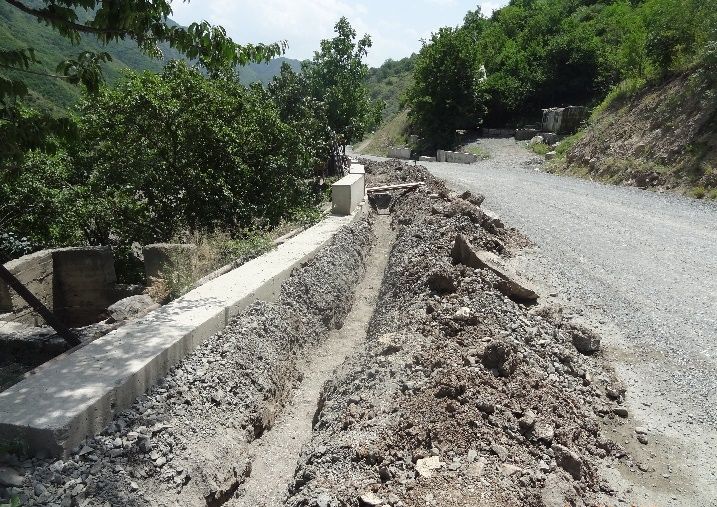
10.   Contract for Consultancy Services:
                       Engineer: Joint Venture Safege SAS and Hill International N.V.
                                  Address: 1704 Hakhpat Kisakayaran, Alaverdi, Armenia
                                  Email: info@safegehill-m6.am
                                  Tel: (+37455) 55 08 30
               Contract Signed: April 03, 2018
               Commencement April 03/May 03, 2018
            Date/Effective Date:
       Duration of the Services: 39 months
       Defect Notification Period 12 months
2.2.1. Safeguards Staff of RD
11. The Project Safeguards Management activities are undertaken by Head of Environmental
      Impact Management Service, Environmental Specialist, Head of Social Impact Management
      Service and Social Specialist:
12. Mr. Armen Bodoyan - Head of Environmental Impact Management Service (ЕМ) is responsible
      for environmental management of the project and compliance with the national environmental
      legislation of the RA and safeguard policies of financing donors during the preparation and
      implementation of the projects, including design, construction and supervision. The position of
      the Environmental Specialist is currently free. The Environmental Specialist is responsible for
      environmental inspection, day to day supervision of EMPs (CEMP, SSEMPs) implementation
      and reporting to EM. The new Environmental Specialist shall be hired during the next reporting
      period.
13. Mrs. Lilit Dilanyan - Head of Social Impact Management Service (SM) is responsible for social
      management of the project and compliance with the national legislation of the RA and
      safeguard policies of financing donors during the preparation and implementation of the
      projects, including design, construction and supervision.
14. Mrs. Shushan Kocharyan – Social Specialist is responsible for social inspection, day to day
      supervision of LARPs/CAPs implementation and reporting to SM.

2.2.2. The Safeguards Staff of the Engineer
15. Presently the Environmental Safeguards Staff of the Supervision Consultant/Engineer consists
      of:
16. Mr. Arsen Hayriyan, the Environment Specialist. He is responsible for (i) review all documents
      and reports regarding the integration of environmental including contractor’s environmental
      action plan, (ii) supervise the contractors' compliance to the site specific EMP, and (iii) prepare
      compliance reports for submission to the Client. He is a part-time employee and during the
      reporting period his input was 11 days per month.
17. Mr. Armen Grigoryan, the Social Safeguards (Resettlement) Specialist. He is responsible for
      provision all the professional and logistic support to the team leader. Conduct regular visits to
      project sites. Prepare Semi-annual Internal Social Monitoring Report, presents the
      observations, findings, issues, non-compliance, and any variance from the provisions of the
      LARP, recommended actions necessary to ensure compliance with the terms of the approved
      LARP and ADB’s Safeguard Policy Statement (2009). He is part-time employed consultant and
      during the reporting period his input was 11 days per month (depending on the month).
18. Mr. Walter Viti, the Road Safety Specialist. He is responsible for review designs, specifications,
      construction method, etc. from road safety perspective. Review traffic control plans prepared
      by the Contractor during construction. Verify design of temporary diversions and traffic
      management arrangements. Regularly inspect road safety audit work zones under traffic.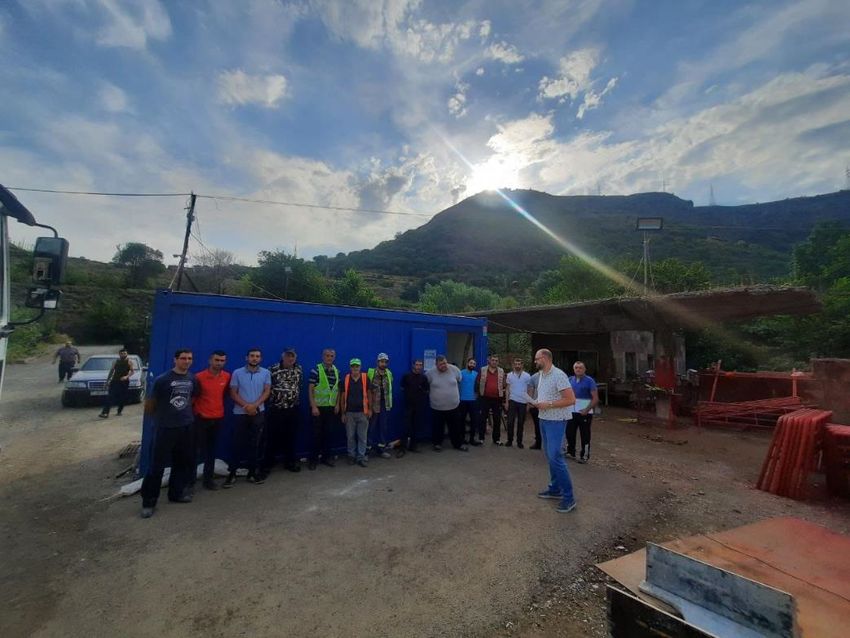
Conduct a post-construction road safety audit, identify road safety issues and provide
      recommendations to address them. Raise the Client's capacity and awareness of the
      international standards of road safety. He is a part-time employee and during the reporting
      period his input was 6 -13 days per month (depending on the month).
2.2.3. The Contractor’s Safeguards Staff
19. The Contractors` Environmental Units are staffed as follows:
 20. Lot 1
       Mr. Artur Ghazaryan – Project Manager: is responsible for the overall project management
       including the environmental, social and health and safety issues.
       Mr. Pertsh Bojukyan - Environment and Social Safeguards Specialist: is responsible for the
       compliance of the Contractor’s activities to Environment and Social requirements of the ADB
       Safeguard Policy Statement and Armenian legislation.
       Mr. Harutyun Aghajanyan - Health and Safety Specialist: is responsible for the compliance of
       the Contractor’s activities to Health and Safety requirements of the ADB Safeguard Policy
       Statement and Armenian legislation.
 21. Lot 2
       Mr. David Azatyan – Project Manager: is responsible for the overall project management
       including the environmental, social and health and safety issues;
       Mrs. Arayik Tsaturyan – Environment, Health and Safety and Social Safeguards Specialist:
       is responsible for the compliance of the Contractor’s activities to Environment, Health and
       Safety and Social requirements of the ADB Safeguard Policy Statement and Armenian
       legislation. Mr. Arayik Tsaturyan took up duties from the 1st of May, 2021.
 22. Lot 3
       Project Manager Mr. Mauro D’Orazio and Quality, Health & Safety Manager - Sif Ababsia
       according to the organizational structure of Project Team are responsible for securing of the
       works quality as well as environmental, occupational health and safety (OHS) and social
       issues.
       Mr. Artak Ter-Torosyan – Environmental and Social Safeguards Specialist: is responsible for
       the compliance of the Contractor’s activities to Environment and Social requirements of the
       ADB Safeguard Policy Statement and Armenian legislation.

2.3. Project Activities during current reporting period
23. The following activities were carried out during the current reporting periods (see photos in
     Annex 1):
 24. Lot 1
      During the reporting period no new road sections were handed over to the Contractor.
      As of June 30, 2021, the following road sections are handed over to the Contractor: km38+450 –
      km47+055; km47+065 – km48+140. The section km 47+055 – km 47+065 is under expropriation
      and has not been handed over to the Contractor yet.
      By the end of June 2021, the progress of civil works is roughly as below: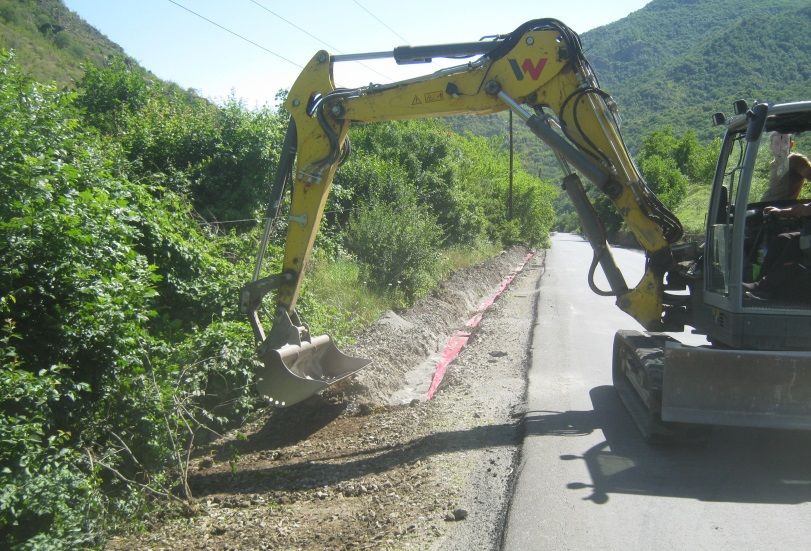
Figure 2-1: Physical progress of the civil works by June 30, 2021

                      Table 2-1: Physical progress of the civil works by June 30, 2021
                                                                    Completion rate %
              BoQ
                                  Description                                     Actual vs
             number                                          Actual vs Bill
                                                                                  Schedule
                 1             General Provisions                 8.9                8.9
                 2             Preparatory works                 50.1               50.1
                 3                Earth works                    90.2               90.2
                 4              Road pavement                    21.0               21.0
                 5                  Drainage                     77.3               77.3
                 6              Road furnishing                  13.7               13.7
                7-1                Structures                    63.1               63.1
                7-3        PK 479+34 L=9m r/c bridge             91.3               91.3
                 8            Rock fall protection                0.0                0.0
                 9                Side works                     29.9               29.9
               10-1         Gas pipelines relocation              0.0                0.0
               10-2        Relocation of Optic Cables            35.1               35.1
                                Total                            58.4               58.4

25.   Lot 2
      During the reporting period the section km49+025 – km49+060 was handed over to the
      Contractor. As of June 30, 2021, the whole Lot 2 section (km48+140-62+300) is handed over to
      the Contractor.
      By the end of June 2021, the progress of civil works is roughly as below:
Figure 2-2: Physical progress of the civil works by June 30, 2021
Table 2-2: Physical progress of the civil works by June 30, 2021
Completion rate %
BoQ number Description Actual vs
Actual vs Bill
Schedule
1 General Provisions 50.4 50.4
2 Preparatory works 54.2 54.2
3 Earth works 52.0 52.0
4 Road pavement 66.4 66.4
5 Drainage 61.7 61.7
6 Road furnishing 14.0 14.0
7 Structures 50.4 50.4
8 Rock fall protection 0.0 0.0
9 Sidewalks 67.9 67.9
10-1 Existing Gas Pipelines Relocation 0.0 0.0
Relocation of Existing Fiber Optic
10-2
Cables 62.1 62.1
Installation of new underground
11
sewage system 93.7 93.7
12 Installation of new water pipeline 79.3 79.3
Total 58.0 58.0
26. Lot 3
During the reporting period no new road sections were handed over to the Contractor.
As of June 30, 2021, the whole Lot 3 section (km62+300-km90+191) is handed over to the
Contractor.
By the end of June 2021, the progress of civil works is roughly as below:Figure 2-3: Physical progress of the civil works by June 30, 2021
Table 2-3: Physical progress of the civil works by June 30, 2021
Completion rate %
BoQ number Description
Actual vs Bill Actual vs Schedule
1 General provisions 39.5 39.5
2 Preparatory Works 2.3 2.3
3 Earth works 61.2 61.2
4 Road pavement 68.1 68.1
5 Drainage 35.5 35.5
6 Road furnishing 1.4 1.4
7 Structures 37.2 37.2
8 Rock fall protection 0.0 0.0
9 Sidewalk 92.0 92.0
10-1 Existing Gas Pipelines Relocation 0.0 0.0
Relocation of Existing Fiber Optic
10-2 0.0 0.0
Cables
10-3 Water Pipelines Relocation 81.3 81.3
Total 61.0 61.0
2.4. Description of Any Changes to Project Design
27. The M6-original Design envisages the improvement of the today existing horizontal alignmentfrom km 57+800 to km 58+075, by removing the curve of small radius and length, as shown in
Figure 2-4.
Figure 2-4: The Curve
28. The implementation of said work is practically impossible if considered in conjunction the following
actual conditions on site:
It is necessary to excavate the slope or to remove blocks using explosives from top-to-down
due to the height and the verticality of the slope next to the road
It is difficult for the excavation machinery to access the working level on top, which according
to the cross sections of the Design is elevated by 35m higher than the elevation of the road
which is at +651.
The execution of works must be done under traffic conditions
29. The aforementioned conditions lead to the need of considering an option that minimizes the
excavations on the cut-side to the least necessary, i.e. removing of only the approachable hanging
fragments, and re-aligning horizontally the road axis towards the riverside.
30. According to the revised design from Km 57+800 to Km 58+075 the road is provided to be
widened on a rockfill embankment (see Figure 2-5).
Figure 2-5: Rockfill Embankment31. Environmental and Social Due-diligence report will be prepared by the RD and the Engineer and
submitted for ADB’s review by the end of July 2021.
2.5. Description of Any Changes to Agreed Construction methods
32. No changes.3. ENVIRONMENTAL SAFEGUARD ACTIVITIES
3.1. General Description of Environmental Safeguards Activities
33. The Road Department is implementing day-to-day management of project execution. The RD
includes an Environmental Safeguards staff whose responsibilities include the management of
all environmental aspects of the project. Mr. Armen Bodoyan hired as Head of Environmental
Impact Management Services of RD on 1st February. Mr. Mikael Tevosyn – Environmental
specialist resigned on 15 September 2020 and so far the position is free․ New hiring of
environmental specialist by “Road Department” SNCO is planned in August 2021.
34. The Engineer is providing Technical Assistance to the RD in the management and reporting of
the project. Environmental Specialist of the Engineer is responsible for supervising the
construction works in relation to environmental and archaeological impact and, in particular, for
supervising and reporting on the Contractor’s performance in the implementation of the EMP.
35. Contractors are implementing construction works. Every contractor has Environmental
specialist responsible for preparation and implementation CEMP and SEMPs, monitoring of the
construction activities and reporting.
Monitoring Reporting
3.2. Site Audits
36. During the reporting period site audits were carried out according the Monitoring program
developed based on the ADB Safeguards and EMP requirements. Unscheduled audit visits
were carried out when needed. The following site audits were undertaken:
37. Regular audit site visits on weekly basis by contractors’ environmental specialists. The audits
have been done according to the approved checklist template.
38. Regular audit site visits (twice a month) by the Engineer’s environmental specialist. The audits
have been done according to the approved checklist template. Regular audit visits by the
Engineer’s road safety specialist were conducted.
39. The RD environmental specialists participated in some of the audit site visits of the engineer’s
environmental specialist, but not less than once in a quarter.
40. ADB EHS online mission was held on 6th and site visit was held on 7th May, 2021 to (i) assess
status of ongoing works of the 3 civil works contracts under the loan (i.e. the 3 lots); and (ii)
assess compliance status of safeguards documentation.
3.3. Issue Tracking
41. During the reporting period totally 19 issues were tracked 9 issues were closed and 10 are still
open. 2 issues are environmental and 14 safeties. 47% of the issues have high priority, 5% -
low and 48% - medium. During the reporting period, no Non-Conformance Notice was
submitted by the Engineer. Summary of the issues is given in the tables below:Table 3-1: Summary of Issues Tracking Activity for Current Period
Summary Tables
Issues by Category
Total Number of Issues 19 Environment 2 Issues by Lot 1-3
Social 1
Number of Open Issues 10 Health 1 Lot 1 6
Number of Closed Issues 9 Safety 14 Lot 2 7
Percentage Closed 47% Other 1 Lot 3 6
Figure 3-1: Summary of Issues by Priority and Non-conformance level
Issues by Priority Non-conformance Level
5% N/A, 0
47%
Minor, 9
48%
Major, 10
Low Medium High Major Minor N/A
3.4. Trends
42. Total number of newly opened issues for the 6th period decreased from 12 to 4. The number of
environmental issues decreased from 3 to 2 and safety issues increased by 7 (from 7 to 14).
Table 3-2: Comparison table of Issues of Past Period
1st and 1st and
3rd 4th 5th 6st 3rd 4th 5th 6st
2nd 2nd Total
Period Period Period Period Period Period Period Period
Period Period
Total Number of
43 40 48 60 64 Issues by Category
Issues for Project
Total Number of
17 6 8 8 10 Env. 20 10 2 3 2 37
Open Issues
Total Number of
26 34 40 52 54 Social 0 0 0 1 1 2
Closed Issues
Percentage Closed 60% 85% 83% 87% 84% Health 0 1 0 1 1 3
Issues Opened this
27 13 8 12 4 Safety 7 2 5 7 14 35
Reporting Period
Issues Closed this
16 18 6 12 2 Other 0 0 1 0 1 2
Reporting Period
3.5. Unanticipated Environmental Impacts or Risks
43. No unanticipated environmental impacts and risks were identified during the current period.
3.6. Vibration Monitoring
44. Pre-Construction Inventory of Buildings and Vibration Monitoring Reports were developed by
all tree Contractors and approved by the Engineer.
45. The Vibration Monitoring Consultant (Georisk) was hired by the Engineer to conduct vibration
assessment during the works. The vibration assessment results are provided below as well as
in Annex 3. Lot 1: Тhe actual vibration level at points N4 and 16 obtained as a result of 3
measurements conducted on 24.06.2021, were within the 109dB TLVs.
Lot 2: Three instrumental measurements were performed at points N7 and N8 on
14.04.2021. The actual average level of transport-technological (2nd category) vibration at
point N8 were within the 109dB TLV. The actual average levels of transport-technological
(2nd category) vibration at point N7 during the 3rd measurement was above 109 dB TLV set
by the national standards, which is due to the operation of vibration-roller. However, the
actual average level of transport-technological (2nd category) vibration at point N7 was
within the 109dB TLV, accordingly there is no necessity for any additional mitigation
measures.
Lot 3: Тhe actual levels of transport-technological (2nd category) vibration (80 dB and 76.9
dB respectively) at points N11 and 13 obtained as a result of 3 measurements conducted
on 24.06.2021 were below the 109 dB TLV and the baseline level.
3.7. GRM Tracking
46. In general, 58 grievances were tracked of which 14 occurred during January to June 2021. This
involved both face to face and telephone interviews with the APs. 52 grievances were closed
and 6 are still open. The significant part of the grievances relates to damages out of LARP
boundaries and design issues. Summary of the grievances by status and subject is provided in
the figure below. Damages outside of the LARP boundaries are covered by the contractors
consequently this should not cause any issues regarding access of the contractors to the
specified locations.
Table 3-3: Summary of GRM Tracking for Past Periods
1st and
3rd 4th 5th 6st
Summary Tables 2nd Total
Period period period Period
Period
1. Total Number of Grievances 30 23 35 44 58 190
2. Number of Closed Grievances 18 12 19 40 52 141
2.1. In satisfaction of AP 10 8 16 28 41 103
2.2. In non-satisfaction of AP 8 4 5 10 11 38
3. Number of Open Grievances 12 11 16 4 6 49
4. Percentage Closed 60% 52% 54% 91% 90% 74%
5. Grievances by Categories
5.1. New damage within LARP
6 5 5 6 11 33
boundaries
5.2. Damage out of LARP boundaries 16 12 13 17 21 79
5.3. Design issues 3 5 13 14 15 50
5.4. Environmental 0 0 1 0 0 1
5.5. Other issues 5 1 3 7 11 27
Figure 3-2: Summary of Grievances of 6th Period by Status and Subject19% 19%
10%
26%
36%
90%
7.1. New damage within LARP boundaries
7.2 Damage out of LARP boundaries
7.3 Design issues
Closed Grievances Open Grievances
7.4 Other issues4. RESULTS OF ENVIRONMENTAL MONITORING
4.1. Overview of monitoring conducted during the reporting period
47. During the reporting period instrumented measurements and monitoring of environmental
parameters of air quality, noise and vibration were undertaken.
48. Contractor has completed the baseline data collection for dust, noise, vibration and water in
2018.
49. Instrumented measurements and monitoring of environmental parameters (dust, noise,
vibration and water) during the reporting period has been implemented at the sensitive points
by the Contractors which were identified and approved by the Engineer.
50. The Contractors hired the same company (ATMS Solutions LLC) to hold DNV measurements.
According to the monitoring reports vibration actual levels at measurement points were within
the Threshold Limit Values (TLV) set by Sanitary norms and WHO standards. The actual
average levels of transport-technological (2nd category) vibration at point N7 of Lot 2 during the
3rd measurement conducted on 14.04.2021 was above 109 dB TLV set by the national
standards, which is due to the operation of vibration-roller. Actual equivalent and maximum
noise averaged sound levels at measurement point №4 and point №16 obtained as a result of
3 measurements conducted on 24.06.2021 were above the TLVs set for the territories near the
residential and commercial areas. Contractors will reorganize the works, so less equipment
work at the same time near each other. The main noise and vibration sources at all noise
measurement points are operation of construction equipment and movement of cars and
vehicles along the M6 highway. The actual dust concentrations in all measurement points in
different daytime periods didn’t exceed the maximum permissible concentrations set by the
RoA Government Decree No160-N “Norms of maximum permissible concentrations of
atmospheric air pollutants in residential areas" and WHO Air Quality Guidelines - Global
Update, 2005.
51. Detailed information on the results of operational monitoring is presented in the Dust, Noise,
Vibration and Water Assessment Reports available in the Contractors` and the Engineer`s
offices (see extract from reports in Annex 3).
52. During the reporting period (March 15, 16 and June 10, 11) the Vibration Monitoring Consultant
conducted vibration assessment at 8 locations of Lot 3 section. The static (no vibration) and
weak vibration modes of the vibration-roller were applied. Considering that even under the low
vibration mode the value of peak particle velocity (PPV) was exceeding at all 8 locations the
permissible limit, the strong vibration mode was not applied. The static mode of the vibration
roller was applied at all measurement sites, and the value of peak particle velocity (PPV)
estimated in that case did not exceed the value of 2.5 mm/s (see assessment results in Annex
5).
4.2. Trends
53. The issue with the dust in Alaverdi city is resolved since the Contractor of Lot 2 section which
is going through the city has almost completed the asphalt works..
4.3. Summary of monitoring outcomes
54. No NCN were submitted to the Contractors during the reporting period.
55. Taking into account the results of vibration assessment the Engineer instructed the Lot 3
Contractor to use only static mode of vibration roller near the sensitive locations where the
assessment was conducted and where the value of peak particle velocity (PPV) was exceeding
with the weak vibration mode of the vibration-roller.
4.4. Waste Management
56. Lot 1: All excavated materials were disposed at the dumping sites located in Odzun community.
57. Lot 2: All excavated unsuitable material is disposed in Alaverdi`s solid household waste landfill.
Excavated rocky materials were disposed in Haghpat (DS near the camp), where the materialswere crushed for further use in the road construction (sub base layer). During the Engineer’s
monitoring site visit, conducted on February 8, 2021 it was observed that at PK 59+950
(riverbank behind the hotel), at km 56+200 and at PK 60+600, the Lot 2 Contractor dumped
excavated soil on the riverbank. Taking this into account the Contractor was instructed to
prepare SEMPs for the new dumping sites or remove the excavated soil from those locations.
Additional reminder was submitted by the Engineer on March 4, 2021 (Letter
04/03/Lot2/06/GP/2021), on April 13, 2021 (Letter 13/04/Lot2/13/GP/2021) and May 18, 2021
(18/05/Lot2/19/GP/2021). The templates of permits and agreements to be attached to the
SEMPs were submitted to the Contractor by the Engineer and it is expected that the permits
and agreements will be concluded and the SEMPs will be submitted to the Engineer by the mid
of July, 2021.
58. Lot 3 The excavated materials were disposed at Akhtala 1 (PK 66+600), Shnogh 2 (PK
72+200), Shnogh 3 (PK 72+327) and Haghpat (PK 63+500) DSs. During the reporting period
the Contractor submitted to the Engineer the Hand-Over act, according to which the Akhtala 1
(PK 66+600) site was handed over to the owner on April 12, 2021 as well as the SEMP for the
DS Haghpat (PK 63+500) was revised and the Engineer’s no-objection was provided on June
29, 2021.
4.4.1. Current period
Table 4-1: Waste generated in the reporting period1
Lot 1 Lot 2 Lot 3
Type of Waste Excavated soil (non- Excavated soil (non- Excavated soil (non-
(hazardous or hazardous) hazardous) hazardous)
non-hazardous)
Waste Source Excavation works in the Excavation works Excavation works in the right
(what activity right of way of way
generated the
waste and where)
Quantity of waste Roadway excavation Roadway excavation (soil) Roadway excavation (soil) –
generated (soil) – 4,173 m3 – 10,150 m3 33,367 m3
Rocky Excavation – 0 Rocky Excavation – 2,100 Rocky Excavation – 577 m3
m3 m3
Treatment/dispos Excavated soil is Excavated soil is reused Excavated soil was used as
al route (provide reused for improving for improving private and land improvement works in
information on private and community community lands in Akhtala-1, Shnogh-2 and
quantity of waste lands in accordance accordance with the Land Shnogh-3 sites.
reused, recycled with the Land Improvement Agreement
and sent to Improvement concluded between the Stripped asphalt is reused as
landfill or Agreement concluded parties. a road edge material
incineration) between the parties. Rocky materials are taken
Rocky materials are to Haghpat DS and Rocky materials are crushed
crushed for further use crushed for further use in for further use in the road
in the road construction the road construction (sub construction (sub base layer).
(sub base layer). base layer).
Final Disposal Dumping Sites: Odzun Madan DS, Ayrum dumpsite, sites
Site for waste 1- 6 Rocky materials are taken Akhtala-1, Shnogh-2 and
to Haghpat DS. Shnogh -3, Haghpat.
Stripped asphalt is stored at
1The status of approval of SSEMPs is given in the table 5.1 below.Lot 1 Lot 2 Lot 3
the storage site near the
Camp.
4.4.2. Cumulative waste generation
Table 4-2: Waste generated in the 1st, 2nd, 3rd, 4th, 5th and 6st periods
Lot 3
Lot 1 Lot 2
Type of Waste Excavated soil (non- Excavated soil (non- Excavated soil (non-
(hazardous or hazardous) and hazardous) and stripped hazardous) and stripped
non-hazardous) stripped asphalt asphalt (hazardous 4th asphalt (hazardous 4th
(hazardous 4th category) category)
category)
Waste Source Excavation works in the Excavation works and Excavation works in the right
(what activity right of way asphalt stripping works of way and asphalt stripping
generated the works
waste and where)
Quantity of waste Roadway excavation Roadway excavation (soil+ Roadway excavation (soil) –
generated (soil+ stripped asphalt) stripped asphalt) – 67,654 77,980 m3
- 184,147 m3 m3 Rocky Excavation – 6,568 m3
Rocky Excavation - (4,585 is soil +asphalt Stripped Asphalt – 4,866 m3
78,158 m3 (20%) and 63,069 - only
soil)
Rocky Excavation –
31,400 m3
Treatment/dispos Excavated soil is Excavated soil has been Excavated soil has been used
al route (provide reused for improving used as backfill material in as backfill material in Madan
information on private and community Madan public landfill and public landfill and for improving
quantity of waste lands. for improving private and private and community lands
reused, recycled Rocky materials are community lands in in accordance with the Land
and sent to crushed for further use accordance with the Land Improvement Agreement
landfill or in the road construction Improvement Agreement concluded between the
incineration) (sub base layer). concluded between the parties.
parties. Rocky materials are crushed
Rocky materials are for further use in the road
crushed for further use in construction (sub base layer).
the road construction (sub Stripped asphalt is reused as a
base layer). road edge material.
Final Disposal Duping Sites: Madan DS, Ayrum dumpsite, sites
Site for waste Tumanyan, Odzun 1- 6, Rocky materials are taken Akhtala-1, Akhtala-2 and
Alaverdi. to Haghpat DS Shnogh-1, Shnogh -2,
Stripped asphalt was Stripped asphalt is stored Shnogh-3, Haghpat.
stored in the territory of in the territory of Camp Stripped asphalt is stored at
Camp the storage site near the
Camp.4.5. Health and Safety
4.5.1. Community Health and Safety
59. At this stage of road construction, the various road surfaces (good and rough) present a
significant safety hazard for drivers unfamiliar with the road and construction stage and the
local community. During the reporting period, three significant separate collisions were noted:
The truck was stuck (collided with a culvert) because there were no traffic signs to guide
traffic away from stone piles (Lot 1).
The fatality was speed related and in nighttime, so temporary speed limits have been
installed (Lot 2).
The other crash near Engel’s bridge area was dangerous driving (Lot 2).
60. All this indicates that the existing temporary traffic control is not according to the proposed plan
at the start of the project. More signing and traffic control is needed to alert and warn drivers,
especially as asphalt is being laid, and especially outside of work hours (nighttime periods).
Planned mitigation measures to solve the identified issues are provided in chapter 7.3 of this
report.
4.5.2. Workers Safety and Health
61. No accidents were recorded during the reporting period.
62. COVID 19 H&S Plan were prepared by the Contractors and approved by the Engineer.
Compliance with the COVID-19 safety rules was in the focus of Engineer.
4.6. Trainings
63. Lot 1-3: The Environmental and H&S Specialist of the Contractors trained the personnel on
site, on Work Site Safety and Environmental Policies and Procedures. New employees are
trained as soon as they get involved with the project (see photos in Annex 4). The Contractors’
personnel are also trained on protective measures against COVID-19. During the reporting
period the Contractors conducted trainings on Work Site Safety and Snake & Scorpion Bites.
64. During the ADB Loan Review Mission Call conducted on May 6, 2021, the ADB suggested
conducting H&S + COVID-19 training with the Contractor staff. Following the ADB’s suggestion
trainings on Environmental H&S, Road Safety, and Protective Measures Against COVID-19
were conducted by the RD and the Engineer for the Contractor’s staff on June 17-18, 2021
(See photos in Annex 2).
Table 4-3: Trainings conducted during the reporting period
Number of
Lot Date of Trainings Participants
June 25, 2021 16
1
June 17, 2021 4
June 17, 2021 2
2
June 30, 2021 14
June 18, 2021 5
3
June 19, 2021 15
4.7. Archeological Issue
65. No archeological finds were found during the reporting period.5. FUNCTIONS OF THE SEMP
5.1. SEMP review
66. Lot 1 and 2: No SEMPs were submitted during the reporting period.
67. Lot 3: During the reporting period Akhtala 1 (PK 66+600) site was handed over to the owner
and the SEMP for the DS Haghpat (PK 63+500) was revised and the Engineer’s no-objection
was provided on June 29, 2021.
68. Currently, the following documents were submitted to the Engineer:
Table 5-1: Current status of SSEMP approval
SSEMPs Lot 1 Lot 2 Lot 3
Odzun 1 (no objection
15.05.2020) /km
43+300 – 43+700/
Odzun 2 /km 45+100-
45+700/ no objection
21.10.2020 Ayrum
/km 81+500/ /no-
Odzun 3
objection 05.08.18/
/km 39+574 – 39+625/
(PUBLIC
no objection 15.05.2020
LANDFILL)
Odzun 4
/km 40+225 – 40+300/
conditional no objection
20.05.2020
Odzun 5 /km 40+500- Madan /no-objection
42+000/ no-objection 05.09.18/
20.09.2019/ (PUBLIC LANDFILL)
Odzun 6 / km44+000 –
44+300, no-objection
09.10.2019/
Odzun 7 /KM38+450– DSs in the section of
KM39+574, KM396+25 Kapavor SC
– KM402+25, (Akhtala 1)
KM403+00-KM405+00, /km 66+600/
KM420+00-KM43+140,
no-objection
21.10.2020/
SEMP for Dumping Sites
Alaverdi
/km 48+200 – 43+400/
no objection 12.06.2019
DSs in the section of
Tumanyan Kapavor SC
(PUBLIC LANDFILL) (Akhtala 2)
/km 37+500/no- /km 64+850/ no
objection 20.09.2018/ objection 30.05.
2019
Haghpat (no
Tumanyan 2 (Private, Shnogh-1 DS PK
objection
no objection 71+460 / no-
26.02.2019)
24.12.2018) /km objection 10.10.19/
/km 56+600/
37+500/
Shnogh-2 DS PK
72+200
/20.11.2019/
Tumanyan 3 /PK Shnogh-3 DS PK
38+00-PK38+500, no- 72+327
objection 21.10.20/ /23.12.2020/
Riverbank PK
DS near Sanahin 56+200
Haghpat DS PK
Station / PK47+780- Riverbank PK
63+500
47+850, no-objection 59+950
/29.06.2021/
22.03.21 / Riverbank PK
60+600SEMP for Top-soil storage Top-soil was not (no objection
no objection 12.06.19
site generated 24.12.2018)
SEMP for Stripped asphalt (no objection (no objection (no objection
storage site; 14.01.2020) 14.02.2019) 24.12.2018)
(no objection (no objection
SEMP for Crusher plant No Crusher Plant
28.06.2019) 14.02.2019)
SEMP for Concrete plant/ (no objection (no objection
No Concrete Plant
Concrete Mixing Facility 28.06.2019) 20.11.2019)
(no objection
SEMP for Asphalt plant No Asphalt Plant
14.02.2019) (no objection
(no objection (no objection 13.02.2020)
SEMP for the CAMP
14.01.2020) 14.02.2019)
SEMP for Vehicle Parking Odzun /PK 419+20 –
N/A N/A
Area 420+70/ 04.11.2019
PK 44+520 - PK
44+540 no objection PK 53+700 – PK
26.02.2019 and PK 53+800 and PK
46+000-PK46+150 /no 53+680 – PK
objection 06.06.19/ 53+725 no objection
SEMP for blasting works PK 42+150-42+450 / no 14.02.2019 N/A
objection 20.09.19/ May 2020, PK
PK 424+50-426+00/no 58+860,
objection 11.03.2020/ PK 577+50 to PK
May 2020, PK 424+60- 588+10
PK425+60
Engineer`s no objection was provided (conditional or final)
Have not been submitted yet
Closed and handed over DS6. GOOD PRACTICE AND OPPORTUNITIES FOR IMPROVEMENT
6.1. Good Practice
6.1.1. Dumping Site Approval Procedure
69. RD adopted a procedure concerning a dumping site selection and SEMP approval as follows:
(i) Contractor selects the site for topsoil stockpiling or dumping of excavated material;
(ii) Engineer’s ES visits the site and provide Contractor with site evaluation report with
identified sensitive receptors and recommendations on the site use. Archaeological
specialist is also involved to give their conclusion concerning any potential historical and
cultural object (if any);
(iii) Contractor secures the site and prepares SEMP based on the findings of evaluation report
and submits for Engineer’s approval;
(iv) The Engineer’s ES reviews the SEMP and issues an approval;
(v) Then Contractor is permitted to start the site operation.
70. The procedure allows to assess the site and identify the sensitive receptors in early stage of
the procedure and by this way accelerates the further works related to SEMP preparation and
approval.
Figure 6-1: Dumping Site Selection and SEMP Approval Procedure
6.1.2. Grievance Registration Procedure
71. The Engineer adopted a procedure concerning the registration of Grievances. The main
features of the procedure are:
(i) The table or registration of the grievances is located in the Google Drive and all parties
(Client, Engineer and Contractors) have access to the folder;
(ii) The Grievance Registration Form is also available in the drive;
(iii) Each case shall be registered in the registration table as well as a form shall be filled up.
(iv) A folder shall be created in the name of the applicant and the affected community and the
fill up form together with all related information shall be uploaded to the folder.
72. The procedure allows all parties to upload all files related to a case to the same folder and
effectively share the information between the parties.
6.2. Opportunities for improvement
73. No opportunities outside the formal NCN process were identified during the reporting period. If
any will be presented in the further reports.7. SUMMARY AND RECOMMENDATIONS
7.1. Summary
74. Contractor is guided by the IEE and CEMP for the Project as a part of the Bid and Contract
documents, Site-specific Environmental Management plans, as well as by the Contractor’s
Environmental Management Plan prepared by the Contractor that detail on site environmental
management requirements implementation and management, particularly construction impacts
mitigation, monitoring and reporting requirements in order to ensure the environmental
performance. Compliance with CEMP is being regularly monitored and reported.
75. In order to comply with national safeguard system and legislation, Contractor has obtained
necessary permits and licenses for construction activities. During the reporting period it was
observed that construction in general complies with all national pertinent environmental laws
and regulations. In this regards some shortcomings were observed which are presented in
details in the clause 3.3 of this report. Total number of opened issues for the 6st period
decreased from 12 to 4. The number of environmental issues decreased from 3 to 2 and safety
issues increased by 7 (from 7 to 14).
76. In order to ensure the environmental performance, it was supervised that the implementation
of construction activities in general meets CEMP requirements which is prepared in accordance
with IEE (July 2016), ADB Environmental Policy and RA legislation.
77. The thresholds for monitoring of environmental parameters of dust, noise, vibration and water
are set in accordance with standards and norms set by Armenian legislation as well as by the
guidance for ADB funded projects.
78. Vibration Monitoring Consultant conducted vibration assessment at 8 locations of Lot 3 section.
According to the assessment results the value of peak particle velocity (PPV) was exceeding
with the weak vibration mode of the vibration-roller at all 8 locations.
79. Contractors ensure all necessary communication with local self-governmental bodies
(communities) and regional administrative authorities to comply with Armenian legislation
during construction and obtains permits and approvals for any use of territory and roads for
transportation, waste dumping, and material borrowing.
80. No public hearings were held during the reporting period.
81. Proper functioning of the grievance registration and redress mechanism in all communities is
regularly checked by the Engineer`s Social Specialist and reported. In order to perform effective
monitoring of the grievances raised during the construction period the Complaint Log Sheet
and the Grievance Recording Form were placed on the Google Drive. During the reporting
period, totally 58 grievances were tracked. Detailed information on the grievances is
summarized in the clause 3.7 (GRM Tracking).
82. The SSEMPs for the dumping sites for three lots were developed and reviewed by the
Engineer. The list of shortcomings related to the SSEMPs as well as the status of approval is
provided in clause 5.1 of this report. During the reporting period Akhtala 1 (PK 66+600) site
was handed over to the owner and the SEMP for the DS Haghpat (PK 63+500) was revised
and the Engineer’s no-objection was provided on June 29, 2021.
83. The Environmental and Social Specialists of Contractors have already trained the personnel
on site, on Work Site Safety and Environmental/Social Policies and Procedures. New
employees are trained as soon as they get involved with the project. Following the ADB’s
suggestion trainings on Environmental H&S, Road Safety, and Protective Measures Against
COVID-19 were conducted by the RD and the Engineer for the Contractor’s staff.
84. During the reporting period (Spring 2021) the Lot 1 and 2 Contractors started tree planting in
accordance with the Tree Management Plans. The Lot 2 contractor completed tree planting
implementation and a hand-over act was concluded with Alaverdi Community. Meanwhile, the
contractor still be responsible for managing planted trees until the end of the guarantee period
to ensure the required survival rate. Totally 222 trees were planted by the Lot 2 Contractor and
174 by the Lot 1 Contractor. The Lot 3 Contractor will start tree planting and the Lot 1 will
continue the process in Autumn 2021.
85. No historical finds were found during the reporting period.86. No blasting works were implemented during the reporting period.
87. No NCNs were submitted by Engineer during the reporting period.
88. At this stage of road construction, the various road surfaces (good and rough) present a
significant safety hazard for drivers unfamiliar with the road and construction stage and the
local community. False driver confidence is easily achieved on new road asphalt and the short
sections experience high speeds and hazardous behavior with overtaking and sudden stopping
and undisciplined parking.
7.2. Recommendations
89. Contractors must install temporary speeds signs at all asphalt section for maximum speed limit
of 50kmh, with 30kmh for specific ongoing or unfinished work zone areas. In addition, the
existing long asphalt road sections may already require the permanent speed limit traffic
signing. This must include a maximum of 60km/h in free flow road sections, and 40km/h along
village and settlement sections, where agreed.
90. Grievance Registration Process shall be improved. Not all grievances are properly registered
on the Google Drive.
91. The Lot 2 Contractor shall fix the issue related to the 3 dumping sites on the river-bank - SEMPs
shall be prepared and submitted to the Engineer by the 15th of July.
7.3. Action Plan
92. Environmental safeguard monitoring activities planned for the next period are:
Reporting on environmental and social safeguards;
Overall management of environmental, social, archaeological and H&S safeguards;
Evaluation site visits and assistance to the Contractor in development/finalization (as the
case may be) of SEMPs;
Review and provision of no objection for revised SSEMPs;
Review and provision of no objection for the revised Tree Management Plan (if revised by
the Contractor);
Review and provision of no objection for the Contractor’s monthly and weekly environmental
reports;
Participation in ADB mission site visits;
Participation at the Contractor’s environmental trainings for his staff, as well as for newly
hired Engineer’s staff;
Monitoring of construction activities on respective Lots;
Road safety awareness workshops is to be presented to the local community by the end of
October 2021, for best practice road safety and hazard avoidance as the traffic conditions
changes.Annex 1: Photos of activities during the reporting period
Lot 1: Relocation of fiber optic cable at km46+500 –
Lot 1: Inlet structure for culvert at km42+440
km46+600
Lot 1: Reansversial flume at km47+934 Lot 1: Placement of sub base layer (20cm) at km47+400
Lot 1: Repairing of lower retaining wall at km42+100 Lot 1: Construction of Bus stop PK479+10Lot 2: Placement of crashed stone base (12cm) at
Lot 2: Fine-grained a/c (h=4cm) at km52+000-km52+800
km50+340-km50+600
Lot 2: Placement of Coarse a/c (h=5cm) at km50+300- Lot 2: Backfilling of fiber optic cables trench at km61+600-
km50+650 km62+000
Lot 2: Construction of Rubble concrete curbs (with base) Lot 2: Earth works for flumes at km 60+750-km60+820
at km60+765-km60+805Lot 2: Construction of rubble concrete edge walls on Lot 2: Pedestrian railings at km51+716-km51+764
lower retaining walls at km61+840-km61+850
Lot 3: Fine grade a/c of 4cm at km88+150 Lot 3: Roadway excavation at km68+148
Lot 3: Installation of valves on D530mm water pipeline
Lot 3: Subgrade improvement at km65+000
at km65+400Annex 2: EHS + COVID-19 Trainings conducted in Alaverdi and Shnogh
communities
Alaverdy, June 17, 2021 (Training for Lot 1)
Alaverdy, June 17, 2021 (Training for Lot 2)Shnogh, June 18, 2021 (Training for Lot 3)
Annex 3: Status of Measurements on Dust, Noise, Vibration and Water
                    Quality in the reporting period
 1. The list of Identified Sensitive/Monitoring Points

       Point   Parameters   Piquet (km)     Coordinates    Community
       Lot 1
                  Dust
                                             41°0'45''N
        №1       Noise        395+50                       Tumanyan
                                             44°38'15''E
                Vibration
                  Dust
                                            41°00'45.9"N
        №2       Noise        395+00                       Tumanyan
                                            44°38'15.5"E
                Vibration
                  Dust
                                             41°03'52"N
        №3       Noise        457+50                        Alaverdi
                                             44°37'18"E
                Vibration
                  Dust
        №4                    395+80        41°00'45.9"N   Tumanyan
                 Noise
                                            44°38'15.5"E
                Vibration
                  Dust
                                             41°4'53''N
        №5       Noise        479+50                        Alaverdi
                                             44°37'2''E
                Vibration
                  Dust
                                             41°0'45''N
        №6       Noise        395+50                        Alaverdi
                                             44°38'15''E
                Vibration
                  Dust
                                             41°01'57"N
        №7       Noise        420+00                         Odzun
                                             44°38'00"E
                Vibration
                  Dust
                                            41°04'12.2"N
        №8       Noise        464+40                         Odzun
                                            44°37'02.0"E
                Vibration
                  Dust
                                             41°04'13"N
        №9       Noise        465+00                        Alaverdi
                                             44°37'01"E
                Vibration
                  Dust
                                             41°4'53''N
       №10       Noise        479+50                        Alaverdi
                                             44°37'2''E
                 Water
                  Dust
                                             41°04'57"N
       №11       Noise        480+50                        Alaverdi
                                             44°37'05"E
                Vibration
                  Dust
                                             41°01'57"N
       №12       Noise        420+00                         Odzun
                                             44°38'00"E
                Vibration
                  Dust
                                             41°04'13"N
       №13       Noise        465+00                        Alaverdi
                                             44°37'01"E
                Vibration
                  Dust
                                             41°4'53''N
       №14       Noise        479+50                        Alaverdi
                                             44°37'2''E
                Vibration
                  Dust
                                             41°0'15''N
       №15       Noise        384+00                       Tumanyan
                                             44°38'24''E
                 Water
Dust
41°04'51.1"N
№16 Noise 477+00 Alaverdi
44°36'56.5"E
Water
Dust
41°5'3''N
№17 Noise 483+00 Alaverdi
44°37'9''E
Water
Point Parametes Piquet (km) Coordinates Community
Lot 2
Dust
Noise 41° 05'51.56"N
№1 52+900 Alaverdi
Vibration 44°39'54.09"E
Water
Dust
41° 06'35.73"N
Noise 58+400 Alaverdi
№2 44°42'42.97"E
Vibration
Dust
Noise 41° 06'35.73"N
№3 60+600 Alaverdi
Vibration 44°42'42.97"E
Water
Dust
41°5'51.16"N
№4 Noise 54+450 Alaverdi
44°39'54.17"E
Vibration
Dust 41°5'32.24"N
№5 54+984 Alaverdi
Noise 44°41'41.37"E
Dust
№6 41°5'49.57"N
Noise 57+276 Aqori
44°40'16.85"E
Vibration
Dust
№7 Noise 41°6'0.01"N
58+769 Alaverdi
44°41'47.46"E
Vibration
Dust
№8 Noise 41°6'45.68"N
60+500 Alaverdi
44°42'50.29"E
Vibration
Dust
Noise 41°7'7.89"N
№9 62+350 Haghpat
Vibration 44°45'6.05"E
Water
Point Parametes Piquet (km) Coordinates Community
Lot 3
Dust
Noise 41.139347N
№1 65+700 Neghots
44.770454E
Vibration
Dust 41.148195N
67+300 Akhtala
№2 Noise 44.784881EVibration
Dust
№3 41.148266N At the beginning of
Noise 67+800
44.790649E Akhtala community
Vibration
Dust
Noise 41.150450N
№4 71+900 Shnogh
Vibration 44.831312E
Water
41.167286N Between Karkop and
№5 Water 74+125
44.844991E Shnogh communities
Dust
41.170477N
№ 5-1 Noise 74+525 Shnogh community
44.847082E
Vibration
Dust
41.171838N
№ 5-2 Noise 74+775 Shnogh community
44.849624E
Vibration
Dust 41.170541N Between Karkop and
№5-5 Noise 74+600 44.848907E Shnogh communities
Vibration
Dust
41.174634N Between Karkop and
№5-6 Noise 75+100 44.853666E Shnogh communities
Vibration
Dust
№6 41.181427N
Noise 76+800 Karkop settlement
44.865782E
Vibration
Dust 41.187484N
№7 79+800 Ayrum Community
Noise 44.892219E
Dust
№8 Noise 41.207352N
82+900 Haghtanak Community
44.906010E
Vibration
Dust
№9 Noise 41.220810N Between Ptghavan and
87+400
44.866024E Haghtanak settlements
Vibration
41.222682N At the beginning of
№10 Water 87+600
44.864761E Ptghavan community
Dust
№11 Noise 41.228809N
88+800 Ptghavan community
44.854147E
Vibration
Dust
№12 Noise 41.230416N
90+100 Bagratashen community
44.840008E
Vibration
Dust
№13 Noise 41.197590N
81+500 Artsis community
44.903876E
Vibration
Dust
№14 41.122635N
Noise 64+000 Akhtala community
44.753145E
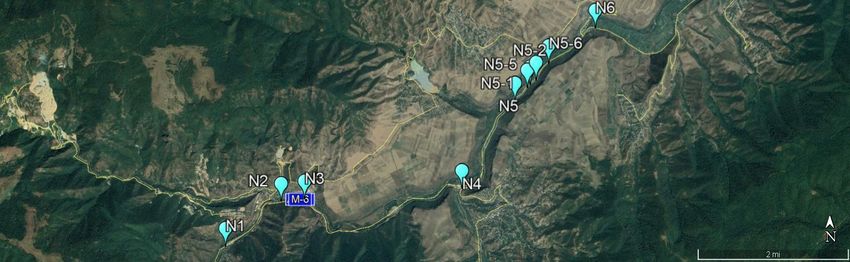
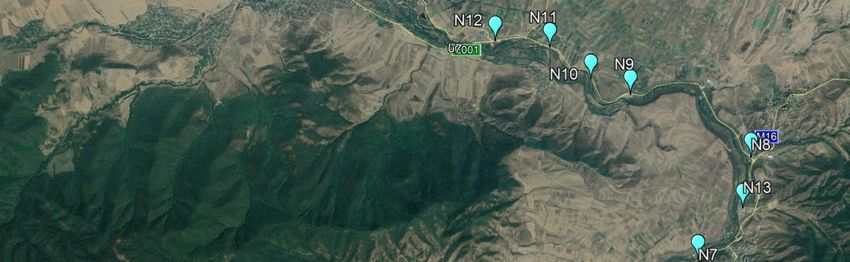
Vibration2. The map of Identified Sensitive/Monitoring Points Lot 1
Lot 2
Lot 3
3. Measurement Approach and Methodology
Dust Measurements
The measurements are conducted in accordance with the below mentioned national normative
documents and international best practices:
GOST 17.2.4.05-83. "Environmental protection. Atmosphere. Gravimetric method for
determination of suspended dust particles",
Government Decree № 160-N. "Norms of maximum permissible concentrations (MPC) of
atmospheric air pollutants in residential areas",
World Health Organization (WHO). Air Quality Guidelines Global Update, 2005.
Measurements of dust concentration (PM2.5 and PM10) are conducted during the daytime.
Measurements at every measuring point are taken 3 times during the day.
Daily average and maximum permissible concentrations (MPC) for PM2.5 and PM10
Maximum Permissible Concentration ( mg/m3)
National National WHO2
№ Name of substance
Max Daily average 24 hour
1 PM2.5 0.16 0.035 0.025
2 PM10 0.3 0.06 0.05
Noise Measurements
Instrumental measurement, analysis and evaluation of results are carried out in accordance with the
following regulations/standards:
Sanitary Norms № 2-III-11.3 "Noise in the workplaces, in residential and public buildings and
in residential construction areas" adopted by the order of RA Minister of Health №138 on
06.03.2002,
ISO 1996-1:2003 "Acoustics-description, measurement and assessment of environmental
noise - Part 1: Basic quantities and assessment procedures",
ISO 1996-2:2007 "Acoustics-description, measurement and assessment of environmental
noise - Part 2: Determination of environmental noise levels",
Guidelines for Community Noise, World Health Organization (WHO), 1999.
As criteria for determination of the conformity level of the actual noise in sensitive areas, the
normative values of the equivalent (average) and maximum sound levels are used, according to the
Sanitary Norms №2-III-11.3 "Noise in the workplaces, in residential and public buildings and houses
in construction areas".
2
World Health Organization (WHO). Air Quality Guidelines Global Update, 2005Measurements of noise levels are conducted during the daytime. Measurements at every measuring
point are conducted 3 times with the duration of 10 minutes each one.
Threshold limit values for noise3
Threshold limit values (TLV), dBA
National WHO
№ Premises and territories One hour
Equivalent to Maximum
equivalent to
sound level sound level
soud level
1 Workplace 80 85
Shops, trading halls, airport and railway stations
2 waiting rooms, drop-off points of public service 60 75 70
providers
Territories adjacent to residential buildings,
clinics, ambulatories, rest houses, care homes,
3 55 70 554
disabled persons homes, libraries, kinder
gardens, schools and other educational facilities
Vibration Measurements
Instrumental measurement, analysis and evaluation of results are carried out in accordance with the
following regulations/standards:
Hygienic Norms №2-III-11.3 "Vibration in the workplaces, in residential and public buildings",
Directive 2002/44/EC on the minimum health and safety requirements regarding the
exposure of workers to the risks arising from physical agents (vibration),
GOST 31319-2006 (EN 14253) "Mechanical vibration. Measurement and assessment of
occupational exposure to whole-body vibration with reference to health. Requirements for
measurement at the workplace",
GOST 31191.1-2004 (ISO 2631-1) "Mechanical vibration and shock - Evaluation of human
exposure to whole-body vibration - Part 1: General requirements".
As criteria for determination of the conformity level of the actual vibration in sensitive areas, the
normative values of vibration acceleration are used according to the Hygienic Norms №2.2.4-009-
06 "Vibration in the workplaces, in residential and public buildings".
Measurements of vibration acceleration are conducted during the daytime. Measurements at every
measuring point are conducted 3 times with the duration of at least 5 minutes each one.
3
Only noise TLVs for day-time are presented in Table 3
4 The daytime indicator is taken, since no works are conducted at night.You can also read


