Exploring Pattern of Green Spaces (GSs) and Their Impact on Climatic Change Mitigation and Adaptation Strategies: Evidence from a Saudi Arabian ...
←
→
Page content transcription
If your browser does not render page correctly, please read the page content below
Article
Exploring Pattern of Green Spaces (GSs) and Their Impact on
Climatic Change Mitigation and Adaptation Strategies:
Evidence from a Saudi Arabian City
Ahmad Maghrabi *, Abdulelah Alyamani and Abdullah Addas

                                          Landscape Architecture Department, Faculty of Architecture and Planning, King Abdulaziz University,
                                          P.O. Box 80210, Jeddah 21589, Saudi Arabia; aalyamani0060@stu.kau.edu.sa (A.A.); aaddas@kau.edu.sa (A.A.)
                                          * Correspondence: aamaghrabi@kau.edu.sa

                                          Abstract: Green spaces (GSs) are significant, nature-based solutions to climate change and have
                                          immense potential to reduce vulnerability to heat waves while enhancing the resilience of urban
                                          areas in the light of climate change. However, in the Saudi context, the availability of GSs across cities
                                          and their perceived role in climate change mitigations and adaptation strategies remain unexplored.
                                          This study aimed to examine the per capita availability of GSs in the Jeddah megacity in Saudi Arabia,
                                          and their role in climate change mitigation and adaptation strategies. This study assessed the per
                                          capita availability of GS in Jeddah city using GIS techniques, and a questionnaire survey (online and
                                          an onsite) was conducted to assess the GSs users’ perception of the role of GSs on climate change
                                          mitigation and adaptation strategies. Non-parametric tests were also used to find differences in
                                          roles based on socio-demographic attributes. The findings of the study revealed that: (i) the per

                                   capita availability of GS in Jeddah is relatively low in comparison to international organization
Citation: Maghrabi, A.; Alyamani,
                                          recommendations (such as World Health Organization and European Union). As per the survey
A.; Addas, A. Exploring Pattern of        result, it was reported that GSs play crucial role for climate change mitigation such as temperature
Green Spaces (GSs) and Their Impact       regulation, reduction in heat stress, enhancement outdoor thermal comfort, and the maintenance
on Climatic Change Mitigation and         of air quality. More than 85% of the total respondents agreed with the very high importance of GSs
Adaptation Strategies: Evidence from      for climate change mitigation. More than 80% of respondents in the city highly agreed with climate
a Saudi Arabian City. Forests 2021, 12,   change adaptation strategies such as the enhancement of accessibility to GSs, ecosystem-based
629. https://doi.org/10.3390/             protection of GSs, and the improvement of per capita availability of GSs. The findings of the study
f12050629                                 will be very helpful to planners and policymakers in implementing nature-based solutions to reduce
                                          vulnerability to climate change in Jeddah city, and particularly other cities in a desert environment.
Academic Editor: Paloma Cariñanos

                                          Keywords: green spaces; climate change; well-being; urban sustainability; vulnerability
Received: 24 March 2021
Accepted: 12 May 2021
Published: 16 May 2021

                                          1. Introduction
Publisher’s Note: MDPI stays neutral
with regard to jurisdictional claims in         Rapid rates of urbanization and climate change have emerged as serious challenges
published maps and institutional affil-   to urban areas [1,2]. The existing environment is being converted into semi-natural or
iations.                                  artificial land surfaces, ultimately affecting energy flow, solar radiation, and atmospheric
                                          parameters [3,4]. Furthermore, the conversion of land surfaces, emissions from anthro-
                                          pogenic sources, and materials used in building result in the emergence of urban heat
                                          islands (UHI) [3,5–7]. The frequency of extreme climatic events, such as cold weather
Copyright: © 2021 by the authors.         and heat waves, and the occurrence of UHI, are likely to increase due to global climate
Licensee MDPI, Basel, Switzerland.        change [8,9]. In urban areas, air quality, energy, the health of the urban dwellers, and urban
This article is an open access article    sustainability are profoundly affected by UHI [10–12].
distributed under the terms and                 In this context, effective management strategies need to be implemented to enhance
conditions of the Creative Commons        the absorption of solar radiation, reduce heat storage, and use blue and green spaces to
Attribution (CC BY) license (https://     lessen the effects of UHI [1,13–15]. Green spaces can be treated as urban green infras-
creativecommons.org/licenses/by/          tructure (UGI). UGI refers to the hybrid infrastructure of green spaces, such as urban
4.0/).

Forests 2021, 12, 629. https://doi.org/10.3390/f12050629                                                    https://www.mdpi.com/journal/forests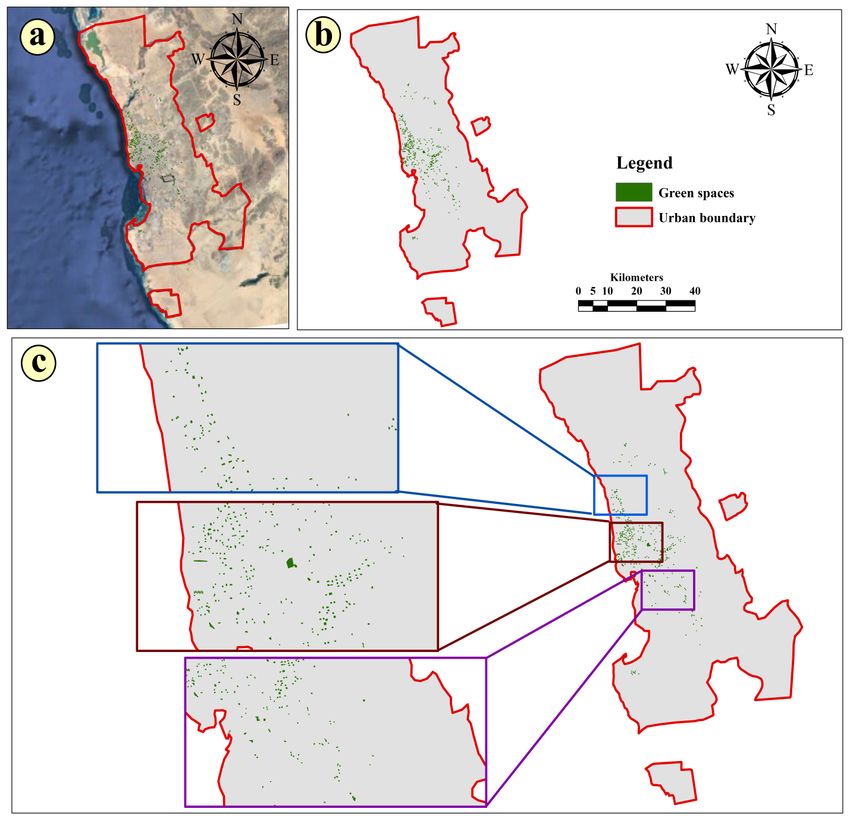
Forests 2021, 12, 629                                                                                            2 of 16

                        forests, green roofs, green walls, and parks [16]. UGI plays a significant role in the en-
                        hancement of urban resilience and human well-being by providing ecosystem services
                        (ES) [17–19]. UGI contributes to reducing temperatures, and many studies have established
                        that the development of urban UGI is significant for climate change adaptation because
                        these spaces are eco-friendly and cost-effective and are also acceptable from a political
                        perspective [16–18]. According to McDonald et al. (2016) [19], urban green spaces (GSs) are
                        relatively cost-effective compared to cool roofs in improving outdoor thermal conditions.
                              Several factors, such as the shape, size, density, complexity, and connectivity of GSs,
                        profoundly influence their cooling effect [11,20,21]. According to Shih (2017) [22], spatial
                        patterns and configurations influence the cooling effect of GSs. The cooling effect is not
                        confined to the GS, but also benefits adjacent areas [15,23], although the cooling effect
                        declines with increasing distance [17,24]. Average temperatures are reduced by 0.94 ◦ C and
                        1.15 ◦ C during the day and night, respectively, in the presence of GSs [25–27]. The literature
                        shows that the cooling effect of GS is determined by the surrounding environment and
                        its land use/land cover (LULC) pattern, as well as building materials, building height
                        and density, and climatic conditions [15,26–31]. However, although previous studies have
                        examined the cooling effect of GSs [11,23,32], they have not addressed the role of GS in
                        climate change adaptation strategies, particularly in the Saudi context. The limitations of
                        previous research affect the ability of planners and policymakers to make recommendations
                        for land use planning and design to alleviate heat effects in urban environments [15,30,33].
                        In the Saudi context, most studies have been performed on patterns, types, and policies
                        for open public green spaces [34–36]. Previously in Saudi Arabia, a number of research
                        studies have been performed on the quantitative assessment of GS across cities including
                        Jeddah, Riyadh and Dammam [34–36]. Apart from Saudi Arabia, many studies have been
                        conducted across different cities, such as Chittagong in Bangladesh [37], Mandalay city
                        in Myanmar [38], Berlin in Germany [39], and Shanghai in China [23,40]. Most of these
                        studies mainly dealt with quantitative evaluations, spatial variation, and the impact on the
                        well-being of people. However, the role of GS on climate change mitigation and adaptation
                        strategies has remained unexplored in the Saudi context. It is well recognized that global
                        vulnerabilities due to natural as well as human-made disasters have increased as a result of
                        climate change [41]. Now, the basic question arises as how to reduce (mitigation strategies)
                        and to cope (adaptation strategies) with the impact of climate change. Simply, “mitigation
                        aims to avoid the unmanageable and adaptation aims to manage the unavoidable” [41].
                        Urban areas across the globe are experiencing serious challenges (such as floods, droughts,
                        heat waves) due to climate change [5]. Thus, climate change in cities has put a significant
                        question to spatial planners in the 21st century: how to adapt cities to climate change? [42].
                        Attention has grown towards the contribution of green spaces (GSs) in addressing the
                        challenges. GSs were considered as one promising nature-based solution to the adverse
                        effects of climate change in cities [43,44]. According to Davies et al. [45], GSs should be
                        treated as a significant resource for climate change mitigation. GSs have been prioritized
                        in terms of policy and governance in many scientific debates related to climate change
                        mitigation and adaptation strategies [46]. The contributions and benefits of GSs to climate
                        change mitigation and adaptation strategies have been widely studied [47,48]. However,
                        very limited focus has been given to the role of GSs for climate change mitigation and
                        adaptation strategies.
                              This study assesses the perceptions of people towards the role of GSs on climate
                        change mitigation and adaptation strategies. Spatial structures as well as entire urban
                        regions are largely affected by climate change mitigation and adaptation strategies [49].
                        In addition to this, the users’ behavior, motive, preferences, as well as attitudes are influ-
                        enced by the perception of people towards the environment or landscape quality [50,51].
                        Thus, behaviors and attitudes of people to landscape quality affect GSs management and
                        planning [52,53]. Positive attitudes and perceptions of landscape quality encourage physi-
                        cal activities and promote beneficial outcomes [54]. The perceived access to GSs can also
                        promote recreational pursuits and mental health as well [55]. Apart from the objective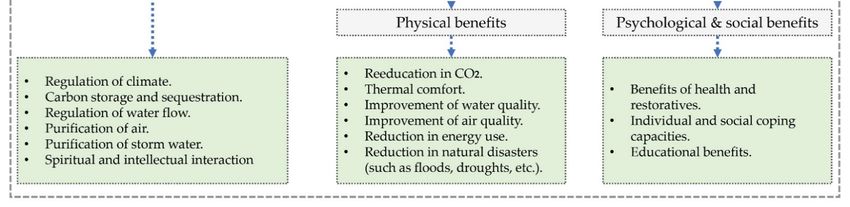
Forests 2021, 12, 629                                                                                                                                                 3 of 16

                                                assessment of the environmental, as well as landscape quality, self-reported perception of
                                                the user is crucial [56]. The perceived attitudes towards the GSs were proven to significantly
                                                influence the quality of life, mental stress, leisure activities, and psychological wellbeing of
                                                the people [57,58]. In spite of this, limited attention has been paid towards the perceived
                                                role and attitudes towards GSs in climate change mitigation and adaptation strategies.
                                                Particularly, perceived attitudes to the role of GSs remain unexplored in the Saudi context.
                                                Thus, to fill this research gaps, this study aimed to assess the perceived importance and
                                                attitudes to climate change mitigation and adaptation strategies in Jeddah city.
                                                      Saudi Arabia has a population of around 33 million (2018) and is vulnerable to climate
                                                change [59] due to its sensitive ecosystem, frequent occurrence of floods, and limited
                                                freshwater resources [60]. According to the Global Climate Risk Index [61], Saudi Arabia
                                                ranked 84th. In addition, Saudi Arabia has among the highest levels of energy consumption
                                                and CO2 emissions per capita; energy consumption is three times higher than the global
                                                average, and CO2 emissions are the 7th highest per capita. Between 2006 and 2015, energy
                                                consumption increased by about 58% (from 160 million tons to 260 million tons of oil)
                                                (British Petroleum (BP), 2017). The country uses domestic oil (about 40% of the total
                                                for Middle Eastern countries) and gas consumption (21% of the total for Middle Eastern
                                                countries) mainly for transportation, power generation, and industrial activities. According
                                                to Abubakar and Aina [62], resource demand in Saudi Arabia is three times greater than
                                                the capacity of the ecosystem.
                                                      Over the last few decades, Saudi cities have experienced rapid rates of urban expan-
                                                sion and population growth [63] (Figure 1), leading to extreme alteration of LULC [64].
                                                Increased oil revenue has encouraged the government to implement various infrastructure
                                                development projects [40], with LULC changes resulting from urban expansion, industrial
                                                development, and agricultural expansion having an impact on ecosystems as well as biodi-
                                                versity [65]. Thus, the rapid transformation of LULC has seriously impacted cities at a local
                                                level, through increases in temperature, the emergence of the UHI effect, and deterioration
                                                of thermal comfort levels across cities [66–70]. The impact of climate change, particularly
                                                on cities in a desert environment, is prominent due to rapid urban expansion. In the context
                                                of Saudi Arabia, most studies have been performed on the quantitative assessment of
                                                GS across the cities [23,39]. However, to the best of our knowledge, no study has been
                                                performed on the role of GSs for climate change mitigation and adaptation strategies on
                                                Saudi Arabian cities. These research gaps from previous studies inspired us to investigate
                                                the preferences for GS, the role of GS in climate change mitigation, and climate change
                                                adaptation strategies, as perceived by the respondent in Jeddah city. Thus, the findings will
          Forests 2021, 12, x FOR PEER REVIEW
                                                help city planners and policymakers to understand and     4 of 18
                                                                                                                 implement nature-based solutions
                                                in climate change mitigation and adaptation strategies.

                                               Figure
                                           Figure 1. Urban1.    Urban
                                                             growth patterngrowth     pattern
                                                                           over Riyadh, Jeddah andover  Riyadh,
                                                                                                   Makkah            Jeddah
                                                                                                          from 1985 to           and
                                                                                                                       2034 (expected)   Makkah from 1985 to 2034 (expected)
                                           (Alqurashi et al. 2016).
                                                (Alqurashi et al. 2016).
                                           2. Materials and Methods
                                           2.1. Study Area
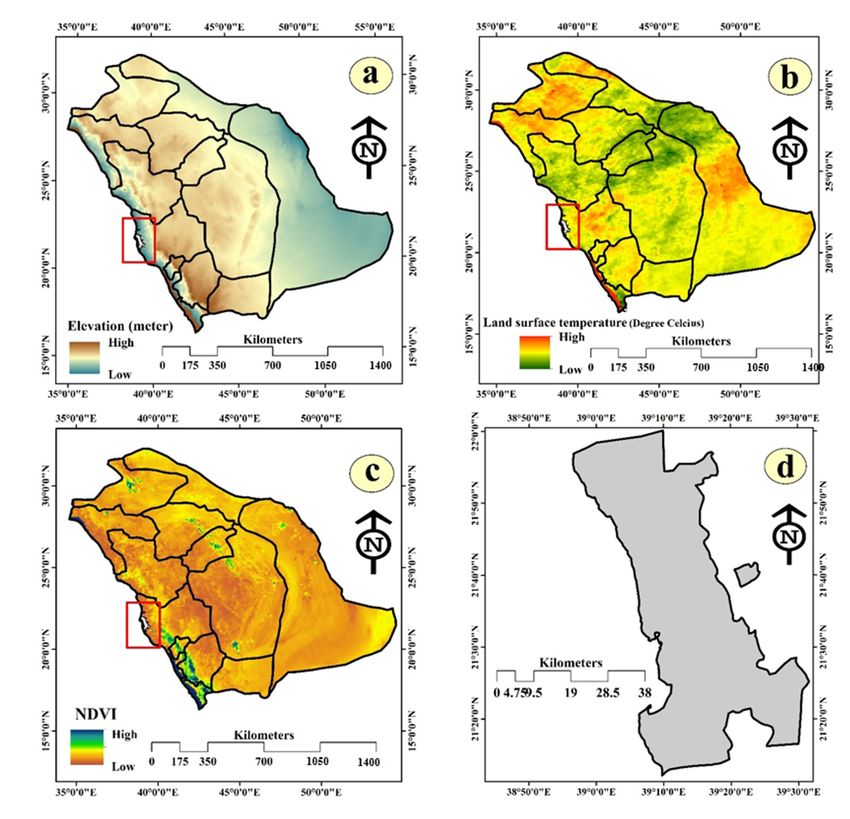
                                                 The present study mainly focused on Jeddah city, in which the per capita availability
                                           of GS has been assessed as well as the people’s perception on the role of GS on climate
                                           change. (Figure 2). Jeddah is one of the most populous cities in Saudi Arabia. Jeddah city
                                           was selected because (i) Jeddah is one of the most substantial cities in Saudi Arabia, and
                                           (ii) GS provision in this city is relatively low compared to other cities such as Riyadh and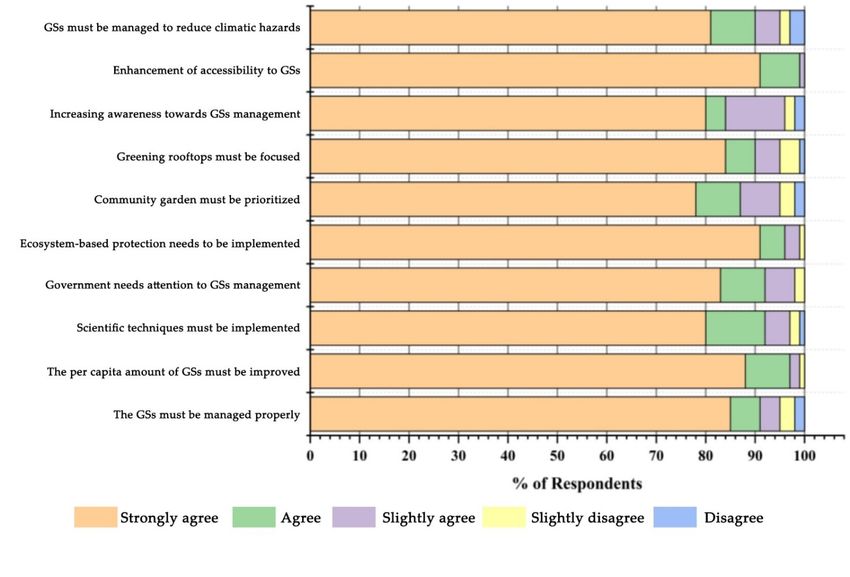
Forests 2021, 12, 629                                                                                                       4 of 16

                                 2. Materials and Methods
                                 2.1. Study Area
                                          The present study mainly focused on Jeddah city, in which the per capita availability
                                    of GS has been assessed as well as the people’s perception on the role of GS on climate
                                    change. (Figure 2). Jeddah is one of the most populous cities in Saudi Arabia. Jeddah city
Forests 2021, 12, x FOR PEER REVIEW was selected because (i) Jeddah is one of the most substantial cities in Saudi Arabia,5 ofand
                                                                                                                               18
                                    (ii) GS provision in this city is relatively low compared to other cities such as Riyadh and
                                    Dammam. The profile of Jeddah city has been presented in Table 1.

      Figure 2. Location of Jeddah city within Saudi Arabia (a); elevation map; (b) land surface temperature map; (c) NDVI map
     Figure 2. Location of Jeddah city within Saudi Arabia (a); elevation map; (b) land surface temperature map; (c) NDVI map
      and; (d) Jeddah city.
     and; (d) Jeddah city.
                                 2.2. Methods
                                Table
                                 2.2.1.1.Data
                                         Profile of the Jeddah
                                              Collection   andcity.
                                                               Questionnaire Survey
                                     In this study, both an online and a direct field survey and
                                                Attributes                                       semi-structured interviews
                                                                                             Information
                                 were used to assess users’
                                                 Location   perception on climate   change
                                                                                     Western coast of and
                                                                                           mitigation     adaptation
                                                                                                      the Red Sea     strate-
                                          Physical environment                                Desert and coastal
                                               Area (km2)                                            1600
                                            Total population
                                         Population density (km2)                                    5400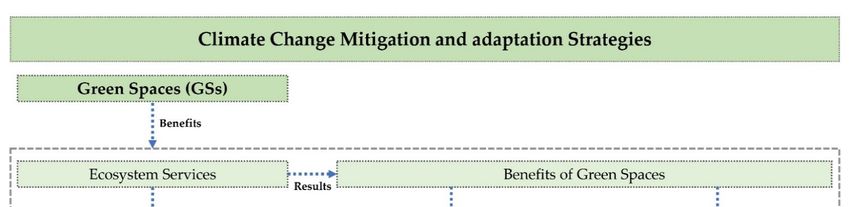
Forests 2021, 12, 629                                                                                                         5 of 16

                                    gies for the special visitors to Jeddah city. Questionnaires and semi-structured interviews
                                    were conducted to investigate preferences for GS, the role of GS in climate change miti-
                                    gation, and climate change adaptation strategies, as perceived by the respondents. The
                                    questionnaire was divided into four major sections: (i) general information on the respon-
                                    dents (including socio-demographic attributes such as age, gender, and nationality). The
                                    responses from different genders (male and female), age groups (>20, 20 to 40 and >60)
                                    and nationalities (Saudi and Non-Saudi) were collected as perception regarding the climate
                                    change mitigation and adaptation strategies may vary; (ii) preferences for GS services as
                                    perceived by respondents (e.g., picnics, well-being, physical activities, family gathering);
                                    (iii) the importance of GS in climate change mitigation on a 5-point Likert scale (mitigation
                                    includes reduction in UHI effect, reduction in heat stress, reduction in local climate change)
                                    with questions such as “do you think GSs are important in reducing temperature?”; and (iv)
                                    perceptions of climate change adaptation attributes on a 5-point Likert scale, with questions
                                    such as “do you agree that accessibility of GSs need to be enhanced?”. The terminologies
                                    used in the questionnaire were discussed with the respondents for better understanding of
                                    the objectives of the study.

                                    Table 1. Profile of the Jeddah city.

                                                        Attributes                                     Information
                                                         Location                             Western coast of the Red Sea
                                                  Physical environment                            Desert and coastal
                                                       Area (km2 )                                       1600
                                                    Total population
                                                 Population density (km2 )                                 5400
                                                       Growth rate                                          3.8
                                                      Climate type                               Dry and hot desert climate
                                                  Average rainfall (mm)                                   45 mm
                                                  Temperature in winter                                 around 28
                                                 Temperature in summer                                     >40

                                         In many previous studies, quantitative and qualitative techniques have been used
                                    for data collection [59,60]. The respondents were randomly selected from users of GSs in
                                    Jeddah. The survey was performed mainly in major parks and gardens, including Prince
                                    Majed Park, Alsalamh Garden, Alrawdah Garden, Alhamra Garden, Aljamaa Garden, and
                                    Alfalah Garden. The survey was performed during November 2019 and from January
                                    to June 2020. During November 2019, most of the survey was conducted through onsite
                                    interviews with the respondents; during 2020, we focused more on online surveys due to
                                    outbreak of COVID-19. In the case of online surveys, detailed instructions were provided
                                    with the questionnaire. All the questions were prepared in English and translated into
                                    Arabic for better understanding of the survey questions. Interactions with the respondents
                                    lasted at most for 20 min. The details of the respondents for onsite interviews are presented
                                    in Table 2.

                                       Table 2. Socio-demographic profile of the respondents (%).

                                                                                          Jeddah
                        Dimension
                                                             Onsite Interview        Online Interview          Total Respondents
                                       Male                           75                    66
           Gender
                                      Female                          25                    34
                                       Saudi                          94                    93
      Type of resident
                                     Non-Saudi                         6                     7                         585
                                       20–40                          51                    48
             Age                       40–60                          33                    33
                                        >60                           16                    19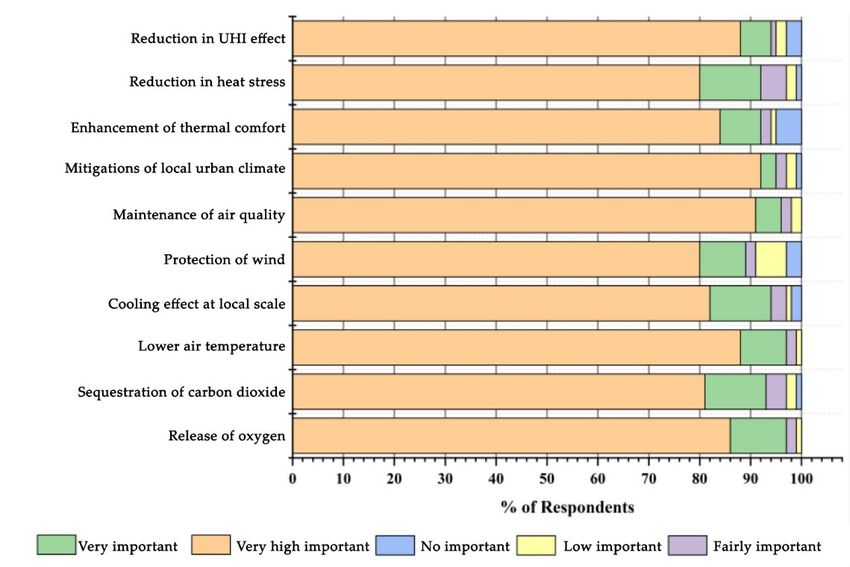
Forests 2021, 12, 629                                                                                              6 of 16

                            For the online survey, a web-based questionnaire was prepared using Google Forms
                        (Google LLC, Mountain View, CA, USA). The questionnaires were sent to respondents via
                        email, WhatsApp, and other social media platforms with instructions. The details of the
                        respondents to the online survey are presented in Table 2.

                        2.2.2. Evaluation of Data
                              A 5-point Likert scale was used to examine (a) the role of GS in climate mitigation,
                        ranging from 1 (no importance) to 5 (very high importance), and (b) to assess perceptions
                        related to the attributes of climate change adaptation strategies, ranging from 1 (highly
                        disagree) to 5 (highly agree). The 5-point Likert scale values to assess the role GSs in climate
                        change mitigations were assigned as 1 = no importance; 2 = low importance; 3 = fairly
                        importance; 4 = high importance; and 5 = very high importance. On the other hand,
                        understanding the agreement of the respondents related to the climate change adaptation
                        attributes, the 5-point Likert scale values were assigned as 1 = disagree; 2 = slightly disagree;
                        3 = slightly agree; 4 = agree; and 5 = strongly agree. The relative importance of GS was
                        computed by dividing the total score provided by the respondents by the number of
                        respondents.

                        2.2.3. Measurement of Per Capita Availability of GS Across Cities
                             Exploring the per capita availability of GS is crucial to sustainable urban planning [5].
                        According to the World Health Organization [61], per capita GS is a significant metric in
                        examining GS availability across cities. Other international organizations also suggest per
                        capita availability of GS, such as the Public Health Bureau (USA), the European Union,
                        and the United Nations (UN). In this study, a comparison of three cities was performed
                        against international standards to find discrepancies in the per capita availability of GS
                        (Table 3). GSs inside the urban growth boundary (UGB) were considered across the cities.
                        Information on all GSs (particularly parks and gardens) was extracted using GIS. The GSs
                        across the cities were prepared with the help of satellite images, Google Earth Pro, and
                        Open Street Maps. The following equation was used to compute the average availability of
                        GS across cities:
                                                              PCGS = GSt/Pt
                        where PCGS is the per capita GS, GSt is the total area of GS within the city boundary, and
                        Pt is the total population of the city.

                        Table 3. Per capita availability of GS in Jeddah.

                                 Organization             Standard Per Capita GSs (m2 )   Jeddah Per Capita GSs (m2 )
                               United Nations                               30
                         World Health Organization                          9
                                                                                                       0.5
                         Public Health Bureau (USA)                         18
                              European Union                                26

                        2.2.4. Statistical Analysis
                             The Kruskal–Wallis test (K-S test) was performed [71] to examine differences in the
                        assessments of the role of GS in climate change mitigation based on age, gender, and na-
                        tionality. In addition, a Mann–Whitney U test was used to examine significant differences
                        in perceptions between males and females and Saudi and non-Saudi residents. The quanti-
                        tative data collected through the questionnaire were analyzed using SPSS 22.0 (Armonk,
                        New York, NY, USA).

                        3. Results
                        3.1. Per Capita Availability of Green Spaces (GSs) in Jeddah
                             As per the results of the study, it was observed that per capita green space (PCGS) was
                        0.5 m2 . In Jeddah, there is a total of 2.05 km2 of GS over more than 430 locations, meaning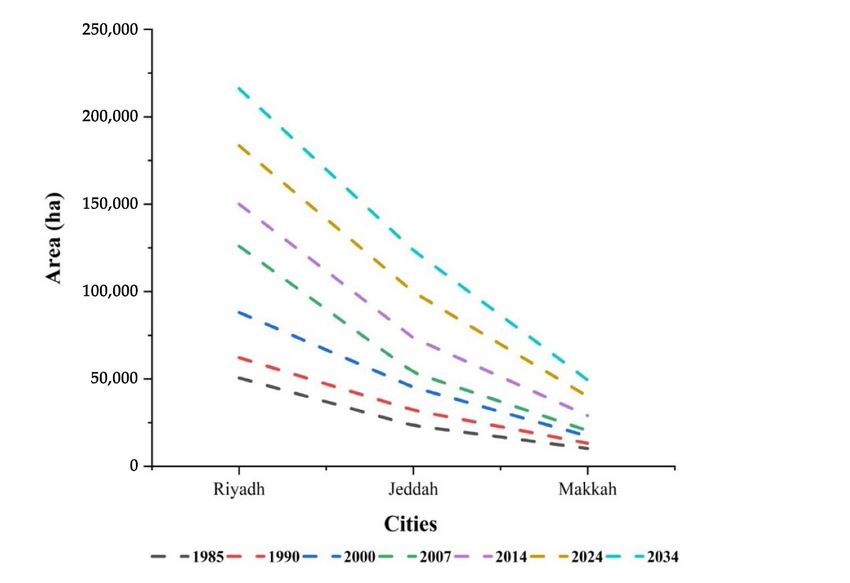
titative data collected through the questionnaire were analyzed using SPSS 22.0 (Armonk,
                                  New York, NY, USA).

                                  3. Results
Forests 2021, 12, 629                                                                                                                7 of 16
                                  3.1. Per Capita Availability of Green Spaces (GSs) in Jeddah
                                       As per the results of the study, it was observed that per capita green space (PCGS)
                                  was 0.5 m2. In Jeddah, there is a total of 2.05 km2 of GS over more than 430 locations,
                                  that therethat
                                  meaning     is one  green
                                                   there      space
                                                          is one    for every
                                                                  green  space 8946    inhabitants
                                                                                 for every          in the city.inInthe
                                                                                             8946 inhabitants         Jeddah,    there
                                                                                                                          city. In      was
                                                                                                                                    Jeddah,
                                  much   less much
                                  there was    per capita   green
                                                      less per     space
                                                                capita     (PCGS)
                                                                       green  spacein(PCGS)
                                                                                        comparison    to internal
                                                                                                in comparison     to standards.     Jeddah
                                                                                                                     internal standards.
                                  would
                                  Jeddahneed
                                          would  31need
                                                    million   m2 and m
                                                          31 million  100   million
                                                                        2 and        m2 GSsmto2 GSs
                                                                               100 million       meettothe  international
                                                                                                         meet                standards
                                                                                                                the international         of
                                                                                                                                      stand-
                                  the European    Union    and  World  Health    Organization     (WHO)    (Table  3).
                                  ards of the European Union and World Health Organization (WHO) (Table 3). It is im-  It is important    to
                                  note that PCGS     availability  was also  much    less in comparison     to the  other  cities
                                  portant to note that PCGS availability was also much less in comparison to the other cities      in Saudi
                                  Arabia.
                                  in SaudiThe   spatial
                                            Arabia.   Thedistributions  of GSs onofJeddah
                                                           spatial distributions      GSs onare   shown
                                                                                               Jeddah     inshown
                                                                                                        are  Figuresin3Figures
                                                                                                                          and 4. 3 and 4.

      Figure 3. Spatial distributions of GSs in Jeddah City (a); Jeddah satellite image with the GSs; (b) GSs distribution in Jeddah
      in regard to the city urban growth boundary and; (c) detailed view to the GSs in the city.

                                       Figure 4 presents the per capita availability of GSs in Jeddah city. As per the figure, it
                                  can be observed that the average shortfall was 82.20 km2 in Jeddah.

                                  3.2. Preferences for GS Services as Perceived by Respondents
                                       The respondents were significantly dependent on major services provided by the G in
                                  their daily lives. Most of the respondents used GS for picnics (23.93%) followed by mental
                                  well-being (23.63%), physical activities (18.95%), family gatherings (16.02%), escape from
                                  everyday life (15.2%), and no particular reason (2%) (Figure 5). A migrant interviewee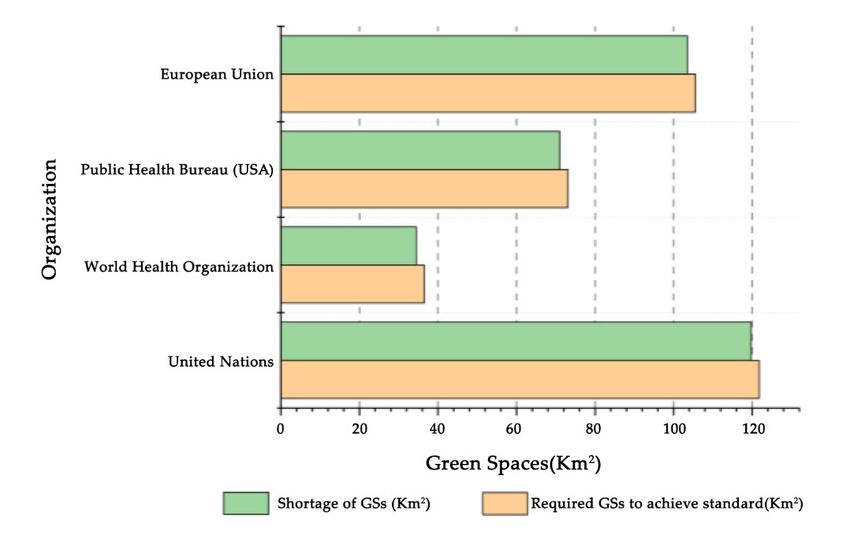
Forests 2021, 12, 629                                                                                                                8 of 16

Forests 2021, 12, x FOR PEER REVIEW                                                                                                  9 of 18
                                      commented that, “Green spaces have become the destination for a picnic all the time, we
                                      just love to use these GSs, and every time we have a relative visiting, we bring them in
                                      these green spaces”. A total of 245 respondents from Jeddah reported that GSs are used for
      Figure 3. Spatial distributions physical
                                      of GSs in Jeddah  CityOne
                                                activities. (a); Jeddah satellitesaid
                                                                  respondent      image  with
                                                                                      that     the GSs;
                                                                                           “I like        (b) GSs distribution
                                                                                                    to exercise    near the seain as
                                                                                                                                  Jed-
                                                                                                                                     it is good
                   dah in regard to the
                                      for city
                                          my urban  growth
                                               physical     boundary
                                                        health”.       and;interactions,
                                                                   During    (c) detailed view
                                                                                           most to of
                                                                                                   thethe
                                                                                                        GSsrespondents
                                                                                                             in the city. reported words to
                                      the effect that walking and exercise in parks and gardens are “good for my physical and
                                        Figurehealth”
                                      mental    4 presents  the per
                                                       and “help   mecapita  availability
                                                                       a lot in             of GSs
                                                                                escaping from     myineveryday
                                                                                                         Jeddah city.    As per
                                                                                                                   routine.”    the figure,
                                                                                                                              Thus,  the result
                                  it can be  observed  that  the  average  shortfall  was  82.20   km  2 in Jeddah.
                                      shows that the services provided by GS are crucial to people in the cities.

   Forests 2021, 12, x FOR PEER REVIEW                                                                                                  10 of 18

                                     Figure 4. Shortage and required GSs     (km2 )
                                                                                in Jeddah City.
                                  Figure 4. Shortage and required GSs (km2) in Jeddah City.

                                  3.2. Preferences for GS Services as Perceived by Respondents
                                        The respondents were significantly dependent on major services provided by the G
                                  in their daily lives. Most of the respondents used GS for picnics (23.93%) followed by
                                  mental well-being (23.63%), physical activities (18.95%), family gatherings (16.02%), es-
                                  cape from everyday life (15.2%), and no particular reason (2%) (Figure 5). A migrant in-
                                  terviewee commented that, “Green spaces have become the destination for a picnic all the
                                  time, we just love to use these GSs, and every time we have a relative visiting, we bring
                                  them in these green spaces”. A total of 245 respondents from Jeddah reported that GSs are
                                  used for physical activities. One respondent said that “I like to exercise near the sea as it
                                  is good for my physical health”. During interactions, most of the respondents reported
                                  words to the effect that walking and exercise in parks and gardens are “good for my phys-
                                  ical and mental health” and “help me a lot in escaping from my everyday routine.” Thus,
                                  the result shows that the services provided by GS are crucial to people in the cities.

                                             5. Preference of
                                      Figure 5.            of green
                                                              green spaces
                                                                    spaces (GSs)
                                                                           (GSs) by
                                                                                 by the
                                                                                    the respondents.
                                                                                        respondents.

                                      3.3. Respondents’ Perception of the Role of GS in Climate Change Mitigation
                                      3.3. Respondents’ Perception of the Role of GS in Climate Change Mitigation
                                           A perception-based field survey was performed to understand the role of GS in climate
                                            A perception-based field survey was performed to understand the role of GS in cli-
                                      change mitigation strategies in Jeddah. It was found that 85% of the respondents believed
                                      mate change mitigation strategies in Jeddah. It was found that 85% of the respondents
                                      that GSs play a crucial role in climate change mitigation strategies, such as temperature
                                      believed that GSs play a crucial role in climate change mitigation strategies, such as tem-
                                      regulation, maintenance of air quality, reduction in UHI effects, and enhancement of
                                      perature regulation, maintenance of air quality, reduction in UHI effects, and enhance-
                                      thermal comfort. The highest percentage of responses with very ‘high importance’ was for
                                      ment of thermal comfort. The highest percentage of responses with very ‘high importance’
                                      the mitigation of the local urban climate (92%) followed by the maintenance of air quality
                                      was for the mitigation of the local urban climate (92%) followed by the maintenance of air
                                      (91%), lower air temperature (89%), and reduction in UHI effect (88%) (Figure 6). Thus,
                                      quality (91%), lower air temperature (89%), and reduction in UHI effect (88%) (Figure 6).
                                      Thus, the overall importance of GS for climate change mitigation strategies as perceived
                                      by the respondents was very high, clearly indicating that GSs have a significant impact on
                                      climate change mitigation strategies.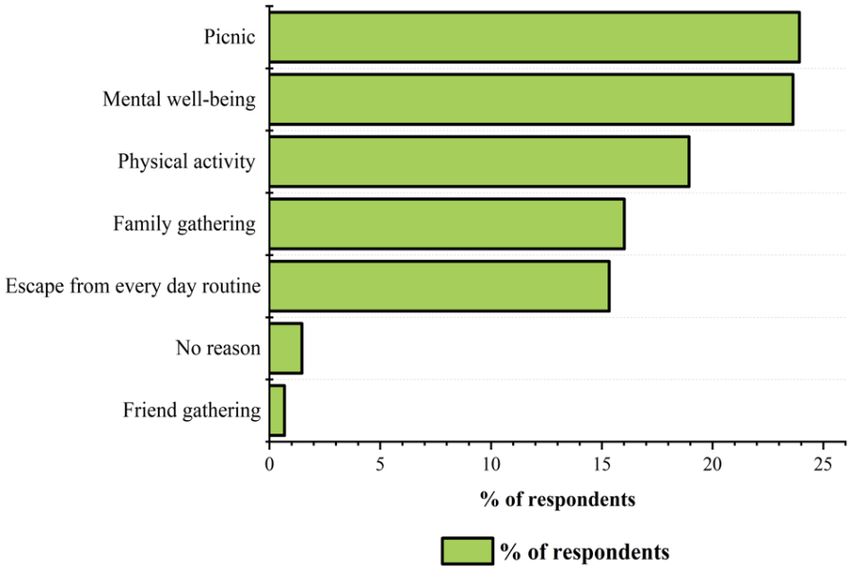
A perception-based field survey was performed to understand the role of GS in cli-
mate change mitigation strategies in Jeddah. It was found that 85% of the respondents
believed that GSs play a crucial role in climate change mitigation strategies, such as tem-
perature regulation, maintenance of air quality, reduction in UHI effects, and enhance-
Forests 2021, 12, 629 9 of 16
ment of thermal comfort. The highest percentage of responses with very ‘high importance’
was for the mitigation of the local urban climate (92%) followed by the maintenance of air
quality (91%), lower air temperature (89%), and reduction in UHI effect (88%) (Figure 6).
Thus,
the the overall
overall importance
importance of GSof for
GS climate
for climate change
change mitigation
mitigation strategies
strategies as perceived
as perceived by the
by respondents
the respondents
was was
veryvery
high,high, clearly
clearly indicating
indicating that have
that GSs GSs have a significant
a significant impact
impact on
on climate
climate
changechange mitigation
mitigation strategies.
strategies.
Figure
Figure 6. Role
6. Role of GSs
of GSs for for climate
climate regulation.
regulation.
There
There were
were significant
significant differences
differences inin perceptionsofofthe
perceptions therole
roleofofGS
GSininthe
thecity,
city, depend-
depending
ing on age, gender, and nationality, as shown by K-S tests. With the Mann–Whitney testtest
on age, gender, and nationality, as shown by K-S tests. With the Mann–Whitney
(applied for bi-group analysis), there were significant differences in the perceived role of
GS between males and females and Saudi and non-Saudi residents (Table 4).
Table 4. Perceived importance of GS based on age, gender, and nationality.
Gender Age Range Nationality
M
F
Mean
SD
20–40
41–60
>60
Mean
SD
Non-Saudi
Saudi
Mean
Services SD
Release of oxygen 4.61 5.00 4.81 0.28 4.85 4.93 4.85 4.88 0.04 4.61 4.85 3.63 0.17
Sequestration of
3.60 4.73 4.17 0.80 3.82 3.92 4.45 4.06 0.27 4.35 4.86 3.52 0.36
carbon dioxide
Lower air
3.86 5.00 4.43 0.81 4.61 5.00 4.91 4.84 0.08 4.82 4.96 3.41 0.10
temperature
Shading 3.12 4.45 3.79 0.94 3.41 4.66 3.69. 4.04 0.44 2.42 4.63 3.24 1.56
Protection of wind 3.32 3.88 3.60 0.40 2.93 3.81 4.68 3.81 0.50 2.83 4.82 3.20 1.41
Maintenance of air
4.55 4.86 4.71 0.22 4.44 4.53 3.92 4.30 0.31 3.72 3.98 3.10 0.18
quality
Mitigations of local
4.53 5.00 4.77 0.33 4.41 4.52 4.95 4.63 0.22 4.54 4.74 2.97 0.14
urban climate
Enhancement of
4.21 4.55 4.38 0.24 3.91 4.22 4.63 4.25 0.23 2.98 4.69 2.59 1.21
thermal comfort
Reduction in heat
4.12 4.86 4.49 0.52 3.42 3.36 4.91 3.90 0.79 3.35 4.19 2.24 0.59
stress
Reduction in UHI 4.63 4.88 4.76 0.18 3.53 3.31 4.44 3.76 0.57 3.64 4.48 1.63 0.59
Mann–Whitney test 0.005 - 0.008
K-S test 0.004 0.063 0.007
ANOVA and K-S tests were performed at a 0.10 level of significance. Mann–Whitney test was performed at a 0.05 level of significance.Forests 2021, 12, 629 10 of 16
3.4. Perceptions of Respondents on the Attributes Related to Climate Change Adaptation Strategies
In this section, an attempt is made to understand adaptation strategies to climate
change by looking at the role of GS in Jeddah city. The respondents were asked to state their
level of agreement with the use of various adaptation strategies based on GS for climate
change mitigation. Most (84%) of the respondents strongly agreed with the adaptation
strategies related to climate change put forward (ten adaptation strategies were considered).
The respondents were aware of the attributes and management strategies for coping with
climate change. The highest percentages were 88% and 92%, where respondents agreed
with the improvement of per capita availability and accessibility of GS across cities. The
results reported that there were substantial shortfalls in per capita availability of GS across
cities in comparison to global standards. The per capita availability of GS was lowest in
Jeddah among the three selected cities. Thus, accessibility to GS is not only necessary
to meet the needs of the city dwellers, but also to cope with climate change (Figure 7).
Furthermore, 88% of respondents agreed that GS must be properly managed to cope with
climate change. The results clearly indicate that the respondents were not satisfied with
Forests 2021, 12, x FOR PEER REVIEW management strategies for GS. The adverse impact of climate hazards can be 12 of 18
reduced
through the effective management and restoration of GS (81%).
Figure 7. Level of agreement on attributes related to climate change adaptation.
4. Discussion
Figure 7. Level of agreement on attributes related to climate change adaptation.
4.1. Impact of GS on Well-Being and Climate Change Mitigation Strategies
The study showed that most of the respondents in Jeddah use GS for picnics (23.93%),
4. Discussion
followed by mental well-being (23.63%), physical activities (18.95%), and family gatherings
4.1. Impact of GS on Well-Being and Climate Change Mitigation Strategies
(16.02%). Respondents closely related to the services provided by GS for their well-being.
The various
Thus, study showed
aspectsthat most of theare
of well-being respondents
affected byinthe
Jeddah use GS
services for picnics
provided (23.93%),
by GS. Previous
followed by mental well-being (23.63%), physical activities (18.95%), and
research has shown that there is a strong nexus between services provided by family gather-
GS and
ings (16.02%).well-being
residents’ Respondents closely
[72–75]. related
Apart fromtopeople’s
the services provided
well-being, GSsbyalso
GS play
for their well-
a significant
being.
role Thus, various
in climate aspects [39,76].
mitigation of well-being are affected
This study showedbythat
theGS
services provided to
can contribute byclimate
GS.
Previous research has shown that there is a strong nexus between services provided by
GS and residents’ well-being [72–75]. Apart from people’s well-being, GSs also play a sig-
nificant role in climate mitigation [39,76]. This study showed that GS can contribute to
climate change mitigation strategies such as the maintenance of air quality, local climate
regulation, controlling of temperature, maintenance of UHI, and reduction in heat stress.Forests 2021, 12, 629 11 of 16
change mitigation strategies such as the maintenance of air quality, local climate regulation,
controlling of temperature, maintenance of UHI, and reduction in heat stress. These
findings are similar to previous studies [75–77]. However, although GSs have an impact
on well-being and climate change mitigation strategies, most respondents reported that
there is a lack of effective management to enhance the quality of the GS. GS must be
managed properly with the application of innovative scientific techniques, enhancement
of per capita availability, prioritization of community gardens, and improved awareness
of GS management among users. Previous studies have shown that GS can be managed
through the application of innovative techniques (such as rooftop greening or vertical green
walls),
Forests 2021, 12, x FOR PEER REVIEW public participation and awareness, and effective management strategies [78].13 Thus,
of 18
restoration and management of GS are not only important to cope with climate change, but
also to sustaining the well-being of city dwellers (Figure 8).
8. Benefit of GSs within climate
Figure 8. climate change
change mitigations
mitigations and
and adaptations
adaptations the
the framework.
framework.
4.2. Role of
4.2. Role of GS
GS in
in Urban
Urban Planning
Planning for
for Climate
Climate Change
Change
GSs
GSs provide several climatic services that play
provide several climatic services that play aa significant
significant part
part in
in climate
climate change
change
adaptation and mitigation [5,39,76,77]. Studies have shown that
adaptation and mitigation [5,39,76,77]. Studies have shown that GS provide multipleGS provide multiple
ser-
services,
vices, suchsuch as the
as the maintenance
maintenance of air
of air quality,
quality, UHIUHI reduction,
reduction, and
and shading.
shading.
In
In previous
previous research,
research, the
the relationship
relationship between
between thethe city
city and
and climate
climate change
change has
has been
been
internationally
internationally recognized and the negative impact on quality of life and ecosystems has
recognized and the negative impact on quality of life and ecosystems has
been highlighted [75,76].
been highlighted [75,76]. Cities
Citiesmust
musthave
havestrategies
strategieswithwithprovisions
provisions andand laws
laws related
related to
to climate change to ensure the well-being of city dwellers. Thus, responding to climate
climate change to ensure the well-being of city dwellers. Thus, responding to climate
change requires the application of innovative solutions and the implementation of effective
change requires the application of innovative solutions and the implementation of effec-
urban management planning and policies [77–80]. This study showed that there is a
tive urban management planning and policies [77–80]. This study showed that there is a
significant shortfall in per capita availability of GS across the cities. Thus, the government
significant shortfall in per capita availability of GS across the cities. Thus, the government
must focus on the restoration and management of GS and enhance accessibility to GS. In
must focus on the restoration and management of GS and enhance accessibility to GS. In
Saudi Arabia, the Ministry of Municipal and Rural Affairs (MoMRA) has implemented
Saudi Arabia, the Ministry of Municipal and Rural Affairs (MoMRA) has implemented
several effective regulations and guidelines related to urban planning, GS projects, and the
several effective regulations and guidelines related to urban planning, GS projects, and
provision of GS across cities. GSs (particularly gardens and parks) must be considered in
the provision of GS across cities. GSs (particularly gardens and parks) must be considered
decision-making. Previously, only limited focus was given to GS across Saudi cities, but
in decision-making. Previously, only limited focus was given to GS across Saudi cities, but
the Vision 2030 National Transformation Program (NTP) paid particular attention to the
the Vision 2030 National Transformation Program (NTP) paid particular attention to the
availability and accessibility to public open spaces, including GS, in Saudi cities [35,36]. In
availability
addition, theand
NTP accessibility
set important to public open spaces,
goals, including including
(i) making GS,cities
Saudi in Saudi
morecities [35,36].
livable, and
In addition, the NTP set important goals, including (i) making Saudi
(ii) improving the involvement of the community in decision-making [34–36]. The Saudi cities more livable,
and (ii) improving the involvement of the community in decision-making [34–36]. The
Saudi Government has invested a huge amount of money to support the project and to
meet international standards and enhance the accessibility to GS across the cities. Thus,
from the analysis, it can be seen that the government (MoMRA) and municipalities must
focus on GS creation, restoration, and management to improve urban sustainability andForests 2021, 12, 629 12 of 16
Government has invested a huge amount of money to support the project and to meet
international standards and enhance the accessibility to GS across the cities. Thus, from the
analysis, it can be seen that the government (MoMRA) and municipalities must focus on
GS creation, restoration, and management to improve urban sustainability and enhance
the well-being of city dwellers. On a city scale, Riyadh has implemented many initiatives,
such as the King Salman Park Project, Sports Boulevard Project, Green Riyadh Project,
and Riyadh Art Project to enhance the accessibility of GS and promote environmental
sustainability. In the last few decades, GSs have been prioritized in policymaking across
the world to deliver social and environmental benefits and to cope with climate change. In
many cities, GSs have been considered as significant tools to help manage climate change,
and experimental projects have been implemented as climate adaptation strategies [42].
From Europe to Asia, GS projects have been implemented as adaptation strategies in
response to climate change; for example, in Catania [81], Copenhagen [82], Pukou District
in Nanjing [83], Beijing [84], and Berlin [85]. Previous literature shows that GSs in an urban
environment play a crucial role in adapting to climate change using low-cost mitigation
strategies. Several models have been developed to evaluate ecosystem services provided
by GS. Several GS projects and practices, such as the use of trees, lawns, green roofs, and
green walls have emerged as efficient tools for reducing the UHI effect and air pollution,
and regulating greenhouse gases, such as CO2 and MH4 [10,73,86].
Thus, from the analysis, it can be seen that climate change has emerged as a great
challenge to cities, particularity in desert areas such as in Saudi Arabia; dealing with climate
change is one of the most serious challenges for urban environmental sustainability. These
challenges appear to be due to a lack of green and blue spaces (such as trees, vegetation
cover, water bodies) in desert areas. Despite the natural barriers, the government must
implement more effective measures to increase GS coverage to cope with climate change.
Planners and policymakers must also focus on the implementation of green roofs (for
example, as in Germany) and vertical forests (for example, Milan in Italy). Policymakers
and urban planners must focus on the effective implementations of urban green space
management as well as restoration. Local authorities must help people to appreciate the
role of GSs and their contribution to well-being. Public participation must be encouraged
for the better management of GS across cities in Saudi Arabia.
4.3. Limitations and Future Directions of the Research
To the best of our knowledge, few studies have been performed to assess GS in respect
to climate change in the Saudi context. Thus, this study has immense potential to help
understand the spatial distribution of GS in Jeddah city and the role of GS in climate
change mitigation and adaptation strategies. Despite this novelty, this study has some
limitations. Firstly, only limited data from the field survey were extracted during the
COVID-19 pandemic and lockdown, therefore there was very little direct interaction with
respondents. Thus, there is scope for future researchers to perform a similar study with
a larger sample from the cities. Secondly, the field survey to understand the role of GS
in climate change mitigation and adaptation strategies was carried out only in Jeddah.
In the future, researchers may consider many cities to gain a better understanding of
the distribution regarding the role of GS in climate change mitigation and adaptation
strategies. Thus, there are many opportunities for future researchers to study patterns of
GS using various advanced machine learning tools and techniques. Thirdly, the survey
was performed during the winter season, so future researchers must focus on assessments
of the role of GS during the summer season to improve understanding.
5. Conclusions
This study explored the per capita availability of GSs and the role of GSs in climate
change mitigation and adaptation strategies in Jeddah city in Saudi Arabia. GIS techniques
and a questionnaire were used to identify GSs in Jeddah city to examine the role of GS in
climate change adaptation strategies and mitigation. It was observed that the per capitaForests 2021, 12, 629 13 of 16
availability of GS in Jeddah was (0.50 m2 ). The per capita availability of GS was compared
with per capita standards proposed by the WHO, UN, European Union, and Public Health
Bureau (USA). From the comparison, it could be seen that there were substantial shortfalls
in the per capita availability of GS in Jeddah. For example, the UN and WHO standard
per capita GS recommendations are set at 30 m2 and 9 m2 , respectively, but the figures
were 0.50 m2 in Jeddah. Thus, there are huge shortfalls in the per capita availability of
GS across Saudi Arabia in general, with the highest shortfalls in Jeddah (as compared
to the WHO standard). Therefore, the availability and accessibility to GS in Jeddah city
must be enhanced, not only to meet global standards, but also to aid urban environmental
sustainability. The respondents in the cities were highly dependent on the various services
provided by GSs, which also play a crucial role in climate change mitigation. However,
there was a lack of effective planning and strategies for improving the services provided
by GS. Therefore, city planners and policymakers must focus on land use planning and the
implementation of ecosystem-based urban landscape planning.
The present study on the pattern of GS and the role of GS in climate change mitiga-
tion will open a new door for future researchers to understand the role of GS in climate
change mitigation and adaptation strategies, based on which effective measures can be
implemented. In most developing countries, the availability and accessibility of GS are
poor, and climate change impacts at the city scale are very prominent, with issues such as
increases in land surface temperatures, the emergence of UHI, heat stress, and an adverse
outdoor thermal environment. Thus, the findings of this study may also be helpful for
other hot and humid cities for better implementation of climate change-related strategies.
Author Contributions: Conceptualization, A.A. (Abdullah Addas), A.M. and A.A. (Abdulelah
Alyamani); methodology, A.A. (Abdullah Addas), A.M. and A.A. (Abdulelah Alyamani); software,
A.A. (Abdullah Addas), A.M. and A.A. (Abdulelah Alyamani); formal analysis, A.A. (Abdullah
Addas), A.M. and A.A. (Abdulelah Alyamani); resources, A.A. (Abdullah Addas), A.M. and A.A.
(Abdulelah Alyamani); data curation, A.A. (Abdullah Addas), A.M. and A.A. (Abdulelah Alyamani);
writing—original draft preparation, A.A. (Abdullah Addas), A.M. and A.A. (Abdulelah Alyamani);
writing—review and editing, A.A. (Abdullah Addas), A.M. and A.A. (Abdulelah Alyamani); visual-
ization, A.A. (Abdullah Addas), A.M. and A.A. (Abdulelah Alyamani); supervision, A.A. (Abdullah
Addas). All authors have read and agreed to the published version of the manuscript.
Funding: This project was funded by Science and Technology Unit—King Abdulaziz University—
Kingdom of Saudi Arabia—award number UE-41-116.
Data Availability Statement: The data presented in this study are available on request from the
corresponding author. The data are not publicly available due to privacy reasons.
Conflicts of Interest: The authors declare no conflict of interest.
References
1. Santamouris, M. Analyzing the heat island magnitude and characteristics in one hundred Asian and Australian cities and regions.
Sci. Total Environ. 2015, 512–513, 582–598. [CrossRef]
2. Voogt, J.A.; Oke, T.R. Thermal remote sensing of urban climates. Remote Sens. Environ. 2003, 86, 370–384. [CrossRef]
3. Das, M.; Das, A. Assessing the relationship between local climatic zones (LCZs) and land surface temperature (LST)—A case
study of Sriniketan-Santiniketan Planning Area (SSPA), West Bengal, India. Urban Clim. 2020, 32. [CrossRef]
4. Ndubisi, F.O. The Ecological Design and Planning Reader, 3rd ed.; Island Press: Washington, DC, USA, 2014; p. 632.
5. Demuzere, M.; Orru, K.; Heidrich, O.; Olazabal, E.; Geneletti, D.; Orru, H.; Bhave, A.G.; Mittal, N.; Feliu, E.; Faehnle, M.
Mitigating and adapting to climate change: Multi-functional and multi-scale assessment of green urban infrastructure. J. Environ.
Manag. 2014, 146, 107–115. [CrossRef] [PubMed]
6. Ward, K.; Lauf, S.; Kleinschmit, B.; Endlicher, W. Heat waves and urban heat islands in Europe: A review of relevant drivers. Sci.
Total Environ. 2016, 569–570, 527–539. [CrossRef] [PubMed]
7. Yu, Z.; Yao, Y.; Yang, G.; Wang, X.; Vejre, H. Spatiotemporal patterns and characteristics of remotely sensed region heat islands
during the rapid urbanization (1995–2015) of Southern China. Sci. Total Environ. 2019, 674, 242–254. [CrossRef]
8. Montazeri, H.; Toparlar, Y.; Blocken, B.; Hensen, J.L.M. Simulating the cooling effects of water spray systems in urban landscapes:
A computational fluid dynamics study in Rotterdam, The Netherlands. Landsc. Urban Plan. 2017, 159, 85–100. [CrossRef]Forests 2021, 12, 629 14 of 16
9. Pitman, S.D.; Daniels, C.B.; Ely, M.E. Green infrastructure as life support: Urban nature and climate change. Trans. R. Soc. S. Aust.
2015, 139, 97–112. [CrossRef]
10. Akbari, H.; Kolokotsa, D. Three decades of urban heat islands and mitigation technologies research. Energy Build. 2016, 133,
834–842. [CrossRef]
11. Gunawardena, K.R.; Wells, M.J.; Kershaw, T. Utilising green and bluespace to mitigate urban heat island intensity. Sci. Total
Environ. 2017, 584–585, 1040–1055. [CrossRef]
12. Zhou, W.; Wang, J.; Cadenasso, M.L. Effects of the spatial configuration of trees on urban heat mitigation: A comparative study.
Remote Sens. Environ. 2017, 195, 1–12. [CrossRef]
13. Gilbert, H.; Mandel, B.H.; Levinson, R. Keeping California cool: Recent cool community developments. Energy Build. 2016, 114,
20–26. [CrossRef]
14. O’Malley, C.; Piroozfar, P.; Farr, E.R.P.; Pomponi, F. Urban Heat Island (UHI) mitigating strategies: A case-based comparative
analysis. Sustain. Cities Soc. 2015, 19, 222–235. [CrossRef]
15. Yu, Z.; Guo, X.; Zeng, Y.; Koga, M.; Vejre, H. Variations in land surface temperature and cooling efficiency of green space in rapid
urbanization: The case of Fuzhou city, China. Urban For. Urban Green. 2018, 29, 113–121. [CrossRef]
16. Byrne, J.; Jinjun, Y. Can urban greenspace combat climate change? Towards a subtropical cities research agenda. Aust. Plan. 2009,
46, 36–43. [CrossRef]
17. Carvalho, D.; Martins, H.; Marta-Almeida, M.; Rocha, A.; Borrego, C. Urban resilience to future urban heat waves under a climate
change scenario: A case study for Porto urban area (Portugal). Urban Clim. 2017, 19, 1–27. [CrossRef]
18. Martins, B.; Nazaré Pereira, A. Index for evaluation of public parks and gardens proximity based on the mobility network: A case
study of Braga, Braganza and Viana do Castelo (Portugal) and Lugo and Pontevedra (Spain). Urban For. Urban Green. 2018, 34,
134–140. [CrossRef]
19. McDonald, R.; Kroeger, T.; Boucher, T.; Longzhu, W.; Salem, R.; Adams, J.; Bassett, S.; Edgecomb, M.; Garg, S. Planting Healthy Air:
A Global Analysis of the Role of Urban Trees in Addressing Particulate Matter Pollution and Extreme Heat; The Nature Conservancy:
Arlington County, VA, USA, 2016.
20. Peng, J.; Xie, P.; Liu, Y.; Ma, J. Urban thermal environment dynamics and associated landscape pattern factors: A case study in the
Beijing metropolitan region. Remote Sens. Environ. 2016, 173, 145–155. [CrossRef]
21. Schwarz, N.; Schlink, U.; Franck, U.; Großmann, K. Relationship of land surface and air temperatures and its implications
for quantifying urban heat island indicators—An application for the city of Leipzig (Germany). Ecol. Indic. 2012, 18, 693–704.
[CrossRef]
22. Shih, W. Greenspace patterns and the mitigation of land surface temperature in Taipei metropolis. Habitat Int. 2017, 60, 69–80.
[CrossRef]
23. Fan, P.; Xu, L.; Yue, W.; Chen, J. Accessibility of public urban green space in an urban periphery: The case of Shanghai. Landsc.
Urban Plan. 2017, 165, 177–192. [CrossRef]
24. Lin, W.; Yu, T.; Chang, X.; Wu, W.; Zhang, Y. Calculating cooling extents of green parks using remote sensing: Method and test.
Landsc. Urban Plan. 2015, 134, 66–75. [CrossRef]
25. Bowler, D.E.; Buyung-Ali, L.; Knight, T.M.; Pullin, A.S. Urban greening to cool towns and cities: A systematic review of the
empirical evidence. Landsc. Urban Plan. 2010, 97, 147–155. [CrossRef]
26. Tarawneh, Q.Y.; Chowdhury, S. Trends of climate change in Saudi Arabia: Implications on water resources. Climate 2018, 6, 8.
[CrossRef]
27. Almazroui, M.; Nazrul Islam, M.; Athar, H.; Jones, P.D.; Rahman, M.A. Recent climate change in the Arabian Peninsula: Annual
rainfall and temperature analysis of Saudi Arabia for 1978–2009. Int. J. Climatol. 2012, 32, 953–966. [CrossRef]
28. Oliveira, S.; Andrade, H.; Vaz, T. The cooling effect of green spaces as a contribution to the mitigation of urban heat: A case study
in Lisbon. Build. Environ. 2011, 46, 2186–2194. [CrossRef]
29. Shiflett, S.A.; Liang, L.L.; Crum, S.M.; Feyisa, G.L.; Wang, J.; Jenerette, G.D. Variation in the urban vegetation, surface temperature,
air temperature nexus. Sci. Total Environ. 2017, 579, 495–505. [CrossRef] [PubMed]
30. Sun, R.; Chen, L. Effects of green space dynamics on urban heat islands: Mitigation and diversification. Ecosyst. Serv. 2017, 23,
38–46. [CrossRef]
31. Zhao, L.; Lee, X.; Smith, R.B.; Oleson, K. Strong contributions of local background climate to urban heat islands. Nature 2014, 511,
216–219. [CrossRef] [PubMed]
32. Yu, Z.; Guo, X.; Jørgensen, G.; Vejre, H. How can urban green spaces be planned for climate adaptation in subtropical cities? Ecol.
Indic. 2017, 82, 152–162. [CrossRef]
33. Jaganmohan, M.; Knapp, S.; Buchmann, C.M.; Schwarz, N. The Bigger, the Better? The Influence of Urban Green Space Design on
Cooling Effects for Residential Areas. J. Environ. Qual. 2016, 45, 134–145. [CrossRef]
34. Addas, A. Landscape Architecture and the Saudi Arabia Quality of Life Program. Emir. J. Eng. Res. 2018, 24. Available online:
https://scholarworks.uaeu.ac.ae/ejer/vol24/iss3/2 (accessed on 12 March 2021).
35. Addas, A.; Alserayhi, G. Quantitative Evaluation of Public Open Space per Inhabitant in the Kingdom of Saudi Arabia: A Case
Study of the City of Jeddah. SAGE Open 2020, 10, 1–18. [CrossRef]
36. Addas, A. Enhanced Public Open Spaces Planning in Saudi Arabia to Meet National Transformation Program Goals. Current
Urban Studies. Curr. Urban Stud. 2020, 8, 184–204. [CrossRef]Forests 2021, 12, 629 15 of 16
37. Paul, A.; Nath, T.K.; Noon, S.J.; Islam, M.M.; Lechner, A.M. Public Open space, Green exercise and well-being in Chittagong,
Bangladesh. Urban For. Urban Green. 2020, 55, 126825. [CrossRef]
38. Wai, A.T.P.; Nitivattananon, V.; Kim, S.M. Multi-stakeholder and multi-benefit approaches for enhanced utilization of public open
spaces in Mandalay city, Myanmar. Sustain. Cities Soc. 2018, 37, 323–335. [CrossRef]
39. Enssle, F.; Kabisch, N. Urban green spaces for the social interaction, health and well-being of older people—An integrated view
of urban ecosystem services and socio-environmental justice. Environ. Sci. Policy 2020, 109, 36–44. [CrossRef]
40. Shen, Y.; Sun, F.; Che, Y. Public green spaces and human wellbeing: Mapping the spatial inequity and mismatching status of
public green space in the Central City of Shanghai. Urban For. Urban Green. 2017, 27, 59–68. [CrossRef]
41. Laukkonen, J.; Blanco, P.K.; Lenhart, J.; Keiner, M.; Cavric, B.; Kinuthia-Njenga, C. Combining climate change adaptation and
mitigation measures at the local level. Habitat Int. 2009, 33, 287–292. [CrossRef]
42. Matthews, T.; Lo, A.Y.; Byrne, J.A. Reconceptualizing green infrastructure for climate change adaptation: Barriers to adoption
and drivers for uptake by spatial planners. Landsc. Urban Plan. 2015, 138, 155–163. [CrossRef]
43. Cameron, R.W.; Blanuša, T.; Taylor, J.E.; Salisbury, A.; Halstead, A.J.; Henricot, B.; Thompson, K. The domestic garden–Its
contribution to urban green infrastructure. Urban For. Urban Green. 2012, 11, 129–137. [CrossRef]
44. Farrugia, S.; Hudson, M.D.; McCulloch, L. An evaluation of flood control and urban cooling ecosystem services delivered by
urban green infrastructure. Int. J. Biodivers. Sci. Ecosyst. Serv. Manag. 2013, 9, 136–145. [CrossRef]
45. Davies, Z.G.; Edmondson, J.L.; Heinemeyer, A.; Leake, J.R.; Gaston, K.J. Mapping an urban ecosystem service: Quantifying
above-ground carbon storage at a city-wide scale. J. Appl. Ecol. 2011, 48, 1125–1134. [CrossRef]
46. Naumann, S.; Gerardo, A.; Gerdes, H.; Frelih-Larsen, A.; McKenna, D.; Pam, B.; Burch, S.; Sanders, M. Assessment of the
Potential of Ecosystem-Based Approaches to Climate Change Adaptation and Mitigation in Europe. Final Report to the European
Commission, DG Environment, Contract No. 070307/ 2010/580412/SER/B2. Ecologic Institute and Environmental Change
Institute, Oxford University Centre for the Environment. 2010. Available online: http://ec.europa.eu/environment/nature/
climatechange/pdf/EbA_EBM_CC_FinalReport.pdf (accessed on 22 February 2021).
47. Faehnle, M.; Söderman, T.; Schulman, H.; Lehvävirta, S. Scale-sensitive integration of ecosystem services in urban planning.
GeoJournal 2015, 80, 411–425. [CrossRef]
48. Scholes, R.J.; Reyers, B.; Biggs, R.; Spierenburg, M.J.; Duriappah, A. Multi-scale and cross-scale assessments of social–ecological
systems and their ecosystem services. Curr. Opin. Environ. Sustain. 2013, 5, 16–25. [CrossRef]
49. Heinelt, H.; Lamping, W. Wissen und Entscheiden: Lokale Strategien gegen den Klimawandel in Frankfurt am Main, München und
Stuttgart; Campus Verlag: Frankfurt, Germany, 2015; Volume 20.
50. Nasar, J.L. Assessing perceptions of environments for active living. Am. J. Prev. Med. 2008, 34, 357–363. [CrossRef]
51. Yuen, B.; Hien, W.N. Resident perceptions and expectations of rooftop gardens in Singapore. Landsc. Urban Plan. 2005, 73,
263–276. [CrossRef]
52. Poortinga, W. Perceptions of the environment, physical activity, and obesity. Soc. Sci. Med. 2006, 63, 2835–2846. [CrossRef]
[PubMed]
53. Ahern, J. Greenways as a planning strategy. Landsc. Urban Plan. 1995, 33, 131–155. [CrossRef]
54. McGinn, A.P.; Evenson, K.R.; Herring, A.H.; Huston, S.L. The relationship between leisure, walking, and transportation activity
with the natural environment. Health Place 2007, 13, 588–602. [CrossRef]
55. Hoehner, C.M.; Ramirez, L.K.B.; Elliott, M.B.; Handy, S.L.; Brownson, R.C. Perceived and objective environmental measures and
physical activity among urban adults. Am. J. Prev. Med. 2005, 28, 105–116. [CrossRef] [PubMed]
56. Mathieson, K. Predicting user intentions: Comparing the technology acceptance model with the theory of planned behavior. Inf.
Syst. Res. 1991, 2, 173–191. [CrossRef]
57. Sugiyama, T.; Leslie, E.; Giles-Corti, B.; Owen, N. Physical activity for recreation or exercise on neighbourhood streets: Associations
with perceived environmental attributes. Health Place 2009, 15, 1058–1063. [CrossRef]
58. Giles-Corti, B.; Broomhall, M.H.; Knuiman, M.; Collins, C.; Douglas, K.; Ng, K.; Lange, A.; Donovan, R.J. Increasing walking:
How important is distance to, attractiveness, and size of public open space? Am. J. Prev. Med. 2005, 28, 169–176. [CrossRef]
[PubMed]
59. Abubakar, I.R.; Dano, U.L. Sustainable urban planning strategies for mitigating climate change in Saudi Arabia. Environ. Dev.
Sustain. 2019, 22, 5129–5152. [CrossRef]
60. Eckstein, D.; Künzel, V.; Schäfer, L. The Global Climate Risk Index 2018; Germanwatch: Bonn, Germany, 2018.
61. Abubakar, I.R.; Aina, Y.A. Achieving Sustainable Cities in Saudi Arabia. In Population Growth and Rapid Urbanization in the
Developing World; IGI Global: Hershey, PA, USA, 2016; Chapter 003; pp. 42–63. [CrossRef]
62. Addas, A.; Maghrabi, A. A Proposed Planning Concept for Public Open Space Provision in Saudi Arabia: A Study of Three Saudi
Cities. Int. J. Environ. Res. Public Health 2020, 17, 5970. [CrossRef] [PubMed]
63. Alqurashi, A.F.; Kumar, L. An assessment of the impact of urbanization and land use changes in the fast-growing cities of Saudi
Arabia. Geocarto Int. 2017, 34, 78–97. [CrossRef]
64. Alqurashi, A.F.; Kumar, L. Spatiotemporal patterns of urban change and associated environmental impacts in five Saudi Arabian
cities: A case study using remote sensing data. Habitat Int. 2016, 58, 75–88. [CrossRef]You can also read


