GLOBAL SHARES FUND - Elevation Capital
←
→
Page content transcription
If your browser does not render page correctly, please read the page content below
E L E VAT I O N C A P I TA L
                                                      G LO B A L S H A R E S F U N D

                    “During the gold rush it’s a good time to be in the pick and shovel business”
                                                    - Mark Twain

Palantir is a company that renders large strands of data accessible and understandable. They infamously have
established links to the intelligence industry, stemming from a 2004 investment by the CIA’s venture capital fund.
Since then, their links to the ‘Deep State’ have expanded exponentially, embedding their software within the US
Army, UK Royal Navy, UK Government, US Customs and Border Protection Agency, alongside many others. Yet
Palantir’s commercial applications are just as valuable, they have recent partnerships with IBM, Airbus and Amazon.

Palantir has a certain mystique that comes from an obsession with secrecy, a charismatic leadership team, CEO Alex Karp and
Chairman Peter Thiel, and the nature of the software they create. Yet what they do is quite simple: they take every single strand
of data from disparate sources and render it more understandable. The amount of data generated in the world has expanded
exponentially, as storage has become exponentially cheaper, per Moore’s law, . Take photos, in 2020, 7.4 trillion photographs
were stored in the world. In 2022, it’s estimated to be 9.3 trillion. This is orders of magnitude more than the number of
photographs in the world throughout the entire 20th Century. Now consider the growth of data stored and produced as
a whole. In 2021 the global data-sphere was 79 zettabytes, or 79 trillion gigabytes, an impossible figure to comprehend.

The Blade L04, 12 St Marks Road, Remuera, Auckland 1050, New Zealand | www.globalsharesfund.co.nz | +64 9 379 6493 | info@elevationcapital.co.nz   1
A brief history of Palantir
   2003                 Peter Thiel, starts Palantir intending to apply software from
                        PayPal’s fraud recognition systems “to reduce terrorism while
                        preserving civil liberties” The start-up is named after the
                        “seeing stone” in Tolkien’s legendarium.

   2005                 Palantir announces first funding round.

   2010                 The United States government makes up 70% of Palantir’s
                        business, while the rest is dominated by private financial
                        institutions. US troops use Palantir to identify IED’s and
                        inform other troops of potential danger zones.

   2011                 Palantir is named technology pioneer by the World
                        Economic Forum.

   2014                 Palantir is named one of the world’s 10 most valuable
                        startups, with an estimated worth of US$9.3 billion.

   2017                 German multinational chemical and pharmaceutical
                        company Merck partners with Palantir, with the purpose of
                        using its software to analyse the reams of pharmaceutical,
                        life sciences and chemical data it collects to help develop
                        and deliver products more rapidly.

   2018                 Government success leads to contracts with the private
                        sector, including BP, Airbus and Fiat Chrysler’s North
                        American factories.

   2019                 Palantir beats out EY, Accenture, Microsoft and Deloitte for a
                        $111 Million Pentagon deal.

   2020                 Palantir IPO’s at US$10 a share on the NYSE.

   2021                 Palantir is awarded an US$800m contract with the US Army,
                        in addition to multiple renewals and smaller contracts.

   2022                 US commercial customer count increases +250% year-over-
                        year, from 34 customers in 2021 to 119 customers in 2022.

The Blade L04, 12 St Marks Road, Remuera, Auckland 1050, New Zealand | www.globalsharesfund.co.nz | +64 9 379 6493 | info@elevationcapital.co.nz   2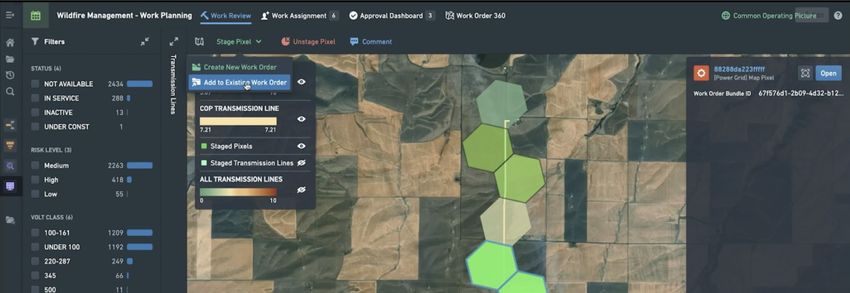
Palantir is not a data company
The success of Google (Alphabet) and Facebook (Meta) is due to their collection of data, AdSense is the poster child, but
the prediction of search results, likes and dislikes, is a defining feature of the early 21st Century. You do not own your data; it
belongs to Google, Facebook, and advertisers who purchase it. We suspect this is a sunset industry, as people are becoming
more protective and aware of their data and as governments legislate to make the free collection of data more difficult.
However, Palantir is not a data collection company. It is an infrastructure company. IT provides the software and the operating
system (OS), siloing data within the organisation’s own management system, much the same as your data is siloed on your
hard drive.

With the monumental rise in data being produced, it is harder to understand what all that data means, and all too often the
data comes from different platforms. None of this data is useful if you can’t process or understand it, much like how crude oil
has limited uses yet the refined version has many. Understanding data is key. Palantir deploys three systems to enable this,
Foundry, Gotham, and Apollo.

Foundry is an interoperable data-management platform.
It can connect hundreds of back-end data systems and
front-end data systems seamlessly; allowing disparate
data sets to be compared and analysed. It is essentially a
data warehouse with analytical capabilities and machine
learning. For instance, BP’s oil production process utilises
Foundry to analyse   8% the process as well as to inform
engineers; the NHS in the UK utilises Foundry to analyse
COVID-19-related data. The interpolation is key here,
previous to Foundry, back-end data and front-end data
were typically warehoused separately. This is of limited
use. Combining the front-end and back-end from multiple
datasets is infinitely more valuable.

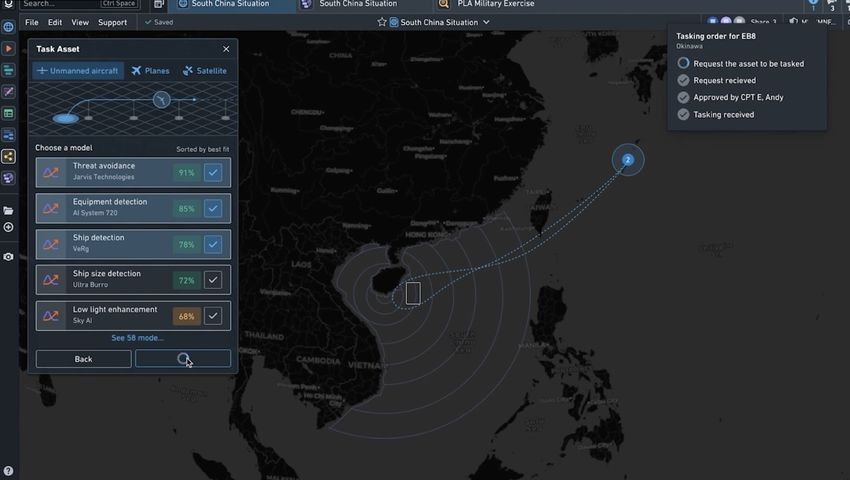
Gotham is Palantir’s decision-making platform, which
has its roots in Palantir’s defense-industry contracts.
Gotham seeks to help make decisions for mission-critical
operations; it does this by processing and visualising data,
as well as employing machine learning to create feedback-
loops based on what the (human) data analysts do within
the software. This is a crucial, if subtle, point. Palantir is not
interested in creating AI-only software that works without
human assistance. Palantir is interested in annexing
humans.

Apollo is the “glue” that holds both Gotham and Apollo
together, essentially a SaaS-based delivery and cloud
platform, which allows transfer of data and updates
from Palantir’s centralised team to either Palantir-based
platforms or non-Palantir platforms. It can undertake a
significant number of updates, +41,000 updates per week,
because Apollo removes the middleman. Within Palantir
there are developers who work on updates whilst Apollo
itself handles the deployment.

The Blade L 0 4 , 12 St Marks Road, Remuera, Auckland 105 0 , New Zealand | www.globalsharesfund.co.nz | +6 4 9 3 7 9 6 49 3 | info@elevationcapital.co.nz   3
Deploying mission-critical systems
Palantir has an all-star line up of clients who elect to stay with them over time, while new clients continue to add to Palantir’s
+30% compounded annual revenue growth. Of note, is the accelerated growth of Palantir’s commercial clients business,
+200% growth in the past year. The evidence is clear: clients remain with Palantir because it works, and commercial clients
are starting to discover the power of Palantir’s platforms.

Palantir are unequivocal in that they make technology that works for people. A lot of conventional data analysis forgets this,
assuming that if you input the data and output the data, the job is done. However, none of the data is any good if it doesn’t do
what the client wants. By deploying engineers to clients, Palantir can tailor the software to work for them, as well as observing
how the clients use the software, this makes sense given the value of the contracts Palantir engages in, it also encourages
stickability. CEO Alex Karp has offered up Palantir’s software for free to large enterprise-level companies. The idea is classic
early-stage Microsoft, embed the technology until they can’t live without it.

               Growth (and Retention) of Palantir’s Government Contracts                                                                                                                                    Commercial Customer Client Growth

               1000                                                                                                                                                                        200
                                                                                                                                                                                                                                                      184
               900                                                                                                                                                                         180

               800                                                                                                                                                                         160
                                                                                                                                                                                                                                             147
               700                                                                                                                                                                         140
                                                                                                                                                                       Number of Clients

                                                                                                                                                                                           120                                      115
               600
Million $USD

               500                                                                                                                                                                         100
                                                                                                                                                                                                                 79
               400                                                                                                                                                                          80

               300                                                                                                                                                                          60

               200                                                                                                                                                                          40

                100                                                                                                                                                                         20

                 0                                                                                                                                                                            0
                                      2018                                       2019                                        2020                               2021                                         FY2019                FY2020   FY2021   FY2022
                                  < 2017 Cohort                2018 Cohort                 2019 Cohort                 2020 Cohort                2021 Cohort

                  Source: an
                           P tir Q 4 rP esntation, 2021                                                                                                                                    Source: an
                                                                                                                                                                                                    P tir Q 2 rP esntation, 2022

The Bade L 0 4, 12 St Marks o
                            R ad, emurR a, uckan
                                               A d 1050, New Zeand | .glw obla sharesfund.co.nz | +6 4 9 379 6493 | info@elevationcapital.co.nz                                                                                                               4
Palantir’s links with the “Deep State”
  The military-industrial complex of the US is the largest in the world and their apparatus which specialises in information is
  intimidatingly good. To break out that old chestnut, information is power, and data is information. Information is only good
  if it’s understandable. Palantir’s software, was infamously rumoured to have aided in the elimination of Bin Laden. We say
  this only to illustrate the application of the software and how embedded it was already in the deep state apparatus in 2011,
  when Bin Laden was neutralised. If one considers Moore’s Law and the constant and rapid progression of technology, if that’s
  what the software was capable of in 2011, imagine what it is capable of now. In June 2021, Palantir announced a new US$800
  million contract to provide services to the US Army, whilst its earlier contract with the US Army was renewed in December
  for US$116 million. This is in addition to contracts in 2021 with the US Department of Veteran Affairs ($US90 million) and pace
  Systems Command (US$43 million). More recently Palantir won a ($US100 million) contract with the US army research lab. As
  we have mentioned earlier, we see continued contracts as a sign that big government and NGOs see the benefit in Palantir’s
  platforms. It is worth mentioning that the integration of Palantir’s software is a marriage of necessity rather than love. Many
  departments experiment with other platforms, however in the end they inevitably return to Palantir. Palantir is unique among
  data platforms in that they are very picky about who has their software, with an ideology strongly in defence of democracy.
  They will not work with the autocracies of China or Russia. In the past, this was considered an impediment to growth, yet now,
  during the recent Russo-Ukraine conflict and increasingly autocratic moves from China, Palantir’s stance looks increasingly
  forward-thinking. They are not a mercenary for hire, unlike the criticisms which have been levered at other “Big Tech” players.

     “Space Force’s Foundry instance, called WarpCore, is now the principal source of Space Situational Awareness:
                               knowledge about where and when satellites are in orbit.”

  Defence macro-stability with the scalability of software
  Palantir has a sustainable advantage which make it unlike its largely consumer
  or enterprise orientated competitors. ~60% of Palantir’s revenue comes from
  government spending; the bulk of this comes from defence-oriented government
  departments. This is a highly predictable, (albeit lumpy) stream of revenue as
  defence spending is immune to macro-economic trends; all modern nations must
  spend on defence. Most defence companies operate within hardware and weapons;
  the fact that Palantir operates in software differentiates it to its defence-industry
  competitors. As global conflict continues, the Russo-Ukraine conflict is one example,
  Palantir’s technology will be more necessary than ever.
                                                    National Defence Spend 2021
               1000
                                                                                                           United States
               800        801                                                                              China
                                                                                                           India
Billion $USD

               600
                                                                                                           United Kingdom
                                                                                                           Russia
               400
                                                                                                           France
                                 293
                                                                                                           Germany
               200
                                                                                                           Saudi Arabia
                                       76.6
                 0                                                                                         Japan
                      0            2            4           6           8              10             12                             Gotham is supporting mission outcomes for
                                                                                                                                        Ukraine and powering refugee relief.
                      Source: Peter G Peterson Foundation

  The Blade L 0 4, 12 St Marks Road, Remuera, Auckland 105 0 , New Zealand | www.globalsharesfund.co.nz | +6 4 9 3 7 9 6 49 3 | info@elevationcapital.co.nz                 5
Commercial customer growth
The other segment of Palantir’s business is commercial customers. In the past this was treated as secondary to Palantir’s government
business, government revenue drove Palantir’s growth. In our opinion, Palantir did not focus enough on commercial growth in the
past. This has been remedied in the past year as Palantir continues to hire more sales people to market their product to a wider
clientele. In 2020, the sales team amounted to 12 people, or in other words, every sales employee accounted for ~US$91 million
of revenue. In Management’s opinion, Palantir’s forward deployed engineers and product spoke for itself. They have reconsidered
this position as of late, and the results demonstrate the efficiency of an increased sales-force. Increasingly, commercial clients
have become a more significant component of Palantir’s revenue. In terms of momentum, US commercial revenue has grown from
10% of total revenue in 2021 to 17% as of 2022. In Q2 2022 total commercial revenue growth grew +46% to US$210 million, while
US commercial revenue grew +120%, largely unaffected by the strength of the dollar. We expect commercial revenue to reflect
an even greater proportion of overall revenue going forward, evidenced by out-sized commercial growth rates in the past few
quarters. The common perception of Palantir’s products is that they are expensive. Yet consider this: the NHS spent £25 million
to licence Palantir’s Foundry platform for two years in order to track COVID-19 data (or, £12.5 million a year, which provides an
insight into Palantir’s pricing). In comparison, the UK Government’s Test and Trace programme cost £155 million and produced less
discernible results. When software produces the desired outcome in high-value situations, £25 million seems a comparative bargain.

                                                                                                  Sales Headcount                                                 US Commercial % of Overall Revenue
                                                                                                                                                         19%

                                                                                                                                                                                                         17%
   90                                                                                                                                                    17%

   80
                                                                                                                                                         15%
    70

   60
                                                                                                                                                         13%
    50

   40
                                                                                                                                                         11%
                                                                                                                                                                              10%
    30

    20                                                                                                                                                   9%
     10

       0                                                                                                                                                 7%
                                                                  EOY 2020                                                                    EOY 2021                  TTM JUN 30 2021             TTM JUN 30 2022
                                                                                           Headcount                           Tenure >9 months

                   Source: Palantir Q4 Presentation, 2021                                                                                                  Source: Palantir Q2 Presentation, 2022

Apollo, consumption based SaaS
In reality, Palantir has been building a commercial platform for years, refining it and testing it via government contract
work, culminating in the implementation of the Apollo platform. Apollo allows the option of consumption based
SaaS pricing, as opposed to “one size fits all” SaaS pricing. This is increasingly the area that SaaS is shifting to; the data
warehousing company Snowflake only charges users for how much they use. There is significant market opportunity
for Palantir via consumption-based pricing, as Apollo continues to roll out as a fundamental part of Palantir’s offering.

"We’ve doubled USG U.S. commercial clients from 50 to 100, 100 to 200. I believe we will double it again this
                          year." - Palantir CEO Alex Karp - Q1 earnings call 2022

The Bade L 0 4 , 12 St Marks oad,R a,emurR uckandA 1050, New Zeand | lsharefund.cozgb w | +6 4 9 379 6 49 3 | info@elvatcp.z                                                                                          6
Case Study:                                          +
Pacific Gas and Electric, (PG&E) is a major utility in California providing services to 16 million households. California
faces an ever-growing seasonal risk of wildfires as climate change intensifies. This poses a serious risk for PG&E. Gas
and electricity lines, as well as high-intensity areas and aging technology, are all compounding factors for serious
wildfires. This has been a crucial issue for PG&E in the last decade as their grid has caused multiple fires. Palantir offered
a solution, partnering with PG&E in a contract worth US$300 million. Foundry helps PG&E predict the vulnerability
and health of systems and infrastructure across PG&E’s entire grid. It does this partially by utilising AMI Smart Meter
data (i.e. the actual use of power per household) as well as advanced AI modelling capabilities. Foundry essentially
maps 25,000 miles of cable across California and provides PG&E prior warning to weak or vulnerable parts of their grid.

What is a digital twin?
Foundry is able to provide warnings to PG&E through the use of a digital twin. The digital twin is exactly the same
as PG&E’s grid, except it exists purely in the digital realm. Digital twins are perhaps one of the most important
developments in modern technology and the least talked about, they are exactly as they say; a “twin” of the real thing,
which uses the enormous amount of computing power now available (thanks to AWS, Microsoft Azure, and other cloud
computing providers) to replicate and model a highly complex system and assess all possible outcomes. The beauty
of a digital twin is that scenarios can be modelled endlessly; the more “real world” data the digital twin receives the
more accurate the predictions are. In other words, the more actual data Palantir receives about PG&E’s grid the more
Foundry can learn about the grid and hence predictions will be more accurate. This is the fundamental promise of AI:
the more repetitive, measurable data which is imputed, the greater the probability of being correct, for PG&E this
has very serious and highly beneficial consequences. Foundry has helped prevent further wildfires and saved lives.

The Blade L04, 12 St Marks Road, Remuera, Auckland 1050, New Zealand | www.globalsharesfund.co.nz | +64 9 379 6493 | info@elevationcapital.co.nz   7
Infrastructure builds the economy
    The first infrastructure company which dominated the world is perhaps the East India Company, which operated a
    virtual monopoly in trade between India and Europe via its fleet of ships. Its wealth was really derived from facilitating
    the infrastructure of modern trade; the ships were merely vessels with which to do it. The company revolutionised,
    and brutalised, trade, yet its soft power was largely invisible, hewn by treaties and agreements and double-entry
    book keeping. The second infrastructure company which dominated the world with incredible efficiency was Andrew
    Carnegie’s steel company, later, US Steel, the first company to have a market capitalisation of US$1 billion. Carnegie’s
    steel built America and much of the world; it provided the infrastructure for this to happen. Steel was the driving factor
    in the ascendency of mass production, skyscrapers, and world in which we still live.

    The second half of the 20th Century was dominated by man-made data transfer. Telephones, television, early
    computers, faxes, automated stock tickers. The infrastructure for much of physical data transfer was put in place by
    AT&T, or rather, The Bell Telephone Company. Until Bell was broken up in 1982 it owned an almost total monopoly
    on telephone and data infrastructure. Very few pieces of data were transferred without going through something
    Bell-owned first. The fourth, perhaps smaller infrastructure revolution occurred with the mainstream acceptance of
    Microsoft Windows. There’s a subtle shift here, the infrastructure that powers operating systems and software isn’t
    visible, ironically returning to the invisible-infrastructure of the East India Company.

    The fifth is software which empowers large organisations and governments to parse data accurately. When Windows was
    released in 1985, nobody could have dreamed how much data would be processed 36 years later. Microsoft’s Windows
    and Apple’s OSX have performed admirably over the last two decades, yet legacy operating systems are simply not
    built to process the vast amounts of data being produced today. This is not to say they can’t, many “over-the-top”
    applications can process and analyse data within a Windows or OSX environment. However, this is fundamentally not
    as efficient or secure as working within Palantir’s platforms; the advantage of a sole-solution is lost. The fifth revolution,
    in other words, is arge-scale data operating systems.     Palantir is well-positioned to capitalise on this.

    How valuable is providing the invisible wires and the invisible steel? Well, Microsoft is worth US$2.09 Trillion1. Palantir
    is 19 years old, hardly a spring chicken and has a market capitalistation of US$20 billion2. It has extensive experience
    in its field, and in what works and what doesn’t work. As the field of data continues to expand exponentially, and there
    continues to be a need for it, then those invisible beams of steel are worth an increasingly vast amount of money.

                                 The value of Palantir’s infrastructure, TAM (Total Addressable Market) of just the
                                                                  government sector
                                        90                                                                                                     14%
                                        80
                                                                                                                                               12%
                                        70
                                                                                                                                               10%
                                        60
                        Billions $USD

                                        50                                                                                                     8%

                                        40                                                                                                     6%
                                        30
                                                                                                                                               4%
                                        20
                                                                                                                                               2%
                                        10
                                        0                                                                                                      0%
                                             2019       2020         2021           2022           2023           2024           2025

                                                    Analytics Software and Consulting Market                   Growth Rate

    1    As at 8 August 2022                                                 Source: Deutsche bank

    2    As at 8 August 2022

The Blade
The Blade L04,
          L04, 12
               12 St
                  St Marks
                     Marks Road,
                           Road, Remuera,
                                 Remuera, Auckland
                                          Auckland 1050,
                                                   1050, New
                                                         New Ze
                                                              Zealand
                                                                aland || www.globalsharesfund.co.nz
                                                                         www.globalsharesfund.co.nz || +64
                                                                                                       +64 9
                                                                                                           9 379
                                                                                                             379 6493
                                                                                                                 6493 || info@
                                                                                                                         info@eelevationcapital.co.nz
                                                                                                                                levationcapital.co.nz   810
Addressing concerns
There are two factors which are currently of concern with regard to Palantir. The first is share count dilution. Palantir incentivises
employees via options and the issuance of new shares. We much prefer it when a company reduces its share count, as Meta
(another holding in the Elevation Capital Global Shares Fund) has been doing aggressively. Yet share count expansion is typical
with an expanding company and occurs as employees redeem warrants and options. Karp has signalled that dilution will slow
down as the company generates more revenue; as of Q4 2021 the company had issued an additional 2.5% in stock; significantly
less than it had in the past. In Q1 2022, Palantir awarded its employees US$150m in stock based compensation, and US$194m
in Q2 2022. Here we think it is important to point out our favourite psychological conditioner, the power of incentivisation.
There are few other conditioners as powerful. To incentivise a highly skilled workforce via shares in the future value of the
business is sound management in our books, when the fortunes of the company and its employees are closely intertwined
good things tend to happen. (We note, of course, the power of incentivisation with Amazon, Google and Meta; but also consider
Costco and Starbucks, all firms that award a partial ownership interest to their employees. You’d be hard pressed to find better
performing companies over the past decade or two). The second factor that poses a risk is “execution risk”. Palantir has a large
and lucrative total addressable market. Can it execute? Palantir has been around for 19 years and it is yet to turn a profit. However.
Palantir has been able to meaningfully grow its commercial business and increase its Net Dollar Retention rates for its government
clients, and its commercial arm has a long runway of high growth ahead. Management is forecasting profitability by 2025,
bolstered by high geopolitical tensions.

Net Dollar Retention (NDR)
A metric of how effectively Palantir’s platform is performing                                            Government TTM Revenue Per Customer
is Net Dollar Retention (NDR). The “king” of NDR is Adobe,
they sign you up to a Creative Cloud Plan and then upsell                                     $12.00
you, whether its through extra cloud services or additional
software. Their NDR rate is around ~100-110% per year.                                                                                                   $10.00
A business which has a declining NDR rate is cause for                                        $10.00
                                                                                                                                           $9.00
concern (in software this is referred to as “churn”, you
need to have more new dollars coming in than you have
                                                                                              $8.00
flowing out). Palantir’s NDR rate was 124% in Q1, and 119%
                                                                               Million $USD

in Q2, this is exceptional. Palantir adds +19% of value to its
existing contracts signalling how strong Palantir’s “moat”                                    $6.00
                                                                                                                              $5.00
can become.

                                                                                              $4.00
                                                                                                             $3.00

                                                                                              $2.00

                                                                                                 $-
                                                                                                          TTM JUN 30        TTM JUN 30    TTM JUN 30   TTM JUN 30
                                                                                                             2019              2020          2021         2022
                                                                                                 Source: Palantir Q2 Presentation, 2022

The Blade L04, 12 St Marks Road, Remuera, Auckland 1050, New Zealand | www.globalsharesfund.co.nz | +64 9 379 6493 | info@elevationcapital.co.nz                    9
Does Palantir offer value?
In the chart below we can see how Palantir compares to other high growth enterprise software companies on an EV/Sales basis.

                                                             25.00x                                  NTM EV/Sales

                                                         20.00x

                                                                  15.00x

                                                              10.00x

                                                                            5.00x

                                                                        0.00x

We have not attempted to derive a precise intrinsic value for Palantir,                                                                Forecast Free Cash Flow
such efforts are challenging, due to the uncertainty on the size and                                                       1,200.00

timing of future contracts. Rather we have projected Palantir’s adjusted
Free Cash Flow (FCF) out until 2025 based on +30% Revenue CAGR                                                             1,000.00
(the growth rate provided by management’s current guidance). In their
Q2 earnings call Palantir surprised markets announcing +26% revenue
CAGR and provided guidance for $USD1.92 Billion in Revenue for 2022.                                                        800.00

The strength of the US Dollar and the inconsistent revenue streams from
                                                                                                            Million $USD

large government contracts were cited by management as key reasons                                                          600.00
for this under performance. We believe these recent developments
do not effect Palantir’s long term equity story and are focused on the
                                                                                                                            400.00
+120% increase in US commercial revenue and a +250% increase in US
commercial customer count.
                                                                                                                            200.00
We have projected out adjusted FCF at conservative margins of 13%, 18%
(our long term base case) and 25%, based on management’s lowered
                                                                                                                                 -
guidance as of Q2 2022. We consider Palantir’s strong margins to be
                                                                                                                                       2021A   2022E   2023E   2024E   2025E
testament to management’s focus and the differentiation of Palantir’s
                                                                                                                                13% Margin      18% Margin     25% Margin
product offering. Even if Palantir still operates with a significantly lower
FCF margin (13%), by 2025, its adjusted FCF looks set to be in the vicinity
of +US$543 million. Whilst we can compare the company to a data
management system, (Snowflake) or to an analytics system (Splunk)
what Palantir does is quite unique. It is an operating system. As Apple
has learnt with its incredibly lucrative App Store and supermarket
owners have known forever, you don’t want to own the apps, you want
to own the store/platform.

TheBadL 0 4 ,12uckand1050,
                     ,AemroRStMs .NewZand| lsharefund.gob co.nz|+6 493 7 6 49 3|info@elvatcp.co.nz                                                                          10
Conclusion Palantir is the operating system of governments and large enterprise. An investment in Palantir represents an investment in a company that is doing what Oracle did in the ‘90s and what Microsoft did in consumer operating systems. It is singular. It is the only system of its kind that incorporates both data processing, data warehousing and data visualisation, it combines all strands of the modern data “puzzle”. Based on our current valuation framework, we consider the current price of Palantir (~US$9.55 per share) to represent an opportune entry point into a one-of-a-kind company that looks set to continue a “spider-like” expansion into how the modern world processes data. Recent conflict in the Ukraine highlights the need for mission-critical operating systems that are secure and reliable. We take the view that the global peace is an incredibly fragile thing. As geopolitical tensions rise and both governments and organisations require increasingly sophisticated data to operate in an ever-changing world, Palantir is set to be right by their side, “clipping the ticket” on ever-growing datasets. This summary report was written in March - August 2022. Any data not referenced was sourced from Palantir annual reports and conference calls. DISCLAIMER Elevation Capital Management Limited is a Registered Financial Service Provider in New Zealand in accordance with the Financial Service Providers (Registration and Disputes Resolution) Act 2008 -- FSP # 9601. Elevation Capital Management Limited is licensed under the Financial Markets Conduct Act 2013 as a manager of registered schemes. Elevation Capital Management Limited does not provide personalised investment advisory services to the public. Nothing herein should be construed as a general advertisement of investment advisory services or a solicitation of prospective clients for investment advisory services. The information herein is intended solely to provide certain background information about Elevation Capital’s investments on behalf of the Fund/s or Separate Accounts it manages or advises on. Elevation Capital Management Limited, its directors, employees and agents believe that the information herein is correct at the time of compilation; however, they do not warrant the accuracy of the information. Save for any statutory liability which cannot be excluded, Elevation Capital Management Limited further disclaims all responsibility or liability for any loss or damage which may be suffered by any person relying on any information or any opinions, conclusions or recommendations contained herein whether that loss or damage is caused by any fault or negligence on the part of Elevation Capital Management Limited, or otherwise. Past performance is not an indication of future results. The Bade L04 , 12 St Marks Road, Remuera, Auckand 105 0 , New Zeaand | www.globalsharesfund.co.nz | +6 4 9 37 9 649 3 | info@elevationcapital.co.nz 11
E L E VAT I O N C A P I TA L
                                                                                  G LO B A L S H A R E S F U N D

                                                   Independent Thinking
                                                    Disciplined Investing
                                                     [In-de-pend-ent Think-ing] ind ’pend nt THiNkiNG verb                        e                e
                                Is essential to long-term investment success. We are often contrarian and do not pay
                                attention to index compositions when making investment decisions. We believe that
                                  when you’re several thousand miles away from Wall Street in a different nation, it’s
                                 easier to be independent and buy the things that other people are selling, and sell
                                                                                the things that other people are buying.

                                                           [Dis-ci-plined In-vest-ing] disciplin d inves’ting verb
                                                                                                                                                 e
                                 The market presents opportunities every day, but disciplined investing is as much
                                about the opportunities you do not take. We also believe that cash is sometimes the
                                                           most attractive investment.

          MORNINGSTAR INTERNATIONAL                              NOMINEE - FUNDSOURCE INTERNATIONAL                             NOMINEE - MORNINGSTAR INTERNATIONAL                NOMINEE - FUNDSOURCE INTERNATIONAL
       EQUITIES CATEGORY FUND MANAGER OF                          EQUITY SECTOR FUND MANAGER OF THE                              EQUITIES CATEGORY FUND MANAGER OF                  EQUITY SECTOR FUND MANAGER OF THE
           THE YEAR 2017, NEW ZEALAND                                   YEAR 2013, NEW ZEALAND                                       THE YEAR 2012, NEW ZEALAND                           YEAR 2012, NEW ZEALAND

                 The Bade L04, 12 St Marks Road, Remuera, Auckand 1050, New Zeand | .gw lobla sharesfund.co.nz | +6 4 9 379 6 493 | info@elevationcapital.co.nz
e Blade L04/12 St raM ks Road, Remuera, Auckland 1050, New Zealn
                                                               a d.                 https:.g/w lobalsharesfund.c.n
                                                                                                                 o z/       +64 9 379 6493           info@elevationcapital.c.n
                                                                                                                                                                             o z                                        15
You can also read


