Intelligent Mobility for Energy Transition: Accelerating towards more sustainable societies
←
→
Page content transcription
If your browser does not render page correctly, please read the page content below
INTELLIGENT MOBILITY FOR ENERGY TRANSITION

Intelligent Mobility for Energy Transition:
Accelerating towards more sustainable societies

                              1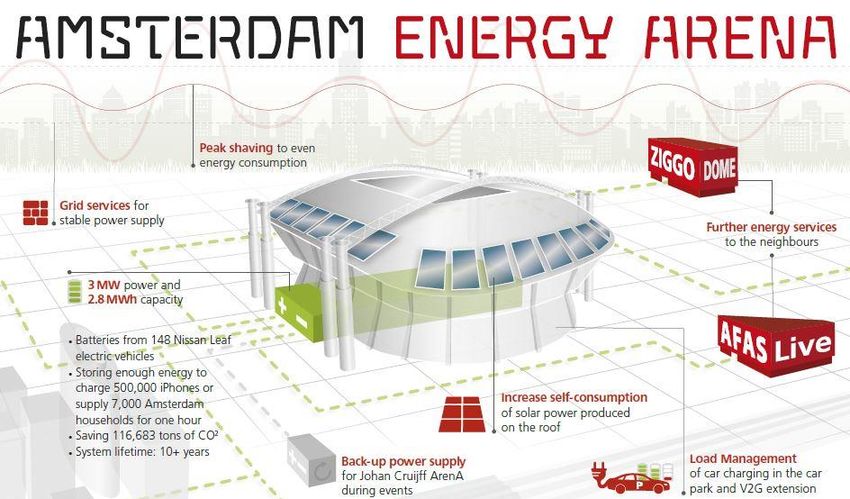
INTELLIGENT MOBILITY FOR ENERGY TRANSITION

1. EXECUTIVE SUMMARY

                                                       The Paris climate conference in December 2015
                                                       (COP21) catalysed ambition amongst global leaders
                                                       and policymakers to take co-ordinated action to
                                                       address climate change. Europe was arguably at the
                                                       forefront of that ambition and following the Paris
                                                       Agreement, the European Commission and Member
                                                       States set bold frameworks to decarbonise and
                                                       position the region as a leader in the fight against
                                                       climate change, especially when it came to clean
                                                       energy and transportation.

                                                       The bold targets Europe set itself were not simply so
                                                       Europe could be recognised on the world stage as a
                                                       leader in tackling climate change, it was acting on an
                                                       imperative. Faced with the challenges of population
                                                       growth and mass urbanisaiton Europe needed to set
                                                       the region on a course to a clean energy transition in
                                                       order to meet those commitments.

                                                  No one will dispute the worthiness of achieving a clean
energy transition. Getting to the point where most of our energy comes from renewable sources will be
nothing short of, in terms of impact and significance a new industrial revolution, and this time a clean
industrial revolution.

On top of the environmental gains, the investment in renewable energy will drive job creation and energy
efficiency and help bring to market new services and products that can reduce energy costs for end users
and empower citizens to manage their energy sustainably.

How to get to this point continues to take up much attention and debate and rightly so. Many frameworks
and measures aimed to achieve this have been launched in recent years and encouragingly there is cause
to be positive. Compared to 2005, the overall share of renewable production used to meet the energy needs
of European citizens has doubled, although this rate of adoption has recently slowed. This loss of
momentum could cause several member states and potentially the whole European Union (EU) to miss its
2030 target of at least 32% renewable energy production and, more critically impede the region’s clean
energy transition.1

However, it is the opinion of this paper that the clean energy transition can be accelerated.

It is no surprise a significant blocker to the clean energy transition is that much of industry, especially heavy
industry and transportation remains too dependent on fossil fuels. While the political will to change this is
not in short supply even the more innovative policy ideas come up against entrenched regulations and
frameworks that are not fit for purpose today and hamper the transition.

This paper shows that how with a new way of approaching policy the progress already made can be further
exploited to accelerate the transition. The paper gives primary focus to the still untapped full potential of
new electrified technologies, what the paper refers to as intelligent mobility technologies which include:
electric vehicles, energy storage, smart charging and vehicle-to-grid. It will be illustrated how when fully
exploited and complemented by the right supporting frameworks Europe can leap frog its efforts to
achieving the clean energy transition.

                                                       2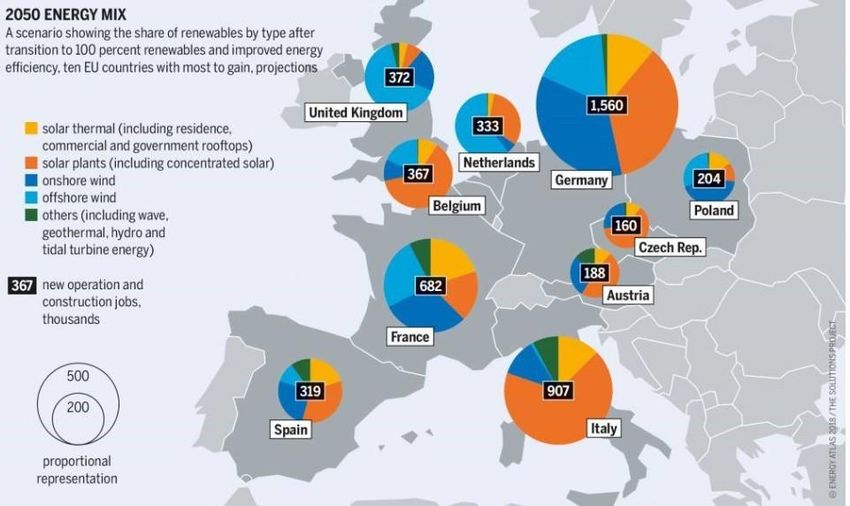
INTELLIGENT MOBILITY FOR ENERGY TRANSITION

2. FOREWORD & ENDORSEMENTS

This white paper has been developed by the Intelligent Mobility for Energy Transition (IMET) initiative. This
initiative is driven by Nissan Europe and sits within the Sustainable Urban Mobility Action Cluster of the
European Innovation Partnership on Smart Cities and Communities established by the European
Commission.

The initiative supports the Commission’s commitments in the Energy Roadmap 2050 and seeks to build
broad support for policy solutions that will help accelerate Europe’s clean energy transition.

Andrew Price of Nissan Europe was the primary author of this paper with editorial support from colleague
Mary-Jay East. Ana Liesa Sorinas and Diego Carretero Lopez coordinated research and content collection
from key contributors with guidance from Anna Domenech, leader of the IMET initiative.

In developing the paper authors have conducted research and interviews with a variety of parties including
industry associations, non-governmental organisations, and key energy and transport sector stakeholders.

The arguments and recommendations in the paper therefore represent a cross-industry voice and call to
action from a diverse group of stakeholders in Europe.

Particular thanks is given to the key contributors: EURELECTRIC, Innoenergy, European Distribution
System Operators (E.DSO), Platform for Electro Mobility, Asociación Española de Fabricantes de
Automóviles y Camiones (ANFAC), Smart En, PricewaterhouseCoopers, NHP ESCo, Evectra,
NaviParking, GRUPOETRA, The Institute for Energy Diversification and Saving (IDEA), La Asociación de
Empresas de Energía Eléctrica (AELEC), and (Asociación Empresarial para el Desarrollo e Impulso del
Vehículo Eléctrico) AEDIVE.

Endorsements

Kristian Ruby, Secretary General of Eurelectric
         “Europe is on the brink of a decisive decade and our industries, power and automotive, are called
         upon to deliver on the clean energy transition. We must now ramp up the scale and speed of our
         cooperation to unlock the untapped potential of the electrification of transport. “Intelligent Mobility
         for Energy Transition” is an excellent analysis highlighting the nuts and bolts of a system that draws
         on innovation to enable the clean energy transformation.”

Philippe Vangeel, Secretary General of AVERE (The European Association for Electromobility)
        “AVERE firmly believes that we must reach the mass uptake of zero emission transport. This report
        proves once again that we can do so with the full electrification of transport. This roadmap shows
        how to accelerate the transition in Europe and to decarbonize mobility. It is a must read for all
        policymakers across Europe for a significant contribution to stop climate change!”

Karen Vancluysen, Secretary General of POLIS
       “Cities have a major role to play in the energy transition. By building integrated mobility and energy
       plans and strategies and leading by example, they can be instrumental in the roll-out of multimodal
       electric mobility. This White Paper illustrates how the multiplication of the number of electric
       vehicles (hence movable batteries) and smart charging infrastructure in local authorities can unlock
       the enormous potential of decentralised local production of clean energy.”

Antonio Marqués, Director of Technology and Innovation for GRUPOETRA
        “If Europe wants to meet its ambitious environmental targets whilst preserving the quality of life of
        its citizens and achieving a globally competitive economy, it is mandatory to embed energy
        transition criteria and technologies within Europe's Intelligent Mobility Systems. Europe needs to
        build a multimodal mobility system which is based on high quality public transport and
        complemented by shared, connected mobility modes. And, obviously, all of it must be electric!.”

                                                       3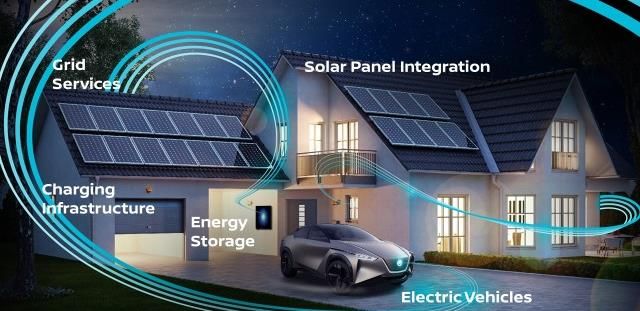
INTELLIGENT MOBILITY FOR ENERGY TRANSITION

3. BACKGROUND

The purpose of this paper is to illustrate that if the full potential of intelligent mobility technologies
is unleashed we can accelerate the transition towards cleaner energy. First, in order to understand
all the implications we need to recognise why this transition is necessary and how electrification is
already changing what we mean by mobility, extending it beyond how we get from A to B and
offering a platform upon which the tipping point to a clean energy transition rests.

COP21: A WATERSHED MOMENT

The Paris climate conference in December 2015 (COP21) marked a pivotal moment for international co-
operation on climate change. 195 countries adopted the first-ever universal, legally binding global climate
deal: global plan to limit global warming to well below 2°C, whilst pursuing efforts to limit it to 1.5°C.

Against this backdrop the EU was the first major economy to submit its intended contribution to the new
agreement laying out two EU Frameworks, the European Framework 2030 and a Climate Neutral Strategy
by 2050:2

The European Framework 2030: commits to reducing greenhouse gas emissions by at least 40% by 2030
compared to 1990. In addition, it commits to delivering an energy transition ensuring renewable energy
represents at least 32% of energy production and targets at least a 32.5% improvement in energy
efficiency.3

The Climate Neutral Strategy 2050, “A Clean Planet for All”: a roadmap to how Europe can lead the
way to climate neutrality by investing in realistic technological solutions, empowering citizens, and aligning
action in key areas such as industrial policy, finance, or research.4

By setting this direction Europe was making a clear statement, namely that the clean energy transition is
the holy grail. These critical frameworks were to be complimented by Member States’ National Energy &
Climate Plans (NECP) outlining how govenrments would meet the 2030 targets. Following suit, regions
and municipalities across Europe have set out decarbonisation strategies and Sustainable Urban Mobility
Plans (SUMP) to address climate change.5

While COP21 galvanised ambition amongst policymakers and citizens across Europe to decarbonise their
communities, now is the time to assess whether all courses of action to deliver these commitments are
being taken, and where gaps are identified provoke a co-ordinated and effective policy response.

A DECADE OF DISRUPTION

Undoubtably the world of transportation is in the midst of disruption facing unprecented challenges on
multiple fronts. According to the International Transport Forum (ITF) due to population growth and mass
urbanisation by 2030 annual traffic is expected to increase by 50% which will lead to an exponential
increase in CO2 emissions.6

It is also expected that by 2050 4 billion people will live in urban areas which will lead to a significant
increase in the demand for mobility. With the current mobility trends and if no policy action is taken the ITF
expects that by 2050, CO2 emissions in large cities will increase by up to 26%.7 This presents a huge
challenge for industry and governments.

The need to develop solutions that reduce emissions from our communities while keeping people moving
is all too clear and crucially this goes hand in hand with supporting the clean energy transition.

                                                      4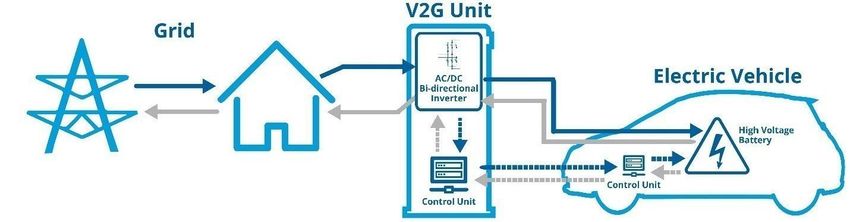
INTELLIGENT MOBILITY FOR ENERGY TRANSITION

THE CLEAN ENERGY TRANSITION
                                                                          CLEAN ENERGY TRANSITION
To achieve the clean energy transition electricity generated
from renewable sources needs to become the main “fuel” for             A Clean Energy Transition refers to the
societies and even the most energy intensive industries. Here          move from fossil fuels to renewable
mobility remains both a key challenge and an opportunity. 8            sources as the main source of energy. It
                                                                       would reduce energy-related CO2
Against a backdrop in which 70% of Europeans live in cities            emissions and contribute to the EU’s
and generate 75% of EU emissions, cities and municipalities            long-term strategy of achieving carbon
bear a great deal of responsibility for climate change. At the         neutrality by 2050. (IRENA)
same time they offer a great deal of potential in terms of
solutions, operating as test beds and then supporting more rapid adoption.9 Urban areas can help catapult
the clean energy transition by rethinking how mobility and energy policies are developed in the first instance
and to do so it is critical to join up urban mobility and energy generation policy development to maximise
the decarbonisation benefits.10

Electric vehicles will be a decisive tool to both decarbonise transport and help achieve this transition.
Electric vehicles can replace using petrol or diesel vehicles and their related technologies including recycled
or second life batteries for energy storage extend the sustainability offering of this solution. That the battery
in an electric vehicle has a life beyond the life of the vehicle presents a great opportunity to rethink how we
manage and store energy. Vehicle-to-grid technology also offers a solution that can support more
decentralised and renewable energy generation.

GOING BEYOND ELECTRIFICATION: INTELLIGENT MOBILITY

Intelligent Mobility refers to the interaction of electric vehicles,          TECHNOLOGY EXPLAINER
which have increasingly autonomous driving capabilities with             Electric Battery Storage: Users can store
the surrounding infrastructure including energy systems. It              electricity generated from renewable
represents a transformation in the way vehicles are driven,              sources in the batteries of an electric
                                                                         vehicle. These batteries can either be in-
integrated into society and powered.
                                                                         vehicle, or standalone devices created from
                                                                         recycled or second life or new batteries.
Electric vehicles play a significant role in moving towards low
carbon societies, with electrified vehicles such as plug in hybrid       Vehicle-to-grid technology: energy stored
playing an important transitionary role. Additional technologies         inside batteries of electric vehicles can be
supporting the transition to low carbon include smart charging,          transferred back out of the vehicle (either to
battery storage and vehicle-to-grid.11 Combined these represent          be used or sold back to the grid).
a powerful solution to achieving a clean energy transition and
this paper will illustrate why increasing their adoption must be a       Smart Charging: controlling the power of
                                                                         the charge against network capacity and
priority for governments.
                                                                         leveraging renewable energy sources.
                                                                                  (World Economic Forum)
The graphic below provides a visualisation whereby electric
vehicles, batteries and energy efficiency technologies are integrated into the wider energy system.

                                         Source: Nissan Europe
                                                         5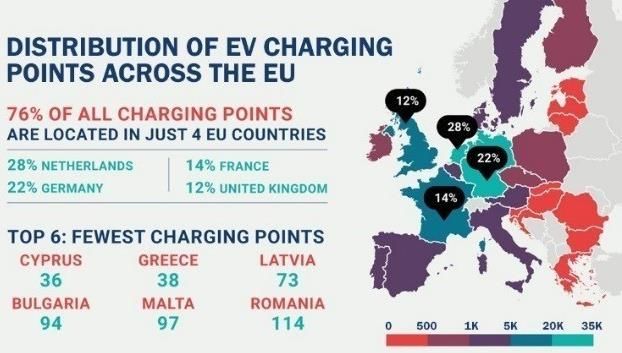
INTELLIGENT MOBILITY FOR ENERGY TRANSITION

4. CLEAN ENERGY TRANSITION: THE OPPORTUNITIES

The environmental gains from increasing the production of renewable energy are well understood
but the benefits do not end there. They are spread across economic opportunities arising from more
green investment and green jobs, to reduced energy costs for end customers who are empowered
to better manage their energy at home through more decentralised systems. This section details
the benefits of a clean energy transition, the technologies that will help get us there and highlight
the opportunities that arise from making the transition.

Environmental and Health Benefits

Increasing renewable energy generation coupled with pervasive electrification of transport will significantly
reduce greenhouse gas emissions and reduce the use of the earth’s natural resources. Ensuring emissions-
intensive sectors such as power generation and transport can drastically reduce their emissions will deliver
huge benefit to improving the environment and ensuring global commitments are met.

The combined environmental and health benefits are clear, moving towards renewable sources of energy
will make cities and communities less polluted and healthier places to live. A report by the European
Environment Agency illustrated that most citizens in European cities are exposed to harmful fine particulate
matter concentrations. This resulted in an estimated 422,000 premature deaths in 41 European countries
in 2015, of which around 391,000 were in the EU 28 Member States.12 Delivering a clean energy transition
must be seen through the lens of a public health priority requiring the concerted effort of authorities, industry
and health experts.

Socio-Economic Benefits

A clean energy transition would deliver key economic gains including net job creation, increased
affordability of electricity for end-users, and ultimately improve the industrial competitiveness of Europe.
According to the European Commission, there are approximately 4 million ‘green jobs’ in the EU. This total
includes around 1.4 million jobs in the energy sector related to renewable technologies and 900,000 jobs
related to energy efficiency activities. 13 The accompanying Figure forecasts the 2050 Energy Mix as well
as the expected associated job creation per Member State. 14

                                            Source: Energy Atlas

                                                       6
INTELLIGENT MOBILITY FOR ENERGY TRANSITION

A study by the European Association of Electrical Contractors (AIE) predicts approximately 200,000 jobs
will be created within the electricity sector by 2030 as a result of a shift to electro-mobility. These numbers
are expected to increase with further energy and climate action. Considering job creation opportunities
alone should be enough to incite governments to act to ensure it is their citizens who benefit from these
jobs. As investments in Europe replace imports of fossil fuels, industries will gain competitiveness from the
early-mover advantage, thus adapting to the clean energy transition will help protects jobs and job
opportunities longer term.15

The affordability of energy for end-consumers would also improve due to more energy efficient systems
such as smart meters and cost reductions as investments are increased in renewable technologies. Overall
energy investment, driven by the end-use sectors, will continue to increase and deliver economies of scale
resulting in cost savings for households and businesses. Meanwhile, energy efficiency systems will prompt
demand reductions further reducing energy costs. The transition will have a strong beneficial impact on
security of energy supply by decreasing costlier net energy imports and increasing the mix of energy
sources.

Ultimately Europe’s long-term industrial competitiveness will be strengthened by the transformation to a
low-carbon economy. The European Commission’s "A Clean Planet for All" strategy outlines the necessary
economic transformations required which engage all economic sectors to achieve the transition to a climate
neutral economy by 2050. The strategy seeks to ensure a common approach across the EU in order to
consolidate an open and competitive energy market, avoid relocation risks and loss of competitiveness.
This is a welcome strategy that if successful will strengthen Europe’s position on the global stage as leading
the way to show how a clean energy transition does not need to hamper industrial success but can underpin
industrial and economic advancements.

Drivers of the Clean Energy Transition                              EU LEGISLATION SUPPORTING THE
                                                                       CLEAN ENERGY TRANSITION
The global energy market is in a disruptive phase with
traditional production based on fossil fuels and renewable        Trans-European Networks for Energy (TEN-E)
energy production being pursued at differing rates and
levels of commitment. However, there is a window of               The EU is helping to build and fund new energy
maximum opportunity to bolster the clean energy                   infrastructure projects all over Europe, as part of
transition and ensure that a fundamental and                      its Trans-European Networks for Energy (TEN-
                                                                  E) strategy. The implementation of the TEN-E
nonreturnable shift takes place. According to the World
                                                                  strategy is expected to bring a €600 billion
Economic Forum, new technologies are ushering in an               increase in socio-economic benefits in terms of:
evolution of the energy and electricity system; from a            avoided generation costs; more competitive
traditional centralised model to a more decentralised,            wholesale prices, and; growth and jobs.
flexible system leveraging renewable energy generation
and storage.16 Key drivers of the decentralised energy
disruption include the decrease in cost and increased
marketability of distributed energy generation and storage
technologies, as well as the growing demand for electric
vehicles. Further, technological advancements such as
smart metering and smart grids have enabled
interoperability    between     technologies     supporting       “Clean Energy for all Europeans”
decentralisation and more effective energy management.
                                                                  New electricity market design rules intended to
The electricity design proposals included in the “Clean           modernise the energy market and empower
                                                                  consumers as active contributors to the clean
Energy for All Europeans” represent an important step
                                                                  energy transition. The new rules seek to support
towards positioning consumers as active players in the            the evolution to a less centralised and more
market, as well as evolving the energy system to                  digitalised and sustainable energy system which
decentralisation.17 In addition, the EU Emissions Trading         will open up electricity markets to renewables,
System has set powerful market signals which have                 energy storage and demand response.

                                                      7
INTELLIGENT MOBILITY FOR ENERGY TRANSITION

fostered commitment from the power sector to invest in clean electricity.18

As demand for energy storage technologies increases, an equally critical aspect of Europe’s clean energy
transition relates to ensuring the sustainable production of and sourcing of batteries and raw materials for
these technologies. The Commission’s “Strategic Action Plan on Batteries” will strengthen the region’s
transition by reducing the carbon footprint of battery production while increasing Europe’s industrial
competitiveness19.

The following section describes the opportunities
presented by a decentralised energy system and
                                                             DECENTRALISED ENERGY SYSTEMS
energy efficiency technologies to support a low
carbon transition.
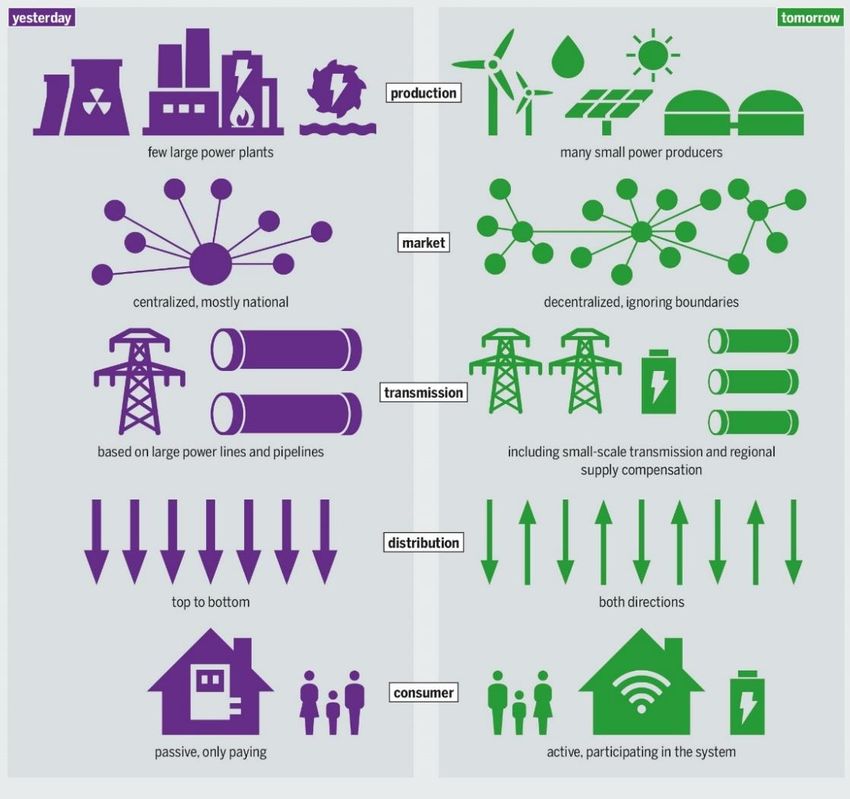
                                                          Decentralised energy systems refer to a market that
Decentralised Energy Systems                              enables energy to be generated or stored by small,
                                                          grid-connected devices close to where it is deployed
An International Energy Agency report has                 using smart grid technologies balancing supply and
highlighted how the rise of decentralised and             demand (IEA)
renewable variable power generation combined with
trends such as the growing role of electric vehicles, storage and demand response offer opportunities for
sustainable local energy solutions.20 Energy experts attribute a clear link between energy system
decentralisation and delivering a clean energy transition. This is down to a more flexible power system
leveraging smart grids and demand response enabling a higher share of variable renewables. Included
below is an illustration comparing a centralised and decentralised energy system.21

                                          Source: Energy Atlas

                                                     8
INTELLIGENT MOBILITY FOR ENERGY TRANSITION

The influx of decentralised renewable energy sources and smarter distribution systems provide
opportunities for new players in energy markets who can accelerate a clean energy transition. Renewable
energy companies, Distribution System Operators (DSO) and utility providers are increasingly leveraging
these technologies to offer end-users lower electricity prices via solar solutions, smart meters, battery
storage or smart home and building energy management.22 Consequently, end-users are becoming
empowered and actively engaged in their energy management and using renewable technologies to reduce
their electricity demand from the grid and more emission-intensive energy sources.

The Role of Electro-Mobility

The benefits of more widespread electric vehicle
ownership compared to vehicles with internal
combustion engines to reduce vehicle emissions are
well understood. However, reducing the emissions
produced whilst driving will only solve part of the
emissions problem: the decarbonisation of energy            Co-funded by the EU under the Horizon 2020
generation must take place simultaneously. With the         programme MEISTER is a pilot project developed by
                                                            a consortium of public entities, industry and
right systems, infrastructure and incentives in place an    research centres with experience in electro-mobility,
increase in electric vehicle ownership can directly aid     IT systems and renewable energy. The project will
the transition towards a new model of a clean,              deliver a set of tools to foster large scale electro-
decentralised energy system. Consortium projects like       mobility adoption by:
MEISTER are providing very useful demonstrations for             (1) Demonstrating business models to lower
                                                                      installation and operation costs of charging
policymakers across Europe to both accelerate the                     infrastructure;
adoption of and maximise the benefits from electro-              (2) Optimising usage of infrastructure by the
mobility and energy efficiency technologies.                          smart combination of charging and parking
                                                                      services;
Renewable energy production is subject to the                    (3) Integrating      electric  vehicles    within
fluctuations that occur naturally with wind and solar                 Sustainable Urban Mobility Plans, and;
energy. Utilising the batteries in electric vehicles             (4) Providing interoperable platforms and
                                                                      services to users for convenient and
through energy storage or vehicle-to-grid (as pictured                barrier-free charging access.
below) is a powerful but currently underused solution:
store excess energy in the vehicle when supply is high,  These solutions will be demonstrated in pilot sites in
and use that stored energy when production is low. 23    Malaga, Berlin and Gothenburg.
Using the electric vehicle battery in this way would
mean the timing of energy production and energy
consumption can be de-coupled. The ability to use batteries in electric vehicles or second life batteries as
storage units represents a readily available solution.

Further, these batteries whether new or second life can be connected to solar panels enabling households
and businesses to be energy positive: producing more energy than they consume with the ability to charge
devices or even an electric vehicle.

                                              Source: CENEX

                                                      9
INTELLIGENT MOBILITY FOR ENERGY TRANSITION

Leveraging vehicle-to-grid solutions also supports the          SECOND LIFE BATTERY TECHNOLOGY
localisation of energy production on a micro level as          POWERING ENERGY POSITIVE HOMES IN
energy stored in electric vehicle batteries is supplied                THE NETHERLANDS
back to the grid. By reducing the distance between
generator and consumer in this way, it also means less
infrastructure is needed and stress on existing
infrastructure is reduced avoiding costly investments
from governments. Consequently, the resiliency and
efficiency of grids are improved and energy costs can
be reduced.24 For consumers and business, vehicle-to-
grid services enable them to near effortlessly generate
revenues by selling their excess energy back to the
grid.                                                         Nissan partnered with For Your Energy Freedom
                                                              (4YEF) building Positive on the Meter houses that
There is clearly an advantage to getting the right            will generate more energy than they consume. Thirty
framework in place so that consumers and business             three newly built houses are equipped with a static
can integrate their energy production, energy storage         storage unit in a newly developed area in Voorhout,
and mobility in this way. Two examples (to the right and      The Netherlands. The storage units are made from
                                                              electric vehicle battery modules which store the solar
below) demonstrate the benefits of this in practice and       energy produced during the day for use in the
this paper would argue that incentivising this behaviour      evening and night. In addition the housing
on scale will help quicken the pace of the energy             development promotes car sharing with electric
transition.                                                   vehicles.

  A collaboration between Nissan, Eaton, The Mobility House and the Johan Cruyff ArenA has delivered the largest
  European energy storage system using second life and new electric vehicle batteries in a commercial building.
  These batteries are replacing diesel generators and are providing backup power to the stadium and surrounding
  community.

                                           Source: Nissan Europe

                                                       10
INTELLIGENT MOBILITY FOR ENERGY TRANSITION
5. BLOCKERS TO A CLEAN ENERGY TRANSITION
Achieving a clean energy transition requires an overhaul of the current energy infrastructure and
regulatory frameworks. There are a number of regulatory, social and industrial blockers impeding
Europe’s long-term strategy of carbon neutrality by 2050. The following section uncovers the
shared blockers faced by increasing electro-mobility and achieving the clean energy transition.
While recognising progress has been made in some areas there remains a need for greater co-
ordinated policy action to overcome the more structural obstacles.
Digital Immaturity of Energy Infrastructure
The European Commission estimates that €200 billion
Technologies critical to delivering this transition
is needed during the current decade until 2030 to
derive maximum benefits from a digitally- deliver the Commission’s Trans-European Networks for
underpinned infrastructure allowing real-time Energy (TEN-E) strategy in order to upgrade Europe's
communication between devices, distribution infrastructure in areas such as transmission grids and
service operators and utilities. The current energy smart metering.
infrastructure across Europe is not digitally mature
and fails to support these critical requisites. The
European Commission estimates that €200 billion is needed until 2030 to deliver the Commission’s Trans-
European Networks for Energy (TEN-E) strategy in order to upgrade Europe's infrastructure in areas such
as transmission grids and smart metering.25 Taking the European Commission at its own estimate the scale
of investment needed is significant and requires long-term commitment. It will be important to ensure the
upgrade of infrastructure is spread across Europe and not concentrated in pockets leaving other areas
behind.
Shoring up long-term policy vision and building public support
At the European, national and city level, ambitious
climate and renewable energy objectives, including
“From a regulatory perspective, the energy sector has
“A Clean Planet for all,” National Energy and
witnessed a high level of activity at the European level.
Climate Plans and Sustainable Urban Mobility Three consecutive packages were adopted aiming to
Plans have been agreed. These plans go in the harmonise and liberalise the EU internal energy market.
right direction to support a clean energy transition In addition, the climate and energy package set
through emissions reduction and renewable ambitious targets for 2020 in terms of emissions
energy goals. However, many of these strategies reduction, penetration of renewables and energy
lack clear, concrete milestones which would efficiency. More recently, the Commission has defined
support planning and benchmarking by industry the 2050 roadmap and the 2030 targets as an
and governments. Without a clear understanding of intermediate step in energy and climate policy to
achieve sustainable economic growth. Unfortunately,
interim milestones and supporting measures from
the objectives pursued by the climate and energy policy
governments, industry is less effective at allocating of the EU – environmental sustainability, security of
resources to develop and market solutions critical supply and competitiveness – are difficult to achieve
to achieving decarbonisation goals. This makes it simultaneously and even more if they are supported by
challenging for involved stakeholders to plan and market forces only.” - InnoEnergy
allocate investments into renewable energy and
energy efficiency technologies with confidence.
A general lack of social awareness regarding how individuals can themselves make a positive contribution
to the energy transition needs to addressed to capitalise on the collective efforts of communities and
community based action. While several European Social Surveys highlight that addressing climate change
is and will remain a key issue for European citizens across the region there is a lack of awareness as to
how individuals and organisations can themselves contribute to a clean energy transition. 26 Policies to
accelerate a low carbon transition cannot effectively be implemented without public support as the change
is reliant on consumers and organisations taking an active role in energy generation, storage and
11INTELLIGENT MOBILITY FOR ENERGY TRANSITION
consumption.27 Given the multitude of city networks across Europe, there is ample opportunity for cities and
communities to leverage existing forums such as EUROCITIES to share expertise on how to best motivate
consumers to actively participate in the clean energy transition.
Long-term Investments vs Quick-Returns
To achieve the clean energy transition a key shift needs to take place in the approach to supporting new
market entrants, future proofing infrastructure and supporting energy producers to switch to renewables.
This can only be delivered if it is supported by clear long-term policy commitments that steer towards the
clean energy transition end goal. The current investment climate favors quick-returns whereas the high-
cost technologies underpinning a clean energy transition often require longer-term investments to support
their extended product development lifecycle and the higher cost of these technologies and required
materials.
The interoperability between renewable energy technologies and energy infrastructure will be critical to
maximising benefits and at present there is insufficient cooperation between industry and government to
ensure that technologies being developed can be easily integrated into future energy infrastructure. By not
working collaboratively, authorities and industry risk investing in the development of non-compatible
solutions and missing opportunities to share investment costs.
Making that big shift
Traditional sources of power such as
coal, oil and nuclear have powered
industry for decades. Transitioning
towards more renewable sources takes
time and investment, as well as
requiring significant reskilling of
employees. Without assistance from
authorities the costs for power
companies to make this transition
remains extremely high. According to
InnoEnergy, while the established,
larger energy players are more likely to
have the resources to fund this
transformation, although this is by no
means a given, the smaller and medium
sized energy producers will struggle to
afford the requisite investments
required to transition. Source: Eurelectric
The accompanying Figure developed by Eurelectric as part of their “Decarbonisation Pathways” study
illustrates the current energy generation mix for cities across Europe, highlighting the vast variations
between cities and countries as a whole and the level of required production shift.28
Identifying the needle in the haystack: unpicking the regulation
It can appear that there are a myriad of regulatory blockers that can cause delays to investment and limit
the use of available technology to enable a clean energy transition. Frameworks governing energy vary
drastically by country across Europe representing a disharmonised regulatory environment limiting
industry’s ability to market innovative technologies and achieve scale. Equally variable can be the level of
ambition across Member States to deliver a low carbon transition further complicating a coordinated
approach. Whilst it can be expected that states may advance at different stages it is not sustainable to have
alternate levels of commitment to the end goal. The leadership and policy direction must be aligned across
12INTELLIGENT MOBILITY FOR ENERGY TRANSITION
Europe and not subject to political trends or electoral cycles. While the new Electricity Market Regulation
and Electricity Market Directive seek to address key blockers to a decentalised energy system the directive
must still be transposed by Member States’ authorities at the national and local level.
In some Member States and localities it is not
possible for consumers to become active
participants in a decentralised energy system and
this should be addressed as a priority. For instance,
in Spain and Portugal national regulations prohibit
sharing energy back to the electricity grid. This GrowSmarter is a lighthouse project funded by
disincentivises new energy market entrants offering Horizon 2020 in which Barcelona, Stockholm and
Cologne demonstrate 12 smart city solutions in
efficiency technologies such as smart metering, as
energy, infrastructure and transport. In Barcelona, the
well inhibiting a key driver that would otherwise
project involves setting up a network of charging
incentivise consumers to assist in the transition. In terminals for electric vehicles at the headquarters of
other countries such as the Netherlands, it is Nissan Iberia. It also integrates photovoltaic panels,
possible to share energy back to the grid but this second life electric vehicle batteries, two vehicle-to-
operation can still result in double network charges grid chargers, combined with an e-carsharing service
for consumers who are essentially taxed twice for employees to demonstrate the positive impact of
preventing any economic gains from charging at a these technologies on the urban environment. These
low tariff period and discharging back to the grid at projects are meant to make the clear case to
regulators and authorites to make legislative changes
peak times. Projects like GrowSmarter are critical in
to the energy market.
demonstrating to authorities the need for co-
ordinated energy and mobility legislate to address
these blockers.
Similarly, regulations limit service aggregators and
DSO operators from participating in the wholesale
energy and ancillary services markets. DSO
operators have a critical role in supporting a clean
energy transition as they can enable new services
and empower established and emerging parties and consumers to play an active role in the energy system.
For example by rolling-out smart meters and by integrating prosumers’ electricity into the grid. 29 Meanwhile,
aggregators provide various grid services such as frequency regulation, operating reserve capacity and
more by optimising and allocating the portfolio of distributed energy resources. 30 Presently these market
participants are restricted by fees, administrative and contractual hurdles limiting their ability to offer critical
ancillary services such as grid balancing and the pooling of large numbers of small loads such as those
supplied by vehicle-to-grid services via aggregators.
Increasing our electric vehicle car park
While electric vehicle adoption has increased it still represents a small fraction of the total fleet in Europe –
only 2.5% in 2018.31 Promoting electric vehicle uptake will significantly aid efforts to drive the clean energy
transition as it will increase the availability and access of energy storage and vehicle-to-grid technologies,
which can be powered by renewable energy, to a greater number of consumers. Currently uptake of electric
vehicles is hampered by consumer uncertainty over whether choosing an electrified vehicle will be the best
choice economically. Until price parity between electric vehicles and their diesel and petrol equivalents is
reached it is vital that incentive programmes are multi-annual and not cancelled when there are changes in
political leadership.
13INTELLIGENT MOBILITY FOR ENERGY TRANSITION
In 2018 a decrease in the sale of electric
and plug-in-hybrid vehicles in the UK was
attributed to a significant reduction in the
consumer purchase incentive.32
Inconsistent application or start and stop
incentive programmes damages consumer
confidence and creates uncertainty, in this
way it undermines efforts in the clean
energy transition.
Unsurprisingly the inconsistent support
across Member States has created a very
uneven demand for electric vehicles. The
above accompanying Figure developed by
Source: ACEA the European Automobile Manufacturers'
Association (ACEA) demonstrates the
SSource variation in purchase incentive support for
electric vehicles between Member States. The ACEA study also highlights the direct positive impact
financial incentives have on increased electric vehicle purchase.33
However, focusing on incentives alone is not enough and investing in charging infrastructure remains
pivotal. Currently there is a patchwork of infrastructure across Europe, as shown by the below Figure.
This is due to the lack of EU-wide minimal, concrete, binding and enforceable deployment targets which
has stymied investment into charging stations by private and public entities.34 While critical to fostering
demand for electric vehicles since its development in 2014, the Directive on Alternative Fuels
Infrastructure did not establish a common protocol, open standards and transparent fees for
infrastructure.35
Excessive bureaucracy surrounding
the installation of charging points must
be overhauled. Electro-mobility
engineering consultancy, EVECTRA,
have highlighted that before launching
a single charging point in Spain time-
consuming procedures to get a permit
must be completed with the respective
entities and public administrations
which include a swathe of actors: the
Local Municipality, DSOs, the Ministry
of Roads, the Ministry of Industry and
the respective Energy Retailer. Such
overcomplicated processes Source: ACEA
disincentivises installation. This issue
exists across Europe and has been largely attributed to the lack of technical expertise on charging
infrastructure by authorities coupled with the current bureaucracy associated with numerous bodies
needing to review and approve each charging point application.
Consumers can face excessive hurdles when it comes to charging their vehicle. They can be required to
register with multiple operators, often in turn requiring differing and non-interoperable technology (RFID
cards, apps, keys, etc). The UK has published plans to make sure all new chargers take credit card payment
by Spring 2020 to help address this and this action should be mirrored across Europe.
14INTELLIGENT MOBILITY FOR ENERGY TRANSITION
6. RECOMMENDATIONS
As outlined the opportunities and potential from the clean energy transition are vast, it has been
demonstrated how intelligent mobility technologies particularly electric vehicles, battery storage
and vehicle-to-grid can aid efforts in achieving this transition but there remains shared obstacles
to overcome. This paper calls on authorities to urgently consider the following recommendations.
1. COMBINE POLICY POWER – PROPERLY INTEGRATE ENERGY AND MOBILITY FRAMEWORKS
As shown, supporting electro-mobility will bolster efforts to achieve a clean energy transition. Policy making
between mobility and energy must no longer be dealt with separately or in isolation. Specifically, an
integrated policy approach would seek to maximise the synergies between:
Energy storage and energy efficiency technologies such as vehicle-to-grid services which support
grid stabilisation and self-consumption;
Energy infrastructure and smart electric vehicle charging infrastructure;
At present, there are two directives under discussion at the EU level which can expedite the role of
renewable energy technologies and electro-mobility in supporting a clean energy transition:
Fast-track the transposition of the “Clean Energy for All Europeans” Electricity Directive at national
and local levels to efficiently deliver a harmonised, decentralised energy system. To ensure these
rules align to the nuances of each market and technological developments, authorities must
routinely engage industry to address key technical blockers limiting the benefits of these
technologies and guarantee infrastructure interoperability. A more agile approach by energy
ministries and authorities is critical to leveraging emerging technologies which will accelerate
Europe’s clean energy transition.
Prioritise the update and ratification of the “Alternative Fuels Infrastructure Directive”. It must ensure
legislative instruments governing the installation and maintenance of infrastructure are based on
clear, binding and enforceable targets which make a distinction between the requirements of urban
and rural areas. Further, clear guidance should be in place related to minimum EU-wide
deployment targets with a common protocol, open standards and transparent fees.
2. PROMOTE DECENTRALISED ENERGY STORAGE AND DISTRIBUTION
Provide an incentive structure that encourages decentralised energy generation, storage and consumption.
Remove barriers including legislative, taxation and regulatory that prevent the economic case for
consumers to adopt innovative solutions and sustainable energy practices such as vehicle-to-grid services.
Specific ways in which renewable energy technologies can be incentivised for consumers, business, utility
companies and commercial developers include:
Purchase subsidies aligned with the positive environmental potential of the technology (smart
meters, vehicle-to-grid systems, solar panels, energy storage systems) for sales, installation,
maintenance and repair.
Tax incentives. Fixed tax deduction in alignment with environmental impact; variable tax incentives
based on amount of energy sent back to grid;
For commercial developers, building codes should mandate or incentivise the installation of
renewable and energy efficiency technologies as well as smart charging points in new commercial
buildings.
Use public authority buildings as demonstrations of how smart technology can be used to drive
down electricity costs and decentralise energy usage.
These actions must be supported by wider efforts to create a competitive and sustainable battery
manufacturing industry in Europe. This will help ensure green investment and green jobs are located in
15INTELLIGENT MOBILITY FOR ENERGY TRANSITION
Europe and will complement European policy ambitions on the circular economy by favouring second life
battery usage over imports of new batteries from outside Europe.
3. FACILITATE 100 PER CENT ELECTRO-MOBILITY
Whilst consumer demand for electric vehicles has increased over time, it is clear that the greater the rate
of uptake, the faster the transition can be fully realised. In order to achieve this, public authorities should
seek to utilise both financial and non-financial incentives to drive change:
Target mid-range electric vehicle models for financial incentives to drive uptake in mass-market
segments.
Tax-based incentives applied both to electric vehicle purchase and charging infrastructure
development have the benefit of helping alter consumer behaviour without being dependent on
available public funds. Strong consideration should be given to introducing fiscally-neutral “Bonus
Malus” schemes by which buyers of electric or low emission vehicles receive an attractive rebate
(bonus) which is paid for by taxes (malus) levied on the purchase of gasoline and diesel cars with
CO2 emission values exceeding a set limit.
Utilise low emissions zones within urban areas to drive behaviour change. In particular, public
authorities should make very clear the exclusion of electric vehicles from any financial costs of
entering such areas, thereby putting electric vehicle ownership as a clear advantage to those in
such areas.
To lead by example public authorities should drive change in their workforce and increase the
amount of electrified vehicles in public fleets including buses and taxis.
4. SMART CHARGING ARCHITECTURE
Prioritise smart charging architecture across Europe. By mandating the installation of smart charging, the
impact of electric vehicles on the electricity system will be reduced and better managed while the use of
clean, renewable electricity can be maximised. To accomplish this, Member States and municipalities must:
Provide support and simplify procedures for smart charging installation and keep the pace on
installing charging infrastructure.
Promote the interoperability between charging networks to enable chargers to be controlled by
approved third parties (such as DSOs and aggregators) that can gather data that is used to support
smart energy management.
Develop robust cyber security standards to mitigate the risk that smart charging presents to the
stability of the grid, in addition to protecting individual consumers. As electric vehicle uptake and
smart charging increases, the risks will evolve in parallel.
Existing standards must be extended to cover vehicle integration with smart grid and home energy
management systems.
5. SUPPORT SCALING-UP – ENSURE GOOD IDEAS DO NOT GET STUCK IN PILOT-PHASE
Costs associated with the research and development and subsequent marketing of new renewable energy
and energy efficiency technologies represent significant, long-term investments for industry. In order to
effectively scale the benefits of these technologies across the region it will be increasingly critical for
government and authorities to provide public support to help commercialise mass market solutions that will
assist the clean energy transition by:
Increasing investment in private-public sector collaboration on renewable energy R&D;
Allocating funding for innovative start-ups developing renewable energy or energy efficiency
technologies;
Developing a public funding mechanism providing financial support levels for Member States to
align with their current energy source mix and levels of capital to fund their production evolution.
Funding should also be allocated for pilot projects to bridge the gap between demonstrators and mass
market uptake. Testing renewable energy generation, energy efficiency technologies and energy
infrastructure is critical to refine interoperability and assess impacts. Further, by partnering with
16INTELLIGENT MOBILITY FOR ENERGY TRANSITION
businesses public authorities have the ability to clearly demonstrate to consumers the capabilities and
benefits of electro-mobility and energy efficiency technologies. Supporting the commercialisation of
innovative solutions by creating effective links between demand side innovation policies and supply-side
policy tools such as public funding schemes will be critical.
6. ENCOURAGE CONSUMERS TO BECOME ACTIVE PARTICIPANTS
So much of the clean energy transition relies on changes to consumer behaviour: where they get their
energy from, how they store it, what vehicles they drive, and their relationship with energy providers. It is
the joint responsibility of industry and government to ensure consumers are well informed about the energy
and mobility choices they make. Empowering consumers in this way will help accelerate the clean energy
transition through more collective efforts.
Communication campaigns and initiatives should focus on:
Illustrating the role of a decentralised energy system and how consumers can play a part in it.
Explaining the financial benefits available through integrating electric vehicle ownership with home
energy usage. In particular, the total cost of ownership and maintenance of owning an electric
vehicle over a vehicle powered by diesel or petrol and how combined with solar panels and home
energy storage there is the potential to lower energy bills and achieve energy positive housing.
Celebrate success across borders: encourage cross-border initiatives to promote successful
projects. Several cities and communities have launched successful initiatives as part of their
Sustainable Urban Mobility Plans to raise awareness and motivate consumers into becoming active
energy system participants. Sharing, replicating and encouraging further ambition on these
successes via city networks and regional forums can be an incredibly effective way to catalyse and
sustain momentum across borders.
17INTELLIGENT MOBILITY FOR ENERGY TRANSITION
5 BIBLIOGRAPHY
1https://www.weforum.org/agenda/2019/02/these-11-eu-states-already-meet-their-2020-renewable-energy-targets/
2 https://ec.europa.eu/clima/policies/international/negotiations/paris_en
3 https://eur-lex.europa.eu/legal-content/EN/TXT/?uri=COM%3A2014%3A15%3AFIN
4 https://eur-lex.europa.eu/legal-content/EN/TXT/PDF/?uri=CELEX:52018DC0773&from=EN
5https://ec.europa.eu/commission/presscorner/api/files/document/print/en/ip_19_2993/IP_19_2993_EN.pdf
6 https://www.ttm.nl/wp-content/uploads/2017/01/itf_study.pdf
7 https://www.ttm.nl/wp-content/uploads/2017/01/itf_study.pdf
8 https://www.irena.org/publications/2019/Jan/Electrification-with-Renewables
9 https://eur-lex.europa.eu/legal-content/EN/TXT/?uri=COM%3A2014%3A15%3AFIN
10 https://www.unenvironment.org/global-environment-outlook
11 https://www.weforum.org/reports/electric-vehicles-for-smarter-cities-the-future-of-energy-and-mobility
12 https://www.eea.europa.eu/highlights/air-pollution-still-too-high
13 https://ec.europa.eu/transparency/regdoc/rep/1/2019/EN/COM-2019-175-F1-EN-MAIN-PART-1.PDF
14https://www.boell.de/sites/default/files/styles/fullsize/public/uploads/2018/04/energyatlas2018_energy-mix-
2050_22.jpg?itok=xzCH-hsO&dimension1=ds_energyatlas
15 https://ec.europa.eu/transparency/regdoc/rep/1/2019/EN/COM-2019-175-F1-EN-MAIN-PART-1.PDF
16 https://www.weforum.org/reports/electric-vehicles-for-smarter-cities-the-future-of-energy-and-mobility
17https://ec.europa.eu/info/news/clean-energy-all-europeans-package-completed-good-consumers-good-growth-and-
jobs-and-good-planet-2019-may-22_en
18https://www.eurelectric.org/media/2124/20170329_eu_ets_policy_overlap_final-2017-030-0226-01-e.pdf
19https://ec.europa.eu/commission/sites/beta-political/files/report-building-strategic-battery-value-chain-
april2019_en.pdf
20https://www.euroheat.org/news/iea-report-identifies-positioning-of-decentralized-
energy/?hilite=%22decentralised%22%2C%22energy%22
21 https://gr.boell.org/en/2018/05/10/energy-atlas-nutshell
22 https://cdn.eurelectric.org/media/3637/ey-report-future-of-dsos-h-5D683D61.pdf
23 https://www.cenex.co.uk/energy/vehicle-to-grid/
24 https://www.weforum.org/reports/electric-vehicles-for-smarter-cities-the-future-of-energy-and-mobility
25 https://ec.europa.eu/energy/en/topics/infrastructure
26 https://www.europeansocialsurvey.org/docs/findings/ESS8_toplines_issue_9_climatechange.pdf
27 https://www.europeansocialsurvey.org/docs/findings/ESS8_pawcer_climate_change.pdf
28https://cdn.eurelectric.org/media/3558/decarbonisation-pathways-all-slideslinks-29112018-h-4484BB0C.pdf
29 https://cdn.eurelectric.org/media/3637/ey-report-future-of-dsos-h-5D683D61.pdf
30https://www.irena.org/-
/media/Files/IRENA/Agency/Publication/2019/Feb/IRENA_Innovation_Aggregators_2019.PDF?la=en&hash=EB86C1
C86A7649B25050F57799F2C0F609894A01
31https://www.transportenvironment.org/sites/te/files/publications/2019_07_TE_electric_cars_report_final.pdf
32https://www.smmt.co.uk/2019/07/bump-in-the-road-to-zero-as-low-emission-car-demand-reverses-in-june/
33https://www.acea.be/statistics/article/interactive-map-electric-vehicle-incentives-per-country-in-europe-2018
34 https://www.acea.be/press-releases/article/electric-cars-unrealistic-co2-targets-proposed-by-eu-parliament-ignore-
lack
35https://www.platformelectromobility.eu/wp-content/uploads/2018/02/Electromobility-Platform_Position-paper-
AFID_final.pdf
https://theicct.org/publications/using-vehicle-taxation-policy-lower-transport-emissions
18You can also read


