Novel Polymorphisms and Genetic Characteristics of the Prion Protein Gene (PRNP) in Dogs-A Resistant Animal of Prion Disease - MDPI
←
→
Page content transcription
If your browser does not render page correctly, please read the page content below
International Journal of
            Molecular Sciences

Article
Novel Polymorphisms and Genetic Characteristics of
the Prion Protein Gene (PRNP) in Dogs—A Resistant
Animal of Prion Disease
Dong-Ju Kim 1,2,† , Yong-Chan Kim 1,2,† , An-Dang Kim 3 and Byung-Hoon Jeong 1,2, *
 1    Korea Zoonosis Research Institute, Jeonbuk National University, Iksan, Jeonbuk 54531, Korea;
      wizardnight@jbnu.ac.kr (D.-J.K.); kych@jbnu.ac.kr (Y.-C.K.)
 2    Department of Bioactive Material Sciences and Institute for Molecular Biology and Genetics,
      Jeonbuk National University, Jeonju, Jeonbuk 54896, Korea
 3    Cool-Pet Animal Hospital, Anyang, Gyeonggi 14066, Korea; kad7582@hanmail.net
 *    Correspondence: bhjeong@jbnu.ac.kr; Tel.: 82-63-900-4040; Fax: 82-63-900-4012
 †    These authors contributed equally to this work.

 Received: 16 May 2020; Accepted: 8 June 2020; Published: 10 June 2020

 Abstract: Transmissible spongiform encephalopathies (TSEs) have been reported in a wide range of
 species. However, TSE infection in natural cases has never been reported in dogs. Previous studies
 have reported that polymorphisms of the prion protein gene (PRNP) have a direct impact on the
 susceptibility of TSE. However, studies on polymorphisms of the canine PRNP gene are very rare
 in dogs. We examined the genotype, allele, and haplotype frequencies of canine PRNP in 204 dogs
 using direct sequencing and analyzed linkage disequilibrium (LD) using Haploview version 4.2.
 In addition, to evaluate the impact of nonsynonymous polymorphisms on the function of prion protein
 (PrP), we carried out in silico analysis using PolyPhen-2, PROVEAN, and PANTHER. Furthermore,
 we analyzed the structure of PrP and hydrogen bonds according to alleles of nonsynonymous single
 nucleotide polymorphisms (SNPs) using the Swiss-Pdb Viewer program. Finally, we predicted
 the impact of the polymorphisms on the aggregation propensity of dog PrP using AMYCO.
 We identified a total of eight polymorphisms, including five novel SNPs and one insertion/deletion
 polymorphism, and found strong LDs and six major haplotypes among eight polymorphisms.
 In addition, we identified significantly different distribution of haplotypes among eight dog breeds,
 however, the kinds of identified polymorphisms were different among each dog breed. We predicted
 that p.64_71del HGGGWGQP, Asp182Gly, and Asp182Glu polymorphisms can impact the function
 and/or structure of dog PrP. Furthermore, the number of hydrogen bonds of dog PrP with the Glu182
 and Gly182 alleles were predicted to be less than those with the Asp182 allele. Finally, Asp163Glu
 and Asp182Gly showed more aggregation propensity than wild-type dog PrP. These results suggest
 that nonsynonymous SNPs, Asp182Glu and Asp182Gly, can influence the stability of dog PrP and
 confer the possibility of TSE infection in dogs.

 Keywords: dog; prion; PRNP; octapeptide; polymorphism; SNP

1. Introduction
      Transmissible spongiform encephalopathies (TSEs), also known as prion diseases, are neurodegenerative
diseases caused by conversion of the normal prion protein (PrPC) into aggregated, self-propagating and
disease-associated isoforms (PrPSc). TSE has been reported in a wide range of species, such as goats, sheep,
cattle, mink, cats, and humans [1–11]. However, during the outbreak of bovine spongiform encephalopathy
(BSE) in the UK, BSE was transmitted to cats through contaminated food. Although dogs were equally
likely to have been exposed to BSE-contaminated food, TSE infection was never reported in dogs [12,13].

Int. J. Mol. Sci. 2020, 21, 4160; doi:10.3390/ijms21114160                           www.mdpi.com/journal/ijms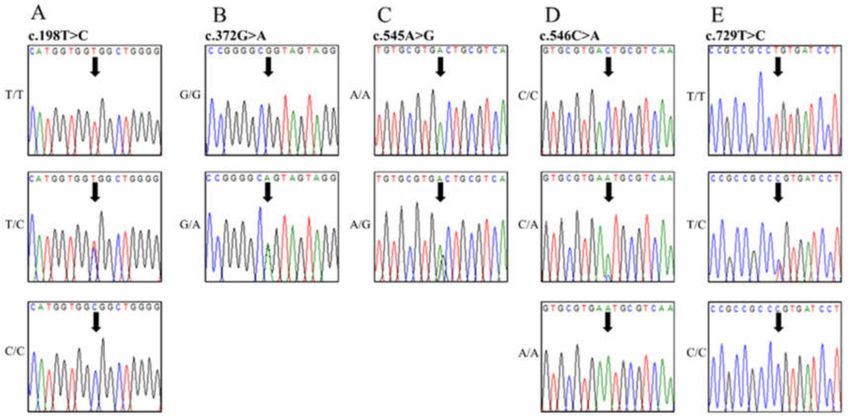
Int. J. Mol. Sci. 2020, 21, 4160                                                                      2 of 16

Several studies have been performed to explain the mechanism of resistance to TSEs in dogs. Dog-specific
amino acids (Asp163) of dog PrP were observed using multiple sequence alignment of PrP among several
species. In silico studies have predicted that Asp163 can contribute to the stability of dog PrP by expansion
of helix 1 and negative surface charge [14,15]. A circular dichroism study reported that the PrP of dogs
is more stable than that of prion disease-susceptible animals, including hamsters and mice, at four pH
values [16]. Madin–Darby canine kidney (MDCK) cells, which are derived from dogs, have been shown
to be resistant to TSE infection [17,18]. In a study using protein misfolding cyclic amplification (PMCA),
dog brain homogenate showed resistance to several prion agents, including BSE, scrapie, and chronic
wasting disease (CWD) [19]. The dog-specific amino acid (Asp163), which is located on the α1-β2 loop of
PrP-transgenic mice, showed complete resistance to TSEs following intracerebral inoculation with three
mouse-adapted scrapie strains, including Rocky Mountain Laboratory (RML), 301C, and 22L [18].
     In previous studies, genetic polymorphisms of the prion protein gene (PRNP) were associated
with the susceptibility of several types of prion diseases. In sheep, scrapie risk-groups have been
defined according to the composition of haplotypes at codons 136, 154, and 171 of ovine PRNP [2,20,21].
In goats, codons Ile142Met, His143Arg, Asn146Ser, Arg211Gln, and Gln222Lys of the caprine PRNP
gene were linked to the protection against scrapie development [22–25]. In humans, the PRNP
codon 129 single nucleotide polymorphism (SNP) is strongly associated with variant and sporadic
Creutzfeldt–Jakob disease (CJD) [26]. In cattle, 23 bp and 12 bp indel polymorphisms at the promotor
region and intron 1 were related to the susceptibility of BSE, respectively [27–29]. Therefore, it is very
important to investigate polymorphisms associated with the susceptibility and/or resistance of TSEs
because amino acid substitutions of proteins can influence the structure and/or function of PrP [30].
A previous study reported that the stabilization of helix 2 in the recombinant mouse prion protein
leads to an increase in the stability of the protein. Stabilization of the local region of prion protein
slowed down the formation of oligomers and amyloid fibrils [31]. Therefore, SNPs that can modulate
the stability of prion proteins have been reported to be related to genetic susceptibility in several
kinds of TSEs. In dogs, three nonsynonymous SNPs, including Gly101Ser, Asp163Glu, and Thr169Ile,
have been reported in a small sample size of mixed dogs [32]. Of the three nonsynonymous SNPs,
only the Asp163Glu SNP has been linked with resistance to TSE.
     In the present study, we investigated the genotype, allele and haplotype frequencies of the PRNP
gene in 204 dogs, which were composed of eight dog breeds, including Maltese, Shih Tzu, Toy Poodle,
Yorkshire Terrier, Pomeranian, Chihuahua, Schnauzer, Bichon Frise, and mixed dogs. In addition,
we compared tandem repeat domains among several species and the distribution of haplotypes of
canine PRNP gene polymorphisms among eight breeds. Furthermore, we evaluated the impact of
polymorphisms of the canine PRNP gene on dog PrP using PolyPhen-2, PROVEAN, PANTHER,
and AMYCO [33–37]. Finally, we predicted the structure of prion proteins and hydrogen bonds
according to alleles of nonsynonymous SNPs using the Swiss-Pdb Viewer program.

2. Results

2.1. Identification of Polymorphisms in Canine PRNP and Genetic Analysis
      The canine PRNP gene is composed of three exons. To investigate the genotype and allele
frequencies of the canine PRNP gene polymorphisms, we performed a Polymerase chain reaction
(PCR) to amplify the open reading frame (ORF) region of the canine PRNP gene in exon 3. A total
of 204 dogs were analyzed, and all sequences of amplicons (959 bp) were identical to the PRNP
gene of Canis lupus familiaris registered in GenBank (AF042843). We identified seven SNPs and one
insertion/deletion in the ORF region (Figure 1). Except for previously reported 301A>G (Ser101Gly)
and c.489C>G (Asp163Glu), we identified six novel polymorphisms, including one insertion/deletion
(c.190_213delCATGGTGGTGGCTGGGGTCACCCT, 64_71del HGGGWGQP), two nonsynonymous SNPs
(c.545A>G, Asp182Gly; c.546C>A, Asp182Glu), and three synonymous SNPs (c.198T>C, Gly66Gly;
c.372G>A, Ala124Ala; c.729T>C, Pro243Pro) (Figures 2 and 3). The genotype and allele frequencies of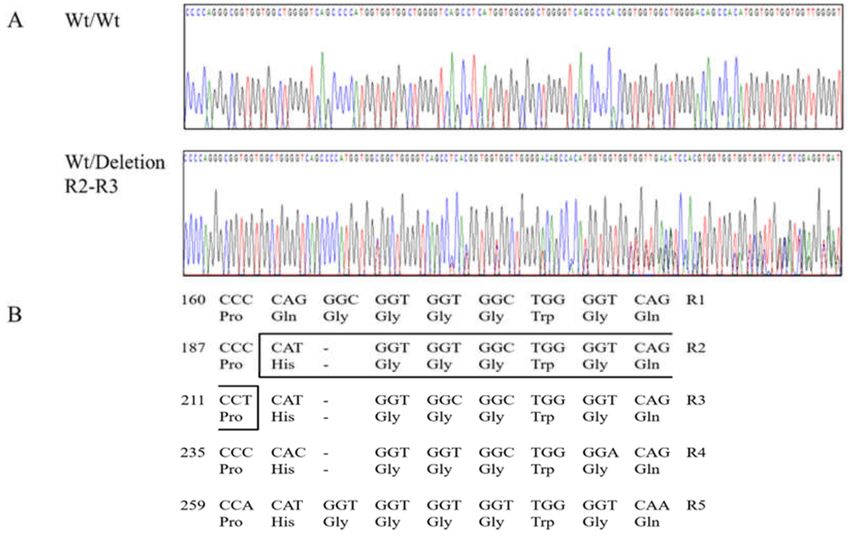
Int. J. Mol. Sci. 2020, 21, 4160                                                                      3 of 16

polymorphisms of the canine PRNP gene are described in Table 1. Except for 198T>C and c.546C>A,
the genotype frequencies of all six polymorphisms were in Hardy–Weinberg equilibrium (HWE).
The insertion/deletion was located in the octapeptide region between R2 and R3 (Figure 3). We performed
haplotype analysis of 8 polymorphisms of the canine PRNP gene (Table 2). The WtTAGCACT haplotype
was observed with the highest frequency (0.696) in the canine PRNP gene. We also investigated the
linkage disequilibrium (LD) values among the eight canine PRNP polymorphisms with (|D’|) and r2 values
(Table 3). Strong LD was observed (r2 > 0.333) for c.198T>C with c.301A>G, c.301A>G with c.489C>G,
c.301A>G with c.729T>C and c.489C>G with c.729T>C. These LD groups were also in strong LD with D’
values of 0.9–1.0.

      Figure 1. Gene map of polymorphisms identified in the canine prion protein (PRNP) gene on
      chromosome 24. The open reading frame (ORF) is indicated by a shaded block, and the 50 and 30
      untranslated regions (UTRs) are indicated by white blocks. Arrows indicate the regions sequenced.
      The Y-shaped bar indicates the octapeptide deletion polymorphisms identified in the canine PRNP
      gene. Asterisks indicate the novel polymorphisms found in this study.

      Figure 2. Electropherograms of 5 novel single nucleotide polymorphisms (SNPs) of the canine
      prion protein (PRNP) gene found in dogs. (A) Electropherograms showing the three genotypes at
      polymorphic codon 66 (Gly66Gly). Upper portion GGT/GGT, middle portion: GGT/GGC, and lower
      portion: GGC/GGC. (B) Electropherograms showing the two genotypes at polymorphic codon 124
      (Ala124Ala). Upper portion: GCG/GCG and lower portion: GCG/GCA. (C) Electropherograms
      showing the two genotypes at polymorphic codon 182 (Asp182Glu). Upper portion: GAC/GAC
      and lower portion: GAC/GGC. (D) Electropherograms showing the three genotypes at polymorphic
      codon 182 (Asp182Gly). Upper portion: GAC/GAC, middle portion: GAC/GAA, and lower portion
      GAA/GAA. (E) Electropherograms showing the three genotypes at polymorphic codon 243 (Pro243Pro).
      Upper portion: CCT/CCT, middle portion: CCT/CCC, and lower portion: CCC/CCC.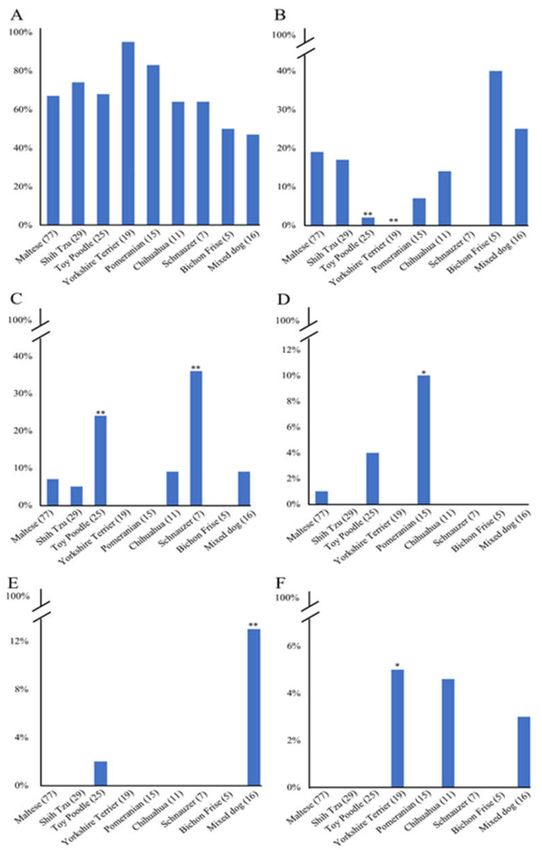
Int. J. Mol. Sci. 2020, 21, 4160                                                                            4 of 16

      Figure 3. Electropherograms of novel insertion/deletion polymorphism of the canine prion protein
      (PRNP) gene. (A) Electropherograms showing the polymorphism at the octapeptide repeat region.
      Upper portion: insertion/insertion homozygote of the canine PRNP and lower portion: insertion/deletion
      heterozygote of the canine PRNP. (B) The amino acid and nucleotide sequences of the repeat region
      of the canine PRNP gene. The box indicates the 64_71del HGGGWGQP polymorphism which was
      found between R2 and R3. R1: octapeptide repeat 1 (54Pro, 55Gln, 56Gly, 57Gly, 58Gly, 59Gly, 60Trp,
      61Gly, 62Gln); R2: octapeptide repeat 2 (63Pro, 64His, 65Gly, 66Gly, 67Gly, 68Trp, 69Gly, 70Gln); R3:
      octapeptide repeat 3 (71Pro, 72His, 73Gly, 74Gly, 75Gly, 76Trp, 77Gly, 78Gln); R4: octapeptide repeat 4
      (79Pro, 80His, 81Gly, 82Gly, 83Gly, 84Trp, 85Gly, 86Gln); and R5: octapeptide repeat 5 (87Pro, 88His,
      89Gly, 90Gly, 91Gly, 92Gly, 93Trp, 94Gly, 95Gln).

                    Table 1. Genotype and allele frequencies of the PRNP polymorphisms in dogs.

            Polymorphisms                Genotype Frequency, n (%)          Allele frequency, n (%)     HWE
                       64_71del        Wt/Wt        Wt/Del     Del/Del         Wt            Del
    c.190_213del                                                                                         1.0
                      HGGGWGQP        201 (98.5)    3 (1.5)      0 (0)      405 (99.3)      3 (0.7)
                                         T/T         T/C         C/C            T              C
     c.198T>C            Gly66Gly                                                                      G             Ser101Gly                                                                     0.2168
                                      112 (54.9)   73 (35.8)   19 (9.3)     297 (72.8)    111 (27.2)
                                        G/G          G/A         A/A            G              A
    c.372G>A            Ala124Ala                                                                        1.0
                                      196 (96.1)    8 (3.9)      0 (0)      400 (98.0)      8 (2.0)
                                         C/C         C/G         G/G            C              G
    c.489C>G            Asp163Glu                                                                      0.0432
                                      125 (61.3)   62 (30.4)   17 (8.3)     312 (76.5)     96 (23.5)
                                        A/A          A/G         G/G            A              G
    c.545A>G            Asp182Gly                                                                        1.0
                                      202 (99.0)    2 (1.0)      0 (0)      406 (99.5)      2 (0.5)
                                         C/C         C/A         A/A            C              A
    c.546C>A            Asp182Glu                                                                      C           Pro243Pro                                                                       0.011
                                      120 (58.8)   63 (30.9)   21 (10.3)    303 (74.3)    105 (25.7)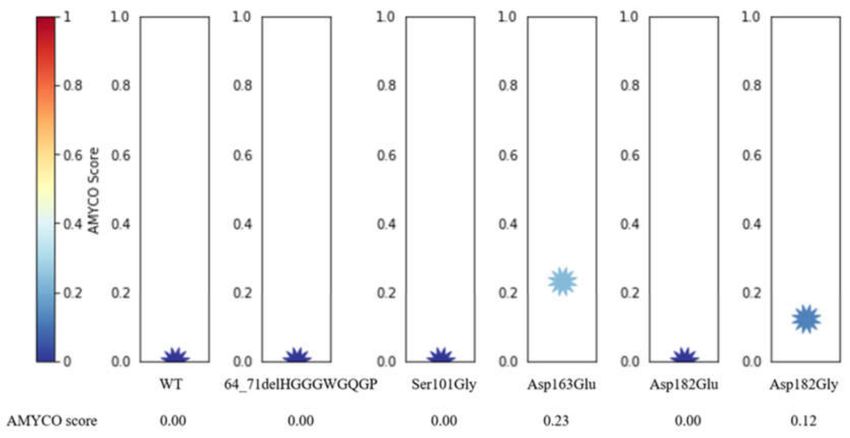
Int. J. Mol. Sci. 2020, 21, 4160                                                                                                   5 of 16

                    Table 2. Haplotype frequencies of 8 PRNP polymorphisms in the canine PRNP gene.

                                                                                                                           Frequency
  Haplotypes        c.190_213del     c.198T>C      c.301A>G    c.372G>A    c.489C>G    c.545A>G   c.546C>A   c.729T>C
                                                                                                                            (n = 204)
      ht1               Wt                T              A            G       C           A            C         T         284 (0.696)
      ht2               Wt                T              G            G       G           A            C         C          56 (0.137)
      ht3               Wt                C              G            G       G           A            C         C          36 (0.088)
      ht4               Wt                C              G            G       C           A            C         T           7 (0.017)
      ht5               Wt                C              G            A       C           A            C         C           6 (0.015)
      ht6               Wt                T              A            G       C           A            A         T           5 (0.012)
    others a                                                                                                               14 (0.035)
                                          a   Others contain rare haplotypes with frequency < 0.012.

                          Table 3. Linkage disequilibrium (LD) of 8 PRNP polymorphisms in dogs.

                                   |D’|
               r2            c.190_213del      c.198T>C      c.301A>G c.372G>A c.489C>G       c.545A>G c.546C>A         c.729T>C
        c.190_213del              -               1.0          1.0         1.0          1.0        1.0        1.0         1.0
          c.198T>C              0.046              -          0.919        1.0         0.55       0.308       1.0        0.688
          c.301A>G              0.002            0.367          -          1.0        0.985       0.263      0.387        0.96
          c.372G>A                0              0.123        0.054         -          1.0         1.0        1.0        0.574
          c.489C>G              0.024            0.16         0.799       0.006          -        0.056      0.292        1.0
          c.545A>G                0              0.003         0.0          0            0          -         1.0        0.089
          c.546C>A                0              0.002        0.001         0          0.0         0.0         -         0.352
          c.729T>C              0.021            0.222        0.855       0.019       0.888        0.0       0.001          -

2.2. Comparison of Tandem Repeat Domains of PrP Among Several Species
     Previous studies have been reported that insertion/deletion located on tandem repeat region of
PrP is related to the progression of prion diseases [38,39]. In addition, since tandem repeat region
has been associated with metal ion binding ability, the variability of amino acid composition and
the length of tandem repeats in several species showed the diversity of physiological function of
PrP [40–43]. Thus, to find distinct feature of tandem repeat domain of dog PrP, we compared the
amino acid sequence of tandem repeats among various animals including humans, sheep, goats, cattle,
water buffalos, chickens, and dogs (Figure 4).

      Figure 4. Comparison of tandem repeat sequences in humans, sheep, water buffalos, goats, cattle,
      chickens, and dogs. Octapeptide repeat sequences were obtained from GenBank at the National Center
      for Biotechnology Information (NCBI), including human (Homo sapiens, BAG32277.1), sheep (Ovis aries,
      NP_001009481.1), goat (Capra hircus, NP_001301176.1), cattle (Bos taurus, NP_001258555.1), water buffalo
      (Bubalus bubalis, KC137622.1), chicken (Gallus gallus, NP_990796.2), and dog (Canis lupus familiaris,
      AGA63676.1). The arrow indicates the octapeptide repeat deletion polymorphism found in this study.
      R1 ~ R5 indicate octapeptide repeat regions of dog PrP. R1: octapeptide repeat 1 (54Pro, 55Gln, 56Gly,
      57Gly, 58Gly, 59Gly, 60Trp, 61Gly, 62Gln); R2: octapeptide repeat 2 (63Pro, 64His, 65Gly, 66Gly, 67Gly,
      68Trp, 69Gly, 70Gln); R3: octapeptide repeat 3 (71Pro, 72His, 73Gly, 74Gly, 75Gly, 76Trp, 77Gly, 78Gln);
      R4: octapeptide repeat 4 (79Pro, 80His, 81Gly, 82Gly, 83Gly, 84Trp, 85Gly, 86Gln); and R5: octapeptide
      repeat 5 (87Pro, 88His, 89Gly, 90Gly, 91Gly, 92Gly, 93Trp, 94Gly, 95Gln).
Int. J. Mol. Sci. 2020, 21, 4160 6 of 16
The octapeptide region of dogs is identical to that of goats and sheep. The octapeptide region of
cattle was composed of six repeats containing an additional octapeptide repeat unit, R5 (PHGGGWGQ),
compared to that of dog PrP [44]. The human octapeptide repeat, R5 (PHGGGWGQ) is composed of
one less glycine than dog PrP (PHGGGGWGQ). The octapeptide repeat of water buffalos showing
unique R1 (SQGGGGWFQ) and R5 (PHGGGWGQ) is composed of one less glycine compared to that
of dog PrP (PHGGGGWGQ). The tandem repeat (QPGYPH) of chickens is composed of a hexapeptide
repeat, which is significantly different from that of dog PrP. The hexapeptide repeat of chickens also
has a different length of tandem repeats compared to dog PrP (chicken: 48 aa; dog: 42 aa).
2.3. Comparison of the Distribution of the Haplotypes of PRNP Polymorphisms in Eight Dog Breeds
We compared the distribution of haplotypes of the canine PRNP gene among eight dog breeds
(Figure 5). In brief, the distribution of haplotype 1 was not significantly different among the eight dog
breeds (Figure 5A). However, the distribution or haplotypes 2, 3, 4, 5, and 6 were significantly different
among the eight dog breeds. In detail, haplotype 2 frequency of Maltese was significantly different
from that of Toy poodle (p < 0.01, Figure 5B) and Yorkshire Terrier (p < 0.01). Haplotype 3 frequency
of Maltese was significantly different from that of Toy poodle (p < 0.01) and Schnauzer (p < 0.01,
Figure 5C). Haplotype 4 frequency of Maltese was significantly different from that of Pomeranian
(p < 0.05, Figure 5D). Haplotype 5 frequency of Maltese was significantly different from that of Mixed
dogs (p < 0.01, Figure 5E). Haplotype 6 frequency of Maltese was significantly different from that of
Yorkshire Terrier (p < 0.05, Figure 5F).
2.4. The Number of Canine PRNP Polymorphisms in Eight Breeds
We investigated the number of polymorphisms found in dog breeds (Table 4). In brief, 8 polymorphisms
of the PRNP gene found in 77 Maltese dogs were 64_71delHGGGWGQP, Gly66Gly, Ser101Gly, Ala124Ala,
Asp163Glu, Asp182Gly, Asp182Glu and Pro243Pro. Five polymorphisms of the PRNP gene found in
29 Shih Tzu dogs were Gly66Gly, Ser101Gly, Ala124Ala, Asp163Glu, and Pro243Pro. Six polymorphisms of
the PRNP gene found in 25 Toy Poodle dogs were 64_71delHGGGWGQP, Gly66Gly, Ser101Gly, Ala 124Ala,
Asp163Glu, and Pro243Pro. One polymorphism of the PRNP gene found in 19 Yorkshire Terrier dogs
was Asp163Glu. Four polymorphisms of the PRNP gene found in 15 Pomeranian dogs were Gly66Gly,
Ser101Gly, Asp163Glu, and Pro243Pro. Six polymorphisms of the PRNP gene found in 11 Chihuahua
dogs were Gly66Gly, Ser101Gly, Asp163Glu, Asp182Gly, Asp182Glu, and Pro243Pro. Four polymorphisms
of the PRNP gene found in four Schnauzer dogs were Gly66Gly, Ser101Gly, Asp163Glu, and Pro243Pro.
Three polymorphisms of the PRNP gene found in three Bichon Frise dogs were Ser101Gly, Asp163Glu,
and Pro243Pro. Six polymorphisms of the PRNP gene found in mixed dogs were Gly66Gly, Ser101Gly,
Ala 124Ala, Asp163Glu, Asp182Glu, and Pro243Pro. Collectively, the number of polymorphisms showed
the diversity from 1 to 8. In brief, the dog breed with the lowest number of polymorphisms was the
Yorkshire Terrier (1). In addition, the dog breed with the highest number of polymorphisms was the
Maltese (8), followed by Toy poodle (6), Chihuahua (6), and Mixed dog (6).
Table 4. Different distributions of PRNP polymorphisms in 8 dog breeds.
Breeds (n) Polymorphisms Total Number
Maltese (77) 64_71delHGGGWGQP Gly66Gly Ser101Gly Ala124Ala Asp163Glu Asp182Gly Asp182Glu Pro243Pro 8
Shih Tzu (29) Gly66Gly Ser101Gly Ala124Ala Asp163Glu Pro243Pro 5
Toy Poodle (25) 64_71delHGGGWGQP Gly66Gly Ser101Gly Ala 124Ala Asp163Glu Pro243Pro 6
Yorkshire Terrier (19) Asp182Glu 1
Pomeranian (15) Gly66Gly Ser101Gly Asp163Glu Pro243Pro 4
Chihuahua (11) Gly66Gly Ser101Gly Asp163Glu Asp182Gly Asp182Glu Pro243Pro 6
Schnauzer (7) Gly66Gly Ser101Gly Asp163Glu Pro243Pro 4
Bichon Frise (5) Ser101Gly Asp163Glu Pro243Pro 3
Mixed dog (16) Gly66Gly Ser101Gly Ala 124Ala Asp163Glu Asp182Glu Pro243Pro 6Int. J. Mol. Sci. 2020, 21, 4160 7 of 16
Figure 5. Comparison of the distribution of haplotypes according to dog breeds. (A) Comparison of
the distribution of haplotype 1 among 8 dog breeds. (B) Comparison of the distribution of haplotype 2
between Maltese and other breeds. (C) Comparison of the distribution of haplotype 3 between Maltese
and other breeds. (D) Comparison of the distribution of haplotype 4 between Maltese and other breeds.
(E) Comparison of the distribution of haplotype 5 between Maltese and other breeds. (F) Comparison
of the distribution of haplotype 6 between Maltese and other breeds. Parentheses indicate each number
of dog breeds. * indicates p < 0.05. ** indicates p < 0.01.Int. J. Mol. Sci. 2020, 21, 4160 8 of 16
2.5. Estimation of the Functional Effect of Genetic Polymorphisms of Dog PrP
We estimated the impact of nonsynonymous SNPs and insertion/deletion of the PRNP gene
on dog PrP using PolyPhen-2, PROVEAN, and PANTHER. Detailed scores predicted by the three
programs are described in Table 5. In brief, an octapeptide deletion (64_71del HGGGWGQP) was
estimated to be “Deleterious” by PROVEAN. Histidine residue of octapeptide interacts with copper
ion and plays a pivotal role in function of octapeptide repeat region. The octapeptide repeat region
is related to protection against oxidative stress, N-methyl-D-aspartate receptor activity, glutamate
uptake, and copper homeostasis mediated by the binding ability of metal ion [41,45]. Thus, the deletion
allele of insertion/deletion can be deleterious to normal physiological function of dog PrP. Ser101Gly
and Asp163Glu SNPs were predicted to be ‘Benign’, ‘Neutral’, and ‘Probably benign’ by PolyPhen-2,
PROVEAN, and PANTHER, respectively. Interestingly, Asp182Gly and Asp182Glu were predicted to
be ‘Probably damaging’ by PolyPhen-2 and PANTHER. However, Asp182Gly and Asp182Glu were
predicted to be ‘Neutral’ by PROVEAN (Table 5).
Table 5. In silico analysis of nonsynonymous SNPs of the PRNP gene in dogs.
PolyPhen-2 PROVEAN PANTHER
Polymorphisms
Score Prediction Score Prediction Score Prediction
p.64_71del
c.190_213del * NA −13.135 Deleterious * NA
HGGGWGQP
c.301A>G Ser101Gly 0.000 Benign −0.260 Neutral 85 Probably benign
c.489C>G Asp163Glu 0.001 Benign −0.194 Neutral 85 Probably benign
c.545A>G Asp182Glu 0.999 Probably damaging −1.452 Neutral 361 Possibly damaging
c.546C>A Asp182Gly 1 Probably damaging −1.909 Neutral 361 Possibly damaging
* NA, Not available.
2.6. Prediction of the Structural Alteration of Dog PrP Induced by Nonsynonymous SNPs
The 3D structure of dog PrP was visualized according to alleles of the nonsynonymous SNPs of the
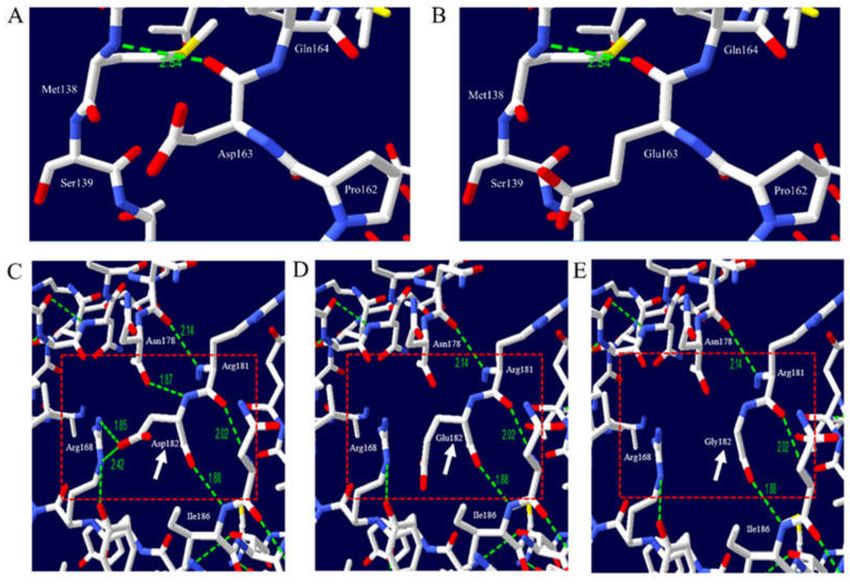
canine PRNP gene (Figure 6). We analyzed the hydrogen bonds of dog PrP with the Asp163 and Glu163
alleles. Asp163 was predicted to have one hydrogen bond (2.54 Å) with Met138 (Figure 6A). Glu163
was also predicted to have an identical length of hydrogen bond (2.54 Å) with Met138 (Figure 6B).
We identified two nonsynonymous SNPs (Asp182Gly and Asp182Glu) located on helix 2. Asp182 was
predicted to have two hydrogen bonds (1.85 and 2.42 Å) with Arg168 and two hydrogen bonds with
Ile186 (1.88 Å) and Asn178 (1.87 Å) (Figure 6C). Glu182 was predicted to have one hydrogen bond
with Ile186 (1.88 Å) (Figure 6D). Gly182 was also predicted to have one hydrogen bond with Ile186
(1.88 Å) (Figure 6E).
2.7. Evaluation of Polymorphisms on the Aggregation Propensity of Dog PrP
To estimate the impact of the polymorphism of the canine PRNP gene on the aggregation
propensity of dog PrP, we utilized the AMYCO program. Dog PrPs with 64_71delHGGGWGQGP,
Ser101Gly, and Asp182Glu were predicted to score 0. Dog PrP with Glu163 (score 0.23) showed
more aggregation propensity than that with Asp163. Dog PrP with Gly182 (score 0.12) showed more
aggregation propensity than that with Asp182 (Figure 7).Int. J. Mol. Sci. 2020, 21, 4160 9 of 16
Figure 6. Prediction of 3D structure and hydrogen bonds of dog prion protein (PrP). The white arrow
indicates target amino acid residues. The red box indicates adjacent amino acid residues. The green
dotted line indicates hydrogen bonds. The green numbers indicate the distance of the hydrogen bonds.
(A) 3D structure of dog PrP with allele Asp163, (B) 3D structure of dog PrP with allele Glu163, (C) 3D
structure of dog PrP with allele Asp182, (D) 3D structure of dog PrP with allele Glu182, and (E) 3D
structure of dog PrP with allele Gly182.
Figure 7. Prediction of aggregation propensity according to alleles of dog prion protein (PrP)
polymorphisms. The impact of polymorphisms on the aggregation propensity of dog PrP was
evaluated as values from 0.0 to 1.0 by AMYCO analysis. AMYCO scores < 0.45 and >0.78 indicate low
and high aggregation propensities of the protein, respectively.
3. Discussion
Natural interspecies transmission of TSEs has never been reported in rabbits, horses, pigs, and dogs.
However, the number of TSE-resistant species has decreased with the reporting of prion diseases byInt. J. Mol. Sci. 2020, 21, 4160 10 of 16
experimental infections. In pigs, experimental transmission of BSE via intracerebral (IC) injection and
intraperitoneal (IP) injection was reported [46–48], and pig PrP transgenic mice showed BSE infection
via IC injection [49]. In addition, experimental transmission of RML, ME7, 22L, 139A, 79A, 22F, CWD,
BSE, SSBP/1, and CH1641 using PMCA was also reported in rabbit. Furthermore, rabbit PrP transgenic
mice were infected by BSE, BSE-L, de novo New Zealand White (NZW), ME7 and RML. However,
dog PrP showed resistance against, several prion agents including BSE, scrape, CWD, ME7, RML,
22F, 22L 87V, 22A, 79A, and 139A, in seeded PMCA [50]. MDCKcells showed resistance to the RML
strain, and dog-specific amino acid N158D transgenic mice also showed resistance to infection of three
different mouse prion strains, including RML, 301C, and 22L [17,18]. These results indicate that dogs
are prion disease-resistant animals. However, these studies did not consider genetic polymorphisms of
dog PrP.
Since polymorphism of the PRNP gene has been associated with the susceptibility to prion
diseases [5,11,51,52], we amplified the ORF region of the canine PRNP gene to identify the genetic
polymorphism of this gene. We identified a total of eight polymorphisms, including two novel
nonsynonymous SNPs and one insertion/deletion (Figure 1). We identified strong LDs and six major
haplotypes among eight polymorphisms. The distribution of haplotypes was significantly different
among the eight dog breeds. In addition, the number of identified polymorphisms was different from
each dog breed (Table 4). Notably, Yorkshire Terrier showed the lowest number of polymorphisms
in dog breeds with more than 12 samples capable of excavating 1% frequencies of SNPs with 96%
probability (Table 4). Since the wolf and dog PrPs have the same amino acid sequence, the evolutionary
distance of the PRNP gene between dog and wolf can be estimated according to the number of
polymorphisms. In comparison with Maltese, Shih Tzu, Toy Poodle, and Pomeranian, which showed
highly polymorphic PRNP gene, Yorkshire Terrier is presumed to be a close evolutionary distance of
the PRNP gene with wolf.
We also estimated the impact of polymorphisms on dog PrP using PolyPhen-2, PROVEAN,
and PANTHER. All three in silico programs predicted that Asp163Glu was benign. A previous study
reported that Asp163Glu did not influence the susceptibility to TSE of transgenic mice expressing
dog-specific amino acids 158Asp and 158Glu [53]. Codon 158 in mouse PrP is equivalent to codon 163 in
dog PrP. In the present study, we observed similar results using in silico programs in which Asp163Glu
does not impact the structure and/or function of dog PrP. Notably, PROVEAN and PANTHER predicted
that the p.64_71del HGGGWGQP, Asp182Gly, and Asp182Glu polymorphisms can impact the function
and/or structure of dog PrP (Table 5). These estimations suggested the possibility that p.64_71del
HGGGWGQP, Asp182Gly, and Asp182Glu can impact the susceptibility of dogs to TSE (Table 5).
However, Asp182Gly and Asp182Glu were predicted as neutral using PROVEAN. Because PROVEAN
was estimated using clustering of basic local alignment search tool (BLAST) and comparing homologs
collected from a database, PROVEAN predicted that Asp182Gly and Asp182Glu did not impact the
function of PrP.
Next, we predicted the 3D structure of dog PrP to evaluate the impact of three nonsynonymous
SNPs, including Asp163Glu, Asp182Glu, and Asp182Gly. We compared the distribution of hydrogen
bonds between alleles Asp163 and Glu163 of dog PrP. The distribution of hydrogen bonds in dog PrP
is identical between the Asp163 and Glu163 alleles (Figure 6A,B). Dog PrP with Asp182 was predicted
to have four hydrogen bonds. However, dog PrP with Glu182 and Gly182 was predicted to have
only one hydrogen bond (Figure 6C,D). The number of hydrogen bonds can affect the stability and
structure of proteins [54–56]. Because the stability of PrP is related to the susceptibility of prion disease,
Asp182Glu and Asp182Gly SNPs of the canine PRNP gene can influence the susceptibility to TSE of
dogs. We estimated the impact of the polymorphism of the canine PRNP gene on the aggregation
propensity of dog PrP and found that dog PrP with Asp163Gly and Asp182Gly (score 0.12) had a
higher aggregation propensity than that of wild-type dog PrP (Figure 7). Collectively, Asp182Glu,
and Asp182Gly are presumed to be deleterious. Based on our analysis, Shih Tzu, Toy Poodle,
and Pomeranian, which do not carry Asp182Glu and Asp182Gly, are presumed to be resistant toInt. J. Mol. Sci. 2020, 21, 4160 11 of 16
prion disease compared to Maltese and Yorkshire Terrier in dog breeds with more than 12 samples.
It indicates that evolutionary sensitization to prion infection can be occurred in Maltese and Yorkshire
Terrier. To confirm the impact of Asp182Glu and Asp182Gly SNPs on the susceptibility to prion disease
of dogs, infection experiments with prion agents will be necessary in MDCK cells and transgenic mice
expressing dog PrP with two amino acid substitutions, Asp182Glu and Asp182Gly, in the future.
Although most of our analysis has been focused on nonsynonymous SNPs, there are recent
evidences that synonymous SNPs introduce less commonly used codons, which may alter the speed of
translation and ultimately folding, function, and stability of the mature protein [57,58]. Since prion
diseases are induced by misfolded prion protein, these are important considerations of synonymous
SNPs. Further study of synonymous SNP is highly desirable in the future.
4. Materials and Methods
4.1. Ethics Statement
Whole blood samples from 204 dogs were provided by the Anyang cool pet animal hospital in
the Republic of Korea. The samples were collected depending upon hospital visit rates based on the
prevalence of dog breed in the Republic of Korea. The total of 204 dogs consisted of 8 dog breeds,
including 77 Maltese (37.75%), 29 Shih Tzu (14.22%), 25 Toy Poodle (12.25%), 19 Yorkshire Terrier
(9.31%), 15 Pomeranian (7.35%), 11 Chihuahua (5.39%), 7 Schnauzer (3.43%), 5 Bichon Frise (2.45%),
and 16 mixed dog (7.84). Mixed dogs are cross-breed dogs obtained by breeding between a Maltese
and a Toy poodle. The origin of mixed dogs was determined by pedigree document. All experimental
procedures were accredited by the Institute of Animal Care and Use Committee of Jeonbuk National
University (JBNU 2018-062).
4.2. Genomic DNA Extraction and Genetic Analysis
Genomic DNA was isolated from whole blood samples of 204 dogs using a Hi Yield Genomic
DNA Mini Kit (Real Biotech Corporation, Taipei, Taiwan) and a Bead Genomic DNA Prep Kit (Biofact,
Daejeon, Korea) following the manufacturer’s instructions. PCR was carried out using gene-specific
sense and antisense primers: canine PRNP-F (TGTGCAGATGTTCTCGCTGT) and canine PRNP-R
(GAAGCGGGAATGAGACACCA). These primers were designed to amplify the entire ORF region of
the canine PRNP gene. We performed PCR using BioFACT™ Taq DNA Polymerase (Biofact, Daejeon,
Korea). The 25 µL PCR mixture was composed of 5 µL of 10× DNA polymerase buffer, 2.5 units of 10×
Taq DNA polymerase, 1 µL of genomic DNA, 10 pmol of each primer, and 0.5 µL of a 0.2 M dNTP
mixture. The PCR conditions were as follows: denaturing at 95 ◦ C for 2 min, followed by 34 cycles of
95 ◦ C for 20 s, 62 ◦ C for 30 s, and 72 ◦ C for 1 min, and 30 s and 1 cycle of 72 ◦ C for 5 min. All PCR
products were analyzed by electrophoresis on a 1.0% agarose gel stained with ethidium bromide (EtBr).
PCR products were directly sequenced using an ABI 3730 sequencer (ABI, Foster City, CA, USA).
Sequencing results were read using Finch TV software (Geospiza Inc, Seattle, WA, USA).
4.3. Statistical Analysis
The chi-squared test was used to determine whether polymorphisms of the canine PRNP gene
were in HWE and to determine whether there were differences in difference of allele frequencies among
the 8 dog breeds. We examined LD and analyzed haplotypes of polymorphisms of the canine PRNP
gene. Lewontin’s D0 (|D0 |), coefficient r2 values and haplotypes of polymorphisms of the canine PRNP
gene were analyzed using Haploview version 4.2 (Broad Institute, Cambridge, MA, USA).
4.4. Prediction of Protein Functional Alterations in Dog PrP
PolyPhen-2 (http://genetics.bwh.harvard.edu/pph2/index.shtml), PROVEAN (http://provean.jcvi.
org/seq_submit.php) and PANTHER (http://www.pantherdb.org) predicted the impact on protein
function induced by variations in protein sequence in dog PrP. The prediction of PolyPhen-2 wasInt. J. Mol. Sci. 2020, 21, 4160 12 of 16
based on the number of features containing the sequence, structural, and phylogenetic information
characterizing the variation. PolyPhen-2 was predicted to be benign, possibly damaging, or probably
damaging based on pairs of false positive rate (FPR) thresholds with scores ranging from 0.0 to
1.0. PROVEAN estimates the impact according to protein sequence variations on protein function.
The PROVEAN scores are computed by clustering BLAST hits according to the homologs collected
from a database (the NCBI nr database). The top 30 clusters of closely related sequences form the
supporting sequence set, which will be used to make the prediction. PROVEAN scores below –2.5
indicate “deleterious,” and above –2.5 indicates “neutral”. PANTHER was based on evolutionary
preservation. Homologous proteins are used to reconstruct the likely sequences of ancestral proteins
at nodes in a phylogenetic tree, and each amino acid can be tracked back in time from its present
state to estimate how long that state has been conserved in its ancestors [38]. PANTHER calculates
preservation time to evaluate the substitution of amino acids. The interpretation of preservation time
is described as follows: “Probably damaging” is greater than 450my; “Possibly damaging” is between
200my and 450my; “Probably benign” is less than 200my. AMYCO (http://bioinf.uab.cat/amyco/) can
evaluate the impact of polymorphism on the aggregation propensity of proteins. AMYCO calculated
the impact of amyloidogenic sequences and the contribution of composition to the aggregation of dog
PrP using the pWALTZ and PAPA algorithms. This is the interpretation of the PSEP score.
4.5. 3D Structure Modeling of Dog PrP
The 3D structure model of dog PrP using nuclear magnetic resonance (NMR) spectroscopy
was obtained from the Protein Data Bank (http://www.rcsb.org/structure/1XYK) (Protein ID: 1XYK).
Analysis of the impact of the nonsynonymous SNPs on dog prion protein was performed by the
Swiss-PdbViewer program (https://spdbv.vital-it.ch/). The models of nonsynonymous SNPs of the
canine PRNP gene were generated at Asp163Glu, Asp182Gly, and Asp182G. Hydrogen bonds are
predicted according to the interatomic distance, bond angle and atom types. Hydrogen bonds are
predicted if a hydrogen is in the range from 1.2 to 2.76 Å of a “compatible” donor atom.
5. Conclusions
In conclusion, we found eight polymorphisms of the canine PRNP gene, including six novel
polymorphisms and identified strong LDs and six major haplotypes among eight polymorphisms.
Additionally, we compared the distribution of most haplotype 1 of the canine PRNP gene among eight
dog breeds. The distribution of haplotypes was significantly different among the eight dog breeds.
In addition, the number of identified polymorphisms was different in each dog breed. Furthermore,
we estimated the biological impact of nonsynonymous SNPs and insertion/deletion using in silico
4 programs. The polymorphisms, including 64_71delHGGGWGQP, Asp182Glu, and Asp182Gly,
were predicted to be deleterious, and two polymorphisms, including Asp163Glu and Asp182Gly,
had more aggregation propensity than wild-type dog PrP. Finally, we predicted the 3D structure and
hydrogen bonds of dog PrP according to alleles of nonsynonymous SNPs. The number of hydrogen
bonds of dog PrP with alleles Glu182 and Gly182 were predicted to be three less than that of dog
PrP with allele Asp182. Based on these results, we suggest that nonsynonymous SNPs, including
Asp182Glu and Asp182Gly can affect the stability of dog PrP.
Author Contributions: D.-J.K., Y.-C.K., and B.-H.J. conceived and designed the experiment. D.-J.K. and Y.-C.K.
performed the experiments. Y.-C.K. and B.-H.J. analyzed the data. A.-D.K. provided animal samples. D.-J.K.,
Y.-C.K., A.-D.K., and B.-H.J. wrote the paper. All authors read and approved the final manuscript.
Funding: This research was supported by the Basic Science Program through the National Research Foundation of
Korea (NRF) funded by the Ministry of Education, Science and Technology (2018R1D1A1B07048711). This research
was supported by the Basic Science Research Program through the National Research Foundation of Korea (NRF)
funded by the Ministry of Education (2017R1A6A1A03015876). This work was supported by NRF (National
Research Foundation of Korea) Grant funded by the Korean Government (NRF-2019-Fostering Core Leaders of
the Future Basic Science Program/Global Ph.D. Fellowship Program).Int. J. Mol. Sci. 2020, 21, 4160 13 of 16
Acknowledgments: Dong-Ju Kim and Yong-Chan Kim were supported by the BK21 Plus Program in the
Department of Bioactive Material Sciences.
Conflicts of Interest: The authors declare no conflict of interest.
Abbreviations
PRNP Prion protein gene
TSEs Transmissible spongiform encephalopathies
LD Linkage disequilibrium
PrP Prion protein
SNPs Single nucleotide polymorphisms
BSE Bovine spongiform encephalopathy
MDCK Madin–Darby canine kidney
PMCA Protein misfolding cyclic amplification
CWD Chronic wasting disease
RML Rocky Mountain Laboratory
CJD Creutzfeldt–Jakob disease
ORF Open reading frame
HWE Hardy-Weinberg equilibrium
IC Intracerebral
IP Intraperitoneal
NZW New Zealand White
EtBr Ethidium bromide
FPR False positive rate
NMR Nuclear magnetic resonance
References
1. McIntyre, K.M.; Gubbins, S.; Goldmann, W.; Hunter, N.; Baylis, M. Epidemiological characteristics of classical
scrapie outbreaks in 30 sheep flocks in the United Kingdom. PLoS ONE 2008, 3. [CrossRef]
2. Curcio, L.; Sebastiani, C.; Di Lorenzo, P.; Lasagna, E.; Biagetti, M. A review on classical and atypical scrapie
in caprine: Prion protein gene polymorphisms and their role in the disease. Animal 2016, 10, 1585–1593.
[CrossRef]
3. Sheridan, H.A.; McGrath, G.; White, P.; Fallon, R.; Shoukri, M.M.; Martin, S. A temporal-spatial analysis of
bovine spongiform encephalopathy in Irish cattle herds, from 1996 to 2000. Can. J. Vet. Res. 2005, 69, 19–25.
4. Imran, M.; Mahmood, S. An overview of animal prion diseases. Virol. J. 2011, 8, 493. [CrossRef]
5. Jeong, B.H.; Kim, Y.S. Genetic studies in human prion diseases. J. Korean. Med. Sci. 2014, 29, 623–632.
[CrossRef]
6. Mathiason, C.K.; Nalls, A.V.; Seelig, D.M.; Kraft, S.L.; Carnes, K.; Anderson, K.R.; Hayes-Klug, J.; Hoover, E.A.
Susceptibility of domestic cats to chronic wasting disease. J. Virol. 2013, 87, 1947–1956. [CrossRef]
7. Kim, Y.C.; Kim, S.K.; Jeong, B.H. Scrapie susceptibility-associated indel polymorphism of shadow of prion
protein gene (SPRN) in Korean native black goats. Sci. Rep. 2019, 9. [CrossRef]
8. Jeong, B.H.; Jin, H.T.; Carp, R.I.; Kim, Y.S. Bovine spongiform encephalopathy (BSE)-associated
polymorphisms of the prion protein (PRNP) gene in Korean native cattle. Anim. Genet. 2013, 44, 356–357.
[CrossRef]
9. Kim, Y.C.; Jeong, B.H. Bovine spongiform encephalopathy (BSE) associated polymorphisms of the prion-like
protein gene (PRND) in Korean dairy cattle and Hanwoo. J. Dairy Res. 2018, 85, 7–11. [CrossRef]
10. Kim, Y.C.; Jeong, B.H. The first report of prion-related protein gene (PRNT) polymorphisms in goat.
Acta Vet. Hung. 2017, 65, 291–300. [CrossRef]
11. Baylis, M.; Goldmann, W. The genetics of scrapie in sheep and goats. Curr. Mol. Med. 2004, 4, 385–396.
[CrossRef]
12. Collee, J.G.; Bradley, R. BSE: A decade on–Part 2. Lancet 1997, 349, 715–721. [CrossRef]
13. Collee, J.G.; Bradley, R. BSE: A decade on–Part I. Lancet 1997, 349, 636–641. [CrossRef]Int. J. Mol. Sci. 2020, 21, 4160 14 of 16
14. Lysek, D.A.; Schorn, C.; Nivon, L.G.; Esteve-Moya, V.; Christen, B.; Calzolai, L.; von Schroetter, C.; Fiorito, F.;
Herrmann, T.; Güntert, p. Prion protein NMR structures of cats, dogs, pigs, and sheep. Proc. Natl. Acad.
Sci. USA 2005, 102, 640–645. [CrossRef]
15. Sanchez-Garcia, J.; Fernandez-Funez, P. D159 and S167 are protective residues in the prion protein from dog
and horse, two prion-resistant animals. Neurobiol. Dis. 2018, 119, 1–12. [CrossRef]
16. Li-Li, Q.; Hui, Z.; Lin-Lin, L. Progress on low susceptibility mechanisms of transmissible spongiform
encephalopathies. Zool. Res. 2014, 35. [CrossRef]
17. Polymenidou, M.; Trusheim, H.; Stallmach, L.; Moos, R.; Julius, C.; Miele, G.; Lenz-Bauer, C.; Aguzzi, A.
Canine MDCK cell lines are refractory to infection with human and mouse prions. Vaccine 2008, 26, 2601–2614.
[CrossRef]
18. Fernández-Borges, N.; Parra, B.; Vidal, E.; Eraña, H.; Sánchez-Martín, M.A.; de Castro, J.; Elezgarai, S.R.;
Pumarola, M.; Mayoral, T.; Castilla, J. Unraveling the key to the resistance of canids to prion diseases.
PLoS Pathog. 2017, 13, e1006716. [CrossRef]
19. Vidal, E.; Fernández-Borges, N.; Pintado, B.; Ordóñez, M.; Márquez, M.; Fondevila, D.; Torres, J.M.;
Pumarola, M.; Castilla, J. Bovine spongiform encephalopathy induces misfolding of alleged prion-resistant
species cellular prion protein without altering its pathobiological features. J. Neurosci. 2013, 33, 7778–7786.
[CrossRef]
20. Eiden, M.; Soto, E.O.; Mettenleiter, T.C.; Groschup, M.H. Effects of polymorphisms in ovine and caprine
prion protein alleles on cell-free conversion. Vet. Res. 2011, 42. [CrossRef]
21. Hunter, N. PrP genetics in sheep and the implications for scrapie and BSE. Trends Microbiol. 1997, 5, 331–334.
[CrossRef]
22. Kim, S.K.; Kim, Y.C.; Won, S.Y.; Jeong, B.-H. Potential scrapie-associated polymorphisms of the prion protein
gene (PRNP) in Korean native black goats. Sci. Rep. 2019, 9, 1–10. [CrossRef]
23. Fragkiadaki, E.G.; Vaccari, G.; Ekateriniadou, L.V.; Agrimi, U.; Giadinis, N.D.; Chiappini, B.; Esposito, E.;
Conte, M.; Nonno, R. PRNP genetic variability and molecular typing of natural goat scrapie isolates in a
high number of infected flocks. Vet. Res. 2011, 42. [CrossRef]
24. Corbiere, F.; Perrin-Chauvineau, C.; Lacroux, C.; Costes, P.; Thomas, M.; Bremaud, I.; Martin, S.; Lugan, S.;
Chartier, C.; Schelcher, F. PrP-associated resistance to scrapie in five highly infected goat herds. J. Gen. Virol.
2013, 94, 241–245. [CrossRef]
25. Goldmann, W.; Martin, T.; Foster, J.; Hughes, S.; Smith, G.; Hughes, K.; Dawson, M.; Hunter, N. Novel
polymorphisms in the caprine PrP gene: A codon 142 mutation associated with scrapie incubation period.
J. Gen. Virol. 1996, 77, 2885–2891. [CrossRef]
26. Jeong, B.H.; Lee, K.H.; Kim, N.H.; Jin, J.K.; Kim, J.I.; Carp, R.I.; Kim, Y.S. Association of sporadic
Creutzfeldt–Jakob disease with homozygous genotypes at PRNP codons 129 and 219 in the Korean
population. Neurogenetics 2005, 6, 229–232. [CrossRef]
27. Haase, B.; Doherr, M.G.; Seuberlich, T.; Drogemuller, C.; Dolf, G.; Nicken, p.; Schiebel, K.; Ziegler, U.;
Groschup, M.H.; Zurbriggen, A.; et al. PRNP promoter polymorphisms are associated with BSE susceptibility
in Swiss and German cattle. BMC Genet. 2007, 8. [CrossRef]
28. Geldermann, H.; He, H.; Bobal, P.; Bartenschlager, H.; Preuss, S. Comparison of DNA variants in the PRNP
and NF1 regions between bovine spongiform encephalopathy and control cattle. Anim. Genet. 2006, 37,
469–474. [CrossRef]
29. Kashkevich, K.; Humeny, A.; Ziegler, U.; Groschup, M.H.; Nicken, P.; Leeb, T.; Fischer, C.; Becker, C.M.;
Schiebel, K. Functional relevance of DNA polymorphisms within the promoter region of the prion protein
gene and their association to BSE infection. FASEB J. 2007, 21, 1547–1555. [CrossRef]
30. Bowie, J.U.; Reidhaar-Olson, J.F.; Lim, W.A.; Sauer, R.T. Deciphering the message in protein sequences:
Tolerance to amino acid substitutions. Science 1990, 247, 1306–1310. [CrossRef]
31. Singh, J.; Kumar, H.; Sabareesan, A.T.; Udgaonkar, J.B. Rational stabilization of helix 2 of the prion protein
prevents its misfolding and oligomerization. J. Am. Chem. Soc. 2014, 136, 16704–16707. [CrossRef]
32. Stewart, P.; Campbell, L.; Skogtvedt, S.; Griffin, K.A.; Arnemo, J.M.; Tryland, M.; Girling, S.; Miller, M.W.;
Tranulis, M.A.; Goldmann, W. Genetic predictions of prion disease susceptibility in carnivore species based
on variability of the prion gene coding region. PLoS ONE 2012, 7. [CrossRef]
33. Iglesias, V.; Conchillo-Sole, O.; Batlle, C.; Ventura, S. AMYCO: Evaluation of mutational impact on prion-like
proteins aggregation propensity. BMC Bioinformatics 2019, 20. [CrossRef]Int. J. Mol. Sci. 2020, 21, 4160 15 of 16
34. Tang, H.; Thomas, P.D. PANTHER-PSEP: Predicting disease-causing genetic variants using position-specific
evolutionary preservation. Bioinformatics 2016, 32, 2230–2232. [CrossRef]
35. Adzhubei, I.; Jordan, D.M.; Sunyaev, S.R. Predicting functional effect of human missense mutations using
PolyPhen-2. Curr. Protoc. Hum. Genet. 2013, 7. [CrossRef]
36. Won, S.Y.; Kim, Y.C.; Kim, K.; Kim, A.D.; Jeong, B.H. The First Report of Polymorphisms and Genetic Features
of the prion-like Protein Gene (PRND) in a Prion Disease-Resistant Animal, Dog. Int. J. Mol. Sci. 2019, 20.
[CrossRef]
37. Kim, Y.C.; Jeong, B.H. In Silico Evaluation of Acetylation Mimics in the 27 Lysine Residues of Human Tau
Protein. Curr. Alzheimer Res. 2019, 16, 379–387. [CrossRef]
38. Moore, R.A.; Herzog, C.; Errett, J.; Kocisko, D.A.; Arnold, K.M.; Hayes, S.F.; Priola, S.A. Octapeptide repeat
insertions increase the rate of protease-resistant prion protein formation. Protein Sci. 2006, 15, 609–619.
[CrossRef]
39. Beck, J.A.; Mead, S.; Campbell, T.A.; Dickinson, A.; Wientjens, D.P.; Croes, E.A.; Van Duijn, C.M.; Collinge, J.
Two-octapeptide repeat deletion of prion protein associated with rapidly progressive dementia. Neurology
2001, 57, 354–356. [CrossRef]
40. Stanczak, P.; Luczkowski, M.; Juszczyk, P.; Grzonka, Z.; Kozlowski, H. Interactions of Cu2+ ions with chicken
prion tandem repeats. Dalton Trans. 2004, 2102–2107. [CrossRef]
41. Di Natale, G.; Pappalardo, G.; Milardi, D.; Sciacca, M.F.; Attanasio, F.; La Mendola, D.; Rizzarelli, E. Membrane
interactions and conformational preferences of human and avian prion N-terminal tandem repeats: The role
of copper(II) ions, pH, and membrane mimicking environments. J. Phys. Chem. B. 2010, 114, 13830–13838.
[CrossRef]
42. Hornshaw, M.P.; McDermott, J.R.; Candy, J.M.; Lakey, J.H. Copper binding to the N-terminal tandem repeat
region of mammalian and avian prion protein: Structural studies using synthetic peptides. Biochem. Biophys.
Res. Commun. 1995, 214, 993–999. [CrossRef]
43. Gralka, E.; Valensin, D.; Gajda, K.; Bacco, D.; Szyrwiel, L.; Remelli, M.; Valensin, G.; Kamasz, W.;
Baranska-Rybak, W.; Kozlowski, H. Copper(II) coordination outside the tandem repeat region of an
unstructured domain of chicken prion protein. Mol. Biosyst. 2009, 5, 497–510. [CrossRef]
44. Seabury, C.M.; Honeycutt, R.L.; Rooney, A.P.; Halbert, N.D.; Derr, J.N. Prion protein gene (PRNP) variants
and evidence for strong purifying selection in functionally important regions of bovine exon 3. Proc. Natl.
Acad. Sci. USA 2004, 101, 15142–15147. [CrossRef]
45. Castle, A.R.; Gill, A.C. Physiological Functions of the Cellular Prion Protein. Front. Mol. Biosci. 2017, 4.
[CrossRef]
46. Konold, T.; Spiropoulos, J.; Chaplin, M.J.; Thorne, L.; Spencer, Y.I.; Wells, G.A.; Hawkins, S.A. Transmissibility
studies of vacuolar changes in the rostral colliculus of pigs. BMC Vet. Res. 2009, 5. [CrossRef]
47. Ryder, S.; Hawkins, S.; Dawson, M.; Wells, G. The neuropathology of experimental bovine spongiform
encephalopathy in the pig. J. Comp. Pathol. 2000, 122, 131–143. [CrossRef]
48. Dawson, M.; Wells, G.; Parker, B.; Scott, A. Primary parenteral transmission of bovine spongiform
encephalopathy to the pig. Vet. Rec. 1990, 127, 338.
49. Espinosa, J.-C.; Herva, M.-E.; Andréoletti, O.; Padilla, D.; Lacroux, C.; Cassard, H.; Lantier, I.; Castilla, J.;
Torres, J.-M. Transgenic mice expressing porcine prion protein resistant to classical scrapie but susceptible to
sheep bovine spongiform encephalopathy and atypical scrapie. Emerg. Infect. Dis. 2009, 15. [CrossRef]
50. Chianini, F.; Fernandez-Borges, N.; Vidal, E.; Gibbard, L.; Pintado, B.; de Castro, J.; Priola, S.A.; Hamilton, S.;
Eaton, S.L.; Finlayson, J.; et al. Rabbits are not resistant to prion infection. Proc. Natl. Acad. Sci. USA 2012,
109, 5080–5085. [CrossRef]
51. Murdoch, B.M.; Murdoch, G.K. Genetics of Prion Disease in Cattle. Bioinform. Biol. Insights 2015, 9, 1–10.
[CrossRef]
52. Lloyd, S.; Mead, S.; Collinge, J. Genetics of prion disease. Top. Curr. Chem. 2011, 305, 1–22. [CrossRef]
53. Vidal, E.; Fernandez-Borges, N.; Erana, H.; Parra, B.; Pintado, B.; Sanchez-Martin, M.A.; Charco, J.M.;
Ordonez, M.; Perez-Castro, M.A.; Pumarola, M.; et al. Dogs are resistant to prion infection, due to the
presence of aspartic or glutamic acid at position 163 of their prion protein. FASEB J. 2020, 34, 3969–3982.
[CrossRef]
54. Myers, J.K.; Pace, C.N. Hydrogen bonding stabilizes globular proteins. Biophys. J. 1996, 71, 2033–2039.
[CrossRef]Int. J. Mol. Sci. 2020, 21, 4160 16 of 16
55. Marqusee, S.; Sauer, R.T. Contributions of a hydrogen bond/salt bridge network to the stability of secondary
and tertiary structure in λ repressor. Protein Sci. 1994, 3, 2217–2225. [CrossRef]
56. Alber, T.; Dao-Pin, S.; Wilson, K.; Wozniak, J.A.; Cook, S.p.; Matthews, B.W. Contributions of hydrogen bonds
of Thr 157 to the thermodynamic stability of phage T4 lysozyme. Nature 1987, 330. [CrossRef]
57. Fung, K.L.; Pan, J.; Ohnuma, S.; Lund, P.E.; Pixley, J.N.; Kimchi-Sarfaty, C.; Ambudkar, S.V.; Gottesman, M.M.
MDR1 synonymous polymorphisms alter transporter specificity and protein stability in a stable epithelial
monolayer. Cancer Res. 2014, 74, 598–608. [CrossRef]
58. Im, E.H.; Choi, S.S. Synonymous Codon Usage Controls Various Molecular Aspects. Genom. Inform. 2017, 15,
123–127. [CrossRef]
© 2020 by the authors. Licensee MDPI, Basel, Switzerland. This article is an open access
article distributed under the terms and conditions of the Creative Commons Attribution
(CC BY) license (http://creativecommons.org/licenses/by/4.0/).You can also read


