STRATEGIC ENVIRONMENTAL ASSESSMENT ENVIRONMENTAL REPORT - Portarlington Joint Local Area Plan 2018 2024 - Laois County Council Comhairle Chontae ...
←
→
Page content transcription
If your browser does not render page correctly, please read the page content below
Laois County Council
   Comhairle Chontae Laoise
               &
     Offaly County Council
 Comhairle Chontae Uíbh Fhailí

       Portarlington
   Joint Local Area Plan
        2018 – 2024

STRATEGIC ENVIRONMENTAL
      ASSESSMENT
 ENVIRONMENTAL REPORT
Portarlington Joint Local Area Plan 2018 – 2024                                                        SEA ER

Document Stage                                    Document Version           Prepared by
SEA ER for review                                 1                          Ruth Minogue, MA(Econ)
                                                  15.03.2018                 MCIEEM

Overall document review                           2                          Reviewed DOH
                                                  16.03.2018                 Updated RM

Final SEA upon adoption                           27.09.2018                 Reviewed and updated RM

                                   This report has been prepared by Minogue &
                                   Associates with all reasonable skill, care and
                                   diligence. Information report herein is based
                                   on the interpretation of data collected and has
                                   been accepted in good faith as being accurate
                                   and valid.

                                   This report is prepared for Laois and Offaly
                                   County Councilsand we accept no responsibility
                                   to third parties to whom this report, or any
                                   part thereof, is made known. Any such party
                                   relies on the report at their own risk.

Minogue & Associates                                                                                       1
Portarlington Joint Local Area Plan 2018 – 2024                                                                                                 SEA ER

Contents
1.0 Introduction ..................................................................................................................... 0
   1.2 Scale, nature and location of development ........................................................................... 0
   1.3 SEA Environmental Report ....................................................................................................... 1
   1.4 Report Preparation .................................................................................................................... 2

2.0     Methodology.................................................................................................................... 4
   2.1 Introduction ................................................................................................................................ 4
   2.2 Stages in the SEA Process ......................................................................................................... 4
   2.2.1 Screening ................................................................................................................................. 5
   2.2.2 Scoping ..................................................................................................................................... 5
   2.3 Baseline Data .............................................................................................................................. 9
   2.4 Consideration of alternatives ................................................................................................. 10
   2.5 Approach to assessment of significant environmental impacts ....................................... 10
   2.6 Mitigation.................................................................................................................................. 11
   2.7 Monitoring ................................................................................................................................ 11
   2.8 Strategic Flood Risk Assessment ............................................................................................ 11
   2.9 Data Gaps .................................................................................................................................. 12

3.0 Relationships to Plans, Policies and Programmes ........................................................... 13
   3.1 Introduction .............................................................................................................................. 13
   3.2 Relevant Plans, Policies and Programmes ............................................................................ 13
   3.2.1 International.......................................................................................................................... 13
   3.2.2 National.................................................................................................................................. 14
   3.2.3 Regional and County ............................................................................................................ 15
   3.3 Key principles identified from review ................................................................................... 15
   _Toc526414695
4.0 Environmental Baseline .................................................................................................... 18
   4.1 Introduction .............................................................................................................................. 18
   4.2 Population and Human Health ............................................................................................... 18
   4.2.1 Population ............................................................................................................................. 20
   4.2.2 Human Health ....................................................................................................................... 20
    Human Health and Noise .................................................................................................... 21
    Human Health and Air Quality ............................................................................................ 22
    Radon .................................................................................................................................. 23
   4.2.3 Existing issues Population and human health ................................................................. 23
Minogue & Associates                                                                                                                                  2
Portarlington Joint Local Area Plan 2018 – 2024                                                                                                    SEA ER

   4.3       Biodiversity, Flora and Fauna ............................................................................................ 24
    4.3.1 Designated Nature Conservation Areas ..................................................................... 24
    Natural Heritage Areas and Proposed Natural heritage areas ........................................... 25
   4.3.2 Ecological Corridors, Stepping Stones and Green Infrastructure .................................. 26
   4.3.3 Existing issues Biodiversity, Flora and Fauna.................................................................... 28
   4.4 Water resources including surface water management and flood risk ........................... 28
   4.4.1 Water Framework Directive ................................................................................................ 28
   4.4.2 Surface Water ....................................................................................................................... 29
   4.4.3 Groundwater ......................................................................................................................... 29
    4.4.4 Register of Protected Areas (RPA) ............................................................................. 30
    4.4.5 Flooding and Flood risk .............................................................................................. 31
   4.4.6 Existing issues – Water Resources ..................................................................................... 33
   4.5 Geology and Soil....................................................................................................................... 34
   4.5.1 Geology .................................................................................................................................. 34
   4.5.2 Soil .......................................................................................................................................... 35
   4.5.3 Existing issues – Geology and Soil ...................................................................................... 36
   4.6 Climatic Factors and Climate Change .................................................................................... 36
   4.6.1 Greenhouse Gas Emissions ................................................................................................. 37
   4.6.2 Existing Issues........................................................................................................................ 37
   4.7 Material Assets ......................................................................................................................... 37
   4.7.1 Transport ............................................................................................................................... 37
   4.7.2 Water Services ...................................................................................................................... 38
    4.7.3 Waste Management and IPPC ................................................................................... 39
    4.7.4 Gas Supply and Broadband ........................................................................................ 40
    4.7.5 Existing Issues ............................................................................................................. 40
   4.8 Cultural Assets –archaeology and built heritage ................................................................. 40
   4.8.1 Archaeology........................................................................................................................... 40
   4.8.2 Built Heritage ........................................................................................................................ 41
   4.8.3 Existing issues – Cultural Assets ......................................................................................... 42
   4.9 Landscape and townscape...................................................................................................... 42
   4.9.1 Landscape and Open Spaces ............................................................................................... 42
   4.9.2 Landscape and Townscape .......................................................................................... 43
   4.9.3 Open Space and Amenities ................................................................................................. 43
    4.9.5 Existing Issues for Landscape and Townscape ........................................................... 44
   4.10 Likely evolution of the environment in the absence of the Portarlington Joint LAP ... 44

Minogue & Associates                                                                                                                                     3
Portarlington Joint Local Area Plan 2018 – 2024                                                                                                 SEA ER

   4.11 Interrelationship of the above components ...................................................................... 45

5 Strategic Environmental Objectives ............................................................................................ 47
   5.1 Introduction .............................................................................................................................. 47

6 Consideration of Alternatives .............................................................................................. 49
   6.1 Introduction .............................................................................................................................. 49
   6.2 Alternative Scenarios for Joint LAP ....................................................................................... 49
   6.3 Assessment of potential effects for each alternative scenario ......................................... 50
   6.4 Summary Evaluation against SEOs ........................................................................................ 51
   6.5 Preferred Alternative .............................................................................................................. 54

7 Assessment of Significant Effects ........................................................................................ 55
   7.1 Introduction .............................................................................................................................. 55
   7.2 Population and Human Health- Significant Effects ............................................................. 55
   7.3 Biodiversity, Flora and Fauna- Significant Effects ............................................................... 56
   7.4 Water - Significant Effects ...................................................................................................... 57
   7.5 Soil and Geology - Significant Effects .................................................................................... 58
   7.6 Climatic Factors and Climate Change - Significant Effects ................................................. 58
   7.7 Cultural Assets - Significant Effects ....................................................................................... 59
   7.8 Material Assets - Significant Impacts .................................................................................... 59
   7.9 Landscape - Significant Effects ............................................................................................... 60
   7.10 Land use Zoning Significant Effects ..................................................................................... 60
   7.10.1 Discussion ............................................................................................................................ 61
    7.10.2 Town Centre ............................................................................................................. 62
   7.10.3 Residential Zonings ............................................................................................................ 62
   7.10.4 Amenity and Open Space .................................................................................................. 63
   7.10.5 Community/Educational/Institutional ............................................................................ 64
   7.10.6 Industrial .............................................................................................................................. 64
   7.10.7 Enterprise and Employment ............................................................................................. 64
   7.10.8 Utilities ................................................................................................................................. 65
   7.10.9 Tourism and Leisure ........................................................................................................... 65
   7.10.10 General Business .............................................................................................................. 66
   7.11 In-combination and cumulative significant effects ........................................................... 66
   7.11.1 Potential cumulative effects from other plans and projects ....................................... 67

Minogue & Associates                                                                                                                                  4
Portarlington Joint Local Area Plan 2018 – 2024                                                                                              SEA ER

8 Mitigation Measures ...................................................................................................................... 71
   8.1 Introduction .............................................................................................................................. 71
   8.2 Existing Environmental Policies and Objectives in the Laois County Development Plan
   2017-2023 ............................................................................................................................ 72
   8.3 Mitigation Measures-amendment of text ............................................................................ 78

9 Monitoring ............................................................................................................................ 79
   9.1 Introduction .............................................................................................................................. 79
   9.2 Frequency of Monitoring and Reporting .............................................................................. 79

10 Conclusion .......................................................................................................................... 87

Minogue & Associates                                                                                                                               5
1.0    Introduction

Laois County Council and Offaly County Council prepared a Joint Local Area Plan (LAP) for
Portarlington for the period 2018 -2024. The Local Area Plan will effectively replace the
existing joint local authority plan for the town, namely the Portarlington Joint Local Area
Plan 2012-2018 as adopted by Laois and Offaly County Council respectively in October 2012.
The LAP must be consistent with the objectives, Core Strategy and Settlement Strategy of
the Laois County Development Plan 2017-2023 (CDP) and the Offaly County Development
Plan 2014-2020 and any subsequent reviews or variations. The Settlement Hierarchy of the
Core Strategy from both development plans recognise Portarlington as a “Key Service
Town”.

This is the Environmental Report for the Strategic Environmental Assessment (SEA) of the
LAP. The purpose of SEA is to formally and systematically evaluate the likely significant
effects of implementing a plan or programme, in this instance the Joint Portarlington LAP.
The report identifies the significant environmental effects of the plan on the environment
and where significant effects are identified, recommends appropriate mitigation measures
to avoid or reduce such effects. SEA is an iterative process and has informed and influenced
the preparation of the LAP, particularly through avoiding areas of greatest environmental
sensitivity.

This Environmental Report for the Joint LAP, forms part of the SEA process, documents the
SEA process and is the key consultation document in the SEA process and facilitates
interested parties to comment on the environmental issues associated with the plan. This
Environmental Report has been prepared under the Planning and Development (Strategic
Environmental Assessment) Regulations 2004 (S.I 436 of 2004).

This is the final SEA ER of the adopted Joint Portarlington Local Area Plan 2018-2024,
please see Annex C for SEA comments on material alterations to the Joint LAP as well as
the SEA Screening of same.

1.2 Scale, nature and location of development

Figure 1 below shows the outline of the Joint Portarlington LAP within the wider context of
Laois and Offaly Counties
Portarlington Joint Local Area Plan 2018 – 2024                                                  SEA ER

             Figure 1: Location of Portarlington Town within Counties Laois and Offaly

1.3 SEA Environmental Report

Regulations contained in Schedule 2B of Statutory Instrument (S.I.) 436 of 2004 (as
amended) details the information to be contained in an Environmental Report. The
following Table 1 lists the information required and details where this information is
contained in this Environmental Report.

            Table 1: Information required to be contained in an Environmental Report
Schedule 2B of Statutory Instrument 436 of           Addressed in this SEA ER
2004
(a) An outline of the contents and main              Chapter One Introduction and Chapter Two
objectives of the plan and relationship with         Methodology outlines contents and main
other relevant plans                                 objectives; Chapter Three details the relationship
                                                     with other relevant plans
(b) The relevant aspects of the current state of     Chapter Four Baseline Environment provides this
the environment and the likely evolution thereof     information
without implementation of the plan
(c) The environmental characteristics of areas       Chapter Four Baseline Environment provides this
likely to be significantly affected                  information
(d) Any existing environmental problems which        Chapter Four Baseline Environment provides this
are relevant to the plan including, in particular,   information
those relating to any areas of a particular
environmental importance, such as areas

Minogue & Associates                                                                                  1
Portarlington Joint Local Area Plan 2018 – 2024 SEA ER
Schedule 2B of Statutory Instrument 436 of Addressed in this SEA ER
2004
designated pursuant to the Birds Directive or
Habitats Directive
(e) The environmental protection objectives, Chapter Five: SEA Objectives provides this
established at international, European Union or information
national level, which are relevant to the plan and
the way those objectives and any environmental
considerations have been taken into account
during its preparation
(f) The likely significant effects on the Chapter Seven, Significant Effects on the
environment, including on issues such as Environment provides this information
biodiversity, population, human health, fauna,
flora, soil, water, air, climatic factors, material
assets, cultural heritage including architectural
and archaeological heritage, landscape and the
interrelationship between the above factors
(g) The measures envisaged to prevent, reduce Chapter Eight, Mitigation Measures provides this
and as fully as possible offset any significant information
adverse effects on the environment of
implementing the plan
(h) An outline of the reasons for selecting the Chapter Six, Alternatives Considered provides
alternatives dealt with, and a description of how this information and difficulties encountered are
the assessment was undertaken including any listed at the end of Chapter Two, Baseline
difficulties (such as technical deficiencies or lack Environment.
of know-how) encountered in compiling the
required information
(i) A description of the measures envisaged Chapter Nine, Monitoring provides this
concerning monitoring of the significant information
environmental effects of implementation of the
plan
(j) A non-technical summary of the information This is provided as a separate document to this
provided under the above headings Environmental Report but is also available
1.4 Report Preparation
The SEA Team worked with the Laois County Council and Offaly County Council Planning teams and
other specialists. The following consultants prepared this SEA ER:
Ruth Minogue MCIEEM, AILI, (BSocSc) Social Anthropology, University of Manchester 1996,
MA (Econ) Environment and Development, University of Manchester 1998, Dip Field
Ecology, University College Cork 2003, ongoing CPD including certificate in Health Impact
Assessment (2012) and diploma in Planning and Environmental Law (2017);
Minogue & Associates 2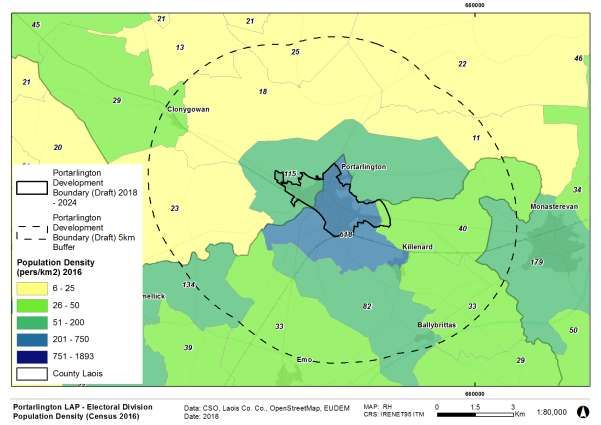
Portarlington Joint Local Area Plan 2018 – 2024 SEA ER
Pat Doherty MCIEEM, MSc in Applied Environmental Science (Ecology), University College
Dublin, 2003;BSc (Honours) in Environmental Earth Science, University of Wales,
Aberystwyth, 2000; ongoing CDP including Habitat Assessment (NVC) and flora and fauna
identification through IEEM;
Dr Ronan Hennessey, Ph.D Earth & Ocean Sciences, NUI Galway, Higher Diploma in applied
Remote Sensing and GIS, NUI Maynooth, B.Sc Earth Sciences, NUI Galway;
Michael Cregan, Diploma in Landscape Architecture (Edinburgh University), B.Agr.Sc.
(Forestry) (University College Dublin) and M.Agr.Sc (Urban Landscape Planning) (University
College Dublin).
Minogue & Associates 3Portarlington Joint Local Area Plan 2018 – 2024 SEA ER
2.0 Methodology
2.1 Introduction
This chapter presents the SEA methodology in detail and outlines the steps required for SEA.
The methodology used to carry out the SEA of the plan reflects the requirements of the SEA
regulations and available guidance on undertaking SEA in Ireland, including:
• SEA Methodologies for Plans and Programmes in Ireland – Synthesis Report
Environmental Protection Agency (EPA), 2003;
• Implementation of SEA Directive (2001/42/EC) Assessment of the Effects of Certain
Plans and Programmes on the Environment – Guidelines for Regional Authorities and
Planning Authorities - published by the Department of the Environment, Heritage and
Local Government, 2004;
• Planning and Development (Strategic Environmental Assessment) Regulations 2004 (SI
436 and SI 435 of 2004);
• Planning and Development (Strategic Environmental Assessment) Regulations 2011
(S.I. No. 201 of 2011);
• Planning and Development (Environmental Assessment of Certain Plans and
Programmes) (S.I No 200 of 2011);
• SEA Process Checklist Consultation Draft 2008, EPA 2008;
• Circular Letter PSSP 6/2011 Further Transposition of EU Directive 2001/42/EC on
Strategic Environmental Assessment;
• Guidance on integrating climate change and biodiversity into Strategic Environmental
Assessment European Union 2013;
• SEA Resource Manual for Local and Regional Authorities, Draft Version, 2013;
• Integrating Climate Change into Strategic Environmental Assessment in Ireland – A
Guidance Note, EPA, 2015;
• Developing and assessing alternatives in Strategic Environmental Assessment, (EPA,
2015).
2.1 Stages in the SEA Process
The steps involved in SEA are as follows:
• Screening (determining whether or not SEA is required).
• Scoping (determining the range of environmental issues to be covered by the SEA).
• The preparation of an Environmental Report (current stage)
• The carrying out of consultations.
• The integration of environmental considerations into the Plan or Programme.
• The publication of information on the decision (SEA Statement).
Minogue & Associates 4Portarlington Joint Local Area Plan 2018 – 2024 SEA ER
2.2.1 Screening
The SEA Regulations state that SEA is mandatory for certain plans while screening for SEA is
required for other plans that fall below the specified thresholds. SEA is mandatory for Local
Area Plans where the population or target population exceeds 5,000persons. As this is the
case for the Portarlington LAP area, the LAP progressed to the next stage of SEA – Scoping.
An overview of this is provided below.
2.2.2 Scoping
The purpose of the SEA Scoping report is to identify the scope of the SEA and ensure that
relevant data and environmental topics are included in the SEA. The Scoping report was
issued to the statutory environmental authorities consultees in January 2018, for a four
week period.
The table below summarises the main issues raised by consultees and the SEA response to
same. Please note that pre-draft consultation was also undertaken by LCC and the list of
issues identified through this process also informed the scope of the SEA.
Table 2: Scoping Submissions received
Consultee Key Issue Raised SEA Response
David Galvin, Scientific Officer, SEA Section
Office of Evidence and Assessment, Environmental Protection Agency, Regional Inspectorate,
Inniscarra, County Cork
Plan Area Boundary Map:
There is merit in including a map showing the extent of Agreed, see Figure 1
the Plan area, particularly in the context of assessing and
identifying relevant environmental sensitivities to be
considered in the SEA.
Key Environmental Resources:
We welcome in Section 3 Key Environmental Resources, Noted
that the EPA’s Ireland’s Environment 2016-an Assessment
(EPA 2016), is a key environmental resource in informing
the LAP process. The challenges and emerging issues
described within this report should be integrated as
appropriate in the Plan.
Water Framework Directive:
The Plan should include a commitment to integrate the Noted, reference
relevant recommendations of the Draft National River made in policies to
Basin Management Plan for Ireland 2018-2021 (DHPLG)
same. Noted, this is
and associated Programme of Measures which will be
adopted during lifetime of the Plan. The Plan should also provided in the Joint
provide for the protection of high and good quality LAP
surface waters and groundwater resources and also
protect relevant areas listed on the WFD Register of
Protected Areas.
Minogue & Associates 5Portarlington Joint Local Area Plan 2018 – 2024 SEA ER
Consultee Key Issue Raised SEA Response
Designated Sites:
Among the conservation areas included in / within 15km Noted, these sites are
of the Plan area are the River Barrow and River Nore described in Chapter 4
(SAC) and the Slieve Bloom Mountains (SPA). The SEA and potential
should consider the potential effects occurring for all cumulative effects are
designated sites and protected species within and discussed in Chapter 7
adjacent to the Plan area and associated ecological of this SEA ER.
corridors. In particular consideration should be given to
the potential for cumulative effects associated with
existing, and proposed, development associated with the
Plan implementation. The SEA should consider the
potential effects occurring for all designated sites and
protected species within and adjacent to the Plan area
and associated ecological corridors. In particular
consideration should be given to the potential for
cumulative effects associated with existing, and
proposed, development associated with the Plan
implementation.
The protection of and possible enhancement of
Undesignated Biodiversity:
Wider consideration of biodiversity outside of designated Noted, consideration
areas, such as ecological corridors/linkages, hedgerows of these within the
and wetlands should be identified and measures put in plan area are
place to ensure protection/replacement where described in Chapter
appropriate. 4.
It may also be useful to consider reviewing and updating, Noted
as appropriate, existing habitat mapping to inform the
development of the Plan area over the lifetime of the
Plan. Where wetland sites are involved, consideration
should be given to assessing the potential impact on
water quality and the hydrological/ hydrogeological
regime which maintains these sites.
Flood Risk Assessment and Management:
We note that the Plan area has a history of flood events. Noted, described in
The Plan should reflect the need for flood risk to be taken Chapter 4 and specific
into consideration for both existing and proposed new
policies/objectives in
zoning, and associated development, within the Plan
area. UoM14 CFRAMS should help inform appropriate Chapter 7, and annex
zoning/re-zoning considerations within the Plan area. A, as well as landuse
The Planning System and Flood Risk Management zoning considerations.
Guidelines for Planning Authorities (DAHLG 2009), should
also be integrated, as appropriate.
Groundwater Vulnerability:
We note that Section 3 Material Assets identifies that the Noted, included in
Minogue & Associates 6Portarlington Joint Local Area Plan 2018 – 2024 SEA ER
Consultee Key Issue Raised SEA Response
public water supply for Portarlington is supplied by Joint LAP
groundwater aquifers and that there are no aquifer
protection zones within the LAP boundary. In this context,
the Plan should include a commitment to the protection
of groundwater resources and associated habitats and
species.
Provision of Adequate and Appropriate Critical
Infrastructure:
We note the recognition in section 3.6 Material Assets in Noted, Ch 4 and 7 of
the Scoping Report that ‘high quality water supply and
this SEA ER amends
wastewater infrastructure is fundamental to ensuring the
long-term physical, environmental, social and economic this.
development of Portarlington’. The Plan should include a
commitment to ensuring the provision of adequate and
appropriate critical water infrastructure to cater for
future sustainable development in the Plan area and to
collaborate with Irish Water in seeking to resolve any
critical water infrastructure issues which may arise.
Climate Change Adaptation:
The Plan should promote commitments for the Noted, a specific
development and promotion of appropriate climate policy addresses this
change adaptation and mitigation measures that can be
in the Joint LAP.
implemented through relevant land use plans and/or
specific plans e.g. Flood Risk Management Plans etc.
Climate change adaptation and mitigation measures
should be included in the Plan as appropriate and the
Plan should be consistent with the National Policy
Position on Climate Action and Low Carbon Development
the National Mitigation Plan and the National Adaptation
Framework (when available), as well as relevant sectoral,
regional and local adaption plans. The Agency has
published SEA guidance on ’Integrating Climate Change
into SEA’ which may be useful in this regard. This
guidance (and other SEA related guidance) is available at:
http://www.epa.ie/pubs/advice/ea.
Core Strategy:
We note Table 3 Core Strategy in the Scoping Report. The Noted. The Ethos of
Plan should ensure that it remains consistent with the the NPF has informed
National Planning Framework, when adopted, and the plan preparation.
promote the need for sustainable development. A The Joint LAP complies
commitment should also be made to remain consistent with the National
with the relevant Regional Spatial and Economic Strategy Spatial Strategy and
(RSES) upon adoption. Regional Planning
Guidelines currently in
place. Policies relating
to Town Centre
consolidation have
been integrated to the
Minogue & Associates 7Portarlington Joint Local Area Plan 2018 – 2024 SEA ER
Consultee Key Issue Raised SEA Response
LAP.
Brown field Lands:
Where any brown field lands are proposed for reuse / Noted, included as
regeneration in the context of Plan development, these appropriate
should be appropriately remediated to avoid or minimise
any potential significant environmental impacts or human
health impacts that may arise. A commitment should be
given that any assessment of these sites should consider
and provide information on aspects such as contaminated
soil removal / remediation, noise and air quality, waste
management, possible service infrastructure provision
issues, possible presence of invasive species and ensuring
appropriate management / control, implications for
biodiversity etc.
Development arising from the Plan:
The Plan should include a specific commitment that any Noted, this is included
proposed residential, industrial, infrastructural or tourism in the Key Plan
related development arising from the Plan will take into objectives
account any other associated
plans/programmes/strategies and the requirements of
the SEA, Habitats, WFD and Floods Directives, as relevant
and appropriate.
Potential for Cumulative Effects:
In preparing the SEA, you should consider assessing the Noted, see Chapter 7
potential for cumulative effects on the environment as a for assessment of
result of implementing the Plan. A review of relevant cumulative effects.
adjacent Local Area Plans and relevant Plans/
Programmes and significant projects should also be
undertaken and the potential for cumulative
environmental effects considered.
Alternatives:
In considering and assessing alternatives, the alternatives Noted, and agreed.
proposed should be reasonable and realistic and should Chapter 6
be set at the appropriate strategic level at which the Plan Consideration of
will be implemented operating within the national Alternatives addresses
planning hierarchy. They should be assessed against the these comments.
relevant environmental objectives established for the key
environmental aspects of the environment likely to be
significantly affected. Clear justification should be
provided for the selection of the preferred alternative/
combination of alternatives.
Where relevant, the development of alternatives should
be clearly described. In addition, the methodology
Minogue & Associates 8Portarlington Joint Local Area Plan 2018 – 2024 SEA ER
Consultee Key Issue Raised SEA Response
applied in the assessment of alternatives along with any
assumptions made should be described. The Agency has
published an EPA Guidance document Developing and
Assessing Alternatives in Strategic Environmental
Assessment - Good Practice Guidance (EPA, 2015), which
should be considered.
SEA Mitigation Measures:
The Plan should include appropriate mitigation measures Noted, see Chapter 8
to address the potential for significant negative for mitigation
environmental effects, where these have been identified. measures
SEA Related Monitoring:
In relation to monitoring related aspects required under Noted, please see
the SEA Directive, the SEA should include information on Chapter 9 of this SEA
the nature and frequency of monitoring to be carried out ER.
and organisations responsible for carrying out the
monitoring. Linking SEA and Plan related monitoring will
ensure that any unforeseen negative effects are identified
early and appropriate mitigation measures provided.
2.3 Baseline Data
The baseline data assists in describing the current state of the environment, facilitating the
identification, evaluation and subsequent monitoring of the effects of the plan. It helps
identify existing environmental problems in and around the plan area and in turn these can
be quantified (for certain environmental parameters) or qualified. This highlights the
environmental issues relevant to each SEA parameter and ensures that the plan
implementation does not exacerbate such problems. Conversely this information can also
be used to promote good environmental practices and opportunities for environmental
enhancement, thereby improving environmental quality where possible.
Baseline data was gathered for all parameters. Site visits were undertaken by the forward
planners and SEA consultant in January 2018. Other data was gathered from the SEA ER of
the Laois County Development Plan 2017-2023, Offaly County Development Plan 2014-
2020, Irish Water, the EPA, Met Eireann and other sources as appropriate. Footnotes
throughout the document, particularly in Chapter Four present the reference and source.
The SEA has also used a Geographical Information System (GIS) in the following ways:
• To provide baseline information on a range of environmental parameters;
• To assist in assessment of alternatives;
• To help assess in-combination or cumulative impacts;
• To provide maps to illustrate environmental parameters in the SEA Environmental
Report.
Minogue & Associates 9Portarlington Joint Local Area Plan 2018 – 2024 SEA ER
The SEA Directive requires that information be focused upon relevant aspects of the
environmental characteristics of the area likely to be significantly affected by the plan and
the likely change, both positive and negative, where applicable.
2.4 Consideration of alternatives
The SEA assessed a number of alternative development scenarios during the plan
preparation process. The three emerging scenarios were subject to a workshop that
assessed each of the scenarios through posing key questions in relation to potential
environmental effects associated with same. Further information is provided in Chapter Six,
Consideration of Alternatives.
2.5 Approach to assessment of significant environmental impacts
The assessment described within this Environmental Report aims to highlight the potential
conflicts, if they are present, between the aims and proposals contained in this Joint LAP
with the Strategic Environmental Objectives. Furthermore the assessment examines the
potential impact arising from the plan’s implementation on sensitive environmental
receptors.
Key to assessing the above is setting a specific set of environmental objectives for each of
the environmental topics. The objectives are provided in Chapter Five and include all
aspects of the environment such as Cultural heritage, Population and Human health, and
Biodiversity, Flora and Fauna.
The SEA, Habitats Directive Assessment process and Joint LAP formulation is an iterative
process and environmental considerations have informed all stages of the preparation of
the plan, in order to avoid or minimise significant adverse environmental impacts. However,
where the environmental assessment identifies significant adverse effects, consideration is
given in the first instance to preventing such impacts; where this is not possible for stated
reasons, to lessening or offsetting those effects.
In accordance with SEA guidelines the assessment identifies ‘impact’ under three headings:
Quality of Impact;
Significance of Impact;
Duration of Impact.
The initial stage aimed to ascertain the quality, if any, of the potential impact. Each of the
Plan’s objectives, policies and zonings have been assessed for their impact and where a
neutral impact is noted no further discussion is provided within this report. In this manner,
the ER focuses on the negative and positive impacts and proceeds to a commentary on their
significance and duration. Thus it is a more robust, more focused approach to understanding
the potential impacts associated with the Portarlington Joint LAP.
Minogue & Associates 10Portarlington Joint Local Area Plan 2018 – 2024 SEA ER Secondly, where a potential impact is noted, either positive or negative, the significance of impact is addressed. Significance is assessed in terms of the type/scale of development envisaged by the plan and the sensitivity/importance of the receiving environment. Finally where it has been determined that elements of the LAPmay potentially result in a negative impact on an environmental receptor appropriate level mitigation measures are proposed. 2.6 Mitigation Section (g) of Schedule 2B of the SEA Regulations requires information on the mitigation measures that will be put in place to minimise/eliminate any significant adverse impacts due to the implementation of the Joint LAP. Chapter Eight of this SEA ER highlights the mitigation measures that will be put in place to counter identified significant adverse impacts due to the LAP’s implementation. The Joint LAP has been prepared having regard to the environmental protection objectives contained within the Laois County Development Plan 2017-2023 and the Offaly County Development Plan 2014-2020 as appropriate. However, some unavoidable residual issues may remain and therefore mitigation measures are required. Chapter Eight details the mitigation measures necessary to prevent, reduce and, as fully as possible, offset any significant adverse impacts on the environment of implementing the Joint LAP. 2.7 Monitoring Article 10 of the SEA Directive sets out the requirement that monitoring is to be carried out of the significant environmental effects of the implementation of the Joint LAP in order to identify at an early stage any unforeseen adverse effects and to be able to undertake appropriate remedial action. Chapter Nine presents the monitoring requirements for the plan, aligned where possible with those of the SEA of the Laois CDP 2017-2023. 2.8 Strategic Flood Risk Assessment The Planning System and Flood Risk Management Guidelines (DoEHLG 2009) provide a methodology to incorporate flood risk identification and management into land use strategies. It also requires the alignment and integration of flood risk into the SEA process. The core objectives of the Guidelines are to: • Avoid inappropriate development in areas at risk of flooding; • Avoid new developments increasing flood risk elsewhere, including that which may arise from surface water run-off; • Ensure effective management of residual risks for development permitted in floodplains; • Avoid unnecessary restriction of national, regional or local economic and social growth; • Improve the understanding of flood risk among relevant stakeholders; Minogue & Associates 11
Portarlington Joint Local Area Plan 2018 – 2024 SEA ER Ensure that the requirements of EU and national law in relation to the natural environment and nature conservation are complied with at all stages of flood risk management. Potential flood issues in the plan area are an important consideration in the preparation of the Joint LAP. Therefore the plan has been guided by the information on flood risk currently available and has been informed by the currently upto date flood risk information for Portarlington including Catchment Flood Risk Assessment and Management (CFRAM) studies. These findings have been integrated into the Joint LAP and this SEA ER (See Chapters Four and Seven in particular). 2.9 Data Gaps Data gaps are present in terms of human health and population; however the Census 2016 Small Area Population statistics will address some of these data gaps. Minogue & Associates 12
Portarlington Joint Local Area Plan 2018 – 2024                                            SEA ER

3.0 Relationships to Plans, Policies and Programmes

3.1 Introduction

Under the SEA Directive, the relationship between the Joint LAP and other relevant plans
and programmes must be taken into account. A review of the relevant plans and
programmes can be found in Appendix A.

The LAP must be considered within the context of a hierarchy of policies, plans and
strategies which include international, national, regional and local level policy documents.
These documents set the policy framework within which the plan will operate. The Laois
County Development Plan 2017-2023 (LCDP 2017-2023) operates as the primary land use
framework for the County and Offaly CDP 2014-2020 for the relevant part of the plan area.
The LAP has been prepared having regard to the policies and objectives outlined within the
above LCDP 2017-2023 and the Offaly CDP 2014-2020. The key environmental protective
objectives and policies of the Joint LAP are consistent with both these County Development
Plans.

A list of the key relevant international, national, regional and county policies included in the
review are provided below in Section 3.2; Section 3.3 identifies key principles that have
informed the SEA process arising from this review.

3.2 Relevant Plans, Policies and Programmes

3.2.1 International

• UN Convention of Biological Diversity, 1992
• The Convention on Wetlands of International Importance (The Ramsar Convention) 1971
  and subsequent amendments
• EU Environmental Action Programme to 2020
• EU Biodiversity Strategy to 2020
• EU Directive on the Conservation of Wild Birds, (2009/147/EC) 1979. Known as the Birds
  Directive
• EU Directive on the Conservation of Natural Habitats and of Wild Flora and Fauna,
  (92/43/EEC), 1992 known as the Habitats Directive
• European Communities (Birds and Natural Habitats) Regulations 2011
• EU Green Infrastructure Strategy 2013
• The Stockholm Convention 2001
• EU Soil Thematic Strategy
• Water Framework Directive (2000/60/EC) as amended
• Floods Directive (2007/60/EC)
• The Drinking Water Directive (DWD), (98/83/EC) 1998
• Groundwater Directive, (2006/118/EC) 2006
• EC Bathing Water Quality Directive, (2006/7/EC) 2006

Minogue & Associates                                                                          13
Portarlington Joint Local Area Plan 2018 – 2024 SEA ER
Paris (Climate Change) Agreement
• Kyoto Protocol
• The Ambient Air Quality and Cleaner Air for Europe (CAFE) Directive
• EU Directive on Waste, (2006/12/EC), 2006
• EU Directive on Waste (2008/98/EC), 2008
• EU Urban Waste Water Treatment Directive (91/271/EEC), 1991
• Directive 2009/28/EC on the promotion of the use of energy from renewable sources
• European Convention on the Protection of the Archaeological Heritage,
• 1992 (The Valletta Convention)
• Convention for the Protection of the Architectural Heritage of Europe, 1985 (Granada
Convention)
• The European Landscape Convention 2000
• The Aarhus Convention
• Environmental Liability Directive 2004/35/EC
SEA Directive - Assessment of the effects of certain plans and programmes on the
Environment, (2001/42/EC) 2001
• Environmental Impact Assessment Directive (85/337/EEC) (97/11/EC), 1985 and
Environmental Impact Assessment Directive (2014/52/EC)
3.2.2 National
• National Planning Framework (2018)
• The National Spatial Strategy 2002 -2020
3rd National Biodiversity Action Plan 2017-2021
• The Wildlife Acts 1976 to 2012National Mitigation Plan (in preparation)
• Sectoral Climate Adaptation Plans (in preparation)
• Local Authority Adaptation Strategy Development Guidelines, EPA 2016
• Sectoral Climate Adaptation Plans (in preparation)
• Our Sustainable Future A framework for sustainable development in Ireland (2012)
• National Landscape Strategy (2015-2025)
• National Heritage Plan (2002)
• Water Framework Directive River Basin Management Plans (2nd cycle in preparation)
• Irish Water’s Capital Investment Programme
• Water Services Act (2007)
• Water Services (Amendment) Act (2012)
• Irish Water Services Strategic Plan SEA and AA (2015)
Irish Water Capital Investment Programme (2017-2021)
Guidelines for Planning Authorities on Sustainable Residential Development in Urban
Areas (Cities, Towns & Villages) (2009)
• Geological Heritage Sites Designation (under the Wildlife Amendment Act 2000)
• Waterways Ireland Heritage Plan 2014-2020
Minogue & Associates 14Portarlington Joint Local Area Plan 2018 – 2024 SEA ER
• The Planning System and Flood Risk Management Guidelines (and Technical Appendices)
for Planning Authorities (DoEHLG, OPW), 2009
• National Climate Change Strategy (2007-2012)
• Review of Ireland’s climate change policy and Climate Action and Low Carbon Bill 2013
• Smarter Travel, A Sustainable Transport Future, A New Transport Policy for Ireland 2009-
2020
• National Monuments Act 1930 with subsequent amendments
• Architectural Heritage Protection - Guidelines for Planning Authorities (2011)
• National Inventory of Architectural Heritage (NIAH)
• Draft Landscape and Landscape Assessment Guidelines, (2000)
• Planning and Development Act 2000 (as amended).
• Planning Policy Statement, 2015
3.2.3 Regional and County
• Regional Planning Guidelines 2010-2020- to be replaced by Regional Spatial and
Economic Strategies
• Eastern Catchment and Flood Risk Assessment and Management Plan (draft)
Eastern River Basin District Management Plan (second cycle in preparation)
• Eastern-Midlands Regional Waste Management Plan 2015
Laois County Development Plan 2017-2023
• Laois Local Economic and Community Plan 2016
Laois County Heritage Plan 2014-2019
Offaly County Development Plan 2014-2020
Offaly Local Economic and Community Plan 2016
Offaly County Heritage Plan 2017-2021
3.3 Key principles identified from review
Following the review of the relationship between the above plans, policies and programmes
(see also Appendix B), the following key principles have been identified and these have been
considered through the SEA and helped to inform the Joint LAP development.
Table 3: Key Principles from review
SEA Topic Principles/Implications for the LAP and SEA EPA State of Irelands
Environment 2016 Key Issues
Biodiversity, Conserve and enhance biodiversity at all Implementation of legislation
Flora and levels Climate change;
Fauna Avoid and minimise effects on nationally and Environment and health and
internationally rare and threatened species well being;
and habitats through sensitive design and Nature and wild places.
consultation, recognising ecological
connectivity where possible
Minogue & Associates 15Portarlington Joint Local Area Plan 2018 – 2024 SEA ER
SEA Topic Principles/Implications for the LAP and SEA EPA State of Irelands
Environment 2016 Key Issues
Facilitate species and habitat adaption to
climate change
Avoid and minimise habitat fragmentation
and seek opportunities to improve habitat
connectivity
Ensure careful consideration of non-native
invasive and alien species issues
Population Provide for sustainable communities with key Environment and health and
and Human services well being;
Health A high quality environment to live, work and Implementation of
play in legislation;
Avoid pollution and environmental health Climate change;
impacts (noise and air quality) through Community engagement;
mitigation and design Sustainable economic
activities.
Water Maintain and improve water quality Restore and protect water
Avoid and minimise effects on natural quality;
processes, particularly natural flood Implementation of
management and catchment processes legislation;
through sensitive design and consultation Climate change;
Adapt and improve resilience to the effects of Environment and health and
climate change, particularly flood risks well being.
associated with extreme weather
Minimise water consumption/ abstractions
Design SUDS to facilitate ecological
improvement/ enhancement where possible
Soil and Conserve soil resources where possible and Climate change;
Geology avoid waste of soil resources Environment and health and
Maintain productive capacity and prevent well being;
erosion of soils Sustainable economic
Ensure careful consideration of non-native activities.
invasive and alien species issues
Material Avoid and minimise waste generation Restore and protect water
Assets Maximise re-use of material resources and quality;
use of recycled materials Implementation of
Minimise energy consumption and encourage legislation;
use of renewable energy Climate change;
Promote sustainable transport patterns and Environment and health and
modes where possible well being;
Plan and provide for sustainable water Sustainable economic
management and wastewater treatment activities.
Air Quality Adapt and improve resilience to the effects of Climate change;
and Climate climate change Implementation of
Encourage reduction in greenhouse gases legislation;
through transport, energy, built Environment and health and
development. well being.
Minimise adverse impacts associated with air
Minogue & Associates 16Portarlington Joint Local Area Plan 2018 – 2024 SEA ER
SEA Topic Principles/Implications for the LAP and SEA EPA State of Irelands
Environment 2016 Key Issues
and noise quality
Cultural Conserve, preserve and record architectural Environment and health and
Heritage and archaeological heritage well being;
Avoid and minimise effects on historic Sustainable economic
environment features through sensitive activities.
design and consultation
Landscape Enhance the landscape character of the area Environment and health and
through design well being;
Integrate green infrastructure considerations Nature and wild places.
Improve landscape connectivity to
surrounding area
Climate Adapt and improve resilience to the effects of Environment and health and
change and climate change well being;
sustainability Promote local/ sustainable sourcing of Sustainable economic
materials activities;
Climate change;
Promote sustainable design and innovation
to reduce material consumption Implementation of
legislation.
Inter - Maintain and improve the health of people, Environment and health and
relationships ecosystems and natural processes well being;
Minimise effects on landscape and historic Sustainable economic
environment features activities;
Adapt and improve resilience to climate Climate change;
change and extreme weather events Implementation of
Actively seek to integrate opportunities for legislation;
environmental enhancement Nature and wild places;
Restore and protect water
quality;
Community engagement.
Minogue & Associates 17Portarlington Joint Local Area Plan 2018 – 2024 SEA ER 4.0 Environmental Baseline 4.1 Introduction Article 5 of the SEA Directive states that the environmental report shall include the information that may reasonably be required taking into account: • Current knowledge and methods of assessment; • The contents and level of detail in the plan or programme and its stage in the decision- making process; • The extent to which certain matters are more appropriately assessed at different levels in that process in order to avoid duplication of the assessment. In addition, particular issues as they relate to the environment have been identified through the pre-draft submission process, as well as the responses to the SEA Scoping Report these are summarised in the relevant section of this chapter. The sphere of influence of the plan is variable, with potential water resources extending well beyond the plan area and potential interactions with the wider catchment, downstream of the plan area. For other parameters, the sphere of influence is more closely defined to a specific place, for example in relation to cultural heritage features. Also of note, is that the Portarlington LAP is a joint plan, prepared with Offaly County Council and in this regard, the policies, objectives and zonings of the Offaly CDP 2014-2020 are considered within this SEA. 4.2 Population and Human health This section provides information on the current population, demographic trends and changes in the Joint LAP area adjacent DEDs between 2011 and 2016 Census. In addition, information is provided on economic and human health trends in the Counties. Impacts can arise on people’s health and quality of life from a range of environmental factors, often through a combination of environmental impacts such as landuse, water quality, air quality, noise and transport patterns. Figure 2 below presents the Joint LAP boundary and Census Data (2016) for Electoral Districts within the plan boundary. Figure 3 shows population density for the Joint LAP. Minogue & Associates 18
You can also read


