THE NATIONAL COVID COHORT COLLABORATIVE (N3C): LET'S GET INVOLVED ! - WARREN A. KIBBE, PHD, FACMI - PURDUE UNIVERSITY
←
→
Page content transcription
If your browser does not render page correctly, please read the page content below
The National COVID Cohort Collaborative (N3C):
               Let’s Get Involved !
                Warren A. Kibbe, PhD, FACMI
                        June 15, 2021
             Purdue Big Data in Cancer Workshop

                         @data2health             covid.cd2h.org
           @wakibbe      @ncats_nih_gov           ncats.nih.gov/n3c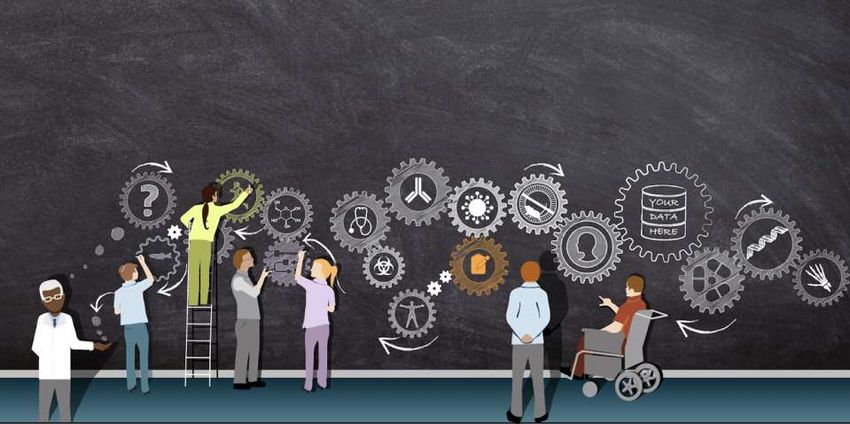
A program of NIH’s National Center
                                                                  Speaker Objectives
for Advancing Translational Sciences

                                                                             ●   Real World Data
                                                                             ●   Open Science
                                                                             ●   Overview of N3C
                                       Warren Kibbe                          ●   N3C Data Enclave statistics
                                       Duke Biostatistics & Bioinformatics   ●   How common data models and variables
                                       CTSA Informatics
                                       Duke Cancer Institute                     are harmonized
                                       Member N3C                            ●   The scope of answerable questions
                                                                             ●   Data access and security
                                                                             ●   How common data models and variables
                                                                                 are harmonized
                                                                             ●   Oncology research in N3C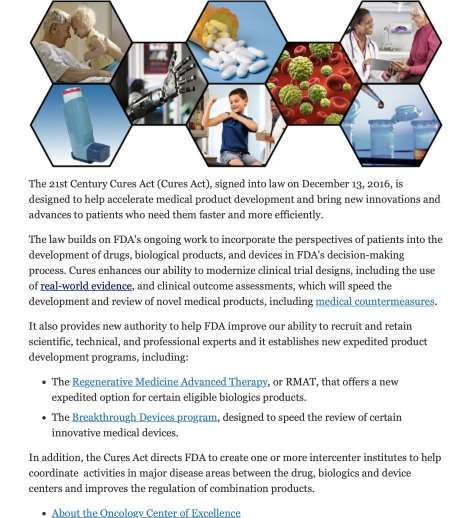
Special thanks to:
● Chris Chute, N3C, Johns Hopkins

● Melissa Haendel, N3C, Colorado University

● Umit Topaloglu, N3C, Wake Forest

● Frank Rockhold, Duke

● Noha Sharafeldin, N3C, UAB
Take homes
 • N3C represents a unique resource to examine effects of COVID-19 on cancer
   outcomes
 • Largest COVID-19 and cancer cohort within the US
 • Consistent with previous literature, older age, male gender, increasing comorbidities,
   and hematological malignancies were associated with higher mortality in patients with
   cancer and COVID-19
 • The N3C dataset confirmed that cancer patients with COVID-19 who received recent
   immuno-, or targeted therapies were not at higher risks of overall mortality

                                                                                            4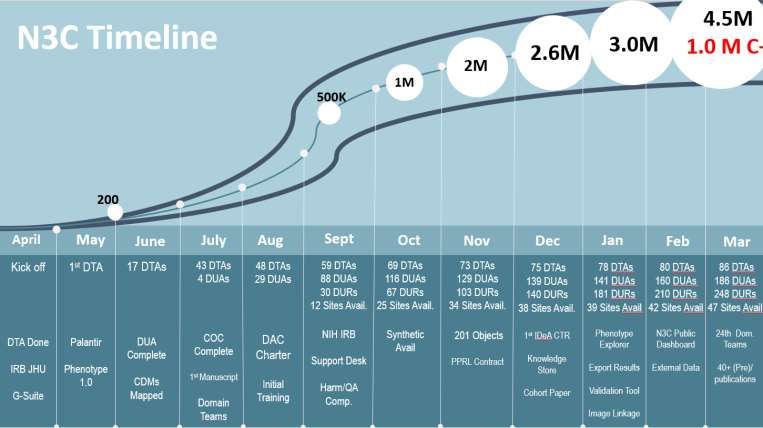
What is Real World Data?
    Collected in the
    context of patient
    care. Real World
    Data was called out
    as part of the 21st
    Century Cures Act

21st Century Cures Act: https://www.fda.gov/regulatory-information/selected-amendments-fdc-act/21st-century-cures-act
Graphic from HealthCatalyst: https://www.healthcatalyst.com/insights/real-world-data-chief-driver-drug-development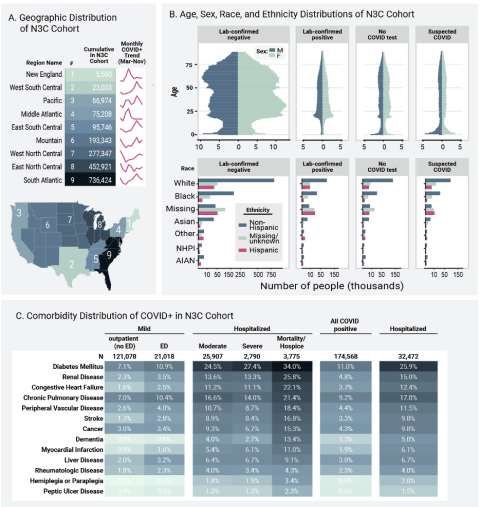
Current sources of data
   molecular           genome   pathology   imaging   labs   notes   sensors

         Our ability to generate biomedical
         data continues to grow in terms of
                variety and volume

icons by the Noun Project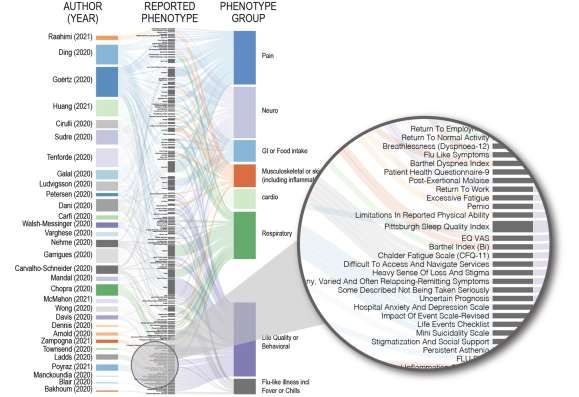
AI is changing our ability to go both
deep and broad

  Trustworthy AI     Reusable
  Provenance         Reproducible

Having a health equity lens
       ●   Digital Health, precision medicine, and real world data
           all have the power to transform healthcare. However,
           we must pay attention to structural racism and implicit
           bias if we want to achieve equity.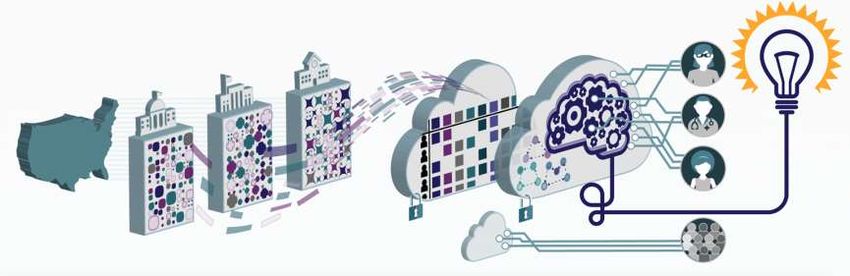
21st Century Cures Act

    Last year I discussed the NCI Cancer
    Moonshot and Precision Medicine
    activities funded under the 21st Century
    Cures Act
    FDA was directed by congress to focus
    on the use of RWD and RWE in drug
    design, development and outcomes
    assessment

https://www.fda.gov/regulatory-information/selected-
amendments-fdc-act/21st-century-cures-act
Is it just about Real World Data?
What about Open Science? Data transparency? Data Access?
The importance of Open Science
Calls for greater transparency and ‘open data access’ in clinical research
continue actively.
● “Open science is the movement to make scientific research, data and
   dissemination accessible to all levels of an inquiring society”*
● Open Science Project**: “If we want open science to flourish, we should
   raise our expectations to: Work. Finish. Publish. Release.”
● FAIR Principles: Findability, Accessibility, Interoperability, and Reusability***
● TRUST Principles: Transparency, Responsibility, User focus, Sustainability
   and Technology
* https://www.fosteropenscience.eu/resources
** http://openscience.org/
*** https://www.nature.com/articles/sdata201618
**** https://www.nature.com/articles/s41597-020-0486-7
Open Science and Patient Data Access
Some of the challenges are:
● Patient privacy
● Academic credit
● Commercial sensitivity and intellectual property
● Data standards
● Resources (money and people)

There should be room for researchers and patients alike to gain from this effort.

Informatics experts and data scientists are essential elements of this discussion.
One problem with Clinical Trials Data Sharing
   ● “The tendency for researchers to ‘‘sit’’ on their data for an unduly long period
     of time is neither desirable from a scientific point of view nor acceptable from
     an ethical perspective. ‘

   ● ‘After all, the data belong to the patients who agreed to participate in the
     research, not to the investigators who coordinated it, as the new European
     General Data Protection Regulation emphasizes.”*

*Rockhold, F, et al. Open science: The open clinical trials data journey, Clinical Trials, Vol 16 (5) 1-8, 2019
Access to patient-level data is important for research There are certainly challenges, but question is not whether data should be shared, but rather how and when access should be granted. Responsible open access enables secondary analyses that: ● Enhance reproducibility of clinical research ● Honor the contributions of trial participants, ● Improve the design of future trials ● Generate new research findings This journey of making patient data available is part of an evolution in transparency and not a sudden awakening.
What about N3C?

It is an open science, controlled access environment
Clinical and Translational Science
Awards (CTSA) Program
A program of NIH’s National Center
for Advancing Translational Sciences
                                        The pandemic highlights urgent needs

                 ●       Algorithms (diagnosis, triage, predictive, etc.)
                 ●       Drug discovery & pharmacogenetics
                 ●       Multimodal analytics (EHR, imaging, genomics)
                 ●       Interventions that reduce disease severity
                 ●       Best practices for resource allocation
                 ●       Coordinated research efforts to maximize efficiency and
                         reproducibility

                                           These all require the creation
                                       of a comprehensive clinical data set
A program of NIH’s National Center
What Kinds of Questions Can N3C Address?
for Advancing Translational Sciences
The scope and scale of the information in the platform
will support probing questions such as:
● What social determinants of health are risk factors for mortality?
● Do some therapies work better than others? By region? By demographics?
● Can we compare local rare clinical observations with national occurrences?
● Can we predict who might have severe outcomes if they have COVID-19?
● What factors will predict the effectiveness of vaccines?
● Can we predict acute kidney injury in COVID-19 patients?
● Who might need a ventilator because of lung failure?A program of NIH’s National Center
Cohort characterization objectives
for Advancing Translational Sciences
To clinically characterize the N3C cohort
+
● Largest U.S. COVID-19 cohort to date (+ representative controls)
● Racially, ethnically, and geographically diverse
To develop and share validated, versioned OMOP representations of
common variables (labs, vital signs, medications, treatments)
To generate hypotheses to be tested within N3C and elsewhere
? ● Clinical phenotypes and trajectories
● Treatment patterns and response
● … and many othersA program of NIH’s National Center
Benefits for Participation
for Advancing Translational Sciences
● Access to large scale COVID-19 data from across the nation
● Pilot data for grant proposals
● Opportunities for KL2 and TL1 and other scholars
● Team science opportunities for new questions and access to
Teams, statistics, machine learning (ML), informatics
expertise
● Learn ML analytics, NLP methods & access to tools, software,
additional datasetsWho is inAnalytics
Step 4. Federated the N3C? with HPC
A program of NIH’s National Center
for Advancing Translational Sciences
The N3C Computable Phenotype
● At a high level, our phenotype looks for patients:
○ With a positive COVID-19 test (PCR or antibody) OR
○ With an ICD-10-CM code of U07.1 OR
○ Two or more COVID-like diagnosis codes (ARDS, pneumonia, etc.) during the
same encounter, but only on or prior to 5/1/2020
● Each one of these patients is then demographically matched to two patients with
negative or equivocal COVID-19 tests.
Age 47 Age 49 Age 46
Gender M Gender M Gender M
Race Black Race Black Race Black
Matching algorithm
Ethnicit Unknow Ethnicit Hispanic/ Ethnicit Not
y n y Latino y Hispanic
COVID Positive COVID Negative COVID Negative
● Each site securely sends this set of patients, along with their longitudinal EHR
data from 1/1/2018 to the present, to the N3C on a regular basis.A program of NIH’s National Center
N3C Timeline
for Advancing Translational SciencesN3C Dashboard
covid.cd2h.org/dashboard
A program of NIH’s National Center
for Advancing Translational Sciences
55 sites with data released (purple) and 37 sites with
data pending (open circle). OCHIN is a national network
of 131 sites (diamond).
covid.cd2h.org/teams
31 Domain teams!
As of June 14, 2021Data Transfer Agreement Signatories
6/14/2021
88 DTA Signatories
Northwestern University at Chicago ᛫ Tufts Medical Center ᛫ Advocate Health Care Network ᛫ University of Alabama at Birmingham ᛫ Oregon Health & Science University ᛫
University of Washington ᛫ Stanford University ᛫ The University of Michigan at Ann Arbor ᛫ Children's Hospital Colorado ᛫ Duke University ᛫ Medical College of Wisconsin ᛫ The
Ohio State University ᛫ University of Nebraska Medical Center ᛫ University of Arkansas for Medical Sciences ᛫ George Washington University ᛫ Johns Hopkins University ᛫ West
Virginia University ᛫ Medical University of South Carolina ᛫ University of North Carolina at Chapel Hill ᛫ University of Virginia ᛫ The University of Texas Medical Branch at Galveston
᛫ University of Minnesota ᛫ University of Cincinnati ᛫ Columbia University Irving Medical Center ᛫ Cincinnati Children's Hospital Medical Center ᛫ Rush University Medical Center ᛫
Nemours ᛫ University of Wisconsin-Madison ᛫ The State University of New York at Buffalo ᛫ Washington University in St. Louis ᛫ University of Rochester ᛫ The University of
Chicago ᛫ University of Miami ᛫ The Scripps Research Institute ᛫ University of Texas Health Science Center at San Antonio ᛫ University of Kentucky ᛫ University of Illinois at
Chicago ᛫ Virginia Commonwealth University ᛫ Weill Medical College of Cornell University ᛫ Carilion Clinic ᛫ University Medical Center New Orleans ᛫ The University of Iowa ᛫
Emory University ᛫ Maine Medical Center ᛫ The University of Texas Health Science Center at Houston ᛫ Boston University Medical Campus ᛫ The University of Utah ᛫ University of
Southern California ᛫ George Washington Children's Research Institute ᛫ University of Colorado Denver I Anschutz Medical Campus ᛫ Mayo Clinic Rochester ᛫ The Rockefeller
University ᛫ Montefiore Medical Center ᛫ University of Mississippi Medical Center ᛫ University of Oklahoma Health Sciences Center, Board of Regents ᛫ University of
Massachusetts Medical School Worcester ᛫ Aurora Health Care ᛫ Penn State ᛫ University of New Mexico Health Sciences Center ᛫ NorthShore University HealthSystem ᛫ Wake
Forest University Health Sciences ᛫ Vanderbilt University Medical Center ᛫ Regenstrief Institute ᛫ Brown University ᛫ Stony Brook University ᛫ University of California, Davis ᛫ Yale
New Haven Hospital ᛫ Rutgers, The State University of New Jersey ᛫ MedStar Health Research Institute ᛫ Loyola University Chicago ᛫ Loyola University Medical Center ᛫
University of Delaware ᛫ Children's Hospital of Philadelphia
https://ncats.nih.gov/n3c/resources/data-contribution/data-transfer-agreement-signatoriesA program of NIH’s National Center
N3C Enclave Data Stats
for Advancing Translational Sciences
Pediatric casesA program of NIH’s National Center
N3C Enclave Data Stats
for Advancing Translational Sciences
Pediatric casesA program of NIH’s National Center
N3C Enclave Data Stats
for Advancing Translational SciencesThe National COVID Cohort Collaborative: Clinical
Characterization and Early Severity Prediction
Predicting Clinical Severity using machine
learning (64 input variables)
The most powerful predictors are patient age and widely available
vital sign and laboratory values.
https://pubmed.ncbi.nlm.nih.gov/33469592/Step 4.How
Federated
does dataAnalytics with HPC
get into N3C?
A program of NIH’s National Center
for Advancing Translational Sciences
● We have gone through the high-level purpose – EHR data about COVID-19
patients
● Identified the contributing sites
● Know what the inclusion criteria for N3C is – documented COVID-19 testing
● Seen the dashboard overview of N3C and the overall cohort characteristics
● What are the data ingestion, harmonization, query, and publication processes?
● Data governance and security?
● And finally, what about cancer and COVID-19?A program of NIH’s National Center
Leveraging Common Data Models
for Advancing Translational Sciences
● These four data models are commonly used by
academic medical centers throughout the US.
● CDMs are used to store EHR data in a
consistent way.
● Sites participating in N3C may send data in one
of these four formats—the idea is to make it
as convenient as possible for sites to submit.
● Common data models also allow us to write a
consistent computable phenotype that can be
run with few local changes at sites with one or
more of these data models.A program of NIH’s National Center for Advancing Translational Sciences Harmonization of N3C Data
A program of NIH’s National Center
                                       Data Availability vs Utility
for Advancing Translational Sciences

                                               ● Collections of data are not always useful
                                               ● Even if they are available

  ● Consistently classified data is
    alway more useful
FAIR: Findable, Accessible,
A program of NIH’s National Center
for Advancing Translational Sciences Interoperable, Reusable
What does Interoperable mean with respect to data? Harmonized!
Syntactic Interoperability (harmonization)
● One can make sense of the structure
● Metaphor: sentence has good grammar
● Domain of the data standards and data model communities
Semantic interoperability (harmonization)
● One can make sense of the meaning
● Metaphor: the words are understandable
● Domain of the vocabulary, ontology, classification communitiesA program of NIH’s National Center
N3C Data Ingestion & Harmonization Pipeline
for Advancing Translational Sciences
Span manual
curation of mapping
resources to
industrial scale
(future)
production
transformationA program of NIH’s National Center
Harmonized, not Homogenous
for Advancing Translational Sciences
CDMs are built for purpose. Different CDMs emphasize and prioritize different things.Collaborative
Analytics -
N3C Secure
Data Enclave
Secure, reproducible, transparent, versioned, provenanced, attributed,
and shareable analytics on patient-level EHR dataA program of NIH’s National Center
Federated versus Centralized DQ
for Advancing Translational Sciences
Many clinical data research networks are federated; N3C is centralized. Centralized datasets
have some advantages where data quality assessment is concerned.
Federated Network Centralized Data
Questions asked
directly against
all sites’ data
combinedA program of NIH’s National Center
Federated versus Centralized DQ
for Advancing Translational Sciences
With federated data, sites are benchmarked against With centralized data, sites can be benchmarked
themselves. against each other.
Site Patient Visit Type Adm. Date Disc. Date
We have 43 1 123 IP 7/4/2020 7/8/2020
qualifying We have 806
inpatient We have 27 qualifying 1 456 IP 5/6/2020 5/20/2020
visits. qualifying inpatient
inpatient visits. 2 987 IP 8/2/2019 8/7/2019
visits. 2 654 IP 9/3/2019 9/14/2019
3 234 IP 1/26/2021 1/26/2021
3 234 IP 1/26/2021 1/29/2021
3 234 IP 1/26/2021 1/30/2021
Site 1 Site 2 Site 3
3 234 IP 1/26/2021 1/27/2021
Clearly, sites differ in how they define “a visit.”A program of NIH’s National Center
N3C’s DQ Process
for Advancing Translational Sciences
How Would N3C Deal with This Finding? Site Patient Visit Type Adm. Date Disc. Date
● Discover and discuss at weekly DQ meetings.
● Determine: Is this an issue… 1 123 IP 7/4/2020 7/8/2020
○ For the site to fix?
1 456 IP 5/6/2020 5/20/2020
○ For us to handle on our end?
● Reach out to the site to get more information. 2 987 IP 8/2/2019 8/7/2019
○ What if they can’t fix it?
2 654 IP 9/3/2019 9/14/2019
3 234 IP 1/26/2021 1/26/2021
3 234 IP 1/26/2021 1/29/2021
3 234 IP 1/26/2021 1/30/2021
3 234 IP 1/26/2021 1/27/2021A program of NIH’s National Center
N3C’s DQ Process
for Advancing Translational Sciences
How Would N3C Deal with This Finding? Site Patient Visit Type Adm. Date Disc. Date
● Discover and discuss at weekly DQ meetings.
● Determine: Is this an issue… 1 123 IP 7/4/2020 7/8/2020
○ For the site to fix?
1 456 IP 5/6/2020 5/20/2020
○ For us to handle on our end?
● Reach out to the site to get more information. 2 987 IP 8/2/2019 8/7/2019
○ What if they can’t fix it?
2 654 IP 9/3/2019 9/14/2019
We can write an algorithm to make this
site’s visits look more like the other sites: 3 234 IP 1/26/2021 1/26/2021
3 234 IP 1/26/2021 1/29/2021
if:
● the visit type is inpatient 3 234 IP 1/26/2021 1/30/2021
● and there are > 1 per patient
per day 3 234 IP 1/26/2021 1/27/2021
then:
● merge into a single “macro”
visitA program of NIH’s National Center
N3C’s DQ Process
for Advancing Translational Sciences
Original Table Ready for Analysis
Site Patient Visit Type Adm. Date Disc. Date Site Patient Visit Type Adm. Date Disc. Date
1 123 IP 7/4/2020 7/8/2020 1 123 IP 7/4/2020 7/8/2020
1 456 IP 5/6/2020 5/20/2020 1 456 IP 5/6/2020 5/20/2020
2 987 IP 8/2/2019 8/7/2019 2 987 IP 8/2/2019 8/7/2019
DQ fix
2 654 IP 9/3/2019 9/14/2019 2 654 IP 9/3/2019 9/14/2019
3 234 IP 1/26/2021 1/26/2021 3 234 IP 1/26/2021 1/30/2021
3 234 IP 1/26/2021 1/29/2021
Takeaways
3 234 IP 1/26/2021 1/30/2021 ● Centralized DQ processes allow us to fully
3 234 IP 1/26/2021 1/27/2021 realize the potential of N3C’s large sample size.
● All transformations are fully logged and always
completely reversible if needed.A program of NIH’s National Center
N3C Data Ingestion & Harmonization Pipeline
for Advancing Translational Sciences
(future)A program of NIH’s National Center
Harmonizing numeric data
for Advancing Translational Sciences
● Problem: Different sites provide their
data in different units
● Solution: Harmonize each to a standard
unit
Kilograms = Pounds / 2.20462
Kilograms = Ounces / 35.274
Kilograms = Grams / 1000A program of NIH’s National Center
Harmonizing numeric data
for Advancing Translational Sciences
● Problem: Some units are missing
● Solution 1: Contact the source
● Solution 2: N3C inference engine
Kilograms = x / 2.20462 ?
Kilograms = x / 35.274 ?
Kilograms = x / 1000 ?A program of NIH’s National Center
Harmonization progress
for Advancing Translational Sciences
Humans measured in grams do not
● Harmonized measurements look the same as humans measured
○ By original unit in kilograms!
○ Across many sites
Homogeneity
after
harmonizationA program of NIH’s National Center
Unit harmonization progress
for Advancing Translational Sciences
● ~2x increase in usable data from our
harmonization procedures
Canonical unit
Uses a known conversion
Unit not plausible
Missing unit inferred
Unit still missing
We can rescue
a lot of data!A program of NIH’s National Center
N3C Data Ingestion & Harmonization Pipeline
for Advancing Translational Sciences
(future)Long-COVID phenotypes are myriad
patient-reported and researcher-measured phenotypes are starkly different
40 141 7
Map literature and patient-
reported terms to HPO
Pharyngalgia = Sore throat
Plain-language medical vocabulary for precision
diagnosis. Nat Genet. 2018 50:474-476.A program of NIH’s National Center
N3C Harmonization Takeaways
for Advancing Translational Sciences
What N3C has revealed most in terms of needs:
● Interoperability - we need syntactic and semantic!
○ FHIR ⇒ OMOP (syntactic)
○ Common vocabulary/codeset mapping provenance
and management (semantic)
● Approach data harmonization from an end-to-end data
life cycle perspective
● Leverage USCDI, but build for
interoperable semantic modeling
and extensionsA program of NIH’s National Center for Advancing Translational Sciences Governing N3C Data
A program of NIH’s National Center
                                       N3C: Unique Data Use and Privacy
for Advancing Translational Sciences

                                            Goal of the Data Use Agreement is Privacy Protection
                                            to Promote broad access:

                                             ●   COVID-Related research only
                                             ●   NIH housed secure repository
                                             ●   No re-identification of individuals or data source
                                             ●   No download or capture of raw data
                                             ●   Open platform to all researchers
                                             ●   Investigator activities are recorded and can be
                                                 audited for security and reproducibility
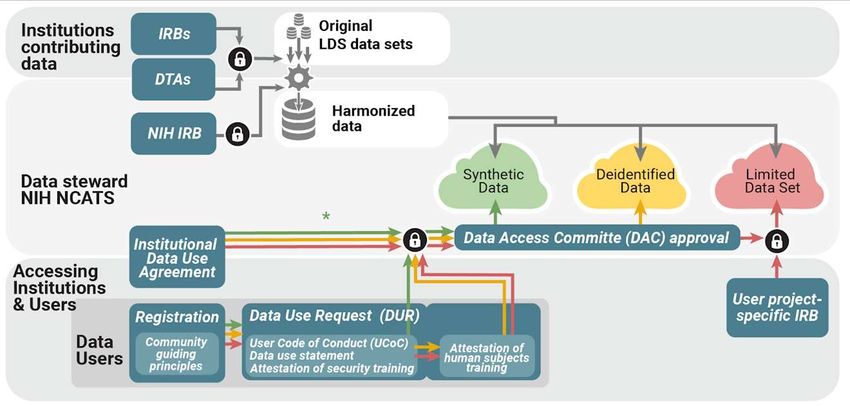
N3C: Governance and Access
Data Levels to Access
Data Use and Privacy

Goal of the Data Use Agreement is Privacy Protection to Promote broad access:
 ● COVID-Related research only
 ● No re-identification of individuals or data source
 ● No download or capture of raw data
 ● Open platform to all researchers
 ● Security: Activities in the N3C Data Enclave are recorded and can be audited
 ● Disclosure of research results to the N3C Data Enclave for the public good
 ● Analytics provenance
 ● Contributor Attribution tracking
N3C Provenance, Transparency,
A program of NIH’s National Center
for Advancing Translational Sciences
                                        Attribution & Rapid Sharing
                     N3C Attribution and Publication Principles
    ●     Transparent and collaborative environment where all contributions are acknowledged
    ●     Provenance and reproducibility
    ●     Promptly sharing research results with N3C users
    ●     Publish in high-impact journals
    ●     Attribution for all N3C artifacts

          Researchers, projects, and
          artifacts are all linked
          together in the enclave
          using the Contributor
          Attribution Model (CAM).
A program of NIH’s National Center
N3C Data Access: Process
for Advancing Translational Sciences
Data Use
Agreement
Data Use Request
HSP / Security Training
https://ncats.nih.gov/n3c/about/applying-for-accessA program of NIH’s National Center
for Advancing Translational Sciences
Realizing Team ScienceN3C team Science within & across institutions
CTSAs N3C Domain Team Expertise:
● Enclave technology
Key functions can ● Data model (OMOP)
nucleate projects: ● Terminologies
● Data quality
● Education & training
● Codesets, variables,
● Biostatistics phenotype
● Study design ● Using/parsing N3C data
● Evaluation ● Workflows, methods,
● Informatics algorithms
● Clinical expertise
● Innovation & Roles
commercialization Ingredients (Methods, datasets, instruments)
● Community & Scientific questions
partnerships https://covid.cd2h.org/domain-teamsOUTCOMES OF COVID-19 IN CANCER PATIENTS: REPORT FROM THE NATIONAL COVID COHORT COLLABORATIVE (N3C) Noha Sharafeldin, Benjamin Bates, Qianqian Song, Vithal Madhira, Yao Yan, Sharlene Dong, Eileen Lee, Nathaniel Kuhrt, Yu Raymond Shao, Feifan Liu, Timothy Bergquist, Justin Guinney, Jing Su, Umit Topaloglu on behalf of the N3C Consortium Given on June 4, 2021 https://covid.cd2h.org/ cd2h.slack.com @data2health
60

N3C Oncology Domain Team (ODT)
                                                             Leadership

                                  Umit Topaloglu, PhD Noha Sharafeldin, MD, PhD Benjamin Bates, MD
                                      Wake Forest     The University of Alabama at Rutgers University
                                       University            Birmingham

                                                              https://covid.cd2h.org/oncology
                                                               Slack channel: #n3c-tt-oncology

   Noha Sharafeldin, MBBCh, PhD
61
N3C ODT Expertise
Informatics Biostatistics Clinical Epidemiology N3C data and Logic
Umit Topaloglu Jing Su Noha Sharafeldin Benjamin Bates Justin Guinney Vithal Madhira Tim Bergquist
Feifan Liu Qianqian Song Yu Raymond Shao Nate Kuhrt Sharlene Dong Yao Yan Eileen Lee
Noha Sharafeldin, MBBCh, PhDA program of NIH’s National Center
N3C Oncology
for Advancing Translational Sciences
http://ascopubs.org/doi/full/10.1200/JCO.21.0107463
N3C Cancer Cohort
Primary Diagnosis
Noha Sharafeldin, MBBCh, PhD64
N3C Cancer Cohort
Primary Outcome
• All- cause mortality
Secondary Outcomes
(Clinical severity indicators
requiring hospitalization)
• Mechanical Ventilation
Noha Sharafeldin, MBBCh, PhD9
65
Demographic, clinical, and tumor characteristics
COVID-19 Positive
Age Sex
2%
13%
18-29
30-49 Female
49% 51%
54% 50-64 Male
31% 65+
Race Geographical Location
4% 11%
22% 13% 22%
US-Northeast
Hispanic
US-Midwest
Non-Hispanic Black 5% US-South
Non-Hispanic White 34%
US-West
Other or Unknown
Unknown
61% 28%
Insert Name
Noha Sharafeldin, MBBCh, PhD
(Insert > Header & Footer > Apply to All)10
66
Demographic, clinical, and tumor characteristics
COVID-19 Positive
ADJUSTED CCI
Smoking status 18000
16000 41%
14000
12000 28%
14%
10000
Non-smoker
8000
16%
Current or 6000
Former smoker 4000 9%
6%
86% 2000
0
0 1 2 3 ≥4
Insert Name
Noha Sharafeldin, MBBCh, PhD
(Insert > Header & Footer > Apply to All)11
67
Demographic, clinical, and tumor characteristics
COVID-19 Positive
Type of primary malignancy
MULTI-SITE 11%
3% 3%
11%
GASTROINTESTINAL CANCERS 9%
Solid
HEMATOLOGICAL CANCERS 12%
12% Liquid
Multi-Site
Unknown PROSTATE CANCER 12%
Undefined Primary
BREAST CANCER 14%
71%
SKIN CANCERS 15%
0 1000 2000 3000 4000 5000 6000 7000
Insert Name
Noha Sharafeldin, MBBCh, PhD
(Insert > Header & Footer > Apply to All)68
COVID-19 Treatment
COVID-19 Treatment (Yes) COVID positive (n=38,614)
Systemic antibiotics 4032(15.75%)
Systemic steroids 3514(13.73%)
Azithromycin 1197(4.68%)
Remdesivir 1047(4.09%)
Dexamethasone 1029(4.02%)
Hydroxychloroquine (HCQ) 364(1.42%)
Noha Sharafeldin, MBBCh, PhD69
Death and invasive ventilation in hospitalized patients
Outcome COVID positive COVID negative
(n=19,515) (n=184,988)
Death 2,894 (14.8%) 23,207 (12.5%)
Invasive Ventilation 1,606 (8.2%) 9,576 (5.2%)
Noha Sharafeldin, MBBCh, PhD70 Survival Probability – by COVID status HR = 1.20 (95%CI: 1.15 – 1.24, p
71

Survival Probability by
cancer type among
COVID positive patients

    Noha Sharafeldin, MBBCh, PhD
72
Hazard ratios associated with 1-year all-cause
mortality among COVID-positive patients
Noha Sharafeldin, MBBCh, PhD73
Hazard ratios associated with 1-year all-cause
mortality among COVID-positive patients
Noha Sharafeldin, MBBCh, PhD74
Hazard ratios associated with 1-year all-cause
mortality among COVID-positive patients
Noha Sharafeldin, MBBCh, PhD75
Hazard ratios associated with 1-year all-cause
mortality among COVID-positive patients
Noha Sharafeldin, MBBCh, PhD76
Limitations
• RWD Challenges (e.g. data missingness)
• Limited capture of recent cancer therapy
• Potential misclassification of cancer patients
• Challenges in primary cancer diagnosis mapping and limited
historical data
• Method for construction of COVID-19 negative control
Noha Sharafeldin, MBBCh, PhD77
Conclusions
• N3C represents a unique resource to examine effects of COVID-19 on cancer outcomes
• Largest COVID-19 and cancer cohort within the US
• Consistent with previous literature, older age, male gender, increasing comorbidities,
and hematological malignancies were associated with higher mortality in patients with
cancer and COVID-19
• The N3C dataset confirmed that cancer patients with COVID-19 who received recent
immuno-, or targeted therapies were not at higher risks of overall mortality
Noha Sharafeldin, MBBCh, PhD78
Acknowledgements
The Patients
NCATS U24 TR002306
US Data Partners
NIGMS 5U54GM104942-04
N3C Consortial Authors
NCI P30CA012197 [UT, QS]
Christopher Chute
LLS 3386-19 [NS]
Melissa Haendel
Indiana University Precision Health
Amit Mitra
Initiative [JS]
Ramakanth Kavuluru
N3C Core Teams
Noha Sharafeldin, MBBCh, PhD79
Acknowledgements
We gratefully acknowledge contributions from the following N3C core teams:
• Principal Investigators: Melissa A. Haendel*, Christopher G. Chute*, Kenneth R. Gersing, Anita Walden
• Workstream, subgroup and administrative leaders: Melissa A. Haendel*, Tellen D. Bennett, Christopher G. Chute, David A. Eichmann, Justin Guinney, Warren A.
Kibbe, Hongfang Liu, Philip R.O. Payne, Emily R. Pfaff, Peter N. Robinson, Joel H. Saltz, Heidi Spratt, Justin Starren, Christine Suver, Adam B. Wilcox, Andrew E.
Williams, Chunlei Wu
• Key liaisons at data partner sites
• Regulatory staff at data partner sites
• Individuals at the sites who are responsible for creating the datasets and submitting data to N3C
• Data Ingest and Harmonization Team: Christopher G. Chute*, Emily R. Pfaff*, Davera Gabriel, Stephanie S. Hong, Kristin Kostka, Harold P. Lehmann, Richard A.
Moffitt, Michele Morris, Matvey B. Palchuk, Xiaohan Tanner Zhang, Richard L. Zhu
• Phenotype Team (Individuals who create the scripts that the sites use to submit their data, based on the COVID and Long COVID definitions): Emily R. Pfaff*,
Benjamin Amor, Mark M. Bissell, Marshall Clark, Andrew T. Girvin, Stephanie S. Hong, Kristin Kostka, Adam M. Lee, Robert T. Miller, Michele Morris, Matvey B.
Palchuk, Kellie M. Walters
• Project Management and Operations Team: Anita Walden*, Yooree Chae, Connor Cook, Alexandra Dest, Racquel R. Dietz, Thomas Dillon, Patricia A. Francis, Rafael
Fuentes, Alexis Graves, Julie A. McMurry, Andrew J. Neumann, Shawn T. O'Neil, Andréa M. Volz, Elizabeth Zampino
• Partners from NIH and other federal agencies: Christopher P. Austin*, Kenneth R. Gersing*, Samuel Bozzette, Mariam Deacy, Nicole Garbarini, Michael G. Kurilla,
Sam G. Michael, Joni L. Rutter, Meredith Temple-O'Connor
• Analytics Team (Individuals who build the Enclave infrastructure, help create codesets, variables, and help Domain Teams and project teams with their datasets):
Benjamin Amor*, Mark M. Bissell, Katie Rebecca Bradwell, Andrew T. Girvin, Amin Manna, Nabeel Qureshi
• Publication Committee Management Team: Mary Morrison Saltz*, Christine Suver*, Christopher G. Chute, Melissa A. Haendel, Julie A. McMurry, Andréa M. Volz,
Anita Walden
• Publication Committee Review Team: Carolyn Bramante, Jeremy Richard Harper, Wenndy Hernandez, Farrukh M Koraishy, Federico Mariona, Saidulu Mattapally,
Amit Saha, Satyanarayana Vedula
Noha Sharafeldin, MBBCh, PhDN3C Registration/Training
A program of NIH’s National Center https://covid.cd2h.org/tutorials
for Advancing Translational Sciences
Registration for Documents,
Meetings & the N3C Data Enclave
Requires Authentication
Enclave Checklist
Training Office Hours:
Tuesdays & Thursdays at 10-11 am PT/1-2 pm ET
Registration Required at this link
Orientation Video Coming Soon
Additional Training Tutorials available in the EnclaveStep 4. Federated Analytics with HPC
Takeaways
A program of NIH’s National Center
for Advancing Translational Sciences
● N3C comprises the largest, most representative patient-level COVID-19
cohort in the US and continues to grow
● We CAN do transparent, reproducible, innovative science (including ML)
on sensitive observational data at scale, together!
● N3C is an innovative partnership between clinical sites, CDM
communities, NIH ICs, CD2H, and commercial partners
● Automation of data extraction and minimum requirements reduces
burden and increases site participation
● Robust attribution of all contributors; also provides great venue for
trainees
● N3C data is complicated, but there are many people and resources to
help users do good scienceA program of NIH’s National Center
How to Get Involved with N3C
for Advancing Translational Sciences
Register with N3C: https://labs.cd2h.org/registration/
Joining Workstreams:
N3C Data Ingestion & Harmonization Workstream
Slack Channel Harmonization
Google Group Harmonization
N3C Phenotype & Data Acquisition Workstream
Slack Channel Phenotype
Google Group Phenotype
N3C Collaborative Analytics Workstream
Slack Channel Analytics
Google Group Analytics
N3C Data Partnership & Governance Workstream
NCATS N3C Webpage N3C Website Slack Channel Governance
Google Group Governance
N3C Synthetic Clinical Data Workstream
Additional Information: Slack Channel Synthetic
Onboarding N3C, Slack, Google | Finding and Joining a Google Group Google Group Synthetic
N3C Implementation Workstream- Coming soonhttps://academic.oup.com/jamia/advance-
article/doi/10.1093/jamia/ocaa196/5893482
Melissa A. Haendel,1,4,7,8,10,13,14,52,78,101 Christopher G. Chute,1,4,8,10,13,14,52,78,100,101 Tellen D. Bennett,9,10,13,14,52,100,101 David A. Eichmann,4,9,10,13,78,101 Justin
Guinney,4,9,10,14,78,101 Warren A. Kibbe,9,10,52,78,101 Philip R.O. Payne,4,9,10,78,101 Emily R. Pfaff,9,10,13,15,52,78 Peter N. Robinson,4,9,10,15,52,78,100 Joel H.
Saltz,10,13,14,15,52,78,101 Heidi Spratt,9,10,100 Christine Suver,10,78,101 John Wilbanks,10,78,101 Adam B. Wilcox,10,101 Andrew E. Williams,10,13,78 Chunlei Wu,9,13,14,78
Clair Blacketer,15,52 Robert L. Bradford,9,52 James J. Cimino,10,14,101 Marshall Clark,9,15,52 Evan W. Colmenares,9,15,52 Patricia A. Francis,78 Davera
Gabriel,9,10,13,14,15,52 Alexis Graves,7,9,78 Raju Hemadri,9,15,52 Stephanie S. Hong,9,15,52 George Hripscak,10,52 Dazhi Jiao,9,15,52 Jeffrey G. Klann,14,52,101 Kristin
Kostka,9,15,52 Adam M. Lee,9,15,52 Harold P. Lehmann,9,15,52 Lora Lingrey,9,15,52 Robert T. Miller,9,15,52 Michele Morris,9,15,52 Shawn N. Murphy,9,15,52 Karthik
Natarajan,9,15,52 Matvey B. Palchuk,9,15,52 Usman Sheikh,9,78 Harold Solbrig,9,15,52 Shyam Visweswaran,10,15,52,101 Anita Walden,7,10,13,14,52,101 Kellie M.
Walters,10,14,101 Griffin M. Weber,10,101 Xiaohan Tanner Zhang,9,15,52 Richard L. Zhu,9,15,52 Benjamin Amor,78 Andrew T. Girvin,15,78 Amin Manna,78 Nabeel
Qureshi,15,78 Michael G. Kurilla,10,78 Sam G. Michael,10,78 Lili M. Portilla,101 Joni L. Rutter,1,101 Christopher P. Austin,101 Ken R. Gersing,78,101
Shaymaa Al-Shukri,4,15 Adil Alaoui,101 Ahmad Baghal,15 Pamela D. Banning,15,100 Edward M. Barbour,8,15 Michael J. Becich,15,52,101 Afshin Beheshti,14 Gordon R. Bernard,8,15 Sharmodeep Bhattacharyya,100 Mark
M. Bissell,9,15 L. Ebony Boulware,14,100 Samuel Bozzette,100,101 Donald E. Brown,101 John B. Buse,14 Brian J. Bush,8,101 Tiffany J. Callahan,14,52 Thomas R. Campion,8,15 Elena Casiraghi,9,15 Ammar A.
Chaudhry,13,14 Guanhua Chen,9 Anjun Chen,13 Gari D. Clifford,8,15 Megan P. Coffee,14,100 Tom Conlin,14 Connor Cook,7,78 Keith A. Crandall,9,14,101 Mariam Deacy,78 Racquel R. Dietz,78 Nicholas J. Dobbins,8,9
Peter L. Elkin,15,52,100 Peter J. Embi,52,101 Julio C. Facelli,8,15 Karamarie Fecho,13 Xue Feng,9 Randi E. Foraker,8,13,15 Tamas S. Gal,8,15 Linqiang Ge,14 George Golovko,15,101 Ramkiran Gouripeddi,14,15 Casey S.
Greene,13,14 Sangeeta Gupta,52,101 Ashish Gupta,13,101 Janos G. Hajagos,9,15 David A. Hanauer,15,52 Jeremy Richard Harper,9,14,52 Nomi L. Harris,14 Paul A. Harris,101 Mehadi R. Hassan,9 Yongqun He,15,52,100
Elaine L. Hill,9,14 Maureen E. Hoatlin,14 Kristi L. Holmes,4,101 LaRon Hughes,14 Randeep S. Jawa,14 Guoqian Jiang,14 Xia Jing,7,14 Marcin P. Joachimiak,8,15 Steven G. Johnson,9,14,101 Rishikesan
Kamaleswaran,9,15,78 Thomas George Kannampallil,15,101 Andrew S. Kanter,15,52 Ramakanth Kavuluru,9,13,14 Kamil Khanipov,8,14 Hadi Kharrazi,9,14 Dongkyu Kim,15,52 Boyd M. Knosp,8,15 Arunkumar Krishnan,9
Tahsin Kurc,9,15 Albert M. Lai,101 Christophe G. Lambert,52,101 Michael Larionov,14 Stephen B. Lee,1,14 Michael D. Lesh,9 Olivier Lichtarge,14 John Liu,9 Sijia Liu,8,9,101 Hongfang Liu,9,15 Johanna J. Loomba,1,15,78,101
Sandeep K. Mallipattu,9,14,15 Chaitanya K. Mamillapalli,14 Christopher E. Mason,15 Jomol P. Mathew,8,15,52 James C. McClay,101 Julie A. McMurry,1,4,7,9,13,14,78 Paras P. Mehta,14 Ofer Mendelevitch,9 Stephane
Meystre,8,14,15 Richard A. Moffitt,9,13,15 Jason H. Moore,8,9 Hiroki Morizono,13,14,15,52 Christopher J. Mungall,15,52 Monica C. Munoz-Torres,7,10,78 Andrew J. Neumann,78 Xia Ning,14 Jennifer E. Nyland,13,14 Lisa
O'Keefe,78 Anna O'Malley,78 Shawn T. O'Neil,78 Jihad S. Obeid,10,14,15 Elizabeth L. Ogburn,13 Jimmy Phuong,9,15,52,100,101 Jose D Posada,8,15 Prateek Prasanna,14,52 Fred Prior,9,14,15 Justin Prosser,9,78 Amanda
Lienau Purnell,101 Ali Rahnavard,9,52 Harish Ramadas,9,52,78 Justin T. Reese,9,10 Jennifer L. Robinson,14,100 Daniel L. Rubin,101 Cody D. Rutherford,9,101 Eugene M. Sadhu,8,15 Amit Saha,9 Mary Morrison
Saltz,15,52,101 Thomas Schaffter,78 Titus KL Schleyer,14 Soko Setoguchi,8,14,15 Nigam H. Shah,8,14 Noha Sharafeldin,14 Evan Sholle,15,52 Jonathan C. Silverstein,15,52,101 Anthony Solomonides,101 Julian Solway,14,101
Jing Su,101 Vignesh Subbian,9,52,101 Hyo Jung Tak,15 Bradley W. Taylor,9,14 Anne E. Thessen,14,101 Jason A. Thomas,15 Umit Topaloglu,15,52 Deepak R. Unni,8,9,15,52 Joshua T. Vogelstein,14 Andréa M. Volz,7 David
A. Williams,14,15 Kelli M. Wilson,9,78 Clark B. Xu,8,9,15 Hua Xu,9,10,14 Yao Yan,9,15,52 Elizabeth Zak,8,15 Lanjing Zhang,101 Chengda Zhang,14 Jingyi Zheng,14
1CREDIT_00000001 (Conceptualization) 4CREDIT_00000004 (Funding acquisition) 7CRO_0000007 (Marketing and Communications) 8CREDIT_00000008 (Resources) 9CREDIT_00000009 (Software role) 10CREDIT_00000010
(Supervision role) 13CREDIT_00000013 (Original draft) 14CREDIT_00000014 (Review and editing) 15CRO_0000015 (Data role) 52CRO_0000052 (Standards role) 78CRO_0000078 (Infrastructure role) 100Clinical Use Cases 101GovernanceQuestions or Comments?
A program of NIH’s National Center
for Advancing Translational Sciences

           Thank you!
                     Thank you!
You can also read


