A Highly Efficient One-for-All Nanodroplet for Ultrasound Imaging-Guided and Cavitation-Enhanced Photothermal Therapy
←
→
Page content transcription
If your browser does not render page correctly, please read the page content below
International Journal of Nanomedicine Dovepress
open access to scientific and medical research
Open Access Full Text Article
ORIGINAL RESEARCH
A Highly Efficient One-for-All Nanodroplet for
Ultrasound Imaging-Guided and
International Journal of Nanomedicine downloaded from https://www.dovepress.com/ by 46.4.80.155 on 20-May-2021
Cavitation-Enhanced Photothermal Therapy
Dui Qin 1,2, * Background: Photothermal therapy (PTT) has attracted considerable attention for cancer
Lei Zhang 1, * treatment as it is highly controllable and minimally invasive. Various multifunctional nano
Hongrui Zhu 1 systems have been fabricated in an “all-in-one” form to guide and enhance PTT by integrat
Junjie Chen 1 ing imaging and therapeutic functions. However, the complex fabrication of nanosystems and
For personal use only.
their high cost limit its clinical translation.
Daocheng Wu 1
Materials and Methods: Herein, a high efficient “one-for-all” nanodroplet with a simple
Ayache Bouakaz 3
composition but owning multiple capabilities was developed to achieve ultrasound (US)
Mingxi Wan 1
imaging-guided and cavitation-enhanced PTT. Perfluoropentane (PFP) nanodroplet with
Yi Feng 1 a polypyrrole (PPy) shell (PFP@PPy nanodroplet) was synthesized via ultrasonic emulsifica
1
The Key Laboratory of Biomedical tion and in situ oxidative polymerization. After characterization of the morphology, its
Information Engineering of Ministry of
photothermal effect, phase transition performance, as well as its capabilities of enhancing
Education, Department of Biomedical
Engineering, School of Life Science and US imaging and acoustic cavitation were examined. Moreover, the antitumor efficacy of the
Technology, Xi’an Jiaotong University, combined therapy with PTT and acoustic cavitation via the PFP@PPy nanodroplets was
Xi’an, People’s Republic of China;
2
Department of Biomedical Engineering,
studied both in vitro and in vivo.
School of Bioinformatics, Chongqing Results: The nanodroplets exhibited good stability, high biocompatibility, broad optical absorp
University of Posts and Telecommunications, tion over the visible and near-infrared (NIR) range, excellent photothermal conversion with an
Chongqing, People’s Republic of China;
3
UMR 1253, iBrain, Université de Tours, efficiency of 60.1% and activatable liquid-gas phase transition performance. Upon NIR laser and
Inserm, Tours, F-37032, France US irradiation, the phase transition of PFP cores into microbubbles significantly enhanced US
imaging and acoustic cavitation both in vitro and in vivo. More importantly, the acoustic
*These authors contributed equally to this
work cavitation enhanced significantly the antitumor efficacy of PTT as compared to PTT alone thanks
to the cavitation-mediated cell destruction, which demonstrated a substantial increase in cell
detachment, 81.1% cell death in vitro and 99.5% tumor inhibition in vivo.
Conclusion: The PFP@PPy nanodroplet as a “one-for-all” theranostic agent achieved
highly efficient US imaging-guided and cavitation-enhanced cancer therapy, and has con
siderable potential to provide cancer theranostics in the future.
Keywords: one-for-all nanodroplet, theranostics, photothermal therapy, acoustic cavitation,
ultrasound imaging
Correspondence: Mingxi Wan; Yi Feng
The Key Laboratory of Biomedical Introduction
Information Engineering of Ministry of Photothermal therapy (PTT) employs a photothermal conversion agent to convert
Education, Department of Biomedical
Engineering, School of Life Science and near-infrared (NIR) laser energy into localized hyperthermia, resulting in a selective
Technology, Xi’ an Jiaotong University, Xi’ thermal ablation of cancer cells. As a promising approach for cancer therapy, it has
An, 710049, People’s Republic of China
Tel +86 29 82667924 received considerable attention due to its high controllability, minimal invasiveness,
Fax +86 29 82668668 and negligible side–effects.1–3 However, the challenges for its clinical applications
Email mxwan@mail.xjtu.edu.cn;
fengyi@mail.xjtu.edu.cn include insufficient photothermal ablation, limited penetration depth and general
International Journal of Nanomedicine 2021:16 3105–3119 3105
© 2021 Qin et al. This work is published and licensed by Dove Medical Press Limited. The full terms of this license are available at https://www.dovepress.com/terms.php
and incorporate the Creative Commons Attribution – Non Commercial (unported, v3.0) License (http://creativecommons.org/licenses/by-nc/3.0/). By accessing the work
you hereby accept the Terms. Non-commercial uses of the work are permitted without any further permission from Dove Medical Press Limited, provided the work is properly attributed. For
permission for commercial use of this work, please see paragraphs 4.2 and 5 of our Terms (https://www.dovepress.com/terms.php).
Powered by TCPDF (www.tcpdf.org)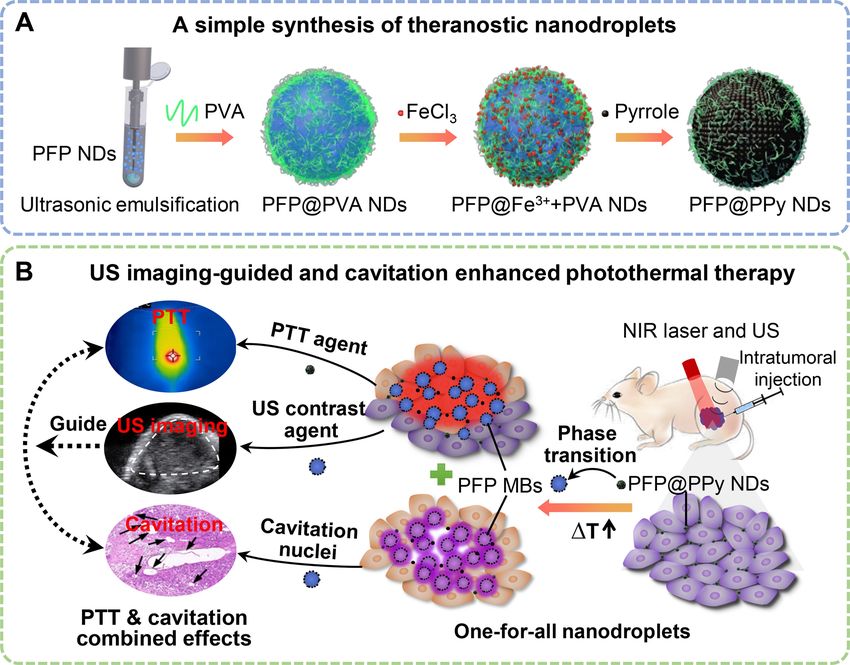
Qin et al Dovepress
concerns regarding the fabrication and use of complex components that possess a single specific function (eg,
nanosystems in vivo.4–7 To overcome such limitations, PTT agent or imaging contrast agent) are combined with
several nanosystems constructed with high efficient PTT others, allowing multiple single components packaged in
agents that integrated multiple imaging modalities and a single nanosystem.28 The process of synthesis requires
therapeutic functions have attracted much attention the addition of single functional moduli using a step-by-
recently.1–7 As a promising theranostic agent, the NIR step approach and hence also requires multiple purification
responsive perfluorocarbon (PFC) nanodroplets have processes. Such lengthy and multistep synthesis and pur
International Journal of Nanomedicine downloaded from https://www.dovepress.com/ by 46.4.80.155 on 20-May-2021
been widely used for multimodal imaging guided PTT of ification processes are relatively time-consuming, resulting
tumors due to their ability of phase transition from nano in a lower yield and more difficulty of reproducibility,
droplets to microbubbles.8–17 During the PTT, the phase potentially limiting widespread clinical applications.
transition can be triggered by a localized hyperthermia, Thus, it is anticipated that a simple but highly bioavailable
and the generated microbubbles in situ are effective con theranostic agent could be prepared in a “one-for-all”
trast agents for ultrasound (US) imaging, which is an approach, where a single component could serve multiple
established non-invasive, low cost, and real-time imaging purposes.28 Such an approach simplifies fabrication,
technique. Due to its intrinsic properties of phase transi avoids multiple synthetic steps, offering considerable pro
tion and optical absorption, the NIR responsive PFC nano mise for the future of nanomedicine.
droplet can also be used for combined photoacoustic (PA) In the present study, the low-boiling perfluoropentane
and US imaging, and provide a strong increase in imaging (PFP) and the strong NIR-absorbing PPy were utilized to
For personal use only.
sensitivity and specificity.18–20 Moreover, it can carry develop a theranostic core/shell-structured PFP@PPy
a variety of extrinsic imaging agents at the same time, nanodroplets using a “one-for-all” approach; then, a US
such as NIR dyes for fluorescence imaging,8,10,13,16 or imaging-guided and cavitation-enhanced cancer treatment
Fe3O4 nanoparticles for MRI imaging,11 etc. strategy was proposed (Scheme 1). In the design, the
In addition to the advantage for multimodal imaging, the PFP@PPy nanodroplets had a simple composition while
NIR responsive PFC nanodroplets have also been designed maintaining multifunctionality as an efficient PTT agent,
to improve the therapeutic outcomes by combining PTT US contrast agent, and cavitation nucleus for cancer ther
with photodynamic therapy,8,21 chemotherapy,13,16 or anostics. Specifically, the PPy shell served both as a carrier
radiotherapy,22 etc. It has been reported that the combina for PFP and a PTT agent, while the PFP core was used as
tion of PTT and other therapies can achieve better thera a US contrast agent and cavitation nucleus. Upon concur
peutic outcomes compared to PTT alone. When combined rent NIR laser and US irradiation, the photothermal effect
with US, acoustic cavitation of the microbubbles generated of the PPy shells raised the local temperature and selec
by nanodroplets vaporization would be triggered. The tively ablated the cancer cells (ie, PTT); meanwhile,
accompanied mechanical effects can enhance the PTT liquid-gas phase transition of the PFP cores occurred and
agents and/or drug delivery into deeper tumor regions by generated microbubbles in situ. Heated regions where PFP
disrupting intratumoral barriers, consequently increasing the microbubbles were generated and the extent of photother
efficacy of PTT or photothermal–chemotherapy.9,23,24 mal heating can be visualized via US imaging, suggesting
Considering that the acoustic cavitation can directly kill that the strategy has great potential for PTT guidance and
cancer cells due to serious cellular damage,25–27 its combi monitoring. Furthermore, acoustic cavitation was
nation with PTT is expected to act as an optional strategy enhanced, and its mechanical effects acted on adjacent
for increasing PTT efficacy without encapsulating drug in cancer cells causing cell death. Its combination with PTT
the NIR responsive PFC nanodroplets. significantly enhances the therapeutic efficacy against
The near-infrared responsive PFC nanodroplet usually tumors. The photothermal effect and phase-transition of
has complex and delicate structures.8–16 Nanosystems are PFP@PPy nanodroplets, in addition to US imaging per
typically fabricated using PFC as a core with a polymers/ formance and acoustic cavitation of PFP microbubbles,
lipids shell, and PTT agents/drugs/genes embedded into were examined. The antitumor efficacy of the combined
the shell.8–13 Alternatively, a hollow nanoparticle was therapy and its potential mechanism were also studied both
prepared for PFC loading with conjugation/adsorption of in vitro and in vivo. The strategy provides great potential
PTT agents/drugs on its surface.14–16 The majority have for future cancer theranostic applications with the “one-for
been constructed using an “all-in-one” approach, where -all”-type PFP@PPy nanodroplets.
3106 https://doi.org/10.2147/IJN.S301734 International Journal of Nanomedicine 2021:16
DovePress
Powered by TCPDF (www.tcpdf.org)Dovepress Qin et al
International Journal of Nanomedicine downloaded from https://www.dovepress.com/ by 46.4.80.155 on 20-May-2021
For personal use only.
Scheme 1 Schematic illustration showing (A) the synthetic process of “one-for-all”-type theranostic PFP@PPy NDs, and (B) corresponding mechanisms of US imaging-
guided and cavitation-enhanced cancer therapy that combined photothermal and cavitation effects via the PFP@PPy NDs.
Materials and Methods Technology of Xi’an Jiaotong University. A tumor model
was established by administering 1×10⁷ HeLa cells sub
Materials
cutaneously into the right flank of each nude mouse.
Perfluoropentane (PFP), polyvinyl alcohol (PVA, 31 kDa),
Tumor size was measured using a caliper and the volume
pyrrole monomer, and propidium iodide (PI) were pur
calculated by: Tumor volume = length × width2/2.
chased from Sigma-Aldrich (USA). Iron (III) chloride
was purchased from Aladdin Industry Corporation
(Shanghai, China). All reagents were used as received
Synthesis and Characterization of the
without further additional treatment. PFP@PPy Nanodroplets
PFP nanodroplets were prepared as described in a previous
study.27 Firstly, a 10 mL 3% v/v PFP emulsion was pre
Cell Culture and Animals pared by ultrasonic emulsification and then poured into
HeLa cervical cancer cells (CCL-2, ATCC, USA) were a 4 mL 8% w/v polyvinyl alcohol (PVA) solution with
cultured in RPMI 1640 medium (HyClone, Thermo stirring for 15 min in an ice bath. In situ oxidative poly
Scientific, USA) supplemented with 10% fetal bovine merization was used to synthesize the PFP@PPy nanodro
serum (HyClone, Thermo Scientific, USA) and 1% peni plets based on the formation of complexes between the
cillin–streptomycin (Invitrogen, USA) in a humidified PVA and ferric ion at the oil-water interface, in which PVA
incubator at 37°C in an atmosphere containing 5% CO2. acted as a stabilizer and ferric ion acted as an oxidizing
BALB/c nude mice (females, 4–6 weeks old) were agent.18 Briefly, 1 mL iron (III) chloride solution (FeCl3,
purchased from Xi’an Jiao Tong University Laboratory 300 mg/mL) was added to the PVA-emulsion and stirred
Animal Center. All animal experiments were conducted for 30 mins, followed by the addition of 70 μL pyrrole
in accordance with the institutional guidelines and were monomer (Py). The reaction was continued in an ice bath
approved by the Animal Experimentation Ethics for 4 h. Finally, the emulsion was centrifuged at 1000 g for
Committee of the School of Life Science and 10 min to separate the PFP@PPy nanodroplets from
International Journal of Nanomedicine 2021:16 https://doi.org/10.2147/IJN.S301734
3107
DovePress
Powered by TCPDF (www.tcpdf.org)Qin et al Dovepress
excess PPy nanoparticles (ie, those without a PFP core). seconds. The photothermal conversion efficiency of
The liquid supernatant was decanted and the concentrated PFP@PPy nanodroplets (0.002% v/v) exposed to the
precipitate resuspended in pure deionized water. The nano laser (1 W/cm2, 10 min) was measured in accordance
droplets were washed three times by repeated centrifuga with Roper’s method (the detailed calculation is pre
tion and resuspension. The PFP nanodroplets stabilized by sented in the Supporting Information).29
the PVA were prepared as a control without the in situ The liquid-gas phase transition of the PFP@PPy nano
oxidative polymerization. droplets induced by laser irradiation was observed using
International Journal of Nanomedicine downloaded from https://www.dovepress.com/ by 46.4.80.155 on 20-May-2021
The structural morphology of the PFP@PPy nanodro an optical microscope (TiU, Nikon Instruments Inc.,
plets was evaluated by transmission electron microscopy Japan). A drop of PFP@PPy nanodroplets (0.002% v/v)
(TEM, H-600, Hitachi Ltd., Japan). The size distribution was placed on a glass slide and exposed to the NIR laser at
was determined by dynamic light scattering (DLS, 1 W/cm2 for 5 min. During laser irradiation, the tempera
Malvern Instruments, Malvern, UK). Optical absorption ture was monitored every 20 seconds using an infrared
spectra were measured using an ultraviolet-visible (UV-vis) thermal imaging camera (FLIR, USA).
spectrophotometer (T6, Purkinje General, China). To evalu
ate the cytotoxicity of the PFP@PPy nanodroplets, HeLa In vitro US Imaging and Acoustic
cells were incubated in 96-well plates with the nanodroplets Cavitation of Photothermal Microbubbles
at different volume concentrations of PFP (0.0002–0.02% v/ To examine the US imaging performance of the photother
v) for 24 h, and then a cell counting kit assay (CCK-8,
For personal use only.
mally generated microbubbles, a 2% agarose phantom was
Dojindo Laboratories, Japan) was used in accordance with placed in a water tank containing a cylindrical hole (1 cm
the manufacturer’s instructions. Specifically, after washing diameter, 1 cm depth) in which PFP@PPy nanodroplets
with culture medium, a 10% (v/v) CCK-8 solution was (0.5 mL, 0.004% v/v) were poured. NIR laser (1 W/cm2),
added to the culture medium and incubated for 2 h. The US pulses (1 MHz, 2.2 MPa, 50 μs, and 10 Hz) or their
absorbance at 450 nm was measured using a microplate combinations were applied for 1 min and NIR-induced
reader (SpectraMax 190, Molecular Devices, USA) and hyperthermia, or its combination with negative US pres
cell viability calculated as follows: sure was expected to trigger a phase transition of the PFP
At Ab core and generate numerous photothermal microbubbles,
Cell viabilityð%Þ ¼ � 100%
Ac Ab as illustrated in Figure S1 (Supporting Information). All
samples were then imaged with the same settings using
where At, Ab and Ac represented the absorbance of the
a diagnostic US scanner (SonixTouch, Ultrasonix, Canada)
treatment, blank (no cells), and control groups (cells with
in conventional B-mode and contrast-enhanced ultrasound
out any treatment), respectively.
(CEUS) mode (linear probe, 5 MHz, L14-5/38). The mean
US intensity in the region of interest was determined by
In vitro Photothermal Effect and Image J software (NIH, http://rsb.info.nih.gov/ij/).
Hyperthermia-Induced Phase Transition Acoustic cavitation of the photothermal microbubbles
of PFP@PPy Nanodroplets was characterized by sonochemiluminescence (SCL) and
The photothermal effect was investigated by placing passive cavitation detection (PCD) methods. The experi
a 0.2 mL aliquot of PFP@PPy nanodroplet suspension mental system (Figure S2, Supporting Information) and
procedures are presented in the supporting information.
in the wells of a 96-well plate at various volume con
PFP nanodroplets alone represented the control group.
centrations of PFP (0.001%-0.02% v/v) which were then
irradiated for 10 mins using a NIR laser (808 nm, 1 W/
cm2, Hegel Radium Laser Technology Co., Ltd., China). Cell Viability Assay and Fluorescent
The same volume of saline and 0.02% v/v PFP nanodro Staining
plets suspension acted as blank controls. Moreover, the To evaluate the therapeutic efficacy in vitro, HeLa cells
photothermal effect of PFP@PPy nanodroplets (0.001% were cultured in 96-well plates and randomly divided into
v/v) at different laser power densities (0.5, 1, 2, and 3 three groups: no nanodroplets (0.9% saline), PFP nano
W/cm2) was also evaluated. The temperature was mea droplets, and PFP@PPy nanodroplets. Prior to treatment,
sured using a thermocouple and recorded every 10 50 μL of each sample at a 0.002% volume concentration of
3108 https://doi.org/10.2147/IJN.S301734 International Journal of Nanomedicine 2021:16
DovePress
Powered by TCPDF (www.tcpdf.org)Dovepress Qin et al
PFP was incubated with cells for 6 h. The samples were PFP@PPy nanodroplets + US, (V) PFP@PPy nanodro
then submitted for 1 min to either the NIR laser (1 W/ plets + laser, (VI) PFP@PPy nanodroplets + laser + US.
cm2), US pulses (1 MHz, 2.2 MPa, 50 μs, and 10 Hz) or After intratumoral injection of a total of 100 μL of the
their combination (Figure S2, Supporting Information). respective sample, the various treatments were performed
Finally, the treated cells were incubated for 24 h and with laser irradiation (1.0 W/cm2, 3 min), US pulses (1
a CCK-8 assay used to examine cell viability, in accor MHz, 2.2 MPa, 50 μs, and 10 Hz, 3 min), or a combination
dance with the manufacturer’s instructions. of the two. Three days after treatment, a mouse in each
International Journal of Nanomedicine downloaded from https://www.dovepress.com/ by 46.4.80.155 on 20-May-2021
Furthermore, live/dead fluorescent staining was also group was chosen randomly and sacrificed, then the tumor
used to assess the status of treated cells. Prior to treatment, tissues harvested for hematoxylin and eosin (H&E) stain
calcein-AM was added at a final concentration of 1 μM as ing to conduct pathological analysis. The tumor volume
a live-cell stain. After incubation for 15 min, propidium and body weight of each were monitored every other day
iodide (PI) was added as a dead cell stain to a final con for 14 days. The relative tumor volume (RTV) was calcu
centration of 20 μM. Calcein-AM crosses the cell mem lated using the following formula:34 RTV = (tumor volume
brane and is then converted to a membrane-impermeable on day t)/(tumor volume on day 0). The mice were sacri
and fluorescent form (excitation/emission: 488/520 nm) in ficed at the end of the experiment, and the tumors excised
living cells,30 while PI can only pass through damaged cell and weighed. Tumor inhibition rate (TIR) was calculated
membranes and undergoes dramatic fluorescence enhance as follows: TIR = (1-mean tumor weight of treatment
ment once bound to nucleic acids (excitation/emission of group/mean tumor weight of control group) × 100%.
For personal use only.
535/617 nm). After treatment, a Digital Sight DSU2 cam
era (Nikon, Japan) connected to an inverted fluorescence Statistical Analysis
microscope (TiU, Nikon, Japan) was used for fluorescent Statistical analysis of the data was conducted using a two-
imaging. sided Student’s t-test. All data are expressed as means ±
standard deviation from more than three repeated experi
In vivo Evaluation of Enhanced US Imaging ments. Differences were considered statistically significant
for *p < 0.05 and **p < 0.01.
and Antitumor Effect
For US imaging in vivo, nude mice with a tumor volume
of ~300 mm3 were anesthetized using 1% pentobarbital Results and Discussion
sodium and divided into two groups (n = 3): (I) PFP@PPy Characterization of PFP@PPy
nanodroplet and (II) PFP nanodroplet (control) groups. Nanodroplets
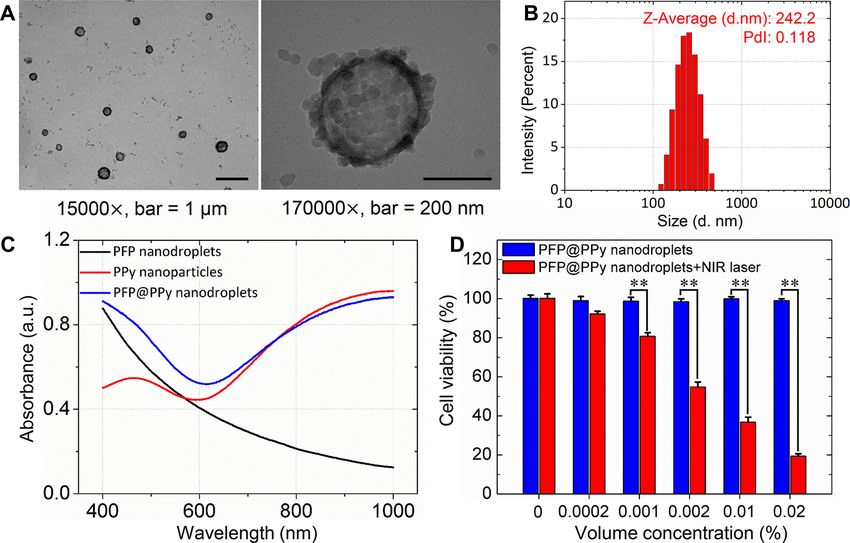
Firstly, US images of the tumors were captured using The synthesized PFP@PPy nanodroplets were spherical,
a diagnostic US scanner in conventional B-mode with uniform in size, and exhibited a distinct core-shell struc
a linear probe (15 MHz, L40-8/12). A 100 μL aliquot of ture in TEM images (Figure 1A). Numerous PPy nanopar
nanodroplets was then injected intratumorally after which ticles were evenly distributed on the surface, constituting
the tumors were irradiated with combined laser light and a rough PPy shell. The results of DLS indicated that the
US pulses for 3 mins. Intratumoral injection has been nanodroplets had a mean diameter of 245 ± 13 nm with
extensively evaluated over recent decades31–33 and it is a narrow size distribution (Figure 1B), whereas for the
possibly the best method to simulate the heterogeneous PFP nanodroplets without PPy shells, the mean diameter
distribution of PTT agents.33 Other parameters were the was 194.8 ± 17 nm (Figure S3, Supporting Information).
same as conducted in in vitro US imaging experiments. Furthermore, the mean diameter over 24 h at human phy
The mean US intensity of the tumors was measured in siological temperature was unchanged (Figure S4,
tumor regions. Infrared thermal images were recorded Supporting Information), suggesting that the nanodroplets
every 20 seconds to monitor variations in temperature in had high thermostability. It can be explained that the
tumor regions. additional Laplace pressure experienced by the PFC nano
To evaluate in vivo antitumor efficacy, mice with HeLa droplets may increase substantially its boiling
xenografts bearing tumors with a volume of ~100 mm3 temperature.35,36 It has been reported that PFC nanodro
were divided into six groups (n = 5 in each): (I) Control, plets with diameters of approximately 200 nm can pas
(II) PFP@PPy nanodroplets, (III) laser + US, (IV) sively accumulate around tumor tissues by virtue of the
International Journal of Nanomedicine 2021:16 https://doi.org/10.2147/IJN.S301734
3109
DovePress
Powered by TCPDF (www.tcpdf.org)Qin et al Dovepress
International Journal of Nanomedicine downloaded from https://www.dovepress.com/ by 46.4.80.155 on 20-May-2021
For personal use only.
Figure 1 Characterization of PFP@PPy nanodroplets. (A) TEM images. (B) The size distribution, determined by the DLS. (C) The absorption spectra of PFP
nanodroplets, PPy nanoparticles and PFP@PPy nanodroplets. (D) Cytotoxicity of PFP@PPy nanodroplets at different volume concentrations with and without NIR
laser irradiation. **p < 0.01.
enhanced permeability and retention (EPR) effect.37,38 The viability was observed at volume concentrations of PFP
data, therefore, strongly suggest that the PFP@PPy nano above 0.0002%, with cell viability decreasing with increas
droplets had appropriate size and stability suitable for ing volume concentration. The photothermal effect of
additional in vivo theranostic applications. PFP@PPy nanodroplets is responsible for the cell death,
The UV–vis absorbance spectra (from 400 to 1000 nm) which increased with increasing nanodroplet concentration,
shown in Figure 1C indicate that the PFP@PPy nanodro consequently causing additional cell death.
plets had strong and broad absorption extending from the
UV to the NIR region, which is similar to the absorption In vitro Photothermal Effect and
spectra of PPy nanoparticles.39–41 Also, the PFP nanodro Hyperthermia-Induced Phase Transition
plets showed to be successfully coated with a PPy shell, of PFP@PPy Nanodroplets
consistent with the TEM images. The apparent increase To evaluate the in vitro photothermal effect, temperature
over the range 400–600 nm is likely caused by increased variations were monitored at different volume concentra
scattering from larger nanodroplets compared with the tions of PFP@PPy nanodroplets during NIR laser irradia
much smaller PPy nanoparticles.18 tion. As displayed in Figure 2A and B, no apparent
The PFP@PPy nanodroplets did not significantly inhibit temperature rise was observed in the 0.02% v/v PFP
cell proliferation at any concentrations in comparison with nanodroplets and saline groups, whereas the temperature
the control group (no nanodroplets), as shown in Figure 1D. of PFP@PPy nanodroplets increased rapidly with the max
This indicates that the PFP@PPy nanodroplets alone exhib ima proportional to nanodroplet concentration and power
ited negligible cytotoxicity, possibly because of the biocom density of the incident laser light. Specifically, the tem
patibility of each component. When irradiated using a NIR perature of the 0.02% v/v PFP@PPy nanodroplets
laser (1 W/cm2, 1 min), a significantly decreased cell increased by 41.9°C after 10 mins laser irradiation, but
3110 https://doi.org/10.2147/IJN.S301734 International Journal of Nanomedicine 2021:16
DovePress
Powered by TCPDF (www.tcpdf.org)Dovepress Qin et al
by only 8.9°C and 5.4°C for the PFP nanodroplets and Finally, the microbubbles started to disappear at higher
saline, respectively. The results suggest that the principal temperatures (~62.1°C). In contrast, the PFP nanodro
photothermal effect of the PFP@PPy nanodroplets could plets without PPy shells did not generate any photother
be attributed to the optical absorption of the PPy shell, its mal microbubbles during laser irradiation. The results
heating effect evidently dependent on nanodroplet concen demonstrate that the photothermal effect of the PPy
tration and laser power density.39–41 Furthermore, as shells elevated the local temperature and subsequently
shown in Figure 2C and S5 (Supporting Information),
International Journal of Nanomedicine downloaded from https://www.dovepress.com/ by 46.4.80.155 on 20-May-2021
triggered a liquid–gas phase transition of the PFP core
photothermal conversion efficiency of the PFP@PPy to generate numerous microbubbles. According to pre
nanodroplets was assessed to be 60.13%, as presented in
vious studies,14,15,34,42–44 the photothermally generated
the Supporting Information. The strong absorbance and
microbubbles acted as a US contrast agent, thus achiev
excellent photothermal conversion efficiency of
ing a significant enhancement of US imaging, suitable
PFP@PPy nanodroplets in the NIR window are beneficial
for US imaging-guided PTT of tumors. More impor
to treat deeper tumours via PTT and improve treatment
tantly, they could also act as cavitation nuclei to
outcomes.
Due to the photothermal effect, the PFP@PPy nano enhance acoustic cavitation activity18 and further
droplets underwent a liquid-gas phase transition, as improve therapeutic efficacy against tumors through
observed by microscope after 0, 1, 3, and 5 mins during cavitation-mediated sonoporation with concurrent US
NIR laser irradiation. As displayed in Figure 2D, a few application.23,24 Therefore, US imaging performance
For personal use only.
photothermal microbubbles were gradually generated and acoustic cavitation of the photothermally generated
after 1 min (~50.3°C), the number distinctly increased microbubbles from the PFP@PPy nanodroplets were
after 3 mins at a temperature of approximately 57.9°C. investigated in the following section.
Figure 2 Photothermal temperature curves of PFP@PPy nanodroplets over time (0-10 min) with (A) different volume concentrations (NIR laser: 1 W/cm2) and (B)
different laser power densities (volume concentration of PFP: 0.001% v/v). (C) Photothermal conversion efficiency of PFP@PPy nanodroplets. (D) The liquid-gas phase
transition of PFP@PPy nanodroplets (volume concentration of PFP: 0.002% v/v) was evaluated using microscopic (upper) and IR thermal images (lower) under laser
irradiation (1 W/cm2) at different time points. The same concentration of PFP nanodroplets were used as the control group. Scale bar = 10 μm.
International Journal of Nanomedicine 2021:16 https://doi.org/10.2147/IJN.S301734
3111
DovePress
Powered by TCPDF (www.tcpdf.org)Qin et al Dovepress
In vitro US Imaging Performance and mean US signal intensities in B-mode and CEUS mode
Acoustic Cavitation Activity of were calculated by Image J software, as presented in
Figure 3B and C, respectively. Under the same irradiation
Photothermal Microbubbles conditions, mean US intensity values in B-mode and
The US imaging capability of the photothermally gener
CEUS mode both increased significantly compared with
ated microbubbles (Figure 2D) with NIR laser irradiation
the corresponding control groups. Overall, the results indi
was evaluated in vitro to confirm the potential of
International Journal of Nanomedicine downloaded from https://www.dovepress.com/ by 46.4.80.155 on 20-May-2021
cate that the PFP@PPy nanodroplets, which displayed
PFP@PPy nanodroplets as a US contrast agent for US
excellent gas microbubble-generation performance in
imaging-guided PTT of tumors. As shown in Figure 3A,
response to either NIR laser or combined laser and US
the B-mode and CEUS images of the PFP@PPy nanodro
irradiation, are excellent US contrast agents for US ima
plet groups were clearly enhanced after either laser irradia
tion alone (group I) or the combination of laser and US ging-guided PTT of cancer.
irradiation (group II). In comparison, no apparent echo For concurrent laser and US irradiation, the photother
genicity/contrast enhancement was observed in the PFP mally generated microbubbles could also act as cavitation
nanodroplet groups (control groups III and IV). Notably, nuclei that enhance acoustic cavitation and cavitation–
when laser and US irradiation were combined, it was mediated cancer therapy.18,23,24 Firstly, the acoustic cavita
speculated that the onset of nanodroplet vaporization tion region was visualized by SCL. Using the same irradia
might be triggered by the combination of hyperthermia tion conditions, the SCL images displayed an elliptical
luminous region when PFP@PPy nanodroplets were used
For personal use only.
in the PFP core from the photothermal effect of the PPy
shell and negative pressure from the acoustic rarefaction (group I), while no light generated in the control group II
phase, in accordance with previous studies.18,23,24 (PFP nanodroplets), as shown in Figure 4A and B. This
However, there were no apparent echogenicity/contrast suggests that the generation of microbubbles played
changes in both PFP@PPy nanodroplets and PFP nano a critical role in manifesting active acoustic cavitation.
droplets groups as ultrasound was irradiated alone (Figure PCD methods were also used to characterize bubble cavita
S6, Supporting Information). Here, the ultrasound cannot tion, as presented in Figure 4C and D, indicating that the
trigger the vaporization of nanodroplet due to its low recorded acoustic cavitation emissions in the PFP@PPy
acoustic pressure, which is beneficial to avoid the undesir nanodroplets had larger amplitudes, with significant increase
able damage caused by the high acoustic pressures. The in harmonic components (2, 3, and 4 MHz) and broad
Figure 3 In vitro US imaging performance. (A) B-mode and contrast enhanced ultrasound (CEUS) imaging of PFP@PPy nanodroplets after NIR laser irradiation (1 W/cm2)
or combined laser and US irradiation (1 MHz, 2.2 MPa, 50 μs and 10 Hz) for 1 min in gel phantoms. The same concentration of PFP nanodroplets were used as negative
controls. The mean US intensity values in both (B) B-mode and (C) CEUS mode images. **p < 0.01. Scale bar = 1 cm.
3112 https://doi.org/10.2147/IJN.S301734 International Journal of Nanomedicine 2021:16
DovePress
Powered by TCPDF (www.tcpdf.org)Dovepress Qin et al
acoustic emissions, compared with the PFP nanodroplets microbubbles from the phase transition of PFP@PPy nano
alone. According to previous studies,45,46 stable and inertial droplets can result in apparent enhancement of both US
cavitation is characterized by harmonic components and imaging (Figure 3) and acoustic cavitation (Figure 4),
broad band acoustic emissions, respectively. Therefore, it PFP@PPy nanodroplets with combined laser and US irra
strongly suggests that both stable and inertial cavitation diation is likely to show considerable potential in US ima
occurred with the combination of laser and US irradiation ging-guided and cavitation-enhanced PTT for precise and
of PFP@PPy nanodroplets.
International Journal of Nanomedicine downloaded from https://www.dovepress.com/ by 46.4.80.155 on 20-May-2021
highly efficient combined therapy of cancer.
The mechanical bioeffects of bubble cavitation may
cause damage to adjacent cells, leading to changes in mem
brane permeability or cell death from irreversible damage,
In vitro Enhanced Cancer Therapy with
and consequently improve tumor therapeutic efficacy.25–27 Combined Photothermal and Cavitation
Note that the microbubbles would be destroyed during iner Effects
tial cavitation, but there was no apparent decrease in echo To evaluate the enhanced therapeutic efficacy of PTT with
genicity/contrast after US application (group II in Figure 3). simultaneous microbubble cavitation during combined laser
It indicated that a balance might be achieved between the and US irradiation, HeLa cells were incubated with
cavitation-induced microbubble destruction and more micro PFP@PPy nanodroplets and irradiated with either NIR
bubble generation due to the contribution of additional US to laser, US, or both, and then cell viability was evaluated
nanodroplet vaporization. Considering that the generated using a CCK-8 assay and live/dead cell fluorescent staining.
For personal use only.
Figure 4 Characterization of the acoustic cavitation of photothermally generated microbubbles under combined NIR laser (1 W/cm2) and US (1 MHz, 2.2 MPa, 50 μs and 10
Hz) irradiation. (A) The pictures of the SCL regions in two groups and (B) corresponding light intensities and luminous areas. Passive acoustic detection (PCD) of cavitation
events, including (C) time-domain signals and (D) frequency spectrum analysis. **p < 0.01. Scale bar = 1 cm.
International Journal of Nanomedicine 2021:16 https://doi.org/10.2147/IJN.S301734
3113
DovePress
Powered by TCPDF (www.tcpdf.org)Qin et al Dovepress
The quantitative evaluation of the cell viability after differ (group III). This suggests that the laser-induced photother
ent treatments is shown in Figure 5. In the groups of only mal effect of the PPy shell contributed to the observed cell
cells (no nanodroplets) and PFP nanodroplets alone, no death, but US application alone did not induce sufficient
significant decrease in cell viability was observed for all damage to kill the cancer cells. Furthermore, low calcein
irradiation conditions. However, a significant decrease of and high PI fluorescence intensity values also confirmed
cell viability of 58.3±5.4% was observed after the cells a significant increase in cell death following treatment of
were treated with PFP@PPy nanodroplets and laser irradia the cells with combined laser and US irradiation (Figure
International Journal of Nanomedicine downloaded from https://www.dovepress.com/ by 46.4.80.155 on 20-May-2021
tion, presumably attributed to the photothermal effect of the 6B), as compared with either laser or US application
PFP@PPy nanodroplets. When laser irradiation was com alone. More importantly, apparent cell detachment and
bined with US application, cell viability significantly numerous photothermal microbubbles were only observed
decreased to 18.9 ± 4.9%, compared with either energy in group I, as displayed in bright-field microscopy images.
modality alone (laser: 58.3 ± 5.4% or US: 97.6 ± 2.1%). It In addition, cell detachment was also verified by quantita
clearly indicates that the acoustic cavitation significantly tive analysis of the live/dead cell number. This indicated
enhanced the PTT efficacy with the assistance of a significant decrease in the total number of cells (approxi
PFP@PPy nanodroplets under the combined laser and US mately a 21% decrease compared with the control group)
irradiation. only in group I, as shown in Figure 6C. It is known that
To further elucidate the mechanism of the combined the mechanical effects of cavitation can cause cell death
effects, fluorescent staining and bright-field microscopic and cell detachment in cancer therapy.47,48 Hence, intense
For personal use only.
images of the four groups were presented, as shown in acoustic cavitation during combined laser and US irradia
Figure 6A. When laser and US irradiation were combined tion, as revealed by the SCL image in Figure 6D, was
(group I), fluorescent staining with calcein-AM (green) responsible for significantly increased cell death and
and PI (red) showed that almost all cells died, whereas detachment. Overall, these results demonstrate that the
no apparent cell death was observed in the PFP nanodro mechanism of combined therapy operates at the cellular
plet group (IV, control group). It demonstrated that the PPy level. Specifically, the photothermal effect of the PPy shell
shell of the PFP@PPy nanodroplets is critical for effective caused local hyperthermia for photothermal ablation of
cancer cell death due to the excellent photothermal effects cancer cells and simultaneously triggered photothermal
of the PPy shell (Figure 2A–C). Partial dead cells were microbubbles generation. As cavitation nuclei, these
observed under laser irradiation alone (group II), while no microbubbles significantly increased acoustic cavitation
obvious dead cells were found under US irradiation alone activity and the accompanied mechanical effects destroyed
adjacent cancer cells, eventually achieving acoustic cavita
tion-enhanced PTT of tumors.
In vivo Evaluation of the Enhanced US
Imaging and Antitumor Effects
Encouraged by in vitro US imaging performance of photo
thermal microbubbles (Figure 3), in vivo US imaging per
formance was investigated in HeLa–bearing BALB/c mice.
As shown in Figure 7A, the tumor site in mice displayed no
apparent enhancement in US signal after combined laser
and US irradiation for 3 mins following the injection of PFP
nanodroplets (group I), whereas for the PFP@PPy nanodro
plet group (II), the tumor exhibited clear US imaging
enhancement. Additionally, quantitative analysis also
Figure 5 In vitro evaluation of therapeutic efficacy after various treatments by
demonstrated that the mean US intensity in PFP@PPy
using cell-counting kit-8 (CCK-8) assay. The cultured cells were randomly divided nanodroplets was significantly higher than the PFP nano
into three groups, including the cells without nanodroplets, with PFP nanodroplets
and PFP@PPy nanodroplets at the same volume concentration of PFP (0.002% v/v).
droplets group (Figure 7B). According to previous
**p < 0.01. studies,14,15,34,42–44 PFP@PPy nanodroplets acting as US
3114 https://doi.org/10.2147/IJN.S301734 International Journal of Nanomedicine 2021:16
DovePress
Powered by TCPDF (www.tcpdf.org)Dovepress Qin et al
International Journal of Nanomedicine downloaded from https://www.dovepress.com/ by 46.4.80.155 on 20-May-2021
For personal use only.
Figure 6 (A) The merged calcein-AM/PI staining fluorescent and bright-field microscopic images at different experimental conditions. (B) The quantitative analysis of
integrated calcein and PI fluorescence in the cells. (C) The relative number of live/dead cells at different conditions. (D) The SCL representative image of the group I for
characterizing the acoustic cavitation.
contrast agents in vivo can be explained by the phase surface temperature, as monitored by infrared thermal
transition of PFP cores triggered by PTT to generate numer images (Figure S7, Supporting Information). There was
ous photothermal microbubbles, as displayed in Figure 2D. a rapid and substantial temperature increase to ~50°C in
Furthermore, this was also verified by the elevated tumor the PFP@PPy nanodroplet group (Figure S8, Supporting
Figure 7 (A) In vivo US images of tumors before and after the combined laser and US irradiation with (I) PFP nanodroplets (control group) and (II) PFP@PPy nanodroplets
(n = 3). White dashed circles indicate the region of tumors. (B) In vivo mean US intensity values of the two groups. **p < 0.01.
International Journal of Nanomedicine 2021:16 https://doi.org/10.2147/IJN.S301734
3115
DovePress
Powered by TCPDF (www.tcpdf.org)Qin et al Dovepress
Information). The results demonstrate that the PFP@PPy groups, indicating that PFP@PPy nanodroplets alone, com
nanodroplets possessed enhanced US imaging capability bination of laser and US in absence of PFP@PPy nanodro
in vivo, which is of great importance for US imaging- plets or PFP@PPy nanodroplets with US application alone
guided photothermal cancer therapy. did not cause potentially destructive effects and exhibited
The photothermal effect of the PFP@PPy nanodroplets only negligible antitumor efficacy. When the PFP@PPy
caused a local temperature rise (Figures S7 and S8, nanodroplets were irradiated by laser (group V),
Supporting Information), triggering photothermal microbub a substantial slower tumor growth was observed compared
International Journal of Nanomedicine downloaded from https://www.dovepress.com/ by 46.4.80.155 on 20-May-2021
ble generation for US imaging enhancement (Figure 7A) and with the control group, probably due to the photothermal
thermally ablating cancer cells in vivo. Furthermore, the ablation of tumor cells assisted with PFP@PPy nanodro
generated photothermal microbubbles also acted as cavita plets. The observed anticancer effects might be overesti
tion nuclei that increased acoustic cavitation activity (Figure mated because intratumoral injection can increase the
4) during the combined laser and US irradiation. The concentrations of PFP@PPy nanodroplets at the target site.
mechanical bioeffects of bubble cavitation also caused adja However, it seems that two tumors treated with PTT alone
cent cancer cell death and significantly enhanced the PTT of recurred after 8 d, indicating incomplete eradication of
cancer cells (Figure 5). Therefore, the antitumor efficacy of tumor cells, limited by the shallow and uneven hyperthermia
the combined therapy was evaluated, combining photother during single PTT.49,50 Most notably, the treatment of
mal and cavitation effects in vivo in tumor–bearing mice. PFP@PPy nanodroplets with combined laser and US irra
As shown in Figure 8A and S9 (Supporting diation (group VI) demonstrated the strongest inhibition of
For personal use only.
Information), a sharp increase in tumor volume was clearly tumor growth. This strongly suggests that combined photo
observed over 14 days in groups I-IV, with treatment by thermal ablation and cavitation-mediated cell destruction
saline only (control, I), PFP@PPy nanodroplets (II), laser + exerts a significantly enhanced antitumor effect in vivo.
US (III) and PFP@PPy nanodroplets + US (IV), respec The tumors were dissected and weighed (Figure 8B and
tively. There was no significant difference between the C) at day 14, where tumor size and weight were found to be
Figure 8 In vivo antitumor efficacy. (A) Time-dependent tumor growth curves after treatment (n = 4). (B) The photographs and (C) the mean tumor weight of the excised
tumors from different groups. (D) Time-dependent body weight curves of nude mice after different treatments. (E) Representative images of H&E-stained tumor sections
showing pathological changes. (Groups I) Saline, II: PFP@PPy nanodroplets, III: laser + US, IV: PFP@PPy nanodroplets + US, (V) PFP@PPy nanodroplets + laser, VI: PFP@PPy
nanodroplets + laser + US).*p < 0.05,**p < 0.01.
3116 https://doi.org/10.2147/IJN.S301734 International Journal of Nanomedicine 2021:16
DovePress
Powered by TCPDF (www.tcpdf.org)Dovepress Qin et al
significantly reduced in groups V and VI. Compared with optical absorption constituting the shell was successfully
group V, mean tumor weight of group VI was 8.7-fold constructed. The PFP@PPy nanodroplets represent an effi
smaller, very close to zero. It also demonstrates that com cient PTT agent with outstanding photothermal conversion
bined therapy resulted in a higher tumor inhibition rate properties that can efficiently transfer NIR light into local
(99.5%) than PTT alone. In addition, the bodyweight of hyperthermia for photothermal ablation of tumors.
each treated mouse was recorded at the target day and Meanwhile, the liquid-gas phase transition of the PFP
there was no significant change in body weight of mice in
International Journal of Nanomedicine downloaded from https://www.dovepress.com/ by 46.4.80.155 on 20-May-2021
cores was also triggered to generate numerous photother
any group throughout the course of treatment (Figure 8D). mal microbubbles, acting as excellent US contrast agents
Histological analysis of tumor tissues by H&E stain and cavitation nuclei as confirmed by the significant
ing was conducted, as shown in Figure 8E. Groups I to enhancement in the US imaging and acoustic cavitation.
IV displayed intact nuclear morphology, indicating neg Furthermore, antitumor therapy displayed a significant
ligible cell apoptosis or necrosis. Thus, the PFP@PPy increase in cell death, cell detachment in vitro, and inhibi
nanodroplets (group II) and laser + US irradiation (group tion of tumor growth in vivo than using either a laser or
III) can be considered as safe. There was also no evi
US alone. This finding strongly suggests that combined
dence of cancer cell lysis/death using US irradiation
photothermal ablation and cavitation-mediated cell
alone (group IV). However, the tumor cells were severely
destruction contributed to cancer cell death, subsequently
damaged by treatment with PFP@PPy nanodroplets and
resulting in higher antitumor efficacy, with a tumor inhibi
laser irradiation alone (group V) or combined laser and
For personal use only.
tion rate of up to 99.5%. Hence, the one-for-all theranostic
US irradiation (group VI). Additionally, in group VI,
PFP@PPy nanodroplet exhibited multiple capabilities, act
considerable cavity structures were observed in the
ing as a PTT agent, US contrast agent, and cavitation
tumor tissue, as displayed by arrows, whereas no appar
nucleus for US imaging-guided cavitation-enhanced PTT
ent cavity structures were observed in group V. The
of tumors, representing a promising approach for high
results suggest that the mechanical forces from bubble
cavitation during US stimulation (such as cavitation- efficiency cancer theranostics.
associated shear stress, shock waves, or
microjets25,51,52) destroyed adjacent tumor tissue and Abbreviations
caused the generation of cavity structures, consistent PTT, photothermal therapy; PFP, perfluoropentane; PPy,
with in vitro cell experiments (Figure 6). polypyrrole; PFP@PPy NDs, perfluoropentane nanodro
In vitro and in vivo experiments demonstrated that plets with polypyrrole shells; US, ultrasound; NIR, near-
the PFP@PPy nanodroplets combined with NIR laser infrared; PA, photoacoustic; PFC, perfluorocarbon; EPR,
and US irradiation exhibited an excellent antitumor enhanced permeability and retention; PVA, polyvinyl alco
effect. This can be attributed to the following reasons. hol; PI, propidium iodide; Py, pyrrole monomer; TEM,
Firstly, excellent photothermal conversion efficiency of transmission electron microscope; DLS, dynamic light
PPy shells caused an increase in local temperature scattering; UV-vis, ultraviolet-visible; CCK-8, cell count
(Figure 2, S7, and S8, Supporting Information) under ing kit; CEUS, contrast-enhanced ultrasound; SCL, sono
laser irradiation and resulted in PTT of the cancer cells chemiluminescence; PCD, passive cavitation detection;
(Figures 5, 6, and 8E). Secondly, the photothermally H&E, hematoxylin and eosin; RTV, relative tumor
generated microbubbles enhanced acoustic cavitation volume; TIR, tumor inhibition rate.
(Figures 4 and 6D), their mechanical effects are able
to destroy adjacent cancer cells and cause cell death
(Figures 6A and 8E). Thus, the combination of PTT
Acknowledgments
This work was supported by the National Natural Science
and cavitation-mediated cell destruction significantly
Foundation of China (11904042, 82061148015, 81827801)
improved the therapeutic outcomes as compared to the
and Natural Science Foundation of Chongqing
PTT alone (Figures 5, 6 and 8).
(cstc2019jcyj-msxmX0534).
Conclusion
A “one-for-all” theranostic PFP@PPy nanodroplet with Disclosure
low-boiling PFP as the core and PPy that exhibited broad The authors report no conflicts of interest in this work.
International Journal of Nanomedicine 2021:16 https://doi.org/10.2147/IJN.S301734
3117
DovePress
Powered by TCPDF (www.tcpdf.org)Qin et al Dovepress
18. Li DS, Yoon SJ, Pelivanov I, et al. Polypyrrole-coated perfluorocar
References bon nanoemulsions as a sono-photoacoustic contrast agent. Nano
Lett. 2017;17(10):6184–6194. doi:10.1021/acs.nanolett.7b02845
1. Zou L, Wang H, He B, et al. Current approaches of photothermal 19. Fernandes DA, Kolios MC. Near-infrared absorbing nanoemulsions
therapy in treating cancer metastasis with nanotherapeutics. as nonlinear ultrasound contrast agents for cancer theranostics. J Mol
Theranostics. 2016;6(6):762–772. doi:10.7150/thno.14988 Liq. 2019;287:110848. doi:10.1016/j.molliq.2019.04.125
2. Hu JJ, Cheng YJ, Zhang XZ. Recent advances in nanomaterials for 20. Santiesteban DY, Hallam KA, Yarmoska SK, Emelianov SY. Color-
enhanced photothermal therapy of tumors. Nanoscale. 2018;10 coded perfluorocarbon nanodroplets for multiplexed ultrasound and
(48):22657–22672. doi:10.1039/C8NR07627H photoacoustic imaging. Nano Res. 2019;12(4):741–747. doi:10.1007/
International Journal of Nanomedicine downloaded from https://www.dovepress.com/ by 46.4.80.155 on 20-May-2021
3. Wang J, Wu X, Shen P, et al. Applications of inorganic nanomaterials s12274-019-2279-x
in photothermal therapy based on combinational cancer treatment. 21. Tang W, Yang Z, Wang S, et al. Organic semiconducting photoacous
Int J Nanomedicine. 2020;15:1903–1914. doi:10.2147/IJN.S239751 tic nanodroplets for laser-activatable ultrasound imaging and combi
4. Liu Y, Bhattarai P, Dai Z, Chen X. Photothermal therapy and photo national cancer therapy. ACS Nano. 2018;12(3):2610–2622.
acoustic imaging via nanotheranostics in fighting cancer. Chem Soc doi:10.1021/acsnano.7b08628
Rev. 2019;48(7):2053–2108. 22. Lu N, Fan W, Yi X, et al. Biodegradable hollow mesoporous orga
5. Hu Q, Huang Z, Duan Y, Fu Z, Bin L. Reprogramming tumor nosilica nanotheranostics for mild hyperthermia-induced
microenvironment with photothermal therapy. Bioconjugate Chem. bubble-enhanced oxygen-sensitized radiotherapy. ACS Nano.
2020;31(5):1268–1278. doi:10.1021/acs.bioconjchem.0c00135
2018;12(2):1580–1591. doi:10.1021/acsnano.7b08103
6. Li X, Lovell JF, Yoon J, Chen X. Clinical development and potential
23. Liu W, Liu S, Liou Y, et al. Nanodroplet-vaporization-assisted sono
of photothermal and photodynamic therapies for cancer. Nat Rev Clin
poration for highly effective delivery of photothermal treatment. Sci
Oncol. 2020;17(11):657–674. doi:10.1038/s41571-020-0410-2
Rep. 2016;6:24753. doi:10.1038/srep24753
7. Shramova EI, Kotlyar AB, Lebedenko EN, Deyev SM,
24. Liu WW, Huang SH, Li PC. Synchronized optical and acoustic
Proshkina GM. Near-infrared activated cyanine dyes as agents for
droplet vaporization for effective sonoporation. Pharmaceutics.
photothermal therapy and diagnosis of tumors. Acta Naturae.
2019;11(6):279. doi:10.3390/pharmaceutics11060279
2020;12(3):102–113. doi:10.32607/actanaturae.11028
25. Ho Y, Yeh C. Theranostic performance of acoustic nanodroplet
For personal use only.
8. Chen S, Huang B, Pei W, et al. Mitochondria-targeting
vaporization-generated bubbles in tumor intertissue. Theranostics.
oxygen-sufficient perfluorocarbon nanoparticles for imaging-guided
2017;7(6):1477–1488. doi:10.7150/thno.19099
tumor phototherapy. Int J Nanomedicine. 2020;15:8641–8658.
26. Fan C, Lin Y, Ho Y, Yeh C. Spatial-temporal cellular bioeffects from
doi:10.2147/IJN.S281649
acoustic droplet vaporization. Theranostics. 2018;8(20):5731–5743.
9. Hu Y, Xue S, Long T, et al. Opto-acoustic synergistic irradiation for
doi:10.7150/thno.28782
vaporization of natural melanin-cored nanodroplets at safe energy
27. Qin D, Zhang L, Chang N, et al. In situ observation of single cell
levels and efficient sono-chemo-photothermal cancer therapy.
response to acoustic droplet vaporization: membrane deformation,
Theranostics. 2020;10(23):10448–10465. doi:10.7150/thno.44879
permeabilization, and blebbing. Ultrason Sonochem.
10. Liang Y, Yang H, Li Q, et al. Novel biomimetic dual-mode nano
2018;47:141–150. doi:10.1016/j.ultsonch.2018.02.004
droplets as ultrasound contrast agents with potential ability of precise
28. Huynh E, Zheng G. Engineering multifunctional nanoparticles: all-in-
detection and photothermal ablation of tumors. Cancer Chemother
one versus one-for-all. Wiley Interdiscip Rev Nanomed
Pharmacol. 2020;86(3):405–418. doi:10.1007/s00280-020-04124-x
11. Xu Y, Li W, Chen S, et al. Near-infrared responsive phase-shifted Nanobiotechnol. 2013;5(3):250–265. doi:10.1002/wnan.1217
nanoparticles for magnetically targeted MR/US imaging and photo 29. Roper DK, Ahn W, Hoepfner M. Microscale heat transfer transduced
thermal therapy of cancer. Front Bioeng Biotechnol. 2020;8(1322). by surface plasmon resonant gold nanoparticles. J Phys Chem C.
doi:10.3389/fbioe.2020.599107. 2007;111(9):3636–3641. doi:10.1021/jp064341w
12. Zhu J, Wang Z, Xu X, et al. Polydopamine-encapsulated perfluoro 30. Bratosin D, Mitrofan L, Palii C, Estaquier J, Montreuil J. Novel
carbon for ultrasound contrast imaging and photothermal therapy. fluorescence assay using calcein-AM for the determination of
Mol Pharm. 2020;17(3):817–826. doi:10.1021/acs.molpharmaceut.9 human erythrocyte viability and aging. Cytometry A. 2005;66
b01070 (1):78–84. doi:10.1002/cyto.a.20152
13. Sheng D, Deng L, Li P, Wang Z, Zhang Q. Perfluorocarbon nano 31. Walter KA, Tamargo RJ, Olivi A, Burger PC, Brem H. Intratumoral
droplets with deep tumor penetration and controlled drug delivery for chemotherapy. Neurosurgery. 1995;37(6):1129–1145. doi:10.1227/
ultrasound/fluorescence imaging guided breast cancer therapy. ACS 00006123-199512000-00013
Biomater Sci Eng. 2021;7(2):605–616. doi:10.1021/acsbiomaterial 32. Nomura T, Nakajima S, Kawabata K, et al. Intratumoral pharmaco
s.0c01333 kinetics and in vivo gene expression of naked plasmid DNA and its
14. Jia X, Cai X, Chen Y, et al. Perfluoropentane-encapsulated hollow cationic liposome complexes after direct gene transfer. Cancer Res.
mesoporous Prussian blue nanocubes for activated ultrasound ima 1997;57(13):2681–2686.
ging and photothermal therapy of cancer. ACS Appl Mater Interfaces. 33. Xie H, Goins B, Bao A, Wang ZJ, Phillips WT. Effect of intratu
2015;7(8):4579–4588. doi:10.1021/am507443p moral administration on biodistribution of 64Cu-labeled
15. Ren J, Zhang L, Zhang J, et al. Light-activated oxygen self-supplied nanoshells. Int J Nanomedicine. 2012;7:2227–2238. doi:10.2147/
starving therapy in near-infrared (NIR) window and adjuvant IJN.S30699
hyperthermia-induced tumor ablation with an augmented sensitivity. 34. Guo Y, Wang X, Chen Y, et al. A light-controllable specific drug
Biomaterials. 2020;234:119771. doi:10.1016/j.biomaterials.20 delivery nanoplatform for targeted bimodal imaging-guided photo
20.119771 thermal/chemo synergistic cancer therapy. Acta Biomater.
16. Zhang J, Huang H, Xue L, et al. On-demand drug release nanoplat 2018;80:308–326. doi:10.1016/j.actbio.2018.09.024
form based on fluorinated aza-BODIPY for imaging-guided 35. Mountford PA, Borden MA. On the thermodynamics and kinetics of
chemo-phototherapy. Biomaterials. 2020;256:120211. doi:10.1016/j. superheated fluorocarbon phase-change agents. Adv Colloid Interface
biomaterials.2020.120211 Sci. 2016;237:15–27. doi:10.1016/j.cis.2016.08.007
17. Li Y, Lu J, Zhang J, et al. Phase-change nanotherapeutic agents based 36. Kee ALY, Teo BM. Biomedical applications of acoustically respon
on mesoporous carbon for multimodal imaging and tumor therapy. sive phase shift nanodroplets: current status and future directions.
ACS Appl Bio Mater. 2020;3(12):8705–8713. doi:10.1021/ Ultrason Sonochem. 2019;56:37–45. doi:10.1016/j.ultsonch.20
acsabm.0c01102 19.03.024
3118 https://doi.org/10.2147/IJN.S301734 International Journal of Nanomedicine 2021:16
DovePress
Powered by TCPDF (www.tcpdf.org)You can also read


