Calcitonin: characterisation and expression in a teleost fish, Fugu rubripes
←
→
Page content transcription
If your browser does not render page correctly, please read the page content below
111

Calcitonin: characterisation and expression in a
teleost fish, Fugu rubripes
M S Clark, L Bendell1, D M Power2, S Warner, G Elgar and P M Ingleton1
Fugu Genomics Group, MRC-HGMP Resource Centre, Genome Campus, Hinxton, Cambridge, UK
1
 Division of Genomic Medicine, Institute of Endocrinology, University of Sheffield, Beech Hill Road, Sheffield S10 2RX, UK
2
 CCMAR, Centre of Marine Sciences, Universidade do Algarve, Campus de Gambelas, 8000–810 Faro, Portugal
(Requests for offprints should be addressed to M S Clark; Email: mclark@hgmp.mrc.ac.uk)

Abstract
The present report describes the structure and expression of the calcitonin gene in Fugu rubripes. It is
composed of 4 exons and 3 introns. Splicing of exons 1, 2 and 3 generates the calcitonin pre-proprotein,
while splicing of exons 1, 2 and 4 generates calcitonin gene-related protein (CGRP). Exons 1 and 2
encoding the signal sequence and the N-terminal peptide are common in both the gene products and this
gene organisation has been conserved in human, rat, chicken and salmon. The gene environment around
calcitonin in Fugu has been poorly conserved when compared with human, apart from a small gene
cluster. The calcitonin gene in Fugu has a widespread tissue distribution but it is most highly expressed
in the brain. The abundance of gene expression in the ultimobranchial gland and the pituitary indicates
that these are important sites of production and that the peptide is probably secreted into the circulation
and/or acts as a paracrine or autocrine controlling factor. Whilst the function of calcitonin in fish is still
largely unknown, the distribution described here suggests that one of the potential functions may be as a
neuropeptide.
Journal of Molecular Endocrinology (2002) 28, 111–123

Introduction                                                                 suggesting that the tetrapod system involving
                                                                             calcium mobilisation by PTH and reduction in
Calcitonin and its gene in fishes are of particular                          circulating calcium by calcitonin only evolved with
interest because of the phylogenetic position of                             adoption of terrestrial life. Moreover, fish have
fishes both as early vertebrates and as aquatic                              other hypocalcaemic factors including stanniocalcin
species. Calcitonin in mammals and birds is                                  from the corpuscles of Stannius (Butkus et al. 1987),
acknowledged to be the principal hypocalcaemic                               although calcitonin can act as an inhibitor of
agent, but the situation in fishes is less clear and a                       calcium transport in fish gills (Milhaud et al. 1977,
role for calcitonin in calcium regulation may                                Wagner et al. 1997). The evolutionary history and
be subordinate to other functions which include                              functions of calcitonin in aquatic vertebrates,
acting as a neurotransmitter. Control of calcium                             therefore, require further investigation and as part
homeostasis in fish is different from that in                                 of ongoing studies into the endocrine/paracrine
terrestrial vertebrates because the aquatic environ-                         factors involved in calcium homeostasis in marine
ment, particularly sea water, provides a more-than-                          fishes we have sequenced the gene for calcitonin
adequate supply of calcium so that mechanisms                                from the puffer fish Fugu (Fugu rubripes). Fugu has a
of internal calcium mobilisation and deposition, in                          compact genome of 400 Mb and has been
which calcitonin is an important factor for                                  proposed as a fish model genome (Brenner et al.
tetrapods, are less essential and less well developed.                       1993). The ability to search large amounts of
Indeed fish do not have a parathyroid gland and                              sequence scan data (http://www.fugu.hgmp.mrc.
endogenous parathyroid hormone (PTH) has not                                 ac.uk) and to identify known gene fragments, in this
been detected in fish. PTH is the principal                                  particular case those putatively involved in calcium
hypercalcaemic factor of higher vertebrates,                                 regulation, makes Fugu an attractive species for

Journal of Molecular Endocrinology (2002) 28, 111–123                                           Online version via http://www.endocrinology.org
0952–5041/02/028–111 © 2002 Society for Endocrinology                Printed in Great Britain
                                                                                                        Downloaded from Bioscientifica.com at 03/08/2021 04:08:13PM
                                                                                                                                                      via free access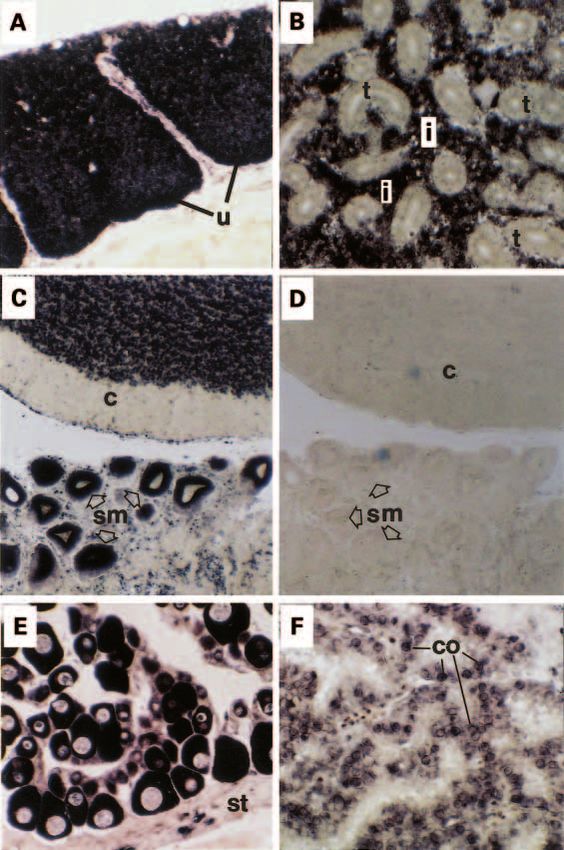
112   M S CLARK   and others   · Calcitonin in Fugu rubripes

      genomic studies. These sequence scan fragments           fragments with the accession numbers AL626822
      provide excellent fish-specific probes with which to     to AL627067 inclusively. Comparative human gene
      isolate and characterise the entire gene. Calcitonin     map positions were determined using the ensembl
      has been cloned from Fugu, its genomic organis-          viewer (v1·0·0) (http://www.ensembl.org/) and
      ation determined and gene expression demon-              gene names assigned using the HUGO nomen-
      strated in tissues by in situ hybridisation and          clature accessed via the ensembl link to Locus-
      RT-PCR.                                                  Link (http://www.ncbi.nlm.nih.gov/LocusLink/).
                                                               Multiple sequence alignments were carried out
                                                               using Clustal X (Higgins et al. 1991) and dis-
                                                               played in Boxshade (http://www.isrec.isb-sib.ch/
      Materials and methods
                                                               software/BOX_form.html). Percentage identity and
      Identification and isolation of calcitonin gene
                                                               similarity scores were produced using the needle
                                                               programme from the EMBOSS suite of pro-
      During routine Fugu cosmid library sequence scan-        grammes (http://www.uk.embnet.org/Software/
      ning, 6 cosmids (C022A11, C105K06, C133 L12,             EMBOSS/Apps/) with a Gap opening penalty of
      C135F24, C135H05, C194K01) were identified as            10·0 and a Gap extension penalty of 0·5.
      having a gene fragment with high sequence simi-
      larity to human calcitonin (probability value in
      excess of 1e 05). Sequence scanning was performed       Phylogenetic analysis
      as described in (http://www.fugu.hgmp.mrc.ac.uk/         Calcitonin genes in the databases are in a mixture
      ISO900/BIOLOGY/FUGU/fugu.shtml) and gene                 of formats, both DNA and protein. Only 9
      content identified by searching the individual           (including Fugu) comprise the whole translated
      sequence fragments using BLAST v2·0 (Altschul            peptide, more are present as mature peptide
      et al. 1997) against the SPTR (Bairoch & Apweiler        sequences only, whilst a further 29 are available as
      2000) and Unigene databases (http://www.                 mature peptide nucleotide data in Suzuki et al.
      ncbi.nlm.nih.gov/Unigene/Hs.home.html). Confir-          (1999). Phylogenetic analysis was carried out with
      mation of the overlapping nature of these cosmids        the mature peptide, as the assumption was made
      was confirmed by analysis of their SacI restriction      that evolutionary pressure is strongest on the
      enzyme digestion patterns and short-range linkage        biologically active portion of the gene. The latter is
      gene content. The size of the calcitonin 11p contig      only 32 amino acids long and cursory analysis of
      was determined by analysis of SacI restriction           the amino acid sequence in fish shows that many of
      enzyme digest patterns of the 5 cosmids (C133 L12        the nucleotide substitutions are silent (data not
      was identified as a co-ligation) using the Alpha         shown), as they do not alter the amino acid
      Imager 1220 v5·5 (Alpha Innotech Corp, USA).             sequence of the translated protein. Analysis of
      Calcitonin positive sequence fragments from all          DNA sequences in this case was considered to
      6 cosmids were transferred to a UNIX environ-            represent the most accurate method of defining
      ment and quality clipped using a modified                evolutionary relationships. Phylogenetic analysis
      Pregap script (Bonfield & Staden. 1996). Sequences       was carried out from the Clustal X multiple
      were screened against sequencing and cloning             alignment output using both the Neighbour Joining
      (pBluescript and Lawrist4) vectors and matching          method (Saitou & Nei 1987) via the PHYLO_WIN
      regions were masked prior to further analysis.           interface v1·2 (Galtier et al. 1996) and the
      Passed sequences were then assembled using Gap4          Maximum Likelihood method (Felsenstein 1981)
      (Bonfield et al. 1995). Contiguation and finishing of    via Phylip v3·57c. Multiple alignment parameters
      the gene was performed using PCR walks. Analysis         for PHYLO_WIN were: Gap opening 15; Gap
      of the finished sequence was carried out using the       extension 0·05; Delay divergent sequences 40%;
      HGMP Nix interface (G Williams, P Woollard and           DNA transition weight 0·50, with 5000 boot-
      P Hingamp, unpublished data; http://www.hgmp.            strap replicates. Maximum Likelihood analysis was
      mrc.ac.uk/NIX/). The calcitonin gene was sub-            carried out using the dnaml programme with
      mitted to the EMBL database with the accession           default parameters and global rearrangements. The
      number AJ289717. The sequence fragments from             phylogenetic output was displayed using Treetool
      the 6 cosmids were submitted to EMBL as GSS              (Olsen et al. 1992).

      Journal of Molecular Endocrinology (2002) 28, 111–123                                              www.endocrinology.org
                                                                                 Downloaded from Bioscientifica.com at 03/08/2021 04:08:13PM
                                                                                                                               via free access
Calcitonin in Fugu rubripes · M S CLARK and others 113
RT-PCR of gene expression in Fugu tissues peptide. These primers were checked for specificity
mRNA was isolated from ten tissues: liver, heart, using the BLAST v2·0 database (Altschul et al.
kidney, spleen, gonads, eye, brain, gut, spinal cord 1997).
and gill using the RNeasy kit from Qiagen and In situ hybridisation was carried out as previously
post-treated with DnaseI to remove contaminat- described (Flanagan et al. 2000), sections were
ing DNA (Ausbel et al. 1991). RT-PCRs were rehydrated, followed by prehybridisation in deion-
performed on first strand synthesis mRNA tran- ised formamide and hybridisation with labelled
scribed using the Promega Reverse Transcriptase probe at room temperature overnight. A poly T
System primed with oligo dT. To ensure that equal probe was used as positive control and negative
quantities of the transcribed RNA were included in reactions omitted the specific probe or used a sense
the PCR reactions for calcitonin detection, initial probe. Hybridisation was detected by incubation
PCRs were run using Fugu-specific actin primers with antiserum to DIG/AP-conjugate and colour
designed from the data of Venkatesh et al. (1996). developed by reaction in a solution of NBT/BCIP
The primers crossed two exons and so any genomic and levamisole. Sections were finally mounted in
contamination would have been detected by the glycerogel.
presence of multiple products. RT-PCR reactions
for calcitonin were performed using a primer
pair (forward 5 cctacgccctggtcatttg 3 ; reverse 5 Results
cagctcctgggacagtttg 3 ) designed to be specific for
calcitonin. The forward primer was located in Fugu The mammalian and chicken calcitonin genes
exon 1 (common for both calcitonin and calcitonin (Rosenfeld et al. 1981, Jonas et al. 1985, Minivielle
gene-related protein (CGRP)), whilst the reverse et al. 1987) are comprised of 6 exons, which via
primer was located in Fugu exon 3 (specific for complex alternate splicing of common and unique
calcitonin). PCR conditions for both the actin and exons form both the peptides calcitonin (the hypo-
calcitonin primers were as follows: an initial calcaemic hormone) and CGRP (the neuro-
denaturation stage of 95 C for 3 min followed by peptide) (Amara et al. 1982). The Fugu calcitonin
35 cycles of 95 C for 20 s, 60 C for 20 s, 72 C for gene has a similar structure, although it was not
40 s and a final elongation stage of 72 C for 5 min. possible to identify the outermost 5 and 3
All PCR products were confirmed by sequencing. non-coding exons due to divergence of sequence
between Fugu and mammals and the corresponding
lack of cDNA sequence (Fig. 1). However, of the
4 exons identified, the intron/exon boundaries
In situ hybridisation
and boundary classes have been conserved in
Calcitonin gene expression was demonstrated in mammals. The Fugu gene also undergoes complex
puffer fish tissues using digoxygenin (DIG)-labelled alternative splicing to form calcitonin and CGRP.
oligonucleotide probes as previously described So far, only one calcitonin gene has been identified
(Flanagan et al. 2000). Briefly, tissues were fixed in in Fugu compared with two in human (one of which
sublimated Bouin-Hollande (Kraicer et al. 1967), is a pseudogene) and four in salmon (Lasmoles et al.
dehydrated through graded alcohols, cleared and 1985, Jansz et al. 1996). A Clustal X alignment
embedded in wax; sections were cut at 4 µm and of the translated Fugu sequence and other full-
mounted on APES-coated slides. length calcitonin protein sequences available in
Oligonucleotide probes (30-mers) were chosen the database (Fig. 2) reveals very little overall
from the calcitonin-specific sequence of the gene conservation of protein sequence; Fugu and human
and end labelled with DIG as described in only share 48·23% overall identity. Even within the
Flanagan et al. (2000) using terminal transferase in a mature peptide, the overall percentage identity
20-µl reaction volume. The sequences chosen were between Fugu and human is still only 53·12%, rising
ccc cta acc aag cgt tgc tcc aac ctg agc coding for to 71·88% when similarity is considered, with only
amino acids 78–87 of the pre-propeptide which 8 of the 32 amino acids absolutely conserved.
includes the first 5 amino acids for the mature These invariant amino acids are located at
peptide and ggc aaa ctg tcc cag gag ctg cac aag ctg, positions 1, 4, 5, 6, 7, 28 and 32. However, the
coding for amino acids 10–19 of the mature percentage identity between amino acids of the
www.endocrinology.org Journal of Molecular Endocrinology (2002) 28, 111–123
Downloaded from Bioscientifica.com at 03/08/2021 04:08:13PM
via free access114 M S CLARK and others · Calcitonin in Fugu rubripes
Figure 1 Structure of the calcitonin/calcitonin gene-related protein (CGRP) showing common exons, alternative
splicing and post-translational processing. The two terminal exons depicted by dashed lines have been shown to be
present in mammals using cDNA sequencing. Because of the lack of homology between these exons in mammals
and Fugu, they were not detected in the Fugu genomic sequence. Hence the numbering of the Fugu exons is
shown below the solid boxes.
various fish species is much higher. Fugu and chum The chicken and reptiles formed a separate lineage,
salmon show an overall identity score of 81·62% which branched off prior to the mammals and
for the pre-proprotein which rises to 90·62% teleosts. Within the teleosts, the eels branched off
(96·88% similarity) in the case of the mature early, in common with their predicted evolutionary
peptide. Within the fish species for which there is position as Elopomorpha, but apart from the
sequence data, 24 of the 32 amino acids of the Salmonids, which formed a tight grouping, there is
mature peptide are identical. no distinct pattern to the calcitonin relationships of
Phylogenetic analysis using both the Neighbour the rest of the fish species. Interestingly, sardine
Joining and Maximum Likelihood methods pro- (which also belongs to the Elopomorpha) clustered
duced similar results, of which the latter are with the Tetraodontidae (Fugu and the Komon puffer
displayed in Fig. 3. The stingray formed an fish). The Neighbour Joining method produced
outgroup, as would be expected from a species with the same groupings, but with the mammals
a cartilaginous skeleton when clustered with other branching off the rest of the species in the
vertebrates with calcified skeletons. The lungfish tree. However, bootstrap values, even with 5000
also occupied a basal position in the phylogram – replicates, were very low, with figures below 30
the evolutionary origins of this species are unclear, present on at least 50% of the nodes, indicating
but it would appear to be more similar to the that a cautious approach should be taken to
tetrapods than other fish species. The primitive fish phylogram interpretation.
(sturgeon, bichir and gar) formed an ill-defined Comparison of the Fugu gene data with that of
basal grouping leading to the mammalian and human (Fig. 4) revealed conserved linkage of 4
teleost lineages (which included the Fugu calcitonin). genes from human chromosomal region 11p15.
Journal of Molecular Endocrinology (2002) 28, 111–123 www.endocrinology.org
Downloaded from Bioscientifica.com at 03/08/2021 04:08:13PM
via free accessCalcitonin in Fugu rubripes · M S CLARK and others 115
Figure 2 Clustal X alignment of the whole calcitonin gene. Arrows indicate the exon/intron boundaries and the
mature peptide cleaved at (KR......GKKR) is denoted by the solid line above the sequence in exon 3. SPTR
accession numbers of species used in the Clustal X alignment: sheep (P01261), dog (Q9MYV2), mouse
(P70160), rat (P01257), human (P01258), horse (Q9N0V5), salmon (P01263) and chicken (P07660).
There were a considerable number of genes from (Fig. 5). The identification of the brain as the major
this region in human that were not present in Fugu site of expression mirrors the results of the in situ
and there is potentially an evolutionary breakpoint hybridisation.
on either side of this linked cluster. The results of in situ hybridisation are shown in
RT-PCR experiments demonstrated that calci- Figs 6 and 7. The ultimobranchial gland is a lobed
tonin was detected very faintly in all tissues studied, organ composed almost entirely of epithelial cells
but most strongly in the brain>spinal cord= in which there was abundant calcitonin gene
gill>gut=eye>liver=heart=kidney=spleen=gonads expression (Fig. 6A). Inter-renal cells of the kidney
www.endocrinology.org Journal of Molecular Endocrinology (2002) 28, 111–123
Downloaded from Bioscientifica.com at 03/08/2021 04:08:13PM
via free access116 M S CLARK and others · Calcitonin in Fugu rubripes
Figure 3 Phylogenetic analysis of calcitonin sequences. Particular groupings (mammals, teleosts, reptiles
and Aves) are emphasised by boxed regions. All the data were taken from either Yoshida et al. (1997) or
Suzuki et al. (1999) except mouse (X97991), rat (M26137), salmon isoform b (Y00765), dog (X56994),
sheep (M98053) and human (X00356). Organisms’ common names have been used, the latin names of
each species are: lungfish (Protopterus annectens); bichir (Polypterus senegalus); sturgeon (Acipenser
dapryanus); gar (Leisosteus oculatus); Reeve’s turtle (Geoclemys reevesii); grass lizard (Takydromus
tachydromoides); rat snake (Elaphe climacophora); spectacled caiman crocodile (Caiman crocodilus),
chicken (Gallus gallus); chum salmon (Oncorhynchus keta); masu salmon (Oncorhynchus masou masou);
cutthroat salmon (Salmo clarki); rainbow trout (Onchorynchus mykiss); white spotted char (Salvelinus
leucomaenis leucomaenis); hucho trout (Hucho perry); dolly varden (Salvelinus malma malma); Japanese
eel (Anguilla japonica); American eel (Anguilla rostrata); goldfish (Carassius auratus); sardine (Sardinops
melanosticus); sole (Limanda yokohamae); surffish (Ditrema temmincki); Komon puffer fish (Takifugu
poecilonotus); anglerfish (Lophius litulon); wrasse (Halichoeres tenuispinis) and filefish (Stephanolepis
cirrhifer). Distance=.10.
contained high concentrations of calcitonin mRNA expression in supra-medullary neurones forming
whilst the kidney tubule epithelial cells showed no the central autonomic nucleus in the brain
hybridisation (Fig. 6B). There was also abundant stem/spinal cord junction, in the dense nuclear
Journal of Molecular Endocrinology (2002) 28, 111–123 www.endocrinology.org
Downloaded from Bioscientifica.com at 03/08/2021 04:08:13PM
via free accessCalcitonin in Fugu rubripes · M S CLARK and others 117
detected with antiserum to chum salmon growth
hormone. There was no hybridisation with sense
probes, and negative controls omitting the probe
also produced no reactions (Fig. 6D).
Discussion
The calcitonin gene encodes two bioactive peptides
each contained on a separate exon and sharing
considerable sequence similarity. This situation is
very similar to that found in the pituitary adenylate
cyclase-activating polypeptide (PACAP)/glucagon
superfamily, the members of which have been
proposed to have evolved by exon duplication
(Sherwood et al. 2000). It is tempting to speculate
that the calcitonin gene may have evolved in a
Figure 4 Comparative data map in Fugu and human. similar manner, particularly as the first two exons
The Fugu contig was 52 kb and showed conserved are shared and alternative splicing gives rise
linkage of 4 human 11p genes RPL27a (60S ribosomal to either calcitonin or CGRP. Clearly, data is
protein), LMO1 (Rhombotin); PSMA1 (Proteasome required from species evolved prior to the
subunit C2) and CALC (calcitonin). The surrounding
genes TIFG1 (Transcriptional intermediary factor 1 ) vertebrates in order that the evolution of calcitonin
and LAMB1 (laminin) are found elsewhere in the may be studied in greater detail. Very little
human genome (1p13.1 and 7q22 respectively) and information is available about processing of the
potentially indicate an evolutionary breakpoint. calcitonin pre-propeptide or about its potential
function; whether the pre-propeptide region is
important for conformation or has an independent
biological activity remains to be shown. The
mature peptide is flanked by classic dibasic amino
acid processing sites. In the mature peptide, LysK
is necessary for the complete expression of
biological activity, amino acids 8 to 17 form an
amphiphilic alpha helix and form the 3D structure,
and the receptor binding region is located between
amino acids 24 and 32 (Inoue et al. 1991).
Figure 5 Calcitonin RT-PCR results for ten tissues with Comparison of the gene sequence between all
the actin control shown above. species reveals 7 invariant amino acids at positions
1, 4, 5, 6, 7, 28 and 32. Amino acids 1 and 7 are
cysteines which form a disulphide bond and the
region of the mid-brain tectum (Fig. 6C) and in terminal amino acid is always an amidated proline.
cytoplasm of the ova (Fig. 6E). Some coronet cells The phylogenetic relationships of calcitonin
of the saccus vasculosus also hybridised with the genes from different organisms would appear to be
oligonucleotide probe (Fig. 6F) as well as chloride complex. These have previously been classified into
cells of the gill and the epidermis of the branchial 5 different lineages according to amino acid
arches but not the branchial respiratory epithelium sequence similarities. These are the human
(not shown). There were high levels of gene (human, rabbit, rat), pig (pig, cattle, dog and
expression in the pituitary epithelial cells with the sheep), bony fish (salmon, eel, goldfish, sardine
most abundant expression in the growth hormone and chicken), cartilaginous fish (stingray) and
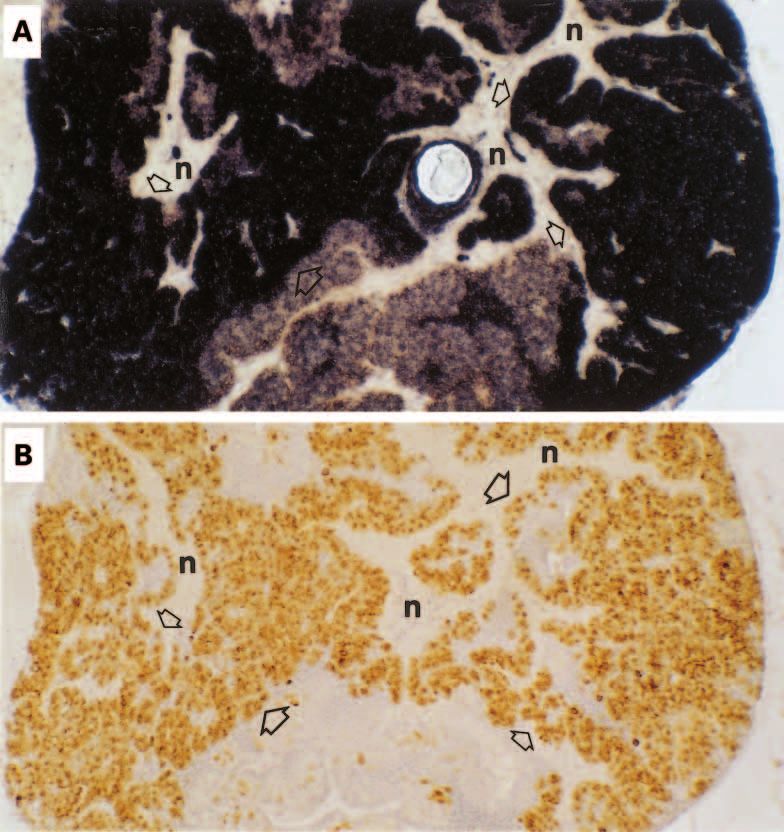
secreting cells. Figure 7A shows the proximal amphibian (bullfrog) lineages (Takei et al. 1991,
pars distalis with calcitonin gene expression Yoshida et al. 1997). In the calcitonin tree, the
and immunoreactive growth hormone (Fig. 7B) mammals and reptiles/birds branch at similar
www.endocrinology.org Journal of Molecular Endocrinology (2002) 28, 111–123
Downloaded from Bioscientifica.com at 03/08/2021 04:08:13PM
via free access118 M S CLARK and others · Calcitonin in Fugu rubripes
Figure 6 In situ hybridisation using the digoxygenin detection method of calcitonin gene expression in tissue sections
of Fugu rubripes. (A) The ultimobranchial tissue showing abundant gene expression in the epithelial cells (u) but
none in the adjacent stromal tissue. (B) Kidney tissue in which the tubule epithelial cells (t) did not hybridise with the
calcitonin oligoprobe but there was considerable hybridisation in cells of the inter-renal tissue (i). (C) Part of the
cerebellum of the brain (c) showing abundant hybridisation in the dense neuronal layer and in supramedullary cells of
the spinal cord (sm, arrow heads). (D) A negative control hybridisation reaction using a sense probe in the section of
brain and spinal cord adjacent to that in (D). (E) There was abundant calcitonin hybridisation in the cytoplasm of ova
but not in the stromal cells (st) of the ovary. (F) Section through the saccus vasculosus showing hybridisation in
some of the coronet cells (co).
Journal of Molecular Endocrinology (2002) 28, 111–123 www.endocrinology.org
Downloaded from Bioscientifica.com at 03/08/2021 04:08:13PM
via free accessCalcitonin in Fugu rubripes · M S CLARK and others 119
Figure 7 In situ hybridisation of calcitonin gene expression in parasagittal sections of Fugu pituitary. (A) A strong
hybridisation signal is evident in secretory cells (open arrows) but no reaction in the nerve axons of the
neurohypophysis (n). (B) Immunocytochemistry of a nearby section showing somatotrophs (open arrows) reacting
with antiserum to chum salmon growth hormone; (n) marks regions of the neurohypophysis.
times but into distinct lineages, with the teleosts inter-relationships using sequence similarity calcu-
branching off later with the primitive fishes basal to lations. However, the phylogenetic tree demon-
the whole grouping. These results are in agreement strates far more clearly the inter-relationships
with Suzuki et al. (1999), who deduced the between the calcitonin genes of different species,
www.endocrinology.org Journal of Molecular Endocrinology (2002) 28, 111–123
Downloaded from Bioscientifica.com at 03/08/2021 04:08:13PM
via free access120 M S CLARK and others · Calcitonin in Fugu rubripes
and the designation of five separate lineages and the results of linkage analysis clearly show that
(Yoshida et al. 1997) therefore requires further positional cloning failed to solve this question. It
evaluation. The evolution of calcitonin is complex may be that a related hormone parathyroid
with at least three lineages within the fish alone hormone-related protein (PTHrP), recently isolated
(represented by the eels, salmonids and puffer fish). from Fugu (Power et al. 2000) and sea bream
Whether these computer-derived groupings relate (Flanagan et al. 2000), is the hypercalcaemic factor
to subtle differences in function between fish species in fish (Guerreiro et al. 2001) but clearly more work
is as yet unknown. Taking a more global approach is needed to resolve this question.
with the three main lineages of mammals, teleosts The tissue distribution of calcitonin determined
and reptiles, different evolutionary forces seem to by RT-PCR was in general agreement with the
have been acting on these three groups to produce results of in situ hybridisation experiments. The
specialised calcitonins adapted to particular life- latter method, however, produced a much more
styles. For example, although the reptiles can precise cell and tissue localisation. The abundant
perform calcium regulation of the terrestrial type, expression of calcitonin mRNA in the ultimo-
their calcitonin molecules are not intermediate branchial gland indicates that this tissue is an
phylogenetically between amphibians and birds. important site of production of the peptide in Fugu
This may be a reflection of their similar breeding and that it is probably secreted into the circulation.
strategies which involve production of calcified To date, we have no measurements of plasma
eggs. Evidence suggests that the biological activity calcitonin in puffer fish but in the rainbow trout,
of calcitonin is higher in avian and reptilian for example, circulating and ultimobranchial levels
hatchlings compared with adults (Taylor et al. 1975, of calcitonin vary during the annual cycle and in
Dacke 1979, Uchiyama et al. 1981); however, the relation to the reproductive cycle (Bjornsson et al.
physiological role of calcitonin in adults is still 1987, Foucheron-Peron et al. 1990). However, the
unclear in these species. Teleosts also appear to expression of the gene in neurones of the central
have developed a more specialised form of and autonomic nervous systems indicate that it is
calcitonin which may be commensurate with their likely to be an important neuropeptide. Calcitonin
aquatic lifestyle. However, this piscine ligand can in Fugu is found in the supermedullary neurones
still be recognised by other species such that salmon (Fig. 6C) and in a related puffer fish (Takifugu
calcitonin is an effective therapeutic agent in niphobles) these project processes (axons) into several
treating loss of calcium from bone in humans nerves including the trigeminal, vagus and spinal
(Wisneski 1990). accessories (Funakoshi et al. 1995). Other evidence
Although there is a small cluster of genes in Fugu, suggests that these neurones may have synaptic
which map to human chromosomal region 11p15, connections with the central nervous system
which represents a conserved linkage, many genes (Funakoshi et al. 1996) and also with the skin,
are present in human which are not present within possibly being involved in chromatophore control.
this region in Fugu. This result is not entirely A salmon-like calcitonin has also been described in
surprising. There is increasing evidence to suggest rat and human central nervous systems (Barlet et al.
that although there are large tracts of conserved 1998). The evidence of calcitonin gene expression
linkage between fish and human, gene order is in cytoplasm of the ova ( Buznikov 1984) may
considerably rearranged (Postlethwait et al. 2000, suggest it is important for the initial stages of larval
Bouchireb et al. 2001) by a series of inversions. development, and elucidation of its function
Certainly, consideration of the function of this requires further investigation.
cluster of genes reveals no common functionality or The abundance of calcitonin mRNA in Fugu
involvement in a common biochemical pathway pituitary suggests that it may be secreted into the
which could explain why a particular combination circulation and/or act as a paracrine or autocrine
has been conserved except by chance. A further controlling factor within the pituitary. A pituitary
examination of the human gene map reveals that calcitonin-like peptide (pit-CT) has been purified
PTH, the major hypercalcaemic agent in tetrapods, from rat pituitary (Hilton et al. 1998) and
is found in the region between LMO1 and PSMA1, subsequent studies showed that the inhibitory effect
which has 24 ‘missing’ genes in Fugu. There is of pit-CT on secretion of prolactin could be
debate as to whether PTH actually exists in fish prevented by addition of antiserum to salmon
Journal of Molecular Endocrinology (2002) 28, 111–123 www.endocrinology.org
Downloaded from Bioscientifica.com at 03/08/2021 04:08:13PM
via free accessCalcitonin in Fugu rubripes · M S CLARK and others 121
calcitonin (Shah et al. 1999), suggesting that the Although the action of calcitonin is fairly well
endogenous rat pit-CT was similar to the fish characterised in mammals, little is known about
peptide. The cells of origin of calcitonin in rat its function in lower vertebrates, particularly
pituitary have not been specified but in Fugu with regard to its effect on calcium regulation.
pituitary, gene expression was demonstrated in cells Considering all the evidence, it would appear that
in both the pars distalis and pars intermedia, with calcitonin has evolved distinct functions in different
the most abundant expression in the proximal pars lineages which is probably related to lifestyle and
distalis which was composed almost exclusively of calcium availability. Certainly, differences have
growth hormone secreting cells. Therefore, these been found in calcitonin distribution within fish
cells would appear to secrete both calcitonin and species, depending on whether they are fresh- or
growth hormone. In the pituitaries examined only salt-water adapted, also age and sex differences
isolated cells in the proximal pars distalis reacted have been detected (Oughterson et al. 1995). So,
with antiserum to sea bream gonadotrophin, whilst a hypocalcaemic effect has been demon-
indicating that this population of cells was not strated in starved goldfish (Shinozaki & Mugiya
developed or was not active. Salmon calcitonin has 2000), this may not be the main function in fish.
been shown to inhibit gonadotrophin releasing There is evidence to suggest a more prominent role
hormone-stimulated release of luteinising hormone in reproduction (Bjornsson et al. 1989, Norberg
by female rat pituitaries (Tsai et al. 1999), so that et al. 1989) with the distribution results here
this effect as well as the inhibition of prolactin cell indicating that it may also act as a potential
proliferation (Shah et al. 1999) suggests that intra- neuropeptide.
pituitary calcitonin may modulate both pituitary
cell hyperplasia and differentiated function.
The expression of calcitonin gene and detection Acknowledgements
of the peptide have been reported in gills of the
pink salmon (Oncorhynchus gorbuscha) (Martial et al. This work was supported by an MRC programme
1994), but the same authors also reported that gills grant (MSC, GE), a Royal Society Joint Project
of the related salmonid, the rainbow trout (Salmo grant (ESEP/JP) (MSC, DMP). DMP was funded
gairdneri) did not contain calcitonin (Fouchereau- by FCT, Portugal (BLS 58).
Peron et al. 1990). They suggest this could be due to
the fresh water adaptation of the rainbow trout
whilst the pink salmon is euryhaline and subject to References
considerable variations in ambient calcium concen-
trations. Puffer fish is adapted to and maintained in Altschul SF, Madden TL, Schaffer AA, Zhang J, Zhang Z, Miller W
& Lipman DJ 1997 Gapped BLAST and PSI-BLAST, a new
sea water which may also explain the presence of generation of protein database search programs. Nucleic Acids
calcitonin gene expression in gill cells. Research 25 3389–3402.
Calcitonin in the inter-renal tissue may also have Amara SG, Jonas V, Rosenfeld MG, Ong ES & Evans RM 1982
Alternative RNA processing in calcitonin gene expression
a paracrine and/or autocrine action, although its generates mRNAs encoding different polypeptide products. Nature
functions in teleost fish kidney are not clear and in 298 240–244.
mammals it may have both hypo- and hyper- Ausbel FM, Brent R, Kingston RE, Moore DD, Seidman JG, Smith
JA & Struhl K 1991 Current Protocols in Molecular Biology. New York,
calciuric actions (Costanzo & Windhager 1992). Chichester, Brisbane, Toronto, Singapore: J Wiley and Sons.
Inter-renal tissue is made up of haemopoietic, Bairoch A & Apweiler R 2000 The SWISS-PROT protein sequence
lymphoid, chromaffin and nervous elements as well database and its supplement TrEMBL in 2000. Nucleic Acids
Research 28 45–48.
as steroidogenic cells. Whilst interactions between Barlet JP, Gaumet N, Coxam V & Davicco M J 1998 Calcitonin
factors within the adrenal have been investigated in and stanniocalcin: particular aspects of the endocrine regulation of
mammals (Mazzocchi et al. 1998), little is known of calcium metabolism in fish and mammals. Annales d’Endocrinologie
59 281–290.
such potential factors and their paracrine effects in Bjornsson BTh, Maux C, Forlin L & Deftos LJ 1987 The
lower vertebrates. There are, however, strong involvement of calcitonin in the reproductive physiology of the
possibilities that, as in other tissues, calcitonin could rainbow trout. Journal of Endocrinology 108 17–23.
have local controlling actions on the functions of Bjornsson BT, Young G, Lin RJ, Deftos LJ & Bern HA 1989
Smoltification and seawater adaptation in coho salmon
both kidney tubule epithelial cells and on other cells Oncorhynchus kisutch, plasma calcium regulation, osmoregulation,
of the inter-renal tissue. and calcitonin. General and Comparative Endocrinology 74 346–354.
www.endocrinology.org Journal of Molecular Endocrinology (2002) 28, 111–123
Downloaded from Bioscientifica.com at 03/08/2021 04:08:13PM
via free access122 M S CLARK and others · Calcitonin in Fugu rubripes
Bonfield JK & Staden R 1996 Experiment files and their application events in human calcitonin/calcitonin gene-related peptide gene
during large-scale sequencing projects. DNA Sequence 6 109–117. expression. PNAS 82 1994–1998.
Bonfield JK, Smith K & Staden R 1995 A new DNA sequence Kraicer J, Herlant M & Duclos P 1967 Changes in adenohyphyseal
assembly program. Nucleic Acids Research 23 4992–4999. cytology and nucleic acid content in the rat 32 days after bilateral
Bouchireb N, Grützner F, Haaf T, Stephens RJ, Elgar G, Green AJ adrenalectomy and the chronic injection of cortisol. Canadian
& Clark MS 2001 Comparative mapping of the human 9q34 Journal of Physiology and Pharmacology 45 441–446.
region in Fugu rubripes. Cytogenetics and Cell Genetics In Press. Lasmoles F, Jullienne A, Day F, Minvielle S, Milhaud G &
Brenner S, Elgar G, Sandford R, Macrae A, Venkatesh B & Moukhtar MS 1985 Elucidation of the nucleotide sequence of
Aparicio S 1993 Characterisation of the pufferfish (Fugu) genome chicken calcitonin mRNA, direct evidence for the expression of a
as a compact model vertebrate genome. Nature 366 265–268. lower vertebrate calcitonin-like gene in man and rat. EMBO
Butkus A, Roche PJ, Fernley RT, Haralambidis J, Penschow JD, Journal 4 2603–2607.
Ryan GB, Trahair JF, Tregear GW & Coghlan JP 1987 Martial K, Maubras L, Taboulet J, Jullienne A, Berry M, Milhaud
Purification and cloning of a corpuscles of Stannius protein from G, Benson AA, Moukhtar MS & Cressent M 1994 The calcitonin
Anguilla australis. Molecular and Cellular Endocrinology 54 123–133. gene is expressed in salmon gills. PNAS 91 4912–4914.
Buznikov GA 1984 The action of neurotransmitters and related Mazzocchi G, Gottardo G & Nussdorfer GG 1998 Paracrine control
substances on early embryogenesis. Pharmacology and Therapeutics 25 of steroid hormone secretion by chromaffin cells in the adrenal
23–59. gland of lower vertebrates. Histology and Histopathology 13 209–220.
Costanzo LS 1992 Renal tubular transport of calcium. In Handbook of Milhaud G, Rankin JC, Bolis L & Benson AA 1977 Calcitonin: its
Physiology, section 8, Renal Physiology, vol II, pp 1759–1783. Eds hormonal action on the gill. PNAS 74 4693–4696.
EE Windhanger & CG Dacke. Bethesda: American Physiological Miniveille S, Cressent M, Delehaye MC, Segond N, Milhaud G,
Society. Jullienne A, Moukhtar MS & Lasmoles F 1987 Sequence and
Dacke CG 1979 Calcium regulating hormones. In Calcium Regulation expression of the chicken calcitonin gene. FEBS Letters 223
in Sub-Mammalian Vertebrates, pp 41–72. London: Academic Press. 63–68.
Felsenstein J 1981 Evolutionary trees from DNA sequences: a Norberg B, Bjornsson BT, Brown CL, Wichardt UP, Deftos LJ &
maximum likelihood approach. Journal of Molecular Evolution 17 Haux C 1989 Changes in plasma vitellogenin, sex steroids,
368–376. calcitonin, and thyroid hormones related to sexual maturation in
Flanagan JA, Power DM, Bendell LA, Guerreiro PM, Fuentes J, female brown trout Salmo trutta. General and Comparative Endocrinology
Clark MS, Canario AVM, Danks JA, Brown BL & Ingleton PM 75 316–326.
2000 Cloning of the cDNA for sea bream Sparus aurata Olsen GJ, Overbeek R, Larsen N, Marsh TL, McCaughey MJ,
parathyroid hormone-related protein. General and Comparative Maciukenas MA, Kuan WM, Macke TL, Xing Y & Woese CR
Endocrinology 118 373–382. 1992 The Ribosomal Database Project. Nucleic Acids Research 20
Fouchereau-Peron M, Arlot-Bonnemains Y, Maubras L, Milhaud G Suppl 2199–2200.
& Moukhtar MS 1990 Calcitonin variations in male and female Oughterson SM, Munoz-Chapuli R, De Andres V, Lawson R,
trout, Salmo gairdneri, during the annual cycle. General and Heath S & Davies DH 1995 The effects of calcitonin on serum
Comparative Endocrinology 78 159–163. calcium levels in immature brown trout, Salmo trutta. General and
Funakoshi K, Abe T & Kishida R 1995 Trigeminal, vagal and spinal Comparative Endocrinology 97 42–48.
projections of supramedullary cells in the puffer fish Takifugu Postlethwait JH, Woods IG, Ngo-Hazelett P, Yan YL, Kelly PD,
niphobles. Journal of Comparative Neurology 358 552–562. Chu F, Huang H, Hill-Force A & Talbot WS 2000 Zebrafish
Funakoshi K, Abe T & Kishida R 1996 The spinal synpathetic comparative genomics and the origins of vertebrate chromosomes.
preganglionic cell column in the puffer fish, Takifugu niphobles. Cell Genome Research 10 1890–1902.
and Tissue Research 284 111–116. Power DM, Ingleton PM, Flanagan JA, Canario AVM, Danks J,
Galtier N, Gouy M & Gautier C 1996 SEAVIEW and Elgar G & Clark MS 2000 Genomic structure and expression of
PHYLO_WIN, two graphic tools for sequence alignment and parathyroid hormone-related protein gene PTHrP in a teleost,
molecular phylogeny. Computer Applications in the Biosciences 12 Fugu rubripes. Gene 250 67–76.
543–548. Rosenfeld MG, Amara SG, Roos BA, Ong ES & Evans RM 1981
Guerreiro PM, Fuentes J, Power DM, Ingleton PM, Flik G & Altered expression of the calcitonin gene associated with RNA
Canario AVM 2001 Parathyroid hormone-related protein: a polymorphism. Nature 290 63–65.
calcium regulatory factor in sea bream Sparus aurata larvae. Saitou N & Nei M 1987 The neighbor-joining method, a new
American Journal of Physiology 281 855–860. method for reconstructing phylogenetic trees. Molecular Biology and
Higgins DG, Bleasby AJ & Fuchs R 1991 CLUSTAL V, improved Evolution 4 406–425.
software for multiple sequence alignment. Computer Applications in Shah GV, Chien J, Sun YP, Puri S & Ravindra R 1999 Calcitonin
the Biosciences 8 189–191. inhibits anterior pituitary cell proliferation in the adult female rats.
Hilton JM, Mitchelhill KI, Pozvek G, Dowton M, Quiza M & Endocrinology 140 4281–4291.
Sexton PM 1998 Purification of calcitonin-like peptides from rat Sherwood NM, Krueckl SL & McRory JE 2000 The origin and
brain and pituitary. Endocrinology 139 982–992. function of the pituitary adenylate cyclase-activating polypeptide
Inoue A, Shikano M, Komatsu Y, Obata J, Ochiai J, Nishide H, PACAP/glucagon superfamily. Endocrine Reviews 21 619–670.
Ito N, Nagao H, Kondo K, Tunemoto D et al. 1991 Shinozaki F & Mugiya Y 2000 Effects of salmon calcitonin on
Structure/activity relationship of eel calcitonin. A study using a calcium deposition on and release from calcified tissues in fed and
newly devised method for designing analogs. European Journal of starved goldfish Carassius auratus. Fisheries Science 66 695–700.
Biochemistry 201 607–614. Suzuki N, Ueda K, Sakamoto H & Sasyama Y 1999 Fish calcitonin
Jansz H, Martial K, Zandberg J, Milhaud G, Benson AA, Julienne genes: primitive bony fish genes have been conserved in some
A, Moukhtar MS & Cressent M 1996 Identification of a new lower vertebrates. General and Comparative Endocrinology 113
calcitonin gene in the salmon Oncorhynchus gorbuscha. PNAS 93 359–373.
12344–12348. Takei Y, Takahashi A, Watanabe TX, Nakajima K, Sasayama Y,
Jonas V, Lin CR, Kawashima E, Semon D, Swanson LW, Mermod Suzuki N & Oguro C 1991 New calcitonin isolated from the ray,
JJ, Evans RM & Rosenfeld MG 1985 Alternative RNA processing Dasyatis akajei. The Biological Bulletin 180 485–488.
Journal of Molecular Endocrinology (2002) 28, 111–123 www.endocrinology.org
Downloaded from Bioscientifica.com at 03/08/2021 04:08:13PM
via free accessCalcitonin in Fugu rubripes · M S CLARK and others 123
Taylor TG, Balderstone O & Lewis PE 1975 Changes in the Wagner GF, Jaworski EM & Radman DP 1997 Salmon calcitonin
concentration of calcitonin in the plasma of chick embryos during inhibits body Ca2+ uptake in young rainbow trout. Journal of
incubation. Journal of Endocrinology 66 363–368. Endocrinology 155 459–465.
Tsai SC, Lu CC, Chen JJ, Chiao YC, Wang SW, Hwang JJ & Wisneski LA 1990 Salmon calcitonin in the acute management of
Wang PS 1999 Inhibition of salmon calcitonin on secretion of hypercalcemia. Calcified Tissue International 46 S26–S30.
progesterone and Gn-RH-stimulated pituitary luteinizing Yoshida A, Kaiya H, Takei Y, Watanabe TX, Nakajima K, Suzuki
hormone. American Journal of Physiology, Endocrinology and Metabolism N & Sasayama Y 1997 Primary structure and bioactivity of
277 E49–E55. bullfrog calcitonin. General and Comparative Endocrinology 107
Uchiyama M, Yoshihara M, Murakami T & Oguro C 1981 147–152.
Calcitonin content in the ultimobranchial gland of the snake,
Elaphe climacophora, comparison of adults, young, and hatchlings.
General and Comparative Endocrinology 43 259–261.
Venkatesh B, Tay BH, Elgar G & Brenner S 1996 Isolation,
characterization and evolution of nine pufferfish Fugu rubripes actin Received 23 October 2001
genes. Journal of Molecular Biology 259 655–665. Accepted 21 December 2001
www.endocrinology.org Journal of Molecular Endocrinology (2002) 28, 111–123
Downloaded from Bioscientifica.com at 03/08/2021 04:08:13PM
via free accessYou can also read


