Chapter 11: Sunflower Insect Pests - SDSU Extension
←
→
Page content transcription
If your browser does not render page correctly, please read the page content below
Chapter 11:
   Sunflower Insect Pests
Compiled by                                                                                                                       July 2021
Adam Varenhorst, SDSU Extension Field Crop Entomologist
Philip Rozeboom, SDSU Extension Integrated Pest Management (IPM) Coordinator
Patrick Wagner, SDSU Extension Entomology Field Specialist

Defoliators                                                                 Identification
During the growing season, more than one defoliating                        Cutworm moths all can be distinguished from one
insect pest may be present within a sunflower field.                        another by examining the markings on their forewings.
Although most of these pests cause negligible injury to                     In general, these moths are a drab brown-gray color
the plant, scouting should still be conducted to ensure                     with brown-gray hindwings. The cutworm caterpillars are
that defoliation does not result in yield loss. Table 11.1                  all similar but can be distinguished by the colorations or
highlights the amount of defoliation that can occur on                      markings that are present on their bodies.
sunflower and the expected yield losses based on
                                                                            Dingy cutworms have dark brown forewings with lighter
growth stage of the plant.
                                                                            brown bean-shaped markings next to a light triangle
Cutworms                                                                    marking (Figure 11.1). The dingy cutworm caterpillars
Introduction                                                                are dull brown to cream mottled coloration (Figure 11.2).
In South Dakota, there are four species of cutworms                         Broad diagonal gray markings on each abdominal body
that may negatively affect sunflower stands shortly                         segment are “V” shaped. The dingy cutworm head
after emergence. These species include the dingy                            capsule is light brown with dark brown markings. The
cutworm (Feltia jaculifera), darksided cutworm (Euxoa                       last-instar caterpillars are 1 to 1 ¼ inches in length.
messoria), redbacked cutworm (Euxoa ochrogaster),
and pale western cutworm (Agrotis orthogonia).
Cutworm caterpillars of these species can feed on both
root tissue as well as foliage, which normally doesn’t
result in economic injury. However, their ability to cut
off young seedlings can cause economic damage
through significant stand reductions. Scouting for
cutworm caterpillar activity in sunflower should begin
at emergence and continue through V4 to V6. Earlier
planted sunflower is at a greater risk for cutworm
defoliation and stand losses.
                                                                            Figure 11.1. Dingy cutworm moth. Photo courtesy of Hanna Royals,
                                                                            Screening Aids, USDA APHIS PPQ, Bugwood.org.

                                                                Page 11-1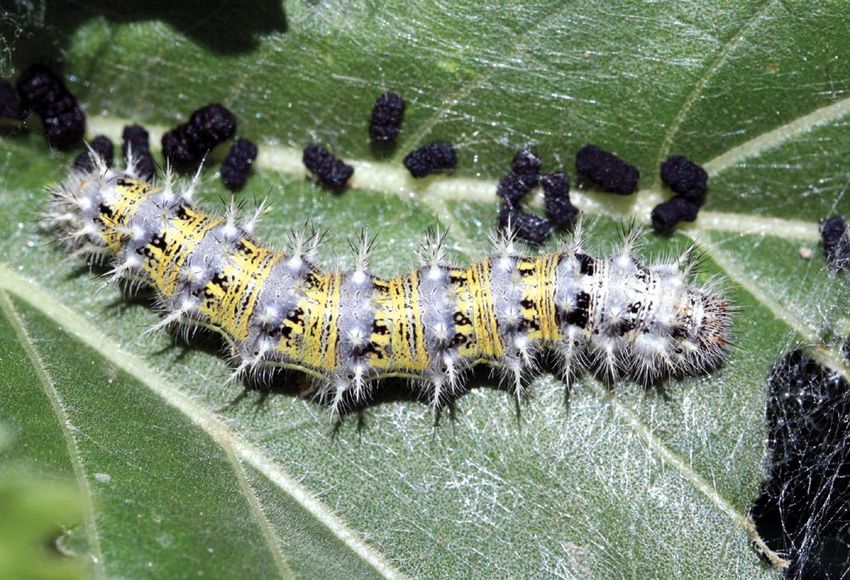
Table 11.1. Estimated yield loss due to defoliation based on sunflower growth stage.
                                                          Percent Defoliation
    Growth
                    10         20        30          40       50        60        70                                80          90         100
     Stage
                                                     Expected yield loss (percent)
 V4 to V5            0          1         2           2        4         4         5                                 9          14          21
 V9 to V11           0          2         3           4        5         5         7                                11          17          24
 R1                  2          4         6           6        7         9        16                                24          34          47
 R3                  2          8        15          19       24        32        44                                59          78          99
 R5                  1          3         7          10       16        25        37                                49          67          90
 R7                  0          1         3          7        10        13        16                                18          20          22
 R8                  0          1         2          3         5         7        8                                 9           10          11
 Table adapted from North Dakota State University Extension Bulletin 25.

Figure 11.2. Dingy cutworm caterpillar. Photo courtesy of Canadian
National Collection, The Canadian National Collection (CNC) of
Insects, Arachnids and Nematodes, Bugwood.org.

Redbacked cutworm moths have reddish brown
                                                                                 Figure 11.4. Redbacked cutworm caterpillar. Photo courtesy of John
forewings with mottled gray bean-shaped and circular                             Gavloski
markings that are closed on one end (Figure 11.3).
The redbacked cutworm caterpillars are dull gray to                              Darksided cutworm moths (Reaper dart) have light-
brown in color with two dull red stripes running the                             colored forewings with darker markings (Figure 11.5).
length of their bodies (Figure 11.4). The caterpillars are                       The darksided cutworm caterpillars have gray to brown
approximately 1 ¼ inches when fully matured.                                     body with a narrow dark gray stripe on each side
                                                                                 (Figure 11.6). The mature caterpillars are approximately
                                                                                 1 ½ inches in length.

Figure 11.3. Redbacked cutworm moth. Photo courtesy of James                     Figure 11.5. Darksided cutworm moth (Reaper Dart). Photo courtesy
Bailey, Bugguide.net.                                                            of Carl Barrentine, Bugguide.net.

                                                                     Page 11-2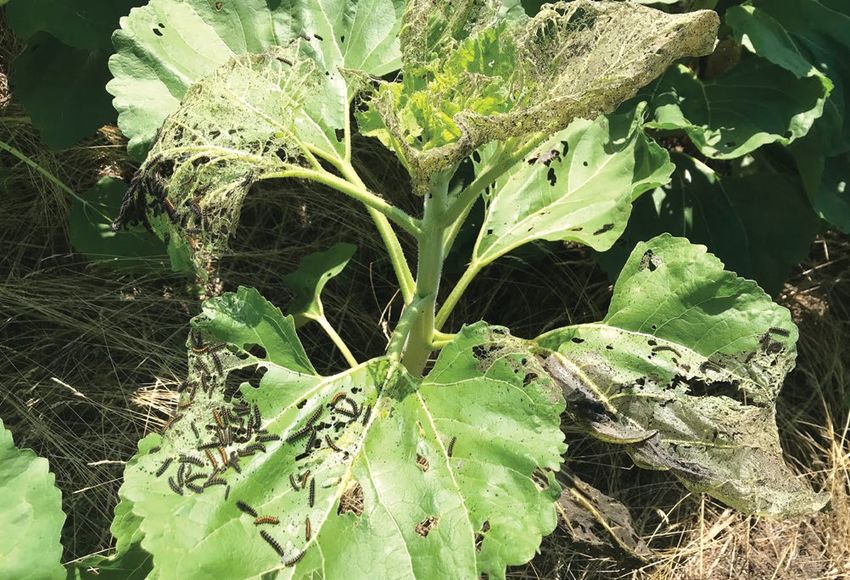
and pale western cutworm are late season cutworms.
                                                                                  Both the early and late season cutworms only produce
                                                                                  a single generation per season.

                                                                                  Dingy cutworms and other early season cutworms
                                                                                  overwinter as second or third instar caterpillars. When
                                                                                  the weather begins to warm up in the spring, they
                                                                                  start feeding on available plants and potentially crop
                                                                                  seedlings. The dingy cutworm caterpillars will continue
Figure 11.6. Darksided cutworm caterpillar. Photo courtesy of Frank               feeding until mid-June when they will pupate. The
Peairs, Colorado State University, Bugwood.org.
                                                                                  dingy cutworm moths emerge in August and are active
Pale western cutworm moths are gray to tan with a light-                          until mid-October. Peak moth activity normally occurs
colored circle on the forewings (Figure 11.7). The pale                           in September. Female moths lay eggs onto plants
western cutworm caterpillars are pale yellow to gray in                           in the Asteraceae family (e.g., sunflower, safflower,
color with a distinct white line that runs down the middle                        goldenrod, ragweed). When the caterpillars hatch, they
of their back (Figure 11.8). The caterpillars head capsule                        begin feeding on the flower faces, which may include
is light brown with two vertical black lines that form an                         commercially grown sunflower. The dingy cutworm
inverted V.                                                                       caterpillars drop off the plant when they reach the
                                                                                  second or third instar and will overwinter in the soil.

                                                                                  The redbacked cutworm, darksided cutworm, pale
                                                                                  western cutworm and other late season cutworms
                                                                                  overwinter as eggs. The oviposition timing will vary
                                                                                  depending on the species, but, in general, eggs are
                                                                                  laid in late summer through fall. The eggs overwinter
                                                                                  in the soil and young cutworm caterpillars hatch in the
                                                                                  spring when the temperatures increase. The late season
                                                                                  caterpillars feed from May to the end of June. The late
                                                                                  season moths emerge in late summer and will deposit
Figure 11.7. Pale western cutworm moth. Photo courtesy of John                    eggs into the soil of fields.
Capinera, University of Florida, Bugwood.org.

                                                                                  Injury
                                                                                  For dingy, redbacked and darksided cutworms, young
                                                                                  caterpillars will leave small notches or holes in the
                                                                                  leaves. In some cases, the caterpillars will not feed
                                                                                  completely through the leaf, but will instead remove
                                                                                  layers of the leaf tissue which results in transparent
                                                                                  sections or windows of injury on the leaves. The dingy
                                                                                  cutworm caterpillars feed primarily on leaf tissue but
                                                                                  can also cut off plants at or just below the soil surface.
                                                                                  Later stage redbacked and darksided cutworms will
                                                                                  cut the plants from one inch below the soil surface to
Figure 11.8. Pale western cutworm caterpillar. Photo courtesy of
Frank Peairs, Colorado State University, Bugwood.org.
                                                                                  two inches above the soil surface. The pale western
                                                                                  cutworm caterpillars are subterranean and will feed on
Biology and Life Cycle                                                            the plants below the soil surface.
The cutworms observed in South Dakota sunflowers
can be separated based on their activities in the field.                          Scouting
The two categories are early season and late season.                              Cutworm caterpillars are nocturnal feeders so they
The dingy cutworm is an early season cutworm,                                     will hide under plant residue or under the soil surface
whereas the redbacked cutworm, darksided cutworm                                  during the day. Therefore, scouting efforts during the

                                                                      Page 11-3
day should be focused on finding defoliated plants or                             Biology and Life Cycle
cut plants. When wilted, broken or obviously cut plants                           Palestriped flea beetles overwinter as larvae in the soil
are observed, dig 1 to 6 inches deep around the cut                               and emerge in the spring. Adult palestriped flea beetles
plant and search for the presence of the caterpillars.                            will start to emerge in June and are active for much of
Occasionally, cutworm caterpillars may be observed                                summer. Along with sunflower, other host plants of the
feeding even in daylight hours.                                                   palestripped flea beetle include bindweed, pigweed,
                                                                                  and alfalfa.
Management
Foliar insecticide management of cutworms in sunflower                            Injury
is recommended when the action threshold of 1                                     The larval stage of the pale striped flea beetle can
caterpillar per square foot is observed or when 25 to                             cause minor injury to sunflowers root systems but is
30% of scouted plants are cut. Because cutworms are                               rarely significant enough to warrant management. Large
nocturnal feeders, apply insecticides late in the day or                          numbers of flea beetle adults, however, will kill or stunt
in the early evening to ensure adequate coverage. Foliar                          sunflower seedlings by chewing on their cotyledons and
insecticides will provide only minimal management of                              young leaves. Injury from adult flea beetles will appear
palewestern caterpillars because they do not feed on                              as small pits or irregular holes in the leaf (Figures 11.10
aboveground tissues. Insecticide seed treatments may                              and 11.11).
reduce cutworm feeding when limited populations are
present. However, when large populations are present,
stand reductions may still be observed.

Palestriped Flea Beetle
Introduction
The palestriped flea beetle (Systena blanda) is a
common insect pest of sunflower fields throughout
South Dakota. The adult palestriped flea beetles
cause early season defoliation. When left unmanaged,
early season defoliation can cause plant death and
subsequent stand reductions. Late season sunflower
can tolerate injury caused by flea beetle adults. If large
                                                                                  Figure 11.10. Palestriped flea beetle leaf injury. Photo courtesy of
populations of palestriped flea beetles are present in                            Patrick Wagner.
a sunflower stand, several management options are
available.

Identification
The palestriped flea beetle is around 1/8 of an inch
in length and are shiny black to brown in color with
a broad, white stripe running down each elytron
(hardened forewing) (Figure 11.9). They can also jump,
like a flea, because of their enlarged hind legs. The
larval stage is a small, white and slender. The larvae are
easily distinguishable from other beetle species.

                                                                                  Figure 11.11. Palestriped flea beetle hole injury. Photo courtesy of
                                                                                  Whitney Cranshaw, Colorado State University, Bugwood.org.

                                                                                  Scouting
                                                                                  To scout for palestriped flea beetles, it is recommended
                                                                                  to check newly emerged sunflowers every week until
Figure 11.9. Palestriped flea beetle adult. Photo courtesy of Frank               the sunflower stand reaches the V4 growth stage. Flea
Peairs, Colorado State University, Bugwood.org.

                                                                      Page 11-4
beetles overwinter on nearby weed host plants and
field residue of previous susceptible crops. Due to this
overwintering activity, flea beetle populations may be
sporadic throughout a sunflower stand.

Management
Foliar insecticide application is recommended when
the economic threshold is reached. For palestriped
flea beetles, the economic threshold is when 20% of
sunflower stand in a field has visible injury from flea
beetle feeding. Other management techniques include
using insecticide seed treatments, managing the
residue within the field, removing weed host plants in
                                                                              Figure 11.13. Thistle caterpillar. Photo courtesy of Whitney Cranshaw,
field margins, and rotating crops. In South Dakota, the                       Colorado State University, Bugwood.org.
use of insecticide seed treatments has greatly reduced
early season pressure from palestriped flea beetles.                          The adult form of the thistle caterpillar is the painted
                                                                              lady butterfly. Painted lady butterflies have orange and
Thistle Caterpillar                                                           brown coloration on their wings with dark spots on the
Introduction
                                                                              edges of the wings. The edges of the forewings are
The thistle caterpillar (Vanessa cardui) is an occasional
                                                                              darker than the edges of the hindwings. They also have
pest of sunflowers, especially when populations are
                                                                              black, orange, and white markings on the inside of their
present in sunflower fields during the vegetative stages.
                                                                              forewings. The wingspan of a thistle caterpillar adult
Injury from the thistle caterpillar is often minor and
                                                                              ranges from 2 to 2 ¾ inches (Figure 11.14).
usually does not warrant management action.

Identification
Thistle caterpillars can vary in color between black,
yellow or gray. However, all larvae will have long, black,
white, or yellow spines on their body and four pairs
of abdominal prolegs (Figures 11.12 and 11.13). The
caterpillars are 1 ¼ to 1 ½ inches in length. Thistle
caterpillars can also be identified by their presence in
leaves that are curled and secured using webbing.

                                                                              Figure 11.14. Painted lady butterfly. Photo courtesy of Adam
                                                                              Varenhorst.

                                                                              Biology and Life Cycle
                                                                              The thistle caterpillar is a migratory species and
                                                                              overwinters in the southern US. The painted lady
                                                                              butterflies travel north in the spring and summer. Adults
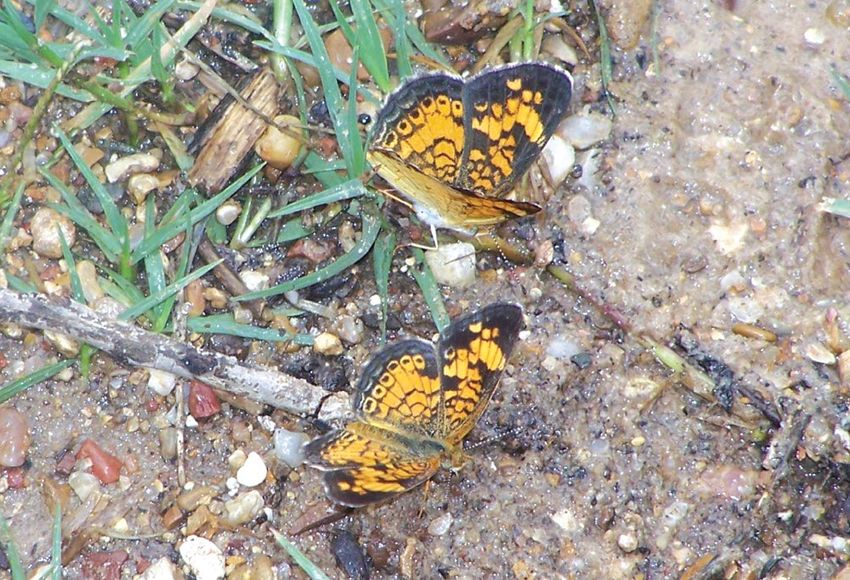
                                                                              will lay eggs on Canada thistle, sunflower, soybean, and
                                                                              other hosts. Typically, thistle caterpillars will feed on
                                                                              early season sunflower in late June to early July and will
Figure 11.12. Thistle caterpillar. Photo courtesy of Lyle Buss,
University of Florida, Bugwood.org.                                           have one to two generations per growing season.

                                                                  Page 11-5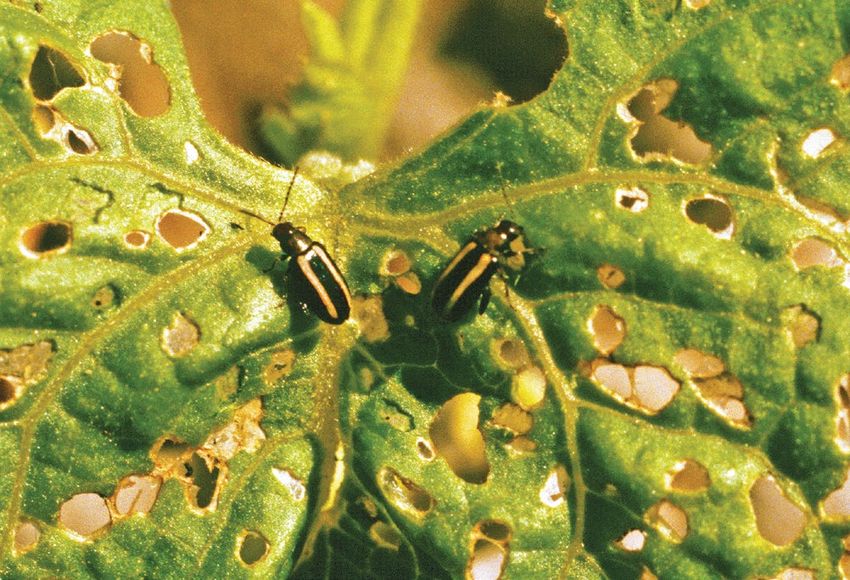
Injury                                                                                 typically appear in June or July. Defoliation from the
Thistle caterpillar injury will appear as irregular holes                              silvery checkerspot caterpillar is usually not enough to
and skeletonization on a leaf accompanied by webbing                                   warrant management action and should be considered
and fecal material. In most cases, the injury of the thistle                           along with other sunflower defoliators.
caterpillar will not warrant management and should
                                                                                       Identification
be considered along with other sunflower defoliators
                                                                                       Silvery checkerspot caterpillars are mostly black and
(Figure 11.15).
                                                                                       may have several small white spots present. They have
                                                                                       one broad yellow to orange stripe on the back and two
                                                                                       thinner stripes along their sides. They have multiple
                                                                                       branched spines present on their body, giving them a
                                                                                       prickly appearance. The size of checkerspot caterpillars
                                                                                       depends on their age, but they may grow up to 1 ½
                                                                                       inches in length (Figures 11.16 and 11.17).

Figure 11.15. Thistle caterpillar injury to leaf. Photo courtesy of Adam
Varenhorst.

Scouting
The easiest way to scout for thistle caterpillars in early
season sunflower stands is to look for leaves that have
been bound by silken webs or for irregular holes in
leaves. Within these bound leaves will be fecal material                               Figure 11.16. Silvery checkerspot caterpillars. Photo courtesy of
and usually a thistle caterpillar. Scout by looking in                                 Patrick Wagner.
an X pattern and examine 20 plants per sampling
site for defoliation. Estimate the percent of defoliation
present on the sampled plants. If the 20 sampled plants
have an average of 25% defoliation and the thistle
caterpillars are 1 ¼ inches long or less, management is
recommended. However, if caterpillars are larger than
1 ¼ inches, most feeding injury has already occurred,
and management is not recommended.

Management
Since the thistle caterpillar is a defoliating pest, it
should be considered for management along with other
sunflower defoliators. If the sunflower stand reaches
the economic threshold of 25% defoliation, insecticide
application may be necessary. Rarely does the thistle
caterpillar, by itself, cause economic damage.                                         Figure 11.17. Silvery checkerspot caterpillars on an injured sunflower
                                                                                       leaf. Photo courtesy of Patrick Wagner.
Silvery Checkerspot Caterpillar
                                                                                       Silvery checkerspot butterflies are pale orange with
Introduction
                                                                                       black boarders and markings. Like their name implies,
The silvery checkerspot caterpillar (Chlosyne nycteis) is
an occasional pest of sunflower in South Dakota. This                                  they have a pattern of silvery patches and spots on the
pest can cause rapid defoliation on sunflowers and will                                underside of the wings. The hindwings also have a large

                                                                           Page 11-6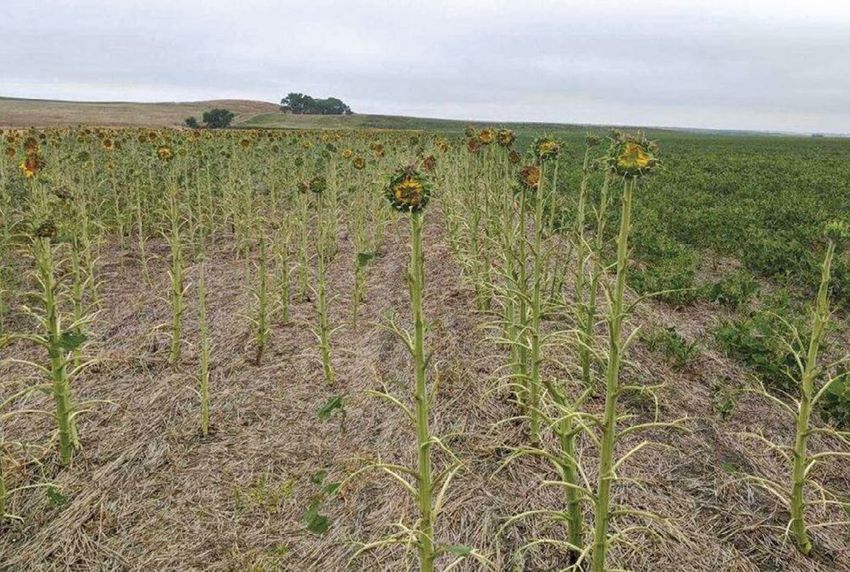
white crescent at the margin. The wingspan of silvery
checkerspot butterflies range from 1 ½ to 2 inches
(Figure 11.18).

                                                                                     Figure 11.20. Silvery checkerspot caterpillars and associated leaf
                                                                                     injury. Photo courtesy of Patrick Wagner.

                                                                                     Scouting
Figure 11.18. Silvery checkerspot butterflies. Photo courtesy of Karan               Check 10 random sunflower plants in an area and
A. Rawlins, University of Georgia, Bugwood.org.
                                                                                     repeat the process in five different locations within
                                                                                     a field. For each of the selected plants, evaluate the
Biology and Life Cycle
                                                                                     amount of defoliation that is present on the sunflower.
The silvery checkerspot butterfly is native to South
                                                                                     The threshold for sunflower defoliation is approximately
Dakota. There are one to two generations per year
                                                                                     25% and if most of the caterpillars are less than
which occur between May and September. Female
                                                                                     1 ¼ inches long. If they are longer than 1 ¼ inches,
butterflies lay eggs in large clusters on their host plants,
                                                                                     management is unnecessary. When caterpillars are
which include members of the daisy family (Asteraceae),
                                                                                     larger than 1 ¼ inches they are nearly fully grown and
especially sunflower. The caterpillars feed in groups
                                                                                     most of the feeding injury will have already occurred.
after hatching and can cause rapid defoliation.
                                                                                     Management
Injury
                                                                                     If a sunflower stand reaches the defoliation threshold,
Silvery checkerspot caterpillars will skeletonize plants
                                                                                     insecticide application may be necessary. Depending
and produce concentrated areas of frass (waste)
                                                                                     on the size of an infestation, silvery checkerspot
(Figures 11.19 and 11.20). Heavy defoliation can appear
                                                                                     caterpillars may be managed using spot spraying
suddenly and may reduce yields if it occurs when plants
                                                                                     in areas where defoliation is more severe (e.g., field
are very young or during the early reproductive stages.
                                                                                     edges).
Similar to the thistle caterpillar, management is not
always necessary and should be considered along with                                 Grasshoppers
other sunflower defoliators.                                                         Introduction
                                                                                     There are several species of grasshoppers that may
                                                                                     feed on sunflowers in South Dakota. The three species
                                                                                     that are most likely to be observed feeding on sunflower
                                                                                     include the differential grasshopper (Melanoplus
                                                                                     differtialis), twostriped grasshopper (Melanoplus
                                                                                     bivittatus) and the redlegged grasshopper (Melanoplus
                                                                                     femurrubrum). Typically, these grasshopper species
                                                                                     are not present in large enough populations to cause
                                                                                     substantial defoliation. However, sporadic grasshopper
                                                                                     population outbreaks can result in rapid defoliation of
                                                                                     sunflowers. Due to their size, the active movement and
                                                                                     feeding habits of grasshoppers are easily observed in
Figure 11.19. Silvery checkerspot caterpillars on a injured sunflower.               fields and on sunflower plants.
Photo courtesy of Patrick Wagner.

                                                                         Page 11-7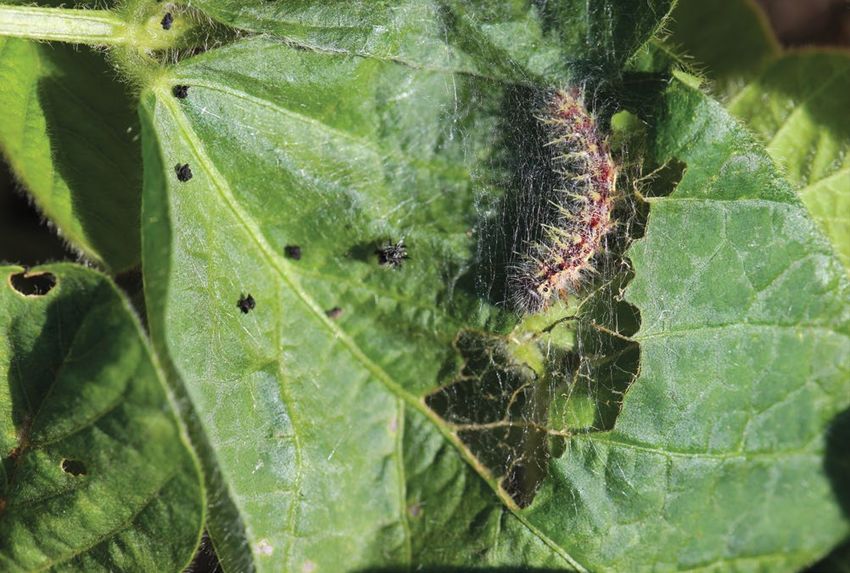
Identification                                                                     Redlegged grasshoppers are the smallest of the
All species of grasshoppers have a similar morphology                              three commonly observed species with bodies that
with hind legs that are used for jumping. However, the                             vary in size from 2/3 to 1 inch in length. The adults
three species that were mentioned vary based on size,                              have a black and yellow-body coloration with red hind
coloration and patterns that are present on the body.                              tibia. Occasionally, the hind tibia may be blue. Rare
                                                                                   individuals may have a yellow and blue colored body
The differential grasshopper adults have a large                                   (Figure 11.23).
body that varies from 1 1/8 to 1 ½ inches long. Their
bodies are olive to light green and yellow in coloration.
Although rare, some differential grasshoppers may
have a black (melanistic) coloration. An important
characteristic for identification is the black chevron
markings that are present on the hind femurs of the
adults (Figure 11.21).

                                                                                   Figure 11.23. Redlegged grasshopper adult. Photo courtesy of Adam
                                                                                   Varenhorst.

                                                                                   Biology and Life Cycle
                                                                                   Although there is some variation by species,
                                                                                   most grasshoppers will have a similar life cycle.
                                                                                   Grasshoppers hatch and emerge in the spring or early
Figure 11.21. Differential grasshopper adult. Photo courtesy of Adam               summer. The timing of hatching will vary based on
Varenhorst.                                                                        grasshopper species. Some grasshoppers hatch early
                                                                                   in the spring while some will hatch much later. After
The twostriped grasshoppers are also large with bodies                             emergence, the grasshopper nymphs will feed on the
that vary in size from 1 to 1 ½ inches long. They vary                             foliage of both wild and cultivated plants. The number of
in color from brown to dark green. They have two light                             nymphal instars (stages) varies based on species. Most
yellow stripes that run from the head to the tips of
                                                                                   species will have 4 to 6 instars before they reach the
the wings. The stripes converge on the wings (Figure                               adult stage. Adult grasshoppers will continue feeding on
11.22).                                                                            any available foliage or plant tissue until the first hard
                                                                                   frost of the year. Grasshopper populations are favored
                                                                                   by warm, dry weather conditions. These conditions
                                                                                   improve the survival of the nymphal grasshoppers.
                                                                                   Furthermore, warm falls with a late hard frost will
                                                                                   extend the egg laying period for the adults. Typically,
                                                                                   grasshopper populations will move to crops from
                                                                                   adjacent road ditches, grassy areas or maturing small
                                                                                   grains. In the late summer and fall, female grasshoppers
                                                                                   lay eggs into the soil in field margins, pastures, or
                                                                                   ditches.

                                                                                   Injury
                                                                                   As defoliating insects, the main injury caused by
Figure 11.22. Twostriped grasshopper adult. Photo courtesy of Adam
Varenhorst.                                                                        grasshoppers is the removal of foliage from the plants

                                                                       Page 11-8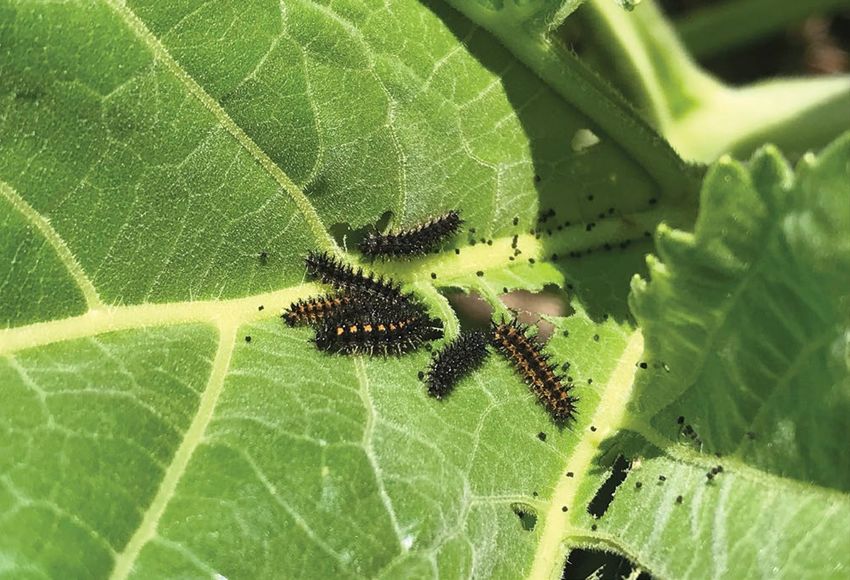
(Figure 11.24). However, populations that arrive later in                      sunflower. If adult populations are present, it is
the season may also feed on the developing sunflower                           recommended to use the highest labeled rate for the
head, resulting in direct damage and yield reductions.                         insecticide product. Adult grasshoppers are resilient
The amount of defoliation and head feeding that may                            and lower rates may result in inadequate population
occur is dependent on the grasshopper populations that                         reductions.
are being observed. Large populations can cause rapid
                                                                               Sunflower Beetle
defoliation within a field.
                                                                               Introduction
                                                                               The sunflower beetle (Zygogramma exclamationis) is
                                                                               a defoliator insect of sunflower. It feeds exclusively
                                                                               on sunflower and is often confused with the Colorado
                                                                               potato beetle (Leptinotarsa decemlineata). Both the
                                                                               larval and adult stages of the sunflower beetle can
                                                                               cause economic injury throughout the growing season.

                                                                               Identification
                                                                               Both the larval and adult stages of the sunflower beetle
                                                                               can cause economic injury to sunflower. Larvae range
                                                                               from white, yellow or green in color, and have a light
                                                                               brown head capsule. The larvae are similar in size to
Figure 11.24. Grasshopper defoliation on sunflower plants. Photo               the adult life stage. Adults are around 1/3 of an inch in
courtesy of Aaron Hargens.
                                                                               length and have unique coloration. The head is brown
                                                                               while the pronotum (segment directly behind the head)
Scouting                                                                       is also brown but with white margins towards the front.
The road ditches around a field can be scouted                                 Each elytron (hardened forewing) is white with three
for grasshoppers using a sweep net. Surrounding                                lateral brown-black lines and one shorter brown-black
road ditches are where scouting should start prior                             line followed by a brown-black dot. One lateral brown
to grasshoppers being observed within the field.                               line runs down the center of the elytra (Figure 11.25).
The best scouting method within sunflower fields is
visual observation. This is due to the large size of
grasshoppers and the potential damage caused by
sweep netting to the sunflower plants. To determine
the population size within a field, walk into the field and
estimate the number of grasshoppers in one square
yard. Repeat this process several times to determine
the field average. An average of 30 to 45 grasshopper
nymphs or 8 to 14 adults per square yard warrants an
insecticide application for management. If extensive
feeding on the developing sunflower heads is observed,
management should occur as soon as possible to
minimize yield loss. If extensive defoliation is observed
                                                                               Figure 11.25. Sunflower beetle larva and two adults. Photo courtesy
but few grasshoppers are present, treatment is not                             of Frank Peairs, Colorado State University, Bugwood.org.
recommended as the grasshopper populations have
likely moved to a new area.                                                    Biology and Life Cycle
Management                                                                     The sunflower beetle overwinters as an adult. These
If grasshopper populations exceed the recommended                              adults emerge in late May and can live for up to eight
thresholds, a foliar-applied insecticide will be necessary                     weeks. After mating, each female can lay from 200 to
to reduce their numbers. There are several products                            2,000 eggs. Larvae that hatch from these eggs will then
labeled for the management of grasshoppers in                                  feed on the underside of leaves during the night and
                                                                               hide within sunflower bracts and buds during the day.

                                                                   Page 11-9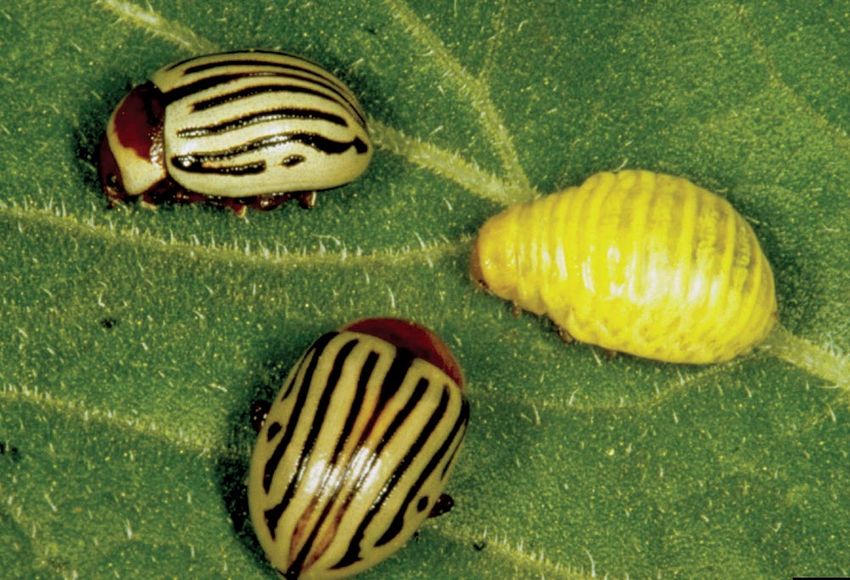
Larvae will feed for two weeks before entering the soil to                  larvae. The pteromalid wasp (Erixestus winnemana) is a
pupate. Because adult females lay eggs throughout the                       parasite of sunflower beetle eggs and multiple species
growing season, first generation larvae will be present                     of tachinid flies will parasitize sunflower beetle larvae. In
for around six weeks in June through July. Second                           some cases, natural enemies and parasites can reduce
generation adults that emerge from pupation will feed                       sunflower beetle populations by 70 to 100%.
for a short time on sunflower heads and upper leaves
                                                                            If natural enemies and parasites are not present or
before re-entering the soil to overwinter.
                                                                            aren’t effectively reducing sunflower beetle populations,
Injury                                                                      applying insecticides at the economic threshold is
Defoliation from the sunflower beetle is caused by                          recommended. Also, if sunflower beetle populations are
both the larvae and adults. The feeding injury generally                    high within a sunflower stand, using insecticidal seed
appears as irregular shaped holes. The entire leaf may                      treatments the next growing season can reduce early
be removed in early season sunflower and lace-like                          season pressure.
holes will appear in later season sunflower (Figure
11.26).

Figure 11.26. Sunflower beetle injury. Photo courtesy of Whitney
Cranshaw, Colorado State University, Bugwood.org.

Scouting
Using the standard X pattern for scouting sunflower
beetles is recommended. Five different sites should
be scouted throughout the sunflower stand, and adults
and larvae should be counted on 20 plants per site.
Since the sunflower beetle is a defoliator, look for
defoliation percentage as well. The economic thresholds
for sunflower are 25% defoliation or an average of 1 to
2 adults or 10 to 15 larvae per plant during V2 to V6
growth stages. Beyond V6, sunflower plants are usually
mature enough to tolerate sunflower beetle injury.

Management
There are many management tactics available for
the sunflower beetle. The easiest tactic is relying on
and promoting natural enemies and parasites of the
sunflower beetle. Multiple predators like the melyrid
beetle (Collops vittatus), convergent ladybird beetle
(Hippodamia convergens), and green lacewing
(Chrysoperla carnea) will eat sunflower beetle eggs and

                                                                   Page 11-10
Head Feeders
Red Sunflower Seed Weevil
The red sunflower seed weevil (Smicronyx fulvus) is
a native pest of sunflower in the United States and
is partially responsible for the historical decline in
sunflower production acreage in Illinois and Missouri.
It has been an annual economic pest of sunflowers in
South Dakota since 1978. During severe infestations,
approximately 50% of the total sunflower plants may
have up to 80% of the achenes per head infested with
red sunflower seed weevil larvae. Unlike many insect
pests, large populations of the red sunflower seed
weevil have been observed on an annual basis. When Figure 11.28. Red sunflower seed weevil larva. Photo courtesy of
Frank Peairs, Colorado State University, Bugwood.org.
scouting sunflower after the onset of flowering, it is
likely that red sunflower seed weevils will be observed
Biology and Life Cycle
on the flowering head. In South Dakota, field failure
There is a single generation of red sunflower seed
reports of pyrethroid applications for red sunflower
weevils each year. There are five larval instars that
seed weevil management have been received by SDSU
develop within the achenes. During late August and
Entomologists since 2017.
early September, the fifth-instar larvae exit the achenes
Identification and drop to the soil. The larvae will then burrow 2 to
The adults of the red sunflower seed weevil are 6 inches into the soil to overwinter. The larvae remain
approximately 1/10 of an inch long and are a reddish- in the soil until pupation occurs in June or July of the
orange color. They have a black elongated snout with following year. The adults emerge from the soil and are
small bent antennae originating from the snout (Figure active from late June to early September. Both male
11.27). The larvae of the red sunflower seed weevil and female red sunflower seed weevils are attracted
are legless and cream-colored with a light brown head to both wild sunflower and commercial sunflower. Prior
capsule (Figure 11.28). They often curl into a C-shape to flowering (R5), the adult red sunflower seed weevils
if disturbed. However, the larvae are seldom observed feed on the stems, petioles or bracts. After the onset
because they feed on developing seeds and are of flowering, the adults feed on pollen. Female red
concealed by the achenes. sunflower seed weevils require several days of pollen
feeding before they are able to lay eggs. The female
red sunflower seed weevils lay eggs during flowering.
Typically, a female will lay only one egg per achene.
When flowering is complete (R6) the adult red sunflower
seed weevils are no longer attracted to the plants and
their populations will decrease rapidly. Red sunflower
seed weevil infestations are the highest in the outer
achene rows. The larva will feed on the developing seed
from July to September and then chew an exit hole to
drop to the soil.
Damage
The adult red sunflower seed weevil feeding may leave
Figure 11.27. Red sunflower seed weevil adult. Photo courtesy of
Adam Varenhorst. noticeable marks on the bracts, but the adults do not
cause economic levels of injury. The larvae of the red
sunflower seed weevils will only partially feed on the
developing seed. This feeding reduces the seed weight
and oil content of the seeds. If infested sunflowers are
harvested before the larvae drop from the infested
Page 11-11seeds, they may cause heating and moisture issues both species present on a single sunflower head. Unlike
during storage. the red sunflower seed weevil, the gray sunflower seed
weevil populations do not normally reach levels that
Scouting require management.
Scouting for red sunflower seed weevils should begin
when more than 50% of the plants within a field between Identification
the stages of showing yellow ray petals (R5.0) to 30% The adults of the gray sunflower seed weevil can be up
of the head shedding pollen (R5.3). Scouting should to 1/5 of an inch long and are noticeably larger than
continue until the majority of the plants within a field the red sunflower seed weevil. In addition, they are light
have reached 70% pollen shed (R5.7). Once the field gray in color and have a black elongated snout with
has reached R5.7, it is unlikely that additional infestation small bent antennae originating from the snout (Figure
by red sunflower seed weevils will occur. This is due to 11.29). The larvae of the gray sunflower seed weevil are
a reduction in oviposition and the fact that the achenes also legless and cream colored with a light brown head.
become hardened which also reduces oviposition rates. When disturbed, the larvae curl up into a C-shape.
Differentiation of the gray and red sunflower seed weevil
To scout for red sunflower seed weevils, choose five larvae is very difficult.
sampling sites that are at least 75 feet from the field
edge, with at least one site on each side of the field.
At each sampling site, count the total number of adults
present on five randomly selected plants (regardless of
plant growth stage) for a total of 25 plants per field. To
ensure that all of the adults are counted, spray each of
the selected heads with an insect repellent containing
DEET and wait for the red sunflower seed weevils to
move to the surface of the head. Calculate the field
average and compare it to the recommended threshold
of 4 to 6 adults per plant.
Management
When populations of the red sunflower seed weevil Figure 11.29. Gray sunflower seed weevil adult. Photo courtesy of
Adam Varenhorst.
exceed 4 to 6 adults per plant, it is recommended to
treat the field with a foliar insecticide. Treatment should
occur between R5.0 and a field average of 40% pollen Biology and Life Cycle
shed (R5.4). Making treatment decisions between R5.0 There is a single generation of gray sunflower seed
and R5.3 provides a time window in case of inclement weevils each year. Gray sunflower seed weevils emerge
weather or scheduling difficulties. However, treating a 5 to 10 days earlier than the red sunflower seed weevils.
population too early may result in field re-infestation and The adult gray sunflower seed weevils are observed
require additional treatment. Treatment should not occur in sunflower fields during the bud stages (R1 to R3).
at or after R5.7 as most of the oviposition would have Gray sunflower seed weevil eggs are laid onto the
occurred before this time. Fields should be re-scouted reproductive buds that are within unopened florets. The
48 hours after insecticide application to determine if red populations of gray sunflower seed weevil adults decline
sunflower seed weevil populations have been reduced. at the onset of flowering. After hatching, the larvae
Early planting dates can also reduce the levels of red migrate to the achene and begin feeding on the base of
sunflower seed weevil infestation. the seed. The presence of a larva results in the achene
becoming enlarged and protruding from the head in
Gray Sunflower Seed Weevil comparison to nearby achenes. This enlargement is
Introduction referred to as a gall and is likely a source of nutrients
The gray sunflower seed weevil (Smicronyx sordidus) for the developing larva. Gray sunflower seed weevils
is less frequently observed than the red sunflower seed have higher infestation rates of the middle achene rows.
weevil in South Dakota. However, it is possible to have The last instar larvae emerge from the seeds and drop
Page 11-12to the soil where they overwinter 1 to 4 inches below
the surface.
Damage
The larvae of the gray sunflower seed weevil consume
the entire developing seed. The adults feed on
developing flower buds beneath the bracts and on
leaves. This feeding is considered minor.
Scouting
Scouting for gray sunflower seed weevils should begin
at R1. Scouting should continue until the majority of the
field has reached R4.
Figure 11.30. Banded sunflower larvae beside sunflower seeds.
Management Photo courtesy of North Dakota State University Extension.
There are no set management thresholds for gray
sunflower seed weevils. The populations of gray
sunflower seed weevils are typically lower than those
of the red sunflower seed weevils. Occasionally the
thresholds for red sunflower seed weevils are used
to manage gray sunflower seed weevils. However,
insecticide application for gray sunflower seed weevil
management must occur prior to bloom or when 10 to
15% of the field has reached the R4 growth stage.
Banded Sunflower Moth
Introduction
The banded sunflower moth (Cochylis hospes) is a
common sunflower seed pest throughout the growing Figure 11.31. Banded sunflower moth adult. Photo courtesy of Mark
Dreiling, Bugwood.org.
season. The larval stage is the most damaging due to
its feeding on sunflower bracts, florets, and seeds.
Biology and Life Cycle
Identification The banded sunflower moth’s life cycle begins in mid-
The most injurious life stage of the banded sunflower July when adults emerge from overwintering sites.
moth is its larval stage. The larvae differ in appearance These adults will then lay eggs on the outside of
as they progress through their five instars. Young larvae sunflower bracts and will continue doing so through
are off-white and will progress towards pinkish to red mid-August. The eggs hatch five to eight days after
and then a blue-green color in the later instars (Figure being deposited on the bracts. The caterpillars are
11.30). The head capsule of younger caterpillars is a present in sunflower heads from mid-July to mid-
dark brown to black color. More mature caterpillars September. They will feed until they reach the end of
have a light brown head capsule. Adult banded the last larval instar and will then drop to the soil to
sunflower moths have a dark band across their overwinter.
yellowish-tan forewings. Typically, their wingspan is ½ of
Damage
an inch (Figure 11.31).
Damage from the banded sunflower moth is caused
entirely by the larval stage. Newly emerged larvae will
initially feed on bracts before moving into open florets.
This early feeding reduces the total number of seeds
present on the head. As the larvae mature, they will
tunnel through the base of a floret and into the seed,
consuming all of the contents (Figure 11.30). Each larva
Page 11-13can consume the entire kernel of six to seven seeds Identification
before dropping to the soil. Caterpillars of the sunflower moth are black with light-
colored stripes running the length of their bodies and
Scouting have a distinctive orange head. As the caterpillars
From mid-July through mid-September, look for small mature, they can become light brown with white
patches of silken webbing on the face of sunflower stripes. The caterpillars vary in size based on their
heads. This webbing can indicate the presence of developmental stage but will reach approximately ¾
banded sunflower moth larvae. Scouting can also be of an inch during their final instar (Figure 11.33). Adult
done for the egg and adult life stages primarily during sunflower moths are mottled gray. The wingspan of the
the R2 to R3 growth stages of sunflower. To scout for sunflower moth ranges from ½ to 1 inch. The wings are
eggs, look over eight random sites consisting of five tucked tightly to the body while at rest (Figure 11.34).
sunflower plants and count six outer bracts of a bud
per plant (Figure 11.32). Using a magnifying lens is
recommended. Calculate and compare the average
amount of eggs per plant to the economic threshold
of two to three eggs per six bracts. Treatment is
recommended if above the economic threshold. When
scouting for adults, one adult per 100 plants warrants
insecticidal treatment.
Figure 11.33. Sunflower moth caterpillar. Photo courtesy of Adam
Varenhorst.
Figure 11.32. Banded sunflower moth eggs on a sunflower bract.
Photo courtesy of K. Mundal, North Dakota State University
Extension Service.
Management
Insecticide treatment to the sunflower heads is
recommended when either the banded sunflower moth
egg or adult thresholds are reached. Spraying in the
earlier morning or late afternoon is recommended in
order to avoid harming pollinators. Figure 11.34. Sunflower moth adult. Photo courtesy of Mark Dreiling,
Bugwood.org.
Sunflower Moth
Introduction Biology and Life Cycle
The sunflower moth (Homoeosoma electellum) is a Each year, sunflower moths migrate from the southern
common pest of sunflower that is present at the time United States into South Dakota. The adult moths are
of flowering. Sunflower moths are a migratory pest that attracted to blooming sunflowers and the females will
overwinter in the southern United States and move lay their eggs on the sunflower heads, based on the
north during the growing season. Adult moths can be presence of pollen (Figure 11.35). Female sunflower
observed on sunflower heads in the early flowering moths can lay up to 400 eggs near the base of florets.
stages. The caterpillars cause damage to the plants by The caterpillars will hatch and feed on the sunflower
feeding on the pollen and seeds. head until they complete their development.
Page 11-14of moths on the heads of 20 sunflowers from five
random locations throughout the field. The threshold
for sunflower moth is 1 to 2 moths per five sunflower
heads.
Management
Insecticides can be applied to sunflower heads once
the adult sunflower moths reach threshold levels. If
applying an insecticide, it is best to spray in the evening
when moth activity is greatest. Spraying at this time
will also reduce the impact on pollinators as these
beneficial insects are less active during the evening
hours. Later planting dates can be effective at reducing
Figure 11.35. Sunflower moth on a sunflower head. Photo courtesy of
Phil Sloderbeck, Kansas State University, Bugwood.org. the likelihood of sunflower moths reaching economic
threshold.
Damage
Sunflower Bud Moth
Caterpillars feed on the pollen, move on to the corollas,
Introduction
and eventually feed on the developing achenes (Figure
Sunflower bud moth (Suleima helianthana) is a minor
11.36). The caterpillars will tunnel into the sunflower
pest of sunflower in South Dakota. The caterpillars are
head tissue which can lead to secondary infections of
the damaging stage and burrow into unopened heads.
Rhizopus head rot. Rhizopus head rot is a fungus that
This feeding injury can result in deformed heads but has
is the main source of yield loss associated with the
not yet been associated with economic loss.
sunflower moth. However, each caterpillar also causes
direct damage by feeding on 3 to 12 seeds within the Identification
head. The caterpillars spin silken webs that bind the Sunflower bud moth caterpillars have a smooth cream-
drying florets and other debris, giving infested sunflower colored body with a dark head capsule. They can range
heads a “trashy” appearance. The webbing will typically in size from approximately ¼ to ½ of an inch long at
cover the majority of the head. their final instar (Figure 11.37). Adult sunflower bud
moths are gray in color with two dark traverse markings
across the back of the forewings. Their wingspan is
approximately 2/3 of an inch (Figure 11.38).
Figure 11.36. Damage to sunflower achene and seed caused by
sunflower moth larva. Photo courtesy of Frank Peairs, Colorado State
University, Bugwood.org.
Scouting
Figure 11.37. Sunflower bud moth larva. Photo courtesy of Adam
Scouting for sunflower moth should begin at the R4 Varenhorst
growth stage. Moths are most active in early morning
or evening. The best way to scout for sunflower moths
is to use a flashlight and examine fields 1 hour after
sunset, when moth activity peaks. Count the number
Page 11-15Management
Only a small proportion of plants in a field are affected
by sunflower bud moth, so their impact is very minimal.
Insecticide applications are not recommended for this
pest because they have limited efficacy due to the
caterpillars feeding within the plants.
Headclipping Weevil
Introduction
The headclipping weevil (Haplorhynchites aeneus)
is an occasional pest of sunflower in South Dakota.
Headclipping weevils typically appear in July and
August during the reproductive stages of sunflower.
Figure 11.38. Sunflower bud moth adult. Photo courtesy of Mark
Dreiling, Bugwood.org. They feed on the peduncle and leaf petioles which
causes girdling. Damage from headclipping weevils can
Biology and Life Cycle be easily identified by the “clipped” heads or leaves left
There can be up to two generations of sunflower bud hanging from infested plants. However, headclipping
moth each year during the growing season. The female weevils typically only impact a small proportion of plants
moths will lay eggs on various parts of the sunflower within a field and rarely require management.
plants. Upon hatching, caterpillars will tunnel into the
Identification
plant and leave behind frass around the entrance hole.
Adult headclipping weevils measure approximately 1/3
Caterpillars will pupate inside the plant and emerge as
of an inch long. The body is uniformly black in color
new adults.
and has a slight bronze luster which is characteristic of
Injury the species. Like other weevils, they have an elongated
Feeding injury from sunflower bud moth caterpillars snout with antennae originating near the base of the
mostly occurs in the stalk but can also occur in the snout (Figure 11.40).
developing head (Figure 11.39). Deformed heads can
occur when the caterpillars tunnel through unopened
buds and disrupt head development.
Figure 11.40. Headclipping weevil adult. Photo courtesy of Whitney
Cranshaw, Colorado State University, Bugwood.org.
Figure 11.39. Sunflower bud moth larva next to damaged achene.
Biology and Life Cycle
Photo courtesy of Frank Peairs, Colorado State University, Bugwood. Adults begin emerging in July and remain active for
org.
2 to 3 weeks. The weevils feed on pollen and nectar,
Scouting and the females lay their eggs in the sunflower heads.
As this pest is not considered to be of economic Adults feeding on the peduncle will cause girdling and
significance, there are no established thresholds or the heads will hang or fall to the ground. The larvae
scouting recommendations. feed and develop within the detached heads where they
eventually overwinter.
Page 11-16Damage sunflower midge is approximately 7/100 of an inch in
Headclipping weevils are most abundant around the length with transparent wings. The adult wingspan is
field edges, making the border rows at highest risk of approximately 2/10 of an inch. The cream to yellowish
infestation. The main feeding damage associated with orange larvae are 1/8 of an inch in length and are found
this pest involves the girdling at the peduncle which primarily in the sunflower head.
causes head clipping (Figure 11.41).
Biology and Life Cycle
The sunflower midge overwinters as adults in the soil
and emerges from June to July. Newly emerged adults
only live for a few days, long enough to lay eggs on
sunflower bracts. Larvae from these eggs will feed on
the edge of the head before moving into the center of
the sunflower head and causing the most economic
injury to a sunflower. Once mature, these larvae will
drop into the soil to overwinter or, if the life cycle started
early enough, emerge for a second generation in
August.
Damage
Figure 11.41. Damage caused by the headclipping weevil. Photo Damage caused by severe infestations of sunflower
courtesy of Frank Peairs, Colorado State University, Bugwood.org.
midge will appear as undeveloped heads or heads that
are gnarled and twisted. Damage is usually sporadic
Scouting and near field margins.
Scout for headclipping weevils by checking several
plants in different areas of a field (e.g., X pattern) Scouting
and counting the adult weevils. The recommended There are no scouting methods developed for the
thresholds for headclipping weevils are one adult for sunflower midge. However, looking for damaged
every two plants scouted or when the number of clipped sunflower heads near field margins is a good way to
heads exceeds 5% of the entire field. determine if sunflower midge populations are present.
Management Management
An insecticide may be applied to sunflower heads if the There are no economic thresholds or chemical controls
number of headclipping weevils or the percentage of for the sunflower midge, however, crop rotations and
clipped heads reaches threshold levels. However, this varied planting dates can mitigate or reduce sunflower
pest rarely causes economic loss. midge populations. Consult your local agronomist as
some sunflower hybrids have been shown to tolerate
Sunflower Midge sunflower midge better than others.
Introduction
The sunflower midge (Contarinia schulzi Gagné) has a Sunflower Receptacle Maggot
wide distribution ranging from the northern Great Plains Introduction
to Texas. Its populations are most abundant in North The sunflower receptacle maggot (Gymnocarena
Dakota, South Dakota and Minnesota. Damage from diffusa) is a minor pest of sunflowers in South Dakota.
the sunflower midge results in abnormal head shapes It earns its name by causing injury to the sunflower
and sizes, which is caused entirely by its larval growth receptacle during its larval life stage.
stage.
Identification
Identification Larvae of the receptacle maggot are yellowish white
Both the adult and larval life stages are quite small and in color. Mature larvae are around 5/16 of an inch in
are not the best way to determine if sunflower midge length and are found within the sunflower head (Figure
is in a sunflower stand. The damage caused by the 11.42). The adult flies of the receptacle maggots are
larval stage is the best indication. The tan colored, adult the same length as the larvae, 5/16 of an inch, and have
Page 11-17a wingspan of ¾ of an inch. The wings have a mottled Scouting
brown pattern, the body is bright yellow, and the eyes No scouting methods have been developed for the
are a bright, metallic green (Figure 11.43). sunflower receptacle maggot. In general, monitor for
adult presence in June and early July and look for exit
holes in the sunflower receptacle throughout August
and early September.
Management
Injury caused by the sunflower receptacle maggot
has not been found to cause significant yield loss in
sunflower. Therefore, chemical management is not
considered necessary to manage this pest. Crop
rotations can generally keep sunflower receptacle
maggot populations in check.
Sunflower Seed Maggot
Figure 11.42. Sunflower receptacle maggot larva. Photo courtesy of Introduction
Adam Varenhorst. The sunflower seed maggot (Neotephritis finalis),
commonly known as picture winged fly, is a minor
sunflower pest in South Dakota that usually does not
require management. Picture winged fly adults can
be seen throughout the summer as there are two
generations per year in South Dakota. The larval life
stages cause damage to sunflower buds, resulting
in deformed sunflower heads and a reduction in the
number of developing seeds on deformed heads.
Identification
Larvae of the sunflower seed maggot are white and 1/5
of an inch in length when mature. Pupae are oblong in
shape and range from yellowish-tan at first to reddish-
Figure 11.43. Sunflower receptacle maggot adult. Photo courtesy of brown when mature. The pupal life stage can be found
Keith Roragen, BugGuide.net.
in the sunflower receptacle during the first-generation
Biology and Life Cycle lifecycle and in the soil to overwinter during the second
The pupal stage of the receptacle maggot overwinters generation.
in the soil. In June and early July, adult flies emerge The light brown adults of the sunflower seed maggot are
from the soil and lay eggs on sunflower bracts. Larvae ¼ of an inch in length. The wings are clear with mottled,
hatched from these eggs will move into the sunflower brown-black markings that form a distinct “X” pattern.
head, feed on the receptacles, and will eventually drop Their heads are light, yellowish-brown with green-
to the soil to pupate. Most larvae will have dropped to red metallic eyes. The end of the abdomen is a dark,
the soil by late August and early September. reddish-brown (Figure 11.44).
Injury
Injury to sunflower by the sunflower receptacle maggot
is caused entirely by its larval stage. The mature larvae
cut a small emergence hole on the underside of the
receptacle when they are ready to drop to the soil for
pupation.
Page 11-18peak emergence of the first-generation adults. Natural
enemies (Pteromalus spp.) may also keep sunflower
seed maggot populations below economic concern.
Figure 11.44. Sunflower seed maggot adult. Photo courtesy of Adam
Varenhorst.
Biology and Life Cycle
The sunflower seed maggot has two generations per
growing season. First generation adults emerge in late
June while second generation adults emerge in mid-
August. First generation adults lay eggs on the bracts
and corolla of sunflower buds. Larvae from these eggs
burrow into the sunflower heads, feeding on the florets
and ovaries. Once these larvae are mature, they’ll
tunnel into the sunflower receptacle to pupate. Second
generation adults will then emerge, lay eggs, and the
hatched larvae will feed on developing seeds through
August. The second-generation larvae then drop to the
soil when mature to overwinter.
Damage
Damage caused by the sunflower seed maggot is
different between its two generations. First generation
larvae can feed on up to 10 to 12 ovaries and florets,
resulting in undeveloped or lost seeds and deformed
sunflower heads. The second-generation larvae feed
directly on developing seeds.
Scouting
Scouting methods have not been developed for the
sunflower seed maggot. However, adults can generally
be looked for in late June and mid-August. Larvae and
pupae can be found by looking for deformed sunflower
heads and digging into the receptacle.
Management
Chemical management is not recommended for the
sunflower seed maggot as adults are highly mobile
and the larvae are too deep within the sunflower
receptacle to be affected by insecticide treatment.
However, planting sunflower later may help in avoiding
Page 11-19Sap Feeders
Aphids
Introduction
There are several species of aphids that may be
observed on sunflowers in South Dakota. The most
observed aphids are the sunflower aphid (Aphis
asclepiadis) (Figure 11.45), cotton aphid (Aphis
gossypii) (Figure 11.46), potato aphid (Macrosiphum
euphorbiae) (Figure 11.47) and the green peach aphid
(Myzus periscae) (Figure 11.48). In general, aphids are
not considered a major pest of sunflowers in South
Dakota as populations rarely reach levels that cause
yield loss. However, under ideal conditions there is the Figure 11.47. Potato aphid. Photo courtesy of Whitney Cranshaw,
Colorado State University, Bugwood.org.
potential for aphids to be a problem.
Figure 11.45. Sunflower aphid colony. Photo courtesy of Whitney Figure 11.48. Green peach aphid. Photo courtesy of Jim Baker, North
Cranshaw, Colorado State University, Bugwood.org. Carolina State University, Bugwood.org.
Identification
All of the aphid species will be small in size but will
vary in color. They have soft bodies and will have two
cornicles near the end of their abdomens that are
often called “tailpipes” (Figures 11.45-11.48). A colony
of aphids on a sunflower plant will consist of all life
stages including both winged and wingless adults. On
sunflower, these aphids will be reproducing asexually,
which can lead to rapid population growth.
Biology and Life Cycle
The exact life cycles and alternative hosts will vary by
aphid species. In general, aphid populations reproduce
Figure 11.46. Cotton aphid. Photo courtesy of Jim Baker, North
Carolina State University, Bugwood.org. asexually during the summer months. This results in
clonal populations comprised of only female aphids
that give live birth. The reproduction strategy coupled
with short generation times allows aphid populations to
increase rapidly. However, these populations are often
limited by predators that feed on the aphids.
Page 11-20Injury
Aphids feed on sunflowers using piercing-sucking
mouthparts that remove phloem. Small populations
of aphids may have little to no observable impact on
sunflower health. However, larger populations may
cause noticeable plant stress that is observed as
yellowing or wilting of the sunflowers.
Scouting
While scouting fields, examine the underside of the
sunflower leaves for aphid populations. As there are
no set thresholds for aphids in sunflower, individual
judgement on the sunflower health and estimates
Figure 11.49. Adult lygus bug. Photo courtesy of Whitney Cranshaw,
of the aphid populations will be necessary to make Colorado State University, Bugwood.org.
management decisions.
Management
Aphids are not considered an economic pest of
sunflower and for this reason no management
recommendations exist. However, if very large
populations of aphids are present in a sunflower field,
a foliar applied insecticide labeled for aphids and
sunflower could be used to effectively reduce the
populations.
Lygus Bugs
Introduction
Lygus bugs are commonly found on sunflowers in
South Dakota. However, they are primarily considered Figure 11.50. Lygus bug nymph. Photo courtesy of Scott Bauer,
USDA Agricultural Research Service, Bugwood.org.
to be a pest of confection sunflowers due to the very
low threshold. As Lygus bugs feed, they inject digestive
enzymes into the plant tissue so that they can easily Biology and Life Cycle
extract nutrients. This feeding activity leads to scarring Lygus bugs overwinter as adults and can have several
on the developing seeds. While it may not impact yields, generations throughout the growing season. Both
Lygus bugs can significantly reduce the quality of nymphs and adults feed on sunflowers and will often
confection sunflower seeds. move in from neighboring alfalfa fields after they have
been harvested.
Identification
Adult Lygus bugs are approximately ¼ of an inch in Damage
length and pale green to reddish brown in color. There Kernel brown spot is the main damage concern
is a yellow triangle on the back and the tips of their with Lygus bugs. This occurs when the Lygus bugs
wings bend downward at the end of the abdomen inject digestive enzymes into the plant while feeding.
(Figure 11.49). Nymphs vary in size depending on their The value of confection sunflowers can be severely
developmental stage. Instead of having fully developed impacted because the feeding activity causes a visible
wings, they have wing pads on the back that grow as brown spot on the kernels and gives the seeds a bitter
the nymphs mature. Nymphs are initially pale green in taste. Lygus bugs are capable of damaging over 30
color but develop markings in the later stages, including seeds per adult.
five characteristic black spots on the back (Figure
11.50). Scouting
Monitor sunflower fields for Lygus bugs during flowering
as this when the plants are susceptible to damage.
Page 11-21You can also read


