FOR PRIMARY SCHOOL TEACHERS - EXPLORERS planning guide OCEAN LITERACY AND ENGAGEMENT
←
→
Page content transcription
If your browser does not render page correctly, please read the page content below
EXPLORERS planning guide
FOR PRIMARY SCHOOL TEACHERS
 OCEAN LITERACY AND ENGAGEMENT
     OCEANS FACTS, EVALUATION TOOLS
       & IDEAS FOR THE CLASSROOM

www.EXPLORERS.IE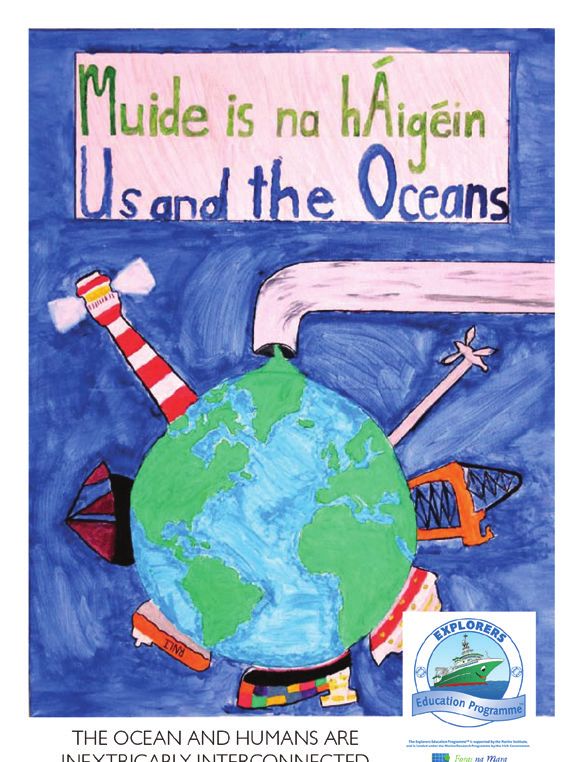
EXPLORERS PLANNING GUIDE FOR PRIMARY SCHOOL TEACHERS

   EXPLORERS EDUCATION PROGRAMMETM
   MISSION STATEMENT AND GOALS

   OUR MISSION STATEMENT
   The Explorers Education Programme™ aims to build on Ireland’s marine and maritime heritage by
   increasing awareness of the value, opportunities and social benefits of our ocean wealth and identity.

   OUR GOALS
   1. Educate school children, teachers and educators in Ireland, enabling them to understand the
       ocean’s influence on us and our influence on the ocean, through outreach activities in Ireland.
   2. Coordinate professional development training and workshops for teachers and trainee teachers,
       to develop their marine literacy skills and promote the use of marine content in line with the national
       curriculum.
   3. Develop education materials and resources based on the Irish school curriculum to support
       teachers teaching marine subjects in schools.
   4. Promote ocean literacy and marine outreach activities with local communities, educators and
       influencers so as to create dialogue and engagement about our ocean.

                                                       Compiled by:
                                                       Cushla Dromgool-Regan, Marine Institute,
                                                       Dr. Noirin Burke and Brendan Allard, Galway Atlantaquaria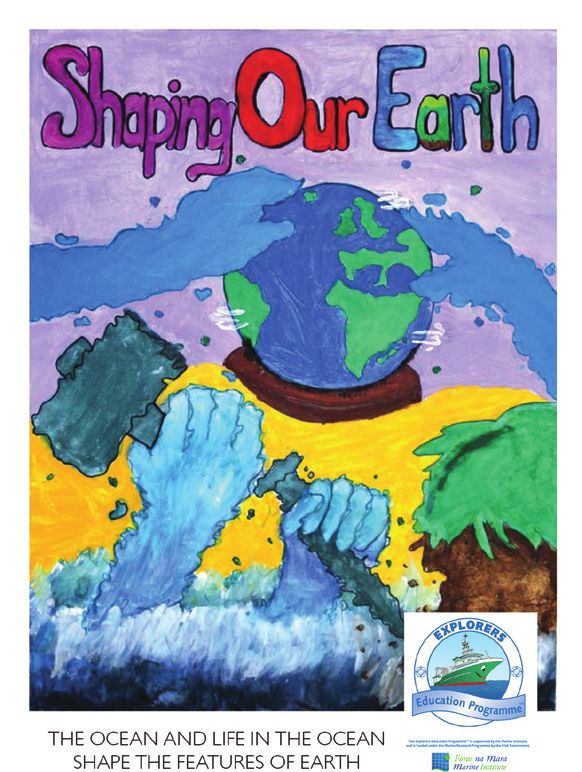
OCEAN LITERACY AND ENGAGEMENT

CONTENTS

Ocean Literacy Principles and Fundamental Concepts  .  .  .  .  .  .  .  .  .  .  .  .  .  .  .  . 2

Ideas to Develop Ocean Literacy in your Classroom and School                                                                                                         .  .  .  .  .   3

How Ocean Literate is Your School?                                      .  .  .  .  .  .  .  .  .  .  .  .  .  .  .  .  .  .  .  .  .  .  .  .  .  .  .  .  .  .  .  .  .  .  .  .   6

Ocean Literacy and Engagement Teaching Resources .  .  .  .  .  .  .  .  .  .  .  .  .  .  .  .  .  . 7

Fun Facts About the Ocean                 .  .  .  .  .  .  .  .  .  .  .  .  .  .  .  .  .  .  .  .  .  .  .  .  .  .  .  .  .  .  .  .  .  .  .  .  .  .  .  .  .  .  .  .  .  .   8

101 Ocean Literacy Multiple Choice Questions and Answers .  .  .  .  .  .  .  .  . 19

                                                                                                                                                                                     1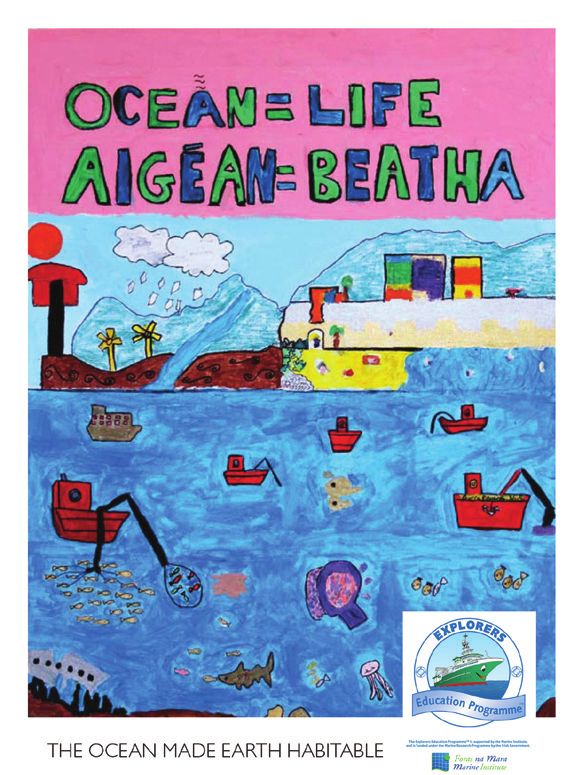
EXPLORERS PLANNING GUIDE FOR PRIMARY SCHOOL TEACHERS

OCEAN LITERACY PRINCIPLES AND
FUNDAMENTAL CONCEPTS

OCEAN LITERACY
Ocean Literacy means ‘understanding the ocean’s influence on you and your influence on the ocean’.
An ocean literate person:
        • understands essential principles and fundamental concepts about the ocean;
        • can communicate about the ocean in a meaningful way; and
        • is able to make informed and responsible decisions regarding the ocean and its resources.

OCEAN LITERACY PRINCIPLES
The following seven ocean literacy principles have been developed by scientists and educators to help us learn
more about the ocean.*
The ocean principles can be easily incorporated into subjects across the curriculum where different principles
and concepts can be used.
This booklet also provides some interesting facts and multiple-choice questions about the ocean that are
colour-coded based on the ocean literacy principle.

        1. The Earth has one big ocean with many features

        2. The ocean and life in the ocean shape the features of the Earth

        3. The ocean is a major influence on weather and climate

        4. The ocean makes Earth habitable

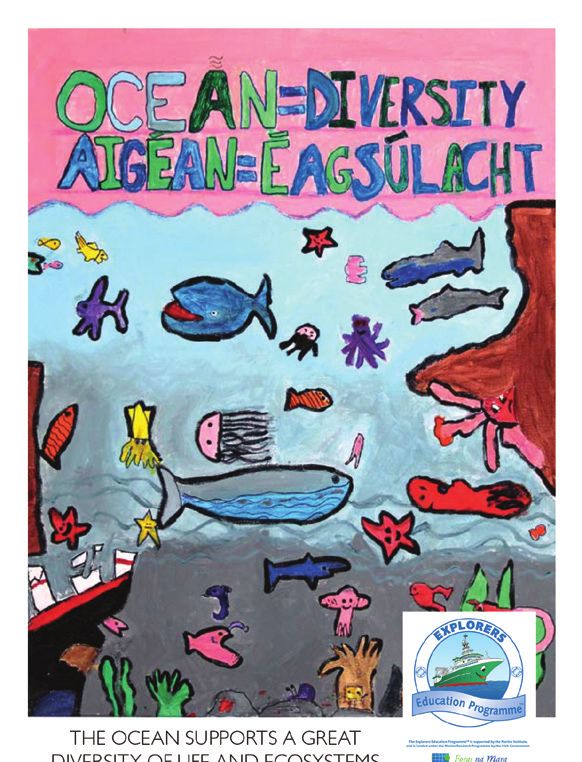
        5. The ocean supports a great diversity of life and ecosystems

        6. The ocean and humans are inextricably interconnected

        7. The ocean is largely unexplored

*The ocean literacy principles were first developed as an ocean literacy framework in the USA and are now being adopted in the EU. For
further information see: Ocean Literacy: The Essential Principles and Fundamental Concepts of Ocean Sciences for Learners of All Ages,
Version 2: March 2013. Retrieved from: http://www.coexploration.org/oceanliteracy/documents/ OceanLitChart.pdf

  2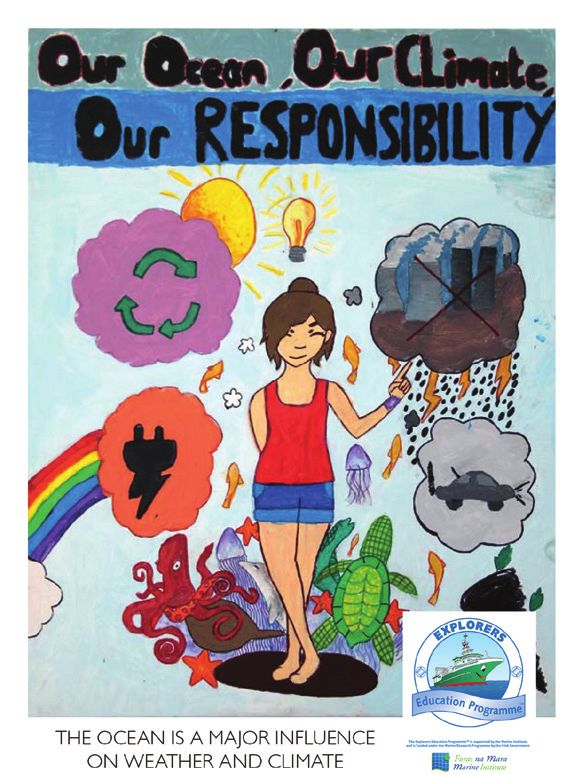
OCEAN LITERACY AND ENGAGEMENT

IDEAS TO DEVELOP OCEAN LITERACY IN YOUR
CLASSROOM AND SCHOOL
Ocean literacy and engagement can be easily adopted using the national curriculum subject and strands units
in your class and school.
Some sample projects and work completed by schools can be seen below and may provide you with new
inspirational ideas.
Also see www.explorers.ie and www.facebook.com/ExplorersMarineEducation/ for teaching resources,
lesson plans and updates to help introduce marine themes into your class.

                    GEOGRAPHY
        ✔✔Create maps, plans, diagrams or use
            models and globes to learn about the
            different ocean names and continents
            around the world. Don’t forget to learn
            about the Real Map of Ireland.
        ✔✔Create a wall hanging from the ceiling to the floor comparing
            the depths of the ocean to the heights of famous landmarks and
            mountains above the sea - use photos and pictures to show what the
            children would find at the different depths of the ocean.
        ✔✔Create a marine environmental awareness and care poster / postcard
            campaign to encourage the class, school or local community to Save
            the Seas; ‘Reduce, Recycle & Reuse’; or learn about sustainable fishing.
        ✔✔Organise a day at the beach and complete a seashore safari
            and beach clean.
        ✔✔Complete a project learning about the fishing industry or aquaculture
            industry in Ireland and compare to another country in the world such
            as China, Norway or Canada.

                        SCIENCE
         ✔✔Invite a marine scientist to the classroom.
         ✔✔Build a virtual aquarium in the classroom
             learning about the ocean animals and habitats.
         ✔✔Develop an experiment about materials,
             energy and forces or environmental awareness and care
             using a marine theme.
         ✔✔Enter a science competition.

                                                                                                          3
EXPLORERS PLANNING GUIDE FOR PRIMARY SCHOOL TEACHERS

                MATHS
     ✔✔Develop a technology or engineering
        project using Lego or recycled items to
        build a boat or submarine that may work
        in water.
     ✔✔Create wall hangings of life-size marine animals such as sharks, whales or dolphins
        to represent mathematical measurements as a pictorial or diagrammatic.
     ✔✔Have a mathathon using marine themes for the range of maths applications and
        problem solving questions, as well as testing maths terminology, facts and
        definitions.

                   HISTORY
     ✔✔Create a historical time-line or projects about famous
        Irish and international people who have influenced
        our marine heritage such as John Phillip Holland who
        built the first modern submarine; Francis Beaufort
        who invented the scale to measure the wind and Ellen
        Hutchins who classified seaweeds to name a few. Maybe
        include a few from this century such as Andy Wheeler
        who led the discovery of Moytirra Hydrothermal vents
        in the Atlantic.
     ✔✔Create a project about boats and ships made through out time such as the
        Vikings longboats, Irish currach, Irish hookers. Get your class to build a series
        of models of some of the famous ships and boats.
     ✔✔Look at the history of research vessels that have been used to explore the
        ocean, and what life was like for the people who were onboard. Famous vessels
        might include: HMS Endeavour (1760 - 1770’s) HMS Challenger (1858 - 1878);
        Calypso (1950) to name a few. Compare to the research vessels that are used
        today such as the RV Celtic Explorer.
     ✔✔Learn about the race to the poles over time. Go back in time and imagine
        being part of the expedition team. Write home explaining what it is like seeing
        the icy waters and the marine animals for the first time.
     ✔✔Create a project about the history of light houses locating them all around
        Ireland. Get your class to build their own lighthouse using a miniature light,
        copper wire and battery circuit.
     ✔✔Learn about seaweeds that have been used over time in Ireland for food and
        medicines. Compare to other parts of the world or to other resources
        from the ocean have been used.

 4
OCEAN LITERACY AND ENGAGEMENT

                ART
    ✔✔Create a marine art exhibition using a
       marine theme.
    ✔✔Build a marine sculpture.
    ✔✔Produce a film or animation about the
       ocean or a famous marine personality.

                       ENGLISH / IRISH
✔✔Create a language mobile of marine words in English,
   Gaeilge and other languages e.g. ‘ocean’: ocean, aigéan,
   farraige mhór, oceano, oleah, hav, ozean, haiyáng...
✔✔Create a book about the ocean such as a Seashore
   Guide, a book of Ocean Poetry or My Favorite Marine
   Folklore and Fables adapted by the class.
✔✔Enter a story writing competition using a marine theme.
✔✔Write an article for a newspaper or create a newsletter about
   the ocean.

                                          DRAMA / MUSIC
                  ✔✔Create a play telling a story about the animals in the ocean.
                  ✔✔Write a film script and storyboard creating a mythical tale
                      about the sea.
                  ✔✔Form a choir singing songs with marine themes... and even
                      write your own.
                  ✔✔Create costumes of famous marine people and play dress-ups
                      of the characters telling their stories: what is their name, what
                      are they famous for, what was it like in the time they were
                      alive (what did they have / didn’t have compared to today),
                      what did they do, where did they go, who did they meet, what
                      did they see...

                                                                                          5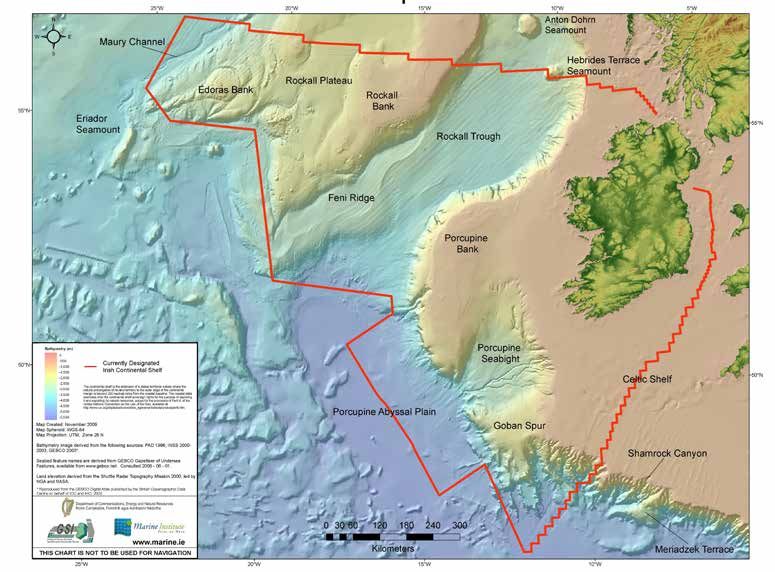
EXPLORERS PLANNING GUIDE FOR PRIMARY SCHOOL TEACHERS

HOW OCEAN LITERATE IS YOUR SCHOOL?

School Self-Evaluation Questionnaire
Ocean Literacy and Engagement in your School

Date: _____________________________
Please insert an X in the correct box:

  Junior Infants                                1st                   3rd             5th

  Senior Infants                                2nd                   4th             6th

             Junior Infants                            Strongly
                                                       disagree
                                                                  Disagree
                                                                             Don’t
                                                                             Know
                                                                                     Agree
                                                                                             Strongly
                                                                                              Agree

  My pupils like talking about the
  ocean

  My pupils understand how
  important the ocean is to humans

  My pupils can talk about how
  humans affect the ocean

  My pupils can discuss how the
  ocean affects our weather

  My pupils know about Ireland’s
  marine species

  My pupils can classify different
  marine species

  My pupils enjoy learning about the
  ocean

  My pupils like to write stories
  about the ocean

  My pupils can write scientific
  reports about marine species

 6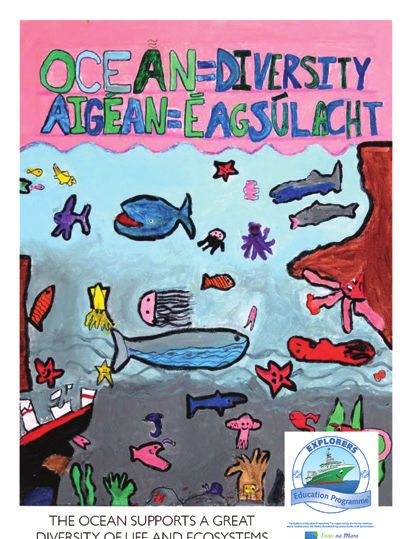
OCEAN LITERACY AND ENGAGEMENT

OCEAN LITERACY AND ENGAGEMENT
TEACHING RESOURCES

The Explorers Education ProgrammeTM provides a number of resources that can be used to help develop your
class. These can be downloaded from www.explorers.ie
      • O
         cean Fun Facts and Illustrations are based on the seven ocean literacy principles and concepts.
        Samples of the fun facts are in this booklet and may be introduced in the class to help raise awareness
        about the ocean through research, discussion and sharing of ideas.
      • T
         he Explorers Education Programme™ Teachers Resources and Guidelines are full of ideas
        for class modules, projects and activities relating to the marine. The teachers guides include content
        that covers cross curricular teaching using marine themes in the class such as marine environmental
        awareness and care, living things using saltwater aquariums in the class, tips on organising a seashore
        safari, as well as learning about hydrothermal vents.
      • O
         ver one hundred marine themed primary school Explorer Lesson Plans have been
        developed by teachers and marine experts that can be used in cross curricular teaching. These include
        the following subjects: Science, Geography, History, Mathematics, English, Gaeilge, Physical Education,
        Visual Arts, Drama and Music.
      • T
         he Explorers Ocean Literacy PowerPoint contains images and facts about the ocean highlighting
        the ocean literacy concepts.
      • T
         he Real Map of Ireland poster shows Ireland’s marine resource that is ten times the size of its land
        area.
      • Y
         our Ocean – Your Future posters highlight the ocean principles and concepts as well as the
        Blue Society’s vision, where people benefit from the ocean while preserving its environment
        (www.bluesociety.org). These can be downloaded for printing and / or to use within PowerPoint
        presentations.
      • O
         ur Ocean Depth poster shows the depths of the ocean from the sunlight zone to the trenches. It
        highlights some interesting facts about the ocean from animals that live at the different levels to some
        of the discoveries that have been made in the deepest parts of the ocean.
      • O
         cean Literacy: The Essential Principles and Fundamental Concepts of Ocean Sciences for
        Learners of All Ages, Version 2: March 2013 provides an excellent guide on the seven ocean
        literacy principles and concepts. The guide can be downloaded from: http://www.coexploration.org/
        oceanliteracy/documents/OceanLitChart.pdf

                                                                                                              7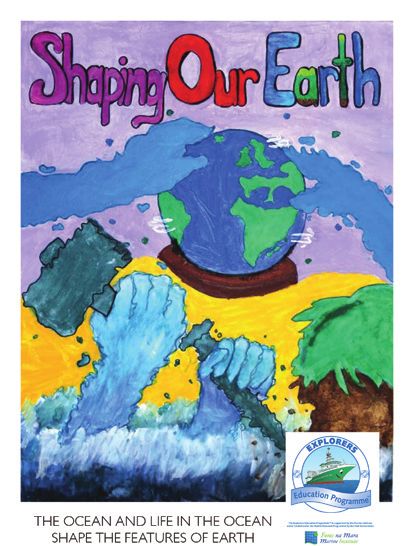
EXPLORERS PLANNING GUIDE FOR PRIMARY SCHOOL TEACHERS

FUN FACTS ABOUT THE OCEAN
Facts about the marine are endless and cover a multitude of subjects. Facts may include information about the
marine sciences, technology and engineering to influences in marine heritage, culture and the arts.
The fun marine facts and multiple choice questions contained in this document have come from a range
of sources including our ocean friends from around the world, our Explorers outreach team, as well as
contributions from a range of marine scientists and specialists. The facts and questions may be used as a source
of inspiration to develop ocean literacy and engagement. We therefore hope you find them useful in starting
class discussions and conducting your own research and exploration about the marine in range of subjects.
The facts and questions are categorised based on seven ocean literacy principles. Have fun testing yourself, the
students in your class, or even your fellow colleagues about the ocean. Maybe even try introducing a marine
fact a day into the class - particularly during Science Week, Maths Week, Engineering Week, Seachtain na
Gaeilge and Heritage Week. Best of Luck!!!

  OCEAN PRINCIPLE 1:

  THE EARTH HAS ONE BIG OCEAN
  WITH MANY FEATURES

  SIZE/ AREA
     • The ocean covers 70% of the planet’s surface.
     • 97% of the earth’s water is found in the ocean.
     • T
        here is one global ocean. It is geographically divided into five
       distinct regions which are known as the: Atlantic Ocean,
       Pacific Ocean, Indian Ocean, Arctic Ocean
       and the Southern (Antarctic) Ocean.
     • T
        he Atlantic Ocean is the world’s second largest ocean and
       covers up to 25% of the Earth’s surface, after the Pacific Ocean.
     • T
        he Atlantic Ocean is getting bigger by approximately 5cm each
       year as new sea floor is created by volcanic activity along its
       Mid-Oceanic Ridge.
     • Europe and Africa are only separated by 14.3 km of ocean.
     • T
        he most remote point in the ocean is called Point Nemo, in the
       Pacific Ocean. It is known as ‘The Pole of Inaccessibility’ and is 2,688 kilometers from the nearest land.
     • Ireland has a marine seabed that is ten times the size of the island of Ireland, (880,000km²) and is
        considered one of the largest maritime States of the European Union (see the Real Map of Ireland
        Ireland at the end of this booklet).

  UNDERWATER FEATURES
     • T
        he longest mountain range in the world is the Mid-Oceanic Ridge. It is a chain of mountains that
       runs along the centre of the ocean basins under water, stretching over 56,000km. The Mid-Atlantic
       Ridge is part of this formation.

 8
OCEAN LITERACY AND ENGAGEMENT
• T
he vertical zonation along the seashore contributes to the distribution of animals and algae. This is
influenced by the tides where the seashore is divided into zones.
»» The splash zone is above the high tide mark. Salt water only splashes into it at very high tides
and storms.
»» The intertidal zone is made up of the upper, middle and lower shore which is home to many
species that have to survive out of the water during the changing tides.
»» The subtidal zone is uncovered by water during extremely low tides.
LAYERS AND OCEAN DEPTHS
• T
he ocean depths are divided into five main layers. These layers, known as “zones” extend from the
surface to the most extreme depths where light can no longer penetrate.
»» Epipelagic Zone / Sunlight zone (0-200m). A wide range of temperatures can occur in this
zone around the world.
»» Mesopelagic Zone / Twilight zone (200m - 1,000m). The light that penetrates to this depth is
extremely faint.
»» Bathypelagic Zone / Midnight zone (1,000m - 4,000m). There is no light in this zone and the
water pressure at this depth is immense, reaching 5,850 pounds per square inch.
»» Abyssopelagic Zone / Abyssal zone (4,000m - 6,000m) comes from a Greek word meaning
“no bottom”. The water temperature is near freezing, and there is no light at all.
»» Hadalpelagic Zone / The trenches (6,000m – 11,000m).The temperature of the water is just
above freezing, and the pressure is an incredible eight tons per square inch.
• T
he deepest part of the ocean is known as the Mariana Trench. It is off the coast of Japan in the
Pacific Ocean and measures a depth of nearly 11km (10,911 meters).
• The average depth of the ocean is 4km.
• A
t the ocean’s deepest point, the water pressure is the equivalent or trying to hold up 48 Boeing 747
jumbo jets piled on top of you.
9EXPLORERS PLANNING GUIDE FOR PRIMARY SCHOOL TEACHERS
OCEAN PRINCIPLE 2:
THE OCEAN AND LIFE IN THE OCEAN
SHAPE THE FEATURES OF THE EARTH
WATER FEATURES
• There are 2.74 septillion drops of water in the ocean.
• T
he ocean drives the water cycle and is a major influence
on our weather and climate.
• W
ater takes around 1000 years to travel all the way around
the whole globe and is known as the global ocean conveyor
belt or thermohaline current
(thermo = temperature, haline = salinity).
• T
he crashing waves of the ocean help shape the features of
the coastline as well as creating sand by breaking up rocks and
shells. This is why sand comes in lots of different colours.
• T
he changing levels of the ocean including sea level rises is a process over time that has expanded
and contracted the continental shelves, created and destroyed inland seas and shaped the surface of
the land.
• T
he ocean’s waves and currents are constantly moving and redistributing the sand on the shoreline
and under the ocean on the seafloor.
TECTONIC AND LAND FEATURES UNDER THE SEA
• 7 5% of the world’s active and dormant volcanoes are in the Ring of Fire, an area around the edge of
the Pacific Ocean.
• T
here are over 500,000 earthquakes detected each year with more occurring under the ocean than
on land.
• T
he landscape of the Burren in County Clare has been shaped by geological forces for hundreds of
millions of years. The different rock types were formed under different conditions; the limestones,
which contain fossil corals, crinoids and brachiopods were formed in a warm tropical sea near the
equator, very much like the Bahamas today. The limestones were deposited slowly over a very long
period of time, around 20 million years and much of the rock is actually made up of little bits of
broken fossils.
LIVING FEATURES
• T
he ocean is home to the world’s largest living structure - the Great Barrier Reef located off the
coast of Australia. It is made up of corals forming reefs and islands stretching over 2,300 kilometers,
which is nearly 10 times the width of Ireland at its widest point.
• In Ireland cold water corals survive at depths of 3000 metres along the continental shelf, including the
Porcupine bank.
10OCEAN LITERACY AND ENGAGEMENT
OCEAN PRINCIPLE 3:
THE OCEAN HAS A MAJOR INFLUENCE
ON WEATHER AND CLIMATE
THE OCEAN – CARBON DIOXIDE RELATIONSHIP
• T
he ocean absorbs 30% of the carbon dioxide added to the
atmosphere by human activity.
• T
he ocean has a significant influence on climate change by
absorbing, storing, and moving heat, carbon and water.
• O
cean acidity (pH) has increased by 26% since the industrial revolution
due to uptake of CO² from the atmosphere, a rate that is 10 times faster
than any natural acidification for over 55 million years.
• T
he increase in ocean acidity can have a negative effect on
animals with calcium in the shells and bodies, such as coral reefs, sea shells, crabs and lobsters.
THE OCEAN – GLOBAL TEMPERATURE RELATIONSHIP
• Seawater freezes at a lower temperature than freshwater.
• A
t least 15 percent of the ocean is covered by sea ice for some part of the year. Much of the Arctic
Ocean is covered by sea ice that varies in extent and thickness seasonally.
• Due to global warming or climate change the polar ice is decreasing and the sea levels are increasing.
• O
cean circulation is the large scale movement of water in the ocean. This effect is known as the
Coriolis force.
• T
hermohaline circulation is also known as the ocean’s conveyor belt (which refers to deep ocean
density which drives ocean basin currents). These currents, called submarine rivers, flow under the
surface of the ocean and are hidden from immediate detection.
• 2 9,000 rubber ducks were lost at sea in the Pacific Ocean in 1992, and are still being found today. It
has taken 15 years for ducks to travel from the Pacific to land on British beaches. Have you seen any
of these ducks in Ireland?
• In Newfoundland, Canada, (which is located directly across the Atlantic Ocean from Ireland) people
play hockey on the ocean when it freezes near the land in wintertime. This temperature difference
(between the coast of Ireland and Canada) is due to an ocean current called the Gulf Stream.
• T
he Gulf Stream is a current of warm water that moves across the Atlantic Ocean from the Gulf of
Mexico. It brings warm moist air past Ireland and affects the moderate temperature and the amount
of rainfall we receive.
WATER FEATURES
• O
cean currents transport enormous amounts of heat around the world, which is known as
thermohaline circulation. This is also known as the Great Ocean Conveyor Belt.
• H
urricanes can form where warm water (from oceans) and air interact. They gain or lose strength
(wind speed) based on the temperature of the ocean below. Warmer oceans may result in more
frequent hurricanes with stronger wind speeds.
11EXPLORERS PLANNING GUIDE FOR PRIMARY SCHOOL TEACHERS
LAYERS AND OCEAN DEPTHS
• T
here are lots of difference types of seashore, including sandy, rocky and shingle shores and muddy
estuaries.
• T
he seashore is broken up into a number of different zones. The splash zone is the area above the
high tide mark, which is rarely covered by saltwater. The area of the shore between the high and low
tide marks (intertidal) is broken up into the upper, middle and lower shore. The sub tidal zone is the
area below the low tide mark, which is rarely exposed to the air.
• T
ides are caused by the gravitational force of the moon and the sun on earth’s ocean. When the
moon and sun are ‘in a straight line’, the force is greatest and spring tides occur (tides with the highest
high tide and lowest low tide). When the sun and moon are at right angle, the force is at its weakest
and neap tide occur (lowest high tide and highest high tide).
OCEAN PRINCIPLE 4:
THE OCEAN MAKES EARTH
HABITABLE
OCEAN – LIFE RELATIONSHIP
• O
ver 50% of the oxygen we breathe comes from
phytoplankton (tiny microscopic plants) in the ocean.
• T
he oceans are part of the water cycle, which form the
basis of the rain that falls. This includes the process of
precipitation and evaporation.
• Life began in our oceans around 3.5 million years ago.
OCEAN CHEMISTRY AND LIFE RELATIONSHIP
• T
he density of ocean water is determined by its salinity (or salt content) and temperature. Salt water
is most dense at its freezing point, unlike fresh water, which is most dense at about 3.9°C. When
seawater freezes, however, the ice contains very little salt because only the water part freezes. It can
be melted down to use as drinking water.
• T
he ocean has a significant influence on climate change by absorbing, storing and moving carbon and
heat. This process is changing the ocean chemistry, sea levels and the surface temperatures of the sea
surface. For example, if the ocean absorbs too much carbon dioxide it will become too acidic.
• T
he ocean receives nutrients, salts, sediments as well as pollutants from rivers, lakes and streams that
flow into it.
• C
hemosynthesis is the process where food is made by bacteria using chemicals as the energy source,
rather than sunlight. This process typically occurs around hydrothermal vents at the bottom of the
ocean floor.
12OCEAN LITERACY AND ENGAGEMENT
OCEAN PRINCIPLE 5:
THE OCEAN SUPPORTS A GREAT DIVERSITY
OF LIFE AND ECOSYSTEMS
OCEAN LIFE - BIODIVERSITY
• O
ur oceans teem with life ranging from the biggest animal on
Earth, the blue whale — to tiny microscopic plants and animals called
phytoplankton and zooplankton.
• T
he blue whale is the largest animal to ever live on the Earth,
measuring approximately 30m in length. It’s maximum weight is
180 metric tons (200 tons) which is equivalent to
2667 humans (each weighing approximately 70kg).
• T
he word plankton comes from the Greek word planktos, which
means “wanderer” or “drifter.” Plankton is the general term for the
diverse collection of organisms that live in the ocean and drift with the currents
as they are unable to swim. These organisms include zooplankton, phytoplankton, bacteria
and algae. They provide a crucial source of food to many large animals such as fish and whales.
• Atlantic mackerel can live for up to 17 years and attain a length of 60 cm and a weight of 3.4 kg.
• Mackerel swim in schools that can measure up to 32 kilometers in length.
• T
here are at least 30 different types of sharks and rays living in Irish waters including dogfish, spur
dogs, smooth hounds, tope, blue sharks, thresher sharks, basking sharks and many more.
• T
here are over 600 different species of seaweeds found in Irish and British waters, including brown,
green and red seaweeds.
• The orange roughy fish found in the deepest parts of the ocean, can live to over 150 years of age.
• Approximately 24 species of whale and dolphin have been sighted in Irish waters.
• L ots of marine animals have an exoskeleton, which means their skeleton is on the outside of their
body.
• T
here are three types of fish that have stings around Ireland- The Stingray, the Lesser Weaver fish
and the Greater Weaver fish.
• There are approximately 2000 types of starfish in the world.
• T
here are many types of seabird around Ireland including Herring Gulls, Cormorants, Curlews, and
Oyster catchers, Gannets, Plovers, Herons, Sandpipers and Terns. Some are divers, and hunt for food
by diving under the water, while others wade across the shore in search of prey.
• S hellfish are an important part of the Irish Seashore. They can be found clinging onto rocks, crawling
on seaweed and buried in the sand. Some species have one part to their shell while others have two.
Mussels are a species with a shell made up of two parts. They cling to the rock with byssal threads
which are thin but strong. They feed by drawing water into their shell and filtering plankton (tiny
microscopic plants and animals) out as it passes through.
13EXPLORERS PLANNING GUIDE FOR PRIMARY SCHOOL TEACHERS
• C
rustaceans are animals which usually have an exoskeleton. They have jointed limbs and some, such
as crabs, shrimps and prawns have five pairs (ten legs in total). Some can survive out of water for
certain periods of time (crabs and sand hoppers) while others such as prawns and shrimps are
found mainly in water.
• H
ermit Crabs, unlike most crab species have a hard shell which only covers a section of their body.
They wear the empty shell of other shellfish, such periwinkles and dogwhelks to protect the lower
part of its body (abdomen). As they grow, and as these shells become too small in size they search
for larger shells to move into and call home.
• S quid, octopus and cuttlefish are all part of the Cephalopod family. They move using jet propulsion,
by drawing water in and funnelling it out through their siphon. They can all camouflage by changing
their colour, while octopuses can also change their shape. They shoot out ink when trying to escape
from a predator as a line of defence.
• S almon have a number of different life stages, including Eggs, Alevins, Fry, Parr, Smolt and Adult. They
begin life in freshwater and remain here until age 1-3, when as Smolts they leave rivers and head to
sea. They remain at sea until they are mature and ready to have their own young, then they return to
the river where they were born to begin the cycle once again.
• M
any fish reproduce by spawning. Eggs and Milt are released into the water, where they mix to
create baby fish. For many there is a very high mortality rate in the first few days and to combat this
some fish release a large number of eggs. Female cod can release up to 500,000 eggs per kg of her
weight. A large 5kg cod could release up to 2.5 million eggs per year.
OCEAN HABITATS
• T
he Ocean abounds with life, offering millions of animals a place to live. Scientists say that more plant
and animal life is found in the ocean than on land. It is estimated that for every species of marine life
we know of, at least another three are yet to be discovered.
• E stuaries provide an important habitat for productive nursery areas for many marine species
including mammals, fish and bird life including otters, mullet and oyster catchers.
• O
cean plant and animal life can live in the most extreme environments; surviving near hydrothermal
vents with temperatures that can melt lead, to areas of seawater that freeze into ice, and even where
there is no light or oxygen. In the dark zone, most of the animals that live at these depths are black
or red in colour due to the lack of light.
• C
hemosynthesis is the process where food • is made by bacteria using chemicals as the energy source,
rather than sunlight. This happens in the deepest parts of the ocean where sunlight does not reach.
14OCEAN LITERACY AND ENGAGEMENT
OCEAN PRINCIPLE 6:
THE OCEAN AND HUMANS ARE
INEXTRICABLY INTERCONNECTED
OCEAN PRODUCE AND FOOD
• H
umans rely on the ocean for food. Globally, fish and shellfish
provide 1 person out of every 7 with their main source of protein.
• T
he ocean provides a wealth of resources used in medicines,
food products, cosmetics, animal feed and lots more. For example
a natural thickening agent found in seaweeds, called agar is
used in ice cream, beer, shampoo, soap and skin creams.
• M
any seaweeds, corals and ocean species have chemicals and
enzymes that are used to make different medicines that help
improve our quality of life.
• A
wealth of minerals can be found in the ocean including zinc,
copper and salt to name a few. In addition, the ocean waters contain nearly 20 million tons of gold.
• Iodine was discovered by the French chemist Barnard Courtois in 1811 when he was extracting
sodium and potassium compounds from seaweed ash.
• A
quaculture is the fastest growing food production sector in the world. It includes the farming of
fish such as Salmon and Trout, shellfish such as mussel and oysters, and seaweed. Abalone and Urchin
farming is relatively new in Ireland.
• C
ommercial fish are fish which are caught to sell. In Ireland our top 20 economically valuable species
include Mackerel, Nephrops (i.e. Prawn Species such as Dublin Bay Prawn), Monkfish, Edible Crab and
Haddock.
• T
he sustainable management of commercial fish and marine species involves many steps. These
include monitoring of the stock, research surveys, sampling landings, studying discards, looking at the
biology and age structure of the population.
• A
ge structure of a population is determined by sampling a selection of individuals and identifying their
age. By doing this we can see how many 2,3,4,5 year old, and so on, fish there are in the sample. We
can also study how many are male or female. The age of bony fish (whose skeleton is made of bone)
is identified by looking at the fish’s ear stone or otolith. This small structure has growth patterns which
are similar to the rings on a tree.
• F isheries are worth over 200 Billion Dollars to the Global economy. When you include tourism and
shipping the ocean is estimated to be worth over 24 trillion dollars, making it the world’s 7th largest
economy.
• S cientists study the marine environment. They look at water quality, temperature, pH and wave
heights. In Ireland the Digital Ocean provides information from the Galway Bay underwater
observatory, water buoys, tidal gauges plus lighthouses. This information provides vital information for
marine industries.
15EXPLORERS PLANNING GUIDE FOR PRIMARY SCHOOL TEACHERS
OCEAN LEISURE
• Ireland’s Wild Atlantic Way is 2600km in length and is one of the longest defined coastal routes
in the world.
• The seashore is considered to be the most popular tourist destination.
• F amous inventors have made the ocean more accessible for thousands of years. - A German inventor
and gifted engineer named Siebe invented the ‘first closed diving helmet’ in 1839.
• Jacques-Yves Cousteau is famous for co-inventing Scuba devices such as the Aqua-Lung, that
revolutionised diving and exploring under the sea.
OCEAN ENERGY
• If we used ocean energy technology to capture just 0.1% of the total of the ocean’s kinetic energy
caused by tides and waves, we could satisfy the current global energy demand five times over.
• Research into renewable ocean energy is being carried out throughout the world including Ireland.
TRADE AND CONNECTIONS
• More than 90% of global trade is carried by sea.
• S hanghai in China was recorded as the world’s largest port in 2014, when it handled 35 million
twenty foot containers in one year.
• A
transatlantic telecommunications cable is a submarine communications cable connecting one side
of the Atlantic Ocean to the other.
»» In the 19th and early 20th centuries each cable was a single wire. After mid-century coaxial cable
came into use, with amplifiers. Late in the century, all used optical fiber, and most now use optical
amplifiers.
»» Valentia was the eastern point of the first commercially viable transatlantic telegraph cable.
Cables were first landed at Knightstown in 1858 and Foilhommerum Bay in 1865 and finally
resulted in commercially viable transatlantic telegraph communications from Foilhommerum Bay
to Heart’s Content, Newfoundland in 1866. Transatlantic telegraph cables operated from Valentia
Island for one hundred years, ending with Western Union International terminating its cable
operations in 1966.
POPULATION DISTRIBUTION
• Over half of the world’s population lives within 60km of the sea.
• In Ireland, 40 percent of the population (1.9 million) live 5km from the coast.
• Three quarters of the world’s largest cities are located by the sea.
16OCEAN LITERACY AND ENGAGEMENT
OCEAN HERITAGE AND CULTURE
• A
t the end of the eighth century the first Viking raiders appeared in Irish waters. They used longships
when they were exploring and raiding other countries.
• Ireland has a rich maritime history and includes many famous people who have been influenced by
the ocean including
»» Grace O’Malley (Granuaile) was a famous pirate, seafarer, trader and chieftain in the 1500’s in
Ireland.
»» John Phillip Holland who was from County Clare, designed the first ‘modern submarine’ in 1897
»» Sir Francis Beaufort created the Beaufort scale, which was used for judging the strength of wind
at sea in 1805, which the scale is still used today.
• T
he oldest lighthouse in Ireland is called Hook Lighthouse and it dates back to the 12th century. It
is located at the tip of Hook Peninsula in County Wexford. The oldest lighthouse in the world is the
Tower of Hercules which was constructed in the second century. It is located in the northwest of
Spain.
• T
he deep sea is often described as a mega museum, containing more artifacts and remnants of
history than in all of the world’s museums combined! In Irish waters there are over 15,000 shipwrecks
including famous RMS Lusitania. There are possibly 3 million shipwrecks dotted around the world
ocean.
• T
he RMS Titanic was a passenger liner that became infamous for its collision with an iceberg and
dramatic sinking in 1912.
»» The wreck of the RMS Titanic lies at the depth of 3,800m and was found in two pieces, the
bow and the stern, by marine explorers Robert Ballard and Jean-Louis Michel in 1985. The
coordinates of the wreck are: latitude 41° 43’ 57” North, longitude 49° 56’ 49” West.
• Yawls, Currachs and Galway Hookers are traditional boats built in Ireland.
• T
he ocean has inspired artists, musicians, photographers, writers and film makers for thousands of
years where stories have been captured in time. Jules Verne published “Twenty Thousand Leagues
Under the Sea” in 1870 and it still remains a story of influence and inspiration for artists, explorers
and marine scientists today.
• M
ythological stories about the ocean form part of many countries culture and heritage. For example,
creatures called Selkies which are famous in Irish, Scottish, Faroese, and Icelandic folklore are said to
live as a seal in the sea but shed their skin to become human on land.
• Ireland’s heritage has close links to the ocean. There is a long history or fishing, boat building, and
seaweed harvesting around our shores. Seaweeds such as Irish moss, Egg wrack and Dulse have been
collected for centuries as a source of food, medicine and fertilizer.
• T
he Ocean has also provided inspiration for musical compositions. ‘Port na Bpucai’ is an old traditional
Irish song from the Blasket Islands, which some say was inspired by the song of the Humpback Whale.
OCEAN DESTRUCTION
• S adly approximately 14 billion pounds (6 Billion Kg.) of rubbish ends up in the ocean every year.
Most of it is plastic.
17EXPLORERS PLANNING GUIDE FOR PRIMARY SCHOOL TEACHERS
OCEAN PRINCIPLE 7:
THE OCEAN IS LARGELY UNEXPLORED
OCEAN EXPLORATION
• M
arie Tharp in partnership with Bruce Heezen created the first
scientific map of the entire ocean floor in 1977 confirming the
concept of tectonic plates and the continental shift.
OCEAN DISCOVERIES
• T
he elephant, with its long nose used for going under the water
and extending it above the surface to breathe, inspired Alexandra
the Great and his army who created the first recorded
submersible - the Glass Diving Bell.
• B
efore compasses, Vikings navigated the ocean using the stars,
birds, whales, celestial bodies, chants and rhymes.
• H
ydrothermal vents were discovered 10 years after humans landed on the moon. They occur in areas
of volcanic activity on the ocean floor and can grow to 60 meters in height.
• In 2011, Irish scientists discovered Hydrothermal vents along the Mid-Atlantic Ridge using the
remotely operated vechicle ROV Holland 1.
• A
Canadian man named Harold Hackett has put over 4800 messages in bottles into the ocean and
has gotten over 3000 responses back.
• S ome people say that we know more about the surface of the moon than we do about the depths
of the ocean. This may well be true but it is also true to say that marine scientists across the world
are working hard to rectify this gap in our knowledge. Every day more and more new sea creatures
and new sources of food, medicine and energy are being discovered in our seas.
• O
rganisations like the Marine Institute in Ireland are working to increase our understanding of
the ocean realm. From mapping and describing the physical, biological, geological, chemical, and
archaeological aspects of the ocean to understanding ocean dynamics, and developing new
technologies, every day we learn a little more about our ocean.
NEW TECHNOLOGY AND ADVANCEMENTS
• N
ew technologies and equipment such as sonar, satellites, buoys, sensors and unmanned submersibles
are expanding our ability to explore the ocean.
• Ireland, was the first country in the world to carry out extensive mapping of its marine territory,
which is 880,000 Km2 in size.
• M
ultibeam sonar on board the national research vessel, the RV Celtic Explorer was used on the first
transatlantic mapping expedition between Ireland and Canada.
• A
t the underwater Ocean Observatory in Galway Bay, scientists are testing new environmental
monitoring equipment and sensors. These may be useful in the development of renewable ocean
energy around our shores.
18OCEAN LITERACY AND ENGAGEMENT
101 OCEAN LITERACY MULTIPLE CHOICE
QUESTIONS AND ANSWERS
The 101 ocean literacy questions and answers are based on the seven ocean literacy principles and concepts.
The questions can be used as a pre and post evaluation test to assess your classes understanding of the ocean.
This may include selecting questions from one or all of the ocean literacy principles themes. They may also be
adapted to suit your classes age group.
Ocean Literacy Questionnaire Correct
– Explorers Education Programme™ Answer
THE EARTH HAS ONE BIG OCEAN WITH MANY FEATURES
1. Approximately how much of the Earth is covered by the ocean? C
a) 31% b) 51% c) 71% d) 91%
2. What is the name of second largest ocean on Earth? B
a) The Arctic Ocean b) The Atlantic Ocean c) The Pacific Ocean
d) The Indian Ocean e) Southern Ocean
3. The Atlantic Ocean separates which continents? B
a) Australia and Asia b) North America and Europe c) Antarctica and Africa
4. Which of the following is not an underwater feature? C
a) Deep sea canyon b) Abyssal Plain c) Glacier
5. What is the name given to the area where a river meets the Sea? A
a) Estuary b) Turlough c) Floodplain
6. Approximately what percentage of the total water on earth is in the ocean, D
i.e. saltwater?
a) 34% b) 52% c) 72% d) 97%
7. The remotest point in the ocean is in the Pacific Ocean which is 2,688 A
kilometres from land. It is called:
a) Point Nemo b) Point Dory c) Point Verne
8. What causes the tides? C
a) Moon b) Sun c) Moon and Sun
9. How long does it take for the water at the seashore to go from a high tide to a C
low tide?
a) 24 hours and 50 minutes b) 12 hours and 25 minutes c) 6 hours and 12 minutes
10. When do spring tides occur? B
a) Spring tides occur during the spring time
b) Spring tides occur during the full moon and the new moon
c) Spring tides occur during quarter moons
19EXPLORERS PLANNING GUIDE FOR PRIMARY SCHOOL TEACHERS
11. In the western Pacific Ocean, the Mariana Trench is the deepest known area of B
Earth’s ocean. The deepest point is approximately:
a) 9,000 metres b)11,000 metres c) 5,000 metres
12. The seashore is divided into zones. Which of the following statements is C
correct:
a) The seashores splash zone is at the subtidal zone, underwater at all times, even
during low tide.
b) The seashore’s splash zone is on the middle shore and home to seaweeds, sea
anemones and seashore fish
c) The seashore’s splash zone is above the high tide mark. Saltwater splashes into it at
very high tides and storms.
13. As far as I know the longest mountain range in the world is called: C
a) The Rocky mountains b)The Andes c)The Mid-Oceanic ridge
14. Waves are created by energy passing through water, causing it to move in a A
circular motion. Surface waves in the ocean are mostly caused by:
a) Wind moving across the surface of the water
b) The gravity of the moon and sun
c) Underwater volcanoes
THE OCEAN AND LIFE IN THE OCEAN SHAPE THE FEATURES
OF THE EARTH
15. Which statement is the most accurate description about how sand is B
produced?
a) Most of the sand in the ocean is produced by the breaking down of plastic
b) Most of the sand in the ocean is produced by the erosion and breaking down of
rocks
c) Most of the sand in the ocean is produced by the breaking down of shells
16. Activity under the ocean has shaped features such as continental shelfs, D
plateau’s, banks, ridges, seamounts, troughs, valley’s as well as islands above
sea level. These features have been formed through:
a) Movement of the tectonic plates and volcanic activity
b) Erosions and landslides
c) Changing Sea levels
d) All of the above
17. The coastal environment is constantly changing, as sand and rocks are moved D
around the ocean floor and broken up. Which are the following are important
for this process?
a) Wind b) Waves c) Tides d) All of these
20OCEAN LITERACY AND ENGAGEMENT
18. Scientists have discovered cold water corals at depths of 1000 to 3000 metres C
in Irish waters known as the designated Irish Continental Shelf. In which area
of Irish waters have cold water corals been discovered?
a) Rockall Trough b) Porcupine Abyssal Plain c) Porcupine Bank
19. Underwater volcanoes or submarine volcanoes accounts for 75% of the B
volcanic activity in the world. This activity is located near tectonic plate
movement, known as mid-ocean ridges. This chain of activity has formed a
feature known as the Ring of Fire. Which Ocean is this feature
a) In the Atlantic Ocean b) In the Pacific Ocean c) In the Arctic Ocean
20. Many features are formed where the ocean meets land. Which of the following C
is NOT a coastal feature?
a) Sandy Shore b) Wave cut platform c) U-shaped valley
21. Hydrothermal vents are like geysers that form thousands of metres under the C
ocean. They are like chimneys and are known as ‘smokers’. They were first
discovered in the late 1970’s in which ocean?
a) The Atlantic Ocean b) The Indian Ocean c) The Pacific Ocean
THE OCEAN HAS A MAJOR INFLUENCE ON WEATHER AND CLIMATE
22. Hurricanes can form where water (from the ocean) and air interact. C
Hurricanes gain or lose strength (wind speed) based on the temperature
of the ocean below. As ocean temperatures increase which of the following
statements do you think is true?
a) Warmer Oceans will have no effect on the frequency or strength of hurricanes
b) Warmer Oceans may result in less hurricanes, with lower wind speeds
c) W
armer Oceans may result in more frequent hurricanes with stronger wind speeds
23. The Gulf Stream is a current of warm water that moves across the Atlantic A
Ocean and affects the weather in Europe. In what way does it affect the Irish
Climate?
a) It brings warm, moist air past the Irish west coast causing mild and moist weather
during winter
b) It brings warm, moist air past our west coast causing long hot summers with little
rain
c) It brings warm, moist air past our west coast causing long cold winters with lots of
snow and ice
24. The Arctic Ocean is covered by sea ice that varies in its area and thickness B
seasonally. In what way is climate change impacting the Arctic?
a) Arctic fish populations are increasing
b) Polar ice is decreasing
c) Mountain glaciers are growing larger
21EXPLORERS PLANNING GUIDE FOR PRIMARY SCHOOL TEACHERS
25. Ocean currents transport enormous amounts of heat around the world, which C
is known as thermohaline circulation. This is also known as the:
a) The Biggest Heat Wave
b) The Longest Salty River
c) The Great Ocean Conveyor Belt
THE OCEAN MAKES EARTH HABITABLE
26. The water cycle involves a number of processes of which precipitation is one. B
Which statement best describes this process?
a) Precipitation is when water changes from a gaseous state back into water vapour
b) Precipitation is when atmospheric water vapour falls back down to earth as rain,
drizzle, snow, sleet or hail
c) Precipitation is when water is vaporised from its liquid state in a gaseous state and
rises upwards
27. Over 50 percent of the oxygen that we breathe has been produced by: A
a) Microscopic plants in the ocean called phytoplankton
b) Rain forests including all of the trees and plants
c) Seaweeds including kelp, Irish moss and gutweed on the seashore
28. The ocean provides us with freshwater through the process called: D
a) Diffusion b) Ice melting c) The Watershed d) The Water Cycle
29. The ocean is responsible for absorbing carbon dioxide from the atmosphere. C
What happens if the ocean absorbs too much carbon dioxide?
a) The ocean temperature stays the same
b) There is more alkaline in the water
c) The ocean becomes too acidic
30. The density of ocean water is determined by the: C
a) The number of animals swimming in the ocean
b) The pollution in the water
c) Its salt content and temperature
31. Scientists believe that the first life on Earth evolved in: B
a) Rainforests b) The Ocean c) The Desert
32. Scientists believe that most of the marine life in the ocean occurs at 0-200m in A
the warmer surface waters. This zone is also known as the:
a) Sunlight Zone b) Twilight Zone c) The Trenches
22OCEAN LITERACY AND ENGAGEMENT
33. What causes different types of marine animals and seaweeds to live in D
different zones of the seashore?
a) Availability of water at low tide (Desiccation)
b) Wave action, Light, Temperature, Substrate
c) Pollution and Freshwater from land (Salinity changes)
d) All of the above
34. Chemosynthesis is the process where food is made by bacteria using chemicals B
as the energy source, rather than sunlight. This process typically occurs
around which feature in the ocean?
a) Near seamounts b) Around hydrothermal vents at the bottom of the ocean c) In
sea caves
THE OCEAN SUPPORTS A GREAT DIVERSITY OF LIFE AND ECOSYSTEMS
35. The organisms with the highest population numbers in the ocean are called: B
a) Fish b) Plankton c) Crustaceans d) Cnidarians
36. A typical seaweed attaches onto rocks using its: C
a) Fronds b) Roots c) Holdfast
37. A sponge grows in one spot. What type of living thing is a sponge? A
a) Animal b) Algae/Plant c) Fungus
38. Sea anemones belong to a family called cnidarians (pronounced nid-ar-ians). B
What other animals are they related to?
a) Sea slugs b) Jellyfish c) Sea squirt
39. What animal would you typically find swimming in the water of a rock pool on A
the seashore?
a) Blenny b) Giant Squid c) Seagull
40. Shellfish come in different shapes and sizes. Some have a shell which comes in B
one single piece while others have two halves that fit together. Based on this,
which of these is the ODD one out?
a) Mussel b) Periwinkle c) Cockle
41. What is the largest animal in the world, which lives in the ocean and can grow B
to approximately 30 metres in length?
a) A Bowhead Whale b) A Blue Whale c) A Sperm Whale
42. What is the world’s biggest fish? A
a) Whale Shark b) Basking Shark c) Mantra Ray
43. Creatures that live in the deepest part of the ocean create their own light to A
attract prey, a mate, or to confuse predators. What is this called?
a) Bioluminescence b) Cimmerian c) Twilight
23EXPLORERS PLANNING GUIDE FOR PRIMARY SCHOOL TEACHERS
44. The ocean supports a large number of aquatic ecosystems. Which of the C
following is NOT an example of an aquatic ecosystem?
a) Salt Marsh b) Sea Floor c) Savannah
45. Orange roughy fish are found in the deepest parts of the ocean. They have C
been known to live as old as:
a) 50 years b) 80 years c) 150 years of age
46. Which of these birds is NOT a seabird (lives in a marine environment)? B
a) Albatross b) Kiwi c) Oystercatcher
47. What is Ireland’s most common species of Shark (cartilaginous fish)? B
a) Basking Shark b) Lesser Spotted Dogfish c) Angel Shark
48. When marine animals die, millions of tiny particles often drift to the bottom A
of the ocean. This is an important food source for deep sea creatures. What is
it known as?
a) Marine snow b) Marine pellets c) Ocean flakes
49. Coral reefs are among the oldest ecosystems in the world. The largest coral A
reef in the world is known as:
a) The Great Barrier Reef in the Pacific near Australia
b) Red Sea Coral Reef in the Red Sea near Israel, Egypt, and Djibouti
c) Florida Reef in the Atlantic Ocean and Gulf of Mexico near Florida
50. An octopus can change the colour of its entire body in just three-tenths of a B
second, to blend in with marine plants, rocks and sand. When animals do this
it is called:
a) Huggermugger b) Camouflaging c) Cloak and dagger
51. Which statement is true about starfish: C
a) Starfish are very gentle creatures and feed on marine plants
b) Starfish are ocean stars mimicking the stars above and are known to bring you luck
if taken home
c) Starfish are carnivores that feed on shellfish and dead animal material
52. Leatherback sea turtles nest in warm waters such as those in the Caribbean. A
They migrate into colder waters such as waters around Ireland in search of
their favourite food, which is:
a) Jellyfish b) Irish Moss c) Salmon
53. There are approximately 24 different species of dolphins and whales that have B
been recorded in Irish waters, including common dolphins, harbour porpoises,
fin whales, humpback whales and sometimes even orcas (killer whales)! The
scientific name for whales and dolphins is:
a) Crustaceans b) Cetaceans c) Cnidarians
24OCEAN LITERACY AND ENGAGEMENT
54. Seahorses carry eggs in a pouch until they hatch fully formed as miniature B
seahorses into the water? Which of the following statements is true?
a) The female seahorses gives birth to miniature seahorses
b) Male seahorses carryout the eggs in their pouches and gives birth to miniature
seahorses
c) Both female and male seahorses gives birth to miniature seahorses
55. Basking sharks diet consists mainly of: C
a) Sea lions and Seals
b) Shellfish including cockles and mussels
c) P
lankton (tiny plants and animals that live near the surface of water), fish eggs,
barnacles and shrimp
56. Colossal squid have the largest eyes in the animal kingdom in relation to their A
body size. Approximately what size are their eyes?
a) Approximately 27cm which is about the size of an adult soccer ball
b) Approximately 7cm which is about the size of a tennis ball
c) Approximately 12cm which is the size of a standard cereal bowl
57. Mangroves grow in salty water in the inter-tidal zones of tropical and B
subtropical parts of the world. What are they?
a) Mangroves are a type of fish
b) Mangroves are a type of tree
c) Mangroves are a type of seaweed
58. Around half the global population or colonies of grey seals are found in what C
part of the world?
a) Around Asian coastlines b) Around American coastlines
c) Around British coastlines
59. Which of the following statements is correct about Polar bears and Penguins? A
a) Polar bears live in the Arctic while the penguins live in the Antarctica
b) Polar bears and penguins live in the same area in the Artic
c) Polar bears live in the Antarctic for some of the year
60. The fins on a fish help it swim and are used for balance and turning in the B
water. What is the tail of a fish called?
a) Dorsal fin b) Caudal fin c) Pectoral fin
25EXPLORERS PLANNING GUIDE FOR PRIMARY SCHOOL TEACHERS
THE OCEAN AND HUMANS ARE INEXTRICABLY INTERCONNECTED
61. On average the majority of the world’s population live near the ocean. In C
the Republic of Ireland, what distance does 40 percent of the population (1.9
million) live from the coast?
a) 60km b) 20km c) 5km
62. The ocean provides an essential source of food for humans. What species of B
cod are caught by fishermen in Ireland that are sold commercially?
a) Atlantic cod b) Pacific cod c) Greenland cod
63. Nephrops norvegicus are members of the crustacean family, which grows up B
to 25 cm and are one of the most commercially important groups of animals
harvested and farmed throughout the world. They are given different names in
different parts of the world. What are they commonly known as in Ireland?
a) Norway lobster b) Dublin Bay prawn c) Langoustine d) Scampi
64. Aquaculture is the fastest growing food sector in the world, which includes C
fish, shellfish, and seaweed. Which type of aquaculture is relatively new in
Ireland?
a) Mussel and Oyster farming b) Salmon and Trout farming
c) Abalone and Urchin farming
65. Marine scientists study marine animals, sponges, seaweeds and corals to A
help discover new medicines to help cure diseases. In Ireland, what type of
seaweed has been used for centuries as a remedy for sore throats, coughs and
colds, as well as a thickening agent in cooking?
a) Carrageen Moss or Irish Moss b) Bladderwrack c) Gutweed
66. Marine scientists monitor and test the marine environment for natural and A
human pollutants in the ocean. Phytoplankton blooms, micro-algal blooms,
toxic algae, red tides, or harmful algae are all terms for naturally occurring
phenomena in the ocean. What term is used by marine scientists to describe
these events?
a) Harmful Algal Blooms b) Sinister Ocean Blooms c) Toxic Pollutions
67. Which human activity increases the acidity (pH level) of the ocean water the A
most?
a) Burning fossil fuels adds carbon dioxide to the atmosphere, which is then absorbed
by the ocean
b) The breaking down of human waste, such as plastic in the ocean, is releasing toxins
into the water.
c) Using alternative energy resources such as solar, sun and wave energy
26OCEAN LITERACY AND ENGAGEMENT
68. What is the biggest cause of marine pollution around the world - C
approximately 80%?
a) Fishing vessels (e.g. Abandoned fishing gear etc.)
b) Cruise and cargo ships ( e.g. Greenhouse gas emissions, acoustic, and oil pollution)
c) Nonpoint source pollution (e.g. Drains and sewers, open dump sites, humans leaving
items on the beach, agriculture runoff washed into the sea)
69. Approximately how much global trade, such as things that we buy – food, C
clothing, cars, building materials etc. is carried by sea in cargo ships each year?
a) 60% b) 75% c) 90%
70. Which one of the below is NOT a maritime career? C
a) Marine Insurance Consultant b) Stevedore c) Airline Pilot
71. Ocean energy is a form of renewable energy that constitutes a clean and D
inexhaustible energy source that can be used to power homes, transport and
industries around the world. What elements of the ocean may be used to
generate electricity?
a) The ocean’s tides and waves b) Winds and currents
c) Thermal elements d) All of the above
72. The majority of international data is transmitted by wires at the bottom of A
the ocean, which are called submarine communications cables. Between which
countries on either side of the Atlantic Ocean was the first transatlantic cable
laid in 1858?
a) Newfoundland and Ireland b) USA and the England
c) Spain and South America
73. What is the name of the oldest lighthouse in Ireland? C
a) Loophead Lighthouse b) Bull Rock Lighthouse c) Hook Lighthouse
74. The most popular holiday destinations in the world are: B
a) Mountain resorts b) Seaside locations c) City breaks
75. Research shows that spending time by the ocean has many positive effects on A
health and well-being. Doctors were prescribing trips to the shore or visits to
“bathing hospitals” — special clinics that offered seawater bath treatments —
as early as what century?
a) the 18th century b) the 19th century c) the 20th century
c) the 21st century
76. Garrett McNamara is a professional big wave surfer and famous for breaking B
the world record for largest wave (23.8m) ever surfed in 2011. What was the
location of the wave he surfed?
a) Eileen at Cliffs of Moher, Ireland b) Nazaré, Portugal
c) Jaws at Pe’ahi , Hawaii
27You can also read


