How to Determine Accurate Conformational Ensembles by Metadynamics Metainference: A Chignolin Study Case - Frontiers
←
→
Page content transcription
If your browser does not render page correctly, please read the page content below
ORIGINAL RESEARCH
                                                                                                                                     published: 26 May 2021
                                                                                                                            doi: 10.3389/fmolb.2021.694130

                                           How to Determine Accurate
                                           Conformational Ensembles by
                                           Metadynamics Metainference:
                                           A Chignolin Study Case
                                           Cristina Paissoni * and Carlo Camilloni *
                                           Dipartimento di Bioscienze, Università degli Studi di Milano, Milan, Italy

                                           The reliability and usefulness of molecular dynamics simulations of equilibrium processes
                                           rests on their statistical precision and their capability to generate conformational
                                           ensembles in agreement with available experimental knowledge. Metadynamics
                                           Metainference (M&M), coupling molecular dynamics with the enhanced sampling ability
                                           of Metadynamics and with the ability to integrate experimental information of
                                           Metainference, can in principle achieve both goals. Here we show that three different
                                           Metadynamics setups provide converged estimate of the populations of the three-states
                          Edited by:       populated by a model peptide. Errors are estimated correctly by block averaging, but
                   Gregory Bowman,
   Washington University School of         higher precision is obtained by performing independent replicates. One effect of
 Medicine in St. Louis, United States      Metadynamics is that of dramatically decreasing the number of effective frames
                      Reviewed by:         resulting from the simulations and this is relevant for M&M where the number of
                       Luca Bellucci,
      Istituto Nanoscienze, Consiglio
                                           replicas should be large enough to capture the conformational heterogeneity behind
       Nazionale delle Ricerche, Italy     the experimental data. Our simulations allow also us to propose that monitoring the relative
                     Sandro Bottaro,       error associated with conformational averaging can help to determine the minimum
 University of Copenhagen, Denmark
                                           number of replicas to be simulated in the context of M&M simulations. Altogether our
                   *Correspondence:
                      Cristina Paissoni    data provides useful indication on how to generate sound conformational ensemble in
             cristina.paissoni@unimi.it    agreement with experimental data.
                        Carlo Camilloni
               carlo.camilloni@unimi.it    Keywords: molecular dynamics, metadynamics, metainference, statistical error, conformational ensembles

                    Specialty section:
         This article was submitted to     INTRODUCTION
  Biological Modeling and Simulation,
               a section of the journal    Molecular dynamics simulations (MD) are a powerful tool to study at high resolution the dynamics
   Frontiers in Molecular Biosciences      of biomolecules in solution, yet they rely on the quality of the physical model used to describe
            Received: 12 April 2021        molecules (i.e., the force field) as well as on the computing power needed to acquire longer and longer
            Accepted: 14 May 2021          trajectories that is better and better statistics (Bottaro and Lindorff-Larsen, 2018; Grossfield et al.,
            Published: 26 May 2021
                                           2019). Force fields have been dramatically improving in the last years and computing power is always
                              Citation:    increasing allowing to study more and more complex systems (Best et al., 2014; Huang et al., 2017;
Paissoni C and Camilloni C (2021) How      Robustelli et al., 2018). To further improve the extent of the sampling and the accuracy of the physical
to Determine Accurate Conformational
                                           model, enhanced sampling techniques (Sugita and Okamoto, 1999; Laio and Parrinello, 2002) as well
         Ensembles by Metadynamics
           Metainference: A Chignolin
                                           as techniques to integrate experimental data in MD have been developed (Fennen et al., 1995;
                          Study Case.      Bonomi et al., 2016; Köfinger et al., 2019). Reviewing the vast literature on both topics is outside the
         Front. Mol. Biosci. 8:694130.     scope and space of the present work and excellent reviews are available (Spiwok et al., 2015; Allison,
    doi: 10.3389/fmolb.2021.694130         2017; Bonomi et al., 2017; Bottaro and Lindorff-Larsen, 2018; Camilloni and Pietrucci, 2018; Bernetti

Frontiers in Molecular Biosciences | www.frontiersin.org                            1                                   May 2021 | Volume 8 | Article 694130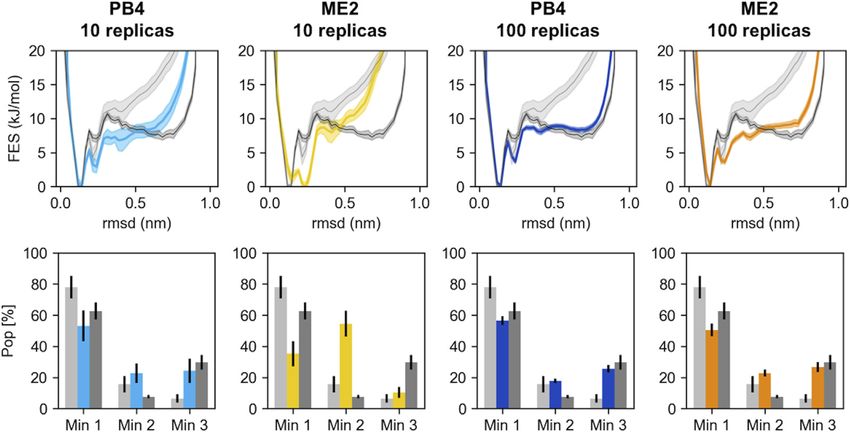
Paissoni and Camilloni                                                                                          Statistically Accurate Conformational Ensembles

                                                                                    to M&M but to the sound application of enhanced sampling
                                                                                    techniques. To answer these questions, we investigated
                                                                                    thoroughly the conformational space of chignolin (Figure 1), a
                                                                                    10 residues peptide that can populate three states and whose
                                                                                    complexity, while not comparable to that of full-length proteins,
                                                                                    is definitely greater than the widely used alanine dipeptide in
                                                                                    vacuum (Kührová et al., 2012). In doing so we introduced a
                                                                                    scheme to combine simple CVs into more complex ones with the
                                                                                    aim of discriminating some identified reference states. By
                                                                                    performing PBMetaD simulations with many simple CVs
                                                                                    (PB20), PBMetaD simulations with less, optimally combined,
                                                                                    CVs (PB4); as well as MetaD simulations with the same optimally
                                                                                    combined CVs (ME2), all in triplicate (Table 1), we show that, 1)
                                                                                    block-averaging provides a robust estimate of statistical errors; 2)
                                                                                    PBMetaD and MetaD dramatically decrease the effective number
                                                                                    of frames collected by MD and this effect is worse in MetaD. This
                                                                                    second effect is very relevant in combining Metadynamics with
                                                                                    Metainference because it decreases the number of effective
                                                                                    replicas that can actually contribute to the estimation of the
                                                                                    conformational heterogeneity associated with experimental
                                                                                    observables. To test this effect, we then performed (Table 1)
                                                                                    M&M simulations using either PBMetaD or MetaD and 10 or 100
                                                                                    replicas. To avoid effects related to the quality of the experimental
                                                                                    data and the forward model, synthetic SAXS data have been
                                                                                    obtained using as a reference a 40 μs long simulated tempering
  FIGURE 1 | Representation of the three main chignolin minima                      simulation of chignolin by Piana et al., 2020. Our results indicate
  corresponding to the folded (Min 1), misfolded (Min 2) and unfolded (Min 3)
                                                                                    that the minimum number of replicas in M&M simulations can
  states.
                                                                                    be set by monitoring the relative error associated with the
                                                                                    averaging of back calculated observables, and that this number
                                                                                    is affected not only by the system and the calculated observable
et al., 2020). Among these methods we have contributed to                           but also by the details of the Metadynamics setup.
develop Metadynamics Metainference (M&M) (Bonomi et al.,
2016a) that is a combination of Metadynamics (Laio and
Parrinello, 2002), a popular enhanced sampling technique, and                       MATERIALS AND METHODS
Metainference (Bonomi et al., 2016), a Bayesian scheme that
allows for the integration of equilibrium experimental                              Molecular Dynamics Simulations of
observables as restraints over multiple replicas of a simulation.                   Chignolin
M&M has been applied to combine different experimental                              Simulations of chignolin were performed using GROMACS 2019
observables and to work on a large variety of systems (Löhr                         (Abraham et al., 2015) and PLUMED 2 (Tribello et al., 2014). In
et al., 2017; Eshun-Wilson et al., 2019; Heller et al., 2020;                       the first round of simulations the DES-amber force field (Piana
Jussupow et al., 2020).                                                             et al., 2020) was used in combination with the tip4p water model
    In this work we aim to understand how Metadynamics should                       with increased dispersion (Piana et al., 2015). A starting model of
be ideally coupled to Metainference in order to guarantee optimal                   CLN025 chignolin was taken from PDB 5AWL (Honda et al.,
statistical precision and experimental accuracy. Multiple MetaD                     2008) and solvated with 2,553 water molecules in a dodecahedron
variants are available and M&M has always been coupled with                         box initially 1.4 nm larger than the protein in each direction. The
Parallel Bias Metadynamics (PBMetaD), a variant specifically                         system was neutralized with a salt concentration of 100 mM
designed to enhance the sampling along many one-                                    NaCl. After an initial energy minimization to a maximum
dimensional collective variables (CVs) (Pfaendtner and                              force of 100 kJ/mol/nm, the solute was equilibrated under
Bonomi, 2015). In particular we identified three key questions:                      NVT condition at the temperature of 340 K for 50 ps using
1) how reliable are the error estimates resulting from                              the Berendsen thermostat (Berendsen et al., 1984); then
Metadynamics simulations when using a standard technique as                         Berendsen barostat was used to equilibrate the system in the
block averaging (Flyvbjerg and Petersen, 1989); 2) how does                         NPT ensemble to the target pressure of 1 atm for 200 ps,
multiple-walkers PBMetaD compare to conventional multiple-                          maintaining the temperature at 340 K with the Bussi
walkers MetaD and what are their pros-and-cons; 3) how do the                       thermostat (Bussi et al., 2007). The equilibration phase was
two approaches combine with Metainference to achieve at the                         followed by an initial MD simulation of 250 ns, from which a
same time an optimal sampling and an optimal integration of                         pool of conformations was extracted to be used as starting models
experimental data? Of note, the first two questions apply not only                   for the subsequent runs (run 1). Starting points for replicates run

Frontiers in Molecular Biosciences | www.frontiersin.org                        2                                        May 2021 | Volume 8 | Article 694130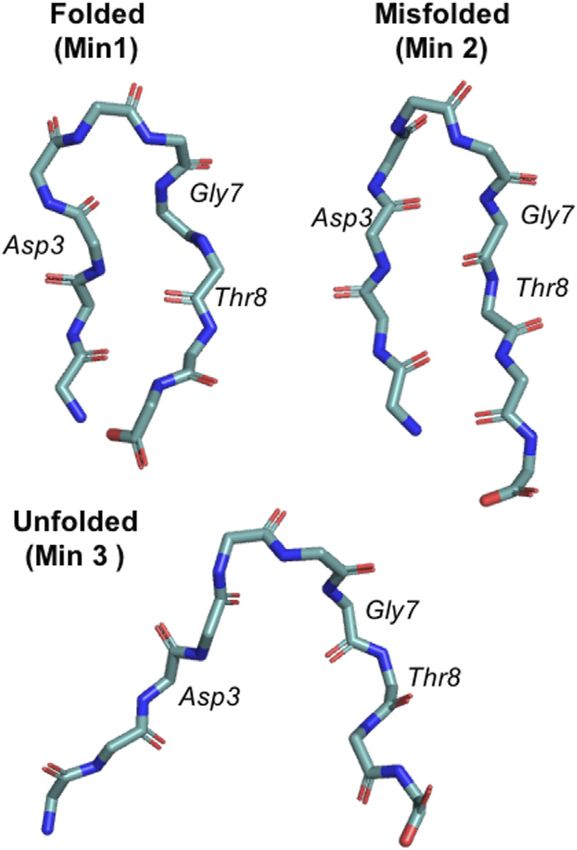
Paissoni and Camilloni                                                                                                             Statistically Accurate Conformational Ensembles

TABLE 1 | Summary of the simulations performed or analyzed in this work.

Name              Replicates         #Replicas         Enhanced sampling technique                #CV            Force field            Replica length (total) μs          Color code

Referencea              1                  1           Simulated tempering                         NA           DES-amber                           40                    Dark grey
PB20                    3                 10           PBMetaD                                     20           DES-amber                         1 (30)                  Blues
PB4                     3                 10           PBMetaD                                      4           DES-amber                         1 (30)                  Greens
ME2                     3                 10           MetaD                                        2           DES-amber                         1 (30)                  Violets
Prior                   1                 10           PBMetaD                                      4            99sb-ildn                        1 (10)                  Light grey
PB4(10r)                1                 10           PBMetaD                                      4         99sb-ildn + M&M                     0.5 (5)                 Cyan
ME2 (10r)               1                 10           MetaD                                        2         99sb-ildn + M&M                     0.5 (5)                 Yellow
PB4(100r)               1                100           PBMetaD                                      4         99sb-ildn + M&M                    0.5 (50)                 Blue
ME2 (100r)              1                100           MetaD                                        2         99sb-ildn + M&M                    0.5 (50)                 Orange

For each simulation are reported: the number of replicates, the replicas (or walkers), the enhanced sampling technique employed, the number of CVs, the force field, the length of each
replica (and the total simulation time) and the color code associated to the simulation in the figures.
a
  This simulation was performed by Piana et al. (2020).

2 and run 3, where instead extracted from run 1 thus resulting in                              as the extent of Cartesian space covered by a variable to estimate
very different initial conditions. The production runs were all                                CVs fluctuations, and setting a minimum value for the width
performed in the NPT ensemble, maintaining temperature and                                     specific for each CV (0.03 rad for the dihedral angles, 0.004 nm
pressure at the values of 340 K and 1 atm respectively, using the                              for the gyration radius, 0.02 for the antiparallel beta sheet-
Bussi thermostat (Bussi et al., 2007) and the Parrinello-Rahman                                content, 0.01 and 0.001 for the back and cmap optimized CVs).
barostat (Parrinello and Rahman, 1981). Electrostatic was treated                                  Each simulation was analyzed by creating a concatenated
by using the particle mesh Ewald scheme (Essmann et al., 1995)                                 trajectory and reweighting each frame by using the final
with a short-range cutoff of 0.9 nm and a Fourier grid spacing of                              Metadynamics bias potential, assuming a constant bias during
0.12 nm; van der Waals interaction cutoff was set to 0.9 nm. For                               the entire course of the simulation (Branduardi et al., 2012). To
these simulations the hydrogen mass repartitioning scheme                                      assess the convergence of the simulations and the associated
(Hopkins et al., 2015) was used to reduce the computational                                    statistical errors we used block-average analysis (Flyvbjerg and
cost: the mass of heavy atoms was repartitioned into the bonded                                Petersen, 1989; Bussi and Tribello, 2019). According to this
hydrogen atoms using the heavyh flag in the pdb2gmx tool; the                                   technique, the trajectory is split into a set of NB blocks of
LINCS algorithm (Hess et al., 1997) was used to constraint all                                 equal length. By comparing the averages of a given quantity
bonds, eventually allowing to use a time step of 5 fs.                                         from each block we can calculate the error bar on our estimate of
    Using this set-up, we ran three different Metadynamics                                     that quantity: for large enough blocks the averages should not be
simulations, each performed in triplicates (named run 1, run                                   time correlated so that the estimate of the error converges. As our
2, run 3, starting from different set of conformations). These are:                            blocks could be characterized by different weights, this must be
                                                                                               taken into account in the estimation of the error as described in
1. PB20: in which PBMetaD was employed and 20 CVs were                                         (Invernizzi et al., 2020). Given Wb the weight of the block b,
   biased. These include the phi/psi dihedral angles of the 10                                 obtained as the sum of the weights of the frames
   amino acids composing chignolin (18 CVs), the gyration                                      composing the block,      the statistical error on the observable

   radius and the antiparallel beta sheet-content.                                                                             Wb [Ob −O]2
                                                                                                                                NB

2. PB4: in which PBMetaD was employed biasing 4 CVs,                                           O      is:   errO  (NBeff1 −1) b1 NB         ,  where     NBeff
                                                                                                                                 b1 Wb
   comprising the gyration radius, the antiparallel beta sheet-                                              2
   content and 2 CVs optimized based on the knowledge of the                                   (NB          NB
                                                                                                  b1 Wb ) /b1 Wb is the effective block size, the sums run
                                                                                                                    2

   folded, misfolded and unfolded chignolin conformations                                      on the number of blocks NB, O     b is the average computed over
   (named back and cmap, and based on a combination of                                         the frames of block b and O is the average computed over all the
   backbone dihedral angle and of contacts between groups of                                   frames, which corresponds to the average computed over the
   atoms, see next section).                                                                                          NB Wb O
                                                                                               block averages, i.e. O               b / NB Wb . As pointed out in
                                                                                                                         b1              b1
3. ME2: in which MetaD was employed using 2 CVs, the gyration                                  (Invernizzi et al., 2020) when the weights of the blocks are
   radius and the optimized cmap collective variable.                                          unbalanced, using NB instead of NBeff can significantly
                                                                                               underestimate the uncertainty.
   All the simulations were performed adopting the multiple-
walker scheme (Raiteri et al., 2006), simulating 10 replicas (or
walkers): each replica was evolved for 1 µs, resulting in a 10 μs                              Optimized Collective Variables
sampling per each simulation. Metadynamics was used in its well-                               PBMetaD can in principle bias many CVs using one-dimensional
tempered version (Barducci et al., 2008), where Gaussians with an                              Gaussians (Pfaendtner and Bonomi, 2015), but often these CVs
initial height of 0.5 kJ/mol were deposited every 1 ps using a bias                            are simple in nature (like dihedrals or distances) thus losing the
factor of 10. For all the CVs, the width of the Gaussians was                                  complex correlations that may be at play in slow reaction
determined with the dynamically adapted geometry-based                                         coordinates. Finding optimal CVs is a complex problem that
Gaussian approach (Branduardi et al., 2012), using 0.015 nm                                    requires the previous knowledge not only of the different states

Frontiers in Molecular Biosciences | www.frontiersin.org                                   3                                                  May 2021 | Volume 8 | Article 694130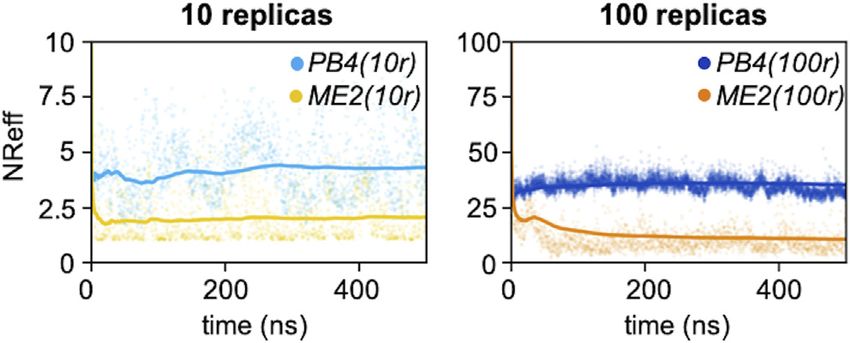
Paissoni and Camilloni                                                                                               Statistically Accurate Conformational Ensembles

but also of the pathways connecting them. Example of methods                         forward model used to back-calculate the observable from
using reactive pathways to estimate optimal CVs include TICA,                        conformation X, fi (X) indicates the average over the NR
SGOOP and machine learning approaches (Tiwary and Berne,                             replicas for observable i, σ Br,i is an uncertainty parameter that
2016; McCarty and Parrinello, 2017; Sultan and Pande, 2017,                          describes random and systematic errors, σ SEM    i     is the standard
2018; Wang and Tiwary, 2020). Instead of learning from reactive                      error of the mean related to conformational averaging, λ is an
pathways one can instead try to only maximize the discrimination                     optional scaling parameter and Eσ is an energy term that accounts
of the different states as implemented in HLDA (Mendels et al.,                      for normalization of the data likelihood and error priors. In
2018). One possible limitation of this latter approach, which has                    Metainference Monte Carlo sampling is used to sample both the
the clear advantage of being more affordable for large and                           uncertainty σ Br,i (which depends on both the replica and the
complex systems, is that a CV that optimally discriminate                            observable) and optionally the scaling parameter λ.
states may not correspond to an efficient reaction coordinate.                           Metainference can be combined with Metadynamics (M&M)
Here we propose a simple method to generate a novel                                  to accelerate the exploration of the conformational space
CV(a, φ)  Ni1 ai φi , where a is a normalized vector of size N,                   (Bonomi et al., 2016; Löhr et al., 2017). In M&M the replicas
starting from N input simple collective variables φ (e.g., these                     share the Metadynamics bias potential as in the case of multiple-
could be the backbone dihedral angles, or the C⍺-C⍺ contacts).                       walkers method (Raiteri et al., 2006). Depending on the
CV(a, φ) while trying to discriminate two or more states, tries                      bias potential VG each replica r has a different weight that can
also to 1) discard as few of the input CVs φ as possible by keeping                  be approximated on the fly as wr ∼ eVG (CV(Xr ))/kB T , with CV(Xr)
the weights a of the combined CVs as uniform as possible; and 2)                     representing the set of selected CVs, functions of the microscopic
keep the width of the minima comparable. This latter property is                     coordinates X. Therefore, these weights must be taken into
relevant for methods like Metadynamics that uses Gaussians. To                       account when calculating the experimental averages and the
achieve these properties the optimal value a is obtained by                          standard error of the mean σ SEM     , that are computed as: fi (X)
                                                                                                                       i
minimizing the following scoring function (here given for two
                                                                                                                                         wr [fi (X r )−⟨fi (X)⟩]2
                                                                                                                                         NR
states indicated as 1 and 2):                                                          NR                NR
                                                                                     r1 wr fi (X r )/ r1 wr and σ i  (NR1eff −1) r1
                                                                                                                      SEM
                                                                                                                                                                   ,
                                                                                                                                               r1 wr
                                                                                                                                                 NR

            < CV1 > − < CV2 > maxσ CV1 , σ CV2                N           a2i
ψ(a)  −                          +                   +           a2 ln                                          2
              2σ 2CV1 + σ 2CV2    minσ CV1 , σ CV2          i1 i      1/ N       with NReff  (NR                 NR 2
                                                                                                         r1 wr ) /r1 wr representing the number of
                                                                                     effective replicas. In order to reduce the noise resulting from the
where the first term maximizes the discrimination among states,                       instantaneous fluctuations of the bias, the weight of each replica is
the second keeps the width of the minima comparable, the last                        calculated via a moving average of the bias over a given number of
keeps the parameters as uniform as possible.                                         MD steps (set by the keyword AVERAGING). Also, to reduce the
   This approach is then applied to optimize two CVs, back and                       oscillations of σ SEM
                                                                                                       i      we used the maximum value of σ SEM i    over the
cmap, as the combination of chignolin backbone dihedral angles                       same time window defined by AVERAGING keyword. Finally, we
and the contacts among the center of the backbone of i − i + 3                       automatically determined the√maximum       values that can be sampled
aminoacids, respectively. The CVs are first calculated for the three                  for σ Br,i as max(σ Br,i )  σ SEM
                                                                                                                    i    NR , with NR being the number of
states as observed in the preliminary 250 ns long simulation                         replicas (this option can be set in plumed using the keyword
(Supplementary Figure S1) and then their combination is                              OPTSIGMAMEAN  SEM_MAX).
obtained as described above. The distribution of the values for
the cmap CV before and after optimization is reported in
Supplementary Figure S1.                                                             Small-Angle X-Ray Scattering
                                                                                     (SAXS)-Driven Molecular Dynamics
Metainference                                                                        Simulations
Metainference is a technique based on Bayesian inference and                         Synthetic SAXS intensities, to be used as target for the restraints
replica-averaging modeling (Rieping, 2005; Cavalli et al., 2013;                     in our simulations, were calculated from a reference 40 μs long
Bonomi et al., 2016). Following the replica-averaging modeling                       MD trajectory, performed with the DES-amber forcefield and
strategies, multiple replicas of the system are simulated in parallel                provided by Piana et al. 2020. From this simulation a set of 24
and the quantities to be restrained against experimental data are                    representative SAXS intensities at different scattering angles,
back-calculated as averages over the replicas, thus taking into                      ranging between 0.01 and 1.39 Å−1 and equally spaced, were
account the effects of conformational averaging. Bayesian                            calculated with PLUMED using atomistic structure factors and
inference allows to modulate the strength of the restraints                          considering only the trajectory frames with temperature close to
estimating, along with the model, statistical errors, which                          340 K (Paissoni et al., 2019; Paissoni et al., 2020). While we know
include random and systematic errors as well as inaccuracies                         that this range is not representative of a realistic SAXS
of the forward model.                                                                experiment, considering the small dimension of the protein we
   In the case of Gaussian noise, the Metainference                                  decided to use such a large range to include higher resolution
energy      is   described         by      (Löhr        et     al.,   2017):         details. SAXS restraints were applied every 2 MD steps and
                                                      B 2        SEM 2
EMI  EFF + kB2T Ni1d NR
                         r1 [d i − λ⟨ fi (X)⟩] 2
                                                  /(σ r,i ) + (σ i  )  + Eσ ,        atomic scattering factors were used to back-calculate the 24
where EFF is the force field energy, kB is the Boltzmann constant,                    SAXS intensities. The SEM_MAX option was used to
T the temperature, d the set of Nd experimental data, f(X) is the                    automatically estimate both the σ SEMi    as well as the maximum

Frontiers in Molecular Biosciences | www.frontiersin.org                         4                                            May 2021 | Volume 8 | Article 694130
Paissoni and Camilloni Statistically Accurate Conformational Ensembles
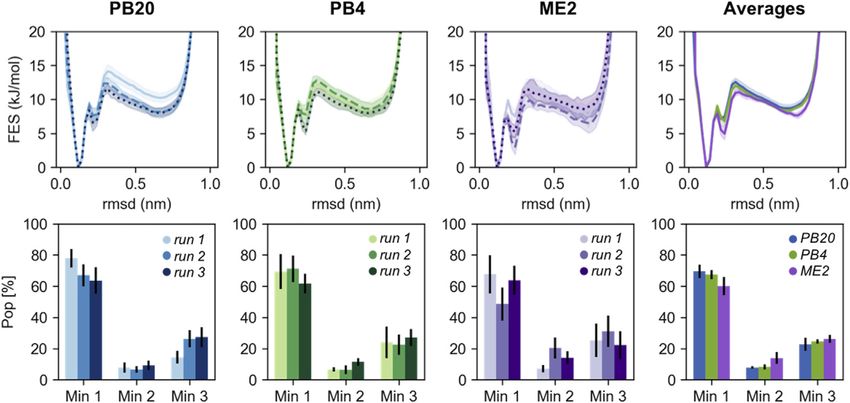
FIGURE 2 | The RMSD free energies (top panels) and the population of the three main chignolin minima (bottom panels) are represented for different sets of
simulations (PB20 in blues, PB4 in greens, ME2 in violets shades). The different shades indicate each of the runs of the triplicates and the errors are estimated via block-
average analysis. In the rightest panels are reported the averages computed over the triplicates for each set of simulations; here the errors are determined as standard
errors over the triplicates as described in the main text. In all the pictures the free energies are shifted to set their minimum to 0.
value of σ Br,i for the M&M simulations; the window averaging for temperature and to compute the free energy and the
the estimation of the weights was performed on a time window of equilibrium population related to its three main
1 ps to match the frequency of deposition of Metadynamics hills. conformational states (Figure 1). In particular we focused our
For the set of SAXS-driven simulations we used as prior the attention on the ability to correctly estimate the errors associated
amber99sb-ildn (Lindorff-Larsen et al., 2010) force field with the tip3p to these calculations. Estimating statistical errors in enhanced
water model (Mark and Nilsson, 2001). The system was prepared and sampling MD of large systems is a relevant problem because of
equilibrated as described above and a set of starting conformations was their high computational cost. Previous works have already noted
generated from a 1 μs long plain MD simulation. We performed five the importance of running multiple replicates, alternatively
Metadynamics simulations (Table 1): one unrestrained, prior, block-averaging can be used to estimate errors taking into
amber99sb-ildn simulation, using the PB4 setup with 10 replicas; accounts the time-correlated nature of MD. Here we compare
two simulations, PB4 (10r) and PB4 (100r), with the PB4 setup plus statistical errors estimated from replicates with those resulting
SAXS restraints using either 10 or 100 replicas; two simulations, ME2 from block-averaging. In Figure 2 we rebuilt a free-energy profile
(10r) and ME2 (100r), with the ME2 setup plus SAXS restraints, using as function of an unbiased collective variable, the RMSD
either 10 or 100 replicas. The unrestrained prior simulation evolved for (computed over the main chain plus the Cβ atoms) with
1 μs per replica, while the SAXS driven simulations evolved for 500 ns respect to a reference folded state of chignolin, and we
per replica. estimated the population of three minima: folded (Min 1,
The input files for all the simulations of this work are RMSD ≤1.9 Å), misfolded (Min 2, 1.9 Å ≤ RMSD ≤3.0 Å) and
deposited in PLUMED-NEST (The PLUMED Consortium, unfolded (Min 3, RMSD >3.0 Å, see Figure 1). The error of each
2019) as plumID:21.014. simulation is estimated using block-averaging. Furthermore,
averages and errors are obtained by the triplicates, where the
average free energy of bin b is computed as Fb −kB T log(pb )
σ
RESULTS and the associated errors are estimated as errFb √1 k T pb , with
3 B pb
pb being the average probability of the bin computed over the
Metadynamics and M&M simulations, using either PBMetaD or triplicates and σ pb its standard deviation.
conventional MetaD, were performed to understand: 1) the Qualitatively, the resulting free energies display a good overlap
statistical precision achievable by different Metadynamics setups; both within the triplicates and when comparing the three
2) the role played by enhanced sampling in the integration of simulation setups (Figure 2). Major deviations are mainly
experimental information in MD simulation by Metainference. located in the high energy regions (>2kBT). Nevertheless, we
note that the variability among simulations strongly affect the
population of the three minima, leading to differences for the
Assessing the Statistical Precision of folded minimum from less than 10% for PB4 simulations to ∼20%
Metadynamics Simulations for ME2 simulations. The populations estimated by averaging
PBMetaD or conventional MetaD, was used to simulate the over the replicates are more precise and in quantitative agreement
folding and unfolding of chignolin close to the transition among the three simulation setups stressing once again the
Frontiers in Molecular Biosciences | www.frontiersin.org 5 May 2021 | Volume 8 | Article 694130Paissoni and Camilloni Statistically Accurate Conformational Ensembles
TABLE 2 | For each replicate of the PB20, PB4, and ME2 simulations are reported: Metadynamics Metainference: Enhanced
1) the number of transitions per microsecond from the folded (F) to the
unfolded (U) state and vice versa; 2) the percentage of the effective frames, NFeff, Sampling and Conformational Averaging
over the total number of frames (NF). The poor statistics characterizing our Metadynamics simulations,
Transition per μs NFeff/NF (%)
and ME2 in particular, raises issues about their combination with
Metainference, in particular when the experimental data to be
U -> F F -> U
integrated represent averages over multiple conformational
PB20 Run 1 2.2 ± 0.4 2.8 ± 0.3 37% states. To test this effect, we performed 4 M&M simulations
Run 2 2.2 ± 0.4 1.9 ± 0.3 39% with the amber99sb-ildn force field, using as restraints synthetic
Run 3 1.9 ± 0.3 1.8 ± 0.3 39% SAXS data derived from reference 40 μs long DES-amber
Average 2.1 ± 0.1 2.2 ± 0.3 38 ± 0 1%
PB4 Run 1 2.0 ± 0.4 2.8 ± 0.5 22%
trajectory. The choice of SAXS is due to the ability of this
Run 2 2.1 ± 0.4 1.8 ± 0.4 20% technique to capture the overall size and shape of the
Run 3 2.2 ± 0.4 2.5 ± 0.5 26% molecules, thus being particularly sensitive to the equilibrium
Average 2.1 ± 0.1 2.4 ± 0.3 23 ± 0 2% between the different conformational states (see Supplementary
± ±
ME2 Run 1 1.6 0.6 2.4 0.5 2.7
Figure S6); herein the use of synthetic data allows to avoid
Run 2 1.2 ± 0.4 1.3 ± 0.4 4.1
Run 3 1.1 ± 0.3 1.4 ± 0.4 3.0
experimental and forward model errors and to focus on the
Average 1.3 ± 0.2 1.7 ± 0.4 3.3 ± 0.4% effect of Metadynamics on the number of effective replicas.
2 We firstly performed a prior 10 replicas PB4 simulation, with
NFeff is computed as: NFeff (NF NF 2
i1 wi ) /i1 wi , where wi is the weight associated to
each frame. The average and the standard error over the triplicates are also reported.
the amber99sb-ildn force field, verifying that the resulting
conformational ensemble and the back-calculated SAXS
profiles are significantly far from the reference DES-amber
importance of running independent simulations. Reassuringly, simulation (Supplementary Figures S7, S8). Then we tested
errors calculated by block-averages (comparing the free-energy four different SAXS-restrained M&M setup, either using PB4
obtained from blocks of lengths in the range 30 ns–1 µs), correctly or ME2 with 10 or 100 replicas (Table 1). The inclusion of SAXS
estimate the variability observed within the triplicates (Figure 2), restraints improve, as expected, the agreement with the input
with ME2 simulations showing the largest error in the set. Free- scattering profile Iref . We found that the relative error of the
energies and errors estimated as a function of the other biased and I−Iref
calculated SAXS intensity, defined as Rfactor Iref × 100, is in
unbiased CVs (Supplementary Figures S2, S3) display a
the range 0.4–1.0% (Supplementary Figure S9), representing a
consistent behavior. Furthermore, we compared our results
significant improvement with respect to the prior amber99sb-ildn
with a reference 40 μs long simulated tempering simulation
simulations (Rfactor 6.7%, Supplementary Figure S8). Also, we
published in Piana et al. (2020), showing that the populations observe that in all the cases the input profile is well in agreement
of the minima are quantitatively in agreement with those with the one back calculated from the simulations within the
obtained averaging over our replicates (Supplementary error estimated by Metainference (Supplementary Figure S9).
Figure S4). Nevertheless, it is worth noting that the estimated errors differ in
To rationalize the higher variability observed in ME2 the four simulations as it will be discuss later, thus slightly
simulations with respect to the PB20 and PB4 simulations, we impacting the extent of the agreement with the input data:
calculated the number of transitions between the folded and i.e., larger errors result in slightly worse agreement as in ME2
unfolded state as well as the effective statistics, i.e., the fraction of (10r), while smaller errors lead to better agreement as in PB4
frames actually contributing to our statistical observations (cf. (100r).
Table 2). While the number of transitions per microsecond is Next, for each of the four simulations we monitored the
slightly lower in ME2 with respect to PB20 and PB4, the effective number of effective replicas as a function of the simulations
number of frames is surprisingly low for all simulations and time. With the same number of actual replicas, the PB4 setup
dramatically so for ME2 (Table 2). This is likely due to the wider displayed more effective replicas than ME2 (Figure 3): the
exploration of the conformational space by MetaD, that spends average NReff in PB4 (10r) was two times larger, 4.3, than in
more time in high free-energy regions, thus reducing the fraction ME2 (10r), 2.0, and it was more than three times larger in PB4
of frames that actually populate the most relevant conformations (100r) than in the ME2 (100r) setup (NReff of 35 vs. 10). This
(see also Supplementary Figure S5). This reminds us that difference impacts on the resulting conformational ensemble
enhanced sampling is not a free lunch: indeed, while favoring (Figure 4; Supplementary Figure S10). A striking effect is
the exploration of a wider conformational space, it reduces the seen for the ME2 (10r) simulation (NReff 2.0), in which the
statistical precision of the low free-energy regions reconstruction. inclusion of SAXS data caused a strong distortion of the original
A similar observation can explain the difference in the effective ensemble leading to the formation of a new main minimum and a
frames observed between PB20 and PB4. To improve the statistics clear deviation from the target also in the low free-energy regions.
one possibility is to fine tune and decrease the bias factor This is consequence of the fact that, in time, we are forcing
employed for well-tempered Metadynamics (here it was 10 for approximately NReff 2.0 conformations to fit SAXS data that can
all setups, a very common value for simulations of biological only be explained by larger conformational ensembles.
molecules) and thus focus the sampling only within regions of Importantly, the reconstructed ensembles become increasingly
interest. close to the target for larger values of NReff, with the best
Frontiers in Molecular Biosciences | www.frontiersin.org 6 May 2021 | Volume 8 | Article 694130Paissoni and Camilloni Statistically Accurate Conformational Ensembles
performed. Overall, this implies smaller model errors for
simulations with higher number of effective replicas, where the
total model error is computed as σ 2r,i σ SEM2i + σ B2
r,i . σ i
SEM
sets the
lower limit for the model error and measures the impact of
conformational averaging for the ith data point. We suggest that
the relative error σ SEM
i /di , where di is the ith experimental data, can
indicate whether the number of effective replicas (and consequently
the number of simulated replicas) is sufficient to capture the
conformational variability needed to correctly interpret the
corresponding data (Supplementary Figure S11). Our results
FIGURE 3 | Number of effective replicas as a function of the simulation suggest that a relative error lower than 5–10% could be sufficient
time for PB4 (10r), ME2 (10r), PB4 (100r) and ME2 (100r) simulations. The dots to achieve a reasonable agreement with the target ensemble. We also
represent the value at the exact time, while the straight lines indicate the
note that the relative errors provide information about the sensitivity
cumulative averages.
of different data points to conformational averaging.
These results underlie the importance of using a sufficient
large number of replicas in M&M simulations, taking particular
agreement obtained for PB4 (100r) (NReff 35). We observe that care of the number of effective frames in time, which depends on
this does not mean that PB4 allows a better agreement than ME2 the enhanced sampling technique used, including the employed
in general, but it suggests that to obtain a comparable agreement CVs, the investigated system as well as the specific experimental
more replicas are needed when using the ME2 setup. observable.
The number of effective replicas also affect the model errors
sampled by Metainference. As expected, we observed a direct
effect on σ SEM
i (Supplementary Figure S11), where less effective CONCLUSION
replicas resulted in larger errors: indeed σ SEMi represents the
uncertainty related to conformational averaging, which is Reliability of MD simulations depends on their statistical
consequence of the fact that we are using a small number of precision and experimental accuracy. M&M aims to achieve
conformations (NReff) to back calculate experimental data, that both by coupling enhanced sampling and Bayesian Inference.
are ideally obtained as averages over an infinite number of Here, we assessed the performance of different MetaD setups,
conformations. We also noted an indirect effect on σ Br,i , where optionally coupled with Metainference, using as test system
again fewer effective replicas resulted in larger errors chignolin. Chignolin is a 10 residues peptide that is able to
(Supplementary Figure S11). This is likely due to a better populate three different conformational states with diverse
agreement with input data for larger NReff allowed by the degrees of compactness and folding thus representing a simple
larger number of conformations on which averaging is but realistic test case.
FIGURE 4 | The RMSD free energies (top panels) and the population of the three main chignolin minima (bottom panels) are represented for different simulations
(PB4 or ME2, with either 10 or 100 replicas). The results from the prior simulation, performed with the amber 99sb-ildn force field and no SAXS restraints, are represented
in light grey. The results from the reference simulation, performed with the DES-amber force field and whose back-calculated SAXS intensities were used as target, are
represented in dark grey. The errors are estimated via block-average analysis; the free energies are shifted to set their minimum to 0.
Frontiers in Molecular Biosciences | www.frontiersin.org 7 May 2021 | Volume 8 | Article 694130Paissoni and Camilloni Statistically Accurate Conformational Ensembles
In order to assess the statistical precision achievable by diverse effect under control we suggest monitoring the relative error
enhanced sampling simulations we run three independent caused by σ SEM
i . The latter represents the statistical error we
replicates for three different Metadynamics setups, either introduce when trying to capture the conformational
employing PBMetaD or traditional MetaD coupled with heterogeneity underlying an experimental observable with a
multiple walkers and using different combinations of CVs. We finite number of replicas. Also, we showed that in the context
showed that block averaging is a robust technique to estimate of M&M, PBMetaD could be preferred to traditional MetaD, as it
statistical error, being always a slight overestimation of the results in a milder reduction in the number of actual replicas.
standard error computed from the comparison of the Indeed, the number of replicas should be high enough to capture
triplicates. Still, we observed quite strong deviations in the the conformational heterogeneity of the system as detected by an
population values when compared among replicates, experimental observable while also compensating to the loss of
suggesting that quantitative conclusions should be drawn with effective frames resulting from the combination of Metainference
care from a single simulation. Importantly, when using averages with Metadynamics.
calculated over the triplicates, we found an optimal agreement Concluding, enhanced sampling techniques and integrative
among the different setups, both concerning the free-energies and techniques can generate precise and accurate conformational
the population estimates. This quantitative agreement is ensembles. Here we showed that well established enhanced
maintained also with an independent reference simulation sampling techniques provide robust results in particular when
(Piana et al., 2020), performed with simulated annealing. performing multiple independent simulations. Moreover, we
Thus, as long as the simulations are well converged and improve our understanding of Metainference by suggesting
possibly properties are evaluated as averages over independent how to optimally chose the number of simulated replicas
copies of the simulations, the choice of the enhanced sampling needed to describe correctly the conformational heterogeneity
technique does not influence the overall results. These of an ensemble.
observations support the idea that performing replicates, even
if expensive, should become a more common practice, in
particular when statistical precision is a core message. DATA AVAILABILITY STATEMENT
Experimental accuracy can be obtained by Metainference via
the introduction of restraints toward a set of experimental data. The raw data supporting the conclusion of this article will be
Different issues could affect the success of Metainference made available by the authors, without undue reservation.
simulations, including the quality and quantity of experimental
data (Löhr et al., 2017) and the quality of the forward model, as
also discussed in this special issue (Ahmed et al., 2021). Here, we AUTHOR CONTRIBUTIONS
highlighted how the combination of MetaD and Metainference
(M&M) could create an additional issue related to the number of CP and CC designed the work, performed the simulations,
effective replicas. In Metainference, to restrain the simulation, the analyzed the data and wrote the paper.
experimental data are compared with the same back-calculated
observables, averaged over the replicas: this is done to account for
the conformational heterogeneity of the system. Nevertheless, the ACKNOWLEDGMENTS
coupling with MetaD, while helping in accelerating the sampling
and achieving better statistical precision, could reduce the We thank D. E. Shaw Research for sharing their molecular
number of effective replicas (NReff) on which this averaging is dynamics trajectory. We acknowledge PRACE for awarding us
performed. Indeed, MetaD modulates the relative weights of the access to Piz Daint, at the Swiss National Supercomputing Centre
replicas, where some of them are found in low-energy areas (high (CSCS), Switzerland.
probability) and other are in high energy regions (low relative
weight). In this work, by performing M&M simulations with
either PBMetaD or traditional MetaD setup and using 10 or 100 SUPPLEMENTARY MATERIAL
replicas, we showed how the number of effective replicas is
extremely relevant for the reconstruction of conformational The Supplementary Material for this article can be found online at:
ensembles. A too small NReff leads to distortions of the prior https://www.frontiersin.org/articles/10.3389/fmolb.2021.694130/
ensemble that are very far from the desired target. To keep this full#supplementary-material
Ahmed, M. C., Skaanning, L. K., Jussupow, A., Newcombe, E. A., Kragelund, B. B.,
REFERENCES Camilloni, C., et al. (2021). Refinement of α-synuclein Ensembles against SAXS
Data: Comparison of Force fields and Methods. bioRxiv 8, 654333. doi:10.1101/
Abraham, M. J., Murtola, T., Schulz, R., Páll, S., Smith, J. C., Hess, B., et al. (2015). 2021.01.15.426794
GROMACS: High Performance Molecular Simulations through Multi-Level Allison, J. R. (2017). Using Simulation to Interpret Experimental Data in Terms of
Parallelism from Laptops to Supercomputers. SoftwareX 1-2, 19–25. doi:10. Protein Conformational Ensembles. Curr. Opin. Struct. Biol. 43, 79–87. doi:10.
1016/j.softx.2015.06.001 1016/j.sbi.2016.11.018
Frontiers in Molecular Biosciences | www.frontiersin.org 8 May 2021 | Volume 8 | Article 694130Paissoni and Camilloni Statistically Accurate Conformational Ensembles Barducci, A., Bussi, G., and Parrinello, M. (2008). Well-Tempered Metadynamics: Huang, J., Rauscher, S., Nawrocki, G., Ran, T., Feig, M., de Groot, B. L., et al. (2017). A Smoothly Converging and Tunable Free-Energy Method. Phys. Rev. Lett. 100 CHARMM36m: An Improved Force Field for Folded and Intrinsically (2), 020603. doi:10.1103/PhysRevLett.100.020603 Disordered Proteins. Nat. Methods 14 (1), 71–73. doi:10.1038/nmeth.4067 Berendsen, H. J. C., Postma, J. P. M., van Gunsteren, W. F., DiNola, A., and Haak, Invernizzi, M., Piaggi, P. M., and Parrinello, M. (2020). Unified Approach to J. R. (1984). Molecular Dynamics with Coupling to an External Bath. J. Chem. Enhanced Sampling. Phys. Rev. X 10 (4), 041034. doi:10.1103/PhysRevX.10. Phys. 81 (8), 3684–3690. doi:10.1063/1.448118 041034 Bernetti, M., Bertazzo, M., and Masetti, M. (2020). Data-Driven Molecular Jussupow, A., Messias, A. C., Stehle, R., Geerlof, A., Solbak, S. M. Ø., Paissoni, C., Dynamics: A Multifaceted Challenge. Pharmaceuticals 13 (9), 253. doi:10. et al. (2020). The Dynamics of Linear Polyubiquitin. Sci. Adv. 6 (42), eabc3786. 3390/ph13090253 doi:10.1126/sciadv.abc3786 Best, R. B., Zheng, W., and Mittal., J. (2014). Balanced Protein-Water Interactions Köfinger, J., Różycki, B., and Hummer, G. (2019). Inferring Structural Ensembles of Improve Properties of Disordered Proteins and Non-specific Protein Flexible and Dynamic Macromolecules Using Bayesian, Maximum Entropy, Association. J. Chem. Theor. Comput. 10 (11), 5113–5124. doi:10.1021/ and Minimal-Ensemble Refinement Methods. Methods Mol. Biol. 2022, ct500569b 341–352. doi:10.1007/978-1-4939-9608-7_14 Bonomi, M., Camilloni, C., Cavalli, A., and Vendruscolo, M. (2016). Kührová, P., De Simone, A., Otyepka, M., and Best, R. B. (2012). Force-Field Metainference: A Bayesian Inference Method for Heterogeneous Systems. Dependence of Chignolin Folding and Misfolding: Comparison with Sci. Adv. 2 (1), e1501177. doi:10.1126/sciadv.1501177 Experiment and Redesign. Biophysical J. 102 (8), 1897–1906. doi:10.1016/j. Bonomi, M., Camilloni, C., and Vendruscolo, M. (2016a). Metadynamic bpj.2012.03.024 Metainference: Enhanced Sampling of the Metainference Ensemble Using Laio, A., and Parrinello, M. (2002). Escaping Free-Energy Minima. Proc. Natl. Metadynamics. Sci. Rep. 6 (1), 31232. doi:10.1038/srep31232 Acad. Sci. 99 (20), 12562–12566. doi:10.1073/pnas.202427399 Bonomi, M., Heller, G. T., Camilloni, C., and Vendruscolo, M. (2017). Principles of Lindorff-Larsen, K. S. P., Piana, S., Palmo, K., Maragakis, P., Klepeis, J. L., Dror, R. Protein Structural Ensemble Determination. Curr. Opin. Struct. Biol. 42, O., et al. (2010). Improved Side-Chain Torsion Potentials for the Amber Ff99SB 106–116. doi:10.1016/j.sbi.2016.12.004 Protein Force Field. Proteins 78 (8), 1950–1958. doi:10.1002/prot.22711 Bottaro, S., and Lindorff-Larsen, K. (2018). Biophysical Experiments and Löhr, T., Jussupow, A., and Camilloni, C. (2017). Metadynamic Metainference: Biomolecular Simulations: A Perfect Match? Science 361 (6400), 355–360. Convergence towards Force Field Independent Structural Ensembles of a doi:10.1126/science.aat4010 Disordered Peptide. J. Chem. Phys. 146 (16), 165102. doi:10.1063/1.4981211 Branduardi, D., Bussi, G., and Parrinello, M. (2012). Metadynamics with Adaptive Mark, P., and Nilsson, L. (2001). Structure and Dynamics of the TIP3P, SPC, and Gaussians. J. Chem. Theor. Comput. 8 (7), 2247–2254. doi:10.1021/ct3002464 SPC/E Water Models at 298 K. J. Phys. Chem. A. 105 (43), 9954–9960. doi:10. Bussi, G., Donadio, D., and Parrinello, M. (2007). Canonical Sampling through 1021/jp003020w Velocity Rescaling. J. Chem. Phys. 126 (1), 014101. doi:10.1063/1.2408420 McCarty, J., and Parrinello, M. (2017). A Variational Conformational Dynamics Bussi, G., and Tribello, G. A. (2019). Analyzing and Biasing Simulations with Approach to the Selection of Collective Variables in Metadynamics. J. Chem. PLUMED. Biomol. Simul. 2020, 529–578. doi:10.1007/978-1-4939-9608-7_21 Phys. 147 (20), 204109. doi:10.1063/1.4998598 Camilloni, C., and Pietrucci, F. (2018). Advanced Simulation Techniques for the Mendels, D., Piccini, G., and Parrinello, M. (2018). Collective Variables from Local Thermodynamic and Kinetic Characterization of Biological Systems. Adv. Phys. Fluctuations. J. Phys. Chem. Lett. 9 (11), 2776–2781. doi:10.1021/acs.jpclett. X 3 (1), 1477531. doi:10.1080/23746149.2018.1477531 8b00733 Cavalli, A., Camilloni, C., and Vendruscolo, M. (2013). Molecular Dynamics Paissoni, C., Jussupow, A., and Camilloni, C. (2020). Determination of Protein Simulations with Replica-Averaged Structural Restraints Generate Structural Structural Ensembles by Hybrid-Resolution SAXS Restrained Molecular Ensembles According to the Maximum Entropy Principle. J. Chem. Phys. 138 Dynamics. J. Chem. Theor. Comput. 16 (4), 2825–2834. doi:10.1021/acs.jctc. (9), 094112. doi:10.1063/1.4793625 9b01181 Eshun-Wilson, L., Zhang, R., Portran, D., Nachury, M. V., Toso, D. B., Löhr, T., Paissoni, C., Jussupow, A., and Camilloni, C. (2019). Martini Bead Form Factors et al. (2019). Effects of α-tubulin Acetylation on Microtubule Structure and for Nucleic Acids and Their Application in the Refinement of Protein-Nucleic Stability. Proc. Natl. Acad. Sci. USA 116 (21), 10366–10371. doi:10.1073/pnas. Acid Complexes against SAXS Data. J. Appl. Cryst. 52 (2), 394–402. doi:10. 1900441116 1107/S1600576719002450 Essmann, U., Perera, L., Berkowitz, M. L., Darden, T., Lee, H., and Pedersen, L. G. Parrinello, M., and Rahman, A. (1981). Polymorphic Transitions in Single Crystals: (1995). A Smooth Particle Mesh Ewald Method. J. Chem. Phys. 103 (19), A New Molecular Dynamics Method. J. Appl. Phys. 52 (12), 7182–7190. doi:10. 8577–8593. doi:10.1063/1.470117 1063/1.328693 Fennen, J., Torda, A. E., and van Gunsteren, W. F. (1995). Structure Refinement Pfaendtner, J., and Bonomi, M. (2015). Efficient Sampling of High-Dimensional with Molecular Dynamics and a Boltzmann-Weighted Ensemble. J. Biomol. Free-Energy Landscapes with Parallel Bias Metadynamics. J. Chem. Theor. NMR 6 (2), 163–170. doi:10.1007/BF00211780 Comput. 11 (11), 5062–5067. doi:10.1021/acs.jctc.5b00846 Flyvbjerg, H., and Petersen, H. G. (1989). Error Estimates on Averages of Piana, S., Donchev, A. G., Robustelli, P., and Shaw, D. E. (2015). Water Correlated Data. J. Chem. Phys. 91 (1), 461–466. doi:10.1063/1.457480 Dispersion Interactions Strongly Influence Simulated Structural Properties Grossfield, A., Patrone, P. N., Roe, D. R., Schultz, A. J., Siderius, D., and of Disordered Protein States. J. Phys. Chem. B 119 (16), 5113–5123. doi:10. Zuckerman, D. M. (2019). Best Practices for Quantification of Uncertainty 1021/jp508971m and Sampling Quality in Molecular Simulations [Article v1.0]. LiveCoMS 1 (1), Piana, S., Robustelli, P., Tan, D., Chen, S., and Shaw, D. E. (2020). Development of a 5067. doi:10.33011/livecoms.1.1.5067 Force Field for the Simulation of Single-Chain Proteins and Protein-Protein Heller, G. T., Aprile, F. A., Michaels, T. C. T., Limbocker, R., Perni, M., Ruggeri, F. Complexes. J. Chem. Theor. Comput. 16 (4), 2494–2507. doi:10.1021/acs.jctc. S., et al. (2020). Small-molecule Sequestration of Amyloid-β as a Drug 9b00251 Discovery Strategy for Alzheimer’s Disease. Sci. Adv. 6 (45), eabb5924. Raiteri, P., Laio, A., Gervasio, F. L., Micheletti, C., and Parrinello, M. (2006). doi:10.1126/sciadv.abb5924 Efficient Reconstruction of Complex Free Energy Landscapes by Multiple Hess, B., Bekker, H., Berendsen, H. J. C., Fraaije, J. G. E. M., and JohannesFraaije, G. Walkers Metadynamics†. J. Phys. Chem. B 110 (8), 3533–3539. doi:10.1021/ E. M. (1997). LINCS: A Linear Constraint Solver for Molecular Simulations. jp054359r J. Comput. Chem. 18 (12), 1463–1472. doi:10.1002/(SICI)1096-987X(199709) Rieping, W. (2005). Inferential Structure Determination. Science 309 (5732), 18:123.0.CO;2-H 303–306. doi:10.1126/science.1110428 Honda, S., Akiba, T., Kato, Y. S., Sawada, Y., Sekijima, M., Ishimura, M., et al. Robustelli, P., Piana, S., Shaw, D. E., and Shaw, P. (2018). Developing a Molecular (2008). Crystal Structure of a Ten-Amino Acid Protein. J. Am. Chem. Soc. 130 Dynamics Force Field for Both Folded and Disordered Protein States. Proc. (46), 15327–15331. doi:10.1021/ja8030533 Natl. Acad. Sci. USA 115 (21), E4758–E4766. doi:10.1073/pnas.1800690115 Hopkins, C. W., Le Grand, S., Walker, R. C., and Roitberg, A. E. (2015). Long- Spiwok, V., Sucur, Z., and Hosek, P. (2015). Enhanced Sampling Techniques in Time-Step Molecular Dynamics through Hydrogen Mass Repartitioning. Biomolecular Simulations. Biotechnol. Adv. 33 (6), 1130–1140. doi:10.1016/j. J. Chem. Theor. Comput. 11 (4), 1864–1874. doi:10.1021/ct5010406 biotechadv.2014.11.011 Frontiers in Molecular Biosciences | www.frontiersin.org 9 May 2021 | Volume 8 | Article 694130
Paissoni and Camilloni                                                                                                   Statistically Accurate Conformational Ensembles

Sugita, Y., and Okamoto, Y. (1999). Replica-Exchange Molecular Dynamics                 Tribello, G. A., Bonomi, M., Branduardi, D., Camilloni, C., and Bussi, G. (2014).
   Method for Protein Folding. Chem. Phys. Lett. 314 (1–2), 141–151. doi:10.               PLUMED 2: New Feathers for an Old Bird. Comp. Phys. Commun. 185 (2),
   1016/S0009-2614(99)01123-9                                                              604–613. doi:10.1016/j.cpc.2013.09.018
Sultan, M. M., and Pande, V. S. (2018). Automated Design of Collective Variables        Wang, Y., Lamim Ribeiro, J. M., and Tiwary, P. (2020). Machine Learning
   Using Supervised Machine Learning. J. Chem. Phys. 149 (9), 094106. doi:10.              Approaches for Analyzing and Enhancing Molecular Dynamics Simulations.
   1063/1.5029972                                                                          Curr. Opin. Struct. Biol. 61, 139–145. doi:10.1016/j.sbi.2019.12.016
Sultan, M. M., and Pande, V. S. (2017). TICA-metadynamics: Accelerating
   Metadynamics by Using Kinetically Selected Collective Variables.                     Conflict of Interest: The authors declare that the research was conducted in the
   J. Chem. Theor. Comput. 13 (6), 2440–2447. doi:10.1021/acs.jctc.                     absence of any commercial or financial relationships that could be construed as a
   7b00182                                                                              potential conflict of interest.
The PLUMED Consortium (2019). Promoting Transparency and Reproducibility
   in Enhanced Molecular Simulations. Nat. Methods 16 (8), 670–673. doi:10.             Copyright © 2021 Paissoni and Camilloni. This is an open-access article distributed
   1038/s41592-019-0506-8                                                               under the terms of the Creative Commons Attribution License (CC BY). The use,
Tiwary, P., and Berne, B. J. (2016). Spectral Gap Optimization of                       distribution or reproduction in other forums is permitted, provided the original
   Order Parameters for Sampling Complex Molecular Systems. Proc.                       author(s) and the copyright owner(s) are credited and that the original publication
   Natl. Acad. Sci. USA 113 (11), 2839–2844. doi:10.1073/pnas.                          in this journal is cited, in accordance with accepted academic practice. No use,
   1600917113                                                                           distribution or reproduction is permitted which does not comply with these terms.

Frontiers in Molecular Biosciences | www.frontiersin.org                           10                                              May 2021 | Volume 8 | Article 694130
You can also read


