SARS-COV-2 VARIANTS OF CONCERN AND VARIANTS UNDER INVESTIGATION IN ENGLAND - TECHNICAL BRIEFING 23 - GOV.UK
←
→
Page content transcription
If your browser does not render page correctly, please read the page content below
SARS-CoV-2 variants of concern and
variants under investigation in
England
Technical briefing 23
17 September 2021

This briefing provides an update on previous briefings up to 3 September 2021

1
SARS-CoV-2 variants of concern and variants under investigation

Contents
Summary............................................................................................................................. 3
   Published information on variants.................................................................................... 4
Part 1 Surveillance overview ............................................................................................... 5
   1.1 Variants under surveillance ....................................................................................... 5
   1.2 Sequencing coverage ................................................................................................ 7
   1.3 VOC and VUI case numbers, proportion and deaths............................................... 12
   1.4 Variant prevalence................................................................................................... 22
Part 2: Enhanced analysis on specific variants. Delta (B.1.617.2) .................................... 35
   2.1 Monitoring diversity within Delta – mutation scan .................................................... 35
   2.2 Monitoring diversity within Delta – AY Lineages ...................................................... 39
   2.3 Monitoring diversity within Delta – Delta with E484Q .............................................. 47
   2.4 Monitoring diversity within Delta – Delta with E484K ............................................... 54
Sources and acknowledgments ........................................................................................ 59
   Data sources ................................................................................................................. 59
   Variant Technical Group ................................................................................................ 59

                                                                  2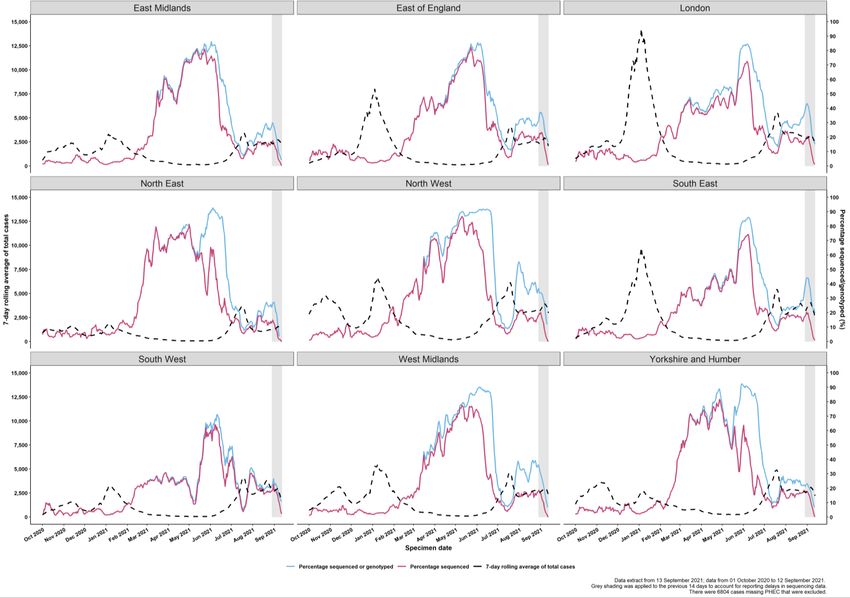
SARS-CoV-2 variants of concern and variants under investigation

Summary

This report has been published to continue to share the detailed variant surveillance
analyses which contribute to the variant risk assessments and designation of new variants
of concern (VOCs) and variants under investigation (VUIs). The specialist technical
briefings contain early data and analysis on emerging variants and findings have a high
level of uncertainty.

A separate report is published covering surveillance data on all other VOCs and VUIs.

In summary:

•   an assessment of Delta diversity, including mutations and designated sub-
    lineages, is provided
•   there are 4 current VOCs and 8 VUIs (Table 1)
•   there are no new VOCs or VUIs since the last briefing in the UK classification.
•   there has been an increase in secondary attack rates for Delta in household
    contacts but not non-household contacts
•   2 doses of the vaccine remain highly effective, with 60 to 85% effectiveness
    against infection, 90 to 99% effectiveness against hospitalisation, 90 to 95%
    against mortality and 65 to 99% against symptomatic disease

All risk assessments are published separately here, except for Gamma, which was
published within Technical Briefing 7 and Alpha within Technical Briefing 9. As
Delta is the dominant variant in the UK, epidemiological and re-infection data in the
weekly surveillance report is also relevant.

                                                   3
SARS-CoV-2 variants of concern and variants under investigation

Published information on variants
The collection page gives content on variants, including prior technical briefings.
Definitions for variants of concern, variants under investigation, and signals in monitoring
are detailed in Technical Briefing 8. Data on variants not detailed here is published in the
Variant Data Update. Variant risk assessments are available in prior technical briefings.

Public Health England (PHE) curated a repository on the 5 March 2021 containing the up-
to-date genomic definitions for all VOCs and VUIs. The repository is accessible on GitHub.

World Health Organization (WHO) nomenclature from 31 May 2021 is incorporated. A
table incorporating WHO and UK designations with Pango lineages is provided below
(Table 1). Following the table, variants are referred to using their WHO designation where
this exists and the UK designation where it does not.

Technical briefings are published periodically. From technical briefing 15, briefings include
variant diagnoses identified by whole-genome sequencing and a genotyping PCR test,
including the categorisation of sequenced and genotyped variant results and a rules-based
decision algorithm (RBDA) to identify variant and mutation (VAM) profiles from genotype
assay mutation profiles. Genotyping is used to identify variants Alpha, Beta (or B.1.621),
Delta, and Gamma. Targets were updated in mid-May 2021 to prioritise accurate
identification of Delta over Alpha.

                                                   4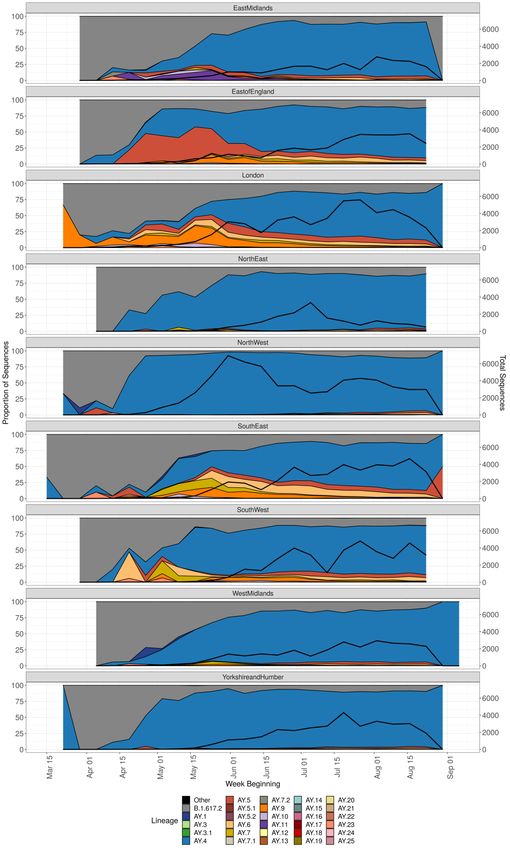
SARS-CoV-2 variants of concern and variants under investigation

Part 1 Surveillance overview
1.1 Variants under surveillance
Table 1 shows the current VOC, VUI, and variants in monitoring as of 13
September 2021.

Table 1. Variant lineage and designation as of 13 September 2021
WHO             Lineage                 Designation      Status                UK or
nomenclature                                                                   International
                                                                               (not currently
                                                                               detected in
                                                                               UK)
Alpha              B.1.1.7                       VOC-20DEC-01     VOC          UK
Beta               B.1.351                       VOC-20DEC-02     VOC          UK

Gamma              P.1                           VOC-21JAN-02     VOC          UK
Delta              B.1.617.2, AY.1, AY.2,        VOC-21APR-02     VOC          UK
                   AY.3, and AY.4
Eta                B.1.525                       VUI-21FEB-03     VUI          UK
                   B.1.1.318                     VUI-21FEB-04     VUI          UK
Theta^             P.3                           VUI-21MAR-02     VUI          UK
                   B.1.617.3                     VUI-21APR-03     VUI          International
                   AV.1                          VUI-21MAY-01     VUI          UK
                   C.36.3                        VUI-21MAY-02     VUI          UK
Lambda             C.37                          VUI-21JUN-01     VUI          UK
Mu                 B.1.621                       VUI-21JUL-01     VUI          UK
Epsilon^           B.1.427/B.1.429                                Monitoring
                   B.1.1.7 with S494P                             Monitoring
                   A.27                                           Monitoring
Iota               B.1.526                                        Monitoring
                   B.1.1.7 with Q677H                             Monitoring
                   B.1.620                                        Monitoring
                   B.1.214.2                                      Monitoring
                   R.1                                            Monitoring
                   B.1 with 214insQAS                             Monitoring
                   AT.1                                           Monitoring
                   A.30                                           Monitoring
                   P.1 + N501T and E484Q                          Monitoring
                   B.1.629                                        Monitoring
                   B.1.619                                        Monitoring
                   C.1.2                                          Monitoring
                   B.1.630                                        Monitoring
                   B.1.631/B.1.628                                Monitoring
                   P.1.8                                          Monitoring

                                                   5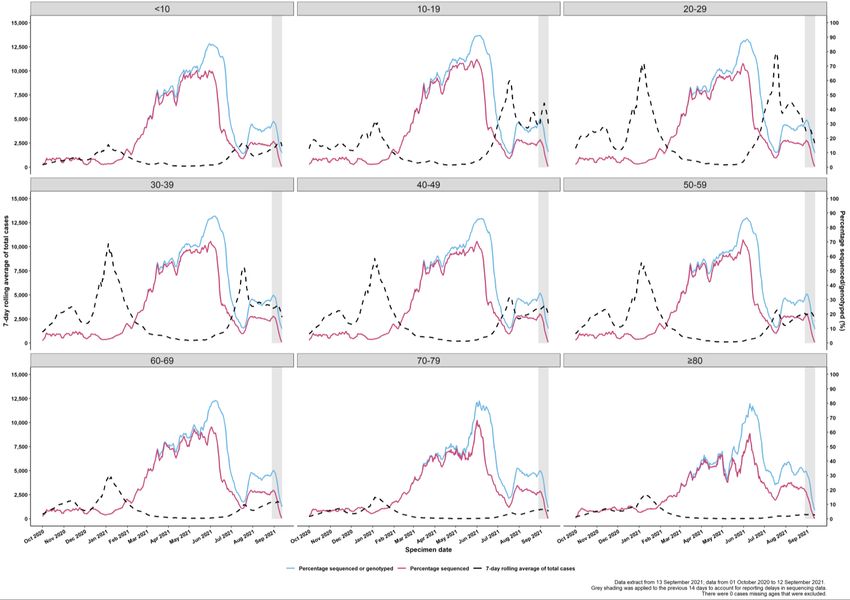
SARS-CoV-2 variants of concern and variants under investigation

Provisionally extinct variants are excluded from this table.

VOCs and VUIs are monitored weekly for observations within the last 12 weeks. If variants
have not been detected in the UK within this period, they are moved to international status
with continued monitoring. If a VOC or VUI has not been observed in the UK or
international datasets within the preceding 12 weeks, it is designated as provisionally
extinct, but monitoring remains in place.

The last documented case of VUI-21APR-03 (B.1.617.3) was on the 17 May 2021 in the
UK, this variant was moved to international monitoring on the 16 August 2021.

VUI-21FEB-01 (A.23.1 with E484K), VOC-21FEB-02 (B.1.1.7 with E484K), VUI-21MAR-01
(B.1.324.1 with E484K), Kappa VUI-21APR-01 (B.1.617.1) and Zeta (VUI-21JAN-01)
have not been observed in the UK or within the international GISAID dataset within the
last 12 weeks. These variants are no longer included in the data update.

^ Epsilon, Zeta and Theta were de-escalated by ECDC and by WHO. Mu was designated on the 30 August
2021

                                                   6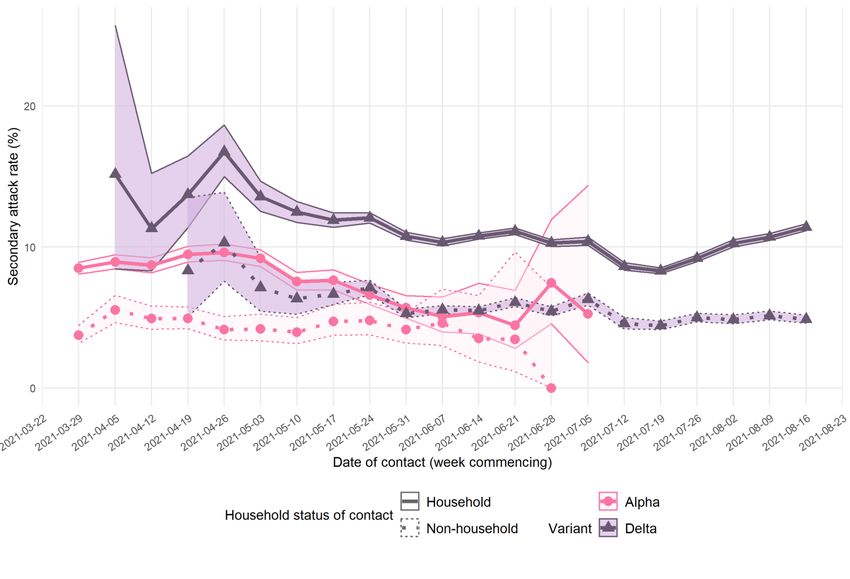
SARS-CoV-2 variants of concern and variants under investigation

1.2 Sequencing coverage
Figure 1 shows the proportion of cases that have linked to a valid sequencing result
(sequences included have 50% of the genome with sufficient read coverage) or
genotyping PCR result over time. Figure 2 shows the proportion of cases sequenced
and genotyped over time by regions. Figure 3 shows the proportion of cases
sequenced and genotyped amongst cases who tested positive while in hospital.
Figure 4 shows coverage of sequencing and genotyping for cases by age group.

Sequencing coverage is improving (Figure 1). During the current surge period, the
sequencing strategy for both Pillar 1 and 2 is:

•   hospitalised cases and hospital staff
•   cases among international travellers
•   national core priority studies
•   as near random a sample as possible from each region, to the maximum
    coverage allowed by laboratory capacity

                                                7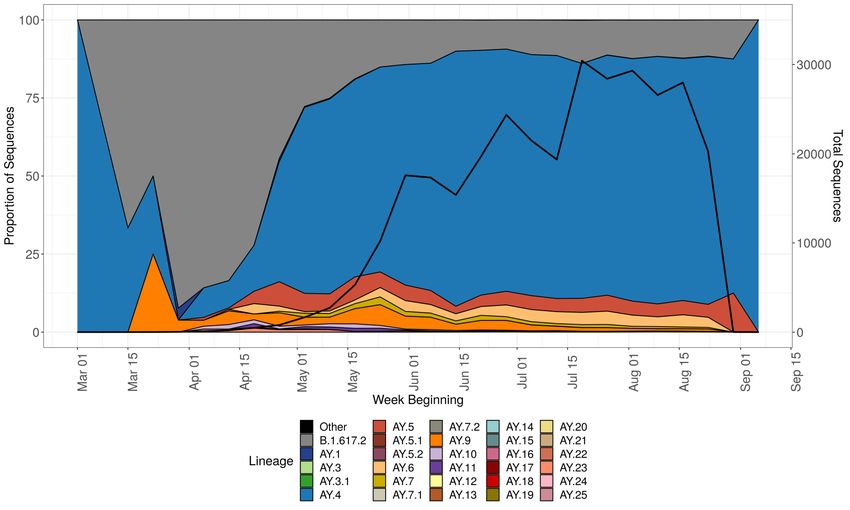
SARS-CoV-2 variants of concern and variants under investigation

Figure 1. Coverage of sequencing with a valid result and genotyping over time (1 October 2020 to 12 September 2021)
(Find accessible data used in this graph in underlying data)

                                                                  8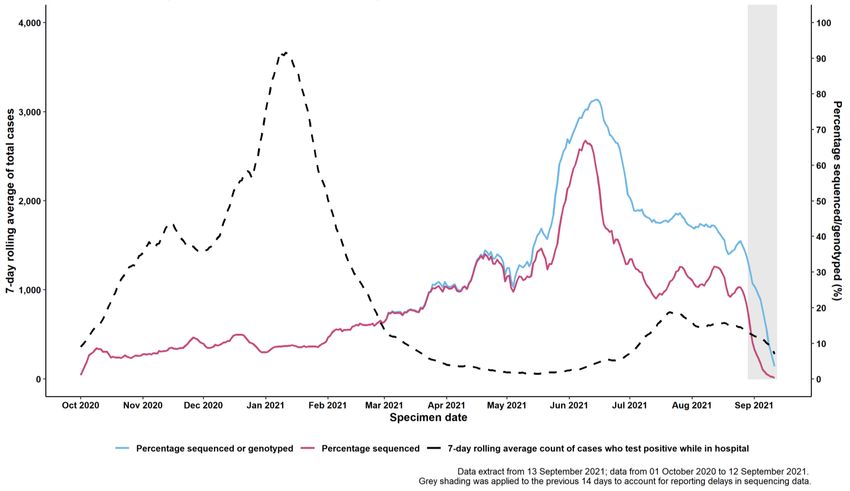
SARS-CoV-2 variants of concern and variants under investigation

Figure 2. Coverage of sequencing with a valid result and genotyping over time by region (1 October 2020 to 12 September
2021) (Find accessible data used in this graph in underlying data)

                                                                  9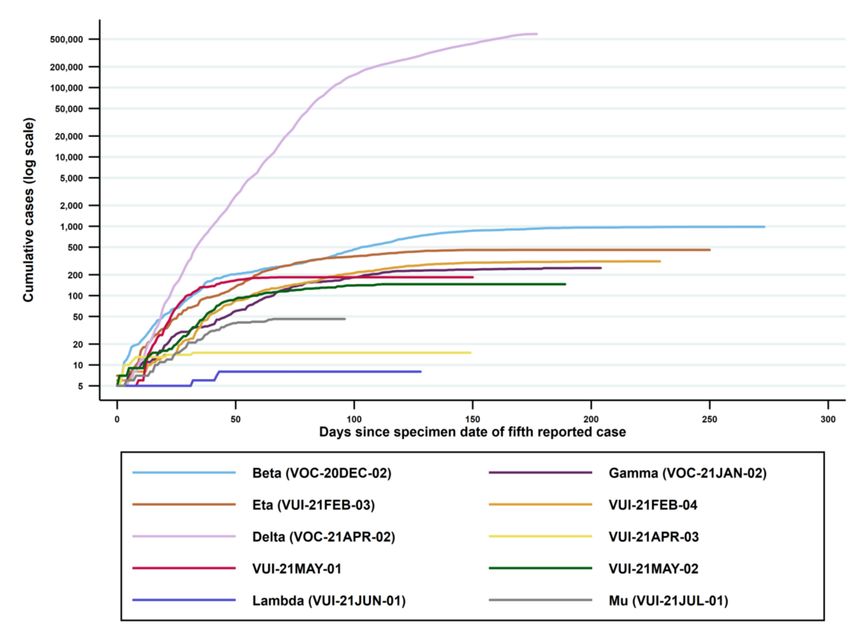
SARS-CoV-2 variants of concern and variants under investigation

Figure 3. Coverage of sequencing with valid result and genotyping for cases who test positive in hospital (1 October 2020 to 12
September 2021) (Find accessible data used in this graph in underlying data)

Grey shading was applied to the previous 14 days to account for reporting delays in sequencing data.
1
  From 14 to 18 June 2021 an operational issue at a sequencing site resulted in a reduction in the number of samples with sequencing data of sufficient quality for
variant assignment. There were 19,502 samples reported to PHE as impacted by the incident. PHE has received approximately 10,000 sample identifiers from the
list of those affected of which sequencing data has been obtained for approximately 4,300 and genotyping data for 3,300 have a reflex assay result. For
approximately 2,400 samples variant assignment is not possible. This issue resulted in a reduction in genome coverage for specimen dates 10 to 15 June 2021 and
may impact variant counts in figures and tables for this limited period. The unusable samples were from locations distributed around the UK and the proportions of
different variants by region should be correct. In addition, the genotyping results means that this has limited impact in the interpretation of the overall data.

                                                                                10
SARS-CoV-2 variants of concern and variants under investigation
Figure 4. Coverage of sequencing with valid result and genotyping for cases by age group (1 October 2020 to 12 September
2021) (Find accessible data used in this graph in underlying data)
Grey shading was applied to the previous 14 days to account for reporting delays in sequencing data.
11SARS-CoV-2 variants of concern and variants under investigation
1.3 VOC and VUI case numbers, proportion and
deaths
Summary epidemiology on Delta is shown in Table 2 and for each variant is shown in
Table 3, case numbers are also updated online. Table 3 shows the number of sequenced,
genotyped, and total cases and deaths for each variant. However, case fatality rates are
not comparable across variants (see Table 3 footnote). Tables 4 and 5 show the number
of cases who visited an NHS Emergency Department, were admitted, and died in any
setting. The data is shown from 1 February 2021 onwards to enable comparisons across
variants. Figure 5 shows the cumulative number of cases per variant indexed by days
since the first report.
Information on attendance to emergency care is derived from the Emergency Care Data
Set (ECDS), provided by NHS Digital. These data only show whether a case has attended
emergency care at an NHS hospital and was subsequently admitted as an inpatient. The
data does not include cases who were directly admitted without first presenting to
emergency care.
The crude analysis indicates that the proportion of Delta cases who present to emergency
care is greater than that of Alpha, but a more detailed analysis of 43,338 coronavirus
(COVID-19) cases indicates that the risk of hospitalisation among Delta cases is 2.26
times greater compared to Alpha (Twohig et al, 20211).
ECDS reporting is lagged as NHS trusts routinely provide monthly data by the 21st of the
following month. However, some trusts report daily data, and the linkage between COVID-
19 cases and ECDS data is updated twice-weekly.
Data on all COVID-19 cases, hospitalisation and deaths by age and vaccination status are
now published weekly in PHE’s Vaccine Surveillance Report. Publication of Table 5 in the
Variant Technical Report will continue for 2 more issues and then cease.
1
Hospital admission and emergency care attendance risk for SARS-CoV-2 delta (B.1.617.2) compared with
alpha (B.1.1.7) variants of concern: a cohort study
12SARS-CoV-2 variants of concern and variants under investigation
Table 2. Sequenced and genotyped Delta cases by region from 1 October 2020 as of
13 September 2021
Total Delta case Proportion
Sequenced Genotyped
number (1 October of total
Region cases cases1
2020 as of 30 Delta cases
August 2021) per region
East Midlands 25,119 14,382 39,501 6.7%
East of England 34,951 19,463 54,414 9.2%
London 52,357 36,081 88,438 14.9%
North East 18,022 13,091 31,113 5.2%
North West 65,652 65,709 131,361 22.1%
South East 45,293 30,643 75,936 12.8%
South West 41,483 7,819 49,302 8.3%
West Midlands 29,622 28,934 58,556 9.9%
Yorkshire and
36,552 25,012 61,564 10.4%
Humber
Unknown region 1,991 1,685 3,676 0.6%
Total 351,042 242,819 593,861 -
1
Genotyping is used to identify variants Alpha, Beta, Delta and Gamma; targets were updated in mid-May
2021 to prioritise accurate identification of Delta over Alpha. If a Genotyped specimen also has a reported
sequencing result, this case is removed from the Genotyped category and added to Sequenced category
once/if the sequence data is reported.
13SARS-CoV-2 variants of concern and variants under investigation
Table 3. Number of sequenced and genotyped cases by variant from 1 October 2020
as of 12 September 2021
Proportion
Sequenced Genotyped Total case
Variant of total Deaths
cases cases1 number
cases
Alpha 221,507 5,707 227,214 27.6% 4,353
Beta 925 71 996 0.1% 13
Gamma 207 47 254 0.0% 0
Delta 351,042 242,819 593,861 71.1% 2,547
Eta 460 0 460 0.1% 12
VUI-21FEB-04 314 0 314 0.0%SARS-CoV-2 variants of concern and variants under investigation
Table 4. Attendance to emergency care and deaths of sequenced and genotyped cases in England (1 February 2021 to 12
September 2021)
Variant Age Cases Cases with Cases with an Cases with an Cases where Cases where Deaths^
Group Since 1 specimen A&E visit§ A&E visit§ presentation to presentation to
(years) Feb date in past (exclusion‡) (inclusion#) A&E resulted A&E resulted
28 days in overnight in overnight
inpatient inpatient
admission§ admission§
(exclusion‡) (inclusion#)
n % n % n % n % n % n %
AlphaSARS-CoV-2 variants of concern and variants under investigation
≥50 95,587 35,5 37.2 5,445 5.7 10,102 10.6 2,784 2.9 6,167 6.5 2,336 2.4
96
All 593,572 155, 26.2 22,16 3.7 32,834 5.5 6,280 1.1 12,407 2.1 2,542 0.4
cases 252 2
ZetaSARS-CoV-2 variants of concern and variants under investigation
All 471 - 0.0 15 3.2 16 3.4SARS-CoV-2 variants of concern and variants under investigation
Data sources: Emergency care attendance and admissions from ECDS, deaths from PHE daily death data series (deaths within 28 days). NHS trusts are required to
submit emergency care attendances by the 21st of each month. As a result, the number of cases with attendances may show substantial increases in technical
briefs prepared after the monthly cut-off, compared with other briefs from the same month.
¥ Cases without specimen dates and unlinked sequences (sequenced samples that could not be matched to individuals) are excluded from this table.
* Cases are assessed for any emergency care attendance within 28 days of their positive specimen date. Cases still undergoing within 28-day period may have an
emergency care attendance reported at a later date.
§ At least one attendance or admission within 28 days of positive specimen date
# Inclusion: Including cases with the same specimen and attendance dates
‡ Exclusion: Excluding cases with the same specimen and attendance dates. Cases where specimen date is the same as date of emergency care visit are excluded
to help remove cases picked up via routine testing in healthcare settings whose primary cause of attendance is not COVID-19. This underestimates the number of
individuals in hospital with COVID-19 but only includes those who tested positive prior to the day of their emergency care visit. Some of the cases detected on the
day of admission may have attended for a diagnosis unrelated to COVID-19.
^ Total deaths in any setting (regardless of hospitalisation status) within 28 days of positive specimen date.
18SARS-CoV-2 variants of concern and variants under investigation Table 5. Attendance to emergency care and deaths of sequenced and genotyped Delta cases in England by vaccination status (1 February 2021 to 12 September 2021) Variant Age group Total Cases with Unlinked
SARS-CoV-2 variants of concern and variants under investigation

 Deaths within 28 days of
SARS-CoV-2 variants of concern and variants under investigation

Figure 5. Cumulative cases in England of variants indexed by days since the
fifth reported case as of 12 September 2021
(Find accessible data used in this graph in underlying data)

                                                21
SARS-CoV-2 variants of concern and variants under investigation
1.4 Variant prevalence
The prevalence of different variants amongst genotyped and sequenced cases is
presented in Figure 6 and Figure 7 and split by region in Figure 8 and Figure 9.
Genotyping provides a provisional variant identification with a shorter turnaround time of
12 to 24 hours after initial confirmation of COVID-19. The initial panel of targets began
trials in March 2021, using single nucleotide polymorphisms that included N501Y, E484K,
K417N, and K417T. Results have been reported and used for public health action since 29
March 2021. On 11 May 2021, after rapid validation of targets to allow identification of
Delta variant, P681R was introduced in the panel to replace N501Y. Genotyping results
have now been fully integrated into the variant data reports and analyses. Changes in the
use of genotyping over time should be considered when interpreting prevalence from
genotyped data.
The ‘Other’ category in Figures 7 and 9 includes genomes where the quality is insufficient
to determine variant status and genomes that do not meet the current definition for a VUI
or VOC. The supplementary data for figures are available.
Delta variant accounted for approximately 99.7% of sequenced and 94.9% genotyped
cases from 15 August 2021 as of 13 September 2021.
22SARS-CoV-2 variants of concern and variants under investigation
Figure 6. Variant prevalence for all England available genotyped cases from 1 February 2021 as of 13 September 2021
(Find accessible data used in this graph in underlying data)
A small number of cases identified as Beta (B.1.351) on genotyping since May 2021 without confirmatory sequencing may be VUI-21JUL-01 (B.1.621) with an
additional K417N mutation.
23SARS-CoV-2 variants of concern and variants under investigation
Figure 7. Variant prevalence for all England available sequenced cases from 1 February 2021 as of 13 September 2021
(excluding 288 case where the specimen date was unknown). (Find accessible data used in this graph in underlying data).
Dashed lines indicate period incorporating issue at a sequencing site.
24SARS-CoV-2 variants of concern and variants under investigation
Figure 8. Variant prevalence from 1 February 2021 as of 13 September 2021 by region for all genotyped cases in England
(excluding 2,163 cases where the region or specimen date were unknown). (Find accessible data used in this graph in underlying
data)
25SARS-CoV-2 variants of concern and variants under investigation
Figure 9. Variant prevalence from 1 February 2021 as of 13 September 2021 by region for all sequenced cases in England
(excluding 2,918 cases where the region or specimen date were unknown). (Find accessible data used in this graph in underlying
data)
26SARS-CoV-2 variants of concern and variants under investigation
1.5 Monitoring GISAID data diversity of antigenic
mutations within variants
A list of mutations of potential antigenic significance has been compiled using the available
published evidence. The full list of mutations of potential antigenic significance is compiled
and continuously updated by an expert group comprising members of the variant technical
group, COG-UK, and UK-G2P using literature searches and data mining from publicly available
datasets. Data analysis includes GISAID data uploaded before 14 September 2021 (excluding
UK data). The increase in the number of antigenic mutations over time is illustrated for all
variants in Figure 10 and for variants excluding VOCs and VUIs in Figure 11.
The plots in Figures 10 and 11 were obtained by first counting the number of high confidence
antigenic mutations for each sequence. The sequences were then grouped and the prevalence
for each number of mutations was estimated weekly from March 2020 until 31 August 2021. All
non-synonymous mutations at positions in the spike protein that have been associated with
antigenicity were considered antigenic. VOCs or VUIs were identified by analysing their spike
mutation profile to deal with low-quality and partial sequences.
56SARS-CoV-2 variants of concern and variants under investigation
Figure 10. Prevalence of antigenic mutations over time for all genomes in GISAID (excluding UK data) as of 14 September
2021 (Find accessible data used in this graph in underlying data)
56SARS-CoV-2 variants of concern and variants under investigation
Figure 11. Prevalence of antigenic mutations over time for all genomes in GISAID (excluding UK
data), excluding VOCs and VUIs, as of 14 September 2021 (Find accessible data used in this graph in underlying data)
29SARS-CoV-2 variants of concern and variants under investigation
1.6 Secondary attack rates
This section includes secondary attack rates for traveller and non-traveller cases, and separate
household contact rates, including new analysis of rates for household and non-household
contacts of non-traveller cases over time for Delta and Alpha variants.
Secondary attack rates are based on positive tests amongst contacts named to NHS Test and
Trace by an original case identified with a sequenced or genotyped VOC or VUI. Variant cases
are identified using sequencing results supplemented with genotyping results and exclude low-
quality results.
Secondary attack rates are shown for cases with and without travel history. In non-travel
settings, only close contacts named by the original case are included, that is, household
members, face-to-face contact, people within one metre of the case for one minute or longer, or
people within 2 metres for 15 minutes. In travel settings, the contacts reported are not restricted
to only close contacts named by the case. For example, they may include contacts on a plane
linked by additional contact tracing efforts. This likely deflates secondary attack rates amongst
travellers compared to non-travellers. In addition, people recently returning from overseas are
subject to stricter quarantine measures and may moderate their behaviour towards contacts.
Travel history suggests where infection of the original case may have occurred.
Table 6 shows secondary attack rates for all variants between 5 January 2021 and 24 August
2021, which was a period chosen to capture data for all variants. Direct comparisons between
variants are not valid as vaccination levels and social restrictions in England have varied over
this period. Estimates of secondary attack rates for travel-related contacts with VOCs or VUIS
were considerably lower than non-travel cases due to differences in contact definitions.
Figure 12 shows the secondary attack rates amongst household and non-household contacts of
non-travel cases with Delta and Alpha between 29 March 2021 to 22 August 2021. Secondary
attack rates amongst household contacts of cases with Delta have risen over the most recent
weeks reported, with estimate of 11.4% (95% CI: 11.2% to 11.6%) for household contacts in
week commencing 16 August 2021. Secondary attack rates among non-household contacts
have remained steady: 4.9% (95% CI: 4.6% to 5.2%) in that week. Secondary attack rate
estimates for contacts of cases with Alpha have not been produced for recent weeks due to low
case numbers.
56SARS-CoV-2 variants of concern and variants under investigation
Table 6. Secondary attack rates for all variants
(5 January 2021 to 24 August 2021, variant data as of 13 September 2021, and contact tracing data as of 14 September 2021)
Travel-related Non-travel Travel- Secondary attack Secondary attack rate Secondary attack rate
cases (with cases (with related rate in contacts of travel- in household contacts in non-household
contacts) contacts) case related cases (95% CI) of non-travel or contacts of non-travel or
Variant
proportion [secondary unknown cases (95% CI) unknown cases (95% CI)
s cases/contacts] [secondary [secondary
cases/contacts] cases/contacts]
4,868 (75.1% 185,166 2.6% 1.5% (1.4% - 1.6%) 10.2% (10.1% - 10.3%) 5.6% (5.4% - 5.8%)
Alpha with contacts) (75.0% with [1,344/89,204] [34,623/338,558] [3,306/58,686]
contacts)
358 (69.6% with 432 (67.6% 45.3% 1.8% (1.5% - 2.2%) 9.9% (8.0% - 12.2%) 2.9% (1.3% - 6.2%)
Beta
contacts) with contacts) [112/6,202] [75/757] [6/206]
87 (62.1% with 153 (72.5% 36.2% 1.1% (0.6% - 1.9%) 10.7% (7.4% - 15.1%) 3.3% (1.1% - 9.2%) [3/91]
Gamma
contacts) with contacts) [12/1,123] [27/253]
211 (67.8% with 197 (73.1% 51.7% 1.1% (0.8% - 1.4%) 9.9% (7.2% - 13.6%) Unavailable [1/43]
Eta
contacts) with contacts) [47/4,339] [33/332]
135 (66.7% with 157 (79.6% 46.2% 0.5% (0.3% - 0.8%) 8.6% (5.9% - 12.3%) 6.5% (3.0% - 13.4%)
VUI-21FEB-04
contacts) with contacts) [18/3,429] [26/303] [6/93]
5 (40.0% with 1 (100.0% 83.3% Unavailable [0/5] Unavailable [0/3] Unavailable [0/0]
Theta contacts) with contacts)
11,059 (63.2% 471,476 2.3% 1.8% (1.8% - 1.9%) 10.4% (10.4% - 10.5%) 5.4% (5.3% - 5.5%)
Delta with contacts) (72.6% with [2,454/133,378] [81,552/781,192] [13,956/259,671]
contacts)
VOC-21APR- 0 (0 with 31 (71.0% 0.0% Unavailable [0/0] 20.0% (12.1% - 31.3%) Unavailable [2/9]
02+K417N contacts) with contacts) [13/65]
9 (22.2% with 5 (100.0% 64.3% Unavailable [2/204] Unavailable [1/12] Unavailable [0/0]
VUI-21APR-03
contacts) with contacts)
2 (0.0% with 176 (84.7% 1.1% Unavailable [0/0] 8.0% (5.8% - 11.1%) 2.4% (0.8% - 6.9%)
VUI-21MAY-01
contacts) with contacts) [33/411] [3/124]
76 (75.0% with 51 (82.4% 59.8% 1.0% (0.6% - 1.6%) 8.4% (4.5% - 15.2%) Unavailable [0/13]
VUI-21MAY-02
contacts) with contacts) [14/1,439] [9/107]
9 (66.7% with 0 (0 with 100.0% Unavailable [1/196] Unavailable [0/0] Unavailable [0/0]
Lambda
contacts) contacts)
56SARS-CoV-2 variants of concern and variants under investigation
20 (50.0% with 22 (68.2% 47.6% Unavailable [10/297] Unavailable [2/30] Unavailable [1/9]
Mu
contacts) with contacts)
Secondary attack rates are marked as ‘Unavailable’ when count of contacts is fewer than 50 or count of cases is fewer than 20. Travel-linked cases for
secondary attack rates are identified positively in NHS Test and Trace data using multiple PHE sources. A case is considered as being travel-linked if EpiCell
or Health Protection Teams have found evidence of international travel, their NHS Test and Trace record mentions an event associated with international
travel, their NHS Test and Trace record was created after notification via International Health Regulations National Focal Point, their contacts were traced by
the international contact tracing team, or they have been marked for priority contact tracing in NHS Test and Trace for reasons of travel. Some travel-linked
cases may be missed by these methods and would be marked as non-travel-linked or unknown.
Secondary attack rates from NHS Test and Trace should generally be considered lower bounds due to the nature of contact tracing and testing. Data provided
is for period until 24 August 2021 in order to allow time for contacts to become cases, hence case counts are lower than other sources. Cases are included in
case counts if their onset or (if asymptomatic) test is during the period of study, contacts are included in secondary attack rates if their exposure date or onset
or test of exposing case if the contact is a household contact is during the period of study. Secondary attack rates are suppressed when count of contacts is
less than 50 or count of cases is less than 20. Probable (genotyping) results are included, low quality genomic results are not.
32SARS-CoV-2 variants of concern and variants under investigation
Figure 12. Secondary attack rates in household and non-household contacts of non-
travel Alpha and Delta cases, with 95% confidence intervals
29 March 2021 to 22 August 2021, variant data as of 13 September 2021 and contact tracing
data as of 14 September 2021 (Find accessible data used in this graph in underlying data)
Please see footnote from Table 6. Data provided is for period until 22 August 2021 in order to allow time for
contacts to become cases and complete weeks to be shown.
56SARS-CoV-2 variants of concern and variants under investigation
1.7 Monitoring of vaccine effectiveness
The COVID-19 vaccine surveillance reports – GOV.UK (www.gov.uk) was published 16
September 2021 including further details on vaccine effectiveness. Recent data is available in
Table 7 and Vaccine effectiveness and duration of protection (khub.net). Table 7 includes
analysis of routine testing data up to 3 September 2021, linked to sequencing and S-gene target
status has been used to estimate vaccine effectiveness against symptomatic disease using a
test negative case control design (including data on 3 vaccines).
Table 7. Summary of evidence on vaccine effectiveness against different outcomes for
the Delta variant
Vaccine effectiveness*
Outcome Pfizer-BioNTech AstraZeneca Moderna All
Cominarty Vaxzevria Spikevax
Infection 75 to 85% 60 to 70% 60 to 85%
Symptomatic 65 to 99%
80 to 90% 65 to 75% 90 to 99%
disease
Hospitalisation 95 to 99% 90 to 99% 95 to 99% 90 to 99%
Mortality 90 to 99% 90 to 95% 90 to 95%
*Estimates of initial vaccine effectiveness in the general population after a 2-dose course. This typically applies for
at least the first 3-4 months after vaccination. For some outcomes there may be waning of effectiveness beyond
this point.
34SARS-CoV-2 variants of concern and variants under investigation
Part 2: Enhanced analysis on specific
variants. Delta (B.1.617.2)
The lineage B.1.617.2 was escalated to a variant of concern in the UK on 6 May 2021 (VOC-
21APR-02). This variant was named Delta by WHO on 31 May 2021.
2.1 Monitoring diversity within Delta – mutation scan
Table 8 shows spike mutations with a potential impact on antigenicity, avidity, or the furin
cleavage site significance acquired by Delta in the UK. This data uses the numbers of genomes
in the national genomic data set rather than case numbers. Only mutations associated with
antigenic change are presented here, such as those identified by published research. The
unlinked sequences represent the number of sequences not present within the English
surveillance system. These sequences include those samples from the Devolved
Administrations and cannot be associated with a date by PHE.
35SARS-CoV-2 variants of concern and variants under investigation
Table 8. Additional spike mutations of interest detected in Delta genomes in the UK as of 14 September 2021
Amino Delta Delta Delta sequences Delta sequences Delta sequences
acid sequences sequences 15 June to 14 July 15 July to 14 15 August to 14
change in outside UK 2021 August 2021 September 2021
UK dataset (GISAID)
England Outside England Outside England Outside
UK UK UK
P251L 2,714 7,957 251 1,642 592 4,551 349 1,555
G446V 1,541 1,128 141 200 261 575 272 252
Q613H 580 12,564 62 814 162 7,184 212 4,204
V483F 547 252 34 24 103 125 98 73
Q493E 326 137 24 41 134 61 112 10
S494L 204 188 15 25 73 98 91 46
K417N 150 6,548 2 2,230 50 2,794 32 474
E484Q 144 1,026 8 241 53 529 51 174
L455F 132 394 20 40 58 236 35 70
V445I 99 20 10 2 57 9 17 6
F490L 91 207 8 9 37 72 33 108
K444N 76 270 3 46 28 122 17 62
N501Y 58 508 12 138 20 325 11 8
S494P 53 155 8 20 21 78 4 39
P681H 40 186 1 19 19 114 4 30
R246I 39 57 3 3 21 20 7 25
K458N 37 36 21 5 9 21 7 5
A475V 32 23 3 4 9 14 16 3
K444R 25 32 3 3 12 19 5 10
F490S 22 56 1 9 11 29 8 15
E484K 20 188 1 35 5 102 12 43
56SARS-CoV-2 variants of concern and variants under investigation
L452Q 20 53 1 7 5 31 8 14
P499L 18 21 2 5 7 7 3 8
N439K 17 2 0 0 7 0 8 2
N501T 16 11 0 3 4 4 0 2
E484A 14 51 2 14 2 13 4 14
V445F 11 26 2 5 5 10 4 9
E484G 10 14 3 10 4 9 0 2
Q493L 10 84 3 28 4 46 0 10
D80N 8 23 2 1 3 12 0 8
E484V 8 17 1 9 1 6 3 1
S494A 7 17 0 10 0 10 4 6
V445A 6 18 2 13 3 10 1 5
E484D 6 50 3 4 2 32 0 10
F486L 5 1 5 0 0 1 0 0
G446D 5 10 1 6 2 5 2 3
V483A 5 21 0 2 3 11 2 6
Q498R 3 15 1 3 0 11 0 0
D80A 3 113 0 72 1 34 1 1
Q493H 3 8 2 1 0 2 0 1
G485D 3 1 1 1 0 0 1 0
K444E 3 3 0 0 2 3 0 0
I472V 2 2 0 1 0 0 0 0
T478I 2 6 0 0 1 3 0 3
K417E 2 8 2 0 0 2 0 6
V483G 1 3 0 0 1 3 0 0
V503L 1 1 0 0 0 0 0 1
Y144N 1 2 0 1 1 1 0 0
37SARS-CoV-2 variants of concern and variants under investigation
K458Q 1 2 0 0 0 0 1 2
R246G 1 20 0 0 1 15 0 4
K417T 1 9 0 2 0 2 1 4
N501H 1 2 1 0 0 2 0 0
Y453F 1 3 0 0 0 1 1 1
Total of 466,153 675,172 87,059 122,199 122,783 355,518 93,055 148,693
Delta
sequences
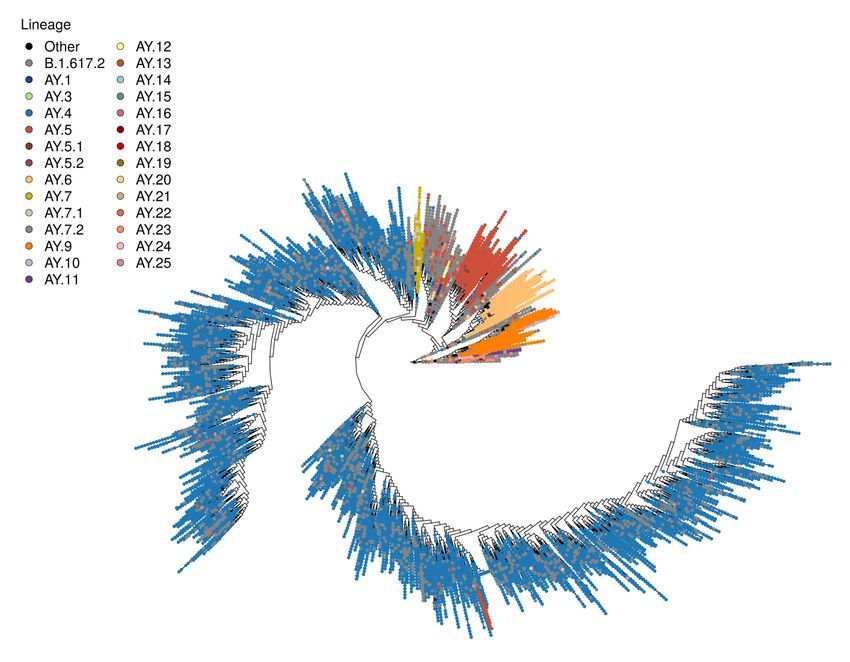
38SARS-CoV-2 variants of concern and variants under investigation 2.2 Monitoring diversity within Delta – AY Lineages Sub-lineages of B.1.617.2 are given the alias of AY. These lineages have been recently designated to monitor diversity within Delta and improve the identification of newly emerging clades (Table 9). They are phylogenetically defined and they do not necessarily have any biological differences between them. Data on the sub-lineages will not be published routinely unless there is evidence of biologically significant change. Figure 13 shows the prevalence of the AY lineages within all Delta sequences in the UK. AY.4 is the dominant lineage in the UK, but smaller lineages have also persisted over time. Table 10 shows the non-synonymous mutations present in at least 50% of the sequences for a given AY lineage that are not present in >50% of the sequences designated as B.1.617.2 in the UK. Figure 15 shows a phylogenetic tree of a subset of Delta sequences from the UK, coloured by lineage. To generate the subset of data, the Delta sequences that could be matched to case data were grouped by their week of sample and lineage. Where the group was
SARS-CoV-2 variants of concern and variants under investigation

Table 9. Date of lineage designation and pangoLEARN release for new AY lineages

 Lineage               Pango                 Date of              pangoLEARN   Date of Release
                       Designation           Designation          Release
                       Version

 AY.1                  v1.2.12               2021-06-04           2021-06-05   2021-06-07

 AY.2                  V1.2.13               2021-06-14           2021-06-15   2021-06-16

 AY.3                  V1.2.28               2021-06-30           2021-07-07   2021-07-09

 AY.3.1                V1.2.42               2021-07-23           2021-07-28   2021-07-29

 AY.4                  V1.2.50               2021-07-30           2021-08-09   2021-08-12

 AY.5                  V1.2.50               2021-07-30           2021-08-09   2021-08-12

 AY.5.1                V1.2.60               2021-08-16           2021-08-24   2021-08-27

 AY.5.2                V1.2.60               2021-08-16           2021-08-24   2021-08-27

 AY.6                  V1.2.50               2021-07-30           2021-08-09   2021-08-12

 AY.7                  V1.2.50               2021-07-30           2021-08-09   2021-08-12

 AY.7.1                V1.2.60               2021-08-16           2021-08-24   2021-08-27

 AY.7.2                V1.2.60               2021-08-16           2021-08-24   2021-08-27

 AY.8                  V1.2.50               2021-07-30           2021-08-09   2021-08-12

 AY.9                  V1.2.50               2021-07-30           2021-08-09   2021-08-12

 AY.10                 V1.2.50               2021-07-30           2021-08-09   2021-08-12

 AY.11                 V1.2.56               2021-08-09           2021-08-09   2021-08-12

 AY.12                 V1.2.56               2021-08-09           2021-08-09   2021-08-12

 AY.13                 V1.2.60               2021-08-16           2021-08-24   2021-08-27

 AY.14                 V1.2.60               2021-08-16           2021-08-24   2021-08-27

 AY.15                 V1.2.60               2021-08-16           2021-08-24   2021-08-27

 AY.16                 V1.2.60               2021-08-16           2021-08-24   2021-08-27

 AY.17                 V1.2.60               2021-08-16           2021-08-24   2021-08-27

                                                     40
SARS-CoV-2 variants of concern and variants under investigation
AY.18 V1.2.60 2021-08-16 2021-08-24 2021-08-27
AY.19 V1.2.60 2021-08-16 2021-08-24 2021-08-27
AY.20 V1.2.60 2021-08-16 2021-08-24 2021-08-27
AY.21 V1.2.60 2021-08-16 2021-08-24 2021-08-27
AY.22 V1.2.60 2021-08-16 2021-08-24 2021-08-27
AY.23 V1.2.61 2021-08-17 2021-08-24 2021-08-27
AY.24 V1.2.61 2021-08-17 2021-08-24 2021-08-27
AY.25 V1.2.62 2021-08-18 2021-08-24 2021-08-27
AY.26 v1.2.68 2021-08-21 Not yet released
AY.27 v1.2.68 2021-08-21 Not yet released
AY.28 v1.2.68 2021-08-21 Not yet released
AY.29 V1.2.74 2021-09-02 Not yet released
AY.30 V1.2.75 2021-09-02 Not yet released
AY.31 V1.2.75 2021-09-02 Not yet released
AY.32 V1.2.76 2021-09-03 Not yet released
Data analysed before the pangoLEARN release will not include newer AY lineages unless the sequences have
been specifically designated as part of the Pango Designation release. Data in this analysis uses Pango
Designation v1.2.76 and pangoLEARN release 2021-08-24. Pangolin releases can be found at the relevant GitHub
repositories: cov-lineages/pango-designation and cov-lineages/pangoLEARN
41SARS-CoV-2 variants of concern and variants under investigation
Figure 13. Prevalence of AY lineages among Delta sequences in the UK from 1 March 2021 as of 6 September 2021
Total number of Delta sequences per week is indicated by the black line.
56SARS-CoV-2 variants of concern and variants under investigation
Figure 14. Prevalence of AY lineages among Delta sequences in the UK from 1 March
2021 as of 6 September 2021
Total number of Delta sequences for that region is indicated by the black line.
56SARS-CoV-2 variants of concern and variants under investigation
Table 10: Non-synonymous mutations present in at least 50% of each lineage that are not present in more than 50% of the
B.1.617.2 designated sequences within the UK Delta sequences
AY lineages that are not seen in the UK data are not included in this table.
Gene
Clade orf1ab S orf3a M orf6 orf7a orf8 N
AY.1 T95I, W258L,
K417N
AY.3 I3731V
AY.3.1 D1127Y, I3731V, T3857I, V5550L,
H5951Y, T6564I
AY.4 A2529V T95I
AY.5 S327L
AY.5.1 K4552N N207K S327L
AY.5.2 S54L S327L
AY.6 D691N, E5689D
AY.7 Q4151H C58F, A79D
AY.7.1 Q4151H C58F, A79D
AY.7.2 G18V
AY.9 P1640L, A3209V, V3718A, T3750I A222V
56SARS-CoV-2 variants of concern and variants under investigation
AY.10 P1640L, M2796V, M3087I, A3209V, A222V
V3718A, T3750I, T4164I
AY.11 A1074V, P1640L, A3209V, V3718A, A222V A2S
T3750I, R6088C
AY.12 S443F, K3353R, P7013T T95I E59*
AY.13 P309L, P1640L, A3209V, V3718A, T95I L116F
P5971L
AY.14 K261N, G519S, S538P, E940D, P45L
L3606F, K6958R
AY.15 T78I, P1640L, A3209V, D6249Y D61L
AY.16 P309L, P1640L, A3209V, V3718A, L116F
P5971L
AY.17 P309L, I659V, P1640L, A3209V, Q57R L116F
V3718A, A4815V, P5971L
AY.18 S212L, P309L, P1640L, P1921Q, K77T, A694V Q94L
D2980N, F3138S, H3580Q, K6711R
AY.19 Q185H
AY.20 A599V T95I, V1104L
AY.21 A3571V, T5102I D402Y
45SARS-CoV-2 variants of concern and variants under investigation
AY.22 L3606F, V4649F, M4993I T95I, M177I, G224C
Q218H, V1104L
AY.24 P1640L, A3209V, V3718A, T3750I A222V P104S
AY.25 E239Q
46SARS-CoV-2 variants of concern and variants under investigation
Figure 15: Phylogenetic tree of a subset of Delta sequences coloured by lineage
Supplementary data is not available for this figure.
56SARS-CoV-2 variants of concern and variants under investigation
2.3 Monitoring diversity within Delta – Delta with
E484Q
Changes at position 484 in spike are potentially antigenically significant. Delta with E484Q was
first detailed as a signal under investigation on the 3 August 2021 after being detected in 6
Scottish samples between 22 and 28 July 2021. 144 sequences have been identified as of the
13 September 2021, with 126 from England, 12 from Scotland, and 6 from Wales.
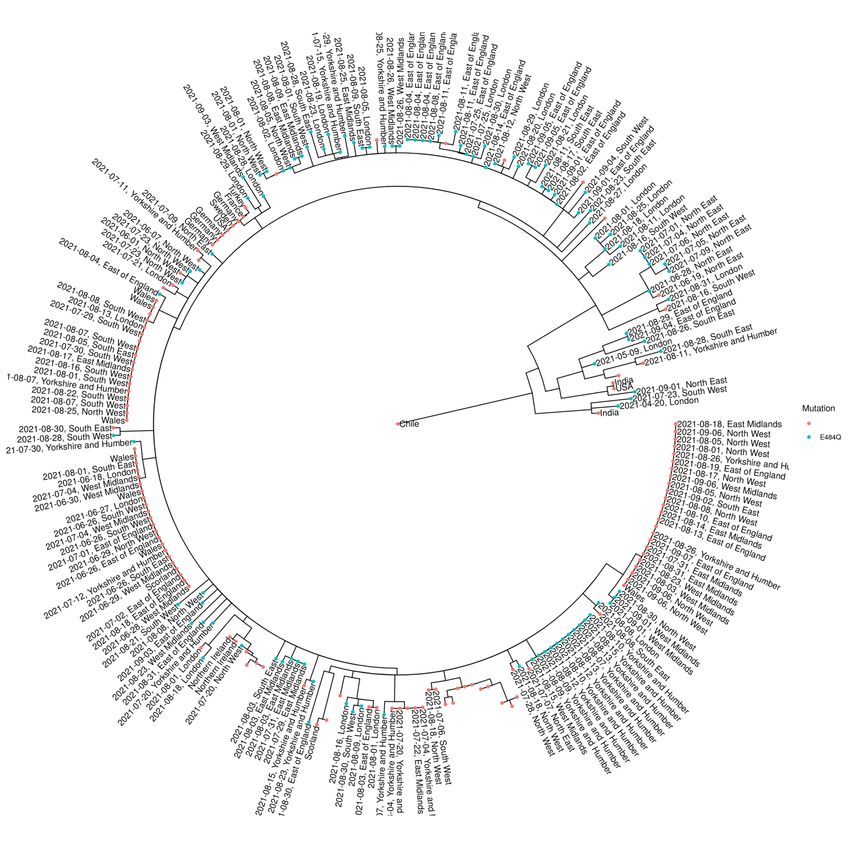
The phylogenetic tree of UK Delta with E484Q cases is shown in Figure 16, which includes a
cluster of 11 genetically indistinguishable samples from Yorkshire and Humber (10) and West
Midlands (1), a node of 4 samples (3 genetically indistinguishable) from the East Midlands, a
large node of diverse (genetically and geographically) samples that are predominantly
annotated with the E484Q mutation, and an additional cluster of 5 samples from the North East.
48SARS-CoV-2 variants of concern and variants under investigation
Figure 16. Phylogenetic tree of UK Delta (B.1.617.2) with E484Q cases with a down-
sampled international background dataset
The tree is generated using Civet which down-samples UK and international samples for
background context. Presence of the E484Q mutation is indicated by the tip colour (blue
indicates E484Q annotated, red indicates E484Q not annotated). Sample date and location of
case is shown in the label for each tip (note 11 samples excluded from the tree by Civet due to
a technical issue). Supplementary data is not available for this figure.
49SARS-CoV-2 variants of concern and variants under investigation
Epidemiology in England
As of 13 September 2021, there are 126 Delta with E484Q cases in England, 99 of which were
linked to epidemiological data. Cases have been detected across all 9 English regions, with
most cases in the London (23, 23.2%) as shown in Table 11 and cases by region in Figure 17.
The most frequent age group was the 20 to 29 age group, with 18 cases. 14 of the 126 cases
have history of travel which includes travel from or transit through Spain (1), Nigeria (10), and
India (3).
Table 11. Confirmed and provisional Delta with E484Q cases in England by region as of
13 September 2021
Region Total case Proportion of Delta with E484Q cases in England
number with epidemiological data
East Midlands 7 7.0%
East of England 12 12.1%
London 23 23.2%
North East 8 8.0%
North West 11 11.1%
South East 6 6.1%
South West 6 6.1%
West Midlands 4 4.0%
Yorkshire and Humber 18 18.2%
Unknown region 4 4.0%
Total 99 -
50SARS-CoV-2 variants of concern and variants under investigation
Figure 17. Cases of Delta with E484Q in England by region as of 13 September 2021
51SARS-CoV-2 variants of concern and variants under investigation
International epidemiology
As of 13 September 2021, 999 GISAID sequences have been assigned to the B.1.617.2 lineage
with the additional E484Q mutation, of those 952 sequences had appropriate date information.
Sequences have been uploaded from USA (691), India (66), Sweden (59), Germany (34),
Belgium (13), South Africa (13), Denmark (7), Ireland (7), Israel (6), Switzerland (5) and 30
other countries with less than 5 samples. Figure 18 shows the distribution of cases per country
over time, based on GISAID data, indicating an increase in observations of Delta with E484Q
from July through to September.
52SARS-CoV-2 variants of concern and variants under investigation
Figure 18. Count of Delta with E484Q classified sequences by week of collection
uploaded to GISAID by week as of 13 September 2021
53SARS-CoV-2 variants of concern and variants under investigation
2.4 Monitoring diversity within Delta – Delta with
E484K
Changes at position 484 in spike are potentially antigenically significant. Delta with E484K was
detailed as a signal under investigation on 8 September 2021 and was first detected on 22 July
2021 in UK sequences. Both Delta and Delta with E484K are routinely monitored. 19 sequences
have been identified as of the 13 September, with 17 from England and 2 from Scotland.
The phylogenetic tree of UK Delta with E484K cases is shown in Figure 19, which includes one
small cluster and multiple independent occurrences of the mutation (Delta with E484K is shown
in yellow on Figure 19).
54SARS-CoV-2 variants of concern and variants under investigation
Figure 19. Maximum likelihood tree of UK Delta (B.1.617.2) with E484K cases
Presence of the E484K mutation is indicated by the tip colour (Yellow indicates E484K cases). Sample date and location of case is
shown in the label for each tip. Supplementary data is not available for this figure.
56SARS-CoV-2 variants of concern and variants under investigation
Epidemiology in England
As of 13 September 2021, there are 17 Delta with E484K cases in England. Cases have been
detected across 7 English regions, with most cases in the East Midlands (6, 35.3%) as shown in
Table 12 and cases by region in Figure 20. The most frequent age group was the 30 to 39 age
group, with 5 cases. Three of the 17 cases have history of travel which includes travel from or
transit through Latvia and Nigeria.
Table 12. Confirmed and provisional Delta with E484K cases in England by region as of
13 September 2021
Region Total case Proportion of Delta with E484K cases in
number England with epidemiological data
East Midlands 6 35.3 %
East of England 2 11.8 %
London 1 5.9 %
North West 1 5.9 %
South East 1 5.9 %
South West 1 5.9 %
Yorkshire and Humber 4 23.5 %
Unknown region 1 5.9
Total 17 -
56SARS-CoV-2 variants of concern and variants under investigation
Figure 20. Cases of Delta with E484K in England by region as of 13 September 2021
International epidemiology
As of 13 September 2021, 99 sequences on GISAID have been assigned to the B.1.617.2
lineage with the additional E484K mutation. Sequences have been uploaded from USA (25),
Denmark (22), Turkey (21), Italy (6), Germany (3), France (2), India (2), Netherlands (2), Russia
(2), Spain (2), Sri Lanka (2), Belgium (1), Malta (1), Mexico (1), Mozambique (1), Nigeria (1),
Portugal (1), Switzerland (1). Figure 21 shows the distribution of cases per country over time,
based on GISAID data, indicating an increase in observations of Delta with E484K in August
and September.
57SARS-CoV-2 variants of concern and variants under investigation
Figure 21. Count of Delta with E484K classified sequences by week of collection
uploaded to GISAID by week as of 13 September 2021
58SARS-CoV-2 variants of concern and variants under investigation
Sources and acknowledgments
Data sources
Data used in this investigation is derived from the COG-UK dataset, the PHE Second
Generation Surveillance System (SGSS), NHS Test and Trace, the Secondary Uses Service
(SUS) dataset, Emergency Care Data Set (ECDS), and the PHE Case and Incident
Management System (CIMS). Data on international cases are derived from reports in GISAID,
the media and information received via the International Health Regulations National Focal
Point (IHRNFP) and Early Warning and Response System (EWRS).
Repository of human and machine-readable genomic case definitions
Genomic definitions for all VOC and VUI are provided in order to facilitate standardised VOC
and VUI calling across sequencing sites and bioinformatics pipelines and are the same
definitions used internally at PHE. Definition files are provided in YAML format so are
compatible with a range of computational platforms. The repository will be regularly updated.
The genomic and biological profiles of VOC and VUI are also detailed on first description in prior
technical briefings.
Variant Technical Group
Authors of this report
PHE Genomics Cell
PHE Outbreak Surveillance Team
PHE Epidemiology Cell
PHE Immunisations Team
PHE Contact Tracing Data Team
PHE International Cell
JBC Public Health Science Team
Contributions from the Variant Technical Group Members including the Genotype to
Phenotype Consortium
Variant Technical Group members and contributors
The PHE Variant Technical Group includes members and contributors from the following
organisations: Public Health England, Public Health Wales, Public Health Scotland, Public
Health Agency Northern Ireland, the Department of Health and Social Care, Imperial
College London, London School of Hygiene and Tropical Medicine, University of
Birmingham, University of Cambridge (including the MRC Biostatistics Unit), University of
Edinburgh, University of Liverpool, the Wellcome Sanger Institute, the NHS Test and
Trace Joint Biosecurity Centre, Genotype to Phenotype Consortium, SPI-M
59SARS-CoV-2 variants of concern and variants under investigation
Acknowledgements
The authors are grateful to those teams and groups providing data for these analyses
including: the Lighthouse Laboratories, NHS, COG-UK, the Wellcome Sanger Institute,
Health Protection Data Science teams, the Joint Biosecurity Centre and the Genotype to
Phenotype Consortium.
60SARS-CoV-2 variants of concern and variants under investigation
Twitter: @PHE_uk
www.facebook.com/PublicHealthEngland
© Crown copyright 2021
Published: September 2021
PHE gateway number: GOV-9722
61You can also read


