The Association between Ambient Temperature and Acute Diarrhea Incidence in Hong Kong, Taiwan, and Japan - MDPI
←
→
Page content transcription
If your browser does not render page correctly, please read the page content below
sustainability

Article
The Association between Ambient Temperature and
Acute Diarrhea Incidence in Hong Kong, Taiwan,
and Japan
Chien-Chou Chen 1 , Bo-Cheng Lin 2 , Liwei Yap 1 , Po-Huang Chiang 3 and Ta-Chien Chan 1, *                  ID

 1    Research Center for Humanities and Social Sciences, Academia Sinica, Taipei 115, Taiwan;
      tojoechen@gmail.com (C.-C.C.); daveyap1993@gmail.com (L.Y.)
 2    Department of Real Estate and Built Environment, National Taipei University, San Shia District,
      New Taipei City 237, Taiwan; bclin@mail.ntpu.edu.tw
 3    Institute of Population Health Sciences, National Health Research Institutes, Zhunan 350, Taiwan;
      chiangp@nhri.org.tw
 *    Correspondence: tachien@gate.sinica.edu.tw

 Received: 31 March 2018; Accepted: 1 May 2018; Published: 3 May 2018

 Abstract: While studies have examined the association between weather variables and acute diarrhea
 in a city, region, or country, less evidence is available on the temperature effect across countries.
 The objective of this study is to elucidate the nonlinear and lagged association between ambient
 temperature and acute diarrhea in Hong Kong, Taiwan, and Japan. We collected weekly surveillance
 statistics on acute diarrhea with the corresponding meteorological data from 12 regions of Hong Kong,
 Taiwan, and Japan during 2012–2016. Firstly, we fitted the region-specific counts of acute diarrhea in
 a distributed lag nonlinear model (DLNM) which accounts for the non-linearity and lagged effect
 of temperature. Secondly, we applied meta-analysis to pool estimates across 12 regions. A total
 of 5,992,082 acute diarrhea cases were identified. We found that (1) the pooled overall cumulative
 relationship between the relative risk (RR) of acute diarrhea and temperature was the greatest
 (RR = 1.216; 95% CI: 1.083, 1.364) at 11 ◦ C; (2) a pooled predictor-specific summary association at
 lower temperatures (12 ◦ C or 25th percentile) began immediately and vanished after four weeks.
 Predictions and error analysis for new onsets of acute diarrhea in 2017 were evaluated. An early
 warning system based on the information of temperature variation was suggested for acute diarrhea
 control management.

 Keywords: acute diarrhea; temperature; distributed lag nonlinear model (DLNM); prediction

1. Introduction
     According to the estimates from Global Burden of Disease 2015 Study, diarrhea was responsible
for more than 1.31 million deaths around the world in 2015 [1]. Although the burden of acute infectious
diarrhea is greatest in low-income countries, it is a common cause of outpatient visits and hospital
admissions in high-income countries [2].
     The Asia Pacific region is home to more than half of the world’s population and is regarded as
one of the most vulnerable areas under the influence of extreme weather. As the impact of extreme
weather events (either heat waves or cold waves) becomes more intense, we expect meteorological
factors might affect the timing and intensity of infectious diseases in these areas [3].
     Prior studies have shown local weather factors like temperature [4,5], relative humidity [4],
and rainfall [6] to be linked to diarrhea-associated morbidity. Global climatic factors like the Indian
Ocean Dipole (IOD) and El Niño Southern Oscillation (ENSO) are also considered to influence the
transmission of infectious gastroenteritis [7]. Elucidation of the relationship between weather/climatic

Sustainability 2018, 10, 1417; doi:10.3390/su10051417                       www.mdpi.com/journal/sustainability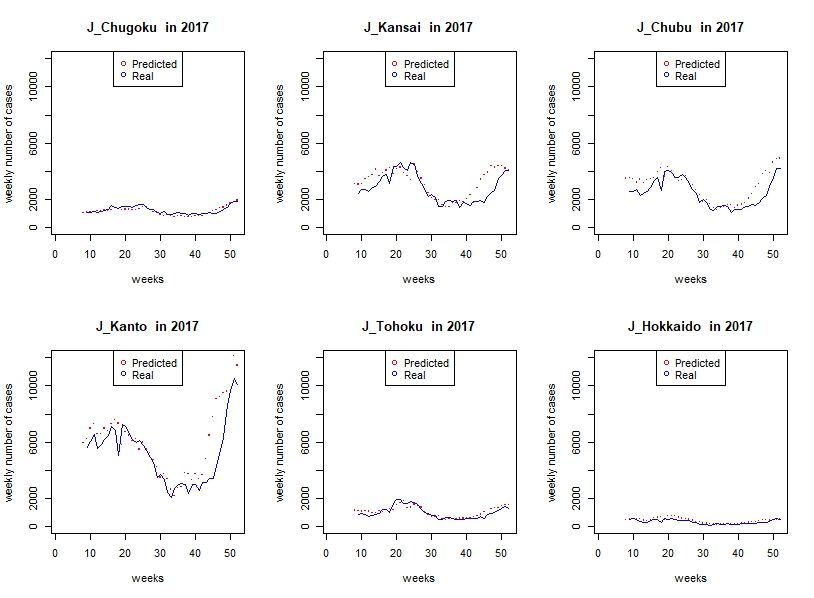
Sustainability 2018, 10, 1417                                                                           2 of 9

factors and infectious diarrhea is important for disease control and prevention. For example, if we
expect a cold temperature effect on infectious diarrhea, an early warning system based on temperature
forecast could be implemented.
      Ambient temperature may be important in the spread of infectious diarrhea [8–10]. However, the
study area of the previous studies focused on a city [8,9], region, or country [10]. In addition, few studies
considered the nonlinearity and lagged effect of temperature [11]. Meta-analysis within a distributed
lag nonlinear model (DLNM) [12] provides a useful framework to quantify the temperature-morbidity
association for acute diarrhea in different regions. The objective of this study is to elucidate the
nonlinear and lagged association between temperature and acute diarrhea in Hong Kong, Taiwan,
and Japan. With a better understanding of the effect that ambient temperature may have on acute
diarrhea in different countries, integrated surveillance of acute diarrhea among these countries will
facility early warning and timely disease control [13].

2. Materials and Methods

2.1. Data
      Acute diarrhea (AD) surveillance datasets during 2012–2016 were obtained from the Department
of Health in Hong Kong (http://www.dh.gov.hk/eindex.html), Taiwan Centers for Disease Control
(TCDC) (http://www.cdc.gov.tw/rwd/english), and National Institute of Infectious Diseases (NIID)
in Japan (https://www.niid.go.jp/niid/en/). The weekly consultation rate (per 1000 consultations) of
AD is reported by general practitioners in Hong Kong. In Taiwan, TCDC collects emergency visits
for AD (defined by the International Classification of Diseases, Ninth Revision, Clinical Modification,
ICD-9-CM) weekly from the surveillance system. Infectious gastroenteritis counts are updated from
NIID every week by prefecture.
      We divided the study areas into 12 regions: one in Hong Kong, three (southern, central,
and northern regions) in Taiwan, and eight (Kyushu, Shikoku, Chugoku, Kansai, Chubu, Kanto,
Tohoku, and Hokkaido) in Japan. To obtain the estimated weekly count of AD in Hong Kong from
the consultation rate of AD, we assumed the confirmation rate of AD among the total inhabitants
(around 7,000,000) in Hong Kong was 0.01. For the other 11 regions, the corresponding region-specific
total population of 2016 was specified as the denominator to estimate the approximate weekly incidence
rate for every region. The study period was from week 31 of 2012 to week 52 of 2016 (total 231 weeks).
The corresponding weekly meteorological data, including mean temperature (degrees Celsius, ), mean
wind speed (meters per second, m/s), mean visibility (kilometers, km) and mean relative humidity (%)
of the 12 regions were estimated from the National Climatic Data Center (NCDC) of the National
Oceanic and the National Oceanic and Atmospheric Administration (NOAA, http://www.noaa.gov/).
For each region, the weather station located closest to the maximum population center of the region
was chosen. Weather information from a total of 12 stations was analyzed.

2.2. Statistical Analysis
     To capture the nonlinear and delayed relationship between temperature and AD, we used
DLNM [12] to examine their association. Firstly, we specified a generalized linear model
(quasi-Poisson family) to the time series of AD counts for each region. The region-specific model is
defined as (1):

    log[E(Yt )]
                                                                                                          (1)
    = α + log(Yt−1 ) + cb + ns(rh, df) + ns(ws, df) + ns(v, df) + ns(time, df) + offset(pop)

where E(Yt ) indicates the expected weekly AD counts in week t, cb denotes the cross-basis matrix
for weekly mean temperature with 3 degrees of freedom (df) [10] and a maximum lag time of up to
7 weeks (the lowest quasi-likelihood Akaike Information Criteria value), ns(rh, df) means the natural
cubic spline of relative humidity with degrees of freedom = 3 [10], ns(ws, df) denotes the natural cubic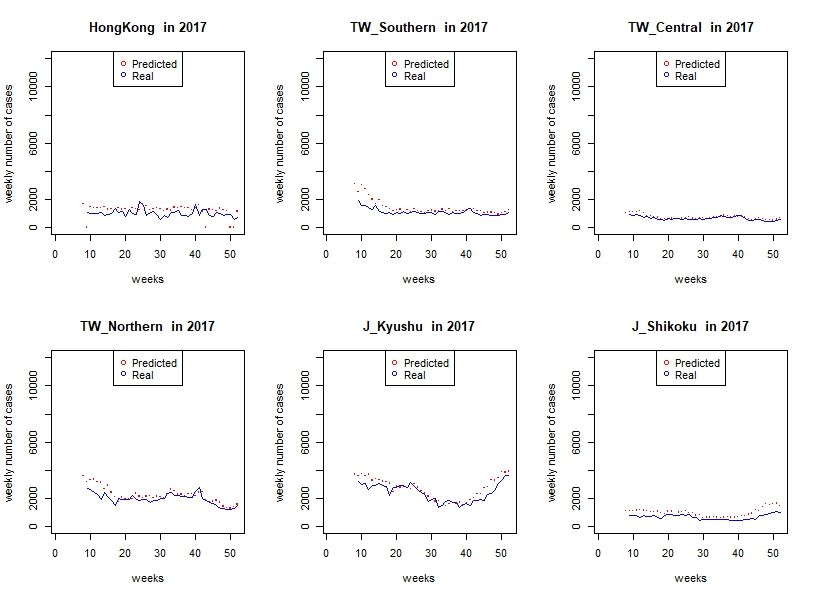
Sustainability 2018, 10, 1417                                                                               3 of 9

spline of wind speed with df = 3, and ns(v, df) represents the natural cubic spline of visibility with
df = 3. The natural cubic spline of time, denotes as ns (time, df), has df = 3 to control for the effects
of seasonality and long-term trends. We also added an autoregressive term (log(Yt−1 )) [14] and an
offset term (offset(pop)) to adjust for the effect of temporal autocorrelation on count and size effect
of population, respectively. Sensitivity analysis on the value of degrees of freedom and estimates of
autocorrelation (partial autocorrelation function) were conducted.
     Secondly, we applied meta-analysis to pool the 12 region-specific estimates to obtain the overall
cumulative association between temperature and AD counts. We further examined the pooled
predictor-specific temperature-morbidity relationship at a lower or higher temperature. The cut
points for low and high temperatures were 12 ◦ C and 25 ◦ C respectively, since the corresponding 25,
50, and 75 percentiles of temperature in the whole study areas were 12 ◦ C, 20 ◦ C, and 25 ◦ C.
     Finally, to assess the accuracy of our model, we used real weekly cases of 2017 for validation.
For each region, mean absolute errors (MAE) (2) and root mean squared errors (RMSE) (3) were applied
as performance indices:
                                                           n
                                                   1
                                    MAE =                ∑
                                               n − t + 1 t =9
                                                              |Yt − Yt∗ |                             (2)

                                             s
                                                             n
                                                     1
                                                n − t + 1 t∑
                                  RMSE =                       |Yt − Yt∗ |2                           (3)
                                                            =9

where Yt is the real count of 2017 in week t and Yt∗ is the predicted value in week t of 2017 according to
Equation (1). We specified t and n as 9 and 52 respectively since there were no predictions in week 1 to
week 8 of 2017 (the maximum lag equals 8 weeks in the DLNM model). All analyses were conducted
using the R software [15] version 3.3.3 with DLNM [16] and MVMETA [17] packages.

3. Results

3.1. Descriptive Statistics
     We studied a total of 5,992,082 AD cases occurring between 2012 and 2016 in Hong Kong, Taiwan,
and Japan. The weekly mean temperature across the 12 regions was 18.618 ± 8.546 (◦ C), the weekly
mean wind speed was 6.910 ± 2.360 (m/s), the weekly mean visibility was 9.122 ± 3.827 (km), and the
weekly mean relative humidity was 67.824 ± 9.482 (%) (Table 1). The weekly average number of AD
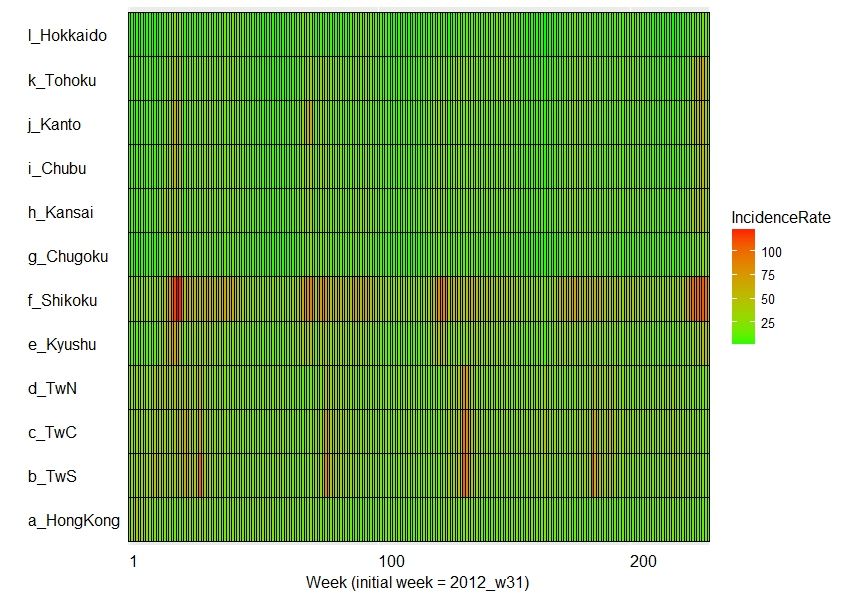
cases for a region was 2161 ± 2259 (patients). Overall, we observed at least 4–5 waves of AD epidemics
in regions like Shikoku during the study period, while less fluctuation of epidemics was observed in
Hong Kong, based on the time series of weekly approximate incidence rates (Figure 1).

         Table 1. Mean and standard deviation of meteorological factors in 12 regions during 2012–2016.

                            Temperature (◦ C)     Wind Speed (m/s)   Visibility (km)   Relative Humidity (%)
         Region
                              Mean ± SD             Mean ± SD         Mean ± SD             Mean ± SD
      Hong Kong                 24.646 ± 5.278     8.977 ± 1.668     5.872 ± 0.650        69.830 ± 8.785
    Southern Taiwan             25.563 ± 3.631     6.209 ± 1.105     4.742 ± 0.881        76.092 ± 6.267
     Central Taiwan             23.2627 ± 5.292    11.332 ± 3.307     5.414 ± 0.717       74.747 ± 7.192
    Northern Taiwan             23.480 ± 5.164     7.532 ± 1.872      5.707 ± 0.526       70.776 ± 6.541
        Kyushu                  17.702 ± 7.608     5.526 ± 0.987     10.352 ± 2.059        68.276 ± 8.910
        Shikoku                 17.645 ± 7.285      7.669 ± 2.123     5.965 ± 0.484       66.702 ± 8.848
       Chugoku                  16.872 ± 8.218     6.4770 ± 1.026    12.281 ± 2.650        64.662 ± 7.231
         Kansai                 17.380 ± 8.169      4.686 ± 0.793    15.102 ± 2.833        62.585 ± 7.130
         Chubu                  16.674 ± 8.379     5.914 ± 1.067     10.676 ± 1.908        62.890 ± 8.498
         Kanto                  16.897 ± 7.811      5.626 ± 1.029    11.673 ± 3.151       62.484 ± 12.288
        Tohoku                  13.485 ± 8.303      6.124 ± 1.161    11.600 ± 2.795       68.030 ± 10.156
       Hokkaido                  9.806 ± 9.536     6.843 ± 1.484     9.789 ± 2.163        66.797 ± 7.915
     All 12 regions             18.618 ± 8.546     6.910 ± 2.360     9.122 ± 3.827        67.824 ± 9.482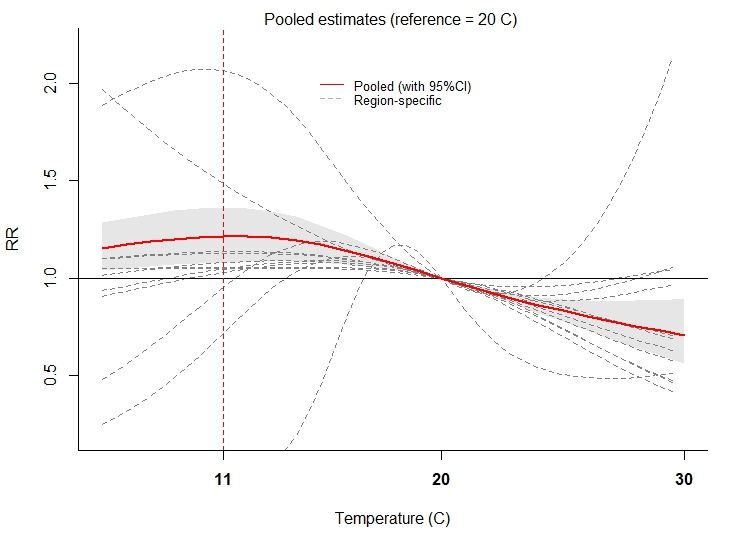
Sustainability 2018, 10, 1417                                                                                      4 of 9
    Sustainability 2018, 10, x FOR PEER REVIEW                                                           4 of 9

     Sustainability 2018, 10, x FOR PEER REVIEW                                                           4 of 9

                                (a)                                                (b)

                            (a)of weekly incidence rates (per 100,000 population) in(b)
         Figure 1. Comparison                                                         12 regions: (a) Hong
      Figure 1. Comparison of weekly incidence rates (per 100,000 population) in 12 regions: (a) Hong Kong,
         Kong, Southern Taiwan, Central Taiwan, Northern Taiwan, Kyushu, Shikoku and (b) Chugoku,
         Figure Taiwan,
      Southern   1. Comparison of Taiwan,
                         Central  weekly incidence
                                           Northernrates  (per 100,000
                                                     Taiwan,    Kyushu,population)
                                                                          Shikoku in  12 (b)
                                                                                    and  regions:  (a) Hong
                                                                                             Chugoku,    Kansai,
         Kansai, Chubu, Kanto, Tohoku, Hokkaido during week 31, 2012–week 52, 2016.
         Kong,
      Chubu,    Southern
              Kanto,     Taiwan,
                      Tohoku,     Centralduring
                              Hokkaido    Taiwan,week
                                                  Northern   Taiwan, Kyushu,
                                                       31, 2012–week           Shikoku and (b) Chugoku,
                                                                        52, 2016.
           Kansai, Chubu, Kanto, Tohoku, Hokkaido during week 31, 2012–week 52, 2016.
        The heat map of weekly approximate incidence rates (per 100,000 population) of AD by region
   (Hong  Kong,
     TheThe
         heat    Taiwan,
                map  of of and Japan)
                        weekly        during week 31, 2012 to  week  52, 2016  are also visualizedof
                                                                                                   inAD
                                                                                                     Figure
                                                                                                          by 2.region
             heat  map      weeklyapproximate
                                    approximate incidence   rates
                                                incidence rates    (per
                                                                 (per    100,000
                                                                      100,000      population)
                                                                                population)   of AD by  region
   Overall,
(Hong  Kong, we   observed
                Taiwan,      a   trend of  negative  slope   by  year,   indicating   an   early  outbreak  in
    (Hong  Kong,  Taiwan, and   Japan)during
                           and Japan)   during
                                             weekweek   31, to
                                                   31, 2012  2012
                                                               weekto52,week    52,also
                                                                          2016 are  2016   are alsoinvisualized
                                                                                        visualized    Figure 2. in
   higher-latitude
Figure 2. Overall,  areas.
                     we observed
    Overall,  we observed     a trenda trend  of negative
                                        of negative  slope slope    by year,
                                                             by year,          indicating
                                                                          indicating         an early
                                                                                       an early        outbreak
                                                                                                  outbreak   in    in
higher-latitude  areas.
    higher-latitude areas.

      Figure 2. Weekly incidence rates (per 100,000 persons) of acute diarrhea in 12 regions (Hong Kong,
      Southern Taiwan, Central Taiwan, Northern Taiwan, Kyushu, Shikoku, Chugoku, Kansai, Chubu,
      Kanto, Tohoku, Hokkaido) during week 31, 2012–week 52, 2016.
Sustainability 2018, 10, x FOR PEER REVIEW 5 of 9
Sustainability 2018, 10, x FOR PEER REVIEW 5 of 9
Figure 2. Weekly incidence rates (per 100,000 persons) of acute diarrhea in 12 regions (Hong Kong,
Figure Taiwan,
Southern 2. Weekly incidence
Central ratesNorthern
Taiwan, (per 100,000 persons)
Taiwan, of acute
Kyushu, diarrhea
Shikoku, in 12 regions
Chugoku, (Hong
Kansai, Kong,
Chubu,
Sustainability 2018, 10, 1417 5 of 9
Southern Taiwan, Central Taiwan, Northern Taiwan,
Kanto, Tohoku, Hokkaido) during week 31, 2012–week 52, 2016.Kyushu, Shikoku, Chugoku, Kansai, Chubu,
Kanto, Tohoku, Hokkaido) during week 31, 2012–week 52, 2016.
3.2. DLNM and Meta-Analysis
3.2. DLNM and Meta-Analysis
3.2. DLNM and Meta-Analysis
The pooled overall cumulative relationship between relative risk (RR) of AD and temperature is
The pooled overall cumulative relationship between relative risk (RR) of AD and temperature is
portrayedTheinpooled
Figureoverall cumulative
3. Taking relationship
20 °C (50th between
percentile) as therelative risk (RR)
reference, we of AD and temperature
identified the highest is
portrayed
portrayedin Figure
in 3. Taking
Figure 3. 20 ◦ C20
Taking (50th
°C percentile)
(50th as the as
percentile) reference,
the we identified
reference, the highest pooled
pooled overall RR = 1.216 (95% CI: 1.083, 1.364, red line) where temperature ◦
= 11 °C (verticalthe
we identified highest
dashed
overall RR Furthermore,
redpooled
line). =overall
1.216 (95% CI:
the 1.083,
RR = 1.216 (95%1.364,
pooled CI: red line)
1.083, 1.364,where
predictor-specific temperature
redsummary
line) where = 11 at
temperature
association C (vertical
11 °C dashed
a =higher (vertical
(25 °C) andred line).
dashed
a
Furthermore, the pooled predictor-specific summary association at a higher (25 ◦ C) and a lower (12 ◦ C)
red (12
lower line).
°C)Furthermore,
temperature are the depicted
pooled predictor-specific summary association
in Figure 4a,b, respectively. Setting 20 °C at as
a higher (25 °C) we
the reference, and a
temperature
lower (12
observed are
°C) depicted
a cold temperature
effect on AD in Figure
are 4a,b,
depicted
(Figure respectively.
in Figure
4b), which Setting
4a,b,immediately
started 20 ◦ C(for
respectively. as example,
the reference,
Setting 20 °Cforas the we observed
reference,
one-week lag,wea
cold effect
= 1.054on(95%
RRobserved aAD
cold(Figure
effect
CI: 1.039, 4b),
on AD which
1.069)) andstarted
(Figure immediately
4b), which
disappeared started (for example,
after 4 immediately
weeks. forexample,
(for
In contrast, one-week
we didfor lag,
not RR = 1.054
one-week
identify alag,
(95% CI: 1.039, 1.069)) and disappeared after 4 weeks. In contrast, we
heat effect when conditioning on 25 °C (Figure 4a). The multivariate Cochran Q tests for overall a
RR = 1.054 (95% CI: 1.039, 1.069)) and disappeared after 4 weeks. In did not
contrast, identify
we did a
not heat effect
identify
when conditioning ◦ C (Figure 4a). The multivariate Cochran Q tests for overall (Figure 3), heat
onconditioning
25 4a),
heat
(Figure effect
3), heat when
(Figure and on
cold25effects
°C (Figure 4a).4b)
(Figure The multivariate
were Cochran (p
highly significant QSustainability 2018, 10, x FOR PEER REVIEW 6 of 9
Figure 4. The pooled (95% as grey area) predictor-specific temperature-morbidity association in
Hong Kong, Taiwan, and Japan, summaries at (a) higher (25 °C) and (b) lower (12 °C) temperatures
(reference
Sustainability 2018,at
10,201417
°C). 6 of 9
3.3. Prediction and Error Analysis
3.3. Prediction and Error Analysis
The predicted (red points) and the real weekly case number (blue lines) for 12 regions from
week 9 topredicted
The week 52 (red points)
in 2017 and the real
are depicted weeklytocase
according the number (blue lines)
region-specific DLNM formodel
12 regions from
(Figure 5).
week 9 to week 52 in 2017 are depicted according to the region-specific DLNM model
Overall, the trend of weekly count was captured by the model, although the degree of discrepancy (Figure 5).
Overall, the trend
was different of weekly
in each region.count was captured
To assess by the model,
the discrepancy, MAEalthough
and RMSE theare
degree of discrepancy
portrayed by regionwas
in
different in each region. To assess the discrepancy, MAE and RMSE are portrayed by
Table 2 respectively. We observed that Kanto of Japan was the region with the largest MAE (1097)region in Table 2
respectively. We observed that Kanto of Japan was the region with the largest MAE (1097)
and RMSE (1591) among the 12 regions due to peaking cases at the end of 2017 in Kanto. However, and RMSE
(1591) among
the surging the 12
trend regions
of the due tocan
epidemic peaking cases at
be captured bytheourend of 2017
current in Kanto. However, the surging
model.
trend of the epidemic can be captured by our current model.
Table 2. Mean absolute errors (MAE) and root mean squared errors (RMSE) in 2017 by region.
Table 2. Mean absolute errors (MAE) and root mean squared errors (RMSE) in 2017 by region.
Region Mean Absolute Errors (MAE) Root Mean Squared Errors (RMSE)
Hong Kong
Region 423Errors (MAE)
Mean Absolute 493 Errors (RMSE)
Root Mean Squared
Southern Taiwan 281 411
Hong Kong 423 493
Central Taiwan 95 125
Southern Taiwan 281 411
Northern
Central Taiwan
Taiwan 298
95 401
125
Kyushu
Northern Taiwan 344
298 434
401
Shikoku
Kyushu 306
344 349
434
Chugoku
Shikoku 135
306 169
349
Chugoku
Kansai 135
600 169
791
Kansai
Chubu 600
558 791
724
Chubu
Kanto 558
1097 724
1591
Kanto
Tohoku 1097
168 1591
209
Tohoku 168 209
Hokkaido 101 129
Hokkaido 101 129
Figure 5. Cont.Sustainability 2018,10,
Sustainability2018, 10,1417
x FOR PEER REVIEW 77ofof9 9
5. Predicted
FigureFigure and real
5. Predicted andweekly counts in
real weekly 2017 by
counts region
in 2017 by(TW and(TW
region J stand
andfor Taiwan
J stand forand Japan,and
Taiwan respectively).
Japan,
respectively).
4. Discussion
4. Discussion
We examined the overall cumulative effect of temperature on 5,992,082 AD cases from Hong Kong,
Taiwan, We andexamined
Japan during the overall
2012–2016cumulative
and observedeffecttheof pooled
temperature on 5,992,082temperature-morbidity
predictor-specific AD cases from Hong
Kong, Taiwan,
association under theand Japan
scenario of low (12 ◦ C)2012–2016
during and high (25 ◦ C) temperatures.
and observed theTo pooled predictor-specific
the best of our knowledge,
temperature-morbidity
this is the first cross-countryassociation
study which under the scenario
elucidates of lowbetween
the association (12 °C) and high (25and
temperature °C)AD.
temperatures.
We found
To the
that the pooled
best ofoverall
our knowledge,
cumulativethis is the first
relationship cross-country
between study
relative risk (RR)which
of ADelucidates the association
and temperature was the
between ◦
temperature and AD. We found that the pooled overall cumulative
greatest at 11 C; a pooled predictor-specific summary association was observed at lower temperatures relationship between
(12 ◦
relative risk percentile)
C or 25th (RR) of AD and 4b),
(Figure temperature
which began wasimmediately
the greatest andat disappeared
11 °C; a pooled predictor-specific
after four weeks.
summary
Similarassociation
to Onozukawas and observed
Hagihara’s atwork
lowerintemperatures
2015 [10] which (12investigated percentile) (Figure 4b),
°C or 25th temperature-morbidity
which began
association in 47immediately and disappeared
Japanese prefectures, we identify aftera cold
four temperature
weeks. effect on AD. Lower temperatures
Similar with
are associated to Onozukaincreased viraland diarrhea-like
Hagihara’s transmission
work in 2015 [10] which
and incidence investigated
of rotavirus and
temperature-morbidity
norovirus [5,18–20]. association in 47 Japanese prefectures, we identify a cold temperature effect
on InAD. Lowerwe
contrast, temperatures
did not observe are aassociated
hot temperaturewith increased
effect on AD viral diarrhea-like
as Onozuka transmission
and Hagihara and
did [10].
Aincidence of rotavirus and
possible interpretation norovirus
would be that[5,18–20].
inhabitants in Hong Kong and Taiwan are more adapted to hot
In contrast,
temperatures. we did or
Rotavirus notnorovirus
observe aactivity
hot temperature
has also been effect on AD
found as negatively
to be Onozuka and Hagihara
associated did
with
[10]. A possible
temperature [20,21]. interpretation would be that inhabitants in Hong Kong and Taiwan are more
adapted
Basedtoon hotour temperatures.
findings, weRotavirus or norovirus
would suggest settingactivity has also
up an early been found
warning systemtobased
be negatively
on the
associated with
information temperaturevariation
of temperature [20,21]. [22]. The integration of temperature-based early warning
systems Based
into on our findings,
existing action planswe might
wouldfacilitate
suggesttimely
setting up an earlyofwarning
interventions AD duringsystem
cold based
seasonson[23].
the
information of temperature variation [22]. The integration of temperature-based
Our results might also help health workers to predict cases and prepare for extreme cold-related early warning
systemsadmission
hospital into existing action
in each plans[24].
region might facilitatewe
Although timely interventions
observed of AD during
a trend (negative slope)cold seasons
of weekly
[23]. Ourrate
incidence results
by year might
among also
thehelp health(Figure
12 regions workers to predict
1), further casesmethods
rigorous and prepare forwhether
to assess extreme
cold-related
early outbreaks hospital
start atadmission in eachare
higher latitudes region [24]. Although we observed a trend (negative slope)
warranted.
of weekly incidence
Limitations of the rate by year
present among
study the 12(1)
include: regions (Figurean
we adopted 1), intercept-only
further rigorous methods
model tometa-
in the assess
whether early
regression. Due outbreaks start at higher
to time constraints on thislatitudes
exploratoryare warranted.
study, we were not able to add factors relating
Limitationsofofthe
to heterogeneity thetemperature-morbidity
present study include: relationship.
(1) we adopted an intercept-only
Effect modifiers suchmodel in themight
as latitude meta-
regression. Due to time constraints on this exploratory study, we were not able to add factors
relating to heterogeneity of the temperature-morbidity relationship. Effect modifiers such as latitudeSustainability 2018, 10, 1417 8 of 9
be included in multivariate meta-regression in future studies [12]; (2) other meteorological factors
like precipitation were not considered, due to missing value of rainfall information in the study areas.
Since rainfall might direct pathogen transport at higher temperatures [4], we might underestimate the
heat effect in our study; (3) we did not control for potential confounding on AD like demographics,
vulnerable subpopulations, and socioeconomic status in our model. Therefore, the interpretation of
findings should be done cautiously.
5. Conclusions
Our study reveals that the negative association between risk of AD and temperature was the
greatest at 11 ◦ C in Hong Kong, Taiwan, and Japan during 2012–2016. Cold temperature effects on AD
were immediate but vanished after four weeks. An early warning system during winter seasons might
be implemented in these countries for effective acute diarrhea control management.
Author Contributions: T.-C.C. and P.-H.C. conceived the idea for the study design. C.-C.C. and L.P. carried out
the statistical analyses and C.-C.C. wrote the first manuscript draft. T.-C.C., B.-C.L. and P.-H.C. reviewed the
manuscript and provided guidance on all issues related to the analysis. All authors contributed to the intellectual
content and approved the final manuscript.
Acknowledgments: This research was supported by a grant titled “Multidisciplinary Health Cloud Research
Program: Technology Development and Application of Big Health Data” from Academia Sinica. We would like to
thank Daphanie Shih for her assistance in data analysis. We would also like to express our sincere gratitude to
Kent M. Suárez for his English editing.
Conflicts of Interest: The authors declare that we do not have any competing interests related to this study.
References
1. GBD 2015 Mortality and Causes of Death Collaborators. Global, regional, and national life expectancy,
all-cause mortality, and cause-specific mortality for 249 causes of death, 1980–2015: A systematic analysis for
the Global Burden of Disease Study 2015. Lancet 2016, 388, 1459–1544.
2. GBD Diarrhoeal Diseases Collaborators. Estimates of global, regional, and national morbidity, mortality,
and aetiologies of diarrhoeal diseases: A systematic analysis for the Global Burden of Disease Study 2015.
Lancet Infect. Dis. 2017, 17, 909–948.
3. Hashim, J.H.; Hashim, Z. Climate Change, Extreme Weather Events, and Human Health Implications in the
Asia Pacific Region. Asia Pac. J. Public Health 2016, 28 (Suppl. 2), 8S–14S. [CrossRef] [PubMed]
4. Chou, W.C.; Wu, J.L.; Wang, Y.C.; Huang, H.; Sung, F.C.; Chuang, C.Y. Modeling the impact of climate variability
on diarrhea-associated diseases in Taiwan (1996–2007). Sci. Total Environ. 2010, 409, 43–51. [CrossRef] [PubMed]
5. D’Souza, R.M.; Hall, G.; Becker, N.G. Climatic factors associated with hospitalizations for rotavirus diarrhoea
in children under 5 years of age. Epidemiol. Infect. 2008, 136, 56–64. [CrossRef] [PubMed]
6. Mellor, J.; Kumpel, E.; Ercumen, A.; Zimmerman, J. Systems Approach to Climate, Water, and Diarrhea in
Hubli-Dharwad, India. Environ. Sci. Technol. 2016, 50, 13042–13051. [CrossRef] [PubMed]
7. Onozuka, D. Effect of non-stationary climate on infectious gastroenteritis transmission in Japan. Sci. Rep.
2014, 4, 5157. [CrossRef] [PubMed]
8. Xu, Z.; Huang, C.; Turner, L.R.; Su, H.; Qiao, Z.; Tong, S. Is diurnal temperature range a risk factor for
childhood diarrhea? PLoS ONE 2013, 8, e64713. [CrossRef] [PubMed]
9. Zhou, X.; Zhou, Y.; Chen, R.; Ma, W.; Deng, H.; Kan, H. High temperature as a risk factor for infectious
diarrhea in Shanghai, China. J. Epidemiol. 2013, 23, 418–423. [CrossRef] [PubMed]
10. Onozuka, D.; Hagihara, A. Nationwide variation in the effects of temperature on infectious gastroenteritis
incidence in Japan. Sci. Rep. 2015, 5, 12932. [CrossRef] [PubMed]
11. Xu, Z.; Liu, Y.; Ma, Z.; Sam Toloo, G.; Hu, W.; Tong, S. Assessment of the temperature effect on childhood
diarrhea using satellite imagery. Sci. Rep. 2014, 4, 5389. [CrossRef] [PubMed]
12. Gasparrini, A.; Armstrong, B. Reducing and meta-analysing estimates from distributed lag non-linear
models. BMC Med. Res. Methodol. 2013, 13, 1. [CrossRef] [PubMed]Sustainability 2018, 10, 1417 9 of 9
13. Guo, Y.; Gasparrini, A.; Armstrong, B.; Li, S.; Tawatsupa, B.; Tobias, A.; Lavigne, E.; de Sousa Zanotti
Stagliorio Coelho, M.; Leone, M.; Pan, X.; et al. Global variation in the effects of ambient temperature on
mortality: A systematic evaluation. Epidemiology 2014, 25, 781–789. [CrossRef] [PubMed]
14. Xiao, X.; Gasparrini, A.; Huang, J.; Liao, Q.; Liu, F.; Yin, F.; Yu, H.; Li, X. The exposure-response relationship
between temperature and childhood hand, foot and mouth disease: A multicity study from mainland China.
Environ. Int. 2017, 100, 102–109. [CrossRef] [PubMed]
15. R: A Language and Environment for Statistical Computing. Available online: http://www.R.-project.org
(accessed on 1 March 2018).
16. Gasparrini, A. Distributed lag linear and non-linear models in R: The package dlnm. J. Stat. Softw. 2011, 43,
1–20. [CrossRef] [PubMed]
17. Gasparrini, A.A.B.; Kenward, M. Multivariate meta-analysis for non-linear and other multi-parameter
associations. Stat. Med. 2012, 31, 3821–3839. [CrossRef] [PubMed]
18. Atchison, C.J.; Tam, C.C.; Hajat, S.; van Pelt, W.; Cowden, J.M.; Lopman, B.A. Temperature-dependent
transmission of rotavirus in Great Britain and The Netherlands. Proc. Biol. Sci. 2010, 277, 933–942. [CrossRef]
[PubMed]
19. Pitzer, V.E.; Viboud, C.; Simonsen, L.; Steiner, C.; Panozzo, C.A.; Alonso, W.J.; Miller, M.A.; Glass, R.I.;
Glasser, J.W.; Parashar, U.D.; et al. Demographic variability, vaccination, and the spatiotemporal dynamics
of rotavirus epidemics. Science 2009, 325, 290–294. [CrossRef] [PubMed]
20. Lopman, B.; Armstrong, B.; Atchison, C.; Gray, J.J. Host, weather and virological factors drive norovirus
epidemiology: Time-series analysis of laboratory surveillance data in England and Wales. PLoS ONE 2009, 4,
e6671. [CrossRef] [PubMed]
21. Hervas, D.; Hervas-Masip, J.; Rosell, A.; Mena, A.; Perez, J.L.; Hervas, J.A. Are hospitalizations for rotavirus
gastroenteritis associated with meteorologic factors? Eur. J. Clin. Microbiol. Infect. Dis. 2014, 33, 1547–1553.
[CrossRef] [PubMed]
22. Wang, Y.; Zhang, T.P.; Xiao, H.L.; Qi, H.Y.; Yin, C.H. Formulation of an early warning infectivity score system
for adult patients with acute bacterial diarrhea. Biomed. Environ. Sci. 2014, 27, 65–69. [PubMed]
23. Lowe, D.; Ebi, K.L.; Forsberg, B. Heatwave early warning systems and adaptation advice to reduce human
health consequences of heatwaves. Int. J. Environ. Res. Public Health 2011, 8, 4623–4648. [CrossRef] [PubMed]
24. Thompson, C.N.; Zelner, J.L.; Nhu Tdo, H.; Phan, M.V.; Hoang Le, P.; Nguyen Thanh, H.; Vu Thuy, D.;
Minh Nguyen, N.; Ha Manh, T.; Van Hoang Minh, T.; et al. The impact of environmental and climatic
variation on the spatiotemporal trends of hospitalized pediatric diarrhea in Ho Chi Minh City, Vietnam.
Health Place 2015, 35, 147–154. [CrossRef] [PubMed]
© 2018 by the authors. Licensee MDPI, Basel, Switzerland. This article is an open access
article distributed under the terms and conditions of the Creative Commons Attribution
(CC BY) license (http://creativecommons.org/licenses/by/4.0/).You can also read


