Aqua Traiana, a Roman Infrastructure Embedded in the Present: The Mineralogical Perspective
←
→
Page content transcription
If your browser does not render page correctly, please read the page content below
minerals
Article
Aqua Traiana, a Roman Infrastructure Embedded in the Present:
The Mineralogical Perspective
Michela Botticelli              , Laura Calzolari       , Caterina De Vito, Silvano Mignardi                and Laura Medeghini *

                                           Department of Earth Sciences, Sapienza University of Rome, Piazzale A. Moro, 5, 00185 Rome, Italy;
                                           michela.botticelli@uniroma1.it (M.B.); laura.calzolari@uniroma1.it (L.C.); caterina.devito@uniroma1.it (C.D.V.);
                                           silvano.mignardi@uniroma1.it (S.M.)
                                           * Correspondence: laura.medeghini@uniroma1.it; Tel.: +39-064991-4926

                                           Abstract: Construction materials from the internal ducts of Aqua Traiana, a still operative Roman
                                           aqueduct built in 109 AD to supply water to Rome, were characterized by optical microscopy (OM),
                                           scanning electron microscopy (SEM-EDS), X-ray powder diffraction (XRPD) and electron microprobe
                                           analysis (EMPA). Petrographic analysis and XRPD revealed that mortar aggregates are compatible
                                           with Vitruvius’ harena fossicia and allowed the distinction of the original mortars from those of the
                                           17th-century papal restoration. The first showed an amorphous binder while the latter have a typical
                                           lime binder. By SEM-EDS and EMPA, the microstructure of mortar aggregates was analyzed and the
                                           composition of specific minerals quantified. Microanalysis testifies the Romans’ great expertise in the
                                           selection of pozzolanic building materials, giving evidence of the possible use of local tuffs from the

                                    Sabatini Volcanic District. It also confirms the exploitation of red pozzolan from the Roman Magmatic
                                           Province, specifically from the Alban Hills district. OM also proves a high compatibility with local
Citation: Botticelli, M.; Calzolari, L.;
De Vito, C.; Mignardi, S.; Medeghini,
                                           supplies for bricks and cocciopesto. Of these, the first were fired at moderately low temperature, while
L. Aqua Traiana, a Roman                   the latter show an amorphous binder as in the original Trajan mortars. All building materials thus
Infrastructure Embedded in the             stand for similar technological choices and a coeval production.
Present: The Mineralogical
Perspective. Minerals 2021, 11, 703.       Keywords: Roman mortars; aqueduct; microanalysis; red pozzolan; Sabatini Volcanic District
https://doi.org/10.3390/min11070703

Academic Editors: Daniel
Albero Santacreu, José                     1. Introduction
Cristóbal Carvajal López and
                                                 Knowledge on ancient societies develops through the study of customs, traditions,
Adrián Durán Benito
                                           beliefs and relationships with other populations. Important information can be obtained by
                                           the analysis of the materials these societies produced. In this perspective, archaeometry has
Received: 2 June 2021
Accepted: 26 June 2021
                                           recently paid increasing attention to the mineralogical and chemical study of geomateri-
Published: 29 June 2021
                                           als [1–10] to reconstruct technological knowledge and skills acquired by ancient populations.
                                                 Roman aqueducts are the greatest expression of these competencies, material aware-
Publisher’s Note: MDPI stays neutral
                                           ness being merged with the creation of architectural solutions to ensure survival over time.
with regard to jurisdictional claims in
                                           Although these monuments reflect the set of engineering knowledge of the past, historical
published maps and institutional affil-    sources dealing with their raw materials and supplies are few: Vitruvius’ De Architectura,
iations.                                   Pliny the Elder’s Naturalis Historia or Strabo’s Geographica [11]. Similarly, archaeometric
                                           studies taking into consideration material analysis on aqueducts are rare. Mortars and
                                           bricks from the Antioch aqueduct of Syria (Turkey) have been most recently analyzed to
                                           identify their production technology and deterioration [12]; mortars and plasters from
Copyright: © 2021 by the authors.
                                           the aqueduct of Naxos island (Greece) have been studied to define their hydraulic fea-
Licensee MDPI, Basel, Switzerland.
                                           tures [13]; finally, mortars, pilasters and arches of the ancient aqueduct of Carthage have
This article is an open access article
                                           been characterized [14]. Even the Italian literature is scarce: in the Roman aqueduct of
distributed under the terms and            Padua only stone materials were characterized [15]; Rizzo et al. [16] characterized the
conditions of the Creative Commons         hydraulic mortars used in Pantelleria aqueducts and finally ceramic pipes of the Roman
Attribution (CC BY) license (https://      aqueduct of Raiano (L’Aquila) were analyzed to identify its raw materials [17].
creativecommons.org/licenses/by/                 Aqua Traiana is one of the few still functioning Roman aqueducts and the characteriza-
4.0/).                                     tion study hereby presented is a unique opportunity to document its building materials.

Minerals 2021, 11, 703. https://doi.org/10.3390/min11070703                                                    https://www.mdpi.com/journal/minerals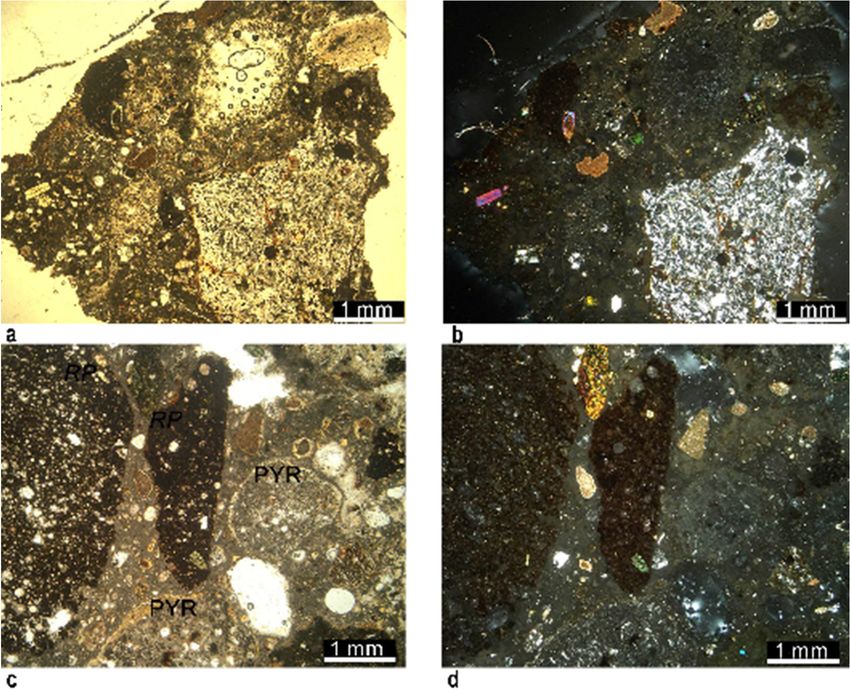
Minerals 2021, 11, 703                                                                                            2 of 16

                               The aqueduct, with its 57-km route from Lake Bracciano to Rome and the strong
                         difference in height between the starting and arrival point (from 320 to 72 m asl), is a
                         perfect example of Roman engineering skills (Figure 1a). Inaugurated in 109 AD, Aqua
                         Traiana was built to supply energy to the mills located on the Janiculum (eastern part of the
                         city of Rome). The main duct is variable, both in size and height, and it is characterized by a
                         mixture of construction methods and materials. During barbarian invasions, the aqueduct
                         was damaged several times. It was finally restored by Pope Paul V, between 1609 and
                         1612 [18–20]. Since that moment, it has never stopped functioning and supplying water
                         to Rome.
                               The present study evaluates the mineralogical and physicochemical composition of
                         mortars, cocciopesto and bricks from the Aqua Traiana to define the building technology. Of
                         these, cocciopesto is the term applied to a mortar containing either crushed terracotta or
                         pozzolan [21]. A multianalytical approach was applied including optical microscopy (OM)
                         in thin section and X-ray powder diffraction (XRPD). Scanning electron microscopy with
                         energy dispersive X-ray spectroscopy (SEM-EDS) and electron microprobe analysis (EMPA)
                         were then applied to determine chemical composition and microstructure of the mortars.
                               The results obtained from the different samples allow a complete characterization of
                         the materials used in the monument and the comparison among those used in the Trajan
                         Era and the ones related to the restauration of Pope Paul V.

                         Brief Geological Setting
                              Lake Bracciano is part of the Sabatini Volcanic District, which belongs to the Roman
                         Comagmatic Province [22]. The high-K feature of these products has been related to a
                         metasomatized mantle source, i.e., to a phlogopite-bearing peridotite recording subduction-
                         related fluids and/or melting processes [23–25]. The occurrence of silica-undersaturated
                         ultrapotassic rocks (e.g., leucite-bearing) is related to the subduction of carbonate-rich
                         pelites [26]. Volcanic activity was mainly characterized by widespread pyroclastic flows
                         and sub-Plinian to Plinian fallout, the activity area (ca. 1800 Km2 ) having originated the
                         Bracciano system (W) and the Sacrofano system (E) [22,27].
                              The Sabatini Volcanic District is characterized by volcanic rocks ranging from leucite-
                         tephrites to leucite- and haüyne-phonolites. The activity of the area can be divided in five
                         main phases, which generated the volcanic products shown in Figure 1a.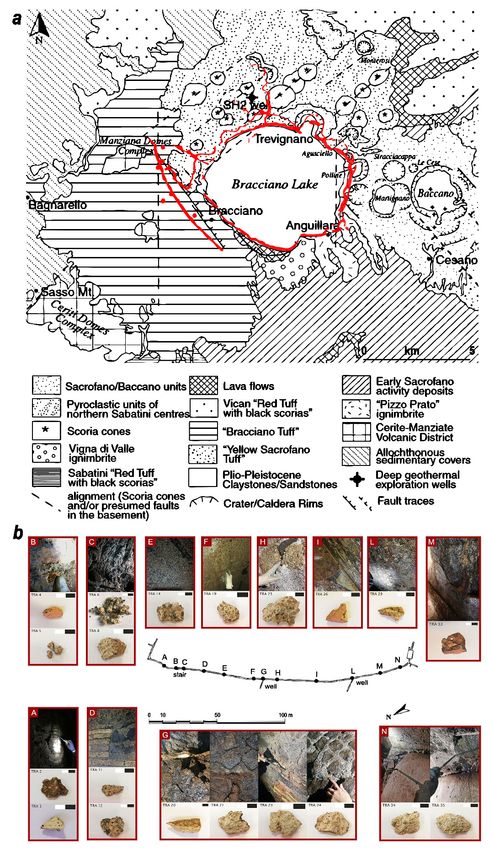
Minerals 2021,
Minerals       11, 703
         2021, 11, 703                                                                                                          33 of
                                                                                                                                   of 16
                                                                                                                                      16

                         Figure 1.
                         Figure      (a) Geological
                                  1. (a) Geological mapmap ofof the
                                                                the Sabatini
                                                                    Sabatini Volcanic
                                                                             Volcanic District, modified after [28]: the
                                                                                                                     the light
                                                                                                                         light red line
                         represents
                         represents the pathpath of
                                                 of the
                                                     the Trajan
                                                         Trajan aqueduct
                                                                 aqueduct around Lake Bracciano; (b) segment of the aqueduct
                                                                                                                       aqueduct with
                         the
                         the location
                              location ofof each
                                            each sampling
                                                  sampling point
                                                              point (A–N)
                                                                    (A–N) and
                                                                           and corresponding
                                                                               corresponding sample
                                                                                                sample (Table 1).
                                                                                                       (Table 1).
Minerals 2021, 11, 703 4 of 16
Among them, the Tufo Giallo della Via Tiberina (yellow tuff of Via Tiberina, TGdVT)
leucite phono-trachytic pyroclastic succession includes lower (LTGdVT) and upper (UT-
GdVT) sequences, Tufo Giallo di Prima Porta (yellow tuff of Prima Porta, TGdPP) and
the Grottarossa Pyroclastic Sequence [22,29]; above it the emplacement of extensive airfall
tuffs and ashes interbedded with surges and minor pyroclastic flow units corresponds to
the Sacrofano stratified tuffs, alternating with sporadic lava flows; a large pyroclastic-flow
forms the Tufo Rosso a Scorie Nere (red tuff with black scoria, TRaSN); finally, a succession
of pumice and scoria fall deposits underlies the Tufo Giallo di Sacrofano (yellow tuff of
Sacrofano, TGdS) [30].
Table 1. List of samples analyzed, with the reference period and sampling point.
Sample Dating Description
mortars
TRA 2 Trajan Age Mortar between bricks
TRA 5 Trajan Age Mortar between the bricks of the stairs near TRA 4
TRA 6 Papal restoration Mortar of the vault that covers the access stair
Mortar between leucitite blocks (between the stair
TRA 8 Trajan Age
and the vault)
Mortar in the junction between leucitite blocks and
TRA 11 Trajan Age
opus latericium
TRA 12 Trajan Age Mortar of the vault, over sample TRA 11
TRA 14 Trajan Age Mortar of the vault
TRA 19 Trajan Age Mortar of the vault
TRA 21 Trajan Age Mortar between leucitite blocks in the well
TRA 23 Trajan Age Mortar between the bricks
TRA 24 Trajan Age Mortar between leucitite blocks in the well
TRA 25 Trajan Age Mortar of the vault
TRA 34 Papal restoration Plaster on the wall
TRA 35 Papal restoration Mortar of the vault over TRA 34
cocciopesto
TRA 29 Trajan Age Cocciopesto from the wall
TRA 33 Trajan Age Cocciopesto from the floor
brick
TRA 3 Trajan Age Brick near TRA 2
TRA 4 Trajan Age Brick of the stairs
TRA 20 Trajan Age Brick from the floor of the well
TRA 26 Trajan Age Bipedal brick from the floor
2. Materials and Methods
2.1. Samples
Samples of ancient mortars, bricks and cocciopesto (Table 1, Figure 1b) were collected
inside a secondary duct of Trajan’s aqueduct, at Settebotti-Trevignano Romano, in the
northern area of Lake Bracciano (Rome, Italy). Fourteen mortar samples belong to different
types of masonry (mortars between bricks in opus latericium, mortars between stone blocks
in opus reticulatum or the hydraulic plaster). They are also representative of different
building phases (Trajan Age and papal restoration), as recognized by the archaeologists
based on macroscopic features, stratigraphic context and construction phase; two cocciopesto
(or opus signinum) fragments were collected from the covering of the duct, whereas four
brick fragments were sampled from both the masonry and the bipedal bricks used on
the floor.
2.2. Experimental Methods
A preliminary macroscopic analysis was performed by the naked eye on dried samples
to define the colour and size of the aggregates and the possible presence of additives.Minerals 2021, 11, 703 5 of 16
Thin sections were then analyzed by a Zeiss D-7082 Oberkochen polarized optical
microscope. Microscopic analysis in both parallel (PPL) and crossed polarized light (XPL)
was performed according to Pecchioni et al. [31] and the normal 12/83 [32] for mortars,
through which it was also possible to qualitatively estimate the binder/aggregate ratio and
porosity by visual comparison. Whitbread’s criteria [33] were indeed used for brick and
cocciopesto fragments.
The identification of material providing hydraulicity is easy by OM. However, if
this component is finely ground or interference colours are similar to that of the matrix,
microstructural analysis combined with chemical investigations can help [31]. Hence, SEM-
EDS investigation was carried out on representative mortar samples. Based on microscopic
analysis, macroscopic features and discrimination given by the archaeologists, two Papal
samples (TRA 6 and TRA 35) and five Trajan samples (TRA 2, TRA 11, TRA 12, TRA 21
and TRA 23) were analyzed. A FEI Quanta 400 scanning electron microscope coupled with
energy dispersive spectroscopy was used to define the microstructure of the samples and
chemical composition of the aggregates and possibly highlight different microchemical
features between original and restoration materials.
EMPA was also carried out on samples representative of the different function of the
mortar: in the junction between leucitite blocks and opus latericium (TRA 11); between
leucitite blocks in the well (TRA 21) and between bricks (TRA 23). A Cameca SX50 micro-
probe was used, equipped with five wavelength-dispersive spectrometers and operating
at 15 kV accelerating voltage, 15 nA beam current and 10 µm beam size. Element peaks
and background were measured with counting times of 20 s and 10 s respectively. Wol-
lastonite was used as a reference standard for Si (TAP, thallium (acid) phthalate crystal)
and Ca (XET, pentaerythritol crystal), augite for Mg (TAP), corundum for Al (TAP), jadeite
for Na (TAP), rutile for Ti (XET), fayalite for Fe (LIF, lithium fluoride), rhodonite for Mn
(LIF), orthoclase for K (XET), chalcopyrite for Cu (LIF), galena for Pb (XET), cassiterite
for Sn (XET), apatite for P (XET), barite for Ba (XET) and sphalerite for Zn (LIF). Matrix
corrections were calculated by the PAP method with software supplied by the Microbeams
Services [34,35]. The relative analytical error was 1% for major elements and it increased
as their concentration decreased [36,37]. The detection limits under the specified working
condition ranged between 0.01 and 0.1 wt %.
Finally, a small amount of each mortar sample was finely ground in an agate mortar
for XRPD analysis by a Bruker D8 focus diffractometer with CuKα radiation, operating at
40 kV and 30 mA. The following instrumental set-up was chosen: 3–60◦ 2θ range and a
scan step of 0.02◦ 2θ/2 s. Data processing, including semiquantitative analysis based on
the “Reference Intensity Ration Method”, was performed using XPowderX software.
3. Results and Discussion
3.1. Mortars
The preliminary macroscopic analysis highlighted that the mortars samples are hard
and compact, i.e., resistant and not friable. They are characterized by a binder fraction
varying in colour from beige to yellow and a pozzolan-based aggregate with tuff-ash
fragments. Grains vary in size and shape (from rounded to subrounded) and are mainly
represented by dark, reddish and yellow tuff fragments. Specifically, Trajan samples present
a light-grey, whitish colour binder fraction.
Optical microscopy first permitted to distinguish the microstructure of the binder:
a carbonate one with micritic texture and high birefringence for the papal samples and
an amorphous gel-like cementing matrix in the Trajan mortars. In addition, OM analysis
allowed the estimation of the binder/aggregate ratio. Papal samples show a ratio of 1:2,
whereas Trajan Age samples have a binder/aggregate ratio of 1:3 or near this value.
XRPD spectra of papal restoration samples show very abundant calcite related to the
binder. Minerals mainly related to the aggregate, which are possibly linked to a volcanic
origin, are present in variable amount: clinopyroxene; K-feldspar, anorthoclase or sanidine;
and zeolites, like analcime. Clay minerals are absent. On the contrary, most of the samples,Minerals 2021, 11, 703 6 of 16
which correspond to the original Trajan Age samples, are characterized by the absence
of calcite and a more abundant presence of clinopyroxene, clay minerals being present
or in trace (Table 2). Specifically, the absence of calcite in these samples could be due
to a complete portlandite consuming during the pozzolanic reaction (preventing calcite
formation) or connected to alteration processes [38].
Table 2. Mineral assemblage of mortar samples and relative abundances (++++ very abundant; +++
abundant; ++ common; + present; t trace; - not detected), calculated by the reference intensity ratios
(RIR) method in XPowderX. Anl: analcime, Cpx: clinopyroxene, Bt: biotite, Cal: calcite, Fsp: feldspar,
Lct: leucite, Qtz: quartz, Cbz: chabazite, Pl: plagioclase, Amp: amphibole.
Sample Anl Cpx Bt Cal Fsp Clays Lct Qtz Cbz Pl Amp
TRA 2 +++ ++ + - ++ + - t t - -
TRA 5 +++ ++++ t - + t - - - t -
TRA 6 - + + ++++ + - + t - - -
TRA 8 ++++ ++++ t - t - - - - - -
TRA 11 +++ ++++ ++ - t t - - - - -
TRA 12 +++ ++ t - ++++ t t - - - -
TRA 14 ++++ + ++ - +++ t - - - + -
TRA 19 +++ ++ t - ++++ t - - - - -
TRA 21 ++ t t - ++++ t - - - - -
TRA 23 +++ ++++ t - ++ t - - tr - -
TRA 24 ++ t t - ++++ t - - - - t
TRA 25 +++ ++ + - + + - - - +++ -
TRA 34 t + t ++++ + - - - - - -
TRA 35 ++ ++ t +++ +++ - - - - - -
Additionally, based on the amount of alkali feldspars, two subgroups of Trajan samples
can be described. One subgroup has K-feldspars generally very abundant in samples com-
ing from the vault or between leucitite blocks in proximity of the first wall (see Figure 1b,
samples TRA 12, TRA 14 and TRA 19 from the vault and TRA 21, TRA 23 and TRA 24
between leucitite blocks in the well or bricks nearby). Another subgroup indeed shows
K-feldspars as present or in trace, mainly coming from the stairs (TRA 2, TRA 5 and TRA 8
in Figure 1b). Micaceous minerals, specifically biotite, are ubiquitous in lower amount. A
feldspathoid typical of the Roman volcanic activity, leucite, was identified only in sample
TRA 6, as already found by OM. Traces of clinopyroxene were found in TRA 14 and quartz
in sample TRA 11.
Petrographic and SEM-EDS analysis highlighted that the aggregate is mainly com-
posed of volcanic rock fragments, such as pyroclastic rock fragments with pozzolanic
behavior. The pozzolanic material mainly consists of pumice clasts, tuff and lava fragments
with primary phenocrysts surrounded by a vitreous fine-ash matrix. Porosity, size, shape
and distribution of the aggregate are highly variable among the samples (Figure 2).
Specifically, it was possible to identify different inclusions belonging to the aggre-
gate fraction. The pyroclastic rock fragments with porphyritic texture, variable porosity,
sphericity, shape and colour ranging from brown to red or rarely yellow can be defined as
pozzolanic tuff-like materials (Figure 2). This type of aggregate is the most abundant in all
samples and less diffusive in samples TRA 6 and TRA 34. They are either highly porphyric,
with augite-crystals, or sometimes surrounded by illuvial clays (PYR Figure 2c).
Some big porous reddish-brown fragments with a very low porphyritic character
and leucite microcrystals showing star-like habit were also recognized by OM as red
pozzolan (RP in Figure 2c), especially in the original Trajan samples coming from the
vaults (samples TRA 14, TRA 19, TRA 24 and TRA 25). Dark brown-to-black scoria
fragments are also common in all samples, showing lower porphyritic texture, high porosity
(subrounded vesicles are predominant) and colour comparable to the matrix by OM. They
are characterized by the diffuse presence of elongated crystals of sanidine. Pores are either
filled with acicular zeolite crystals or show reaction rims only.Minerals 2021, 11, 703 7 of 16
Minerals 2021, 11, 703 7 of 16
Figure2.2. Optical
Figure Optical Microscopy
Microscopy micrographs
micrographs of of two
two Trajan
Trajanmortars
mortarsininthin
thinsection
section(parallel
(parallel(left)
(left)and
and
crossed polarized
crossed polarized light
light (right):
(right): (a,b)
(a,b) sample
sample TRA
TRA 5; 5; (c,d)
(c,d) sample
sample TRA
TRA25;25;PYR
PYR== pyroclastic
pyroclastic rock
rock
fragmentsurrounded
fragment surroundedby byilluvial
illuvialclay;
clay;RP
RP== red
redpozzolan.
pozzolan.
Specifically, itsome
Additionally, was possible to identify
lava fragments different
showing inclusions
analcime belonging
replacing leucite, tofeldspar,
the aggregatesani-
fraction.
dine, The pyroclastic
ilmenite microcrystals rock
and fragments with porphyritic
small volcanic rock fragments texture, variable
exhibiting porosity,
apatite sphe-
inclusions
ricity, shape
(Figure 3) were and
alsocolour ranging from brown to red or rarely yellow can be defined as
identified.
pozzolanic tuff-likeand
Both original materials (Figure
restoration 2). This
mortars aretype of aggregate
hydraulic and they is the
are most abundantby
characterized in
all samples and less diffusive in samples TRA 6 and TRA 34. They
pozzolanic aggregates that favored the hydraulic reaction [39–41], as constantly found in are either highly por-
phyric, architecture
Roman with augite-crystals, or sometimes
[31]. In particular, the usesurrounded
of pozzolan byisilluvial
attested clays (PYRfrom
starting Figure 2502c).
BC
and theSomemasonry technique
big porous of cocciopesto
reddish-brown has been
fragments used
with sincelow
a very ancient times, character
porphyritic probably and the
2nd century
leucite BC [21,40].
microcrystals Granular
showing volcanic
star-like habitaggregates
were also are either sand-sized
recognized by OM as or red
gravel-sized
pozzolan
tephra
(RP in and they
Figure correspond
2c), especiallyto inVitruvius’
the original harena
Trajanfossicia as described
samples coming from by Jackson et al.(sam-
the vaults [42].
Raw materials
ples TRA 14, TRAat Aqua Traiana
19, TRA in fact
24 and TRA correspond to highly altered
25). Dark brown-to-black volcanic
scoria glass scoriae,
fragments are also
hard
commonlavas,indispersed
all samples, crystals
showingand lower
glassy porphyritic
fragments, frequently
texture, high highly altered.
porosity Even the
(subrounded
binder/aggregate ratio (1:3), estimated by petrographic analysis,
vesicles are predominant) and colour comparable to the matrix by OM. They are charac- suggests that Trajan
mortars
terized byhavethebeen produced
diffuse presencefollowing Vitruvius’
of elongated instructions
crystals for harena
of sanidine. Pores fossicia. However,
are either filled
itwith
is now proposed
acicular zeoliteforcrystals
the firstortime
show harena fossicia
thatreaction could possibly be exploited not only
rims only.
from Additionally,
the lithostratigraphic
some lava units of the Alban
fragments showing Hills volcano,replacing
analcime but also leucite,
from the depositssan-
feldspar, of
Sabatini Volcanic District.
idine, ilmenite microcrystals and small volcanic rock fragments exhibiting apatite inclu-
sionsTrajan
(Figure samples
3) weredo not
also show high porosity (lower than 40%), suggesting that wet
identified.
concrete could had been pressed
Both original and restoration to obtain
mortarsa coherent, well-cemented
are hydraulic and theyfinal are product [42]. Ad-
characterized by
ditionally,
pozzolanic aggregates that favored the hydraulic reaction [39–41], as constantly foundto
their grey-to-white colour may suggest the washing of pozzolanic aggregates in
remove dirt and dust before their addition to the mortar [21]. These features
Roman architecture [31]. In particular, the use of pozzolan is attested starting from 250 BC are comparable
with the masonry
and the original description
technique of bycocciopesto
Van Deman has[43],
been later
usedconfirmed by Jackson
since ancient times, et al. [41], the
probably of
high-quality mortars produced for monumental buildings during the
2nd century BC [21,40]. Granular volcanic aggregates are either sand-sized or gravel-sized Trajan era, such as the
Trajan
tephraMarket
and theyandcorrespond
the Baths. to Moreover,
Vitruvius’ lime lumps
harena do not
fossicia asoccur in theby
described Trajan Ageetmortars
Jackson al. [42].
of the present study, testifying great knowledge of the manufacturing
Raw materials at Aqua Traiana in fact correspond to highly altered volcanic glass process and high
scoriae,
control of each step [44]. This considerable expertise is even attested by a deep knowledge
hard lavas, dispersed crystals and glassy fragments, frequently highly altered. Even theMinerals 2021, 11, 703 8 of 16
of supplies and by precise mixing and selection of the raw materials, strongly depending
on the mortar function: lighter aggregates in fact predominate on the vaults. Specifically,
the occurrence of red pozzolan (dark-red scoria fragments with starry leucite) was only
documented in the Trajan mortars used to build the upper elements of Aqua Traiana. This
is in agreement with coeval technological choices: at the Trajan’s Baths, which indeed
followed Domitian’s building procedures [42,45,46], but also in the lightened mortars of
the vault of “Aula Grande” at the Markets of Trajan [47] and of the “Sala Trisegmentata” at
the Forum of Trajan [48].
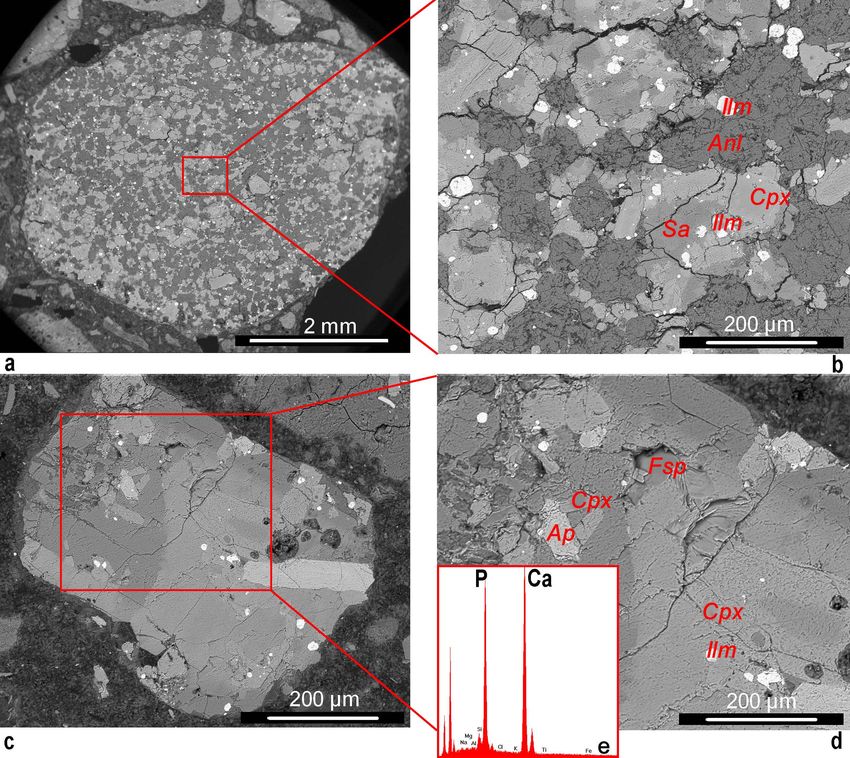
Figure 3. Scanning Electron Microscopy (SEM) micrographs from sample TRA 23: lava fragment
(a) and a magnified view of the red area (b) showing analcime (Anl) replacing leucite, clinopyroxene
(Cpx), sanidine (Sa) and ilmenite (Ilm) microcrystals; volcanic rock fragment (c) and the red area
(d) at a higher magnification, with microcrystals of clinopyroxene (Cpx), apatite (Ap), recognized by
the contemporary presence of P and Ca in the Energy Dispersive X-ray Spectroscopy spectrum (e),
feldspar (Fsp) and ilmenite (Ilm).
EMP analysis was performed to identify specific mineral phases that could be useful
to characterize the aggregate and reconstruct the possible provenance of raw material.
Therefore, aggregates were analyzed to obtain the chemical composition of specific miner-
als. Particularly, augite crystals analyzed in representative samples highlighted enrichment
in Fe. Figure 4 shows an augite crystal in the Trajan sample TRA 11, whose compo-
sition (Table 3) is representative of the augite crystals also found and analyzed in the
other samples.EMP analysis was performed to identify specific mineral phases that could be useful to
characterize the aggregate and reconstruct the possible provenance of raw material. There-
fore, aggregates were analyzed to obtain the chemical composition of specific minerals. Par-
Minerals 2021, 11, 703 ticularly, augite crystals analyzed in representative samples highlighted enrichment 9inofFe.
16
Figure 4 shows an augite crystal in the Trajan sample TRA 11, whose composition (Table 3)
is representative of the augite crystals also found and analyzed in the other samples.
Figure 4.
Figure 4. Representative
Representative augite
augite crystal
crystal in
in aa volcanic
volcanic rock
rock fragment
fragment of
of the
the Trajan
Trajan sample
sample TRA
TRA 1111
identifiedby
identified bySEM
SEM(red
(redcross,
cross,see
see Table
Table33for
forchemical
chemicaldata);
data);in
in the
the same
same micrograph,
micrograph,acicular
acicularcrystals
crystals
filling porosities can be also seen.
filling porosities can be also seen.
Table 3. Chemical composition of the representative augite crystal of Figure 4 The relative formula
Table 3. Chemical composition of the representative augite crystal of Figure 4 The relative formula
was calculated on 6 oxygens from Electron Microprobe analysis (EMPA).
was calculated on 6 oxygens from Electron Microprobe analysis (EMPA).
Oxide
Oxide wt%*wt% * apfu
apfu
SiO 2
SiO2
44.6644.66 Si
Si 1.680
1.680
AlAl2O 3
2 O3
7.64 7.64 Al Al 0.339
0.339
MgO
MgO 10.1010.10 Mg Mg 0.567
0.567
CrCr2O
2O33 0.00 0.00 Cr+3Cr+3 0.000
0.000
TiO2
TiO2 1.37 1.37 Ti
Ti 0.039
0.039
FeO 11.27 Fe+2 0.086
FeO
Fe2 O3 11.27 0.00 Fe +3Fe +2 0.086
0.268
FeMnO
2O3 0.00 0.27 Mn Fe+3 0.268
0.009
MnO
CaO 0.27 24.02 Ca Mn 0.009
0.968
Na2 O
CaO 24.02 0.53 Na Ca 0.038
0.968
K O 0.13 K 0.006
Na22O 0.53 Na 0.038
KTotal
2O 0.13 100 Cat. SumK 4.000
0.006
* normalized to 100.
Total 100 Cat. Sum 4.000
* normalized to 100.
Additionally, in these pyroclastic rock fragments, secondary minerals also occurred
(analcimised leucite) and porosities were filled with recrystallized zeolite. These crystals
were very fine, with a thickness lower than 5 µm, therefore only one measurement could
be performed on each crystal. However, numerous (more than three for each sample) point
analyses were performed to evaluate the chemical composition of zeolites, according to [49].
By EMPA, these acicular crystals were identified as Mg-enriched chabazite (Table 4).Minerals 2021, 11, 703 10 of 16
Table 4. Chemical composition and relative formula, calculated on 24 oxygens and 12 H2 O molecules,
of different representative chabazite crystals identified in different pyroclastic rock fragments.
TRA 23 TRA21 TRA11 TRA 23 TRA21 TRA11
Oxide wt % Element apfu
SiO2 46.807 51.835 55.020 Si 7.962 8.959 8.971
Al2 O3 21.280 15.019 16.684 Al 4.272 3.063 3.210
Z-site 12.234 12.022 12.182
CaO 6.553 5.336 4.707 Ca 1.196 0.989 0.823
Na2 O 0.166 0.271 0.205 Na 0.027 0.045 0.032
K2 O 2.023 2.411 2.350 K 0.440 0.532 0.489
MgO 0.888 0.726 0.582 Mg 0.225 0.187 0.142
Total 77.717 75.598 79.548 X-site 1.888 1.754 1.487
Pumice clasts in the mortars have a round shape and high porosity, with colour
ranging from white to yellow or grey in PPL.
Single crystals such as amphiboles, pyroxenes and feldspars (plagioclase—mainly
albite—orthoclase, anorthoclase and sanidine), all attributable to volcanic rock fragments,
are dispersed in the binder. Some of them, especially pyroxene and feldspar crystals,
sometime show alterations, such as partial dissolution or fractures with recrystallizations.
Fragments of volcanic rocks (leucitite type), with big crystals of leucite, clinopyroxene
and plagioclase, were only present in TRA 6 and TRA 34, which were both related to the
papal restoration and may imply a slightly different supply.
Grog, namely crushed ceramic fragments, is the only artificial material with pozzolanic
behavior identified in the sole sample TRA 34 as predominant, while natural materials
with pozzolanic behavior are less common in this sample. The use of ceramic fragments as
aggregates in ancient mortar is widely attested [40,50]. The role of ceramics is comparable
to that of pozzolan, the vitreous or amorphous fraction reacting with the binder to produce
a hard and waterproof material, even if the reaction is not as strong as with pozzolan [38].
The strong compositional difference between papal and Trajan Age samples allows an
easy differentiation of the two building phases.
Our results show that the original bedding mortars of the Trajan aqueduct were
produced from a mixture of lime, water and fine-grained material with pozzolanic behavior.
The aggregate is exclusively constituted by the natural material of volcanic origin, while
artificial components are absent. These major components are typical in the volcanism
of the Roman Magmatic Province [51] and compatible with the geological setting of the
Sabatini Volcanic District with rocks ranging from leucite-tephrites to leucite- and haüyne-
phonolites. Analcime characterizes the secondary assemblage of these volcanic products,
being leucite subjected to analcimisation [52], as it is commonly found in lithified deposits
of this area [53,54]. Microsubhedral ilmenite has been also described as a typical, ubiquitous
accessory mineral in the Sabatini dark-grey porphyritic lava fragments [55]. The black
fragments in our mortars may indeed correspond to the description given for glassy clasts
from the upper lithified deposit of Tufo Rosso a Scorie Nere (red tuff with black scoria) [56].
Finally, the recognition of apatite in some vitreous fragments corroborates the hypothesis
of local supply. In fact, apatite occurs as an accessory mineral in the tephriphonolite,
latite and phonotephrite of the Martignano Units [57]. The use of this kind of supply is
expressed by the compatibility in chemical composition of the clinopyroxenes calculated in
the present work and those provided by the literature [55,57,58] in leucite-tephrites from
the middle Martignano Unit. However, it must be remarked that apatite has been also
found in the low porphyritic scoriae of Pozzolane Nere and Pozzolanelle formations of the
Alban Hills [59]. Indeed, the concomitant presence of pozzolanic aggregates from further
areas of the Roman Magmatic Province is possible, especially if we consider that in the
Roman imperial period the supply from far away quarries had become common [41]. For
example, sanidine-bearing pumices, which are frequent aggregates in the mortars fromMinerals 2021, 11, 703 11 of 16
Aqua Traiana, are also described in the San Paolo formation, deposited by the Tiber River
and its tributaries at the base of the Capitoline Hill [41,48].
Independently of the nature of the aggregate and binder, needle-shaped recrystalliza-
tions occurred in the pores. These recrystallizations were also found in local tuffs [60,61].
However, chabazite in the present work showed a slightly higher Mg content and less K
and Na, suggesting the presence of zeolite (phillipsite and chabazite) as the secondary
weathering mineral or related to the hydraulic reaction [62–64].
3.2. Bricks and Cocciopesto
Brick samples are characterized by fine grain-sized inclusions and a clayey matrix.
The nature of the inclusions, their packing and mean size were considered to distinguish
two petrographic fabrics (Table 5).
Table 5. Microscopic characteristics of brick and cocciopesto fragments.
Sample Porosity Matrix Inclusions
5% Predominant: quartz (0.1–0.3 mm),
90%
Equant–elongated; feldspars (0.2–0.3 mm)
5% non calcareous
TRA 3 angular–subrounded; Common: pyroxene (0.3–1.2 mm)
Meso–macrovesicles brown-green
open spaced; Frequent: iron oxide nodules
activity
not aligned (0.2–1 mm)
Predominant: quartz (0.1–0.2 mm)
5%
85% Common: pyroxene (0.5–1.2 mm)
10% Equant–elongated;
non calcareous Few: iron oxide nodules (0.2–1
TRA 4 Micro–macrovesicles angular–subrounded;
brown-green mm), quartz (0.3–1.2 mm)
Macrovughs open-spaced;
activity Very rare: siliceous rock fragments
not aligned
(1 mm)
Predominant: quartz (0.1 mm),
5%
90% feldspars (0.2–0.3 mm)
Equant–elongated;
5% non calcareous Dominant: pyroxene (0.4–1.3 mm)
TRA 20 angular–subrounded;
Meso–microvesicles brown-green Few: quartz (0.5–1 mm)
open-spaced;
activity Very rare: volcanic rock fragments
not aligned
(5 mm)
40%
55% Predominant: quartz (0.1–0.3 mm),
Equant–elongated;
5% non calcareous Few: quartz (0.6–1.3 mm)
TRA 26 angular–subrounded;
Meso–microvesicles red-brown Rare: pyroxene (0.3–0.5 mm), iron
open-spaced;
activity oxide nodules (0.3–0.8 mm)
not aligned
Predominant: quartz (0.1–0.3 mm),
5%
90% Common: pyroxene (0.7–0.8 mm)
Equant–elongated;
5% non calcareous Few: quartz (0.7 mm)
TRA 29 * angular–subangular;
Microvesicles brown-green Very rare: fragments of siliceous
single-spaced;
activity rocks (1.0 mm), iron oxide nodules
not aligned
(0.3–0.5 mm)
5%
90% Predominant: quartz (0.1–0.3 mm),
Equant–elongated;
5% non calcareous Common: pyroxene (0.6 mm)
angular–subangular;
Microvesicles brown-green Very rare: iron oxide nodules
single-spaced;
activity (0.3–0.5 mm)
not alignedMinerals 2021, 11, 703 12 of 16
Table 5. Cont.
Sample Porosity Matrix Inclusions
5% Predominant: quartz (0.1–0.3 mm),
92%
Equant–elongated; Few: quartz (0.7–1.3 mm),
3% non calcareous
TRA 33 * angular–subangular; pyroxene (0.5–0.7 mm)
Microvesicles brown-green
single-spaced; Very rare: iron oxide nodules
activity
not aligned (0.3–0.7 mm)
10%
87% Predominant: quartz (0.1–0.3 mm),
3% Equant–elongated;
non calcareous Common: pyroxene (0.5–1.2 mm)
Microvesicles angular–subangular;
brown-green Few: quartz (0.2–0.8 mm),
meso–macrovughs single-spaced;
activity pyroxene (0.4–0.6 mm)
not aligned
5%
90%
5% Equant–elongated; Predominant: quartz (0.1–0.3 mm),
non calcareous
Microvesicles angular–subangular; Few: quartz (0.5 mm), pyroxene
brown-green
meso–macrovughs single-spaced; (0.5–0.6 mm)
activity
not aligned
* TRA 29 and TRA 33 are cocciopesto samples where three different brick fragments were recognized and described.
The first fabric A-matrix is characterized by a low percentage of inclusions (5%), equant
and elongated, from angular to subrounded, open-spaced and not aligned with respect
to the margin of the sample. Predominant fine quartz and plagioclase, common pyroxene
crystals and iron oxide nodules were identified. In addition, some very rare fragments of
rocks were also present. The porosity was estimated to be between 5 and 10% and was
mainly represented by mesovesicles and vughs, not aligned and without any secondary
calcite. The non-calcareous matrix ranged in colour from beige to brown-green and it was
optically active. The results obtained for the samples belonging to fabric A-matrix suggest
that the starting raw material consisted of a purified clay containing fine quartz, plagioclase
and pyroxene inclusions. The material underwent a selection process to remove the coarser
fraction, as suggested by the absence of coarse inclusions. This process had good efficiency,
as testified by the low percentage of inclusions and by the very fine grain size.
The second fabric B-inclusions, including only bipedal samples, was distinguished by
the higher percentage (40%) of very fine grain-sized inclusions. Fine quartz is predominant
in the samples, whereas coarser crystals were few in the matrix; rare pyroxene and nodules
of iron oxides were also identified. The low porosity was represented by meso- and
microvesicles without any secondary recrystallization. The non-calcareous matrix had a
red-brownish colour and optical activity.
Concerning the cocciopesto fragments, the matrix was similar to the amorphous gel-
like cementing matrix identified in mortar samples. It was impossible to distinguish
crystals and it had very low colours ranging from green to brown. The aggregate was only
represented by grog. Its inclusions show a clayey matrix with a brown-greenish colour,
optically active. Predominant fine quartz and rare coarser crystals of pyroxene and quartz
were identified among aggregates. The porosity was low and both inclusions and pores did
not exhibit a preferred alignment. In addition, porosities were filled by secondary calcite.
Fabric B-inclusions could have been produced with a different clay respect to fabric
A-matrix, the first being characterized by a higher amount of fine quartz and subjected to a
lighter purification step during the production.
The difference in the granulometry and percentage of inclusions is probably connected
to the end-use of the materials. The fabric A-matrix includes brick samples used in the
masonry, which are not subjected to continuous attrite, whereas bipedal bricks in fabric
B-inclusions are typical, squared, Roman bricks with a 60-cm side, used for flooring.
The strong optical activity of the matrix observed in both fabrics gives preliminary
information about the firing temperature, which is suggested to be lower than 850 ◦ C [17],
in agreement with the literature [65].Minerals 2021, 11, 703 13 of 16
The rest of the minerals identified are compatible with the volcanic geological setting
of the area, suggesting a local supply of the clay.
Cocciopesto fragments show a matrix similar to the amorphous binder of mortar
samples dated to the Trajan Age. The inclusions, only represented by grog, are comparable
to the bricks of fabric A-matrix. Therefore, a supply of similar raw materials is suggested,
and comparable technology and contemporary production are hereby hypothesized.
4. Conclusions
The current research for the first time permitted a complete characterization of the
building materials of the ancient Aqua Traiana aqueduct.
Concerning the mortars, they are all hydraulic, with fine aggregates of volcanic origin.
Specifically, Trajan Age samples are characterized by a calcite-free amorphous binder, while
a lime binder characterizes the samples of the papal restauration.
The compatibility of the pozzolanic aggregate with local supplies from the Bracciano
area is for the first time inferred; however, supplies from more distant areas of the Roman
Magmatic Province are co-occurrent. Raw materials are likely described as Vitruvius’ harena
fossicia and their use is highly compatible with the building technology of the Trajan Era,
with specific aggregates for different parts of the masonry.
The great differences among Trajan and papal samples documented in this study
may allow the future dating of other parts of the aqueduct, based on mineralogical and
chemical characterization. Indeed, an increased number of mortar samples will allow
collecting a systematic overview of the mineralogical assemblage in the mortars from Aqua
Traiana. In addition, a multivariate statistical analysis using chemical data may be planned,
investigating the role of the elements with lower mobile behavior in surface environments,
such as K, Sc, Ga, Rb, Cs, REE and other elements such as Hf, Ta and Th, for a deeper
differentiation of mortars.
Concerning ceramic components, bricks were produced with local materials and fired
at a low temperature, with specific features connected to the end-use. Cocciopesto fragments
showed a matrix similar to the amorphous binder of Trajan mortar samples and fragments
of bricks as inclusions.
The compatibility of materials used in the production of Trajan mortars, bricks and
cocciopesto suggests similar technological choices and may be explained by a coeval produc-
tion. However, further investigation is ongoing and it will include samples from the main
ducts of the aqueduct.
Author Contributions: M.B.: Data curation, Investigation, Writing—Original Draft. L.M.: Con-
ceptualization, Funding acquisition, Supervision, Writing—Original Draft. L.C.: Data Curation,
Investigation. C.D.V.: Formal analysis, Writing—review and editing. S.M.: Writing—review and
editing. All authors have read and agreed to the published version of the manuscript.
Funding: Financial support was provided by “Sapienza” University of Rome–Progetto Ateneo
2019 Medeghini.
Institutional Review Board Statement: Not applicable.
Informed Consent Statement: Not applicable.
Data Availability Statement: All data derived from this research are presented in the enclosed
figures and tables.
Acknowledgments: The authors want to express their gratitude to Sovrintendenza Capitolina ai Beni
Culturali, in particular to Francesco Maria Cifarelli and Marina Marcelli, who allowed the research
on the hydraulic mortars of Trajan’s aqueduct; to ACEA ATO 2, Antonio Grosso and Armando Zitelli;
to Roma Sotterranea speleological association, and in particular to Elettra Santucci, who lead us
inside the aqueduct for the sampling. The authors thank the five anonymous reviewers for the useful
comments and suggestions on ways to improve the manuscript.
Conflicts of Interest: The authors declare no conflict of interest.Minerals 2021, 11, 703 14 of 16
References
1. Botticelli, M.; Mignardi, S.; De Vito, C.; Liao, Y.; Montanari, D.; Shakarna, M.; Nigro, L.; Medeghini, L. Variability in pottery
production at Khalet al-Jam’a necropolis, Bethlehem (West Bank): From the Early-Middle Bronze to the Iron Age. Ceram. Int.
2020, 46, 16405–16415. [CrossRef]
2. Rispoli, C.; Esposito, R.; Guerriero, L.; Cappelletti, P. Ancient Roman mortars from Villa del Capo di Sorrento: A multi-analytical
approach to define microstructural and compositional features. Minerals 2021, 11, 469. [CrossRef]
3. Botticelli, M.; Maras, A.; Candeias, A. µ-Raman as a fundamental tool in the origin of natural or synthetic cinnabar: Preliminary
data. J. Raman Spectrosc. 2020, 51, 1470–1479. [CrossRef]
4. Bandiera, M.; Verità, M.; Lehuédé, P.; Vilarigues, M. The technology of copper-based red glass sectilia from the 2nd century AD
Lucius Verus Villa in Rome. Minerals 2020, 10, 875. [CrossRef]
5. Sanjurjo-Sánchez, J.; Trindade, M.J.; Blanco-Rotea, R.; Garcia, R.B.; Mosquera, D.F.; Burbidge, C.; Prudêncio, M.I.; Dias, M.I.
Chemical and mineralogical characterization of historic mortars from the Santa Eulalia de Bóveda temple, NW Spain. J. Archaeol.
Sci. 2010, 37, 2346–2351. [CrossRef]
6. Sánchez-Pardo, J.C.; Blanco-Rotea, R.; Sanjurjo-Sánchez, J.; Barrientos-Rodríguez, V. Reusing stones in medieval churches: A
multidisciplinary approach to San Martiño de Armental (NW Spain). Archaeol. Anthropol. Sci. 2019, 11, 2073–2096. [CrossRef]
7. Ricca, M.; Paladini, G.; Rovella, N.; Ruffolo, S.A.; Randazzo, L.; Crupi, V.; Fazio, B.; Majolino, D.; Venuti, V.; Galli, G.; et al.
Archaeometric characterisation of decorated pottery from the archaeological site of Villa dei Quintili (Rome, Italy): Preliminary
study. Geosciences 2019, 9, 172. [CrossRef]
8. Maltoni, S.; Silvestri, A. A mosaic of colors: Investigating production technologies of Roman glass tesserae from Northeastern
Italy. Minerals 2018, 8, 255. [CrossRef]
9. Rahim, N.S.A. Analytical study and conservation of archaeological terra sigillata ware from Roman period, Tripoli, Libya. Sci.
Cult. 2016, 2, 19–27. [CrossRef]
10. Maritan, L. Archaeo-ceramic 2.0: Investigating ancient ceramics using modern technological approaches. Archaeol. Anthropol. Sci.
2019, 11, 5085–5093. [CrossRef]
11. Jackson, M.; Marra, F. Roman stone masonry: Volcanic foundations of the ancient city. Am. J. Archaeol. 2006, 110, 403–436.
[CrossRef]
12. Benjelloun, Y.; de Sigoyer, J.; Dessales, H.; Garambois, S.; Şahin, M. Construction history of the aqueduct of Nicaea (Iznik, NW
Turkey) and its on-fault deformation viewed from archaeological and geophysical investigations. J. Archaeol. Sci. Rep. 2018, 21,
389–400. [CrossRef]
13. Maravelaki-Kalaitzaki, P.; Galanos, A.; Doganis, I.; Kallithrakas-Kontos, N. Physico-chemical characterization of mortars as a tool
in studying specific hydraulic components: Application to the study of ancient Naxos aqueduct. Appl. Phys. A 2011, 104, 335–348.
[CrossRef]
14. Figueiredo, M.O.; Veiga, J.P.; Silva, T.P. Materials and reconstruction techniques at the Aqueduct of Carthage since the Roman
period. Hist. Constr. Guimares 2001, 1, 391–400.
15. Maritan, L.; Mazzoli, C.; Sassi, R.; Speranza, F.; Zanco, A.; Zanovello, P. Trachyte from the Roman aqueducts of Padua and Este
(north-east Italy): A provenance study based on petrography, chemistry and magnetic susceptibility. Eur. J. Miner. 2013, 25,
415–427. [CrossRef]
16. Rizzo, G.; Ercoli, L.; Megna, B.; Parlapiano, M. Characterization of mortars from ancient and traditional water supply systems in
Sicily. J. Therm. Anal. Calorim. 2008, 92, 323–330. [CrossRef]
17. Medeghini, L.; Ferrini, V.; Di Nanni, F.; D’Uva, F.; Mignardi, S.; De Vito, C. Ceramic pipes of the Roman aqueduct from Raiano
village (L’Aquila, Italy): A technological study. Constr. Build. Mater. 2019, 218, 618–627. [CrossRef]
18. Dembskey, E.J. The Aqueducts of Ancient Rome. Ph.D. Thesis, University of South Africa, Pretoria, South Africa, 2009.
19. Cifarelli, F.M.; Marcelli, M. L’Aqua Traiana: Infrastruttura della città antica e moderna. In Traiano: Costruire L’Impero, Creare
L’Europa; Parisi Presicce, C., Milella, M., Pastor, S., Eds.; De Luca Editori d’Arte: Rome, Italy, 2017; pp. 221–226.
20. O’Neill, E. L’Acquedotto di Traiano tra il ninfeo di S. Fiora e il Lago di Bracciano. Atlante Temat. Topogr. Antica 2014, 24, 197–214.
21. Lancaster, L.C. Concrete Vaulted Construction in Imperial Rome: Innovations in Context; Cambridge University Press: New York, NY,
USA, 2005; ISBN 9780511610516.
22. Marra, F.; Sottili, G.; Gaeta, M.; Giaccio, B.; Jicha, B.; Masotta, M.; Palladino, D.M.; Deocampo, D.M. Major explosive activity in
the Monti Sabatini Volcanic District (central Italy) over the 800–390 ka interval: Geochronological–geochemical overview and
tephrostratigraphic implications. Quat. Sci. Rev. 2014, 94, 74–101. [CrossRef]
23. Conticelli, S.; Peccerillo, A. Petrology and geochemistry of potassic and ultrapotassic volcanism in central Italy: Petrogenesis and
inferences on the evolution of the mantle sources. Lithos 1992, 28, 221–240. [CrossRef]
24. Peccerillo, A. Multiple mantle metasomatism in central-southern Italy: Geochemical effects, timing and geodynamic implications.
Geology 1999, 27, 315–318. [CrossRef]
25. Conticelli, S.; D’Antonio, M.; Pinarelli, L.; Civetta, L. Source contamination and mantle heterogeneity in the genesis of Italian
potassic and ultrapotassic volcanic rocks: Sr-Nd-Pb isotope data from Roman Province and Southern Tuscany. Mineral. Petrol.
2002, 74, 189–222. [CrossRef]
26. Conticelli, S.; Avanzinelli, R.; Ammannati, E.; Casalini, M. The role of carbon from recycled sediments in the origin of ultrapotassic
igneous rocks in the Central Mediterranean. Lithos 2015, 232, 174–196. [CrossRef]Minerals 2021, 11, 703 15 of 16
27. Masotta, M.; Gaeta, M.; Gozzi, F.; Marra, F.; Palladino, D.M.; Sottili, G. H2 O- and temperature-zoning in magma chambers:
The example of the Tufo Giallo della Via Tiberina eruptions (Sabatini Volcanic District, central Italy). Lithos 2010, 118, 119–130.
[CrossRef]
28. Buttinelli, M.; De Rita, D.; Cremisini, C.; Cimarelli, C. Deep explosive focal depths during maar forming magmatic-hydrothermal
eruption: Baccano Crater, Central Italy. Bull. Volcanol. 2011, 73, 899–915. [CrossRef]
29. Sottili, G.; Palladino, D.M.; Marra, F.; Jicha, B.; Karner, D.B.; Renne, P. Geochronology of the most recent activity in the Sabatini
Volcanic District, Roman Province, central Italy. J. Volcanol. Geotherm. Res. 2010, 196, 20–30. [CrossRef]
30. Marra, F.; Anzidei, M.; Benini, A.; D’Ambrosio, E.; Gaeta, M.; Ventura, G.; Cavallo, A. Petro-chemical features and source areas of
volcanic aggregates used in ancient Roman maritime concretes. J. Volcanol. Geotherm. Res. 2016, 328, 59–69. [CrossRef]
31. Pecchioni, E.; Fratini, F.; Cantisani, E. Atlas of the Ancient Mortars in Thin Section under Optical Microscope; Nardini Editore: Firenze,
Italy, 2017.
32. Consiglio Nazionale delle Ricerche; Istituto Centrale del Restauro. Normal 12-83-Aggregati Artificiali di Clasti e Matrice Legante non
Argillosa; COMAS Grafica: Rome, Italy, 1983.
33. Whitbread, I.K. Greek Transport Amphorae: A Petrological and Archaeological Study; British School at Athens: Athens, Greece, 1995;
Volume 4, ISBN 0-904887-13-8.
34. Pouchou, J.L.; Pichoir, F. “PAP” φ(ρz) procedure for improved quantitative microanalysis. In Microbeam Analysis;
Armstrong, J.T., Ed.; San Francisco Press Inc.: San Francisco, CA, USA, 1985.
35. De Vito, C.; Medeghini, L.; Garruto, S.; Coletti, F.; De Luca, I.; Mignardi, S. Medieval glazed ceramic from Caesar’s Forum (Rome,
Italy): Production technology. Ceram. Int. 2018, 44, 5055–5062. [CrossRef]
36. Lifshin, E.; Gauvin, R. Minimizing Errors in Electron Microprobe Analysis. Microsc. Microanal. 2001, 7, 168–177. [CrossRef]
37. Poole, D.M. Progress in the correction for the atomic number effects. In Quantitative Electron Probe Microanalysis;
Heinrich, K.F.J., Ed.; National Bureau of Standards, Spec. Pub. 298: Washington, WA, USA, 1968; pp. 93–131.
38. Moropoulou, A.; Bakolas, A.; Aggelakopoulou, E. Evaluation of pozzolanic activity of natural and artificial pozzolans by thermal
analysis. Thermochim. Acta 2004, 420, 135–140. [CrossRef]
39. Chiari, G.; Santarelli, M.L.; Torraca, G. Caratterizzazione delle malte antiche mediante l’analisi di campioni non frazionati.
Matariali Strutt. Probl. Conserv. 1992, 2, 111–137.
40. Torraca, G. Lectures on Materials Science for Architectural Conservation; Getty Conservation Institute: Los Angeles, CA, USA, 2009;
ISBN 978-0-9827668-3-5.
41. Jackson, M.; Deocampo, D.; Marra, F.; Scheetz, B. Mid-Pleistocene pozzolanic volcanic ash in ancient Roman concretes. Geoarchae-
ology 2010, 25, 36–74. [CrossRef]
42. Jackson, M.; Marra, F.; Deocampo, D.; Vella, A.; Kosso, C.; Hay, R. Geological observations of excavated sand (harenae fossiciae)
used as fine aggregate in Roman pozzolanic mortars. J. Rom. Archaeol. 2007, 20, 25–53. [CrossRef]
43. Van Deman, E.B. Methods of determining the date of Roman concrete monuments. Am. J. Archaeol. 1912, 16, 230–251. [CrossRef]
44. Moropoulou, A.; Bakolas, A.; Anagnostopoulou, S. Composite materials in ancient structures. Cem. Concr. Compos. 2005, 27,
295–300. [CrossRef]
45. Freda, C.; Gaeta, M.; Giaccio, B.; Marra, F.; Palladino, D.M.; Scarlato, P.; Sottili, G. CO2 -driven large mafic explosive eruptions:
The Pozzolane Rosse case study from the Colli Albani Volcanic District (Italy). Bull. Volcanol. 2011, 73, 241–256. [CrossRef]
46. Marra, F.; Danti, A.; Gaeta, M. The volcanic aggregate of ancient Roman mortars from the Capitoline Hill: Petrographic criteria
for identification of Rome’s “pozzolans” and historical implications. J. Volcanol. Geotherm. Res. 2015, 308, 113–126. [CrossRef]
47. Jackson, M.D.; Logan, J.M.; Scheetz, B.E.; Deocampo, D.M.; Cawood, C.G.; Marra, F.; Vitti, M.; Ungaro, L. Assessment of material
characteristics of ancient concretes, Grande Aula, Markets of Trajan, Rome. J. Archaeol. Sci. 2009, 36, 2481–2492. [CrossRef]
48. Bianchi, E.; Brune, P.; Jackson, M.; Marra, F.; Meneghini, R. Archaeological, structural, and compositional observations of the
concrete architecture of the Basilica Ulpia and Trajan’s Forum. Comm. Hum. Litt. 2011, 128, 73–95.
49. Campbell, L.S.; Charnock, J.; Dyer, A.; Hillier, S.; Chenery, S.; Stoppa, F.; Henderson, C.M.B.; Walcott, R.; Rumsey, M. Determina-
tion of zeolite-group mineral compositions by electron probe microanalysis. Mineral. Mag. 2016, 80, 781–807. [CrossRef]
50. Izzo, F.; Arizzi, A.; Cappelletti, P.; Cultrone, G.; De Bonis, A.; Germinario, C.; Graziano, S.F.; Grifa, C.; Guarino, V.;
Mercurio, M.; et al. The art of building in the Roman period (89 B.C.–79 A.D.): Mortars, plasters and mosaic floors from ancient
Stabiae (Naples, Italy). Constr. Build. Mater. 2016, 117, 129–143. [CrossRef]
51. Jackson, M.D.; Marra, F.; Hay, R.L.; Cawood, C.; Winkler, E.M. The judicious selection and preservation of tuff and travertine
building stone in ancient Rome. Archaeometry 2005, 47, 485–510. [CrossRef]
52. Giampaolo, C.; Godano, R.F.; Di Sabatino, B.; Barrese, E. The alteration of leucite-bearing rocks: A possible mechanism. Eur. J.
Mineral. 1997, 9, 1277–1292. [CrossRef]
53. Cappelletti, P.; Petrosino, P.; de Gennaro, M.; Colella, A.; Graziano, S.F.; D’Amore, M.; Mercurio, M.; Cerri, G.; de Gennaro, R.;
Rapisardo, G.; et al. The “Tufo Giallo della Via Tiberina” (Sabatini Volcanic District, Central Italy): A complex system of
lithification in a pyroclastic current deposit. Mineral. Petrol. 2015, 109, 85–101. [CrossRef]
54. Hay, R.L.; Sheppard, R.A. Occurrence of zeolites in sedimentary rocks: An overview. Rev. Mineral. Geochem. 2001, 45, 217–234.
[CrossRef]
55. Cundari, A. Petrogenesis of leucite-bearing lavas in the Roman volcanic Region, Italy-The Sabatini lavas. Contrib. Mineral. Petrol.
1979, 70, 9–21. [CrossRef]Minerals 2021, 11, 703 16 of 16
56. Bear, A.N.; Giordano, G.; Giampaolo, C.; Cas, R.A.F. Volcanological constraints on the post-emplacement zeolitisation of
ignimbrites and geoarchaeological implications for Etruscan tomb construction (6th–3rd century B.C.) in the Tufo Rosso a Scorie
Nere, Vico Caldera, Central Italy. J. Volcanol. Geotherm. Res. 2009, 183, 183–200. [CrossRef]
57. Del Bello, E.; Mollo, S.; Scarlato, P.; von Quadt, A.; Forni, F.; Bachmann, O. New petrological constraints on the last eruptive
phase of the Sabatini Volcanic District (central Italy): Clues from mineralogy, geochemistry, and Sr–Nd isotopes. Lithos 2014, 205,
28–38. [CrossRef]
58. Sottili, G.; Palladino, D.M.; Gaeta, M.; Masotta, M. Origins and energetics of maar volcanoes: Examples from the ultrapotassic
Sabatini Volcanic District (Roman Province, Central Italy). Bull. Volcanol. 2012, 74, 163–186. [CrossRef]
59. Marra, F.; Karner, D.B.; Freda, C.; Gaeta, M.; Renne, P. Large mafic eruptions at Alban Hills Volcanic District (Central Italy):
Chronostratigraphy, petrography and eruptive behavior. J. Volcanol. Geotherm. Res. 2009, 179, 217–232. [CrossRef]
60. Cappelletti, P.; Langella, A.; Colella, A.; De’ Gennaro, R.D.E. Mineralogical and technical features of zeolite deposits from northern
Latium volcanic district. Period. Mineral. 1999, 68, 127–144.
61. Lombardi, G.; Meucci, C. Il Tufo Giallo della Via Tiberina (Roma) utilizzato nei monumenti romani. Rend. Lincei 2006, 17, 263–287.
[CrossRef]
62. Jackson, M.D.; Mulcahy, S.R.; Chen, H.; Li, Y.; Li, Q.; Cappelletti, P.; Wenk, H.R. Phillipsite and Al-tobermorite mineral cements
produced through low-temperature water-rock reactions in Roman marine concrete. Am. Mineral. 2017, 102, 1435–1450. [CrossRef]
63. Jackson, M.D.; Chae, S.R.; Mulcahy, S.R.; Meral, C.; Taylor, R.; Li, P.; Emwas, A.-H.; Moon, J.; Yoon, S.; Vola, G.; et al. Unlocking
the secrets of Al-tobermorite in Roman seawater concrete. Am. Mineral. 2013, 98, 1669–1687. [CrossRef]
64. Jackson, M.D.; Moon, J.; Gotti, E.; Taylor, R.; Chae, S.R.; Kunz, M.; Emwas, A.-H.; Meral, C.; Guttmann, P.; Levitz, P.; et al. Material
and elastic properties of Al-tobermorite in ancient Roman seawater concrete. J. Am. Ceram. Soc. 2013, 96, 2598–2606. [CrossRef]
65. Cairoli, F.G. L’Edilizia Nell’Antichità; Carocci Editore: Rome, Italy, 2018.You can also read


