Climate Change and Southern Ocean Resilience - Wilson ...
←
→
Page content transcription
If your browser does not render page correctly, please read the page content below
KENNAN
POLAR   CABLE
      PERSPECTIVES                                                                                          No.
                                                                                                            No.52
                                                                                                                5 ll June
                                                                                                                     May 2021
                                                                                                                          2020

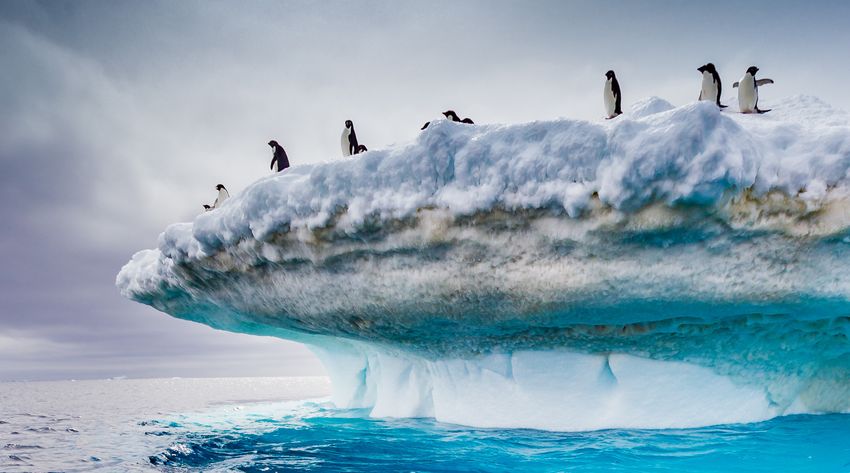
Adélie penguins on top of an ice flow near the Antarctic Peninsula. © Jo Crebbin/Shutterstock

Climate Change and Southern
Ocean Resilience
REPORT FROM AN INTERDISCIPLINARY SCIENTIFIC WORKSHOP, MARCH 30, 2021

Andrea Capurroi, Florence Colleoniii, Rachel Downeyiii, Evgeny Pakhomoviv,
Ricardo Rourav, Anne Christiansonvi

i.   Boston University Frederick S. Pardee Center for the Study of the Longer-Range Future

ii. Istituto Nazionale di Oceanografia e di Geofisica Sperimentale Antarctic and Southern Ocean Coalition

iii. Australian National University

iv. University of British Columbia

v. Antarctic and Southern Ocean Coalition

vi. The Pew Charitable Trusts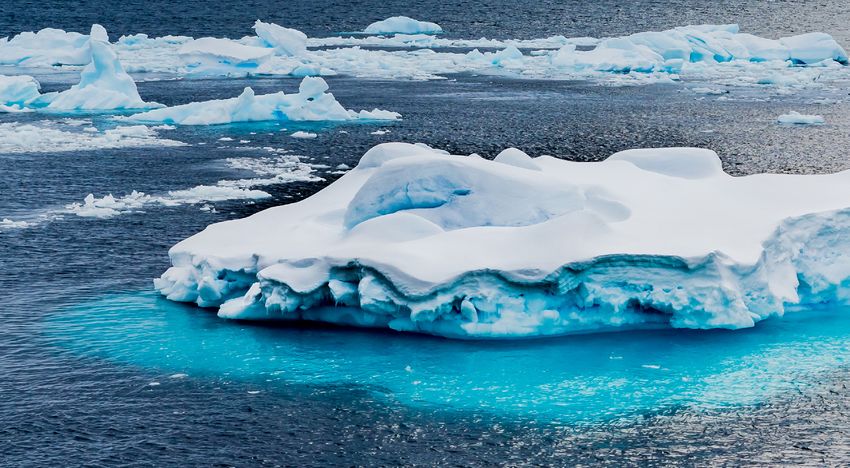
CONTENTS

I. INTRODUCTION BY EVAN T. BLOOM                                       3

II. EXECUTIVE SUMMARY		                                                5

III. CLIMATE CHANGE AND SOUTHERN OCEAN RESILIENCE		                    7

  A. CLIMATE CHANGE AND THE SOUTHERN OCEAN                             7

  B. CONNECTION OF REGIONAL SOUTHERN OCEAN PROCESS TO GLOBAL SYSTEMS   9

  C. UNDERSTANDING PROCESS CHANGES IN THE SOUTHERN OCEAN               10

  D. ANTARCTIC GOVERNANCE AND DECISION MAKING                          15

  E. CONCLUSION                                                        18

  F. REFERENCES                                                        19

POLAR PERSPECTIVES
                                                                            2
No. 5 l June 2021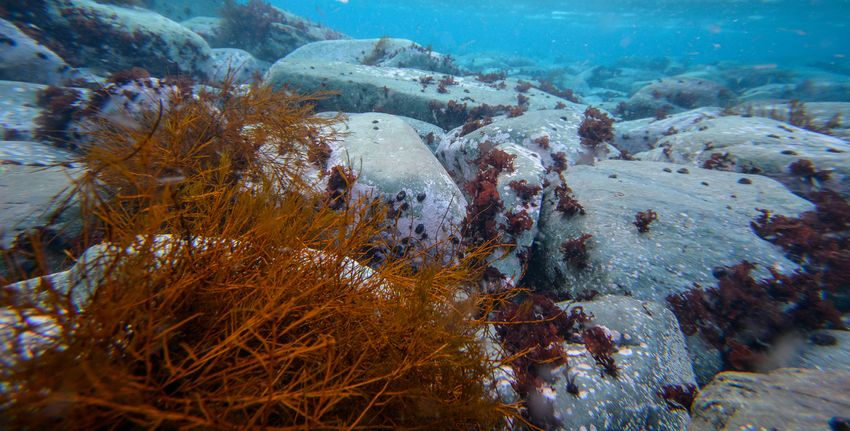
I. INTRODUCTION BY EVAN T. BLOOM vii                                Fig 1: Southern Ocean regions proposed for protection
                                                                    A network of MPAs could allow for conservation of distinct areas, each
                                                                    representing unique ecosystems
As the world prepares for the Glasgow Climate
Change Conference in November 2021, there is
considerable focus on the Southern Ocean. The
international community has come to realize that
the polar regions hold many of the keys to unlocking
our understanding of climate-related phenomena
- and thus polar science will influence policy
decisions on which our collective futures depend.

Global sea-level rise is linked to future melting of
the Antarctic ice sheets and shelves. New research
on the Antarctic Ice Sheet indicates that rapid sea-
level rise from Antarctica will be triggered if Paris
Agreement targets (2°C warming in the twenty-first
century) are exceeded. A recent article notes that if
current emissions rates continue and put the world
on course towards 3°C warming, this tipping point
will be reached by 2060, and no human intervention,
including geoengineering, would be able to stop
17 to 21 centimeters (cm) of sea-level rise from                    questions: what are the discrete management
Antarctic ice melt alone by 2100.[1]                                actions that CCAMLR can take in the next four-
                                                                    to-eight years to address climate impacts in the
Antarctica’s main diplomatic fora, the Commission                   Southern Ocean? And how does what is happening
for the Conservation of Antarctic Marine Living                     in the Southern Ocean – both in terms of climate
Resources (CCAMLR) and the Antarctic Treaty                         impacts and management action – affect broader
Consultative Meeting (ATCM), have both had                          global climate, human, and ecological systems?
climate change on their respective agendas for
years and have taken substantial actions to boost                   The report below provides a number of responses
Southern Ocean resilience, such as designating the                  to these important questions and makes a
Ross Sea region Marine Protected Area. Even so,                     compelling case for the parties at both CCAMLR
the level of attention on the issue of climate change               and the ATCM to incorporate climate considerations
is increasing. On March 30, 2021, the Wilson                        into their work.
Center’s Polar Institute and The Pew Charitable
Trusts brought together leading scientists for virtual              It is clear that Marine Protected Areas (MPAs)
discussions about the relationship between climate                  can play an important role in climate policy, and
change and the Southern Ocean. The scientists                       CCAMLR is already committed to establishing a
were asked to discuss why policymakers should                       representative system of MPAs, with three major
care about the Southern Ocean, considering two                      proposals before the Commission requiring final
                                                                    negotiation. Given its size and the relative lack
vii. Senior Fellow, Wilson Center Polar Institute and former U.S.
Commissioner to CCAMLR.

POLAR PERSPECTIVES
                                                                                                                                             3
No. 5 l June 2021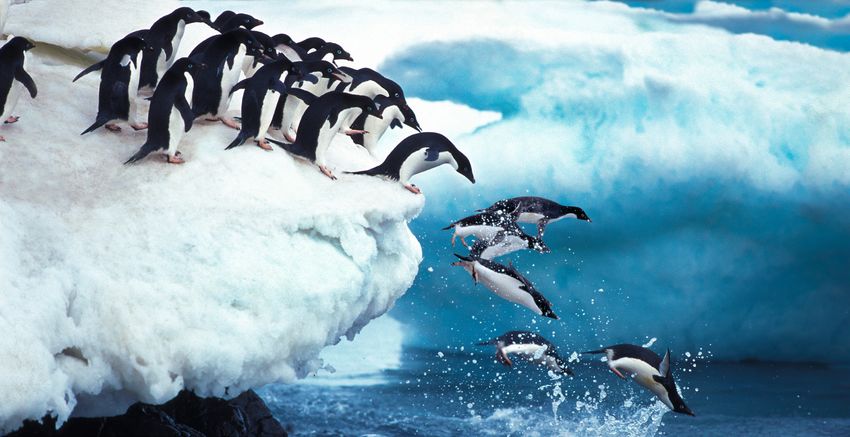
of human activity there, the Southern Ocean is                     CCAMLR and its Scientific Committee also need
a favorable location for establishing large-scale                  to prioritize the wider integration of climate into
MPAs. In turn, MPAs generate benefits for fisheries                management and decision-making; the previously
and biodiversity by protecting key habitats, while                 proposed Climate Change Response Work Program
delivering significant climate resilience gains. MPAs              lays out many of these opportunities to boost
can also serve as climate reference areas; the                     Southern Ocean resilience. Similarly, the ATCM and
relatively undisturbed Southern Ocean provides a                   Committee for Environmental Protection within the
natural laboratory for studying complex ecosystem                  Antarctic Treaty System should strengthen efforts to
responses to climate change impacts, such as                       integrate climate considerations into their work. All
warming and acidification, and how to best manage                  these organizations pride themselves on acting on
the ocean for climate mitigation, adaptation, and                  the basis of best available science, and that science
conservation potential. The Ross Sea region MPA,                   has to take into account climate considerations.
for example, holds the potential to promote climate
science by allowing scientists to assess climate                   I trust that the Members of CCAMLR and the
impacts on fished, unfished and, in some cases,                    Antarctic Treaty Consultative Parties will find this
more lightly fished areas.                                         report helpful in their coming deliberations.

  Close-up of an Antarctic iceberg. Iceberg calving is increasing as climate change destabilizes ice regimes in the region.
  © Achim Baque/Shutterstock.com

POLAR PERSPECTIVES
                                                                                                                              4
No. 5 l June 2021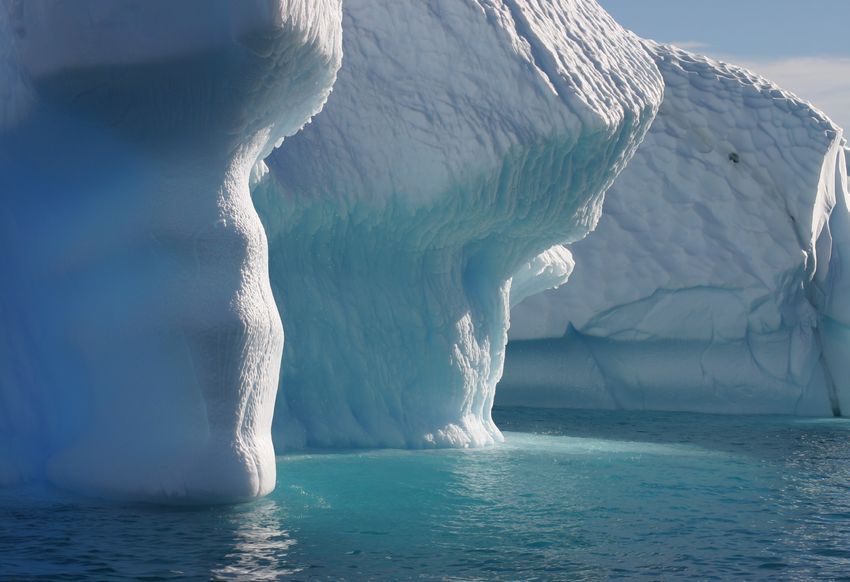
II. EXECUTIVE SUMMARY                                                       will cumulatively result in widespread changes
                                                                            well beyond the Antarctic region. Five of these
                                                                            were highlighted as priority topics for conservation
The Antarctic has long been seen as an untouchable                          and management: shifts in sea ice and ice sheet
wilderness where few venture beyond scientists at                           dynamics; changes in ocean chemistry; increases
remote research bases, scattered fishing vessels,                           in ocean temperatures; changes to the biological
and a limited number of well-heeled tourists. Yet                           carbon pump; and alterations to ecosystems and
shifts in Antarctic processes, driven by human-                             species. The report details how some of these
caused climate change, are impacting wider earth                            processes are moving towards tipping points
systems, with profound implications for human and                           - critical thresholds to irreversible, rapid, and
ecological communities far from the icy continent.                          substantial change - that can have devastating
The Wilson Center’s Polar Institute and The Pew                             impacts on regional ecosystems and on far-
Charitable Trusts co-convened an ad hoc Expert                              flung human communities. In addressing these
Working Group of leading Antarctic scientists                               challenges, the Expert Working Group considered
globally viii to discuss climate-driven changes                             how CCAMLR could take concrete climate change-
to the Southern Ocean around Antarctica. Key                                related actions by 2030, including expanding
considerations were how these changes impact                                habitat protections, re-evaluating existing fisheries
global marine, climate, and human systems, and how                          management, leveraging precautionary and
management actions taken through the Antarctic                              ecosystem-based management approaches, and
Treaty System, in particular CCAMLR, can build                              adopting a comprehensive work plan that considers
resilience to these changes in the Southern Ocean.                          climate change effects in all its conservation
                                                                            measures.
The Expert Working Group identified key
interconnected Southern Ocean processes that                                As Southern Ocean dynamics play a major role
are being impacted by climate change, and which                             in global climate regulation and broader marine
                                                                            ecosystems, collective action to protect and
viii. Participants of the workshop held on March 30, 2021 included, inter
alia: Viviana Alder; Andrea Capurro; Rachel Cavanagh; Florence Colleoni;    enhance its resilience to climate change can
Sylvia Earle; Alexey Ekaykin; Susie Grant; Eileen Hofmann; Bettina Meyer;   benefit societies and economies around the world.
Jessica O’Reilly; Evgeny Pakhomov; Jean-Baptiste Sallée; Mercedes San-
tos; Fokje Schaafsma; and Bert Wouters.                                     Building this resilience requires additional actions,

   Chinstrap penguins in Antarctica. Penguin population structures are shifting as prey species, ice regimes, and weather
   patterns change in the Southern Ocean. © SZakharov/Shutterstock.com

POLAR PERSPECTIVES
                                                                                                                                    5
No. 5 l June 2021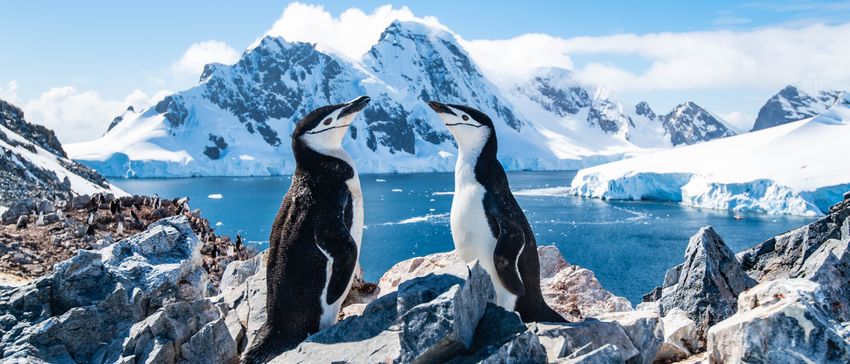
beyond CCAMLR, that recognize mandates and                                                Ocean marine life and in leading research that
interconnections within and between regions.                                              underpins decision making. As climate change
Importantly, these actions by the international                                           effects challenge the Antarctic Treaty System, and
community must include immediate and significant                                          nations cope with a dizzying array of global-level
cuts to greenhouse gas emissions across sectors                                           crises, stronger collaborations and coordinated work
and geographies to avoid tipping points to physical                                       are needed within the Antarctic realm.
processes in the Antarctic, as well as the wider
suite of dire impacts predicted under future                                              This Expert Working Group has demonstrated the
emissions scenarios.                                                                      value of these international idea exchanges to help
                                                                                          expand our understanding of the importance of
The early success of the Antarctic Treaty led to                                          research and governance in this remote, yet vital,
it being seen as a global model for multilateral                                          region. By drawing greater awareness to climate
regional governance, as countries came together                                           impacts within the Southern Ocean and highlighting
to manage the Antarctic for peace and science and                                         its connection to global systems, this report can
the framework became a platform to launch robust                                          help policymakers elevate the governance dialogue
scientific partnerships. CCAMLR, in particular, has                                       around Antarctica and the Southern Ocean and bring
an important role in the conservation of Southern                                         the challenges of this distant region closer to home.

   Fig.2 Climate Change and Southern Ocean Resilience
   Global human-caused climate pressures are rapidly changing Antarctic processes, with profound implications for human and ecological systems around the world.
   Of particular concern is evidence which suggests the approach of imminent tipping points, which may set in motion irreversible, rapid, and substantial change to
   Antarctica's biogeochemical cycles and its role in regulating global climate.

                       Global climate regulation                                                                              Building Southern Ocean
                       The Southern Ocean connects the world's ocean basins, regulating the storage and transport of          resilience to climate change
                       heat, oxygen, and nutrients circulated globally. It is one of the only locations on Earth where deep   The international community can help
                       waters rise to the surface, transforming into cold, dense waters that sink back to the deep ocean,     enhance the resilience of the Southern
                       storing significant amounts of heat and carbon for long periods of time. As this water circulates      Ocean and prevent tipping points by:
                       throughout the world's oceans it plays a key role in regulating global atmospheric temperatures.
                                                                                                                                Reducing greenhouse gas emissions
                                                                                                                                across sectors and geographies, to
   What is occurring in Antarctica?                                                                                             avoid near-term tipping points
                                                                                                                                resulting from the continuation of
                                                                                                                                current emission levels.
                   Glacier                                        Ice-shelf                                                     Establishing proposed Southern
                   retreat                                        collapse                                                      Ocean marine protected areas (MPAs)
                                                                                                                   Shifting     to protect biodiversity, maintain
                                                                                                                   species      ecosystem functioning, and restore
                                                                      CO2                                                       ecosystem services.
                                               Sea-ice                            Ocean                                         Updating regional management
                                               loss                               acidification
                                                                                                                                strategies, incorporating climate
                                                                                                                                change widely to strengthen existing
                                                                                                                                ecosystem-based fisheries
                                                                                                                   Ocean
                                                                                                                   warming      management policies.
   Continental
     shelf                                                                                                                      Re-emphasizing a precautionary
                                     Ecosystem                                                                                  approach to decision-making in the
                                                                                  Carbon
                                     changes                           C          sequestration
                                                                                                                                Southern Ocean, to prevent
                                                                                                                                irreversible changes.

   What does this mean for global systems?
   Changes to Antarctic processes are, and will continute to have, profound local and global impacts, including:

          Global sea                Changing sea surface               Loss of critical habitat         Altered fisheries
          level rise                temperatures                       and biodiversity                 productivity

          Altered weather           Changes to species                 Increased ocean             C    Reduced ocean
          patterns                  abundances and ranges              acidification                    carbon uptake

  Graphical summary illustrating climate change impacts on the Southern Ocean and global systems, and the potential
  actions to building resilience in the Southern Ocean. Source: Visual Knowledge, www.visualknowledge.design

POLAR PERSPECTIVES
                                                                                                                                                                       6
No. 5 l June 2021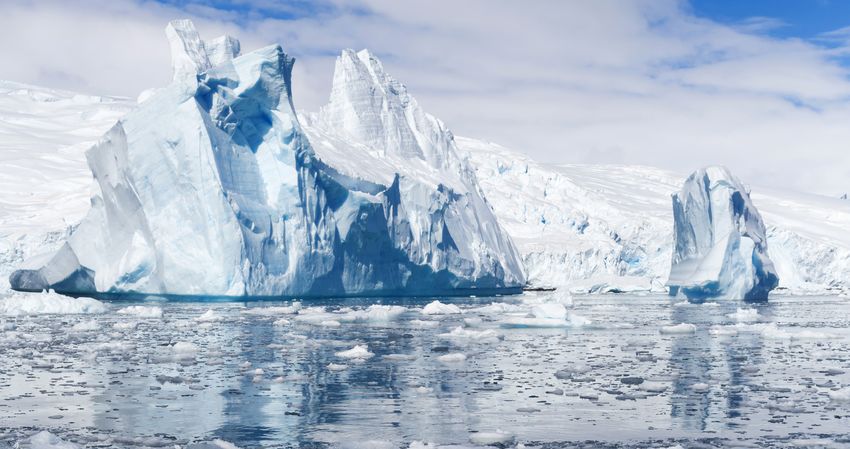
III. CLIMATE CHANGE AND                                                are now higher than at any previous point in time,
                                                                       with major consequences for the climate system
SOUTHERN OCEAN RESILIENCE
                                                                       and life as we know it. Levels of atmospheric
                                                                       carbon dioxide are increasing fourfold faster than
This report is guided by current scientific research                   five decades ago,[3] contributing to global warming
and reflects the diverse array of topics discussed                     that is likely to exceed 1.5°C in the next few years.
during the Expert Working Group’s workshop. It                         The last time carbon dioxide levels were as high
does not represent or espouse the views of any one                     as today (over 400 parts per million) was three
individual or organization, and not all ideas contained                million years ago when global sea level was 16-25
herein reflect consensus amongst all participants.                     meters (m) higher.[4] The global ocean has taken up
                                                                       more than 90% of the excess heat and absorbed
                                                                       up to 40% of carbon from human activities.[5] The
A. CLIMATE CHANGE AND THE
                                                                       current rates of ocean warming, acidification, and
SOUTHERN OCEAN                                                         deoxygenation can trigger both catastrophic events
                                                                       and gradual changes,[6] with global implications that
Oceans provide a wide range of vital ecosystem                         can last for decades to centuries, or longer.
services to human populations, including regulation
of the global climate, nutrient recycling and oxygen                   Disproportionate Southern Ocean impacts
production, protection from extreme weather
events, food security, transportation, and cultural                    The polar regions are showing the most rapid and
uses.[2] These services are directly and indirectly                    uneven responses to climate change.[7–9] In recent
affected by climate change, which alters the                           years, the Southern Ocean has made the largest
physical, chemical, and biological properties of the                   contribution to the increase in global ocean heat
ocean. Anthropogenic greenhouse gas emissions                          content in the upper 2000 m and has been warming

  Glaciers are retreating in Antarctica, and calving along the Antarctic coastline is increasing, precipitating changes in regional
  ecosystems. © Denis Burdin/Shutterstock.com

POLAR PERSPECTIVES
                                                                                                                                      7
No. 5 l June 2021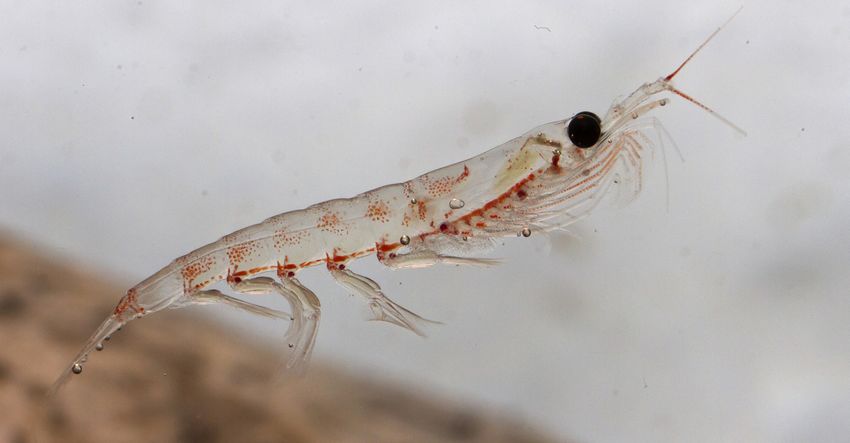
Ice provides habitat to numerous species in the Southern Ocean, including penguins, seals, and krill larvae. © Jo Crebbin/Shutterstock.com

to a greater depth than the global average. In                          threatening one billion people.[17] Tipping points
addition, the Southern Ocean has taken up to 40%                        may also be reached for ocean acidification with
of the total oceanic carbon uptake, a disproportionate                  significant implications for the entire ecosystem,[11,18]
magnitude considering its relatively small size.[7,10]                  including the potential collapse of the Antarctic krill
The heat uptake of the ocean has, thus far, buffered                    population,[19] a keystone species in the Southern
human communities from experiencing the full                            Ocean.
impacts of our greenhouse gas emissions, however
it has increased and accelerated ocean acidification                    International Climate Collaboration
(see below [11]) among other factors altering marine
                                                                        Given the disproportionate influence of the
systems.
                                                                        Southern Ocean on global climate dynamics, this
While these changes result in fundamental shifts in                     remote place needs to be examined intimately,
Southern Ocean processes and habitats, of particular                    but also put into a global context.[28] While
concern is evidence that suggests imminent tipping                      understanding local processes is critical, integrating
points – critical thresholds to irreversible, rapid, and                this knowledge into broader systems can help
substantial change. Warm waters around Antarctica                       policymakers and practitioners better understand
may be triggering the onset of irreversible ice shelf                   the importance of the region. To this aim, a
instability that could initiate a collapse of the Antarctic             collaborative Expert Working Group, representing a
Ice Sheet. This would contribute to accelerated sea-                    diverse suite of disciplines including social sciences,
level rise with devastating consequences for coastal                    governance, biogeography, oceanography, and
regions worldwide.[1,12–16] New estimates reveal                        biology, undertook a creative discussion process to
that sea-level rise and coastal flooding this century                   contribute to improving management decisions in a
could be up to threefold greater than anticipated,                      changing Southern Ocean.

POLAR PERSPECTIVES
                                                                                                                                               8
No. 5 l June 2021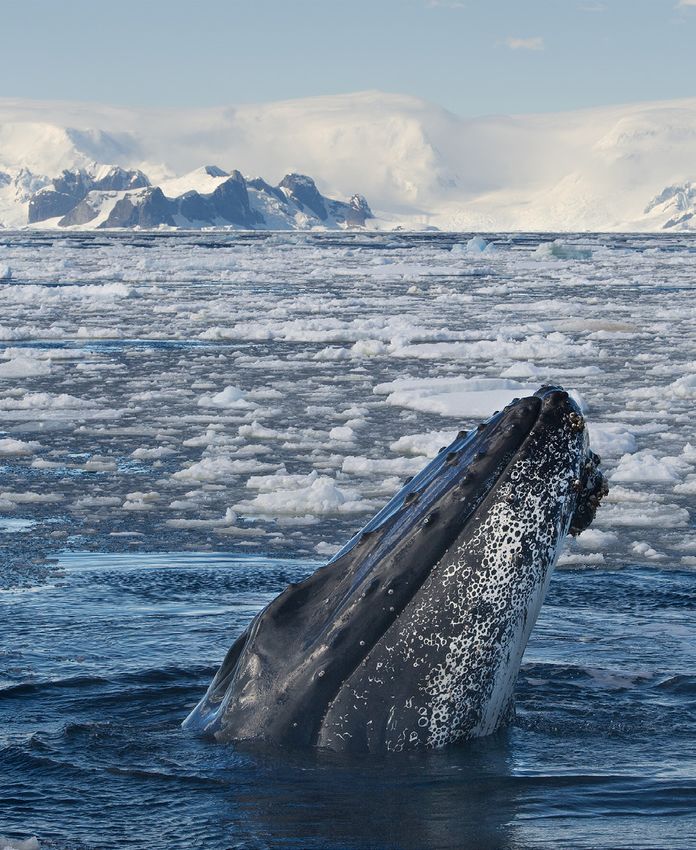
B. CONNECTION OF REGIONAL                                             melting at the base of ice shelves, which contributes
                                                                      to an accelerated mass loss from the Antarctic Ice
SOUTHERN OCEAN PROCESS TO
                                                                      Sheet. This, in turn, reduces albedo, releases fresh
GLOBAL SYSTEMS                                                        water into the ocean, reduces ocean salinity, and
                                                                      substantially contributes to global sea-level rise.[7]
The climate impacts experienced in the Southern                       In addition, melting from icebergs and ice shelves
Ocean have far-reaching impacts on global climate                     influences ocean circulation, sea ice extent, and
regulation, marine ecosystems, and human                              the rate of global temperature rise.[21] Melting is
communities. The Southern Ocean is interlinked                        also closely related to meridional wind trends [22,23]
to northern regions by oceanic, atmospheric, and                      that are linked to Pacific sea surface temperature
cryosphere coupling, connecting the global ocean                      variability;[24–26] in recent years, an extensive and
basins and the deep and shallow layers of the oceans.                 prolonged surface melting from the West Antarctic
In the Southern Ocean, deep waters rise to the                        Ice Sheet was linked to the horizontal transport of
surface where they transform into cold, dense waters                  warm marine air transported from the tropical Pacific
that sink back to the deep ocean, storing significant                 to the continent, likely influenced by El Niño. As
amounts of human-produced heat and carbon                             extreme weather events are projected to increase
for decades to centuries. Through this process,                       around the world during the rest of the century, these
the Southern Ocean helps slow the rate of global                      global feedbacks, along with a warmer atmosphere,[27]
warming in the atmosphere.[20]                                        could expose the West Antarctic Ice Sheet to more
                                                                      frequent major melt events with cascading physical,
As the surface of the Southern Ocean warms, the                       ecological, and global repercussions.
overturning circulation - a system of surface and
deep currents around the globe - transports heat to                   The Southern Ocean is also linked to global systems
deeper layers and northwards, increasing the ocean’s                  through nutrient cycling. Surface waters, rich in
temperature further north. Warmer deep waters                         oxygen and organic matter, sink to ventilate the
in the Southern Ocean induce iceberg calving and                      deep ocean, while upwelling transfers nutrients from

  Adélie penguins, pygoscelis adeliae, leaping into the water at Paulet Island, Antarctica. Adélie penguin habitat is strongly
  determined by sea ice conditions. © slowmotiongli/Shutterstock.com

POLAR PERSPECTIVES
                                                                                                                                 9
No. 5 l June 2021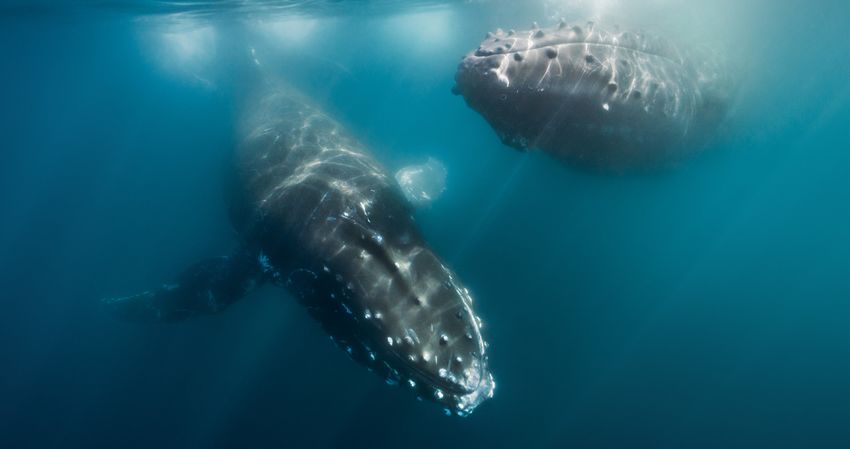
deep to surface layers. The upwelling and export of           regional changes in the Southern Ocean affect global
nutrients in the Southern Ocean, strongly influenced          systems. It was clear during discussions that greater
by the overturning circulation and mediated by                awareness is needed to advance understanding
the biological carbon pump, support up to three-              that impacts are not static in time; they are dynamic
quarters of global marine primary production.[28,29]          in nature and, subsequently, affect other systems.
Climate-driven changes in the Southern Ocean,                 Experts described five primary process shifts that
including retreating glaciers, sea-ice changes, and           lead to changes in global climate regulation, broader
ocean acidification (described below), are altering           marine ecosystems, and human climate resilience.
phytoplankton communities.[30] This has cascading
biological effects and modifies the ranges and                Shifts in sea ice and ice sheet dynamics
abundance of ecologically important species, both
regionally [31,32] and in distant ecosystems. The             Ice is the defining feature of the Antarctic. Sea ice,
resultant declines in global primary production               which expands the footprint of the continent over
and global changes in marine species distribution             sevenfold every winter, is formed when seawater
may challenge the sustained provision of fisheries            freezes on the ocean surface and is further thickened
productivity, affecting food security and other               by snow accumulation. Ice sheets and glaciers are
ecosystem services [5,33–35] outside the Antarctic.           dynamic, land-based ice formations that are built
                                                              up by accumulating snowfall on their surface. The
C. UNDERSTANDING PROCESS                                      Antarctic Ice Sheet, which covers the continent, is
                                                              2.1 kilometers (km) thick on average and holds 70%
CHANGES IN THE SOUTHERN OCEAN                                 of the world’s fresh water. If it melted, it would raise
                                                              global sea levels by almost 58 m.[36] Ice shelves -
Climate change is altering the Southern Ocean’s               extensions of ice sheets and glaciers that float in the
physical, chemical, and biological processes in               surrounding ocean - cover more than 1.5 million km2
numerous, cumulative, and iterative ways. One task            and are Antarctica’s primary connection between its
of the Expert Working Group was to discuss how                ice sheet and the Southern Ocean.[16]

  Underwater ecosystem, Antarctica. © Ivan Hoermann/Shutterstock.com

POLAR PERSPECTIVES
                                                                                                                         10
No. 5 l June 2021
Changes to ice regimes can, therefore, profoundly
alter the entire region. Climate-driven shifts in sea-ice
dynamics in the Southern Ocean, both in extent and
duration, follow regional, interannual, and seasonal
variability, with some areas losing and others gaining
ice in the same period.[7,9,37,38] The last few years have
shown a strong decrease in annual mean ice cover,
largely driven by warmer atmospheric circulation and
warmer water closer to the ice edge,[39–42] linked to
increases in greenhouse gas emissions.[43]
Cape Petrels near South Shetland Islands, Antarctica.
© D Currin/Shutterstock.com
Ice loss trends extend inland to the Antarctic Ice
Sheet. In recent years, mass loss from this ice in the Southern Ocean.[62] Iron fertilization from
sheet has tripled, mostly due to rapid thinning and an increased melt of ice shelves, icebergs, and
the retreat of major outlet glaciers draining the glacial meltwater [63] is predicted to increase primary
West and East Antarctic Ice Sheet,[44–47] caused by productivity (see below) in some areas, particularly in
oceanic warming (e.g.[48–51]). The future dynamic ice-dominant regions. As the climate warms, nutrient
response of the Antarctic Ice Sheet to warming will cycling close to ice sheets is likely to increase due to
largely be determined by the thinning or collapse of the exposure of nutrient-laden glacial sediments,[64]
ice shelves, which will reduce their buttressing or but also to reduce from upwelling and icebergs.[65]
capacity to stabilize the associated ice sheet.[7,52,53] These changes in iron supply in Southern Ocean
It is projected that this destabilization, or marine ice waters are likely to additionally impact carbon
sheet instability, could cause 4-5 m of sea-level rise sequestration (see below).
by 2300 under high emissions scenarios (e.g.[1,52,54]).
Increases in ocean temperatures
Changes in ocean chemistry
The rate of global ocean warming and, thus,
The ocean absorbs up to a quarter of carbon released heat uptake has more than doubled since 1993,
from human activities, which in surface layers attributed to greenhouse gases and ozone
dissolves and forms carbonic acid, lowering the depletion.[7,66–69] The Southern Ocean has warmed
ocean’s pH, a process known as ocean acidification.[5] both on the surface and in the deep ocean, with
This process can alter marine ecosystems and regional and decadal variability, largely influenced by
potentially impact commercially targeted species.[8,55–58] air-sea flux, wind-forced changes, and overturning
The Southern Ocean already has a significant circulation.[70,71] From the surface to 2000 m, the
vulnerability to undersaturation of aragonite (a form Southern Ocean increased its share of heat uptake
of calcium carbonate)[58,59] and coastal areas, which up to 45%-62% in 2005-2017, [7] and the deep
are already more acidic during winter, have an Southern Ocean below 2000 m has stored a large
increased exposure to ocean acidification [60] that is fraction - up to one third - of the total anthropogenic
predicted to intensify.[61 heat excess since 1992.[72,73] These Southern Ocean
warming trends, documented over the last century,
The vast Antarctic Ice Sheet is believed to be an are projected to continue, leading to 1°C–3°C
important source of iron in biogeochemical cycling warming by 2100.[74,75]
POLAR PERSPECTIVES
11
No. 5 l June 2021Changes to the biological carbon pump and seafloor communities.[76] While increases in
iron, light availability from ice loss, and near-surface
The marine biological pump sequesters carbon stratification are likely to enhance primary production
from the atmosphere into deep ocean waters and and carbon export in the near future,[8,80] increased
sediments,[76] constituting one of Earth's most ocean temperatures, acidification, and freshening
valuable ecosystem services.[77] At the air-water from melting ice in the long run are expected to
interface, inorganic carbon from the atmosphere reduce the downward flux of carbon in the Southern
is transformed into particulate organic matter Ocean.[81] Marine ice losses have led to new and
by photosynthesis, which in turn is consumed longer phytoplankton blooms [82] and increased
and respired by surface-dwelling marine animals secondary production, storage and sequestration.
(such as fish larvae) and life on the continental The largest component to this negative (mitigating)
shelf seafloor. As organic matter sinks, it can be feedback on climate change is sea-ice losses,
remineralized (reconverted to inorganic carbon) and which have doubled Antarctic continental carbon
recycled through scavenging and/or solubilization stocks in the last 25 years.[83] Ice shelf losses are
(dissolution of particulate matter).[78] Only about also important;[84] a giant iceberg of approximately
one third of the carbon that reaches depths beyond 5000 km2 may generate 10 [6] Mt of carbon.[79] Finally,
the ‘photic’ zone - where light penetrates - is the emergence of fjords from retreating glaciers is
transported to the deepest ocean waters, and then generating new small carbon sinks, which could be
usually only 1% of it is buried in sediment.[78] The very important sites of higher sequestration.[85]
most productive areas are typically the Antarctic
continental shelves, which may accumulate over Changes to ecosystems and species
60 million tonnes (Mt) of carbon per year.[79]
The changes described are impacting Southern
Ocean species, food webs and ecosystems in both
direct and indirect ways. While one of the most
visible and widely reported impacts of climate
change in the Southern Ocean are changes to
its iconic wildlife population, there are a range
of complex changes to species interactions and
biological feedbacks within ecosystems that are less
well understood. The data increasingly indicates that
these processes, which underpin Southern Ocean
and broader marine ecosystems, are under threat.
Plankton and pelagic primary productivity
Tabular icebergs in the Weddell Sea, Antarctica. © Robert
McGillivray/Shutterstock.com
Primary productivity - the rate at which carbon
The functioning of the biological carbon pump is dioxide is converted into organic matter through
shifting due to a host of factors, and the effects of photosynthesis - plays a key role in the biological
climate change on it are complex.[35 (and references therein)] carbon pump and the production of oxygen. It is
Ocean warming reduces the pump’s efficiency strongly mediated by micronutrient availability
in the Southern Ocean by promoting shallower (especially iron), temperature, carbonate chemistry,
remineralization and decreasing the overall carbon light, deep vertical mixing, seasonal fluctuations
storage, reducing the available food to midwater in solar radiation, and sea-ice cover.[86,87] Ice
POLAR PERSPECTIVES
12
No. 5 l June 2021shelf collapses, such as the collapse of Larsen As a consequence of these changes, Antarctic krill may
A and B in 1995 and 2002 which received global have already shifted its distribution southward,[7,100]
media attention, have led to increases in primary modifying species dominance and prey abundances,
productivity on the newly exposed pelagic areas and forcing predators to shift their ranges.[7,100–103]
and polynyas,ix [16,88] which is predicted to benefit
Benthic communities
macroalgae and zooplankton.7 Ocean acidification
alters these processes and can lead to cascading Benthic communities - marine fauna that live on
negative effects across multiple trophic levels of the seafloor and are largely composed of worms,
Antarctic food webs.[8,89–91] crustaceans, and shellfish (mollusks) - play a vital
role in maintaining sediments and water quality. In
Southern Ocean primary productivity supports the Southern Ocean, sea ice decreases and glacial
Antarctic krill, which make up the largest krill retreat have modified benthic communities through
population globally, estimated at 400 Mt. These changes in habitat, freshening from melting glaciers,
small shrimplike crustaceans play a key role sedimentation, temperature, and productivity.
in Antarctic food webs both as grazers and as [83,104,105]
Ocean acidification has direct consequences
prey [92,93]. Krill is a critical energy conduit between on benthic organisms with carbonate skeletons
primary producers and top predators,[94,95] such and shells as well, ultimately reducing benthic
as the endangered blue whale which can eat up diversity.[105] Climate change is expected to have
to four tonnes of krill per day. Increasing water a great impact on endemic benthic species found
temperature, ocean acidification, and reduction in nowhere else on Earth; around 80% will lose habitat
the sea-ice coverage, as well as productivity, may due to increases in temperatures by 2100,[106] with
negatively affect the Antarctic krill population.[7,19,96–99] greater risks around the Antarctic Peninsula and
Scotia Arc. A warmer ocean is likely to influence
ix. Antarctic coastal polynyas (areas of open water surrounded by sea ice)
are biological hotspots that support high rates of primary productivity due to many cold-adapted benthic organisms, allowing the
a combination of both high light and high nutrient levels, especially iron [7 (and
references therein)]
.
colonization of non-native species.[105]
Humpback whales migrate to the Southern Ocean from other ocean basins, and are an important part of the biological carbon pump.
© Megablaster/Shutterstock.com
POLAR PERSPECTIVES
13
No. 5 l June 2021Fish and apex predators the changes to krill and fish populations described
above, compounded by direct climate stresses
Much attention is paid to how climate change is on predators, may result in reduced survival and
altering the abundance and resilience of the Southern breeding failures,[32] drastically reducing predator
Ocean’s iconic and endemic wildlife. Antarctic fish populations. These changes are accentuated by
play a central role in the regional marine food web[31] additional human pressures. Whales, seals, and
and are well adapted to live in the frigid Southern seabirds were heavily affected by hunting and
Ocean waters, in part thanks to their antifreeze long-line operations until as recently as 1997.[32, 119]
proteins. However, they have a very narrow thermal For example, it is estimated that in the early and
tolerance,[5] which makes them vulnerable to warming mid-twentieth century, over two million whales
conditions. Increasing temperatures and loss of ice and nearly three million seals were taken from the
in the Southern Ocean can affect fish physiological Southern Ocean.[120,121] Furthermore, as many as
functions, modify dispersal, stymie overfished stock 25,000 seabirds were killed per year as bycatch
recovery, reduce habitat, and alter food webs.[107–111] (or incidental mortality) in toothfish fisheries by the
Changes in fish and krill populations impact marine late 1990s. Many of their populations are currently
predators, such as penguins, flying seabirds, recovering from this over-exploitation, while coping
seals, and whales, which play an important role with climate change and current fisheries pressures.
in connecting pelagic marine food webs in the
Southern Ocean [32] and beyond. Most of these Uncertainties and the need for long-term
species can be directly or indirectly affected by research
climate change, mainly through alterations in habitat
and food availability.[7,32,112–118] The impact of ice Although the research is clear that climate
loss is species-specific depending on their affinity change is fundamentally altering the Southern
for sea ice; population responses may also vary Ocean, uncertainties remain over how it affects
around Antarctica.[32,89] In terms of food availability, most Antarctic processes.[20] For example, most
Antarctic krill, a keystone species, in the water near the Antarctic Peninsula. © Tarpan/Shutterstock.com
POLAR PERSPECTIVES
14
No. 5 l June 2021of the regional changes in sea ice, including
interannual variability, are not well captured by
current models [7,97,122] The magnitude of climate-
driven changes to species and ecosystems,
including ocean acidification, is difficult to assess
due to knowledge gaps in biodiversity estimates,
ecosystem interactions, and population trends
for many keystone species. There is also a lack
of understanding related to the links between
physical variables and ecological processes,[20,35]
and the confounding effects with other causative
mechanisms, such as fishing.[32] However, A Weddell seal swims among ice near the shore of Ross
technological advances in both observing Island, Antarctica. © Brian L Stetson/Shutterstock.com
instruments and computational models are
improving, allowing a better understanding of the Convention for the Conservation of Antarctic
complexity of the Southern Ocean. This points to Marine Living Resources
the need for sustained funding and internationally
Given the history of overexploitation of seals, whales,
collaborative research into Southern Ocean
and some fish species during the nineteenth and
processes, including for improving observational
twentieth centuries, increasing concern over the
records, extending time series, and gathering data
over-exploitation of Antarctic krill led to the formation
on different spatial scales to continue informing
of CCAMLR.[127] The fora pioneered the use of an
management and governance decision-making.
ecosystem-based and precautionary approach for
fisheries management, following conservation
D. ANTARCTIC GOVERNANCE AND principlesxi to maintain ecological relationships
DECISION MAKING between species and prevent irreversible changes to
the marine ecosystem.[127,128] This approach requires
management that is responsive and adaptive, but
Policymakers can work through several multilateral also proactive in terms of environmental uncertainty,
governance frameworks to address climate change in that actions are not delayed for definitive
in the Southern Ocean. Parties to the Antarctic Treaty attribution of the causes of change.[129]
(which was signed in 1959 and came into force
in 1961) are responsible for the preservation and Currently, CCAMLR builds ecosystem resilience to
conservation of living resources in Antarctica.x To act climate-driven change by, inter alia, robust stock
on this responsibility with respect to the terrestrial assessments, large MPAs, and scientific monitoring
and marine environments, they subsequently programs. These existing tools and measures can be
negotiated and adopted several separate international enhanced to improve the capacity of the ecosystem
instruments.[123–126] Together, the Antarctic Treaty, to cope with the effects of climate change.[130]
CCAMLR (which was signed in 1980 and came into Resilience actions that account for the spatio-temporal
force 1982) and the Environment Protocol to the variability of Southern Ocean processes and risks
Antarctic Treaty (which was signed in 1991 and came can preserve connectivity and representativeness of
into force in 1998), form the main elements of the habitat types, biodiversity, and ecosystem functions
Antarctic Treaty System. that support a wide range of species and food webs.
x. Antarctic Treaty, Article IX, paragraph 1(f). xi. CCAMLR, Article II (iii).
POLAR PERSPECTIVES
15
No. 5 l June 2021A group of emperor penguins on the sea ice in the Ross Sea, where a large-scale marine protected area was established in 2016.
© Brian L Stetson/Shutterstock.com
Fisheries (for toothfish, icefish, and krill) currently Shelf MPA in 2009, and the Ross Sea region MPA
operate under decision rules based on stock in 2016, these areas alone cannot preserve habitat
assessments [129] that have no explicit considerations connectivity and representativeness across the
of climate change in the legally binding measures. Southern Ocean[138,139]. Three other large MPA
Furthermore, current fishery regulations apply proposals in East Antarctica, the Weddell Sea and the
to areas much bigger than the effective area West Antarctic Peninsula (or Domain 1) are currently
where the fishery operates.[129] This means that being discussed at CCAMLR, and their adoption
local fishing pressures may be considerable. For would substantially improve representation.[139]
instance, a catch level considered precautionary for
While CCAMLR has recognized climate change as
the krill may not be precautionary for its predators,
one of the greatest challenges facing the Southern
such as penguins, whales, and seals, given the
Ocean,xii its effective incorporation into binding
spatio-temporal concentration of the fishery.[131]
management decisions more than ten years later
These risks are likely to be exacerbated in climate
remains limited. The proposed Climate Change
adverse conditions (e.g. [117,131–133]), and challenge the
Response Work Program aims to better incorporate
precautionary approach as it stands.
climate change into CCAMLR’s scientific framework
MPAs can play a key role in the adaptation to, and and management decisions and set the path towards
reduction of, climate change risks (e.g. [134–137]) by more climate-centric management. Although this
maintaining spatial connectivity and limiting additional program has not yet been adopted, it cuts across
non-climate stressors on the marine ecosystem, most – if not all – of the issues discussed by the
such as fishing. In 2011, CCAMLR committed to Expert Working Group participants, highlighting its
establishing a circumpolar representative system potential for building Southern Ocean resilience if
(or network) of MPAs. While CCAMLR has made implemented.
significant progress towards this goal, including
the adoption of the South Orkney Islands Southern xii. CCAMLR Resolution 30/XXVIII (2009).
POLAR PERSPECTIVES
16
No. 5 l June 2021Antarctic Treaty Consultative Meeting
Apart from CCAMLR, the effect of anthropogenic
climate change on the Antarctic environment has
increasingly become a top priority for other Antarctic
Treaty System bodies. Following an Antarctic Treaty
Meeting of Experts in 2010, Parties adopted a
Climate Change Response Work Programxiii which
provides a mechanism to build resilience to climate
change and address the associated governance
and management implications for Antarctica.[140] In
addition, Antarctic Treaty System bodies contribute
to climate resilience by working across governance
and research frameworks, conducting joint
workshops, and engaging with experts from other
Antarctic organizations and global programs.xiv
Global Frameworks
At a global scale, the current biodiversity and
climate crises have stoked international calls for Paradise Bay, Antarctica Peninsula. © Marc Andre LeTourneux/
Shutterstock.com
expanding the network of terrestrial and MPAs.[2,7,141]
CCAMLR’s current and proposed MPAs, in tandem (UNFCCC) provides the framework for nations to
with additional conservation measures in territorial limit further emissions through their Nationally
waters and on the high seas, can contribute Determined Contributions (NDCs), as well as
greatly to global targets and the ultimate goal to address climate impacts through adaptation
of sustainable management. While recognizing measures. It notes that ocean-based solutions
each entities’ mandate and governance, a globally need to gain greater attention in NDCs, and that
coordinated effort is believed to be more efficient to the ocean’s role in absorbing human-caused heat
simultaneously protect biodiversity, boost the yields has resulted in climate change impacts. To address
of fisheries, and secure carbon stocks. This could these impacts, a recent reportxv highlights that
be achieved by prioritizing regions for protection, “adaptation and mitigation measures for ocean
such as the biogeographically unique area of the systems should be aligned with ongoing action
Antarctic Peninsula.[142] on measures and policies under other multilateral
agreements”, including the Antarctic Treaty
Avoiding the worst-case climate impact scenarios System. Therefore, while it is unlikely the world will
in the Southern Ocean requires immediate and meet the Paris Agreement's goal of holding twenty-
significant greenhouse gas emissions reductions first century warming to 2°C above pre-industrial
across sectors and nations. The United Nations levels,[143] CCAMLR and other frameworks must
Framework Convention on Climate Change continue to address climate impacts to preserve
xiii. ATCM Resolution 4 (2015).
Southern Ocean ecosystems and build resilience to
xiv. Including, inter alia, the Scientific Committee for Antarctic Research change, alongside these vital emissions reductions.
(SCAR) (and its associated groups, programs and initiatives), and global
organizations or initiatives such as IPCC, IMO, IWC, the Agreement on the
Conservation of Albatrosses and Petrels (ACAP), and IUCN. xv. UNFCCC Subsidiary Body for Scientific and Technological Advice, p. 22.
POLAR PERSPECTIVES
17
No. 5 l June 2021E. CONCLUSION
The world has long valued Antarctica and the
Southern Ocean as a vast wilderness, home to
charismatic wildlife and the setting for scientific
discoveries. Governments enshrined these values
through the Antarctic Treaty System, to preserve
the Antarctic for peace and science. The wisdom of
this decision is increasingly clear; as climate change
impacts are global in nature, climate-driven changes
in the Southern Ocean are affecting marine systems
and communities far beyond the Antarctic. The
Southern Ocean is a key component of the Earth’s
system, redistributing heat, salt, fresh water, and
nutrients to all the ocean basins in the world.
In brief, a resilient Southern Ocean can benefit
communities far from Antarctica.
Five key Southern Ocean processes are at risk
Humpback whale, Antarctica. © MZPHOTO.CZ/Shutterstock.com
due to climate change impacts – increases in
ocean temperatures, shifts in sea-ice and ice-
shelf dynamics, changes in ocean chemistry, fostering international collaborations may reduce
changes to the biological carbon pump, and shifting uncertainties in projections, ultimately improving
ecosystems and species dynamics. These changes adaptation and mitigation measures for future
are already having cascading effects at regional climate change scenarios.
and global scales and will continue to do so, with The extent to which Southern Ocean processes
widespread socioeconomic consequences. influence global changes largely depends on our
ability to reduce global anthropogenic greenhouse
In the Southern Ocean, immediate actions by gas emissions and therefore emissions reductions
CCAMLR can help build ecosystem resilience to must be at the core of any strategy to address
climate change. In particular, establishing MPAs climate impacts.
can build climate resilience by maintaining spatial
connectivity and reducing additional non-climate The combined ecological and governance
stressors, such as fishing. In addition, updating importance of the Antarctic will only be upheld
krill and fisheries management strategies, through strong government action and commitment
and incorporating climate change widely into to preserve this region, not only because the
conservation measures, can strengthen the Southern Ocean and its marine life help protect
ecosystem-based and precautionary approach human communities globally from increasing
under environmental uncertainty. Alongside these climate impacts, but because Antarctica is a unique
actions, sustained funding for long-term, wide- place where governments work together in favor of
scope climate-based research programs and peace, science, and international cooperation.
POLAR PERSPECTIVES
18
No. 5 l June 2021F. REFERENCES 17. S.A. Kulp, B.H. Strauss, New elevation data triple estimates of global
vulnerability to sea-level rise and coastal flooding, Nat Commun. 10 (2019) 4844.
https://doi.org/10.1038/s41467-019-12808-z.
1. R.M. DeConto, D. Pollard, R.B. Alley, I. Velicogna, E. Gasson, N. Gomez, S. Sadai, 18. B.I. McNeil, R.J. Matear, Southern Ocean acidification: A tipping point at 450-ppm
A. Condron, D.M. Gilford, E.L. Ashe, R.E. Kopp, D. Li, A. Dutton, The Paris Climate atmospheric CO2, (2008) 5.
Agreement and future sea-level rise from Antarctica, Nature. 593 (2021) 83–89.
https://doi.org/10.1038/s41586-021-03427-0. 19. S. Kawaguchi, A. Ishida, R. King, B. Raymond, N. Waller, A. Constable, S. Nicol,
M. Wakita, A. Ishimatsu, Risk maps for Antarctic krill under projected Southern
2. S. Díaz, J. Settele, E. S. Brondízio E.S., H. T. Ngo, M. Guèze, J., Agard, A. Arneth, Ocean acidification, Nature Clim Change. 3 (2013) 843–847.
P. Balvanera, K. A. Brauman, S. H. M. Butchart, K. M. A. Chan, L. A. Garibaldi, K. https://doi.org/10.1038/nclimate1937.
Ichii, J. Liu, S. M. Subramanian, G. F. Midgley, P. Miloslavich, Z. Molnár, D. Obura,
A. Pfaff, S. Polasky, A. Purvis, J. Razzaque, B. Reyers, R. Roy Chowdhury, Y. J. 20. H.-O. Pörtner, D.C. Roberts, V. Masson-Delmotte, P. Zhai, M. Tignor, E. Poloczanska,
Shin,, I. J. Visseren-Hamakers, K. J. Willis, and C. N. Zayas, IPBES (2019): Summary K. Mintenbeck, A. Alegría, M. Nicolai, A. Okem, J. Petzold, B. Rama, N.M. Weyer
for policymakers of the global assessment report on biodiversity and ecosystem (eds.), IPCC Special Report on the Ocean and Cryosphere in a Changing Climate,
services of the Intergovernmental Science-Policy Platform on Biodiversity and Intergovernmental Panel on Climate Change, 2019.
Ecosystem Services, IPBES Secretary, Bonn, Germany, 2019. 21. M.C. Kennicutt, D. Bromwich, D. Liggett, B. Njåstad, L. Peck, S.R. Rintoul, C.
3. J. Blunden, D.S. Arndt, eds., State of the Climate in 2019, Bulletin of the Ritz, M.J. Siegert, A. Aitken, C.M. Brooks, J. Cassano, S. Chaturvedi, D. Chen,
American Meteorological Society. 101 (2020) S1–S429. K. Dodds, N.R. Golledge, C. Le Bohec, M. Leppe, A. Murray, P.C. Nath, M.N.
https://doi.org/10.1175/2020BAMSStateoftheClimate.1. Raphael, M. Rogan-Finnemore, D.M. Schroeder, L. Talley, T. Travouillon, D.G.
Vaughan, L. Wang, A.T. Weatherwax, H. Yang, S.L. Chown, Sustained Antarctic
4. O.A. Dumitru, J. Austermann, V.J. Polyak, J.J. Fornós, Y. Asmerom, J. Ginés, A. Research: A 21st Century Imperative, One Earth. 1 (2019) 95–113.
Ginés, B.P. Onac, Constraints on global mean sea level during Pliocene warmth, https://doi.org/10.1016/j.oneear.2019.08.014.
Nature. 574 (2019) 233–236. https://doi.org/10.1038/s41586-019-1543-2.
22. P.R. Holland, R. Kwok, Wind-driven trends in Antarctic sea-ice drift, Nature Geosci. 5
5. Pörtner, H.-O., D.M. Karl, P.W. Boyd, W.W.L. Cheung, S.E. Lluch-Cota, Y. Nojiri, (2012) 872–875. https://doi.org/10.1038/ngeo1627.
D.N. Schmidt, and P.O. Zavialov, Ocean systems, in: Climate Change 2014: Impacts,
Adaptation, and Vulnerability. Part A: Global and Sectoral Aspects, Cambridge 23. F.A. Haumann, D. Notz, H. Schmidt, Anthropogenic influence on recent
University Press, 2014: pp. 411–484. circulation-driven Antarctic sea ice changes, Geophys. Res. Lett. 41 (2014)
8429–8437. https://doi.org/10.1002/2014GL061659.
6. C. Heinze, T. Blenckner, H. Martins, D. Rusiecka, R. Döscher, M. Gehlen, N. Gruber,
E. Holland, Ø. Hov, F. Joos, J.B.R. Matthews, R. Rødven, S. Wilson, The quiet 24. J.H.J. Coggins, A.J. McDonald, The influence of the Amundsen Sea Low on the
crossing of ocean tipping points, Proc Natl Acad Sci USA. 118 (2021) e2008478118. winds in the Ross Sea and surroundings: Insights from a synoptic climatology,
https://doi.org/10.1073/pnas.2008478118. J. Geophys. Res. Atmos. 120 (2015) 2167–2189.
https://doi.org/10.1002/2014JD022830.
7. Meredith, M., M. Sommerkorn, S. Cassotta, C. Derksen, A. Ekaykin, A. Hollowed,
G. Kofinas, A. Mackintosh, J. Melbourne-Thomas, M.M.C. Muelbert, G. Ottersen, 25. G.A. Meehl, J.M. Arblaster, C.M. Bitz, C.T.Y. Chung, H. Teng, Antarctic sea-ice
H. Pritchard, and E.A.G. Schuur, SROCCC Polar Regions, IPCC, 2019. expansion between 2000 and 2014 driven by tropical Pacific decadal climate
variability, Nature Geosci. 9 (2016) 590–595. https://doi.org/10.1038/ngeo2751.
8. S.F. Henley, E.L. Cavan, S.E. Fawcett, R. Kerr, T. Monteiro, R.M. Sherrell, A.R.
Bowie, P.W. Boyd, D.K.A. Barnes, I.R. Schloss, T. Marshall, R. Flynn, S. Smith, 26. A. Purich, M.H. England, W. Cai, Y. Chikamoto, A. Timmermann, J.C. Fyfe, L.
Changing Biogeochemistry of the Southern Ocean and Its Ecosystem Implications, Frankcombe, G.A. Meehl, J.M. Arblaster, Tropical Pacific SST Drivers of Recent
Front. Mar. Sci. 7 (2020) 581. https://doi.org/10.3389/fmars.2020.00581. Antarctic Sea Ice Trends, Journal of Climate. 29 (2016) 8931–8948.
https://doi.org/10.1175/JCLI-D-16-0440.1.
9. G. Testa, A. Piñones, L.R. Castro, Physical and Biogeochemical Regionalization of
the Southern Ocean and the CCAMLR Zone 48.1, Front. Mar. Sci. 8 (2021) 592378. 27. J.P. Nicolas, A.M. Vogelmann, R.C. Scott, A.B. Wilson, M.P. Cadeddu, D.H.
https://doi.org/10.3389/fmars.2021.592378. Bromwich, J. Verlinde, D. Lubin, L.M. Russell, C. Jenkinson, H.H. Powers, M.
Ryczek, G. Stone, J.D. Wille, January 2016 extensive summer melt in West
10. S.R. Rintoul, The global influence of localized dynamics in the Southern Ocean, Antarctica favoured by strong El Niño, Nat Commun. 8 (2017) 15799.
(2018) 10. https://doi.org/10.1038/ncomms15799.
11. S.A. Morley, D. Abele, D.K.A. Barnes, C.A. Cárdenas, C. Cotté, J. Gutt, S.F. 28. S.R. Rintoul, S.L. Chown, R.M. DeConto, M.H. England, H.A. Fricker, V. Masson-
Henley, J. Höfer, K.A. Hughes, S.M. Martin, C. Moffat, M. Raphael, S.E. Delmotte, T.R. Naish, M.J. Siegert, J.C. Xavier, Choosing the future of Antarctica,
Stammerjohn, C.C. Suckling, V.J.D. Tulloch, C.L. Waller, A.J. Constable, Global Nature. 558 (2018) 233–241. https://doi.org/10.1038/s41586-018-0173-4.
Drivers on Southern Ocean Ecosystems: Changing Physical Environments and
Anthropogenic Pressures in an Earth System, Front. Mar. Sci. 7 (2020) 547188. 29. I. Marinov, A. Gnanadesikan, J.R. Toggweiler, J.L. Sarmiento, The Southern
https://doi.org/10.3389/fmars.2020.547188. Ocean biogeochemical divide, Nature. 441 (2006) 964–967. https://doi.
org/10.1038/nature04883.
12. R.J. Nicholls, R.S.J. Tol, A.T. Vafeidis, Global estimates of the impact of a collapse
of the West Antarctic ice sheet: an application of FUND, Climatic Change. 91 (2008) 30. S.L. Deppeler, A.T. Davidson, Southern Ocean Phytoplankton in a Changing Climate,
171–191. https://doi.org/10.1007/s10584-008-9424-y. Front. Mar. Sci. 4 (2017). https://doi.org/10.3389/fmars.2017.00040.
13. J.L. Bamber, R.E.M. Riva, B.L.A. Vermeersen, A.M. LeBrocq, Reassessment of the 31. R.A. Saunders, S.L. Hill, G.A. Tarling, E.J. Murphy, Myctophid Fish (Family
Potential Sea-Level Rise from a Collapse of the West Antarctic Ice Sheet, Science. Myctophidae) Are Central Consumers in the Food Web of the Scotia Sea (Southern
324 (2009) 901–903. https://doi.org/10.1126/science.1169335. Ocean), Front. Mar. Sci. 6 (2019) 530. https://doi.org/10.3389/fmars.2019.00530.
14. H.H. Hellmer, F. Kauker, R. Timmermann, T. Hattermann, The Fate of the Southern 32. S. Bestley, Y. Ropert-Coudert, S. Bengtson Nash, C.M. Brooks, C. Cotté, M. Dewar,
Weddell Sea Continental Shelf in a Warming Climate, J. Climate. 30 (2017) A.S. Friedlaender, J.A. Jackson, S. Labrousse, A.D. Lowther, C.R. McMahon,
4337–4350. https://doi.org/10.1175/JCLI-D-16-0420.1. R.A. Phillips, P. Pistorius, P.S. Puskic, A.O. de A. Reis, R.R. Reisinger, M. Santos,
E. Tarszisz, P. Tixier, P.N. Trathan, M. Wege, B. Wienecke, Marine Ecosystem
15. S.H.R. Rosier, R. Reese, J.F. Donges, J. De Rydt, G.H. Gudmundsson, R. Winkelmann, Assessment for the Southern Ocean: Birds and Marine Mammals in a Changing
The tipping points and early warning indicators for Pine Island Glacier, West Antarctica, Climate, Front. Ecol. Evol. 8 (2020) 566936. https://doi.org/10.3389/fevo.2020.566936.
The Cryosphere. 15 (2021) 1501–1516. https://doi.org/10.5194/tc-15-1501-2021.
33. E. Chassot, S. Bonhommeau, N.K. Dulvy, F. Mélin, R. Watson, D. Gascuel, O.
16. J. Ingels, R.B. Aronson, C.R. Smith, A. Baco, H.M. Bik, J.A. Blake, A. Brandt, M. Le Pape, Global marine primary production constrains fisheries catches, Ecology
Cape, D. Demaster, E. Dolan, E. Domack, S. Fire, H. Geisz, M. Gigliotti, H. Griffiths, Letters. 13 (2010) 495–505. https://doi.org/10.1111/j.1461-0248.2010.01443.x.
K.M. Halanych, C. Havermans, F. Huettmann, S. Ishman, S.A. Kranz, A. Leventer,
A.R. Mahon, J. McClintock, M.L. McCormick, B.G. Mitchell, A.E. Murray, L. Peck, 34. J.K. Moore, W. Fu, F. Primeau, G.L. Britten, K. Lindsay, M. Long, S.C. Doney,
A. Rogers, B. Shoplock, K.E. Smith, B. Steffel, M.R. Stukel, A.K. Sweetman, M. N. Mahowald, F. Hoffman, J.T. Randerson, Sustained climate warming drives
Taylor, A.R. Thurber, M. Truffer, A. Putte, A. Vanreusel, M.A. Zamora-Duran, Antarctic declining marine biological productivity, Science. 359 (2018) 1139–1143.
ecosystem responses following ice-shelf collapse and iceberg calving: Science review https://doi.org/10.1126/science.aao6379.
and future research, WIREs Clim Change. 12 (2021). https://doi.org/10.1002/wcc.682
POLAR PERSPECTIVES
19
No. 5 l June 202135. R.D. Cavanagh, Future Risk for Southern Ocean Ecosystem Services Under Climate 54. N.R. Golledge, D.E. Kowalewski, T.R. Naish, R.H. Levy, C.J. Fogwill, E.G.W.
Change, Frontiers in Marine Science. 7 (2021) 21. Gasson, The multi-millennial Antarctic commitment to future sea-level rise, Nature.
526 (2015) 421–425. https://doi.org/10.1038/nature15706.
36. M. Morlighem, E. Rignot, T. Binder, D. Blankenship, R. Drews, G. Eagles, O. Eisen,
F. Ferraccioli, R. Forsberg, P. Fretwell, V. Goel, J.S. Greenbaum, H. Gudmundsson, 55. T.A. Branch, B.M. DeJoseph, L.J. Ray, C.A. Wagner, Impacts of ocean
J. Guo, V. Helm, C. Hofstede, I. Howat, A. Humbert, W. Jokat, N.B. Karlsson, W.S. acidification on marine seafood, Trends in Ecology & Evolution. 28 (2013)
Lee, K. Matsuoka, R. Millan, J. Mouginot, J. Paden, F. Pattyn, J. Roberts, S. Rosier, 178–186. https://doi.org/10.1016/j.tree.2012.10.001.
A. Ruppel, H. Seroussi, E.C. Smith, D. Steinhage, B. Sun, M.R. van den Broeke,
56. L.J. Falkenberg, A. Tubb, Economic effects of ocean acidification: Publication
T.D. van Ommen, M. van Wessem, D.A. Young, Deep glacial troughs and stabilizing
patterns and directions for future research, Ambio. 46 (2017) 543–553.
ridges unveiled beneath the margins of the Antarctic ice sheet, Nat. Geosci. 13
https://doi.org/10.1007/s13280-017-0895-9.
(2020) 132–137. https://doi.org/10.1038/s41561-019-0510-8.
57. J.M. Hall-Spencer, B.P. Harvey, Ocean acidification impacts on coastal ecosystem
37. S. Stammerjohn, R. Massom, D. Rind, D. Martinson, Regions of rapid sea ice change:
services due to habitat degradation, Emerging Topics in Life Sciences. 3 (2019)
An inter-hemispheric seasonal comparison: REGIONS OF RAPID SEA ICE CHANGE,
197–206. https://doi.org/10.1042/ETLS20180117.
Geophys. Res. Lett. 39 (2012) n/a-n/a. https://doi.org/10.1029/2012GL050874.
58. B. Figuerola, A.M. Hancock, N. Bax, V.J. Cummings, R. Downey, H.J. Griffiths,
38. P.R. Holland, The seasonality of Antarctic sea ice trends, Geophys. Res. Lett. 41
J. Smith, J.S. Stark, A Review and Meta-Analysis of Potential Impacts of Ocean
(2014) 4230–4237. https://doi.org/10.1002/2014GL060172.
Acidification on Marine Calcifiers From the Southern Ocean, Front. Mar. Sci. 8 (2021)
39. J. Turner, T. Phillips, G.J. Marshall, J.S. Hosking, J.O. Pope, T.J. Bracegirdle, P. 584445. https://doi.org/10.3389/fmars.2021.584445.
Deb, Unprecedented springtime retreat of Antarctic sea ice in 2016: The 2016
59. J.C. Orr, V.J. Fabry, O. Aumont, L. Bopp, S.C. Doney, R.A. Feely, A. Gnanadesikan,
Antarctic Sea Ice Retreat, Geophys. Res. Lett. 44 (2017) 6868–6875.
N. Gruber, A. Ishida, F. Joos, R.M. Key, K. Lindsay, E. Maier-Reimer, R. Matear, P.
https://doi.org/10.1002/2017GL073656.
Monfray, A. Mouchet, R.G. Najjar, G.-K. Plattner, K.B. Rodgers, C.L. Sabine, J.L.
40. K. Kusahara, G.D. Williams, R. Massom, P. Reid, H. Hasumi, Roles of wind stress Sarmiento, R. Schlitzer, R.D. Slater, I.J. Totterdell, M.-F. Weirig, Y. Yamanaka, A. Yool,
and thermodynamic forcing in recent trends in Antarctic sea ice and Southern Anthropogenic ocean acidification over the twenty-first century and its impact on
Ocean SST: An ocean-sea ice model study, Global and Planetary Change. 158 (2017) calcifying organisms, Nature. 437 (2005) 681–686. https://doi.org/10.1038/nature04095.
103–118. https://doi.org/10.1016/j.gloplacha.2017.09.012.
60. S. Gruber, Derivation and analysis of a high-resolution estimate of global permafrost
41. G.A. Meehl, J.M. Arblaster, C.T.Y. Chung, M.M. Holland, A. DuVivier, L. Thompson, zonation, The Cryosphere. 6 (2012) 221–233. https://doi.org/10.5194/tc-6-221-2012.
D. Yang, C.M. Bitz, Sustained ocean changes contributed to sudden Antarctic sea
61. C. Hauri, T. Friedrich, A. Timmermann, Abrupt onset and prolongation of aragonite
ice retreat in late 2016, Nat Commun. 10 (2019) 14. https://doi.org/10.1038/s41467-
undersaturation events in the Southern Ocean, Nature Clim Change. 6 (2016)
018-07865-9.
172–176. https://doi.org/10.1038/nclimate2844.
42. G. Wang, H.H. Hendon, J.M. Arblaster, E.-P. Lim, S. Abhik, P. van Rensch,
62. J.L. Wadham, R. De’ath, F.M. Monteiro, M. Tranter, A. Ridgwell, R. Raiswell, S.
Compounding tropical and stratospheric forcing of the record low Antarctic sea-ice in
Tulaczyk, The potential role of the Antarctic Ice Sheet in global biogeochemical
2016, Nat Commun. 10 (2019) 13. https://doi.org/10.1038/s41467-018-07689-7.
cycles, Earth and Environmental Science Transactions of the Royal Society of
43. P.R. Holland, T.J. Bracegirdle, P. Dutrieux, A. Jenkins, E.J. Steig, West Antarctic ice Edinburgh. 104 (2013) 55–67. https://doi.org/10.1017/S1755691013000108.
loss influenced by anthropogenic forcing and internal 2 climate variability, (2019) 43.
63. L.J.A. Gerringa, A.-C. Alderkamp, P. Laan, C.-E. Thuróczy, H.J.W. De Baar, M.M.
44. I. Velicogna, T.C. Sutterley, M.R. van den Broeke, Regional acceleration in ice Mills, G.L. van Dijken, H. van Haren, K.R. Arrigo, Iron from melting glaciers fuels the
mass loss from Greenland and Antarctica using GRACE time-variable gravity data, phytoplankton blooms in Amundsen Sea (Southern Ocean): Iron biogeochemistry,
Geophys. Res. Lett. 41 (2014) 8130–8137. https://doi.org/10.1002/2014GL061052. Deep Sea Research Part II: Topical Studies in Oceanography. 71–76 (2012) 16–31.
https://doi.org/10.1016/j.dsr2.2012.03.007.
45. A. Martín-Español, A. Zammit-Mangion, P.J. Clarke, T. Flament, V. Helm,
M.A. King, S.B. Luthcke, E. Petrie, F. Rémy, N. Schön, B. Wouters, J.L. 64. L.M. Wehrmann, M.J. Formolo, J.D. Owens, R. Raiswell, T.G. Ferdelman, N.
Bamber, Spatial and temporal Antarctic Ice Sheet mass trends, glacio-isostatic Riedinger, T.W. Lyons, Iron and manganese speciation and cycling in glacially
adjustment, and surface processes from a joint inversion of satellite altimeter, influenced high-latitude fjord sediments (West Spitsbergen, Svalbard): Evidence for
gravity, and GPS data, J. Geophys. Res. Earth Surf. 121 (2016) 182–200. a benthic recycling-transport mechanism, Geochimica et Cosmochimica Acta. 141
https://doi.org/10.1002/2015JF003550. (2014) 628–655. https://doi.org/10.1016/j.gca.2014.06.007.
46. J.L. Bamber, R.M. Westaway, B. Marzeion, B. Wouters, The land ice contribution 65. L. Meire, J. Mortensen, P. Meire, T. Juul-Pedersen, M.K. Sejr, S. Rysgaard, R.
to sea level during the satellite era, Environ. Res. Lett. 13 (2018) 063008. Nygaard, P. Huybrechts, F.J.R. Meysman, Marine-terminating glaciers sustain
https://doi.org/10.1088/1748-9326/aac2f0. high productivity in Greenland fjords, Glob Change Biol. 23 (2017) 5344–5357.
https://doi.org/10.1111/gcb.13801
47. The IMBIE team, Mass balance of the Antarctic Ice Sheet from 1992 to 2017,
Nature. 558 (2018) 219–222. https://doi.org/10.1038/s41586-018-0179-y. 66. K.C. Armour, J. Marshall, J.R. Scott, A. Donohoe, E.R. Newsom, Southern Ocean
warming delayed by circumpolar upwelling and equatorward transport, Nature
48. A. Khazendar, M.P. Schodlok, I. Fenty, S.R.M. Ligtenberg, E. Rignot, M.R. van den
Geosci. 9 (2016) 549–554. https://doi.org/10.1038/ngeo2731
Broeke, Observed thinning of Totten Glacier is linked to coastal polynya variability,
Nat Commun. 4 (2013) 2857. https://doi.org/10.1038/ncomms3857. 67. D.B. Irving, S. Wijffels, J.A. Church, Anthropogenic Aerosols, Greenhouse Gases,
and the Uptake, Transport, and Storage of Excess Heat in the Climate System,
49. S.R. Rintoul, A. Silvano, B. Pena-Molino, E. van Wijk, M. Rosenberg, J.S.
Geophys. Res. Lett. 46 (2019) 4894–4903. https://doi.org/10.1029/2019GL082015
Greenbaum, D.D. Blankenship, Ocean heat drives rapid basal melt of the Totten Ice
Shelf, Sci. Adv. 2 (2016) e1601610. https://doi.org/10.1126/sciadv.1601610. 68. J.-R. Shi, S.-P. Xie, L.D. Talley, Evolving Relative Importance of the Southern Ocean
and North Atlantic in Anthropogenic Ocean Heat Uptake, J. Climate. 31 (2018)
50. C.C. Walker, A.S. Gardner, Rapid drawdown of Antarctica’s Wordie Ice Shelf
7459–7479. https://doi.org/10.1175/JCLI-D-18-0170.1.
glaciers in response to ENSO/Southern Annular Mode-driven warming in the
Southern Ocean, Earth and Planetary Science Letters. 476 (2017) 100–110. 69. N.C. Swart, S.T. Gille, J.C. Fyfe, N.P. Gillett, Recent Southern Ocean warming and
https://doi.org/10.1016/j.epsl.2017.08.005. freshening driven by greenhouse gas emissions and ozone depletion, Nature Geosci.
11 (2018) 836–841. https://doi.org/10.1038/s41561-018-0226-1.
51. B.M. Minchew, G.H. Gudmundsson, A.S. Gardner, F.S. Paolo, H.A. Fricker,
Modeling the dynamic response of outlet glaciers to observed ice-shelf thinning 70. P. Spence, S.M. Griffies, M.H. England, A.McC. Hogg, O.A. Saenko, N.C. Jourdain,
in the Bellingshausen Sea Sector, West Antarctica, J. Glaciol. 64 (2018) 333–342. Rapid subsurface warming and circulation changes of Antarctic coastal waters by
https://doi.org/10.1017/jog.2018.24. poleward shifting winds: Antarctic subsurface ocean warming, Geophys. Res. Lett.
41 (2014) 4601–4610. https://doi.org/10.1002/2014GL060613.
52. R.M. DeConto, D. Pollard, Contribution of Antarctica to past and future sea-level rise,
Nature. 531 (2016) 591–597. https://doi.org/10.1038/nature17145. 71. M. Kersalé, C.S. Meinen, R.C. Perez, M. Le Hénaff, D. Valla, T. Lamont, O.T. Sato,
S. Dong, T. Terre, M. van Caspel, M.P. Chidichimo, M. van den Berg, S. Speich,
53. T.L. Edwards, M.A. Brandon, G. Durand, N.R. Edwards, N.R. Golledge, P.B. Holden, I.J.
A.R. Piola, E.J.D. Campos, I. Ansorge, D.L. Volkov, R. Lumpkin, S.L. Garzoli, Highly
Nias, A.J. Payne, C. Ritz, A. Wernecke, Revisiting Antarctic ice loss due to marine ice-
variable upper and abyssal overturning cells in the South Atlantic, Sci. Adv. 6 (2020)
cliff instability, Nature. 566 (2019) 58–64. https://doi.org/10.1038/s41586-019-0901-4.
eaba7573. https://doi.org/10.1126/sciadv.aba7573.
POLAR PERSPECTIVES
20
No. 5 l June 2021You can also read


