CRISPR/Cas9 Induced Somatic Recombination at the CRTISO Locus in Tomato - MDPI
←
→
Page content transcription
If your browser does not render page correctly, please read the page content below
G C A T
T A C G
G C A T
               genes
Article
CRISPR/Cas9 Induced Somatic Recombination at the CRTISO
Locus in Tomato
Ilan Ben Shlush † , Aviva Samach † , Cathy Melamed-Bessudo, Daniela Ben-Tov, Tal Dahan-Meir                                      ,
Shdema Filler-Hayut and Avraham A. Levy *

                                           Department of Plant and Environmental Sciences, The Weizmann Institute of Science, Rehovot 7610001, Israel;
                                           ilansimp@gmail.com (I.B.S.); aviva.samach@weizmann.ac.il (A.S.); Cathy.Bessudo@weizmann.ac.il (C.M.-B.);
                                           daniela.ben-tov@weizmann.ac.il (D.B.-T.); tal.dahan@weizmann.ac.il (T.D.-M.);
                                           shdema.filler@weizmann.ac.il (S.F.-H.)
                                           * Correspondence: avi.levy@weizmann.ac.il; Tel.: +972-8-934-2734; Fax: +972-8-934-4181
                                           † These authors contributed equally to this work.

                                           Abstract: Homologous recombination (HR) in somatic cells is not as well understood as meiotic
                                           recombination and is thought to be rare. In a previous study, we showed that Inter-Homologous
                                           Somatic Recombination (IHSR) can be achieved by targeted induction of DNA double-strand breaks
                                           (DSBs). Here, we designed a novel IHSR assay to investigate this phenomenon in greater depth. We
                                           utilized F1 hybrids from divergent parental lines, each with a different mutation at the Carotenoid
                                           isomerase (CRTISO) locus. IHSR events, namely crossover or gene conversion (GC), between the
                                           two CRTISO mutant alleles (tangerine color) can restore gene activity and be visualized as gain-of-
                                           function, wildtype (red) phenotypes. Our results show that out of four intron DSB targets tested,
                                           three showed DSB formation, as seen from non-homologous end-joining (NHEJ) footprints, but only
                                           one target generated putative IHSR events as seen by red sectors on tangerine fruits. F2 seeds were
                                           grown to test for germinal transmission of HR events. Two out of five F1 plants showing red sectors
                                 had their IHSR events germinally transmitted to F2 , mainly as gene conversion. Six independent

                                           recombinant alleles were characterized: three had truncated conversion tracts with an average length
Citation: Ben Shlush, I.; Samach, A.;      of ~1 kb. Two alleles were formed by a crossover as determined by genotyping and characterized
Melamed-Bessudo, C.; Ben-Tov, D.;          by whole genome sequencing. We discuss how IHSR can be used for future research and for the
Dahan-Meir, T.; Filler-Hayut, S.; Levy,    development of novel gene editing and precise breeding tools.
A.A. CRISPR/Cas9 Induced Somatic
Recombination at the CRTISO Locus
                                           Keywords: DNA double-strand break repair; homologous recombination; CRISPR/Cas9; inter
in Tomato. Genes 2021, 12, 59.
                                           homologous somatic recombination; targeted gene conversion; targeted crossover; tomato
https://doi.org/10.3390/genes12010059

Received: 3 December 2020
Accepted: 29 December 2020
Published: 31 December 2020
                                           1. Introduction
                                                Homologous recombination (HR) is the most common way to generate genetic varia-
Publisher’s Note: MDPI stays neu-          tion in sexually reproductive organisms. It is achieved through the exchange of parental
tral with regard to jurisdictional clai-   chromosomal segments between two homologous chromosomes followed by segregation
ms in published maps and institutio-       of the new recombinant alleles into separate germinal cells [1]. This process is initiated
nal affiliations.                          by Spo11-mediated DNA double-strand breaks (DSBs) happening during meiosis at var-
                                           ious locations along the chromosomes [1–5]. The outcomes of HR are crossovers (COs)
                                           in case of a reciprocal exchange of homologous segments, or non-crossovers (NCOs) in
                                           case of non-reciprocal transfer of a small DNA segment from one parent to the other,
Copyright: © 2020 by the authors. Li-
                                           which is also known as gene conversion (GC) [6]. The ability to obtain plants with a
censee MDPI, Basel, Switzerland.
This article is an open access article
                                           combination of desired traits during a breeding program is limited by several features
distributed under the terms and con-
                                           of meiotic recombination such as genetic interference, the difficulty to segregate linked
ditions of the Creative Commons At-        favorable and unfavorable traits, non-random Spo-11-induced DSBs along the chromo-
tribution (CC BY) license (https://        some [3] and crossover suppression in heterochromatic regions [6]. Moreover, generating
creativecommons.org/licenses/by/           genetic variation of new desirable traits in vegetatively propagated crops cannot rely on
4.0/).                                     meiotic recombination.

Genes 2021, 12, 59. https://doi.org/10.3390/genes12010059                                                      https://www.mdpi.com/journal/genes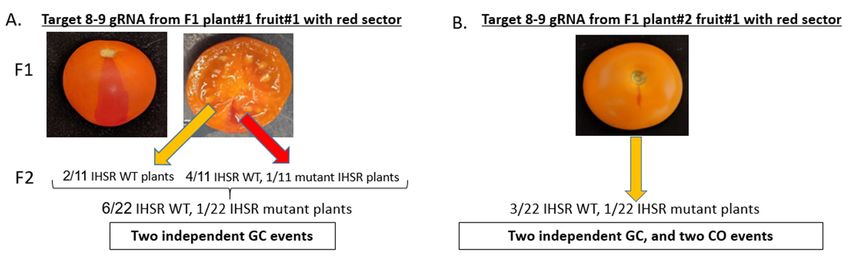
Genes 2021, 12, 59                                                                                         2 of 12

                          In plants, germ line cells giving rise to pollen or egg cells are formed late in devel-
                     opment, when somatic meristematic cells differentiate into floral meristems [7]. Hence,
                     inducing HR in somatic cells in a precise manner could lead to targeted recombination that
                     can be transmitted to the germinal cells, paving the way to overcome meiotic recombination
                     limitations. This could also generate genetic diversity in vegetatively propagated crops.
                     HR in somatic cells is not as well understood as meiotic recombination and it is thought
                     to be extremely rare, but a few studies showed that it is possible to induce HR by gamma
                     irradiation in Vicia faba [8] and by transposon in tobacco (Nicotiana tabacum) as shown
                     in the Hyrec mutant [9]. In addition, in recent work we showed that Inter-Homologous
                     Somatic Recombination (IHSR) repair is possible in tomato plants (Solanum lycopersicum)
                     and can be achieved by targeted induction of DNA double-strand breaks (DSBs) using the
                     CRISPR-Cas9 system [10]. Only a few events were analyzed, showing the occurrence of
                     targeted gene conversion, and one putative CO event was identified. Conversion tracts
                     were interrupted, possibly as a result of mismatch repair. These findings raised a num-
                     ber of questions that require further investigation to better understand the somatic HR
                     repair mechanisms.
                          In this study, we designed a new assay for tomatoes to induce DSBs in somatic cells
                     using the CRISPR-Cas9 system, targeting introns in the Carotenoid isomerase (CRTISO) locus,
                     originally referred to as tangerine [11], in a way that enables us to promote, screen, and
                     characterize HR repair events based on a gain-of-function color assay in a hybrid between
                     two parents with a sequenced genome. We describe the assay design, and the analysis
                     of DSB repair products, mainly non-homologous end-joining (NHEJ) or repair via HR
                     between homologues resulting in GC or CO.

                     2. Materials and Methods
                     2.1. Plant Material
                          Micro-Tom (Solanum lycopersicum) tangerine tomato mutant plants #18-3 described
                     by [12], and M82 tangerine e3406 [13], were grown in one-liter pots and five-liter pots
                     respectively in a greenhouse for crossing. The controlled climate conditions were of
                     26 ± 1 ◦ C and under 12 h light period. The intron targeting cassettes were transformed
                     into F1 hybrids. The Cas9-only cassette was transformed into the M82 parental genotype,
                     or into F1 hybrids. Following transformation, regeneration, and selections, the plantlets
                     were transferred from rooting media in a tissue culture growing room to five-liter pots. F2
                     and F3 progeny plants were sown in five-liter pots.

                     2.2. Plasmids Construction
                          Single guide RNAs (sgRNAs) targeting four different introns within the CRTISO gene
                     between the two tangerine mutations were designed and checked for off-targets using
                     Ensembl Plants [14] and cloned into a construct containing Streptococcus pyogenes Cas9
                     (SpCas9) gene. Cloning was performed by utilizing the Golden Braid (GB) system [15]. The
                     constructs were composed of SpCas9 that was expressed under constitutive Ubiquitin4-2
                     promoter from Petroselinum crispum (PcUbi4-2) and Pea3A terminator [16]. The sgRNA
                     was expressed under the control of Arabidopsis thaliana U6-26 RNA Pol III promoter and
                     the Kanamycin resistance gene (Kana) was expressed under the Nopaline Synthase (Nos)
                     promoter and Nos terminator (referred to as Nos:NptII:Nos).

                     2.3. Plant Transformation and Genotyping
                          Plasmids were transformed into Agrobacterium tumefaciens of the strain GV3101 by
                     electroporation. The colonies were grown on LB plates with 200 µg/mL spectinomycin
                     and 50 µg/mL gentamycin antibiotics. F1 cotyledons were transformed with the plasmid-
                     carrying Agrobacterium. Swollen green cotyledons were transferred through several se-
                     lection phases. Transformation and selection protocols were previously described [12].
                     Regenerated plantlets (containing T-DNA with Kanamycin resistance gene) were trans-
                     ferred to rooting media with Kanamycin and IBA (rooting hormone). Two to three small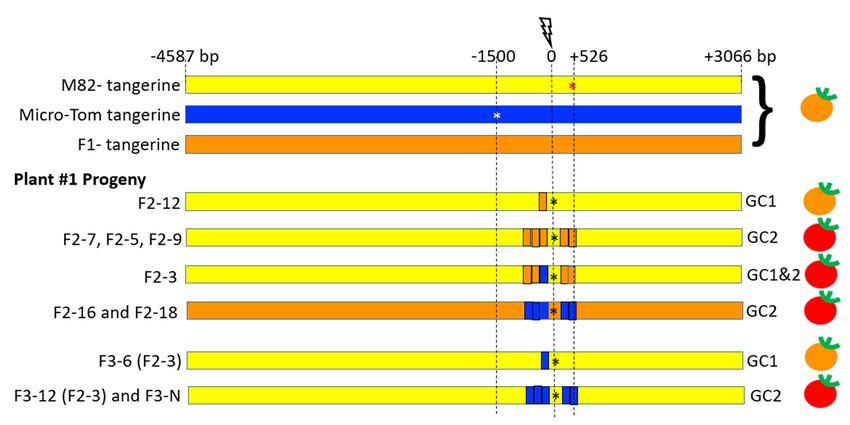
Genes 2021, 12, 59                                                                                            3 of 12

                     tomato leaflets were collected from different branches into 1.5 mL tubes and were put
                     inside liquid nitrogen. The frozen leaflets were crushed by electric drill with designated
                     frozen plastic sticks and DNA extraction was performed as previously described [12].
                     Verification of transgenic F1 plants was done by PCR amplification of SpCas9 sequence
                     from genomic DNA. Amplification was done by 35 cycles PCR using RedTaq® ReadyMix™
                     (Sigma-Aldrich, St Louis, MO, USA). Primers used for the amplification are specified in
                     Supplementary Table S1. F2 and F3 plants were tested as well in a similar fashion. Genomic
                     DNA samples were used for PCR amplification of the CRTISO gene and its flanking regions.
                     PCR fragments were amplified by 35 cycles using KAPA HiFi HotStart ReadyMix (KAPA
                     Biosystems-50 µL reactions according to the manufacturer’s protocol), and sequenced by
                     Sanger sequencing. The list of primers is given in Supplementary Table S2.

                     2.4. NHEJ Analysis Using Illumina HTS
                          Genomic DNA from F1 and M82 transgenic plants for all four SpCas9 + gRNA con-
                     structs were amplified by 18 cycles of PCR, using 50 µL reaction of KAPA HiFiTM ReadyMix
                     (KAPA-BIOSYSTEMS) to produce amplicons in order to build libraries for high-throughput
                     Illumina® sequencing. Three sets of primers, targeting amplicons of ~300 bp, were de-
                     signed to amplify two CRISPR target sites at each amplicon. Targets 7–8 and 8–9 were
                     amplified from both sides of the target due to an overlap of two amplicons (Supplementary
                     Tables S3 and S4). Primers were 20–60 bp from each DSB site and were attached at the 50
                     end with specific barcodes that had varied length between 4–7 bp with a unique sequence
                     to indicate the plant origin. Deep sequencing was done using Illumina NextSeq 550 system
                     at the Life Sciences Core facilities unit at the Weizmann Institute of Science. The sample
                     sequences were analyzed using NGS Cas-analyzer as described by [17].

                     2.5. HR Events Analysis in the CRTISO Region
                          The SL4.0 chromosome 10 region between 61,795,407 and 61,787,754 (7653 bp), span-
                     ning the tangerine mutations of both Micro-Tom and M82 was sequenced for each IHSR
                     candidate plant. We used Sanger sequencing of PCR products in CRTISO regions of het-
                     erozygous F2 plants or homozygous F3 plants. For F2 plants that did not have seeds, and
                     therefore could not give homozygous F3 plants, PCR products were cloned into pGEM
                     T-easy and single colonies were sent for sequencing. Primers used for the amplification are
                     specified in Supplementary Table S5.

                     2.6. CO Events Analysis Using Illumina Whole Genome Sequencing (WGS)
                           DNA was purified from leaves of F2 , and F3 plants using a DNA purification kit
                     (MACHEREY-NAGEL® ) and then 300 ng sheared by sonication (Bioruptor ® , Diagenode)
                     to 200–500 bp. A total of 10 ng of fragmented DNA per plant was used for libraries
                     preparation as described by [18]. High-throughput sequencing was performed at the Life
                     Sciences Core facilities unit at the Weizmann Institute of Science with the Illumina NovaSeq
                     6000, 150 bp paired-end reads.
                           The whole genome sequencing of tomato plants was aligned to the Heinz tomato
                     genome, version SL4.0 (Sol Genomic Network), using BWA [19] and Samtools [20]. Poten-
                     tial PCR duplicates were removed using Samtools rmdup and by the Picard tool FilterSam-
                     reads [21]. The reads were viewed and documented using the IGV browser [22]).

                     3. Results
                     3.1. Gain-of-Function Phenotypic Assay Design for HR Events Identification
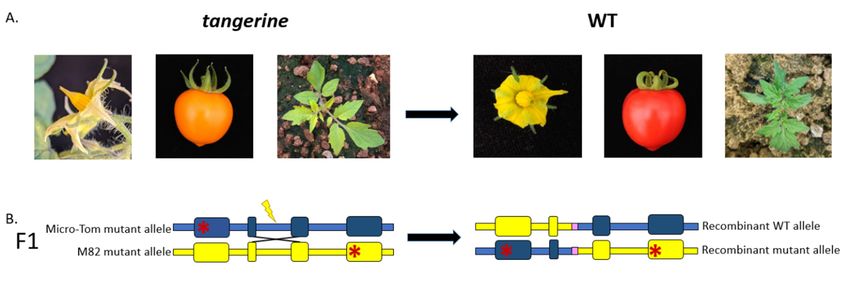
                          A recessive mutation in the Carotenoid isomerase (CRTISO) gene from the carotenoid
                     biosynthesis pathway in tomatoes gives rise to a tangerine phenotype [11], which causes
                     pale yellow petals, orange fruits, and a less robust yet still visible phenotype with yellowish
                     young leaves (Figure 1). We took advantage of the availability of several CRTISO mutants
                     to design an assay whereby intergenic HR between mutant alleles can restore the WT
                     yellow petals and red fruit phenotype. DSB induction was targeted to introns so that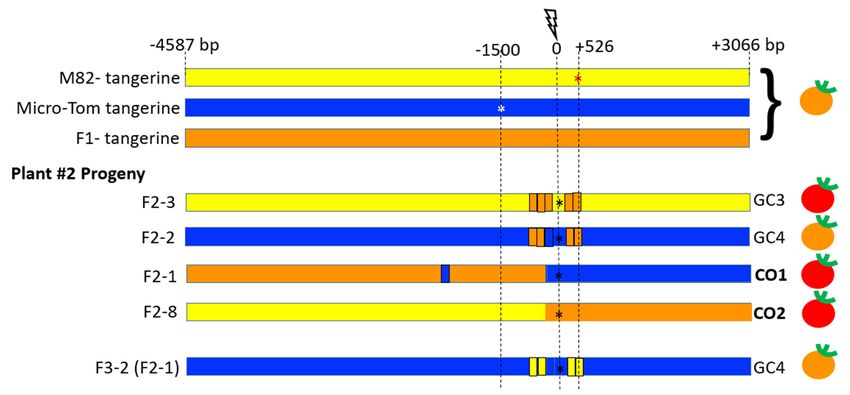
Genes 2021, 12, 59                                                                                                                              4 of 12

                                     the recombination product can tolerate NHEJ mutations without affecting WT activity
                                     (Figure 1). Two CRTISO mutants in the background of divergent parental lines were
                                     used: one in Micro-Tom (MT), tangerine 18-3, and one in the cultivar M82 background,
                                     tangerine e3406; the distance between the two mutations is ~2 Kb. Both mutations result
                                     in a homozygote recessive tangerine phenotype (see red stars in Figure 2). MT CRTISO
                                     has a “-A” frameshift mutation in exon 4 that was generated by CRISPR-Cas9 creating a
                                     premature stop codon [12], and M82 CRTISO has a G to A missense mutation in exon 11,
                                     generated by Ethyl Methanesulfonate (EMS) mutagenesis [13]. Crossing these lines resulted
                                     in tangerine F1 hybrid plants that had one mutant allele from each parent, whose origin
                                     could be differentiated by unique insertions or deletions (indels), and single nucleotide
                                     polymorphisms (SNPs) (Figure 2B, Supplementary Table S6). Plant and fruit size of the F1
                                     hybrid are similar to M82, however, fruit shape is rounded and resembles MT. Four different
                                     CRISPR-Cas9 gRNA targets were designed to induce DSBs in introns in between the
                                     mutations in F1 plants to allow HR to take place in somatic cells following transformation
                                     (Figure 2B, Supplementary Tables S3 and S6). In case one mutant allele would be repaired
                                     via somatic HR using the homologue as a repair template, a WT allele would be formed,
                                     leading to chimeric CRTISO plants with whole WT branches of red fruits for early HR
                                     events, or red sectors in orange fruits for later somatic events. Target locations were
                                     180 to 279 bp from each other and were chosen based on several criteria: 1. Targeting
                                     introns to prevent gene activity disruption by NHEJ footprints, which could be formed
                                     after HR. In exons, recurring cuts would affect gene activity and our ability to select IHSR
                                     events based on the phenotype. 2. Putative off-targets were checked to avoid collateral
                                     genome damage as much as possible. 3. Splicing sites were verified to be distant from
                                     the targets to avoid intron splicing interruption (Supplementary Table S3). For the target
                                     between exon 6 and 7 (6–7 gRNA), we took advantage of the T to G SNP that results in
                                     an NGG protospacer adjacent motif (PAM), hence targeting a DSB only in the MT allele
                                     (Figure 2). The distance between the tangerine mutations is ~2 kb, making it very unlikely
                                     for meiotic recombination to occur in the progeny of F1 plants. SpCas9 presence was
                                     verified by PCR, using SpCas9 primers (Supplementary Table S1). SpCas9 positive plants
Genes 2021, 12, 59                                                                                                          5 of 12
                                     were continuously monitored for WT phenotypes, focusing mainly on the flowers and fruits.
                                     Total transformation success rates were 76.40% and 65.12% for F1 and M82 respectively.

      Figure 1. Phenotypic Inter-Homologous Somatic Recombination (IHSR) assay in the Carotenoid isomerase (CRTISO) gene
      Figure 1.visible
      utilizing   Phenotypic   Inter-Homologous
                         gain-of-function events in Somatic
                                                     F1 plants.Recombination       (IHSR) assay
                                                                  (A) CRTISO recessive     mutantintangerine
                                                                                                     the Carotenoid   isomerase
                                                                                                              phenotypes    seen(CRTISO)    gene
                                                                                                                                  as pale yellow
      utilizing  visible gain-of-function  events  in F 1 plants. (A) CRTISO recessive mutant tangerine phenotypes seen as pale yellow
      petals, orange fruits, and yellowish young leaves. IHSR can lead to the correction of one mutant allele to the dominant WT
      petals, orange fruits, and yellowish young leaves. IHSR can lead to the correction of one mutant allele to the dominant
      allele and hence the plant will show WT phenotypes of yellow petals, red fruit, and green young leaves. (B) F1 hybrid has
      WT allele and hence the plant will show WT phenotypes of yellow petals, red fruit, and green young leaves. (B) F1 hybrid
      two recessive CRTISO alleles (schematic not-to-scale representation). Each allele mutation is represented by a red asterisk.
      has two recessive CRTISO alleles (schematic not-to-scale representation). Each allele mutation is represented by a red
      Exons   areExons
      asterisk.   shownare as wide
                              shownboxes.   The boxes.
                                      as wide   Micro-Tom      backgroundbackground
                                                         The Micro-Tom       is blue and the   M82 and
                                                                                            is blue  background
                                                                                                          the M82yellow.     The lightning
                                                                                                                     background      yellow. bolt
                                                                                                                                             The
      corresponds
      lightning bolttocorresponds
                         a DSB site; the
                                     to aNHEJ    footprint
                                          DSB site;  the NHEJis infootprint
                                                                   pink; andis the  X structure
                                                                                in pink; and theshows    the site
                                                                                                  X structure      of IHSR
                                                                                                                 shows       repair
                                                                                                                         the site    induced
                                                                                                                                  of IHSR     by
                                                                                                                                           repair
      double-strand    break (DSB).break
      induced by double-strand       IHSR(DSB).
                                            can generate
                                                   IHSR can recombinant   WT or mutant
                                                               generate recombinant      WTalleles.  NHEJ
                                                                                              or mutant     footprints
                                                                                                         alleles.  NHEJthat   would that
                                                                                                                          footprints  occur after
                                                                                                                                          would
      occur repair
      IHSR    after IHSR   repair
                     are not      are not
                             expected      expected
                                       to change   thetoWTchange   the WT
                                                             phenotype     phenotype
                                                                         since   the DSBsince   the in
                                                                                          sites are DSB   sites in
                                                                                                       introns  arenon-splicing
                                                                                                                    in introns insites.
                                                                                                                                    non-splicing
      sites.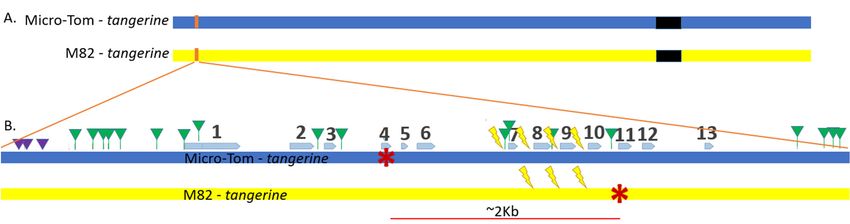
WT allele and hence the plant will show WT phenotypes of yellow petals, red fruit, and green young leaves. (B) F1 hybrid
has two recessive CRTISO alleles (schematic not-to-scale representation). Each allele mutation is represented by a red
asterisk. Exons are shown as wide boxes. The Micro-Tom background is blue and the M82 background yellow. The
lightning bolt corresponds to a DSB site; the NHEJ footprint is in pink; and the X structure shows the site of IHSR repair
induced by double-strand break (DSB). IHSR can generate recombinant WT or mutant alleles. NHEJ footprints that would
Genes 2021, 12, 59 5 of 12
occur after IHSR repair are not expected to change the WT phenotype since the DSB sites are in introns in non-splicing
sites.
Figure 2.
Figure 2. CRTISO gene map
CRTISO gene map of
of targeted
targetedDSB
DSBIHSR
IHSRassay.
assay.(A)
(A)Tomato
TomatoChromosome#10
Chromosome#10 scheme.
scheme. TheThe centromere
centromere is shown
is shown in
in black. The CRTISO gene is located at the sub-telomeric region of chromosome 10, on the reverse strand.
black. The CRTISO gene is located at the sub-telomeric region of chromosome 10, on the reverse strand. Its approximate Its approximate
location is in orange. (B) The scheme of CRTISO gene region with exon 1 close to the telomere and exon 13 to the
location is in orange. (B) The scheme of CRTISO gene region with exon 1 close to the telomere and exon 13 to the centromere.
centromere. Exons are marked by blue arrows. Micro-Tom tangerine allele and its-A mutation at exon 4, and M82 allele G
Exons are marked by blue arrows. Micro-Tom tangerine allele and its-A mutation at exon 4, and M82 allele G to A mutation
to A mutation at exon 11 are marked by red asterisks. The distance between the mutations is ~2 kb. Indels are marked by
at exon triangles.
purple 11 are marked
Singlebynucleotide
red asterisks. The distance(SNPs)
polymorphisms between arethe mutations
marked is ~2triangles.
by green kb. IndelsFour
are marked
gRNAs for by purple triangles.
DSBs (lightning
Single nucleotide polymorphisms (SNPs) are marked by green triangles. Four gRNAs for DSBs (lightning
bolts) in between the two mutations were designed to target introns, and named according to their location; for example, bolts) in between
the two
targetmutations
in intronwere designed
between exonto8 target
and exonintrons,
9 wasand named
called according
target to their
8–9. Three location;
targets for example,
can break the target
both alleles. Targetin intron
6–7 is
allele specific,
between exon 8targeting
and exononly
9 wasthecalled
Micro-Tom
target allele due to
8–9. Three a SNPcan
targets resulting in analleles.
break both NGG forming a protospacer
Target 6–7 adjacent
is allele specific, motif
targeting
(PAM).
only the Micro-Tom allele due to a SNP resulting in an NGG forming a protospacer adjacent motif (PAM).
3.2. Three out of Four CRTISO Targets Induce Efficient NHEJ DSB Repair
3.2. Three out of Four CRTISO Targets Induce Efficient NHEJ DSB Repair
NHEJ DSB repair was evaluated for the four CRTISO targets in six F1 lines per target.
NHEJ DSBCas9
We analyzed repair wasgRNA
and evaluated
NHEJ the four CRTISO
for footprints using targets in six
Illumina F1 lines per
sequencing oftarget.
PCR
We analyzed Cas9 and gRNA NHEJ footprints using Illumina sequencing of PCR
products flanking each gRNA target (Figure 3 and Supplementary Figure S1). F1 lines with products
flanking
Cas9 onlyeach
weregRNA target
tested (Figure(Supplementary
as controls 3 and SupplementaryTableFigure S1). Ffrequency,
S7). Indels 1 lines withaCas9 only
traceable
were tested as controls (Supplementary Table S7). Indels frequency, a traceable
outcome of NHEJ DSB repair, was measured per F1 line. Three out of the four targets outcome of
NHEJ DSB repair, was measured per F1 line. Three out of the four targets showed significant
showed significant NHEJ repair activity. Target 6–7, as predicted and designed, showed
NHEJ repair activity. Target 6–7, as predicted and designed, showed indels only in the MT
indels only in the MT allele. Four out of six target 6–7 lines were positive, with average
allele. Four out of six target 6–7 lines were positive, with average indel frequency of 21.7%
indel frequency of 21.7% in positive plants (Supplementary Figure S1A). Target 7–8 had
in positive plants (Supplementary Figure S1A). Target 7–8 had four out of six positive lines,
four out of six positive lines, with average indel frequency of 92.5% in positive plants
with average indel frequency of 92.5% in positive plants (Supplementary Figure S1B). All six
(Supplementary Figure S1B). All six target 8–9 F1 lines were positive, with average indel
target 8–9 F1 lines were positive, with average indel frequency of 56.5% in positive plants
(Figure 3). Target 9–10 did not show any activity (Supplementary Figure S1D).
3.3. CRTISO Target 8–9 Gives Germinal Transmission of Somatic DSB IHSR Events
Monitoring F1 plants phenotypes did not result in any WT flowers expected for IHSR
events. However, at later growth stages as the fruits ripened, we found a few plants with
red sectors on orange (tangerine) fruits, a sign of late IHSR events (Figure 4). All the
plants that had fruits with a red sector were from target 8–9. Five out of eighteen Cas9-
independent transgenic plants from this target had fruits with red sectors (Supplementary
Table S7). Overall, we obtained ten fruits with red sectors. Two out of the five transgenic
plants had three fruits with red sectors, one plant had two fruits with red sectors, and
two plants had just one fruit with red sectors. We noticed that these fruits were located
on different branches, which may indicate independent IHSR events. Each fruit seed was
separately collected for subsequent monitoring. F1 plants of targets 6–7, 7–8, and 9–10
did not show any WT phenotype sectors (Supplementary Table S7). As expected, all M82
control target plants and Cas9-only cassette plants (of both M82 and F1 ) displayed the
tangerine phenotype with no red sectors. Plant#1 and plant#2 of target 8–9, each containing
three fruits with red sectors, were from lines that showed 99.5% and 96.3% indel frequencies
respectively (Figure 3C). Both plant#1 and plant#2 of target 8–9 had one red sector fruit,
with germinally transmitted IHSR (Figure 4A,B). Plant#5 of target 8–9, which had one
red sector fruit, showed only 14.5% indel frequency (Figure 3C). Obtaining detectable
somatic recombination events in target 8–9 only raises questions as to the genomic context
necessary of targeted IHSR to occur.Genes 2021, 12, 59 6 of 12
Target 8-9
Non-mutated target
Positive plants - 6/6 Average indel frequency in positive plants - 56.5%
-A
100 -T
-AT
90 -ATG
-ATT
80 -ATGA
-CATT
70 -TGAT
-ATGAT
60
-TGATT
50 -ATGATT
-TGATTC
40 -CATTCA
-ATTCATG
30 -TGATTCC
-CATGATTC
20 -TGTTCCCATTCAT
-CTTGATGTTCCCATTCATGATTC
10 -CATGATTCCTTG
-ATGATTCCTTG
0 +A
Plant 1 Plant 2 Plant 3 Plant 4 Plant 5 Plant 6 +AA
Figure 3. NHEJ frequency in F1 plants of CRTISO assay DSB target 8–9. Illumina NextSeq high-throughput sequencing
results for F1 plants analyzed using NGS Cas-Analyzer and presented for CRTISO assay DSB target 8–9. Six F1 plants were
Genes 2021, 12, 59
analyzed. The indels frequency was calculated by the number of indel reads out of the total number of reads (including 7 of 12
non-mutated target footprint) and shown as a percentage. No indels were detected in three control plants with Cas9 only.
Figure 4. CRTISO target 8–9 induces IHSR events. Red sector fruits indicating late IHSR event, were detected in CRTISO
Figure 4. CRTISO target 8–9 induces IHSR events. Red sector fruits indicating late IHSR event, were detected in CRTISO
DSB target 8–9 only. (A) The red sector of F 8–9 DSB target plant#1 fruit#1 reached the mesocarp, unlike all other smaller
DSB target 8–9 only. (A) The red sector of F1 18–9 DSB target plant#1 fruit#1 reached the mesocarp, unlike all other smaller
red sector fruits that remained in the pericarp. Seeds were collected separately from the tangerine and red WT parts of the
red sector fruits that remained in the pericarp. Seeds were collected separately from the tangerine and red WT parts of the
fruit. Eleven seeds of each tangerine and red WT sector were grown. Four IHSR WT and one IHSR mutant progeny were
fruit. Eleven seeds of each tangerine and red WT sector were grown. Four IHSR WT and one IHSR mutant progeny were
found from the red WT sector. Two more IHSR WT progeny were found from the tangerine fruit part, leading to a total of
found from the red WT sector. Two more IHSR WT progeny were found from the tangerine fruit part, leading to a total
seven IHSR progeny out of 22 F plants. (B) The red sector of F 8–9 DSB target plant#2 fruit#1 was present in the pericarp
of seven IHSR progeny out of 22 F22plants. (B) The red sector of 1F1 8–9 DSB target plant#2 fruit#1 was present in the pericarp
only, therefore, seeds were collected as one pool. Twenty-two seeds were grown. Three IHSR WT and one IHSR double
only, therefore, seeds were collected as one pool. Twenty-two seeds were grown. Three IHSR WT and one IHSR double
mutant progeny were found out of 22 F2 plants.
mutant progeny were found out of 22 F2 plants.
3.4.3.4.
CRTISO
CRTISOTarget
Target8–9
8–9 Activity inSomatic
Activity in SomaticTissue
Tissue Leads
Leads to Germinal
to Germinal Transmission
Transmission of GC of
andGC and
COCO Events
Events
To test the germinal transmission and to conduct molecular analysis of IHSR events,
To test the germinal transmission and to conduct molecular analysis of IHSR events,
each red sector fruit from target 8–9 was collected and its seeds were extracted separately.
each red sector fruit from target 8–9 was collected and its seeds were extracted separately.
Three orange tangerine fruits and their seeds were collected from each F1 plant and from
Three
five orange
plants of tangerine
the otherfruits
targetsand
andtheir seedsSeeds
controls. werewere
collected
sown from each Fthe
to compare 1 plant and from
progeny
five
phenotype of the orange fruits to the progeny of the fruits with the red sector.the
plants of the other targets and controls. Seeds were sown to compare progeny
In the
phenotype of the orange fruits to the progeny of the fruits with the red sector. In the
tangerine fruits progeny, neither red sector fruits nor WT fruits were detected, indicating
no meiotic activity of SpCas resulting in visible IHSR events. We hypothesized that seeds
extracted from fruits with red sectors might give rise to either WT or tangerine F2 plants,
depending on whether the somatic cells that underwent IHSR (red sector) differentiateGenes 2021, 12, 59 7 of 12
tangerine fruits progeny, neither red sector fruits nor WT fruits were detected, indicating
no meiotic activity of SpCas resulting in visible IHSR events. We hypothesized that seeds
extracted from fruits with red sectors might give rise to either WT or tangerine F2 plants,
depending on whether the somatic cells that underwent IHSR (red sector) differentiate
into germline cells producing gametes. Fruit#1 from F1 plant#1 had a large red sector
(Figure 4A) compared to the other fruits which had a rather small red sector (Figure 4B).
The large red sector reached the mesocarp (Figure 4A), unlike the small sectors which were
limited to the pericarp. The large red sector (Figure 4A) was carefully cut out and the seeds
were collected separately from the seeds of the orange part of the fruit. To test whether only
the red sector seeds would give rise to WT F2 plants, 11 seeds from the red sector of plant#1
and 11 seeds from the orange part of the fruit were sown for comparison. Four IHSR WT,
and one IHSR mutant progeny were found from the 11 red WT sector progeny. Two more
IHSR WT progeny were found from the 11 tangerine fruit part progeny. In total, 7 IHSR
progeny out of 22 F2 plants were obtained from red sector fruit#1 of plant#1. In F1 8–9 DSB
target plant#2 fruit#1, the red sector was present in the pericarp only, therefore, seeds were
collected from the fruit regardless of the sector position. Twenty-two seeds were grown.
Three IHSR WT and one IHSR mutant progeny were found out of 22 F2 progeny.
We next characterized IHSR events in target 8–9 plant#1 fruit#1 (Figure 5), and plant#2
fruit#1 (Figure 6), F2 and F3 progeny by Sanger sequencing around the DSB site. The
sequence data for this analysis (detailed in Supplementary Figures S2 and S3 and shown
schematically in Figures 5 and 6) provided insight into conversion tract length and con-
tinuity and suggested which repair pathway occurred, namely GC or CO. F3 plants ho-
mozygous in the CRTISO region were selected to facilitate sequence analysis and further
confirm germinal transmission of the IHSR events. Target 8–9 from F1 plant#1 fruit#1
gave seven F2 progeny with IHSR events out of 22 progeny: five F2 IHSR progeny were
derived from the red sector (Figure 5, Supplementary Figure S2): Plants F2 -7, F2 -3, F2 -5,
F2 -9 which bear red fruits (WT), and plant F2 -12 bearing tangerine fruits. Two F2 IHSR
progeny derived from the tangerine sector of F1 plant#1, F2 -16 and F2 -18 bear red fruits
(WT). All F2 and F3 plants contained SpCas9. Among this group, two independent types of
gene conversion events, GC1 and GC2, were found. In GC1, the DSB was repaired by HR
that led to copying a segment of ~50 bp length from the MT homologue to the targeted M82
allele, which generated a tangerine CRTISO allele (Figure 5, Supplementary Figure S2, Plant
F2 -12, and F3 -6 (F2 -3)). In GC2, the DSB was repaired by HR that led to copying a segment
of ~983 bp from the MT homologue to the targeted M82 allele, resulting in the repair of the
M82 mutation and generation of a WT CRTISO allele. The GC2 conversion tract is contin-
uous and the DSB site is located in the middle of it between coordinates −456 and +526
(Figure 5, plants F2 -7, F2 -5, F2 -9, F2 -3, F2-16, F2 -18; F3 -12(F2 -3), F3 -N).
Of the 22 F2 progeny from F1 -plant# 2, fruit#1 showing IHSR events, 4 were identified
from target 8–9 (Figure 6, Supplementary Figure S3). Plant F2 -2 bore tangerine fruits, and
plants F2 -3, F2 -1, and F2 -8 bore red fruits. All F2 and F3 plants contained SpCas9 except
for plant F2 -8 (F1 -2) and its progeny. Among this group, two independent types of IHSR
events were found, GC3 and GC4, and two independent putative CO events. GC3 and GC4
IHSR repair events both appear to result from a DSB in F1 parent plant (red sector in the
fruit, Figure 4B). GC3 tract from F1 plant#2 is similar in length and coordinates/location
to GC2 in F1 plant#1. However, it is clear that these are two independent events be-
cause each occurred in a different plant and because we see that they have a different
NHEJ footprint. In GC4, the DSB was repaired by HR leading to copying a segment of
~983 bp from the M82 homologue to the targeted MT allele, resulting in both MT and
M82 mutations in cis, and generation of double mutant tangerine CRTISO allele. The GC4
conversion tract is interrupted with the DSB site located in the center. CO1 and CO2 are
putative crossover events as determined by Sanger sequencing around the DSB region
(Figure 6, Supplementary Figure S3). They were further analyzed by whole genome se-
quencing (WGS) to confirm the presence of COs rather than long conversion tracts. WGS
of plant F2 -1 confirmed that an induced crossover event, CO1, had occurred, taking placeGenes 2021, 12, 59 8 of 12
Genes 2021, 12, 59 8 of 12
F2-5, F2-9 which bear red fruits (WT), and plant F2-12 bearing tangerine fruits. Two F2 IHSR
preciselyderived
progeny at the DSB-induced site and sector
from the tangerine consisting
of F1ofplant#1,
a very large
F2-16segment
and F2-18(Figure 7A).fruits
bear red CO1
has an interrupted conversion tract and a NHEJ footprint (Figure 7A). Note that
(WT). All F2 and F3 plants contained SpCas9. Among this group, two independent types plant F2 -1
had no seeds. WGS of CO2 also confirmed that it corresponds to an induced CO event.
of gene conversion events, GC1 and GC2, were found. In GC1, the DSB was repaired by
For CO2, we sequenced the F3 progeny (Plant F3 -3 (F2 -8)) that was homozygous around
HR that led to copying a segment of ~50 bp length from the MT homologue to the targeted
the CO site. CO2 showed a clean transition (from the centromere direction to the telom-
M82 allele, which generated a tangerine CRTISO allele (Figure 5, Supplementary Figure
ere) from MT SNPs to M82 SNPs and has no NHEJ footprint at the target 8–9 break site
S2, Plant F2-12, and F3-6 (F2-3)). In GC2, the DSB was repaired by HR that led to copying a
(Figure 7B). Both CO1 and CO2 events gave rise to a WT CRTISO allele. Additionally, they
segment of ~983 bp from the MT homologue to the targeted M82 allele, resulting in the
both have a CO junction that occurred between 47 bp and 418 bp from the DSB site towards
repair of the M82 mutation and generation of a WT CRTISO allele. The GC2 conversion
the telomere direction. The transition between the genotypes in both events continues in
tract is continuous and the DSB site is located in the middle of it between coordinates −456
each direction at least 1 Mb from the 8–9 DSB. Further CO events are also detected and are
and +526 (Figure 5, plants F2-7, F2-5, F2-9, F2-3, F2-16, F2-18; F3-12(F2-3), F3-N).
likely products of meiotic CO events unrelated to the DSB in target 8–9.
Figure 5. Schematic representation of IHSR events in the CRTISO 8–9 region around the targeted DSB in plant #1. The
Figure 5. Schematic representation of IHSR events in the CRTISO 8–9 region around the targeted DSB in plant #1. The
lightning bolt represents the CRISPR/Cas9 DSB site in the intron between exons 8 and 9 of the CRTISO locus. The DSB was
lightning bolt represents the CRISPR/Cas9 DSB site in the intron between exons 8 and 9 of the CRTISO locus. The DSB
induced
was between
induced the two
between the mutations
two mutationsin theintangerine alleles
the tangerine in theinbackgrounds
alleles the backgroundsof M82 (red star,
of M82 (red 1500
star, bp upstream
1500 from
bp upstream
the DSB)
from and Micro-Tom
the DSB) and Micro-Tom (white star, 526
(white star,bp526downstream
bp downstream of theofbreak). The The
the break). F1 has alsoalso
F1 has a tangerine
a tangerinephenotype, unless
phenotype, an
unless
IHSR
an IHSRevent occurs.
event In progeny
occurs. of plant
In progeny #1 where
of plant a red
#1 where fruitfruit
a red sector was was
sector observed, two types
observed, of gene
two types conversion
of gene events
conversion were
events
were
observed. GC10GC1′s
observed. conversion
s conversion tracttract
did notdidspan
not span any
any of oftwo
the the two mutations
mutations and and
had had a tangerine
a tangerine phenotype.
phenotype. For For
GC2, GC2,
the
the conversion tract enabled to correct the close-by M82 mutation in a M82 chromosome background,
conversion tract enabled to correct the close-by M82 mutation in a M82 chromosome background, giving rise to a dominant giving rise to a
dominant red fruit phenotype. SNPs that enabled the monitoring of the origin of the parental genotype
red fruit phenotype. SNPs that enabled the monitoring of the origin of the parental genotype are shown in yellow for M82 are shown in
yellow for M82blue
homozygotes, homozygotes, blue homozygotes,
for Micro-Tom for Micro-Tomand homozygotes,
orange for theandheterozygote.
orange for theSelf-pollinated
heterozygote. F Self-pollinated F3 plants
3 plants were grown to
were grown to obtain a homozygous conversion tract and to confirm the sequence of these tracts and the plant phenotype.
obtain a homozygous conversion tract and to confirm the sequence of these tracts and the plant phenotype. F3 -N refers
F3-N refers to several F3 progeny that had the same genotype. The black star represents NHEJ DSB repair footprints that
to several F progeny that had the same genotype. The black star represents NHEJ DSB repair footprints that occurred in
occurred in 3the intron, probably following recombination. The fruit color phenotype is indicated on the right side. A full
the intron,
detail of theprobably following
various alleles’ recombination.
sequences The fruit
in all progeny color phenotype
is shown is indicated
in Supplementary on S2.
Figure the right side. A full detail of the
various alleles’ sequences in all progeny is shown in Supplementary Figure S2.
Of the 22 F2 progeny from F1-plant# 2, fruit#1 showing IHSR events, 4 were identified
from target 8–9 (Figure 6, Supplementary Figure S3). Plant F2-2 bore tangerine fruits, and
plants F2-3, F2-1, and F2-8 bore red fruits. All F2 and F3 plants contained SpCas9 except for
plant F2-8 (F1-2) and its progeny. Among this group, two independent types of IHSR
events were found, GC3 and GC4, and two independent putative CO events. GC3 and
GC4 IHSR repair events both appear to result from a DSB in F1 parent plant (red sector in
the fruit, Figure 4B). GC3 tract from F1 plant#2 is similar in length and coordinates/location
to GC2 in F1 plant#1. However, it is clear that these are two independent events because1 had no seeds. WGS of CO2 also confirmed that it corresponds to an induced CO event.
For CO2, we sequenced the F3 progeny (Plant F3-3 (F2-8)) that was homozygous around
the CO site. CO2 showed a clean transition (from the centromere direction to the telomere)
from MT SNPs to M82 SNPs and has no NHEJ footprint at the target 8–9 break site (Figure
7B). Both CO1 and CO2 events gave rise to a WT CRTISO allele. Additionally, they both
have a CO junction that occurred between 47 bp and 418 bp from the DSB site towards
Genes 2021, 12, 59 9 of 12
the telomere direction. The transition between the genotypes in both events continues in
each direction at least 1 Mb from the 8–9 DSB. Further CO events are also detected and
are likely products of meiotic CO events unrelated to the DSB in target 8–9.
Figure 6. Schematic representation of IHSR events in the CRTISO 8–9 region around the targeted DSB in plant #2. The
Figure 6. Schematic representation of IHSR events in the CRTISO 8–9 region around the targeted DSB in plant #2. The
lightning bolt represents the CRISPR/Cas9 DSB site in the intron between exons 8 and 9 of the CRTISO locus. The DSB
lightning bolt represents
was inducedthe CRISPR/Cas9
between DSBinsite
the two mutations the in the intron
tangerine between
alleles in exons of
the backgrounds 8 and 9 ofstar,
M82 (red CRTISO
the1500 locus. The DSB was
bp upstream
from the DSB) and Micro-Tom (white star, 526 bp downstream of the break). The F1 has also a tangerine phenotype, unless
induced between the two mutations in the tangerine alleles in the backgrounds of M82 (red star,
an IHSR event occurs. In progeny of plant #2 where a red fruit sector was observed, two types of gene conversion events
1500 bp upstream from
the DSB) and Micro-Tom
were observed(white
as well asstar, 526 bpcrossover
two putative downstream of the
events. The GC3 break).
conversionThetractF
was
1 has also
similar in a tangerine
sequence to GC2 phenotype,
in plant unless an
#1 and gave rise to a red fruit. GC4 did not restore gene activity, even though it corrected the M82 mutation but it was
IHSR event occurs. In progeny of plant #2 where a red fruit sector was observed, two types of gene conversion events were
homozygous for the Micro-Tom mutation. The two putative crossover events both gave rise to red fruits; CO1 had a
observed as wellconversion
as two putative
tract and CO2crossover events.
did not show The
evidence forGC3 conversion
a conversion tract
tract. The fruitwas
color similar
phenotype inissequence
indicated onto
theGC2
right in plant #1 and
side. All plants showed NHEJ DSB repair footprints that occurred in the intron, probably following recombination (black
gave rise to a red fruit. GC4 did not restore gene activity, even though it corrected the M82 mutation but it was homozygous
star). A full detail of the various alleles’ sequences in all progeny is shown in Supplementary Figure S3.
for the Micro-Tom mutation. The two putative crossover events both gave rise to red fruits; CO1 had a conversion tract
and CO2 did not show evidence for a conversion tract. The fruit color phenotype is indicated on the right side. All plants
showed NHEJ DSB repair footprints that occurred in the intron, probably following recombination (black star). A full detail
of the various alleles’ sequences in all progeny is shown in Supplementary Figure S3.
A.
61795387-
61795021-
61795407
61795391
61795017
61794975
61794822
61794727
61794689
61794582
61794270
61794037
61793909
61792886
61792682
61792320
61791276
61791238
61790867
61790820
61790357
61790294
61788761
61788182
61788068
61787754
SL4.0: Chr 10
Distance from
-4587 -4567 -4201 -4155 -4002 -3907 -3869 -3762 -3450 -3217 -3089 -2066 -1862 -1500 -456 -418 -47 +463 +526 +2059 +2638 +2752 +3066
DSB
Micro-Tom
8-9
Phenotype
mutation
mutation
gRNA HR
M82
Variant indel indel indel SNP SNP SNP SNP SNP SNP SNP SNP SNP SNP SNP SNP SNP SNP SNP SNP SNP SNP
cutting type
site
F2-1 A/+16bp CACG/- AATA/- C/T C/T G/A C/T C/A T/A A/-A G C/T C/T A/-A T/G T/C C -4 bp/+A C G G A A A WT CO1
64,783,875 64,399,301 64,399,301 61,791,238 61,790,867 1
Chromosome 10 64.7Mb
B.
61795387-
61795021-
61795407
61795391
61795017
61794975
61794822
61794727
61794689
61794582
61794270
61794037
61793909
61792886
61792682
61792320
61791276
61791238
61790867
61790820
61790357
61790294
61788761
61788182
61788068
61787754
SL4.0: Chr 10
Distance from
-4587 -4567 -4201 -4155 -4002 -3907 -3869 -3762 -3450 -3217 -3089 -2066 -1862 -1500 -456 -418 -47 +463 +526 +2059 +2638 +2752 +3066
DSB
Micro-Tom
8-9
Phenotype
mutation
mutation
gRNA HR
M82
Variant indel indel indel SNP SNP SNP SNP SNP SNP SNP SNP SNP SNP SNP SNP SNP SNP SNP SNP SNP SNP
cutting type
site
F3-3 (F2-8) - CACG AATA C C G C C T A T C C A T T C - C G G A A A WT CO2
60,795,944 60,447,761
64,783,875 63,657,639 63,198,664 61,791,238 60,341,687 1,914,064 950,045 1
61,790,867 60,795,894
Chromosome 10 64.7Mb
Figure 7. Whole genome sequencing of the two CO events from Plant#2 DSB-induced in CRTISO 8–9. Each plant was sent
for whole genome sequencing. (A) F2 -1: F2 plant 1 and (B) F3 -3 (F2 -8) F3 plant 3, progeny of F2 plant 8 homozygote in the
CRTISO region. Transition from one parental type, M82 (yellow) and Micro-Tom (blue), to a heterozygote state (orange), or
to the other parental type correspond to IHSR events. Indels at the DSB site represent NHEJ events in one or both alleles.
DSB site footprint was determined to be homozygote (single character), heterozygote (two characters divided by “/”), “-” in
case no footprint is found. Lightning bolts represent the CRISPR/Cas9 DSB region. Grey boxes represents a rough estimate
of the centromere region (SL4.0 Chr10: 22482995) based on [23].Genes 2021, 12, 59 10 of 12
4. Discussion
In a previous study, we showed that somatic homologous recombination between
homologs can be targeted via DSB induction at the tomato Phytoene Synthase1 locus [10].
We extended this work by (i) testing a new locus (CRTISO), (ii) developing a new gain-of-
function phenotypic IHSR assay targeting introns (the previous assay was loss of function),
(iii) expanding the number of events analyzed, (iv) demonstrating the occurrence of two
targeted COs through whole genome sequencing (the single earlier case was a putative CO
event). We confirm earlier findings that IHSR events can be germinally transmitted and
that gene conversion tracts could be continuous or interrupted.
The red sector fruit phenotypic marker was a reliable marker to detect germinally
transmitted IHSR events, but the presence of red sectors was not a guarantee of germinal
transmission, in particular with small-size sectors where there is only partial correspon-
dence between the maternal fruit tissue and the gametes. Nevertheless, the correlation
between the presence of red sectors in fruit somatic tissues of F1 plants and the finding
of recombination between the two very close (2 Kb apart) mutations in CRTISO in the
progenies supports the somatic origin of these recombination events. Moreover, a meiotic
origin for such events is very unlikely because of the proximity of the two mutations,
because of the presence of red sectors in F1 plants and because of the lack of red sectors in
all F2 negative control plants.
Out of eighteen transgenic F1 plants, we had two plants that together gave six ger-
minally transmitted somatic recombinant alleles. Of these six alleles, five were different.
Three alleles were GC events, and two were CO events. Three GC alleles and one CO event
were successfully transmitted to further F3 fertile plants. By analyzing the conversion
tract, we found that two independent fruits of two independent plants had the same NCO
recombinant allele, with a continuous conversion tract of ~983 bp length (Figures 5 and 6,
GC2). This could be due to a preferential IHSR repair or to our limited ability to determine
size precisely due to low polymorphism between the two parental alleles.
One out of three independent GC tracts as well as one out of two CO conversion tracts
were interrupted. This phenomenon was observed in yeast [24] and in tomatoes [10].
In F2 plant#1, we observed two types of GC events, with ~50 bp (GC1) and ~1000 bp
(GC2) conversion tract lengths, both of which were due to invasion of the M82 allele
into the MT allele. These could hint to a Synthesis Dependent Strand Annealing (SDSA)
mechanism leading to GC [25]. In F2 plant#2, we detected two types of GC events, with
~1000 bp tract lengths (GC3, GC4) spanning the same SNPs. GC3 is due to invasion of the
M82 allele into the MT allele, generating a WT allele. GC4 is due to invasion of the MT
allele into the M82, resulting in formation of an allele with both mutations.
Intriguingly, having a strong DSB induction was not sufficient to induce IHSR. Indeed,
only one out of three gRNAs tested showed high DSB-inducing activity that yielded red
sectors indicative of IHSR. The factors determining the ability of a given sequence to be
repaired by IHSR remains unclear. Is it due to the “loop-out” of some sequences, the
kinetics of repair at this locus, chromatin features, or somatic association? Our sample
remains too small to determine the underlying mechanism.
The novel assay that we designed and described in this work could be used for future
research such as the characterization of candidate genes involved in DNA DSB repair and
their effect in IHSR, and the rates of crossover versus non-crossover. In addition, a better
understanding of the IHSR phenomenon might be useful to develop precise genome editing
breeding tools, for both vegetatively propagated crops and sexually propagated crops,
by inducing homologous recombination in somatic cells and thus bypassing the need for
meiotic recombination and its limitations.
Supplementary Materials: The following are available online at https://www.mdpi.com/2073-4
425/12/1/59/s1, Supplementary Table S1. Primers used for T-DNA positive plants screening and
selection, Supplementary Table S2. Primers used for sequencing of the CRTISO parental mutant
lines Micro-Tom 18-3, M82 e3406, and their F1 hybrid plants, Supplementary Table S3. SpCas9 DSBGenes 2021, 12, 59 11 of 12
targets design and considerations, Supplementary Table S4. Primers for Illumina high throughput
sequencing of DSB targets NHEJ footprints, Supplementary Table S5. Primers used for sequencing of
CRTISO region in F2 and F3 plants, Supplementary Table S6. CRTISO gene coordinates of targeted
DSB IHSR assay, Supplementary Table S7. CRTISO targeted DSB IHSR phenotypic assay targets
comparison, Supplementary Figure S1. NHEJ frequency in F1 plants of CRTISO assay DSB targets,
Supplementary Figure S2. Sequencing of IHSR events in the CRTISO 8–9 region around the targeted
DSB in plant#1, Supplementary Figure S3. Sequencing of IHSR events in the CRTISO 8–9 region
around the targeted DSB in plant#2.
Author Contributions: I.B.S. performed most of the experimental work as part of his Master thesis.
A.S. performed part of the experimental work and wrote most of the manuscript. C.M.-B. performed
part of the experimental work. D.B.-T., T.D.-M. and S.F.-H. advised the experimental design and
analysis. A.A.L. was involved in the planning and supervising of the work and writing of the
manuscript. All authors have read and agreed to the published version of the manuscript.
Funding: This research and the APC were funded by Israel Science Foundation, grant number
1027/14, and by Minerva Foundation, grant number 2016.
Institutional Review Board Statement: Not applicable.
Informed Consent Statement: Not applicable.
Data Availability Statement: The data presented in this study are available on request from the
corresponding author.
Acknowledgments: The authors would like to thank Tal Dahan-Meir for the CRTISO 18-3 Micro-Tom
mutant; Joseph Hirschberg and Dani Zamir for the CRTISO M82 e3406 mutant plant materials; Ziva
Amsellem for guidance in tissue culture; and the Weizmann Institute greenhouse staff for the plants’
maintenance. The authors would like to thank all the Levy lab members for fruitful discussions and
assistance during the course of this study. This work was funded by Israel Science Foundation and
Minerva grants to A.A.L.
Conflicts of Interest: The authors declare no conflict of interest.
References
1. Page, S.L.; Hawley, R.S. Chromosome choreography: The meiotic ballet. Science 2003, 301, 785–789. [CrossRef]
2. Choi, K.; Zhao, X.; Tock, A.J.; Lambing, C.; Underwood, C.J.; Hardcastle, T.J.; Serra, H.; Kim, J.; Cho, H.S.; Ziolkowski, P.A.; et al.
Nucleosomes and DNA methylation shape meiotic DSB frequency in Arabidopsis thaliana transposons and gene regulatory
regions. Genome Res. 2018, 28, 532–546. [CrossRef]
3. He, Y.; Wang, M.; Dukowic-Schulze, S.; Zhou, A.; Tiang, C.L.; Shilo, S.; Sidhu, G.K.; Eichten, S.; Bradbury, P.; Springer, N.M.; et al.
Genomic features shaping the landscape of meiotic double-strand-break hotspots in maize. Proc. Natl. Acad. Sci. USA 2017, 114,
12231–12236. [CrossRef]
4. International Wheat Genome Sequencing Consortium (IWGSC). A chromosome-based draft sequence of the hexaploid bread
wheat (Triticum aestivum) genome. Science 2014, 345, 1251788. [CrossRef]
5. Shilo, S.; Melamed-Bessudo, C.; Dorone, Y.; Barkai, N.; Levy, A.A. DNA crossover motifs associated with epigenetic modifications
delineate open chromatin regions in arabidopsis. Plant Cell 2015, 27, 2427–2436. [CrossRef]
6. Mercier, R.; Mezard, C.; Jenczewski, E.; Macaisne, N.; Grelon, M. The molecular biology of meiosis in plants. Annu. Rev. Plant
Biol. 2015, 66, 297–327. [CrossRef] [PubMed]
7. Traas, J. Organogenesis at the Shoot Apical Meristem. Plants 2018, 8, 6. [CrossRef]
8. Evans, H.J. Chromatid aberrations induced by γ irradiation. I. The structure and frequency of chromatid interchanges in diploid
and tetraploid cells of Vicia faba. Genetics 1961, 46, 257–275. [PubMed]
9. Gorbunova, V.; Avivi-Ragolski, N.; Shalev, G.; Kovalchuk, I.; Abbo, S.; Hohn, B.; Levy, A.A. A new hyperrecombinogenic mutant
of Nicotiana tabacum. Plant J. 2000, 24, 601–611. [CrossRef] [PubMed]
10. Filler-Hayut, S.; Melamed-Bessudo, C.; Levy, A.A. Targeted recombination between homologous chromosomes for precise
breeding in tomato. Nat Commun. 2017, 8, 15605. [CrossRef] [PubMed]
11. Isaacson, T.; Ronen, G.; Zamir, D.; Hirschberg, J. Cloning of tangerine from tomato reveals a carotenoid isomerase essential for
the production of β-carotene and xanthophylls in plants. Plant Cell 2002, 2, 333–342. [CrossRef] [PubMed]
12. Dahan-Meir, T.; Filler-Hayut, S.; Melamed-Bessudo, C.; Bocobza, S.; Czosnek, H.; Aharoni, A.; Levy, A.A. Efficient in planta gene
targeting in tomato using geminiviral replicons and the CRISPR/Cas9 system. Plant J. 2018, 95, 5–16. [CrossRef] [PubMed]
13. Menda, N.; Semel, Y.; Peled, D.; Eshed, Y.; Zamir, D. In silico screening of a saturated mutation library of tomato. Plant J. 2004, 38,
861–872. [CrossRef] [PubMed]
14. Ensembl Plants. Available online: http://plants.ensembl.org (accessed on 1 December 2020).Genes 2021, 12, 59 12 of 12
15. Sarrion-Perdigones, A.; Palaci, J.; Granell, A.; Orzaez, D. Design and construction of multigenic constructs for plant biotechnology
using the Golden Braid cloning strategy. Methods Mol. Biol. 2014, 1116, 133–151. [CrossRef] [PubMed]
16. Fauser, F.; Schiml, S.; Puchta, H. Both CRISPR/Cas-based nucleases and nickases can be used efficiently for genome engineering
in Arabidopsis thaliana. Plant J. 2014, 79, 348–359. [CrossRef]
17. Park, J.; Lim, K.; Kim, J.S.; Bae, S. Cas-analyzer: An online tool for assessing genome editing results using NGS data. Bioinformatics
2017, 33, 286–288. [CrossRef] [PubMed]
18. Blecher-Gonen, R.; Barnett-Itzhaki, Z.; Jaitin, D.; Amann-Zalcenstein, D.; Lara-Astiaso, D.; Amit, I. High-throughput chromatin
immunoprecipitation for genome-wide mapping of in vivo protein-DNA interactions and epigenomic states. Nat. Protoc. 2013, 8,
539–554. [CrossRef]
19. Li, H.; Durbin, R. Fast and accurate long-read alignment with Burrows-Wheeler transform. Bioinformatics 2010, 26, 589–595.
[CrossRef]
20. Li, H.; Handsaker, B.; Wysoker, A.; Fennell, T.; Ruan, J.; Homer, N.; Marth, G.; Abecasis, G.; Durbin, R. 1000 Genome Project Data
Processing Subgroup. The Sequence Alignment/Map format and SAMtools. Bioinformatics 2009, 25, 2078–2079. [CrossRef]
21. Picard Tool. Available online: https://broadinstitute.github.io/picard/ (accessed on 1 December 2020).
22. Robinson, J.T.; Thorvaldsdóttir, H.; Winckler, W.; Guttman, M.; Lander, E.S.; Getz, G.; Mesirov, J.P. Integrative genomics viewer.
Nat. Biotechnol. 2011, 29, 24–26. [CrossRef]
23. Demirci, S.; van Dijk, A.D.; Sanchez Perez, G.; Aflitos, S.A.; de Ridder, D.; Peters, S.A. Distribution, position and genomic
characteristics of crossovers in tomato recombinant inbred lines derived from an interspecific cross between Solanum lycopersicum
and Solanum pimpinellifolium. Plant J. 2017, 89, 554–564. [CrossRef] [PubMed]
24. Tsaponina, O.; Haber, J.E. Frequent Interchromosomal Template Switches during Gene Conversion in S. cerevisiae. Mol. Cell. 2014,
55, 615–625. [CrossRef] [PubMed]
25. Wright, W.D.; Shah, S.S.; Heyer, W.D. Homologous recombination and the repair of DNA double-strand breaks. J. Biol. Chem.
2018, 293, 10524–10535. [CrossRef] [PubMed]You can also read


