DNA Polymerase Iota Promotes Esophageal Squamous Cell Carcinoma Proliferation Through Erk-OGT-Induced G6PD Overactivation - Frontiers
←
→
Page content transcription
If your browser does not render page correctly, please read the page content below
ORIGINAL RESEARCH
                                                                                                                                                published: 20 July 2021
                                                                                                                                        doi: 10.3389/fonc.2021.706337

                                              DNA Polymerase Iota Promotes
                                              Esophageal Squamous Cell
                                              Carcinoma Proliferation
                         Edited by:
                      Shuyu Zhang,
                                              Through Erk-OGT-Induced
            Sichuan University, China         G6PD Overactivation
                       Reviewed by:
                         Xiaohe Yang,
                                              Zhenzi Su 1†, Aidi Gao 2†, Xiaoqing Li 2, Shitao Zou 2, Chao He 2*, Jinchang Wu 1,3*,
    North Carolina Central University,
                        United States
                                              Wei-Qun Ding 4 and Jundong Zhou 1,2*
        Nadja Cristhina Souza-Pinto,          1 Department of Radiation Oncology, The Affiliated Suzhou Hospital of Nanjing Medical University, Suzhou, China, 2 Suzhou
       University of São Paulo, Brazil
                                              Cancer Center Core Laboratory, The Affiliated Suzhou Hospital of Nanjing Medical University, Suzhou, China, 3 The Second
                          Ewa Forma,
                                              Affiliated Hospital of Xuzhou Medical University, Xuzhou, China, 4 Department of Pathology, University of Oklahoma Health
           University of Łódź, Poland
                                              Science Center, Oklahoma City, OK, United States
                 *Correspondence:
                      Jundong Zhou
          zhoujundong330@163.com              Esophageal squamous cell carcinoma (ESCC) is one of the most lethal cancers with rapid
                           Chao He            progression and a high mortality rate. Our previous study demonstrated that DNA
              toddhechao@163.com
                       Jinchang Wu            polymerase iota (Pol i) is overexpressed in ESCC tumors and correlates with poor
                wjinchang@sina.com            prognosis. However, its role in ESCC proliferation remains obscure. We report here that
     †
      These authors have contributed          Pol i promotes ESCC proliferation and progression through Erk- O-GlcNAc transferase
                 equally to this work
                                              (OGT) regulated Glucose-6-phosphate dehydrogenase (G6PD) overactivation. Cell
                  Specialty section:
                                              clonogenic ability was assessed by colony formation assay. Cell proliferation was
        This article was submitted to         assessed by EdU incorporation assay. Our transcriptome data was reanalyzed by
     Molecular and Cellular Oncology,
                                              GSEA and validated by analysis of cellular metabolism, G6PD activity, and cellular
               a section of the journal
                Frontiers in Oncology         NADPH concentration. The level of Pol i, OGT, G6PD and O-GlcNAcylation in ESCC
            Received: 07 May 2021             cells and patient samples were analyzed. The MEK inhibitor PD98059 was applied to
            Accepted: 05 July 2021            confirm OGT expression regulation by the Erk signaling. The G6PD inhibitor polydatin was
            Published: 20 July 2021
                                              used to examine the role of G6PD activation in Pol i promoted proliferation. We found that
                             Citation:
Su Z, Gao A, Li X, Zou S, He C, Wu J,
                                              Pol i promotes ESCC proliferation. It shunted the glucose flux towards the pentose
         Ding W-Q and Zhou J (2021)           phosphate pathway (PPP) by activating G6PD through OGT-promoted O-GlcNAcylation.
      DNA Polymerase Iota Promotes
                                              The expression of OGT was positively correlated with Pol i expression and O-
                Esophageal Squamous
           Cell Carcinoma Proliferation       GlcNAcylation. Notably, elevated O-GlcNAcylation was correlated with poor prognosis
            Through Erk-OGT-Induced           in ESCC patients. Pol i was shown to stimulate Erk signaling to enhance OGT expression,
                 G6PD Overactivation.
             Front. Oncol. 11:706337.
                                              and the G6PD inhibitor polydatin attenuated Pol i induced tumor growth in vitro and in
      doi: 10.3389/fonc.2021.706337           vivo. In conclusion, Pol i activates G6PD through Erk-OGT-induced O-GlcNAcylation to

Frontiers in Oncology | www.frontiersin.org                                          1                                          July 2021 | Volume 11 | Article 706337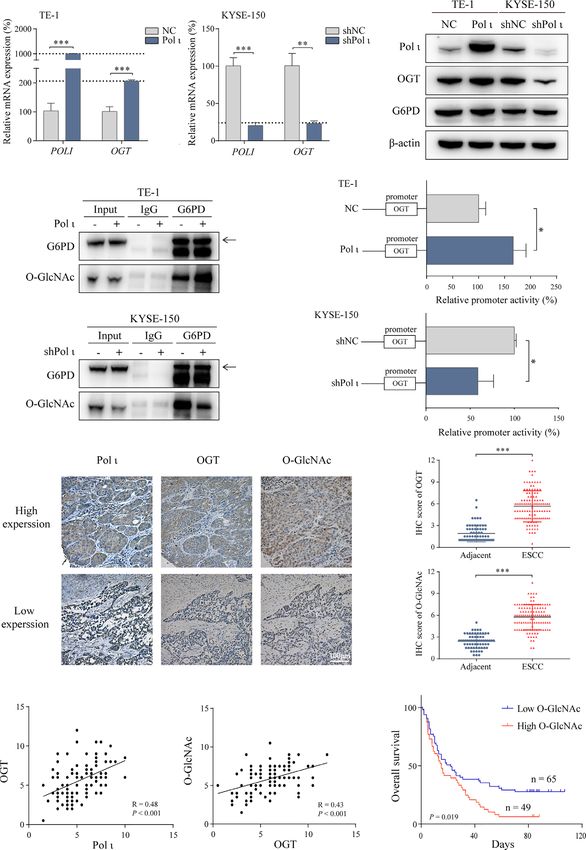
Su et al.                                                                                                                Pol i Promotes ESCC Proliferation

                                     promote the proliferation and progression of ESCC, supporting the notion that Pol i is a
                                     potential biomarker and therapeutic target of ESCC.
                                     Keywords: DNA polymerase iota, Erk signaling pathway, ESCC, G6PD activity, tumor proliferation

INTRODUCTION                                                                    MATERIALS AND METHODS
Esophageal cancer is recognized as the sixth leading cause of                   Cell Lines and Cell Culture
cancer death worldwide with a poor 5-year survival rate of less                 Human ESCC cell lines, TE-1 and KYSE-150, were obtained
than 20% (1, 2). Esophageal squamous cell carcinoma (ESCC) is                   from the Shanghai Cell Bank (Shanghai, China). The stable Pol i
the predominant form of esophageal cancer in the world (3–5).                   downregulated KYSE-150 cells were previously generated (15).
In China, it ranks the fourth of estimated cancer deaths (6). The               For stable Pol i overexpression TE-1 cells generation, the human
survival rate of early-stage ESCC can be greatly improved by                    POLI gene was amplified and cloned into the lentivirus vector
surgical treatment. Unfortunately, most ESCC patients were                      LV5 (GenePharma, Suzhou, China) for virus production. TE-1
diagnosed at an advanced stage with rapid progression and                       cells were infected with lentivirus containing control plasmid or
poor prognosis (7). Thus, it is urgent to understand how ESCC                   POLI gene and selected by Puromycin (Sigma-Aldrich, St. Louis,
progresses in order to improve its clinical outcomes.                           MO, USA). TE-1 cells were cultured in DMEM medium and
   DNA polymerase iota (Pol i) belongs to the Y-family DNA                      KYSE-150 cells were cultured in RPMI-1640 medium. All the
polymerase and participates in translesion DNA synthesis (TLS)                  aforementioned media (Hyclone, Logan, UT, USA) were
(8). Pol i (product of the POLI gene) was identified as the second               supplemented with 10% fetal bovine serum (FBS, Clark
homolog of yeast Rad30 gene in human (9). Although Pol i is                     Bioscience, VA, Richmond, USA). Cells were incubated under
well-recognized for its function of bypassing DNA lesions during                standard conditions (5% CO2 and 37°C) in a humidified atmosphere.
replication (8), recent studies suggested that Pol i is involved in
the progression of various types of cancer. Overexpression of Pol               Colony Formation Assay
i was found in breast cancer (10, 11), bladder cancer (12), glioma              TE-1 and KYSE-150 cells were seeded at a density of 500 or 1,000
(13), and ESCC (14). Furthermore, elevated Pol i activates the                  cells per well in 6-well plates, respectively. After 7-10 days of
Erk and JNK signaling pathway, contributing to invasion,                        incubation under standard conditions, colonies were stained
metastasis and poor prognosis of ESCC (15, 16). However,                        with the Wright-Giemsa staining kit (Nanjing JianCheng
whether Pol i plays a role in ESCC proliferation remains unclear.               Technology, Nanjing, China). Colonies that contain more than
   One of the main overactivated metabolic pathways during rapid                50 cells were counted. In the drug-treated group, cells were
cancer progression is the pentose phosphate pathway (PPP), which                exposed to different concentrations of polydatin (Sigma-Aldrich,
regulates the production of the nucleotides structure component                 St.Louis, USA) after being attached overnight.
ribose-5-phosphate and nicotinamide adenine dinucleotide
phosphate (NADPH) (17–19). Activation of the PPP renders                        EdU Cell Proliferation Assay
tumor cells an advantage for proliferation and development (20–                 The EdU incorporation assay of different cell lines was
22). Glucose-6-phosphate dehydrogenase (G6PD) serves as a                       performed using a BeyoClick™ EDU Cell Proliferation Kit
pacemaker of PPP due to its activity to shunt glucose flux to PPP                with TMB (Beyotime Biotechnology, Shanghai, China)
and catalyze the first and rate-limiting step of PPP (17). Mounting              according to the manufacturer’s instructions. In brief, TE-1
evidence indicated that increased glucose flux towards PPP and                   and KYSE-150 cells were seeded in 96-well plates at a density
overactivation of G6PD are common in many cancer types,                         of 1,000 cells per well. Cells were incubated with 10 mM EdU for
including clear cell renal cell carcinoma, hepatocellular carcinoma,            2 h at 37 °C, followed by fixation with 4% paraformaldehyde and
colorectal cancer, prostate cancer, and ESCC (23–27). It is known               permeabilization with 0.3% Triton X-100. Subsequently, 50 mL of
that G6PD overactivation in tumor cells is regulated at the                     Click reaction buffer containing biotin was added to each well.
transcriptional or posttranslational level (17, 21, 22, 27–29).                 After incubation for 30 min at room temperature in the dark,
Recent evidence suggested that OGT promotes O-GlcNAcylation                     Streptavidin-HRP working solution was added and incubated for
of G6PD, and this process is critical for G6PD activation and tumor             another 30 min at room temperature. Then, cells were washed
progression (30). However, it remains unclear how G6PD and PPP                  three times with PBS. After 5 min developing with the TMB
are overactivated in ESCC and whether Pol i is involved in                      developing buffer, the absorbance was measured at 630 nm using
their regulation.                                                               a microplate reader (Thermo Scientific, Rochester, NY, USA).
   In this study, Pol i was found to promote ESCC proliferation,
resulting from activated G6PD that redirected glucose flux towards               Cellular Metabolism Rate Assay
PPP. Mechanistically, we found that Pol i activates G6PD through                Real-time ATP rate assay was performed using the Seahorse
Erk-OGT-induced O-GlcNAcylation. This novel finding, along                       Bioscience XFp Analyzer (Agilent, Santa Clara, CA, USA). By
with our previous reports (14–16), indicates that Pol i is a                    measuring extracellular acidification rate (ECAR) and oxygen
potential new biomarker and therapeutic target of ESCC.                         consumption rate (OCR), the fractions of ATP produced from

Frontiers in Oncology | www.frontiersin.org                                 2                                      July 2021 | Volume 11 | Article 706337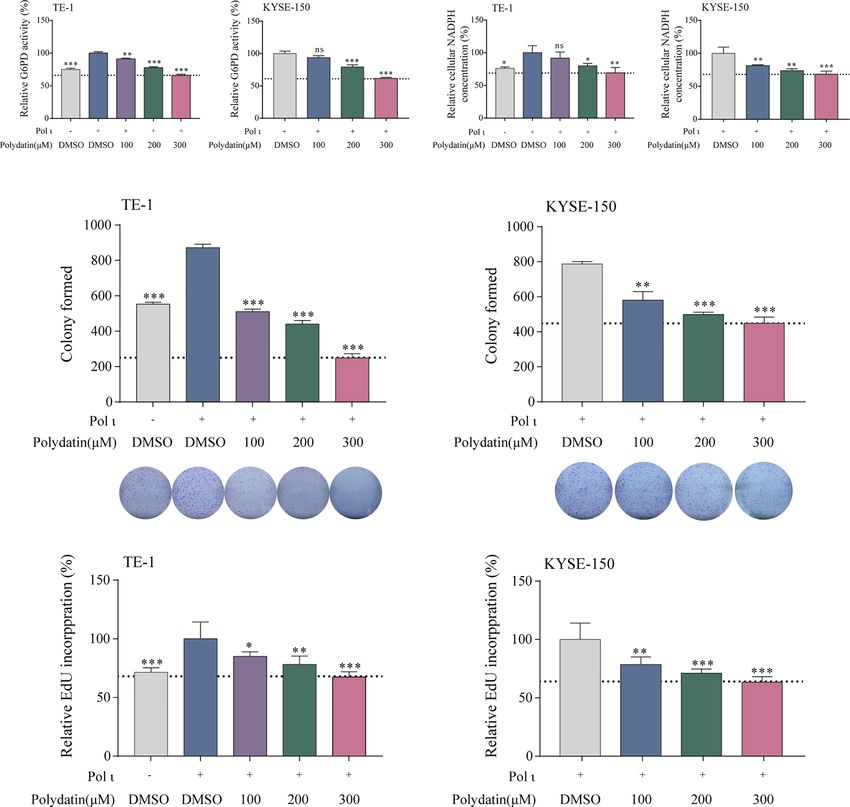
Su et al.                                                                                                      Pol i Promotes ESCC Proliferation

mitochondrial oxidative phosphorylation and glycolysis can be           Western Blot Analysis
distinguished. Briefly, 1 × 10⁴ cells were seeded in each well of        Cells were harvested and lysed with M-PER lysis buffer (Thermo
Seahorse XFp Microplate. After cell attachment, the cultural            Scientific) containing protease inhibitor cocktail and
media was changed by unbuffered assay medium containing 10              phosphatase inhibitor cocktail (Beyotime Biotechnology) for
mM glucose, 1mM pyruvate, and 2 mM glutamine. Cells were                30 min at 4°C. Protein concentration was determined using the
then incubated in a non-CO2 incubator for 60 min at 37 °C. A            BCA protein quantification kit (Beyotime Biotechnology). Equal
baseline measurement was first performed, followed by                    amounts of the proteins were separated by SurePAGE™ precast
sequential injection of 1.5 mM oligomycin and 0.5 mM each of            gels with a linear gradient between 4%-20% (GenScript, Nanjing,
Rotenone and Antimycin A mixture. Results were analyzed using           China) and transferred to PVDF membranes (Millipore,
the Real-Time ATP Rate Assay Report Generator.                          Billerica, MA, USA) by eBlot® L1 protein transfer system
                                                                        (GenScript). After blocking with 5% non-fat milk, the
G6PD Activity Assay                                                     membranes were incubated with primary antibodies against b-
The G6PD activity was measured using the G6PD Activity Assay            actin (Beyotime Biotechnology), Pol i (Proteintech, Rosemont,
Kit (Beyotime Biotechnology). Briefly, 1 × 10⁵ TE-1 and KYSE-            IL, USA), G6PD (Abcam, Cambridge, MA, USA), OGT
150 cells or 10 mg tumor tissues were harvested and lysed with          (Proteintech), O-GlcNAc (Invitrogen Life Technologies,
G6PD extracting solution at 4°C. Fifty mL protein sample and 50         Carlsbad, CA, USA), Erk and p-Erk (Cell Signaling
mL of the G6PD test solution were successively added to each well       Technology, Danvers, Massachusetts, USA) at 4°C overnight.
of a 96-well plate. After incubating at 37°C for 10 min in the          After washing with TBST three times, the membranes were
dark, the absorbance was measured at 450 nm using a microplate          incubated with HRP-conjugated anti-mouse or anti-rabbit
reader (Thermo Scientific). Protein concentration, determined            secondary antibody (MultiSciences, Hangzhou, China). High-
by the BCA protein quantification kit (Beyotime Biotechnology),          sig ECL Western Blotting Substrate (Tanon, Shanghai, China)
was used for normalization.                                             was applied for band visualization. Images of the protein bands
                                                                        were collected by Tanon-5200 Chemiluminescent Imaging
NADPH Concentration Assay                                               System (Tanon). b-actin expression was served as a
The NADPH concentration in cells was measured according to              loading control.
the manufacture’s protocol using NADPH Assay Kit (Beyotime
Biotechnology). Briefly, 1 × 10⁵ TE-1 and KYSE-150 cells were            Immunoprecipitation (IP) Assay
harvested and lysed with the extracting buffer at 4°C. Then, the        Cells were collected and lysed using RIPA lysis buffer (Beyotime
protein sample was incubated at 60°C for 30 min to decompose            Biotechnology) containing protease inhibitors for 30 min at 4°C.
NADP+. Fifty mL protein sample and 50 mL working solution               The protein was incubated with anti-G6PD and anti-IgG
were successively added to each well of a 96-well plate. After          antibodies at 4°C overnight. Then Protein A/G agarose beads
incubating at 37°C for 10 min in the dark, 10 mL developing             (Abcam) was added to each tube. After incubation again at 4°C
buffer was added into each well and incubated for another               for 3 h, the beads were collected by centrifugation at 2,000 x g for
10 min. The absorbance was then measured at 450 nm using a              2 min. Subsequently, the beads were washed with IP wash buffer
microplate reader (Thermo Scientific). Protein concentration,            three times, followed by adding 40 mL 2× loading buffer and
determined by the BCA protein quantification kit (Beyotime               denaturing at 100°C for 5 min. Western blot was then performed.
Biotechnology), was used for normalization.                             The anti-O-GlcNAC antibody (RL2, Thermo Scientific) was used
                                                                        to test the O-GlcNAcylation of G6PD.
RNA Isolation and Quantitative
Real-Time PCR                                                           Dual-Luciferase Reporter Assay
Total RNA was isolated using TRIzol Reagent (Sigma-Aldrich).            A predicted OGT promoter, -2,000 to +500 bp, was acquired
The RNA concentrations were determined using the                        from the NCBI RefSeq database and cloned into the pGL4
NanoDrop2000 (Thermo Scientific). Total RNA (1 mg) was                   plasmid. The pGL4-OGT and pRL-TK were transfected into
reverse-transcribed into cDNA in a 20 mL reaction mixture               cells with a ratio of 10:1 for 48 h. Then the OGT promoter
using the RevertAid First Strand cDNA Synthesis Kit (Thermo             activity was examined by Dual-Luciferase Reporter Assay
Scientific). Quantitative real-time PCR analyses were performed          (Promega, Madison, WI, USA). In brief, cells were seeded in 6-
using the StepOne Plus instrument (Applied Biosystems,                  well plates at a density of 1 × 10⁵ cells per well and incubated
Rochester, NY, USA). The primers for human POLI, OGT, and ACTB          overnight. The pGL4-OGT plasmid was transfected into the
were as follows: POLI, Forward: 5’-ACTTTCTGCGGTGACTGTGT-3’,             corresponding cells using the Lipofectamine 3000 (Invitrogen,
Reverse: 5’-TACATGGCTTCCCGCATCTC-3’; OGT, Forward: 5’-                  USA). Cells were collected and lysed in the 1× Passive Lysis
GCTCACTTGCTTAGGTTGTCTT-3’, Reverse: 5’-GCCGC                            Buffer (PLB, Promega, USA) at ambient temperature for 20 min.
TCTAGTTCCATTGTG-3’; ACTB, Forward: 5’-CACCATT                           20 mL lysate was transferred into the tube containing 100 mL
GGCAATGAGCGGTTCC-3’, Reverse: 5’-GTAGTTTCGTGGAT                         Luciferase Assay Buffer II (LAR II, Promega). After mixing 3
GCCACAGG-3’. Relative POLI and OGT mRNA expression levels               times, the tube was placed in the GloMax 20/20 Luminous
were calculated using the 2-DCt method and normalized to ACTB           detector (Promega) and recorded the measurement. Then,
expression levels.                                                      100 mL Stop & Glo Reagent (Promega) was added into the

Frontiers in Oncology | www.frontiersin.org                         3                                    July 2021 | Volume 11 | Article 706337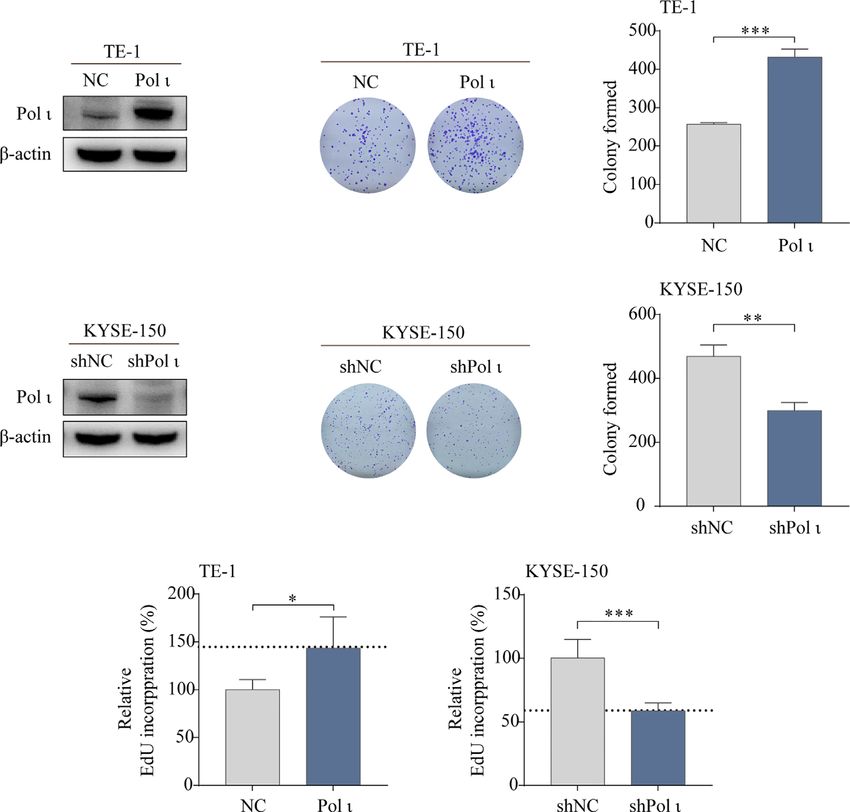
Su et al.                                                                                                                   Pol i Promotes ESCC Proliferation

same tube and recorded the second measurement. Results of                   RESULTS
triplicate transfections were combined to evaluate OGT
promoter luciferase activity.                                               Pol i Promotes ESCC Colony Formation
                                                                            and Cell Proliferation In Vitro
Immunohistochemistry (IHC)                                                  To investigate the influence of Pol i on the proliferation of ESCC
Tumor tissues were paraffin-embedded and sectioned. For IHC                  cells, Pol i overexpressed TE-1 cells and downregulated KYSE-
analysis, the sections were dewaxed, hydrated, and heat-treated             150 cells were used in this study. The expression of Pol i in these
using sodium citrate, pH 6.0. Sections were blocked with 5% BSA             cell lines was confirmed by Western blot (Figures 1A, C). We
at 37°C for 1 h, followed by incubation with primary antibody               then performed colony formation assay and EdU incorporation
against Pol i (Abcam), OGT, O-GlcNAcylation at 4°C overnight.               assay for these cells. The results of the colony formation assay
After washing with PBS three times, the HRP-conjugated anti-                indicated that Pol i overexpression strengthened the clonogenic
mouse/rabbit secondary antibody was used to incubate the                    abilities of TE-1 and KYSE-150 cells in comparison with the
sections for 1 h at 37°C. Sections were developed with a DAB                control group (Figures 1B, D). Similar results were observed in
kit (Cwbiotech, Beijing, China). Hematoxylin was used for                   the EdU incorporation assay. As shown in Figure 1E,
counterstaining. Then the sections were washed and mounted.                 overexpression of Pol i enhanced the proliferation of TE-1
   The expression of Pol i, OGT, and O-GlcNAcylation was                    cells compared to the control cells (P < 0.01), whereas only
scored by two pathologists. The staining density was scored: 1              half of EdU incorporated in Pol i downregulated KYSE-150 cells.
(75%). The staining                     Taken together, these results indicated that Pol i promotes
intensity was scored: 1 (negative or weakly positive), 2 (positive),        ESCC cell colony formation and proliferation.
and 3 (strongly positive). The final score for each section was
calculated by multiplying the scores of the density and intensity.          Pol i Induces Metabolic Transition by
   This study was approved by the Institutional Ethics                      Enhancing G6PD Activity
Committee of Nanjing Medical University. Human samples                      To unveil the underlying mechanisms of Pol i induced
were obtained from The Affiliated Suzhou Hospital of Nanjing                 proliferation of ESCC cells, Gene Set Enrichment Analysis
Medical University (Jiangsu, China) with informed consent.                  (GSEA, v4.1.0, MSigDB 7.2) (31, 32) was performed to
                                                                            reanalyze our transcriptome data (15) in Pol i downregulated
MEK Inhibitor Assay                                                         KYSE-150 shPol i cells versus control KYSE-150 shNC cells. As
TE-1 cells were seeded at a density of 1 × 10⁵ cells per well in a 6-       shown in Figure 2A, many upregulated genes were enriched in
well plate. After incubation overnight at 37 °C, cells were treated         the oxidative phosphorylation pathway, including subunits of
with different concentrations of PD98059 for 24 h at 37 °C. Then            NADH dehydrogenase (DUFA), ubiquinone oxidoreductase and
cells extracts were blotted with Erk and p-Erk Antibody.                    Cytochrome c oxidase (Figure 2B). On the other hand, many
                                                                            downregulated genes were involved in other metabolism
Xenograft Studies                                                           pathways, such as glycolysis or lipid metabolism. Of note, O-
For the in vivo xenograft study, 6-8 weeks old female BALB/C                linked N-acetylglucosamine (GlcNAc) transferase (OGT), the
nude mice were obtained from Shanghai SLAC Laboratory                       key regulator of G6PD activity, was found to be downregulated
Animal Co. Ltd. (Shanghai, China). 1 × 10⁷ cells suspended in               in KYSE-150 shPol i cells (Figure 2B).
100 mL normal saline were injected subcutaneously into nude                     We next applied cellular metabolism rate analysis to evaluate
mice at the left groin. The tumor volume was calculated by the 4/           whether a metabolic transition was triggered in the wake of Pol i-
3 × p × [(long diameter/2) (short diameter/2)2] formula. When               k n o c k i n g d o w n - i n d u c e d u p r e gu l a t i o n o f ox i d a t i v e
the average tumor size grew up to 300 mm3, the nude mice were               phosphorylation related genes. As expected, KYSE-150 shPol i
divided into three groups (n = 6 for each group). In the treatment          cells exhibited higher oxidative phosphorylation capacity,
group, the mice were intraperitoneally injected with 5 mg/kg                comparing to control cells (Figure 2C). Furthermore, cellular
polydatin dissolved in normal saline every other day. Mice in               metabolism rate analysis also indicated that oxidative
untreated groups were administrated with the same volume of                 phosphorylation is similar but not reduced in Pol i
normal saline containing DMSO as control. The animal                        upregulated cells comparing with control cells (Figure S1).
experiment was approved by the Ethics Committee of the                      These results suggested that Pol i may play a key role in the
Nanjing Medical University.                                                 directional control of glucose flux.
                                                                                Considering the pivotal role of G6PD, the rate-limiting
Statistical Analysis                                                        enzyme of PPP, in glucose flux redirection and cancer cell
SPSS 19.0 software (IBM, Chicago, IL, USA) was used for                     proliferation, we then assessed its activity in Pol i differentially
Statistical analysis. All data were presented as mean ± standard            expressed ESCC cell lines. As shown in Figure 2D, the enzymatic
deviation (SD). Differences between two groups were evaluated               activity of G6PD was 2.5-fold higher in Pol i upregulated TE-1
by the Student t-test. Differences among more groups were                   cells than control cells. On the contrary, its activity dropped to
analyzed by one-way ANOVA. Spearman correlation was used                    around 75% when Pol i was knocked down in KYSE-150 cells. Of
to analyze the correlation between two genes expression.                    note, in our subsequent studies, we found that the protein level of
Statistical significance was considered to be a P-value < 0.05.              G6PD did not change (Figure 3B). Consistently, cellular

Frontiers in Oncology | www.frontiersin.org                             4                                            July 2021 | Volume 11 | Article 706337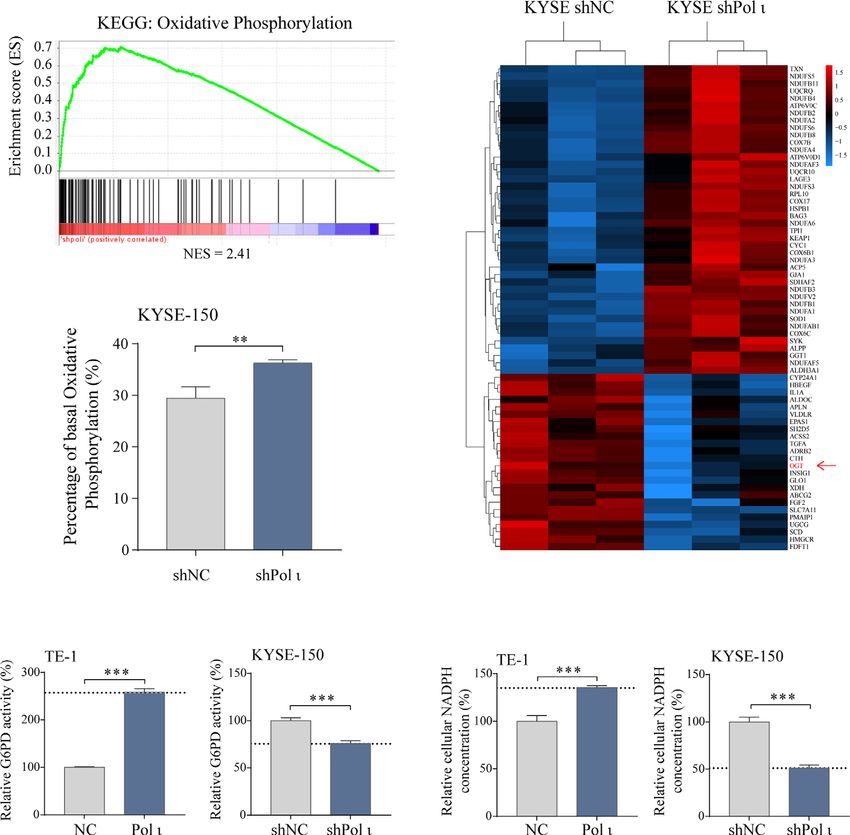
Su et al.                                                                                                                             Pol i Promotes ESCC Proliferation

                      A                                        B

                      C                                        D

                                      E

 FIGURE 1 | Pol i promotes ESCC cell proliferation in vitro. (A, C) Differentially expressed Pol i was confirmed by Western blot analysis in two ESCC cell lines with
 b-actin level as an internal control. The colony formation assay of TE-1 (B) and KYSE-150 cells (D). (E) The EdU incorporation assay, results of NC or shNC cells
 were served as control and the results of Pol i up-or down-regulated cells were presented relative to control. *P < 0.05, **P < 0.01, ***P < 0.001.

NADPH concentration showed a similar pattern, which jumped                             overexpression of Pol i increased and downregulation of Pol i
to about 150% in TE-1 Pol i cells while declined approximately                         decreased the O-GlcNAcylation of G6PD, indicating that OGT
50% in KYSE-150 shPol i cells (Figure 2E).                                             induced O-GlcNAcylation of G6PD is regulated by Pol i. We
   These results indicated that Pol i directs the glucose flux to                       further assessed the OGT promoter activity using dual-luciferase
PPP through activation of G6PD.                                                        reporter assay and found that the OGT promoter activity is
                                                                                       significantly increased in Pol i overexpressed TE-1 cells and
Pol i Promotes G6PD O-GlcNAcylation                                                    decreased in Pol i downregulated KYSE-150 cells (Figure 3D).
and Overactivation                                                                        We also tested the expression of Pol i, OGT and O-
Since the enzymatic activity of G6PD is tightly regulated by OGT                       GlcNAcylation in tissues of 114 ESCC patients by IHC. Pol i
induced O-GlcNAcylation (30) and OGT was found to be                                   and OGT positive staining were mainly found in the cytoplasm,
downregulated when Pol i was knocked down in KYSE-150                                  while O-GlcNAcylation positive staining was found in both the
cells (Figure 2B), we postulated that Pol i may modulate G6PD                          nucleus and cytoplasm (Figure 3E). The level of OGT and
activity by regulating OGT expression. As shown in Figures 3A,                         protein O-GlcNAcylation was significantly higher in tumor
B, both quantitative RT-PCR and Western blot assay indicated                           tissues than that in adjacent tissues (Figure 3F). The
that OGT expression is enhanced in TE-1 Pol i cells while                              correlation between Pol i, OGT and O-GlcNAcylation based
decreased in KYSE-150 shPol i cells. Moreover, the protein                             on their IHC score was further analyzed. As shown in Figure 3G,
level of G6PD remained unchanged. Subsequently, we detected                            Pol i expression was positively correlated with that of OGT (r =
the O-GlcNAcylation of immunoprecipitated G6PD using an O-                             0.48, P < 0.001). Similarly, OGT expression was also positively
GlcNAcylation antibody RL2. As shown in Figure 3C,                                     correlated with the level of O-GlcNAcylation (r = 0.43, P < 0.001).

Frontiers in Oncology | www.frontiersin.org                                        5                                           July 2021 | Volume 11 | Article 706337
Su et al. Pol i Promotes ESCC Proliferation
A B
C
D E
FIGURE 2 | Pol i induces metabolic transition. (A) RNA transcriptome data was reanalyzed using Gene Set Enrichment Analysis. Genes involved in the oxidative
phosphorylation pathway were found enriched in Pol i downregulated KYSE-150 cells. NES = 2.41, P < 0.001, FDR-q < 0.001. (B) heatmap of differentially
expressed genes that participate in cellular metabolism. (C) rate of cellular metabolism tested by Seahorse analyzer using Real-Time ATP rate assay kit. Total ATP
production, the sum of ATP generated from oxidative phosphorylation and Glycolysis, was considered 100%. The ATP production of each metabolic pathway was
calculated by oxygen consumption rate (OCR) and extracellular acidification rate (ECAR) after serial injection of oligomycin (1.5 mM) and a mix of rotenone and
antimycin A (0.5 mM each). Relative G6PD activity (D) and cellular NADPH concentration (E) in Pol i differentially expressed TE-1 and KYSE-150 cells. **P < 0.01,
***P < 0.001.
We then applied Kaplan–Meier survival analysis and found that (Figure 4A). Subsequently, we used a specific inhibitor PD98059
patients harboring a higher level of O-GlcNAcylation exhibit to inhibit Erk phosphorylation in Pol i overexpressed TE-1 cell
poor prognosis (P = 0.019, Figure 3H). lines. As shown in Figure 4B, PD98059 inhibited Erk
Taken together, these data showed that Pol i induces OGT phosphorylation in a concentration-dependent manner, and
expression to promote G6PD O-GlcNAcylation and activation. decreased OGT protein expression. Moreover, the inhibited
Moreover, Elevated O-GlcNAcylation correlates with increased Erk phosphorylation was associated with reduced OGT mRNA
tumor size and poor patient prognosis. expression (Figure 4C) and OGT promoter activity (Figure 4D)
in Pol i overexpressed TE-1 cell lines.
Pol i Modulates OGT Expression Through Altogether, these findings indicated that OGT expression is
the Erk Signaling Pathway regulated by the Pol i-Erk signaling cascade.
It has been reported that the Erk signaling pathway is responsible
for the transcriptional regulation of OGT (33). Therefore, we Inhibition of G6PD Activity Attenuates
evaluated the role of Erk in Pol i regulated OGT transcription. In Pol i-Induced Cell Proliferation
line with our previous study, overexpression of Pol i enhances To further corroborate the role of G6PD activation in Pol i-induced
and knockdown of Pol i diminishes the phosphorylation of Erk ESCC proliferation, a known G6PD inhibitor termed polydatin, a
Frontiers in Oncology | www.frontiersin.org 6 July 2021 | Volume 11 | Article 706337Su et al. Pol i Promotes ESCC Proliferation
A B
C D
E F
G H
FIGURE 3 | Pol i activates G6PD through OGT-promoted O-GlcNAcylation. (A) The relative mRNA level of POLI and OGT in Pol i differentially expressed TE-1 and
KYSE-150 cells. (B) the protein level of Pol i, OGT and G6PD. (C) O-GlcNAcylation of G6PD was detected after G6PD immunoprecipitation in ESCC cells. (D) the
promoter of OGT (-2000 to +500 bp) was cloned into pGL-4 vector. The pGL4-OGT and internal control reporter vector pRL-TK were co-transfected into TE-1 and
KYSE-150 cells. The relative OGT promoter activity was detected by dual-luciferase reporter assay. (E) Immunohistochemical staining of Pol i, OGT and protein O-
GlcNAcylation in paraffin-embedded ESCC tissues. Scale bar = 100 mm. (F) level of OGT and protein O-GlcNAcylation in ESCC and adjacent tissues based on IHC
score. (G) The correlation between Pol i and OGT, and the correlation between OGT and protein O-GlcNAcylation were evaluated based on IHC score in 114 tumor
tissue samples. (H) Survival analysis based on the IHC score of protein O-GlcNAcylation in 114 ESCC samples. Kaplan–Meier survival analysis was applied.
*P < 0.05, **P < 0.01, ***P < 0.001.
Frontiers in Oncology | www.frontiersin.org 7 July 2021 | Volume 11 | Article 706337Su et al. Pol i Promotes ESCC Proliferation
A B
C D
FIGURE 4 | Pol i regulates OGT expression through the Erk signaling pathway. (A) Western blot confirmation of Pol i expression and Erk phosphorylation.
(B) PD98059 inhibited Erk phosphorylation and OGT expression in a dose-dependent manner. PD98059 attenuated OGT mRNA expression (C) and promoter
activity (D) in TE-1 cells. *P < 0.05, **P < 0.01, ***P < 0.001.
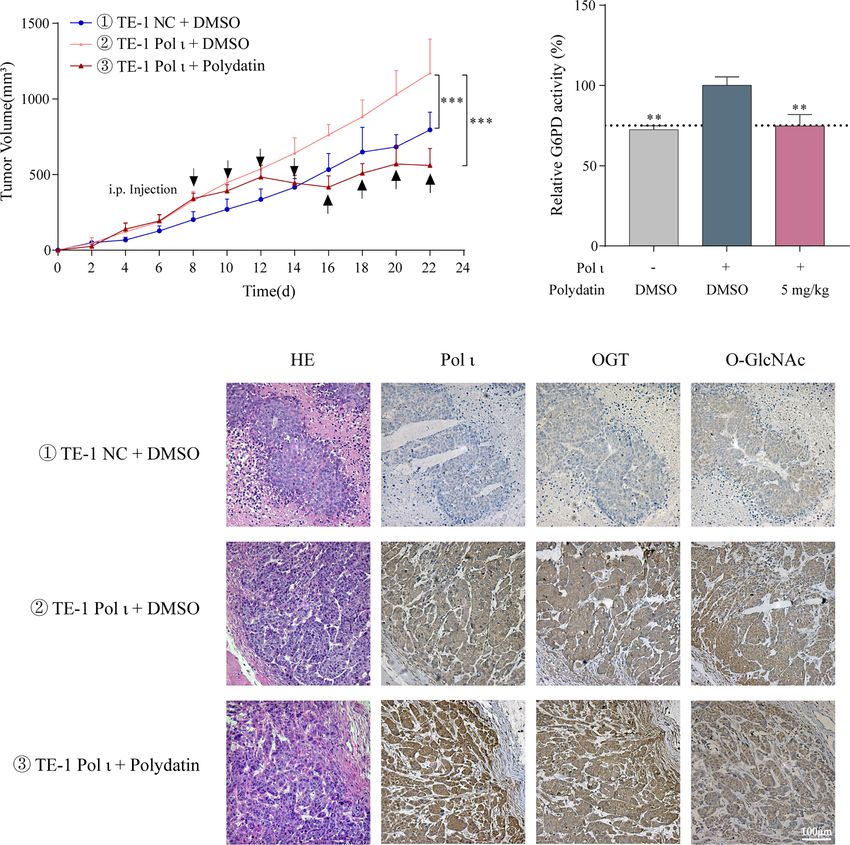
natural molecule found in Polygonum cuspidatum, was used to administrated with the same volume of normal saline. As seen
restrain the G6PD activity in Pol i overexpressed TE-1 cells and in Figure 6A, forced expression of Pol i promoted tumor growth
wild type KYSE-150 cells. As shown in Figure 5A, we found that the in TE-1 Pol i cells comparing with control TE-1 cells, whereas
enzymatic activity of G6PD decreases in a concentration-dependent polydatin treatment significantly suppressed Pol i-induced
manner in both cell lines once treated with increasing concentrations proliferation of TE-1 cells. Further enzymatic activity assay
of polydatin. Similarly, cellular NADPH concentrations were also confirmed the inhibition of G6PD by polydatin in tumor
reduced when higher polydatin concentration was used (Figure 5B). tissues (Figure 6B). We then performed IHC to verify the
We next assessed the influence of G6PD inactivation on cell expression of OGT and O-GlcNAcylation. As presented in
proliferation. Results from colony formation assay and EdU Cell Figure 6C, a concomitant ascending tendency of OGT and O-
Proliferation assay indicated that polydatin treatment significantly GlcNAcylation with Pol i overexpression was evident.
reduces ESCC cell proliferation compared with the DMSO treated These results demonstrated that G6PD activity is vital for Pol
group (Figures 5C, D). i-promoted ESCC cell proliferation in vivo.
Thus, it is obvious that G6PD activity is critical to Pol i-
induced proliferation in vitro.
DISCUSSION
G6PD Inhibition Attenuates Pol i-Promoted
ESCC Cell Proliferation In Vivo Activation of G6PD plays a pivotal role in cancer proliferation
We further tested the role of Pol i and G6PD activation in ESCC and progression. It shunts glucose flux towards PPP to meet the
cell proliferation in vivo. The TE-1 NC and TE-1 Pol i cells were demands for ribose-5-phosphate and NADPH (17, 18). In this
injected subcutaneously into female nude mice. For drug study, Pol i was found to promote ESCC proliferation by
treatment, 5 mg/kg polydatin dissolved in normal saline was activating G6PD. Pol i activates G6PD through OGT-mediated
injected intraperitoneally every other day after the average tumor G6PD O-GlcNAcylation, and inhibition of G6PD activity by the
size grew up to 300 mm 3. Mice in control groups were specific inhibitor polydatin attenuates Pol i-promoted ESCC cell
Frontiers in Oncology | www.frontiersin.org 8 July 2021 | Volume 11 | Article 706337Su et al. Pol i Promotes ESCC Proliferation
A B
C
D
FIGURE 5 | The G6PD inhibitor polydatin suppresses ESCC cell proliferation. G6PD activity (A) and cellular NADPH concentration (B) decreased in a dose-
dependent manner upon polydatin treatment. ESCC cell proliferation after polydatin treatment was assessed by colony formation assay (C) and EdU incorporation
assay (D). *P < 0.05, **P < 0.01, ***P < 0.001.
proliferation both in vitro and in vivo. Our findings show that Pol specific inhibitor of G6PD (34–36), inhibits Pol i-promoted
i plays a critical role in ESCC proliferation and progression. ESCC cell proliferation both in vitro and in vivo. These results
Several lines of evidence indicate that G6PD is a critical indicate that G6PD activity is essential for Pol i-promoted
effector in Pol i-promoted ESCC cell proliferation through ESCC proliferation.
redirection of glucose flux. First, results from GSEA and G6PD overactivation in tumor cells is regulated at the
seahorse analyzer demonstrated that in KYSE-150 cells, Pol i transcriptional or posttranslational level (17, 21, 22, 27–29). As
downregulation triggers increased oxidative phosphorylation, shown in Figure 3B, the expression of G6PD remains unchanged
which is previously reported to impede glucose metabolism in Pol i differentially expressed cells, suggesting that
and tumor cell proliferation (18). Furthermore, G6PD activity posttranslational modification may be responsible for G6PD
and cellular NADPH concentration are reduced in KYSE-150 activation, such as OGT induced O-GlcNAcylation (30).
shPol i cells. These results indicate that after Pol i Consistent with this assumption, Pol i upregulation enhances
downregulation, the glucose flux is oriented towards oxidative and Pol i downregulation attenuates G6PD O-GlcNAcylation in
phosphorylation due to G6PD deactivation. Second, Pol i our ESCC model systems. It is known that O-GlcNAcylation
upregulation in TE-1 cells results in enhanced G6PD activity activates G6PD through enhancing NADP+ binding to G6PD
and cellular NADPH concentration, suggesting augmentation of and promoting the formation of oligomeric G6PD, leading to
glucose flux into PPP. Third, treatment with polydatin, the increased glucose flux towards PPP (30). As a consequence, cell
Frontiers in Oncology | www.frontiersin.org 9 July 2021 | Volume 11 | Article 706337Su et al. Pol i Promotes ESCC Proliferation
A B
C
FIGURE 6 | Pol i promotes ESCC cell proliferation through G6PD activation in vivo. (A) the tumor volume of xenograft nude mice with different Pol i expression.
Mice were divided into three groups when the average tumor size grew up to 300 mm3. 5 mg/kg polydatin was intraperitoneally injected every other day. Same
volume of normal saline was used as control. (B) relative G6PD activity in tumor tissue. (C) hematoxylin and eosin (HE) staining and immunohistochemical staining of
Pol i, OGT and protein O-GlcNAcylation in tumors. **P < 0.01, ***P < 0.001. Scale bar = 100 mm.
proliferation and tumor progression are enhanced (17, 19, 29, signaling pathway (43–45). Hence, it is possible that Erk
30). Therefore, our data indicated that G6PD activation by OGT- signaling pathway is activated by Pol i via the DNA damage
induced O-GlcNAcylation promotes ESCC proliferation. repair system.
OGT promotes protein O-GlcNAcylation (37, 38) and has Therefore, we postulate that elevated OGT may result from
been found to be upregulated in most cancers including ESCC Pol i overexpression in ESCC (14). Our results indicated that the
(39, 40). In the present study, we found that total O- expression of Pol i is positively correlated with that of OGT in
GlcNAcylation level is correlated with OGT expression and ESCC cells and patient samples (R = 0.48, Figure 3F).
poor patient prognosis (R = 0.43, Figures 3F, G). One of the Furthermore, Pol i coupled Erk signaling enhances the OGT
key regulators contributing to OGT overexpression is the promoter activity which can be suppressed by PD98059, the
hyperactive Erk signaling cascade in cancer (33). The Erk MEK signaling specific inhibitor (46). There are four MEK
pathway is deregulated in about one-third of human cancers activated MAPK cascades that have been defined: Erk 1/2, c-
and is one of the key signaling pathways that contribute to cancer Jun N terminal kinase (JNK), p38 MAPK and Erk5 (47, 48). It is
proliferation (32). It has been reported that DNA polymerase reported that the MEK inhibitor PD98059 has no effect on the
iota (Pol i) can interact with p53 (41, 42), which regulates Erk activation of JNK (49) and p38 (50). Otherwise, evidence
Frontiers in Oncology | www.frontiersin.org 10 July 2021 | Volume 11 | Article 706337Su et al. Pol i Promotes ESCC Proliferation
suggested that PD98059 inhibits both Erk 1/2 and Erk 5 University (Jiangsu, China) with informed consent. The
pathways (51). However, it is Erk 1/2 but not Erk 5 activated patients/participants provided their written informed consent
Elk-1 transcriptional activity (52), which was reported to mediate to participate in this study. The animal study was reviewed and
Erk signaling-induced OGT expression (33). Therefore, in our approved by the Institutional Ethics Committee of Nanjing
study, PD98059 induced OGT downregulation is mainly due to Medical University.
its inhibitory effect of Erk 1/2 cascade. Hence, our findings
demonstrate that Pol i enhances OGT expression through the
Erk signaling cascade.
However, in the context of Pol i regulation of OGT expression
AUTHOR CONTRIBUTIONS
in ESCC cells, there are still some research gaps to be filled. First, ZS designed the study, performed the experiments, analyzed the
the transcriptional factors responsible for Erk-induced OGT data and wrote the manuscript. AG designed the study and
expression in ESCC need to be identified. Second, further performed the experiments. XL performed animal experiments.
scrutiny is required to identify glycosylated proteins in SZ analyzed the clinical data. CH: designed the study, analyzed
addition to G6PD. Future studies will be carried out to fully the data and wrote the manuscript. JW and JZ supervised the
understand how Pol i promotes OGT overexpression and study, reviewed and edited the manuscript. W-QD reviewed and
protein O-GlcNAcylation. edited the manuscript. All authors contributed to the article and
In conclusion, the results from the present study demonstrate approved the submitted version.
that Pol i promotes ESCC proliferation through the Erk-OGT
cascade-induced G6PD overactivation. This study provides novel
insight into ESCC proliferation and progression, indicating that
Pol i is a potential biomarker and therapeutic target of ESCC. FUNDING
The present study was supported by the National Natural Science
Foundation of China (81672975, 81802341), the Six Talent Peaks
DATA AVAILABILITY STATEMENT Project of Jiangsu Province of China (WSN095), “333” Project of
Jiangsu Province of China (BRA2016071), the Suzhou
The original contributions presented in the study are included in Administration of Science & Technology (SYS2019091) and
the article/Supplementary Material. Further inquiries can be the Suzhou Key Medical Center (SZZX201506).
directed to the corresponding authors.
SUPPLEMENTARY MATERIAL
ETHICS STATEMENT
The Supplementary Material for this article can be found online
Samples of human ESCC and adjacent tissues were obtained at: https://www.frontiersin.org/articles/10.3389/fonc.2021.
from The Affiliated Suzhou Hospital of Nanjing Medical 706337/full#supplementary-material
REFERENCES 10. Yang J, Chen Z, Liu Y, Hickey RJ, Malkas LH. Altered DNA Polymerase Iota
Expression in Breast Cancer Cells Leads to a Reduction in DNA Replication
1. Sung H, Ferlay J, Siegel RL, Laversanne M, Soerjomataram I, Jemal A, et al. Fidelity and a Higher Rate of Mutagenesis. Cancer Res (2004) 64:5597–607.
Global Cancer Statistics 2020: GLOBOCAN Estimates of Incidence and doi: 10.1158/0008-5472.CAN-04-0603
Mortality Worldwide for 36 Cancers in 185 Countries. CA Cancer J Clin 11. Zou S, Xu Y, Chen X, He C, Gao A, Zhou J, et al. DNA Polymerase Iota (Pol
(2021) 7:209–49. doi: 10.3322/caac.21660 Iota) Promotes the Migration and Invasion of Breast Cancer Cell Via EGFR-
2. Abnet CC, Arnold M, Wei WQ. Epidemiology of Esophageal Squamous Cell ERK-mediated Epithelial to Mesenchymal Transition. Cancer Biomark (2019)
Carcinoma. Gastroenterology (2018) 154:360–73. doi: 10.1053/j.gastro.2017.08.023 24:363–70. doi: 10.3233/CBM-181516
3. Alsop BR, Sharma P. Esophageal Cancer. Gastroenterol Clin North Am (2016) 12. Yuan F, Xu Z, Yang M, Wei Q, Zhang Y, Yu J, et al. Overexpressed DNA
45:399–412. doi: 10.1016/j.gtc.2016.04.001 Polymerase Iota Regulated by JNK/c-Jun Contributes to Hypermutagenesis in
4. Lagergren J, Smyth E, Cunningham D, Lagergren P. Oesophageal Cancer. Bladder Cancer. PloS One (2013) 8:e69317. doi: 10.1371/journal.pone.0069317
Lancet (2017) 390:2383–96. doi: 10.1016/S0140-6736(17)31462-9 13. Wang H, Wu W, Wang HW, Wang S, Chen Y, Zhang X, et al. Analysis of
5. Smyth EC, Lagergren J, Fitzgerald RC, Lordick F, Shah MA, Lagergren P, et al. Specialized DNA Polymerases Expression in Human Gliomas: Association With
Oesophageal Cancer. Nat Rev Dis Primers (2017) 3:17048. doi: 10.1038/nrdp.2017.48 Prognostic Significance. Neuro Oncol (2010) 12:679–86. doi: 10.1093/neuonc/nop074
6. Chen W, Zheng R, Baade PD, Zhang S, Zeng H, Bray F, et al. Cancer Statistics 14. Zhou J, Zhang S, Xie L, Liu P, Xie F, Wu J, et al. Overexpression of DNA
in China, 2015. CA Cancer J Clin (2016) 66:115–32. doi: 10.3322/caac.21338 Polymerase Iota (Poliota) in Esophageal Squamous Cell Carcinoma. Cancer
7. Codipilly DC, Qin Y, Dawsey SM, Kisiel J, Topazian M, Ahlquist D, et al. Sci (2012) 103:1574–9. doi: 10.1111/j.1349-7006.2012.02309.x
Screening for Esophageal Squamous Cell Carcinoma: Recent Advances. 15. He C, Wu S, Gao A, Su Y, Min H, Shang ZF, et al. Phosphorylation of ETS-1 Is a
Gastrointest Endosc (2018) 88:413–26. doi: 10.1016/j.gie.2018.04.2352 Critical Event in DNA Polymerase Iota-Induced Invasion and Metastasis of Esophageal
8. McIntyre J. Polymerase Iota - an Odd Sibling Among Y Family Polymerases. Squamous Cell Carcinoma. Cancer Sci (2017) 108:2503–10. doi: 10.1111/cas.13399
DNA Repair (Amst) (2020) 86:102753. doi: 10.1016/j.dnarep.2019.102753 16. Zou S, Shang ZF, Liu B, Zhang S, Wu J, Huang M, et al. DNA Polymerase Iota
9. Tissier A, McDonald JP, Frank EG, Woodgate R. Poliota, a Remarkably Error-Prone (Pol Iota) Promotes Invasion and Metastasis of Esophageal Squamous Cell
Human DNA Polymerase. Genes Dev (2000) 14:1642–50. doi: 10.1101/gad.14.13.1642 Carcinoma. Oncotarget (2016) 7:32274–85. doi: 10.18632/oncotarget.8580
Frontiers in Oncology | www.frontiersin.org 11 July 2021 | Volume 11 | Article 706337Su et al. Pol i Promotes ESCC Proliferation
17. Patra KC, Hay N. The Pentose Phosphate Pathway and Cancer. Trends Effect on Breast Cancer Cells Through Autophagy Perturbation. J Exp Clin
Biochem Sci (2014) 39:347–54. doi: 10.1016/j.tibs.2014.06.005 Cancer Res (2019) 38:160. doi: 10.1186/s13046-019-1164-5
18. Pavlova NN, Thompson CB. The Emerging Hallmarks of Cancer Metabolism. 37. Hanover JA, Krause MW, Love DC. The Hexosamine Signaling Pathway: O-
Cell Metab (2016) 23:27–47. doi: 10.1016/j.cmet.2015.12.006 GlcNAc Cycling in Feast or Famine. Biochim Biophys Acta (2010) 1800:80–95.
19. Stincone A, Prigione A, Cramer T, Wamelink MM, Campbell K, Cheung E, et al. doi: 10.1016/j.bbagen.2009.07.017
The Return of Metabolism: Biochemistry and Physiology of the Pentose Phosphate 38. Bond MR, Hanover JA. A Little Sugar Goes a Long Way: The Cell Biology of
Pathway. Biol Rev Camb Philos Soc (2015) 90:927–63. doi: 10.1111/brv.12140 O-GlcNAc. J Cell Biol (2015) 208:869–80. doi: 10.1083/jcb.201501101
20. Munemoto M, Mukaisho KI, Miyashita T, Oyama K, Haba Y, Okamoto K, 39. Itkonen HM, Loda M, Mills IG. O-GlcNAc Transferase - An Auxiliary Factor
et al. Roles of the Hexosamine Biosynthetic Pathway and Pentose Phosphate or a Full-Blown Oncogene? Mol Cancer Res (2021) 19:555–64. doi: 10.1158/
Pathway in Bile Acid-Induced Cancer Development. Cancer Sci (2019) 1541-7786.MCR-20-0926
110:2408–20. doi: 10.1111/cas.14105 40. Qiao Z, Dang C, Zhou B, Li S, Zhang W, Jiang J, et al. O-Linked N-
21. Wu S, Wang H, Li Y, Xie Y, Huang C, Zhao H, et al. Transcription Factor Yy1 acetylglucosamine Transferase (OGT) Is Overexpressed and Promotes O-
Promotes Cell Proliferation by Directly Activating the Pentose Phosphate Linked Protein Glycosylation in Esophageal Squamous Cell Carcinoma.
Pathway. Cancer Res (2018) 78:4549–62. doi: 10.1158/0008-5472.CAN-17-4047 J BioMed Res (2012) 26:268–73. doi: 10.7555/JBR.26.20110121
22. Wang YP, Zhou LS, Zhao YZ, Wang SW, Chen LL, Liu LX, et al. Regulation of 41. Biber S, Pospiech H, Gottifredi V, Wiesmuller L. Multiple Biochemical
G6PD Acetylation by SIRT2 and KAT9 Modulates NADPH Homeostasis and Properties of the p53 Molecule Contribute to Activation of Polymerase
Cell Survival During Oxidative Stress. EMBO J (2014) 33:1304–20. Iota-Dependent DNA Damage Tolerance. Nucleic Acids Res (2020)
doi: 10.1002/embj.201387224 48:12188–203. doi: 10.1093/nar/gkaa974
23. Zhang Y, Chen M, Liu M, Xu Y, Wu G. Glycolysis-Related Genes Serve as 42. Hampp S, Kiessling T, Buechle K, Mansilla SF, Thomale J, Rall M, et al. DNA
Potential Prognostic Biomarkers in Clear Cell Renal Cell Carcinoma. Oxid Damage Tolerance Pathway Involving DNA Polymerase Iota and the Tumor
Med Cell Longev (2021) 2021:6699808. doi: 10.1155/2021/6699808 Suppressor p53 Regulates DNA Replication Fork Progression. Proc Natl Acad
24. Lu M, Lu L, Dong Q, Yu G, Chen J, Qin L, et al. Elevated G6PD Expression Sci U S A (2016) 113:E4311–9. doi: 10.1073/pnas.1605828113
Contributes to Migration and Invasion of Hepatocellular Carcinoma Cells by 43. Chen SL, Liu LL, Wang CH, Lu SX, Yang X, He YF, et al. Loss of RDM1
Inducing Epithelial-Mesenchymal Transition. Acta Biochim Biophys Sin Enhances Hepatocellular Carcinoma Progression Via p53 and Ras/Raf/ERK
(Shanghai) (2018) 50:370–80. doi: 10.1093/abbs/gmy009 Pathways. Mol Oncol (2020) 14:373–86. doi: 10.1002/1878-0261.12593
25. Tsouko E, Khan AS, White MA, Han JJ, Shi Y, Merchant FA, et al. Regulation 44. Lee SJ, Lee SH, Yoon MH, Park BJ. A New p53 Target Gene, RKIP, Is Essential
of the Pentose Phosphate Pathway by an Androgen Receptor-mTOR- for DNA Damage-Induced Cellular Senescence and Suppression of ERK
mediated Mechanism and Its Role in Prostate Cancer Cell Growth. Activation. Neoplasia (2013) 15:727–37. doi: 10.1593/neo.121862
Oncogenesis (2014) 3:e103. doi: 10.1038/oncsis.2014.18 45. Lee SY, Choi HC, Choe YJ, Shin SJ, Lee SH, Kim HS. Nutlin-3 Induces BCL2A1
26. Wang X, Li X, Zhang X, Fan R, Gu H, Shi Y, et al. Glucose-6-Phosphate Expression by Activating ELK1 Through the Mitochondrial P53-ROS-ERK1/2
Dehydrogenase Expression is Correlated With Poor Clinical Prognosis in Pathway. Int J Oncol (2014) 45:675–82. doi: 10.3892/ijo.2014.2463
Esophageal Squamous Cell Carcinoma. Eur J Surg Oncol (2015) 41:1293–9. 46. Kojima K, Konopleva M, Samudio IJ, Ruvolo V, Andreeff M. Mitogen-
doi: 10.1016/j.ejso.2015.08.155 Activated Protein Kinase Kinase Inhibition Enhances Nuclear Proapoptotic
27. Ma H, Zhang F, Zhou L, Cao T, Sun D, Wen S, et al. c-Src Facilitates Function of p53 in Acute Myelogenous Leukemia Cells. Cancer Res (2007)
Tumorigenesis by Phosphorylating and Activating G6PD. Oncogene (2021) 67:3210–9. doi: 10.1158/0008-5472.CAN-06-2712
40:2567–80. doi: 10.1038/s41388-021-01673-0 47. Guo YJ, Pan WW, Liu SB, Shen ZF, Xu Y.Hu LL. ERK/MAPK Signalling
28. Du W, Jiang P, Mancuso A, Stonestrom A, Brewer MD, Minn AJ, et al. Tap73 Pathway and Tumorigenesis. Exp Ther Med (2020) 19:1997–2007.
Enhances the Pentose Phosphate Pathway and Supports Cell Proliferation. doi: 10.3892/etm.2020.8454
Nat Cell Biol (2013) 15:991–1000. doi: 10.1038/ncb2789 48. Wang Y, Zhang X, Gao L, Li J, Chen W, Chi J, et al. Cortistatin Exerts
29. Cho ES, Cha YH, Kim HS, Kim NH, Yook JI. The Pentose Phosphate Pathway Antiproliferation and Antimigration Effects in Vascular Smooth Muscle Cells
as a Potential Target for Cancer Therapy. Biomol Ther (Seoul) (2018) 26:29– Stimulated by Ang II Through Suppressing ERK1/2, P38 MAPK, JNK and ERK5
38. doi: 10.4062/biomolther.2017.179 Signaling Pathways. Ann Transl Med (2019) 7:561. doi: 10.21037/atm.2019.09.45
30. Rao X, Duan X, Mao W, Li X, Li Z, Li Q, et al. O-GlcNAcylation of G6PD 49. Alessi DR, Cuenda A, Cohen P, Dudley DT, Saltiel AR. PD 098059 Is a Specific
Promotes the Pentose Phosphate Pathway and Tumor Growth. Nat Commun Inhibitor of the Activation of Mitogen-Activated Protein Kinase Kinase In Vitro
(2015) 6:8468. doi: 10.1038/ncomms9468 and In Vivo. J Biol Chem (1995) 270:27489–94. doi: 10.1074/jbc.270.46.27489
31. Mootha VK, Lindgren CM, Eriksson KF, Subramanian A, Sihag S, Lehar J, 50. Sharma GD, He J, Bazan HE. p38 and ERK1/2 Coordinate Cellular Migration
et al. PGC-1alpha-Responsive Genes Involved in Oxidative Phosphorylation and Proliferation in Epithelial Wound Healing: Evidence of Cross-Talk
are Coordinately Downregulated in Human Diabetes. Nat Genet (2003) Activation Between MAP Kinase Cascades. J Biol Chem (2003) 278:21989–
34:267–73. doi: 10.1038/ng1180 97. doi: 10.1074/jbc.M302650200
32. Subramanian A, Tamayo P, Mootha VK, Mukherjee S, Ebert BL, Gillette MA, 51. Nishimoto S, Nishida E. MAPK Signalling: ERK5 Versus ERK1/2. EMBO Rep
et al. Gene Set Enrichment Analysis: A Knowledge-Based Approach for (2006) 7:782–6. doi: 10.1038/sj.embor.7400755
Interpreting Genome-Wide Expression Profiles. Proc Natl Acad Sci U S A 52. Cavanaugh JE, Ham J, Hetman M, Poser S, Yan C, Xia Z. Differential
(2005) 102:15545–50. doi: 10.1073/pnas.0506580102 Regulation of Mitogen-Activated Protein Kinases ERK1/2 and ERK5 by
33. Zhang X, Ma L, Qi J, Shan H, Yu W, Gu Y. MAPK/ERK Signaling Pathway- Neurotrophins, Neuronal Activity, and cAMP in Neurons. J Neurosci
Induced hyper-O-GlcNAcylation Enhances Cancer Malignancy. Mol Cell (2001) 21:434–43. doi: 10.1523/JNEUROSCI.21-02-00434.2001
Biochem (2015) 410:101–10. doi: 10.1007/s11010-015-2542-8
34. Adem S, Comakli V, Kuzu M, Demirdag R. Investigation of the Effects of Conflict of Interest: The authors declare that the research was conducted in the
Some Phenolic Compounds on the Activities of glucose-6-phosphate absence of any commercial or financial relationships that could be construed as a
Dehydrogenase and 6-Phosphogluconate Dehydrogenase From Human potential conflict of interest.
Erythrocytes. J Biochem Mol Toxicol (2014) 28:510–4. doi: 10.1002/jbt.21592
35. Mele L, Paino F, Papaccio F, Regad T, Boocock D, Stiuso P, et al. A New Copyright © 2021 Su, Gao, Li, Zou, He, Wu, Ding and Zhou. This is an open-access
Inhibitor of Glucose-6-Phosphate Dehydrogenase Blocks Pentose Phosphate article distributed under the terms of the Creative Commons Attribution License
Pathway and Suppresses Malignant Proliferation and Metastasis In Vivo. Cell (CC BY). The use, distribution or reproduction in other forums is permitted, provided
Death Dis (2018) 9:572. doi: 10.1038/s41419-018-0635-5 the original author(s) and the copyright owner(s) are credited and that the original
36. Mele L, la Noce M, Paino F, Regad T, Wagner S, Liccardo D, et al. Glucose-6- publication in this journal is cited, in accordance with accepted academic practice. No
Phosphate Dehydrogenase Blockade Potentiates Tyrosine Kinase Inhibitor use, distribution or reproduction is permitted which does not comply with these terms.
Frontiers in Oncology | www.frontiersin.org 12 July 2021 | Volume 11 | Article 706337You can also read


