OPERATION ANACONDA CASE STUDY
←
→
Page content transcription
If your browser does not render page correctly, please read the page content below
OPERATION ANACONDA CASE STUDY

                    13 November 2003

                      Written By:
                Major Edgar Fleri, USAF
             Colonel Ernest Howard, USAF
            Jeffrey Hukill, Doctrine Analyst
        Thomas R. Searle, Military Defense Analyst

                    Published By:
   College of Aerospace Doctrine, Research and Education
                  Maxwell AFB Alabama
Organization Before Anaconda
The rapid evolution of Operation ENDURING FREEDOM in Afghanistan resulted in
unusual organizational structures. The CENTCOM commander was designated the overall
supported commander and coalition/joint force commander for Operation ENDURING
FREEDOM on September 12, 2001. Due to various political issues, CENTCOM maintained its
headquarters at MacDill AFB, FL. On September 11, 2001, CENTCOM’s Air Force component
already had a forward deployed headquarters at Prince Sultan Airbase in Saudi Arabia led by the
Combined Force Air Component Commander (CFACC), and CENTCOM’s Naval component
had its headquarters in Bahrain so as ENDURING FREEDOM developed, these two components
already had the infrastructure to play their roles in accordance with joint doctrine. However, the
Land Component and the SOF component were not already deployed into CENTCOM’s Area of
Responsibility (AOR.) CENTCOM’s Army component deployed into Kuwait from Egypt
(Bright Star) in November but by the time they were up and running, the main conventional
force on the ground in Afghanistan was TF 58 from the USMC and combat had already tapered
off. The SOF component did not suffer from a lack of forces, but the early insertion of SOF
forces and the extremely high visibility of their operations meant that CENTCOM and the
CAOC quickly grew accustomed to bypassing the Joint Force Special Operations Component
Commander (JFSOCC) and talking directly to the JSOTFs. JFSOCC deployed forward into
Qatar in early November (See Chart 2). However, JFSOCC took some time taking over its
doctrinal role because of the shortcuts everyone had gotten used to using, and the use of the
13CFMCC JSOTF-
JSOTF-N (Oct 2001)
Bahrain Karshi-
Karshi-Khanabad, UZ 10th MTN/CFLCC (fwd)
Karshi-
Karshi-Khanabad, UZ
(Dec 2001-
2001-Feb 2002)
CFLCC
Camp Doha, KU
(19 Nov 2001) Kazakhstan
CAOC operational at Uzbekistan
Kyrgyzstan
Prince Sultan AB, KSA
CFACC (FWD) in place Turkmenistan Tajikistan CFLCC (fwd)
19 Sep 2001 Bagram Airbase, Afg
Afghanistan
(20 Feb 2002)
Iraq Iran
Jordan
Kuwait
Pakistan
Bahrain
Egypt Qatar
U.A.E.
Saudi
Arabia
Oman
Sudan Eritrea Yemen JSOTF-
JSOTF-S
Djibouti FOB Rhino/
Somalia Kandahar,
Kandahar, Afg
Ethiopia (27 Nov 2001)
Kenya JFSOCC
As Saliyah,
Saliyah, Qatar
(5 Nov 2001)
Chart 2: Theater Arrival Dates for Key Service and
Joint Headquarters Involved in Operation ANACONDA
JFSOCC commander for various special missions on behalf of the theater commander. By the
time the Combined Forces Land Component Commander (CFLCC) and JFSOCC were able to
take control of their operations in Afghanistan, the focus was on SSE missions. These missions
worked best under decentralized planning and decentralized execution and ran quite smoothly
with little planning effort by the CFLCC or JFSOCC staff. This planning style worked
effectively for the SSE missions, but is contrary to doctrinal planning concepts taught in other
services, such as the USAF. Instead of detailed functional component planning, JFSOCC relied
heavily on its JSOTFs, and CFLCC established a CFLCC forward element in Uzbekistan
commanded by the, 10th Mountain Division Commander and consisting of some elements of his
division staff (the bulk of the division staff was in the Balkans supporting operations there). The
initial focus of the CFLCC forward was getting logistical activities in Afghanistan under control.
14Nevertheless, by January, there was very little for the CFLCC forward to do and there was talk
about rotating them back to the U.S.
The key to success in early combat operations in Afghanistan was the lash-up between
U.S. SOF on the ground with friendly Afghan forces and U.S. air and space power. Initially this
was a challenge. Due to the non-linear, unconventional battlespace the routinely practiced
standard joint fires concept of operations was not followed. Without the presence of designated
maneuver forces, classic forward line of own troops (FLOT) deconfliction measures were rarely
used to define ground commander’s area of influence.1
In Joint doctrine, SOF as a stand-alone force is not as well integrated into the Theater Air
Control System (TACS)/Army Air Ground System (AAGS) as are conventional forces. SOF
units have Tactical Air Control Parties (TACPs) but no Air Liaison Officers (ALO) and nothing
comparable to the Air Support Operations Center (ASOC.) The SOF representative at the
CAOC, the Special Operations Liaison Element (SOLE), is typically much smaller than the
Army’s Battlefield Coordination Detachment (BCD) that would coordinate conventional ground
and air operations.
The non-linear battlespace issue and doctrinal weakness of the SOF/TACS lashup was
solved fairly quickly. SOF units attached Ground Forward Air Controllers (GFACs) to virtually
every unit operating in Afghanistan. In addition, the 18th Air Support Operations Group (ASOG)
commander established an Air Control Element (ACE) at each SOF Task Force with forces
mainly drawn from personnel normally assigned to work with 10th Mountain Division. Finally,
the SOLE at the CAOC was reinforced until it became a very robust organization with over forty
1
Operation SWIFT FREEDOM, the seizure of forward operating base Rhino by TF 58 was a notable exception due
to the conventional nature of this operation.
15personnel. This GFAC to ACE to SOLE/CAOC air request structure worked extremely well for
these types of small geographically dispersed operations (See Figure 1.)
JFC MISSING
JOC
TF CFSOCC CFACC CFLCC CFMCC
AOC COIC
SOLE
BCD ACC
LNO
MARLO
NALE Command and Control
Execution
DIV / CFLCC FWD
CJSOTF-S CJSOTF-N MEF
ACE ACE A2C2 DASC
FSE
ASOC BDE MEB
ODA ODA FSE FAC
GFAC GFAC BN MEU
TACP
FSE FAC
TACP
ELEMENT
GFAC
Figure 1: Ad hoc Theater Air Ground System (TAGS) January 1, 2002
The Marines of TF 58 came in with their doctrinal air to ground command and control
structure. 2 When TF Rakkasan replaced TF 58 at Kandahar, they brought the doctrinal air
liaison elements that normally accompany an Army brigade, but these liaison elements are
designed on the assumption that brigades only operate under a Division, which in turn only
operates under a Corps. Without the Air Liaison of a Division and the ASOC of a Corps, the
brigade (TF Rakkasan) had plenty of GFACs but lacked the higher staff personnel and
equipment to prioritize and coordinate all the requests that those GFACs could generate.
When the 1-87 IN and elements of 10th Mtn Div staff deployed into the CENTCOM
AOR, they requested to deploy their air liaison elements. These requests for forces were denied
by CENTCOM in an effort to keep down the number of personnel deployed and likely due to the
16fact that the force protection and headquarters missions assigned to the units did not seem to
require air liaisons.3 Since 10th Mtn Division did not have its Air Liaison element and no part of
the 101st Abn Div structure was present, CFLCC Forward and TF Rakkasan utilized the ACEs
established with the northern and southern JSOTFs, respectively (See Figure 2.)4 This setup was
JFC MISSING
JOC
TF CFSOCC CFACC CFLCC CFMCC
AOC COIC
SOLE
BCD ACC
LNO
ASOC
Command and Control
Execution
CJSOTF-S CJSOTF-N DIV / CFLCC FWD
ACE ACE A2C2
FSE
ODA
ASOC BDE
GFAC ODA FSE
GFAC BN
TACP
BDE FSE
FSE TACP
ELEMENT TACP BN
FSE
GFAC TF-58 REPLACED BY 101ST TACP
AT KANDAHAR
Figure 2: Theater Air Ground System as of February 1, 2002
not a hindrance as long as the type of operations being conducted was support of small
geographically separated SOF teams. However, it would prove to be a challenge in a normal
conventional ground operation in a small geographic area.
2
Forward Air Controllers at Marine Expeditionary Unit (MEU) and Marine Expeditionary Brigade (MEB) level and
a Direct Air Support Center (DASC) at the task force level reporting up to the Marine Liaison (MARLO) at the
CAOC.
3
1-87 IN was assigned force protection of air base at Karshi-Khanabad, Uzbekistan and elements of 10th Mtn Div
staff created CFLCC forward headquarters.
4
18th ASOG Commander who supports both the 10th Mtn Div and the 101st Abn Div was aggressive in getting his
personnel deployed into the AOR despite CENTCOM’s denial during the request for forces process. This effort
resulted in many of the USAF personnel normally associated with 10th Mtn Div being in the AOR even though they
had not been able to deploy with the 1-87 IN or the elements of the division staff.
17ANACONDA Planning:
In early January 2002, the CFLCC reported that the largest concentration of al Qaeda and
Taliban forces in Afghanistan appeared to be in the area between the towns of Kowst and Gardez
in southeastern Afghanistan (See Map 3.) On further study it appeared that the Shahi Kot Valley,
Balkh Konduz
Mazar-e
Sharif
Bagram
Kabul
Herat Jalalabad
Tora
Tora Bora
Bora
Gardez
OBJ
OBJ
REMINGTON
Khowst
REMINGTON
Kandahar
Map 3: Shahi Kot Valley Area of Afghanistan
an area about 9 kilometers long and 5 kilometers wide, was the hub of enemy activity with a
significant number of hard-core enemy fighters hiding in caves and among the civilians in the
villages of Marzak, Babukhel, and Serkhankhel (See Map 4.)
UPPER SHAHI
KOT VALLEY
5 km
MARZAK
SERKHANKHEL
9 km
BABUKHEL
LOWER SHAHI
KOT VALLEY
“THE WHALE”
Map 4: View of Shahi Kot Valley
18Over time, intelligence estimates of actual enemy strength varied significantly and the
numbers did not seem to be adjudicated during planning. Like the Tora Bora region, the Shahi
Kot area was one where the Afghan guerrillas enjoyed significant success against the Soviets
back in the 1980s, and it was still dotted with improved caves, bunkers and entrenchments.
Based on the above considerations, JSOTF DAGGER was working to develop friendly Afghan
forces.
In keeping with the U.S. intention to keep the footprint in Afghanistan small and allow
the Afghans to do as much of the fighting as possible, TF DAGGER was directed to develop
plans for an operation to clear out the Shahi Kot valley. TF DAGGER developed a plan that
used General Zia Lodin’s Afghan forces as the main offensive punch driving into the valley
supported by preparatory air strikes and significant CAS. This attack would force the enemy
forces to flee the valley and friendly Afghan troops, led by Kamal Khan and Zakin Khan, along
with U.S. conventional infantry forces would hold key blocking positions.
In early February JSOTF DAGGER began holding planning meetings with other task
forces and CFLCC Forward to coordinate the details of the plan. As the plan grew to include the
conventional U.S. Infantry of TF Rakkasan, U.S. and Coalition SOF from TF K-BAR, and
Australian SOF from TF 64, CFLCC decided that it was too big for the TF DAGGER planning
staff and instead put CFLCC Forward and his staff in charge of the operation around 13 Feb.
(See Appendix A for complete planning timeline)
Initially Task Force Mountain was not designated a joint task force which led to joint
planning problems. This lack of detailed joint service development of the CONOPS was evident
by the late involvement of the CFACC/CAOC who were notified 20 Feb by email OPORD. A
further indicator was the departure of one of the Navy’s carriers. This reduction in carrier
19coverage (which was the first time only one carrier was available to support OEF operations)
lasted for several days of the heaviest fighting until the new carrier and its air wing arrived on
station around the 9th of March. In addition, after Operation ANACONDA had begun, a request
was made for the Marine helicopter carrier the USS BonHomme Richard to change its current
mission and support the ongoing operation. After several days into the battle, the 13th Marine
Expeditionary Unit (MEU) gave Operational Control (OPCON) of 5 AH-1s and 3 CH-53s from
the USS BonHomme Richard to the CFLCC to support Operation ANACONDA.
To better exercise command and control of the operation, CJTF Mountain headquarters
moved down from Uzbekistan to Bagram Airbase outside Kabul. This move was accomplished
between 13-20 February 2002 and disrupted planning. On 20 February 2002 the BCD at the
CAOC received the OPORD for what was now called Operation ANACONDA along with
further elaboration in the form of a lengthy Power Point presentation. Based on what he knew
about the upcoming operation, the 18th ASOG Commander, who was an Air Force liaison on the
CFLCC’s staff, saw that CJTF Mountain would need an air planning and deconfliction element.
He dispatched a small team from the CFLCC staff at Camp Doha in Kuwait and the CAOC in
Saudi Arabia to link up with CJTF Mountain at Bagram. The team, led by a USAF Major who
normally worked with 10th Mtn Div, was working with the CJTF Mountain Fire Support Element
(FSE) by the time the move to Bagram was complete on 20 February 2002 (See Figure 3.)
20JFC MISSING
JOC
TF CFSOCC CFACC CFLCC CFMCC
AOC COIC
LNO
BCD ACC
SOLE
Command and Control
CJTF-MTN Execution
FSE A2C2
ELEMENT CJSOTF-S CJSOTF-N
ACE
GFAC ACE ACE
ODA
BDE
GFAC
FSE
ODA BN ODA
TACP
FSE STS
GFAC TACP
ODA TACP
TACP
STS
Figure 3: Theater Air Ground System as of February 20, 2002
CJTF Mountain’s plan was based on several key assumptions. The first key assumption
was that the enemy forces in the Shahi Kot valley consisted of only several hundred personnel.
Second, enemy forces could be warned by the local population or even by agents within the
friendly Afghan forces so details of the actual operation were kept close hold from friendly
Afghan forces. Finally, the CJTF Mountain plan was designed for the enemy to flee the area
through the mountain passes in front of the friendly Afghan troops where U.S. and coalition
forces would be waiting to catch them.
These beliefs about enemy strength and likely enemy course of action later proved to be
incorrect. Throughout the Afghan campaign, U.S. forces received numerous reports concerning
“thousands” of enemy troops in a wide variety of locations throughout Afghanistan, but they
turned out to be grossly exaggerated when friendly forces investigated. Flagrant exaggerations
of this nature had made commanders and staffs at all levels highly skeptical of all reports of very
large enemy forces. In addition, no enemy force had tried to stand and fight for several months.
21CJTF Mountain’s plan for trapping and destroying enemy forces in the Shahi Kot valley,
now designated as Objective Remington, was to infiltrate small special reconnaissance (SR)
teams two days prior to the attack (See Map 5.) Teams from TF K-Bar would take up positions
CONCEPT OF THE OPERATION
K-Khan TF
TF K-Bar
K-Bar
Z-Khan
UPPER SHAHI
KOT VALLEY
“DIANE” “EVE” “HEATHER”
“CINDY”
2-187 IN 1-87 IN “GINGER” 1-87 IN
“BETTY” 2-187 IN 1-87 IN
“AMY” 2-187 IN
2-187 IN
MARZAK BDE TAC
SERKHANKHEL
BABUKHEL TF
TF 64
64
LOWER SHAHI
KOT VALLEY
“THE WHALE”
37 ETACS ZIA
in this AO
ZIA
Map 5: Anaconda Plan that was executed
in the mountains east of the valley and teams from TF 64 would establish positions south of the
valley in order to enhance situational awareness before the attack began. The task forces’
additional responsibility was to direct air strikes against enemy elements that might attempt to
flee before the attack began. On D-Day, General Zia’s forces accompanied by SOF teams from
TF DAGGER would attack enemy forces in the valley from the north and south in a classic
double envelopment maneuver. Meanwhile, TF Rakkasan would air-assault its tactical
headquarters (the Brigade TAC) and U.S. conventional infantry forces into blocking positions in
the mountains on the east side of the valley to prevent any possibility of escape. Further east,
behind the blocking positions established by the U.S. infantry, friendly Afghan forces under
22Zakim-Khan (Z-Khan) and Kamal Khan (K-Khan) would attempt to catch any “leakers” before
they could escape and evade into Pakistan.
At the time of Operation ANACONDA there was no U.S. artillery or armored vehicles in
Afghanistan. U.S. firepower consisted of the small-arms and mortars the infantry brought with
them, TF Rakkasan’s eight AH-64 Apache helicopters, and CAS/Interdiction by fixed-wing
aircraft. Due to the lack of artillery, both the small ACE at CJTF Mountain and the CFACC
recommended that extensive airstrikes begin hitting the valley well before the attack began.
Based on previous experience, the CJTF Mountain Commander and his staff, however, were
more worried about the enemy escaping, as the enemy had repeatedly done, than about
encountering stiff enemy resistance, which had not been seen for months. To achieve tactical
surprise, CJTF Mountain insisted that the pre-infiltration airstrikes begin as late as possible.
There was also concern that heavy strikes on caves would destroy documents that could
otherwise be exploited to facilitate the capture of other terrorists. To preserve these caves for
later SSE missions and to maintain tactical surprise, CJTF Mountain was reluctant to strike any
more caves than was absolutely necessary. The compromise CJTF Mountain worked out with the
CFACC called for less than 20 targets to be hit beginning about thirty minutes before the
helicopters landed.5
Overall the final organizational structure designated for Operation ANACONDA
addressed most command authority issues (See Figure 4 below.) For ANACONDA, CJTF
Mountain had Tactical Control (TACON) of JSOTFs DAGGER, K BAR, and TF 64 and
5
Briefing by Col. Longario at Maxwell AFB, AL, Jan 2003 and OPORD 02-001, 201930ZFEB02, COMCJTF
AFGHANISTAN.
23US FORCES OP ANACONDA
CFLCC
AFGHAN FORCES OP ANACONDA
CJTF MOUNTAIN
ISAF Black
SOF
JMC COORDINATION COORDINATION (KABUL)
JSOTF HQ 2-10 3 101 TF 64 JCMOTF 507 CSG
2xPLT/A/1-87 IN (KABUL) (K2)
(TACON) (OPCON) B/1-87 IN (TACON) (OPCON)
TF 1-187 IN (TACON)
C/2-187 IN
TF TF 2-187 IN (-)
DAGGER A/2-187 IN
TF 1-87 IN 530 (BAG) BSB
C/1-187 IN
(TACON) PPCLI BN A/1-87 IN (-)
ooo TF (TACON)
TF 7-101 AV BAG
C/1-87 IN
ZIA ZK 4 MEB
5 X AH-1 B/1-187 IN
B/159 C/4-31 IN (TACON)
KK 202 MI (TACON)
(KHAN) TF
C-326 ENG
519 MP MES
TF D/311 MI (KHAN)
K- BAR (TACON) 79 EOD (TACON) (TACON)
3/101 MP (K2)
(-) JOR IN CO
(TACON) C/501 SIG
92 EN JOR HOSPITAL
626 FSB (KHAN) 86 SIG (TACON)
(K2) FLE / 507TH (DS)
PLT/B/159 AVN (TACON)
Figure 4: Anaconda Organizational Structure 050453ZMAR
OPCON of TF Rakkasan (mainly 1-87 IN, 1-187 IN, 2-187 IN, and 7-101 AVN). However,
several issues still caused unity of command confusion during execution.
First, like most operations, there was a separate command chain for black SOF and inter-
agency operations. CJTF Mountain did not have TACON or any control at all of these
organizations, which reported directly to the CENTCOM Commander and even he did not
command other U.S. government agencies. Black SOF had differing priorities and authority to
request and receive support from a variety of the same assets that also supported CJTF Mountain
operations, such as the AC-130s. These competing command structures utilizing the same
assets in the same operating area led to confusion and frustration during the execution phase of
the operation.
24Second, based upon the command relationships established prior to ANACONDA and
the command relationships designated in OPORD 02-001, it was clear that TF-DAGGER and
TF-K BAR retained OPCON of their associated aviation assets. However, there was confusion
as to who actually had TACON of the AC-130s. The ANACONDA task organization chart did
not reflect which commander, either JSOTF or CJTF Mountain, retained TACON execution
authority of the Joint Special Operations Air Component (JSOAC.) This led to confusion as to
who prioritized and tasked AC-130s. CJTF Mountain, through the ACE, wanted to prioritize and
task these assets as the tactical commander, but the SOF ground forces assumed AC-130s were
SOF only assets. These conflicts were worked out during the plan’s execution but clearer
command relationship guidance would have saved a lot of wasted time when firepower was
desperately needed on enemy forces and positions.
Finally, the newly established command relationships drastically changed how the
military forces had been operating the previous five months in Afghanistan. Operations changed
from a geographically dispersed SOF centric force with decentralized planning of most ground
operations at the JSOTF level, to a geographically concentrated large conventional ground force
with operations requiring detailed functional component planning. These major operational
changes along with the relatively short period of time between the publishing of the OPORD
(February 20, 2002) and execution (planned D-Day February 28, 2002; actual March 2, 2002)
did not allow much time for the forces to adjust from how they had been conducting operations
to how Operation ANACONDA would be executed.
Execution
By late February airlift had been supplying U.S. conventional forces in Afghanistan for
three months. These resupply flights routinely landed at Bagram Airbase, where the helicopters
25were based, and Kandahar airfield, where the main ground elements of TF Rakkasan were based.
The ANACONDA plan called for a dramatic increase in the level of U.S. activity in Afghanistan
and hence a dramatic increase in the quantities of supplies consumed, particularly aviation fuel
for the helicopters that would carry the U.S. infantrymen to their blocking positions. Limited
storage capacity, uncleared landmines around Bargam airfield, and other challenges had
prevented U.S. forces from accumulating large contingency stockpiles of fuel and other supplies
in Afghanistan in early February 2002. As a result, the supplies to support Operation
ANACONDA would have to be amassed after the plan was published. The original OPORD
was published on 20 February and the first airlift requests arrived at the CAOC’s Air Mobility
Division (AMD) on 23 February. This was only five days before the planned D-Day and seven
days before the actual D-Day. The AMD scrambled to get all the supplies in place before D-Day
and they found innovative solutions to the challenges they faced and logistics shortfalls did not
hinder the execution of Operation ANACONDA. Even though the lack of logistical foresight
did not negatively impact the plan’s execution, airlift requirements should have been identified
much earlier.
D-Day for ANACONDA was originally set for 28 February. The final weather decision
had to be made on 26 February to allow the SR teams to get into place. At that time the weather
forecasts were bad, so the CJTF Mountain Commander postponed D-Day to 2 March. The bulk
of the SR teams successfully infiltrated on the night of 28 February/1 March 2002. The SR
teams did not report large enemy movements out of the area so it appeared that Operation
ANACONDA would succeed in catching the enemy but, there was still confusion among various
service components concerning the exact time the operation would actually occur. Before dawn
on 2 March, F-15Es, B-1s, and B-52s began dropping JDAMs, conventional and thermobaric
26bombs on the small number of approved preplanned targets. Unfortunately, the SR teams did not
know that the strikes were coming in and one of the extremely powerful thermoberic bombs
came in fairly close to an SR team already on the ground. One of the SR teams called “knock it
off” and halted the preplanned air strikes after only approximately half of the targets were hit.
As the U.S. helicopters entered the valley, some of them came under heavy ground fire
but they managed to successfully land and dismount the U.S. infantry. At several of the blocking
positions, the U.S. troops quickly came under heavy fire and were often outgunned by the heavy
machineguns, mortars, and artillery the enemy employed from fortified positions. Rather than
running or hiding, the enemy troops were exploiting their strong defensive positions and making
excellent use of the large stores of weapons and ammunition they had hidden in nearby caves.
Unlike previous operations the enemy was not looking for a chance to flee and the effectiveness
of the enemy fire indicated that these troops were more numerous, better-trained, better-
prepared, better-equipped, and more highly motivated than some of the original planners had
believed.
General Zia Lodin’s force, conducting the main attack which began several hours prior to
the insertion of the blocking forces, had no better luck. Their trucks got stuck on the bad roads
and came under heavy and accurate mortar fire before they got to their starting positions. When
the U.S. SOF elements requested support from an AC-130, the AC-130 crew lost situational
awareness and fired on friendly forces, killing one U.S. soldier that was under TACON of CJTF
Mountain and several Afghans. It was not immediately clear that these were fratricide cases, but
the losses along with the enemy’s strong resistance stalled Zia Lodin’s attack. The first several
CAS calls directly supported Zia Lodin. However, the friendly Afghan forces had been
deliberately left out of planning for the battle and informed of the operation only at the last
27possible moment in order to enhance operational security. Feeling rushed into the fight, finding
themselves under heavy enemy fire and suffering casualties, Afghan morale began to sag. The
main attack made little progress and heavy CAS might have enabled them to push forward but all
the CAS was supporting the embattled U.S. blocking positions which was in accordance with the
established priority of fires. Just as the attack was supposed to be underway, Zia Lodin and his
U.S. SOF advisors fell back.
With most of the Operation ANACONDA forces in heavy combat, command and control
became a major challenge. The TF Rakkasan commander and his Brigade TAC had landed in
the area shortly after the blocking forces (See Map 5) but they found themselves in heavy
fighting almost immediately. They had to move several times during the day and had difficulty
performing all of their command and control functions. The helicopters from the Army’s 7-101
AVN unit had only line-of-sight radios so these critical assets often lost contact with each other
and with the ground elements in the extremely rugged terrain. The CJTF Mountain Headquarters
at Bagram was about 100 miles away and could only communicate with forces in the Shahi Kot
valley by limited satellite communications (SATCOM.) With limited communications and so
many forces in heavy contact, the level of high-priority radio traffic exploded with spot reports,
CAS requests, and MEDEVAC requests, saturating the network.
The USAF Major and his small team in the ACE at CJTF Mountain performing ASOC
duties were nearly overwhelmed and the lack of ABCCC and airborne Forward Air Controllers
(FAC-As) over the battlefield further compounded the air challenges.6 Deconfliction was
enormously challenging for two reasons. First, the 37 Enlisted Terminal Air Controllers
(ETACs) were all looking into the same valley and so multiple observers often requested strikes
6
Operation ANACONDA took place after EC-130-type ABCCC aircraft had been phased out, but before E-3
AWACS and E-8 JSTARS aircraft had been fully re-configured to perform the ABCCC functions.
28on the same enemy position. Second, the need to bring several airstrikes into the small valley
simultaneously created a high risk of mid-air collisions between both friendly strike aircraft, and
between the bombs dropped from high altitude B-52s and strike aircraft. During the first couple
of days, a good deal of the deconfliction was the result of the “big sky, small airplane” concept
(i.e. luck), rather than precise command and control measures.
The performance of U.S. troops was exemplary. They found themselves in a much
bigger fight than any of them had expected, but they also gave the enemy all the fight he could
handle. Effective U.S. small-arms and mortar fire and effective and timely CAS from Army,
Navy, Marine and Air Force aircraft ensured that none of the small, isolated forces were over-
run, even though they were inserted in the midst of much larger enemy forces. The timeliness of
fixed wing CAS has been a point of discussion largely due to the misunderstanding of the
differences in the SPINS between CAS targets and TST/National Mission targets. CAS and
Engagement Zone strikes (troops in contact, positive ID by FAC or ground controller) did not
require vetting and could be authorized by local controllers producing timely air support.
Striking emerging targets outside an engagement zone (troops not in contact) required vetting
through CENTCOM, which could take minutes to hours to never depending on the sensitivity of
the target request. This confusion between actual troops in contact (CAS) and attacking
emerging targets along with the different SPINS for each type of attack lead to the perception air
power was not responsive to ground requests. The bottomline to the timeliness issue is no
friendly positions were overrun due to the bravery of the soldiers on the ground and the support
from the air.
Several soldiers and airmen serving as ground forward air controllers were later awarded
Silver Stars for their performance under fire. All aircrews performed heroically. Every request
29for fixed wing aircraft to fly below the mandated minimum ceiling to conduct troops in contact
CAS was approved by the CFACC/CAOC. In addition to USAF F-15Es, USAF F-16s and
Navy F-18s flying low to strafe enemy positions, Army Apache pilots demonstrated extreme
bravery in the face of withering enemy fire. Apache pilots encountered enemy fire so intense
that every aircraft received multiple hits and by the end of that first day, only two of the seven
Apaches that flew into the Shahi Kot valley were still flyable. The U.S. troops did not just fight
hard, they fought smart. The frantic pace of CAS operations in a very small area did not produce
any mid-air collisions. In spite of the heavy fighting, no U.S. aircraft were shot down (partly a
reflection of the toughness of the Apache airframes) and the AC-130 friendly fire incident was
the only U.S. fatality that first day.
By the end of the first day, however, the outstanding performance of U.S. forces could
not obscure the fact that the ANACONDA plan had not survived its first contact with the enemy.
Enemy resistance and the need for multiple immediate and simultaneous CAS to protect isolated
U.S. forces had stripped the momentum from the main attack and essentially put CJTF Mountain
on the defensive, trying to hold its positions rather than drive the enemy out of the valley. U.S.
casualties were so severe that some of the blocking forces had to be pulled out shortly after dark
on the first day. For all the great work they had done that day, the fact that only two AH-64s
were available for the second day’s fight created a large hole in CJTF Mountain’s already limited
firepower.
The situation had suddenly become very difficult in Afghanistan and almost immediately
the question became how quickly and how extensively CENTCOM and its components could
reinforce CJTF Mountain. Over the two weeks of fighting that followed D-Day, all the
components extensively reinforced their contributions to Operation ANACONDA. The day-one
30Apache helicopter losses posed an obvious and immediate problem. USMC AH-1 Cobra attack
helicopters from the USS BonHomme Richard were quickly re-deployed back into Afghanistan
to fill the gap, more Apaches were rushed in from Ft. Campbell, Kentucky and the damaged
aircraft were quickly returned to the fight. The aircraft carrier, John F. Kennedy, replaced the
carrier Theodore Roosevelt which was released prior to Operation ANACONDA, arrived in
theater ready to fight. The ACE at CJTF Mountain was quickly reinforced and a Colonel arrived
to enhance air planning but they were still operating extremely undermanned and with a fraction
of the equipment usually used for an air operation of this size. To help deconflict the heavy CAS
requirements, FAC-A qualified A-10 crews arrived in the C/JOA and began combat operations.
The CFLCC added a Canadian Infantry Battalion to CJTF Mountain’s forces and these
Canadians participated in final assaults on enemy positions in and around the Shahi Kot valley.
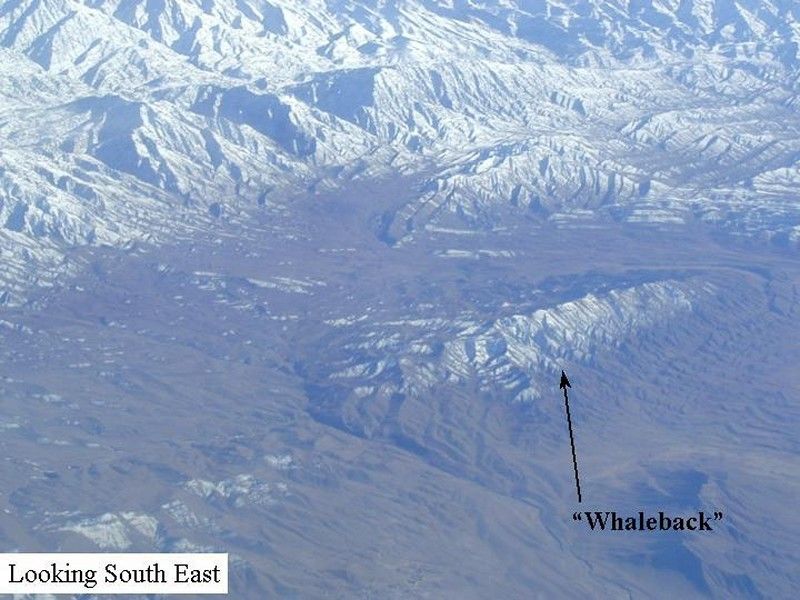
One of these final assaults was on “the Whale”, the large hill mass on the west side of the
valley. It had been largely ignored in the original attack plan because it was assumed that the
enemy would abandon any positions there and flee either north, east, or south toward Pakistan.
Instead the enemy chose to stand and fight and used his positions on “the Whale” to facilitate his
defense of the valley.
The enemy, however, was not intimidated by the arrival of U.S. and coalition troops. ISR
assets reported that enemy forces were not fleeing from the battle but instead, additional enemy
forces were flowing into the Shahi Kot area to intensify the fight. The steady flow of U.S. and
coalition reinforcements into the Operation ANACONDA fight finally broke enemy resistance.
On 16 March, D + 14, the CJTF Mountain Commander declared the end of Operation
ANACONDA. By that time, coalition forces were firmly in control of the entire Shahi Kot
valley and the surrounding area. Of the forces under CJTF Mountain tactical control 1 soldier
31was killed in action (KIA) and about 40 were wounded in action (WIA) and friendly Afghan
forces had suffered similar numbers of KIA and WIA, but had clearly won the battle. 7 Exact
enemy strength, intentions, and casualties remain unclear, but after the battle CJTF Mountain
estimated that it encountered 1,000 enemy troops in the Shahi Kot valley and killed hundreds of
them. The enemy made an effort to hold the valley, however, they clearly failed and the
operation’s stated end state was achieved.
Conclusion and Questions for Consideration
Operation ANACONDA was an enemy defeat by any estimate and for the next year no
enemy force of more than a few dozen fighters attempted to engage U.S. or coalition forces.
However, achieving such success required heroic fighting by U.S. servicemen and a mad
scramble by commanders and staffs up and down the chain to assist and reinforce hard-pressed
U.S. troops. All of the forces that were rushed into the fight after the shooting started such as
additional attack helicopters, the A-10s, the reinforced ACE, etc. could have been on hand or on
their way before the shooting started. Why weren’t they? If all these forces turned out to be
necessary, why didn’t CJTF Mountain request them and delay the start until they arrived? Why
didn’t the components that subsequently provided all these forces anticipate these requirements
and have them ready “just in case?”
It is easy to say “the enemy gets a vote” but it proved extremely difficult to anticipate that
the enemy would vote differently in the Shahi Kot than he did anywhere else in Afghanistan for
months before and after Operation ANACONDA. For U.S. forces, the fighting had been
relatively easy before Operation ANACONDA. Based upon pre-ANACONDA experiences, one
of the main challenges appeared to be whether U.S. and friendly Afghan forces could move
7
In addition to CJTF Mountain forces, U.S. forces suffered 7 KIA and 8 WIA in the Shahi Khot Valley area
conducting missions that were not under the operational or tactical control of CJTF Mountain.
32quickly enough to tightly cordon off an area to catch the enemy before they escaped. In the
Shahi Kot valley, the enemy reacted differently. Should the prison uprising and the hard fighting
at Qala-i-Jhangi have made U.S. planners more respectful of the determination and skill of
enemy fighters, or where the planners right to focus instead on learning the “lessons” of Tora
Bora?
At the operational level of war, the enemy finally did what U.S. forces wanted them to
do: stand and fight. All of the vexing intelligence uncertainties and SPINS questions vanished
when hundreds of men identified themselves as indisputably “hostile” by firing on U.S. troops.
Finally, all the U.S. elements had plenty of enemy to shoot at and permission to do so. For many
of the shooters at the tactical level, this came as an unwelcome surprise. At the operational level,
the CENTCOM components did not push every available shooter into the Shahi Kot initially and
the CJTF Mountain commander did not initially have the C2 structure to manage all those
shooters if they had been available. But at every level, U.S. and coalition personnel quickly
overcame their surprise and responded effectively to the new enemy challenge. Trying to hold
terrain and stand-up to U.S. and coalition forces proved to be a very bad choice by the enemy
and one they tried not to repeat.
33APPENDIX A: OPERATION ANACONDA PLANNING TIMELINE
Timeline:
5 Jan CFC Frago 03-007: identifies Khowst-Gardez (KG) as the most dangerous remaining
pocket of resistance—estimates 1500-2000 enemy combatants
6 Jan CFLCC Warning Order: initial planning guidance for operations in the KG area.
CFLCC’s estimate: 700-2100 enemy. One among a number of ongoing Sensitive Site
Exploitations (SSEs)
4 Feb Planning meeting held in Kabul. Led by TF Dagger (JSOTF element). TF Mountain is
invited; no CFACC involvement—included JSOTF air only
11-13 Feb TF Mountain (10 Mtn Div) assumes planning lead due to number of task forces involved
13-20 Feb TF Mtn moves from Uzbekistan to Bagram; ASOC(-) in place at Bagram 20 Feb
18-28 Feb 18 ASOG/CC pulls planning details and builds TACS from in-theater resources (10 Mtn
Div deployed without Div TACPs)
20 Feb BCD in CAOC receives email OPORD and 128 PowerPoint slides from TF-Mtn.
OPORD is 28 pages w/ 4 lines for the CFACC (CAS and airlift)
21 Feb TF-Mtn briefs COAs to CFLCC and CJCS at Bagram
22 Feb CAOC Plans begins work on MAAP
23 Feb First airlift requests into AMD; first ANACONDA brief to Deputy CFACC and AOC
Director
25 Feb CFACC returns from AOR tour and is briefed on Anaconda for the first time. CFACC
given a heads-up via the phone around the 23 Feb
26 Feb In CINC’s VTC CFACC asks for CAS orchestration details, pre-ground assault plan
(wants a list of targets from the CFLCC for pre-strike, airlift and sustainment
requirements)
28 Feb Planned D-Day
2 Mar Actual D-Day (delayed due to weather)
2-16 Mar ANACONDA execution
34APPENDIX B: ORGANIZATIONS INVOLVED
1-87th Infantry Battalion 10th Mountain Division Element
(1-87 IN)
7-101 AVN U.S. Army Helicopter Unit
18th ASOG Air Force organization that provides air to ground fire support to 10th
Mountain Division and 101st Airborne
CENTCOM Central Command
MacDill AFB, FL
CAOC Combined Air Operations Center
Prince Sultan Air Base (PSAB), Saudi Arabia
CFLCC Combined Forces Land Component Commander
Camp Doha Kuwait
CFLCC (FWD) Forward Combined Force Land Component Commander Forward
Uzbekistan and Bagram Airport, Afghanistan
JFSOCC Joint Forces Special Operations Component Commander
Qatar
JFMCC Joint Forces Maritime Component Commander
Bahrain
TF-58 USMC Task Force
Camp Rhino and Kandahar
TF-64 Australian Special Operations Forces
TF Anvil Friendly Afghan military forces that formed some of the blocking forces
in the upper Shahi Kot valley. This task force was led by two Afghan
commanders, Kamal Khan (K-Khan) and Zakim Khan (Z-Khan)
TF-Dagger Joint Special Operations Task Force (JSOTF) North
Uzbekistan
TF Hammer Friendly Afghan forces with US SOF personnel that lead the push
(hammer) forces in the Shahi Kot valley. The Afghan commander was
Zia Lodin. Also known as Zia.
TF-K Bar Joint Special Operations Task Force (JSOTF) South
Kandahar, Afghanistan
TF-Rakkasan Elements of the 101st Airborne
35APPENDIX C: GLOSSARY OF TERMS
A2C2 Army Airspace Command and Control
AAGS Army Air Ground System
ACE Air Control Element
ALO Air Liaison Officers
AMD Air Mobility Division
AOC Air Operations Center
AOR Area of Responsibility
ASOC Air Support Operations Center
ASOG Air Support Operations Group
ATO Air Tasking Order
BCD Battlefield Coordination Detachment
BDE Brigade
BN Battalion
CAOC Combined Air Operations Center
CAS Close Air Support
CENTCOM United States Central Command
CFACC Combined Force Air Component Commander
CFMCC Combined Force Maritime Component Commander
CFSOCC Combined Force Special Operations Component Commander
CJTF Combined Joint Task Force
ETAC Enlisted Terminal Air Controller
FAC-A Airborne Forward Air Controllers
FSE Fire Support Element
GFAC Ground Forward Air Controller
HVT High Value Target
ISR Intelligence, Surveillance, Reconnaissance
JFSOCC Joint Force Special Operations Component Commander
JIPTL Joint Integrated Prioritized Target List
JSOAC Joint Special Operations Air Component
JSOTF Joint Special Operations Task Force
LNO Liaison Officer
MARLO Marine Liaison Officer
MEB Marine Expeditionary Brigade
MEF Marine Expeditionary Force
MEU Marine Expeditionary Unit
NALE Navy and Amphibious Liaison Element
ODA Operational Detachment-Alpha
OPORD Operations Order
ROE Rules Of Engagement
SOF Special Operations Forces
SOLE Special Operations Liaison Element
SPINS Special Instructions
SR Special Reconnaissance
SSE Sensitive Sight Exploitation
TACON Tactical Control
TACP Tactical Air Control Parties
TACS Theater Air Control System
TAGS Theater Air Ground System
TCT Time Critical Target
36APPENDIX D: LIST OF KEY PLAYERS
NAME RANK POSITION DESCRIPTION
Bush, George W. President POTUS President of the United States and
Commander in Chief of the US Armed
Forces.
Corley, John D.W. Maj General, USAF CAOC Director MG Corley served as the Director of the
Combined Air Operations Center during
Operation Anaconda.
Delong, Michael P. Lt General, USMC DCINCCENT LtGen Delong served as the Deputy
Commander, US Central Command during
Operation Enduring Freedom-Afghanistan
and Operation Anaconda.
Franks, Tommy R. General, USA CINCCENT Combatant Commander, US Central
Command; General Franks served as the
Combined Force Commander (CFC) during
Operation Enduring Freedom-Afghanistan
and Operation Anaconda.
Hagenbeck, Franklin L. Maj General, USA CJTF As the Commanding General of the US
MOUNTAIN Army 10th Mountain (Light Infantry)
Commander Division, MG Hagenbeck served as the
Combined Joint Task Force Mountain
Commander, and he was the commander for
Operation Anaconda.
Haider, (or Hyder) Gul General, AMF Northern On 8 Mar 02, General Haider led the first
AMF CC 1,000 troops (mostly Tajik) as promised by
the Afghanistan interim government's
Defense Ministry. He reinforced General Zia
Loden at Paktia. They joined forces and
established blocking positions mid-way
through Operation Anaconda.
Hailston, Earl B. Lt General, USMC Commander LtGen Hailston served as the Commander,
USMARCENT US Marines, Central Command, during
Operation Anaconda.
Harward, Robert S. Commodore, USN TF KBAR He commanded a Navy SEAL unit and
exercised control of coalition special forces
from New Zealand, Canada, Turkey,
Norway, Denmark, and Germany.
37Holland, Charles R. General, USAF CFSOCC General Holland served as Combined Force
Special Operations Component Commander
during Operation Anaconda.
Keating, Timothy J. Vice Admiral, USN CFMCC V ADM Keating served as the Combined
Force Maritime Component Commander
during Operation Anaconda.
Khan, Zakim General, AMF TF ANVIL Commander Assigned to TF DAGGER,
Zakim Khan commanded TF Anvil and his
Afghan Military Force of 200 troops to
establish blocking positions near Naka
Valley 20km south of Shahi Kowt during
Operation Anaconda.
Khan, Kamal General, AMF TF ANVIL Leader Assigned to TF Anvil, Kamal Khan,
former Governor of Khowst, co-lead TF
Anvil and his Afghan Military Force of 200
troops to establish blocking positions west
of Khowst during Operation Anaconda.
Lodin, Zia General, AMF TF HAMMER Commander Assigned to Task Force (TF)
DAGGER, Gen Lodin lead TF Hammer and
his Afghanistan Military Force (AMF) of
380-450 troops on the initial attack and
subsequent attacks during Operation
Anaconda. On 8 March 2002, he was
reinforced by General Gul Haider.
Longoria, Michael A. Colonel, USAF ARCENT ALO As the Air Combat Command's 18th Air
Support Operations Group Commander, Col
Longoria served as the US Army, Central
Command's (ARCENT) Air Liaison Officer
(ALO) during Operation Anaconda.
McKiernan, David D. Lt General, USA COMARCENT LtGen McKiernan served as the Third Army
Commanding General and Commander, US
Army Central Command, during Operation
Enduring Freedom-Afghanistan and
Operation Anaconda.
Mikolashek, Paul T. Lt General, USA CFLCC LtGen Mikolashek served as the Combined
Force Land Component Commander during
Operation Anaconda.
Moseley, T. Michael Lt General, USAF CFACC/ As the 9th Air Force (9AF) Commander and
COMAFFOR the Commander of USAF Forces, Central
Command (CENTAF), LtGen Moseley
followed LtGen Wald as the CFACC to
Operation Enduring Freedom-Afghanistan.
He served as the Combined Force Air
Component Commander (CFACC) and
Commander of Air Force Forces
(COMAFFOR) during Operation Anaconda.
38Mulholland, John Colonel, USA TF DAGGER As the 5th Special Operations Group
Commander, Col Mulholland served as the
TF Dagger Commander during Operation
Anaconda. TF Dagger's mission is to
conduct unconventional warfare with
Afghan troops--TF Hammer (Gen Zia
Lodin, AMF), TF Anvil (Zakim Kahn) and
Commander Kamil Kahn. Additionally, his
mission is to destroy al Qaeda in the vicinity
of Objective Remington and prevent al
Qaeda escapes to Pakistan.
Rumsfeld, Donald H. Secretary SECDEF Secretary of Defense of the United States
Trebon, Gregory Brig General, USAF SOF On 3-4 Mar 02, he ran the Ranger mission
Unit that ran into heavy fire on the Takur Gar
Commander hilltop.
Wiercinski, Frank Colonel, USA TF As the 101st Airborne Division, 3rd Brigade
RAKKASAN Commander, he commanded TF Rakkasan
during Operation Anaconda. TF Rakkasan is
comprised of elements of the 10th MTN
DIV and the 101st ABN DIV (AS) that
formed three task forces: 1) TF Summit, the
1st Battalion of the 87th Infantry Regiment
(1-87 IN) of the 1st Brigade of the 10th
Mountain (Light Infantry) Division; 2) TF
Leader, the 1st Battalion, 187th Infantry
Regiment (1-187 IN); and, 3) TF Raider, the
2nd Battalion of the 187th Infantry
Regiment (2-187 IN), both of the 3rd
Brigade of the 101st Airborne Division (Air
Assault). During Operation Anaconda, their
mission was to establish blocking positions
to support the Afghan allies while they
swept and flushed out al Qaeda and Taliban
forces, as well as take direct action against
enemy forces in their area of operations.
Published By:
College of Aerospace Doctrine, Research and Education
Maxwell AFB Alabama
39You can also read


