SUBJECTS: BUSINESS STUDIES, ECONOMICS AND TECHNOLOGY HUAWEI: CHINESE ICT COMPANY THAT 'SPOOKED THE WORLD' - Asia Education Teachers' Association
←
→
Page content transcription
If your browser does not render page correctly, please read the page content below
SUBJECTS: BUSINESS STUDIES, ECONOMICS AND
                  TECHNOLOGY

           HUAWEI: CHINESE ICT COMPANY THAT
                ‘SPOOKED THE WORLD’

   Huawei Technologies Co., Ltd., is a Chinese multinational technology company that
specialises in consumer electronics, telecommunications equipment, and technology-based
                                  services and products.
                      *Huawei is commonly pronounced ‘wah way’

  Huawei: the Company that spooked the world. The success of China’s telecoms-equipment
                     makes spies and politicians elsewhere nervous.
                 https://www.economist.com/briefing/2012/08/04/the-company-that-spooked-the-world

                                                                                                    1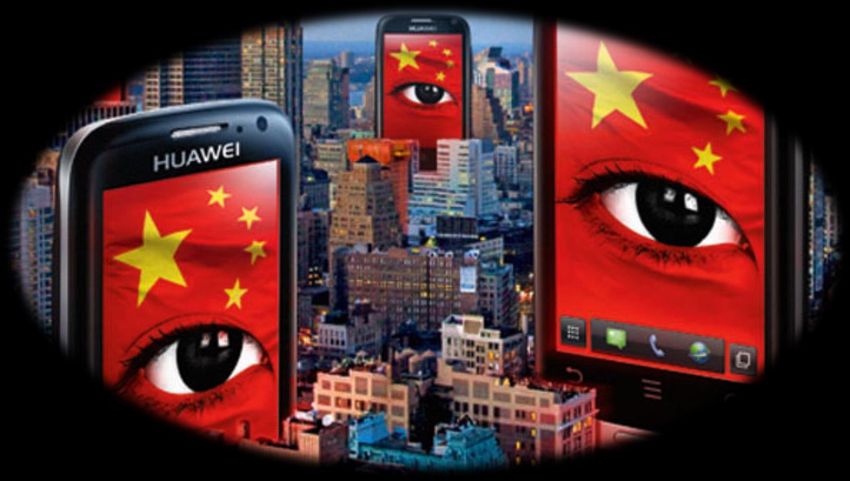
.

Image: https://www.huawei.com/en/press-events/news/2018/3/Huawei-2017-Annual-Report

Huawei has evolved from an indigenously-owned one room business (manufacturing fixed line
   switches), to one of the fastest growing, innovative multinational technology companies,
    globally. Today, with integrated solutions across four key domains – telecom networks,
information and communications technology (ICT), smart devices, and cloud services, Huawei
    is committed to bringing digital to every person and organisation for a fully connected,
                                        intelligent world.
                                      https://tmt.knect365.com/techxlr8-asia/sponsors/huawei4

     As Huawei is the world’s largest supplier of telecommunications equipment it plans to
‘dominate the global market’ for the next generation of wireless communications, called 5G.
This new technology will shape economic, technological and geopolitical competition between
the world’s leading technology superpowers-US and China. Both countries view control of the
   next wave of advanced technologies and related applications such as driverless cars, smart
       cities, and advanced factory automation, as significant for economic development.
                https://www.eurasiagroup.net/siteFiles/Media/files/1811-14%205G%20special%20report%20public(1).pdf

 Despite Huawei’s economic success, the global corporation faces many challenges, especially
   fears that its 5G equipment could enable unauthorised surveillance of governments and
organisations around the world, by the Chinese government and the People's Liberation Army.
The anglophile “Five Eyes” (FVEY) Intelligence Agencies of Australia, Canada, New Zealand,
   United Kingdom and United States, expressed national cybersecurity concerns, and are
 working to exclude Chinese equipment vendors Huawei and ZTE from their commercial and
                                  government 5G networks.

 What is behind the recent drive against Huawei, the global tech giant? Does it involve the 5G
technology race between the world’s leading superpowers-US and China-as this technology is a
        threat to US’s dominant position globally? It is about cybersecurity, China-US
                          Technology/Trade war and/or geopolitics?

                                                                                                                     2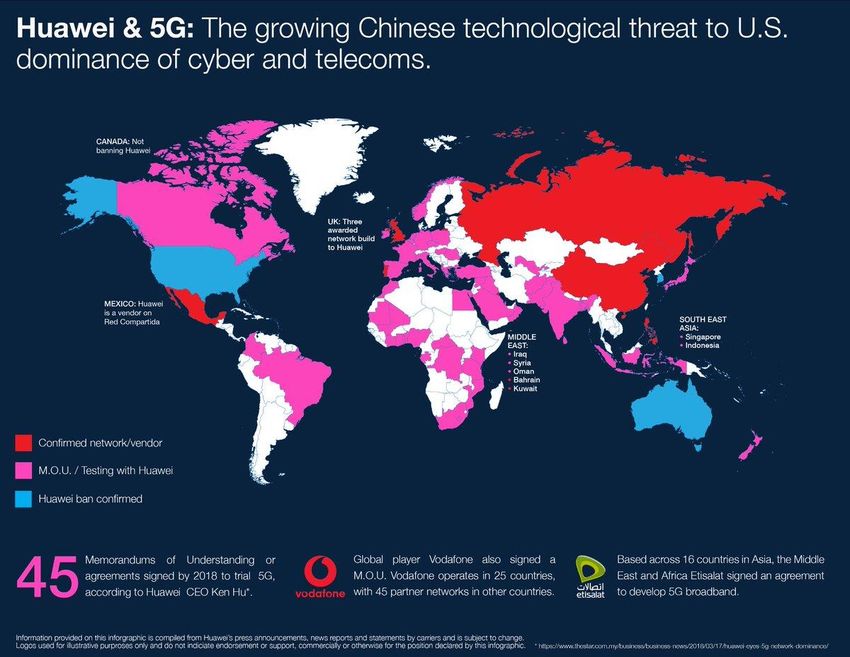
HUAWEI: PROFITABLE GLOBAL COMPANY
Huawei was established in 1987 in Shenzhen (Special Economic Zone), China. Today this
global company operates in 180 countries, has over 100 subsidiaries, and 22 regional
offices.
Huawei is a private employee-owned company. Not owned by shareholders or Chinese
government.
Employs about 180,000 people.
The company serves more than 30% of the world's population.
In 2018 Huawei sold 200 million smartphones, overtaking Apple as the second largest
manufacturer of smartphones in the world. Number one was Samsung.
This profitable company ranks 72nd on the Fortune Global 500 list, just behind Microsoft.
Huawei is the only Chinese company to generate higher revenue outside China.
Approximately 66% of its revenue is derived from international markets.
In 2017, Huawei’s revenue was over US$92 million (over CNY603 million), with the growth
in its three business sectors: Carrier, Enterprise and Consumer. In 2018 revenue is
anticipated to hit $109bn, almost three times higher than in 2013. This growth is partly due to
Huawei’s high investment in Research and Development (R&D).
Huawei is an example of successful capitalism within communist China.
https://www.huawei.com/en/about-huawei/corporate-
information/financial-highlights
https://www.huawei.com/au/press-events/annual-report/2017
3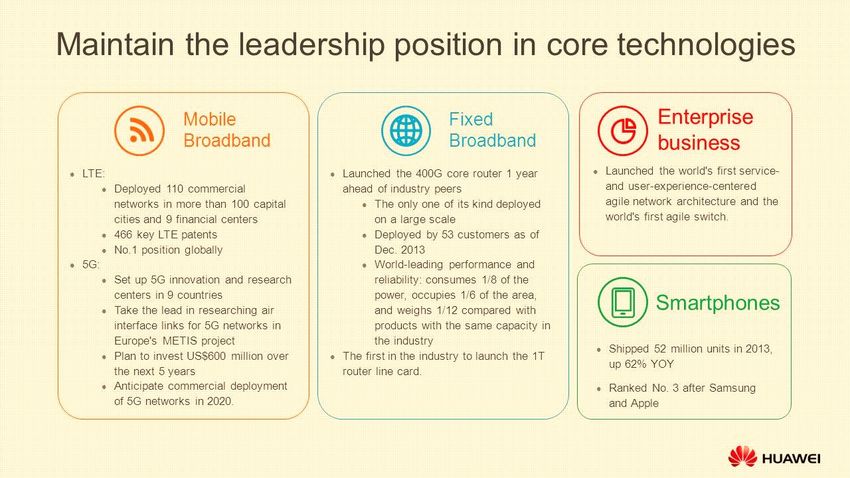
OVERVIEW OF HUAWEI CO., LTD.,
            BUSINESS MODEL
                                              VISION
                                  Enrich life through communication
                Support customers in their digital transformation (customer centricity)
      Lay the cornerstone of an intelligent world by bringing digital to every person, home and
                         organisation for a fully connected intelligent world
                               Develop a distinctive high quality brand

                                         STRATEGIES
       Enable digital transformation with ICT infrastructure and intelligent devices via:
                                    Fully connected networks
                         Coordinated development of ‘cloud-pipe device’
                        Large capacity and intelligent information networks
                                     Variety of smart devices
                        New generation business platforms and applications
                  Research and Developmen-constant innovation for 21st century
     Global advertisement campaigns via TV, print, online/digital and outdoor, and sponsorships

                                 BUSINESS DIVISIONS
     CARRIER NETWORK                  ENTERPRISE BUSINESS               CONSUMER BUSINESS
         BUSINESS
                                                    t
                                            Cloud platforms                   Smart devices
       Large traffic capacity               ICT convergence                 Cloud applications
       Intelligent networks               Industry information
         Cloud computing                      partnerships
       Personalised services

                       MAIN PRODUCTS AND SERVICES
   Mobile and fixed broadband networks, home devices, consultancy and management services,
  multimedia technology, smartphones, tablets, computers and dongles-and applications for devices

                                              GOAL
                    To become the top ICT vendor for telecommunications overseas

                                    FUTURE TRENDS
                    All Things Sensing, All Things Connected, All Things Intelligent

Diagram: S. Bliss

                                                                                                 4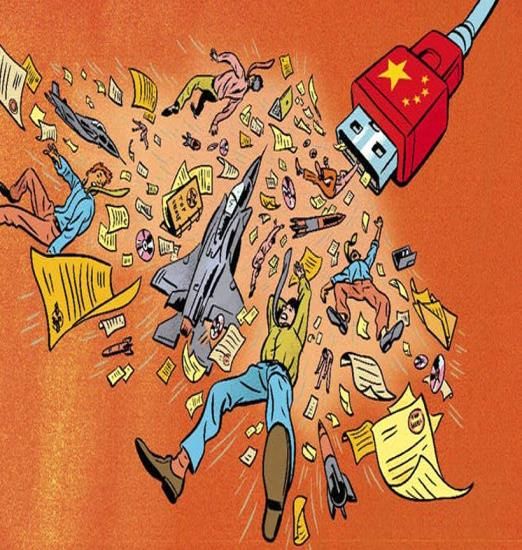
INTERESTING FACTS AND FIGURES

              Ren Zhengfel,

Background image http://askreporter.com/2018/01/stream-energy-standardizes-technology/
Diagram. S. Bliss

                                                                                         5
GLOBAL EXPANSION
                                                             ‘
 It makes sense, that once a company has been successful in its own backyard, it would expand
its products and services to a new geographic location or market. That's exactly what happened
             with Chinese telecommunications powerhouse, Huawei Technologies.’
               https://study.com/academy/lesson/marketing-case-study-entry-of-chinese-telecom-into-india.html

1997              Won first overseas contract-fixed line network to Hong Kong.
                  Launched wireless products
1999              Opened R&D centre in Bangalore, India
1998-2003         Contract with IBM
2000+             Increased its speed of expansion into overseas markets. Firstly, to developing countries.
2001              Joined International Telecommunications Union (ITU)
2004              Built third generation network for Telfort, a Dutch mobile operator
2005              International contract orders exceeded domestic sales
                  Signed an agreement with Vodafone-UK (telecommunications equipment) and British
                  Telecom (BT)
2008              Provided TELUS next generation wireless network to North America, and Bell Canada
                  with high speed mobile access
2010              80% of world’s top 50 telecom companies worked with Huawei e.g. Motorola USA,
                  Orange France
2011              Contract with Everything Everywhere-UK’s biggest communication network to enhance
                  its 2G network

        80,000
         R&D                                                                                                16 R&D
       employees                                                                                            centres

          28 joint
        innovative                                                                                      Built more
          centres                                                                                        than 1,500
                                                                                                        networks in
                                                                                                            170+
                                                                                                          countries
     14 regional
     headquart                                                                                             180,000+
         ers                                                                                              employees
Table and diagram: S. Bliss
Adapted: https://www.slideshare.net/tawhid19831/huawei-success-story
ICT: After overtaking Apple in smartphones, Huawei is aiming for No. 1 by 2020
 https://www.cnbc.com/2018/11/16/huawei-aims-to-overtake-samsung-as-no-1-smartphone-player-by-2020.html
Huawei logo https://forum.xda-developers.com/huawei-p8/development/stock-bootanimation-huawei-p8-t3489897

                                                                                                                      6
GLOBAL EXPANSION

https://www.slideshare.net/mKrishnaKumar1/kshitij-2017-iit-kharagpur-tech-talk-on-huawei-india

     SMARTPHONE MARKET SHARE:
         THIRD QUARTER 2018
Samsung was the only brand to feature in all five regions, with
Apple and Huawei following behind. The intensity of competition
in Asia is also noteworthy, as the top five are separated by six
percent, while the top three brands in the Asia region are only
separated by one percent. https://www.androidauthority.com/top-five-
smartphone-brands-region-infographic-933514/

                                                                           HUAWEI’S INCREASING
                                                                           REVENUE IN BILLIONS
                                                                           2012-2017, BY REGION
https://www.statista.com/statistics/368509/revenue-of-huawei-by-region/

                                                                                                 7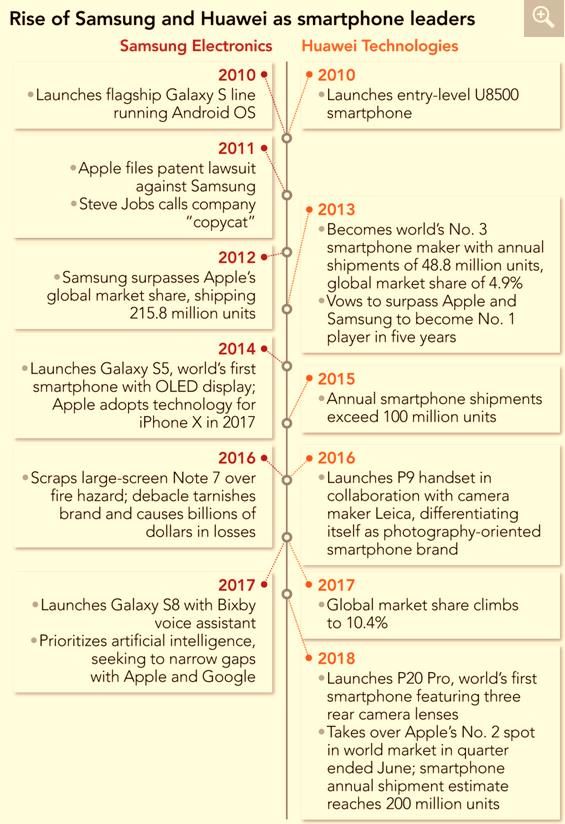
STRATEGIES
Firstly Huawei signed contracts with government entities to reinforce it was a ‘reliable brand’. Then
secondly Huawei sold their own brand of handsets directly to customers.
Huawei operates as a partner or vendor for country’s telecommunication companies, while studying the
market and the culture of the country.
Joint venture and investment with companies such as 3Com USA (2003); Siemens Germany (2005);
Motorola USA (2006); and Greater Marine Systems UK (2008).
Originally marketing was by ‘word of mouth’. However, from 2003 advertising was via global media as
well as providing sponsorships (e.g. football and sports organisations-Arsenal Football Club, UK).
Consumer-centric brand strategy dominated – making the connected world a reality for more people.
Dedicated to bridging the digital divide.
Long term investment in innovation. Nearly 15% of revenue in R&D in 2017.
Continuously making future-oriented investment to ensure technological advantages: MirrorSys (next
generation fully immersive user experience); 5G mobile communications; Al-optical networks (prevent
transport bottlenecks); and build a computing platform for big data processing and analyses.
Changing image from low cost brand to a premium brand. e.g. Award winning Ascend series of
smartphones.
Focused on one-stop new ICT infrastructure featuring cloud, pipe and device*.
Implemented the ‘pipe strategy’*.
CLOUD, PIPE AND DEVICE
https://www.slideshare.net/mKrishnaKumar1/kshitij-2017-iit-kharagpur-tech-talk-on-huawei-india
PIPE STRATEGY
https://www.zdnet.com/article/huawei-talks-innovation-design-customer-success-and-5g-wireless/
8
ACHIEVEMENTS
FIRST 30 YEARS
Huawei is a leading global provider of information and communications technology (ICT)
infrastructure and smart devices.
2018: Ranked 79 in World’s Top Most Valuable Brands. Brand value of US$8.4 billion.
Received many awards such as:
o 2016-2017: Awarded European Consumer Smartphone for fourth time by European
Image and Sound Association (EISA). They won it with the P9 and before that with P8,
P7 and P6.
o 2018: Six awards at International Industrial Design Forum; three awards at Telecom
Asia Readers’ Choice & Innovation Awards; and 5G Telecom Service Innovation and
Internet of Things (IoT) Leadership Awards at TechXLR8 Asia Awards.
Company achieved sustainable growth in the Carrier, Enterprise and Consumer
businesses.
Huawei is a household name in China and becoming increasingly popular in western
countries.
Explosive rate of growth since 1987-sales, revenue, innovation, markets.
In 2018: With 13.3% of market share, Huawei beat Apple (11.9%), but lagged behind
Samsung (19.3%).
Largest number of patents in China and one of the top 50 patent holders in US.
Total R&D investment US$24.9 billion in last decade. Over 10% of revenue into R&D which
enhances patents and competitiveness.
Maintained leadership in core technologies - mobile broadband, fixed broadband, enterprise
business and smartphones via R&D
https://slideplayer.com/slide/6633029/
9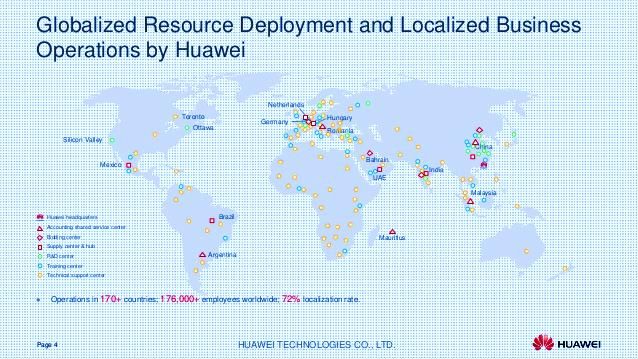
RESEARCH AND DEVELOPMENT
 FROM IMITATOR TO CREATOR

                  IMITATOR                                                                   CREATOR
  Huawei’s technological development
     has always been controversial.                                            Today Huawei is actively showing
    Previously it engaged in ‘reverse                                         the world it is not an imitator but a
  engineering’ by copying Jujitsu and                                          creator of original products, such
   Cisco systems. It then moved to in-                                             as: the super thin Ascend
       house innovation and high                                                  smartphones; its crash and
  investments in R&D. However, they                                           waterproof handsets; and seamless
       were accused of copying to                                               mobile broadband connections
    accelerate product development.                                           along super-speed bullet trains and
    Reverse engineering is permitted                                           in-flight Wi-Fi service for airline
       under Chinese law and not                                                           passengers
    considered intellectual property                                         http://www.ntc.ntu.edu.sg/ntcc/Documents/Full%20Versi
                   theft.                                                                   on/13.%20HUAWEI%20-
                                                                             %20CHINESE%20TELECOMMUNICATIONS%20GIA
      *Reverse engineering is the                                                               NT%20HUAWEI-
   acquisition of technology by taking                                             %20STRATEGIES%20TO%20SUCCESS.pdf

     apart and studying an existing
                 product.
Diagram: S. Bliss
HUAWEI WIRELESS AND 5G TIMELINE
https://www.zdnet.com/article/huawei-talks-innovation-design-customer-success-and-5g-wireless/

                                                                                                                        10
RESEARCH AND DEVELOPMENT
Continued investment in R&D innovation, enabled Huawei provide
competitive products that dethroned Apple in its smartphone sales in
2018.
Over 10% of
revenue invested
in R&D each year
2017: 14.9% of
revenue to R&D
2017: 80,00
employees involved
in R&D-i.e. 45% of
total workforce
Adapted https://www.huawei.com/en/about-huawei/corporate-information/research-development
Diagrams: S. Bliss
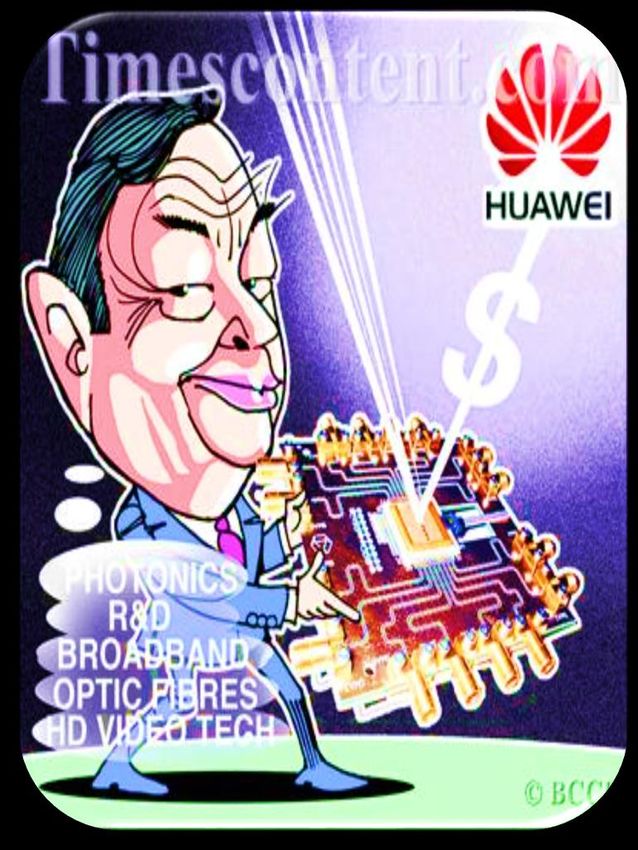
Cartoon: Huawei invested more than $4billion in fixed broadband technology R&D 2014-2017
https://timescontent.com/syndication-photos/reprint/executive-digest/397908/ren-zhengfel-huawei-broadband-inter.html
11RESEARCH AND DEVELOPMENT 5G
According to estimates, the world will have more than 1.1 billion 5G connections by
2025 (accounting for 15% of total connections).
Together, 4G and 5G wireless standards will make up 67% of all mobile
connections worldwide. https://teks.co.in/site/blog/5g-is-coming-an-overview-of-the-advantages-challenges/
https://www.eurasiagroup.net/siteFiles/Media/files/1811-14%205G%20special%20report%20public(1).pdf
12ADVANTAGES OF 5G TECHNOLOGY
Increased responsiveness (less time lag), greater reach (distance) and improved reliability (no
dropped calls)
More bandwidth means faster speed. Almost a thousand times faster than a 4G handset.
Increased connectivity across world. Network connects phones, computers, robots, cars and all
sensor equipped consumer products and infrastructure. Connects over 7 trillion devices in the
Internet of Things (IoT).
Offers a boost to smart cities in which energy grids, traffic signals, and emergency services are
linked to reduce inefficiencies.
Able to gather all networks on one platform.
Monitoring will be easier –governments and organisations can monitor any part of the world.
Possible to reduce crime rates and terrorism, and detect natural disasters faster.
Should resolve the ‘last-mile issue’, related to the non-availability of network connectivity in
rural/sparsely populated semi-urban areas.
Improve quality of government and utility services (water, energy), as well as enhance public
safety, health and education.
Sustainability-power consumption anticipated to fall 90% particularly with mobile devices, as
well as extend the life of batteries.
Benefits businesses, education, medicine, information technology, entertainment,
automobiles, mining and manufacturing: increased productivity (work more quickly and
efficiently); better connections with rural and remote settlements; smart and automated transport
(easier and faster commutes); flexible office spaces (smart buildings); transform the healthcare
industry; deliver products faster and more cheaply; processes products more efficiently and
thereby reduce costs in smart factories; potential safety benefits in underground mining; as well
as revolutionise the retail industry.
Enables smart agriculture, communicating with sensors in the ground, in crops, and on livestock
and farm machinery. Along with weather satellites and drones, these technologies will help
farmers know when and how much to water, fertilise and apply pesticides in more effective and
environmentally friendly ways. https://www.washingtonpost.com/news/innovations/wp/2018/.../5g-what-is-it-good-for/
A surgeon could use 5G with a
‘VR headset and special glove’
to control a robot arm that would
perform an operation in another
location. The "internet of
skills" would enable people to
transfer their expertise over a
long distance in real time.
https://www.cnet.com/news/5g-not-just-
speed-fifth-generation-wireless-tech-lets-
you-do-vr-self-driving-cars-drones-remote/
Background image: https://indianexpress.com/article/technology/new-hardware-can-help-deliver-internet-speeds-of-10-gbps-for-home-
networks-4902433/
135G TECHNOLOGY: SPECIFICATIONS
Some of the specifications for 5G technology can be defined as follows:
Data Rates: 1 to 10 Giga bits per second (Gbps) to the end mobile users.
Latency: Less than 1 millisecond (< 1ms).
Bandwidth: 1000 times the present bandwidth per unit area.
No. of devices: 10 to 100 times the current number of devices.
Network Coverage: 100%
Signal Availability: 99.999%
Power Consumption: 90% reduction in energy usage.
https://www.electronicshub.org/5g-technology/
5G TECHNOLOGY: CHALLENGES
5G networks will support a massive number of connected devices, enable a huge increase of
bandwidth, and create a next-generation threat landscape that will inevitably introduce 5G
security challenges. https://www.sdxcentral.com/5g/definitions/top-5g-security-challenges/
Technology is still embryonic in development.
Initial subscription plans are likely to be more expensive.
Making 5G operational on a worldwide basis will require a large number of highly-
trained software and data network engineers.
Many of the old IT devices will not be compatible to 5G. This will be exceptionally
expensive.
Requires developing new expensive infrastructure. In UK, over £1 billion is to be
allocated for new digital infrastructure by 2020.
Annual investments required for upgrading to 5G is estimated to push towards the $200
billion mark. A 2016 report suggested that nationwide 5G coverage for US would probably
cost more than $300 billion.
5G network cells will offer lower coverage than those of 4G (despite the higher
bandwidth). This would mean that more cell towers will be required.
Frequency range is already overcrowded e.g. used by satellite and many other different
signal types.
Security and privacy issues are yet to be solved.
Cybercrime and other fraud may increase with high speed 5G technology. Therefore,
legislation of Cyber law is imperative.
However, is 5G the super highway for cybercrime? Europol said 5G posed challenges for
police as crime will be harder to investigate because of the ability of devices to download data
simultaneously from multiple sources, such as wifi, network towers and satellites.
https://www.thetimes.co.uk/article/5g-will-make-crime-harder-to-investigate-35fcsw5f5
https://teks.co.in/site/blog/5g-is-coming-an-overview-of-the-advantages-challenges/
Image: https://www.thetimes.co.uk/article/5g-will-make-crime-harder-to-investigate-35fcsw5f5
145G SUPERPOWERS US-CHINA RACE
BIFURCATED WORLD
Two separate, politically divided technology spheres of influence will evolve—one led by the US and
another led by China.
In a bifurcated world, third countries wishing to gain access will face difficult choices about whose 5G
network technologies and related application systems to adopt. Governments are likely to come under
pressure from the US and its allies, to avoid dependence on China for 5G. However, developing
countries that are more sensitive to cost will find Chinese technology and related enticements (e.g.
infrastructure and project financing available through the Belt and Road Initiative), hard to pass up,
particularly if China gains an edge in technology.
https://www.eurasiagroup.net/siteFiles/Media/files/1811-14%205G%20special%20report%20public(1).pdf
“China was far ahead of US in preparing for 5G, which requires more base stations than existing
networks. In early 2018, China had almost 2 million cell sites, ten times the number in the US”. “There
are 5.3 sites for every 10 square miles in China compared to 0.4 in the US”.
“By 2030 5G in China is on course to generate $947 billion worth of economic output and 8 million jobs
for China.”
https://techcrunch.com/2019/01/30/china-continues-5g-push/;
https://www.webscalenetworking.com/topics/webscalenetworking/articles/440712-as-huawei-faces-western-challenges-china-continues-
5g.htm; https://www.globalresearch.ca/five-eyes-intelligence-agencies-behind-drive-against-chinese-telecom-giant-huawei/5662933
CHINA'S 5G INFRASTRUCTURE ACROSS WORLD
(September 25th 2018).
INCUMBENT RETAIL WIRELESS CARRIERS ARE THEIR PRIMARY MEANS OF ENTRY
https://twitter.com/declanganley/status/1044532260773474304
ICT
China continues 5G push despite economic slowdown and Huawei setbacks
https://techcrunch.com/2019/01/30/china-continues-5g-push/
5G is the real reason the US is afraid of Huawei https://bgr.com/2018/03/07/5g-release-date-vs-huawei/
15The Yangtze River Delta, a major economic region centred around Shanghai, is
accelerating the pace to embrace ultra-fast 5th generation (5G) mobile networks
with an investment of 200 billion yuan ($30 billion) over four years
http://www.ecns.cn/news/cns-wire/2018-07-18/detail-ifywhfmh2712557.shtml
https://www.eurasiagroup.net/siteFiles/Media/files/1811-14%205G%20special%20report%20public(1).pdf
165G GLOBAL TIMELINES AND VENDORS
https://www.eurasiagroup.net/siteFiles/Media/files/1811-14%205G%20special%20report%20public(1).pdf
17S
U
S
T
A
I
N
A
B
I
L
I
T
Y
https://www.huawei.com/au/about-huawei/sustainability/environment-protect/green_world
18ISSUES AND CHALLENGES
With more countries scrutinising the company’s activities and rejecting doing
business with it, Huawei must fix their problems, and halt the flow of negative
headlines, if it is to continue as a wealthy global ICT company.
“FIFTH-GENERATION” (5G)
AGGRESSIVE PRICING POLICY One particular bone of contention has been over super-speedy “fifth-
( LOW PRICE APPROACH) generation” (5G) mobile-phone networks. Upgrading to 5G will require
In 1997 Huawei entered the Russian market telecom firms around the world to spend billions, forcing many smaller
by undercutting international prices by technology firms out of business.
12%. This market success, led to Huawei Huawei, along with rivals such as Ericsson (Swedish) and Nokia
entering Thailand, Brazil and South African (Finnish), aim to be one of the principal suppliers.
markets, with more aggressive, Many engineers working for telecom firms stated that Huawei's back-
undercutting of competitors by 30%. end technology used to run computer and mobile-phone networks, is as
Price cutting caused many ICT companies good or better than Ericsson and Nokia-from which Huawei has gobbled
loss of sales, reduced profits and finally out their market share.
of business. https://www.economist.com/business/2019/01/26/huawei-looks-increasingly-
beleaguered-in-the-west
GEOPOLITICAL ISSUE
Huawei accused of violating INTELLECTUAL
US sanctions on Iran. PROPERTY THEFT
Is the US administration of Huawei accused of
President Donald Trump intellectual property theft.
stiffling China's In 2003 Huawei admitted
technological rise, as trade copying router software code
relations between the world's from Cisco (US). They were
two largest economies sued and forced to remove the
deteriorate? pilfering property.
Huawei has denied breaking In 2010, Motorola sued
US law. Huawei for stealing its trade
secrets. Case was later settled.
RISK OF ESPIONAGE
Huawei sells mobile devices in US. FIVE EYES
However, US has blocked the Huawei has unsuccessfully
company from supplying network convinced western countries,
infrastructure due to the risk of especially the Five Eyes, that
espionage. Additionally the company it is a trustworthy ICT firm
has been blocked from supplying and solely interested in
advancing business growth
telecommunication products in 'MADE IN CHINA' STIGMA and gaining a larger market
Australia. Originally, Huawei's products were share.
perceived as low quality due to their
country of origin - 'Made in China'.
BRAND NAME Today, their image has improved. PLA AND CHINESE
The brand name-Huawei, eludes R&D now ensures China produces GOVERNMENT
most international consumers, but high quality products and services. Huawei's suspected links to the
brand recognition is expanding, However, negative attitudes to People’s Liberation Army (PLA)
especially with global advertising and Chinese goods and services still and Chinese government, reinforced
sponsorships. prevails in many minds. the fear of future espionage.
Huawei needs to develop greater How difficult would it be for a
'positive' market wareness-globally. Chinese company to say 'no' to the
communist party?
https://www.economist.com/business/2018/12/07/why-does-5g-have-everyone-worried-about-huawei
Diagram S. Bliss. Photo image: https://www.eweek.com/mobile/at-t-to-implement-first-5g-service-in-12-u.s.-cities-by-end-of-2018
ICT: 5G is the real reason the US is so afraid of Huawei https://bgr.com/2018/03/07/5g-release-date-vs-huawei/
19IS IT A CHINESE ISSUE RATHER
THAN A HUAWEI ISSUE?
Telecommunications are vulnerable to espionage. This problem has accelerated as
technological advances, are becoming harder to detect. For too long, governments and
many other institutions have been complacent about these risks.
https://www.spectator.co.uk/2019/02/after-huawei-can-we-trust-chinese-tech/
Huawei is under scrutiny around the globe over its close
ties with the Chinese government that could present
national security threats to US, Europe and allied countries.
No Chinese company is fully independent of its
government, which reserves the right to require companies
to assist with intelligence gathering. Under Article 7 of
China’s 2017 National Intelligence law, companies like
Huawei are legally obliged to help the Chinese intelligence
agencies upon request.
Huawei is even more closely tied to the government than
many Chinese firms. Its founder, Ren Zhengfei, is a former
technologist in the People’s Liberation Army. As his
company grew, so did international concerns about
whether Huawei’s equipment could be used to spy on
companies and governments around the world.
http://theconversation.com/whats-wrong-with-huawei-and-why-are-countries-
banning-the-chinese-telecommunications-firm-109036
https://www.theguardian.com/technology/2019/feb/03/huawei-friend-or-foe-global-5g-dominance
P
HUAWEI RISKY BUSINESS E HUAWEI WOULD NEVER
Nigel Inkster, advisor at The BETRAY CUSTOMERS
R
International Institute for Strategic
Studies and 30 year veteran with S
British intelligence service MI6, said Ren Zhengfei, a former officer in
that "there clearly are risks with P the People’s Liberation Army,
using Huawei equipment", even if insists Huawei would never
those risks are hard to define. “There E betray its customers. “When it
is always a risk that Huawei will in comes to cybersecurity and
C privacy protection, we are
certain circumstances be co-opted by
the Chinese state to do things that it T committed to siding with our
does not want to." customers. We will never harm any
https://www.abc.net.au/news/2018-12-07/why-is-chinese- I nation or any individual.”
tech-company-huawei-being-targeted/10593156 https://www.theguardian.com/technology/2019/feb/
V 03/huawei-friend-or-foe-global-5g-dominance
E
Diagram: S. Bliss
S
ICT: Huawei’s problem of being too ‘Chinese’ https://supchina.com/2019/01/24/huaweis-problem-of-
being-too-chinese/
20HUAWEI FUELS US-CHINA
TECHNOLOGY/TRADE WAR
Huawei's Vice-chairperson and CFO Meng
Wanzhou, daughter of its founder, Ren Zhengfei
was arrested in Canada on December 1, 2018, at
the request of the US government. She was
accused of violating US sanctions against Iran.
Meng supposedly used a Huawei subsidiary to
dodge US sanctions on Iran.
28 January 2019: Meng was charged with
misleading US banks about Iran dealings.
https://www.graphicnews.com/en/pages/38605/BUSINESS-Huawei-factbox
The US government has long discouraged their
network operators from using Huawei gear to
power their services. President Trump turned up
the heat on the Chinese tech giant, Huawei, when
he took office.
In 2018 heads of major intelligence bodies,
including the FBI, CIA and NSA, warned that
Americans should not purchase Huawei products,
citing concerns about their use as spying devices.
On 24 January 2019, Huawei says it will not use
US-made components for its next generation of
smartphones.
The US including its allies such as the UK, New
Zealand, Australia and Japan, appear to be
shutting out Huawei’s networks due to national
security concerns. Also, based upon security
issues, Japan is considering banning ZTE network
equipment from government offices and military
forces.
https://www.reuters.com/article/us-usa-china-huawei-tech-eu/u-s-wants-western-tech-to-be-used-instead-of-huawei-kit-idUSKCN1PP24C
Two major European telecom companies — France's Orange (ORAN) and UK’s BT recently
ruled out using Huawei products in their domestic 5G networks. Germany's Deutsche Telekom
(DTEGY) and Japan's SoftBank (SFTBF) are reviewing their use of Huawei equipment.
https://edition.cnn.com/2018/12/18/tech/huawei-india-security-concerns/index.html
Some believe the US administration’s ultimate goal is to push Huawei out of Europe and the
US, leaving America to frame the global standards for 5G.
https://www.theguardian.com/technology/2019/feb/03/huawei-friend-or-foe-global-5g-dominance
Cartoon: https://www.cartoonmovement.com/cartoon/54591
21AUSTRALIA’S RESPONSE
ABC: Andrew Probyn unpicks the anxiety within the Australian intelligence
community.
https://www.abc.net.au/news/2018-12-07/why-is-chinese-tech-company-huawei-being-targeted/10593156
In 2018, the Australian Government banned Huawei from taking part in the
rollout of 5G mobile infrastructure over security concerns.
https://en.wikipedia.org/wiki/Huawei.
https://news.cgtn.com/news/3d3d514e7859444f79457a6333566d54/share_p.html
Huawei was banned in Australia because the company was "likely subject to
extrajudicial directions from a foreign government that conflict with Australian
law".
This decision highlights the increasing tension in balancing Australia's economic,
diplomatic, and national security interests against the
backdrop of rapid technological and geopolitical shifts. The
banning of Huawei will have major ramifications for
Australia's technological future http://www.anu.edu.au/events/death-of-
huaweis-5g-bid-technological-entanglement-and-information-security
Rollout of 5G in Australia:
Optus had to 'adjust' 5G service due to Huawei ban. It is
to begin 5G rollout in 2019.
Telstra plans to roll out smartphones with 5G capability
by the middle of 2019. Vodafone is expected in 2020.
TPG, which had planned to build the country's fourth
mobile network, scrapped its plans, blaming the Huawei
ban.
https://www.canberratimes.com.au/business/companies/optus-had-to-adjust-nation-first-5g-
service-due-to-huawei-ban-20190131-p50us4.html
https://www.facebook.com/InsidersABC/posts/to-understand-the-australian-anxiety-about-huawei-you-should-look-at-the-
british/1616981768413325/
22AUSTRALIAN GOVERNMENT WORKS
WITH HUAWEI- DESPITE 5G BAN
Australian Strategic Policy Institute and Chinese Communist Party influence researcher
Alex Joske said Canberra's stance on Huawei was contradictory.
By Nick Bonyhady: February 11, 2019
Adapted: https://www.smh.com.au/politics/federal/australian-government-works-with-huawei-despite-5g-ban-20190210-p50wt9.htm
HOWEVER
Huawei was banned The Australian Research Council (ARC), a top government research
from providing 5G funding body, paid $1 million in grants over the last four years to projects
infrastructure in involving several Australian universities and Huawei, for work from
Australia, over concerns wireless communications to road infrastructure.
around a 2017 Chinese Huawei has also been supported by the Department of Foreign Affairs
law which has been
interpreted as requiring and Trade's New Colombo Plan (NCP) in an ongoing project called
Chinese companies to "Seeds for the Future" to send students to China for a cultural and
support the country's computer science exchange, including a visit to Huawei facilities. Over the
national intelligence last two years, 54 students were selected to participate in the three-week
gathering efforts. Seeds for the Future exchange.
Huawei is also still listed as a member of the Australian government's
advisory 5G working group.
REPLY : AUSTRALIAN
REPLY: HUAWEI GOVERNMENT
ARC grantees had to comply with
Huawei constantly states that it is a
private company with a clean record legislation designed to keep
that takes privacy and security technology with national security
seriously. implications IN Australia, and
Huawei's Director of Corporate foreign influence OUT.
Affairs, Jeremy Mitchell, said the The ARC works with the Department
company was proud of its of Defence regarding the compliance
partnerships in Australia. "We of ARC-funded research.
welcome the opportunity to share A Department of Foreign Affairs and
our global expertise and innovation Trade spokesman said the NCP did not
with governments and research have a direct partnership with Huawei,
organisations to make Australia but instead funded universities that
more productive and competitive.” worked with the company.
There is no suggestion that anyone involved in Seeds for the Future or Huawei-
linked ARC grants in Australia has engaged in any wrongdoing.
Diagram: S. Bliss
CONCERNS
Meng Wanzhou, Huawei's Vice-chairperson and daughter of its founder, Ren Zhengfei, helped
establish Huawei in Australia. She was arrested in Canada in December 2018, after the United
States accused her of violating US sanctions against Iran.
The Wall Street Journal reported in late January 2019, that a Huawei official arrested on suspicion
of spying had visited the Polish military academy through a Polish duplication of Seeds for the
Future
WHAT CAN AUSTRALIA DO?
"There is a lot of room to improve Australia's trade controls legislation," Mr Joske said. A
review of the legislation has been completed, but is yet to be made public.
Tom Uren, who specialises in cyber strategy, said “the changing nature of warfare has made it
harder to separate military and civilian technology.”” I think government is catching up to the
implications.”
23UNITED KINGDOM’S RESPONSE
WHILE UK WOOS CHINA’S TELECOM GIANT
FEARS GROW OVER RISKS TO NATIONAL SECURITY
https://www.theguardian.com/technology/2019/feb/03/huawei-friend-or-foe-global-5g-dominance
https://www.scmp.com/tech/gear/article/2176968/huawei-agrees-uk-security-steps-avoid-5g-ban-report
https://www.theguardian.com/technology/2018/dec/07/huawei-pledges-2bn-in-effort-to-allay-uk-security-concerns
“The UK, struggles to know whether China is a threat or opportunity,” said Robert
Hannigan, former director of the British intelligence centre’s GCHQ (Government
Communications Headquarters) that works with the Secret Intelligence Service MI6 and
MI5. “It’s a difficult balance”. My view is that if we want the benefits of Chinese
technology and investment, we should find ways of managing/reducing the risks. He said
British intelligence agencies had not “reported back door or malicious intervention” by
Huawei, and any official criticism so far were of “incompetence rather than malice.”
In the UK, Huawei has gone to great lengths to present itself as a paragon of corporate
accountability. It hired notable experts such as the government’s chief information
officer, John Suffolk, as head of cybersecurity and ex-BP boss Lord Browne. In addition it
has forged links with academia, such as projects with Universities of Cambridge and
Oxford.
As the dispute over Huawei’s activities has drawn in the UK’s intelligence-sharing partners
(“Five Eyes”), Theresa May’s government has been quiet about its position. However, to
act against Huawei would risk unravelling years of work that the UK spent assiduously
pursuing China. There have been multiple benefits as Huawei employs more than 1,400
people in UK, and is one of Britain’s largest sources of investment from China. Between
2016 and 2017, Chinese investment in the UK doubled to $20.8bn. Chinese money
continues to pour into the UK, with hundreds of Chinese investors receiving golden visas
granting them residency. Nowhere is the burgeoning Anglo-Chinese relationship more
tangible than London.
ACTIONS: UK
However, growing disquiet about Huawei’s activities resulted in the following actions:
UK operator BT confirmed it was removing Huawei equipment from key areas of
its 4G network over concerns about the Chinese firm’s presence in critical telecoms
infrastructure.
Vodafone confirmed that it was restricting its involvement with Huawei in the UK.
Oxford University and the Prince’s Trust, have broken links with the company
RESPONSE: HUAWEI
Between 2018 and 2022, Huawei is to spend $2bn in an effort to alleviate British
security services’ concerns about vulnerabilities in its products.
Huawei in the UK https://www.huawei.com/uk/about-huawei/local-states
Huawei announces £3b UK procurement plan https://www.zdnet.com/article/huawei-announces-3b-uk-procurement-plan/. Huawei has
committed to £3 billion in procurement over the next five years in the United Kingdom, saying it will assist local companies increase their
exports to China.
Huawei agrees to UK security steps to avoid 5G ban: report. Britain’s National Cyber Security Centre says it has ‘concerns around a range
of technical issues’ and has set out improvements Huawei must make https://www.scmp.com/tech/gear/article/2176968/huawei-agrees-uk-
security-steps-avoid-5g-ban-report
24
GLOBAL RESPONSES
http://telecoms.com/494129/huawei-an-awkward-state-of-affairs-infographic/
25SWOT ANAYSIS OF HUAWEI
STRENGTHS WEAKNESSES
Low paid labour force
Tarnished reputation from past business practices-
Low costs (operation and engineering) intellectual theft
Low cost pricing strategy Adverse media publicity-Trump (US), Five Eyes, and fear
High level of R&D (10% of revenue). R&D led to technical lack of cybersecurity.
improvements and innovation-new products Limited presence in many countries
High level of technical automisation Competition from other IT companies-Cisco (US);
Stability and support from Chinese government Samsung (S. Korea)
Huge Chinese market (1.4 billion people) and emerging Products are cheap and are often synonymous with low
middle class quality. This image has continued to affect Huawei's
International expansion- access to many markets penetration in international markets. Huawei, has embarked
on developing quality products, which will improve the
Leading 5G technology perception about Made in China.
Strategic partnerships with global companies (e.g. Google and Low price strategy makes customers suspicious of the
IBM) and academia (e.g. UK Universities) reliability of products
Customer focused with an emphasis on localised service and Not good brand recognition in western countries-but
complete selling networks improving
Broad portfolio of products Lack of strong presence in some regions
Improved financial performance. Revenue and profits high and Hindered by import regulations in other countries
growing
Technology/Trade War-US-China
Growing faster than other technology companies
High employee turnover that puts business continuity at
Products are relatively cheaper compared to competitors like risk
Samsung and Apple, and hence, their affordability attracts
consumers Banned in some countries (cybersecurity, perceived
closeness to Chinese government and People's Liberation
Highly skilled workforce-successful training and learning Army)
programs. PhD qualifications.
Rising wages and cost of raw materials-pressure on
Green Action Plan-sustainability e.g. reduce energy profitability margin
consumption and recycling
OPPORTUNITIES THREATS
Business expansion
China is relatively labour-intensive. This provides Huawei with
an opportunity to cut down on costs, which in turn generates
higher profits Global economic scenario e.g. world economic crises
Create high-end devices of superior quality Geopolitical issues
Demand is accelerating-new growth in developing countries US-China Technology/Trade war
5G Technology (smart cities, AI) Intense competition and rivalry from other global
brands. Xiaomi and ZTE target the same market as
Positive outlook for cloud computing Huawei and are competitively priced. Samsung, Apple
Increased patents-intellectual property rights mounting and Huawei compete globally. Also Cisco (US)
competes with Huawei
Make strategic partnerships with skilled experts-companies and
people across the globe Blacklisting Huawei in relation to cybersecurity (Five
Eyes)
Improve company’s image and develop consumer trust in the
company Threats of substitutes
Provide better localisation of products and services for Entry of new big companies-loss of market share
overseas customers (specialist/tailor made) Lawsuits against company
Develop into a sustainable business Technological changes
Opportunity to benefit from Chinese government incentives to Lower profits
produce goods for export.
Western country's fear of Huawei's close links with
Expanding global economy, an opportunity to develop new Chinese government and communist party
markets
New customers from online channel
Diagram: S. Bliss
26Few phone makers will survive industry's brutal
economics? Who will win the Technology/Trade Race-US or
China? What about 6G?
Richard Yu, chief executive of Huawei’s consumer business group, said anyone at this
stage in the decade-old industry’s history that had less than 10% market share was
losing money. “In the future, only three to four vendors can survive, maybe less than
four.” He said, smaller Chinese vendors were consolidating, and most would
disappear, as they did not have enough resources to invest in the same levels of
research and development, marketing and branding needed to gain global scale.
https://www.reuters.com/article/us-telecoms-mobileworld-huawei-phones/few-phone-makers-will-survive-
industrys-brutal-economics-huawei-idUSKCN1GA01X
Analyst Marina Koytcheva, vice president of forecasting at CCS Insight, stated “Size, scale and economic growth give
China an obvious head start. But we expect network deployments to be much faster than in the early days of 4G. China will
dominate 5G thanks to its political ambition to lead technology development, the inexorable rise of local manufacturer
Huawei, and the breakneck speed at which consumers have upgraded to 4G connections in the recent past."
https://www.webscalenetworking.com/topics/webscalenetworking/articles/440712-as-huawei-faces-western-challenges-china-continues-5g.htm
ROAD MAP TO 6G AND BEYOND
After 5G is 6G, that proposes to integrate 5G with satellite networks for global coverage.
6G technology is considered to be cheap and Fast Internet Technology.
https://www.irjet.net/archives/V4/i9/IRJET-V4I9196.pdf
Many of the cellular devices connected nowadays are machines (IoT) rather than people. With
the rise of Smart Homes, Buildings and Cities, 5G and 6G will need to include increased
demands for machine-to-machine communications, including robotic and autonomous drone
delivery and transport systems. The Internet-of-Everything (IoE) is a related development.
https://www.cablefree.net/wireless-technology/4g-lte-beyond-5g-roadmap-6g-beyond/
27Huawei is the world’s largest supplier of telecommunications network equipment and
second-biggest maker of smartphones. It derives nearly half of its total revenue outside
China and its global reach has come under attack from US, which is trying to prevent
US companies from buying Huawei equipment and is pressing allies to do the same.
U.S. security experts are worried the gear could be used by China for espionage, a
concern Huawei says is unfounded
https://www.reuters.com/article/us-usa-china-huawei-tech-eu/u-s-wants-western-tech-to-be-used-instead-of-
huawei-kit-idUSKCN1PP24C
Explain the following cartoons and illustrations
https://fineartamerica.com/featured/spy-vs-spy-mr- https://www.rfa.org/english/cartoons/Huawei-
minor.html?product=poster cartoon-12102018152050.html
http://www.china.org.cn/opinion/2012- https://www.japantimes.co.jp/opinionentary/u-s-huawei-
10/13/content_26776504.htm cuffs-china-u-s-chains/#.XFqCyrhS-Uk
28Using ICT answer the following questions:
Discuss how Five Eyes cooked up a campaign to kill off Huawei
https://www.stuff.co.nz/business/opinion-analysis/109348046/how-five-eyes-cooked-
up-campaign-to-kill-off-huawei
Why does Beijing see itself as ‘hemmed by the West’, particularly the old Anglosphere.
https://www.lowyinstitute.org/publications/we-need-five-eyes-spy-network-oversight
Huawei and Apple smartphones are both made in China, so what is the difference? Why
the fuss over Huawei? https://www.abc.net.au/news/2019-01-19/apple-or-huawei-
which-one-should-we-be-more-worried-about/10720262
In pairs explain these quotes
“Trust and transparency
— or lack thereof — are “Even as Huawei's clientele and
familiar to anyone employees have diversified, its “Both Huawei and the
following the inner and leadership has remained Chinese government
outer workings of monolithic. Of the 17 who make have recognised their
China.” up the company’s board of need to manage public
Why are these directors, all are Chinese, all perception.”
characteristics important have been with the company for
at least 20 years.” Why? How?
when dealing with a
Chinese company? Is there a problem? If so, what is
it?
“Huawei is not a global company. It’s a Chinese company that does business
globally.”
Explain this quote. Why are some global governments concerned?
Diagram: S. Bliss
Economics/Globalisation:
Discuss how Huawei evolved from a small local business in Shenzhen in 1987 into a
global technology company. Describe its global strategies and achievements over the
last 30 years.
Explain how Huawei plans to dominate the global market’ for the next generation of
wireless communications, called 5G.
Despite international security concerns and branding issues, describe how Huawei can
achieve higher profits, increased growth and greater market share.
Imagine you were on the Board of Directors of Huawei. Describe how you would
respond to global criticism on its pricing, branding, marketing and trustworthiness.
Business Studies:
Explain the main organisational structure of Huawei Co., Ltd. Include vision,
strategies, business divisions, products, services, goals and future trends.
Discuss how continued investment in R&D innovation, enabled Huawei to
provide competitive products that dethroned Apple in its smartphone sales in
2018. Include Huawei moving from imitator to creator, poor quality to high
quality goods and services, and improving its global brand.
Civics and Citizenship:
Huawei is one of the world leaders in 5G wireless communications, but supposed
connections to the Chinese Government and communist party, is damaging its business
globally. Discuss.
What is the anglophile “Five Eyes”? What is its purpose? What countries belong? What
has been its impact on Huawei?
29COMPARATIVE CASE STUDY
HUAWEI (CHINA) AND SAMSUNG (SOUTH KOREA)
LOCKED IN MOBILE INDUSTRY'S PRIZE FIGHT
Curriculum topics:
The role of business in the economy
The role of the market and government
Variations in competition
The global economy-globalisation
Contemporary issues-security, intellectual
theft and ICT race US/China
Cross Curriculum Priorities: Asia,
Sustainability
General Capabilities: Ethical understanding,
Information and communication technology
capability, Intercultural understanding.
Literacy, Numeracy, Personal and social
capability, Critical and creative thinking,
Work and enterprise
Samsung and Huawei locked in mobile industry's prize fight https://asia.nikkei.com/Business/Company-in-focus/Samsung-and-
Huawei-locked-in-mobile-industry-s-prize-fight
Huawei and Samsung are going to wage a fierce war in 2019 for smartphone supremacy
https://bgr.com/2018/12/25/samsung-vs-huawei-2019-wa
https://asia.nikkei.com/Business/Company-in-focus/Samsung-and-Huawei-
locked-in-mobile-industry-s-prize-fight
30TECHNOLOGY
5G AND US/CHINA TECHNOLOGY WAR
“The fight over trade (US/China) is
“Apple is at the 'forefront of vulnerability' to the US-China
merely a skirmish in a larger
trade war. Apple, is American technology produced in
technology war”.
Chinese factories by a Taiwanese company”. Apple draws
“The quest is to conquer the latest
20% of its revenue from China.
technologies, from 5G telecom to https://www.cnbc.com/2018/12/21/apple-is-the-most-sensitive-to-us-china-
robotics and artificial intelligence.” trade-war-strategist-says.html
https://seekingalpha.com/article/4226872- After the arrest of Huawei’s CFO, Meng Wanzhou in Canada,
united-states-china-technology-war-looking-
beyond-trade-wars
“Chinese firms urged employees to boycott Apple in
retaliation.” Apple may suffer a dent in their Chinese
revenues.
https://appleinsider.com/articles/18/12/24/apple-boycott-by-chinese-firms-in-
support-of-huawei-is-escalating
Has the dependence of Huawei and the Chinese high-tech sector on US technology left China in desperate need of
a trade deal? Huawei is dependent on chip technology from Qualcomm (QCOM) and the Android operating
system from Google parent Alphabet (GOOGL). "If Huawei cannot license Android from Google, or Qualcomm's
patents in 4G and 5G radio access technology, it will not be able to build smartphones or 4G/5G base stations."
https://www.investors.com/news/economy/dow-jones-apple-rally-huawei-is-china-trade-war-trump-card/
Diagram: S. Bliss
https://twitter.com/Huawei/status/989066503726292994
Two major European telecoms companies — France's Orange (ORAN) and BT in the United Kingdom
— recently ruled out using Huawei products in their core domestic 5G networks. Germany's Deutsche
Telekom (DTEGY) and Japan's SoftBank (SFTBF) are reviewing their use of Huawei equipment.
ICT
5G -everything you wanted to know https://www.techradar.com/au/news/what-is-5g-everything-you-need-to-know
What is 5G technology?
What will a 5G network need?
How fast will 5G be?
Will I be able to get 5G networks on my phone?
What countries are using 5G technology? https://www.quora.com/Which-country-uses-a-5G-network
US/China technology war https://seekingalpha.com/article/4226872-united-states-china-technology-war-looking-beyond-
trade-wars
In groups complete the following table
What is 5G technology?
31What will a 5G network
require?
How fast will 5G be?
In the two column table list 4 1 1
advantages and 4 2 2
disadvantages of 5G 3 3
4 4
Compare the current planned 1
deployment timelines of 5G for 2
China, USA, EU and Australia 3
4
List the 5 main 5G global 1
vendors 2
3
4
5
What countries are using 5G
technology in 2019?
Explain how 5G contributes to
sustainable development
Outline the US/China
technology/trade war
Is the real fight over global leadership
in advanced technology industries?
Assignment
Discuss why control of the next wave of advanced technologies (5G) and related applications such as driverless
cars, smart cities, and advanced factory automation, are significant for economic development but also require
cybersecurity. Include what is meant by 5G, how it operates, its importance, and its problems.
32HUAWEI: A CONTEMPORARY
CONTROVERSIAL ISSUE
ISSUE
Three US agencies (CIA, FBI and National Security Agency) warned people against
buying Huawei and other Chinese smartphones. US officials have asked counterparts in
Germany and several European nations to drop Huawei equipment from 5G networks
over security concerns.
REPLY
China's foreign minister urged countries not to use "fabricated" excuses to block Huawei
Technologies. “Using national power to tarnish and take measures against a certain
company, without any evidence, is both unfair and immoral." https://www.straitstimes.com/asia/east-
asia/china-blasts-unfair-huawei-equipment-bans-by-other-countries
A top executive at China's Huawei Technologies slammed the growing accusations that
its telecommunications equipment poses a spy threat, and warned that efforts to shut out
Huawei from international markets will harm the wider economy.
https://asia.nikkei.com/Business/China-tech/Huawei-top-executive-says-ban-will-disrupt-global-economy
The issue is complicated, produces no simple answer, and arouses different values, beliefs and
feelings in people, organisations and governments.
Discuss how the technology company, Huawei, is a global profitable organisation but faces many
challenges, requiring analyses from a variety of perspectives.
1. Overview of Huawei-
organisation, global 3. Divide class into
2. Discuss the groups to obtain
extent, profitability, challenges facing
success over 30 years, different/perspectives
Huawei-past, present, on the issue e.g.
and anticipated trends future.
(AI, cloud computing, Huawei/US/UK/
chip techology). Fall of the 'silicon Australia/developing
curtain'. when US and country.
Huawei is one of the China will no longer
icons of the rise of Groups collect facts
trade and provide chips and figures from a
China's industrial to one another.
power. variety of sources to
support their view
5. Present an 4. Discussion or
oral assignment debate between
using ICT. groups
Include maps, expressing
graphs, statistics, different views.
photographs and
quotes Summarise
thoughts
Diagram: S. Bliss
Social media such as Twitter, Blogs, Flikr and You tube have changed how people communicate and disseminate
information. This modern technology has had a huge impact on determining peoples’ perspective on a
controversial issue, such as Huawei. Social media allows people to discuss ideas, post news and ask questions.
Students should act cautiously and investigate information and data on its source, as it is sometimes based on
incorrect facts and is biased.
33CONTROVERSIAL ISSUE: SCAFFOLD
Discuss how the operation of the Chinese technology company, Huawei, has evolved into a global
profitable organisation over the last 30 years, but faces many challenges for future growth. Analyse
these challenges from a variety of perspectives.
STATEMENT OF THE ISSUE
A statement outlining the main organisational functions of Huawei (location of
headquarters, executive, vision, strategies, business divisions, products, services,
profits, revenue, R&D, global extent/ranking, growth, trends)
CHALLENGES
5G technology race, national cybersecurity, Five Eyes, US-China technology/trade
war, intellectual theft, brand image, new patents, IT industry competition
PERSPECTIVES
Diverse perspectives: Huawei, China, Five Eyes-USA, UK, Australia, European
countries, Asian and developing countries (e.g. India), tech competing companies
(e.g. Samsung),
ARGUMENTS FOR HUAWEI
Series of points with explanations-economic, social, environmental,
technological and/or political
ARGUMENTS AGAINST HUAWEI
Series of points with explanations-economic, social , environmental,
technological and/or political
CONCLUSION
Future trends and challenges
34You can also read


