DATA SCIENCE INSTITUTE 2018 - Imperial College London
←
→
Page content transcription
If your browser does not render page correctly, please read the page content below
DATA SCIENCE INSTITUTE 2018
DATA SCIENCE INSTITUTE                                                              IMPERIAL COLLEGE LONDON
                                                      2

                                                                                                                             ABOUT THE DATA
                                                                                                                             SCIENCE INSTITUTE
                                                                                                                             The Data Science Institute (DSI) is a major Imperial College
                                                                                                                             London initiative, formally launched on 1 April 2014.
                                                                                                                             The cross-faculty DSI brings together Imperial’s existing data
                                                                                                                             science activities and expertise, and provides a focus and a
                                                                                                                             catalyst for emerging partnerships.

           MESSAGE FROM THE DIRECTOR                                                                                         The DSI aims to capitalise on the data revolution, by underpinning multidisciplinary collaborations between the

           PROFESSOR YI-KE GUO                                                                                               College’s academic experts and global partners in areas such as healthcare, financial services, climate science,
                                                                                                                             and city infrastructure to create new solutions to complex problems. Alongside research, the Institute fosters the
                                                                                                                             next generation of data scientists and engineers by developing a range of postgraduate and executive courses.

           Big Data is frequently described as heralding a revolution and the transformation of
                                                                                                                             In the last 4 years the DSI has grown in size to include 7 Academic Labs, has attracted over £20m in
           society. The scale of the challenge is clear. How we manage, process and analyse data
                                                                                                                             funding for data science research, technology and infrastructure and has published over 300 papers.
           to extract knowledge or insight is an important question for academics, businesses
                                                                                                                             Thanks to its many research collaborations both across College and with a variety of external academic
           and policy makers. Data science is an emerging discipline which addresses this
                                                                                                                             and industrial partners, the DSI is establishing its role as an international hub on data science.
           question by employing techniques and theories drawn from many fields within the
           broad areas of mathematics, computer science and statistics. Given its powerful
           theoretical foundations, data science is now becoming an important tool for many
           other disciplines, from natural sciences to engineering, from medicine to finance.
                                                                                                                                 MISSION                                                        VISION
           A pioneer in this area, Imperial College London has chosen Leading the data                                          Our mission is to foster, advance and promote                   Our vision is to use Big Data in an innovative
           revolution as a key research theme in its 2016-2021 strategy and the Data Science                                    excellence in data science research, education                  and responsible way for better science and the
           Institute has been created to act as a focal point across the College to address this                                and application across all domains.                             benefit of society.
           topic. Building upon the achievements that we have already accomplished since
           our launch in 2014 and after engaging with the College community, we are now
           expanding our contribution to the College research environment and adding value
           to data science advancement across all disciplines, at Imperial College and beyond.

                                                                                                              STRATEGIC OBJECTIVES
           We want to create a world class data science research base at Imperial College and foster
           collaboration and innovation in data driven research and education on a global scale.              1. To act as a focal point     2. To train and educate the   3. To develop data              4. To enable the translation      5. To promote data science

                                                                                                              for data-driven research       next generations of data      management and analysis         of data science innovation by     and its applications to the

                                                                                                              at Imperial.                   scientists and researchers.   technologies and services to    collaboration with partners in    general public and to inform

                                                                                                                                                                           support data-driven research.   industry and the public sector.   policy makers.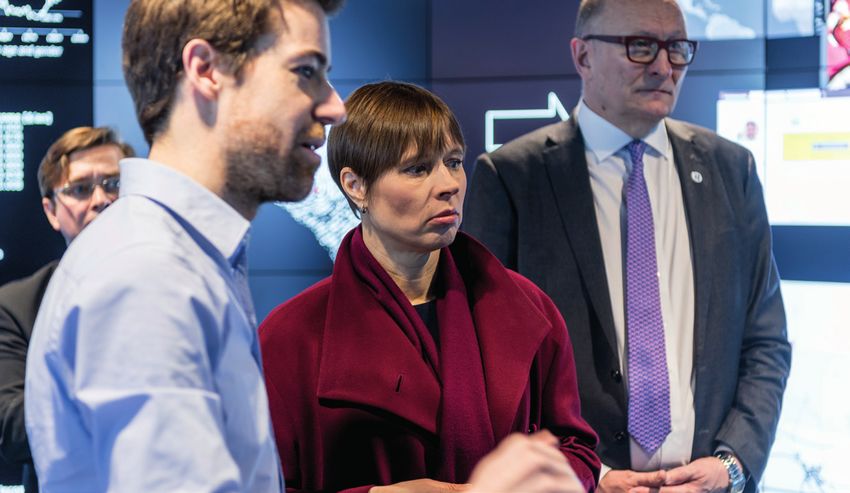
DATA SCIENCE INSTITUTE IMPERIAL COLLEGE LONDON DATA SCIENCE INSTITUTE IMPERIAL COLLEGE LONDON
4 55
INSTITUTE STRUCTURE, GOVERNANCE AND TEAM
Advisory Board and Management Committee Multi-disciplinary Research Labs
The Advisory Board steers the DSI’s strategy in research, The DSI promotes collaborations through dedicated
education and innovation with the contribution of external laboratories, bringing together researchers who
OUR LABS experts. The Internal Management committee, comprising investigate a common topic from different angles.
of the Director and three Deputy-Directors, provides
cross-College operational leadership for the institute. Academic Fellows
The DSI has a growing community of Academic
Institute Team Fellows from all disciplines across the College
The internal team is responsible for the functioning of with a common interest in data science.
the institute from upgrading, upscaling and maintaining Through the fellowship programme they get
the computing facilities to drafting and managing grants preferential access to the Data Observatory, can apply
and developing industrial partnership programmes. for funding from the DSI, and get support in grant
It also creates and coordinates communications, applications for research relevant to the Institute.
engagement and teaching activities both within the College
and with external institutional and research partners.
DR MARC DEISENROTH PROFESSOR ARMAND LEROI
Machine Learning Laboratory Social and Cultural Analytics
Laboratory
Visualisation of Big Data is
at the heart of our Institute.
Being able to translate large volumes of data in a visual
form that is both informative and accurate can be a
DR ALDO FAISAL PROFESSOR CHRIS PAIN challenging task, but it is becoming essential to aid
DR MARK KENNEDY
research decisions.
Behavioural Analytics Laboratory Data Assimilation Laboratory Business Analytics Laboratory Built in conjunction with the KPMG Centre for Advanced
Business Analytics, the Data Science Institute hosts a
world class visualisation facility, the only of its kind in
Europe.
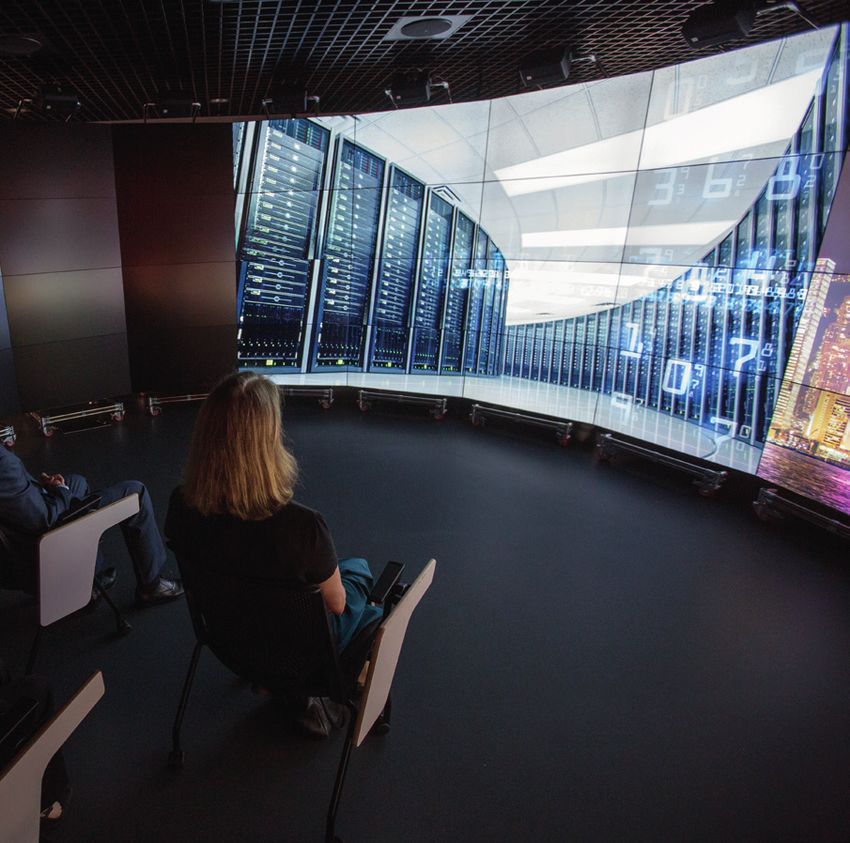
Our Data Observatory is made of 64 screens creating
a 313° panoramic view. They can be operated in theatre
mode using the whole Observatory as a single canvas
or in 5 separate sections.
DR YVES-ALEXANDRE DE PROFESSOR WILLIAM Thanks to its exceptional computing capabilities (32
MONTJOYE KNOTTENBELT workstations each with 12 logical cores, 32Gb ram and a
Algorithmic Society Laboratory Data Economy Laboratory 4Gb Nvidia 980 graphics card) and high resolution (132
million pixels, believed to be the largest in the UK) it is
possible to use this space to explore large amounts of data
and run complex simulated scenarios in real time.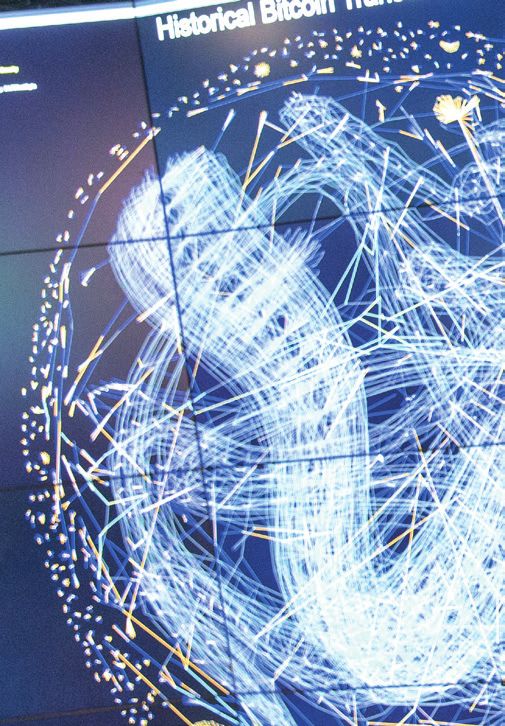
DATA SCIENCE INSTITUTE                                                                                   IMPERIAL COLLEGE LONDON       DATA SCIENCE INSTITUTE                                                                                 IMPERIAL COLLEGE LONDON
                                                                  6                                                                                                                                     7

                                        DATA ASSIMILATION LABORATORY                                                                                                        BUSINESS ANALYTICS LABORATORY

           Data assimilation is a methodology that combines measurements and numerical                                                           Established in 2014, the Business Analytics Laboratory brings together business-focused
           predictions to obtain an accurate representation of a modelled system.  It can be applied                                             academics and specialists in data science to do cutting-edge research on how data and
           to a variety of research topics such as oceanography and flooding motions, atmosphere                                                 artificial intelligence are changing business and society.
           and climate changes, urban and indoor flows, oil reservoirs, vehicle design and several
           industrial processes.
                                                                                                                                                                                     Increasing automation of work will
                                                                                                                                             In a not so distant future, many
                                                                                                                                             organisations will be significantly
      The Data Assimilation Laboratory
      promotes and leads scientific             It is estimated that by 2050, air                                                            affected by breakthroughs in data
                                                                                                                                             science and business analytics,         require faster organisational changes
                                                                                                                                             changing how they manage people,
                                                pollution will be responsible for
      advances        and      technological
      innovations         through        data                                                                                                operations and marketing. The           to remain competitive and efficient.
      assimilation, sensitivity/uncertainty/                                                                                                 Business     Analytics     Laboratory
      error analysis, design optimization       around four-million deaths per year.                                                         collaborates with companies that
                                                                                                                                                                                     PEOPLE FLOW
      and control, and computational                                                                                                         have problems, people and datasets
      modelling,        simulation        and                                                                                                available and that want to make the     This project was run by Dr Mark Kennedy     A finer-grained analysis measures
      visualisation. Our vision is to provide
                                                MAGIC project                                                                                most of this dynamic field, preparing   in collaboration with KPMG and analysed     variance among departments and
      leadership, in the UK and beyond,                                                                                                      for the change ahead.                   how employees moved within a bank           explains the role of other aspects as
                                                Buildings and transportation are           This project, run in a collaboration
      in data assimilation as a strategic                                                                                                                                            over the years, flowing through different   average direct reports per manager or
                                                the biggest culprits for high levels       between the Universities of Cambridge,
      resource for education and research.                                                                                                                                           job families and levels.                    total number of managers.
                                                of pollution in our cities. Traditional    Surrey and Imperial College London, will
                                                approaches to urban environmental          develop an integrated suite of tools that
                                                                                                                                                                                     The job status of around 100,000
                                                control rely on heating, ventilation and   will use natural ventilation in buildings
                                                                                                                                                                                     employees was monitored biweekly for a
                                                cooling (HVAC) systems that consume        to reduce demand for energy and ensure
                                                                                                                                                                                     period of 5 years.
                                                energy and produce toxins and CO2 in       air pollutants are diluted below levels
                                                                                                                                                                                     Looking at their moves, it is possible
                                                an unsustainable cycle.                    that cause adverse health effects.
                                                                                                                                                                                     to retrospectively identify the impact of
                                                                                                                                                                                     promotion and automation and make
                                                                                                                                                                                     better informed choices for the future.
DATA SCIENCE INSTITUTE                                                                                     IMPERIAL COLLEGE LONDON               DATA SCIENCE INSTITUTE                                                                                      IMPERIAL COLLEGE LONDON
                                                                   8                                                                                                                                                99

                                    ALGORITHMIC SOCIETY LABORATORY                                                                                                                  BEHAVIOURAL ANALYTICS LABORATORY

          Big data dramatically increases our ability to follow and influence the behaviour of                                                              Brain activity, eye tracking, and skeletal movements can now be monitored with an
          individuals and collectives. Together with plenty of opportunities in several and diverse                                                         unprecedented level of accuracy and this increased knowledge will be used to understand
          areas, from healthcare to transport, progress in this area also raises serious questions                                                          and predict human and biological behaviour much more effectively than before.
          around privacy and fairness.

      The Algorithmic Society Laboratory
      provides leadership, in the UK and       The algorithms make sense of data                                                                       The Behavioural Analytics Laboratory
                                                                                                                                                       taps into this huge pool of data          Wearable sensors will make
                                               providing useful statistical insight.                                                                                                             medical treatments more accurate,
      beyond, in the safe, anonymous, and                                                                                                              extracting   precious      information
      ethical use of large-scale behavioural                                                                                                           through analytical methods and
      datasets generated by the Internet of                                                                                                            algorithms to move from Big Data to
      Things (IoT) devices, mobile phones,
                                               OPAL project
                                                                                                                                                       Big Knowledge. The Lab represents         precise and timely.
      credit cards and browsers. It achieves                                                                                                           a focal point to develop innovative
      this by developing attacks against       OPAL is a joint project between MIT           Such interventions are successful if the                  technology and understand how the
      privacy-preserving protocols and         and Imperial College London with              data can be correlated to key indicators                  human brain works, bringing together      ETHOME project
      mechanisms, by proposing new safe        telecommunications partners Orange            such as poverty, literacy, population                     academics from across all the faculties
      mechanisms for use of large-scale                                                                                                                at Imperial College.                      In this project led by Dr Aldo Faisal,       This research offers doctors and
                                               and Telefonica. The core of the project       density, social cohesion, in an accurate,
      behavioural datasets, and by defining                                                                                                                                                      instead of collecting data in a laboratory   clinicians the tools and the information
                                               consists of an open suite of softwares        timely and reliable manner. Purpose of
      properties and metrics of fairness for                                                                                                                                                     setting, a group of more than 60             to make quicker and more accurate
                                               and algorithms that give access to            the project is to provide information that
      algorithmic decision making.                                                                                                                                                               volunteers were monitored “in the wild”.     diagnoses and interventions.
                                               statistical information extracted from        has statistic relevance while ensuring
      Research and results from the                                                                                                                                                              Ubiquitous sensors recorded brain            This type of work holds a huge potential
                                               anonymised, secured and formatted             that privacy and fairness are maintained.
      Algorithmic Society Lab have had                                                                                                                                                           digital data while they performed simple     as, in the long term, it will allow doctors
                                               data. The data can then be used by
      significant public policy implication,                                                                                                                                                     movements in a realistic situation like      to link changes in emotional states
                                               national statistical offices, civil society                                 The way we move
      e.g. in reports of United Nations, FTC                                                                                                                                                     having breakfast.                            caused by stress, anxiety and risky
                                               organisations, media partners and other                                     around is so unique
      and the European Commission.                                                                                                                                                               A combination of their skeletal and          behaviour, for example, to specific
                                               bodies to make informed decisions and                                       that, very quickly,                                                   eye movements allowed researchers to         biomarkers.      Personalised      medical
                                               efficient interventions.                                                    it identifies us                                                      establish strong correlations between        treatments could then be delivered at an
                                                                                                                           amongst millions                                                      movements and brain activity.                early stage of the disease.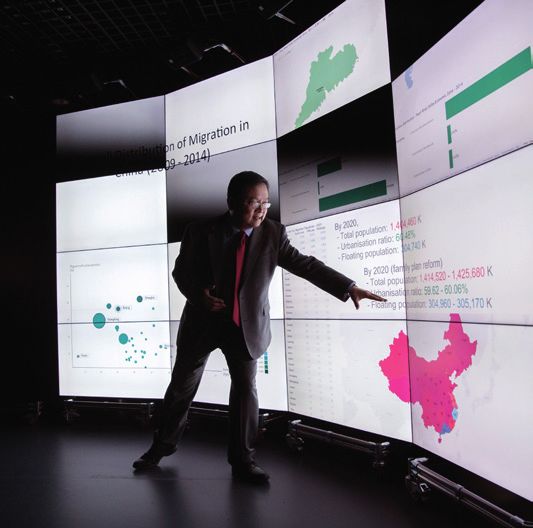
DATA SCIENCE INSTITUTE                                                                                    IMPERIAL COLLEGE LONDON         DATA SCIENCE INSTITUTE                                                                                   IMPERIAL COLLEGE LONDON
                                                                  10
                                                                  10                                                                                                                                         11

                                             DATA ECONOMY LABORATORY                                                                                                 SOCIAL AND CULTURAL ANALYTICS LABORATORY

           Large public datasets are nowadays available through government open-source                                                               The Social and Cultural Analytics (SOCA) Laboratory was launched in November 2015 and
           websites such as the UK-based www.data.gov.uk. A deluge of data is also collected by                                                      brings together Imperial College researchers and colleagues from allied institutions, to
           private companies and datasets are sold and traded as commodities.                                                                        investigate how culture and society work.

      Astrophysics,
      biology,
                        particle
                  climate
                                     physics,
                               science   and     Data science is the catalyst for                                                               The Lab members study the evolution
                                                                                                                                                of music, the neurobiology of              Can algorithms find the secret to
                                                 advances in many research areas,                                                                                                          Pop success without listening to a
      meteorology can now understand and                                                                                                        creativity, the dynamics of twitter
      describe the world in incredible detail                                                                                                   networks, digital markets and online
      whereas medicine and healthcare are                                                                                                       collaborations, the application of text
      becoming more accurate and efficient       both in the private and public sectors.                                                        mining to health and much more.            single note?
      than ever. Economics, business
      and finance, but also sociology                                                                                                           Their research looks at consumer and
                                                 BLOCKCHAIN                                                                                                                                THE SECRET SCIENCE OF POP
      and political science benefit from                                                                                                        social network data in the form of text,
      collected data as it offers businesses,                                                                                                   image, video, sound, to find out what      The SOCA lab director, professor Armand    He then teamed up with BBC research
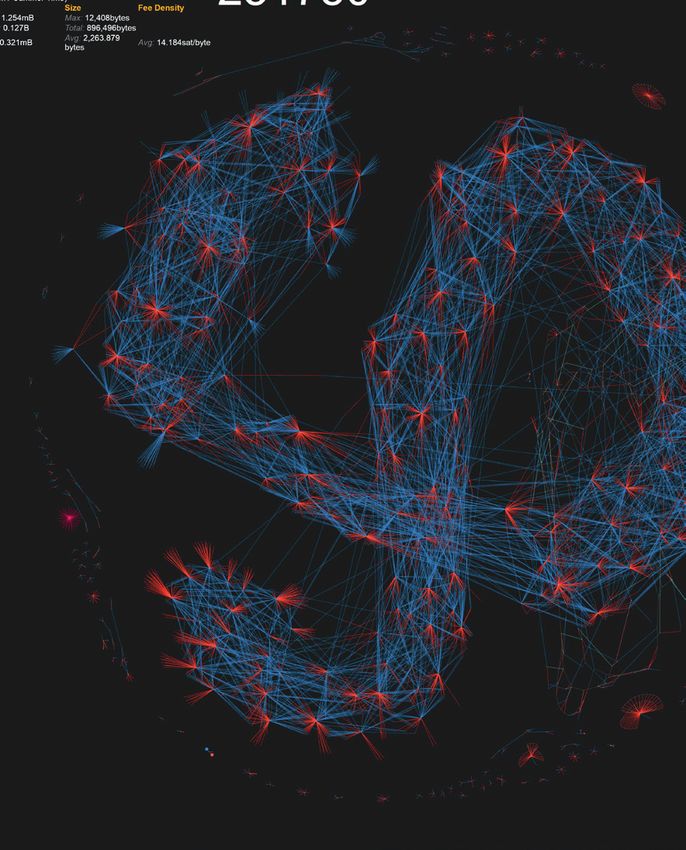
                                                 Blockchain technology records and         Our visualisation projects on Bitcoin                                                           Leroi, worked with a group of scientists   and development unit, and tested his
      governments        and        non-profit                                                                                                  people think, buy, desire, and how
                                                 transfers data in a transparent and       transactions have enabled researchers                                                           and researchers to analyse over 50 years   algorithms on thousands of demo
      organisations insights into human                                                                                                         they behave. The lab engages with art
                                                 safe way that is resistant to outages.    at Imperial College to identify in real time                                                    of UK chart music. He investigated the     tracks uploaded to the BBC Introducing
      behaviour and social dynamics.                                                                                                            historians, science historians, literary
                                                 Participants trade with each other        anomalies and attacks on the system.                                                            evolution of pop music through the         database to discover if this method
                                                                                                                                                critics, designers and artists who
                                                 without requiring a third party (like a                                                                                                   major revolutions in his historic chart    would allow him to predict which tracks
      At the Data Economy Laboratory,                                                                                                           are interested in studying the nature
                                                 bank or power company) to process         In collaboration with the HNA Research                                                          data, looking for those artists who        are most likely to become a hit without
      we are carrying out research into                                                                                                         of creativity, the history of cultural
                                                 the transaction because they rely on      Centre for Future Data Ecosystems                                                               transformed the musical landscape to       listening to a note.
      the economic, legal and policy                                                                                                            change, and what makes most art and
                                                 a distributed consensus in the online     this laboratory is currently developing                                                         identify common traits and patterns that
      mechanisms        underlying      the                                                                                                     science disappear while some of it
                                                 world where the transactions occur.       different technologies based on                                                                 would allow him to predict the next big    His research appeared on BBC four in
      emerging Data Economy in the UK                                                                                                           lives forever.
                                                                                           Blockchain and it is applying them to                                                           success.                                   March 2018.
      and worldwide. Collaborating with
                                                 This technology is nevertheless prone     areas such as loyalty management and
      our colleagues in economics and
                                                 to attacks and malfunctioning that can    logistics.
      social science, we research open data
                                                 compromise its reliability.
      business models, digital money and
      digital service exchanges.
DATA SCIENCE INSTITUTE IMPERIAL COLLEGE LONDON DATA SCIENCE INSTITUTE IMPERIAL COLLEGE LONDON
12 13
13
EDUCATION
One of the core objectives of the Data Science Institute is to promote the training and
education of the new generation of data scientists by developing and coordinating
the teaching of data science in degree courses and executive education, and by
engaging students in data science activities and research projects.
The Data Science Institute already provides
teaching for students on Imperial’s MSc
Business Analytics course and MSc Health Data
Analytics and Machine Learning course, as well
as to undergraduate MEng Design Engineering
MACHINE LEARNING LABORATORY students.
For students interested in data science,
there are a number of courses available
The term Machine Learning refers to a branch of artificial intelligence in which algorithms at Imperial College that are highly students over the summer period who
identify patterns in large amount of data, build models and take decisions about them, applicable in many research areas. undertake data science training within the
They cover topics like: Research Opportunity Programme.
in an iterative process that makes the model more and more robust with minimal human 1. Advanced Machine Learning
intervention, thus resembling the traditional human learning process. 2. Data Management and Ethics As the job market continues to change and new
3. Big Data skills are in demand, many companies come
to us to provide further training to their senior
The DSI supported the Imperial College leadership.
The vision of the Machine Learning
Laboratory is to promote and lead Autonomous systems will learn from Data Science Society Talent Development
programme, and mentored their students to
The Data Science Institute hosted more than
30 lectures for industry partners in our Data
data and make informed decisions.
scientific advances in this area
present their research to company sponsors in Observatory, addressing specific companies’
developing autonomous decision-
the Data Observatory. needs and contributing to several continuous
making systems that learn from small
education programmes.
amounts of data. Research areas BREXIT AT THE BORDER The Institute is involved in Outreach activities
that fall into this category include
for school-age children. These activities In collaboration with the Public Affairs team, we
probabilistic modelling, transfer In this research project, Dr Ke Han and Researchers looked at results for include a collaboration with the American hosted a series of workshops for civil servants,
learning, semi-supervised learning, his team simulated how motorway different border delays and found that School in London to host 2 student placements discussing global issues (Food and Nutrition,
active learning and reinforcement queues could stack up in the hypothesis just two extra minutes spent on each in collaboration with the charity Place2B, Air Pollution) and how research in data science
learning. of longer border checks on vehicles vehicle at the border could more than and the supervision of many undergraduate can contribute to address them.
at the ferry port in Dover, and at the triple the existing queues on the M20/
Eurotunnel in Folkestone. The challenge A20, to 29 miles. At peak times, Kent
was to predict the congestion in terms of could see nearly five hours of traffic
both queue length and travel time. delays.
This meant measuring queuing patterns These results were displayed on the
of freight and passenger vehicles during Data Observatory, appeared on the BBC
the day and studying their interaction programme Inside Out South East and
with the local traffic. prompted a political discussion on how
to deal with this scenario.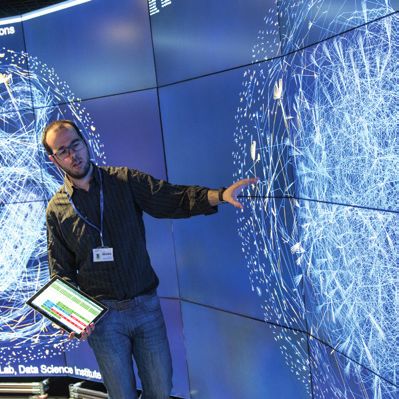
DATA SCIENCE INSTITUTE                                                                                         IMPERIAL COLLEGE LONDON              DATA SCIENCE INSTITUTE                                                                  IMPERIAL COLLEGE LONDON
                                                                     14                                                                                                                                     15

INSTITUTE GROWTH AND GLOBAL IMPACT
                                 Attracted         Built the              Used the          Developed          Supported           Carried out
                                 over £20m in      state-of-              observatory       5 major            over 50             more than

RESEARCH
                                 funding for       the-art Data           for over 15       software           research            30 research
                                 data science      Observatory            research          systems and        project bids        collaborations
                                 research,         for large scale        projects, built   published          from all            across the
                                 technology        visualisation.         30 visual         more than          faculties.          College.
                                                                          applications.     300 papers.

EXTERNAL
                                 Developed robust biomedical data                Delivered 12 Data Spark              Published a White
                                 management platforms which are                  projects in collaboration            Paper, co-authored by
                                 being optimised for use to support              with the Business School to          Dr de Montjoye, on the

IMPACT
                                 major initiatives such as UK                    establish new relationships          issue of privacy in the
                                 Biobank and the College’s BRC                   with key industry partners.          cyberspace.
                                 with the NHS Trust.

                                                                                                                                                                HIGHLIGHTED VISITS
OUR PRIORITIES FOR THE FUTURE                                                                                                                                    • HRH Prince William Duke of Cambridge

The DSI ambition is to become a world leader institution in data science research.                                                                               • HRH Prince Andrew Duke of York

To increase our global reach we are now focusing on:                                                                                                             • Albert II Prince of Monaco

                                                                                                                                                                 • Teo Chee Hean, Deputy Prime Minister of Singapore
                        Expanding our research scope with new DSI Labs.                                                                                          • Cai Qi, Communist Party Secretary of Beijing
                        Establishing new Laboratories in the area of Medical Informatics, Mathematical
                        Foundations of Data Science and Robotics. The new Labs will be the main vehicle to                                                       • Kersti Kaljulaid, President of Estonia
                        engage with academics within the College and build a strong data science ecosystem.
                                                                                                                                                                 • George Osborne, Former Chancellor of the Exchequer
                            Consolidating our education programme.                                                                                               • Karen Bradley MP, Former Secretary of State for Digital, Culture, Media and Sport
                            Developing a Master of Research programme in data science and two doctoral training
                            centres in collaboration with other faculties at Imperial College and with external                                                  • Matt Hancock MP, Secretary of State for Health and Social Care
                            academic partners. Creating a systematic training programme to scale up our successful
                            executive education activities.                                                                                                      • Michael Gove MP, Secretary of State for Environment, Food and Rural Affairs

                                                                                                                                                                 • Jan Tore Sanner, Norway’s Minister for Local Government and Modernisation
                                Strengthening our industrial collaboration.
                                Increasing the current strong collaboration with industrial sectors worldwide, deepening                                         • Thomas Stelzer, Governor of Upper Austria
                                our relationship with our existing partners and building joint research programmes with
                                new ones.
                                                                                                                                                                 • President of China Xi Jinping and First Lady Peng Liyuan

                                                                                                                                                                 • Professor Muhammad Yunus, Nobel prize winner
                                    Establishing an international network.                                                                                       • Dr Alexander Yakovenko, Ambassador of Russia for the UK
                                    Building a network with data science institutes in the UK and internationally to shape the
                                    future of research in this area. Current focus is on global initiatives such as AI for good,                                 • Professor Manuel Heitor, Portugal’s Minister of Science, Technology and Higher Education
                                    data privacy management and AI for healthcare.
                                                                                                                                                                 • Professor Liu Jiming, Associate Vice-President (Research), University of Singapore

                                                                                                                                                                 • Guanshan Tong, CTO, BOE Technolgy group
                                        Engaging with institutional partners.
                                        Collaborating with institutions and public bodies and providing advice to policy makers                                  • Dr Grigory V. Trubnikov, Russian Science Minister
                                        on data science and its implications for research and for society.
DATA SCIENCE
INSTITUTE      www.imperial.ac.uk/data-science/

2018           @ImperialDSI

You can also read


