Holography and the Luxury Industry - Communication - MDPI
←
→
Page content transcription
If your browser does not render page correctly, please read the page content below
hv
               photonics

Communication
Holography and the Luxury Industry
V. Michael Bove, Jr. *             and Nicole A. Reader

                                          Modern Mirror, Inc., New York, NY 10018, USA; nicole.reader@themodernmirror.com
                                          * Correspondence: vmbove@themodernmirror.com

                                          Abstract: The luxury goods industry and holography have a lengthy history together. In this article,
                                          we review the applications of holography to the industry and the relevant technical requirements,
                                          in particular when the hologram itself is the luxury item, when the hologram is used to promote
                                          luxury items, and when the hologram is used for authentication of luxury items. We then explore
                                          some possible scenarios for the evolution of this relationship.

                                          Keywords: holography; 3D imaging; 3D display; optical authentication; retail applications of photonics

                                          1. Introduction
                                               Holography, which embodies a three-dimensional image in a thin surface, either
                                          acting as a window to a virtual volume behind the hologram plane or projecting a 3D
                                          image in space in front of the hologram, was a groundbreaking imaging technology
                                          as well as a cultural artifact influencing thought about the intersection of physical and
                                          virtual worlds long before the arrival of the modern conceptions of augmented reality
                                          or virtual reality. A number of authors, in particular Sean Johnston [1,2], have written at
                                          length about the simultaneous scientific and artistic impact of holograms. The commercial
                                          impact of holography as a general imaging medium—as opposed to specialized technical
                                applications—has, however, been at best relatively modest.

                                               The luxury industry, which prizes both craftsmanship and innovation, has on multiple
Citation: Bove, V.M., Jr.; Reader, N.A.   occasions turned to holography for its unique visual experiences and/or for its technical
Holography and the Luxury Industry.       affordances. While Johnston’s books and authoritative references on holographic applica-
Photonics 2021, 8, 219. https://          tions [3,4] mention a few examples of holograms in luxury, the present authors observe
doi.org/10.3390/photonics8060219          that despite the long history, there does not appear to have been a comprehensive study
                                          published focusing on this particular field of application. In this article, we will examine
Received: 16 May 2021
                                          the history of the use of holography in this industry and the experiential and technical
Accepted: 10 June 2021
                                          requirements, then look into how some current technological developments may lead to
Published: 13 June 2021
                                          increasing use of display holography in luxury.
                                               The authors prefer to reserve the use of the word “hologram” to refer to true holograms,
Publisher’s Note: MDPI stays neutral
                                          which create a three-dimensional light field through the use of extremely fine diffraction
with regard to jurisdictional claims in
                                          patterns, but (like the general public) the industry has more often than not used the
published maps and institutional affil-
                                          term to refer to other stereoscopic or multiscopic 3D display technologies, augmented
iations.
                                          or virtual reality headsets or mobile apps, or even ethereal 2D displays such as Pepper’s
                                          Ghosts or projections onto fog screens. Indeed, a recent search of the archives of the
                                          publication Luxury Daily for articles mentioning “hologram” turned up 66 entries, none of
                                          which relates to a diffractive technology [5]. In addition to true holograms, we will also
Copyright: © 2021 by the authors.
                                          consider some notable examples of pseudo-holograms that were applied when a particular
Licensee MDPI, Basel, Switzerland.
                                          hologram-like experience was desired but true holograms were not practical.
This article is an open access article
distributed under the terms and
                                          2. Application Domains
conditions of the Creative Commons
Attribution (CC BY) license (https://
                                               The personal luxury goods industry is usually regarded as combining the sectors of
creativecommons.org/licenses/by/
                                          designer clothing and footwear, luxury bags and accessories, luxury watches and jewelry,
4.0/).                                    and luxury fragrances and cosmetics, and in fiscal 2019, had sales of US$281B [6].

Photonics 2021, 8, 219. https://doi.org/10.3390/photonics8060219                                       https://www.mdpi.com/journal/photonics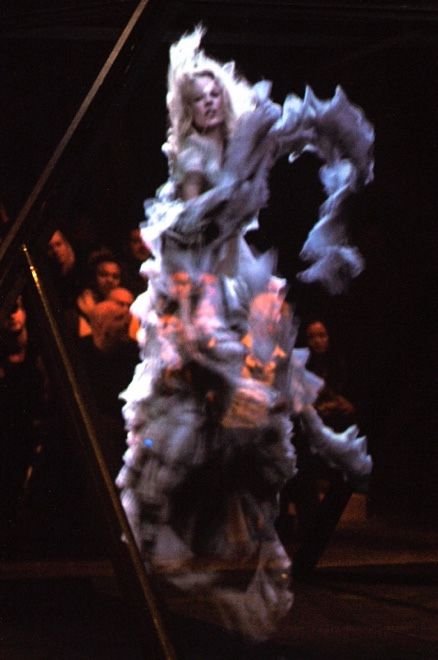
The personal luxury goods industry is usually regarded as combining the s
designer clothing and footwear, luxury bags and accessories, luxury watches and
and luxury fragrances and cosmetics, and in fiscal 2019, had sales of US$281B [6]
Photonics 2021, 8, 219
There have been three main applications of holographic technology 2 of 10
in th
business: where the hologram is the luxury item itself (or at least a component
where the hologram is used in the promotion of luxury items, and where the hol
used as part
There haveof anti-counterfeiting
been or traceability
three main applications of holographicof luxury items.
technology These
in the luxury will be d
in separate
business: subsections.
where the hologram is the luxury item itself (or at least a component thereof),
where the hologram is used in the promotion of luxury items, and where the hologram is
used as part of anti-counterfeiting or traceability of luxury items. These will be discussed
2.1. Holograms as Luxury Merchandise
in separate subsections.
Foil embossed with holographic diffraction patterns (to be discussed in mo
2.1.
in Holograms as Luxuryhas
a later section) Merchandise
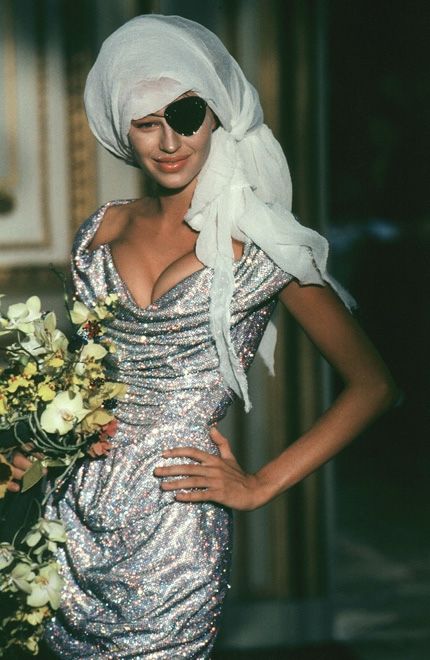
been applied to garments to create an iridescent effect,
Foil embossed with holographic
dimensional rainbow images or patterns. diffraction patterns
While (toembossed
be discussedholograms
in more detailhad bee
in a later section) has been applied to garments to create an iridescent effect, or three-
used as appliques on garments [7], a company called Space
dimensional rainbow images or patterns. While embossed holograms had been earlier
Time was the first to
a process
used for on
as appliques creating
garmentsmass-produced
[7], a company calledholographic
Space Time wasfabrics (including
the first to develop viscose
a
thane)for
process and then mass-produced
creating releasing in 1989 a line of
holographic garments
fabrics based
(including on and
viscose the urethane)
material [8,9].
and thendrew
terial releasing in 1989attention
wider a line of garments
when based on the material
it appeared [8,9]. This Vivienne
in designer material Wes
drew wider attention when it appeared in designer Vivienne Westwood’s Spring/Summer
Spring/Summer 1998 collection (Figure 1). A newer generation of diffractive fab
1998 collection (Figure 1). A newer generation of diffractive fabrics has been embraced by
been embraced
fashion by fashion
in recent years; in recent
particularly years;
in the Fall 2018particularly
season, when in suchthe Fall 2018
fabrics season, wh
appeared
fabrics appeared in the runway collections of numerous designers
in the runway collections of numerous designers and brands including Tom Ford, Gucci, and brands in
Lanvin, Maison
Tom Ford, Margiela,
Gucci, and Off-White
Lanvin, Maison[10].Margiela, and Off-White [10].
Figure
Figure 1. Dress
1. Dress mademade from diffractive
from diffractive fabric Westwood’s
fabric in Vivienne in Vivienne Westwood’s1998
Spring/Summer Spring/Summer
collection 19
tion. (Photo
(Photo ©FirstVIEW/IMAXtree.com,
©FirstVIEW/IMAXtree.com, used with permission.)
used with permission).
Volume reflection (Denisyuk) holograms (Figure 2) [11] have been made into earrings,
Volume reflection (Denisyuk) holograms (Figure 2) [11] have been made
pendants, watch faces, and other jewelry (Figure 3), often by holographers themselves
rings,than
rather pendants,
by jewelrywatch faces,
companies [12].and other
While jewelry (Figure
photopolymers 3), silver
or bleached oftenhalide
by holographe
can
selves rather than by jewelry companies [12]. While photopolymers or bleached s
be used in this application, the preferred material is dichromated gelatin as it provides
particularly
ide can bebright
usedimages
in this[13], although image
application, quality frommaterial
the preferred holographic jewelry can stillgelatin
is dichromated
be problematic because it requires direct illumination, which may not be the situation
vides particularly bright images [13], although image quality from holographic
when holograms are being worn on the body. One well-known branded example of a
can still bejewelry
holographic problematic because
product is it hologram-faced
a series of requires direct illumination,
watches that Fossilwhich
releasedmay
in not b
uation
the whenaholograms
early 1990s; are
reissue limited to being worncame
654 watches on the body.
out in One well-known branded
2019 [14].
of a holographic jewelry product is a series of hologram-faced watches that Fossil
in the early 1990s; a reissue limited to 654 watches came out in 2019 [14].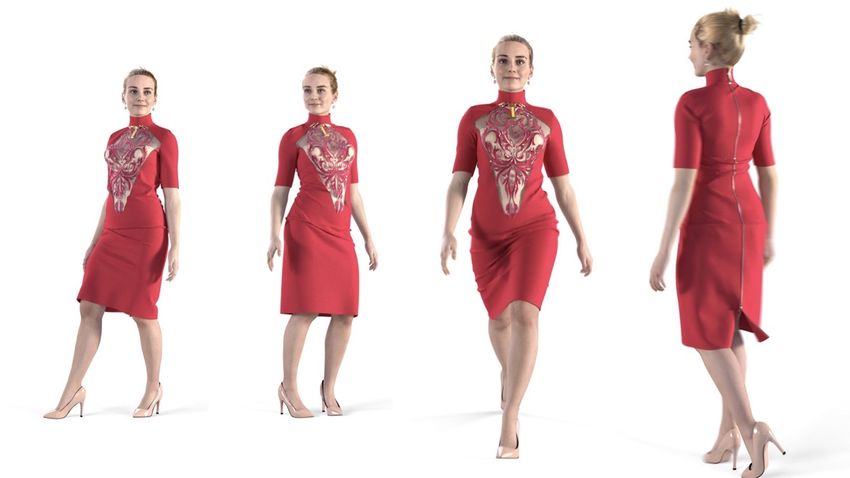
Photonics 2021, 8, 219 3 of 10
Photonics 2021,
Photonics 2021, 8,
8, xx FOR
FOR PEER
PEER REVIEW
REVIEW 33 of
of 10
10
Figure
Figure2.2.
Figure 2.Creating
Creatingaaareflection
Creating reflectionvolume
reflection volumehologram:
volume hologram:laser
hologram: laserillumination
laser illuminationisis
illumination isbrought
broughttoto
brought toaaaphoto-sensitive
photo-sensitive
photo-sensitive
plate
plate from the opposite side as the object; when the resulting hologram is illuminatedwith
plate from
from the
theopposite
opposite side
sideas
asthe
theobject;
object;when
when the
theresulting
resulting hologram
hologram is illuminated
is illuminated withwhite
with white
white
light
light from
from the
the same
same side
side as
as the
the original
original laser,
laser, a a
3D3D image
image ofof the
the object
object isis reconstructed.
reconstructed.
light from the same side as the original laser, a 3D image of the object is reconstructed.
Figure 3.
Figure 3. Couture 18K
18K gold ring
ring set with
with diamonds, opal,
opal, and
and aa dichromated
dichromated gelatin
gelatin reflection
reflection hol-
hol-
Figure 3. Couture
Couture 18Kgold
gold ringset set withdiamonds,
diamonds, opal, and a dichromated gelatin reflection
ogram encapsulated
ogram encapsulated in fused
in fused silica.
silica. Created
Created by Mirasety,
by Mirasety, a collaboration
a collaboration of Francesco
of Francesco Mazzero,
Mazzero, Mi-
Mi-
hologram encapsulated in fused silica. Created by Mirasety, a collaboration of Francesco Mazzero,
chael Crawford, and August Muth. (Courtesy Mirasety, photo by Francesco
chael Crawford, and August Muth. (Courtesy Mirasety, photo by Francesco Mazzero.) Mazzero.)
Michael Crawford, and August Muth (Courtesy Mirasety, photo by Francesco Mazzero).
2.2.Holograms
2.2.
2.2. Hologramsin
Holograms inLuxury
in LuxuryMerchandise
Luxury MerchandisePromotion
Merchandise Promotion
Promotion
Creditedasas
Credited
Credited asthe
thefirst
the first
first successful
successful
successful use
use
use of
of of holography
holography
holography to promote
to promote
to promote luxury
luxury
luxury merchandise,
merchandise,
merchandise, a 50-aa
50-by-60
50-by-60
by-60 cm pulsed-laser
cm pulsed-laser
cm pulsed-laser transmission
transmission
transmission hologram
hologram
hologram of
of theof the Leith
the and
Leith Leith and Upatnieks
and Upatnieks
Upatnieks type (Figure
type (Figure
type (Figure 4) [15]
4)
4) [15]
[15] was
was made
made for
for Cartier
Cartier in
in 1972
1972 by
by G.
G. Robert
Robert Schinella
Schinella at
at McDonnell
McDonnell
was made for Cartier in 1972 by G. Robert Schinella at McDonnell Douglas Missouri, show- Douglas
Douglas Mis-
Mis-
souri,
souri,
ing showing
showinghand
a woman’s a woman’s
a woman’s
wearing hand
hand wearing a
wearing ring
a diamond diamond
a diamond ring and
ring and
and holding holding a diamond
holding bracelet
a diamond a diamond bracelet
bracelet
(Figure 5).
(Figure
(Figure
This 5).
was5). This was
This
mounted was mounted
inmounted
the window in the
in the window
of window
Cartier’sof of Cartier’s
Cartier’s
Fifth Avenue Fifth
Fifth Avenue
Avenue
location location
in location
New in City,
in
York New
New
York
and
York City, and
because
City, and because
of this ofhologram’s
sort of
because of this sort
this sort of
of requirement
hologram’s requirement
hologram’s requirement for aa monochromatic
for a monochromatic
for monochromatic
light source, waslight
light
source, was
illuminated
source, wasbyilluminated
a mercuryby
illuminated by
arcaa lamp.
mercury
mercury arc
Thearc lamp.
hand The hand
appeared
lamp. The hand appeared
36 cm forward
appeared 36on
36 cmthe
cm forward
window
forward on[1]
on the
the
window
(pp.
window [1] (pp.
352–353).
[1] (pp. 352–353).
352–353).
Another store-window appearance of holography in the luxury jewelry domain that is
regarded as iconic by many holographers came in conjunction with the late-1986 opening
of Tiffany’s on Old Bond Street in London. The company Holovision was commissioned
to produce a holographic homage to the well-known scene from the film Breakfast at
Tiffany’s. In the hologram, the woman at the table wears a necklace by Paloma Picasso
and is surrounded by Tiffany’s merchandise. Design work was by holographer Martin
Richardson and the 50-by-60 cm image was captured in the pulsed-laser studio at the Royal
College of Art and then transferred to a white-light-viewable transmission plate that was
back-illuminated by a spotlight and placed in the shop window.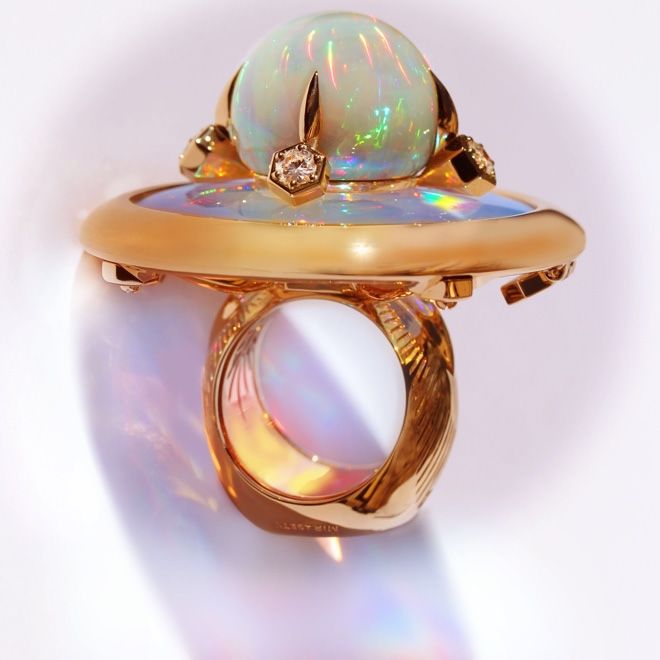
Photonics 2021, 8, x FOR PEER REVIEW 4 of 1
Photonics 2021, 8, x FOR PEER REVIEW 4 of 10
Photonics 2021, 8, 219 4 of 10
Figure
Figure4.
Figure Creating
4.4.Creating
Creating and
and andviewing an off-axis
viewing
viewing an off-axis transmission
an off-axis hologram:
transmission
transmission hologram: photo-sensitive
hologram: materialreceives
photo-sensitive
photo-sensitive material receives
material receive
an
aninterference
interference
interference pattern
pattern
pattern between
between
betweenaareference
reference
a referencebeam
beam andlight
and
beam light
and reflected
reflected
light from
from an an
reflected object.
object.
from When
an When the
the When
object. re- the re
sulting
sultinghologram
resulting hologram
hologram is illuminated
is
is illuminated
illuminatedwith thethe
with
with same
the wavelength
same
same wavelength
wavelengthof monochromatic
of monochromatic lightlight
of monochromatic at the
at same
theat
light po-
same
the same po
sition
sitionasas
position the
as thereference
the reference
reference beam,
beam,a 3D
beam, aimage
a 3D image
3D ofofthe
image ofobject
the isisreconstructed
object
the object reconstructed and
andvisible
is reconstructed andthrough
visible visiblethe
through theplate.
plate. the plat
through
Figure 5. Pulsed-laser hologram made for Cartier window display, 1972. (Photo credit: MIT Mu-
seum, gift of Marian B. Javits, photo by Barry Heatherington.)
Figure5.5.Pulsed-laser
Figure Pulsed-laser hologram
hologram mademade for Cartier
for Cartier windowwindow
display, display,
1972 1972.
(Photo credit:(Photo credit: MIT Mu
MIT Museum,
Another store-window appearance of holography in the luxury jewelry domain that
seum,
gift of gift ofB.Marian
Marian Javits, B. Javits,
photo by photo
Barry by Barry Heatherington.)
Heatherington).
is regarded as iconic by many holographers came in conjunction with the late-1986 open-
ing of Tiffany’s on Old Bond Street in London. The company Holovision was commis-
Unlike the store-window
scene in the film, the hologram showed the woman from the back, and
sionedAnother
to produce a holographicappearance
homage to the ofwell-known
holography in the
scene fromluxury jewelry
the film Breakfastdomain tha
The British Journal of Photography reported at the time, “It is apparently driving the
is regarded as iconic by many holographers came in conjunction
at Tiffany’s. In the hologram, the woman at the table wears a necklace by Paloma Picasso with the late-1986 open
Tiffany staff gently mad because people keep coming into the shop wanting to see the
ing is
and ofsurrounded
Tiffany’s on by Old Bondmerchandise.
Tiffany’s Street in London. The company
Design work Holovision
was by holographer was commis
Martin
other side—the girl’s face. This of course is exactly what it was designed to do—get people
sioned
Richardson
in.” [16]. to produce a holographic
and the 50-by-60 cm image homage to the
was captured well-known scene
in the pulsed-laser from the
studio atfilm
theBreakfas
Royal College
at Tiffany’s. of Art and
In the maker
In 1989, hosiery then
hologram, transferred to a white-light-viewable
the woman atHolographics
Hue commissioned the table wears transmission
a necklace
North plate
by Paloma
at an estimated cost Picass
that
and
of was back-illuminated
is surrounded
$10,000 by a
by Tiffany’s
to create a 76-by-102 spotlight and
merchandise.
cm transmission placed in the shop
Design rainbow
white-light window.
work was by holographer
hologram showing Marti
Unlike
Richardson
several the
andscene
thein50-by-60
angle-multiplexed the film, of
images thea leg
cm hologram
image
model wasshowed
in the
captured
tights. Thiswoman
in the
was from the
as back,
pulsed-laser
installed and
studio
a point-of- at th
The
sale British
display Journal
in of Photography
Bloomingdale’s in Newreported
York at
Citythe time,
[17]. “It is apparently driving the Tif-
Royal College of Art and then transferred to a white-light-viewable transmission plat
fany Because
staff gently
of itsmad
cost,because people
complexity, andkeep coming
rarity, into theportraiture
holographic shop wanting tosort
of the see discussed
the other
that was back-illuminated by a spotlight and placed in the shop window.
aboveUnlike
might itself be considered
the scene a luxury
in the film, good. In recent
the hologram showedyears
thedigital
woman holograms
from the(toback, an
The British Journal of Photography reported at the time, “It is apparently driving the Tif
fany staff gently mad because people keep coming into the shop wanting to see the othe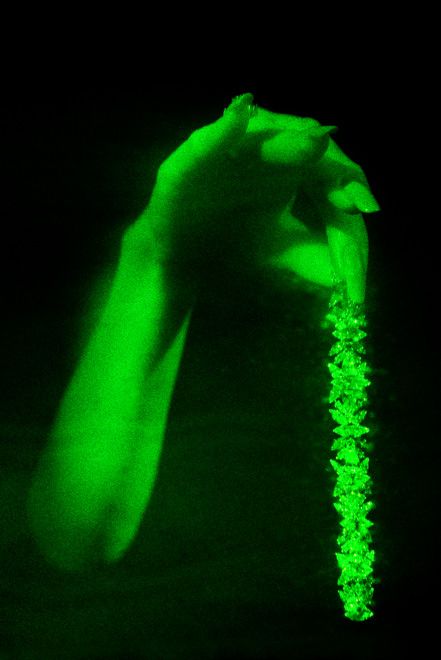
of $10,000 to create a 76-by-102 cm transmission white-light rainbow hologram showin
several angle-multiplexed images of a leg model in tights. This was installed as a point
of-sale display in Bloomingdale’s in New York City [17].
Because of its cost, complexity, and rarity, holographic portraiture of the sort dis
Photonics 2021, 8, 219 5 of 10
cussed above might itself be considered a luxury good. In recent years digital hologram
(to be discussed below) have been used for portraiture in addition to pulsed laser analo
holograms [3] (pp. 306–312) [4] (pp. 512–515). Perhaps the best known example is a 200
be discussed
digital below) have
holographic beenofused
portrait for portraiture
Queen Elizabeth IIincaptured
addition tobypulsed laser analog
holographer Rob Munda
holograms
as 205 parallax images, this also appeared as an embossed hologram (toisbe
[3] (pp. 306–312) [4] (pp. 512–515). Perhaps the best known example a 2004
discussed i
digital holographic portrait of Queen Elizabeth II captured by holographer Rob Munday as
the following section) on a 2012 £10 postage stamp issued by Jersey Post [4] (p. 612).
205 parallax images, this also appeared as an embossed hologram (to be discussed in the
The development of full-color digital holographic printing in the late 1990s and earl
following section) on a 2012 £10 postage stamp issued by Jersey Post [4] (p. 612).
2000s,
Thewith its abilityoftofull-color
development create arbitrarily large white-light-viewable
digital holographic printing in the late 1990sreflection hologram
and early
2000s, with its ability to create arbitrarily large white-light-viewable reflection holograms model
without the need of a holography studio—only requiring 3D computer graphics
or sets of
without the2D
need parallax views of studio—only
of a holography scenes—greatly increased
requiring the potential
3D computer graphics availability
models of ho
or sets of 2D
lography as aparallax views of
promotional scenes—greatly
medium increased However,
[4] (pp. 507–511). the potential so availability of
far, this process doe
holography as a promotional medium [4] (pp. 507–511). However, so far, this
not appear to have been much used in the luxury goods business, one example application process does
not appear to have beenbeing
in apparel/footwear much used in the
a series ofluxury goods business,
large display one example
holograms by XYZapplication
Imaging in 2005
in apparel/footwear being a series of large display holograms by XYZ Imaging in 2005.
Three 1-by-1.2 m prints and one 1-by-1.5 m print were produced for Puma’s campaign fo
Three 1-by-1.2 m prints and one 1-by-1.5 m print were produced for Puma’s campaign for
their Ferrari branded footwear and placed in two Montreal Foot Locker stores during th
their Ferrari branded footwear and placed in two Montreal Foot Locker stores during the
MontrealGrand
Montreal Grand Prix
Prix in in June
June 20052005 (Figure
(Figure 6). Imagery
6). Imagery included
included close-ups
close-ups of shoesof with
shoes with
racetrack in the background, and a car morphing into a shoe. In
a racetrack in the background, and a car morphing into a shoe. In a similar promotional a similar promotiona
campaignforfor
campaign Nike,
Nike, fourfour large-format
large-format holograms
holograms were produced
were produced for the store
for the Niketown Niketown
on stor
on Oxford
Oxford StreetStreet in London
in London [18]. [18].
Figure6.6.Digital
Figure Digital holographic
holographic print
print of Ferrari
of Ferrari shoes,shoes, 2005. (Courtesy
2005 (Courtesy GeolaUAB).
Geola Digital Digital UAB.)
When
Whenholography
holography is mentioned,
is mentioned,fashion writers
fashion often often
writers recall supermodel Kate Moss’
recall supermodel Kate Moss
virtual, ethereal appearance at Alexander McQueen’s autumn/winter 2006 “Windows
virtual, ethereal appearance at Alexander McQueen’s autumn/winter 2006 “Windows o
of Culloden” collection show in Paris (Figure 7), though that was actually a pyramidal
Culloden” collection show in Paris (Figure 7), though that was actually a pyramidal con
configuration of the 19th-century stage illusion called a Pepper’s Ghost rather than an
figuration
actual of the
hologram 19th-century
[19]. McQueen had stage illusion interest
a continued called ainPepper’s Ghost rather
holographic-style than an actua
experiences;
hologram
for example[19]. McQueentohad
the invitation his aspring/summer
continued interest in holographic-style
2009 show was a lenticular experiences;
portrait fo
example the invitation to his spring/summer 2009 show was a lenticular
(incorrectly described in the press as a hologram) in which the designer’s face morphs intoportrait (incor
arectly described
stylized skull [20].in the press as a hologram) in which the designer’s face morphs into
Thereskull
stylized are several
[20]. possible geometries for Pepper’s Ghosts; when a virtual model is to
share a stage with a live model, the setup in Figure 8 is commonly employed [21]. When
based on 2D video projections, as in the examples discussed here, the images are flat rather
than 3D, and work best for stationary viewers at distances where 3D visual cues do not
operate strongly.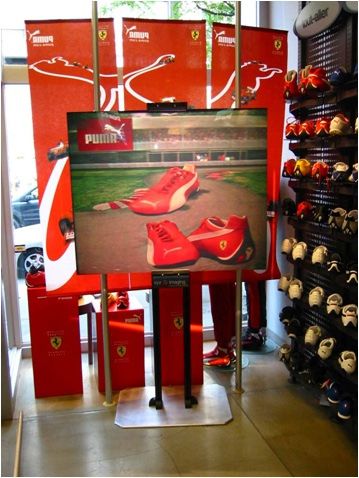
Photonics 2021, 8, 219 6 of 10
Photonics 2021, 8, x FOR PEER REVIEW 6 of 10
Figure 7. “Holographic” (actually Pepper’s Ghost) model in 2006 Alexander McQueen show. (Photo
©FirstVIEW/IMAXtree.com, used with permission.)
There are several possible geometries for Pepper’s Ghosts; when a virtual model is
to share a stage with a live model, the setup in Figure 8 is commonly employed [21]. When
based on 2D video projections, as in the examples discussed here, the images are flat rather
than 3D, and work best for stationary viewers at distances where 3D visual cues do not
operate strongly.
Figure
Figure 7.7.“Holographic”
“Holographic”(actually
(actuallyPepper’s
Pepper’sGhost)
Ghost)model
modelinin 2006
2006 Alexander
Alexander McQueen
McQueenshow
show.(Photo
(Photo
©FirstVIEW/IMAXtree.com,used
©FirstVIEW/IMAXtree.com, usedwith
withpermission).
permission.)
There are several possible geometries for Pepper’s Ghosts; when a virtual model is
to share a stage with a live model, the setup in Figure 8 is commonly employed [21]. When
based on 2D video projections, as in the examples discussed here, the images are flat rather
than 3D, and work best for stationary viewers at distances where 3D visual cues do not
operate strongly.
Figure 8. Pepper’s Ghost illusion based on projector and tilted beamsplitting mirror, showing how a
real and a virtual person can appear to share a stage. From [21].
Figure 8. Pepper’s Ghost illusion based on projector and tilted beamsplitting mirror, showing how
a real and a virtual person can appear to share a stage. From [21].
It was not long before “hologram” fashion exhibitions went from luxury to mainstream.
A year after the Alexander McQueen show, retailer Target staged an all-Pepper’s-Ghost
It was not long before “hologram” fashion exhibitions went from luxury to main-
show in New York City’s Grand Central Station [22]. However, Pepper’s Ghosts have
stream. A year after the Alexander McQueen show, retailer Target staged an all-Pepper’s-
continued to feature in luxury goods exhibition; recent examples include a display at the
Ghost show in New York City’s Grand Central Station [22]. However, Pepper’s Ghosts
2017 Los Angeles premiere of the film The Last Jedi of Christian Louboutin shoe designs
have continued to feature in luxury goods exhibition; recent examples include a display
inspired by the heroines of the Star Wars films [23], and a 2018 Christian Dior show in
at theFigure
2017 Los Angeles premiere
8. Pepper’s ofbased
the film The Last Jedi of beamsplitting
Christian Louboutin shoe how
Shanghai in whichGhost illusion
68 models captured onon
projector
video at and
thetilted
Musee d’Orsay inmirror, showing
Paris were shown
designs
on a 30 m-long stage with 20 projectors [24]. When based on 2D video projections,Dior
a inspired
real and a by the
virtual heroines
person can of the
appear Star
to Wars
share a films
stage. [23],
From and
[21]. a 2018 Christian as in the
showabove
in Shanghai
examples, in which 68 models
the images are notcaptured
3D, and on workvideo
bestatforthe Musee d’Orsay
stationary viewersinatParis
distances
It was not long before “hologram” fashion exhibitions went from luxury to main-
where 3D visual cues do not operate strongly.
stream.
TheA year“hologram”
term after the Alexander
has also McQueen
been moreshow, retailer
recently Target stagedapplied
and inaccurately an all-Pepper’s-
to other
Ghost show in New
non-holographic luxuryYork City’s Grand
experiences suchCentral Station
as virtual [22]. However,
or augmented Pepper’s
reality Ghosts
applications
have continued to feature in luxury goods exhibition; recent examples
that allow viewing merchandise from a variable viewpoint, visualizing it in the user’s include a display
at the 2017 Los
environment, Angeles premiere
or virtually trying it onof (for
the example,
film The shoes
Last Jedi of Christian
or eyewear) [25].Louboutin shoe
designs
These non-diffractive approaches are worth discussing in this context asChristian
inspired by the heroines of the Star Wars films [23], and a 2018 they point Dior
to
show in Shanghai in which 68 models captured on video at the
some characteristics desired by the luxury goods industry: the imagery should be moving Musee d’Orsay in Paris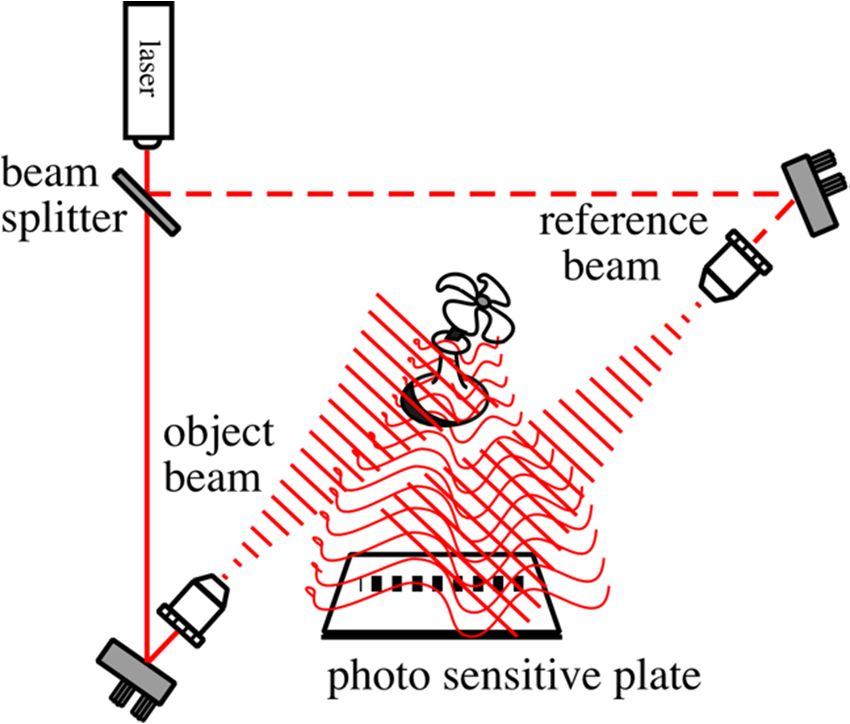
Photonics 2021, 8, 219                                                                                             7 of 10

                         and actual size (or larger), there should be no obvious display system but rather the
                         imagery should appear in a physical environment, and the display should be deployable
                         on a fashion show runway, in a retail setting, or (in the case of AR apps) in the user’s
                         environment. For holography to supplant displays like Pepper’s Ghosts it will have to
                         develop in these directions.

                         2.3. Holograms as Authentication Devices
                              Losses in the luxury goods market due to counterfeit merchandise were estimated at
                         US$98B in 2017 [26]. An ideal authentication technology would be one that is inexpensive
                         to manufacture but difficult and expensive to duplicate, that cannot be removed or altered
                         without obvious damage, and whose validity can be quickly verified. Authentication
                         technologies are commonly classified into overt and covert categories, the former of which
                         can be authenticated without any specialized equipment or process and the latter requiring
                         some external apparatus for verification. Currency, for example, typically has a combi-
                         nation of overt and covert features. Because of the fine detail and physical properties
                         of diffraction patterns, holograms can provide both a quickly recognizable and colorful
                         3D visual appearance and any of a number of hidden properties including text at a scale
                         of tens of microns, images that appear only when a laser is used for illumination, and
                         machine-readable data patterns. Holograms with both covert and overt features have been
                         used by the luxury goods industry at least since the early 2000s when Fendi, Gucci, and
                         others began adding holographic labels to merchandise [27]. Chanel bags are individually
                         numbered and since 2000, the label has incorporated a holographically-patterned film
                         over the conventionally-printed serial number to increase the difficulty of counterfeiting;
                         numerous websites explain how to authenticate these labels (e.g., [28]).
                              Because a diffraction pattern may be created by varying the thickness of a transparent
                         material, it is possible to mass produce phase holograms inexpensively by a hot-stamping
                         process. The first step is the creation of a surface-relief holographic pattern, typically in a
                         photoresist material exposed with a deep-blue laser. Because photoresists are too soft to be
                         used directly for stamping, nickel is electrically deposited on the original hologram and
                         the resulting metal layer can be applied as a stamping die, or for high volume production
                         further replicated many times to make a set of identical stamping dies. The stamper is
                         heated and used to impress the holographic pattern onto a transparent or foil-backed thin
                         plastic layer. More detail on the process is given in [29]. Readers will likely be familiar with
                         the appearance of this sort of hologram as an anti-counterfeiting feature on credit cards.
                              Since for overt authentication the hologram must be viewable under white light,
                         traditionally the source phase hologram is a “rainbow” hologram of the type first developed
                         by Benton; the original process for making these involves first creating a standard off-axis
                         transmission hologram of the subject matter and then making a second hologram of the first
                         hologram illuminated through a slit aperture [30]. These holograms are bright but exhibit
                         parallax in only the horizontal direction and the monochromatic image color changes
                         with vertical viewing position; it is possible to create these holograms with multiple
                         simultaneous hues though viewer-position-independent true-color imagery is not practical
                         when this form of hologram is created optically.
                              Almost as soon as embossed holograms were commercialized, techniques for illicitly
                         replicating them were developed, and an “arms race” between counterfeiters and the
                         developers of authentication holograms has been underway since the late 1980s [31].
                              While some of the source holograms for authentication tags continue to be produced
                         using traditional “analog” exposure methods and physical objects, typically the phase
                         hologram used for the stamping die is now created by other means. Dot matrix hologram
                         printers use interference to generate an array of microscopic diffractive patches whose
                         orientations and spatial frequencies can be varied, allowing the creation of true-color
                         patterns [32], while e-beam lithography can be used to write arbitrary computer-generated
                         diffraction patterns directly, giving a maximum degree of flexibility of imagery [33].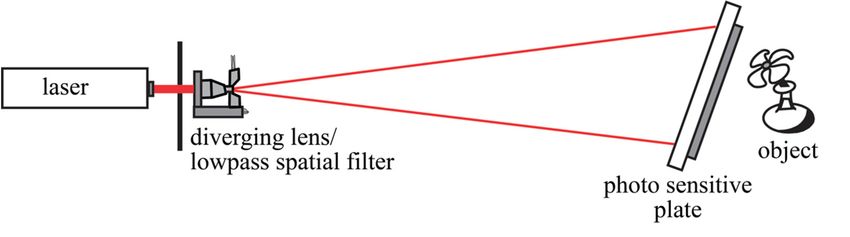
Photonics 2021, 8, 219                                                                                                        8 of 10

                                        All of the above mass-production techniques have the limitation that the holograms
                                   produced are identical; the company Optrace has developed a system that can print
                                   serialized security holograms for luxury goods and other products in photopolymer at the
                                   rate of 10,000 holograms/hour and has also demonstrated the incorporation of unique QR
                                   codes and covert features [34].

                                   3. Discussion: Looking Forward
                                           With respect to display holography, fashion and other luxury goods applications have
                                     aimed for unique, creative, and innovative visual experiences, using other technologies
                                     when true holography could not be employed. Ongoing development of digital holog-
                                     raphy and some parallel technological advances in other fields should permit a broader
                                     applicability of diffractive displays in coming years.
                                           Even for still images, scene capture has always been a limiting factor for commercial
                                     holography. In the analog case, powerful lasers are needed to illuminate the scene and
                                     items in the scene cannot move during the exposure more than a small fraction of the
                                     wavelength of the light; this means that particularly for scenes with human models or even
                                     just fabrics, pulsed-laser exposure is required, and there have never been more than a few
                                     commercial pulsed-laser holographic studios in operation at any given time. Additionally,
                                     exposure and processing of very large photographic plates creates further complications.
                                     Digital holographic prints relax these limitations, as they can scale to large sizes (full-size
                                     prints of cars have been made, for example) and can be generated from a dense array
                                     of 2D parallax views (still a bit of a photo-studio challenge) or from 3D models of the
                                     scene [35]. At the time of the initial development and commercial push of holographic
                                     printing, though, computer graphics models of human figures and of luxury merchandise
                                     were not widely available and computational requirements made drape simulations of
                                     garments a challenge.
                                           More recently, submillimeter-accurate body scanning has enabled the creation of
                                     extremely realistic poseable and animatable human body models (Figure 9) and advances
                                     in graphics processors have meant that ultra-realistic dynamic simulation of the mechanical
                                     and optical properties of garments and accessories has become possible even on PCs.
                                     Modern Mirror is able to capture textured 3D meshes of fashion models or of shoppers,
                                     dress them with digital versions of real merchandise, and render the results in real time [36].
Photonics 2021, 8, x FOR PEER REVIEW Because of the underlying high-quality 3D data, this sort of process is suited for 3D 9displays
                                                                                                                             of 10

                                     such as digital holograms as well as 2D images.

                               Figure 9. Virtual
                                  Figure          fashion:
                                           9. Virtual       stills
                                                      fashion:     from
                                                                stills    anan
                                                                       from  animated
                                                                               animatedvideo
                                                                                         videorendered
                                                                                               renderedfrom
                                                                                                        from3D
                                                                                                             3D body
                                                                                                                body scan and 3D
                                                                                                                     scan and 3Dgarment
                                                                                                                                  gar-
                               ment model.    (Courtesy   Modern     Mirror,  Inc. New York,  NY  10018, USA.; garment design  by
                                  model (Courtesy Modern Mirror, Inc. New York, NY 10018, USA; garment design by Noe Bernacelli). Noe
                               Bernacelli.)

                                    Though the rapidly growing amount of 3D imagery means that there will likely be
                               more use of holographic prints in the luxury goods world in the near future, the ultimate
                               goal remains a dynamic holographic display. Holographic video displays have existed for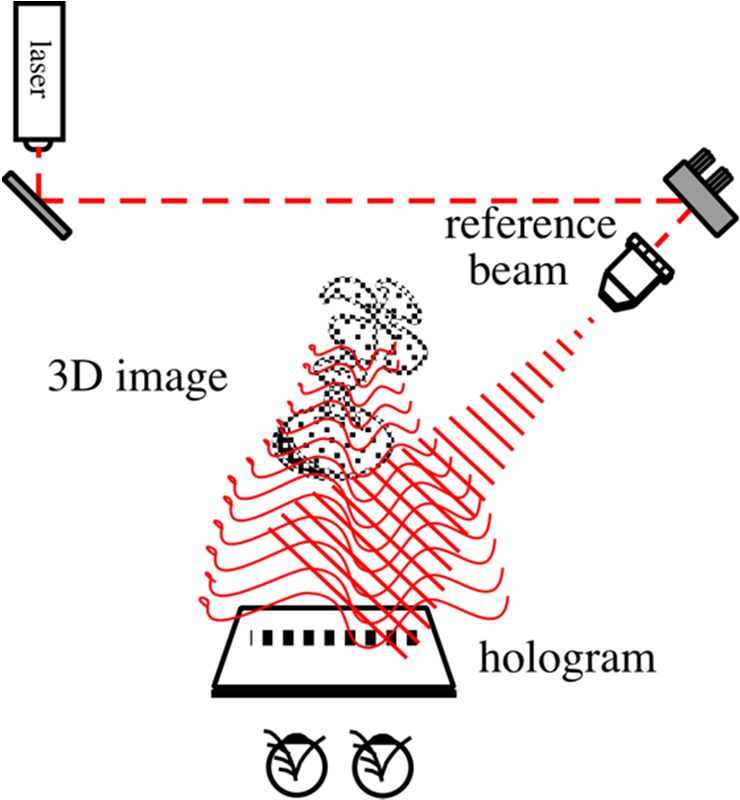
Photonics 2021, 8, 219                                                                                                             9 of 10

                                       Though the rapidly growing amount of 3D imagery means that there will likely be
                                  more use of holographic prints in the luxury goods world in the near future, the ultimate
                                  goal remains a dynamic holographic display. Holographic video displays have existed for
                                  many years, and like holographic prints, they do not require scene capture with coherent
                                  light sources but rather can create diffraction patterns from 3D models or parallax image
                                  sets [37]. Because of the requirement for submicron-scale pixels in the display device,
                                  inexpensively scaling up the necessary electro-optic components (in particular, diffractive
                                  spatial light modulators) to the sizes of the still hologram and Pepper’s Ghost examples
                                  described above continues to be a topic for research and development. In the meantime,
                                  luxury brands have begun exploring the use of non-holographic light field 3D displays [38];
                                  the same data sources used for those displays can be used to generate digital holographic
                                  video as well when suitable displays reach the market.

                                  Author Contributions: Conceptualization, V.M.B.J. and N.A.R.; investigation, V.M.B.J. and N.A.R.;
                                  writing—original draft preparation, V.M.B.J. and N.A.R.; writing—review and editing, V.M.B.J. and
                                  N.A.R. All authors have read and agreed to the published version of the manuscript.
                                  Funding: This research received no external funding.
                                  Acknowledgments: The authors wish to thank the following individuals for their assistance with
                                  the preparation of this article: Patrick Boyd, Michael Crawford, David Brotherton-Ratcliffe, Joy Javits,
                                  Sean Johnston, Sam Moree, August Muth, Martin Richardson, Seth Riskin and colleagues at the MIT
                                  Museum, Jonathan Ross, and Richard Sharpe.
                                  Conflicts of Interest: The authors declare no conflict of interest.

References
1.    Johnston, S.F. Holographic Visions: A History of New Science; Oxford University Press: Oxford, UK, 2006.
2.    Johnston, S.F. Holograms: A Cultural History; Oxford University Press: Oxford, UK, 2016.
3.    Saxby, G.; Zacharovas, S. Practical Holography; CRC Press: Boca Raton, FL, USA, 2016.
4.    Bjelkhagen, H.; Brotherton-Ratcliffe, D. Ultra-Realistic Imaging; CRC Press: Boca Raton, FL, USA, 2013.
5.    Luxury Daily. Available online: https://www.luxurydaily.com/?s=hologram (accessed on 27 April 2021).
6.    Deloitte Global. Global Powers of Luxury Goods 2020. Available online: https://www2.deloitte.com/content/dam/Deloitte/at/
      Documents/consumer-business/at-global-powers-luxury-goods-2020.pdf (accessed on 15 March 2021).
7.    Walash, E. Holograms Beam Into Fashion. WWD, 5 December 1988; Volume 156.
8.    Sharpe, R.A.; Manners, M.J. Holographic Image Containing Foil-Textile Laminate. U.S. Patent 5,593,765, 14 January 1997.
9.    Sharpe, R.A.; Zenessex, Essex, UK. Personal communication, 2021.
10.   Brannigan, M. Designers want you coated in shimmery, holographic iridescence for fall. Fashionista, 2 March 2018. Available online:
      https://fashionista.com/2018/03/fashion-week-fall-2018-trend-iridescent-holographic-fabric (accessed on 15 March 2021).
11.   Denisyuk, Y.N. On the Reproduction of the Optical Properties of an Object by the Wave Field of its Own Scattered Radiation. Opt.
      Spectrosc. 1963, 18, 365–368.
12.   Bold, K. Lighter Side of Jewelry: With Holograms Adorning Traditional Accessories, Finery Takes on a 3rd Dimension. Los
      Angeles Times, 5 June 1992.
13.   Rallison, R.D. The History of Dichromates. Available online: https://wasatchphotonics.com/wp-content/uploads/The-History-
      of-Dichromates1.pdf (accessed on 1 May 2021).
14.   Murphy, M. It All Began with a Hologram. The New York Times, 23 November 2019.
15.   Leith, E.N.; Upatnieks, J. Wavefront Reconstruction with Diffused Illumination and Three-Dimensional Objects. J. Opt. Soc. Amer.
      1964, 54, 1295–1301. [CrossRef]
16.   Rix, J. Exposure. The British Journal of Photography, 13 March 1987.
17.   Edelson, S. Hologram casts hue in fashion. Adweek’s Marketing Week, 9 October 1989; Volume 41, P10.
18.   Zacharovas, S.J.; Brotherton-Ratcliffe, D. A Digital Printing System for the Commercial Production of High-Resolution True-
      Colour Reflection Holograms. 2005. Available online: https://geola.com/wp-content/uploads/2015/10/Holopack_holoprint_
      2005_Geola.pdf (accessed on 15 March 2021).
19.   Williams, E. How we made Alexander McQueen’s Kate Moss hologram. Creative Review, 15 March 2015. Available online:
      https://www.creativereview.co.uk/alexander-mcqueens-kate-moss-hologram/ (accessed on 15 March 2021).
20.   Cartner-Morley, J. Alexander McQueen: Into the light. The Guardian, 10 February 2015.
21.   Crowder, A.; Conway, B.; Senkiewicz, T.P. Travel Case for Portable Pepper’s Ghost Illusion Setup. U.S. Patent 10,384,144 B2,
      20 August 2019.
Photonics 2021, 8, 219 10 of 10
22. Lippert, B. Target’s holo promise: Fashion spectacle is a technological treat but a fashion flop. ADWEEK, 12 November 2007;
Volume 48, 22.
23. Robinson, J. First Look at the Star Wars: The Last Jedi Shoes from Christian Louboutin. Vanity Fair, 7 December 2017.
24. McDowell, M. Forced cancellations jumpstart virtual fashion technology. Vogue Business, 17 March 2020.
25. Wu, W. Does a Lack of Options Mean AR Is Here To Stay? Jing Daily, 6 May 2020. Available online: https://jingdaily.com/does-
a-lack-options-mean-ar-is-here-to-stay/ (accessed on 1 May 2021).
26. Driver, R. Luxury brands lose $30.3 billion due to online counterfeiting in 2017. Fashion Network, 16 May 2018. Available
online: https://uk.fashionnetwork.com/news/Luxury-brands-lose-30-3-billion-due-to-online-counterfeiting-in-2017,977978.
html (accessed on 15 March 2021).
27. Passariello, C. Holograms Tell Fake From Fendi. The Wall St. Journal, 22 February 2006.
28. Chanel Official Serial Number Guide. Available online: https://mislux.com/blogs/the-lux-corner/chanel-official-serial-number-
guide-how-to-read-a-serial-code (accessed on 15 March 2021).
29. Benton, S.A.; Bove, V.M., Jr. Holographic Imaging; Wiley: New York, NY, USA, 2008; pp. 159–172.
30. Benton, S.A. Hologram Reconstructions with Extended Incoherent Sources. J. Opt. Soc. Amer. 1969, 59, 1545–1546.
31. McGrew, S.P. Countermeasures Against Hologram Counterfeiting. In Proceedings of the International Symposium and Product
Presentation for Optical Information Storage and Display, Zurich, Switzerland, 14–16 October 1987.
32. van Renesse, R.L. Security aspects of commercially available dot matrix and image matrix origination systems. In Proceedings of
the SPIE International Conference on Optical Holography and Its Applications, Kiev, Ukraine, 24–27 May 2004; pp. 1–12.
33. Firsov, A.; Loechel, B.; Schleunitz, A.; Svintsov, A.; Zaitsevb, S. Fabrication of Nanoimprint Stamps for Rainbow Holograms using
SEM based e-beam lithography. In Proceedings of the 33rd International Conference Micro-Nano-Engineering, Copenhagen,
Denmark, 23–26 September 2007; pp. 553–554.
34. Vather, D.; Naydenova, I.; Cody, D.; Zawadzka, M.; Martin, S.; Mihaylova, E.; Curran, S.; Duffy, P.; Portillo, J.; Connell, D.; et al.
Serialized holography for brand protection and authentication. Appl. Opt. 2018, 57, E131–E137. [CrossRef] [PubMed]
35. Bove, V.M., Jr. Display Holography’s Digital Second Act. Proc. IEEE 2012, 100, 918–928. [CrossRef]
36. Robinson, R. Forget AR & VR Apps. New Technology System Modern Mirror Takes Virtual Try-Ons Next Level. Forbes,
10 January 2021.
37. Bove, V.M., Jr. Holographic Television. In Optical Holography–Materials, Theory and Applications; Blanche, P.-A., Ed.; Elsevier:
St. Louis, MO, USA, 2020; pp. 73–82.
38. Jiang, Y. What brands in China need to know about naked-eye 3D. Vogue Business, 17 March 2021.You can also read


