UC Riverside UC Riverside Previously Published Works
←
→
Page content transcription
If your browser does not render page correctly, please read the page content below
UC Riverside
UC Riverside Previously Published Works

Title
A view of the pan‐genome of domesticated Cowpea (Vigna unguiculata [L.] Walp.)

Permalink
https://escholarship.org/uc/item/7wn084zt

Authors
Liang, Qihua
Muñoz‐Amatriaín, María
Shu, Shengqiang
et al.

Publication Date
2023-03-22

DOI
10.1002/tpg2.20319

Copyright Information
This work is made available under the terms of a Creative Commons Attribution-
NonCommercial-NoDerivatives License, availalbe at
https://creativecommons.org/licenses/by-nc-nd/4.0/

Peer reviewed

 eScholarship.org                             Powered by the California Digital Library
                                                              University of California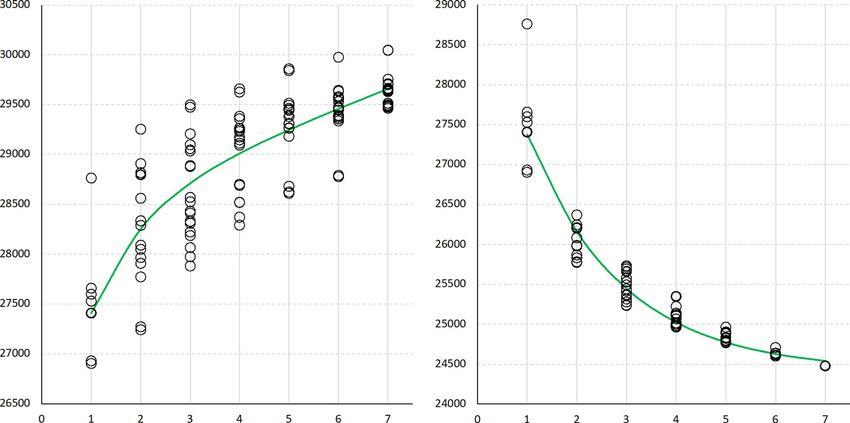
19403372, 0, Downloaded from https://acsess.onlinelibrary.wiley.com/doi/10.1002/tpg2.20319, Wiley Online Library on [22/03/2023]. See the Terms and Conditions (https://onlinelibrary.wiley.com/terms-and-conditions) on Wiley Online Library for rules of use; OA articles are governed by the applicable Creative Commons License
Received: 19 December 2022       Accepted: 4 February 2023

DOI: 10.1002/tpg2.20319

                                                                                                                                              The Plant Genome
SPECIAL SECTION: GENOMICS OF ABIOTIC STRESS TOLERANCE
A N D C RO P R E S I L I E NC E T O C L I M AT E C H A N G E

A view of the pan-genome of domesticated Cowpea (Vigna
unguiculata [L.] Walp.)

Qihua Liang1    María Muñoz-Amatriaín2,3    Shengqiang Shu4     Sassoum Lo2,5
Xinyi Wu6    Joseph W. Carlson4   Patrick Davidson4    David M. Goodstein4
Jeremy Phillips4                      Nadia M. Janis7    Elaine J. Lee7                                    Chenxi Liang7
Peter L. Morrell7                      Andrew D. Farmer8      Pei Xu9                                     Timothy J. Close2
Stefano Lonardi1
1 Department   of Computer Science and Engineering, University of California Riverside, Riverside, CA, USA
2 Department   of Botany and Plant Sciences, University of California Riverside, Riverside, CA, USA
3 Departamento    de Biología Molecular, Universidad de León, León, Spain
4 US   Department of Energy Joint Genome Institute, Lawrence Berkeley National Laboratory, Berkeley, CA, USA
5 Department   of Plant Sciences, University of California Davis, Davis, CA, USA
6 State
      Key Laboratory for Managing Biotic and Chemical Threats to the Quality and Safety of Agro-products, Institute of Vegetables, Zhejiang Academy of
Agricultural Sciences, Hangzhou, China
7 Department   of Agronomy and Plant Genetics, University of Minnesota Twin Cities, Saint Paul, MN, USA
8 National   Center for Genome Resources, Santa Fe, NM, USA
9 Key   Lab of Specialty Agri-Product Quality and Hazard Controlling Technology of Zhejiang Province, China Jiliang University, Hangzhou, China

Correspondence
Timothy J. Close, Department of Botany                  Abstract
and Plant Sciences, University of California            Cowpea, Vigna unguiculata L. Walp., is a diploid warm-season legume of critical
Riverside, Riverside, CA, USA.
Email: timothy.close@ucr.edu                            importance as both food and fodder in sub-Saharan Africa. This species is also grown
Stefano Lonardi, Department of Computer
                                                        in Northern Africa, Europe, Latin America, North America, and East to Southeast
Science and Engineering, University of                  Asia. To capture the genomic diversity of domesticates of this important legume, de
California Riverside, Riverside, CA, USA.               novo genome assemblies were produced for representatives of six subpopulations of
Email: stelo@cs.ucr.edu
                                                        cultivated cowpea identified previously from genotyping of several hundred diverse
Assigned to Associate Editor Rajeev                     accessions. In the most complete assembly (IT97K-499-35), 26,026 core and 4963
Varshney.
                                                        noncore genes were identified, with 35,436 pan genes when considering all seven
                                                        accessions. GO terms associated with response to stress and defense response were

Abbreviations: BED, browser extensible data; BUSCO, benchmarking universal single-copy orthologue; BWA, Burrows-Wheeler Aligner; CDS, coding
sequence; CNV, copy number variation; DNA, deoxyribonucleic acid; GCV, Genome Context Viewer; GFF, general feature format; GMI, gene model
improvement; GO, gene ontology; GVCF, genomic variant call format; IGC, integrated gene call; indel, insertion–deletion; JGI, Joint Genome Institute; LIS,
legume information system; PacBio, Pacific Biosciences; PAV, presence–absence variation; RNA, ribonucleic acid; SNP, single nucleotide polymorphism;
UCR, University of California Riverside; UTR, untranslated region; VCF, variant call format; VeP, variant effect predictor; WGS, whole genome shotgun.

This is an open access article under the terms of the Creative Commons Attribution-NonCommercial-NoDerivs License, which permits use and distribution in any medium, provided
the original work is properly cited, the use is non-commercial and no modifications or adaptations are made.
© 2023 The Authors. The Plant Genome published by Wiley Periodicals LLC on behalf of Crop Science Society of America.

Plant Genome. 2023;e20319.                                                                                                   wileyonlinelibrary.com/journal/tpg2      1 of 17
https://doi.org/10.1002/tpg2.20319
19403372, 0, Downloaded from https://acsess.onlinelibrary.wiley.com/doi/10.1002/tpg2.20319, Wiley Online Library on [22/03/2023]. See the Terms and Conditions (https://onlinelibrary.wiley.com/terms-and-conditions) on Wiley Online Library for rules of use; OA articles are governed by the applicable Creative Commons License
2 of 17      The Plant Genome                                                                                              LIANG ET AL.

Funding information
United States Agency for International        highly enriched among the noncore genes, while core genes were enriched in terms
Development, Grant/Award Number:
                                              related to transcription factor activity, and transport and metabolic processes. Over 5
Cooperative Agreement
AID-OAA-A-13-00070; National Natural          million single nucleotide polymorphisms (SNPs) relative to each assembly and over
Science Foundation of China, Grant/Award      40 structural variants >1 Mb in size were identified by comparing genomes. Vu10
Number: 32172568; U.S. Department of
                                              was the chromosome with the highest frequency of SNPs, and Vu04 had the most
Agriculture, Grant/Award Number: Hatch
Project CA-R-BPS-5306-H; National             structural variants. Noncore genes harbor a larger proportion of potentially disruptive
Science Foundation, Grant/Award Numbers:      variants than core genes, including missense, stop gain, and frameshift mutations; this
IIS 1814359, IOS 1543963; Agricultural
Research Service, Grant/Award Number:
                                              suggests that noncore genes substantially contribute to diversity within domesticated
Non-Assistance Cooperative Agreement          cowpea.
58-5030-7-069; National Ten-Thousand
Talents Program of China; U.S. Department
of Energy, Grant/Award Number: Contract
No. DE-AC02-05CH11231; Major Science
and Technology Project of Plant Breeding in
Zhejiang Province, Grant/Award Number:
2021C02065-6-3

1         INTRODUCTION                                                 reliable source of plant-based protein and folic acid, position
                                                                       cowpea favorably as a component of sustainable agriculture in
Individuals within a species vary in their genomic composi-            the context of global climate change. Most cowpea production
tion. The genome of any individual does not include the full           and consumption presently occur in sub-Saharan Africa, espe-
complement of genes contained within the species. A pan-               cially in the Sudano-Sahelian Zone, with production mainly
genome includes genes core to the species (shared among all            by smallholder farmers, often as an intercrop with maize,
individuals) and those absent from one or more individuals             sorghum, or millet (Boukar et al., 2019). Tender green seeds
(noncore, dispensable, or variable genes). This pan-genome             are often consumed during the growing season, and immature
concept started to be applied to plants by Morgante et al.             pods are eaten as a vegetable, especially in East and South-
(2007) but began in bacterial species (reviewed by Golicz              east Asia. In addition, fresh leaves are sometimes consumed,
et al., 2020). Due to the complexity of plant genomes, the             and dry haulms are harvested and sold as fodder for livestock.
first studies exploring gene presence–absence variation (PAV)          Spreading varieties are also utilized as cover crops to prevent
in plants used reduced-representation approaches, including            soil erosion and weed control.
array comparative genomic hybridization and sequencing of                 A reference genome sequence of cowpea cv. IT97K-499-35
transcriptomes (Hirsch et al., 2014; Muñoz-Amatriaín et al.,           was previously generated (Lonardi et al., 2019). Prelimi-
2013; Springer et al., 2009). Once sequencing of multiple              nary sequence comparisons using whole genome shotgun
plant genomes became feasible, several pan-genomes of vari-            (WGS) data of 36 accessions suggested that extensive sin-
able degrees of completeness were generated, and it was soon           gle nucleotide polymorphism (SNP) and structural variation
understood that PAV is prevalent in plants and that the pan-           exists within domesticated cowpea (Lonardi et al., 2019).
genome of any plant species is larger than the genome of any           Cowpea also displays a wide range of phenotypic varia-
individual accession (reviewed by Lei et al., 2021). Moreover,         tion, and genetic assignment approaches have identified six
many of the genes absent in reference accessions have func-            subpopulations within cultivated cowpea germplasm (Muñoz-
tions of potential adaptive or agronomic importance, such as           Amatriaín et al., 2021). These observations support the need
time to flowering, and response to abiotic and biotic stresses         to develop cowpea pan-genome resources based on diverse
(Bayer et al., 2020; Gordon et al., 2017; Montenegro et al.,           cowpea accessions.
2017), making the construction of a pan-genome a crucial task             This study reports de novo assemblies of six cultivated
for crops of global importance.                                        cowpea accessions. Each accession was annotated using tran-
   Cowpea is a diploid (2n = 22) member of the family                  scriptome sequences from the accession along with ab initio
Fabaceae tribe Phaseoleae, closely related to mung bean, com-          methods. These genome sequences, together with the pre-
mon bean, soybean, and several other warm-season legumes.              viously reported sequence of IT97K-499-45 (Lonardi et al.,
Cowpea was domesticated in Africa, but its cultivation has             2019), constitute a pan-genome resource for domesticated
spread throughout most of the globe (Herniter et al., 2020).           cowpea. Using annotations for the seven genomes, including
The inherent resilience of the species to drought and high tem-        genes, along with variant calls for SNPs and short insertion–
peratures (Hall, 2004), together with its nutritional value as a       deletion (indels), and larger structural variants, the following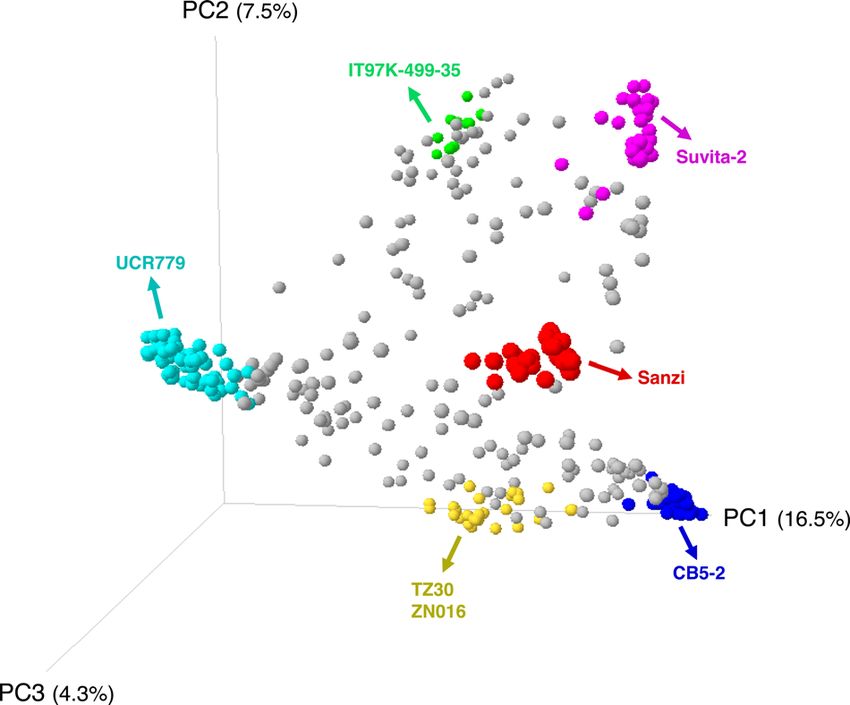
19403372, 0, Downloaded from https://acsess.onlinelibrary.wiley.com/doi/10.1002/tpg2.20319, Wiley Online Library on [22/03/2023]. See the Terms and Conditions (https://onlinelibrary.wiley.com/terms-and-conditions) on Wiley Online Library for rules of use; OA articles are governed by the applicable Creative Commons License
LIANG ET AL.                                                                                    The Plant Genome           3 of 17

questions were addressed: (i) What proportion of genes are
core and noncore, and do core and noncore genes differ in              Core Ideas
size or functional class? (ii) What proportion of large-effect
variants are created by single nucleotide variants versus struc-       ∙ The genetic attributes of cultivated cowpea
tural variants (including indels), and do the proportions of             germplasm are best represented by a pan-genome.
large-effect variants differ among core and noncore genes?             ∙ Seven diverse accessions of cultivated cowpea con-
(iii) To what extent are gene content and gene order consis-             verge on a core gene set, while not exhausting
tent across accessions within the species Vigna unguiculata              noncore content.
and across species within the genus Vigna and the tribe                ∙ Noncore genes are enriched for stress response and
Phaseoleae? The results suggest that both extensive struc-               contribute a relatively large portion of variants.
ture differences among individual accessions and the nature            ∙ Several large, high-frequency inversions within
of variation in noncore genes are important considerations in            chromosomes exist in cultivated cowpea
efforts to identify genetic variation with adaptive potential.           germplasm.
                                                                       ∙ Breeding for improved climate adaptation must
                                                                         consider variants related to inversions and noncore
2       MATERIALS AND METHODS                                            genes.

Cowpea accessions were used in this work (Table S01).
   Accessions chosen for sequencing and de novo assembly
represented the six subpopulations of domesticated cowpea          was provided to UCR as B019-A in 1987 by C. J. de Mooy
described in Muñoz-Amatriaín et al. (2021), as indicated in        of Colorado State University. Yardlong bean or asparagus
Figure 1. The intention of choosing accessions that cover each     bean (cv.-gr. Sesquipedalis), the vegetable type of cowpea,
subpopulation was to maximize the discovery of genetic vari-       is widely grown in Asian countries for the consumption of
ations relevant to cultivated cowpea using a small number of       tender long pods. TZ30 is an elite Chinese variety with a
samples. As shown by Gordon et al. (2017) in Brachypodium          pod length of around 60 cm. ZN016 is a landrace originating
distachyon, the addition of individuals from subpopulations        from Southeastern China with a pod length of about 35 cm
not previously sampled contributes much more to increasing         and showing resistance to multiple major diseases of cowpea.
the pan-genome size than adding closely related individuals.       TZ30 and ZN016 were used previously as parents of a map-
   IT97K-499-35 is a blackeye variety with resistance to the       ping population to study the inheritance of pod length (Xu
parasitic plants Striga and Alectra, developed at the Inter-       et al., 2017).
national Institute of Tropical Agriculture in Ibadan, Nigeria
(Singh et al., 2006) and provided by Michael Timko (Uni-
versity of Virginia, Charlottesville, Virginia, USA) to the        2.1     DNA sequencing and de novo assembly
University of California Riverside (UCR) in 2006. The              of seven cowpea accessions
sequence assembly and annotation of IT97K-499-35 were
described in Lonardi et al. (2019). CB5-2 is a fully inbred        The annotated genome (v1.0) of African variety IT97K-499-
isolate closely related to CB5, the predominant Blackeye of        35 was assembled from Pacific Biosciences (Menlo Park,
the US Southwest for several decades. CB5 (Blackeye 8415)          California, USA) long reads, two Bionano Genomics (San
was bred by W. W. Mackie at the University of California           Diego, California, USA) optical maps and 10 genetic link-
(Mackie, 1946) to add resistances to Fusarium wilt and nema-       age maps as described previously (Lonardi et al., 2019).
todes to a California Blackeye landrace, and provided to UCR       The six additional de novo assemblies were produced by
by K. Foster, University of California, Davis, in 1981. Suvita-    Dovetail Genomics (Scotts Valley, California, USA) using
2, also known as Gorom Local (IITA accession TVu-15553,            Illumina (San Diego, California, USA) short reads (150 × 2).
US NPGR PI 583259), is somewhat resistant to bruchids and          DNA was extracted by Dovetail Genomics from seedling
certain races of Striga and is relatively drought tolerant. This   tissue of CB5-2, TZ30, and ZN016, and seeds of CB5-2,
landrace was collected from a local market by V. D. Aggarwal       Suvita-2, Sanzi, and UCR779. Meraculous (Chapman et al.,
at the Institut de l’Environnement et de Recherches Agricoles      2011) was used to assemble the reads, then sequences from
(INERA) in Burkina Faso (Aggarwal et al., 1984) and pro-           Dovetail Chicago® and Dovetail Hi-C® libraries were added
vided to UCR by V. D. Aggarwal in 1983. Sanzi is an early          (using their proprietary pipeline) to resolve misassemblies
flowering, small-seeded landrace from Ghana with resistance        and increase contiguity. These assemblies were further refined
to flower bud thrips (Boukar et al., 2013), provided by K. O.      using ALLMAPS (Tang et al., 2015). This analysis used 10
Marfo, Nyankpala Agricultural Experiment Station, Tamale,          previously reported genetic linkage maps to relate assemblies
Ghana to UCR in 1988. UCR779 (PI 583014) is a landrace             to the standard orientations and numbering of the 11 cow-
from Botswana (de Mooy, 1985; Ehlers et al., 2002) that            pea chromosomes, as described in Lonardi et al. (2019) for
19403372, 0, Downloaded from https://acsess.onlinelibrary.wiley.com/doi/10.1002/tpg2.20319, Wiley Online Library on [22/03/2023]. See the Terms and Conditions (https://onlinelibrary.wiley.com/terms-and-conditions) on Wiley Online Library for rules of use; OA articles are governed by the applicable Creative Commons License
4 of 17 The Plant Genome LIANG ET AL.
2.3 Annotation of genes and repeats
All genomes were annotated using the JGI plant genome
annotation pipelines (Shu et al., 2014), integrated gene
call (IGC), and gene model improvement (GMI). Both
IGC and GMI are evidence-based gene call pipelines. In
IGC, a gene locus was defined by peptide alignments
of related organism homologous peptides and with align-
ments of within-organism transcriptome assemblies. Genes
were predicted by homology-based gene prediction programs
FGENESH+ (Salamov & Solovyev, 2000), FGENESH_EST,
and GenomeScan (Yeh et al., 2001), and a JGI in-house
homology-constrained transcriptome assembly ORF finder.
Homologous proteomes included Arabidopsis thaliana and
those from common bean (Phaseolus vulgaris), soybean
(Glycine max), barrel medic (Medicago truncatula), poplar
F I G U R E 1 Principal component analysis of the UCR Minicore,
(Populus trichocarpa), rice (Oryza sativa), grape (Vitis
indicating the accessions selected for sequencing and the subpopulation
vinifera), and Swiss-Prot. For transcript-based annotations of
they belong to. Accessions in the plot are colored by the result of
STRUCTURE for K = 6, as shown in Muñoz-Amatriaín et al. (2021).
the six new assemblies, RNA for RNA-seq was extracted
using Qiagen RNeasy Plant (Hilden, Germany) from each
IT97K-499-35. See “Data Availability Statement” for access accession from well-hydrated and drought-stressed young
to raw data and assemblies. seedling root and leaves, immature flower buds, and pods 5
days after pollination, and from developing seeds of Suvita-
2, TZ30, and ZN016 (not CB5-2, Sanzi, or UCR779) 13 days
2.2 Calling of SNPs, indels, and structural after pollination. RNA quality was assessed, and concentra-
variants tions were determined using an Agilent 2100 BioAnalyzer
(Santa Clara, California, USA) and the Agilent RNA 6000
SNPs and indels were called using each reference genome Nano Kit. The RNA-seq short reads from each accession
versus the reads from the six other accessions. Reads of were assembled using a JGI in-house genome-guided assem-
each accession described above for genome assemblies, bler, PERTRAN (Shu et al., 2013), using each genome
plus short-read sequences produced by 10× Genomics from assembly. Each short-read-based assembly and UNIGENE
IT97K-49-35, were mapped to all assemblies using Burrows- sequences (P12_UNIGENES.fa from harvest.ucr.edu) were
Wheeler Aligner (BWA) (Li & Durbin, 2009). SNPs and fed into PASA (Haas et al., 2003) to produce transcriptome
indels were called using the GATK 4.2.0 pipeline in GVCF assemblies. The best gene per locus (based on evidence) was
mode for each accession. All the per-sample GVCFs were defined using PASA from alignment of transcriptome assem-
gathered in joint genotyping to produce a set of joint-called blies for splicing correctness, alternative transcripts, and UTR
SNPs and indels. Both per-sample SNPs and joint-called addition. The PASA genes were filtered to obtain the final
SNPs were filtered with the same parameters of “QD < 2.0 gene set, including an automated repeat coding sequence
|| FS > 60.0 || MQ < 40.0 || MQRankSum < −12.5 || Read- (CDS) overlap filter, a manual low-quality gene filter, and
PosRankSum < −8.0 || SOR > 4.0′. Indels were filtered with an automatic filter from transposable element (TE) protein
‘QD < 2.0 || FS > 200.0 || ReadPosRankSum < −20.0 || domain assignments. This process was repeated once with one
SOR > 10.0.” additional homology seeding of non-self, high-confidence
Each pair of individual genomes gene models.
( ) was aligned using min-
7
imap2 (Li, 2018), producing = 21 alignment files.
2
Structural variants, including inversions and translocations, 2.4 Determination of core and noncore
were identified from the alignment files using SyRI (Goel genes among seven accessions
et al., 2019). Figures were produced using PlotSR (Goel
& Schneeberger, 2022). Depth analyses were carried out Core and noncore genes were determined by running the
using Mosdepth (Pedersen & Quinlan, 2018). The average GET_HOMOLOGUES-EST tool (https://github.com/eead-
nucleotide diversity within and between populations was cal- csic-compbio/get_homologues) on the primary transcripts
culated from a VCF file using Pixy (Korunes & Samuk, of the seven cowpea accessions provided in nucleotide
2021). and protein formats. GET_HOMOLOGUES-EST was run19403372, 0, Downloaded from https://acsess.onlinelibrary.wiley.com/doi/10.1002/tpg2.20319, Wiley Online Library on [22/03/2023]. See the Terms and Conditions (https://onlinelibrary.wiley.com/terms-and-conditions) on Wiley Online Library for rules of use; OA articles are governed by the applicable Creative Commons License
LIANG ET AL. The Plant Genome 5 of 17
in orthoMCL mode, as suggested by the authors for pan- 2.7 Nucleotide sequence diversity in cowpea
genome analyses (Contreras-Moreira et al., 2017). The other
GET_HOMOLOGUES-EST options “-M-c -z -t 0 –A -L” Tajima’s (1983) estimate of θ = 4Ne μ was used to determine
were used to obtain orthoMCL gene clusters, which had genes the level of sequence diversity in the pan-genome acces-
in 1–7 accessions. The term “core” means that a matching sions. “Callable” regions were identified based on coverage
gene was identified in all seven accessions and “noncore” estimates in mosdepth (Pederson & Quinlan, 2018), with
means that a matching copy gene was identified in less than “callable” regions defined as those with coverage between
all seven accessions. 5× and 400×. This estimate was derived from a sample with
GO-term enrichment analyses were performed in agriGO ∼200× average coverage. The callable regions were used to
v2.0 (Tian et al., 2017) for core and noncore genes using create a BED file used for filtering genomic regions. This
GO terms available from the Legume Information System approach is intended to avoid variant calls in regions with
(LIS; https://www.legumeinfo.org/). Given the large number inadequate sequence depth or regions where very high cover-
of GO terms in both the core and noncore gene sets, GO slims age may indicate non-unique mapping of sequence reads. The
(Onsongo et al., 2008) were extracted. The full list of core callable regions and the VCF file of filtered variants mapped
and noncore genes, with GO and other annotations, is avail- to the IT97K-499-35 reference were used with pixy (Korunes
able from the Google Drive noted in the Data Availability & Samuk, 2021), a tool designed to deal with missing data in
Statement. genome-level resequencing datasets.
2.5 Annotation of variants in core and 2.8 Physical locations of SNPs from
noncore genes genotyping platforms
To test if variants in noncore genes have been subject to
The physical positions of SNPs in the Illumina iSelect
reduced selective constraint, variant effect predictor (VeP)
Cowpea Consortium Array (Muñoz-Amatriaín et al., 2017),
(McLaren et al., 2016) was used to annotate variants iden-
whose positions in the IT97K-499-35 genome were provided
tified in the primary transcripts of core and noncore genes.
in Lonardi et al. (2019), were mapped using BWA MEM (Li &
Gene annotations for IT97K-499-35 were used to identify
Durbin, 2009) within each of the seven assemblies using the
intervals that overlap core and noncore genes, and filtering of
contextual sequence that flanked each variant. The resulting
the VCF file used BEDtools intersect (Quinlan & Hall, 2010)
alignment file was processed with SAMtools (Li et al., 2009)
with variants called relative to the IT97K-499-35 assembly
and SNP_Utils (https://github.com/MorrellLAB/SNP_Utils)
using the six other assemblies. Scripts used for these analyses
to report positions in a VCF file. The positions of iSelect
are at https://github.com/MorrellLAB/Cowpea_Pangenome.
SNPs relative to all seven genome assemblies are pro-
VeP was run separately for SNPs and indels, reporting classes
vided in Table S02, and an updated summary map for
of variants with potentially large effects, including missense,
the 51,128 iSelect SNPs is in Table S03. The positions
stop gains, start or stop changes, and frameshifts. The num-
identified for iSelect SNPs relative to the IT97K-499-35
bers of synonymous changes and in-frame indels are also
assembly were used to annotate the variants. The annota-
reported.
tion used VeP (McLaren et al., 2016) with the GFF file
provided by Phytozome (https://genome.jgi.doe.gov/portal/)
and SNP positions in VCF files (https://github.com/
2.6 Relative size of core and noncore genes
MorrellLAB/cowpea_annotation/blob/main/Results/IT97K-
499-35_v1.0/iSelect_cowpea.vcf; see Data Availability
The physical sizes of core and noncore genes were com-
Statement).
pared in the total annotated length and the length of the
coding portion of the primary transcript of each gene.
The length of each gene was extracted from the general
feature format (GFF) annotations. The CDS length was 2.9 Synteny analysis among genome
calculated based on the primary transcript identified in assemblies
Phytozome annotations (https://phytozome-next.jgi.doe.gov/
cowpeapan/info/Vunguiculata_v1_2). The full list of core and To assess the conservation of gene content and ordering
noncore genes, with gene and CDS sizes indicted, is avail- between genome assemblies from diverse species, MCScanX
able from the Google Drive noted in the Data Availability (Wang et al., 2012) was run for every genome pair, using
Statement. default settings and homologous gene pairings derived from19403372, 0, Downloaded from https://acsess.onlinelibrary.wiley.com/doi/10.1002/tpg2.20319, Wiley Online Library on [22/03/2023]. See the Terms and Conditions (https://onlinelibrary.wiley.com/terms-and-conditions) on Wiley Online Library for rules of use; OA articles are governed by the applicable Creative Commons License
6 of 17 The Plant Genome LIANG ET AL.
gene family assignments defined as the best match of the
longest protein product with an E-value of 1e-10 or better
97.8%
98.1%
98.0%
from hmmsearch (Eddy, 2011) applied to the legfed_v1_0
451,468,680
families (Stai et al., 2019).
59,481,915
36,906,789
45.76%
27,742
TZ30
6771
1580
1583
1582
48
11
11
3 RESULTS AND DISCUSSION
98.1%
98.5%
98.1%
3.1 Development of six de novo assemblies
451,130,807
60,653,587
37,764,243
and pan-genome construction
45.68%
ZN016
27,723
7032
1584
1589
1584
Summary statistics for the seven assemblies (assembly char-
28
11
11
acteristics, repetitive content, genes, BUSCO completeness)
are reported in Table 1. More detailed statistics of the interme-
97.9%
97.6%
98.2%
diate assembly steps are reported in Table S04. The contiguity
453,970,486
58,369,212
35,700,653
of the new six assemblies, as indicated by their N50s, is com-
UCR779
45.89%
parable to the PacBio assembly for IT97K-499-35 despite
12,939
28,562
1581
1574
1585
being based on short-read sequences. In all six new assem-
13
11
11
Summary of assembly statistics, repetitive content, gene content, and BUSCO4 completeness for the seven genomes
blies, each of the 11 chromosomes of cowpea is represented
by a single scaffold. These six assembled genomes are similar
98.2%
97.9%
98.3%
to each other in size, ranging from 447.58 to 453.97 Mb, with
a mean of 449.91 Mb. IT97K-499-35 had a ∼15% larger (more
447,277,261
34,759,918
58,655,738
complete) assembled size (519.44 Mb) than these six acces-
45.50%
11,268
28,461
Sanzi
sions, with the difference attributable to long-read sequencing
1581
1585
1587
17
11
11
and optical mapping providing a more complete assembly.
Assemblies of the six additional accessions share the same
98.0%
97.8%
98.2%
percentage of repetitive content of about 45%–46% (Table 1
and Figure S1). The IT97K-499-35 assembly has a some-
447,585,192
what higher repetitive content than the assemblies of these six
36,142,647
58,539,223
Suvita-2
accessions. This may be attributable to more complete reso-
45.43%
28,545
9123
1580
1582
1584
lution of unique positions of repetitive sequences within long
28
11
11
sequence reads than is possible from only short reads. A dif-
ference between the sequencing methods in the resolution of
97.5%
97.2%
97.3%
repetitive sequences is evident in centromeric regions, which
448,043,751
are typically abundant in repetitive sequences, where some
36,897,245
60,086,998
chromosomes of the six newly sequenced accessions appear
45.52%
28,297
CB5-2
6534
1574
1570
to be missing from the assemblies. Centromeric regions were 1569
28
11
11
defined based on a 455-bp tandem repeat previously identi-
fied by fluorescence in situ hybridization (Iwata-Otsubo et al.,
98.8%
98.8%
98.8%
IT97K-499-35
2016). Table S05 shows the coordinates of the putative cen-
519,435,864
41,684,185
65,292,630
tromeric regions in IT97K-499-35 for all 11 chromosomes for
47.25%
31,948
a total span of 20.18 Mb, in CB5-2 on five chromosomes for a
1595
1594
1595
686
103
total span of 5.6 Mb, in Sanzi on one chromosome for a total
13
11
span of 0.59 Mb, in ZN016 on four chromosomes for a total of
#Contigs/scaffolds ≥ 100 kbp
7.13 Mb, and TZ30 on one chromosome for 1.32 Mb. The tan-
#Contigs/scaffolds ≥ 1Mbp
#Contigs/scaffolds ≥ 10Mp
dem repeat was not found in any assembled chromosome of
Suvita-2 or UCR779, nor in the other chromosome assemblies
BUSCO completeness
Annotated genes (#)
Longest contig (bp)
Assembly size (bp)
where coordinates are not listed.
#Contigs/scaffolds
Repetitive content
RNA was prepared from each accession to support gene
Transcripts
annotation, and the same annotation protocol was applied to
TA B L E 1
N50 (bp)
Genome
Proteins
each accession (see Materials and Methods). This is impor-
tant when comparing genomes at the gene level, as it reduces
the technical variability that can otherwise obfuscate the19403372, 0, Downloaded from https://acsess.onlinelibrary.wiley.com/doi/10.1002/tpg2.20319, Wiley Online Library on [22/03/2023]. See the Terms and Conditions (https://onlinelibrary.wiley.com/terms-and-conditions) on Wiley Online Library for rules of use; OA articles are governed by the applicable Creative Commons License LIANG ET AL. The Plant Genome 7 of 17 interpretation of results (Lei et al., 2021). The number of gene clusters and an estimated 24,439 core gene clusters as genes annotated in the six new assemblies ranged from 27,723 the output of GET_HOMOLOGUES-EST from 20 random to 28,562, with a mean of 28,222 (Table 1). IT97K-499- samplings. Roughly, it appears that the pan-genome defined 35 had ∼13% more annotated genes, with a total of 31,948, by the seven cultivated cowpea accessions is composed of reflecting deeper transcriptome sequencing and, to some about 80% core genes, constituting nearly the entire set of extent, the more complete assembly of its genome. Table S06 core genes in cultivated cowpea, and 20% noncore genes. summarizes the number of alternative transcripts, exon statis- Clearly, more noncore genes would be revealed with a larger tics, gene model support, and ontology annotations (Panther, number of accessions. PFam, KOG, KEGG, and E.C.). The number of alternative A GO term enrichment analysis was performed for genes transcripts in the six new assemblies ranged from 15,088 within the two components of the pan-genome (core and non- to 17,115. Again, IT97K-499-35 had a higher number of core) using agriGO v2 (Tian et al., 2017). Many GO terms for alternative transcripts, a total of 22,536, than the other six all three ontology aspects (biological process, cellular com- accessions. The average number of exons was 5.4 in each ponent, and molecular function) were significantly enriched of the six new assemblies and 5.2 in IT97K-4899-35, with in both core and noncore genes (Table S09). Given the high a median length ranging from 162 to 169 bp. Gene and repeat number of significant GO terms, GO Slim terms (Onsongo density were computed in 1 Mb non-overlapping sliding win- et al., 2008) were extracted and used for Figure 3. Terms dows along each chromosome and each accession (Figure S1). enriched in the core genes were related to transport and some All chromosomes have a higher gene density in their more metabolic processes and molecular functions involving DNA- recombinationally active regions, while repeat density peaks binding transcription factor activity (Figure 3; Table S09). in the low-recombination centromeric and pericentromeric This supports the idea that the core genome contains genes regions (see also Figure S8 in Lonardi et al., 2019). All seven that perform essential cellular functions that are highly con- accessions have similar gene and repeat density, and high served at the species level. The output was quite different BUSCO v4 completeness at the genome, transcript, and pro- for the noncore genes, with very high enrichment of the GO tein levels (Table S07), with somewhat higher numbers for term “response to stress” (Figure 3), in particular “defense IT97K-499-35 than the six new assemblies. response” (−log10 q = 123.7; Table S09). This is consis- As stated above (Materials and Methods), genes annotated tent with previous research showing that the “dispensable” in the seven genomes were classified as core if a matching genome encodes genes involved in defense response and other gene was present in all accessions and noncore if absent in one beneficial functions for some individuals (Golicz et al., 2016; or more of the seven accessions. In IT97K-499-35, a total of Gordon et al., 2017; Montenegro et al., 2017). 26,026 core genes (in 24,476 core clusters) and 4963 noncore genes (in 4285 noncore clusters) were identified (Table S08). When considering all seven accessions itemized in Table S08, 3.2 Genetic variation analysis a total of 26,494 core genes and 9042 noncore genes (in 8157 noncore clusters) were identified, resulting in a total of 35,536 In addition to identifying gene PAVs, the seven assem- pan genes in 32,633 pan gene clusters. blies were used to identify other types of variation. Variants To determine if adding accessions significantly changed were detected using two different software pipelines, depend- the numbers and proportions of core and noncore genes, ing on their size. SNPs and indels of length up to 300 we took advantage of the analysis results produced by nucleotides, both considered small variants, were detected GET_HOMOLOGUES-EST. GET_HOMOLOGUES-EST using GATK (see Materials and Methods). Larger structural produces pan or core genome growth simulations by adding variations, including deletions, duplications, inversions, and accessions in random order, using 20 permutations. Figure 2 translocations, were detected using SyRI (Goel et al., 2019). shows the growth of core and pan genomes for an increasing Across all “callable” regions of the genome, average number of accessions. A fitted Tettelin function (Tettelin θπ = 0.0111 (± 0.0549). At the pseudomolecule level, average et al., 2005) is plotted in green. As expected, the number of diversity was highest on Vu05, with θπ = 0.0155 (± 0.0723), pan genes increases as additional accessions are “added” to and lowest on Vu10, with θπ = 0.0095 (± 0.0447) (Table the pan-genome, while the number of core genes decreases. S10). A mean diversity of ∼1% is higher than many grain However, the fact that the core gene plot is flattening crops, such as barley (Morrell et al., 2014; Schmid et al., considerably (approaching an asymptotic limit) for six and 2018) and roughly comparable to maize (Tittes et al., 2021). seven accessions indicates that most core genes have been The observed diversity in the cowpea pan-genome sample identified with these seven diverse accessions. In contrast, is above average for herbaceous plants (Corbett-Detig et al., the pan-genome plot has not flattened, indicating that there 2015; Leffler et al., 2012; Miller & Gross, 2011). may be many more noncore genes not included among these For SNPs and indels, the genome of each accession was seven accessions. Figure 2 provides an estimated 29,659 pan used in turn as the “reference,” mapping the reads for each
19403372, 0, Downloaded from https://acsess.onlinelibrary.wiley.com/doi/10.1002/tpg2.20319, Wiley Online Library on [22/03/2023]. See the Terms and Conditions (https://onlinelibrary.wiley.com/terms-and-conditions) on Wiley Online Library for rules of use; OA articles are governed by the applicable Creative Commons License
8 of 17     The Plant Genome                                                                                                   LIANG ET AL.

F I G U R E 2 The number of genes identified in the pan-genome (pan genes) and core genome (core genes) as new accessions are added. Green
curves are fitted Tettelin functions.

of the six other accessions against that genome. For each,              ∼190× when mapping CB5-2 reads to IT97K-499-35), thus
the six SNP sets produced by GATK were merged by tak-                   a very high fraction of IT97K-499-35 chromosomes was cov-
ing the union of the SNPs based on their location (i.e., an             ered by at least five reads. The lowest was Vu10 with 85.1%,
SNP in two accessions was counted only once if it appeared              the highest was Vu07 with 98.6%, and the overall percent-
in the same genomic position). Table S11 summarizes the                 age of SNPs in IT97K-499-35 that were in a “callable” region
number of SNPs detected, where the reference genome is                  (i.e., with coverage 5×–400×) was 88.96%. The frequency of
listed on each row. For instance, using Suvita-2 as the ref-            SNPs, as the number of unique SNPs identified (Table S11)
erence, 1,489,850 SNPs were detected using mapped reads                 divided by the size of the assembled genome (Table 1), ranges
from CB5-2, compared to 2,625,678 SNPs using the reads                  from one in 139 to one in 309 bp, and the indel frequency
from UCR779. Combining the SNPs by counting all distinct                (Table S12) ranges from one in 486 to one in 529 bp. Circos
SNPs in the union of the six sets of SNPs, the number of SNPs           plots for SNP density (SNPs per Mb) on each chromosome
for Suvita-2 was 5,292,933.                                             using each accession as the reference are in Figure S2A–G,
   When UCR779 was used as the reference, a much higher                 where it is evident, for example, that Vu04 and Vu10 have the
number of SNPs was detected in every pairwise compari-                  highest SNP frequency. In contrast, Vu05 and Vu09 have the
son, indicating that UCR779 is the most divergent among                 lowest. This was observed previously when mapping nearly
these seven accessions. Conversely, CB5-2 (a California cul-            one million SNPs on the IT97K-499-35 reference genome
tivar) has fewer SNPs in pairwise comparisons to TZ30 or                (Lonardi et al., 2019). Also, when using UCR779 as the refer-
ZN016 (both from China) than in pairwise comparisons to                 ence (Figure S2E), the number of SNPs on Vu04 and Vu10 is
other accessions. This suggests that CB5-2 is more similar              significantly higher than when any other accession is used as
to these two accessions than to the other four accessions.              the reference, again consistent with UCR779 being the most
This is consistent with genetic assignment analyses reported            different among the seven accessions.
by Muñoz-Amatriaín et al. (2021) and historical considera-                 Structural variations were identified using SyRI (Goel
tions discussed in Herniter et al. (2020). Table S12 provides           et al., 2019) from the alignment of each pair of individual
a similar analysis for indels, where again, UCR779 stands out           genomes and visualized using PlotSR (Goel & Schneeberger,
as the most different among the seven accessions. Summary               2022) (Figure 4). The visualization shows a relatively large
statistics for SNPs and indels for each chromosome and each             number of apparent structural rearrangements between the
accession can be found in the file “SNPs_indels_stats.xlsx,”            seven cowpea genomes, which are more abundant in the cen-
available from the Google Drive indicated in the Data                   tromeric and pericentromeric regions of all chromosomes.
Availability Statement.                                                 Vu04 is the chromosome with the highest abundance of struc-
   GATK requires a minimum coverage of 5× to call SNPs.                 tural variants (Figure 4). A summary of all the structural
Coverage analysis with Mosdepth indicated that the aver-                variants identified in all pairs of accessions is reported in
age read coverage of IT97K-499-35 is very high (e.g., about             Table S13. The table shows that Suvita-2 versus UCR779 had
19403372, 0, Downloaded from https://acsess.onlinelibrary.wiley.com/doi/10.1002/tpg2.20319, Wiley Online Library on [22/03/2023]. See the Terms and Conditions (https://onlinelibrary.wiley.com/terms-and-conditions) on Wiley Online Library for rules of use; OA articles are governed by the applicable Creative Commons License
LIANG ET AL.                                                                                                                                                  The Plant Genome              9 of 17

      (a)
                                                                                                            transport                        5.2

                                    Biological Process
                                                                                                  catabolic process                          5.2

               Component

                                                                                                              nucleus                                                  14.2
                 Cellular

                                                         transcripon factor acvity, sequence-specific DNA binding                                     10.1

                                                                                                      catalyc acvity
                                    Molecular Funcon

                                                                                                                                             5.3

                                                                                                chroman binding                      4.2

                                                                                                transporter acvity             3.7

                                                                                                 hydrolase acvity        1.3

      (b)
                                                              response to stress                                                                                                     83.7
               Biological Process

                                                                 photosynthesis                              12.4

                                                              signal transducon                      8.6

                                                             cell communicaon                   7.4
               Cellular Component

                                                                       thylakoid                                                      34.0

                                                                       ribosome           3.6

                                                              nucleode binding                                          23.0

                                                                         binding                6.7
               Molecular Funcon

                                                           carbohydrate binding          3.5

                                                                 oxygen binding          3.5

                                                                 protein binding         3.4

                                                   structural molecule acvity           3.0

F I G U R E 3 Gene ontology (GO) term enrichment analysis. Significantly enriched GO terms for core (a) and noncore genes (b) are shown for
GO-Slim categories belonging to Biological Process, Cellular Component, and Molecular Function aspects (in different colors). −log10 of
FDR-adjusted p-values (q-values) are shown on the right of each bar.

the largest number of inversions (2008) and translocations                                                                      corresponding to IT97K-499-35, shows 27 inversions that
(1822). This intuitively makes sense since these two acces-                                                                     were identified by comparing the reference genome against
sions belong to two different genetic subpopulations separated                                                                  the other six accessions. The same inversion can appear in
by the first principal component (Figure 1).                                                                                    multiple sub-tables. For instance, the ∼4.2 Mb inversion on
   Inversions are a common type of rearrangement with                                                                           chromosome 3 previously described in Lonardi et al. (2019)
important consequences for cross-over frequency and                                                                             occurs in the same orientation in six accessions and the
distribution, as they suppress recombination in heterozygotes                                                                   opposite orientation only in IT97K-499-35, so it is listed six
(Kirkpatrick, 2010). While inversion can be important to                                                                        times in the column for IT97K-499-35.
maintain locally adaptive variants (Kirkpatrick & Barton,                                                                          Similarly, the inversions on Vu04 and Vu05 are detected
2006), crossover inhibition can impede plant breeding efforts.                                                                  against five accessions. The ∼9.0 Mb inversion on Vu06 is
Table 2 summarizes the genomic coordinates of all inversions                                                                    the largest inversion found by SyRI, and its orientation is
larger than 1 Mbp. For example, the first column of Table 2,                                                                    unique to Suvita-2. However, this inversion appears to be
19403372, 0, Downloaded from https://acsess.onlinelibrary.wiley.com/doi/10.1002/tpg2.20319, Wiley Online Library on [22/03/2023]. See the Terms and Conditions (https://onlinelibrary.wiley.com/terms-and-conditions) on Wiley Online Library for rules of use; OA articles are governed by the applicable Creative Commons License 10 of 17 The Plant Genome LIANG ET AL. F I G U R E 4 Representation of structural variations (of any size) detected by SyRI from the output of whole-genome pairwise alignments between the seven cowpea accessions. The black track indicates gene density in the reference genome IT97K-499-35, while the blue track indicates SNP density in the reference genome IT97K-499-35. due to an assembly imperfection. It is reported as unori- The positions of the largest inversions shown in Figure 4 ented in the ALLMAPS output (Table S14), and comparisons are provided in Table 2, for example, the inversions on between optical maps derived from Suvita-2 and another Vu03 in IT97K-499-35 reported by Lonardi et al. (2019), cowpea accession not included here indicate a non-inverted and the inversion on Vu06 in Suvita-2 likely due to a mis- orientation in Suvita-2 (unpublished). Also, as shown in assembly, as discussed above. It should be noted that regions Lonardi et al. (2019) and Figure S3, this entire region has a with apparently low synteny within several chromosomes are very low recombination rate and comprises nearly the entire low-recombination centromeric and pericentromeric regions short arm of acrocentric chromosome 6 (Iwata-Otsubo et al., (Lonardi et al., 2019), which are notoriously hard to assem- 2016). These factors can account for a spurious orientation ble due to their high repetitive content and hard to orient due assignment for this region in the Suvita-2 Vu06 assembly. to a paucity of mapped and recombinationally ordered SNPs.
19403372, 0, Downloaded from https://acsess.onlinelibrary.wiley.com/doi/10.1002/tpg2.20319, Wiley Online Library on [22/03/2023]. See the Terms and Conditions (https://onlinelibrary.wiley.com/terms-and-conditions) on Wiley Online Library for rules of use; OA articles are governed by the applicable Creative Commons License
LIANG ET AL.                                                                                             The Plant Genome              11 of 17

F I G U R E 5 Variant effect predictor (VeP) annotations for SNPs and indels found in the core and noncore genes present in IT97K-499-35.
Values on the y-axis are the absolute number of variants in each variant class.

In these regions, it is expected to find compressed contigs,             quences are summarized in Figure 5 and Table S15. Counting
gaps, and misassemblies, any of which might be flagged as                both SNPs and indels, there are 80,693 potentially benign
apparent structural variations. The number of false-positive             variants among core genes (3.10 per gene) and 36,519 in
structural variations can likely be reduced by increasing the            noncore genes (7.36 per gene), which is a 2.37-fold higher
completeness of the assemblies within these regions using                frequency in noncore versus core genes. Likewise, potentially
long-read sequencing and optical mapping. Figure S4A–U                   harmful variants, including missense, stop gained, start or
shows all 21 SyRi+PlotSR alignments between all pairs of                 stop change, and frameshift total 95,465 among core genes
cowpea accessions.                                                       (3.67 per gene) and 75,048 in noncore genes (15.12 per
                                                                         gene),which is a 4.12-fold higher incidence in noncore ver-
                                                                         sus core genes. Among these, noncore genes have a much
3.3    Further characterization of core and                              higher incidence of frameshift variants (1.48 per gene) than
noncore genes                                                            do core genes (0.23 per gene), this being a 6.43-fold differ-
                                                                         ence. In each of these comparisons, noncore genes contribute
Partitioning SNPs into those found in core versus noncore                proportionally a larger number of variants than do core genes,
genes in IT97K-499-35 resulted in 702,073 SNPs in core                   whether benign or potentially harmful.
genes and 239,100 SNPs in noncore genes. The indel com-                     Based on the gene annotations, core gene primary tran-
parison involves 161,900 indels in core genes and 39,845 in              scripts are longer than noncore gene primary transcripts, with
noncore genes. The numbers of variants with potential conse-             a mean length of 4226.08 (± 4047.234) for IT97K-499-35
19403372, 0, Downloaded from https://acsess.onlinelibrary.wiley.com/doi/10.1002/tpg2.20319, Wiley Online Library on [22/03/2023]. See the Terms and Conditions (https://onlinelibrary.wiley.com/terms-and-conditions) on Wiley Online Library for rules of use; OA articles are governed by the applicable Creative Commons License
12 of 17 The Plant Genome LIANG ET AL.
core genes versus 2341.32 bp (± 3190.67) for IT97K-
499-35 noncore genes (with median lengths of 3292 and
1347 bp, respectively). This difference is significant based
on a non-parametric, two-sample Wilcoxon rank sum test,
with p-value < 2.2 e−16 . For IT97K-499-35, primary tran-
scripts from core genes cover 110.9 Mb of the genome,
while primary transcripts from noncore genes cover 11.6 Mb.
These differences in lengths could result from either longer
Genomic coordinates of all inversions of size >1 Mbp detected by comparing the seven cowpea genomes pairwise. IT97K-499-35 is abbreviated as IT97K
coding regions or longer or more abundant introns within
the primary transcripts. When considering only the CDS for
each IT97K-499-35 gene, the mean length of the CDS in
core genes is greater than in noncore genes, with a mean of
1319.14 (± 960.61) for core versus 792.97 bp (± 915.98) for
noncore (with median lengths of 1113 and 426 bp). Based on
the Wilcoxon test, the difference in length of the CDS is sig-
nificant, with a p-value < 2.2e−16 . The explanation for this
CDS length difference is unknown.
3.4 Presence–absence variation of genes
controlling black seed coat color
To facilitate the community’s use of the cowpea pan-genome,
all the genomes and their annotations have been included
as resources in the LIS (https://www.legumeinfo.org; Dash
et al., 2016). As an example of a use case for pan-genomics,
the Genome Context Viewer (GCV) is an application that
enables dynamic comparison of genomes based on their gene
content, using assignments of genes to families as the basis
for computation and visualization of conserved gene order
and structural variation with potential impact on function, for
example, copy number variation (CNV) and PAV (Cleary &
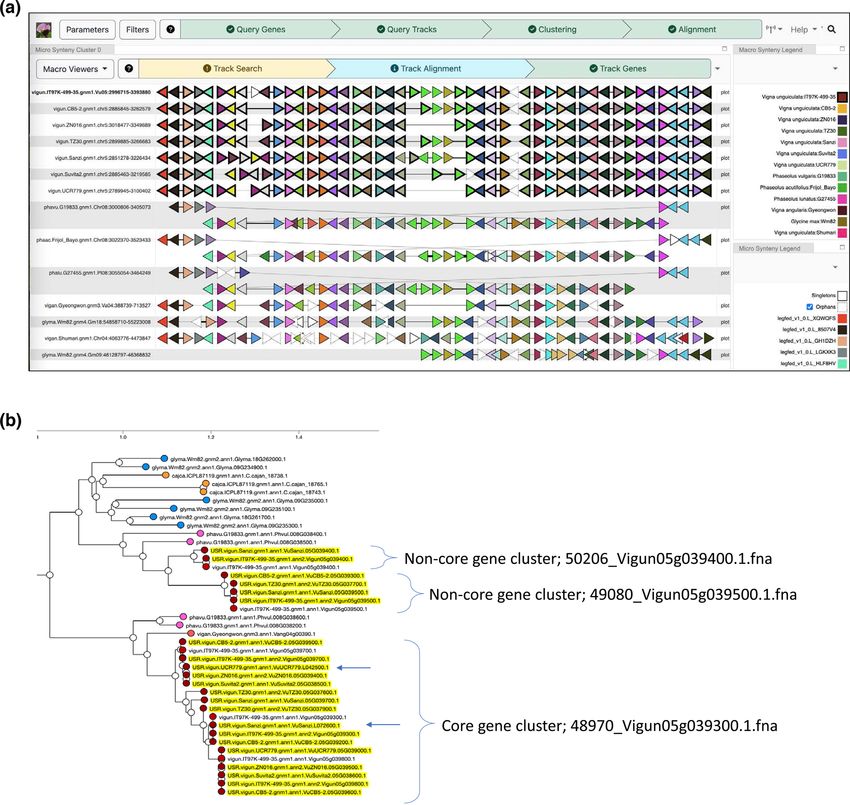
Farmer, 2018). Figure 6a shows the results of a query centered
on a region from the reference cowpea genome that features
a cluster of tandemly duplicated MYB transcription factor
genes in which PAV was previously determined to be associ-
ated with seed coat pigmentation (Herniter et al., 2018). The
colors of the genes in this “beads on a string” representation
reflect the gene family assignments; here, the brown triangles
at the center of the region represent the MYB genes with vary-
ing copy numbers in the different cowpea accessions, with
a maximum of five copies in the reference accession to as
few as a single copy in UCR779. Outside the CNV region,
there is strong conservation of gene content, with one other
region showing some evidence of reordering among the cow-
pea accessions. The viewer facilitates comparison not only
within but across species, and one can see evidence of similar
CNV in the corresponding region of several Phaseolus spp.
genomes (Moghaddam et al., 2021; Schmutz et al., 2014), as
well as an inversion of the segment containing the genes rel-
TA B L E 2
ative to cowpea, soybean (Valliyodan et al., 2019), and other
Vigna species (Kang et al., 2014; Sakai et al., 2015). Two cor-
responding homoeologous regions evidence the most recent19403372, 0, Downloaded from https://acsess.onlinelibrary.wiley.com/doi/10.1002/tpg2.20319, Wiley Online Library on [22/03/2023]. See the Terms and Conditions (https://onlinelibrary.wiley.com/terms-and-conditions) on Wiley Online Library for rules of use; OA articles are governed by the applicable Creative Commons License LIANG ET AL. The Plant Genome 13 of 17 F I G U R E 6 Conservation of gene content within and across species. (a) A region depicting gene content conservation and variability among cowpea genomes and other representative Phaseoleae species. Triangular glyphs represent order and orientation of genes, with color representing gene family memberships (https://vigna.legumeinfo.org/tools/gcv). (b) All cowpea proteins assigned to the family whose members exhibit copy number variation in (a) are shown augmenting a dynamically recomputed gene tree at the Legume Information System, with genes from unanchored contigs not present in the chromosomes aligned in (a) indicated with arrows (https://mines.legumeinfo.org/cowpeamine). whole genome duplication in soybean. The region serves as larity and provide insight into which copies have been deleted. a breakpoint for the syntenic block in Gm09, which, taken Second, because it relies on the surrounding genomic context together with the other structural variation, suggests that the of each gene to place it into correspondence, it will have lim- expansion of gene copy number here has had consequences ited capability for finding genes that are present in the assem- for the stability of the chromosome in these regions over bly but are largely isolated on small scaffolds that were not evolutionary time (Hastings et al., 2009). incorporated into the main pseudomolecules. Another tool at Although the GCV view shows good evidence for CNV, LIS that provides a complementary view based on the under- there are some limitations to what may be inferred from that lying sequence identity of the different copies of the expanded alone. First, since the viewer only has access to gene family gene family is shown in Figure 6b. Here, the InterMine assignment information, it cannot determine which elements (Kalderamis et al., 2014) instance for cowpea (https://mines. among those in tandem arrays have the highest sequence simi- legumeinfo.org/cowpeamine/begin.do) was used to collect all
19403372, 0, Downloaded from https://acsess.onlinelibrary.wiley.com/doi/10.1002/tpg2.20319, Wiley Online Library on [22/03/2023]. See the Terms and Conditions (https://onlinelibrary.wiley.com/terms-and-conditions) on Wiley Online Library for rules of use; OA articles are governed by the applicable Creative Commons License
14 of 17    The Plant Genome                                                                                         LIANG ET AL.

protein sequences for cowpea genes assigned to the given fam-    curation; visualization. Jeremy Phillips: Data curation; visu-
ily. A dynamic tree construction procedure invoked based on      alization. Nadia M. Janis: Formal analysis; visualization.
hmmalign-derived (http://www.csb.yale.edu/userguides/seq/        Elaine J. Lee: Data curation; formal analysis; visualization;
hmmer/docs/node18.html; Eddy, 2011) additions of these           writing–review and editing. Chenxi Liang: Formal analysis;
genes to the multiple sequence alignment for the found-          writing–review and editing. Peter L. Morrell: Data curation;
ing members of the family. The resulting tree (a subtree of      formal analysis; investigation; methodology; software; super-
which is shown) allows the user to determine the best cor-       vision; visualization; writing–original draft; writing–review
respondences of the copies in each genome and pulls in two       and editing. Andrew D. Farmer: Data curation; formal
additional genes on unanchored contigs that likely belong to     analysis; investigation; methodology; resources; software;
the region.                                                      supervision; visualization; writing–original draft; writing–
                                                                 review and editing. Pei Xu: Conceptualization; funding
                                                                 acquisition; investigation; resources; supervision; writing–
3.5     Pan-genome core genes and                                review and editing. Timothy J. Close: Conceptualization;
cross-species synteny                                            data curation; formal analysis; funding acquisition; investiga-
                                                                 tion; methodology; project administration; resources; super-
To explore the question of how within-species gene con-          vision; writing–original draft; writing–review and editing.
tent conservation compares with gene content shared between      Stefano Lonardi: Conceptualization; data curation; formal
species in other species and genera, we used the LIS gene        analysis; funding acquisition; investigation; methodology;
family assignments to define homology pairings between all       software; supervision; writing–original draft; writing–review
members of each gene family, then used the resulting data        and editing.
to determine collinearity blocks among all pairwise com-
parisons of the cowpea genomes, as well as to soybean and
representative genomes from Vigna and Phaseolus spp. The         AC K N OW L E D G M E N T S
counts of genes participating in at least one collinear block    Development of an initial pan-genome of domesticated cow-
were tallied for each genome in each pairwise comparison. As     pea (Vigna unguiculata ssp. unguiculata [L.] Walp.) was
expected, intra-specific comparisons between cowpea acces-       an objective of the National Science Foundation BREAD
sions yield higher numbers of conserved collinear genes than     project “Advancing the Cowpea Genome for Food Secu-
inter-specific comparisons. On the other hand, there is no       rity” (IOS 1543963). Funding was also provided by NSF
appreciable difference in the extent of conserved collinearity   IIS-1814359 (“Improving de novo Genome Assembly using
when comparing cowpea genomes to other species within the        Optical Maps”). The work conducted by the US Department
Vigna genus versus species from Phaseolus or Glycine gen-        of Energy Joint Genome Institute, a DOE Office of Sci-
era (Figure S5). Because soybean has an additional whole         ence User Facility, was supported by the Office of Science
genome duplication relative to all other species in the com-     of the US Department of Energy under Contract No. DE-
parison, the total number of soybean genes found in collinear    AC02-05CH11231. Support for the work of ADF provided
blocks is higher than in other comparisons. Comparisons          by the U.S. Department of Agriculture, Agricultural Research
between all species and the Vigna radiata version 6 genome       Service, Non-Assistance Cooperative Agreement 58-5030-7-
(Kang et al., 2014) show fewer conserved collinear genes, but    069. This work also benefited from and addressed breeding
this is presumably due to missing data in that assembly, given   and germplasm management objectives of the Feed the Future
that all other inter-specific comparisons are similar.           Innovation Lab for Climate Resilient Cowpea (USAID Coop-
                                                                 erative Agreement AID-OAA-A-13-00070). Partial support
AU T H O R C O N T R I B U T I O N S                             was also provided by the National Natural Science Founda-
Qihua Liang: Data curation; formal analysis; investiga-          tion of China (32172568), the Major Science and Technology
tion; methodology; writing–original draft; writing–review        Project of Plant Breeding in Zhejiang Province (2021C02065-
and editing. María Muñoz-Amatriaín: Conceptualization;           6-3), and the National Ten-Thousand Talents Program of
formal analysis; funding acquisition; investigation; method-     China (to Pei Xu). Hatch Project CA-R-BPS-5306-H also
ology; writing–original draft; writing–review and editing.       provided partial support. The authors thank Staff Research
Shengqiang Shu: Data curation; formal analysis; method-          Associate Yi-Ning Guo (UCR) for RNA preparation; Pro-
ology; software; writing–original draft. Sassoum Lo: Con-        grammer Steve Wanamaker (UCR) for informatics assistance;
ceptualization; resources; writing–review and editing. Xinyi     Jeffrey Ehlers (Bill & Melinda Gates Foundation), Phillip
Wu: Data curation; funding acquisition; resources; writing–      Roberts (UCR), and Anthony Hall (UCR) for discussions on
review and editing. Joseph W. Carlson: Data curation;            the accessions for sequencing; Bao Lam Huynh (UCR) and
visualization; writing–review and editing. Patrick David-        Mitchell Lucas (UCR) for assistance with greenhouse oper-
son: Data curation; visualization. David M. Goodstein: Data      ations for pure seed production; Richard Hayes (Department
You can also read


