Constructed Wetlands: A Review on the Role of Radial Oxygen Loss in the Rhizosphere by Macrophytes - MDPI
←
→
Page content transcription
If your browser does not render page correctly, please read the page content below
water
Review
Constructed Wetlands: A Review on the Role of
Radial Oxygen Loss in the Rhizosphere
by Macrophytes
Qian Wang 1, *,† , Yanbiao Hu 1,† , Huijun Xie 2 and Zhongchen Yang 3
 1   College of Geography and Environment, Collaborative Innovation Center of Human-Nature and Green
     Development in Universities of Shandong, Shandong Normal University, Jinan 250358, China;
     yanbiaohu9090@163.com
 2   Environment Research Institute, Shandong University, Jinan 250100, China; xiehuij@sdu.edu.cn
 3   College of Environmental Science and Engineering, Peking University, Beijing 100871, China;
     yzcgaara@163.com
 *   Correspondence: qianwang86@sdnu.edu.cn; Tel.: +86-531-8618-2550
 †   These authors contributed equally to this work.

 Received: 8 April 2018; Accepted: 23 May 2018; Published: 24 May 2018

 Abstract: Constructed wetlands (CWs) are extensively used as an economical and environmentally
 friendly sewage treatment under ecological engineering technology. Knowledge of the oxygen
 in the rhizosphere is of primary importance in understanding the function and regulation of
 microbial communities and macrophytes. Numerous studies on radial oxygen loss (ROL) have
 greatly elucidated the mechanism of contaminant removal in CWs. The main sources of oxygen in
 CWs are atmospheric reoxygenation, macrophyte transmission, and artificial aeration. However,
 artificial aeration is very expensive, and atmospheric reoxygenation is limited. Therefore, ROL by
 macrophytes is an essential and economical approach for oxygen input in CWs. In this review,
 we attempted to study the role of macrophytes in CWs. We described the mechanism of ROL and
 summarized the methods for determining ROL. We also investigated the role of ROL in contaminant
 removal in CWs. This review will provide considerable useful information on the oxygen input
 of CWs.

 Keywords: constructed wetlands; radial oxygen loss; rhizosphere; macrophytes; microorganisms

1. Applications and Mechanism of Constructed Wetlands
      Constructed wetlands (CWs) are extensively used as an economical and environmentally
friendly wastewater treatment method under ecological engineering technology [1,2]. CWs are
artificial wastewater treatment systems that can be designed and controlled. It is a useful approach
for the removal of abundant contaminants because of the synergistic effects of soil, macrophyte,
and microorganism on the physical, chemical, and biological processes in the wetland system [3].
CWs are economical, highly efficient and environmentally friendly when used in wastewater treatment.
      CWs are primarily composed of matrices, macrophytes, and microorganisms. Contaminants are
degraded or converted under the synergies of the physical, chemical and biological elements in
the system [1]. Physical action mainly consists of filtration and settlement. Filtration includes the
natural settlement of particulate contaminants and the settlement of colloidal particles to remove
some contaminants. Contaminants such as suspended solids can be settled within CWs, including the
blocking effect of macrophyte roots and the gravitational interception of solid objects between sand
and stone particles. Chemical action mainly consists of adsorption and degradation. Contaminants in
ionized states can be removed by adsorption, which describes a chemical bond involving substantial

Water 2018, 10, 678; doi:10.3390/w10060678                                  www.mdpi.com/journal/water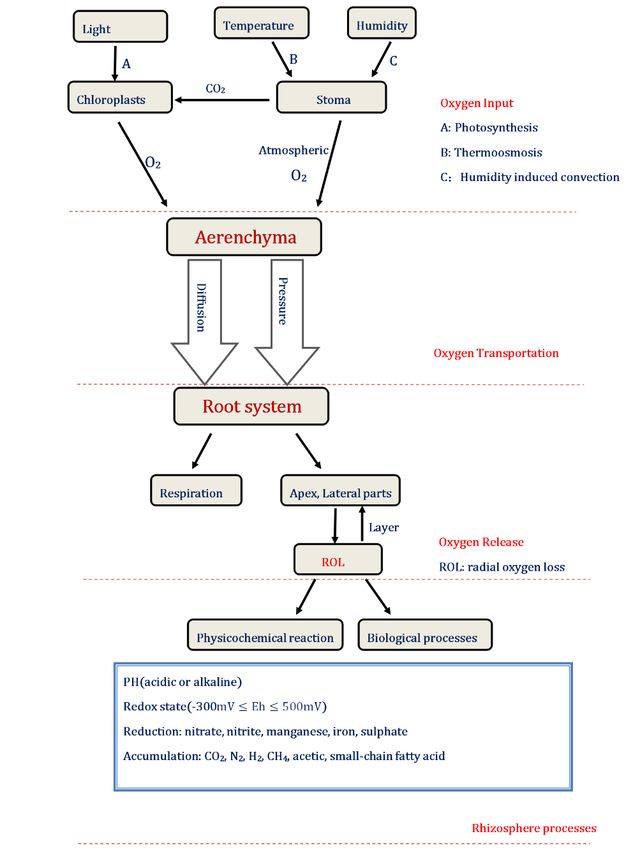
Water 2018, 10, 678                                                                                2 of 11

rearrangement of electron density occurring on the macrophyte root surface. Degradation refers to the
degradation of contaminants into more unstable compounds by redox reaction. Biological action refers
to the plant uptake, the coupling effects between plants and microorganisms, and the decomposition of
microorganisms. These processes are closely related to and affect one another. Oxygen is one of the key
factors in these biological systems [4,5]. Therefore, the source of oxygen in wetland systems should be
investigated. Moreover, CWs can generally be divided into three types, namely: free surface horizontal
flow (HF), subsurface HF, and subsurface vertical flow (VF). Each type of wetland has its distinct
source of oxygen. Oxygen sources can be divided into natural aeration (macrophyte transmission
and atmospheric reoxygenation) and artificial aeration [6]. In natural sources of oxygen, the main
oxygen reoxygenation method is atmospheric reoxygenation, because of the larger contact area of free
surface HF with air [7]. The surface of the water is lower than the surface of the matrices in subsurface
HF, and the oxygen inside the subsurface wetland is mainly from the wetland macrophyte roots.
The main approaches to increasing the artificial oxygen in wetlands consist of adding an oxygenator,
enhancing aeration, and adding an air compressor [8].
      Adding oxygen to CWs can alter the distribution of microorganisms and increase their metabolic
efficiency. Thus, this process has a positive significance for the removal of contaminants in sewage [9].
The input of oxygen in wetlands (especially subsurface HF) is one of the key factors in improving the
removal of contaminants. However, the enhanced artificial oxygen will result in increasing operational
costs, greater difficulty in monitoring, and overgrowth of microorganisms. Thus, the effects of
macrophytes are being paid more attention. Augmenting oxygen in CWs by regulating macrophytes is
more economical and reasonable as an oxygen input. In this paper, CW oxygen input from macrophytes
and its influencing factors, determination, and effects on contaminant treatment are reviewed to better
understand the application of oxygen released by the macrophyte root system.

2. Role of Macrophytes in CWs
     Macrophytes are essential components in the design of wetlands. The Root Zone Theory,
presented by Seidel and Kickuth in 1972, emphasized the role of macrophytes in the sewage treatment
system of wetlands [10] and greatly promoted the study and application of CWs. In general, the role
of macrophytes in CWs is divided into the following points.

2.1. Direct Functions
     The contaminants can be absorbed directly by plant uptake. However, the removal efficiency
of phosphorus and nitrogen through direct absorption is less than 5% and 10%, respectively [11].
Heavy metals in CWs can be removed by macrophytes, called “hyperaccumulators”, through
immobilization and phytotransformation [12]. Heavy metal content in “hyperaccumulators” comprises
more than 0.1–1% of their dry weight [13,14]. Moreover, organic compounds such as phenols can
be transported into plant vacuoles and intercellular spaces or transformed into lignin and other
components [15].

2.2. Coupling Effects between Plants and Microorganisms
     The stems, leaves, and roots of the macrophytes provide attachment sites for microorganisms.
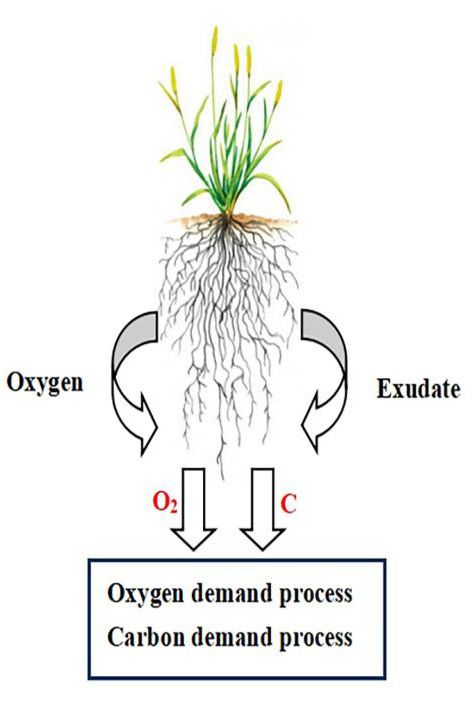
More importantly, macrophytes can provide oxygen by ROL and a carbon source from root exudates
to the root zone for various processes (shown in Figure 1). Macrophytes transport oxygen obtained
from photosynthesis and the atmosphere to the roots by air pressure gradient and diffusion.
This phenomenon not only satisfies the respiration of the root, but also releases a part of the oxygen
into the rhizosphere. This process is also known as the ROL [14]. ROL provides different aerobic
environments for diverse microorganisms in the root system, and effectively plays a key role in
microorganisms. This process is highly essential to the removal of contaminants. Root exudates are
mainly acquired from the healthy tissues of macrophytes and the decomposition of aging tissue in
the root, such as low-molecular-weight organic matter released by the root cell, root products, sticky
Water 2018,10,
Water2018, 10,678
x FOR PEER REVIEW 33 of
of 11
11
polymer formed by metabolism, and the decomposition residue of root hair [15]. These root exudates
polymer formed by metabolism, and the decomposition residue of root hair [15]. These root exudates
can provide energy and electron donors for root biochemical reactions by releasing inorganic ions
can provide energy and electron donors for root biochemical reactions by releasing inorganic ions and
and various organic substances [16,17], and carbon sources for heterotrophic microorganisms of roots
various organic substances [16,17], and carbon sources for heterotrophic microorganisms of roots to
to promote microbial growth [18,19].
promote microbial growth [18,19].
Figure
Figure 1. Oxygensupply
1. Oxygen supplybybyROL
ROLand
andcarbon
carbon source
source from
from root
root exudates
exudates in the
in the rootroot zone
zone of
of the
the macrophyte.
macrophyte.
In the
In the wetland
wetland system,
system, the
the macrophyte
macrophyte is is the
the first
first producer,
producer, whereas
whereas thethe microorganism
microorganism is is the
the
executor of
executor of contaminant
contaminant removal.
removal. Microorganisms
Microorganisms convert
convert organic
organic nutrients
nutrients into
into inorganic
inorganic nutrients
nutrients
for the absorption and utilization of macrophytes. Under the ground, the nitrogen-fixing
for the absorption and utilization of macrophytes. Under the ground, the nitrogen-fixing bacteria in the bacteria in
the macrophyte roots can affect the migration and transformation of nitrogen elements
macrophyte roots can affect the migration and transformation of nitrogen elements in the wetland [11]. in the wetland
[11]. Moreover,
Moreover, microorganisms
microorganisms promotepromote
the growththe ofgrowth of macrophytes
macrophytes to some
to some extent. Someextent. Some
rhizosphere
rhizosphere microorganisms can live freely in the soil or attach to the roots, stems,
microorganisms can live freely in the soil or attach to the roots, stems, and leaves of macrophytes to and leaves of
macrophytes
promote to promote
the growth the growth The
of macrophytes. of macrophytes.
main benefitsThe main
of this benefits ofdepend
relationship this relationship depend
on the increase of
on the
the increasenitrogen
following: of the following:
content in nitrogen content
roots, stems, in roots,
leaves, stems,tiller
and spikes; leaves, and spikes;
number, tiller and
root length, number,
root
root length,
area; and root
chlorophyll area;
content chlorophyll
and content and
seed germination rate;seed germination rate;
and improvement and
in the improvement
macrophyte in the
uptake of
macrophyte
inorganic uptakeand
elements of inorganic elements
water [20–22]. and water of
The interaction [20–22]. The interaction
macrophytes of macrophytes
and microorganism holdsand or
microorganism
dominates holds
the basic or dominates
functions of the the basic system
wetland functions of the wetland system [20].
[20].
2.3.
2.3. Other
Other Functions
Functions
The
The macrophyte
macrophyte roots roots in
in CWs
CWs can enhance the porosity,
porosity, reduce
reduce the
the sealing
sealing ability,
ability, and
and improve
improve
the
the permeability
permeabilityof ofthe
thematrices.
matrices.These
Thesecharacteristics
characteristicsstrengthen
strengthenand
andmaintain thethe
maintain water transport
water in
transport
in the
the wetland
wetland [23].[23]. Macrophytes
Macrophytes are are essential
essential in the
in the design
design of wetlands.
of wetlands. On one
On the the one
hand, hand, energy
energy can
cansupplied
be be supplied by photosynthesis
by photosynthesis during
during sewage
sewage purification.
purification. OnOnthe
theother
otherhand,
hand,macrophytes
macrophytes cancan
improve the
improve the landscape
landscape environment,
environment, maintain
maintain moisture,
moisture, reduce
reduce contaminant
contaminant migration,
migration, and
and perform
perform
diffusion [10,24–26].
diffusion [10,24–26].
3.
3. Role
Role of
of ROL
ROL of
of Macrophytes
Macrophytes
As an important
As an importantpart
partofofCWs,
CWs, macrophytes
macrophytes primarily
primarily transport
transport oxygen
oxygen toroots
to the the roots
throughthrough
well-
well-developed aeration tissues to adapt to the long-term flooding environment. Oxygen in
developed aeration tissues to adapt to the long-term flooding environment. Oxygen in wetlands is wetlands
is mainlyderived
mainly derivedfrom
fromatmospheric
atmosphericreoxygenation,
reoxygenation,ROL,
ROL,and
and influent
influent reoxygenation.
reoxygenation. ROL
ROL isis the
the main
main
method
method of oxygen input in subsurface CWs [27,28]. Macrophyte root oxygen secretion can affect the
of oxygen input in subsurface CWs [27,28]. Macrophyte root oxygen secretion can affect the
distribution of dissolved oxygen and microorganism in the root micro-environment. This process has
a positive effect on the removal of contaminants in CWs.Water 2018, 10, 678 4 of 11
distribution of dissolved oxygen and microorganism in the root micro-environment. This process has
a positive effect on the removal of contaminants in CWs.
Macrophytes can be divided into emerging, floating, and submerged plants, depending on the
different depths of water in the growth environment. The ROL rates of different macrophytes are
shown in Table 1. Emerging plants, such as Phragmites australis, have an ROL rate of approximately
105.71–253.72 µmol O2 d−1 g−1 DWroot . Floating plants, such as the Arrowhead, have a maximum
ROL rate of approximately 126.64 µmol O2 d−1 g−1 DWroot . Submerged plants, such as Hornwort,
have an ROL rate of approximately 367.88 µmol O2 d−1 g−1 DWroot in the light saturated condition.
The oxygen contribution of the Phragmites australis root to CWs cannot be ignored, even during
harvest in winter [29]. Therefore, ROL has gradually become one of the hot spots in the study of the
decontamination mechanisms of CWs.
Table 1. ROL rate of different macrophytes.
Type Macrophytes ROL Rate (µmol O2 d−1 g−1 DWroot ) 1 Ref.
Bog rush 177.87 ± 10.02 [30]
Cattail 124.82 ± 26.97 [30]
Bamboo reed 84.13 ± 5.99 [30]
Emerging plant Zizania aquatica 50.98–95.89 [31,32]
Phragmites australis 105.71–253.72 [32]
Calamus 117.46 ± 17.35 [33]
Canna 120.54 ± 1.52 [30]
Arrowhead 126.64 [31]
Floating plant Calla 103.05 [31]
Water hyacinth 19.8–67.15 [34]
Eel grass 190.66 [35,36]
Hornwort 367.88 [35,36]
Submerged plant 2 Black algae 320.96 [35,36]
Myriophyllum
263.26 [35,36]
verticillatum
Water caltrop 332.91 [35,36]
1 2
Presents the amount of O2 realised from plant per day per root biomass. Measured in the light saturated condition.
3.1. Definition and Theory of ROL
Macrophytes deliver the oxygen by means of baric gradient and spread. This oxygen originates
from the atmosphere and photosynthesis to the root system to adapt to the anoxic environment
produced by water flooding [37]. The oxygen in the atmosphere can enter the interior of the macrophyte
by thermo-osmosis and humidity-induced convection through the stomata.
One part of the oxygen transported to the roots is used for respiration, while the other part is
released into the root micro-environment through root tips and lateral roots [38]. These parts have
essential effects on various physical and chemical reactions and biological processes. The specific
mechanism of this oxygen input is shown in Figure 2.
3.2. Factors that Affect ROL
3.2.1. Perspectives on the Input of Oxygen
The oxygen produced by photosynthesis is the main source of oxygen for ROL. Therefore,
the factors that influence photosynthesis will also influence ROL. Environmental factors and the
characteristics of macrophytes can affect photosynthesis [39]. Environmental factors, such as light
intensity, light time, and temperature, and the characteristics of macrophytes, such as leaf area, net
photosynthetic rate, and stomatal conductance, can indirectly influence the oxygen source of ROL
by affecting the photosynthesis intensity of the macrophytes [40]. With enhancing photosynthesis,
the concentration of dissolved oxygen in the root micro-environment and the rate of ROL increase [39].
The atmosphere is another source of oxygen. This oxygen mainly enters the pores of macrophytesWater 2018, 10, 678 5 of 11
through thermal infiltration and convection. Therefore, temperature and humidity are the two main
factors
Water that
2018, 10, affect
x FOR theREVIEW
PEER entry of
oxygen to the macrophyte [41]. 5 of 11
Figure 2. Schematic
Figure diagram
2. Schematic of the
diagram ROL.
of the ROL.
3.2.2. Perspectives
3.2.2. on on
Perspectives thethe
Transportation of of
Transportation Oxygen
Oxygen
Oxygen
Oxygen cancan
be betransported
transported because
because of of
thethe
presence
presence of of
aerenchyma
aerenchyma in in
macrophytes
macrophytes [39].
[39].
Aerenchyma is the main channel by which oxygen is delivered in macrophytes.
Aerenchyma is the main channel by which oxygen is delivered in macrophytes. Given the varied Given the varied
proportions
proportions of ofaerenchyma
aerenchyma in in
thethe
different macrophytes,
different macrophytes, macrophytes
macrophytes also have
also have distinct
distinctoxygen
oxygen
delivery
deliverycapacities.
capacities. AnAn obvious
obvious positive correlation
positive correlationis observed
is observedbetween
between thethe
ROLROLand thethe
and structure
structure
area of of
area thethe
rootrootaeration
aerationtissue.
tissue.The
Themore
moredeveloped
developed the the aerenchyma
aerenchyma is, is,the
themore
moreprosperous
prosperousROL ROL will
will be [42]. Oxygen is transported within the aerenchyma by spreading and
be [42]. Oxygen is transported within the aerenchyma by spreading and baric gradient. The diffusion baric gradient. The
diffusion
of oxygenof oxygen in the aerenchyma
in the aerenchyma is affected
is affected by the metabolic
by the metabolic activity activity of the
of the root root system.
system. If the
If the metabolic
metabolic activities of the root cells consume abundant oxygen, oxygen will be
activities of the root cells consume abundant oxygen, oxygen will be difficult to transport to the difficult to transport
to the rhizosphere
rhizosphere [43,44].
[43,44]. Moreover,
Moreover, the respiration
the respiration of macrophyte
of macrophyte rootsroots and oxygen
and oxygen contentcontent
in theinsoil
thecan
soilregulate
can regulate
the oxygenthe oxygen
deliverydelivery in the macrophytes
in the macrophytes through through
the baric the baric gradient.
gradient. Thus, the Thus, the of
transport
transport of oxygen in the aerenchyma should
oxygen in the aerenchyma should be further evaluated. be further evaluated.
3.2.3. Perspectives on the Release of Oxygen
Numerous factors, which may be internal or external, affect the release of oxygen in the root
system. From the source of oxygen, photosynthesis plays an important role in the root system oxygenWater 2018, 10, 678 6 of 11
3.2.3. Perspectives on the Release of Oxygen
Numerous factors, which may be internal or external, affect the release of oxygen in the root
system. From the source of oxygen, photosynthesis plays an important role in the root system
oxygen secretion [39,45]. Therefore, external factors, such as temperature, humidity, light intensity,
and atmospheric oxygen [40,46], can indirectly affect oxygen release by affecting photosynthesis.
Internal causes are mainly related to the metabolic rate of macrophytes and the physiological
characteristics of macrophyte roots. The oxygen release rate of macrophytes at the growth stage is
higher than that at other periods, and this is related to the concentration of oxygen that reaches the
root system [47]. Moreover, the release of oxygen is limited by the root barrier, which is affected by
the environment in which the root system is located [48]. When the oxygen is transported to the root,
the oxygen is first used for respiration, and the remaining oxygen is released through the intercellular
space of the root tip and the lateral root [49]. Therefore, during oxygen transport, the release rate of the
rhizosphere is affected by the presence of the rhizosphere pressure, which is essential in relation to the
number, length, and porosity of the root system [50,51]. To some extent, the more porous the root of the
macrophyte is, the less the shielding effect of the ROL will be, which is the same as for the length and
quantity of the root [46]. This phenomenon is found in the aeration of many different macrophytes.
4. Measurement of ROL
Several methods have been used to measure the ROL, and each method presents several
advantages and potential disadvantages (listed in Table 2). Soaking of the root solution is one of the
most common methods, in which the roots of the macrophytes are soaked in an oxygen-consuming
medium that is separated from the overlying water [52]. The ROL is measured by determining the
net absorption of oxygen. This method can be used to measure the whole root and to reduce root
damage. However, the measured value is low, because oxygen is easily absorbed in the solution,
and the macrophyte reabsorbs oxygen.
Table 2. The advantages and disadvantages of the methods of measuring ROL.
Measurement of ROL Advantages Disadvantages
The soaking method of root solution Measure whole macrophyte, low damage Low measured value
Analogy the conditions of the redox Higher measurement of oxygen,
Titrimetric method
potential in the soil less accurate
Able to simulate soil conditions from the
Oxygen micro-electrode method More expensive, fragile electrode
day to night
Sediment redox potential Actual time determination Easily influenced by environmental factors
Mathematical model method Provide a theoretical basis Easily limited by the data and assumptions
Different characteristics of the root system
Well studied the root/soil interface soil
Measurement of rhizoplane compared with non-interfering soil
conditions, easy to control
macrophytes
The titrimetric method is another method for measuring ROL. Utilizing the reducibility of
Ti3+ results in the oxidation of Ti by the oxygen in the rhizosphere, this process is recorded by a
spectrophotometer [53]. This method can show the conditions of the redox potential in the soil.
However, the oxygen concentration cannot be detected anymore when all of the Ti3+ is completely
oxidized. This method is not suitable for the overall measurement of macrophytes with high oxygen
release (Scirpus validus, Acorus calamus).
The oxygen micro-electrode method is also a common method for measuring ROL. In this process,
the oxygen released by the single root is measured by the anion and anode, and the natural environment
is simulated. However, this method has several shortcomings, such as fragile electrodes and high
cost [54].
Sediment redox potential is another method for measuring ROL. The amount of oxygen produced
by the root system is obtained indirectly by analyzing the degree of redox of the sediments [55].
The potential can be measured in real-time, and continuous data can be obtained. However, this methodWater 2018, 10, 678 7 of 11
is vulnerable to environmental factors, such as oxygen in the atmosphere, soil pH and redox potential
(Eh) values, etc.
The mathematical model is not frequently used in the desired measurement. This process explains
the actual problems by calculating the results and accepts the actual test to establish the whole process
of the mathematical model. This technique facilitates a better understanding of the ROL by providing
a theoretical basis for this parameter. The scale of the model should be determined according to
the size of the measured sample. However, the establishment of the model is easily influenced by
environmental factors, which are difficult to measure accurately [55].
5. Role of ROL in Wastewater Treatment
5.1. Effects on Organic Matter Removal
ROL has direct and indirect effects on organic matter removal. The direct effect of ROL on
organic matter is that oxygen serves as the terminal electron acceptor during aerobic degradation [11].
The effect is achieved through the cation radicals of organic matter resulting from electron transfer
from the organic matter to oxygen on the excitation of the charge transfer [56]. This process causes the
alkalization of organic cations.
The indirect effect of ROL on organic matters is that it can form aerobic, facultative anaerobic,
and anaerobic regions in the rhizosphere, providing suitable habitats for different microorganisms [57,
58]. Aerobic microorganisms can consume oxygen to decompose organic matter to CO2 and H2 O,
providing energy and cell substances for microorganisms [59]. Anaerobic bacteria can break down
organic matter to produce methane for energy and nutrition [60]. Rhizosphere oxygen plays an
essential role in the degradation of organism transformation and mineralized microorganisms.
5.2. Effects on Nitrogen Removal
Nitrification and denitrification are primary processes for removing nitrogen from wastewater.
These processes require aerobic and anoxic conditions, respectively [61]. Oxygen secretion in the
macrophyte roots could remarkably increase the number of aerobic and facultative aerobic bacteria in
the root micro-environment. According to the Root Zone Theory, ROL provides continuous aerobic,
anoxic, and anaerobic conditions in soil, allowing simultaneous nitrification and denitrification [62].
The nitrifying bacteria and ammonia-oxidizing bacteria can use oxygen produced by ROL to transform
ammonia into nitrate and nitrite, whereas denitrifying bacteria transform nitrate into nitrogen
in the anoxic zone far from the roots [63,64]. In addition, ROL exerts a positive effect on the
removal of nitrification-inhibiting substances, such as organic matter and heavy metals. Therefore,
nitrogen removal efficiency is usually higher in constructed wetlands compared with general sewage
treatment systems.
5.3. Effects on Heavy Metal Uptake
The ROL capacity of macrophytes is considered to be one of the most important biological
factors in controlling heavy metal uptake. ROL can directly affect some metal mobility-regulating
soil factors, such as Eh and pH. Previous studies showed that ROL increases Eh and decreases pH in
the rhizosphere, concurrently with reductive substance oxidization [65]. Reductive substances in the
rhizosphere, such as Fe2+ and Mn2+ , are oxidized to form a red-brown film called Ferromanganese
oxide film, which is wrapped in the root system surface [66,67]. A thick Ferromanganese oxide film can
become a barrier and enriched library for heavy metals and metalloid contaminants, promoting their
migration and transformation in the medium [68]. In addition, H+ produced by ionic oxidization,
such as Fe2+ , was consumed by carbonates. Thus, heavy metals in carbonate form dissolve [65],
and those in less available forms transform into a more easily available form.Water 2018, 10, 678 8 of 11
6. Concluding Remarks
In this review, the key role of macrophytes and the specific mechanisms, determination methods,
and functions of ROL in CWs were expounded in detail. The factors that affect ROL were summarized
according to input, transportation, and release. The release of oxygen from the root system is
influenced by many external and internal factors, regulated by environmental factors and macrophyte
physiological characteristics. Bearing in mind the importance of ROL, many studies on the effects of
the combination of environmental factors and physiological characteristics on the removal of pollutants
can be safely ignored. Measuring the real-time distribution oxygen concentration in the rhizosphere
enables the understanding of where and when the roots are active in respect to root respiration and
how the soil responds to this process. The techniques for ROL determination were also summarized in
this review. Numerous techniques, such as the titrimetric method, oxygen micro-electrode method,
and soaking method of root solution were applied in measuring the ROL. However, these methods
have several limitations in terms of cost, accuracy, and real-time determination. The interactions
between oxygen secretion and the microorganism are of great significance for contaminant removal.
Knowledge of oxygen concentration gradients is of primary importance in understanding the function
and regulation of microbial communities and macrophytes. However, the specific coupling mechanism
between the ROL and microorganism remains ambiguous. The mechanism of ROL and microorganism
interactions should be examined further. Broad investigations on the enhancement of ROL could lay a
foundation for optimizing CWs.
Author Contributions: Q.W. and Y.H. wrote, coordinated and reviewed the paper and finalized the data collection.
H.X. and Z.Y. contributed to refining the paper structure and to improving the scientific aspects.
Acknowledgments: This work was supported by the National Science Foundation of China (Nos. 51608315 and
51708340), Promotional Research Fund for Excellent Young and Middle-aged Scientists of Shandong Province
(Nos. ZR2016CB18 and BS2014HZ019).
Conflicts of Interest: The authors declare no conflict of interest.
References
1. Vymazal, J. Constructed wetlands for wastewater treatment: Five decades of experience. Environ. Sci. Technol.
2010, 45, 61–69. [CrossRef] [PubMed]
2. Xu, F.; Cao, F.-Q.; Kong, Q.; Zhou, L.-L.; Yuan, Q.; Zhu, Y.-J.; Wang, Q.; Du, Y.-D.; Wang, Z.-D.
Electricity production and evolution of microbial community in the constructed wetland-microbial fuel cell.
Chem. Eng. J. 2018, 339, 479–486. [CrossRef]
3. Yang, C.H.; Crowley, D.E. Rhizosphere microbial community structure in relation to root location and plant
iron nutritional status. Appl. Environ. Microbiol. 2000, 1, 345–351. [CrossRef]
4. Yu, Y.; Li, X.; Cheng, J. A Comparison Study of Mechanism: Cu2+ Adsorption on Different Adsorbents and
Their Surface-Modified Adsorbents. J. Mater. Chem. 2016, 2016, 7936258. [CrossRef]
5. Kong, Q.; Zhang, J.; Miao, M.; Tian, L.; Guo, N.; Liang, S. Partial nitrification and nitrous oxide emission in
an intermittently aerated sequencing batch biofilm reactor. Chem. Eng. J. 2013, 217, 435–441. [CrossRef]
6. Tao, M.; He, F.; Xu, D.; Li, M.; Wu, Z. How artificial aeration improved sewage treatment of an integrated
vertical-flow constructed wetland. Pol. J. Environ. Stud. 2010, 19, 183–191.
7. Wu, H. Long-Term Performance and Mechanism in the Surface Constructed Wetland for Treating Polluted
River Water in Northern China. Master’s Thesis, Shandong University, Jinan, Shandong, China, 2011.
8. Ávila, C.; Reyes, C.; Bayona, J.M.; García, J. Emerging organic contaminant removal depending on primary
treatment and operational strategy in horizontal subsurface flow constructed wetlands: Influence of redox.
Water Res. 2013, 47, 315–325. [CrossRef] [PubMed]
9. Braeckevelt, M.; Reiche, N.; Trapp, S.; Wiessner, A.; Paschke, H.; Kuschk, P.; Kaestner, M. Chlorobenzene
removal efficiencies and removal processes in a pilot-scale constructed wetland treating contaminated
groundwater. Ecol. Eng. 2011, 37, 903–913. [CrossRef]
10. Kickuth, R. Degradation and Incorporation of Nutrients from Rural Waste Waters by Plant Rhizosphere under Limnic
Conditions; European Commission: London, UK, 1977; pp. 335–343.Water 2018, 10, 678 9 of 11
11. Stottmeister, U.; Wießner, A.; Kuschk, P.; Kappelmeyer, U.; Kästner, M.; Bederski, O.; Müller, R.A.;
Moormann, H. Effects of plants and microorganisms in constructed wetlands for wastewater treatment.
Biotechnol. Adv. 2003, 22, 93–117. [CrossRef] [PubMed]
12. Liu, Q.Q.; Chen, Y.H.; Shen, Z.G.; Zheng, L.Q. Roles of Cell Wall in Plant Heavy Metal Tolerance.
J. Plant Physiol. 2014, 50, 605–611.
13. Sandermann, H., Jr. Plant metabolism of xenobiotics. Trends Biochem. Sci. 1992, 17, 82–84. [CrossRef]
14. Jackson, M.B.; Armstrong, W. Formation of Aerenchyma and the Processes of Plant Ventilation in Relation to
Soil Flooding and Submergence. J. Plant Physiol. 1999, 1, 274–287. [CrossRef]
15. Walker, T.S.; Bais, H.P.; Grotewold, E.; Vivanco, J.M. Root exudation and rhizosphere biology. Plant Physiol.
2003, 132, 44–51. [CrossRef] [PubMed]
16. Gagnon, V.; Chazarenc, F.; Comeau, Y.; Brisson, J. Influence of macrophyte species on microbial density and
activity in constructed wetlands. Water Sci. Technol. 2007, 56, 249–254. [CrossRef] [PubMed]
17. Bais, H.P.; Weir, T.L.; Perry, L.G.; Gilroy, S.; Vivanco, J.M. The role of root exudates in rhizosphere interactions
with plants and other organisms. Annu. Rev. Plant Biol. 2006, 57, 233–266. [CrossRef] [PubMed]
18. Rehman, F.; Pervez, A.; Khattak, B.N.; Ahmad, R. Constructed Wetlands: Perspectives of the Oxygen
Released in the Rhizosphere of Macrophytes. Clean-Soil Air Water 2017, 45. [CrossRef]
19. Sun, T.R.; Long, C.; Wang, Q.Y.; Zhou, D.M.; Cheng, J.M.; Xu, H. Roles of abiotic losses, microbes, plant
roots, and root exudates on phytoremediation of PAHs in a barren soil. J. Hazard. Mater. 2010, 176, 919–925.
[CrossRef] [PubMed]
20. Sharma, R. Rhizosphere biology of aquatic microbes in order to access their bioremediation potential along
with different aquatic macrophytes. Recent Res. Sci. Technol. 2013, 5, 29–32.
21. Bucher, M. Functional biology of plant phosphate uptake at root and mycorrhiza interfaces. New Phytol.
2007, 173, 11–26. [CrossRef] [PubMed]
22. Spaepen, S.; Dobbelaere, S.; Croonenborghs, A.; Vanderleyden, J. Effects of Azospirillum brasilense
indole-3-acetic acid production on inoculated wheat plants. Plant Soil 2008, 312, 15–23. [CrossRef]
23. Armstrong, J.; Armstrong, W. Rice and Phragmites: Effects of organic acids on growth, root permeability,
and radial oxygen loss to the rhizosphere. Am. J. Bot. 2001, 88, 1359–1370. [CrossRef] [PubMed]
24. Shelef, O.; Gross, A.; Rachmilevitch, S. Role of Plants in a Constructed Wetland. Current and New
Perspectives. Water 2013, 5, 405–419. [CrossRef]
25. Zong, W.; Sun, F.; Pei, H.; Hu, W.; Pei, R. Microcystin-associated disinfection by-products: The real and
non-negligible risk to drinking water subject to chlorination. Chem. Eng. J. 2015, 279, 498–506. [CrossRef]
26. Miao, M.S.; Liu, Q.; Shu, L.; Wang, Z.; Liu, Y.Z.; Kong, Q. Removal of cephalexin from effluent by activated
carbon prepared from alligator weed: Kinetics, isotherms, and thermodynamic analyses. Process Saf. Environ.
2016, 104, 481–489. [CrossRef]
27. Caffrey, J.M.; Kemp, W.M. Seasonal and spatial patterns of oxygen production, respiration and root-rhizome
release in Potamogeton perfoliatus L. and Zostera marina L. Aquat. Bot. 1991, 40, 109–128. [CrossRef]
28. Konnerup, D.; Sorrell, B.K.; Brix, H. Do tropical wetland plants possess convective gas flow mechanisms?
New Phytol. 2011, 190, 379–386. [CrossRef] [PubMed]
29. Wang, Q.; Xie, H.; Zhang, J.; Liang, S.; Ngo, H.H.; Guo, W.; Liu, C.; Zhao, C.; Li, H. Effect of plant harvesting
on the performance of constructed wetlands during winter: Radial oxygen loss and microbial characteristics.
Environ. Sci. Pollut. Res. 2015, 22, 7476–7484. [CrossRef] [PubMed]
30. Lin, J.; Yang, Y.; Li, L.I.; Mai, X. Characteristics of growth and radial oxygen loss of eight wetland plants.
J. Lake Sci. 2015, 27, 1042–1048.
31. Liu, Z.K.; Niu, K.K.; Ma, Q.L.; Bai, X.H.; Su, L.X. Study on rate of roots radial oxygen loss of eight wetland
plants. Guizhou Agric. Sci. 2010, 38, 47–50.
32. Brix, H.; Schierup, H.H. Soil oxygenation in constructed reed beds. The role of macrophyte and
soil-atmosphere interface oxygen transport. In Proceedings of the International Conference on the Use of
Constructed Wetlands in Water Pollution Control, Cambridge, UK, 24–28 September 1990; pp. 53–66.
33. Dong, C.; Zhu, W.; Gao, M.; Zhao, L.F.; Huang, J.Y.; Zhao, Y.Q. Diurnal fluctuations in oxygen release from
roots of Acorus calamus Linn in a modeled constructed wetland. J. Environ. Sci. Health B 2011, 46, 224–229.
[CrossRef] [PubMed]Water 2018, 10, 678 10 of 11
34. Tao, M.A.; Neng, Y.I.; Zhang, Z.H.; Wang, Y.; Gao, Y.; Yan, S.H. Oxygen and Organic Carbon Releases from
Roots of Eichhornia Crassipes and Their Influence on Transformation of Nitrogen in Water. J. Agroenviron. Sci.
2014, 33, 2003–2013.
35. Tian, Q.; Wang, P.F.; Ouyang, P.; Wang, C.; Zhang, W.M. Purification of eutrophic water with five submerged
hydrophytes. Water Resour. Prot. 2009, 25, 14–17.
36. Su, W.-H.; Zhang, G.-F.; Zhang, Y.-S.; Xiao, H.; Xia, F. Photosynthetic characteristics of 5 species of Submerged
Macrophytes. Acta Ecol. 2004, 28, 391–395.
37. Armstrong, W. Root aeration in the wetland condition. Plant Life Anaerob. Environ. 1978, 1, 269–297.
38. Armstrong, J.; Armstrong, W.; Beckett, P.M. Phragmites australis. Venturi and humidity-induced pressure
flows enhance rhizome aeration and rhizosphere oxidation. New Phytol. 1992, 120, 197–207. [CrossRef]
39. Connell, E.L.; Colmer, T.D.; Walker, D.I. Radial oxygen loss from intact roots of Halophila ovalis as a function
of distance behind the root tip and shoot illumination. Aquat. Bot. 1999, 63, 219–228. [CrossRef]
40. Emerson, R.; Lewis, C.M. Factors influencing the efficiency of photosynthesis. Am. J. Bot. 1939, 26, 808–822. [CrossRef]
41. Agnew, D.J.; Taylor, A.C. Effects of oxygen tension, temperature, salinity, and humidity on the survival of
two intertidal gammarid amphipods. Mar. Ecol. Prog. Ser. 1986, 32, 27–33. [CrossRef]
42. Armstrong, W. Aeration in Higher Plants. Adv. Bot. Res. 1980, 7, 225–332.
43. Colmer, T.D. Aerenchyma and an Inducible Barrier to Radial Oxygen Loss Facilitate Root Aeration in Upland,
Paddy and Deep-water Rice (Oryza sativa L.). Ann. Bot. Lond. 2003, 91, 301–309. [CrossRef]
44. Garthwaite, A.J.; Rv, B.; Colmer, T.D. Diversity in root aeration traits associated with waterlogging tolerance
in the genus Hordeum. Funct. Plant Biol. 2003, 30, 875–889. [CrossRef]
45. Nikolausza, M.; Székely, A.; Rusznyák, A.; Márialigeti, K.; Kästner, M. Diurnal redox fluctuation and
microbial activity in the rhizosphere of wetland plants. Eur. J. Soil Biol. 2008, 44, 324–333. [CrossRef]
46. Soda, S.; Ike, M.; Ogasawara, Y.; Yoshinaka, M.; Mishima, D.; Fujita, M. Effects of light intensity and water
temperature on oxygen release from roots into water lettuce rhizosphere. Water Res. 2007, 41, 487–491.
[CrossRef] [PubMed]
47. Zhang, J.; Wu, H.; Hu, Z.; Liang, S.; Fan, J. Examination of oxygen release from plants in constructed wetlands in
different stages of wetland plant life cycle. Environ. Sci. Pollut. Res. 2014, 21, 9709–9716. [CrossRef] [PubMed]
48. Visser, E.J.W.; Colmer, T.D.; Blom, C.W.P.M.; Voesenek, L.A.C.J. Changes in growth, porosity, and radial
oxygen loss from adventitious roots of selected mono- and dicotyledonous wetland species with contrasting
types of aerenchyma. Plant Cell Environ. 2000, 23, 1237–1245. [CrossRef]
49. Luxmoore, R.J.; Stolzy, L.H.; Letey, J. Oxygen diffusion in the soil-plant system. 2. Respiration rate,
permeability, and porosity of consecutive excised segments of maize and rice roots. Agron. J. 1970, 62,
322–324. [CrossRef]
50. Vymazal, J. Emergent plants used in free water surface constructed wetlands: A review. Ecol. Eng. 2013, 61,
582–592. [CrossRef]
51. Xu, F.; Qi, X.-Y.; Kong, Q.; Shu, L.; Miao, M.-S.; Xu, S.; Du, Y.-D.; Wang, Q.; Liu, Q.; Ma, S.-S. Adsorption of
sunset yellow by luffa sponge, modified luffa and activated carbon from luffa sponge. Desalin. Water Treat.
2017, 96, 86–96. [CrossRef]
52. Lawson, G. Cultivating Reeds (Phragmites australis) for Root Zone Treatment of Sewage; Contract Report ITE
Project 965; Water Research Center: Cumbria, UK, 1985.
53. Taylor, C.R.; Hook, P.B.; Stein, O.R.; Zabinski, C.A. Seasonal effects of 19 plant species on COD removal in
subsurface treatment wetland microcosms. Ecol. Eng. 2011, 37, 703–710. [CrossRef]
54. Pedersen, O.; Binzer, T.; Borum, J. Sulphide intrusion in eelgrass (Zostera marina L.). Plant Cell Environ. 2004,
27, 595–602. [CrossRef]
55. Colmer, T.D. Long-distance transport of gases in plants: A perspective on internal aeration and radial oxygen
loss from roots. Plant Cell Environ. 2003, 26, 17–36. [CrossRef]
56. Kojima, M.; Sakuragi, H.; Tokumaru, K. ChemInform Abstract: The role of oxygen as an electron acceptor in
dimerization of some styrene derivatives. Tetrahedron Lett. 1981, 12, 2889–2892. [CrossRef]
57. Cheng, X.Y.; Wang, M.; Zhang, C.F.; Wang, S.Q.; Chen, Z.H. Relationships between plant photosynthesis,
radial oxygen loss and nutrient removal in constructed wetland microcosms. Biochem. Syst. Ecol. 2014, 54,
299–306. [CrossRef]Water 2018, 10, 678 11 of 11
58. Wang, Z.B.; Miao, M.S.; Kong, Q.; Ni, S.Q. Evaluation of microbial diversity of activated sludge in a
municipal wastewater treatment plant of northern China by high-throughput sequencing technology.
Desalin. Water Treat. 2016, 57, 1–6. [CrossRef]
59. Fonseca, A.L.D.S.; Marinho, C.C.; Esteves, F.D.A. Dynamics of dissolved organic carbon from aerobic and
anaerobic decomposition of Typha domingensis Pers. and Eleocharis interstincta (Vahl) Roem. & Schult. in a
tropical coastal lagoon. Acta Limnologica Brasiliensia 1959, 25, 279–290.
60. Kristanto, G.A.; Asaloei, H. Assessment of anaerobic biodegradability of five different solid organic wastes.
AIP Conf. Proc. 2017, 1826, 020029. [CrossRef]
61. Kim, J.K.; Park, K.J.; Cho, K.S.; Nam, S.W.; Park, T.J.; Bajpai, R. Aerobic nitrification-denitrification by
heterotrophic Bacillus strains. Bioresour. Technol. 2005, 96, 1897–1906. [CrossRef] [PubMed]
62. Brix, H. Treatment of Wastewater in the Rhizosphere of Wetland Plants-the Root-Zone Method.
Water Sci. Technol. 1987, 19, 107–118. [CrossRef]
63. Pochana, K.; Keller, J. Study of factors affecting simultaneous nitrification and denitrification (SND).
Water Sci. Technol. 1999, 39, 61–68. [CrossRef]
64. Kong, Q. Impact of ammonium and salinity concentrations on Nitrous Oxide emission in partial nitrification
system. KSCE J. Civ. Eng. 2015, 19, 873–879. [CrossRef]
65. Yang, J.; Ma, Z.; Ye, Z.; Guo, X.; Qiu, R. Heavy metal (Pb, Zn) uptake and chemical changes in rhizosphere
soils of four wetland plants with different radial oxygen loss. J. Environ. Sci. 2010, 22, 696–702. [CrossRef]
66. Ju, L.W. Iron and Mn plaques on the surface of roots of wetland plants. Acta Chim. Sin. 2005, 25, 358–363.
67. Lv, J.; Liu, Y.; Zhang, Z.; Dai, J. Factorial kriging and stepwise regression approach to identify environmental
factors influencing spatial multi-scale variability of heavy metals in soils. J. Hazard. Mater. 2013, 261, 387–397.
[CrossRef] [PubMed]
68. Fan, J.L.; Hu, Z.Y.; Ziadi, N.; Xia, X. Excessive sulfur supply reduces cadmium accumulation in brown rice
(Oryza sativa L.). Environ. Pollut. 2010, 158, 409–415. [CrossRef] [PubMed]
© 2018 by the authors. Licensee MDPI, Basel, Switzerland. This article is an open access
article distributed under the terms and conditions of the Creative Commons Attribution
(CC BY) license (http://creativecommons.org/licenses/by/4.0/).You can also read


