Efficient Removal of Volatile Organic Compounds by FAU-Type Zeolite Coatings
←
→
Page content transcription
If your browser does not render page correctly, please read the page content below
molecules
Article
Efficient Removal of Volatile Organic Compounds by
FAU-Type Zeolite Coatings
Mathieu Diboune 1,2,3 , Habiba Nouali 1,2 , Michel Soulard 4 , Joël Patarin 4 ,
Guillaume Rioland 3 , Delphine Faye 3 and T. Jean Daou 1,2, *
 1   Institut de Science des Matériaux de Mulhouse (IS2M), CNRS, Axe Matériaux à Porosité Contrôlée (MPC),
     Université de Haute-Alsace (UHA), 3 bis rue Alfred Werner, 68093 Mulhouse, France;
     mathieu.diboune3@uha.fr (M.D.); habiba.nouali@uha.fr (H.N.)
 2   Université de Strasbourg, 67000 Strasbourg, France
 3   Service Laboratoires & Expertise, Centre National d’Etudes Spatiales (CNES), 18 avenue Edouard Belin,
     CEDEX 9, 61401 Toulouse, France; guillaume.rioland@cnes.fr (G.R.); delphine.faye@cnes.fr (D.F.)
 4   Zéphir Alsace, 15 rue des Frères Lumière, 68350 Brunstatt-Didenheim, France;
     soulard.michel.za@orange.fr (M.S.); joel.patarinza@gmail.com (J.P.)
 *   Correspondence: jean.daou@uha.fr; Tel.: +33-3-89-33-67-39

 Academic Editor: Miguel A. Camblor

 Received: 3 July 2020; Accepted: 21 July 2020; Published: 23 July 2020

 Abstract: Silicone and pure organic binders were used to develop FAU-type zeolite coatings applied
 on pre-treated aluminum substrates by using a spraying method and then cured under specific
 conditions. The influence of the amount of binder on adhesion properties of zeolite coatings was
 first investigated to determine the optimum ratio between zeolite and binder. Zeolite coatings were
 then elaborated with a high zeolite content (between 70 and 80 wt.%) to ensure high adsorption
 capacities. The amount of binders involved in different zeolite coatings was sufficient to achieve
 interesting adhesion and cohesion properties. The accessibility of zeolite microporosity was studied
 by nitrogen adsorption-desorption measurements, which revealed a very small or no loss of the
 micropore volume for the optimized coatings. Volatile Organic Compounds (VOCs) adsorption
 measurements were carried out using n-hexane as probe molecule. FAU-type zeolite in powder
 form adsorbs 180 mg/ganhydrous zeolite , whereas the amounts of n-hexane adsorbed by zeolite coatings
 ranged from 131 to 175 mg/ganhydrous zeolite .

 Keywords: molecular decontamination; FAU-type zeolite; silicone resins; zeolite coatings; organic
 pollutant adsorption

1. Introduction
      Silicone resins are used in various applications since they have been discovered by Eugene G.
Rochow in 1941 [1]. They consist of a framework Si-O-Si where organic groups are bonded to the
silicon atom [2]. Due to their high thermal stability in comparison with common organic polymers
made with carbon-carbon bonds [3], silicone resins are of particular interest for high-temperature
applications [4–7]. Generally, they are stable at temperatures up to 250 ◦ C over a long period. This high
thermal stability is due to the physicochemical properties of the siloxane bond (Si-O-Si), which shows
a high bonding energy. The one of Si-O bond (460.5 kJ/mol) is higher than those of C-O (358 kJ/mol)
and C-C (304 kJ/mol) bonds [8]. Moreover, in addition to high thermal stability, silicone resins
combine also the flexibility of common organic polymers, which allows them to adhere to a large
number of surfaces [9]. These properties make silicone resins very interesting candidates for the space
industry where the temperature can vary between −110 and 150 ◦ C under orbital conditions [10].
In addition to the drastic conditions encountered in orbit, satellites are subjected to shocks and

Molecules 2020, 25, 3336; doi:10.3390/molecules25153336                     www.mdpi.com/journal/molecules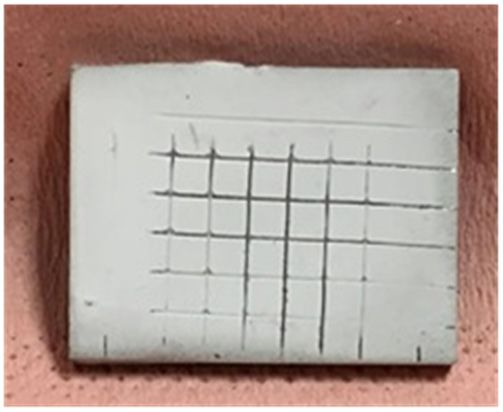
Molecules 2020, 25, 3336                                                                            2 of 13

vibrations, especially at launch. Thus, selected compounds must be stable in this temperature range
and under mechanical stress. In space, any trace of contamination due to compounds degradation
must be avoided. Indeed, global performances of satellites in low Earth orbit are already affected by the
phenomenon of on-orbit molecular contamination generated by the outgassing of organic pollutants
emanated from spacecraft polymers under orbital conditions. The outgassing of these molecules
leads to their deposition on sensitive surfaces such as thermal control surfaces, detectors, electronic
and optical devices, which results in a drastic decrease of their thermal and/or optical properties.
Molecules such as plasticizers and hydrocarbons were found to be mainly responsible of this molecular
contamination by the National Aeronautics and Space Administration (NASA) and the French Space
Agency (CNES) [11,12]. According to the European Cooperation for Space Standardization (ECSS)
created in 1993, various techniques are recommended to reduce the outgassing of organic pollutants in
satellites on orbit such as strict criteria for materials selection or a preliminary bakeout of spacecraft
materials [13]. However, the use of low outgassing materials remains very costly and spacecraft
materials continue to outgas in orbit even if a preliminary bakeout was performed. Consequently,
the use of molecular adsorbents has been considered. The project Wide Field/Planetary Camera-2
(WFPC-2) conducted by NASA in 1994 allowed to select zeolites as the most efficient adsorbent
materials for trapping and retention of organic pollutants in orbit [14] because of their ability to trap
organic molecules at very low pressure and very low concentration [15]. Moreover, their high thermal
and mechanical stability are also of particular interest for space application.
      Among the 252 different structural types of zeolites referenced by the Structural Commission
of the International Zeolite Association (IZA), the FAU-type structure is one of the most widely
used for industrial applications. FAU-type zeolites are one of the main components of cracking
catalysts due to their structure [16]. The structure is composed of supercages interconnected through
a circular 12-member-ring (MR) with a pore opening of 7.4 Å. The FAU-type structure is used for
several applications such as the separation of hydrocarbon and gas mixtures [17,18], catalysis [19,20]
and D2 /H2 adsorption selectivity [21]. FAU-type structure was used in this work mainly due to the
large pore opening and also because of its high adsorption capacities of Volatile Organic Compounds
(VOCs) [15,22,23].
      Unfortunately, conventional syntheses of FAU-type zeolite give rise generally to a fine crystalline
powder that is problematic to use as it is for molecular decontamination applications, especially in
satellites. In fact, a secondary dust contamination could occur due to zeolite particles spreading caused
by shocks and vibrations during satellite takeoff. The shaping of zeolites is then required to avoid any
risk of particulate contamination. Therefore, zeolites were successfully shaped by CNES into films,
pellets and beads [10,22–26] with the best mechanical and adsorption properties obtained in the case
of films and pellets. However, the major drawbacks of these shaping methods are the difficulties to
incorporate them into satellite/spacecraft design (special design needed for shaped zeolites integration)
and the amount of zeolites that can be incorporated. That is why zeolite coatings have been developed
in this study because they can be applied directly to satellite surfaces by a spraying method without
additional modifications on satellites.
      Zeolite powders are usually shaped with the addition of one or several binders to improve
mechanical performances of the final zeolitic object. A wide range of organic and inorganic binders have
been used in combination with zeolites to shape them and enhance their mechanical properties [27–32].
Regarding zeolite coatings, inorganic binders (colloidal suspensions LUDOX® ) were employed by
NASA to develop zeolite coatings for organic pollutants trapping in orbit [33,34]. Silicone resins
were also used in the elaboration of zeolite coatings for thermal applications and good bonding
performances were obtained on different aluminum alloy substrates [9,35,36]. To avoid a drastic
decrease of adsorption capacities, the ratio between quantities of zeolite and binder is important to
control. Indeed, the addition of a binder may lead to an obstruction of the zeolite porosity and therefore
to a decrease of zeolitic materials adsorption capacities [37,38].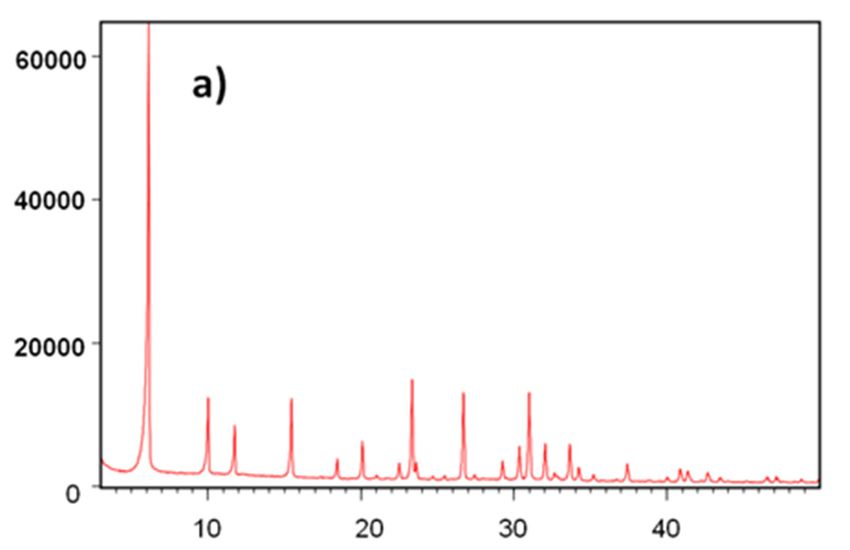
Molecules 2020, 25, 3336                                                                            3 of 13

     In this study, different commercial binders (five silicone binders and one pure organic binder)
were used in combination with 13X zeolite powder and the appropriate solvent (water or m-xylene) to
develop zeolite coatings with high zeolite content and good adsorption and mechanical properties.
Binders were selected depending on several parameters: curing conditions (high and room temperature,
with or without the use of a catalyst) and solubility in solvents (water or m-xylene). The use of water
as solvent is a real advantage since it does not contribute to the emission of VOCs in the atmosphere.
Zeolite coatings were applied on aluminum alloy substrates (used in aerospace) by using a spraying
method and then cured under the ideal conditions specific to each binder.
     Adhesion, textural and adsorption properties regarding VOCs of the elaborated zeolite coatings
will be discussed. n-Hexane is used as probe molecule to simulate the organic volatile pollutant
because it is one of the contaminants identified by NASA and CNES. This probe molecule is easy to
handle and has often been used to study adsorption capacities of organic pollutants by zeolites [39,40].

2. Results

2.1. Characterization of the Reagents
      13X zeolite was characterized by X-ray diffraction (XRD), scanning electron microscopy and
nitrogen adsorption-desorption. The XRD pattern (Figure 1a) presents characteristic peaks of pure
FAU-type zeolite. The scanning electron micrograph shows a bipyramidal morphology of the crystals,
which is characteristic of FAU-type phase (Figure 1b). The particles size is of 2–3 µm. The good
crystallization rate of FAU 13X zeolite is also confirmed by nitrogen adsorption-desorption isotherms of
type I characteristics of microporous materials according to the International Union of Pure and Applied
Chemistry (IUPAC) classification [41]. Indeed, the experimental micropore volume (0.30 cm3 ·g−1 ) is in
good agreement with values of pure FAU-type zeolite reported in literature (Figure 1c) [22,23,42].
      In space environment, the temperature typically varies from −110 to 150 ◦ C. Commercial binders
must not decompose in this range of temperature. That is why commercial binders were characterized
by thermogravimetric analysis (Figure 2) in order to determine their maximum temperature of use.
All binders were first polymerized before being analyzed. Silicone resins used in this work are
composed of alkoxy silanes with highly reactive silanol groups, which condense themselves to form
oligomeric siloxane structures above 200 ◦ C (except for DOWSIL® 2405) or at room temperature
with the use of a catalyst (DOWSIL® 2405), whereas VINNAPAS® EP 8010 is a pure organic resin.
This resin is an aqueous polymer dispersion based on the monomers vinyl acetate and ethylene which
polymerize at room temperature. Temperatures given in Table 1 correspond to the first weight loss of
the polymerized binders and do not always correspond to the temperature from which decomposition
begins. The weight loss may correspond to the evaporation of residual volatile compounds present in
the binders or to the polymerization process. In all cases, no weight loss is observed at a temperature
below 250 ◦ C except for the binder DOWSIL® 2405 (see Table 1). Nevertheless, only a small weight loss
is observed between 100 and 200 ◦ C for this binder and it does not correspond to its decomposition due to
the absence of any sign of degradation for FAU-2405 coating. Except for the organic binder VINNAPAS®
EP 8010, which begins to degrade itself at 300 ◦ C, the remaining mass stable at a temperature of 800 ◦ C
of each silicone binder corresponds to amorphous silica. It is possible to conclude that all binders
(the monomer and the polymerized version) selected in this study are stable at a temperature of at
least 150 ◦ C. Therefore, they will not be affected by the curing conditions and the activation procedure
(150 ◦ C under high vacuum for 15 h) used before nitrogen adsorption-desorption experiments.
Molecules 2020, 25, 3336 4 of 13
Molecules 2020, 25, x 4 of 14
(a)
Intensity (counts)
2θ (°) CuKα
(b)
1 µm 1
250
(c)
Adsorbed Volume (cm 3 /g S.T.P.)
200
150
100
Molecules 2020, 25, x 50 5 of 14
not correspond to its decomposition
0 due to the absence of any sign of degradation for FAU-2405
coating. Except for the organic binder
0 0.1VINNAPAS
0.2 0.3 ®0.4EP 8010, which
0.5 0.6 0.7begins
0.8 to
0.9degrade
1 itself at 300 °C,
the remaining mass stable at a temperature of 800Pressure
Relative °C of each
(p/p0 )silicone binder corresponds to
amorphous silica. It is possible to conclude that all binders (the monomer and the polymerized
version)
Pure
Figure 1.Figure 13X
1. selected
13X in
zeolite
Pure this study
powder
zeolite are stable
(FAU):
powder (FAU):at (a)
(a)a X-ray
temperature of at least
X-raydiffraction
diffraction 150 °C.
(XRD)
(XRD) Therefore,
pattern;
pattern; theyscanning
(b)
(b) scanningwill electron
not electron
be affected(c)
micrograph; by nitrogen
the curingadsorption-desorption
conditions and the activation procedure
isotherms at −196(150 ◦
°C.°C under high vacuum for 15
micrograph; (c) nitrogen adsorption-desorption isotherms at −196 C.
h) used before nitrogen adsorption-desorption experiments.
In space 100
environment, the temperature typically varies from −110 to 150 °C. Commercial binders
must not decompose in this range of temperature. That is why commercial binders were
characterized 90by thermogravimetric analysis (Figure 2) in order to determine their maximum
temperature of80use. All binders were first polymerized before being analyzed. Silicone resins used in
this work are composed of alkoxy silanes with highly reactive silanol groups, which condense
themselves to70form oligomeric siloxane structures above 200 °C (except for DOWSIL® 2405) or at
room temperature60 with the use of a catalyst (DOWSIL® 2405), whereas VINNAPAS® EP 8010 is a pure
Weight (%)
organic resin. This resin is an aqueous polymer dispersion based on the monomers vinyl acetate and
50
ethylene which polymerizeSILRES at room
HK 46
temperature. Temperatures given in Table 1 correspond to the
first weight loss
40 of the polymerized binders
SILRES MP 50 E
and do not always correspond to the temperature from
which decomposition begins. The weight
DOWSIL 2405 loss may correspond to the evaporation of residual volatile
30
compounds present in the DOWSILbinders or to
RSN-0805 the polymerization process. In all cases, no weight loss is
observed at a20 temperatureDOWSIL below 250 °C except for the binder DOWSIL® 2405 (see Table 1).
RSN-0806
Nevertheless, only a small weight
VINNAPASloss is observed between 100 and 200 °C for this binder and it does
EP 8010
10
0
0 100 200 300 400 500 600 700 800
Temperature (°C)
Figure 2. TGA Figure
(Thermogravimetric analyses)
2. TGA (Thermogravimetric curves
analyses) ofcommercial
curves of commercial polymerized
polymerized binders
binders showing the showing the
weight loss as aweight loss as of
function a function (◦ C).
of the temperature
the temperature (°C).
Table 1. Temperature of the first weight loss observed for the polymerized commercial binders by
TGA.
Binder Temperature of the First Weight Loss (°C)
SILRES® HK 46 250
SILRES® MP 50 E 300
DOWSIL® 2405 100
DOWSIL® RSN-0805 300
DOWSIL® RSN-0806 350Molecules 2020, 25, 3336 5 of 13
Table 1. Temperature of the first weight loss observed for the polymerized commercial binders by TGA.
Binder Temperature of the First Weight Loss (◦ C)
SILRES® HK 46 250
SILRES® MP 50 E 300
DOWSIL® 2405 100
DOWSIL® RSN-0805 300
DOWSIL® RSN-0806 350
VINNAPAS® EP 8010 250
2.2. Influence of the Amount of Binder on Adhesion Properties
The influence of the amount of the binder on adhesion properties of zeolite coatings was studied.
The purpose of this experiment was to find out the maximum amount of zeolite that is possible to
incorporate in a coating in order to have the highest possible adsorption capacities without affecting
the mechanical and especially the adhesion properties of the coating for the targeted application.
Experiments were performed on zeolite coatings made with the commercial binder SILRES® HK 46
with five different binder/zeolite ratios (in wt.%). All samples were characterized by the cross-cut test
and results as well as coatings composition after curing are listed in Table 2. The amount of zeolite
varies from 50 to 90 wt.% regarding the total weight of the final dry coating after the evaporation of the
solvent and the binder crosslinking reaction. The results presented in Table 2 show interesting adhesion
properties for zeolite coatings 1 to 4 with an adhesion note of 0 according to ISO 2409 classification.
For zeolite coating 5, an adhesion note of 3 was obtained due to significant cracks observed after the
cross-cut test (Figure S1). That is why zeolite coating 4 is the right compromise between low but
sufficient amount of binder to maintain good adhesion and cohesion properties and high amount of
zeolite to achieve good adsorption properties. The presence of the binder is visible between zeolite
crystals on SEM micrographs (Figure 3) and the quantity of binder involved is sufficient to bind zeolite
particles together and to ensure a good adhesion between the coating and the aluminum substrate.
This coating was developed with a binder/zeolite ratio of 40 wt.% before the curing procedure and this
ratio was fixed for all other coatings which will be described later in this study. This ratio of 40 wt.%
corresponds to a binder/zeolite ratio of 25 wt.% after the curing procedure for FAU-HK46 coating
where binder and zeolite contents are of 20 and 80 wt.% in the final dry coating, respectively. Zeolite
and binder contents were calculated by taking into account the solid content of the resin (after the
crosslinking process) and the mass of the dehydrated 13X zeolite. Due to the solvent evaporation,
the coating FAU-HK46 contains only these two compounds after curing. For example, the silicone
resin SILRES® HK 46 has a solid content of 50 wt.% and an amount of 23 wt.% of water is adsorbed by
13X zeolite powder. For all samples, which will be described later, each solid content is calculated after
curing according to the following method:
mdehydrated zeolite mpost−crosslinking binder
Zeolite content = Binder content =
mtotal mtotal
where mtotal is corresponding to the total mass of the final coating after the curing procedure. The total
mass includes the dehydrated zeolite, the binder after crosslinking and the catalyst if used.where mtotal is corresponding to the total mass of the final coating after the curing procedure. The
total mass includes the dehydrated zeolite, the binder after crosslinking and the catalyst if used.
Molecules 2020,2.25,Composition
Table 3336 and adhesion note of zeolite coatings made with the 13X zeolite and the6 of 13
commercial binder SILRES® HK 46 after thermal curing at 250 °C for 30 min.
Table 2. Composition
13X and adhesion
Zeolite note ofBinder
Content zeoliteSILRES
coatings® HK
made46with the 13X zeolite and the
Content
Zeolite Coating
commercial binder SILRES® HK 46 after thermal curing at 250 ◦ C for 30 min. Adhesion Note2
(wt.%) 1 (wt.%) 1
1 5013X Zeolite 50
Binder SILRES® HK
0
Zeolite Coating Adhesion Note 2
2 60
Content(wt.%) 1 40
46 Content(wt.%) 1 0
3 1
70 50
30
50 0
0
4 2 80 60 20
40 0 0
5 3 90 70 10
30 0 3
1 Both zeolite4and binder contents were 80 calculated for the final dry 20 coating. 2 Adhesion notes0 according
5 90 10 3
to ISO 2409 classification are ranging from 0 for an intact coating to 5 for a coating peeling off
1 Both zeolite and binder contents were calculated for the final dry coating. 2 Adhesion notes according to ISO 2409
completely from the substrate.
classification are ranging from 0 for an intact coating to 5 for a coating peeling off completely from the substrate.
(a) (b)
10 µm 1 µm
Figure 3. SEM
Figure 3. SEMmicrographs
micrographsof the zeolite
of the FAU-HK46
zeolite FAU-HK46 coating 4 made
coating with
4 made a zeolite
with content
a zeolite of 80
content ofwt.%
80
at different scales (a) 10 µm; (b) 1 µm.
wt.% at different scales (a) 10 µm; (b) 1 µm.
2.3. Influence of the Nature of the Binder on the Mechanical and Adsorption Properties of the Final
Zeolite Coating
The binder is the essential constituent of the coating to provide good adhesion between the coating
and the substrate and also cohesion properties between zeolite crystals to avoid any cracks in the
coating layer. The characteristics of each zeolite coating as well as results of cross-cut tests and curing
conditions are summarized in Table 3. Despite the large amount of zeolite involved in each zeolite
coating, amounts of binder between 20 and 25 wt.% were sufficient to obtain adhesion notes of 0 and 1
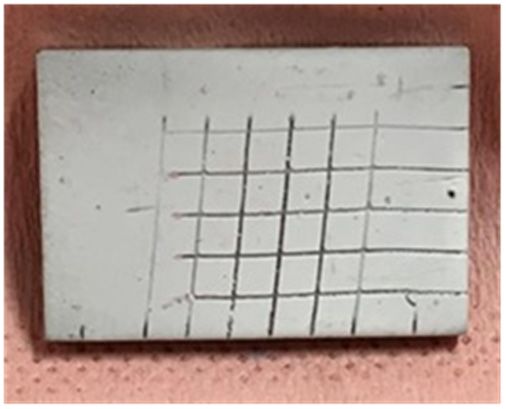
showing good adhesion properties of these coatings on aluminum substrates. Indeed, less than 5%
of the total surface area of the coating is detached after the cross-cut test as it is possible to see on
zeolite coatings FAU-HK46 and FAU-RSN0805 in Figure 4. The difference between adhesion notes
of 0 and 1 is really not significant. Coating thicknesses of less than 60 µm were measured but it is
difficult to control the film thickness of each coating due to the method of deposition used in this work.
For example, a lack of homogeneity is observed for FAU-MP50E coating where the thickness varies
from 10 to 40 µm on the same substrate. No sign of flaking is observed on zeolite coatings except for
FAU-EP8010 coating, where the formation of a thin and transparent film is observed on the surface
which can be removed very easily. Nevertheless, results show overall good bonding performance on
aluminum substrates enabling to obtain compatible adhesion properties for the targeted application.
In addition to promising adhesion properties, adsorption capacities of zeolite coatings must not
be impacted by the presence of binders, which can lead to a partial clogging of the porosity. That is
why it is essential to characterize adsorption capacities of zeolite coatings developed in this study.Molecules 2020, 25, 3336 7 of 13
Table 3. Composition, adhesion note, coating thickness and curing conditions of zeolite coatings.
Binder SILRES® Coating
Zeolite 13X Zeolite Adhesion Curing
HK 46 Content Thickness
Coating Code Content(wt.%) 1 Note 2 Conditions
(wt.%) 1 (µm) 3
FAU-HK46 80 20 0 46 ± 2 250 ◦ C/30 min
FAU-MP50E 80 20 0 28 ± 11 250 ◦ C/30 min
RT/1 h
FAU-2405 70 25 1 46 ± 7
(with catalyst) 4
FAU-RSN0805 80 20 0 33 ± 5 250 ◦ C/30 min
FAU-RSN0806 80 20 0 46 ± 7 250 ◦ C/30 min
FAU-EP8010 75 25 1 42 ± 6 RT/1 h
1 Both zeolite and binder contents were calculated for the final dry coating. 2 Adhesion notes according the
ISO 2409 classification are ranging from 0 for an intact coating to 5 for a coating peeling off completely from the
substrate. 3 Coating thicknesses were measured by using the ISOSCOPE® FMP10 equipped with the probe FTA3.3H.
An average 4
Molecules 2020, 25, x value over 10 measurements on the same coating with the standard deviation is given. 5 wt.% of the8 of 14
catalyst tetrabutyl titanate is present in the final dry coating FAU-2405.
(a) (b)
Figure
Figure 4. 4. Adhesion
Adhesion test
test performed
performed onon zeolite
zeolite coatings:
coatings: (a)(a) FAU-HK46;
FAU-HK46; (b)(b) FAU-RSN0805.
FAU-RSN0805.
In order to investigate adsorption capacities of zeolite coatings, nitrogen adsorption-desorption
In order to investigate adsorption capacities of zeolite coatings, nitrogen adsorption-desorption
experiments were carried out at −196 ◦ C on the powder form of each coating (Figure 5). Pure 13X
experiments were carried out at −196 °C on the powder form of each coating (Figure 5). Pure 13X
zeolite in powder form was also characterized by nitrogen adsorption-desorption to use it as a reference
zeolite in powder form was also characterized by nitrogen adsorption-desorption to use it as a
to determine the microporosity accessibility of zeolite coatings. Micropore volumes and values of
reference to determine the microporosity accessibility of zeolite coatings. Micropore volumes and
porosity accessibility for zeolite coatings are summarized in Table 4 and they were determined on
values of porosity accessibility for zeolite coatings are summarized in Table 4 and they were
desorption isotherms. Nitrogen adsorption-desorption experiments were performed on powder
determined on desorption isotherms. Nitrogen adsorption-desorption experiments were performed
mixture form of all samples. These powders were obtained using a part of coating slurries that were
on powder mixture form of all samples. These powders were obtained using a part of coating slurries
used for the elaboration of the corresponding zeolite coatings. These samples were then cured in the
that were used for the elaboration of the corresponding zeolite coatings. These samples were then
same conditions applied for zeolite coatings. After the curing procedure, a grinding operation was
cured in the same conditions applied for zeolite coatings. After the curing procedure, a grinding
performed with a mortar and a pestle to obtain a quite fine powder to be analyzed. For FAU-HK46,
operation was performed with a mortar and a pestle to obtain a quite fine powder to be analyzed.
FAU-MP50E, FAU-2405 and FAU-EP8010 coatings, the amount of binder (between 20 and 25 wt.%) has
For FAU-HK46, FAU-MP50E, FAU-2405 and FAU-EP8010 coatings, the amount of binder (between
no influence on adsorption capacities (see Table 4). Indeed, micropore volumes for all coatings (for
20 and 25 wt.%) has no influence on adsorption capacities (see Table 4). Indeed, micropore volumes
3 ·g−1 . These values are similar to the one obtained for pure
100%
for of zeolite)
all coatings (forrange
100%from 0.29 torange
of zeolite) 0.30 cm
from 0.29 to 0.30 cm3·g-1. These values are similar to the one
FAU-type powder (0.30 cm 3 ·g−1 ), meaning that binders SILRES® HK 46, SILRES® MP 50 E, DOWSIL®
obtained for pure FAU-type powder (0.30 cm3·g-1), meaning that binders SILRES® HK 46, SILRES®
® EP 8010 do not block the access to micropores. Concerning FAU-HK46 coating,
2405 and VINNAPAS
MP 50 E, DOWSIL 2405 and VINNAPAS® EP 8010 do not block the access to micropores. Concerning
®
the adsorption
FAU-HK46 phase
coating, the takes place in
adsorption two takes
phase phases. placeThisin phenomenon is observed
two phases. This phenomenon in the isrange of low
observed
relative pressures (0.1 < p/p 0 < 0.3) and it is repeatable and specific to this zeolite coating (Figure 5).
in the range of low relative®pressures (0.1 < p/p0 < 0.3) and it is repeatable and specific to this zeolite
For polymerized
coating (Figure 5). ForSILRES
polymerizedHK 46 SILRES
binder,®no HKadsorption
46 binder, of noNadsorption
2 is observedof N(Figure S2), a plausible
2 is observed (Figure
explanation for this behavior would be a possible interaction between this
S2), a plausible explanation for this behavior would be a possible interaction between this binder binder and 13X zeolite
and
which slow down the N 2 uptake in the microporosity. For FAU-RSN0806
13X zeolite which slow down the N2 uptake in the microporosity. For FAU-RSN0806 and FAU- and FAU-RSN0805 coatings,
the adsorption
RSN0805 coatings,capacities are reduced
the adsorption by 20 and
capacities 30% compared
are reduced to pure
by 20 and 30% 13X zeolite to
compared powder,
pure 13Xrespectively.
zeolite
®
powder, respectively. Nevertheless, despite the partial clogging to the porosity access due toDOWSIL
Nevertheless, despite the partial clogging to the porosity access due to the use of both binders the use
®
ofRSN-0806 and DOWSIL
both binders DOWSIL®RSN-0805, RSN-0806theand porosity
DOWSIL remains mostly accessible.
® RSN-0805, the porosity remains mostly
Globally,
accessible. amounts of binders ranging from 20 to 25 wt.% depending on the zeolite coating were
sufficient to enable
Globally, amounts goodof adhesion, cohesion
binders ranging fromand20 adsorption
to 25 wt.%properties.
dependingInon order
the to simulate
zeolite adsorption
coating were
sufficient to enable good adhesion, cohesion and adsorption properties. In order to simulate
adsorption capacities of a specific organic pollutant by FAU-type zeolite coatings, n-hexane
adsorption experiments were performed for each coating.Molecules 2020, 25, 3336 8 of 13
capacities of a specific organic pollutant by FAU-type zeolite coatings, n-hexane adsorption experiments
Molecules 2020, 25, x 9 of 14
were performed for each coating.
220
200
180
160
Adsorbed Volume (cm3 /g S.T.P.)
140
120
100
FAU powder
80
FAU-HK46
60 FAU-MP50E
FAU-2405
40 FAU-RSN0805
FAU-RSN0806
20
FAU-EP8010
0
0 0.1 0.2 0.3 0.4 0.5 0.6 0.7 0.8 0.9 1
Relative Pressure (p/p0 )
Figure 5. Nitrogen adsorption-desorption isotherms of pure 13X powder and zeolite coatings.
Figure 5. Nitrogen adsorption-desorption isotherms of pure 13X powder and zeolite coatings.
Table 4. Micropore volumes and porosity accessibility of pure 13X zeolite and zeolite coatings
determined from nitrogen
Table 4. Micropore adsorption-desorption
volumes isothermsof
and porosity accessibility −196 ◦13X
at pure C. zeolite and zeolite coatings
determined from nitrogen adsorption-desorption isotherms at −196 °C.
Micropore Accessible
13X Zeolite
1 13X Zeolite Volume
Micropore of Zeolite
Volume of Micropore
Accessible Porosity
Porosity3
Sample Content
2 Coating in Powder Volume of Zeolite Accessibility (%)
Sample 1 Content (wt.%) Zeolite Coating3 in−1 Micropore Volume
(cm3 ·g−1 ) 3
Accessibility
Form (cm ·g )
(wt.%)2 Powder Form (cm3·g−1) of Zeolite (cm3·g−1)3 (%)3
FAU powder 100 0.30 0.30 100
FAU
FAU-HK46 100 80 0.30 0.23 0.30
0.29 95 100
powder
FAU-MP50E
FAU- 80 0.24 0.30 100
80 0.23 0.29 95
HK46
FAU-2405 70 0.21 0.30 100
FAU-
FAU-RSN0805 80 80 0.24 0.17 0.21
0.30 70 100
MP50E
FAU-RSN0806 80 0.19 0.24 80
FAU-2405 70 0.21 0.30 100
FAU-EP8010 75 0.23 0.30 100
FAU-
80
1 Nitrogen adsorption-desorption experiments 0.17 0.21
were performed on the coating in 70 of
powder form. 2 Zeolite content
RSN0805
each coating was calculated for the final dry coating. 3 Taking into account the amount of binders which does not
FAU-
adsorb N2 .
80 0.19 0.24 80
RSN0806
FAU-
The n-hexane molecule was used as probe molecule to simulate adsorption capacities of zeolite
75 0.23 0.30 100
EP8010
coatings with respect to a specific organic pollutant. n-Hexane adsorption experiments were performed
inside a desiccator
1 Nitrogen preliminaryexperiments
adsorption-desorption dried to remove moisture.
were performed To coating
on the determine the adsorbed
in powder amount
form. 2 Zeolite of
content
n-hexane, weighings
of each coating of each sample
was calculated weredry
for the final carried
coating.out Taking
3 before into
the start of the amount
account experiment and afterwards
of binders which does
the
not samples
adsorb N2have
. been placed for 24 h in a desiccator under an atmosphere of n-hexane at room
temperature. Only two weighings were performed to minimize water co-adsorption by zeolite coatings
The n-hexane molecule was used as probe molecule to simulate adsorption capacities of zeolite
coatings with respect to a specific organic pollutant. n-Hexane adsorption experiments were
performed inside a desiccator preliminary dried to remove moisture. To determine the adsorbed
amount of n-hexane, weighings of each sample were carried out before the start of the experiment
and afterwards the samples have been placed for 24 h in a desiccator under an atmosphere of n-Molecules 2020, 25, 3336 9 of 13
due to the use of the hydrophilic FAU-type zeolite. An experiment time of 24 h was enough to reach
the saturation stage. All n-hexane adsorption capacities of each coating in powder form are reported in
Table 5. All samples were characterized three times. Adsorbed amount of n-hexane in FAU-type powder
obtained in this work (180 mg/ganhydrous zeolite ) is in good agreement with values reported in literature
ranging from 181 to 186 mg/ganhydrous zeolite [15,39]. Adsorbed amounts of n-hexane between 131 and
175 mg/ganhydrous zeolite were measured for all zeolite coatings in powder form (Table 5). Adsorbed
amounts of n-hexane are globally coherent with the accessible microporous volume determined
by nitrogen sorption measurements (Table 4) except for FAU-MP50E, FAU-2405 and FAU-EP8010
coatings for which values are 10 to 15% lower than expected. Nevertheless, all zeolite coatings
exhibit interesting adsorption capacities regarding the n-hexane molecule, which are promising for the
intended application. n-Hexane adsorption experiments (done in a desiccator) were also performed on
zeolite coatings applied on aluminum substrates and the same results were obtained, thus confirming
that the binder does not affect the adsorption capacities of the zeolite. FAU-type zeolite coatings remain
very interesting due to their high adsorption capacities and also because the FAU-type structure has a
pore opening of 7.4 Å, which gives it the ability to trap organic pollutants with a larger kinetic diameter
than the one of n-hexane, which is 4.3 Å [15,22,23].
Table 5. Adsorption capacities of n-hexane by pure 13X zeolite and zeolite coatings.
Sample 1 Adsorbed Amount of n-Hexane at Saturation Stage (mg/ganhydrous zeolite )
FAU powder 180 ± 2
FAU-HK46 175 ± 2
FAU-MP50E 164 ± 3
FAU-2405 160 ± 2
FAU-RSN0805 131 ± 3
FAU-RSN0806 141 ± 4
FAU-EP8010 152 ± 5
1 n-hexane adsorption experiments were performed on the coating mixture in powder form.
3. Conclusions
FAU-type zeolite coatings were elaborated by mixing, separately, different commercial binders
(mostly silicone resins) with the appropriate solvent, 13X powder and a titanate catalyst, if necessary,
to catalyze the crosslinking reaction. Cross-cut tests showed that adhesion properties are very
interesting despite the small amount of binder used in zeolite coatings (between 20 and 25 wt.%).
Nitrogen adsorption-desorption experiments confirmed that the microporosity remains totally or
almost totally accessible for the zeolite coatings developed in this study.
Adsorption of n-hexane experiments showed that zeolite coatings exhibit interesting adsorption
properties with adsorbed amounts ranging from 131 to 175 mg/ganhydrous zeolite . These results show
that these zeolite coatings possess high potential for on-orbit molecular decontamination.
4. Materials and Methods
4.1. Materials
13X powder with a crystal size of 2–3 µm and a Si/Al molar ratio of 1.2 was purchased from
Sigma-Aldrich (Saint Louis, MO, USA). Commercial binders were supplied from IMCD and Univar
(Downers Grove, IL, USA) and the catalyst tetrabutyl titanate was purchased from Sigma-Aldrich and
were used as received. n-Hexane (with less than 0.01 wt.% of water, 95%) was purchased from Carlo
Erba (Chaussée du Vexin, Val-de-Reuil, France) and was used as received as probe molecule. Sheets of
aluminum alloy Al 6061 (300 × 300 × 2.3 mm3 ) were supplied by Alfa Aesar (Ward Hill, MA, USA)
and they were cut into small substrates of 20 × 15 × 2.3 mm3 using a mechanical press.Molecules 2020, 25, 3336 10 of 13
4.2. Characterization Techniques
The X-Ray diffraction pattern was recorded on a PANalytical MPD X’Pert Pro diffractometer
(Almelo, The Netherlands) operating with Cu Kα radiation (Kα = 0.15418 nm) equipped with a PIXcel
1D detector (active length = 3.347◦ 2θ). The XRD powder pattern was collected at ambient temperature
in the 3◦ < 2θ < 50◦ range, by steps of 0.013◦ in 2θ and with a time of 220 s by step. The Si/Al molar ratio of
FAU-type zeolite was determined using an X-Ray fluorescence spectrometer PANalytical Zetium (4 kW).
A scanning electron microscope JEOL JSM-7900F (Tokyo, Japan) was used to study morphological
properties of the pure zeolite FAU 13X and zeolite coatings. Thermogravimetric analyses were carried
out under air with a Mettler-Toledo TGA/DSC 1 (Greifensee, Switzerland) between room temperature
and 800 ◦ C at a heating rate of 5 ◦ C·min−1 . Coatings thickness measurements were carried out by
using an ISOSCOPE® FMP10 equipped with a probe FTA3.3H purchased from Fischer (Sindelfingen,
Germany) allowing the measurement of coating thickness on non-ferrous substrates. Adhesion
properties of zeolite coatings applied on aluminum support were characterized by performing cross-cut
tests. The equipment used was a cutting knife fitted with parallel blades purchased from TQC (Capelle
aan den Ijssel, The Netherlands). A right-angle lattice pattern was cut into the coating penetrating
through to the substrate. A tape was then placed over the grid and removed to evaluate qualitatively
the detachment of the coating from the substrate. The resistance of the coating to separation of the
substrate was evaluated using the ISO 2409 classification ranging from 0 for an intact coating to 5 for a
coating peeling off completely from the substrate. Textural properties of the 13X zeolite and zeolite
coatings were determined from nitrogen adsorption-desorption isotherms performed at −196 ◦ C with
a Micromeritics ASAP 2420 (Norcross, GA, USA) instrument. Before each measurement, the samples
were outgassed under vacuum at 150 ◦ C for 15 h to ensure that the volatile materials adsorbed inside
the porosity of the adsorbent material are driven off. The equilibrium time has been fixed at 30 s for
each adsorption–desorption experiment. These experiments were used to determine the accessibility
of zeolite coatings porosity compared to pure zeolite in powder form. The micropore volume of pure
FAU powder was determined by using the t-plot method. Adsorption capacities of organic pollutants
by zeolitic materials were studied at room temperature under n-hexane atmosphere inside a desiccator
preliminary dried under argon flow to remove moisture. The molecule of n-hexane is one of the
contaminants identified by NASA and CNES in satellites. Samples were previously activated under
high vacuum at 150 ◦ C for 15 h to remove all traces of volatile compounds from the porosity.
4.3. Preparation of Zeolite Coatings
Sheets of aluminum alloy Al 6061 (20 × 15 × 2.3 mm3 ) were first treated by physical abrasion using
emery paper (with 180 µm grit) for approximately 60 s and then washed with ethanol and acetone to
remove any contaminants from the surface.
The 13X zeolite was saturated with water using a desiccator containing a saturated solution of
ammonium chloride NH4 Cl to keep the atmosphere at a constant relative humidity of 80% to avoid the
variation of the mass of the zeolite during the different weighings. The amount of water adsorbed was
determined by thermogravimetric analysis and found to be 23 wt.%.
All commercial binders, their characteristics and appropriate solvents are listed in Table 1.
Each coating slurry was prepared by dispersing the hydrated zeolite in the appropriate solvent (water
or m-xylene) by using an ultrasonic bath at room temperature for 10 min in order to disperse zeolite
particles in the solvent to obtain a homogeneous suspension. The solvent content was fixed at 50 wt.%
regarding the total weight of the suspension. Then, the binder (as purchased in solution, see Table 6)
was added to the mixture of hydrated zeolite and solvent respecting a binder/zeolite ratio of 40 wt.%
before the curing procedure. This ratio was fixed after a study on the influence of the quantity of binder
on the adhesion properties of the zeolite coating applied on aluminum substrates using SILRES® HK
46 as binder as will be shown below. It is important to notice that the amount of zeolite varies from 70
to 80 wt.% with regards to the total weight of the coating after the drying step, i.e., after the solvent
has been evaporated. Depending on the binder used, a catalyst could also be used to catalyze theMolecules 2020, 25, 3336 11 of 13
crosslinking reaction forming the polymer network at room temperature. After adding the binder and,
if necessary, the catalyst, the slurry was then stirred one more time with an ultrasonic for 10 min to
obtain a homogeneous formulation liquid enough to be spread on the aluminum substrate with the
airbush pistol AFC-101A from Conrad Electonics. The wet coating was then cured according to the
drying conditions detailed in Table 6.
Table 6. List of commercial binders, solid content, solvent, curing conditions and zeolite coating code.
Solid Content Curing Zeolite
Commercial Binder 1 Supplier Solvent 3
(wt.%) 2 Conditions Coating Code 4
SILRES®
IMCD 50 m-xylene 250 ◦ C/30 min FAU-HK46
HK 46
SILRES®
IMCD 50 water 250 ◦ C/30 min FAU-MP50E
MP 50 E
DOWSIL® RT/1 h
Univar 72 m-xylene FAU-2405
2405 (with catalyst) 5
DOWSIL®
Univar 50 m-xylene 250 ◦ C/30 min FAU-RSN0805
RSN-0805
DOWSIL®
Univar 50 m-xylene 250 ◦ C/30 min FAU-RSN0806
RSN-0806
VINNAPAS®
IMCD 60 water RT/1 h FAU-EP8010
EP 8010
1 All binders are commercial silicone resins except the binder VINNAPAS® EP 8010, which is an aqueous organic
polymer dispersion. 2 Proportion of non-volatile material contained in the binder formulation after curing
(dehydrated zeolite and binder without solvent). 3 Appropriate solvent recommended by the supplier for the
formulation of coatings. 4 The code FAU refers to the structural type of the zeolite used in this study. 5 The
addition of a catalyst (tetrabutyl titanate) is required by the supplier to cure the binder DOWSIL® 2405 at room
temperature (RT).
Supplementary Materials: The following are available online at http://www.mdpi.com/1420-3049/25/15/3336/s1,
Figure S1: Adhesion test performed on zeolite coatings FAU-HK46 1 to 5 (from left to right); Figure S2: Nitrogen
adsorption-desorption isotherms of the polymerized commercial binder SILRES® HK 46.
Author Contributions: Funding acquisition: G.R., D.F. and T.J.D.; Investigation: M.D.; Methodology: H.N. and
T.J.D.; Project administration: T.J.D.; SupervisionL: H.N., M.S. and T.J.D.; Writing–original draf: M.D. and T.J.D.;
Writing–review & editing: H.N., J.P., G.R., D.F. and T.J.D. All authors have read and agreed to the published
version of the manuscript.
Funding: This research was funded by the Centre National d’Etudes Spatiales (CNES) and the company
Zéphir Alsace.
Acknowledgments: We would like to thank Ludovic Josien, Laure Michelin and Gautier Schrodj for their assistance
with the scanning electron microscopy, the X-ray diffraction and the thermogravimetric analysis, respectively.
We would also like to thank IMCD and Univar for supplying commercial binders.
Conflicts of Interest: The authors declare no conflict of interest.
References
1. Rochow, E.G.; Gilliam, W.F. Polymeric Methyl Silicon Oxides1. J. Am. Chem. Soc. 1941, 63, 798–800.
[CrossRef]
2. Zhang, L.; Shi, Z.; Hu, W.; Zhang, X.; Zhu, H.; Zhao, G.; Wang, Z. Curing mechanism, heat resistance, and
anticorrosion properties of a furan/methyl phenyl silicone coating. Polym. Adv. Technol. 2018, 29, 1913–1921.
[CrossRef]
3. Jovanovic, J.D.; Govedarica, M.N.; Dvornic, P.R.; Popovic, I. The thermogravimetric analysis of some
polysiloxanes. Polym. Degrad. Stab. 1998, 61, 87–93. [CrossRef]
4. Giaveri, S.; Gronchi, P.; Barzoni, A. IPN Polysiloxane-Epoxy Resin for High Temperature Coatings: Structure
Effects on Layer Performance after 450 ◦ C Treatment. Coatings 2017, 7, 213. [CrossRef]
5. Robeyns, C.; Picard, L.; Ganachaud, F. Synthesis, characterization and modification of silicone resins:
An “Augmented Review”. Prog. Org. Coat. 2018, 125, 287–315. [CrossRef]Molecules 2020, 25, 3336 12 of 13
6. Xiong, G.; Kang, P.; Zhang, J.; Li, B.; Yang, J.; Chen, G.; Zhou, Z.; Li, Q. Improved adhesion, heat resistance,
anticorrosion properties of epoxy resins/POSS/methyl phenyl silicone coatings. Prog. Org. Coat. 2019, 135,
454–464. [CrossRef]
7. Xu, Y.; Long, J.; Zhang, R.; Du, Y.; Guan, S.; Wang, Y.; Huang, L.; Wei, H.; Liu, L.; Huang, Y. Greatly improving
thermal stability of silicone resins by modification with POSS. Polym. Degrad. Stab. 2020, 174, 109082.
[CrossRef]
8. Zhou, W.; Yang, H.; Guo, X.; Lu, J. Thermal degradation behaviors of some branched and linear polysiloxanes.
Polym. Degrad. Stab. 2006, 91, 1471–1475. [CrossRef]
9. Kummer, H.; Füldner, G.; Henninger, S. Versatile siloxane based adsorbent coatings for fast water adsorption
processes in thermally driven chillers and heat pumps. Appl. Therm. Eng. 2015, 85, 1–8. [CrossRef]
10. Rioland, G.; Daou, T.J.; Faye, D.; Patarin, J. A new generation of MFI-type zeolite pellets with very high
mechanical performance for space decontamination. Microporous Mesoporous Mater. 2016, 221, 167–174.
[CrossRef]
11. Perry, J.L. Trace Chemical Contaminant Generation Rates for Spacecraft Contamination Control System
Design. NASA Tech. Memo. 108497 1995, 4–12.
12. Kirsch-Rodeschini, H. Contrôle de la Contamination Moléculaire par Adsorption sur des Solides Poreux.
Ph.D. Thesis, University of Haute-Alsace, Mulhouse, France, 2006.
13. Faye, D.; Jakob, A.; Soulard, M.; Berlioz, P. Zeolite adsorbers for molecular contamination control in spacecraft.
Opt. Eng. Appl. 2010, 7794, 77940. [CrossRef]
14. Barengoltz, J.B.; Moore, S.; Soules, D.; Voecks, G. The Wide Field/Planetary Camera 2 (WFPC-2) molecular
adsorber. Jet Propuls. Lab 1994, 94, 1–48.
15. Kabalan, I.; Lebeau, B.; Fadlallah, M.-B.; Toufaily, J.; Hamieh, T.; Bellat, J.P.; Daou, T.J. Hierarchical
Faujasite-Type Zeolite for Molecular Decontamination. J. Nanosci. Nanotechnol. 2016, 16, 9318–9322.
[CrossRef]
16. Dhainaut, J.; Daou, T.J.; Chappaz, A.; Bats, N.; Harbuzaru, B.; Lapisardi, G.; Chaumeil, H.; Defoin, A.;
Rouleau, L.; Patarin, J. Synthesis of FAU and EMT-type zeolites using structure-directing agents specifically
designed by molecular modelling. Microporous Mesoporous Mater. 2013, 174, 117–125. [CrossRef]
17. Nikolakis, V.; Xomeritakis, G.; Abibi, A.; Dickson, M.; Tsapatsis, M.; Vlachos, D.G. Growth of a faujasite-type
zeolite membrane and its application in the separation of saturated/unsaturated hydrocarbon mixtures. J.
Membr. Sci. 2001, 184, 209–219. [CrossRef]
18. Sato, K.; Sugimoto, K.; Sekine, Y.; Takada, M.; Matsukata, M.; Nakane, T. Application of FAU-type zeolite
membranes to vapor/gas separation under high pressure and high temperature up to 5 MPa and 180 ◦ C.
Microporous Mesoporous Mater. 2007, 101, 312–318. [CrossRef]
19. Corma, A. Application of Zeolites in Fluid Catalytic Cracking and Related Processes. Prep. Catal. V - Sci.
Bases Prep. Heterog. Catal. Proc. Fifth Int. Symp. 1989, 49, 49–67. [CrossRef]
20. Liu, Z.; Wang, Y.; Xie, Z. Thoughts on the Future Development of Zeolitic Catalysts from an Industrial Point
of View. Chin. J. Catal. 2012, 33, 22–38. [CrossRef]
21. Giraudet, M.; Bezverkhyy, I.; Weber, G.; Dirand, C.; Macaud, M.; Bellat, J.-P. D2/H2 adsorption selectivity on
FAU zeolites at 77 4K: Influence of Si/Al ratio and cationic compensation. Microporous Mesoporous Mater.
2018, 270, 211–219. [CrossRef]
22. Rioland, G.; Bullot, L.; Daou, T.J.; Simon-Masseron, A.; Chaplais, G.; Faye, D.; Fiani, E.; Patarin, J. Elaboration
of FAU-type zeolite beads with good mechanical performances for molecular decontamination. RSC Adv.
2016, 6, 2470–2478. [CrossRef]
23. Rioland, G.; Nouali, H.; Daou, T.J.; Faye, D.; Patarin, J. Adsorption of volatile organic compounds in
composite zeolites pellets for space decontamination. Adsorption 2017, 23, 395–403. [CrossRef]
24. Lauridant, N.; Daou, T.J.; Arnold, G.; Soulard, M.; Nouali, H.; Patarin, J.; Faye, D. Key steps influencing the
formation of ZSM-5 films on aluminum substrates. Microporous Mesoporous Mater. 2012, 152, 1–8. [CrossRef]
25. Lauridant, N.; Daou, T.J.; Arnold, G.; Nouali, H.; Patarin, J.; Faye, D. Zeolite hybrid films for space
decontamination. Microporous Mesoporous Mater. 2013, 172, 36–43. [CrossRef]
26. Lauridant, N.; Daou, T.J.; Arnold, G.; Patarin, J.; Faye, D. MFI/∗BEA hybrid coating on aluminum alloys.
Microporous Mesoporous Mater. 2013, 166, 79–85. [CrossRef]Molecules 2020, 25, 3336 13 of 13
27. Li, X.; Wang, C.; Liu, S.; Xin, W.; Wang, Y.; Xie, S.; Xu, L. Influences of alkaline treatment on the structure and
catalytic performances of ZSM-5/ZSM-11 zeolites with alumina as binder. J. Mol. Catal. A: Chem. 2011, 336,
34–41. [CrossRef]
28. Dubey, A.; Mailapalli, D.R. Zeolite coated urea fertilizer using different binders: Fabrication, material
properties and nitrogen release studies. Environ. Technol. Innov. 2019, 16, 100452. [CrossRef]
29. Cañizares, P.; Durán, A.; Dorado, F.; Carmona, M. The role of sodium montmorillonite on bounded
zeolite-type catalysts. Appl. Clay Sci. 2000, 16, 273–287. [CrossRef]
30. Workneh, S.; Shukla, A. Synthesis of sodalite octahydrate zeolite-clay composite membrane and its use in
separation of SDS. J. Membr. Sci. 2008, 309, 189–195. [CrossRef]
31. Minelli, M.; Papa, E.; Medri, V.; Miccio, F.; Benito, P.; Doghieri, F.; Landi, E. Characterization of novel
geopolymer – Zeolite composites as solid adsorbents for CO2 capture. Chem. Eng. J. 2018, 341, 505–515.
[CrossRef]
32. Sudagar, A.J.; Andrejkovičová, S.; Patinha, C.; Velosa, A.; McAdam, A.; Da Silva, E.F.; Rocha, F. A novel
study on the influence of cork waste residue on metakaolin-zeolite based geopolymers. Appl. Clay Sci. 2018,
152, 196–210. [CrossRef]
33. Straka, S.A.; Peters, W.; Hasegawa, M.; Novo-Gradac, K.; Wong, A. Development of molecular adsorber
coatings. Opt. Eng. Appl. 2010, 7794, 77940. [CrossRef]
34. Abraham, N.S.; Hasegawa, M.M. Development and testing of molecular adsorber coatings. Opt. Eng. Appl.
2012, 8492, 849203. [CrossRef]
35. Bendix, P.B.; Henninger, S.; Henning, H.-M. Temperature and Mechanical Stabilities and Changes in Porosity
of Silicone Binder Based Zeolite Coatings. Ind. Eng. Chem. Res. 2016, 55, 4942–4947. [CrossRef]
36. Bendix, P.; Füldner, G.; Möllers, M.; Kummer, H.; Schnabel, L.; Henninger, S.; Henning, H.-M. Optimization
of power density and metal-to-adsorbent weight ratio in coated adsorbers for adsorptive heat transformation
applications. Appl. Therm. Eng. 2017, 124, 83–90. [CrossRef]
37. Dorado, F.; Romero, R.; Cañizares, P. Hydroisomerization of n-butane over Pd/HZSM-5 and Pd/Hβ with and
without binder. Appl. Catal. A: Gen. 2002, 236, 235–243. [CrossRef]
38. Sánchez, P.; Dorado, F.; Fúnez, A.; Jimenez, V.; Ramos, M.J.; Valverde, J.L.; Marcos, M.J.R. Effect of the binder
content on the catalytic performance of beta-based catalysts. J. Mol. Catal. A: Chem. 2007, 273, 109–113.
[CrossRef]
39. Joshi, U.; Joshi, P.; Tamhankar, S.; Joshi, V.; Shiralkar, V. Adsorption Behavior of N2, Water, C6 Hydrocarbons,
and Bulkier Benzene Derivative (TMB) on Na–X Zeolite and Its K+-, Rb+-, and Cs+-Exchanged Analogues.
J. Colloid Interface Sci. 2001, 235, 135–143. [CrossRef]
40. Cosseron, A.F.; Daou, T.J.; Tzanis, L.; Nouali, H.; Deroche, I.; Coasne, B.; Tchamber, V. Adsorption of organic
volatile compounds in pure silica CHA, *BEA, MFI and STT-type zeolites. Microporous Mesoporous Mater.
2013, 173, 147–154. [CrossRef]
41. Thommes, M.; Kaneko, K.; Neimark, A.V.; Olivier, J.P.; Rodriguez-Reinoso, F.; Rouquerol, J.; Sing, K.S.
Physisorption of gases, with special reference to the evaluation of surface area and pore size distribution
(IUPAC Technical Report). Pure Appl. Chem. 2015, 87, 1051–1069. [CrossRef]
42. Chen, D.; Hu, X.; Shi, L.; Cui, Q.; Wang, H.; Yao, H. Synthesis and characterization of zeolite X from lithium
slag. Appl. Clay Sci. 2012, 59, 148–151. [CrossRef]
Sample Availability: Not available.
© 2020 by the authors. Licensee MDPI, Basel, Switzerland. This article is an open access
article distributed under the terms and conditions of the Creative Commons Attribution
(CC BY) license (http://creativecommons.org/licenses/by/4.0/).You can also read


