Intelligent Packaging for Real-Time Monitoring of Food-Quality: Current and Future Developments - MDPI
←
→
Page content transcription
If your browser does not render page correctly, please read the page content below
applied
              sciences
Review
Intelligent Packaging for Real-Time Monitoring of
Food-Quality: Current and Future Developments
Andrea Dodero               , Andrea Escher, Simone Bertucci, Maila Castellano                 and Paola Lova *

                                          Department of Chemistry and Industrial Chemistry, Università degli Studi di Genova, Via Dodecanso 31,
                                          16146 Genova, Italy; andrea.dodero@edu.unige.it (A.D.); andrea.escher@edu.unige.it (A.E.);
                                          simone.bertuccige@gmail.com (S.B.); maila.castellano@unige.it (M.C.)
                                          * Correspondence: paola.lova@unige.it; Tel.: +39-0103356194

                                          Abstract: Food packaging encompasses the topical role of preserving food, hence, extending the shelf-
                                          life, while ensuring the highest quality and safety along the production chain as well as during storage.
                                          Intelligent food packaging further develops the functions of traditional packages by introducing the
                                          capability of continuously monitoring food quality during the whole chain to assess and reduce the
                                          insurgence of food-borne disease and food waste. To this purpose, several sensing systems based on
                                          different food quality indicators have been proposed in recent years, but commercial applications
                                          remain a challenge. This review provides a critical summary of responsive systems employed in the
                                          real-time monitoring of food quality and preservation state. First, food quality indicators are briefly
                                          presented, and subsequently, their exploitation to fabricate intelligent packaging based on responsive
                                          materials is discussed. Finally, current challenges and future trends are reviewed to highlight the
                                          importance of concentrating efforts on developing new functional solutions.


                                          Keywords: food; intelligent packaging; food quality indicators; real-time monitoring; sensors
Citation: Dodero, A.; Escher, A.;
Bertucci, S.; Castellano, M.; Lova, P.
Intelligent Packaging for Real-Time
Monitoring of Food-Quality: Current       1. Introduction
and Future Developments. Appl. Sci.
                                                According to the World Health Organization, every year, more than 600 million cases
2021, 11, 3532. https://doi.org/
                                          of illness are related to supplies of contaminated food and more than 400,000 people
10.3390/app11083532
                                          die due to foodborne contamination [1]. Indeed, even in highly developed countries,
Academic Editor: Sergio Torres-Giner
                                          foodborne illnesses are still a serious cause of sickness and lead to several deaths per
                                          year [2]. Generally speaking, food quality can be identified by a broad number of factors
Received: 17 March 2021                   including healthiness, consumer standards, nutritional values, and stability [3,4]. Hence,
Accepted: 13 April 2021                   these factors represent a topical indicator to assess the effect of food on consumer health. In
Published: 15 April 2021                  this sense, the food industry has recently started to pay great attention to evaluating food
                                          quality [5,6]. Nowadays, expiration dates are commonly employed for this purpose and to
Publisher’s Note: MDPI stays neutral      define product recall times. However, despite the existence of strict standard regulations,
with regard to jurisdictional claims in   the complete lack of real-time monitoring of food preservation state is a threat to consumer
published maps and institutional affil-   health [7,8]. With these premises, it is not surprising that the worldwide food industry
iations.                                  urges for the development of systems that can be easily incorporated into food packaging
                                          and are able to provide real-time quality insights. The efforts made in recent years have led
                                          to a promising emerging field, comprised of innovative packaging technologies showing
                                          the potential to substitute conventional materials [9–11].
Copyright: © 2021 by the authors.               Traditionally, common packaging technologies consist of the use of passive, inactive,
Licensee MDPI, Basel, Switzerland.        and inert barriers with the function to prevent moisture, oxygen, and contaminants from
This article is an open access article    becoming in contact with the food products. Hence, their main action is to maintain
distributed under the terms and           food quality over a certain period of time, protecting it against diverse physicochemical
conditions of the Creative Commons        stresses [12,13]. On the contrary, innovative food packages may present one or multiple
Attribution (CC BY) license (https://     active functions able to play an active role in food preservation and quality indication. In
creativecommons.org/licenses/by/          this sense, the number of functionalities that can be embedded in smart packages is rapidly
4.0/).

Appl. Sci. 2021, 11, 3532. https://doi.org/10.3390/app11083532                                              https://www.mdpi.com/journal/applsci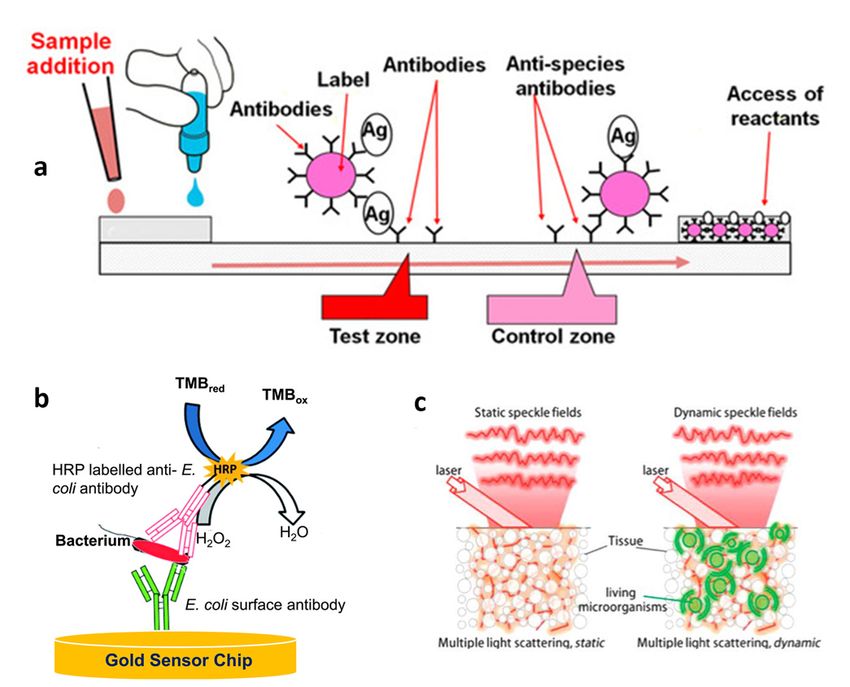
Appl. Sci. 2021, 11, 3532                                                                                            2 of 19

                            growing. These new materials promise to cover a topical role in improving food safety,
                            enhancing food quality, and minimizing food waste.
                                  Several terms such as “smart”, “active”, and “intelligent” are commonly employed to
                            describe novel packaging technologies. Despite these terms being used interchangeably
                            in the literature, they are representative of different concepts [14]. Specifically, intelligent
                            packages do not directly act on food products, but only monitor their condition, whereas
                            active packages have the role to increase the food shelf-life by acting on the environment
                            surrounding the food. Remarkably, intelligent and active packaging may work in synergy,
                            creating what is nowadays indicated as smart packaging [10,15]. Generally speaking, given
                            the properties shown by actives packaging materials, these can be simply considered an
                            extension of the traditional food packaging systems and are nowadays broadly employed
                            in several commercial products [16,17]. Conversely, the purpose of intelligent packages is
                            the real-time quality evaluation of food products and/or the surrounding environment
                            through a variety of signals [13,18–20]. Specifically, diverse quality indicators (e.g., pH,
                            humidity, temperature, specific chemicals, etc.) can be exploited for this purpose [7,21–25].
                            However, even though several food quality monitoring devices have been developed in
                            the past and the number of scientific articles on the topic has been quickly increasing in
                            the past decade, excluding temperature-based sensing systems (see Section 3.5), intelligent
                            packages able to ensure real-time monitoring on a large commercial scale are still far from
                            being achieved [26]. The main problems of such systems encompass the high cost, the
                            requirement of sophisticated instrumentations, and the difficult integration in existing
                            packaging materials. Thereby, as already pointed out by several reviews published in recent
                            years, despite the fact that these sensing technologies allow for detecting food spoilage with
                            high sensitivity, they are not yet suitable for industrial applications [27–29]. In this term,
                            optical sensors have been increasingly investigated and show great potential for the food
                            packaging sectors. Indeed, these systems are low-cost, do not require electronic connections
                            or read-out devices, and are suitable for use by untrained operators, represented by the
                            distribution chain operators and the consumers. Such sensors can be based on several
                            working principles including colorimetric assay, fluorogenic receptors, photonic structures,
                            and plasmonic particles. In all cases, one of the main advantages of these sensors is the
                            response that is easy-to-read using the naked-eye due to the simple color variations.
                                  With this in mind, this review aims to provide a concise but comprehensive summary
                            of the recent developments concerning the real-time monitoring of food products via
                            innovative packaging technologies mostly based on optical detection systems. Hence, we
                            first briefly introduce the main indicators of food quality and how they can be exploited
                            to perform real-time monitoring. Subsequently, we report a detailed description of the
                            efforts made in developing “optical” intelligent packages that can be directly employed
                            for monitoring food quality. Finally, a short summary of the current challenges and future
                            perspectives is reported.

                            2. Food Quality Indicators
                                 Specific indicators able to indicate the quality state of food products are usually
                            connected to physical or chemical modifications that occur in a certain product, such
                            as changes the in food consistency (e.g., thinning or thickening of sauces), in the food
                            color (e.g., browning due to oxidation reactions), and in the food flavor and odor (e.g.,
                            rancidity due to pH variations) [30,31]. The detection of such indicators can effectively
                            reduce the risks connected to the consumption of unsafe food, consequently limiting
                            foodborne illnesses. Table 1 summarizes the main food quality and safety indicators and
                            their applications in real-time monitoring, whereas a brief introduction of such indicators
                            is presented in the following section.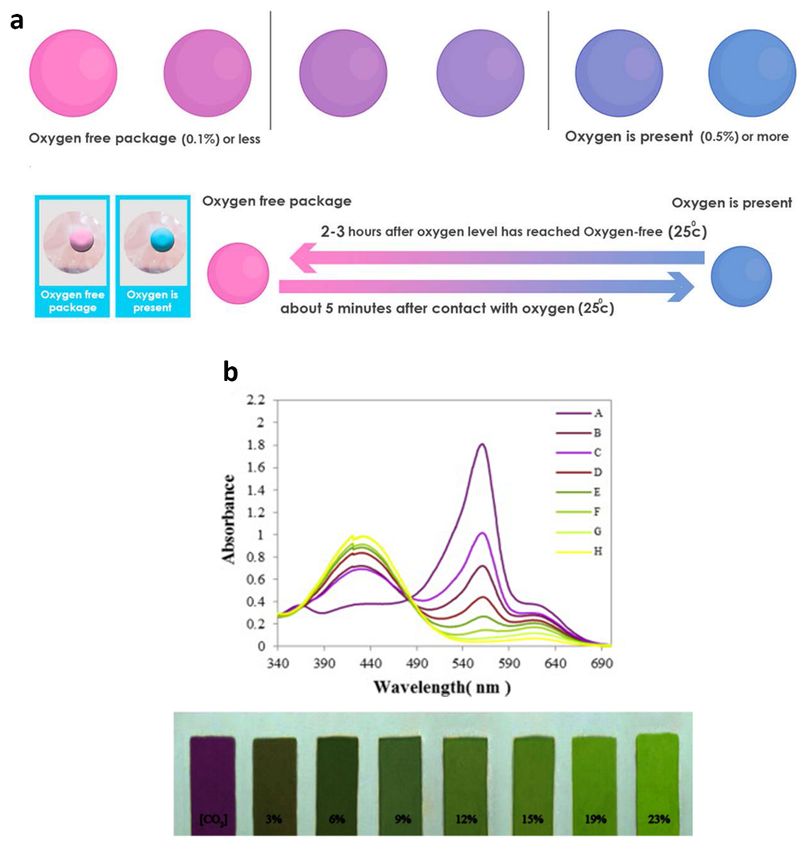
Appl. Sci. 2021, 11, 3532                                                                                             3 of 19

                            Table 1. Summary of the main food quality and safety indicators and their main applications in
                            food packages.

                                Sensing                      Working                                 Main
                               Indicator                     Principle                            Applications
                                                      Luminescence-based
                                  O2                       Redox-based                   Modified atmosphere packages
                                                     Colorimetric assay-based
                                                      Luminescence-based
                                 CO2                                                     Modified atmosphere packages
                                                     Colorimetric assay-based
                                                   Inductor and capacitor-based
                                                                                         Modified atmosphere packages
                               Humidity              Colorimetric assay-based
                                                                                              Dry food products
                                                      Photonic crystal-based
                                                     Colorimetric assay-based
                                  pH                Electrochemical assay-based           Meat, fish, and dairy products
                                                       Photonic crystal-based
                             Temperature             Colorimetric assay-based                 Frozen food products
                                                        Antibodies-based
                               Nitrogen                                                      Meat and fish products
                                                     Colorimetric assay-based

                            2.1. Oxygen and Carbon Dioxide
                                 Regulating the contact between oxygen and carbon dioxide in the context of food
                            is important to avoid degradation and proliferation of micro-organisms. Oxygen can,
                            indeed, trigger browning and other oxidative processes in meat, fish, cheese, and pigments
                            in a variety of fresh foods [32–34]. Conversely, carbon dioxide inhibits the growth of
                            bacteria and fungi, owing to both its capability to establish an anaerobic environment and
                            decrease the pH of the environment of food [35,36]. Therefore, controlling the amount of
                            O2 and CO2 represents an important strategy to extend the shelf-life of food and several
                            modified atmosphere packages have been developed for non-respiring food products (i.e.,
                            products in which the initial atmosphere composition must be controlled to ensure optimal
                            preservation) [37,38]. As a consequence, monitoring any change in the gas concentration
                            and/or composition may indicate the conservation state of food [39–41].

                            2.2. Humidity
                                 Constant humidity values are essential for preserving the condition and texture of
                            food. Indeed, low humidity values can dry the edibles, while an excess of moisture can
                            provide the ideal environment to foster microbic and fungi growth [42,43]. Common
                            packaging technologies are supposed to not be permeable to moisture [44–46]. As a matter
                            of fact, the level of humidity inside food packages can undergo significant variations due
                            to accidental breakage of the package as a consequence of improper manipulation and
                            prolonged exposure to significant temperature fluctuations. Therefore, humidity is a key
                            factor to be considered in food quality assessment as it can provide useful information as
                            regards improper storage conditions.

                            2.3. pH Changes
                                 During food storage, certain types of both aerobic and anaerobic microorganisms can
                            proliferate, generating organic acids (e.g., lactic acid and acetic acid) that can decrease
                            the pH of food. Additionally, carbon dioxide, which is a product of microbial growth,
                            may dissolve in food products and produce carbonic acid, which further decreases the pH
                            value [47,48]. Hence, pH-sensitive sensors have been widely explored to evaluate food
                            freshness and safety [49–51].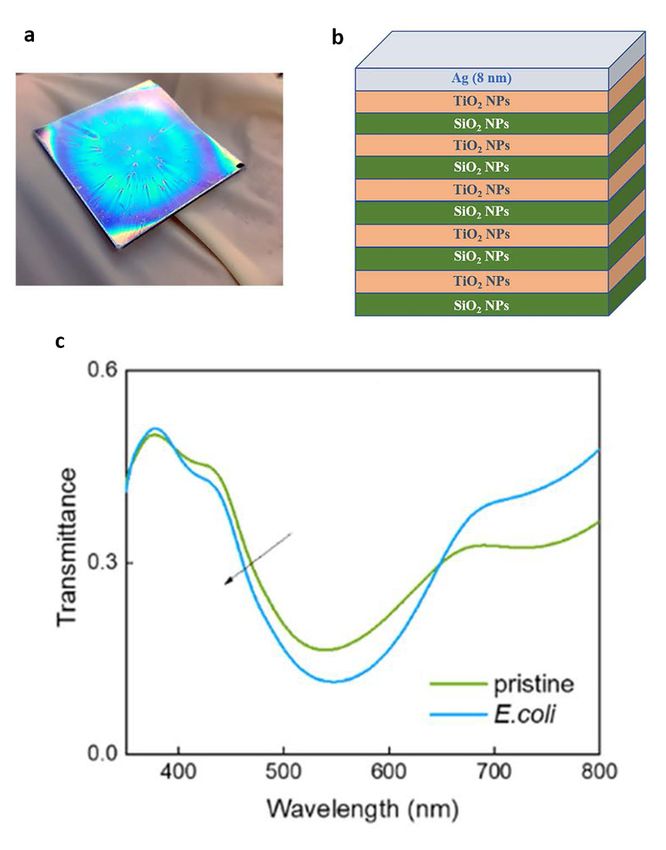
Appl. Sci. 2021, 11, 3532                                                                                           4 of 19

                            2.4. Temperature
                                 Temperature is another important indicator related to food spoilage, with high val-
                            ues and significant fluctuations with a strong impact on the shelf-life of refrigerated
                            food [14,52,53]. Indeed, temperature rising can easily trigger microbial proliferation and
                            subsequent product deterioration. Specifically, since temperature fluctuations may occur
                            at any point in the distribution chain, real-time monitoring is essential for certain food
                            products, such as fish, for which the temperature broadly affects the microbial activity rate.

                            2.5. Nitrogen Related Compounds
                                 Animal-derived food products, such as meat, fish, and dairy, represent a class of con-
                            sumables that are highly susceptible to the undesired proliferation of pathogenic microor-
                            ganisms, which causes their rapid degradation and the creation of biogenic amines [54–56].
                            Generally speaking, the increase in the total volatile basic nitrogen (TVB-N) concentration
                            is known to be an indicator of food spoilage and the formation of compounds that are
                            hazardous to health, such as histamine, cadaverine, and putrescine [57–59]. Thus, TVB-N
                            and related compounds are a promising figure of merit for the continuous assessment of
                            the quality of fresh protein-based products.

                            3. Methods for Real-Time Food Monitoring
                                  The European Commission has defined intelligent food packages as “materials and
                            articles that monitor the condition of packaged food or the environment surrounding the
                            food” [60]. Generally speaking, intelligent packaging can be explained as a combination of
                            science and technology able to enhance the shelf-life, improve safety, guarantee the quality,
                            and warn about any harmful changes occurring in the packages [18,21,49,61–64]. Specif-
                            ically, intelligent packaging makes use of the internal or external package environment
                            to monitor the food quality status [13,19,65]. A summary of the most common methods
                            currently employed for the real-time monitoring of food samples based on the indicator
                            nature is discussed in the following.

                            3.1. O2 Detectors
                                  Modified atmosphere packages (MAPs) have been broadly employed to prolong the
                            shelf-life of various edible products [66,67]. In a typical MAP, the product is sealed in a
                            gas mixture where oxygen, nitrogen, and carbon dioxide concentrations are controlled. In
                            this regard, different sensors able to monitor the concentration of oxygen within MAPs
                            have been developed [39,40,68,69]. Luminescence-based indicator systems based on flu-
                            orogenic molecules embedded in a polymer film that is permeable to gas and/or ions,
                            (e.g., silicon rubber, poly(vinyl chloride), etc.) modify their photoluminescence upon
                            oxygen exposure. However, when photo-excited with environmental light sources, this
                            kind of sensor lacks a response that is significantly discernible by the naked human eye,
                            thereby requiring intense photo-excitation sources (e.g., light-emitting diodes or lasers)
                            and apposite detectors [70–72]. Alternatively, colorimetric redox sensors exploiting simple
                            reversible redox chemistry [73–76] and consisting of a redox dye (e.g., methylene blue)
                            and a strong reducing agent (e.g., glucose in an alkaline environment) are able to change
                            color upon small oxygen variations (i.e., 0.1%). Figure 1a schematizes the color variation
                            achievable in a commercial system upon the presence of oxygen [77]. The sensor changes
                            its color from pink to blue within a few hours upon oxygen exposure. Despite their high
                            sensitivity and easy transduction, most of these sensors require to be stored and handled in
                            anaerobic conditions, which considerably reduces their large-scale applicability in MAPs.
                            Nevertheless, when in contact with high moisture environments typical of food packages,
                            these redox dyes may be released from the water-insoluble polymer matrix in which they
                            are embedded and diffuse into the packaging, hence posing health concerns. In this sense,
                            the cation-binding capability of alginate, a polysaccharide extracted from brown algae
                            and widely exploited in biomedical, pharmaceutical, wastewater remediation, and food
                            applications [78–83], has been used to prevent dye leaching [84].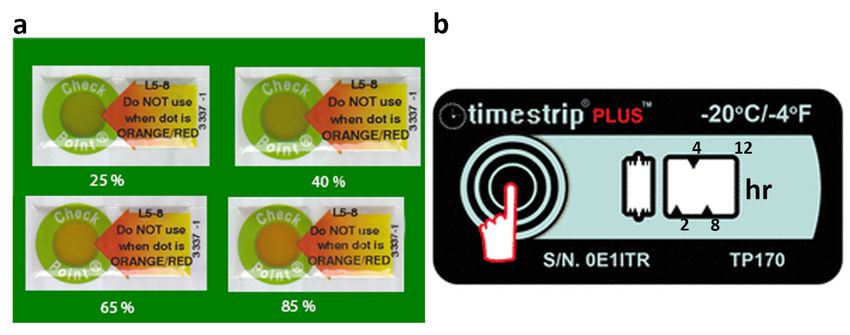
Appl. Sci. 2021, 11, x FOR PEER REVIEW 5 of 19
Appl. Sci. 2021, 11, 3532 5 of 19
brown algae and widely exploited in biomedical, pharmaceutical, wastewater remedia-
tion, and food applications [78–83], has been used to prevent dye leaching [84].
Figure 1. (a) O22 sensors
Figure 1. sensors based
basedon onaacolorimetric
colorimetricredox
redoxdye.
dye.Reproduced
Reproducedwith withpermission
permissionfrom from[7].
[7].
Copyright ©
Copyright © 2019
2019American
AmericanChemical
ChemicalSociety.
Society.(b)
(b)Label
Labelcolor
colorchanges
changesininresponse
responsetotoCO
CO2 .2.Adapted
Adapted
with with permission
permission from [85]. from [85]. Copyright
Copyright © 2014B.V.
© 2014 Elsevier Elsevier B.V. reserved.
All rights All rights reserved.
3.2.
3.2. CO Detectors
CO22 Detectors
Two
Two main
main groups
groups ofofoptical
opticalsensors
sensorshave
havebeen
beenmainly
mainlyreported
reportedfor
forCOCO22 monitoring
monitoring
in food packages.
in food packages.TheThefirst
first group
group is based
is based on on luminescent
luminescent dyesdyes which
which modify
modify their their
fluo-
fluorescence upon CO 2 exposure, while the second is based on colorimetric
rescence upon CO2 exposure, while the second is based on colorimetric indicators sensi- indicators
sensitive
tive to thetopH
thechanges
pH changes
induced induced
by COby CO2 hydrolysis
2 hydrolysis in the in the sensor
sensor matrixmatrix [47,85–89].
[47,85–89]. Lumi-
Luminescent
nescent dyes are characterized by performing extreme sensing capabilities, butbut
dyes are characterized by performing extreme sensing capabilities, theythey
re-
require sophisticated instruments, both for excitation and sensing, and are
quire sophisticated instruments, both for excitation and sensing, and are not suitable fornot suitable
for consumer use. One of the first devices of this type was developed by embedding
consumer use. One of the first devices of this type was developed by embedding 8-hy-
8-hydroxypyrene-1,3,5-trisulfonic acid within a polymeric film, obtaining a response and a
droxypyrene-1,3,5-trisulfonic acid within a polymeric film, obtaining a response and a re-
recovery of less than 10 s [90]. Such a system was further developed by first immobilizing
covery of less than 10 s [90]. Such a system was further developed by first immobilizing
the fluorophore molecule on a silica matrix [88] and then adding a dual fluorophore
the fluorophore molecule on a silica matrix [88] and then adding a dual fluorophore ref-
referencing system [47]. However, since the chemicals required for the sensor production
erencing system [47]. However, since the chemicals required for the sensor production are
are not food-grade, it is, hence, of fundamental importance that they do not become in
not food-grade, it is, hence, of fundamental importance that they do not become in contact
contact with the products. To develop CO2 sensors with actual applicability in large-scale
with the products. To develop CO2 sensors with actual applicability in large-scale pack-
packages, recent efforts have been devoted to the exploitation of colorimetric indicators.
ages, recent efforts have been devoted to the exploitation of colorimetric indicators. These
These generally have a lower sensitivity with respect to luminescent dyes but are much
generally have a lower sensitivity with respect to luminescent dyes but are much cheaper,
cheaper, safer, and provide a response that is discernible by the human eye without
safer, and provide a response that is discernible by the human eye without the need for
the need for any instrumentation [47,91–93]. For example, the m-cresol purple dye has
any instrumentation
been broadly employed [47,91–93]. For example,
to fabricate the m-cresol
colored polymer filmspurple dye
sensible to has been broadly
protonation and
deprotonation [94–98], as schematically shown in Figure 1b, which reports a colorimetric
detector based on a mixture of bromothymol blue, bromocresol green and phenol red [85].
The absorbance spectrum of the mixture in a CO2 -free environment (top panel of Figure 1a,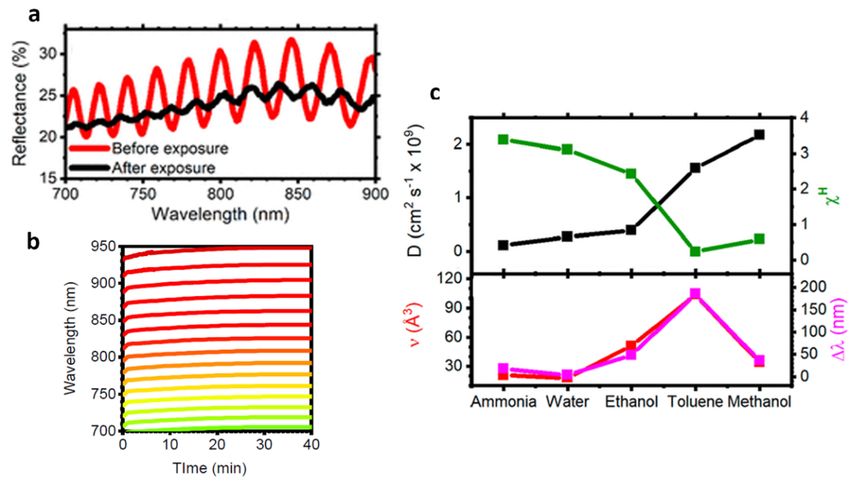
Appl. Sci. 2021, 11, 3532                                                                                            6 of 19

                            purple line) shows a maximum in the green region, corresponding to a purple color, as
                            depicted in the bottom panel of the same figure. Upon CO2 exposure, the previously
                            mentioned peak is quenched and a second one arises in the blue and violet spectral regions.
                            Thereby, such a variation allows the color of the system to visibly turn from purple to green
                            upon CO2 exposure. Additionally, both a good shelf-life and functional design have been
                            demonstrated by using food-grade formulations comprised of L-lysine, poly L-lysine, and
                            anthocyanins [47].

                            3.3. Specific Chemicals and pH Changes
                                 During food spoilage, several chemical modifications may occur in the packaging
                            environment related to specific microorganism growth, especially for meat and fish prod-
                            ucts [55]. Thereby, as described below, different types of colorimetric assays exploiting
                            chemical indicators have been vastly used to monitor food quality owing to their accuracy,
                            simplicity, low cost, rapidity, and reliability [99–103]. As an example, polyaniline-based
                            films embedded within the packaging lead to visible color changes in the presence of
                            biogenic amines [104]. This sensor exploits the unique capability of polyaniline to change
                            conductivity and color as a consequence of pH variation. The colorimetric assay has also
                            been demonstrated by exploiting 16 different chemosensitive compounds that are able
                            to detect several chemical species including trimethylamine, dimethylamine, cadaverine,
                            and putrescine [105]. Remarkably, since food spoilage is diversified depending on both
                            the sample type and world location, such a sensor acts as a universal system displaying
                            great versatility in detecting a wide range of compound varieties [106–108]. Alternatively,
                            electrochemical sensors, which are based on the redox reaction of a certain species on
                            an electrode surface generating an electrical signal, have been broadly explored for the
                            detection of volatile amine compounds during food deterioration, especially in the case of
                            animal-derived products (i.e., meat and fish) [48,109–112]. In this regard, a wireless sensor
                            was recently fabricated by using a hydrogel-coated pH-electrode sensor sensible to the
                            environmental amount of volatile amine with a detection limit of 0.001 mg/L [113]. These
                            sensors have the main advantage of providing a rapid and highly sensitive response to
                            food spoilage, while also providing information as regards the concentration of the analyte
                            species. On the other hand, due to their greater sophistication with respect to colorimetric
                            sensors, it is noteworthy that electrochemical sensors are much harder to implement in
                            packaging systems. Additionally, several meat spoilage sensors have been developed by
                            means of pH-responsive materials directly incorporated within the packages [114,115].
                            Again, the simple optical determination of vapor diffusion in thin polymeric films has
                            been demonstrated as being a useful tool for food monitoring applications [23], as shown
                            in Figure 2. The detection system exploits the optical interference of a commercial cling-
                            wrap film (Figure 2a, red line). Upon exposure to different vapor phase analytes, the
                            wrap increases its thickness, and its interference pattern is modified (Figure 2a, black line).
                            Recording the dynamics of these variations (Figure 2b), it is possible to assess the diffusion
                            coefficient of the diffusing species (Figure 2c, top panel) and relate the spectral shift of
                            the interference pattern to the van der Waals volume of the analyte (Figure 2c, bottom
                            panel). Yet, photonic crystals have also been shown to be able to act as indicators of food
                            spoilage, owing to their capability to provide an easily discernible optical response to
                            nitrogen-derived compounds [116–118].
Appl.
Appl. Sci. 2021, 11,
Sci. 2021, 11, 3532
x FOR PEER REVIEW 77 of
of 19
19
Figure 2. (a) Reflectance of a thin polyvinyl chloride (PVC) film before (red line) and after (black
Figure 2. (a) Reflectance of a thin polyvinyl chloride (PVC) film before (red line) and after (black
line)
line) ~5 min in
~5 min in toluene
toluene vapor.
vapor. (b)
(b) Response
Response of of aa thin
thin PVC
PVC film
film toto water
water with
with the
the spectral
spectral position
position of
relative maxima
of relative maxima during
duringthethe
exposure. (c)(c)
exposure. Diffusion
Diffusion coefficient
coefficient(D), Flory–Huggins
(D), Flory–Huggins parameter
parameter (χH ),
and
(χH), comparison
and comparison(ν) between the van
(ν) between der der
the van WaalsWaalsvolume
volumeof the diffusing
of the species
diffusing and
species thethe
and spectral
spec-
shift of the
tral shift relative
of the maximum.
relative maximum. Adapted
Adapted with
with permission
permission from
from [23].
[23].Copyright
Copyright©©2020
2020American
Ameri-
can Chemical
Chemical Society.
Society.
3.4. Humidity Sensors
3.4. Humidity Sensors
Several humidity sensors
Several humidity sensorshavehavebeen
beenexplored
exploredininrecent
recent years
years forfor real-time
real-time packag-
packaging
ing
monitoring purposes [119–122]. As described in detail below, these sensors have the the
monitoring purposes [119–122]. As described in detail below, these sensors have ad-
advantage
vantage of of being
being simple
simple andand easily
easily implemented
implemented in food
in food packages.
packages. For instance,
For instance, a low- a
low-cost wireless
cost wireless humidity
humidity sensor,
sensor, which which
can can be easily
be easily introduced
introduced inside
inside packages,
packages, waswas de-
developed using a planar inductor and capacitor fixed on a paper substrate
veloped using a planar inductor and capacitor fixed on a paper substrate [123]. Generally [123]. Gen-
erally speaking,
speaking, using ausing
papera paper substrate
substrate ensuresensures
a cheapa cheap platform,
platform, high sensitivity,
high sensitivity, and a and
rea-
a reasonable response time. Indeed, when the humidity within the
sonable response time. Indeed, when the humidity within the packaging increases, packaging increases,
this
this substrate adsorbs water, hence, modifying the capacitance of the capacitor [124,125].
substrate adsorbs water, hence, modifying the capacitance of the capacitor [124,125]. Hu-
Humidity sensors coupled with a radio frequency identification (RFID) tag have also
midity sensors coupled with a radio frequency identification (RFID) tag have also been
been reported [126–129]. These usually consist of two planar inductor-capacitor resonators
reported [126–129]. These usually consist of two planar inductor-capacitor resonators
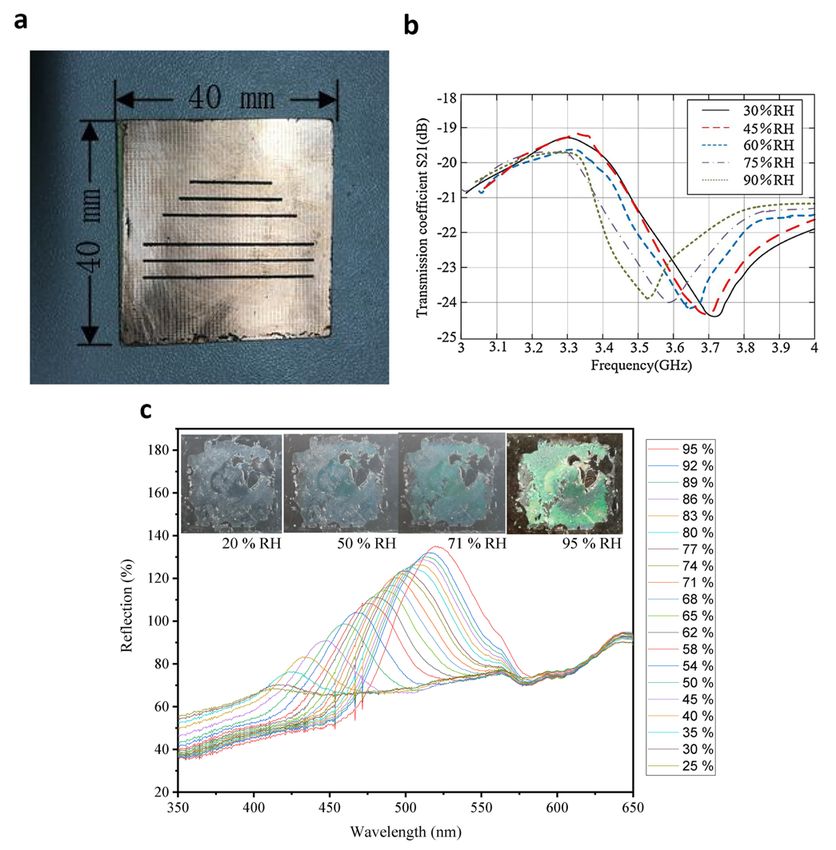
(Figure 3a), with one of them encoding the ID data and the other one working as the humid-
(Figure 3a), with one of them encoding the ID data and the other one working as the hu-
ity sensor [126]. Figure 3b reports the measured signal of a sensor unit at room temperature:
midity sensor [126]. Figure 3b reports the measured signal of a sensor unit at room tem-
a higher humidity value corresponds to a lower resonance frequency. Alternatively, RFID
perature: a higher humidity value corresponds to a lower resonance frequency. Alterna-
humidity sensors comprising of a printed spiral inductor working as an antenna can be de-
tively, RFID humidity sensors comprising of a printed spiral inductor working as an an-
veloped [130]. However, humidity-based sensing materials based on photonic crystals have
tenna can be developed [130]. However, humidity-based sensing materials based on pho-
been widely investigated as a valid system for the real-time monitoring of food packaging
tonic crystals have been widely investigated as a valid system for the real-time monitoring
owing to their high sensitivity, low cost, and high productivity rate [131–133]. For example,
of food3cpackaging
Figure shows theowing
red-shiftto their
of thehigh sensitivity,
photonic band-gaplowofcost, and high
a synthetic productivity
opal rate
hydrogel. The
[131–133]. For example, Figure 3c shows the red-shift of the photonic band-gap
opal consists of highly monodisperse polystyrene microspheres self-assembled on a glass of a syn-
thetic opaland
substrate hydrogel. The with
infiltrated opal consists of highly monodisperse
a poly(acrylamide-co-acrylic polystyrene
acid) hydrogel microspheres
network. By
self-assembled on a glass substrate and infiltrated with a poly(acrylamide-co-acrylic
increasing the relative humidity (RH), the hydrogel swells, modifying the lattice periodicity acid)
hydrogel network. By increasing the relative
and in turn, the optical response of the opal [134]. humidity (RH), the hydrogel swells, modi-
fying the lattice periodicity and in turn, the optical response of the opal [134].
Humidity sensors, such as those described above, find potential applications in dry
food packages, which require the avoidance of any contact with moisture and maintaining
a very low humidity level to avoid degradation. Due to their ease of fabrication and cheap
cost, such systems are promising candidates for commercial applications on a large scale,
however their long-term stability still needs to be optimized.Appl. Sci.
Appl. Sci. 2021, 11, x3532
2021, 11, FOR PEER REVIEW 88 of
of 19
19
Figure 3.
Figure (a) Photo
3. (a) Photo of
of a generic humidity-based
humidity-based sensor
sensor radio
radio frequency
frequencyidentification
identification(RFID)
(RFID)tag
tagand
and (b) transmission
(b) transmission coefficient
coefficient S21
S21 of ofsensor
the the sensor at 25at◦ C.
unit unit 25Reproduced
°C. Reproduced withwith permission
permission fromfrom
[126].
[126]. Copyright © 2018 Elsevier B.V. All rights reserved. (c) Spectra shift of an opal hydrogel
Copyright © 2018 Elsevier B.V. All rights reserved. (c) Spectra shift of an opal hydrogel composite com-
posite by increasing
by increasing RHReproduced
RH (%). (%). Reproducedwith with permission
permission fromfrom [134].
[134]. Copyright
Copyright © 2020
© 2020 Published
Published by
by Elsevier
Elsevier Ltd. Ltd.
3.5. Time-Temperature
Humidity sensors, Sensors
such as those described above, find potential applications in dry
foodSensors
packages, which
based onrequire the avoidance
temperature detectionofconsist
any contact with moisture
of devices in direct and maintaining
contact with the
a veryproducts
food low humidity level As
[135–138]. to avoid
thesedegradation. Due to their
variations typically ease
result in of fabrication
significant and cheap
mechanical,
cost, such electrochemical,
chemical, systems are promising candidates
enzymatic, for commercial
or microbiological applications
changes in theon a large
food scale,
samples,
however their long-term stability still needs to be optimized.
temperature sensors are extremely useful in spoilage monitoring [139–144]. Time–temper-
ature indicator (TTIs) systems can be divided into three main groups: critical temperature
3.5. Time-Temperature
indicators, Sensors
critical time–temperature indicators, and full history indicators [12]. In detail,
Sensors
critical based on
temperature temperature
indicators can detection
only provide consist of devicesininregard
information direct contact with the
to deterioration
foodchanges
and products [135–138].
in food As these
organoleptic variations
properties duetypically result in significant
to the occurrence of temperaturemechanical,
dissim-
chemical, electrochemical, enzymatic, or microbiological changes in the food
ilarities with respect to a reference value for a certain time. Usually, this kind of sensor samples, tem-
perature sensors are extremely useful in spoilage monitoring [139–144]. Time–temperature
exploits irreversible but visible changes in the color of the indicator. For instance, Figure
indicator
4a shows (TTIs) systems
a critical can be divided
temperature sensing into three
system mainongroups:
based critical temperature
an enzymatic reaction within- a
sensitive spot that changes color under thermal exposure (i.e., orange color[12].
dicators, critical time–temperature indicators, and full history indicators In detail,
indicates that
critical
the temperature
product has been indicators can only[145].
compromised) provide information
Critical in regard toindicators
time–temperature deterioration and
supply
changes in food organoleptic properties due to the occurrence of temperature
indications associated with the cumulative effect of time and temperature on product dissimilarities
with respect
quality to awhen
or safety reference
thesevalue
have for
been a certain
exposedtime. Usually, thisabove
to a temperature kind ofthesensor exploits
reference one
irreversible but visible changes in the color of the indicator. For instance,
for a certain period. By way of example, Figure 4b reports a commercially available critical Figure 4a shows
a critical
TTIs systemtemperature sensing system
for the monitoring based
of frozen onproducts.
food an enzymatic reaction
A blue with a sensitive
color appears spot
in the view-
that changes color under thermal exposure (i.e., orange color indicates that the product
ing window if a breach of the threshold temperature has occurred. The duration of one or
has been compromised) [145]. Critical time–temperature indicators supply indications
more breaches is shown by how far the blue color has progressed along with the timeAppl. Sci. 2021, 11, 3532 9 of 19
associated with the cumulative effect of time and temperature on product quality or safety
when these have been exposed to a temperature above the reference one for a certain period.
Appl. Sci. 2021, 11, x FOR PEER REVIEW 9 of 19
By way of example, Figure 4b reports a commercially available critical TTIs system for
the monitoring of frozen food products. A blue color appears in the viewing window if a
breach of the threshold temperature has occurred. The duration of one or more breaches is
markers
shown by[146]. Finally,
how far fullcolor
the blue history indicators continuously
has progressed along with themonitor the temperature
time markers [146]. Finally,
changes to which a sample is subjected, with the data being recorded
full history indicators continuously monitor the temperature changes to which in terms of irreversi-
a sample
ble changes that
is subjected, withexplain foodbeing
the data safetyrecorded
and quality to consumers.
in terms Generally
of irreversible speaking,
changes tem-
that explain
perature-based sensors are, nowadays, the only ones exploited in the food
food safety and quality to consumers. Generally speaking, temperature-based sensors industry, ow- are,
ing to their the
nowadays, relatively small
only ones size, low
exploited in cost, and industry,
the food simplicityowing
compared to relatively
to their other food moni-
small size,
toring devices
low cost, [147–151]. compared to other food monitoring devices [147–151].
and simplicity
(a)Critical
Figure4.4.(a)
Figure Criticaltemperature
temperature sensing
sensing system
system based
based on anon enzymatic
an enzymatic reaction
reaction and capable
and capable of of
indicatingififaaproduct
indicating producthas hasbeen
been compromised.
compromised. (b)(b) Critical
Critical time–temperature
time–temperature sensing
sensing system
system that that
indicates
indicateshow
howlong
longaabreach
breachofofthe
thethreshold
thresholdtemperature
temperature has occurred.
has Adapted
occurred. Adaptedwith permission
with permission
from
from[7]. Copyright©©2019
[7].Copyright 2019American
AmericanChemical
ChemicalSociety.
Society.
3.6.Biosensors
3.6. Biosensorsfor forBacteria
BacteriaDetection
Detection
Amongothers,
Among others,bacteria
bacteriaare areoneoneofofthe theprimary
primaryfood foodcontaminants
contaminantsassociated
associated with
with
disease and death [152]. The growth of microorganisms in food
disease and death [152]. The growth of microorganisms in food may affect product quality may affect product quality
in two
in two different
different ways.
ways. On On thethe one
one hand,
hand, non-pathogenic
non-pathogenicmicroorganisms
microorganismsnormally normallypresent
pre-
in the food supply chain can induce food spoilage and
sent in the food supply chain can induce food spoilage and determine a quality determine a quality issue. On
issue. Onthe
other hand, pathogens deriving from contamination at a certain
the other hand, pathogens deriving from contamination at a certain point of the supply point of the supply chain
represent
chain a serious
represent health
a serious risk [5,152,153].
health risk [5,152,153]. WithWiththese premises,
these premises,it isitnot surprising
is not surprisingthat
bacteria
that are an
bacteria areextremely
an extremely important
important target in food
target safety
in food monitoring.
safety monitoring. However,
However, commonly
com-
employed
monly approaches
employed make use
approaches make ofuse
expensive, time-consuming,
of expensive, time-consuming, and sophisticated analyt-
and sophisticated
ical techniques that are not suitable for large-scale applications
analytical techniques that are not suitable for large-scale applications [153–156]. Accessi- [153–156]. Accessibility
problems
bility have been
problems have solved via devices
been solved that do
via devices notdorequire
that significant
not require user intervention
significant user interven- and
that are not destructive [157]. For instance, the presence of microorganisms
tion and that are not destructive [157]. For instance, the presence of microorganisms in in various food
packages
various foodhaspackages
been detected
has been viadetected
lateral-flow strip (LFTS)
via lateral-flow assays
strip [158–160],
(LFTS) in which gold
assays [158–160], in
colloidal nanoparticles labeled with antibodies directed against
which gold colloidal nanoparticles labeled with antibodies directed against specific mi- specific microorganisms
are depositedare
croorganisms on deposited
a chromatographic test strip as schematically
on a chromatographic shown in Figure
test strip as schematically shown5a.in A
sample containing the bacterium is then inserted at one
Figure 5a. A sample containing the bacterium is then inserted at one side of the strip side of the strip via a proper
via
solution. The solution runs along the strip until it encounters
a proper solution. The solution runs along the strip until it encounters the functionalized the functionalized particles
with the with
particles specific
theantibodies that interact
specific antibodies that with
interactthe with
bacteria. In the test
the bacteria. In zone, a detection
the test zone, a de- line
bringing receptors for the bacterium–gold complex interacts
tection line bringing receptors for the bacterium–gold complex interacts with the latter with the latter and induces
particle
and accumulation
induces that gives risethat
particle accumulation to agives
coloredriseline.
to a At the same
colored line.time,
At thethesame
essaytime,
also the
has a
control line aimed at assessing the chromatographic process.
essay also has a control line aimed at assessing the chromatographic process. This line This line brings a receptor that
interacts
brings with a second
a receptor group with
that interacts of gold nanoparticles
a second group ofthat goldarenanoparticles
opportunelythat functionalized.
are oppor-
Another type
tunely functionalized. of bacteria sensor has been fabricated by using portable microfluidic
devices containing
Another type ofspecific
bacteria antibodies,
sensor haswhich been are able to respond
fabricated by usingtoportable
different bacteria and
microfluidic
can be integrated with sensor chips [161–164]. For example,
devices containing specific antibodies, which are able to respond to different bacteria and Figure 5b schematizes the
working principle of a completely automated microfluidic-based
can be integrated with sensor chips [161–164]. For example, Figure 5b schematizes the electrochemical biosensor
working principle of a completely automated microfluidic-based electrochemical biosen-
sor able to detect E. Coli bacteria with high sensitivity (i.e., detection limit of 50 cfu/mL)Appl. Sci. 2021, 11, 3532 10 of 19
Appl. Sci. 2021, 11, x FOR PEER REVIEW 10 of 19
able
and specificity E. coli Specifically,
to detect [164]. bacteria withsuch
highasensitivity
biosensor (i.e.,
reliesdetection limit of 50 reaction
on the enzymatic cfu/mL)be-and
specificity [164]. Specifically, such a biosensor relies on the enzymatic
tween horseradish peroxidase (HRP) labeled E. Coli antibodies and 3,3′,5,5′-tetra- reaction between
horseradish peroxidase
methylbenzidine (HRP) labeled the
(TMB). Additionally, E. coli antibodies
detection and 3,30for
of bacteria
0 -tetramethylbenzidine
,5,5intelligent food pack-
(TMB).
aging Additionally,
applications via the detection
graphene of bacteria
flexible sheets for intelligent
operating food packaging
as electrodes [165], applications
via the ag-
via graphene
gregation flexible sheets
of paramagnetic silicaoperating
beads [166],as electrodes
or via laser[165], viadecorrelation
speckle the aggregation of para-
(Figure 5c)
magnetic silica beads [166], or via laser speckle decorrelation (Figure
[167,168] has been demonstrated. Despite these sensor systems allowing for the real-time 5c) [167,168] has
monitoring of microorganisms in packages and the fact that they may be suitable for large-of
been demonstrated. Despite these sensor systems allowing for the real-time monitoring
microorganisms
scale in packagesthat
usage, it is noteworthy andthey
the still
fact that theysophisticated
require may be suitable for large-scale usage, it
instruments.
is noteworthy that they still require sophisticated instruments.
Figure
Figure 5. 5.
(a)(a)
Schematic
Schematicofof
lateral-flow test
lateral-flow strips
test (LFTS),
strips where
(LFTS), where thethe
development
developmentof of
a visible line
a visible in in
line
the
thetesting
testingzone
zoneindicates
indicatesthe
thepresence
presenceofofthe
thetarget
targetbacteria.
bacteria. Reproduced
Reproduced with
with permission from [169].
permission from
[169]. Copyright
Copyright © 2019
© 2019 by by
thethe authors.Licensee
authors. LicenseeMDPI,
MDPI,Basel,
Basel, Switzerland.
Switzerland. (b)
(b)Microfluidic
Microfluidicdevice
device
based on a gold sensor chip for the real-time electrochemical detection of E. coli. Reproduced with
based on a gold sensor chip for the real-time electrochemical detection of E. coli. Reproduced with
permission from [164]. Copyright © 2017 Elsevier B.V. All rights reserved. (c) Working principle of
permission from [164]. Copyright © 2017 Elsevier B.V. All rights reserved. (c) Working principle of
laser speckle imaging used to evaluate the growth of bacteria. Reproduced with permission from
laser
[7]. speckle ©
Copyright imaging used to evaluate
2019 American Chemical theSociety.
growth of bacteria. Reproduced with permission from [7].
Copyright © 2019 American Chemical Society.
To tackle the issues related to complex detection techniques or lack of on-site moni-
To tackle the issues related to complex detection techniques or lack of on-site moni-
toring possibilities, photonic crystal-based sensors have started to assume a major role in
toring possibilities, photonic crystal-based sensors have started to assume a major role in
microorganism detection for food packaging [170,171]. Figure 6a,b reports a photograph
microorganism detection for food packaging [170,171]. Figure 6a,b reports a photograph
and a schematic of a silica-titania multi-layered photonic crystal covered by a plasmonic
and a schematic of a silica-titania multi-layered photonic crystal covered by a plasmonic
Ag film. The system can selectively interact with the E. Coli bacterium modifying its trans-
Ag film. The system can selectively interact with the E. coli bacterium modifying its
mittance spectrum (Figure 6c) [172,173]. Devices based on photonic crystals and optical
transmittance spectrum (Figure 6c) [172,173]. Devices based on photonic crystals and
microcavities [174,175] can be easily embedded in food packages, even though their large-
optical microcavities [174,175] can be easily embedded in food packages, even though their
scale fabrication
large-scale has onlyhas
fabrication been reported
only for polymer
been reported planar structures
for polymer [176]. [176].
planar structuresAppl.
Appl. Sci.
Sci.2021,
2021,11,
11,x3532
FOR PEER REVIEW 11
11of
of19
19
Figure 6. (a) Picture of a hybrid plasmonic-photonic crystal and (b) sketch of the multilayered
Figure 6. (a) Picture of a hybrid plasmonic-photonic crystal and (b) sketch of the multilayered
structure. (c) Optical transmittance before (green) and after exposure to E. coli (blue line). Reproduced
structure. (c) Optical transmittance before (green) and after exposure to E. coli (blue line). Repro-
ducedpermission
with from [172].
with permission from Copyright © 2019,©American
[172]. Copyright Chemical
2019, American Society.Society.
Chemical
4. Future Perspectives and Concluding Remarks
4. Future Perspectives and Concluding Remarks
Nowadays, the market for active, intelligent, and smart food packaging is rapidly
Nowadays,
increasing with the
more market
than for
USD active, intelligent,
38 billion worthand smart food
of packages packaging
being sold inis2020rapidly
and
increasing with more than USD 38 billion worth of packages being
about USD 50 billion expected by 2026 [177]. However, such systems are still scarcely sold in 2020 and about
USD 50 billion
applied expected
due to their highby 2026
cost [177]. However,
compared suchpackaging
to traditional systems are still scarcely
materials and theapplied
limited
due to their high cost compared to traditional packaging materials
possibility of integration within the existing packages [178–180]. In this sense, and the limitedthe possi-
recent
bility of integration
developments within the
in chemistry, existing packages
microelectronics, [178–180].
materials In this
science, sense, thebiotechnology,
engineering, recent devel-
opments in chemistry,
and nanotechnology may microelectronics,
help in the design materials science, engineering,
and fabrication of efficient, novelbiotechnology,
packaging
and nanotechnology
solutions suitable formay help in applications.
large-scale the design and Forfabrication of efficient,
instance, food quality novelopticalpackaging
detection
solutions suitable
systems based onfor large-scale sensors
colorimetric applications.
displayForgreat
instance, food to
potential quality
overcomeopticalthe detection
current
systems
challenges,based on colorimetric
including the high costsensors
and thedisplay great potential
requirement to overcome
of sophisticated the current
instruments. Such
challenges, including the high cost and the requirement of sophisticated
systems may, indeed, provide a simple and easily readable indication concerning food instruments.
Such systems
quality over amay, indeed,
long time provide
period. a simple and
Additionally, easily readable
the sensitivity of such indication
colorimetric concerning
devices
food quality may
and sensors over bea long
even time period.
enhanced by Additionally,
integrating them the with
sensitivity
an RFID, of such
aiming colorimetric
to achieve
devices
improved andsafety
sensors andmay be even
quality, enhanced
while by integrating
reducing food wastethem and with an RFID,
limiting costs aiming
[181–184].to
achieve improved
Specifically, on onesafety
side, and quality, while
colorimetric systems reducing
allow for food
easywaste and limiting
read-out by any kind costsof[181–
user,
184]. Specifically,
including on one side,
the consumers. Oncolorimetric
the other, the systems allow for
continuous easy read-out
advances in printedby any kind of
electronics
user, including
via the the consumers.
deposition of conductive On theinksother, the continuous
on various advances
substrates in printed
are expected electron-
to favor the
integration
ics of intelligent
via the deposition sensors ininks
of conductive packaging
on various materials [185,186].
substrates Nevertheless,
are expected to favor itthe is
noteworthyofthat
integration the lacksensors
intelligent of standardized
in packagingand comprehensive
materials [185,186].toxicity evaluationitmethods,
Nevertheless, is note-
as well that
worthy as thetheoften
lack limited stability and
of standardized of the so far developed
comprehensive sensors
toxicity that could
evaluation generate
methods, as
the migration
well as the often of limited
substances in theoffood
stability the soproducts, has generated
far developed sensorsconfused
that could and frequently
generate the
inconsistent data as far as health and safety concerns are considered. Thus, this poses aAppl. Sci. 2021, 11, 3532 12 of 19
challenge in the large-scale fabrication and use of intelligent packages [187,188]. Hence, the
development and validation of standardized tests concerning the safety of future intelligent
packages represents one of the main issues to be addressed before their effective large-
scale usability. Moreover, it is critical to ensure that intelligent packaging is sustainable in
terms of application, design, and production [189–192]. This is vital not only to improve
the management of the food supply chain, but also to reduce global food waste and
environmental pollution [27,193]. Specifically, the growing environmental burden related
to petroleum-derived plastics imposes the enrichment of packaging products with eco-
friendly features. However, to date, intelligent devices such as colorimetric and optical
tags and especially RFDI and sensors are often not yet designed in respect of recyclability
and/or sustainability mechanisms, since their main purpose is to improve food shelf-life by
being as cheap and functional as possible. Hence, naturally occurring polymers based on
renewable resources, such as cellulose and chitosan, may represents considerable areas of
innovation and exciting opportunities for the inexpensive, safe, and sustainable fabrication
of eco-friendly intelligent packaging materials.
In conclusion, this review critically discusses the most common optical approaches
and emerging technologies for real-time food monitoring and addresses topics related to
their future development for large-scale food packaging applications. These are usually
based on different types of food quality indicators (i.e., pH, O2 , CO2 , temperature, etc.)
and can provide information for consumers as regards product safety.
Funding: This research has been founded by University of Genova (FRA 2020).
Institutional Review Board Statement: Not applicable.
Informed Consent Statement: Not applicable.
Data Availability Statement: Not applicable.
Conflicts of Interest: The authors declare no conflict of interest.
References
1. Food safety. Available online: https://www.who.int/news-room/fact-sheets/detail/food-safety (accessed on 16 February 2021).
2. Estimating the Burden of Foodborne Diseases. Available online: https://www.who.int/activities/estimating-the-burden-of-
foodborne-diseases (accessed on 5 March 2021).
3. Kotsanopoulos, K.V.; Arvanitoyannis, I.S. The Role of Auditing, Food Safety, and Food Quality Standards in the Food Industry: A
Review. Compr. Rev. Food Sci. Food Saf. 2017, 16, 760–775. [CrossRef] [PubMed]
4. Zhou, L.; Zhang, C.; Liu, F.; Qiu, Z.; He, Y. Application of Deep Learning in Food: A Review. Compr. Rev. Food Sci. Food Saf. 2019,
18, 1793–1811. [CrossRef] [PubMed]
5. Ali, M.H.; Zhan, Y.; Alam, S.S.; Tse, Y.K.; Tan, K.H. Food supply chain integrity: The need to go beyond certification. Ind. Manag.
Data Syst. 2017, 117, 1589–1611. [CrossRef]
6. Callao, M.P.; Ruisánchez, I. An overview of multivariate qualitative methods for food fraud detection. Food Control 2018, 86,
283–293. [CrossRef]
7. Yousefi, H.; Su, H.M.; Imani, S.M.; Alkhaldi, K.; Filipe, C.D.; Didar, T.F. Intelligent Food Packaging: A Review of Smart Sensing
Technologies for Monitoring Food Quality. ACS Sens. 2019, 4, 808–821. [CrossRef]
8. Corradini, M.G. Shelf Life of Food Products: From Open Labeling to Real-Time Measurements. Annu. Rev. Food Sci. Technol. 2018,
9, 251–269. [CrossRef] [PubMed]
9. Schaefer, D.; Cheung, W.M. Smart Packaging: Opportunities and Challenges. Procedia CIRP 2018, 72, 1022–1027. [CrossRef]
10. Chen, S.; Brahma, S.; Mackay, J.; Cao, C.; Aliakbarian, B. The role of smart packaging system in food supply chain. J. Food Sci.
2020, 85, 517–525. [CrossRef] [PubMed]
11. Ahmed, I.; Lin, H.; Zou, L.; Li, Z.; Brody, A.L.; Qazi, I.M.; Lv, L.; Pavase, T.R.; Khan, M.U.; Khan, S.; et al. An overview of smart
packaging technologies for monitoring safety and quality of meat and meat products. Packag. Technol. Sci. 2018, 31, 449–471.
[CrossRef]
12. Han, J.-W.W.; Ruiz-Garcia, L.; Qian, J.-P.P.; Yang, X.-T.T. Food Packaging: A Comprehensive Review and Future Trends. Compr.
Rev. Food Sci. Food Saf. 2018, 17, 860–877. [CrossRef]
13. Kalpana, S.; Priyadarshini, S.R.; Maria Leena, M.; Moses, J.A.; Anandharamakrishnan, C. Intelligent packaging: Trends and
applications in food systems. Trends Food Sci. Technol. 2019, 93, 145–157. [CrossRef]
14. Dobrucka, R.; Przekop, R. New perspectives in active and intelligent food packaging. J. Food Process. Preserv. 2019, 43, e14194.
[CrossRef]Appl. Sci. 2021, 11, 3532 13 of 19
15. Lydekaityte, J.; Tambo, T. Smart packaging: Definitions, models and packaging as an intermediator between digital and physical
product management. Int. Rev. Retail. Distrib. Consum. Res. 2020, 30, 377–410. [CrossRef]
16. Yildirim, S.; Röcker, B.; Pettersen, M.K.; Nilsen-Nygaard, J.; Ayhan, Z.; Rutkaite, R.; Radusin, T.; Suminska, P.; Marcos, B.; Coma,
V. Active Packaging Applications for Food. Compr. Rev. Food Sci. Food Saf. 2018, 17, 165–199. [CrossRef] [PubMed]
17. Vilela, C.; Kurek, M.; Hayouka, Z.; Röcker, B.; Yildirim, S.; Antunes, M.D.C.; Nilsen-Nygaard, J.; Pettersen, M.K.; Freire, C.S.R. A
concise guide to active agents for active food packaging. Trends Food Sci. Technol. 2018, 80, 212–222. [CrossRef]
18. Poyatos-Racionero, E.; Ros-Lis, J.V.; Vivancos, J.L.; Martínez-Máñez, R. Recent advances on intelligent packaging as tools to
reduce food waste. J. Clean. Prod. 2018, 172, 3398–3409. [CrossRef]
19. Müller, P.; Schmid, M. Intelligent Packaging in the Food Sector: A Brief Overview. Foods 2019, 8, 16. [CrossRef]
20. Lova, P.; Soci, C. Black GaAs: Gold-Assisted Chemical Etching for Light Trapping and Photon Recycling. Micromachines 2020, 11,
573. [CrossRef]
21. Sohail, M.; Sun, D.-W.; Zhu, Z. Recent developments in intelligent packaging for enhancing food quality and safety. Crit. Rev.
Food Sci. Nutr. 2018, 58, 2650–2662. [CrossRef]
22. Megahd, H.; Oldani, C.; Radice, S.; Lanfranchi, A.; Patrini, M.; Lova, P.; Comoretto, D. Aquivion–Poly (N -vinylcarbazole) Holistic
Flory–Huggins Photonic Vapor Sensors. Adv. Opt. Mater. 2021, 9, 2002006. [CrossRef]
23. Lova, P.; Megahd, H.; Comoretto, D. Thin Polymer Films: Simple Optical Determination of Molecular Diffusion Coefficients. ACS
Appl. Polym. Mater. 2020, 2, 563–568. [CrossRef]
24. Lova, P.; Manfredi, G.; Bastianini, C.; Mennucci, C.; Buatier De Mongeot, F.; Servida, A.; Comoretto, D. Flory-Huggins Photonic
Sensors for the Optical Assessment of Molecular Diffusion Coefficients in Polymers. ACS Appl. Mater. Interfaces 2019, 11,
16872–16880. [CrossRef] [PubMed]
25. Yin, J.; Migas, D.B.; Panahandeh-Fard, M.; Chen, S.; Wang, Z.; Lova, P.; Soci, C. Charge redistribution at GaAs/P3HT heterointer-
faces with different surface polarity. J. Phys. Chem. Lett. 2013, 4, 3303–3309. [CrossRef]
26. Jeya Jeevahan, J.; Chandrasekaran, M.; Venkatesan, S.P.; Sriram, V.; Britto Joseph, G.; Mageshwaran, G.; Durairaj, R.B. Scaling up
difficulties and commercial aspects of edible films for food packaging: A review. Trends Food Sci. Technol. 2020, 100, 210–222.
[CrossRef]
27. Liegeard, J.; Manning, L. Use of intelligent applications to reduce household food waste. Crit. Rev. Food Sci. Nutr. 2020, 60,
1048–1061. [CrossRef] [PubMed]
28. Moustafa, H.; Youssef, A.M.; Darwish, N.A.; Abou-Kandil, A.I. Eco-friendly polymer composites for green packaging: Future
vision and challenges. Compos. Part B Eng. 2019, 172, 16–25. [CrossRef]
29. Janjarasskul, T.; Suppakul, P. Active and intelligent packaging: The indication of quality and safety. Crit. Rev. Food Sci. Nutr. 2018,
58, 808–831. [CrossRef]
30. Lozano, M.G.; García, Y.P.; Gonzalez, J.A.S.; Bañuelos, C.V.O.; Escareño, M.P.L.; Balagurusamy, N. Biosensors for food quality and
safety monitoring: Fundamentals and applications. In Enzymes in Food Biotechnology: Production, Applications, and Future Prospects;
Elsevier: Amsterdam, The Netherlands, 2018; pp. 691–709, ISBN 9780128132807.
31. Kuswandi, B.; Jumina. Active and intelligent packaging, safety, and quality controls. In Fresh-Cut Fruits and Vegetables: Technologies
and Mechanisms for Safety Control; Elsevier Inc.: Amsterdam, The Netherlands, 2019; pp. 243–294, ISBN 9780128161845.
32. Nooshkam, M.; Varidi, M.; Bashash, M. The Maillard reaction products as food-born antioxidant and antibrowning agents in
model and real food systems. Food Chem. 2019, 275, 644–660. [CrossRef] [PubMed]
33. Hellwig, M. Analysis of Protein Oxidation in Food and Feed Products. J. Agric. Food Chem. 2020, 68, 12870–12885. [CrossRef]
34. Hu, K.; Huyan, Z.; Ding, S.; Dong, Y.; Yu, X. Investigation on food packaging polymers: Effects on vegetable oil oxidation. Food
Chem. 2020, 315, 126299. [CrossRef] [PubMed]
35. Wang, W.; Rao, L.; Wu, X.; Wang, Y.; Zhao, L.; Liao, X. Supercritical Carbon Dioxide Applications in Food Processing. Food Eng.
Rev. 2020, 1, 3. [CrossRef]
36. Silva, E.K.; Guimarães, J.T.; Costa, A.L.R.; Cruz, A.G.; Meireles, M.A.A. Non-thermal processing of inulin-enriched soursop whey
beverage using supercritical carbon dioxide technology. J. Supercrit. Fluids 2019, 154, 104635. [CrossRef]
37. Wilson, M.D.; Stanley, R.A.; Eyles, A.; Ross, T. Innovative processes and technologies for modified atmosphere packaging of fresh
and fresh-cut fruits and vegetables. Crit. Rev. Food Sci. Nutr. 2019, 59, 411–422. [CrossRef]
38. Mohi Alden, K.; Omid, M.; Rajabipour, A.; Tajeddin, B.; Soltani Firouz, M. Quality and shelf-life prediction of cauliflower under
modified atmosphere packaging by using artificial neural networks and image processing. Comput. Electron. Agric. 2019, 163,
104861. [CrossRef]
39. Zhu, R.; Desroches, M.; Yoon, B.; Swager, T.M. Wireless oxygen sensors enabled by Fe(II)-polymer wrapped carbon nanotubes.
ACS Sens. 2017, 2, 1044–1050. [CrossRef]
40. Kelly, C.; Yusufu, D.; Okkelman, I.; Banerjee, S.; Kerry, J.P.; Mills, A.; Papkovsky, D.B. Extruded phosphorescence based oxygen
sensors for large-scale packaging applications. Sens. Actuators B Chem. 2020, 304, 127357. [CrossRef]
41. Jalali, A.; Seiiedlou, S.; Linke, M.; Mahajan, P. A comprehensive simulation program for modified atmosphere and humidity
packaging (MAHP) of fresh fruits and vegetables. J. Food Eng. 2017, 206, 88–97. [CrossRef]
42. Batista, R.A.; Espitia, P.J.P.; de Quintans, J.S.S.; Freitas, M.M.; Cerqueira, M.Â.; Teixeira, J.A.; Cardoso, J.C. Hydrogel as an
alternative structure for food packaging systems. Carbohydr. Polym. 2019, 205, 106–116. [CrossRef]You can also read


