Oracle Eloqua Asynchronous Visitor Tracking Scripts - User Guide - 22-Apr-2020 - Oracle Docs
←
→
Page content transcription
If your browser does not render page correctly, please read the page content below
Oracle Eloqua Asynchronous Visitor
  Tracking Scripts

  User Guide

©2020 Oracle Corporation. All rights reserved   22-Apr-2020
Contents
   Oracle Eloqua asynchronous tracking scripts                                   4
   Basic page view tracking with third-party cookies                             7
      Code sample: Implementing third-party cookies                              7
   Basic page view tracking with first-party cookies                             9
      Code sample: Implementing first-party cookies                             10
      Code sample: Retrieving the visitor GUID using a first-party cookie       11

   Secure site tracking with first-party cookies                                13
   Tracking to multiple Oracle Eloqua instances using JavaScript                14
   Tracking custom URLs and referrers using JavaScript                          15
   Oracle Eloqua tracking parameters                                            17
         ElqTrackId                                                             17
         elqTrack=true                                                          19
         AssetType and AssetId                                                  20
         RecipientId                                                            20
         CampaignId                                                             20
         SiteId                                                                 21

   Using tracking pixels to track page visits                                   22
   Testing visitor tracking scripts                                             23
      Troubleshooting                                                           25
   Outbound link tracking                                                       27
   Reposting externally hosted forms                                            28
   Flash content tracking                                                       30
   Strict mode tracking                                                         34
      Code sample: Requiring opt-in for visitors by country                     34
      Code sample: Requiring opt-in for all visitors                            36

©2020 Oracle Corporation. All rights reserved                               2 of 64
Customizing the Opt-in/out banner 39
Opting-in and out 41
Cookie laws country list 43
Using data lookups 45
Creating web data lookups 50
Examples of data lookup usage 55
Redirect links 60
Adding and removing redirect links in the Design Editor 60
What contacts will see 62
Viewing your organization's redirect links 62
Changing the destination URL of a redirect link 62
©2020 Oracle Corporation. All rights reserved 3 of 64Oracle Eloqua asynchronous tracking
scripts
The Oracle Eloqua asynchronous tracking scripts allow you to track visits to your
website seamlessly without affecting the page load time for your visitors.
When you visit a website with the Oracle Eloqua asynchronous tracking scripts
deployed, cookies are placed in your browser. Cookies help identify you as a website
visitor according to your specific browser and computer combination in the event that
you return to this domain. As visitors browse your website, Oracle Eloqua uses cookies
and the visitor's IP address to build a visitor record. Oracle Eloqua cookies remain in the
browser until the visitor deletes them or for 13 months.
First vs third-party cookies
Oracle Eloqua supports two types of cookie based tracking: third-party and first-party.
The difference between third-party cookies and first-party cookies lies in the owner of the
cookie.
A third-party cookie is a cookie that has a domain that is different than the domain being
visited. A first-party cookie is a cookie that has a domain that is the same as the domain
being visited. For example, if you visited example.com, and you saw a cookie for
eloqua.com on your browser, this is a third-party cookie because the cookie does not
belong to the example.com domain.
Popularity of third-party cookies is declining because they are:
l Blocked by anti-spyware applications
l Blocked by browsers and default privacy settings
©2020 Oracle Corporation. All rights reserved 4 of 64First-party cookies are less problematic to use as they are blocked less often. It is difficult to browse the internet without accepting first-party cookies as these cookies identify you as a returning user to the site and help personalize your browsing experience. However, it is not possible to use a first-party cookie to track a single visitor’s digital body language across multiple domains owned by your organization. Note: To enable first-party cookie support, please log in to My Oracle Support (https://support.oracle.com) and create a service request. Review this knowledge base article for more information on what to include in your request. Executing tracking scripts In order to ensure the highest probability that Oracle Eloqua can track the page before the visitor leaves it, the tracking scripts are executed after the entire Document Object Model (DOM) is loaded, but before all content is loaded in all browsers (except IE8 and below). The DOM specifies how the objects in a web page are represented, what attributes are associated with each object, and how the objects and attributes can be manipulated. While the DOM is a standard, different browsers support different levels of the DOM and JavaScript standards. For IE8 and below, the entire page must be loaded before requests to the Oracle Eloqua servers are made, they do not support the event that indicates that the DOM has been completely loaded. Browser support Tracking scripts are supported and tested in all major browsers, including: ©2020 Oracle Corporation. All rights reserved 5 of 64
l   Internet Explorer 6+

    l   Firefox 1.5+

    l   Opera 9+

    l   Safari 3+

    l   Chrome

©2020 Oracle Corporation. All rights reserved   6 of 64
Basic page view tracking with third-party
cookies
When you visit a website where Oracle Eloqua asynchronous tracking scripts deployed,
cookies are placed in your browser. Cookies help websites remember information about
your visit and help personalize your next visit.
In a third-party cookie implementation, the domain of the cookie placed in the browser is
different than the domain being visited. For example, if you visit example.com and the
domain of the cookie placed on your computer is eloqua.com, then this is a third-party
cookie. If it the domain of the cookie is example.com, this is a first-party cookie.
Using third-party cookies can be problematic. Third-party cookies are often:
l Blocked by anti-spyware applications
l Blocked by browsers and default privacy settings
Code sample: Implementing third-party cookies
The following code sample illustrates how to implement third-party cookies on your
website.
var _elqQ = _elqQ || [];
_elqQ.push(['elqSetSiteId', 'siteId']);
_elqQ.push(['elqTrackPageView']);
(function() {
function async_load() {
var s = document.createElement('script'); s.type
= 'text/javascript';
s.async = true; s.src =
©2020 Oracle Corporation. All rights reserved 7 of 64'//img.en25.com/i/elqCfg.min.js';
var x = document.getElementsByTagName('script')
[0];
x.parentNode.insertBefore(s, x);
}
if (window.addEventListener) window.addEventListener
('DOMContentLoaded', async_load, false);
else if (window.attachEvent) window.attachEvent
('onload', async_load);
})();
When implementing the code sample, note the following:
l _elqQ is a queue of commands to push to Oracle Eloqua servers. After the scripts have been
loaded into the DOM, the commands are queued up and executed in order.
l The script can be placed anywhere on the page. Since the scripts are executed
asynchronously, it does not matter where they are placed on the page. However, if you plan to
use other features like data look ups or strict mode, _elqQ must be defined before it is used.
©2020 Oracle Corporation. All rights reserved 8 of 64Basic page view tracking with first-party
cookies
Note: To enable first-party cookie support, please log in to My Oracle Support
(https://support.oracle.com) and create a service request. Review this knowledge
base article for more information on what to include in your request.
When you visit a website where Oracle Eloqua asynchronous tracking scripts deployed,
cookies are placed in your browser. Cookies help websites remember information about
your visit and help personalize your next visit.
In a first-party cookie implementation, the domain of the cookie placed in the browser is
the same as the domain being visited. For example, if you visit example.com and the
domain of the cookie placed on your computer is example.com, then this is a first-party
cookie. If the domain of the cookie is different than example.com, this is a third-party
cookie.
Implementing tracking using first-party cookies may allow you to track visitors more
successfully than using third-party cookies.
l They are blocked less often.
l Many anti-spyware applications and privacy settings do not target first-party cookies.
Good to know
l First-party cookies cannot be shared across domains. So it is not possible to use a first-party
cookie to track a single visitor’s digital body language across multiple domains owned by your
©2020 Oracle Corporation. All rights reserved 9 of 64organization.
l Work with your IT team to ensure your tracking domain has a CNAME record pointing towards
Oracle Eloqua in the following syntax: s[SiteID].hs.eloqua.com.
l Strict mode tracking using first-party cookies is supported, but strict mode opt-in preferences
cannot be set using the form processing step Web Tracking - Opt-in/Opt-out.
Code sample: Implementing first-party cookies
The following code sample illustrates how to implement first-party cookies.
var _elqQ = _elqQ || [];
_elqQ.push(['elqSetSiteId', 'siteId']);
_elqQ.push(['elqUseFirstPartyCookie',
'']);
_elqQ.push(['elqTrackPageView']);
(function() {
function async_load() {
var s = document.createElement('script'); s.type
= 'text/javascript';
s.async = true;
s.src = '//img.en25.com/i/elqCfg.min.js';
var x = document.getElementsByTagName('script')
[0];
x.parentNode.insertBefore(s, x);
}
if(window.addEventListener) window.addEventListener
('DOMContentLoaded', async_load, false);
else if (window.attachEvent) window.attachEvent
('onload', async_load);
})();
When implementing the code sample, note the following:
©2020 Oracle Corporation. All rights reserved 10 of 64l Replace with your first-party cookie domain in your configuration.
l Replace siteID with the three-digit numeric code assigned to your Oracle Eloqua instance.
Learn more about obtaining your company's site ID.
l example.com should have the same root domain on which your webpages are hosted.
l _elqQ is a queue of commands to push to Oracle Eloqua servers. After the scripts have been
loaded into the DOM, the commands are queued up and executed in order.
l The script can be placed anywhere on the page. Since the scripts are executed
asynchronously, it does not matter where they are placed on the page. However, if you plan to
use other features like data look ups or strict mode, _elqQ must be defined before it is used.
Code sample: Retrieving the visitor GUID using a first-party
cookie
The following code snippet returns the visitor GUID:
function elqGetGuidCookieValue() {
var name, value, index, cookies=document.cookie.split
(';');
for (var i = 0; i < cookies.length; i++) {
index = cookies[i].indexOf('=');
if (index > 0 && cookies[i].length > index + 1) {
name = cookies[i].substr(0, index).trim();
if (name == 'ELOQUA') {
value = cookies[i].substr(index + 1);
var subCookies = value.split("&");
for (var l = 0; 1 < subCookies.length; l++)
{
var subCookie = subCookies[l].split("=");
if (subCookie.length == 2 && subCookie[0]
== 'GUID') {
return subCookie[1];
}
}
©2020 Oracle Corporation. All rights reserved 11 of 64}
}
}
return '';
}
©2020 Oracle Corporation. All rights reserved 12 of 64Secure site tracking with first-party cookies Note: To enable first-party cookie support, please log in to My Oracle Support (https://support.oracle.com) and create a service request. Review this knowledge base article for more information on what to include in your request. A secure website is a website that's encrypted with Secure Socket Layer (SSL). Additional configuration is required to deploy first-party cookies over secure sites. The tracking domain needs to be configured as a secure microsite in Oracle Eloqua and must have an SSL certificate associated to it. If this tracking domain is used in the tracking scripts, when a first-party cookie is dropped, the browser will not display any warning messages regarding mixed content and successfully drop a first-party cookie. After My Oracle Support has enabled first-party cookie tracking for your site and you've set up your secure microsite, tracking scripts are implemented the same as documented in Basic page view tracking with first-party cookies ©2020 Oracle Corporation. All rights reserved 13 of 64
Tracking to multiple Oracle Eloqua
instances using JavaScript
Oracle Eloqua's asynchronous tracking scripts allow you to track to more than one
instance of Oracle Eloqua if you have a business need for doing so. Configuring that is
as simple as calling elqTrackPageView twice after setting the different siteIDs. Here's
an example:

     var _elqQ = _elqQ || [];
     _elqQ.push(['elqSetSiteId', '123']);
     _elqQ.push(['elqTrackPageView']);
    _elqQ.push(['elqSetSiteId', '456']);
    _elqQ.push(['elqTrackPageView']);

         (function() {
             function async_load() {
                 var s = document.createElement('script');
                 s.type = 'text/javascript';
                 s.async = true;
                 s.src = '//img.en25.com/i/elqCfg.min.js';
                 var x = document.getElementsByTagName('script')
 [0];
             x.parentNode.insertBefore(s, x);
         }
         if(window.addEventListener) window.addEventListener
 ('DOMContentLoaded', async_load, false);
         else if (window.attachEvent) window.attachEvent
 ('onload', async_load);
     })();

The highlighted lines show the two extra commands needed to make the extra call to the
Oracle Eloqua servers to track a second instance.

©2020 Oracle Corporation. All rights reserved                                       14 of 64
Tracking custom URLs and referrers using
JavaScript
By default, Oracle Eloqua's asynchronous tracking scripts use the current request URL
and referrer that the browser passes along to the Oracle Eloqua servers. This works well
in the majority of cases, but there are times you may want to customize the URL and/or
referrer being passed to Oracle Eloqua's servers to get more value from the system. One
classic example is if you have a site that dynamically generates unique URLs that you
want to only track as one resource for reporting purposes. To override the URL, simply
call the elqTrackPageView function with a single parameter, the URL you want to track.
For example:
var _elqQ = _elqQ || [];
_elqQ.push(['elqSetSiteId', '123']);
_elqQ.push(['elqTrackPageView',
'http://www.example.com/downloads/']);
(function() {
function async_load() {
var s = document.createElement('script');
s.type = 'text/javascript';
s.async = true;
s.src = '//img.en25.com/i/elqCfg.min.js';
var x = document.getElementsByTagName('script')
[0];
x.parentNode.insertBefore(s, x);
}
if (window.addEventListener) window.addEventListener
('DOMContentLoaded', async_load, false);
else if (window.attachEvent) window.attachEvent
('onload', async_load);
})();
©2020 Oracle Corporation. All rights reserved 15 of 64If you would also like to override the referrer as well,
adding a second parameter to elqTrackPageView() allows you
to do this:
var _elqQ = _elqQ || [];
_elqQ.push(['elqSetSiteId', '123']);
_elqQ.push(['elqTrackPageView',
'http://www.example.com/downloads/',
'http://www.example.com']);
(function() {
function async_load() {
var s = document.createElement('script');
s.type = 'text/javascript';
s.async = true;
s.src = '//img.en25.com/i/elqCfg.min.js';
var x = document.getElementsByTagName('script')
[0];
x.parentNode.insertBefore(s, x);
}
if (window.addEventListener) window.addEventListener
('DOMContentLoaded', async_load, false);
else if (window.attachEvent) window.attachEvent
('onload', async_load);
})();
©2020 Oracle Corporation. All rights reserved 16 of 64Oracle Eloqua tracking parameters
Oracle Eloqua allows you to create hyperlinks, and then add those hyperlinks to text or
images within an asset. Hyperlink parameters allow you to track recipient behavior,
attribute it appropriately, and then present desired content to each recipient.
The following parameters are available:
l ElqTrackId
l elqTrack=true
l AssetType and AssetId
l RecipientId
l CampaignId
l SiteId
ElqTrackId
The ElqTrackId is a unique string of alphanumeric characters that allows Oracle Eloqua
to individually identify each linked item in your asset. When you add a hyperlink to an
image or text, Oracle Eloqua automatically appends the elqTrackId parameter to the link.
If you have two images in an email, and both those images link to
http://www.example.com, then the elqTrackId parameter will be different for each of
those images.
This parameter also contributes to reporting, and can be useful during debugging.
Example: Oracle Eloqua will convert http://www.example.com to:
©2020 Oracle Corporation. All rights reserved 17 of 64http://www.example.com/?elqTrackId=9A3A8A5B29B5C3C7C075CE12B85BB8F
E
The elqTrackId parameter is added to all links in all assets, with a few exceptions:
l New Email Message links types do not receive this parameter.
l System Action links types do not receive this parameter.
Important: The View Online Version link type will receive this parameter when it is
added to an email asset.
l Non-HTTP or HTTPS links, such as FTP links, do not receive this parameter.
Important: If you type a link into the URL field that leads to a HTTP site, but you skip
typing out the HTTP/HTTPs portion, (and simply begin your URL with www), Oracle
Eloqua will still append the elqTrackId parameter.
Once a parameter is appended to a link, Oracle Eloqua does not revise or remove it.
This means that if an asset is generated from a template (for example, the Save As
function), then the included elqTrackId will not change. To differentiate between such
similar links, Oracle Eloqua will refer to a combination of the elqTrackId and the AssetId
(see below).
©2020 Oracle Corporation. All rights reserved 18 of 64elqTrack=true The elqTrack=True parameter allows Oracle Eloqua to track and report on link activity (such as clickthroughs) for assets on which there are no tracking scripts. It can only be applied to webpage links. The elqTrack=Trueparameter is separate from the elqTrackId parameter, although they often appear together on hyperlinks. Example: Oracle Eloqua will convert http://www.example.com to: http://www.example.com/?elqTrackId=7X1C6B8A6J80L3N6G5T8N7H9E5V5S5A 0G1AelqTrack=True Select the Add tracking for untracked external pages check box to add the elqTrack=True parameter to your hyperlinks. This box is checked by default in the landing page and email Design Editors. When the recipient clicks on the hyperlinked object, the parameter is hidden in the URL in the address bar. ©2020 Oracle Corporation. All rights reserved 19 of 64
AssetType and AssetId

AssetType specifies whether the asset is an email or a landing page. AssetId is a unique
numerical identifier for each asset that can be used to differentiate between individual
assets, assets that were creates via template, and assets that are copies of other assets.
In some cases, when a hyperlinked object is duplicated, the elqTrackID parameter will
be duplicated as well (see above), and the AssetId can help identify links appropriately.

Neither AssetType nor AssetId are displayed in the user interface, with the exception of
the plain-text email editor. Email recipients will see these parameters in plain-text email
links, on hover-over display links, and temporarily in the URL address bar when links are
being resolved in the browser.

RecipientId

The RecipientId parameter is a unique identifier for each email recipient or web page
visitor. It can be linked back to a contact or custom object record. When a visitor clicks a
link in an email or landing page, the RecipientId parameter is passed to the target link,
and can then be used to associate clickthroughs and merge content to the appropriate
visitor or recipient.

The parameter is present on every link in an email in the format of elq=. When
an email is sent, a Globally Unique Identifier (GUID) is generated and injected into the
link for each recipient. Once a recipient has received an email, the RecipientId can be
found within the URL.

CampaignId

CampaignId is a unique number assigned to an asset when that asset is used as a part
of a campaign. If an asset is used in more than one campaign, this number ensures that
asset activity is associated with the correct campaign.

©2020 Oracle Corporation. All rights reserved                                         20 of 64
See sharing an Oracle Eloqua-hosted form across multiple Oracle Eloqua campaigns for
an example of this parameter in use.

SiteId

SiteId identifies your company's assets. The SiteId is formatted as s=.

If you have administrator privileges, learn your SiteId information by clicking Settings   ,

then clicking Company Defaults in the Display Preferences section.

©2020 Oracle Corporation. All rights reserved                                        21 of 64
Using tracking pixels to track page visits
A tracking pixel is a 1x1-sized pixel image that can be embedded within your landing
pages to track page visits. The tracking pixel image is an image tag that points to an
endpoint on the Oracle Eloqua servers and accepts the ELQ parameter (unique recipient
id). When the image is loaded, the endpoint records the page visit against the recipient
ID (which can be resolved to a contact for reporting.) The HTML snippet looks similar to
this:

In the example above, [siteID] where highlighted, represents your site ID.

©2020 Oracle Corporation. All rights reserved                                       22 of 64
Testing visitor tracking scripts
You can test visitor tracking scripts to ensure that Oracle Eloqua is tracking visits to your
tracked pages. The testing utility scans the specified webpage for the following:

    l   Whether the URL provided is a valid webpage

    l   Whether Oracle Eloqua can find references to one of the following tracking scripts in the HTML
        code:
             l   elqcfg.js and elqimg.js

             l
                 elqcfg.min.js

            Note: Oracle Eloqua is not searching for a JavaScript file, but is searching for the above
            text that is typically located within the  tags.

    l   Whether the cookie is a first-party cookie or third-party cookie

    l   Validates the tracking script for proper syntax

   Note: If one of the tests fails, Oracle Eloqua will not perform the remaining tests.

Before you begin:

    l   Gather the URLs you wish to test. You will need the fully qualified URL, including https://
        and www.

©2020 Oracle Corporation. All rights reserved                                                    23 of 64
l The domains of the URL will need to be added to the domain whitelist.
l Remove any query strings from the URL.
To test visitor tracking scripts:
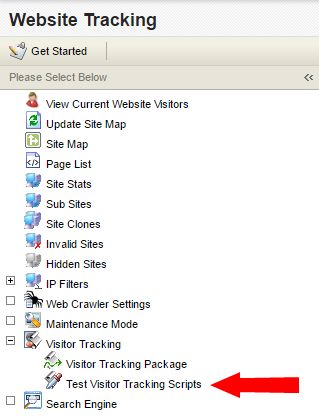
1. Navigate to Assets > Web Setup, then click Tracking.
2. Expand Visitor Tracking, then click Test Visitor Tracking Scripts.
©2020 Oracle Corporation. All rights reserved 24 of 643. Enter the URL you wish to track in the blank field, then click Start Test.
Note: The URL needs to be in the domain whitelist, otherwise Oracle Eloqua returns an
error.
Oracle Eloqua then performs the tests and returns the test results.
Troubleshooting
There are a few reasons why Oracle Eloqua might return errors when testing tracking
scripts:
l If the Domain in Whitelist returns an error, you must add the domain to the domain whitelist.
l If the Web page present returns an error, ensure you included all aspects of the URL, and
removed any query strings.
l If Script Tags Present returns an error, it is possible that the tracking script setup is the issue.
If the script was set up using a third-party program, the test may not be able to find the tracking
scripts. See this Knowledge Base article for more information.
©2020 Oracle Corporation. All rights reserved 25 of 64l If there is an error in Tracking Visits :
l Ensure the site ID for the page you are testing is only comprised of numbers. Non-numeric
characters in the site ID will cause an error for Tracking Visits.
l Ensure the URL you inputted does not contain query strings.
l If the asynchronous tracking script was customized, it is possible Oracle Eloqua can no longer
validate that links are being tracked. At this point the Script Tags Present test will be a success,
but Tracking Visits will return an error.
©2020 Oracle Corporation. All rights reserved 26 of 64Outbound link tracking
Outbound link tracking allows you to track when users click specific links on your site.
The links may be to other sites or to a different location within your site. The links could
be for web pages or they could point to documents like PDFs or Word documents.
To accomplish outbound link tracking, you will have to modify your current anchor tags
by adding an onclick handler. For example, a link that currently looks like this:
Should be modified to look like this:
If the above use case isn't valid for your situation, a more generic JavaScript function is
exposed for this purpose:
_elq.trackEvent
('http://example.com/documents/whitepaper.pdf');
Note: The trackEvent function above will track that the user has clicked on the
particular document or URL, but it won't actually redirect the user. You may need to
use this functionality if you have a more complicated workflow, but the first method,
using trackOutboundLink, is the preferred method.
©2020 Oracle Corporation. All rights reserved 27 of 64Reposting externally hosted forms
Use these scripts when the form data is reposted to Oracle Eloqua servers from a server-
side form processor. In this case it is not possible to get the cookie from the client's
browser, so the following scripts should be installed on the form page to send the unique
ID along with the form data.
In addition to the regular Oracle Eloqua form elements:
Add the following two hidden fields to your form:
Then, place the following code anywhere after the main tracking scripts appear on the
page:
var timerId = null, timeout = 5;
function WaitUntilCustomerGUIDIsRetrieved() {
if (!!(timerId)) {
if (timeout == 0) {
return;
}
if(typeof this.GetElqCustomerGUID === 'function') {
document.forms["EloquaFormName"].elements
["elqCustomerGUID"].value = GetElqCustomerGUID();
return;
}
timeout -= 1;
}
timerId = setTimeout("WaitUntilCustomerGUIDIsRetrieved
©2020 Oracle Corporation. All rights reserved 28 of 64()", 500);
return;
}
window.onload = WaitUntilCustomerGUIDIsRetrieved;
_elqQ.push(['elqGetCustomerGUID']);
This code will execute upon the page loading and will wait until the visitor's GUID has
been retrieved from the Oracle Eloqua servers and then insert it into the
elqCustomerGUID form element. Ensure to replace EloquaFormName with the actual
name of your form as setup in Oracle Eloqua.
©2020 Oracle Corporation. All rights reserved 29 of 64Flash content tracking
Tracking clicks in Adobe Flash content is easily achievable with the Oracle Eloqua
asynchronous tracking scripts. The package you receive from Oracle Eloqua should
have a Flash sample in it to help you out. The method used in that sample is outlined
below:
Supposing you had a button in your Flash content you want to track, in your click
handler, you would add the following code (replacing the parameter values with your
own):
ActionScript 2:
on (release) {
// your button click handling code
elqTrackFlashClick
('http://example.com/content/FlashButton1',
'http://http://example.com/content/referrer');
}
ActionScript 3:
import flash.external.ExternalInterface;
button_1.addEventListener(MouseEvent.CLICK, fl_
MouseClickHandler);
function fl_MouseClickHandler(event: MouseEvent): void
{
// your button click handling code
ExternalInterface.call("elqTrackFlashClick
('http://example.com/content/FlashButton1',
'http://http:/example.com/content/referrer')");
}
where "button_1" is the name of your button.
©2020 Oracle Corporation. All rights reserved 30 of 64On your page that hosts the flash object, add the elqTrackFlashClick JavaScript
function in the head section below the standard tracking scripts:
function elqTrackFlashClick(URL, referrer) {
_elqQ.push(['elqTrackPageView', URL, referrer]);
}
Putting it all together, your page hosting the Flash content might look like this:
var _elqQ = _elqQ || [];
_elqQ.push(['elqSetSiteId', '']);
_elqQ.push(['elqTrackPageView']);
(function() {
function async_load() {
var s = document.createElement('script');
s.type = 'text/javascript';
s.async = true;
s.src = '//img.en25.com/i/elqCfg.min.js';
var x = document.getElementsByTagName
('script')[0];
x.parentNode.insertBefore(s, x);
}
if (window.addEventListener)
window.addEventListener('DOMContentLoaded',
async_load, false);
else if (window.attachEvent) window.attachEvent
('onload',
async_load);
})();
function elqTrackFlashClick(URL, referrer) {
_elqQ.push(['elqTrackPageView', URL, referrer]);
}
©2020 Oracle Corporation. All rights reserved 31 of 64©2020 Oracle Corporation. All rights reserved 32 of 64
©2020 Oracle Corporation. All rights reserved 33 of 64
Strict mode tracking

   Note: To enable strict mode tracking, please log in to My Oracle Support and
   create a service request. Review this knowledge base article for more information
   on enabling strict mode tracking.

Oracle Eloqua's asynchronous tracking scripts allow you to implement strict mode
tracking. Enabling strict mode allows you to restrict the tracking of visitors to your web
page(s). There are three levels in relation to strict mode tracking scripts:

    l   Default tracking: Track all visitors.

    l   Require opt-in for visitors by country : Track all visitors except for those from countries on a
        restricted country list, unless those visitors opt in for tracking via a permissions request.

    l   Require opt-in for all visitors : Don't track any visitors, unless those visitors opt in for tracking
        via a permissions request.

Strict mode helps you comply with the European Union's privacy tracking regulations.
Member countries of the EU have legislation in place that requires a marketer to receive
explicit opt-in consent to track individuals actions online. If you are conducting a
campaign that includes EU member states, then it is your responsibility to determine and
set which tracking mode permission request (if any) for each of your web pages.

Code sample: Requiring opt-in for visitors by country

When using the following code, Oracle Eloqua tracks visitors from countries that are not
on the Country by IP restriction list, and tracks visitors from restricted countries that have
opted-in for tracking:

©2020 Oracle Corporation. All rights reserved                                                         34 of 64
var _elqQ = _elqQ || [];
_elqQ.push(['elqSetSiteId', 'siteId']);
_elqQ.push(['elqTrackPageViewOptinByCountry']);
(function() {
function async_load() {
var s = document.createElement('script');
s.type = 'text/javascript';
s.async = true;
s.src = '//img.en25.com/i/elqCfg.min.js';
var x = document.getElementsByTagName('script')[0];
x.parentNode.insertBefore(s, x);
}
if(window.addEventListener) window.addEventListener
('DOMContentLoaded', async_load, false);
else if (window.attachEvent) window.attachEvent
('onload', async_load);
})();
The following code does the same thing as the above snippet, except that it shows a
simple default opt-in/out banner at the top of the page to new visitors coming from
restricted countries. For visitors who have opted-into tracking, the banner will not be
displayed and page views will be tracked. The styling and text of the Opt-in banner can
be customized.
var _elqQ = _elqQ || [];
_elqQ.push(['elqSetSiteId', 'siteId']);
_elqQ.push
(['elqTrackPageViewDisplayOptInBannerByCountry']);
(function () {
function async_load() {
var s = document.createElement('script');
s.type = 'text/javascript';
s.async = true; s.src =
'//img.en25.com/i/elqCfg.min.js';
var x = document.getElementsByTagName('script')[0];
©2020 Oracle Corporation. All rights reserved 35 of 64x.parentNode.insertBefore(s, x);
}
if (window.addEventListener) window.addEventListener
('DOMContentLoaded', async_load, false);
else if (window.attachEvent) window.attachEvent
('onload', async_load);
})();
function elqVisitorTrackingOptIn() {
_elqQ.push(['elqOptIn']);
}
function elqVisitorTrackingOptOut() {
_elqQ.push(['elqOptOut']);
}
Important: If strict mode is enabled but you do not have any countries on your
restricted country list, then Oracle Eloqua will not track any visitors to the web page
even if there is a call for the require opt-in for visitors by country function. After you
add countries to the list, Oracle Eloqua will then restrict tracking to those countries.
This also affects the tracking of redirect links from emails and landing pages. Learn
more from this knowledge base article on how to add countries to the list.
Code sample: Requiring opt-in for all visitors
When using the following code, Oracle Eloqua excludes all visitors from tracking unless
they have explicitly opted into tracking:
var _elqQ = _elqQ || [];
_elqQ.push(['elqSetSiteId', 'siteId']);
_elqQ.push(['elqTrackPageViewOptinAll']);
(function () {
©2020 Oracle Corporation. All rights reserved 36 of 64function async_load() {
var s = document.createElement('script');
s.type = 'text/javascript';
s.async = true; s.src =
'//img.en25.com/i/elqCfg.min.js';
var x = document.getElementsByTagName('script')[0];
x.parentNode.insertBefore(s, x);
}
if (window.addEventListener) window.addEventListener
('DOMContentLoaded', async_load, false);
else if (window.attachEvent) window.attachEvent
('onload', async_load);
})();
The following code does the same thing as the above snippet, except that it shows a
simple default opt-in banner at the top of the page to new visitors. For visitors who have
already opted-in to tracking, the banner will not be displayed and page views will be
tracked. The styling and text of the Opt-in banner can be customized.
var _elqQ = _elqQ || [];
_elqQ.push(['elqSetSiteId', 'siteId']);
_elqQ.push(['elqTrackPageViewDisplayOptInBannerForAll']);
(function () {
function async_load() {
var s = document.createElement('script');
s.type = 'text/javascript';
s.async = true; s.src =
'//img.en25.com/i/elqCfg.min.js';
var x = document.getElementsByTagName('script')[0];
x.parentNode.insertBefore(s, x);
}
if (window.addEventListener) window.addEventListener
('DOMContentLoaded', async_load, false);
else if (window.attachEvent) window.attachEvent
('onload', async_load);
})();
©2020 Oracle Corporation. All rights reserved 37 of 64function elqVisitorTrackingOptIn() {
_elqQ.push(['elqOptIn']);
}
function elqVisitorTrackingOptOut() {
_elqQ.push(['elqOptOut']);
}
©2020 Oracle Corporation. All rights reserved 38 of 64Customizing the Opt-in/out banner
You can create your own banner rather than using the built-in default. For example:
function elqCreateOptInBanner() {
if (navigator.appVersion.indexOf('MSIE') != -1) {
var css = '.elqOptInBanner {position: absolute;
left: 0px; width: 100%; border:solid 1px #c0c0c0;
background-color:#e1e1e1;
font-size:11px; font-family:verdana; color:#000;
padding:5px;} .elqOptInBannerText
{float: left; text-align:left; width:96%;} .elqButton
{font-size:11px; color:#000;
padding:3px;} .elqClose {float:right; font-size:14px; font-
weight:bold;
cursor:pointer; padding-right:15px;} ';
}
else {
var css = '.elqOptInBanner {position: fixed; top
left: 0px; width: 100%; border:solid 1px #c0c0c0;
background-color:#e1e1e1;
font-size:11px; font-family:verdana; color:#000;
padding:5px;} .elqOptInBannerText
{float: left; text-align:left; width:96%;} .elqButton
{font-size:11px; color:#000;
padding:3px;} .elqClose {float:right; font-size:14px; font-
weight:bold; cursor:pointer;
padding-right:15px;} ';
}
var style = document.createElement('STYLE');
style.type = 'text/css';
if (style.styleSheet) {
style.styleSheet.cssText = css;
} else {
style.appendChild(document.createTextNode(css));
}
var head = document.getElementsByTagName('head')[0];
head.appendChild(style);
var div = document.createElement('div');
©2020 Oracle Corporation. All rights reserved 39 of 64div.setAttribute('id', 'elqOptInBannerDiv');
div.className = 'elqOptInBanner';
div.innerHTML = '
This website would like to use cookies to store information
on your computer which will
help to customize your interactions with us and provide you
with a better browsing experience.
You may delete and block cookies from this site, but parts
of the site may not function as a
result. More information about cookies and your choices can
be found in our Privacy Policy.
To accept cookies from this site, please click the \'I
Accept\' button below.
x';
document.body.appendChild(div);
}
Note: The function name cannot be changed. The tracking scripts code will call
elqCreateOptInBanner.
©2020 Oracle Corporation. All rights reserved 40 of 64Opting-in and out
The Oracle Eloqua tracking scripts allow users to opt-out of tracking at the site level as
well as globally for all domains. Opting-out at the site level involves creating a new
cookie called ELQOPTOUT and setting a value to indicate that for this particular site, the
visitor should not be tracked in the Oracle Eloqua system. The user's GUID is not
removed and so if they later choose to opt back in, they will resume tracking against the
same visitor record. Opting-out at the global level removes their GUID from the cookie
and thus makes them invisible to our servers. If they opt back in, they will get a new
GUID and will be tracked as a new visitor.
Note: The opt-in/opt-outs for first and third-party cookie tracking are independent of
each other. For example, if a site is using first-party cookie tracking and a site
visitor has both a first-party cookie opt-in and a third-party cookie opt-out, only the
first-party cookie opt-in will be used and the visitor will be tracked. This is an edge
case that is relevant primarily when you are transitioning a domain from third-party
to first-party cookie tracking as part of the beta program and a single visitor has
both a third and a first-party cookie.
The following code snippet returns visitor opt-in status for first-party cookie tracking. It
returns 1 if the visitor is opted in and 0 if the visitor is opted out. If the visitor is neither
opted in nor opted out, an empty string is returned.
function elqGetOptInCookieValue() {
var name, index, cookies = document.cookie.split(';');
for (var i = 0; i < cookies.length; i++) {
index = cookies[i].indexOf('=');
©2020 Oracle Corporation. All rights reserved 41 of 64if (index > 0 && cookies[i].length > index + 1) {
name = cookies[i].substr(0, index).trim();
if (name == 'OPTIN') {
return cookies[i].substr(index + 1);
}
}
}
return '';
}
©2020 Oracle Corporation. All rights reserved 42 of 64Cookie laws country list
Member countries of the EU have legislation in place that requires a marketer to receive
explicit opt-in consent to track individuals actions online. If you are conducting a
campaign that includes EU member states, then it is your responsibility to determine and
set which tracking mode permission request (if any) for each of your web pages.
Below is an example list of countries that have had cookies laws implemented:
l Austria
l Belgium
l Bulgaria
l Cyprus
l Czech Republic (opt-out)
l Denmark
l Estonia
l Finland
l France
l Hungary
l Ireland
l Italy
l Latvia
l Lithuania
l Luxembourg
l Malta
©2020 Oracle Corporation. All rights reserved 43 of 64l Netherlands
l Poland
l Portugal
l Slovakia
l Slovenia
l Spain
l Sweden
l United Kingdom
Tip: Enabling Eloqua's strict mode tracking can help you comply with the
regulations of these countries. Strict mode prevents you from tracking what web
pages and landing pages that a customer visits, or tracking email clickthroughs.
©2020 Oracle Corporation. All rights reserved 44 of 64Using data lookups
Data lookups allow you to retrieve contact, visitor, or custom object data. Implementing a
data lookup on your website allows you to personalize web pages with contact or visitor
information.
Using web data look ups, you can do the following:
l Display different web pages based on visitor profile data
l Display a specific web page to contacts belonging to an email group
l Allow entry to a portion of your site to known contacts
l Pre-populate a form
To implement a data lookup, you will need the following:
1. In Oracle Eloqua, create a new data lookup. You will need the Data Lookup Key call the web
data lookup.
2. Ensure Oracle Eloqua tracking scripts are implemented on your web page.
Tip: To help implement a data lookup, use the sample code generated by Oracle
Eloqua. To view the sample code, open the data lookup and click Data Lookup
Options > Get Data Lookup Scripts. Learn more about creating a data lookup.
Writing contact data to a web page
The following describes writing contact data retrieved from a contact data lookup to a
web page.
©2020 Oracle Corporation. All rights reserved 45 of 64A div is placed on the page and will be populated with the contact details returned by
the data lookup.
A JavaScript function dynamically creates paragraph elements with the retrieved data
and places them in the div above.
function CreateRow(label, value) {
var p = document.createElement('p');
var b = document.createElement('b');
p.appendChild(b);
b.appendChild(document.createTextNode(label));
p.appendChild(document.createTextNode(value));
document.getElementById('contactinfo').appendChild(p);
}
A callback function SetElqContent is used to return the data from the lookup. The
function name is important and must be called SetElqContent. The data that is
returned depends on how the data lookup was set up. In the following example, contact
data is returned.
function SetElqContent() {
CreateRow('Contact Info: ',
GetElqContentPersonalizationValue(''));
CreateRow('First Name: ',
GetElqContentPersonalizationValue('C_FirstName'));
CreateRow('Last Name: ', GetElqContentPersonalizationValue
('C_LastName'));
CreateRow('Email Address:
',GetElqContentPersonalizationValue('C_EmailAddress'));
CreateRow('Salesperson: ',
GetElqContentPersonalizationValue('C_Salesperson'));
CreateRow('Company: ', GetElqContentPersonalizationValue
©2020 Oracle Corporation. All rights reserved 46 of 64('C_Company'));
CreateRow('Address 1: ', GetElqContentPersonalizationValue
('C_Address1'));
CreateRow('City: ', GetElqContentPersonalizationValue('C_
City'));
CreateRow('State or Province:
',GetElqContentPersonalizationValue('C_State_Prov'));
CreateRow('Zip or Postal Code:
',GetElqContentPersonalizationValue('C_Zip_Postal'));
CreateRow('Business Phone: ',
GetElqContentPersonalizationValue('C_BusPhone'));
CreateRow('Country: ', GetElqContentPersonalizationValue
('C_Country'));
CreateRow('Industry: ', GetElqContentPersonalizationValue
('M_Industry1'));
CreateRow('Revenue: ', GetElqContentPersonalizationValue
('M_Revenue1'));
CreateRow('Website: ', GetElqContentPersonalizationValue
('M_WebSite1'));
CreateRow('Date Created:
',GetElqContentPersonalizationValue('M_DateCreated'));
}
The _elqQ.push() is called that requests the data lookup from the Oracle Eloqua
servers.
_elqQ.push(['elqDataLookup', escape(''),
'']);
Data_Lookup_Key is a global unique identifier (GUID) that is generated when you
create the data lookup. You can retrieve it by opening up the web data lookup in Oracle
Eloqua. The Data_Lookup_Criteria (if required) is the criteria you set up to identify
the contact or visitor. For example, email address user@example.com. Learn more about creating a
data lookup.
Trying it all together, we get the following:
©2020 Oracle Corporation. All rights reserved 47 of 64var _elqQ = _elqQ || [];
_elqQ.push(['elqSetSiteId', '123']);
_elqQ.push(['elqTrackPageView']);
(function () {
function async_load() {
var s = document.createElement('script');
s.type = 'text/javascript'; s.async = true;
s.src = '//img.en25.com/i/elqCfg.min.js';
var x = document.getElementsByTagName
('script')[0]; x.parentNode.insertBefore(s, x);
}
if (window.attachEvent) { window.attachEvent
('onload', async_load); }
else { window.addEventListener
('DOMContentLoaded', async_load, false); }
})();
function CreateRow(label, value) {
var p = document.createElement('p');
var b = document.createElement('b');
var label = document.createTextNode(label);
var value = document.createTextNode(value);
p.appendChild(b);
b.appendChild(label);
p.appendChild(value);
document.getElementById
('contactinfo').appendChild(p);
}
function SetElqContent() {
CreateRow('Contact Info: ',
GetElqContentPersonalizationValue(''));
CreateRow('First Name: ',
GetElqContentPersonalizationValue('C_FirstName'));
CreateRow('Last Name: ',
GetElqContentPersonalizationValue('C_LastName'));
©2020 Oracle Corporation. All rights reserved 48 of 64CreateRow('Email Address: ',
GetElqContentPersonalizationValue('C_EmailAddress'));
CreateRow('Salesperson: ',
GetElqContentPersonalizationValue('C_Salesperson'));
CreateRow('Company: ',
GetElqContentPersonalizationValue('C_Company'));
CreateRow('Address 1: ',
GetElqContentPersonalizationValue('C_Address1'));
CreateRow('City: ',
GetElqContentPersonalizationValue('C_City'));
CreateRow('State or Province: ',
GetElqContentPersonalizationValue('C_State_Prov'));
CreateRow('Zip or Postal Code: ',
GetElqContentPersonalizationValue('C_Zip_Postal'));
CreateRow('Business Phone: ',
GetElqContentPersonalizationValue('C_BusPhone'));
CreateRow('Country: ',
GetElqContentPersonalizationValue('C_Country'));
CreateRow('Industry: ',
GetElqContentPersonalizationValue('M_Industry1'));
CreateRow('Revenue: ',
GetElqContentPersonalizationValue('M_Revenue1'));
CreateRow('Website: ',
GetElqContentPersonalizationValue('M_WebSite1'));
CreateRow('Date Created: ',
GetElqContentPersonalizationValue('M_DateCreated'));
}
_elqQ.push(['elqDataLookup', escape
('434C5E6250C04FCBB0D4FC5413F9A40A'), '
user@example.com']);
©2020 Oracle Corporation. All rights reserved 49 of 64Creating web data lookups
Data lookups allow you to retrieve contact, visitor, or custom object data. Implementing a
data lookup on your website allows you to personalize web pages with contact or visitor
information.
Using web data look ups, you can do the following:
l Display different web pages based on visitor profile data
l Display a specific web page to contacts belonging to an email group
l Allow entry to a portion of your site to known contacts
l Pre-populate a form
You can use a web data lookup to retrieve the following type of information:
l Contact fields
l Visitor profile fields
l A count of custom data records for a given custom object
l Custom data record fields
l Email group membership
Note: Contact data is limited to those contact fields enabled for web data lookups.
To create a web data lookup:
©2020 Oracle Corporation. All rights reserved 50 of 641. Navigate to Assets > Website Setup and then select Web Data Lookup.
2. Click Data Lookup > New Data Lookup.
3. Give the data lookup a name.
4. Choose the type of data lookup that you want to create. You can choose from:
l Contacts: Used to return contact field data. Contact data is retrieved based on the contact field
you specify to match the contact on. If you are creating a contact data lookup, ensure the
Restricted option is selected. This option prevents returning contact data if the visitor profile is
not linked to the contact.
l Visitors: Used to return visitor profile fields. Visitor data is always retrieved using the Oracle
Eloqua cookie global unique identifier (GUID).
l Custom Object Records: Used to return custom data record. Custom data records are retrieved
based on the field you specify to match the contact on.
l Custom Objects: Used to return the number of custom data records in a given custom object.
Custom objects are retrieved using the custom object ID.
©2020 Oracle Corporation. All rights reserved 51 of 64l Contact Group Memberships: Used to return a contact's email group membership. Group
membership data is retrieved based on the contact field you specify to match the contact on.
Warning: Visitor data lookups cannot be limited to Show to Trusted Visitors Only.
Contact data lookups are recommended for sensitive information. Learn more about
Web Personalization Security.
5. Choose an option for the data fields that should be returned:
l If you are creating a contact and visitor data lookups, choose the view from the Data Fields
Returned drop-down list. The data lookup only returns fields that are in the view.
l If you are creating a custom object lookups, choose the custom object. This determines which
custom object to use in the web data lookup.
Important: The Restricted option is selected by default and recommended. If this box is
not checked, Web Personalization Settings will not be respected and data will be
displayed to all visitors. Learn more about Web Personalization Security.
6. If applicable, choose the field that you want to use to identify the contact in the Edit Lookup
Criteria area. For example, contact email address. Contacts are matched to an Oracle Eloqua
contact record based on this field.
After you save the data lookup, you can add match criteria. This can help ensure that correct
contact record is returned by the data lookup.
To avoid data discrepancies, set the Web Personalization Security setting to Show to All
Known Visitors.
7. Save the web data lookup.
©2020 Oracle Corporation. All rights reserved 52 of 64After you save the data lookup, Oracle Eloqua generates a unique key for the lookup. You need this key to implement to the data lookup on your website. Data lookup sample code After you save the data lookup, Oracle Eloqua generates JavaScript sample code that you can use to implement the data lookup on your website. To view the sample code, click Data Lookup Options > Get Data Lookup Scripts. ©2020 Oracle Corporation. All rights reserved 53 of 64
The following sample code is provided:

    l   Sample display script: This sample shows you how to return the data from the data lookup. If

        you created a contact or visitor data lookup, this sample includes references to the fields
        returned by the lookup.

    l   Form auto-population script: This samples shows you to pre-populate an Oracle Eloqua from

        with data returned from the lookup. To use this, select the from and then click Generate Script

        for Form.

            Tip: If you want to pre-populate an Oracle Eloqua form, it is recommend that you use
            field merges to populate the form field.

©2020 Oracle Corporation. All rights reserved                                                    54 of 64
l Integration: This sample shows you how to call the data lookup from your web page.
When you implement the data lookup on your website, the web page must also have the
Oracle Eloqua tracking scripts implemented. Learn more about using a data lookup on a
web page or data lookup examples.
Examples of data lookup usage
Data lookups allow you to retrieve contact, visitor, or custom object data. Implementing a
data lookup on your website allows you to personalize web pages with contact or visitor
information.
Creating a custom preferences center
You can use the web data lookup to create a customized email preferences center. In
this case, a form is used to show the email group options. When a subscriber follows a
subscription management link in their email, the form is pre-populated with their group
membership.
To use a web data lookup in a custom preferences center:
1. Create a data lookup that uses Contact Group Memberships. In this case, both the email
address and contact ID are used to identify the contact.
©2020 Oracle Corporation. All rights reserved 55 of 642. For each email group, retrieve the subscribe and unsubscribe data lookup IDs. You can get
these IDs by opening the email group (Assets > Email Setup > Email Groups ) and
clicking .
3. Implement the data lookup scripts on your web page. The web page must also have the
Oracle Eloqua tracking scripts implemented.
4. When you implement the data lookup, you'll use the group subscribe or unsubscribe lookup
IDs.
var strContactGroupGUID = '{lookup_ID>}';
Pre-populating a form
You can use data lookups to pre-populate a form. The form must exist in Oracle Eloqua
to use this example
Tip: If you want to pre-populate an Oracle Eloqua form, it is recommend that you
use field merges to populate the form field.
To pre-populate a form with a web data lookup:
1. Create a contact data lookup. In the image below, the contact data lookup uses the email
address to identify the contact. The Restricted option ensures that contact data is only
returned if contact has a visitor profile.
©2020 Oracle Corporation. All rights reserved 57 of 642. Get the sample implementation code by selecting Data Lookup Options > Get Data Lookup
Scripts .
3. On the Data Lookup Script page, choose the Form Auto-Population Script option. Choose
the form and then click Generate Script for Form . This generates sample code specific to
selected form.
4. Implement the data lookup on your web page. The web page must also have the Oracle
Eloqua tracking scripts implemented.
5. When the web page is loaded, the contact's email address must be passed to the page. This
could be achieved, for example, by linking to the form from an Oracle Eloqua email.
Personalizing your website using visitor information
You can use a web data lookup to customize your website with visitor information from
Oracle Eloqua. You can retrieve any of the fields available from the visitor profile.
To personalize your website with visitor information:
1. Create a visitor data lookup. Visitors are always identified using the Oracle Eloqua cookie
global unique identifier (GUID).
©2020 Oracle Corporation. All rights reserved 58 of 64You can also read


