Public Toilets In Managed Stations - Design Manual NR/GN/CIV/200/04 - Network Rail
←
→
Page content transcription
If your browser does not render page correctly, please read the page content below
Design Manual
NR/GN/CIV/200/04

Public Toilets
In Managed Stations
Design Guidelines

Document Varification                                                           Managed Stations WC’s
                                                                                    NR/GN/CIV/200/04
                                                                                  Issued: October 2020
                                                                                              OFFICIAL
                                                                                                  3/72

Authorisation
                                                        Revision Information
Name              Department or Role
                                                        Version:             1.0
Anthony Dewar     Professional Head                     Date issued:         October 2020
                  Buildings & Architecture, Technical
                  Authority                             Description of changes:
                                                        First issue

Frank Anatole     Principal Architect
                  Buildings & Architecture, Technical   Disclaimer
                  Authority
                                                        In issuing this standard/control document for
                                                        its stated purpose, Network Rail Infrastructure
Technical Lead                                          Limited makes no warranties, expressed or
                                                        implied, that compliance with all or any
Name              Department or Role                    standards/control documents it issues is
                                                        sufficient on its own to provide safety or
                                                        compliance with legislation. Users are
Trevor Wilson     Senior Architect                      reminded of their own duties under legislation.
                  Buildings & Architecture,
                                                        Compliance with a Network Rail standard/
                  Technical Authority
                                                        control document does not, of itself, confer
                                                        immunity from legal obligations.

                                                        Where Network Rail Infrastructure Limited has
Developed By                                            granted permission to copy extracts from
                                                        Network Rail standards or control documents,
Name              Department or Role                    Network Rail Infrastructure Limited accepts no
                                                        responsibility for, nor any liability in connection
                                                        with, the use of such extracts, or any claims
Landolt + Brown   Architects                            arising there from.

                                                        This disclaimer applies to all forms of media in
                                                        which extracts from Network Rail standards
                                                        and control documents might be reproduced.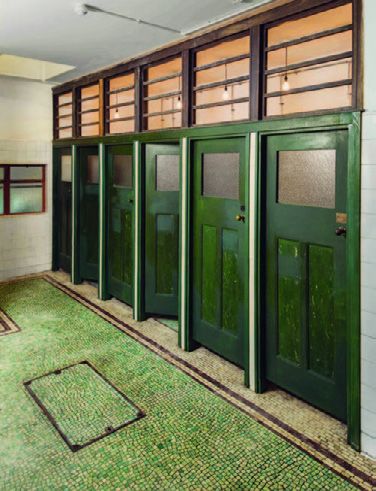
Preface                                                                                                                                                                Design Guidelines
                                                                                                                                                                  Managed Stations WC’s
                                                                                                                                                                      NR/GN/CIV/200/04
                                                                                                                                                                   Issued: October 2020

                                                                                                                                                                                   4/72

What do we mean by ‘world class’?           this context, world class is very much      are exactly the right sort of ‘world
                                            related to durability and robustness over   class’ Network Rail is looking for. Tough,
As part of Network Rail’s commitment        time.                                       robust, well-built, well ventilated, and all
to putting passengers first, its senior                                                 beautiful in their own way.
station’s team set an objective to          We therefore asked ourselves two
provide world class WC facilities           simple questions: Firstly, we asked         (continued overleaf)
as toilets are upgraded in Managed          where have we seen outstanding public
Stations over the next few years.           conveniences in a demanding public
                                            setting that have stood the test of time.
World class means many different            Our team looked at many examples
                                                                                                                                       Rothesay Pier Public WC’s, Isle of Bute.
things to different people. For some        from across the UK and in particular we                                                    Image: Mike Nettleship
it might mean gold taps and veined          were impressed by the historic loos at
marble, while for others it could be        the Rothesay West Pier on the Isle of
pared back minimalism where lights,         Bute. Here the weighty sanitaryware,
taps, switches and drainage points are      glazed brick, glistening copper pipes
hidden from view and operated by a          and robust fittings speak of timeless
discrete wave of the hand. What seems       quality and the planted central urn is as
most important is that ‘world class’        joyful as it is unexpected.
should be intrinsically linked to context
and use. Our major stations have a very     As a more recent example we cited the
particular set of requirements; their       Barbican loos by architects Chamberlin,
use is unusually intense and continuous     Powell and Bon with their immaculately
all day and well into the night. In many    detailed terrazzo giving a sense of
instances there are too few fittings        elegant permanence. Both are now
and little available space to provide       listed for good reason. The newer loos
more, in the short-term at least. They      at the V&A Members’ Room by Carmody
therefore have to work exceptionally        Groarke architects share many of the
hard in the most demanding of settings      timeless qualities of the older, listed
where, despite best efforts to clean        loos, but brought up to date with a
and monitor them, crime and antisocial      contemporary approach to details,           V&A Members’ Room WC’s by Carmody Groarke.     The Barbican WC’s by Chamberlin, Powell and Bon.
behavior are an unfortunate reality. In     materials and fittings. These examples      Image: Rory Gardiner                           Image: Marissa V, Flickr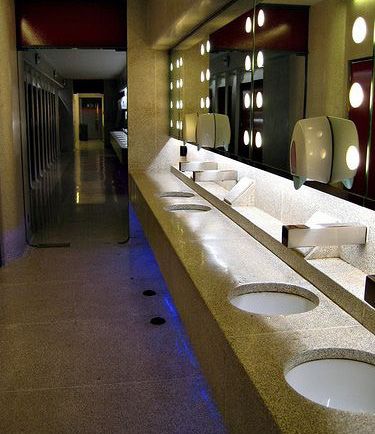
Preface                                                                                                                                                      Design Guidelines
                                                                                                                                                        Managed Stations WC’s
                                                                                                                                                            NR/GN/CIV/200/04
                                                                                                                                                          Issued: October 2020

                                                                                                                                                                             5/72

Secondly, we asked whether the railway       sink and WC fittings, tough but elegant
itself had its own historic precedents       sanitaryware which feels ‘built in’ rather
that shared some of the timeless quality     than ‘fitted out’. Cubicles are formed
we see at Rothesay, the Barbican             out of full-height solid walls, not wafer-
and the V&A. The answer, of course,          thin, rattling partitions, giving a sense of
is yes. Peckham Rye’s extraordinary          privacy and dignity rarely found in most
loos, hidden from view for decades           modern, laminate-lined public WC’s.
but now lovingly restored are a case-
study in beautifully detailed mosaic         Our new loos need to be of today, not
and glazed brick with full height            copies of a previous era, but there are
cubicles, heavy doors and their own          strong clues in these tough, elegant,
substantial porcelain and brass fittings.    timeless loos which we can learn
The loos at South End Green are no           from as we develop new, sustainable,
less magnificent and there is another        world class station facilities which put
example at Manchester Victoria; this         passengers first.
has been modified over time but the
essence of these elegant old loos is still
visible. We have also seen fragments of
wonderful art nouveau wall tiles in the
basement at Charing Cross. No doubt
more will reveal themselves over time.                                                      Top: Manchester Victoria WC’s.    Peckham Rye Station Toilets. Image: Benedict
                                                                                            Image: Network Rail               O’Looney Architects
There is a great deal of similarity
                                                                                            Above: South End Green WC’s.
between these examples. Several use
                                                                                            Image: London Less Travelled,
glazed ceramic walls of one type or                                                         Flickr
another – tiles, glazed brick, mosaic
and in many instances wall and floor                                                        Right: Original Tiling, Charing
                                                                                            Cross Station. Image: Network
corners are curved to make them tough
                                                                                            Rail
enough to take knocks and bumps,
as well as making them easy to clean.
Each one has (or at least had) weighty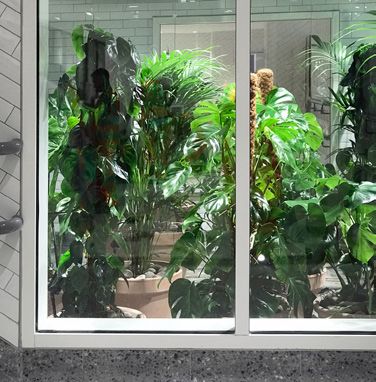
How to use this document                                                                                                                                                                     Design Guidelines
                                                                                                                                                                                        Managed Stations WC’s
                                                                                                                                                                                            NR/GN/CIV/200/04
                                                                                                                                                                                          Issued: October 2020

                                                                                                                                                                                                             6/72

Purpose

The Network Rail Design Guidance for Public Toilets
in Managed Stations is intended to provide a
consistent approach to design quality across the
Managed Stations Portfolio.

Scope

The intended audience for the Design Guidelines are
architects, designers, project managers, project
sponsors and others involved in designing WC’s for
Network Rail.

The Design Guidelines are contained in a single
document divided over six sections:

                 1                             2                                     3                                4                                   5                                  6
Section 1                       Section 2                              Section 3                          Section 4                         Section 5                          Section 6
Introduction and Guiding        Capacity and User Groups               Space Planning Guidance for        Services Coordination             Wayfinding and Information         Materials, Fixtures, and Finishes
Principles                                                             Facilities
                                Calculating appropriate levels of                                         Strategic principles for the      Guidelines to provide a            Preferred materials palette,
Provides a background for       provision, including the gender        Provides information on            integration of water supply       hierarchy of signage, including    lighting, planting, and a selection
the need for design guidance,   split and number of appliances         dimensions and layouts for key     and drainage, ventilation,        logos for individual facilities,   of appropriate fittings and
the document’s purpose and      required. Providing unisex and         WC components, circulation         power, fire safety and lighting   supergraphics, customer            finishes for key components.
intended audience, along with   accessible facilities for all users.   and activity spaces in all types   including primary servicing and   feedback tablets and wider
guiding principles for design                                          of facility.                       maintenance routing.              station information.
development.
Contents                                                                                                                         Design Guidelines
                                                                                                                            Managed Stations WC’s
                                                                                                                                NR/GN/CIV/200/04
                                                                                                                              Issued: October 2020

                                                                                                                                             7/72

      Section 1                     Page   3.10   Circulation Spaces                 31   5.5    Pictograms                            51
1.0   Introduction                         3.11   Entrance Spaces                    32   5.6    Supergraphics                         52
                                           3.12   Accessible Toilet and Baby-        33   5.7    Unisex Facilities                     53
1.1   Background                       9          Changing                                5.8    Appliance Identification              54
1.2   Guiding Principles              10   3.13   Ambulant Accessible / Gender-     34    5.9    Additional Customer                   55
                                                  Neutral Toilet                                 Information
                                           3.14   Changing Places Toilet            35    5.10   Attendant Signage and                 56
      Section 2                     Page   3.15   Assistance Dog Spending Areas     36           Customer Feedback
2.0   Capacity and User Groups             3.16   Attendant and Cleaners’           37    5.11   Station Information                    57
                                                  Facilities
2.1   User Groups                     12
2.2   Calculating Provision           13                                                         Section 6                           Page
2.3   Calculating Provision           14          Section 4                        Page   6.0    Materials, Fixtures, and
      (Alternative Method)                 4.0    Services Coordination                          Finishes
2.4   Quantity of Appliances          16
2.5   Unisex Facilities               17   4.1    Services Approach and Safety      39    6.1    Sanitaryware                          60
                                           4.2    Service Corridors and Ceilings    40    6.2    Material Palette                      61
                                           4.3    Floor Access Hatches and          41    6.3    Cubicles                              62
      Section 3                     Page          Drainage                                6.4    Wash Troughs                          63
3.0   Space Planning Guidance for          4.4    Wash Troughs and Vanity Units     42    6.5    Flooring                              64
      Facilities                           4.5    Lighting                          43    6.6    Lighting                              66
                                                                                          6.7    Planting                              67
3.1   Cubicle Sizes                  20
3.2   Cubicle Assembly                21          Section 5                        Page
3.3   Female Cubicles                23    5.0    Wayfinding and Information                     Appendices                          Page
3.4   Ambulant Cubicles              24
3.5   Enlarged Cubicles              25    5.1    Wayfinding                        45    A      Relevant Standards and                69
3.6   Family Toilets                 26    5.2    NR Wayfinding Design              46           Guidance
3.7   Urinals                        27           Guidelines                              B      Acknowledgements                      70
3.8   Wash Troughs                   28    5.3    Progressive Disclosure            48    C      Supplier References                   71
3.9   Activity Spaces                30    5.4    Statutory Signs                   50
Public Toilets In Managed Stations
Introduction and Guiding Principles   1
Introduction and Guiding Principles                                                                                                                            Design Guidelines
                                                                                                                                                          Managed Stations WC’s
                                                                                                                                                              NR/GN/CIV/200/04

1.1 Background                                                                                                                                              Issued: October 2020

                                                                                                                                                                            9/72

The Design Guidance for Public Toilets       with Design Council and senior Network     The timing is therefore ideal for the
in Managed Stations is intended to           Rail representatives. This project         preparation of a design guide which
promote a common design approach             represents a step-change                   can be used by project sponsors,
based on the principle of ‘putting           in design quality and environmental        project managers, designers and key
passengers first’ across the Managed         conditions within one of the UK’s          stakeholders involved in WC
Stations portfolio.                          most heavily used stations. Customer       upgrade projects in the near future.
                                             feedback has been closely monitored
Network Rail is in the process               since opening and has been                 A number of British Standards and
of updating several of its design            overwhelmingly positive.                   UK Building Regulations are quoted
guidance documents. As part of this,                                                    throughout this document. Where
design guidance for public toilets in        Similar upgrade projects led by            British Standards are codes of
managed stations has been prepared           the same team are currently being          practice, they take the form of
in anticipation of the upgrade of such       developed at London Bridge and London      guidance and recommendations.
facilities at several stations in the near   Charing Cross, providing a wider range
future.                                      of site conditions against which to test
                                             and refine the design approach to suit
Customer feedback clearly indicates          varying constraints and user patterns.
that the quality, security and
environment within station WC’s is a         A set of guiding design principles
major factor in customer satisfaction. In    has been established through the
recent years, the move towards free-         development of these pilot projects
to-use WC’s - whilst broadly welcomed        and important lessons have been learnt
by the travelling public - has led to a      from customer and staff feedback.
significant uplift in user numbers and
changes in user behaviour, which are         There have also been long-term
putting added pressure on existing           implications of change for station
facilities.                                  management and maintenance
                                             teams that need to be understood,
During 2019 Network Rail undertook           communicated and managed in any
a pilot WC upgrade project at London         future upgrade projects.
                                                                                                                                London Victoria WC’s - Landolt + Brown in
Victoria, based on a brief developed                                                                                            collaboration with artist Wendy Hardie.
                                                                                                                                Images: Peter Langdown
Introduction and Guiding Principles                                                                                                                       Design Guidelines
                                                                                                                                                     Managed Stations WC’s
                                                                                                                                                         NR/GN/CIV/200/04

1.2 Guiding Principles                                                                                                                                 Issued: October 2020

                                                                                                                                                                     10/72

                                             Putting Passengers First: 5 Guiding Principles of good WC Design

Initial briefing workshops
with Design Council,            Dignity                    Safety                     Resilience                 Accessibility                 Sustainability
design development for
London Victoria and the         Treating customers         Safety is fundamental      Managed Station WC’s       Network Rail should be        Network Rail is
careful appraisal of recent     with dignity has a         to good design. The        have abnormally high       seen as an exemplar           committed to reducing
passenger and staff             major impact on            removal of turnstiles      user numbers and a         organisation in terms of      carbon emissions
feedback have informed          customer satisfaction      is leading to increased    wide range of users.       fully accessible facilities   and minimising the
Network Rail’s guiding          and presents Network       antisocial and drug-       Designs must be robust,    that consider all user        consumption of natural
design principles.              Rail as a considerate,     related behaviours, and    easy to maintain and       groups and encourages         resources. Good
                                customer-focussed          terror threats are high.   have a long design life.   diversity and inclusion.      design should consider
Cosmetic upgrade                organisation. Good         Good design should         Good design should         Good design should            sustainability from the
will not enhance the            design should consider:    consider:                  incorporate:               include:                      outset and include:
customer experience
if user groups are not          • Adequate capacity for    • Terrorism threats        • Hard-wearing, easily     • Excellent wayfinding        • Materials which
catered for equally,              all user groups                                       cleaned and vandal         with clear, intuitive         minimise embodied
if air quality is poor,                                    • The risk of concealed      resistant materials,       circulation routes            carbon
maintenance is                  • An appropriate gender      drugs and weapons          fixtures and fittings
inadequate, or if the             balance                                                                        • Fully accessible            • Fittings which
design is not robust                                       • Emergency services       • Good maintenance           facilities                    minimise water
enough to cope with the         • Generous spatial           access                     access, provided                                         and detergent
intensity of use.                 standards                                             within dedicated         • Gender neutral                consumption
                                                           • The appropriate use        service zones where        facilities
Construction regularly          • Suitable levels of         of CCTV, good lighting     possible                                               • Low energy lighting
requires the closure and          privacy                    and the avoidance of                                • Excellent facilities for      sources
temporary relocation of                                      blind spots              • Construction detailing     children and childcare
WC facilities. This is costly   • Good air quality,                                     which minimises                                        • Exclusion of CFC’s and
and customer feedback             drainage capacity and    • Visible CCTV               cleaning and             • Changing Places               formaldehyde
is consistently negative.         well designed lighting     monitoring                 maintenance                toilets where possible
Consideration of extended                                                                                          for those requiring a       • Selection of materials
design life is therefore        • Customer feedback        • A robust fire safety                                  high level of assisted        from sustainable
essential in achieving            systems                    strategy                                              care                          sources
long-term value.
Public Toilets In Managed Stations Capacity and User Groups 2
Capacity and User Groups                                                                                                                                            Design Guidelines
                                                                                                                                                               Managed Stations WC’s
                                                                                                                                                                   NR/GN/CIV/200/04

2.1 User Groups                                                                                                                                                  Issued: October 2020

                                                                                                                                                                                    12/72

2.1.1 Diversity Impact Assessment           A) Family Toilet. Enabling a parent or      equal basis with other passengers, or
                                            carer, young child and baby to all use      whose mobility when using transport is
A Network Rail’s Diversity Impact           the same facility, a family toilet should   reduced due to age. [1c]
Assessment (DIA) should be undertaken       contain a screened WC, washbasin and
on an individual project basis to give      baby-changing unit with adjacent            With the increased mobility of disabled
due consideration to all user groups.[1a]   toddler seat. The inclusion of an           people and the UK’s ageing population,
                                            additional, smaller, WC for children        public toilets should contain accessible
2.1.2 Men and Women                         should be considered where space            provision as described on page 16. This
                                            allows. The cubicle and door should be      should include Changing Places toilets
Women require a higher level of public                                                  at larger stations.
                                            large enough to accommodate a double
toilet provision than men, as they          pushchair (see section 3.6).
require longer to use the toilet, and                                                   In areas such as stations, where people
have more reasons to use the toilet. [1b]   B) An enlarged toilet cubicle that can      are likely to be carrying luggage, step-    Louis Hellman, Queuing for the ladies, 1992,
                                            incorporate a baby changing unit, and       free access, additional circulation space   cartoon first published in Access by Design,
Women require twice as many                 can also be used by people who need         and larger cubicle sizes should all be      accessed February 17, 2020,
appliances as men to achieve equal          more space and by people with luggage                                                   www.louishellman.co.uk
                                                                                        considered.
waiting time (see section 2.2), and have    (see section 3.5).
historically been under-provided                                                                                                     1a. Under the Equality Act a DIA is the tool
with toilets, therefore it should not       Additional baby-changing options are        2.1.5 Gender Neutral see section 3.13        used by Network Rail to demonstrate its
                                                                                                                                     Public Sector Equality Duty responsibilities
be assumed that existing facilities         described in BS6465-4:2010, 10.2.3.                                                      are met.
for women are adequate in terms of                                                      2.1.6 Multi-Faith Facilities
quantity.                                                                               Sanitary accommodation respecting
                                                                                                                                     1b. Invisible Women- Gender neutral with
                                            2.1.4 Persons with disabilities and                                                      urinals. Caroline Criado Perez
                                            persons of reduced mobility (PRMs)          religious and faith sensitivities should
When calculating the numbers of                                                         be provided for where applicable,            1c. Commission Regulation (EU) No 1300/2014
appliances required, one urinal should      ‘Persons with disabilities and persons      however, the design and specification        (PRM TSI), 2.2 - Definition of ‘person with
be counted as equivalent to one WC.         of reduced mobility’ means any person       of such accommodation is beyond the
                                                                                                                                     disabilities and person with reduced mobility’
                                            who has a permanent or temporary            scope of this document. It is necessary
2.1.3 Children and Babies                   physical, mental, intellectual or           to obtain specialist advice for such
                                            sensory impairment which, in
Unisex baby-changing facilities should                                                  facilities. Contact:
                                            interaction with various barriers, may      multifaith@networkrail.co.uk
be provided, however, it is also            hinder their full and effective use of
advantageous to provide baby-               transport on an
changing facilities within separate-sex
areas. This can be achieved using:
Capacity and User Groups Design Guidelines
Managed Stations WC’s
NR/GN/CIV/200/04
2.2 Calculating Provision Issued: October 2020
13/72
The levels of WC provision required will provided as male units. WC counts at three London stations AM
WC Usage 05/11/19 PM
Peak Peak
be affected by several factors across show a pattern in WC usage on a
Average WC count on Thu 05/11/19
stations; the calculations shown here To calculate the provision required for typical weekday, with two peaks at 1200
are indicative only and WC provision female/male WC’s: 11:00 - 12:00 and 18:00 - 19:00. WC’s are
800
should be considered on an individual more frequently visited in the PM peak,
station basis. Total units required x 2/3 = Female despite greater passenger numbers in 400
Units the AM peak. 0
Network Rail’s recommends that 1 unit Total units required x 1/3 = Male Units
00:00 - 01:00
02:00 - 03:00
04:00 - 05:00
06:00 - 07:00
08:00 - 09:00
10:00 - 11:00
12:00 - 13:00
14:00 - 15:00
16:00 - 17:00
18:00 -19:00
20:00 -21:00
22:00 -23:00
(WC/urinal) be provided per 2500 - Counts over a one week duration show Series1 Series2 Series3
3000 passengers of daily throughput. These calculations are only for the that patterns of usage vary depending
provision of separate-sex facilities; on the location of each station. Stations
Therefore, the recommended method unisex facilities should be provided in serving financial districts see highest
for calculating provision is as follows: addition to the calculated ‘total units WC usage on a Friday, with significantly
less usage on weekends. Stations with Fig. 01 - Hourly Variation in WC Usage
required’ (see section 2.4).
WC Weekly Usage
AM 3 hour peak x 4 = Daily peak Daily a greater proportion of leisure travellers
peak / 3000 = Total units required see a gradual increase in WC usage
1.2
proportion of busiest day
Further guidance on calculating
1 1.0
provision is available within BS6465- throughout the week, with highest WC
WC Usage as a
The ‘AM 3 hour peak’ is the total number 0.8 0.8
4:2010, and BS6465-1:2006. usage on a Saturday.
of passenger entries/exits on a typical 0.6 0.6
weekday between 07:00 - 09:59. The quantity of separate-sex WC’sWCand
Weekly Usage 0.4 0.4
Example 1.2
the gender split should be considered
0.2 0.2
WC Weekly Usage
The average time a person takes to use on an individual station basis. In certain WC Weekly0 Usage
1 1.2 0Monday Tuesday Wednesday Thursday Friday Saturday Sunday
Wed
the facilities should be taken as 1.5
Mon
Liverpool Street Station circumstances the level1.2of provision
Sun
Thu
Tue
Sat
0.8 Series1 Series2 Series3
Fri
1
minutes for women and 0.75 minutes for each gender 0.6may need to be 0.8
1
for men. [2] Therefore, assuming an equal AM 3 hour peak arrivals and varied to accommodate passenger
0.4
0.8 0.6 Fig. 02 - Daily Variation in WC Usage
number of male and female users, there departures = 79,687 (2017) demographics, particularly in stations
0.2
should be twice as many female units 79,687 x 4 = 318,748 daily peak 0.6
where there are both significantly more
0.4
318,478 / 3000 = 106 total units
0 0.2 Key:
male customers duringMonday the
0.4
week,
Tuesday and Thursday Friday Saturday Sunday
Wednesday
a significant decrease in 0.2 passenger 0 Series1
Monday
Series2
Tuesday
London
Series3
Wednesday
Waterloo
Thursday Friday Saturday Sunday
106 x 2/3 = 71 female units numbers at the weekend 0 (e.g. London
2. BS6465-4:2010, 11.2.3.4.3 Time a person takes London
Series1 Charing
Series2 Series3 Cross
106 x 1/3 = 35 male units Cannon Street).
Monday Tuesday Wednesday Thursday Friday Saturday Sunday
to use the facilities Series1
London
Series2
Cannon Street
Series3Capacity and User Groups Design Guidelines
Managed Stations WC’s
NR/GN/CIV/200/04
2.3 Calculating Provision (Alternative Method) Issued: October 2020
14/72
An alternative method for calculating Extrapolating figures on WC usage over AM PM
and departing passengers (%)
WC Arrival Rate of all arriving
WC provision can be found in a one week period gives an approximate Example 9.0%
Peak Chart Title
Peak
BS6465-4:2010. This equation is used number of users for a year, and a 8
8.0%
7.0%
to determine provision in all public corresponding average arrival rate Liverpool Street Station 6
6.0%
5.0%
environments and is not specific to rail (i.e. the percentage of the number of 4
4.0%
stations, therefore it is recommended potential users likely to use the WC’s). AM 1 hour peak arrivals and 3.0%
departures = 37,319 (2017) 2
2.0%
to use the Network Rail method as 1.0%
described on the previous page. The London Waterloo: 6.5% U = 37,319 / 2 = 18,660 0
0.0%
07:00 - 08:00
09:00 - 10:00
11:00 - 12:00
13:00 - 14:00
15:00 - 16:00
17:00 - 18:00
19:00 - 20:00
21:00 - 22:00
23:00 - 00:00
level of provision in stations should London Charing Cross: 8.1% A = 9%
always exceed the requirements as London Cannon Street: 4.4% T = 0.75 or 1.5 minutes
calculated using the below method. P = 60 minutes
Following the upgrade to the WC’s at
N = (U x A x T) / P London Victoria, the arrival rate has Female Units:
London Waterloo
increased significantly as customer (18,660 x 0.09 x 1.5) / 60 = 42
N = Total units perceptions of the WC’s improve. For Fig. 03 - Hourly Variation in Arrival Rate
U = Total potential users the purposes of calculation, the arrival Male Units:
A = Arrival rate, i.e. the percentage (as rate in stations is assumed to be 9%. (18,660 x 0.09 x 0.75) / 60 = 21
a decimal fraction) of the number of 25
users (thousands)
Numbers of WC
potential users (U ) likely to use the WC’s Fig. 04 shows that WC usage at London 20
in a given period (P ); Waterloo is 50% greater amongst men for WC’s. Non-travellers using the
15
T is the time a person takes to use the than women during the week, with station (up to a third of station users in
10
facilities (in minutes); equal numbers of men and women some instances) should be considered.
5
P is the period of time used for using WC’s at the weekend. 0
measurement (in minutes).
Wed
Mon
Sun
Thu
Tue
Sat
Fri
For the purposes of calculation, it is
The number of units required for male assumed that equal numbers of men
Combined
and female WC’s should be calculated and women will require use of the WC’s.
Male
separately as T (time a person takes to
Female
use the facility) is 0.75 minutes for men Stations serving long distance
and 1.5 minutes for women. [3] destinations are likely to see longer
Fig. 04 - WC Usage by Gender - London
dwell times, and an increased demand
3. BS6465-4:2010, 11.2.3.4.3 Time a person takes Waterloo
to use the facilitiesCapacity and User Groups Design Guidelines
Managed Stations WC’s
NR/GN/CIV/200/04
2.4 Quantity of appliances required Issued: October 2020
15/72
In general, one urinal should be Where two or more washbasins are
counted as equivalent to one WC when provided, at least one washbasin (and Example
calculating the numbers of appliances soap dispenser if separate) with its rim
required. The following refers only to the between 720 mm and 750 mm above Prior calculations (see page 12)
quantity of appliances within separate- finished floor level should be provided determined 35 male units and 71
sex facilities. for use by children and people of female units required.
short stature (Fig 05). [6] Additionally, a
When calculating the number of minimum of one urinal should be fitted Male Units:
appliances required in male facilities, at low level for children and people of 35 (Total) / 5 = 7 WC’s
every male toilet should have at least short stature (Fig. 06). [7] 35 (Total) - 7 WC’s = 28 urinals
Male Washbasins: Fig. 05
one WC, and at least one WC per 4
urinals or part thereof. [4] Where there are four or more WC 7 WC’s / 2 = 3.5 > 4 min.
cubicles in separate-sex toilet 28 Urinals / 5 = 5.6 > 6 min.
To determine the number of WC’s and accommodation, one of these should be 4 + 6 = Min. 10 washbasins
urinals required: an enlarged cubicle (1200 mm minimum
Total units required / 5 = WC’s width) for use by people who need extra Female Units:
required (round up to integer) space (Fig 05). [8] 71 Total = 71 WC’s
Total units - WC’s = Urinals required Female Washbasins:
Requirements for cubicles, urinals 71 WC’s / 2 = 35.5 > = Min. 36
It is recommended to provide one and washbasins for wheelchair users washbasins
washbasin for every WC, however, and people with ambulant mobility
Fig. 06
where space is particularly constrained, impairments are described overleaf.
it is acceptable to provide one
washbasin for every two WC’s (Fig. 05). Guidance on space planning for Key Child height
[5]
separate-sex cubicles, urinals and washbasin
washbasins can be found in Section 3 Standard
A minimum of one washbasin should be of this document. washbasin Standard
provided for every five urinals (Fig. 06). cubicle
[5] Standard
urinal Enlarged
6. BS6465-4:2010, 19.10.1.3 Hand washing
4. BS6465-4:2010, 10.1.3 Men and women 7. BS6465-1:2006, 5.3.2.9 General provisions cubicle
Child height
5. BS6465-4:2010, 19.10.1.1 Hand washing 8. BS6465-4:2010, 10.3.2 Disabled people urinalCapacity and User Groups Design Guidelines
Managed Stations WC’s
NR/GN/CIV/200/04
2.4 Quantity of appliances required (continued) Issued: October 2020
16/72
Separate-sex facilities should provide rails fitted on either side of a urinal Guidance on space planning for
WC’s, urinals, and washbasins where stall privacy dividers are not cubicles, urinals and washbasins for
accessible to people with ambulant fitted, in accordance with Fig. 47 of wheelchair users and people with
mobility impairments. Where BS8300-2:2018. It is preferable to ambulant mobility impairments can be
applicable, male facilities should also provide vertical grab rails in addition to found in Section 3 of this document. or
provide urinals and washbasins stall privacy dividers as shown on page
accessible to wheelchair users. 26 of this document.
Accessible WC compartments Separate-sex facilities should provide
for people with ambulant mobility washbasins with various rim heights
impairments, often referred to as above finished floor level as follows:
‘ambulant cubicles’, should make up
Key Accessible Fig. 07
10% of cubicles, with a minimum of one • For people with ambulant mobility washbasin
(Fig. 07). [9] Example layouts for impairments, between 780 mm and
800 mm Ambulant
ambulant cubicles are provided in washbasin
section 3.4 of this document. • For use by children and people of
short stature, between 720 mm and Standard
washbasin
A minimum of one urinal accessible 750 mm
to people with ambulant mobility • Where a wheelchair accessible Child height or
impairments should be provided in urinal is provided, one washbasin washbasin
male separate-sex facilities. In addition, with its rim between 680 mm and Accessible
a minimum of one urinal accessible to 700 mm above finished floor level urinal
wheelchair users should be provided should also be provided. [10]
where separate-sex facilities are Ambulant Fig. 08
urinal
wheelchair accessible (Fig. 08). Where it is impractical to provide
washbasins at more than two heights, Standard
Urinals accessible to wheelchair users the lowest height required in that urinal Standard
and people with ambulant mobility instance should be provided in addition cubicle
Child height
impairments should have vertical grab to standard washbasins with rim 850 urinal
Enlarged
mm above finished floor level (Fig. 08). Ambulant cubicle
9. BS6465-4:2010, 10.1.3 Men and women
10. BS8300-2:2018, 18.5.4 Accessible urinals cubicleCapacity and User Groups Design Guidelines
Managed Stations WC’s
NR/GN/CIV/200/04
2.5 Accessible and Unisex Facilities Issued: October 2020
17/72
Accessible and gender-neutral Where only one of any unisex/ Guidance on space planning for unisex
sanitary accommodation should be accessible facility is provided, it should facilities can be found in Section 3 of
provided for those that require it; be designed for right-hand transfer. Unisex Unisex Unisex this document.
providing the equitable provision with Where more than one of any unisex Accessible Accessible Baby Ambulant
Toilet Changing Toilet
the same level of dignity as separate- facility can be accommodated, a choice
sex facilities. of left-hand and right-hand transfer
layouts should be provided. In large
Passenger throughput in stations may stations, it is recommended that unisex
determine the quantity of unisex and accessible toilets are provided for Fig. 09 - Required
accessible facilities that are to be both left-hand and right-hand transfer
provided. The following list describes to accommodate as wide a range as
the minimum requirements and possible of assisted and independent
additional recommended facilities: disabled users. [11]
Required in all stations: The unisex accessible toilet and unisex
• A minimum of one unisex accessible accessible baby changing facility have
toilet. previously often been incorporated
• A minimum of one unisex accessible within the same room. These facilities Dedicated
baby changing facility. Unisex Unisex Unisex
should be provided in separate rooms Accessible Accessible Baby Ambulant
Gender-
• A minimum of one unisex toilet to safeguard the availability of the toilet Toilet Changing Toilet
Neutral
Toilet Changing Places Toilet
for people with ambulant mobility for those who need it. It is desirable, but
impairments. not mandatory, for the accessible baby
changing facility to incorporate a WC. [12]
Recommended in all stations:
Guidance on how to control access
• A minimum of one dedicated gender- to accessible and unisex facilities is
neutral self-contained toilet. provided overleaf. Fig. 10 - Recommended
Recommended in Category A stations:
11. BS8300-2:2018, 20.2.8 Toilet accommodation
12. BS8300-2:2018, 18.4 Accessible baby changing
• Changing Places toilet (see 3.14). facilitiesCapacity and User Groups Design Guidelines
Managed Stations WC’s
NR/GN/CIV/200/04
2.5 Accessible and Unisex Facilities (continued) Issued: October 2020
18/72
Accessible sanitary accommodation Unisex sanitary accommodation that is Accessible/Unisex Access 2.5.2 Inclusive Wayfinding
may be misused for other purposes not designed for use by PRMs, such as Facility Type Control
such as baby feeding because no other a dedicated gender-neutral WC, should Inclusive wayfinding is a key part of
alternatives are available. This is an not have controlled access to safeguard the design of accessible and unisex
unsuitable location for such an activity the availability of the facility for all those Unisex Accessible RADAR Lock facilities, facilitating easier access for
and may prevent access for those that who require it. Toilet persons of reduced mobility (PRMs).
require use of the accessible facilities.
Specialist facilities such as a Changing Unisex Accessible RADAR Lock Sufficient colour contrast between
All activities related to sanitary Places toilet should be available and Baby Changing elements on signage should be
accommodation that may need to fully operational for customers who checked using the Light Reflectance
be carried out whilst in the station require them. Where there is a risk of a Values (LRV) of each colour. Colours
Unisex Ambulant RADAR Lock
should be considered and provided facility being mistreated by others should meet the industry standard of a
Toilet
for wherever possible. In this instance, in the station, the facility should be minimum 70% LRV contrast between
it would be advantageous to provide locked with a key or code particular to sign text/pictogram and background,
Dedicated No controlled
a dedicated hygienic space with a the station (not RADAR). Visitors should and comply with the contrast table as in
Gender-Neutral access
washbasin for those who might need to be able to request the code, usually BS EN 16584-1:2017 Part 1: Contrast.
Toilet
express milk or for parents who wish to through an attendant, which relies on
be private. a member of staff being available at all Changing Places Station Wayfinding strategies should consider
times. Toilet specific lock the needs of blind and partially sighted
2.5.1 Access Control (accessible on people. Toilets should be provided with
request) repeater speakers from the public
Accessible and unisex sanitary address system so that people using
accommodation is often subject to WC facilities do not miss important
misuse by the general public due to Table 01 - Access Control for Unisex Facilities information. [13]
the self-contained nature of these
facilities. For this reason, accessible If braille signage is provided it sh ould
facilities should be fitted with controlled be easy to locate and should be
access through use of a RADAR integrated as part of a sensory or
(Royal Association for Disability and tactile trail provided to guide users to
Rehabilitation) approved lock. facilities.
RADAR (Royal Association for Disability and
Rehabilitation) approved lock and key 13. BS8300-2:2018, 20.2.8 Toilet accommodationPublic Toilets In Managed Stations Space Planning Guidance for Facilities 3
Space Planning Guidance for Facilities                                                                                                                                       Design Guidelines
                                                                                                                                                                        Managed Stations WC’s
                                                                                                                                                                            NR/GN/CIV/200/04

3.1 Cubicle Sizes                                                                                                                                                         Issued: October 2020

                                                                                                                                                                                        20/72

                                                                                            CL          925           CL                          CL            1075               CL
A variety of conditions will determine        Toilet paper dispensers should be                  (centre-to-centre)                                      (centre-to-centre)
the sizing of cubicles; the dimensions        provided in any reasonable position
                                                                                                                           75 min.                                                      75 min.
shown here are indicative only and are        outside the circle of clearance.
provided to assist with space planning.
                                                                                                        850                                                       1000
                                              Where passengers are likely to be
                                                                                                  (internal width)                                          (internal width)
In all instances capacity requirements        travelling with luggage, larger cubicles
should be considered alongside the            should be provided. Consideration
appropriate sizing of facilities, taking      should be given to stations with a high
into account the needs of all user groups.    proportion of leisure travellers and/or
                                              direct airport links. Cubicles ≥1000 mm
Cubicle size is critical to ensuring          in width can accommodate a luggage

                                                                                                                             (internal length)
                                                                                                         0

                                                                                                                                                            0
dignity for passengers; it is unlikely that   zone as shown. The overlap between

                                                                                                      45

                                                                                                                                                         45

                                                                                                                                                                                           (internal length)
                                                                                                     Ø

                                                                                                                                                        Ø
a cubicle of minimum width 800 mm             the luggage zone and activity space

                                                                                                                                   2025
                                                                                                                                                                        ≤150

                                                                                                                                                                                                 2125
will be satisfactory. Internal cubicle        should not exceed 150 mm, and the
dimensions should be within the range         luggage zone should not impinge on
shown in Figures 11 & 12. Additionally,       the circle of clearance. [15]
walls between cubicles should be flush
with the floor and use coved skirtings        Larger standard cubicles are distinct
(see overleaf), necessitating a minimum       from enlarged cubicles which have
partition wall depth of 75 mm.                separate requirements as described in
                                              section 3.5.
A circle of clearance within cubicles
should not be less than 450 mm in
diameter to enable the user to enter
                                                      Activity space [800 x 600]
the cubicle, turn round and close the                                                                   ≥700
door. No items either on the floor or                                                               (clear width)                                                 ≥700
                                                      Circle of clearance [Ø 450]
attached to the wall should encroach on                                                                                                                       (clear width)
the circle of clearance or space above
                                                      Luggage zone [350 x 900]
it. [14]
                                                                                         Fig. 11 - Minimum (recommended)                         Fig. 12 - Larger (recommended)
14. BS6465-4:2010, 19.8.1.2 Size                                                          cubicle dimensions 850 x 2025                          internal dimensions 1000 x 2125
15. BS6465-4:2010, 19.8.1.5 Size              Dimensions in millimetres
Space Planning Guidance for Facilities Design Guidelines
Managed Stations WC’s
NR/GN/CIV/200/04
3.2 Cubicle Assembly Issued: October 2020
21/72
To maximise dignity and privacy for glass panels on top of dividing walls, CL CL 925
users, walls between cubicles should continuing to finished ceiling level.
be flush with the floor. This requires a Surfaces and ledges above eye level FCL FCL
partition wall depth of at least 75 mm (e.g. the top surface of cubicle dividers)
to accommodate coved skirting. Wall should be angled so that needles, knives ≥700 850
depth should be considered during and other potentially harmful objects (clear door width) (internal width)
initial space planning as it will impact cannot be stored there.
overall capacity, particularly in longer
runs. Cubicle doors should have a 125 Doors should be hung to fall open, 50
mm floor gap to provide ventilation and so that vacancies are clearly visible.
assist with monitoring by staff. Doors should be fitted with a durable
locking system that is easily operable
Coved skirting (precast terrazzo) should by people with limited manual dexterity,
form the base of cubicle wall systems, including handles where appropriate
projecting 75 mm from the internal wall (e.g. ambulant cubicles). Locks should
surface. The cove should have a radius incorporate clearly visible colour coded
of 40-50 mm so as not to impinge on signage identifying whether a cubicle is
2000
available floor space within the cubicle. occupied or vacant.
Terrazzo skirting should contrast visually
with walls and floor (difference in light Cubicles should contain two door hooks
reflectance value between surfaces ≥ (which may also act as door stops), at
30 points). [16] 1400 mm and 1050 mm above finished
floor level. [17]
The tops of cubicle doors and dividing
walls should be a minimum of 2000 mm
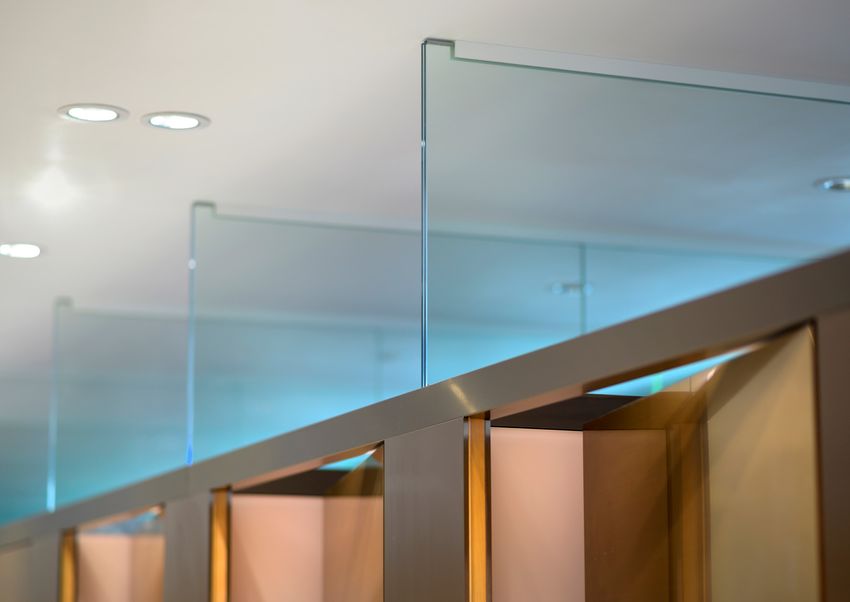
Glass Panels above 2 m
above finished floor level. To increase R.40 -50
125
125
privacy, it is recommended to install FFL FFL
Glass Backlit Light Panel
16. Approved Document M Volume 2, 2015, 0.26 75 min. 225
Definitions Linear Ventilation Grille
17. BS8300-2:2018, 18.1.5 Clothes hooks, towel rails
and shelves Dimensions in millimetres Fig. 13 - Cubicle elevation Fig. 14 - Cubicle sectionSpace Planning Guidance for Facilities Design Guidelines
Managed Stations WC’s
NR/GN/CIV/200/04
3.2 Cubicle Assembly (continued) Issued: October 2020
22/72
Above 2000 mm, glass dividers between
cubicles provide a sense of containment
for users, increasing privacy and dignity.
FCL
Air extracts should be provided on the
rear wall of all cubicles where practical,
with linear ventilation grilles coordinated
with cubicle dimensions.
50
It is advantageous to provide backlit
2025 Glass dividers between cubicles, London Victoria
light panels on the rear wall of cubicles Station. Image: Peter Langdown
as this brings additional illumination to
the internal cubicle space, and
improves visibility from circulation
areas.
Continuous wall panels with service
2000
corridors to provide access from behind
are preferred, (see section 4.2),
however, where this is not possible, an
upper access panel will be required to
provide cistern access (see section 4.1).
Rear wall of cubicle, London Victoria Station.
Image: Peter Langdown
Further guidance on cubicle materials 600
and finishes can be found in section 6.3. Service corridor
(see 4.2)
R.40 -50
125
FFL
Glass Panels above 2 m
Glass Backlit Light Panel Fig. 15 - Section through cubicle
Linear Ventilation Grille Dimensions in millimetresSpace Planning Guidance for Facilities Design Guidelines
Managed Stations WC’s
NR/GN/CIV/200/04
3.3 Female Cubicles Issued: October 2020
23/72
925 1075
Female cubicles should be designed CL
(centre-to-centre)
CL CL
(centre-to-centre)
CL
to accommodate space for sanitary
disposal bins (540mm x 210mm). [18] ≥400 ≥400
It should be noted that floor-standing 850 1000
sanitary disposal bins will not be able (internal width) (internal width)
to be positioned flush to the wall where
coved skirting is present.
WC pans may need to be positioned off-
centre relative to the cubicle in order
to accommodate sanitary disposal bins,
(internal width)
0
0
45
45
(internal width)
which should not be positioned such
Ø
Ø
2025
that access, or use of, other appliances ≤150
2125
is impaired. This may mean that a
wider cubicle is necessary to achieve
adequate clearance between the WC
pan and bin.
In addition to the space required for
sanitary disposal bins, female cubicles
might need to be larger than male
cubicles to accommodate the user’s Activity space [800 x 600]
shopping or baggage.
Circle of clearance [Ø 450]
≥700
Toilet paper dispensers should be Disposal bin space [210 x 540] (clear width)
provided in any reasonable position ≥700
(clear width)
outside the circle of clearance.
Luggage zone [350 x 900]
Fig. 16 - Minimum (recommended) Fig. 17 - Larger (recommended)
18. BS6465-2:2017, Table 1 - Nominal appliance internal dimensions 850 x 2025 internal dimensions 1000 x 2125
spaces Dimensions in millimetresSpace Planning Guidance for Facilities Design Guidelines
Managed Stations WC’s
NR/GN/CIV/200/04
3.4 Ambulant Cubicles Issued: October 2020
24/72
Accessible WC compartments The placement of ambulant cubicles 800 - 1000 >1000
for people with ambulant mobility should be considered as the outward
impairments, often referred to as opening door may affect circulation. 320 400
‘ambulant cubicles’, should make up For this reason, ambulant cubicles are
10% of cubicles (with a minimum of often located at the end of a run of A A
one). Where more than one ambulant cubicles, however, proximity to the WC
cubicle is provided, left and right entrance/exit should consider any
handed doors are to be provided. [19] persons of reduced mobility.
≥600
≥600
≥200
≥200
Ambulant cubicles should be a Where WC cisterns cannot be used
minimum of 800 mm in width, and have as a shelf, a separate shelf surface
a minimum clearance of 750mm should be provided, 950 mm above
between the WC pan and internal door finished floor level, for colostomy bag
≥1500
≥1500
face (activity space). Doors will be changing. [1] The provision of a shelf will
outward opening with a minimum clear need to be considered against security
width of 700 mm. [20] requirements on an individual station
basis.
Ambulant cubicles 800 mm - 1000 mm
in width should be designed in Toilet paper dispensers should be
accordance with Fig. 46 of BS8300- provided in any reasonable position
2:2018. For cubicles >1000 mm the that does not impinge on grab rails.
arrangement of grab rails and WC pan
should be designed in accordance with
Fig. 39 of BS8300-2:2018.
Activity space [800 x 750]
≥700 ≥700
Disposal bin space [210 x 540] (clear width) (clear width)
19. Guidance for the Provision of WC facilities for
Network Rail, 8.16 / 8.18
A Shelf [285 x 185]
20. BS8300-2:2018, 18.5.3.3 WC compartments
or cubicles accessible by people with ambulant Fig. 18 - Ambulant cubicle with width Fig. 19 - Ambulant cubicle with width
mobility impairments Dimensions in millimetres 800 - 1000 mm >1000 mmSpace Planning Guidance for Facilities Design Guidelines
Managed Stations WC’s
NR/GN/CIV/200/04
3.5 Enlarged Cubicles Issued: October 2020
25/72
Enlarged cubicles of minimum width with outward opening doors. Circulation ≥1200 ≥1200
1200 mm should be provided where space leading to enlarged cubicles
four or more WC cubicles are provided containing baby-changing units should
in a separate-sex area. [21] Enlarged be a minimum of 1500 mm deep to allow
cubicles should be provided in addition for people and pushchairs to pass.
to any requirements for cubicles
for people with ambulant mobility Within enlarged cubicles with baby- B
impairments. changing units it is preferable to provide
a washbasin and/or wall mounted
Enlarged cubicles are particularly toddler seat with restraints where space
0
0
beneficial in stations as they are permits. Baby-changing units should be
45
45
Variable
Variable
Ø
Ø
designed to accommodate passengers mounted 750mm above finished floor
who require more space, including, level. Requirements for a nappy disposal A
but not limited to, pregnant women, bin should be considered against station
older people, people with luggage or security risks.
shopping, and people with children.
Enlarged cubicles can also incorporate
a baby-changing unit, although Activity space [800 x 600]
family toilets (see section 3.6) are the
preferred option when providing baby- Circle of clearance [Ø 450]
changing.
Disposal bin space [540 x 210]
Where enlarged cubicles do contain
Luggage zone [350 x 900]
a baby-changing unit, they should ≥700 ≥700
be positioned at the end of a run of (clear width) (clear width)
A Baby-changing unit [440 x 845]
cubicles to allow a pushchair to be
parked outside of the cubicle. It is
B Toddler seat [350 x 305]
preferable for such cubicles to be fitted
Fig. 20 - Enlarged cubicle Fig. 21 - Enlarged cubicle with baby-
21. BS6465-4:2010, 10.3.2 d) - Disabled people Dimensions in millimetres changing unitSpace Planning Guidance for Facilities Design Guidelines
Managed Stations WC’s
NR/GN/CIV/200/04
3.6 Family Toilets Issued: October 2020
26/72
Family Toilets are the preferred option The layout shown can be converted 2800
to provide baby-changing within to a family toilet accessible to people
separate-sex facilities, however, the with ambulant mobility impairments 800 400
space requirement for a family toilet through the addition of grab rails, and
should be considered against capacity an outward opening door without C
requirements. Where space is severely increasing the internal cubicle
constrained, enlarged cubicles with dimensions.
baby-changing units should be used.
Nominal dimensions for baby-changing
Where separate-sex facilities are units can be found in Table 1, Section 5.1 B
provided, baby-changing in male and of BS6465-2:2017. An alternative layout
0
45
female areas should be provided, with for a family toilet with a screened WC is
Ø
greater provision of baby-changing in shown in Figure 27 of BS 6465-2:2017.
2025
female areas.
Family toilets contain a WC, washbasin A
and baby-changing unit, and should Activity space [800 x 600]
be large enough to accommodate a
double buggy. It is preferable to provide Circle of clearance [Ø 450]
both a wall mounted toddler seat with
restraints and an additional, smaller, WC Disposal bin space [540 x 210]
pan for children where space permits.
Double buggy space [1500 x 760]
Cubicles with baby-changing
and sufficient internal space to
A Baby-changing unit [440 x 845]
≥850
accommodate a double buggy should (clear width)
B Toddler seat [350 x 305]
have doors with a minimum clear width
of 850 mm. [22]
C Child WC [Varies]
22. BS6465-4:2010, 10.2.3 - Children and babies Dimensions in millimetres Fig. 22 - Example of Family Toilet layoutSpace Planning Guidance for Facilities Design Guidelines
Managed Stations WC’s
NR/GN/CIV/200/04
3.7 Urinals Issued: October 2020
27/72
Urinals are to be ‘bowl’ type urinals should be provided where facilities are Fig. 23 - Urinal Plans 1060 1200
and should not be waterless. Urinals wheelchair accessible.
800 800 760 900
should be spaced at 700 mm centres
minimum. It is recommended to install Where ambulant and wheelchair
privacy screens between urinals; where accessible urinals are provided the
360
400
privacy screens are used, urinals should urinal rim should project at least
spaced at 800 mm centres minimum. 360 mm from the wall face. [2] These
[23]
Reflective surfaces should not be urinals should have vertical grab rails
used in urinal areas where these could where privacy dividers are not fitted
compromise privacy. in accordance with Fig. 47 of BS8300-
2:2018. It is preferable to provide vertical
The rim height of a standard urinal grab rails in addition to stall privacy
should be 620 mm above finished dividers to provide an equitable level of
floor level, 500 mm for urinals privacy and dignity to all users.
accessible to people with ambulant
mobility impairments and 380 mm for Continuous wall panels with service Child Standard Standard Standard Ambulant Accessible
a wheelchair accessible urinal. [24] corridors to provide access from Urinal Urinal Urinal Urinal Urinal Urinal
behind are preferred, (see section 4.2),
A minimum of one urinal should be however, where this is not possible, an
provided with rim height 380mm for use upper access panel will be required to
by children and people of short stature. provide cistern access (see section 4.1).
A minimum of one urinal accessible
600
to people with ambulant mobility Activity space [800 x 500]
705
900
impairments should be provided, and
825
1200
1400
a minimum of one urinal accessible Ambulant activity space
to wheelchair users (with an enlarged [800 x 500]
620
500
activity space of 900 mm x 1400 mm)
380
380
FFL
Wheelchair activity space
23. BS6465-4:2010, 19.9.1 - Urinals [900 x 1400]
24. BS8300-2:2018, 18.5.4 - Urinals accessible
to wheelchair users and people with ambulant
mobility impairments Dimensions in millimetres Fig. 24 -Urinal ElevationsSpace Planning Guidance for Facilities Design Guidelines
Managed Stations WC’s
NR/GN/CIV/200/04
3.8 Wash Troughs Issued: October 2020
28/72
Wash troughs should be used in stations as they offer a
clear single point of amenity, reducing spills and providing
greater flexibility to the customer. Wash troughs with
integrated taps and soap dispensers should be positioned
at 700 mm centres (minimum). [25] Hand-washing and
drying appliances should be sensor operated in separate-
sex WC’s. [26] Hand dryers should be positioned above wash
troughs at 700mm centres (minimum), recessed within a
vanity unit, and positioned so that water drains into the
troughs, minimising spillage on floor surfaces.
The rim of a standard wash trough should be 850 mm
above finished floor level. Alternative heights for wash
troughs are detailed overleaf. Product dimensions shown
here are indicative only and are provided to assist with ≥700
300
space planning. 700
(activity space)
Consideration should be given to the use of foam soap,
which dispenses a reduced amount of product compared to
liquid soap. This requires power and a pump within the tap
or trough assembly. 565
850
850
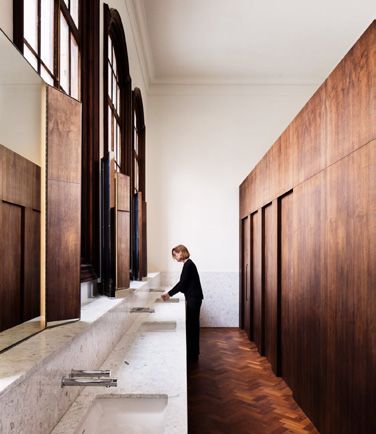
Wash troughs, London Victoria
Where space permits, a separate vanity area with shelves Station. Image: Peter Langdown
and mirrors should be provided in female WC’s so that
access to the wash troughs is not restricted by people Hand dryer
doing their hair and make-up. Such an area may encourage FFL
inappropriate drug use, and should therefore be located in a Tap
highly visible area covered by CCTV.
Soap Dispenser
25. BS 6465-2:2017, Figure 8 - Range of washbasins
26. BS6465-4:2010, 19.10.1.6 Hand washing Dimensions in millimetres Fig. 25 - Wash Trough Elevation Fig. 26 - Wash Trough SectionSpace Planning Guidance for Facilities Design Guidelines
Managed Stations WC’s
NR/GN/CIV/200/04
3.8 Wash Troughs (continued) Issued: October 2020
29/72
To make that wash troughs are available Vanity units and, as a result, hand
and accessible to all users, they may dryers should be lowered accordingly
need to be provided at multiple heights. to make sure they are a consistent
The following dimensions refer to the height above the wash trough rim. The
rim height above finished floor level: interface between wash troughs and 300
vanity units of different heights should
• 680 mm - 700 mm for wheelchair be considered by designers; additional
users, where a wheelchair space may be required for a ‘transition 1100
Consistent Height
(activity space)
accessible urinal is provided [27] zone’ or additional framing.
780-800
720-750
680-700
• 720 mm - 750 mm for use by Where practical, wash troughs of
700
children and people of short different heights should be in separate 565
stature [28] runs or separated by a wall. FFL
• 780 mm - 800 mm for people with Wash troughs for wheelchair users Fig. 27 - Accessible Fig. 28 - Non-standard wash trough elevations
ambulant mobility impairments [29] and for people with ambulant Wash Trough Section
mobility impairments should have an Ambulant Child Accessible Wash
Where it is not practical to provide wash unobstructed activity space 800 mm Wash Trough Wash Trough Trough
troughs at more than two heights, the wide x 1100 mm deep. [29]
lowest height required in that instance
should be provided in addition to The activity spaces shown are specific
standard wash troughs with rim 850 to the wash-troughs they are shown
mm above finished floor level. with. Standard activity spaces are Activity space
described on the following page.
700
Hand dryer
1100
1100
Further guidance on the materials and
27. BS8300-2:2018, 18.5.4 Urinals accessible
finishes of wash troughs and associated Tap
to wheelchair users and people with ambulant 700
mobility impairments fittings in section 6.4.
28. BS6465-4:2010, 19.10.1.3 Hand washing Soap Dispenser 800 800
29. BS8300-2:2018, 18.5.5.2 Washbasins
accessible to people with ambulant mobility
impairments Dimensions in millimetres Fig. 29 - Non-standard wash trough plansSpace Planning Guidance for Facilities Design Guidelines
Managed Stations WC’s
NR/GN/CIV/200/04
3.9 Activity Spaces Issued: October 2020
30/72
An activity space of 700 mm should
be provided in front of each wash
trough, 600 mm in front of each
cubicle and 500 mm in front of each Nominal
400
urinal. These should not impinge on the depth
general circulation space, and the
500
activity spaces should not overlap. [30]
600
700
These activity spaces are for standard
appliances only. Appliances for
Urinal activity space Cubicle activity space Wash trough activity
wheelchair users or people with space
ambulant mobility impairments may
have varying requirements. Fig. 30 - Standard activity spaces
Note: Urinals are shown with a nominal
depth of 400 mm in accordance with
Table 1 of BS6465-2:2017, certain
products will be shallower than this.
Layouts should be designed so that
toilets, washbasins, and hand drying
facilities are provided in a logical
sequence. The relative position of
appliances should also consider the
placement of circulation space and the
entrance(s) and exit(s).
Activity space
30. BS6465-4:2010, 19.3.4 - Circulation space Dimensions in millimetresYou can also read


