Coxiella burnetii and Leishmania mexicana residing within similar parasitophorous vacuoles elicit disparate host responses
←
→
Page content transcription
If your browser does not render page correctly, please read the page content below
ORIGINAL RESEARCH
                                                                                                                                              published: 07 August 2015
                                                                                                                                         doi: 10.3389/fmicb.2015.00794

                                             Coxiella burnetii and Leishmania
                                             mexicana residing within similar
                                             parasitophorous vacuoles elicit
                                             disparate host responses
                                             Jess A. Millar 1 , Raquel Valdés 2 , Fenil R. Kacharia1 , Scott M. Landfear2 ,
                                             Eric D. Cambronne2 and Rahul Raghavan1*
                                             1
                                                 Department of Biology and Center for Life in Extreme Environments, Portland State University, Portland, OR, USA,
                                             2
                                                 Department of Molecular Microbiology and Immunology, Oregon Health and Science University, Portland, OR, USA

                                             Coxiella burnetii is a bacterium that thrives in an acidic parasitophorous vacuole (PV)
                                             derived from lysosomes. Leishmania mexicana, a eukaryote, has also independently
                                             evolved to live in a morphologically similar PV. As Coxiella and Leishmania are highly
                           Edited by:        divergent organisms that cause different diseases, we reasoned that their respective
                  Gregoire S. Lauvau,        infections would likely elicit distinct host responses despite producing phenotypically
  Albert Einstein College of Medicine,
                                 USA         similar parasite-containing vacuoles. The objective of this study was to investigate, at
                        Reviewed by:         the molecular level, the macrophage response to each pathogen. Infection of THP-1
                          Lynn Soong,        (human monocyte/macrophage) cells with Coxiella and Leishmania elicited disparate
      The University of Texas Medical
                                             host responses. At 5 days post-infection, when compared to uninfected cells, 1057
            Branch at Galveston, USA
                 Emilio Luis Malchiodi,      genes were differentially expressed (746 genes up-regulated and 311 genes down-
 University of Buenos Aires, Argentina       regulated) in C. burnetii infected cells, whereas 698 genes (534 genes up-regulated
                   *Correspondence:          and 164 genes down-regulated) were differentially expressed in L. mexicana infected
                      Rahul Raghavan,
   Department of Biology and Center          cells. Interestingly, of the 1755 differentially expressed genes identified in this study,
    for Life in Extreme Environments,        only 126 genes (∼7%) are common to both infections. We also discovered that 1090
   Portland State University, Portland,
                                             genes produced mRNA isoforms at significantly different levels under the two infection
                       OR 97201, USA
              rahul.raghavan@pdx.edu         conditions, suggesting that alternate proteins encoded by the same gene might have
                                             important roles in host response to each infection. Additionally, we detected 257 micro
                   Specialty section:
         This article was submitted to
                                             RNAs (miRNAs) that were expressed in THP-1 cells, and identified miRNAs that were
               Microbial Immunology,         specifically expressed during Coxiella or Leishmania infections. Collectively, this study
               a section of the journal      identified host mRNAs and miRNAs that were influenced by Coxiella and/or Leishmania
             Frontiers in Microbiology
                                             infections, and our data indicate that although their PVs are morphologically similar,
            Received: 19 May 2015
            Accepted: 21 July 2015           Coxiella and Leishmania have evolved different strategies that perturb distinct host
          Published: 07 August 2015          processes to create and thrive within their respective intracellular niches.
                               Citation:
                                             Keywords: Coxiella burnetii, Leishmania mexicana, parasitophorous vacuole, isoform, miRNA
      Millar JA, Valdés R, Kacharia FR,
         Landfear SM, Cambronne ED
       and Raghavan R (2015) Coxiella
     burnetii and Leishmania mexicana
                                             Introduction
residing within similar parasitophorous
          vacuoles elicit disparate host
                                             Macrophages that phagocytize pathogens and recruit other immune cells are critical for the
                             responses.      elimination of potential infections. Within macrophages, engulfed pathogens are transported
                Front. Microbiol. 6:794.     inside phagosomes that later fuse with lysosomes to generate the phagolysosome. Most pathogens
       doi: 10.3389/fmicb.2015.00794         are degraded within the phagolysosome, which has a very harsh environment (low pH,

Frontiers in Microbiology | www.frontiersin.org                                       1                                              August 2015 | Volume 6 | Article 794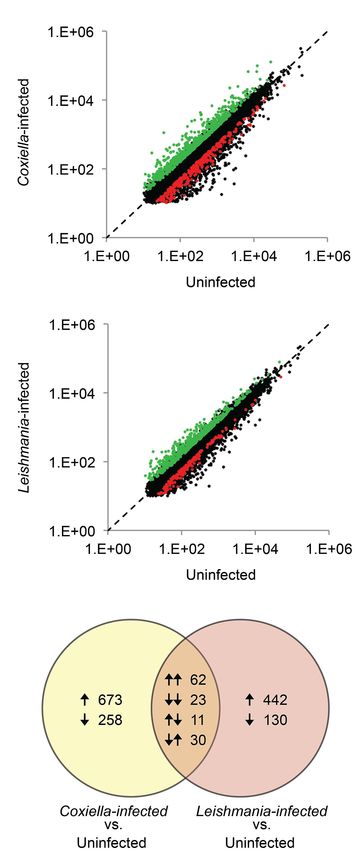
Millar et al.                                                                                       Coxiella and Leishmania elicit disparate reactions

high concentration of lysosomal hydrolases, presence of cationic          to understand how the two distantly related pathogens generate
peptides etc.; Kinchen and Ravichandran, 2008; Flannagan                  phenotypically similar PVs, we compared host gene expression in
et al., 2009). Several pathogens have evolved strategies to               human macrophage cells (THP-1) infected with either C. burnetii
survive and replicate within macrophages: Toxoplasma gondii               or L. mexicana. Our data show that the bacterium and the
prevents the fusion of its vacuoles with the endosomal pathway;           eukaryote elicit distinct host messenger RNA (mRNA) and
Salmonella enterica Typhimurium, Mycobacterium tuberculosis,              microRNA (miRNA) responses, indicating that despite their
and Legionella pneumophila block maturation of phagosomes                 superficial similarity, generation, and maintenance of the Coxiella
into phagolysosomes; Shigella flexneri and Listeria monocytogenes          PV and Leishmania PV involve distinct host processes.
escape into cytoplasm from phagosomes before lysosomal fusion;
Trypanosoma cruzi escapes from phagosomes after fusion with
lysosomes (Swanson and Fernandez-Moreia, 2002; Flannagan                  Materials and Methods
et al., 2009).
    Unlike most other pathogens, Coxiella (a bacterium) and               C. burnetii and L. mexicana Infection of THP-1
Leishmania (an eukaryote) have independently evolved the ability          cells, RNA Extraction, and RNA-seq
to thrive in a parasitophorous vacuole (PV) that is derived from          THP-1 cells (TIB-202; ATCC) were maintained in RPMI 1640
the fusion of phagosomes with lysosomes (Voth and Heinzen,                medium (Gibco) supplemented with 10% fetal calf serum
2007; Alix et al., 2011). Coxiella burnetii (the only defined              (Gibco) at 37◦ C in 5% CO2 . Cells were incubated in the
species within this genus) causes human Q fever and chronic               presence of 200 nM phorbol 12-myristate 13-acetate (PMA;
endocarditis. The bacterium is shed in milk, urine, and birth             EMD Biosciences) for 24 h to induce differentiation into
products of animals, and can survive in the environment via a             adherent, macrophage-like cells. Prior to infection, PMA-
“spore-like” form called the small cell variant (SCV). C. burnetii        containing medium was replaced with fresh RPMI without PMA.
is usually acquired via inhalation, and initially infects alveolar        Cells were infected with either C. burnetii (Nine Mile phase II,
macrophages but then spreads to mononuclear phagocytes of                 RSA 493) or promastigotes of L. mexicana (MNYZ/BZ/62/M379)
other tissues. Within the macrophage, SCV transforms into a               at an approximate multiplicity of infection of 25 and incubated
metabolically active form called the large cell variant (LCV), and        for 5 days. Growth medium was replaced every two days
multiple Coxiella-containing vacuoles merge to form a single              and formation of Coxiella and Leishmania PVs was monitored
large vacuole that fuses with endolysosomal vesicles to give rise         microscopically. At 5 days post-infection, growth medium was
to the mature Coxiella PV (van Schaik et al., 2013).                      replaced with 1 ml of TRI reagent (Life Technologies) and total
    Leishmania is a genus of trypanosomatid parasite that                 RNA was extracted, and genomic DNA was removed by DNase
comprises several species of medical and veterinary importance            (Life Technologies) treatment, as per instructions. RNA from two
that cause cutaneous, mucocutenous, or visceral diseases. It has          samples each of uninfected, Coxiella-infected, and Leishmania-
a dimorphic lifecycle that alternates between an extracellular            infected THP-1 cells were used to prepare mRNA and small RNA
promastigote form in insect vectors and an intracellular                  Illumina sequencing libraries. To analyze gene expression, the six
amastigote from in mammalian hosts (Herwaldt, 1999). The                  mRNA libraries were pooled into a single lane of an Illumina
primary host cells of Leishmania are macrophages, but it can              HiSeq 2000 (2 × 75 cycles). For miRNA identification, the six
also infect neutrophils, fibroblasts, and dendritic cells (Contreras       small RNA libraries were pooled into a single Illumina Miseq
et al., 2014). Similar to the biogenesis of Coxiella PV, the              lane (1 × 50 cycles). All RNA-seq reads are available at National
Leishmania-containing vacuole also fuses with endolysosomal               Center for Biotechnology Information Sequence Read Archive
vesicles to give rise to the mature Leishmania PV. However, the           (Accession SRP045986).
morphology of PV varies among different Leishmania species.
In several species, including L. donovani, L. infantum, and               Mapping Sequencing Reads and Identification
L. major, only one or two amastigotes reside within each PV,              of Differentially Expressed Genes
which segregates into new vacuoles after parasite replication. In         Reads were cleaned by removing adapters and were filtered
contrast, as observed for Coxiella PVs, parasites of the Leishmania       by quality (>Q20) and length (>50 bp) using Trimmomatic
mexicana complex such as L. mexicana and L. amazonensis form              v0.30 (Bolger et al., 2014). Homo sapiens reads were filtered
communal PVs that continuously enlarge as the parasites                   for possible contamination by mapping to C. burnetii genome
replicate (Real et al., 2010). Interestingly, coinfection studies         (NC_002971.3) using BWA MEM v0.7.5 (Li and Durbin, 2010)
have shown that PVs formed by L. amazonensis amastigotes                  and L. mexicana genome (NZ_CADB00000000.1) using Tophat
can fuse with C. burnetii PVs but not with PVs containing                 v2.0.11 (Kim et al., 2013). Final clean reads were mapped to
L. major amastigotes, suggesting that the intracellular niches            H. sapiens Genome Reference Consortium Human Build 37
generated by L. mexicana complex parasites and Coxiella may be            (GCF_000001405.13) using CLC Genomic Workbench v6.5. To
compositionally rather similar (Veras et al., 1995; Rabinovitch           identify differential gene expression, replicate data were pooled
and Veras, 1996; Real et al., 2010; Beare et al., 2011; Newton and        for pairwise comparisons and quantile normalized using CLC
Roy, 2011).                                                               Genomic Workbench v6.5. Genes were filtered based on at least
    Both Coxiella and Leishmania actively participate in the              10 raw reads mapping to each sample, and a log2 transformed
creation of their respective PVs, which are intracellular                 fold change of one SD above or below the mean. Differentially
compartments distinct from canonical phagolysosomes. To begin             expressed genes were chosen based on significance (P < 0.05,

Frontiers in Microbiology | www.frontiersin.org                       2                                         August 2015 | Volume 6 | Article 794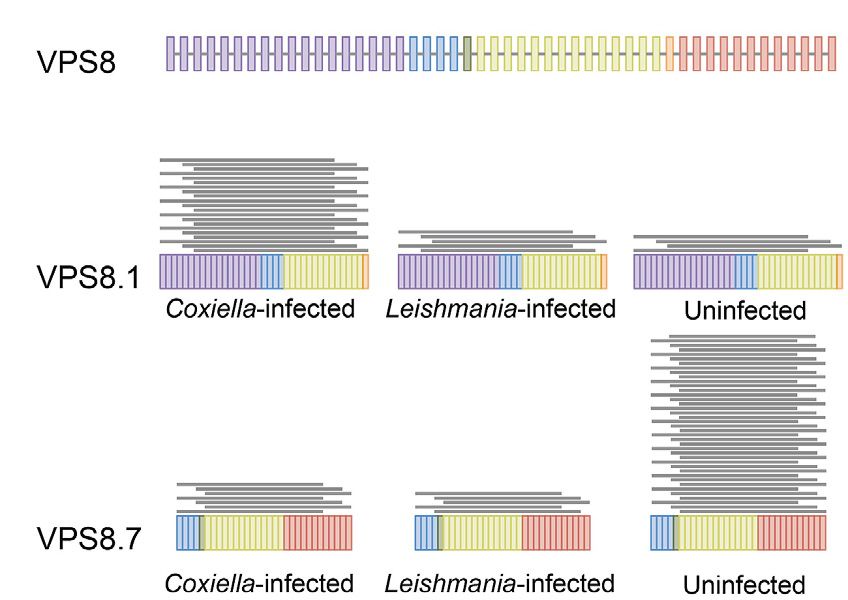
Millar et al.                                                                                          Coxiella and Leishmania elicit disparate reactions

FDR-corrected beta-binomial distribution test). Raw read counts
mapped to each mRNA isoform were exported from CLC into
EBSeq (Leng et al., 2013) and differential expression of isoforms
was determined based on significant EBSeq values (P < 0.05,
FDR-corrected).
   For quantitative PCR (qPCR) validation of gene expression,
1 μg of DNase-treated RNA, and oligo-dT primers were used to
prepare cDNA (Thermo Scientific). A subset of genes involved
in host cell death (TGFB2, RIPK2, CYR61, CYP1B1, NFKBIA)
was selected and qPCR was performed using SYBR green on an
Agilent Mx3000P System. Fold difference value for each gene
was calculated using the 2−CT method with GAPDH as the
control. As shown previously (Raghavan et al., 2012), to assess
the correlation between expression estimates from RNA-seq and
qPCR, we calculated the Pearson correlation coefficient between
fold difference values calculated by each method for Coxiella –
and Leishmania-infected cells.

Gene Ontology (GO) Analysis and
Protein-Protein Interaction Networks
GO terms were found using Database for Annotation,
Visualization and Integrated Discovery (DAVID), and the
GO FAT filter. GO-term enrichment tests were also performed
with DAVID (Huang et al., 2009a,b). Kyoto Encyclopedia of
Genes and Genomes (KEGG) pathways over-represented among
differentially expressed genes were chosen based on the level of
statistical significance (P < 0.01). Protein–protein interaction
networks were visualized using STRING 9.1 (Franceschini et al.,
2013). Proteins unconnected to the main graph were removed.
Markov Clustering was performed on STRING confidence
scores using an inflation factor of two to visualize subgraphs
of interacting protein processes (Brohée and van Helden,
2006). GO-terms were overlaid onto the graphs using STRING
to identify what processes were represented in the separate
subgraphs.

Identification of miRNAs
Sequencing reads were cleaned by removing adapters and filtered
by quality (>Q20) and length (>15 bp) using Trimmomatic
(Bolger et al., 2014). Replicate data was pooled and miRNAs were
identified using CLC based on having an average of at least 10
reads mapped to mature 5 or 3 miRNAs annotated in mirBase
(Kozomara and Griffiths-Jones, 2014).

                                                                        FIGURE 1 | Identification of differentially expressed genes. Gene
Results and Discussion                                                  expression in (A) Coxiella burnetii-infected and (B) Leishmania
                                                                        mexicana-infected THP-1 cells in comparison to uninfected THP-1 cells are
                                                                        shown. Differentially expressed genes are highlighted in red and green.
C. burnetii and L. mexicana Infections Induce                           (C) Comparison of genes differentially expressed in C. burnetii-infected and
Robust but Non-Overlapping Host Responses                               L. mexicana-infected cells. Arrows indicate up-regulation or down-regulation
Human monocyte/macrophage cell line THP-1 was used to                   of genes.
evaluate host responses against C. burnetii and L. mexicana.
Previous studies have investigated host responses during early
stages (6–72 hpi) of infections by C. burnetii and by various          amastigote, respectively) occur at differing rates in the two
Leishmania species (Ren et al., 2003; Mahapatra et al., 2010;          pathogens, we analyzed a later point during infection (5 days
De Muylder et al., 2011; Rabhi et al., 2012, 2013); however,           pi) when both pathogens have generated large PVs that fill
because the transformation from the infective form (SCV and            most of the host cell volume. When compared to uninfected
promastigote, respectively) to the replicative form (LCV and           THP-1 cells, 1057 genes (746 up-regulated and 311 down-

Frontiers in Microbiology | www.frontiersin.org                    3                                               August 2015 | Volume 6 | Article 794
Millar et al. Coxiella and Leishmania elicit disparate reactions
TABLE 1 | KEGG pathways enriched in Coxiella-infected and Leishmania-infected THP-1 cells.
Sample KEGG Description Genes Fold P-value
term enrichment
Coxiella-infected hsa04210 Apoptosis BID, IRAK2, TNF, XIAP, RELA, TP53, NFKBIA, ENDOD1, NFKB1, 3.51 2.1E-06
BIRC3, TNFRSF10A, CASP10, PRKAR2B, IRAK3, TNFRSF10B,
PPP3CC, IL1B, PIK3R5, PIK3R3, IL1A
hsa04621 NOD-like receptor signaling CXCL1, TNF, XIAP, IL8, RELA, CXCL2, NFKBIA, NFKB1, BIRC3, 3.20 5.4E-04
pathway NOD2, RIPK2, IL1B, TNFAIP3
hsa04060 Cytokine–cytokine receptor CXCL1, TNFRSF21, CCL3, TNF, CXCL5, CXCL3, CXCL2, 1.81 1.6E-03
interaction TNFSF15, CXCL6, IL7R, CCL4, TGFB2, LIF, CCL22, IL23A, CCL20,
CCL3L1, IL4R, TNFRSF18, IL15RA, IL1B, IL1A, BMP2, IL8, CD40,
IL11RA, TNFRSF10A, INHBA, ACVR2B, TNFRSF10B, VEGFA
hsa04062 Chemokine signaling CXCL1, ADCY4, CCL3, LYN, CXCL5, IL8, HCK, CXCL3, RELA, 1.96 2.2E-03
pathway CXCL2, NFKBIA, ADRBK2, NFKB1, CXCL6, CCL4, CCL22,
CCL20, CCL3L1, GNG10, SOS2, PIK3R5, GNB4, PIK3R3, GNG7
hsa05222 Small cell lung cancer E2F1, TRAF1, XIAP, PTGS2, RELA, TP53, ITGA2, NFKBIA, NFKB1, 2.55 2.8E-03
BIRC3, LAMB3, PIK3R5, PIK3R3, TRAF3
hsa05200 Pathways in cancer TRAF1, E2F1, BID, PTGS2, XIAP, STAT5A, MITF, NFKBIA, NFKB1, 1.63 4.2E-03
NFKB2, TCF7L2, MMP1, TGFB2, LAMB3, SOS2, PIK3R5, CCNA1,
PIK3R3, FGF2, TRAF3, BMP2, IL8, VHL, RELA, TP53, ITGA2,
BIRC5, BIRC3, FZD4, DAPK3, CTNNA3, RAD51, SMO, ETS1,
VEGFA
hsa04620 Toll-like receptor signaling CCL3, TNF, IL8, RELA, NFKBIA, NFKB1, CD40, CCL4, CD86, 2.27 5.5E-03
pathway MAP3K8, IL1B, PIK3R5, PIK3R3, CD14, TRAF3
Leishmania-infected hsa00230 Purine metabolism ADCY4, ADSSL1, ADCY8, POLA1, PDE4C, PDE6G, POLE4, 2.40 5.1E-03
PDE2A, ADCY9, RRM2, PKLR, GUCY1A2, ADCY10, PRPS1
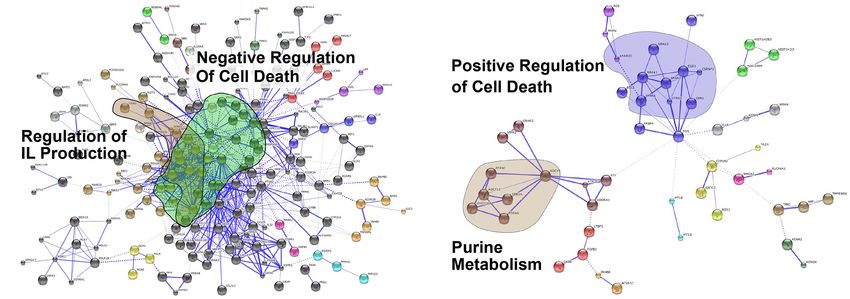
FIGURE 2 | Protein-protein interaction analysis. Protein-protein interaction networks of up-regulated genes in (A) C. burnetii-infected and (B) L. mexicana-
infected THP1 cells visualized in STRING. Colors based on Markov Clustering with an inflation factor of 2. Highlighted clusters are labeled with their GO or KEGG
categories.
regulated) were differentially expressed in C. burnetii infected trachomatis (an intracellular bacterium), reported an overlap of
THP-1 cells, whereas 698 genes (534 up-regulated and 164 ∼25% of genes between the two infections (Ren et al., 2003).
down-regulated) were differentially expressed in L. mexicana The low overlap between the host responses to Coxiella and
infected cells (Figure 1, Supplementary Tables S1 and S2). Leishmania, and the higher magnitude of host response to
Interestingly, the sets of genes affected by the two pathogens C. burnetii than that to L. mexicana possibly reflects the more
are very different. Of the 1755 total genes identified in distant evolutionary relationship between the bacteria and the
this study, only 126 genes (∼7%) are differentially expressed eukaryotic parasite compared to the two bacterial pathogens
under both conditions, and no metabolic pathways were previously studied. Apoptosis and host cell immune response
significantly enriched within this common set of genes (Figure 1, pathways were the most significantly enriched KEGG pathways
Supplementary Table S3). A previous study that compared in Coxiella infected cells (Table 1), as observed in previous
THP-1 cell response to infections by Coxiella and Chlamydia microarray-based studies (Ren et al., 2003; Mahapatra et al.,
Frontiers in Microbiology | www.frontiersin.org 4 August 2015 | Volume 6 | Article 794Millar et al. Coxiella and Leishmania elicit disparate reactions
ADCY10) catalyze the formation of cAMP from ATP; guanylate
cyclase (GUCY1A2) catalyzes the conversion of GTP to cGMP;
phosphodiesterases (PDE4C, PDE6G, PDE2A) catalyze the
hydrolysis of cAMP and/or cGMP. Previous studies have
shown that Leishmania resists host antimicrobial activities by
modulating several host signaling pathways, including Ca2+ -
and PKC-dependent pathways, JAK-STAT pathways, and MAP
kinases (Olivier et al., 2005). Similarly, Leishmania could be
subverting the host’s cAMP and cGMP signaling pathways
in order to suppress immune responses and to promote its
intracellular growth.
A protein–protein interaction network analysis using the
STRING database (Franceschini et al., 2013) confirmed that
Coxiella infection induced the expression of genes involved in
FIGURE 3 | Differential expression of mRNA isoforms. Differential isoform negative regulation of cell death (Figure 2A). In contrast, this
expression of VPS8 in C. burnetii infected, L. mexicana infected, and analysis identified that genes involved in positive regulation
uninfected THP1 cells are shown as a representation of isoform analysis. of cell death were upregulated in Leishmania-infected cells
(A) The full-length VPS8 gene is depicted with colored bars representing
(Figure 2B). We confirmed this trend by analyzing the expression
exons. Isoforms 1 (B) and 7 (C) of VPS8 that have significantly different
expression in the three samples are shown. Each gray line above an isoform
of a subset of cell death-related genes using qPCR (Additional
represents 10 mapped reads. File Supplementary Figure S1). The induction of host cell death
during later stages of infection probably aids in the cell-to-cell
transfer of Leishmania amastigotes within membrane blebs, as
2010). Repression of host cell death by Coxiella has been shown recently (Real et al., 2014).
reported previously (Lührmann and Roy, 2007; Voth et al.,
2007), and is thought to promote intracellular growth of Coxiella Differential Expression of mRNA Isoforms in
within large PVs; conversely, induction of Toll-like Receptor Infected and Uninfected Cells
signaling pathways and production of cytokines and chemokines In human cells, alternate splicing of pre-mRNA can give rise
participate in the host response to Coxiella infection. to several isoforms of the mature mRNA, and proteins derived
In Leishmania-infected cells, purine metabolism was the from them may have distinct cellular roles (Lareau et al.,
only KEGG pathway that was significantly perturbed (Table 1). 2004). In addition to expanding the proteome, cells utilize
Leishmania is dependent on host for its purine supply alternate splicing as a regulatory tool. For example, a short
(McConville et al., 2007), and three genes (ADSSL1, RRM2, splice variant of human tryptophan-tRNA synthase, but not
PRPS1) involved in purine biosynthesis or salvage pathways were the full length protein, regulates angiogenesis (Wakasugi et al.,
significantly overexpressed in infected THP-1 cells. Intriguingly, 2002). Isoform generation may also have a role in host cell
a majority of “purine metabolism” genes listed in Table 1 response against infections. Different isoforms of p53 (encoded
regulate the levels of intracellular second messengers cAMP by TP53 gene) are involved in host defense against both bacterial
and cGMP. Adenylate cyclases (ADCY4, ADCY8, ADCY9, (Helicobacter pylori) and viral (Influenza and Simian virus 40)
TABLE 2 | MicroRNAs (miRNAs) perturbed by Coxiella and Leishmania infections.
Sample miRNA Fold change (log2) P-value Regulation Process
Coxiella-infected mir-148a-3p −0.58 0.024 Down Pro-apoptotica
mir-181d-5p 0.78Millar et al. Coxiella and Leishmania elicit disparate reactions
infections (Terrier et al., 2013). Similarly, Hepatitis C virus and miR-29b are known to be pro-apoptotic in leukemia cells
activates the immunologic isoform of nitric oxide synthase (NOS) (Cimmino et al., 2005; Garzon et al., 2009); miR-148a promotes
gene, which induces NO production (Machida et al., 2004). apoptosis by targeting BCL2 in colorectal cancer cells (Zhang
Transcriptome analysis (RNA-seq) is a powerful approach et al., 2011); miR-181d also targets BCL-2 and promotes apoptosis
to identify differential isoform expression under different in glioma cells (Wang et al., 2012). These results complement
conditions at a genome-wide scale (Eswaran et al., 2013; Lo gene expression data (Figure 2), and indicate that miRNAs may
et al., 2014). We used RNA-seq to investigate whether infection have important roles in inhibiting host cell death during Coxiella
by either Coxiella or Leishmania induced differential expression infection, and promoting host cell death during Leishmania
of human gene isoforms. We identified 689 isoforms from 626 infection.
genes that were differentially expressed in C. burnetii-infected
cells, and 651 isoforms from 569 genes in Leishmania-infected
cells, when compared to uninfected THP-1 cells (Figure 3, Conclusion
Supplementary Tables S4 and S5). As observed for full-length
mRNAs, there was minimal overlap between the sets of genes The genome-wide gene, mRNA-isoform, and miRNA expression
with differential expression of isoforms under each infection patterns were distinct between macrophages infected with either
condition (only 105 common genes). Additionally, no KEGG C. burnetii or L. mexicana, indicating that even though both
pathways were significantly enriched in either gene set, indicating pathogens have converged on a similar intracellular niche,
that differential isoform expression is a cell-wide phenomenon. they utilize distinct programs to generate and maintain their
Cumulatively, our data revealed that in addition to differences respective PVs.
that are apparent at the gene level, the mostly unexplored
realm of isoform variation could contribute to host responses to
infections.
Author Contributions
RR, EC, and SL designed the study. RV, FK, and EC carried out
Coxiella and Leishmania Infections Perturb the
the experiments. JM and RR analyzed the data and drafted the
Expression of Apoptosis-Related miRNAs manuscript. All authors read and approved the final manuscript.
Expression of various protein-coding genes in humans is
regulated by miRNAs. These small non-coding RNAs regulate
the expression of target genes by base-pairing with mRNAs, Acknowledgments
thereby either blocking translation or causing target degradation
or destabilization (Fabian et al., 2010). They are involved in many, We thank Christine Sislak and Abraham Moses for technical
if not all, biological processes, including metabolic pathways, assistance. This work was supported in part by grants from
cell proliferation, and apoptosis. Recently, miRNAs have been American Heart Association and Medical Research Foundation
shown to be an important part of host cell response to viral, (to RR), National Institutes of Health Grant AI44138 (to SL) and
bacterial, and parasitic infections (Lagos et al., 2010; Schnitger National Institutes of Health Grant AI088275 (to EC).
et al., 2011; Schulte et al., 2011). In addition, some viruses,
including Herpes viruses and Hepatitis C virus, have the ability to
interfere with the host miRNA network to promote viral growth Supplementary Material
(Jopling et al., 2005; Cullen, 2011). Recent studies also showed
that eukaryotic intracellular pathogens such as Cryptosporidium The Supplementary Material for this article can be found
parvum and T. gondii promote intracellular replication by online at: http://journal.frontiersin.org/article/10.3389/fmicb.
altering host cell miRNA networks (Hakimi and Ménard, 2010; 2015.00794
Zeiner et al., 2010). To identify miRNAs that are potentially FIGURE S1 | Validation by qPCR of expression levels estimated by
perturbed by C. burnetii or L. mexicana infections, we sequenced RNA-seq. Fold difference values calculated by qPCR correlated well with fold
and enumerated miRNAs expressed by uninfected, Coxiella- difference values calculated by RNA-seq.
infected, and Leishmania-infected THP-1 cells. We identified 257 TABLE S1 | Differentially expressed genes in Coxiella-infected vs.
miRNAs that were expressed in THP-1 cells (Supplementary uninfected THP-1 cells.
Table S6), which includes 50 of the 64 miRNAs reported by
TABLE S2 | Differentially expressed genes in Leishmania-infected vs.
a recent study that examined miRNAs expressed in human uninfected THP-1 cells.
macrophages in response to Leishmania major infection (Lemaire
TABLE S3 | Differentially expressed genes that overlap between
et al., 2013). Among the 257 miRNAs, seven were upregulated
Coxiella-infected vs. uninfected and Leishmania-infected vs. uninfected
and one was down regulated in Coxiella-infected cells, and three THP-1 cells.
were upregulated and two were down regulated in Leishmania-
infected cells (Table 2). Intriguingly, several of the differentially TABLE S4 | Differentially expressed mRNA isoforms in Coxiella-infected
vs. uninfected THP-1 cells.
expressed miRNAs have been shown in previous studies to
regulate host cell death: miR-145 modulates the expression of TABLE S5 | Differentially expressed mRNA isoforms in Leishmania-
infected vs. uninfected THP-1 cells.
KLF4 (Davis-Dusenbery et al., 2011), a transcription factor for
TP53, which regulates apoptosis (Rowland et al., 2005); miR-15b TABLE S6 | All miRNAs detected in this study.
Frontiers in Microbiology | www.frontiersin.org 6 August 2015 | Volume 6 | Article 794Millar et al. Coxiella and Leishmania elicit disparate reactions
References Kinchen, J. M., and Ravichandran, K. S. (2008). Phagosome maturation: going
through the acid test. Nat. Rev. Mol. Cell Biol. 9, 781–795. doi: 10.1038/
Alix, E., Mukherjee, S., and Roy, C. R. (2011). Subversion of membrane nrm2515
transport pathways by vacuolar pathogens. J. Cell Biol. 195, 943–952. doi: Kozomara, A., and Griffiths-Jones, S. (2014). miRBase: annotating high confidence
10.1083/jcb.201105019 microRNAs using deep sequencing data. Nucl. Acids Res. 42, D68–D73. doi:
Almeida, M., Nicoloso, M., Zeng, L., and Ivan, C. (2012). Strand-specific miR-28-5p 10.1093/nar/gkt1181
and miR-28-3p have distinct effects in colorectal cancer cells. Gastroenterology Lagos, D., Pollara, G., Henderson, S., Gratrix, F., Fabani, M., Milne, R. S. B.,
142, 886–896. doi: 10.1053/j.gastro.2011.12.047 et al. (2010). miR-132 regulates antiviral innate immunity through suppression
Beare, P. A., Gilk, S. D., Larson, C. L., Hill, J., Stead, C. M., Omsland, A., et al. of the p300 transcriptional co-activator. Nat. Cell Biol. 12, 513–519. doi:
(2011). Dot/Icm type IVB secretion system requirements for Coxiella burnetii 10.1038/ncb2054
growth in human macrophages. MBio 2, 1–10. doi: 10.1128/mBio.00175-11 Lareau, L. F., Green, R. E., Bhatnagar, R. S., and Brenner, S. E. (2004). The
Bolger, A. M., Lohse, M., and Usadel, B. (2014). Trimmomatic: a flexible evolving roles of alternative splicing. Curr. Opin. Struct. Biol. 14, 273–282. doi:
trimmer for Illumina sequence data. Bioinformatics 30, 2114–2120. doi: 10.1016/j.sbi.2004.05.002
10.1093/bioinformatics/btu170 Lemaire, J., Mkannez, G., Guerfali, F. Z., Gustin, C., Attia, H., Sghaier, R. M.,
Brohée, S., and van Helden, J. (2006). Evaluation of clustering algorithms et al. (2013). MicroRNA expression profile in human macrophages in
for protein-protein interaction networks. BMC Bioinform. 7:488. doi: response to Leishmania major infection. PLoS Negl. Trop. Dis. 7:e2478. doi:
10.1186/1471-2105-7-488 10.1371/journal.pntd.0002478
Cimmino, A., Calin, G. A., Fabbri, M., Iorio, M. V., Ferracin, M., Shimizu, M., Leng, N., Dawson, J. A., Thomson, J. A., Ruotti, V., Rissman, A. I., Smits,
et al. (2005). miR-15 and miR-16 induce apoptosis by targeting BCL2. Proc. Natl. B. M. G., et al. (2013). EBSeq: an empirical bayes hierarchical model
Acad. Sci. U.S.A. 102, 13944–13949. doi: 10.1073/pnas.0506654102 for inference in RNA-seq experiments. Bioinformatics 29, 1035–1043. doi:
Contreras, I., Estrada, J. A., Guak, H., Martel, C., Borjian, A., Ralph, B., et al. 10.1093/bioinformatics/btt087
(2014). Impact of Leishmania mexicana infection on dendritic cell signaling and le Sage, C., Nagel, R., Egan, D. A., Schrier, M., Mesman, E., Mangiola, A.,
functions. PLoS Negl. Trop. Dis. 8:e3202. doi: 10.1371/journal.pntd.0003202 et al. (2007). Regulation of the p27 (Kip1) tumor suppressor by miR-221
Cullen, B. R. (2011). Viruses and microRNAs: RISCy interactions with serious and miR-222 promotes cancer cell proliferation. EMBO J. 26, 3699–3708. doi:
consequences. Genes Dev. 25, 1881–1894. doi: 10.1101/gad.17352611 10.1038/sj.emboj.7601790
Davis-Dusenbery, B. N., Chan, M. C., Reno, K. E., Weisman, A. S., Layne, M. D., Li, H., and Durbin, R. (2010). Fast and accurate long-read alignment
Lagna, G., et al. (2011). Down-regulation of Kruppel-like factor-4 (KLF4) with Burrows-Wheeler transform. Bioinformatics 26, 589–595. doi:
by microRNA-143/145 is critical for modulation of vascular smooth muscle 10.1093/bioinformatics/btp698
cell phenotype by transforming growth factor-beta and bone morphogenetic Lo, W. S., Gardiner, E., Xu, Z., Lau, C. F., Wang, F., Zhou, J. J., et al. (2014). Human
protein 4. J. Biol. Chem. 286, 28097–28110. doi: 10.1074/jbc.M111.236950 tRNA synthetase catalytic nulls with diverse functions. Science 345, 328–332.
De Muylder, G., Ang, K. K. H., Chen, S., Arkin, M. R., Engel, J. C., and McKerrow, doi: 10.1126/science.1252943
J. H. (2011). A screen against Leishmania intracellular amastigotes: comparison Lührmann, A., and Roy, C. R. (2007). Coxiella burnetii inhibits activation
to a promastigote screen and identification of a host cell-specific hit. PLoS Negl. of host cell apoptosis through a mechanism that involves preventing
Trop. Dis. 5:e1253. doi: 10.1371/journal.pntd.0001253 cytochrome c release from mitochondria. Infect. Immun. 75, 5282–5289. doi:
Eswaran, J., Horvath, A., Godbole, S., Reddy, S. D., Mudvari, P., Ohshiro, K., et al. 10.1128/IAI.00863-7
(2013). RNA sequencing of cancer reveals novel splicing alterations. Sci. Rep. Machida, K., Cheng, K. T. H., Sung, V. M. H., Lee, K. J., Levine, A. M., and
3:1689. doi: 10.1038/srep01689 Lai, M. M. C. (2004). Hepatitis C virus infection activates the immunologic
Fabian, M. R., Sonenberg, N., and Filipowicz, W. (2010). Regulation of mRNA (type II) isoform of nitric oxide synthase and thereby enhances DNA
translation and stability by microRNAs. Annu. Rev. Biochem. 79, 351–379. doi: damage and mutations of cellular genes. J. Virol. 78, 8835–8843. doi:
10.1146/annurev-biochem-060308-103103 10.1128/JVI.78.16.8835-8843.2004
Flannagan, R. S., Cosío, G., and Grinstein, S. (2009). Antimicrobial mechanisms of Mahapatra, S., Ayoubi, P., and Shaw, E. I. (2010). Coxiella burnetii nine mile II
phagocytes and bacterial evasion strategies. Nat. Rev. Microbiol. 7, 355–366. doi: proteins modulate gene expression of monocytic host cells during infection.
10.1038/nrmicro2128 BMC Microbiol. 10:244. doi: 10.1186/1471-2180-10-244
Franceschini, A., Szklarczyk, D., Frankild, S., Kuhn, M., Simonovic, M., Roth, A., McConville, M. J., de Souza, D., Saunders, E., Likic, V. A., and Naderer, T. (2007).
et al. (2013). STRING v9.1: protein-protein interaction networks, with Living in a phagolysosome; metabolism of Leishmania amastigotes. Trends
increased coverage and integration. Nucl. Acids Res. 41, D808–D815. doi: Parasitol. 23, 368–375. doi: 10.1016/j.pt.2007.06.009
10.1093/nar/gks1094 Nakano, H., Yamada, Y., Miyazawa, T., and Yoshida, T. (2013). Gain-of-
Garzon, R., Heaphy, C. E. A., Havelange, V., Fabbri, M., Volinia, S., Tsao, T., function microRNA screens identify miR-193a regulating proliferation and
et al. (2009). MicroRNA 29b functions in acute myeloid leukemia. Blood 114, apoptosis in epithelial ovarian cancer cells. Int. J. Oncol. 42, 1875–1882. doi:
5331–5342. doi: 10.1182/blood-2009-03-211938 10.3892/ijo.2013.1896
Hakimi, M. A., and Ménard, R. (2010). Do apicomplexan parasites hijack the host Newton, H. J., and Roy, C. R. (2011). The Coxiella burnetii Dot/Icm system creates
cell microRNA pathway for their intracellular development? Biol. Rep. 2, 16–18. a comfortable home through lysosomal renovation. MBio 2:e00226-11. doi:
doi: 10.3410/B2-42 10.1128/mBio.00226-11
Herwaldt, B. L. (1999). Leishmaniasis. Lancet 354, 1191–1199. doi: 10.1016/S0140- Olivier, M., Gregory, D. J., and Forget, G. (2005). Subversion mechanisms by
6736(98)10178-10172 which Leishmania parasites can escape the host immune response: a signaling
Huang, D. W., Sherman, B., and Lempicki, R. (2009a). Systematic and integrative point of view. Clin. Microbiol. Rev. 18, 293–305. doi: 10.1128/CMR.18.2.293-30
analysis of large gene lists using DAVID bioinformatics resources. Nat. Protoc. 5.2005
4, 44–57. doi: 10.1038/nprot.2008.211 Rabhi, I., Rabhi, S., Ben-Othman, R., Aniba, M. R., Trentin, B., Piquemal, D.,
Huang, D. W., Sherman, B. T., and Lempicki, R. A. (2009b). Bioinformatics et al. (2013). Comparative analysis of resistant and susceptible macrophage gene
enrichment tools: paths toward the comprehensive functional analysis of large expression response to Leishmania major parasite. BMC Genomics 14:723. doi:
gene lists. Nucl. Acids Res. 37, 1–13. doi: 10.1093/nar/gkn923 10.1186/1471-2164-14-723
Jopling, C., Yi, M., Lancaster, A., Lemon, S., and Samow, P. (2005). Modulation Rabhi, I., Rabhi, S., Ben-Othman, R., Rasche, A., Daskalaki, A., Trentin, B.,
of hepatitis C virus RNA abundance by a liver-specific MicroRNA. Science 309, et al. (2012). Transcriptomic signature of Leishmania infected mice
1577–1581. doi: 10.1126/science.1113329 macrophages: a metabolic point of view. PLoS Negl. Trop. Dis. 6:e1763.
Kim, D., Pertea, G., Trapnell, C., Pimentel, H., Kelley, R., and Salzberg, S. L. (2013). doi: 10.1371/journal.pntd.0001763
TopHat2: accurate alignment of transcriptomes in the presence of insertions, Rabinovitch, M., and Veras, P. S. T. (1996). Cohabitation of Leishmania
deletions and gene fusions. Genome Biol. 14:R36. doi: 10.1186/gb-2013-14- amazonensis and Coxiella burnetii. Trends Microbiol. 4, 158–161. doi:
4-r36 10.1016/0966-842X(96)10027-10025
Frontiers in Microbiology | www.frontiersin.org 7 August 2015 | Volume 6 | Article 794Millar et al. Coxiella and Leishmania elicit disparate reactions Raghavan, R., Sloan, D. B., and Ochman, H. (2012). Antisense transcription is Voth, D. E., Howe, D., and Heinzen, R. A. (2007). Coxiella burnetii inhibits pervasive but rarely conserved in enteric bacteria. MBio 3:e00156-12. doi: apoptosis in human THP-1 cells and monkey primary alveolar macrophages. 10.1128/mBio.00156-112 Infect. Immun. 75, 4263–4271. doi: 10.1128/IAI.00594-597 Real, F., Florentino, P. T. V., Reis, L. C., Ramos-Sanchez, E. M., Veras, P. S. T., Wakasugi, K., Slike, B. M., Hood, J., Otani, A., Ewalt, K. L., Friedlander, M., et al. Goto, H., et al. (2014). Cell-to-cell transfer of Leishmania amazonensis (2002). A human aminoacyl-tRNA synthetase as a regulator of angiogenesis. amastigotes is mediated by immunomodulatory LAMP-rich parasitophorous Proc. Natl. Acad. Sci. U.S.A. 99, 173–177. doi: 10.1073/pnas.012602099 extrusions. Cell. Microbiol. 16, 1549–1564. doi: 10.1111/cmi.12311 Wang, B., Hsu, S. H., Majumder, S., Kutay, H., Huang, W., Jacob, S. T., Real, F., Mortara, R. A., and Rabinovitch, M. (2010). Fusion between et al. (2010). TGFbeta-mediated upregulation of hepatic miR-181b promotes Leishmania amazonensis and Leishmania major parasitophorous vacuoles: hepatocarcinogenesis by targeting TIMP3. Oncogene 29, 1787–1797. doi: live imaging of coinfected macrophages. PLoS Negl. Trop. Dis. 4:e905. doi: 10.1038/onc.2009.468 10.1371/journal.pntd.0000905 Wang, X. F., Shi, Z. M., Wang, X. R., Cao, L., Wang, Y. Y., Zhang, J. X., et al. (2012). Ren, Q., Robertson, S., Howe, D., Barrows, L., and Heinzen, R. (2003). Comparative MiR-181d acts as a tumor suppressor in glioma by targeting K-ras and Bcl-2. DNA microarray analysis of host cell transcriptional responses to infection by J. Cancer Res. Clin. Oncol. 138, 573–584. doi: 10.1007/s00432-011-1114-x Coxiella burnetii or Chlamydia trachomatis. Ann. N. Y. Acad. Sci. 990, 701–713. Wu, X., Xi, X., Yan, Q., Zhang, Z., Cai, B., Lu, W., et al. (2013). MicroRNA- doi: 10.1111/j.1749-6632.2003.tb07447.x 361-5p facilitates cervical cancer progression through mediation of epithelial- Rowland, B. D., Bernards, R., and Peeper, D. S. (2005). The KLF4 tumour to-mesenchymal transition. Med. Oncol. 30:751. doi: 10.1007/s12032-013- suppressor is a transcriptional repressor of p53 that acts as a context-dependent 0751-0 oncogene. Nat. Cell Biol. 7, 1074–1082. doi: 10.1038/ncb1314 Xia, J., Chen, L., Jian, W., Wang, K., Yang, Y., He, W., et al. (2014). MicroRNA-362 Schnitger, A. K. D., Machova, A., Mueller, R. U., Androulidaki, A., Schermer, B., induces cell proliferation and apoptosis resistance in gastric cancer by activation Pasparakis, M., et al. (2011). Listeria monocytogenes infection in macrophages of NF- κ B signaling. J. Trans. Med. 12, 33. doi: 10.1186/1479-5876-12-33 induces vacuolar-dependent host miRNA response. PLoS ONE 6:e27435. doi: Zeiner, G. M., Norman, K. L., Thomson, J. M., Hammond, S. M., and Boothroyd, 10.1371/journal.pone.0027435 J. C. (2010). Toxoplasma gondii infection specifically increases the levels of key Schulte, L. N., Eulalio, A., Mollenkopf, H. J., Reinhardt, R., and Vogel, J. host microRNAs. PLoS ONE 5:e8742. doi: 10.1371/journal.pone.0008742 (2011). Analysis of the host microRNA response to Salmonella uncovers the Zhang, H., Li, Y., Huang, Q., Ren, X., Hu, H., Sheng, H., et al. (2011). MiR-148a control of major cytokines by the let-7 family. EMBO J. 30, 1977–1989. doi: promotes apoptosis by targeting Bcl-2 in colorectal cancer. Cell Death Diff. 18, 10.1038/emboj.2011.94 1702–1710. doi: 10.1038/cdd.2011.28 Swanson, M. S., and Fernandez-Moreia, E. (2002). A microbial strategy to multiply Zhang, J., Zhao, C. Y., Zhang, S. H., Yu, D. H., Chen, Y., Liu, Q. H., in macrophages: the pregnant pause. Traffic 3, 170–177. doi: 10.1034/j.1600- et al. (2014). Upregulation of miR-194 contributes to tumor growth and 0854.2002.030302.x progression in pancreatic ductal adenocarcinoma. Oncol. Rep. 31, 1157–1164. Terrier, O., Bourdon, J. C., and Rosa-Calatrava, M. (2013). P53 protein isoforms: doi: 10.3892/or.2013.2960 key regulators in the front line of pathogen infections? PLoS Pathog. 9:e1003246. doi: 10.1371/journal.ppat.1003246 Conflict of Interest Statement: The authors declare that the research was van Schaik, E. J., Chen, C., Mertens, K., Weber, M. M., and Samuel, J. E. (2013). conducted in the absence of any commercial or financial relationships that could Molecular pathogenesis of the obligate intracellular bacterium Coxiella burnetii. be construed as a potential conflict of interest. Nat. Rev. Microbiol. 11, 561–573. doi: 10.1038/nrmicro3049 Veras, P. S. T., Moulia, C., Dauguet, C., Tunis, C. T., Thibon, M., and Copyright © 2015 Millar, Valdés, Kacharia, Landfear, Cambronne and Raghavan. Rabinovitch, M. (1995). Entry and survival of Leishmania amazonensis This is an open-access article distributed under the terms of the Creative Commons amastigotes within phagolysosome-like vacuoles that shelter Coxiella burnetii Attribution License (CC BY). The use, distribution or reproduction in other forums in Chinese hamster ovary cells. Infect. Immun. 63, 3502–3506. is permitted, provided the original author(s) or licensor are credited and that the Voth, D. E., and Heinzen, R. A. (2007). Lounging in a lysosome: the intracellular original publication in this journal is cited, in accordance with accepted academic lifestyle of Coxiella burnetii. Cell. Microbiol. 9, 829–840. doi: 10.1111/j.1462- practice. No use, distribution or reproduction is permitted which does not comply 5822.2007.00901.x with these terms. Frontiers in Microbiology | www.frontiersin.org 8 August 2015 | Volume 6 | Article 794
You can also read


