Cotton and Surgical Face Masks in Community Settings: Bacterial Contamination and Face Mask Hygiene
←
→
Page content transcription
If your browser does not render page correctly, please read the page content below
ORIGINAL RESEARCH
                                                                                                                                          published: 03 September 2021
                                                                                                                                         doi: 10.3389/fmed.2021.732047

                                              Cotton and Surgical Face Masks in
                                              Community Settings: Bacterial
                                              Contamination and Face Mask
                                              Hygiene
                                              Lize Delanghe 1† , Eline Cauwenberghs 1† , Irina Spacova 1 , Ilke De Boeck 1 ,
                                              Wannes Van Beeck 1 , Koen Pepermans 2 , Ingmar Claes 1 , Dieter Vandenheuvel 1 ,
                                              Veronique Verhoeven 3 and Sarah Lebeer 1*
                                              1
                                               Department of Bioscience Engineering, University of Antwerp, Antwerp, Belgium, 2 Faculty of Social Sciences, University of
                                              Antwerp, Antwerp, Belgium, 3 Department of Primary and Interdisciplinary Care (FAMPOP), University of Antwerp,
                                              Antwerp, Belgium
                              Edited by:
                       Nicola Petrosillo,
      Istituto Nazionale per le Malattie
                                              During the current COVID-19 pandemic, the use of face masks has become increasingly
           Infettive Lazzaro Spallanzani
                           (IRCCS), Italy     recommended and even mandatory in community settings. To evaluate the risk of
                       Reviewed by:           bacterial cross-contamination, this study analyzed the bacterial bioburden of disposable
                    Enrico Tagliaferri,       surgical masks and homemade cotton masks, and surveyed the habits and face mask
     Azienda Ospedaliera Universitaria
                          Pisana, Italy       preferences of the Flemish population. Using culture approaches and 16S rRNA gene
                        Daniele Lenzi,        amplicon sequencing, we analyzed the microbial community on surgical and/or cotton
        Siena University Hospital, Italy
                                              face masks of 13 healthy volunteers after 4 h of wearing. Cotton and surgical masks
                  *Correspondence:
                                              contained on average 1.46 × 10⁵ CFU/mask and 1.32 × 10⁴ CFU/mask, respectively.
                        Sarah Lebeer
         sarah.lebeer@uantwerpen.be           Bacillus, Staphylococcus, and Acinetobacter spp. were mostly cultured from the masks
     † These authors have contributed         and 43% of these isolates were resistant to ampicillin or erythromycin. Microbial profiling
    equally to this work and share first      demonstrated a consistent difference between mask types. Cotton masks mainly
                            authorship        contained Roseomonas, Paracoccus, and Enhydrobacter taxa and surgical masks
                                              Streptococcus and Staphylococcus. After 4 h of mask wearing, the microbiome of the
                    Specialty section:
          This article was submitted to       anterior nares and the cheek showed a trend toward an altered beta-diversity. According
    Infectious Diseases - Surveillance,       to dedicated questions in the large-scale Corona survey of the University of Antwerp
            Prevention and Treatment,
                a section of the journal
                                              with almost 25,000 participants, only 21% of responders reported to clean their cotton
                   Frontiers in Medicine      face mask daily. Laboratory results indicated that the best mask cleaning methods
            Received: 28 June 2021            were boiling at 100◦ C, washing at 60◦ C with detergent or ironing with a steam iron.
         Accepted: 09 August 2021
                                              Taken together, this study suggests that a considerable number of bacteria, including
      Published: 03 September 2021
                                              pathobionts and antibiotic resistant bacteria, accumulate on surgical and even more
                            Citation:
       Delanghe L, Cauwenberghs E,            on cotton face masks after use. Based on our results, face masks should be properly
Spacova I, De Boeck I, Van Beeck W,           disposed of or sterilized after intensive use. Clear guidelines for the general population are
               Pepermans K, Claes I,
   Vandenheuvel D, Verhoeven V and
                                              crucial to reduce the bacteria-related biosafety risk of face masks, and measures such as
 Lebeer S (2021) Cotton and Surgical          physical distancing and increased ventilation should not be neglected when promoting
  Face Masks in Community Settings:
                                              face mask use.
    Bacterial Contamination and Face
Mask Hygiene. Front. Med. 8:732047.           Keywords: SARS-CoV-2, COVID-19, face masks, bacterial load, 16S rRNA gene amplicon sequencing, nasal and
     doi: 10.3389/fmed.2021.732047            skin microbiome

Frontiers in Medicine | www.frontiersin.org                                          1                                       September 2021 | Volume 8 | Article 732047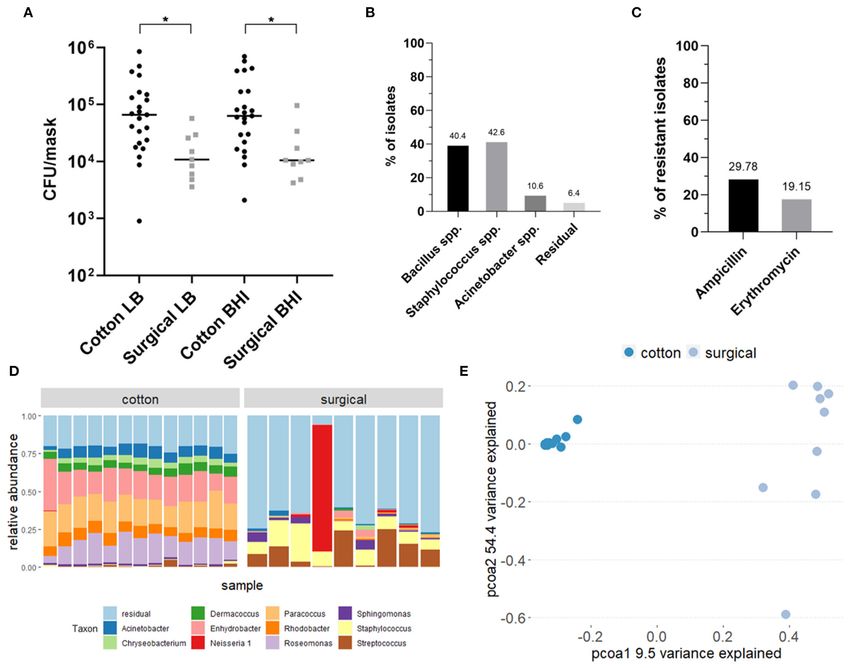
Delanghe et al.                                                                                                  Face Masks Bacterial Contamination

INTRODUCTION                                                               poor filtration may result in increased risks of transmission of
                                                                           respiratory viruses compared to surgical masks (9).
During the current coronavirus disease 2019 (COVID-19)                         Policy makers are beginning to recognize the biosafety hazards
pandemic, caused by the severe acute respiratory syndrome                  of wearing non-professional face masks. The Belgian government
coronavirus 2 (SARS-CoV-2), the use of protective face masks               recommends that after 8 h of regular use or 4 h of intensive
has become increasingly recommended or even mandatory in                   use (e.g., intensive speaking during teaching), the face mask
community settings outside hospitals and care facilities (1,               should be replaced or cleaned (33). Used fabric face masks
2). Surgical or cotton masks are most often used to prevent                should be kept in a closed cloth bag and washed together. It is
respiratory droplet transmission and reduce transmission from              recommended to wash (60◦ C with detergent), boil (100◦ C), or
people infected with respiratory viruses to non-infected people            iron the masks to disinfect them after use. After disinfection,
(3, 4). Due to some shortage in supply and concern about                   the mask should be completely dried before wearing it again
excessive waste of disposable masks, policy makers promote                 (33). Nevertheless, the general population is not yet properly
homemade non-medical (i.e., non-surgical) masks as personal                educated to handle face masks. An observational checklist with
protective equipment (PPE). As opposed to medical masks (e.g.,             1,500 participants recruited in Hong Kong showed that almost
surgical, medical procedure face masks, and respirators) that              none of them were able to perform all the required steps in
represent standardized personal equipment (PPE), non-medical               using a face mask correctly, as 91.5% did not perform hand
masks are considered as not standardized and not intended for              hygiene before putting the mask on and 97.3% when taking it
use in healthcare professionals (5). Although there are concerns           off (34). Improper use of face masks can lead to a higher risk
that their filter efficacy is less able to block the transmission of       of infection with and spreading of viral and bacterial pathogens.
viruses compared to surgical masks, this could be compensated              Self-inoculation of mucous membranes of nose, eyes, and mouth
by better adjustment to the face and less leakage (6). The efficacy        is an important transmission route of viruses (35), as people
of face masks against different airborne transmissions is best             touch their face ∼23 times per hour of which 44% involves
documented in controlled settings, such as use in hospitals by             contact with a mucous membrane (36). Moreover, people may
trained staff (7–9). Additionally, recent research has shown that          pay less attention to other important measures such as social
they can also reduce COVID-19 transmission in other high-                  distancing and hand hygiene (24, 37). Lastly, face mask use can
risk situations, such as hospitals (2, 10, 11). One meta-analysis          be associated with discomfort, skin acne, headaches, respiratory
and systematic review has concluded that the use of masks                  distress, difficulties in communication (especially for deaf or hard
by healthcare workers and non-healthcare workers reduces the               of hearing persons), as well as less non-verbal communication
risk of respiratory virus transmission (including SARS, influenza          (24, 38, 39).
virus, H1N1, and SARS-CoV-2) with 80 and 47%, respectively                     In this study we compared the bacterial load and microbiome
(2). However, this significant protective effect of face masks             composition on certified disposable surgical masks and self-
in community and health care settings was not found by                     made cotton masks, to evaluate some risks for bacterial cross-
other studies (1, 7, 12–17). Additionally, a recent randomized             contamination. We also performed microbiome profiling of the
controlled trial study observed that wearing a face mask did               cheek and anterior nares before and after wearing the face
not significantly reduce the SARS-CoV-2 infection rate in a                mask in order to detect shifts in the microbiome caused by
community with modest infection rates (18). Since masks were               face mask wearing. Particular attention was given to antibiotic-
not recommended public health measures most of the population              resistant bacteria, putative food-related pathogens, and skin and
did not wear face masks during this clinical trial. These results          respiratory pathobionts. In parallel, as part of a large-scale survey
were also supported by another recent meta-analysis (19). In               conducted by the University of Antwerp, we assessed the hygiene
general, masks seem less effective in protecting the wearer from           habits, preferences, opinions, and influences on social behavior
being infected (20), but they could reduce the risk of virus               related to face masks in the Belgian population.
transmission when worn consistently (10, 21, 22).
   The general assumption is that both medical and non-medical
                                                                           MATERIALS AND METHODS
mask use is safe (23, 24), although this has not yet been monitored
or studied in detail. Studies on mask efficacy [e.g., (25–27)]             Microbiological Mask Study Design
generally do not account for the fact that the microorganisms              The protocol of this study was in accordance with the Declaration
in human saliva and exhaled breath could form a biosafety                  of Helsinki. The study was approved by the ethical committee
concern, especially when masks are worn for too long, not                  of the University Hospital of Antwerp (Belgium). The study
properly stored, or re-used without proper disinfection. In fact,          was given the approval number B3002021000072 (Belgian
the human saliva contains 100 million bacterial cells per milliliter       registration) and was registered online at clinicaltrials.gov with
and harbors a range of pathobionts, including Staphylococcus               unique identifier NCT04894422.
aureus, Pseudomonas aeruginosa, Candida albicans, Klebsiella                   Healthy volunteers (four males and nine females) aged 24-
pneumoniae, Neisseria, Prevotella, and Veillonella spp. (28–31).           33 who wore surgical (certified as medical device) and/or a
Furthermore, cotton serves as substrate for microbial growth               self-made cotton masks (stitching pattern used is presented
(32) and is able to retain moisture, making cotton masks more              in Supplementary Figure 1) in an indoor setting were asked
favorable for high microbial contamination than surgical masks.            to return their mask after 4 h wearing. All healthy volunteers
In addition, the reuse of cotton masks, moisture retention and             were non-smokers, non-healthcare workers and did not take

Frontiers in Medicine | www.frontiersin.org                            2                                  September 2021 | Volume 8 | Article 732047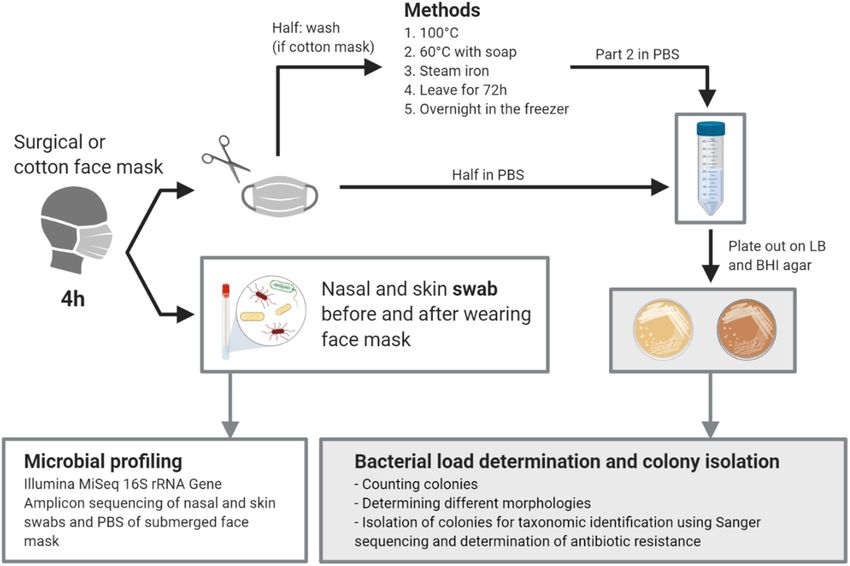
Delanghe et al.                                                                                                 Face Masks Bacterial Contamination

any antibiotics, nor had a hospital stay in the previous month              Taxonomic Identification of Isolates by
before the start of the study. All cotton masks were made                   Sanger Sequencing of the 16S rRNA Gene
according to the instructions recommended by the Belgian                    Grown isolates were further identified with PCR and
government (pattern with specific measurements can be found                 Sanger sequencing of the 16S rRNA gene. The target
in Supplementary Figure 1), initially cleaned by washing at 60◦ C           region was amplified by using 27 forward primer (27f 5′ -
with detergent and stored in a closed ziplock bag until use. In             AGAGTTTGATCCTGGCTCAG-3′ ) and 1492 reverse primer
total, 21 masks, worn for 4 h, were collected. The face masks were          (1492r 5′ -CTACGGCTACCTTGTTACGA-3′ ) (40, 41). Sanger
then cut in half using sterile scissors under sterile conditions. One       sequencing was performed at the “VIB genetic service facility”
half of the mask was cut in smaller pieces and put in a 50 ml               (University of Antwerp) on a capillary sequencer (Applied
conical tube. Fifteen ml of sterile phosphate-buffered saline (PBS)         Biosystems 3730XL DNA Analyzer) and ABI PRISM R BigDyeTM
was added and the tube was vortexed for 30 s. The suspension                Terminator cycle sequencing kit. The Sanger sequencing data
was plated out in serial dilutions in PBS for bacterial colony              was analyzed with Geneious prime (version 2020.0.5), ends of
forming unit (CFU) counts and used for DNA extraction (more                 sequenced reads were trimmed with an error probability limit
details under “Microbiology methods”). The other half of the                of 0.05, the sequences were assembled and the quality of the
mask was cleaned in a home setting by soaking in boiling water              assemblies was assessed. Finally, all the assemblies were blasted
for a few minutes (100◦ C), washing in a washing machine at 60◦ C           in the NCBI database.
with detergent, ironing with a steam iron for ∼2 min, leaving
overnight in the freezer at (avg. −18◦ C), or leaving at room
temperature for 72 h. After treatment, the cleaned half of the
                                                                            Bacterial DNA Extraction From Swabs
                                                                            The PowerFecal DNA Isolation Kit was used to extract microbial
mask was processed and plated out as described for the first half.
                                                                            DNA from anterior nares and cheek swabs. DNA extraction was
To check initial bacterial load on the mask, clean and never-used
                                                                            performed according to the instructions of the manufacturer.
cotton (5) and surgical masks (7) were plated out for bacterial
                                                                            Negative extraction controls were extracted at regular time
loads as described previously.
                                                                            points throughout the study. DNA concentrations were
   Additionally, we collected a non-invasive nasal swab (anterior
                                                                            measured using the Qubit 3.0 Fluorometer (Life Technologies,
nares) [Nasal swab Copan (catalog number 503CS01)] and a non-
                                                                            Ledeberg, Belgium).
invasive skin swab (cheek skin) (eNAT swab) of 10 participants
before and after wearing the face mask after approval of the
ethical committee (B3002021000072). All participants gave their             Illumina MiSeq 16S rRNA Gene Amplicon
consent before swabs were collected. Skin swabs were stored                 Sequencing
at 4◦ C (max 24 h) prior to DNA extraction and 500 µl of the                Illumina MiSeq 16S rRNA gene amplicon sequencing was
eNAT buffer was used for the DNA extraction. Nasal swabs                    performed on the extracted DNA from the nasal and skin swabs
were immediately suspended in 750 µl MoBio bead solution                    as well as on the PBS suspension of the face masks to determine
(PowerFecal DNA Isolation Kit; MO BIO Laboratories Inc.,                    the taxonomic composition of the bacterial communities. An in-
Carlsbad, CA, United States) and kept at 4◦ C (max 24 h) until              house optimized protocol for low-biomass samples was followed,
further processing.                                                         as described (42). Briefly, 5 µl of bacterial DNA sample was
                                                                            used to amplify the V4 region of the 16S rRNA gene. All DNA
                                                                            samples and negative controls of both PCR (PCR grade water)
Bacterial Isolation and Culturing                                           and the DNA extraction kit were included. Standard barcoded
Brain Heart Infusion (BHI) agar (LAB M, Lancashire, UK) and                 forward (515F) and reverse primer (806R) were used. These
Lysogeny Broth (LB) agar (Carlroth, Karlsruhe, Germany) plates              primers were altered for dual index paired-end sequencing, as
(composition given in Supplementary Table 2), containing 1.5%               described in (43). The resulting PCR products were checked on
(v/w) agar, were used to determine the bacterial load on the                a 1.2% agarose gel. The PCR products were purified using the
face masks before and after wearing and cleaning. The bacterial             Agencourt AMPure XP Magnetic BeadCapture Kit (Beckman
load was determined in colony forming units per ml (CFU/ml)                 Coulter, Suarlee, Belgium) and the DNA concentration of all
of resuspension medium and recalculated to CFU/mask. The                    samples was measured using the Qubit 3.0 Fluorometer. Next,
face mask suspension was diluted 10 times and 100 µl of                     a library was prepared by pooling all PCR samples in equimolar
undiluted and diluted suspensions were plated out on both                   concentrations, loaded onto a 0.8% agarose gel and purified using
growth media. Plates were incubated overnight at 37◦ C in                   the NucleoSpin Gel and PCR clean-up (Macherey-Nagel). The
aerobic conditions. CFUs were counted and a total of 47 colonies            final DNA concentration of the library was measured with the
were isolated, subjected to colony PCR and identified using                 Qubit 3.0 Fluorometer. Afterwards the library was denatured
Sanger sequencing as described below. For isolation, colonies               with 0.2N NaOH (Illumina), diluted to 7 pM and spiked with
were transferred to BHI or LB liquid medium, grown statically               10% PhiX control DNA (Illumina). MiSeq Desktop sequencer
at 37◦ C overnight and used for making glycerol stocks in                   (M00984, Illumina) was used for sequencing.
25% v/v glycerol stored at −80◦ C. To determine antibiotic                      Processing and quality control of the reads were performed
resistance, the isolates were plated out on LB or BHI agar                  using the R package DADA2, version 1.6.0. Further processing
containing ampicillin and erythromycin, each at 100 µg/mL;                  of the ASV table, AVS annotation (e.g., classification), sample
final concentration.                                                        annotation (metadata) and data visualization and statistical

Frontiers in Medicine | www.frontiersin.org                             3                                September 2021 | Volume 8 | Article 732047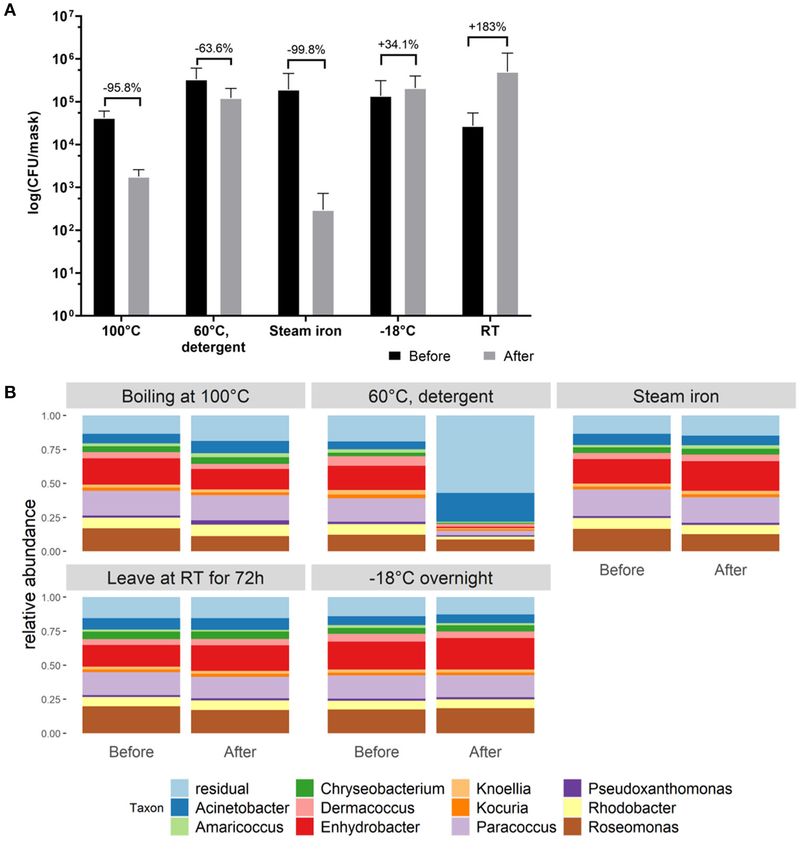
Delanghe et al.                                                                                                     Face Masks Bacterial Contamination

 FIGURE 1 | Graphical abstract of the study. Created with BioRender.com.

analysis was performed in R version 4.0.3 (44), using the in-                  multiple t-tests, Kruskal-Wallis test with multiple comparisons,
house package tidyamplicons, version 0.2.1 [publicly available                 two-way ANOVA with Sidak’s multiple comparisons test.
at github.com/SWittouck/tidyamplicons), as described in (42)].
Alpha- and beta-diversity analysis were also performed as                      Data Availability
described before in (42).                                                      Sequencing data are available at the European Nucleotide Archive
                                                                               with the accession number PRJEB45406.
Large-Scale Survey on Face Mask Use and
Attitudes                                                                      RESULTS
On August 19th, 2020, 24.948 people filled in the University                   Bacterial Composition of Surgical and
of Antwerp Great Corona survey through the online survey
system Qualtrics. Questions regarding the hygiene habits,
                                                                               Cotton Face Masks After Use
preferences, opinions, and influences on social behavior related               An overview of the study design can be found in the graphical
to face masks in the Belgian population were included.                         abstract in Figure 1. In total, the bacterial load and composition
This citizen science project was organized by the Centre for                   of 23 cotton and 9 surgical masks, worn for 4 h by the
Health Economics Research and Modelling Infectious Diseases                    participants, was determined. The initial bacterial load of clean
(University of Antwerp), Data Science Institute (University of                 and never used cotton face masks was 1.44 × 10³ CFU/mask
Hasselt), the SIMID collaboration, the Centre for the Evaluation               (mean, SD = 1.09 × 10³ ) on Lysogeny Broth (LB) agar and 1.50 ×
of Vaccination (University of Antwerp) and Koen Pepermans                      103 CFU/mask (mean, SD = 1.51 × 10³ ) on Brain Heart Infusion
(Faculty of Social Sciences, University of Antwerp). The Great                 (BHI) agar (average of 1.47 × 10³ CFU/mask). For the surgical
Corona survey is supported by the Research Foundation Flanders                 masks, the initial load was 1.29 × 10² CFU/mask (mean, SD =
(Grant G0G1920N, 2020).                                                        1.60 × 10² ) on LB and 4.29 × 101 CFU/mask (mean, SD = 1.31
                                                                               × 102 ) on BHI (average of 8.60 × 101 CFU/mask). After 4 h
                                                                               of wearing, the cotton masks contained a mean of 1.38 × 10⁵
Statistical Analysis                                                           CFU/mask (SD = 1.95 × 10⁵ ) counted on LB and 1.53 × 10⁵
Statistical analysis was performed in R for 16S amplicon                       CFU/mask (SD = 1.96 × 10⁵ ) on BHI growth medium (average
sequencing data and GraphPad Prism version 8.4.3 for other                     of 1.46 × 10⁵ CFU/mask). The surgical masks contained a mean
data. The following statistical tests were used: Wilcoxon test and             of 1.79 × 10⁴ CFU/mask (SD = 1.63 × 10⁴ ) on LB and 2.18 ×

Frontiers in Medicine | www.frontiersin.org                                4                                 September 2021 | Volume 8 | Article 732047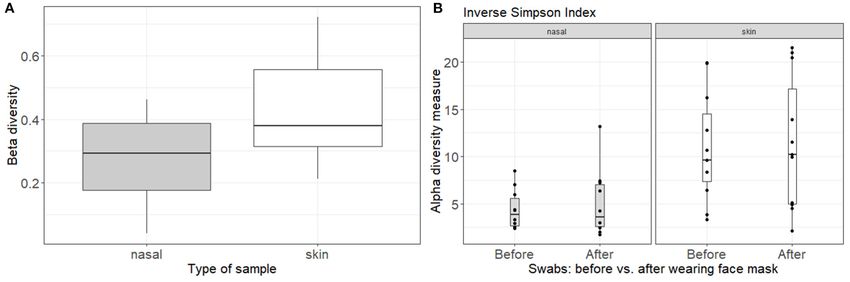
Delanghe et al.                                                                                                                     Face Masks Bacterial Contamination

 FIGURE 2 | Analysis of the bacterial composition of cotton and surgical face masks after 4 h of wearing. (A) Mask bacterial load quantified via culturing on LB and BHI
 agar plates after 4 h of wearing. Data shown the mean CFU/mask (calculated to represent the whole face mask) for both growth media and mask types. Statistics
 were performed using ANOVA with Kruskal-Wallis multiple comparisons test *p < 0.05. (B) Identification of selected bacterial isolates cultured from both types of face
 masks through Sanger sequencing of the V4 region of the 16S rRNA gene. (C) Percentages of isolates cultured from both types of face masks that showed resistance
 to the antibiotics ampicillin and erythromycin. (D) Taxonomic bacterial community composition on the face masks at genus-level where each bar represents a
 participant, analyzed via 16S rRNA amplicon sequencing. (E) Principal Coordinates Analysis (PCoA) plot distributing the samples according to beta-diversity
 (Bray-Curtis distance). Samples are colored by type of mask. LB, Luria-Bertani broth; BHI, Brain Heart Infusion; AB, antibiotic; C, cotton face mask; S, surgical
 face mask.

104 CFU/mask (SD = 2.76 × 10⁴ ) on BHI (average of 1.32 ×                              Among the Bacillus species, Bacillus thuringiensis and Bacillus
104 CFU/mask). So after wearing, the cotton masks contained                            cereus were most represented (Supplementary Table 1). Among
significantly more CFU/mask for both growth media (p = 0.021,                          the Staphylococcus species, we found mostly Staphylococcus
LB; p = 0.014, BHI) (Figure 2A). However, a higher increase                            epidermidis, as well as Staphylococcus aureus, Staphylococcus
in bacterial load compared to the initial bacterial load was seen                      warneri, and Staphylococcus caprae, which are known species
for surgical masks. Overall, high interindividual variation in                         of a healthy human skin and nasal microbiome (42, 45–47).
the bacterial load on the face masks after wearing was seen,                           Furthermore, 10.6% of all colonies was identified as Acinetobacter
represented in the high standard deviations.                                           spp., which are also considered a part of the normal human skin
   Based on colony morphology, we selected 47 individual                               and respiratory microbiome (48, 49). Along with the three most
colonies from across all mask types for identification using                           abundant isolated species, residual isolates included Pantoea,
16S rRNA gene-based Sanger sequencing. Most colonies were                              Lysinibacillus, and Solibacillus species.
identified as Bacillus or Staphylococcus species, comprising,                             Antibiotic-resistant bacteria are a worldwide problem as
respectively, 40.4 and 42.6% of all selected colonies (Figure 2B).                     infections caused by these micro-organisms are more difficult to

Frontiers in Medicine | www.frontiersin.org                                        5                                        September 2021 | Volume 8 | Article 732047
Delanghe et al.                                                                                                                 Face Masks Bacterial Contamination

treat and can lead to higher medical costs, prolonged hospital                       4 h of wearing were mainly represented by Roseomonas,
stays and increased mortality. Therefore, we tested the resistance                   Paracoccus, and Enhydrobacter, with mean relative abundances
of all bacterial isolates to two commonly used antibiotics for                       of 15.23, 19.00, and 19.28%, respectively. In contrast, the
respiratory infections: erythromycin and ampicillin, a macrolide                     microbial communities found on the surgical masks consisted
and beta-lactam antibiotic, respectively. Both antibiotics are                       mostly of Streptococcus (mean relative abundance 11.31%)
active against important respiratory pathogens and resistance                        and Staphylococcus (mean relative abundance 11.03%).
to both is increasing (50–55). Of the 47 isolated colonies, 43%                      These genera are also present on the cotton masks, but in
showed full antimicrobial resistance to at least one of the tested                   lower relative abundances, 4% for Staphylococcus and 3%
antibiotics: 30% of the isolates were resistant against ampicillin                   for Streptococcus.
and 19% against erythromycin (Figure 2C). Six percent of all                             In order to explore the differences in beta-diversity (measured
colonies showed resistance against both antibiotics.                                 in terms of Bray-Curtis distance) between the cotton and surgical
   In addition to cultivation-based methods, we analyzed                             face masks, Principal Coordinates Analysis (PCoA) was used.
the microbiome composition of masks using 16S rRNA                                   Based on the type of mask, two clear clusters could be observed
gene amplicon sequencing (Figure 2D). Not-worn face                                  presenting either the cotton or surgical masks (Figure 2E). A
masks were not used in this step as the amount of bacterial                          significant impact of the type of face mask on the alpha diversity
cells was too low to be detected using this method. The                              was observed, measured with inverse Simpson index (p = 0.0033,
bacterial community residing in the cotton face masks after                          Supplementary Figure 3).

 FIGURE 3 | Evaluation of different cleaning methods to reduce bacterial load on cotton face masks. (A) Cotton mask bacterial load before and after mask cleaning.
 Data shown as the average CFU/mask (calculated to represent the whole face mask) after cultivation on BHI agar (cultivation on LB agar in Supplementary Figure 2).
 Statistics were performed using two-way ANOVA with Sidak’s multiple comparisons test. No significant differences were detected. (B) Taxonomic bacterial community
 composition on the face masks at genus level for the different cleaning methods, before and after cleaning, analyzed via 16S rRNA gene amplicon sequencing.

Frontiers in Medicine | www.frontiersin.org                                      6                                       September 2021 | Volume 8 | Article 732047
Delanghe et al.                                                                                                                     Face Masks Bacterial Contamination

Cleaning Methods for Cotton Face Masks                                                 microbiome. Taxonomic microbiome profiles at ASV-level of the
In order to select the most effective method to reduce bacterial                       skin and nasal swabs are depicted in Supplementary Figure 4.
loads after wearing cotton masks, different cleaning methods                           Community structures for skin and nasal swabs were assessed
were evaluated. Cleaning methods were determined as effective                          using Bray-Curtis beta-diversity measures grouped by type of
when a reduction in microbial biomass of 90% was established.                          face mask (Figure 4A). The summed differences in read counts
A reduction in CFU/mask of 95.8%, 63.6% and 99.8% on both                              for all taxa across the different participants were analyzed with
LB and BHI growth media was detected after boiling the mask at                         pairwise Bray-Curtis dissimilarities, comparing the beta-diversity
100◦ C, washing at 60◦ C with detergent, and ironing with a steam                      before and after wearing the face mask. A beta-diversity of 0
iron, respectively. Keeping the mask overnight at −18◦ C and                           indicates that the bacterial content before and after is the same,
leaving the mask at room temperature for 72 h did not reduce the                       whereas a beta-diversity of 1 means that the bacterial profiles
detected CFU counts observed after 4 h of wearing. Even more,                          differ completely. For the skin microbial composition, a Bray-
a trend toward an increase in CFU/mask was observed by 34.1                            Curtis dissimilarity of 42% was observed, while this was 27% for
and 183.3%, respectively, when using the latter cleaning methods                       the anterior nares, indicating that the skin microbiome profiles
(Figure 3A). The relative taxonomic abundances within the                              are somewhat more influenced by mask wearing than the nasal
cotton face mask microbiome stayed stable after cleaning, except                       microbiome profiles. Additionally, alpha diversity measured by
for washing at 60◦ C with detergent (Figure 3B), suggesting that                       inverse Simpson is depicted in Figure 4B. No effect of wearing
this method also effectively removes the inactivated bacterial cells                   the face mask for 4 h on alpha-diversity in skin or nasal
from the masks. Roseomonas, Paracoccus, and Enhydrobacter                              microbiome was observed by inverse Simpson index (p = 0.97
still dominated the face masks for more than 40% after boiling,                        for anterior nares and p = 0.75 for skin).
ironing, leaving it at RT or at −18◦ C (Figure 3B). However,
the total microbial load decreased up to over 90% for the
effective cleaning methods, i.e., boiling at 100◦ C, washing at
                                                                                       Survey on Mask Use and Attitudes
                                                                                       To investigate whether some concerns could be raised about
60◦ C with detergent and ironing with a steam iron. This was
                                                                                       the mask use and hygiene in the general population, some
expected since bacterial cells remained on the face masks after
                                                                                       questions were included in the 2-weekly Corona survey of the
ironing and boiling as these methods kill bacterial cells, but don’t
                                                                                       University of Antwerp on August 19, 2020. Relevant questions for
remove them from the mask. Thus, DNA could still be extracted
                                                                                       this paper are listed in Supplementary Table 3. Approximately
and sequenced. Washing at 60◦ C with detergent in a washing
                                                                                       25,000 people had filled in the questionnaire. At that moment,
machine seems to be the only method that removed bacterial cells
                                                                                       face masks were obligatory in public settings where a distance of
which is supported by the sequencing data (Figure 3B), where a
                                                                                       1.5 m could not be maintained, and only 21% of the responders
change in relative abundances can be seen after cleaning.
                                                                                       claimed not to use a face mask daily. Regarding duration of
                                                                                       use, 48% indicated that they did wear one for
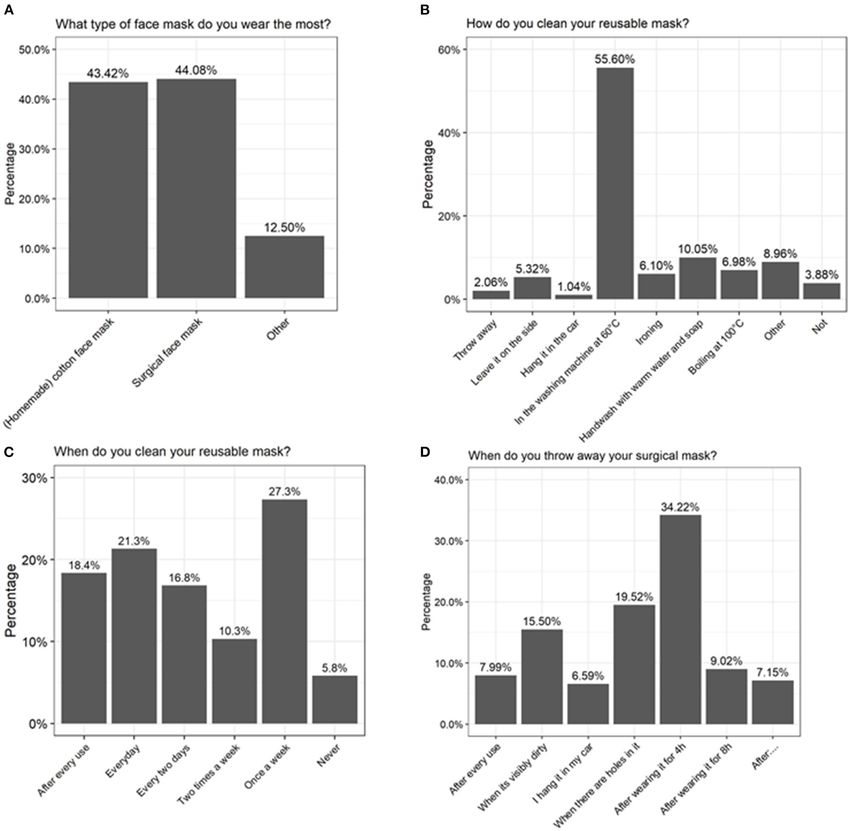
Delanghe et al. Face Masks Bacterial Contamination FIGURE 5 | Results of a large-scale survey conducted by the University of Antwerp, filled in by over 25,000 people. Answers to the questions (A) “What type of face mask do you wear the most?” (B) “How do you clean your reusable mask?” (C) “When do you clean your reusable mask?” and (D) “When do you throw away your surgical mask?” are depicted as percentages. reported that they did throw it away after each use and 15% other complaints (amongst others headache, skin irritation, and indicated that they only throw it away when it was visibly breathing difficulties). dirty or damaged (Figure 5D). Of the cotton-mask wearers, 18% indicated to wash the masks after every use independent of time, 21% performed a daily cleansing, 27% reported to only DISCUSSION wash it once a week, and 6% indicated to never have washed their reusable face mask (Figure 5C). From all participants, also While a number of studies have focused on the importance of 36% claimed to have some health complaints when wearing a face masks in the transmissions of respiratory viruses (2, 17, face mask, of which 7% reported sinusitis, 16% acne, and 77% 26), accumulation of pathobionts on the masks due to human Frontiers in Medicine | www.frontiersin.org 8 September 2021 | Volume 8 | Article 732047
Delanghe et al.                                                                                                   Face Masks Bacterial Contamination

saliva and exhaled breath represents a possible underestimated              masks, albeit in much lower abundances. Our cultivation
biosafety concern. Microorganisms present on the skin and in                results detected specific strains belonging to genera such as
the upper respiratory tract could be transferred to the face                Staphylococcus spp., Bacillus spp., Acinetobacter spp. that are
mask while wearing it. For optimal growth, bacterial cells need             known to be associated with the skin and respiratory tract
a surface to grow on, warmth, moisture, and nutrients, which                (49, 63). For example for Staphylococcus spp., S. epidermidis,
is the environment created on the face mask due to exhaled                  S. warneri, and S. caprae are known as commensals on the
air and water vapor (56). Growth of these microorganisms will               human skin, maintaining the healthy skin (46). However, S.
also increase the amount of bacteria that are inhaled or could              epidermidis and S. aureus are also known as pathobionts causing
be transferred to the skin. This could theoretically cause some             inflammatory skin conditions such as atopic dermatitis and acne
disturbance in the skin and nasal microbiome due to for instance            vulgaris (64–68). S. aureus is also a colonizer of the airways due to
the overgrowth of certain pathobionts, which are associated                 the expression of surface adhesins and is known as a commensal
with an increased risk of inflammation and infections (57). For             bacterium as well as an important pathogen, causing respiratory
example, research has found that S. aureus is part of a healthy skin        tract infections (69, 70). Additionally, Acinetobacter spp. is also
microbiome, but can cause skin infections when the abundance                considered a part of the healthy human skin and respiratory
of this species increases (58). In several studies, the use of face         microbiome (48, 49). However, other members of this genus,
masks has been associated with acne linked to an accumulation               such as Acinetobacter baumanni, can cause wound infections and
of S. aureus (59–61).                                                       pneumonia (49).
    Here, we evaluated the bacterial load on cotton and surgical                We also tested the accumulation of antibiotic-resistant strains
face masks after wearing them for 4 h, and the effects of                   on the face masks, as antibiotic-resistant strains are a worldwide
different cleaning methods on this bacterial load and community             problem and it is believed that by 2050 more people will
composition. Furthermore, changes in nasal and cheek skin                   die from an antibiotic-resistant bacterial infection than from
microbiome due to mask usage were analyzed. We detected a                   cancer (52). Especially S. aureus and A. baumanni are part
significant accumulation of bacteria on the cotton mask (mean               of the Enterococcus faecium, Staphylococcus aureus, Klebsiella
of 1.48 × 10⁵ CFU/mask) as well as the surgical masks (mean                 pneumoniae, Acinetobacter baumannii, Pseudomonas aeruginosa,
of 1.98 × 10⁴ CFU/mask) after 4 h of wearing. However, these                and Enterobacter species (ESKAPE) pathogens, which is a group
surgical masks were more sterile at the start so a larger difference        of bacteria that causes life-threatening nosocomial infections
in bacterial load was to be expected. Although all self-made                and are characterized by potential drug resistance mechanisms
cotton masks were cleaned beforehand, a considerable amount                 (55). Approximately 43% of selected colonies were resistant
of bacteria was still detected (1.44 × 10³ CFU/mask on LB                   to at least one of the two tested antibiotics (ampicillin and
and 1.50 × 10³ CFU/mask on BHI). Based on our results and                   erythromycin) and 6% was even resistant to both. Erythromycin
previous research, surgical masks appear to be the better option            is a macrolide antibiotic active against many respiratory
regarding bacterial load accumulation when masks need to be                 pathogens (50). However, due to the extensive use of macrolide
worn for at least 4 h (62). This could be due to the lower water            antibiotics, respiratory pathogens show increasing resistance to
retention of surgical masks compared to cotton masks, as well               macrolides (51, 54). The same is true for ampicillin, a beta-
as their better ventilation properties (56). The latter results in a        lactam antibiotic equivalent to amoxicillin in terms of activity
lower temperature inside the mask, which, together with lower               (71, 72). In our study, 21.3 and 38.5% of the isolates was
humidity levels, is a less ideal environment for bacterial growth           resistant to ampicillin and erythromycin, respectively. In the
and so a lower bacterial growth compared to cotton masks (56).              future, larger microbiological studies including different age and
    Cotton or cloth masks are known to be a good substrate for              socioeconomic groups are warranted to extrapolate our findings
microbial growth and to hold moisture very well, which is in                to a larger population.
line with the results obtained in this study and is also observed               Considering the high detected bacterial load, it is important
by others (32). Zhiqing et al. have shown that the bacterial                that surgical masks are disposed and that cotton masks are
count on face masks of surgeons was directly proportional with              disinfected properly after each use. Our analysis indicated that
the operating time (62). Therefore, we hypothesize that this                boiling at 100◦ C, washing at 60◦ C with detergent, or ironing
bacterial load will be even greater after 8 h, which is the maximal         with a steam iron are most effective in reducing microbial load
wearing time recommended by the government. However, people                 on cotton face masks. In general, we observed a considerable
indicated to wear it even more than the recommended 8 h.                    survival of Bacillus spp. after cleaning the cotton face masks.
    In addition to the bacterial load, also the bacterial composition       Bacillus spp. are spore-forming bacteria and are therefore
is an important factor to consider. Here, we evaluated both                 more resistant to environmental stress factors such as heat
the microbiome on the mask, as well as changes on the nasal                 (73). In addition, washing at 60◦ C with detergent was the
and cheek microbiome before and after wearing a cotton mask.                only method that removed bacterial DNA on the face masks,
The latter has—to the best of our knowledge—never been                      which was reflected in our sequencing data since the microbial
examined before. In this study, the microbiome on cotton                    profile changed (Figure 2B). Boiling at 100◦ C and ironing did
face masks after 4 h of wearing was mainly represented by                   significantly inactivate the present bacteria (Figure 3A), but
Roseomonas, Paracoccus, and Enhydrobacter taxa, whereas the                 amplicon sequencing showed that the bacterial DNA remained
surgical face mask microbiome consisted mostly of Streptococcus             on the face masks after cleaning (Figure 2B). These methods are
and Staphylococcus taxa, which were also found on the cotton                in line with the Belgian government regulations to wash a cotton

Frontiers in Medicine | www.frontiersin.org                             9                                  September 2021 | Volume 8 | Article 732047
Delanghe et al. Face Masks Bacterial Contamination
face mask every 8 h or after 4 h of intensive use. However, in DATA AVAILABILITY STATEMENT
the survey done by the University of Antwerp, Belgium, it was
clear that not everyone followed these recommendations. Only The datasets presented in this study can be found in online
the minority of survey participants (39%) claimed to wash their repositories. The names of the repository/repositories and
cotton face mask after every use or every day (Figure 5B). accession number(s) can be found below: https://www.ebi.ac.uk/
In addition to culture-based approaches, we also analyzed the ena/browser/view/PRJEB45406?show=reads.
impact of wearing a face mask (cotton and surgical) on the nasal
and skin microbiome by DNA-based analysis of swabs. Since ETHICS STATEMENT
there was only 4 h in between the sampling points (before and
after wearing the face mask), we hypothesized no significant The studies involving human participants were reviewed and
effect on the microbiome would be observed. Indeed, wearing approved by Ethical committee University Hospital Antwerp
a cotton or surgical mask for 4 h did not significantly influence (UZA). The patients/participants provided their written
specific taxa of the nasal or skin microbiome. Also for the informed consent to participate in this study.
Bray-Curtis beta diversity analysis, no difference was observed,
although a trend toward a change in community structures of AUTHOR CONTRIBUTIONS
the skin microbiome could be observed. In theory, this change
could imply a negative or beneficial effect on the microbiome. Data-analyses and visualization was performed by EC, LD, and
However, based on other clinical research regarding the effect of WV. Data interpretation was done by EC, LD, IS, ID, DV, IC,
face masks on the skin, we expect that the change in microbiome and SL. Ethical committee submission was done by EC, LD,
composition would rather be unfavorable (59–61, 74). More ID, VV, and SL. Special thanks to the Research Foundation
large-scale longitudinal microbiome analyses are thus needed to Flanders and KP for making it possible to include questions
investigate whether there might be an association of a wearing relevant for this research in the Great Corona survey. The original
a mask and changes in the skin and/or nasal microbiome when draft was written by EC, LD, and SL. All authors worked on
worn for longer time periods. the conceptualization of the research projects, contributed to
reviewing and editing of the paper, and proofread and approved
CONCLUSIONS the manuscript.
Bacteria, and specifically pathobionts, accumulate on both FUNDING
surgical and more so on cotton face masks after 4 h of wearing.
When the same face masks are worn for longer periods of LD was supported by Baekeland of VLAIO (HBC.2020.2873). IS
time, surgical masks might be a better option due to a lower was supported by the IOF-POC University of Antwerp funding
bacterial load. In addition, surgical face masks should probably ReLACT (FFI190115). WV and SL were supported by the
best be disposed of after every use and cotton face masks should European Research Council grant (Lacto-be 26850).
be properly sterilized. The latter can be efficiently done by
boiling at 100◦ C, washing at 60◦ C with detergent, and ironing ACKNOWLEDGMENTS
using a steam iron. More research is required to investigate
whether mask use beyond 4 h could lead to a dysbiosis in the We would like to thank all participants for donating samples.
skin and nasal microbiome and be associated to conditions
such as acne. This research emphasizes that face masks should SUPPLEMENTARY MATERIAL
be better evaluated to weigh the risks of disease transmission
rate against other biosafety risks such as bacterial overgrowth, The Supplementary Material for this article can be found
especially in vulnerable populations and in situations where online at: https://www.frontiersin.org/articles/10.3389/fmed.
physical distancing and proper ventilation are available. 2021.732047/full#supplementary-material
REFERENCES 4. Leung NHL, Chu DKW, Shiu EYC, Chan KH, McDevitt JJ, Hau
BJP, et al. Respiratory virus shedding in exhaled breath and efficacy
1. Cowling BJ, Zhou Y, Ip DKM, Leung GM, Aiello AE. Face masks to prevent of face masks. Nat Med. (2020) 26:676–80. doi: 10.1038/s41591-020-0
transmission of influenza virus: a systematic review. Epidemiol Infect. (2010) 843-2
138:449–56. doi: 10.1017/S0950268809991658 5. World Health Organization. Advice on the Use of Masks in the Context of
2. Liang M, Gao L, Cheng C, Zhou Q, Uy JP, Heiner K, et al. Efficacy COVID-19: Interim Guidance-2 (Issue June 2020). Geneva: World Health
of face mask in preventing respiratory virus transmission: a systematic Organization (2020).
review and meta-analysis. Travel Med Infect Dis. (2020) 36:101751. 6. Davies A, Thompson KA, Giri K, Kafatos G, Walker J, Bennett A. Testing the
doi: 10.1016/j.tmaid.2020.101751 efficacy of homemade masks: would they protect in an influenza pandemic?
3. Cowling BJ, Leung GM. Epidemiological research priorities for Disaster Med Public Health Prep. (2013) 7:413–8. doi: 10.1017/dmp.2013.43
public health control of the ongoing global novel coronavirus 7. Loeb M, Dafoe N, Mahony J, John M, Sarabia A, Glavin V, et al. Surgical mask
(2019-nCoV) outbreak. Eurosurveillance. (2020) 25:2000110. vs N95 respirator for preventing influenza among health care workers. JAMA.
doi: 10.2807/1560-7917.ES.2020.25.6.2000110 (2009) 302:1865. doi: 10.1001/jama.2009.1466
Frontiers in Medicine | www.frontiersin.org 10 September 2021 | Volume 8 | Article 732047Delanghe et al. Face Masks Bacterial Contamination
8. Ng TC, Lee N, Hui S-CD, Lai R, Ip M. Preventing healthcare workers 25. Aiello AE, Murray GF, Perez V, Coulborn RM, Davis BM, Uddin M, et al.
from acquiring influenza. Infect Control Hosp Epidemiol. (2009) 30:292–5. Mask use, hand hygiene, and seasonal influenza-like illness among young
doi: 10.1086/595690 adults: a randomized intervention trial. J Infect Dis. (2010) 201:491–8.
9. MacIntyre CR, Seale H, Dung TC, Hien NT, Nga PT, Chughtai AA, doi: 10.1086/650396
et al. A cluster randomised trial of cloth masks compared with 26. MacIntyre CR, Chughtai AA, Rahman B, Peng Y, Zhang Y, Seale H, et al.
medical masks in healthcare workers. BMJ Open. (2015) 5:e006577. The efficacy of medical masks and respirators against respiratory infection
doi: 10.1136/bmjopen-2014-006577 in healthcare workers. Influenza Other Respi Viruses. (2017) 11:511–7.
10. Doung-Ngern P, Suphanchaimat R, Panjangampatthana A, Janekrongtham C, doi: 10.1111/irv.12474
Ruampoom D, Daochaeng N, et al. Case-control study of use of personal 27. Zhang R, Li Y, Zhang AL, Wang Y, Molina MJ. Identifying airborne
protective measures and risk for SARS-CoV 2 infection, Thailand. Emerg transmission as the dominant route for the spread of COVID-19. Proc Natl
Infect Dis. (2020) 26:2607–16. doi: 10.3201/eid2611.203003 Acad Sci USA. (2020) 117:14857–63. doi: 10.1073/pnas.2009637117
11. Howard J, Huang A, Li Z, Tufekci Z, Zdimal V, van der Westhuizen HM, et al. 28. Rôças IN, Siqueira JF. Culture-independent detection of Eikenella corrodens
An evidence review of face masks against COVID-19. Proc Natl Acad Sci. USA. and Veillonella parvula in primary endodontic infections. J Endod. (2006)
(2021) 118:e2014564118. doi: 10.1073/pnas.2014564118 32:509–12. doi: 10.1016/j.joen.2005.07.004
12. Cowling BJ, Chan K-H, Fang VJ, Cheng CKY, Fung ROP, Wai 29. Curtis MA, Zenobia C, Darveau RP. The relationship of the oral microbiotia
W, et al. Facemasks and hand hygiene to prevent influenza to periodontal health and disease. Cell Host Microbe. (2011) 10:302–6.
transmission in households. Ann Intern Med. (2009) 151:437. doi: 10.1016/j.chom.2011.09.008
doi: 10.7326/0003-4819-151-7-200910060-00142 30. Ogawa T, Ikebe K, Enoki K, Murai S, Maeda Y. Investigation of
13. Jacobs JL, Ohde S, Takahashi O, Tokuda Y, Omata F, Fukui T. Use of surgical oral opportunistic pathogens in independent living elderly Japanese.
face masks to reduce the incidence of the common cold among health care Gerodontology. (2012) 29:e229–33. doi: 10.1111/j.1741-2358.2010.00449.x
workers in Japan: a randomized controlled trial. Am J Infect Control. (2009) 31. Hasan NA, Young BA, Minard-Smith AT, Saeed K, Li H, Heizer EM, et al.
37:417–9. doi: 10.1016/j.ajic.2008.11.002 Microbial community profiling of human saliva using shotgun metagenomic
14. MacIntyre CR, Wang Q, Cauchemez S, Seale H, Dwyer DE, Yang P, et al. sequencing. PLoS ONE. (2014) 9:97699. doi: 10.1371/journal.pone.0097699
A cluster randomized clinical trial comparing fit-tested and non-fit-tested 32. Szostak-Kotowa J. Biodeterioration of textiles. Int Biodeterior. (2004) 53:165–
N95 respirators to medical masks to prevent respiratory virus infection 70. doi: 10.1016/S0964-8305(03)00090-8
in health care workers. Influenza Other Respi Viruses. (2011) 5:170–9. 33. FOD volksgezondheid. Mond-neusmasker: ik bescherm jou - jij beschermt
doi: 10.1111/j.1750-2659.2011.00198.x mij. (2020). Available online at: https://www.info-coronavirus.be/nl/
15. Simmerman JM, Suntarattiwong P, Levy J, Jarman RG, Kaewchana S, mondmasker/ (accessed September 10, 2020).
Gibbons RV, et al. Findings from a household randomized controlled 34. Lee LYK, Lam EPW, Chan CK, Chan SY, Chiu MK, Chong WH, et al.
trial of hand washing and face masks to reduce influenza transmission Practice and technique of using face mask amongst adults in the community:
in Bangkok, Thailand. Influenza Other Respi Viruses. (2011) 5:256–67. a cross-sectional descriptive study. BMC Public Health. (2020) 20:948.
doi: 10.1111/j.1750-2659.2011.00205.x doi: 10.1186/s12889-020-09087-5
16. Aiello AE, Perez V, Coulborn RM, Davis BM, Uddin M, Monto AS. 35. Akram MZ. Inanimate surfaces as potential source of 2019-nCoV spread
Facemasks, hand hygiene, and influenza among young adults: a randomized and their disinfection with biocidal agents. Virusdisease. (2020) 31:94–6.
intervention trial. PLoS ONE. (2012) 7:e29744. doi: 10.1371/journal.pone.00 doi: 10.1007/s13337-020-00603-0
29744 36. Kwok YLA, Gralton J, McLaws ML. Face touching: a frequent habit that
17. Suess T, Remschmidt C, Schink SB, Schweiger B, Nitsche A, Schroeder has implications for hand hygiene. Am J Infect Control. (2015) 43:112–4.
K, et al. The role of facemasks and hand hygiene in the prevention of doi: 10.1016/j.ajic.2014.10.015
influenza transmission in households: results from a cluster randomised 37. Mahase E. Covid-19: what is the evidence for cloth masks? BMJ. (2020)
trial; Berlin, Germany, 2009-2011. BMC Infect Dis. (2012) 12:1–16. 369:m1422. doi: 10.1136/bmj.m1422
doi: 10.1186/1471-2334-12-26 38. Kao TW, Huang KC, Huang YL, Tsai TJ, Hsieh BS, Wu MS. The physiological
18. Bundgaard H, Bundgaard JS, Raaschou-Pedersen DET, von Buchwald C, impact of wearing an N95 mask during hemodialysis as a precaution
Todsen T, Norsk JB, et al. Effectiveness of adding a mask recommendation against SARS in patients with end-stage renal disease. J Formos Med Assoc.
to other public health measures to prevent SARS-CoV-2 infection in Danish (2004) 103:624–8.
mask wearers. Ann Intern Med. (2020) 174:M20–6817. doi: 10.7326/M20-6817 39. Lim ECH, Seet RCS, Lee KH, Wilder-Smith EPV, Chuah BYS, Ong BKC.
19. Wang MX, Gwee SXW, Chua PEY, Pang J. Effectiveness of surgical Headaches and the N95 face-mask amongst healthcare providers. Acta Neurol
face masks in reducing acute respiratory infections in non-healthcare Scand. (2006) 113:199–202. doi: 10.1111/j.1600-0404.2005.00560.x
settings: a systematic review and meta-analysis. Front Med. (2020) 7:564280. 40. Lane DJ. 16S/23S rRNA sequencing, in Nucleic acid techniques in bacterial
doi: 10.3389/fmed.2020.564280 systematics. In: Stackebrandt E, Goodfellow M, editors. Goodfellow. New york,
20. Matuschek C, Moll F, Fangerau H, Fischer JC, Zänker K, Van Griensven M, NY: John Wiley and Sons (1991). p. 115–75.
et al. Face masks: benefits and risks during the COVID-19 crisis. Eur J Med 41. Turner S, Pryer KM, Miao VPW, Palmer JD. Investigating deep
Res. (2020) 25:32. doi: 10.1186/s40001-020-00430-5 phylogenetic relationships among cyanobacteria and plastids by small
21. Hendrix MJ, Walde C, Findley K, Trotman R. Absence of apparent subunit rRNA sequence analysis. J Eukaryot Microbiol. (1999) 46:327–38.
transmission of SARS-CoV-2 from two stylists after exposure at doi: 10.1111/j.1550-7408.1999.tb04612.x
a hair salon with a universal face covering policy — springfield, 42. De Boeck I, Wittouck S, Wuyts S, Oerlemans EFM, van den Broek MFL,
missouri, May 2020. MMWR Morb Mortal Wkly Rep. (2020) 69:930–32. Vandenheuvel D, et al. Comparing the healthy nose and nasopharynx
doi: 10.15585/mmwr.mm6928e2 microbiota reveals continuity as well as niche-specificity. Front Microbiol.
22. Schwartz KL, Murti M, Finkelstein M, Leis JA, Fitzgerald-Husek A, Bourns L, (2017) 8:2372. doi: 10.3389/fmicb.2017.02372
et al. Lack of COVID-19 transmission on an international flight. CMAJ. (2020) 43. Kozich JJ, Westcott SL, Baxter NT, Highlander SK, Schloss PD. Development
192:E410. doi: 10.1503/cmaj.75015 of a dual-index sequencing strategy and curation pipeline for analyzing
23. Chughtai AA, Seale H, Islam MS, Owais M, Macintyre CR. amplicon sequence data on the MiSeq Illumina sequencing platform. Appl
Policies on the use of respiratory protection for hospital health Environ Microbiol. (2013) 79:5112–20. doi: 10.1128/AEM.01043-13
workers to protect from coronavirus disease (COVID-19). Int 44. R Core Team. R: A Language and Environment for Statistical Computing. R
J Nurs Stud. (2020) 105:103567. doi: 10.1016/j.ijnurstu.2020. Foundation for Statistical Computing (2018).
103567 45. Bassis CM, Tang AL, Young VB, Pynnonen MA. The nasal cavity microbiota
24. Feng S, Shen C, Xia N, Song W, Fan M, Cowling BJ. Rational use of face of healthy adults. Microbiome. (2014) 2:1–5. doi: 10.1186/2049-2618-2-27
masks in the COVID-19 pandemic. Lancet Respir Med. (2020) 8:434–6. 46. Byrd AL, Belkaid Y, Segre JA. The human skin microbiome. Nat Rev Microbiol.
doi: 10.1016/S2213-2600(20)30134-X (2018) 16:143–55. doi: 10.1038/nrmicro.2017.157
Frontiers in Medicine | www.frontiersin.org 11 September 2021 | Volume 8 | Article 732047Delanghe et al. Face Masks Bacterial Contamination
47. Koeller K, Herlemann DPR, Schuldt T, Ovari A, Guder E, Podbielski A, 64. Khorvash F, Abdi F, Kashani HH, Naeini FF, Narimani T. Staphylococcus
et al. Microbiome and culture based analysis of chronic rhinosinusitis aureus in acne pathogenesis: a case-control study. N Am J Med Sci. (2012)
compared to healthy sinus mucosa. Front Microbiol. (2018) 1:643. 4:573–6. doi: 10.4103/1947-2714.103317
doi: 10.3389/fmicb.2018.00643 65. Findley K, Grice EA. The skin microbiome: a focus on pathogens
48. Munoz-Price LS, Weinstein RA. Acinetobacter infection. N Engl J Med. (2008) and their association with skin disease. PLoS Pathog. (2014) 10:10–2.
358:1271–81. doi: 10.1056/NEJMra070741 doi: 10.1371/journal.ppat.1004436
49. Almasaudi SB. Acinetobacter spp. as nosocomial pathogens: 66. Bjerre RD, Bandier J, Skov L, Engstrand L, Johansen JD. The role of the skin
epidemiology and resistance features. Saudi J Biol Sci. (2018) 25:586–96. microbiome in atopic dermatitis: a systematic review. Br J Dermatol. (2017)
doi: 10.1016/j.sjbs.2016.02.009 177:1272–8. doi: 10.1111/bjd.15390
50. Alvarez-Elcoro S, Enzler MJ. The macrolides: erythromycin, clarithromycin, 67. Byrd AL, Deming C, Cassidy SKB, Harrison OJ, Ng WI, Conlan S,
and azithromycin. Mayo Clin Proc. (1999) 74:613–34. doi: 10.4065/74.6.613 et al. Staphylococcus aureus and Staphylococcus epidermidis strain diversity
51. Cižman M, Pokorn M, Seme K, Paragi M, Oražem A. Influence of underlying pediatric atopic dermatitis. Sci Transl Med. (2017) 9:eaal4651.
increased macrolide consumption on macrolide resistance of common doi: 10.1126/scitranslmed.aal4651
respiratory pathogens. Eur J Clin Microbiol Infect Dis. (1999) 18:522–4. 68. Geoghegan JA, Irvine AD, Foster TJ. Staphylococcus aureus and atopic
doi: 10.1007/s100960050337 dermatitis: a complex and evolving relationship. Trends Microbiol. (2018)
52. World Health Organization. Antimicrobial Resistance : Global Report on 26:484–97. doi: 10.1016/J.TIM.2017.11.008
Surveillance. Geneva: World Health Organization (2014). 69. Parker D, Prince A. Immunopathogenesis of Staphylococcus aureus
53. Ventola CL. The antibiotic resistance crisis. PandT. (2015) 40:277–83. pulmonary infection. Semin Immunopathol. (2012) 34:281–97.
doi: 10.5796/electrochemistry.82.749 doi: 10.1007/s00281-011-0291-7
54. Fyfe C, Grossman TH, Kerstein K, Sutcliffe J. Resistance to macrolide 70. Tong SYC, Davis JS, Eichenberger E, Holland TL, Fowler VG.
antibiotics in public health pathogens. Cold Spring Harb Perspect Med. (2016) Staphylococcus aureus infections: epidemiology, pathophysiology, clinical
6:a025395. doi: 10.1101/cshperspect.a025395 manifestations, and management. Clin Microbiol Rev. (2015) 28:603–61.
55. Santajit S, Indrawattana N. Mechanisms of antimicrobial resistance doi: 10.1128/CMR.00134-14
in ESKAPE pathogens. Biomed Res Int. (2016) 2016:2475067. 71. Blondeau JM, Tillotson GS. Antimicrobial susceptibility patterns of
doi: 10.1155/2016/2475067 respiratory pathogens - a global perspective. Semin Respir Infect. (2000)
56. Lee KP, Yip J, Kan CW, Chiou JC, Yung KF. Reusable face masks as alternative 15:195–207. doi: 10.1053/srin.2000.18066
for disposable medical masks: factors that affect their wear-comfort. 72. Lode H. Role of sultamicillin and ampicillin/sulbactam in the treatment of
Int J Environ Res Public Health. (2020) 17:1–16. doi: 10.3390/ijerph171 upper and lower bacterial respiratory tract infections. Int J Antimicrob Agents.
86623 (2001) 18:199–209. doi: 10.1016/S0924-8579(01)00387-9
57. Wanke I, Skabytska Y, Kraft B, Peschel A, Biedermann T, Schittek 73. Setlow P. Germination of spores of Bacillus species: what we know and do not
B. Staphylococcus aureus skin colonization is promoted by barrier know. J Bacteriol. (2014) 196:1297–305. doi: 10.1128/JB.01455-13
disruption and leads to local inflammation. Exp Dermatol. (2013) 22:153-5. 74. Szepietowski JC, Matusiak Ł, Szepietowska M, Krajewski PK, Białynicki-
doi: 10.1111/exd.12083 Birula R. Face mask-induced itch: a self-questionnaire study of 2,315
58. Nowicka D, Grywalska E. Staphylococcus aureus and host immunity responders during the COVID-19 pandemic. Acta Derm Venereol. (2020)
in recurrent furunculosis. Dermatology. (2019) 235:295–305. 100:1–5. doi: 10.2340/00015555-3536
doi: 10.1159/000499184
59. Foo CCI, Goon ATJ, Leow YH, Goh CL. Adverse skin reactions to Conflict of Interest: The authors declare that the research was conducted in the
personal protective equipment against severe acute respiratory syndrome absence of any commercial or financial relationships that could be construed as a
- a descriptive study in Singapore. Contact Dermatitis. (2006) 55:291–4. potential conflict of interest.
doi: 10.1111/j.1600-0536.2006.00953.x
60. Gheisari M, Araghi F, Moravvej H, Tabary M, Dadkhahfar S. Skin reactions Publisher’s Note: All claims expressed in this article are solely those of the authors
to non-glove personal protective equipment: an emerging issue in the and do not necessarily represent those of their affiliated organizations, or those of
COVID-19 pandemic. J Eur Acad Dermatol Venereol. (2020) 34:e297–8.
the publisher, the editors and the reviewers. Any product that may be evaluated in
doi: 10.1111/jdv.16492
this article, or claim that may be made by its manufacturer, is not guaranteed or
61. Han C, Shi J, Chen Y, Zhang Z. Increased flare of acne caused
by long-time mask wearing during COVID-19 pandemic among endorsed by the publisher.
general population. Dermatol Ther. (2020) 33:e13704. doi: 10.1111/dth.
13704 Copyright © 2021 Delanghe, Cauwenberghs, Spacova, De Boeck, Van Beeck,
62. Zhiqing L, Yongyun C, Wenxiang C, Mengning Y, Yuanqing M, Zhenan Z, Pepermans, Claes, Vandenheuvel, Verhoeven and Lebeer. This is an open-access
et al. Surgical masks as source of bacterial contamination during operative article distributed under the terms of the Creative Commons Attribution License (CC
procedures. J Orthop Transl. (2018) 14:57–62. doi: 10.1016/j.jot.2018. BY). The use, distribution or reproduction in other forums is permitted, provided
06.002 the original author(s) and the copyright owner(s) are credited and that the original
63. Gillaspy AF, Iandolo JJ, Tang YW, Stratton CW. Staphylococcus. In: Batt C, publication in this journal is cited, in accordance with accepted academic practice.
Patel P, editors. Encyclopedia of Microbiology. Cambridge, MA: Elsevier (2019). No use, distribution or reproduction is permitted which does not comply with these
p. 309–20. terms.
Frontiers in Medicine | www.frontiersin.org 12 September 2021 | Volume 8 | Article 732047You can also read


