Metal Accumulation and Functional Traits of Maianthemum bifolium (L.) F. W. Schmidt in Acid Beech Forests Differing with Pollution Level
←
→
Page content transcription
If your browser does not render page correctly, please read the page content below
Water Air Soil Pollut (2022) 233: 60
https://doi.org/10.1007/s11270-022-05530-y
Metal Accumulation and Functional Traits of Maianthemum
bifolium (L.) F. W. Schmidt in Acid Beech Forests Differing
with Pollution Level
Karolina Bierza
Received: 13 September 2021 / Accepted: 26 January 2022 / Published online: 9 February 2022
© The Author(s) 2022
Abstract Maianthemum bifolium (L.) F. W. above- and underground organs in higher amounts
Schmidt is a clonal plant with a wide geographical than found in soil. Although high concentrations of
range throughout Europe and Asia. It is also abundant these toxic elements in tissues, no visible damages on
as an understory plant of acid beech forests in south- plants were observed, also the measured functional
ern Poland. The response strategies of this species traits show no apparent relationship with the pollution
to heavy metals and their effects on some functional level.
traits (height, specific leaf area (SLA), leaf dry matter
content (LDMC), specific rhizome length (SRL) and Keywords Bioaccumulation · Heavy metals ·
rhizomes dry matter content (RDMC)) were tested. Functional traits · Maianthemum bifolium · Soil
Selected heavy metal concentrations were measured pollution
in leaves, rhizomes and rooting soil of May lily in five
beech forests of southern Poland, mainly including an
industrialised region of Upper Silesia. The contami- 1 Introduction
nation level of these ecosystems was assessed with a
single pollution index. The results show significant One of the most dangerous environmental pollutants
contamination with Pb even at control sites and mod- are heavy metals. Apart from natural sources such
erate with Cd, Zn, Fe and Cu in Upper Silesian for- as weathering of rocks or volcanic eruptions, their
ests. May lily accumulated Pb, Zn and Fe mainly in presence in the environment is related to human
rhizomes, but Ni, Cu and Cd were also translocated activity—industrialisation and urbanisation (Wang
to aboveground organs in comparable quantities, et al., 2020; Yuanan et al., 2020). Elevated concen-
which confirms the indicator value of this plant. May trations of these elements are listed in areas of ore
lily accumulated up to 21 and 30 mg g−1 Cd, 34 and extraction and processing (Demková et al., 2017;
90 mg g−1 Pb and 250 and 553 mg g−1 Zn in leaves Stefanowicz et al., 2014; Yang et al., 2018) and in
and rhizomes respectively. Moreover, the accumu- areas affected by the emissions from various indus-
lation factors show that May lily accumulates Cd in tries (Loska et al., 2004; Zhao et al., 2014), as well
as in city centres (Burt et al., 2014; Cai et al., 2013;
K. Bierza (*) Zhao & Li, 2013). Such is the situation in Upper
Faculty of Natural Sciences, Institute of Biology, Silesia—the southern region of Poland, which has
Biotechnology and Environmental Protection, undergone a strong anthropopression since the Mid-
University of Silesia in Katowice, Bankowa Street 7,
dle Ages, which is connected with the presence of
40‑007 Katowice, Poland
e-mail: karolina.bierza@us.edu.pl metal ores and coal in these areas (Cabała et al.,
Vol.: (0123456789)
13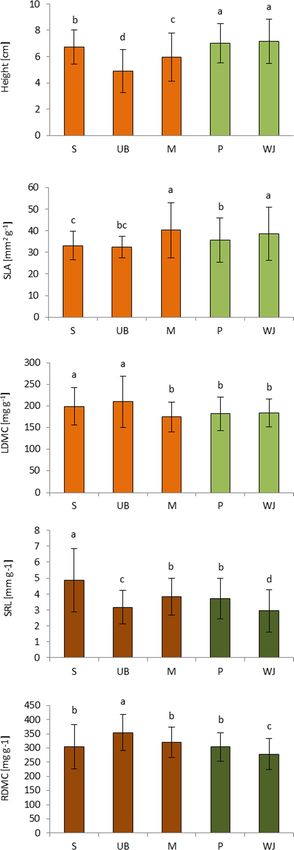
60 Page 2 of 16 Water Air Soil Pollut (2022) 233: 60
2020). Although this region is strongly industrial- provide real insight into the functioning of a given
ised and urbanised, the forests cover about 31.9% organism in the contaminated environment.
of the area, playing an important role in purifying Functional plant traits can be defined as the mor-
the atmosphere (Jamnická et al., 2013). In the last phological, physiological and phenological properties
decades of the twentieth century, industrial pollu- of plants, measurable from the cellular to the whole
tion and environmental degradation in Poland were organism level, that potentially influence their fit-
highest in Europe (Cole, 1991). Over the past years, ness (Violle, 2007) or the environment they live in
the situation has improved significantly; however, (Lavorel & Garnier, 2002). These traits represent crit-
the problems of urban pollution, road transport ical plant responses to environmental change and the
and low emissions are existing (Černikovský et al., fundamental influence of plants on ecosystem pro-
2016) and still in 2018, Poland was at the forefront cesses. They provide information for interpreting eco-
of the P M10 and P M2,5 annual mean concentra- logical and evolutionary theories and practical solu-
tions amongst European countries (Ortiz & Guer- tions for conservation and land management. At the
reiro, 2020). Studies show that dust emissions are same time, their analysis is relatively easy and cheap
deposited during past decades in the organic level (Pérez-Harguindeguy et al., 2013). Universal traits
of forest soils, and their acidic reaction contributes underlying the life cycle of plants include plant size,
to increased metal mobility in the soil and increases usually measured by height as well as leaf structure,
metal availability, and thus inclusion in biogeo- often represented as specific leaf area (SLA) or leaf
chemical cycles, amongst others, through plant tis- dry matter content (LDMC) (Westoby, 1998). SLA
sue (Jamnická et al., 2007; Magiera et al., 2007). of herbaceous plants such as Plantago lanceolata,
The influence of heavy metals on living organ- Plantago major and Taraxacum officinale was used
isms has been studied on a biochemical level (effect for pollution biomonitoring, presenting higher values
on DNA (e.g. Kaur et al., 2014; Siddiqui, 2015) and in more urbanised, hence polluted, sites (Balasooriya
intracellular enzyme activity (Panda et al., 2011)) and et al., 2009; Datcu et al., 2017; Kardel et al., 2010).
physiological level (such as photosynthetic activity For example, SLA and LDMC were determined for
(e.g. Bernardini et al., 2016; Vesley et al., 2012) and plants from landfill waste from Ni smelter to deter-
transpiration process (e.g. Haag-Kerwer et al., 1999; mine their response to harsh environmental condi-
Singh & Bhati, 2003)). Patterns of metal accumula- tions (Čierniková et al., 2021).
tion in tissues are also widely studied in order to iden- The beech forest complexes had initially played an
tify indicator, accumulator or excluder plants for phy- essential role in the forest ecosystems of Upper Silesia
toremediation, monitoring or ecotoxicity evaluation but are now significantly reduced. The best-preserved
purposes (e.g. Christou et al., 2017; Dinu et al., 2020; beech forests in the area are currently the acidic low-
Sert et al., 2019). There are also studies on morpho- land beech forests (Luzulo pilosae-Fagetum) (Cabała
logical plant traits; however, they are relatively few et al., 2006; Parusel, 2011). The herb abundant in the
and often are performed in laboratory conditions herb layer of these forests is Maianthemum bifolium
(e.g. Islam et al., 2007; Ouzounidou et al., 1995; (L.) F.W. Schmidt. The species has a wide geographic
Todeschini et al., 2011). The study of plants in natu- range and is common throughout Europe and Asia to
ral conditions is most often carried out in areas with Japan (Kim & Lee, 2007). It is known to show plastic
very high concentrations of heavy metals in the soil, morphological response to environmental stress but
for example, in areas where metal ores are extracted was investigated only in terms of naturally occurring
and processed (e.g. Ashraf et al., 2011; Franiel & environmental conditions such as different resource
Babczyńska, 2011; Wójcik et al., 2013). Nonetheless, availability in contrasting forest habitats (Czarnecka,
such areas occupy a small percentage of the globe’s 1996) or forest sites contrasting with chemistry and
surface (Bradshaw et al., 1989). Heavy metals, how- light regime (D’Hertefeld & Jonsdottir, 1994).
ever, can affect plants even at low concentrations that It was hypothesised that the long-lasting pollu-
do not cause visible damage (Ryser & Sauder, 2006). tion in Silesian forests would affect the populations
Despite evidence of heavy metal toxicity to plants of May lily, changing the chemical composition
under laboratory conditions, their effect is less vis- of plants and, in consequence, causing changes in
ible in natural conditions (Bezel’ et al., 2001) but can functional traits as a way to adapt to environmental
Vol:. (1234567890)
13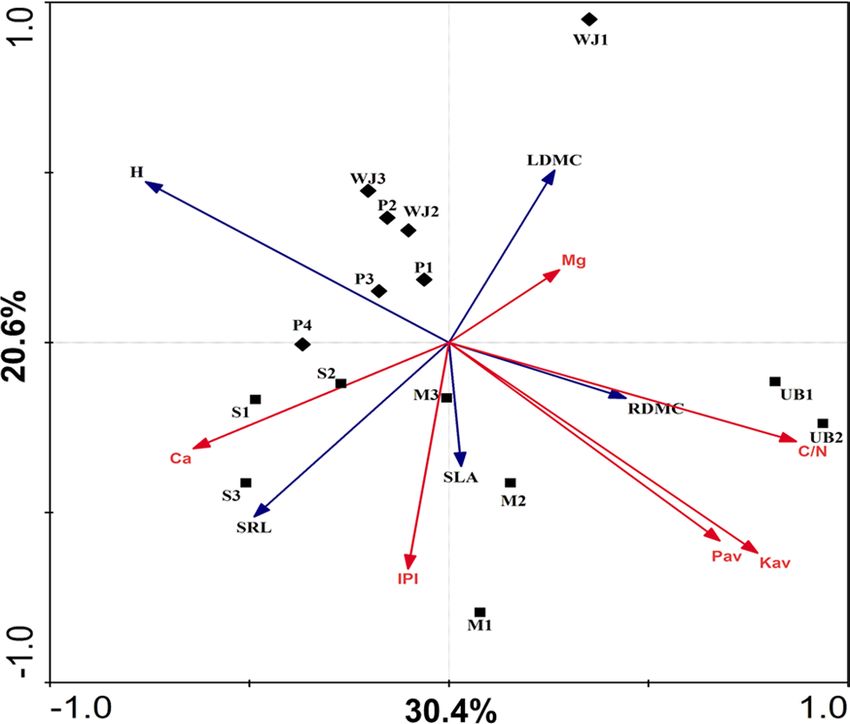
Water Air Soil Pollut (2022) 233: 60 Page 3 of 16 60
conditions. This study aimed to (i) compare the abil- 2.2 Field Sampling and Plant Measurements
ity of M. bifolium to accumulate heavy metals in
leaves and rhizomes, (ii) estimate utility of M. bifo- As the May lily spreads mainly by the vegetative
lium in biomonitoring through accumulation of heavy growth, it forms distinct patches, and the sampling
metal in tissues and/or changes in chosen functional plots were established in 16 of such patches (9 plots at
traits and (iii) assess the heavy metal contamination the sites described as polluted and 7 at control sites),
in three acid beech forest complexes in Upper Sile- with the average coverage of May lily in the range of
sia against relatively unpolluted forests from southern 40–60% per patch. The light conditions were similar
Poland. at all sampling plots. All plots were sampled for top-
soil, vegetative shoots and rhizomes. Plant sampling
was conducted in July 2014 (at the full development
2 Materials and Methods of plants). Only plants with no mechanical damages
to the leaf were collected. Rhizomes from 1-m2 plots
2.1 The Species and the Study Area were excavated to be analysed in the laboratory. From
3 to 15 random samplings with 1-m2 frame were per-
Maianthemum bifoilium (L.) F. W. Schmidt (May lily) formed at each sampling patch. After sampling, plants
is a monocotyledonous perennial herbaceous plant were immediately transported to the laboratory in a
with underground rhizomes. The plant has vegetative cooler bag, then rehydrated with deionised water. The
shoots with a single leaf and sexual two-leafed shoots fresh weight of the leaves and rhizomes was deter-
with one inflorescence. The predominant way of mined. The leaf area and rhizome internode length
spreading is vegetative, through rhizomatous growth were measured, followed by drying at 70 °C to con-
(D’Hertefeld & Jonsdottir, 1994). stant weight. Prepared plant material was subjected
The study was performed in five Luzulo-Fagetum to measurements for the following traits: the height
beech forests with M. bifolium abundant in the herb of vegetative shoots, specific leaf area (SLA), leaf
layer in southern Poland, differing in the level of pol- dry matter content (LDMC), specific rhizome length
lution. Three of them were located within the Upper (SRL) and rhizome dry matter content (RDMC). The
Silesian Industrial Region, influenced for many years measurements of the traits were conducted accord-
by heavy industry and urbanisation due to various ing to Pérez-Harguindeguy et al. (2013) and Birouste
mineral resources (Kondracki, 2002). These are natu- et al. (2014). As a component of SLA, leaf area was
ral forest fragments, currently subjected to different measured using the ImageJ software (National Insti-
forms of protection—Segiet (S), Uroczysko Buczyna tute of Health, Bethesda, MD, USA). In total, 1863
(UB) and Murcki Forest (M)—formerly transformed vegetative shoots and 1494 rhizome internodes were
through the exploitation of Zn-Pb ores (Segiet) and measured.
coal mining (Murcki Forest, Uroczysko Buczyna)
(Molenda, 2013). As control sites, forests relatively 2.3 Soil and Plant Chemical Analyses
free from industrial pollution were chosen—Parkowe
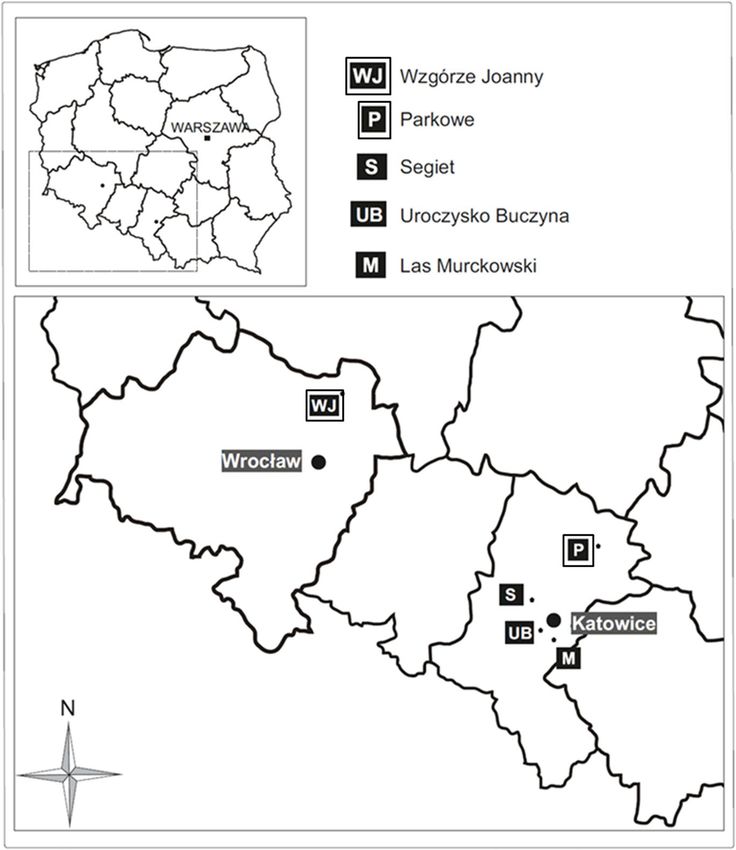
(P) and Wzgórze Joanny (WJ). Figure 1 presents the Soil samples were taken from the topsoil (0–10 cm)
localisations of the sampling sites. The beech forests in five replications per May lily patch and combined
at the study sites are over 120 years old, mostly well- into one composite sample per patch (altogether 16
developed and preserved (Cabała et al., 2006). The samples). The pH (pHKCl) was determined in each
annual mean temperature in Segiet, Uroczysko Buc- sample, and the organic matter content was meas-
zyna, Murcki Forest and Parkowe sites is 8.1 °C with ured by the loss-on-ignition (LOI). Soil samples
annual precipitation ranging from 620 to 890 mm after overnight drying at 105 °C were weighed and
(Woś, 2010), and for Wzgórze Joanny 8.8 °C and placed in a furnace at 550 °C for 8 h. After combus-
530–570 mm (Polechoński et al., 2018). The for- tion, the samples were re-weight, and the percent-
est floor is scarce, beside the Maianthemum bifo- age of the dry weight loss was calculated (Salehi
lium; patches of Vaccinium myrtillus, Luzula pilosa, et al. 2011). Soil total nitrogen was analysed using
Deschapmsia flexuosa, Oxalis acetosella and Conva- the Kjeldahl digestion procedure (Rutherford et al.,
laria majalis also occurred. 2007) and available phosphorus and potassium
Vol.: (0123456789)
1360 Page 4 of 16 Water Air Soil Pollut (2022) 233: 60
Fig. 1 Location of the sam-
pling sites (the symbols in
frames are the control sites)
contents by the Egner-Rhiem method. The total Analysis Centre for Iron and Steel) to ensure the
concentrations of Cd, Pb, Zn, Ni, Fe and Cu were quality of the analyses. Each measurement was con-
estimated according to Sastre et al. (2002). More ducted in three replications.
precisely, 0.25 g of soil was mineralised in 8 ml Contamination of the forest soils by heavy metals
of concentrated HNO3 and 2 ml of 30% H2O2 in was assessed using the single factor pollution index
a microwave oven (Milestone Ethos One, Italy) at (PI) as follows:
190 °C. After mineralisation, samples were diluted
to 25 ml with deionised water and filtered. The
PI = Ci ∕Si , (1)
potentially bioavailable fraction of heavy metals where Ci is the concentration related to the investi-
was extracted with 0.01 M C aCl2 after shaking 5 g gated site and Si is the background value for Upper
of soil with 50 ml of CaCl2 for 2 h (Wójcik et al., Silesia soils, for Pb, Zn, Cd and Cu according to
2014). The content of metals was determined in the Pasieczna et al. (2010); due to lack of literature
filtered extracts by atomic absorption spectroscopy data for Fe and Ni, the lowest values determined in
(Thermo Scientific ICE 3000 Series). All of the the control areas were taken as background values.
analyses included blank samples and certified ref- Table 1 presents the classes of the pollution index
erence materials (NCS DC 77,302, China National (PI) according to Hu et al. (2017).
Vol:. (1234567890)
13Water Air Soil Pollut (2022) 233: 60 Page 5 of 16 60
Table 1 Classes of pollution level according to PI values analytic procedure. Each measurement was conducted
Class PI Class of pollution in three replications.
The ability to accumulate heavy metals in the
1 ≤ 1.0 Safety leaves and rhizomes of M. bifolium was assessed by
2 1.0 < PI ≤ 2.0 Slight pollution calculating the bioconcentration (BCF) and the bio-
3 2.0 < PI ≤ 3.0 Mild pollution accumulation (BAC) factors and the mobility of ele-
4 3.0 < PI ≤ 5.0 Moderate pollution ments in plants by the translocation factor (TF) (Ari-
5 PI > 5 Severe pollution fin et al., 2012; Rezvani & Zaefarian, 2011).
BCF = [traceelement]rhizome ∕[traceelement]soil (3)
Since the studies were conducted in natural eco-
systems, and all investigated heavy metals were BAC = [traceelement]leaves ∕[traceelement]soil (4)
affecting the plants, the pollution level for each study
site was also calculated as integrated pollution index TF = [traceelement]leaves ∕[traceelement]rhizomes (5)
(IPI) (Chen et al., 2005).
∑ A value of BAC > 1 indicates the ability to accu-
IPI =
PI i
(2) mulate the element, whilst BAC < 1 indicates exclu-
n sion of the element by the plant. A value of TF > 1
indicates translocation of the element from under-
where PIi is the pollution index for each investigated
ground to aboveground organs.
heavy metal and n is the number of investigated
heavy metals. The IPI values were used in ordination
2.4 Statistical Analyses
analysis. IPI values together with PI are presented in
Table 2.
To obtain the normal distribution of data, the Box-
Plant material (leaves and rhizomes) was collected
Cox transformation was used (mean values of each
at each sampling plot (ca. 50 g f.w) (altogether 16
trait presented in tables and figures are non-trans-
samples of leaves and 16 samples of rhizomes). Con-
formed). The differences between the heavy metal
centrations of Cd, Pb, Zn, Ni, Fe and Cu in above-
content in soils, plant organs and plant functional
ground and underground parts of M. bifolium were
traits were tested using ANOVA, and when the sig-
analysed in 0.25-g samples dried at 105 °C, ground
nificant differences were identified, a post hoc test
and mineralised in concentrated nitric acid and 30%
(Tukey HSD) was performed. Relationships amongst
H2O2 at 190 °C using a microwave oven (Milestone
soil and plant metal concentrations were analysed
Ethos One, Italy). After mineralisation, samples were
using Pearson’s correlation analysis. The analyses
diluted with deionised water to a volume of 25 ml.
were conducted with Statistica v.12.
The concentration of heavy metals was determined
The ordination analyses were performed to evalu-
by atomic absorption spectroscopy (Thermo Scien-
ate the influence of chemical and biological prop-
tific ICE 3000 Series). The reference material (certi-
erties of the investigated habitat on the chosen M.
fied reference material CTA-OTL-1 Oriental Tobacco
bifolium functional traits. The functional traits of
Leaves) was used to evaluate the quality of the
plants from the sampling plots were used as separate
Table 2 Pollution indices PI IPI
of investigated metals in
beech forest soils Cd Pb Zn Fe Cu Ni
S 4.4 40.9 7.4 2.9 4.4 2.0 10.8
UB 2.9 17.4 3.8 3.3 3.4 2.1 6.9
M 2.0 22.7 3.1 2.8 3.8 2.2 6.4
P 0.4 4.8 0.7 1.0 1.0 1.0 1.7
WJ 0.4 3.6 0.8 1.3 2.8 1.2 2.0
Vol.: (0123456789)
1360 Page 6 of 16 Water Air Soil Pollut (2022) 233: 60
variables with log transformation Y = log (Ay + C). the investigated soils, the highest concentrations con-
The detrended canonical analysis (DCA) revealed the cerned Fe and Pb even at the control sites. Ni and Cd
gradient length lower than 3SD (0.187), which indi- occurred in the lowest concentrations.
cates the linear structure of the data and therefore The concentrations of Cd, Pb and Zn at the pol-
allows to use the redundancy analysis (RDA) in fur- luted sites have multiple times exceeded the values
ther analyses. As the environmental variables in the obtained for the control sites, which are reflected by
redundancy analysis, the chemical properties of the very high PI values (Table 2). The Upper Silesian for-
soil, including the integrated pollution index, were ests are severely polluted with Pb, also the Cd, Zn and
used. RDA was followed by the forward stepwise Cu pollution is considerable. However, the concentra-
selection of environmental variables and the unre- tions of Pb at the control sites also indicate moder-
stricted Monte Carlo test with 499 permutations. The ate pollution with this element. According to the PI
ordination analyses were performed with the Canoco index, the WJ control site is mildly polluted with Cu,
v 4.5 package (Ter Braak & Smilauer, 2002). and the Fe and Ni contamination at all polluted sites
is mild.
Amongst the investigated communities in the
3 Results and Discussion upper soil layer, significantly elevated Cd, Pb and
Zn concentrations were found in the S site, which
3.1 Basic Soil Properties exceeded the concentrations recorded in soils in rela-
tively free of pollution sampling sites, 11, 9.5 and
The physicochemical properties of sampling sites are 8.5 times, respectively. At this location, considerable
presented in Table 3. All of the sites were character- heavy metal pollution is connected with the proxim-
ised with acidic soil pH (from 2.95 to 3.59). Soils at ity (about 15 km) of the zinc smelter in Miasteczko
the UB and M sites can be classified as organic (over Śląskie and centuries of mining and processing of
30% organic matter) whilst S, P and WJ as mineral Zn and Pb ores in this area (Ullrich et al., 1999). At
(from 4.5 to 7.9) (Bednarek et al., 2004). The content the S site, the forest is growing on the old Zn and Pb
of the macroelements (N, P, K) was higher in organic ore excavation area, which is considered as a source
soils of UB and M sites. of environmental pollution—soils developed at such
locations might be highly polluted with As, Cd, Pb
3.2 Heavy Metal Content in Investigated Soils and Zn (Stefanowicz et al., 2014, 2016).
Pb concentrations in the soil, potentially toxic
The studies of heavy metal pollution of the forest eco- to plants, are considered values above 500 mg kg−1
systems soils show that pollutants entering the soil (Kabata-Pendias & Pendias, 1999). These values
are accumulated mainly in the surface layer of organic were exceeded at the S and M sites. Also, a sig-
soil (Jamnická et al., 2007; Magiera et al., 2007). nificant incensement in Cd concentration in the
The total fraction of the investigated heavy metals in Upper Silesian forest ecosystems was observed. The
soils showed significant differences between the pol- obtained results of Cd, Pb, Zn and Ni concentrations
luted and the unpolluted sites in the case of almost in investigated forests are similar to values obtained
all elements. Only Cu concentration at the WJ con- in nearby Silesian forests (Magiera et al., 2007).
trol site did not differ from UB and M sites. Amongst Generally, the soils of Upper Silesia are in varying
Table 3 Physicochemical properties of the soil (mean values ± SD)
Site C [%] N [%] C/N P2O5 [mg/100 g] K2O [mg/100 g] Ca [g kg−1] Mg [g kg−1] pHKCl
S 7.45 ± 2.6 1.01 ± 0.1 7.21 23.33 ± 3.3 21.97 ± 2.9 2.27 ± 0.34 1.26 ± 0.04 3.51
UB 36.35 ± 2.6 1.01 ± 0.1 36.64 62.44 ± 8.5 55.07 ± 5.0 1.27 ± 0.06 1.18 ± 0.06 3.59
M 30.97 ± 11.9 1.99 ± 0.6 15.30 21.21 ± 15.0 42.18 ± 9.9 1.29 ± 0.41 0.90 ± 0.19 3.07
P 7.92 ± 0.7 0.76 ± 0.2 11.52 19.17 ± 5.6 18.88 ± 3.2 1.53 ± 0.16 0.67 ± 0.06 2.95
WJ 4.52 ± 1.8 0.77 ± 0.3 6.02 1.88 ± 1.0 17.15 ± 1.9 1.28 ± 0.3 1.27 ± 0.4 3.33
Vol:. (1234567890)
13Water Air Soil Pollut (2022) 233: 60 Page 7 of 16 60
degrees contaminated with heavy metals, which
Different letters in the same column indicate a significant difference at the 0.05 level. Geochemical background values according to * Pasieczna et al., 2010, ** lowest value of the
71.38 ± 27.72a 0.33 ± 0.24a
54.68 ± 10.59ab 0.19 ± 0.07a
Bioavailable
23,521.38 ± 6236.58a 27.89 ± 19.49a 61.57 ± 13.61ab 0.28 ± 0.08a
0.19 ± 0.04a
44.53 ± 12.54b 0.21 ± 0.08a
results firstly from the geological construction of the
region, namely the occurrence of zinc-lead ore depos-
its (Lis & Pasieczna, 1997) and the resulting indus-
trial activities. Concentrations of heavy metals in the
6.24 ± 2.62ab 16.68 ± 3.63c
surface soils of the control sites were only a fraction
of heavy metal concentration levels in Upper Sile-
Total
16*
Cu
sia soils, demonstrating a relatively low exposure to
24,325.18 ± 3101.85a 2.40 ± 0.99b
27,197.90 ± 3842.50a 2.65 ± 0.78b
10,999.08 ± 4088.72b 5.57 ± 6.34b
metalliferous pollution.
Bioavailable
The concentrations of the bioavailable fraction of
heavy metals varied depending on the element. Cd
had the highest level of bioavailability (up to 26%
8282.66 ± 707.50b
of the total content of the element in the soil), fol-
lowed by Zn (up to 14% of the total fraction) and Ni
(3.8%). The availability of Pb, Cu and Fe was low and
8264**
Total
ranged from 1.5, 1.1 to 0.1% of the total content of
Table 4 Total and bioavailable concentrations of the selected metals (mg kg−1) in soil samples (mean values ± SD) (n = 48)
Fe
these elements, respectively (Table 4). The bioavail-
0.02 ± 0.01bc
0.03 ± 0.01b
0.07 ± 0.00a
Bioavailable
0.11 ± 0.07a
0.01 ± 0.01c
ability of the investigated heavy metals was in the
typical ranges estimated for forest soils (Kim et al.,
2015). In the case of all elements besides Fe, it cor-
related mainly with the total metal concentration, and
2.41 ± 0.25 a
1.23 ± 0.40b
1.44 ± 0.32b
2.64 ± 0.29a
2.88 ± 0.81a
in the case of Cd, Zn and Fe with soil pH. The highest
1.2**
Total
bioavailability of Cd, Zn, Pb and Cu was observed at
Ni
the control P site, presumably related to the lowest pH
32.19 ± 10,02a
15.09 ± 5,55b
37.60 ± 7,46a
34.09 ± 7,34a
and relatively low organic matter content at this loca-
Bioavailable
1.92 ± 0.63c
tion. These soil properties enhance mental availability
(Shahid et al., 2016).
462.02 ± 56.15b
390.31 ± 48.94b
850.87 ± 18.04a
107.07 ± 11.81c
3.3 Heavy Metals in Leaves and Rhizomes of 91.60 ± 23.67c
Maianthemum bifolium
Total
105*
Zn
The concentrations of heavy metals in the rhizomes
Bioavailable
3.33 ± 0,96b
2.12 ± 0.31b
5.00 ± 0.84a
4.99 ± 2.03a
0.73 ± 0.19c
and leaves of the May lily plants collected from the
polluted (S, UB, M) and control sites (P, WJ) are pre-
sented in Table 5. The highest levels concerned Fe
1155.66 ± 139.19a
and Zn, both in aboveground and underground plant
646.27 ± 167.34b
493.49 ± 83.79b
103.07 ± 27.85d
138.73 ± 23.93c
parts. The greatest concentration of investigated ele-
ments, except for Cu at the control sites, was found
Total
28*
in the rhizomes. Ni was found in the lowest concen-
Pb
trations in leaves as well as rhizomes. The concentra-
Bioavailable
0.96 ± 0.17b
0.24 ± 0.03d
1.32 ± 0.28a
0.74 ± 0.23c
0.03 ± 0.01e
tions in leaves and rhizomes were significantly higher
for the polluted sites than the control sites. The con-
centrations assessed for the unpolluted regions did
control site in this study
4.85 ± 1.07b
0.89 ± 0.22d
7.00 ± 0.71a
3.51 ± 1.13c
0.42 ± 0.18e
not differ from the ranges reported in other pollution-
free regions of Poland (Kozanecka et al., 2002). The
Total
Cd
Geochemical 1*
general pattern of metal concentration in M. bifolium
background
organs was similar to that found in wetland species
(Deng et al., 2004) and in plants growing near high-
ways (Huseyinova et al., 2009), as well as in plants
Site
UB
WJ
M
S
P
Vol.: (0123456789)
1360 Page 8 of 16 Water Air Soil Pollut (2022) 233: 60
from the understory of beech forests on former Zn-Pn
mines (Luwe, 1995; Stefanowicz et al., 2016). How-
15.28 ± 9.29 bc
22.91 ± 9.44b
10.10 ± 3.42c
11.30 ± 2.35c
40.66 ± 9.74a
ever, the element’s accumulation in the leaves dif-
Rhizomes
fered between the polluted and control sites and can
be presented in different orders. For the control sites,
11.27 ± 1.80bc
13.84 ± 1.19ab
17.31 ± 12.34a
the highest concentrations were of the essential ele-
12.03 ± 1.27ac
10.11 ± 1.14c
ments Fe > Zn > Cu > Pb > Cd > Ni, whilst for the
Leaves
polluted ones, the concentrations were as follows:
Cu
Fe > Zn > Pb > Cd > Cu > Ni, despite the high bio-
244.39 ± 132.35b
288.35 ± 55.52b
211.02 ± 78.25b
213.85 ± 64.37b
644.00 ± 65.15a
availability of Cd and the low bioavailability of Pb.
In rhizomes of plants growing at the polluted sites,
Rhizomes
Table 5 Concentrations of heavy metals (mg kg−1 d. w.) in Maianthemum bifolium leaves (n = 86) and rhizomes (n = 76) (mean values ± SD)
Zn prevailed over Fe, whilst the rest of the element’s
content decreased as follows: Pb, Cu, Cd and Ni.
123.22 ± 26.93 cd
The concentration of investigated elements in plant
175.52 ± 19.98bc
106.36 ± 38.54d
178.91 ± 64.87b
303.86 ± 63.09a
tissues depended mainly on their soil concertation.
The positive and statistically significant correlation
Leaves
between heavy metal content in soil and leaves and
Fe
the May lily rhizomes was obtained in all elements
0.83 ± 0.14b
0.88 ± 0.09c
0.96 ± 0.18c
1.73 ± 0.07a
1.69 ± 0.32a
studied besides Cu in above- and underground organs
Rhizomes
and Pb in rhizomes. A strong correlation was found
for Cd and Fe content in soil and leaves (Tables 6 and
7).
0.76 ± 0.13b
0.73 ± 0.16b
0.78 ± 0.26b
1.27 ± 0.22a
1.14 ± 0.10a
Cd phytotoxic concentrations are reported
Leaves
at 5–10 mg kg−1 for susceptible plants, whilst
Ni
10–30 mg kg−1 for resistant plants (Kabata-Pendias
487.56 ± 293.35ab
263.56 ± 86.05bc
58.39 ± 13.09d
188.06 ± 47.55c
553.16 ± 47.26a
& Pendias, 1999). This study determined cadmium
concentration values above 10 mg kg−1 even in plants
Different letters in the same column indicate a significant difference at the 0.05 level
Rhizomes
from control plots, and values exceeding 30 mg kg−1
characterised plants from the S and UB sites. These
118.85 ± 16.35b
122.48 ± 60.46b
249.90 ± 23.08a
results suggest that M. bifolium is relatively resist-
29.67 ± 9.25 c
35.63 ± 9.48c
ant to the elements mentioned above, as no visible
Leaves
traces of damage to leaves or underground organs
Zn
were observed. Moreover, high bioaccumulation fac-
60.40 ± 33.21ab
tors (BAC, BCF) indicate increased cadmium uptake,
34.37 ± 10.87c
64.90 ± 33.11a
90.18 ± 11.41a
19.48 ± 7.50c
which concentrations in the plant exceeded those in
Rhizomes
the soil. On average, the Cd concentration in the rhi-
zomes was almost six times as high, and in above-
ground organs, and 4.2 times as high as in the soil,
22.84 ± 7.63b
23.98 ± 9.14b
11.58 ± 1.74c
9.81 ± 2.17c
34.85 ± 2.61a
which can describe M. bifolium as an accumulator of
Leaves
this element (Mehes-Smith et al., 2013). These find-
Pb
ings are consistent with the research conducted near
27.07 ± 20.18ab
15.11 ± 2.16bc
Finnish steelworks (Mukherjee & Nuorteva, 1994),
1.57 ± 0.33d
8.47 ± 2.08c
30.90 ± 4.08a
in which the ability of M. bifolium to accumulate Cd
Rhizomes
was also reported. Concentrations of Zn above the
value of 100 mg kg−1, especially at the UB site reach-
12.66 ± 3.51bc
20.65 ± 7.85ab
1.41 ± 0.86d
8.81 ± 2.71c
21.49 ± 6.07a
ing 600 mg kg−1 in underground parts, are considered
toxic (Kabata-Pendias & Pendias, 1999). Compar-
Leaves
ing the accumulation coefficients of the other ele-
Cd
ments, apart from Cd, only Zn was characterised by
Site
UB
WJ
M
P
S
Vol:. (1234567890)
13Water Air Soil Pollut (2022) 233: 60 Page 9 of 16 60
Table 6 Pearson’s correlation coefficients between heavy metals in leaves, rhizomes and soils of Maianthemum bifolium
Cd Pb Zn Fe Cu Ni
Leaves – soil (N = 18) 0.793*** 0.562* 0.586* 0.749*** 0.377 0.671**
Rhizomes – soil (N = 17) 0.561* 0.351 0.589* 0.497* 0.467 0.626**
Leaves – rhizomes (N = 70) 0.874*** 0.597*** 0.663*** 0.743*** 0.159 0.711***
***
p < 0.001, **p < 0.01 and *p < 0.05
Table 7 Heavy metal translocation factor (TF), bioconcentration factor (BCF) and bioaccumulation factor (BAC) in Maianthemum
bifolium
Cd Pb Zn Ni Fe Cu
TF 0.74 0.40 0.37 0.76 0.58 0.76
BCF 5.68 0.12 0.96 0.60 0.02 0.44
BAC 4.24 0.05 0.33 0.45 0.01 0.31
the values of bioaccumulation coefficients higher than roots (Ociepa-Kubicka & Ociepa, 2012). Fe behaves
1 (at UB and P sites, data not shown), signalling the similarly to the Pb in the plant (Kabata-Pendias &
ability of May lily to accumulate this element as well. Pendias, 1999). Also, Zn and Cd are usually accumu-
Despite higher concentrations of Pb, Ni, Fe and Cu lated in underground organs (Jamnická et al., 2013;
in plants from the polluted area, phytotoxic concen- Klink et al., 2013; Yoon et al., 2006). Cd, Ni and Cu
trations of these elements were not exceeded. How- are almost equally distributed in the aboveground and
ever, the content of Cd, Pb and Zn was many times underground organs, and therefore the TF is relatively
higher than in plants collected from the P and WJ high (> 0.7) and confirms the indicator value of May
sites, reflecting soil pollution in the studied areas. The lily (Oliva & Espinosa, 2007). The TF of Cu in plant
ability to accumulate toxic metals was also reported tissues from control sites reached values > 1 (data
in other understory plants such as Mycelis muralis, not shown), indicating the accumulation of this ele-
Melica nutans and Mercurialis perennis in beech for- ment in aboveground parts. This strategy also applies
ests growing on former mining areas and no visible to other forest floor plants such as Mercurialis per-
negative effect on plant growth (no necrosis, chloro- ennis and Polygonatum multiflorum (Luwe, 1995),
sis) was observed (Luwe, 1995; Stefanowicz et al., Carex pilosa, Galium odoratum or Dentaria bulbif-
2016; Woch et al., 2017). Nevertheless, these findings era (Jamnická et al., 2013). Studies show that copper
confirm that some heavy metals might be transferred is sometimes accumulated in similar concentrations
to higher trophic levels and potentially cause adverse in aboveground and underground parts (Chakroun
effects for the herbivores. et al., 2010). An increase in its accumulation in
Conducted analyses of heavy metal concentra- underground organs is associated with an increase in
tions in M. bifoilium tissues also showed differences its concentration in the soil (Madejón et al., 2003).
in underground and aboveground organs. The value Such is the situation observed for the studied spe-
of the translocation factor (TF < 1) indicates that M. cies in areas with elevated heavy metal concentra-
bifoilium, like many other plant species, accumulates tions. The translocation of Cu to aboveground organs
heavy metals in underground parts (Jamnická et al., may be due to the essential functions of this element
2013; Stefanowicz et al., 2016; Wójcik & Tukiendorf, in the plant body, being a structural element of pro-
2005) as an “exclusion” strategy, protecting plants teins and involved in electron transport during pho-
from the harmful effects of excess of these elements. tosynthesis, mitochondrial respiration, response to
The lowest translocation factor values referred to Zn oxidative stress, cell wall metabolism or hormonal
and Pb, followed by Fe. Pb is not very mobile in the signalling (Yruela, 2005). Relatively high transloca-
soil and the plant and is usually accumulated in the tion rates associated with Ni may result from its high
Vol.: (0123456789)
1360 Page 10 of 16 Water Air Soil Pollut (2022) 233: 60
Fig. 2 Mean values of investigated functional traits of Maian- ▸
themum bifolium. Different letters in one figure indicated a sig-
nificant difference at p < 0.05 (orange – polluted sites, green –
control sites)
mobility in plants (Kabata-Pendias & Pendias, 1999).
Concentrations of this element determined in organs
of herbaceous plants from southern areas of Poland
showed similar concentrations in leaves and roots, or
concentrations slightly higher in underground organs
(Łaszewska et al., 2007).
3.4 Functional Traits
Figure 2 presents the mean values of measured func-
tional traits of May lily across the investigated popu-
lations. The height of plants ranged from 4.8 cm at
the M site to 7 cm at the P and WJ sites. The SLA
index reached its highest value in the M and WJ
population (40.3 and 38.5 mm2 mg−1respectively).
The lowest value of the index was characteristic for
the leaves of the UB and S populations (32.5 and
33.15 mm2 mg−1 respectively), whilst plants from
the same populations had the highest content of dry
matter in tissues (LDMC)—at UB site 210 and S site
199 mg g−1. In the rhizome traits, the highest SRL
value was obtained for the S population (4.9 mm g−1),
the lowest for the WJ population (2.9 mm g−1). Simi-
lar to the dry matter content in the aboveground tis-
sues, the highest RDMC was calculated for the UB
population (354.4 mg g−1). The lowest values were
found in the WJ population (279 mg g−1).
RDA was performed to identify whether physio-
chemical soil properties influenced the May lily traits
(Fig. 3). The first axis, which represents the fertility
of soils, explains 30.4% of the total variation in the
measured traits. The second axis represents the heavy
metal pollution gradient and explains 20.6% of the
total variation. Amongst the six variables taken into
consideration in the analysis, only the concentration
of available K significantly influenced the investi-
gated May lily functional traits (Lambda A = 0.26,
p = 0.006), and its effect explains 26% of the general
variance. According to the analysis, the investigated
functional traits of May lily were in a slight degree
associated with metal pollution. Although the height
of plants measured at the control sites was greater
than at the polluted sites, there was no significant cor-
relation with the integrated pollution index (neither
Vol:. (1234567890)
13Water Air Soil Pollut (2022) 233: 60 Page 11 of 16 60
compensation to loss caused by disturbances in early
stages of growth (Zhang et al., 2015). Under Ni and
Cu treatment, length of stolon internodes of Potentilla
anserina was not affected with heavy metals; how-
ever, they were thinner in relation to controls (Koi-
vunen et al., 2004). Nonetheless, it should be stressed
that the studies cited were carried out under experi-
mental conditions, whilst data collected under natural
conditions are very scarce. Higher RDMC indicates a
resource-conservative strategy at resource-poor sites
(Birouste et al., 2014) observed at nitrogen-poor UB
site (C/N over 30 indicates low availability of N). Pre-
sumably, biotic factors such as soil fertility and light
availability predominantly affect plant traits at sites
with a long contamination history. As the beech for-
ests naturally colonise such areas in southern Poland
Fig. 3 The relationships between environmental variables
in the natural succession, Woch et al. (2017) hypoth-
(red arrows) at sampling points (diamonds represent the con-
trol sites P and WJ; squares, the polluted sites S, UB and M) esised that the accompanying plants might have some
and the functional traits (blue arrows). LDMC – leaf dry mat- opportunities to form local metal-tolerant popula-
ter content, RDMC – rhizome dry matter content, SLA – spe- tions, which might also occur in the presented study.
cific leaf area, SRL – specific rhizome length, H – height, Pav
– available phosphorus, Kav – available potassium, IPI – inte-
grated pollution index
4 Conclusions
with investigated elements, data not shown). In exper- The studies were conducted in natural forest habitats
imental conditions, Cd and Zn were found to reduce that had arisen in areas formerly entirely transformed
plant height (Chaves et al., 2011), although many by the exploitation of mineral deposits and which
species do not show any alterations in their morpho- have returned to the biocenoses that are characteris-
logical traits (e.g. Papazoglou et al., 2005; Jiménez‐ tic of these areas after human activity ceased. There-
Ambriz et al., 2007). Meta-analysis of growth charac- fore, levels of soil heavy metals are relatively high.
teristics of plants growing near point polluters showed Although clean technologies nowadays replace the
that growth reduction concerned only annual herba- heavy industry, their effects remain in the ecosystems,
ceous plants (Zvereva et al., 2010). The higher pol- reflected by severe pollution with Pb, moderate pol-
lution level might influence SRL and LDMC; at the lution with Cd, Zn and Cu, even at forests relatively
polluted stands, the rhizomes were longer and thinner distant from the polluters. Hence, the concentrations
(higher SRL), and leaves had a higher level of hydra- of heavy metals recorded in the tissues of May lily
tion (lower LDMC). Higher SRL and SLA are con- from polluted populations were elevated. Generally,
nected with fast growth, usually at resource-rich sites the investigated elements were accumulated in the
(Shovon et al., 2020). Elongation of rhizomes might underground parts, but Cd, Cu and Ni were translo-
also be a strategy of avoiding unfavourable conditions cated to the aboveground parts. Therefore this species
(Oborny, 1994; Skálová et al., 1997), but it can only can be proposed as an indicator plant in forest ecosys-
speculate whether heavy metals were related to this tems. May lily has also shown a distinct capacity to
process. Studies on Alternaria philoxeroides and A. accumulate cadmium at concentrations much higher
sesillis showed that Cd treatment negatively impacted than those found in soils. There was no clear evidence
plant traits, including internode length (Wang et al., that heavy metal pollution has adverse effects on the
2021). Pb also had a negative effect on rhizome inter- functional traits of May lily. In natural conditions,
node elongation in Phragmites australis; however, the biotic factors probably play the primary role in
the reductions were reduced after a more extended displaying the morphological traits, and plants have
period of the experiment, which was explained adapted to the long-lasting pollution.
Vol.: (0123456789)
1360 Page 12 of 16 Water Air Soil Pollut (2022) 233: 60
Acknowledgements I am grateful to Dr Wojciech Bierza for Pb concentrations on Phragmites australis (Cav.) Trin. Ex.
his field and laboratory assistance. I would like to thank the Steudel: Photosynthetic performance and metal accumu-
reviewers for their valuable comments and advice. lation capacity under controlled conditions. International
Journal of Phytoremediation, 18(1), 16–24. https://doi.
Author Contribution Conceptualisation, methodology, anal- org/10.1080/15226514.2015.1058327
ysis and investigation and writing the manuscript – Karolina Bezel, V. S., Pozolotina, V. N., Bel’skii, E. A., & Zhuikova, T.
Bierza. V. (2001). Variation in population parameters: Adaptation
to toxic environmental factors. Russian Journal of Ecol-
ogy, 32(6), 413–419. https://doi.org/10.1023/A:10125
Data Availability The datasets generated during and/or
34201258
analysed during the current study are available from the cor-
Birouste, M., Zamora-Ledezma, E., Bossard, C., Pérez-
responding author on reasonable request.
Ramos, I. M., & Roumet, C. (2014). Measurement of
fine root tissue density: A comparison of three methods
Code Availability Not applicable. reveals the potential of root dry matter content. Plant
and Soil, 374(1–2), 299–313. https://doi.org/10.1007/
Declarations s11104-013-1874-y
Bradshaw, A. D., McNeilly, T., & Putwain, P. D. (1989). The
Conflict of Interest The author declares no competing inter- essential qualities. In A. J. Shaw (Ed.), Heavy metal tol-
ests. erances in plants: Evolutionary aspects (pp. 323–344).
CRC Press Inc.
Open Access This article is licensed under a Creative Com- Burt, R., Hernandez, L., Shaw, R., Tunstead, R., Ferguson,
mons Attribution 4.0 International License, which permits R., & Peaslee, S. (2014). Trace element concentration
use, sharing, adaptation, distribution and reproduction in any and speciation in selected urban soils in New York City.
medium or format, as long as you give appropriate credit to the Environmental Monitoring and Assessment, 186(1),
original author(s) and the source, provide a link to the Crea- 195–215. https://doi.org/10.1007/s10661-013-3366-1
tive Commons licence, and indicate if changes were made. The Cabała, S., Orczewska, A., & Zaufal, T. (2006). The state
images or other third party material in this article are included of preservation of the beech forest communities in the
in the article’s Creative Commons licence, unless indicated Upper Silesian Industrial Region and the perspectives
otherwise in a credit line to the material. If material is not for conservation. Shaping of Geographical Environment
included in the article’s Creative Commons licence and your and Nature Protection in Industrialized and Urbanized
intended use is not permitted by statutory regulation or exceeds Areas, 37, 5–16. in Polish.
the permitted use, you will need to obtain permission directly Cabała, J., Warchulski, R., Rozmus, D., Środek, D., &
from the copyright holder. To view a copy of this licence, visit Szełęg, E. (2020). Pb-rich slags, minerals, and pollu-
http://creativecommons.org/licenses/by/4.0/. tion resulted from a medieval Ag-Pb smelting and min-
ing operation in the Silesian-Cracovian region (southern
Poland). Minerals, 10(1), 28. https://doi.org/10.1007/
s10682-004-5143-7
References Cai, Q. Y., Mo, C. H., Li, H. Q., Lü, H., Zeng, Q. Y., Li, Y.
W., & Wu, X. L. (2013). Heavy metal contamination of
urban soils and dusts in Guangzhou, South China. Envi-
Arifin, A., Parisa, A., Hazandy, A. H., Mahmud, T. M., Junejo,
ronmental monitoring and assessment, 185(2), 1095–
N., Fatemeh, A., Mohsen, S., & Majid, N. M. (2012).
1106. https://doi.org/10.1007/s10661-012-2617-x
Evaluation of cadmium bioaccumulation and translocation
Černikovský, L., Krejčí, B., Blažek, Z., & Volná, V. (2016).
by Hopea odorata grown in a contaminated soil. African
Transboundary air-pollution transport in the Czech-Polish
Journal of Biotechnology, 11(29), 7472–7482. https://doi.
border region between the cities of Ostrava and Katowice.
org/10.5897/AJB11.3252
Central European Journal of Public Health, 24, S45–S50.
Ashraf, M. A., Maah, M. J., & Yusoff, I. (2011). Heavy met-
https://doi.org/10.21101/cejph.a4532
als accumulation in plants growing in ex tin mining catch-
Chakroun, H. K., Souissi, F., Bouchardon, J. L., Souissi, R.,
ment. International Journal of Environmental Science &
Moutte, J., Faure, O., Remon, E., & Abdeljaoued, S.
Technology, 8(2), 401–416. https://doi.org/10.1007/BF033
(2010). Transfer and accumulation of lead, zinc, cadmium
26227
and copper in plants growing in abandoned mining-dis-
Balasooriya, B. L. W. K., Samson, R., Mbikwa, F., Boeckx,
trict area. African Journal of Environmental Science and
P., & Van Meirvenne, M. (2009). Biomonitoring of urban
Technology, 4(10), 651–659.
habitat quality by anatomical and chemical leaf character-
Chaves, L. H. G., Estrela, M. A., & de Souza, R. S. (2011).
istics. Environmental and Experimental Botany, 65(2–3),
Effect on plant growth and heavy metal accumulation by
386–394. https://doi.org/10.1016/j.envexpbot.2008.11.009
sunflower. Journal of Phytology, 3(12), 4–9.
Bednarek, R., Dziadowiec, H., Pokojska, U., & Prusinkie-
Chen, T. B., Zheng, Y. M., Lei, M., Huang, Z. C., Wu, H.
wicz, Z. (2004). Badania ekologiczno-gleboznawcze.
T., Chen, H., Yu, F.-K., Wu, X., & Tian, Q. Z. (2005).
Wydawnictwo Naukowe PWN. in Polish.
Assessment of heavy metal pollution in surface soils of
Bernardini, A., Salvatori, E., Guerrini, V., Fusaro, L.,
urban parks in Beijing, China. Chemosphere, 60(4), 542–
Canepari, S., & Manes, F. (2016). Effects of high Zn and
551. https://doi.org/10.1016/j.chemosphere.2004.12.072
Vol:. (1234567890)
13Water Air Soil Pollut (2022) 233: 60 Page 13 of 16 60
Christou, A., Theologides, C. P., Costa, C., Kalavrouziotis, I. contents in foliage of Corylus avellana and some roadside
K., & Varnavas, S. P. (2017). Assessment of toxic heavy native plants in Ordu Province, Turkey. Ekoloji, 18(70),
metals concentrations in soils and wild and cultivated 10–16.
plant species in Limni abandoned copper mining site, Islam, E., Yang, X., Li, T., Liu, D., Jin, X., & Meng, F. (2007).
Cyprus. Journal of Geochemical Exploration, 178, 16–22. Effect of Pb toxicity on root morphology, physiology and
https://doi.org/10.1016/j.gexplo.2017.03.012 ultrastructure in the two ecotypes of Elsholtzia argyi.
Čierniková, M., Vykouková, I., Orfánus, T., & Masarovičová, Journal of Hazardous Materials, 147(3), 806–816. https://
E. (2021). Functional traits of plant species suitable for doi.org/10.1016/j.jhazmat.2007.01.117
revegetation of landfill waste from nickel smelter. Applied Jamnická, G., Bučinová, K., Havranová, I., & Urban, A. (2007).
Sciences, 11(2), 658. https://doi.org/10.3390/app11 Current state of mineral nutrition and risk elements in a
020658 beech ecosystem situated near the aluminium smelter in
Cole, D. H. (1991). Cleaning up Krakow: Poland’s ecological Žiar nad Hronom, Central Slovakia. Forest Ecology and
crisis and the political economy of international envi- Management, 248(1–2), 26–35. https://doi.org/10.1016/j.
ronmental assistance. Colorado Journal of International foreco.2007.02.033
Environmental Law and Policy, 2, 205–245. Jamnická, G., Válka, J., & Bublinec, E. (2013). Heavy metal
Czarnecka, B. (1996). Clonal organization of populations of accumulation and distribution in forest understory herb
Asarum europaeum and Maianthemum bifolium in con- species of Carpathian beech ecosystems. Chemical Spe-
trasting habitats. Vegetatio, 125, 51–62. https://doi.org/10. ciation & Bioavailability, 25(3), 209–215. https://doi.org/
1007/bf00045204 10.3184/095422913X13785568683285
Datcu, A. D., Sala, F., & Ianovici, N. (2017). Studies regarding Jiménez-Ambriz, G., Petit, C., Bourrié, I., Dubois, S., Olivieri,
some morphometric and biomass allocation parameters in I., & Ronce, O. (2007). Life history variation in the heavy
the urban habitat on Plantago major. Research Journal of metal tolerant plant Thlaspi caerulescens growing in a
Agricultural Science, 49(4), 96–102. network of contaminated and noncontaminated sites in
Demková, L., Jezný, T., & Bobuská, L. (2017). Assessment southern France: Role of gene flow, selection and pheno-
of soil heavy metal pollution in a former mining area – typic plasticity. New Phytologist, 173(1), 199–215. https://
before and after the end of mining activities. Soil & Water doi.org/10.1111/j.1469-8137.2006.01923.x
Research, 12, 229–236. https://doi.org/10.17221/107/ Kabata-Pendias, A., & Pendias, H. (1999). Biogeochemia
2016-SWR pierwiastków śladowych. PWN. in Polish.
Deng, H., Ye, Z. H., & Wong, M. H. (2004). Accumulation of Kardel, F., Wuyts, K., Babanezhad, M., Wuytack, T., Potters,
lead, zinc, copper and cadmium by 12 wetland plant spe- G., & Samson, R. (2010). Assessing urban habitat quality
cies thriving in metal-contaminated sites in China. Envi- based on specific leaf area and stomatal characteristics of
ronmental Pollution, 132(1), 29–40. https://doi.org/10. Plantago lanceolata L. Environmental Pollution, 158(3),
1016/j.envpol.2004.03.030 788–794. https://doi.org/10.1016/j.envpol.2009.10.006
D’Hertefeld, T., & Jonsdottir, I. S. (1994). Effects of resource Kaur, G., Singh, H. P., Batish, D. R., & Kohli, R. K. (2014).
availability on integration and clonal growth in Maian- Pb-inhibited mitotic activity in onion roots involves DNA
themum bifolium. Folia Geobotinica Et Phytotaxonomica, damage and disruption of oxidative metabolism. Eco-
29, 167–179. https://doi.org/10.1007/BF02803793 toxicology, 23(7), 1292–1304. https://doi.org/10.1007/
Dinu, C., Vasile, G. G., Buleandra, M., Popa, D. E., Gheorghe, s10646-014-1272-0
S., & Ungureanu, E. M. (2020). Translocation and accu- Kim, S. C., & Lee, N. S. (2007). Generic delimitation and bio-
mulation of heavy metals in Ocimum basilicum L. plants geography of Maianthemum and Smilacina (Ruscaceae
grown in a mining-contaminated soil. Journal of Soils and sensu lato): Preliminary results based on partial 3′ matK
Sediments, 20(4), 2141–2154. https://doi.org/10.1007/ gene and trnK 3′ intron sequences of cpDNA. Plant Sys-
s11368-019-02550-w tematics and Evolution, 265(1–2), 1–12.
Franiel, I., & Babczyńska, A. (2011). The growth and repro- Kim, R. Y., Yoon, J. K., Kim, T. S., Yang, J. E., Owens, G.,
ductive effort of Betula pendula Roth in a heavy-metals & Kim, K. R. (2015). Bioavailability of heavy metals in
polluted area. Polish Journal of Environmental Studies, soils: Definitions and practical implementation—a critical
20(4), 1097–1101. review. Environmental Geochemistry and Health, 37(6),
Haag-Kerwer, A., Schäfer, H. J., Heiss, S., Walter, C., & 1041–1061. https://doi.org/10.1007/s10653-015-9695-y
Rausch, T. (1999). Cadmium exposure in Brassica juncea Klink, A., Macioł, A., Wisłocka, M., & Krawczyk, J. (2013).
causes a decline in transpiration rate and leaf expansion Metal accumulation and distribution in the organs of
without effect on photosynthesis. Journal of Experimental Typha latifolia L. (cattail) and their potential use in bioin-
Botany, 50(341), 1827–1835. https://doi.org/10.1093/jxb/ dication. Limnologica, 43(3), 164–168. https://doi.org/10.
50.341.1827 1016/j.limno.2012.08.012
Hu, B., Jia, X., Hu, J., Xu, D., Xia, F., & Li, Y. (2017). Assess- Koivunen, S., Saikkonen, K., Vuorisalo, T., & Mutikainen, P.
ment of heavy metal pollution and health risks in the soil- (2004). Heavy metals modify costs of reproduction and
plant-human system in the Yangtze River Delta, China. clonal growth in the stoloniferous herb Potentilla anse-
International Journal of Environmental Research and rina. Evolutionary Ecology, 18(5–6), 541–561. https://doi.
Public Health, 14(9), 1042. https://doi.org/10.3390/ijerp org/10.1007/s10682-004-5143-7
h14091042 Kondracki, J. (2002). Regional geography of Poland. PWN. in
Hüseyinova, R., Kutbay, H. G., Bilgin, A., Kılıç, D., Horuz, A., Polish.
& Kırmanoğlu, C. (2009). Sulphur and some heavy metal
Vol.: (0123456789)
1360 Page 14 of 16 Water Air Soil Pollut (2022) 233: 60
Kozanecka, T., Chojnicki, J., & Kwasowski, W. (2002). Con- to copper stress—I. growth, mineral content and ultras-
tent of heavy metals in plant from pollution-free regions. tructure of roots. Environmental and experimental botany,
Polish Journal of Environmental Studies, 11(4), 395–400. 35(2), 167–176. https://doi.org/10.1016/0098-8472(94)
Łaszewska, A., Kowol, J., Wiechuła, D., & Kwapuliński, J. 00049-B
(2007). Kumulacja metali w wybranych gatunkach roślin Panda, P., Nath, S., Chanu, T. T., Sharma, G. D., & Panda, S.
leczniczych z terenu Beskidu Śląskiego i Żywieckiego. K. (2011). Cadmium stress-induced oxidative stress and
Problemy Ekologii, 11, 285–291. in Polish. role of nitric oxide in rice (Oryza sativa L.). Acta Physi-
Lavorel, S., & Garnier, E. (2002). Predicting changes in com- ologiae Plantarum, 33, 1737–1747. https://doi.org/10.
munity composition and ecosystem functioning from 1007/s11738-011-0710-3
plant traits: Revisiting the holy grail. Functional Ecol- Papazoglou, E. G., Karantounias, G. A., Vemmos, S. N.,
ogy, 16(5), 545–556. https://doi.org/10.1046/j.1365-2435. & Bouranis, D. L. (2005). Photosynthesis and growth
2002.00664.x responses of giant reed (Arundo donax L.) to the heavy
Lis, J., & Pasieczna, A. (1997). Anomalie geochoemiczne Pb- metals Cd and Ni. Environment International, 31(2), 243–
Zn-Cd w glebach na Górnym Śląsku. Przegląd Geologic- 249. https://doi.org/10.1016/j.envint.2004.09.022
zny, 45(2), 182–189. in Polish. Parusel, J. B. (2011). Zbiorowiska leśne i ich zagrożenia w
Loska, K., Wiechuła, D., & Korus, I. (2004). Metal contami- województwie śląskim. Przyroda Górnego Śląska, 66,
nation of farming soils affected by industry. Environ- 3–4. in Polish.
ment International, 30(2), 159–165. https://doi.org/10. Pasieczna, A., Dusza-Dobek, A., & Kowalska, Z. (2010).
1016/S0160-4120(03)00157-0 Detailed geochemical map of Upper Silesa 1:25 000.
Luwe, M. W. (1995). Distribution of nutrients and phytotoxic Pérez-Harguindeguy, N., Díaz, S., Garnier, E., Lavorel, S.,
metal ions in the soil and in two forest floor plant spe- Poorter, H., Jaureguiberry, P., Bret-Harte, M. S., Corn-
cies of a beech (Fagus sylvatica L.) stand. Plant and well, W. K., Craine, J. M., Gurvich, D. E., Urcelay, C.,
soil, 168(1), 195–202. https://doi.org/10.1007/BF000 Veneklaas, E. J., Reich, P. B., Poorter, L., Wright, I. J.,
29329 Ray, P., Enrico, L., Pausas, J. G., de Vos, A. C., ... & Cor-
Madejón, P., Murillo, J. M., Marañón, T., Cabrera, F., & nelissen, J. H. C. (2013). New handbook for standardised
Soriano, M. A. (2003). Trace element and nutrient accu- measurement of plant functional traits worldwide. Aus-
mulation in sunflower plants two years after the Aznal- tralian Journal of Botany, 61, 167–234.
cóllar mine spill. Science of the Total Environment, Polechoński, R., Dobicki, R., Drabiński, A., & Adynkiewicz-
307(1–3), 239–257. https://doi.org/10.1016/S0048- Piragas, M. (2018). In M. Kowalska-Góralska (Ed.),
9697(02)00609-5 Aspekty ekonomiczne, ekologiczne i prawne w akwakul-
Magiera, T., Strzyszcz, Z., & Rachwal, M. (2007). Mapping turze karpia. (pp. 233-261). Polskie Towarzystwo
particulate pollution loads using soil magnetometry in Rybackie (in Polish)
urban forests in the Upper Silesia Industrial Region, Rezvani, M., & Zaefarian, F. (2011). Bioaccumulation and
Poland. Forest Ecology and Management, 248(1), translocation factors of cadmium and lead in Aeluropus
36–42. https://doi.org/10.1016/j.foreco.2007.02.034 littoralis. Australian Journal of Agricultural Engineering,
Mehes-Smith, M., Nkongolo, K., & Cholewa, E. (2013). Cop- 2(4), 114–119. https://doi.org/10.3316/informit.68384
ing mechanisms of plants to metal contaminated soil. 3973571084
Environmental Change and Sustainability, 54, 53–90. Rutherford, P., McGill, W. B., Arocena, J., & Figueiredo, C.
https://doi.org/10.5772/55124 (2007). Soil sampling and methods of analysis. In M. R.
Molenda, T. (2013). The protection of anthropogenic habitats Carter & E. G. Gregorich (Eds.), Soil sampling and meth-
in Poland. Journal of Ecology and Health, 17(2), 76–80. ods of analysis (pp. 267–278). CRC Press. https://doi.org/
Mukherjee, A. B., & Nuorteva, P. (1994). Toxic metals in 10.1201/9781420005271
forest biota around the steel works of Rautaruukki Oy, Ryser, P., & Sauder, W. R. (2006). Effects of heavy-metal-con-
Raahe, Finland. Science of the Total Environment, 151(3), taminated soil on growth, phenology and biomass turno-
191–204. https://doi.org/10.1016/0048-9697(94)90468-5 ver of Hieracium piloselloides. Environmental Pollution,
Oborny, B. (1994). Spacer length in clonal plants and the 140(1), 52–61. https://doi.org/10.1016/j.envpol.2005.06.
efficiency of resource capture in heterogeneous environ- 026
ments: A Monte Carlo simulation. Folia Geobotanica, Salehi, M. H., Beni, O. H., Harchegani, H. B., Borujeni, I. E.,
29(2), 139–158. https://doi.org/10.1007/BF02803791 & Motaghian, H. R. (2011). Refining soil organic matter
Ociepa-Kubcka, A., & Ociepa, E. (2012). Toksyczne determination by loss-on-ignition. Pedosphere, 21, 473–
oddziaływanie metali ciężkich na rośliny, zwierzęta i 482. https://doi.org/10.1016/S1002-0160(11)60149-5
ludzi. Inżynieria i Ochrona Środowiska, 15, 169–180. Sastre, J., Sahuquill, A., Vidal, M., & Rauret, G. (2002). Deter-
Oliva, S. R., & Espinosa, A. F. (2007). Monitoring of heavy mination of Cd, Cu, Pb and Zn in environmental samples:
metals in topsoils, atmospheric particles and plant leaves Microwave-assisted total digestion versus aqua regia and
to identify possible contamination sources. Microchemical nitric acid extraction. Analytica Chimica Acta, 462(1),
Journal, 86(1), 131–139. https://doi.org/10.1016/j.microc. 59–72. https://doi.org/10.1016/S0003-2670(02)00307-0
2007.01.003 Sert, E. B., Turkmen, M., & Cetin, M. (2019). Heavy metal
Ortiz, A., & Guerreiro, C. (2020). Air quality in Europe - 2020 accumulation in rosemary leaves and stems exposed to
report. . https://doi.org/10.2800/786656 traffic-related pollution near Adana-İskenderun High-
Ouzounidou, G., Čiamporová, M., Moustakas, M., & Karatag- way (Hatay, Turkey). Environmental Monitoring and
lis, S. (1995). Responses of maize (Zea mays L.) plants
Vol:. (1234567890)
13You can also read


