Triptolide promotes ferroptosis by suppressing Nrf2 to overcome leukemia cell resistance to doxorubicin
←
→
Page content transcription
If your browser does not render page correctly, please read the page content below
MOLECULAR MEDICINE REPORTS 27: 17, 2023

              Triptolide promotes ferroptosis by suppressing Nrf2 to
                 overcome leukemia cell resistance to doxorubicin
                        XIA WU1, SHANGQING CHEN2, KECHU HUANG3 and GONGPING LIN4

                              1
                            Clinical Laboratory, Jin'an District Hospital, Fuzhou, Fujian 350011;
                    2
                    Department of Blood Transfusion, Sanming Second Hospital, Yong'an, Fujian 366000;
             3
               Department of Pediatric Surgery, Sanming First Hospital Affiliated to Fujian Medical University,
       Sanming, Fujian 365000; 4Department of Emergency, Jin'an District Hospital, Fuzhou, Fujian 350011, P.R. China

                                        Received July 1, 2022; Accepted October 19, 2022

                                                  DOI: 10.3892/mmr.2022.12904

Abstract. Doxorubicin (DOX) is an extensively used chemo‑           DOX. In conclusion, the present study indicated that Nrf2
therapeutic drug to treat leukemia. However, there remains          served a critical role in leukemia cell resistance to DOX
a pivotal clinical problem of resistance to DOX in patients         and triptolide‑induced ferroptosis and suggested a potential
with leukemia. Erythroid 2‑related factor 2 (Nrf2) is a master      strategy of combination therapy using triptolide and DOX in
regulator of antioxidation response which serves a critical         leukemia treatment.
role in maintaining cellular oxidative homeostasis. However,
whether Nrf2 is involved in DOX resistance is not totally           Introduction
clear. It is well‑documented that triptolide, a widely used drug
to treat autoimmune disorders, possesses anti‑cancer activi‑        Leukemia is the sixth most lethal cancer accounting for 4%
ties, yet whether triptolide affects leukemia cell sensitivity to   of all cancer cases (1) and arises from the bone marrow and
DOX remains to be elucidated. The present study aimed to            the lymphatic system (2). Based on the rapidity of prolif‑
determine the role of triptolide‑mediated downregulation of         eration (acute or chronic) and originator cell (myeloid cell
Nrf2 in regulating leukemia cell ferroptosis and resistance to      or lymphoid cell), leukemia can be classified into four types:
DOX. For this purpose, low‑dose DOX was used to establish           Acute lymphocytic leukemia (ALL), acute myeloid leukemia
DOX‑resistant K562 cells and HL‑60 cells. Nrf2 mRNA and             (AML), chronic lymphocytic leukemia (CLL), chronic myeloid
protein expression were examined by quantitative PCR and            leukemia (CML) and chronic myelomonocytic leukemia
western blotting assays. The effects of triptolide on leukemia      (CMML) (3). In 2020, the American Cancer Society reported
cell viability, reactive oxygen species (ROS) levels, or lipid      that leukemia developed 474,519 new cases globally and
oxidation were determined by CCK8 assay, DCFH‑DA assay,             caused 311,594 deaths (4). Clinical treatment for leukemia
or BODIPY 581/591 C11 assay, respectively. The results              includes chemotherapy, radiotherapy, immunotherapy, bone
show that Nrf2 expression was significantly upregulated in          marrow transplantation and even traditional Chinese medi‑
DOX‑resistant leukemia cells and clinical leukemia samples.         cine (5,6). Among them, chemotherapy is the first choice for
Silencing of Nrf2 significantly sensitized leukemia cells to        leukemia therapy (2,7). Doxorubicin (DOX), an anthracycline
DOX. Furthermore, it was demonstrated that triptolide inhib‑        antibiotic that can inhibit topoisomerase and induce oxidative
ited Nrf2 expression and induced leukemia cell ferroptosis,         stress to kill cells, is a well‑established chemotherapeutic
as evidenced by increased ROS levels and lipid oxidation as         drug for leukemia treatment (8‑10). DOX resistance is a major
well as decreased glutathione peroxidase 4 expression. Ectopic      clinical problem in the leukemia treatment and can lead to
expression of Nrf2 significantly rescued triptolide‑induced         rapid deterioration in leukemia (10). It has been demonstrated
leukemia cell ferroptosis. Notably, the present study showed        that the amplification of the multi‑drug resistance gene mdr1
that triptolide re‑sensitized DOX‑resistant leukemia cells to       or increased expression of glyoxalase I contributes to DOX
                                                                    resistance of leukemia cells (11‑13). In addition, epigenetic
                                                                    mechanisms, such as DNA modification and histone modi‑
                                                                    fication, have been involved in DOX resistance of leukemia
Correspondence to: Professor Gongping Lin, Department of            cells (14‑16).
Emergency, Jin'an District Hospital, 133 Lianjiang Middle Road,         Ferroptosis is a novel form of cell death, first defined in
Fuzhou, Fujian 350011, P.R. China                                   2012 (17). Intracellular iron ion accumulation and reactive
E‑mail: lingongping@fzjaqh.cn                                       oxygen species (ROS)‑mediated lipid peroxidation are two
                                                                    hallmarks of ferroptosis (18). It has been documented that a
Key words: leukemia, doxorubicin resistance, Nrf2, triptolide,      series of extrinsic or intrinsic pathways can trigger ferroptosis,
ferroptosis                                                         such as inhibition of cystine/glutamate transporter, activation
                                                                    of the iron transporter transferrin, or blockade of glutathione
                                                                    peroxidase GPX4 (19). Ferroptosis has been shown to link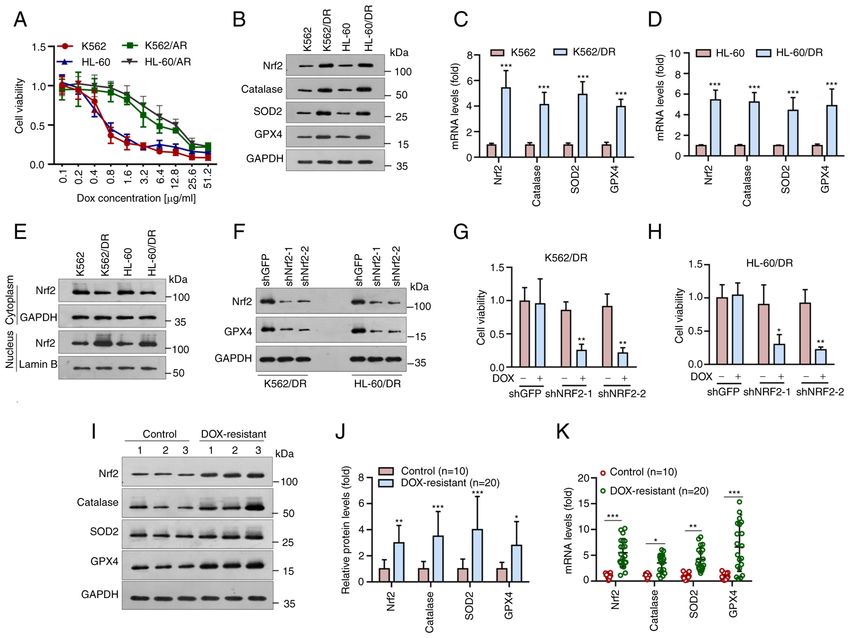
2 WU et al: TRIPTOLIDE OVERCOMES LEUKEMIA CELL RESISTANCE TO DOXORUBICIN
a number of human diseases including neurodegenerative MedChemExpress) for 48 h, 40 nM berberine (cat.
diseases, organ injury and cardiovascular diseases (20). In no. HY‑N0716; MedChemExpress) for 24 h, 40 nM metformin
addition, recent evidence indicates that induction of ferroptosis (cat. no. HY‑15763; MedChemExpress), 40 nM artemisinin
is a potential strategy to eliminate cancer cells (21). Currently, (cat. no. HY‑B0094; MedChemExpress) for 24 h, 40 nM
a series of anti‑tumor drugs associated with ferroptosis have curcumin (cat. no. HY‑N0005; MedChemExpress) for 24 h,
been developed, such as nuclear factor erythroid 2‑related 2 µM erastin (cat. no. HY‑B0627; MedChemExpress) for 48 h
factor 2 (Nrf2) inhibitors, GSH inhibitors and iron acti‑ and 40 nM triptolide (cat. no. HY‑32735; MedChemExpress)
vators (21). for 24 or 48 h at 37˚C.
Triptolide is a natural diterpenoid epoxide, extracted from
the Chinese traditional herb thunder god vine (Tripterygium Plasmid transfection and lentiviral infection. Recombinant
wilfordii) (22). Triptolide has been used to treat autoimmune lentiviruses were amplified by transfecting HEK 293T cells at
disorders, such as rheumatoid arthritis and systemic lupus 75% confluence with 6 µg pMD2.G and 6 µg psPAX2 packaging
erythematosus for a number of years (23). Accumulating plasmids (the 2nd generation lentiviral packaging plasmid;
evidence indicates that triptolide also exhibits anti‑tumor Addgene, Inc.) and 6 µg lentivirus‑based Nrf2 expression
activities in multiple types of human cancer, including plasmid (pLVX‑puro; Addgene, Inc.) or 6 µg lentiviral‑based
leukemia, lung cancer, breast cancer, colon cancer and prostate short hairpin (sh)RNAs (pLKO.1‑puro; Addgene, Inc.) specific
cancer (24‑28). Currently, several triptolide derivatives are in for green fluorescent protein (GFP, CAAATCACAGAATCG
clinical phase I/II trials for cancer therapy (29). However, the TCGTAT; negative control) or Nrf2 (#1, GCTCCTACTGTG
molecular mechanisms underlying the anti‑cancer activity of ATGTGAA AT; 2#, GGAGTGTCAGTATGTTGAA) using
triptolide remain to be elucidated. Lipofectamine® 2000 (cat. no. 11668; Invitrogen; Thermo
The present study showed that Nrf2 served a critical role Fisher Scientific, Inc.) at 37˚C. Viruses were collected at 72 h
in leukemia cell resistance to DOX. Triptolide can induce after transfection. K562 or HL‑60 cells at 40% confluence
leukemia cell ferroptosis via downregulation of Nrf2 to were infected with a recombinant lentivirus in the presence
overcome leukemia cell resistance to DOX. Thus, the present of 10 µg/ml polybrene, followed by 12 h incubation at 37˚C
study suggested that a combination of triptolide and DOX is a with 5% CO2. After 36 h of infection, cells were treated with
potential strategy for leukemia treatment. 2 µg/ml puromycin for 24 h. The viable cells were used to
further experiments. The infection efficiency was ~85%.
Materials and methods
Western blot analyses. Cells were collected, washed with cold
Collection of patient samples. A total of 30 patients with PBS and resuspended in EBC250 lysis buffer (250 mM NaCl,
leukemia (15 men and 15 women; age range, 15‑35 years) 50 mM Tris pH 8.0, 0.5% Nonidet P‑40, 50 mM NaF, 1 mM
admitted to Jin'an District Hospital (Fuzhou, China) between phenylmethylsulfonyl fluoride, 2 µg/ml aprotinin and 2 µg/ml
May 1, 2020, and December 1, 2020, were enrolled in the leupeptin) (31). The protein concentration was assessed using
current study. Leukemia patient blood samples (n=10; 4 men the BCA method. Equal amounts of total protein (20 µg) were
and 6 women) and DOX‑resistant Leukemia patient blood loaded, separated by SDS‑PAGE (4% stacking gel, 10% running
samples (n=20; 11 men and 14 women) were collected gel), transferred to PVDF membranes (MilliporeSigma). The
according to institutional regulation of the Hospital Clinic membrane was then blocked with 5% skimmed milk powder for
Ethical Committee and according to the declaration of 1 h at room temperature and hybridized to an appropriate primary
Helsinki. Informed written consent was given by all patients. antibody (4˚C, overnight) and HRP‑conjugated secondary anti‑
The blood samples were separated to obtain peripheral blood body (anti‑rabbit: 1:3,000; cat. no. AB0101; anti‑mouse: 1:3,000,
mononuclear cells (PBMCs) using a cell isolator (LTS1077‑1; cat. no. AB0102; Shanghai Abways Biotechnology Co., Ltd.;
Tianjin Haoyang Biological Manufacture Co., Ltd.) (30). room temperature, 1 h) for subsequent detection by enhanced
Cells were subjected to western blot analyses or reverse chemiluminescence using an ECL kit (cat. no. P0018S;
transcription‑quantitative (RT‑q) PCR analyses. Beyotime Institute of Biotechnology). The images was analyzed
using ImageJ software 1.8.0 (National Institutes of Health).
Cell culture and drug treatment. Human leukemia chronic Primary antibodies for GAPDH (cat. no. AF7021; 1:1,000), Nrf2
myelogenous leukemia K562 and acute promyelocytic (cat. no. AF0639; 1:1,000), catalase (cat. no. DF7545; 1:1,000),
leukemia HL‑60 cells were cultured in RPMI‑1640 medium superoxide dismutase (SOD)2 (cat. no. AF5144; 1:1,000), gluta‑
(Gibco; Thermo Fisher Scientific, Inc.) supplemented with thione peroxidase (GPX)4 (cat. no. DF6701; 1:1,000) and were
10% fetal bovine serum (FBS; Hyclone; Cytiva). HEK293T purchased from Affinity Biosciences. Antibody for Lamin B
(Human embryonic kidney) cells were cultured in DMEM (cat. no. ab32535; 1:1,000) was purchased from Abcam.
medium (Gibco; Thermo Fisher Scientific, Inc.) supplemented
with 10% FBS (Hyclone; Cytiva). All cells were purchased RT‑qPCR. Total RNA was extracted from 1x10⁶ cells using
from The Cell Bank of Type Culture Collection of The Chinese RNA easy Plus Mini kit (Qiagen) according to the manufac‑
Academy of Sciences and were grown in a medium supple‑ turer's protocol. RNA was reverse‑transcribed into cDNAs
mented with 100 µg/ml streptomycin (Gibco; Thermo Fisher using M‑MLV First Strand kit (Invitrogen) according to the
Scientific, Inc.) and 100 U/ml penicillin (Gibco; Thermo Fisher manufacturer's protocol. qPCR analyses of Nrf2 (forward:
Scientific, Inc.). Cells were maintained in a humidified 37˚C GGTT TCT TCG GCTACGTTT; reverse: ACTTCTT TTTCC
incubator under a 5% CO2 atmosphere. Cells at 80% conflu‑ ATTGAGGGTATA), catalase (forward: CTCCGGA ACAAC
ence were treated with 1 µg/ml DOX (cat. no. HY‑15142A; AGCC TTC T; reverse: ATAGAAT GCCCGCACC TGAG),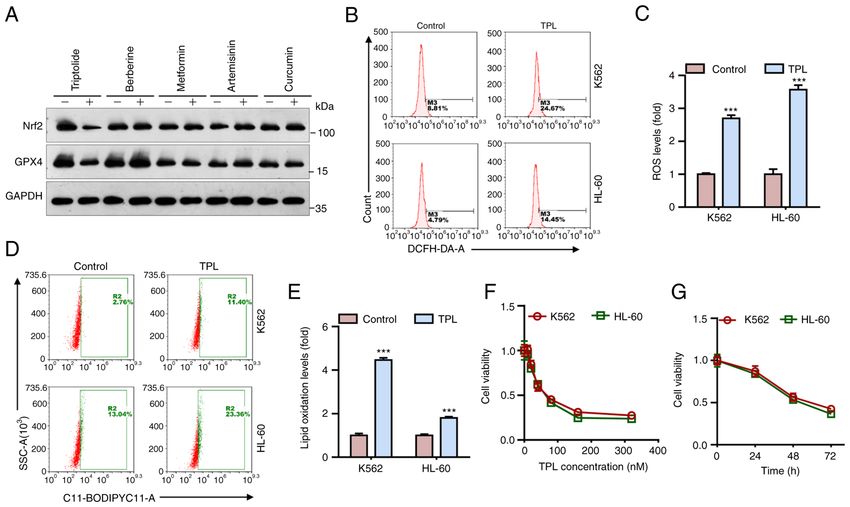
MOLECULAR MEDICINE REPORTS 27: 17, 2023                                                                   3

Figure 1. Nrf2 serves a critical role in leukemia cell resistance to DOX. K562 or HL‑60 cells were grown in a regular RPMI‑1640 medium in the presence or
absence of 0.8 µg/ml DOX for 24 h alternatively. On day 40, viable DOX‑resistant K562 or HL‑60 cells (K562‑DR or HL‑60‑DR) were collected for further
experiments. (A) K562 cells, K562/DR, HL‑60 cells, or HL‑60/DR were treated with an indicated concentration of DOX (DOX) for 48 h. Cell viability was
determined using CCK8 assays. K562, K562/DR, HL‑60, or HL‑60/DR cells were subjected to (B) western blot or (C and D) qPCR analyses. (E) K562,
K562/DR, HL‑60, or HL‑60/DR cells were subjected to fractionation of cytoplasm and nucleus, followed by western blot analyses. (F) K562/DR or HL‑60/DR
cells stably expressing shGFP, shNrf2‑1, or shNrf2‑2 were subjected to western blot analyses. (G and H) Cells were treated with 1 µg/ml DOX for 48 h. Cell
viability was determined using CCK8 assays. Peripheral blood mononuclear cells (PBMC) from leukemia patients (n=10) or DOX‑resistance leukemia patients
(n=20) were examined by (I and J) western blot analyses or (K) qPCR analyses. Data were derived from at least three independent experiments and were
presented as means ± standard deviation. ***P
4                           WU et al: TRIPTOLIDE OVERCOMES LEUKEMIA CELL RESISTANCE TO DOXORUBICIN

Figure 2. Triptolide inhibits Nrf2 expression and induces leukemia cells ferroptosis. (A) K562 cells were treated with an indicated chemical compound (40 nM)
for 24 h prior to western blot analyses. K562 or HL‑60 cells were treated with or without triptolide (40 nM) for 24 h. Cells were subjected to the measure‑
ment of ROS levels (B and C) or lipid oxidation (D and E), as described in Materials and methods. (F) K562 or HL‑60 cells were treated with an indicated
concentration of triptolide for 48 h or (G) were treated with 40 nM triptolide for the indicated time course. Cell viability was determined using CCK8 assays.
Data were derived from at least three independent experiments and were presented as means ± standard deviation. ***P2 groups (Figs. 3 and 4) to assess the                expression than normal K562 or HL‑60 cells (Fig. 1B). In addi‑
significance.                                                                    tion, qPCR analyses also showed that compared with normal
                                                                                 K562 or HL‑60 cells, K562/DR or HL‑60/DR cells had higher
Results                                                                          Nrf2, catalase SOD2 and GPX4 mRNA levels (Fig. 1C and D;
                                                                                 P
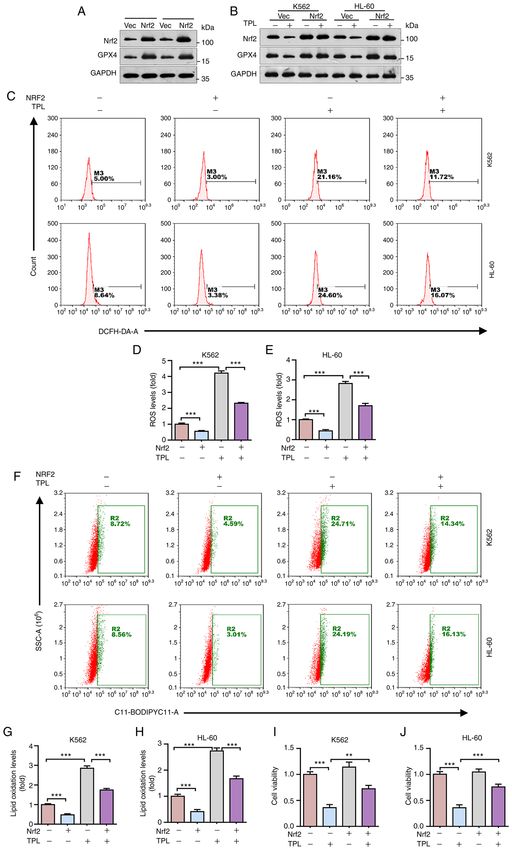
MOLECULAR MEDICINE REPORTS 27: 17, 2023 5 Figure 3. Ectopic expression of Nrf2 inhibits triptolide‑mediated ferroptosis. (A) K562 or HL‑60 cells stably expressing Nrf2 or vector control were subjected to western blot analyses. K562‑Vec, K562‑Nrf2, HL‑60‑Vec, or HL‑60‑Nrf2 cells were treated with or without 40 nM triptolide for 48 h. Cells were subjected to (B) western blot analyses, (C‑E) the measurement of ROS levels or (F‑H) lipid oxidation, or were subjected to (I and J) CCK8 analyses for cell viability. Data were derived from at least three independent experiments and were presented as means ± standard deviation. ***P
6                            WU et al: TRIPTOLIDE OVERCOMES LEUKEMIA CELL RESISTANCE TO DOXORUBICIN

Figure 4. Triptolide sensitizes leukemia cells to DOX. K562, K562/DR, HL‑60, or HL‑60/DR cells were treated with or without 1 µg/ml DOX in the presence
or absence of 10 nM triptolide for 48 h. Cells were subjected to (A and B) western blot analyses or (C and D) CCK8 analyses for cell viability. (E and F) K562,
K562/DR, HL‑60, or HL‑60/DR cells were treated with or without 1 µg/ml DOX in the presence or absence of 2 µM erastin for 48 h. Cells were subjected to
CCK8 analyses for cell viability. Data were derived from at least three independent experiments and were presented as means ± standard deviation. ***P
MOLECULAR MEDICINE REPORTS 27: 17, 2023                                                    7

to DOX (Fig. 4C and D). In addition, consistent with triptolide,       of Nrf2 expression. Indeed, the present study indicated that
erastin, a ferroptosis inducer, could also re‑sensitize K562/DR        treatment with triptolide sensitized DOX‑resistant leukemia
or HL‑60 cells to DOX (Fig. 4E and F). Together, these results         cells to DOX. Together, the present study suggested that the
suggested that triptolide promotes ferroptosis via suppressing         combined use of triptolide and DOX may be a promising
Nrf2 to sensitize leukemia cells to DOX.                               therapeutic strategy for leukemia therapy.

Discussion                                                             Acknowledgements

The present study showed that the expression of Nrf2,                  Not applicable.
the master regulator of cellular antioxidation response, is
significantly increased in the clinical DOX‑resistant leukemia         Funding
sample. Notably, the silencing of Nrf2 markedly sensitized
DOX‑resistant leukemia cells to DOX. In addition, the present          The present study was supported by the Jin'an District Hospital
study showed that triptolide, a natural diterpenoid epoxide used       Research Foundation (grant no. JA2021KJ005) to GL.
to treat autoimmune disorders, can inhibit Nrf2 expression to
induce leukemia cells ferroptosis and sensitize DOX‑resistant          Availability of data and materials
leukemia cells to DOX.
     DOX is widely used to treat leukemia. However, DOX resis‑         The datasets used and/or analyzed during the current study are
tance is a major clinical problem for leukemia therapy. Therefore,     available from the corresponding author on reasonable request.
it is important to investigate the molecular mechanism by which
leukemia cells resistance to DOX and explore new strategies to         Authors' contributions
overcome DOX resistance. It is reported that piperlongumine,
a ROS inducer, can reverse leukemia cell resistance to DOX             XW and GL conceived and designed the experiments. XW,
via the PI3K/Akt pathway (37). In addition, indomethacin, a            SC and KH performed the experiments. XW, SC and KH
cyclooxygenase inhibitor, can also overcome DOX resistance             analyzed the data. XW and GL wrote the manuscript. XW and
by decreasing glutathione (38). The present study indicated            GL confirm the authenticity of all the raw data. All authors
that Nrf2 served an important role in leukemia cell resistance         have read and approved the final manuscript.
to DOX and highlighted a potential strategy of combination
therapy using triptolide and DOX in leukemia treatment.                Ethics approval and consent to participate
     Nrf2 mRNA and protein levels were significantly upregu‑
lated in DOX‑resistant leukemia cells and clinical DOX‑resistant       The present study was approved by the Ethical Committee
leukemia samples. An important question is: How Nrf2 is                of Fuzhou Jin'an District Hospital (Fuzhou, China; approval
upregulated in DOX‑resistant leukemia? It is reported that             no. JA‑KJ2021‑011).
Nrf2 protein stability is tightly regulated by Kelch‑like
ECH‑associated protein 1 (Keap1) in the cytoplasm (34). Upon           Patient consent for publication
oxidative stress, Keap1 separates from Nrf2, which leads to the
stabilization of Nrf2 protein and results in Nrf2 translocation        Not applicable.
to the nucleus (34). In addition, activation of ERK signaling
also can promote Nrf2 translocation to the nucleus and stabilize       Competing interests
Nrf2 protein (35,39). It has been documented that oncogenic
K‑RasG12D can increase the transcription of Nrf2 via activating        The authors declare that they have no competing interests.
ERK signaling (40). Notably, DOX can induce ROS production
and activate ERK signaling (41,42). Therefore, it is plausible that    References
DOX promotes Nrf2 expression via induction of ROS or activa‑
tion of ERK, which needs to be further investigated.                    1. Du Y and Chen B: Detection approaches for multidrug resis‑
                                                                           tance genes of leukemia. Drug Des Devel Ther 11: 1255‑1261,
     The present study clearly demonstrated that triptolide                2017.
can significantly inhibit Nrf2 expression in leukemia cells.            2. Yi Y, Gao L, Wu M, Ao J, Zhang C, Wang X, Lin M, Bergholz J,
A recent report shows that triptolide can suppress Nrf2 target             Zhang Y and Xiao ZJ: Metformin sensitizes leukemia cells to
                                                                           vincristine via activation of AMP‑activated protein kinase.
genes expression via decreasing nuclear localization of Nrf2 in            J Cancer 8: 2636‑2642, 2017.
lung cancer cells (43). In addition, triptolide can also serve as an    3. Brunning RD: Classification of acute leukemias. Semin Diagn
inhibitor of Nrf2, which suppresses Nrf2 transcriptional activity          Pathol 20: 142‑153, 2003.
                                                                        4. Sung H, Ferlay J, Siegel RL, Laversanne M, Soerjomataram I,
in glioma cells (44). Together, these observations demonstrate             Jemal A and Bray F: Global cancer statistics 2020: GLOBOCAN
that triptolide can inhibit Nrf2 in multiple levels, including             estimates of incidence and mortality worldwide for 36 cancers
protein expression, nuclear localization and transcriptional               in 185 countries. CA Cancer J Clin 71: 209‑249, 2021.
                                                                        5. Burnett AK, Kell J and Rowntree C: Acute myeloid leukemia:
activity.                                                                  Therapeutic indications. Curr Opin Hematol 7: 333‑338, 2000.
     Notably, the present study indicated that triptolide‑mediated      6. Burnett A, Wetzler M and Löwenberg B: Therapeutic advances
downregulation of Nrf2 led to leukemia cells ferroptosis. It also          in acute myeloid leukemia. J Clin Oncol 29: 487‑494, 2011.
                                                                        7. Wang HW, Ma KL, Liu H and Zhou JY: Reversal of multidrug
showed that Nrf2 serves a critical role in the DOX resistance              resistance in leukemia cells using a transferrin‑modified nano‑
of leukemia cells. Therefore, it is plausible that triptolide can          micelle encapsulating both doxorubicin and psoralen. Aging
promote leukemia cell sensitivity to DOX via downregulation                (Albany NY) 12: 6018‑6029, 2020.
8 WU et al: TRIPTOLIDE OVERCOMES LEUKEMIA CELL RESISTANCE TO DOXORUBICIN
8. Lothstein L, Israel M and Sweatman TW: Anthracycline drug 29. Noel P, Von Hoff DD, Saluja AK, Velagapudi M, Borazanci E
targeting: Cytoplasmic versus nuclear‑a fork in the road. Drug and Han H: Triptolide and its derivatives as cancer therapies.
Resist Updat 4: 169‑177, 2001. Trends Pharmacol Sci 40: 327‑341, 2019.
9. Kruk I, Michalska T, Kładny J and Kubera‑Nowakowska L: 30. Ni WJ and Leng XM: Down‑regulated miR‑495 can target
Luminescence investigations of redox cycling of adriamycin. programmed cell death 10 in ankylosing spondylitis. Mol
Chemosphere 44: 83‑90, 2001. Med 26: 50, 2020.
10. Davies GF, Roesler WJ, Juurlink BH and Harkness TA: 31. Livak KJ and Schmittgen TD: Analysis of relative gene expres‑
Troglitazone overcomes doxorubicin‑resistance in resistant K562 sion data using real‑time quantitative PCR and the 2(‑Delta Delta
leukemia cells. Leuk Lymphoma 46: 1199‑1206, 2005. C(T)) method. Methods 25: 402‑408, 2001.
11. Sakamoto H, Mashima T, Kizaki A, Dan S, Hashimoto Y, 32. Niu W, Xu L, Li J, Zhai Y, Sun Z, Shi W, Jiang Y, Ma C, Lin H,
Naito M and Tsuruo T: Glyoxalase I is involved in resistance Guo Y and Liu Z: Polyphyllin II inhibits human bladder cancer
of human leukemia cells to antitumor agent‑induced apoptosis. migration and invasion by regulating EMT‑associated factors
Blood 95: 3214‑3218, 2000. and MMPs. Oncol Lett 20: 2928‑2936, 2020.
12. Sakamoto H, Mashima T, Sato S, Hashimoto Y, Yamori T 33. Tang X, Li X, Zhang D and Han W: Astragaloside‑IV alleviates
and Tsuruo T: Selective activation of apoptosis program by high glucose‑induced ferroptosis in retinal pigment epithelial
S‑p‑bromobenzylglutathione cyclopentyl diester in glyoxalase cells by disrupting the expression of miR‑138‑5p/Sirt1/Nrf2.
I‑overexpressing human lung cancer cells. Clin Cancer Res 7: Bioengineered 13: 8240‑8254, 2022.
2513‑2518, 2001. 34. Deshmukh P, Unni S, Krishnappa G and Padmanabhan B: The
13. Xia CQ and Smith PG: Drug efflux transporters and multidrug Keap1‑Nrf2 pathway: Promising therapeutic target to counteract
resistance in acute leukemia: Therapeutic impact and novel ROS‑mediated damage in cancers and neurodegenerative
approaches to mediation. Mol Pharmacol 82: 1008‑1021, 2012. diseases. Biophys Rev 9: 41‑56, 2017.
14. Altucci L, Clarke N, Nebbioso A, Scognamiglio A and 35. Zipper LM and Mulcahy RT: Erk activation is required for Nrf2
Gronemeyer H: Acute myeloid leukemia: Therapeutic impact of nuclear localization during pyrrolidine dithiocarbamate induc‑
epigenetic drugs. Int J Biochem Cell Biol 37: 1752‑1762, 2005. tion of glutamate cysteine ligase modulatory gene expression in
15. Waldmann T and Schneider R: Targeting histone modifica‑ HepG2 cells. Toxicol Sci 73: 124‑134, 2003.
tions‑epigenetics in cancer. Curr Opin Cell Biol 25: 184‑189, 2013. 36. Ma CS, Lv QM, Zhang KR, Tang YB, Zhang YF, Shen Y,
16. Liu T, Guo Q, Guo H, Hou S, Li J and Wang H: Quantitative Lei HM and Zhu L: NRF2‑GPX4/SOD2 axis imparts resistance
analysis of histone H3 and H4 post‑translational modifications to EGFR‑tyrosine kinase inhibitors in non‑small‑cell lung cancer
in doxorubicin‑resistant leukemia cells. Biomed Chromatogr 30: cells. Acta Pharmacol Sin 42: 613‑623, 2021.
638‑644, 2016. 37. Kang Q and Yan S: Piperlongumine reverses doxorubicin
17. Dixon SJ, Lemberg KM, Lamprecht MR, Skouta R, Zaitsev EM, resistance through the PI3K/Akt signaling pathway in
Gleason CE, Patel DN, Bauer AJ, Cantley AM, Yang WS, et al: K562/A02 human leukemia cells. Exp Ther Med 9: 1345‑1350,
Ferroptosis: An iron‑dependent form of nonapoptotic cell death. 2015.
Cell 149: 1060‑1072, 2012. 38. Asano T, Tsutsuda‑Asano A and Fukunaga Y: Indomethacin
18. Bebber CM, Müller F, Prieto Clemente L, Weber J and overcomes doxorubicin resistance by decreasing intracellular
von Karstedt S: Ferroptosis in cancer cell biology. Cancers content of glutathione and its conjugates with decreasing expres‑
(Basel) 12: 164, 2020. sion of gamma‑glutamylcysteine synthetase via promoter activity
19. Chen X, Kang R, Kroemer G and Tang D: Broadening horizons: in doxorubicin‑resistant leukemia cells. Cancer Chemother
The role of ferroptosis in cancer. Nat Rev Clin Oncol 18: 280‑296, Pharmacol 64: 715‑721, 2009.
2021. 39. Nguyen T, Sherratt PJ, Huang HC, Yang CS and Pickett CB:
20. Shi Z, Zhang L, Zheng J, Sun H and Shao C: Ferroptosis: Increased protein stability as a mechanism that enhances
Biochemistry and biology in cancers. Front Oncol 11: 579286, 2021. Nrf2‑mediated transcriptional activation of the antioxidant
21. Su Y, Zhao B, Zhou L, Zhang Z, Shen Y, Lv H, AlQudsy LHH response element. Degradation of Nrf2 by the 26 S proteasome.
and Shang P: Ferroptosis, a novel pharmacological mechanism of J Biol Chem 278: 4536‑4541, 2003.
anti‑cancer drugs. Cancer Lett 483: 127‑136, 2020. 40. DeNicola GM, Karreth FA, Humpton TJ, Gopinathan A,
22. Cai J, Yi M, Tan Y, Li X, Li G, Zeng Z, Xiong W and Xiang B: Wei C, Frese K, Mangal D, Yu KH, Yeo CJ, Calhoun ES, et al:
Natural product triptolide induces GSDME‑mediated pyroptosis Oncogene‑induced Nrf2 transcription promotes ROS detoxifica‑
in head and neck cancer through suppressing mitochondrial tion and tumorigenesis. Nature 475: 106‑109, 2011.
hexokinase‑ΙΙ. J Exp Clin Cancer Res 40: 190, 2021. 41. Asensio‑López MC, Soler F, Pascual‑Figal D, Fernández‑Belda F
23. Liu Q: Triptolide and its expanding multiple pharmacological and Lax A: Doxorubicin‑induced oxidative stress: The protective
functions. Int Immunopharmacol 11: 377‑383, 2011. effect of nicorandil on HL‑1 cardiomyocytes. PLoS One 12:
24. Pigneux A, Mahon FX, Uhalde M, Jeanneteau M, Lacombe F, e0172803, 2017.
Milpied N, Reiffers J and Belloc F: Triptolide cooperates with 42. Liu J, Mao W, Ding B and Liang CS: ERKs/p53 signal trans‑
chemotherapy to induce apoptosis in acute myeloid leukemia duction pathway is involved in doxorubicin‑induced apoptosis
cells. Exp Hematol 36: 1648‑1659, 2008. in H9c2 cells and cardiomyocytes. Am J Physiol Heart Circ
25. Shao H, Ma J, Guo T and Hu R: Triptolide induces apoptosis Physiol 295: H1956‑H1965, 2008.
of breast cancer cells via a mechanism associated with the 43. Nam LB, Choi WJ and Keum YS: Triptolide downregulates
Wnt/β‑catenin signaling pathway. Exp Ther Med 8: 505‑508, 2014. the expression of NRF2 target genes by increasing cytoplasmic
26. Isharwal S, Modi S, Arora N, Uhlrich C III, Giri B, Barlass U, localization of NRF2 in A549 cells. Front Pharmacol 12: 680167,
Soubra A, Chugh R, Dehm SM, Dudeja V, et al: Minnelide 2021.
inhibits androgen dependent, castration resistant prostate cancer 44. Yu D, Liu Y, Zhou Y, Ruiz‑Rodado V, Larion M, Xu G and
growth by decreasing expression of androgen receptor full length Yang C: Triptolide suppresses IDH1‑mutated malignancy
and splice variants. Prostate 77: 584‑596, 2017. via Nrf2‑driven glutathione metabolism. Proc Natl Acad Sci
27. Oliveira A, Beyer G, Chugh R, Skube SJ, Majumder K, USA 117: 9964‑9972, 2020.
Banerjee S, Sangwan V, Li L, Dawra R, Subramanian S, et al:
Triptolide abrogates growth of colon cancer and induces cell This work is licensed under a Creative Commons
cycle arrest by inhibiting transcriptional activation of E2F. Lab Attribution-NonCommercial-NoDerivatives 4.0
Invest 95: 648‑659, 2015. International (CC BY-NC-ND 4.0) License.
28. Philips BJ, Kumar A, Burki S, Ryan JP, Noda K and D'Cunha J:
Triptolide‑induced apoptosis in non‑small cell lung cancer
via a novel miR204‑5p/Caveolin‑1/Akt‑mediated pathway.
Oncotarget 11: 2793‑2806, 2020.You can also read


