Shifts in Underground Markets - Past, Present, and Future - Trend Micro
←
→
Page content transcription
If your browser does not render page correctly, please read the page content below
Shifts in Underground Markets
Past, Present, and Future

                            Mayra Rosario Fuentes
Contents
TREND MICRO LEGAL DISCLAIMER
The information provided herein is for general information
and educational purposes only. It is not intended and
should not be construed to constitute legal advice. The

                                                                5
information contained herein may not be applicable to all
situations and may not reflect the most current situation.
Nothing contained herein should be relied on or acted
upon without the benefit of legal advice based on the           What does the Underground
particular facts and circumstances presented and nothing
herein should be construed otherwise. Trend Micro
                                                                Market Offer?
reserves the right to modify the contents of this document

                                                                26
at any time without prior notice.

Translations of any material into other languages are
intended solely as a convenience. Translation accuracy
is not guaranteed nor implied. If any questions arise
                                                                The Present State of Underground
related to the accuracy of a translation, please refer to       Forums and Marketplaces
the original language official version of the document. Any
discrepancies or differences created in the translation are
not binding and have no legal effect for compliance or
enforcement purposes.                                           62
Although Trend Micro uses reasonable efforts to include         The Future of Seller Spaces
accurate and up-to-date information herein, Trend Micro
makes no warranties or representations of any kind as
to its accuracy, currency, or completeness. You agree
that access to and use of and reliance on this document         63
and the content thereof is at your own risk. Trend Micro
disclaims all warranties of any kind, express or implied.       Appendix of Prices
Neither Trend Micro nor any party involved in creating,
producing, or delivering this document shall be liable
for any consequence, loss, or damage, including direct,
indirect, special, consequential, loss of business profits,
or special damages, whatsoever arising out of access to,
use of, or inability to use, or in connection with the use of
this document, or any errors or omissions in the content
thereof. Use of this information constitutes acceptance for
use in an “as is” condition.

Published by
Trend Micro Research

Written by
Mayra Rosario Fuentes

With grateful acknowledgment to
Ahmed Kamal Aly

Stock image used under license from
Shutterstock.com

For Raimund Genes (1963-2017)
This research paper presents a wide-ranging view of dark web marketplaces and
underground cybercriminal forums. It delves into notable trends and market movements
within these selling environments. The first section looks back, focusing on relevant data
from Trend Micro’s Cybercriminal Underground Economy Series (2015 -2016).1 Then, we
revisit those same spaces in 2019. Finally, we share predictions on the goods and services
we expect to be on the rise in the next three years.

What changed?

In 2019, changes in the types of commodities being sold underground were in line with
changes in the public market; for example, there was a proliferation of IoT botnets and a
boom in fake news services. We also found an abundance of stolen account credentials,
credit cards, and gaming-related goods. Aimbots, wallhacks, and skins services became
popular offerings.

Methods of communication also changed. Sellers used to communicate through direct
messages and Telegram. However, in 2019, Discord became the popular method of
communication. Underground forums also began to move to private Discord channels for
transactions.

Many sellers also shifted their selling platforms and began using e-commerce shops run
by an underground forum administrator. Law enforcement agencies (LEA) shut down many
popular dark web marketplaces that once dominated the underground landscape. User
paranoia grew after new marketplaces closed within months after they were set up.

The current marketplace environment is still quite volatile. Trust has become such a critical
issue that a search engine has been created to verify sellers on top dark web marketplaces.
New dark web email businesses have also appeared to make sure communication is private
and anonymous.
According to an academic study on the cybercrime economy, cybercrime (which includes ransomware,
sales of counterfeit goods, data theft, and others) generates around US$1.5 trillion in annual revenue.2
This widespread business outpaces top global revenue earners like Apple (US$260 billion in 2019),3 Saudi
Aramco (US$356 billion in 2018),4 and Amazon (US$281 billion in 2019).5

English and Russian remain the dominant languages in the cybercrime market. And although many
markets have been taken down by law enforcement agencies, we found that some popular hacking and
cybercrime forums were still operating at the start of 2020, namely: Exploit[.]im (forum moves around
and also uses Exploit[.]in), Hackforums, Nulled, Raid Forums and Joker’s Stash. We also found that their
membership numbers continued to increase.

The cybercriminal underground is not as separated by language as much as it was five years ago. We
spotted overlapping posts and cross-market advertising in forums of different languages. Russian actors
regularly participated in English and Arabic forums, while Spanish actors participated in English forums.
It seems cybercriminals have adopted a more global view and found that advertising in multiple language
forums is a must if they wanted to earn more money. Still, the cybercriminal underground economy
remains diverse, and different markets carry unique goods and services for the country or region to which
they cater.

Prices for different commodities have fluctuated since our 2015 reports on the Russian and English
underground. In 2015, generic botnets started selling at around US$200 in Russian underground forums.
Generic botnet prices today cost around US$5 a day, and prices for builders start at US$100. United
States credit cards were sold at US$20 in 2015, but prices start at US$1 in 2020. High-balance credit
cards are selling for over US$500 in 2020. Meanwhile, monthly crypting services dropped to around
US$20.

The cost of some services and goods remained relatively stable. Ransomware has not changed—
ransomware-as-service prices still start at US$5. Crypterlocker, which has been around since 2013,
continues to demand a high price (around $100). Scanned document services, such as copies of driver’s
licenses, passports, and bill statements, still start at US$5 — similar to the prices in 2015. Similarly, the
price of remote access tools (RAT) did not change, starting at US$2 for malware-as-a-service (MaaS).
NJRat, which has been around since 2012, continues to be found in multiple language forums for free.
Online account credentials are still priced at around US$1. The price of spam services has not changed,
but they are now sending SMS rather than emails.

One notable trend we observed is accessible MaaS services for RATS, crypters, botnets, and ransomware.
The MaaS service model delivers a complete package: infrastructure, support, and updates. These
services are also affordable, with some MaaS offerings starting at around US$20 a month. There is
virtually no pricing barrier, and the technical skills that buyers need to have to setup attacks have been
greatly reduced.

4 | Shifts in Underground Markets: Past, Present, and Future
What does the Underground
    Market Offer?
    Regular monitoring of the cybercriminal underground shows us that the range of available goods and
    services has not radically changed. Over ten years, underground market staples—stolen accounts, fake
    documents, credit card dumps, remote access tools, ransomware, and crypters—remain consistently
    available. Currently, the top offerings are stolen accounts (banking, social media, streaming services and
    music services), gaming-related content, and credit cards. Point of sale (POS) and ATM malware sales
    account for 6% of all the offerings.

     Stolen Accounts or                                                                                4,954,825
            Credentials
               Gaming                                                                      2,873,559

            Credit Cards                                                  1,930,823

           Point of Sale                          649,836

    Spam-related Goods                         629,985

      Propaganda Tools                       548,517

             Databases                       536,669

                  Drugs                     506,890

   DDOS-related Goods                    409,232

                   RATs                  409,217

       IoT-related Goods                378,663

               Crypters                 361,540

     ATM-related Goods                  351,831

   Travel-related Goods            251,149

Sextortion-related Goods          213,164

                 Botnet          162,720

     Forged Documents          87,176

                               79,862
           Ransomware
                           0                                                                                       5M

                                                  Figure 1. Popular underground goods and services

    The above breakdown is based on the number of thread discussions in 600 forums across multiple
    languages. Every mention and thread reply related to the topic was included.

    5 | Shifts in Underground Markets: Past, Present, and Future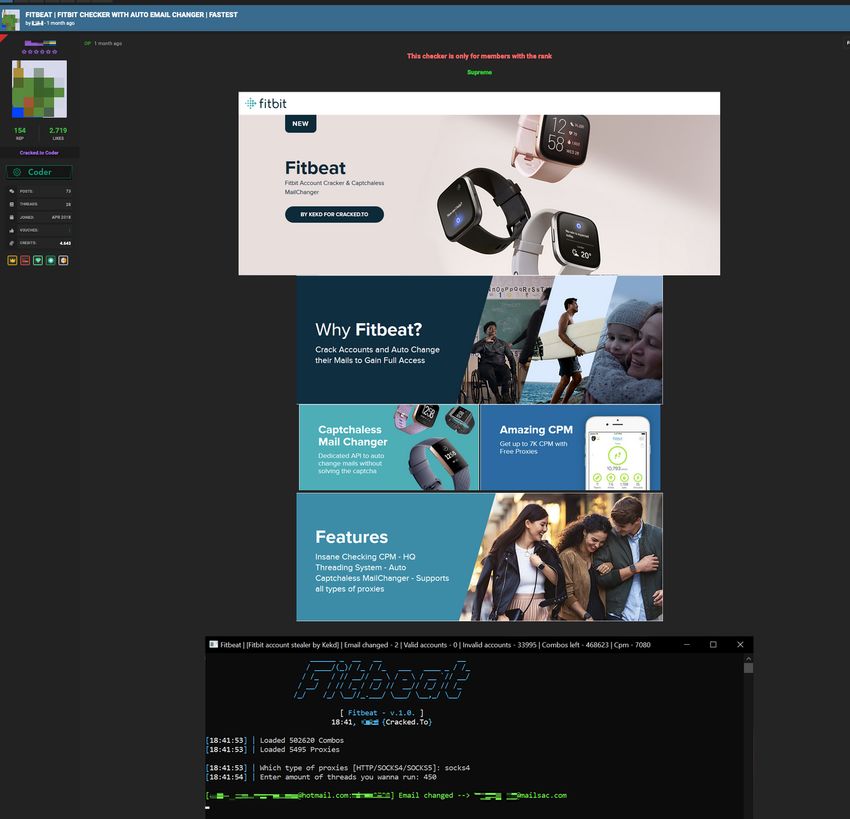
In this chart, “internet of things (IoT)” includes malicious goods or services affecting routers, doorbells,
Nest devices, webcams, supervisory control and data acquisition (SCADA), industrial control systems
(ICS), smart pumps, smart meters, Alexa devices, Google Home devices, smart lights, drones, and IoT-
based botnets. “Travel-related goods” includes hotel tickets, airline tickets, food gift cards, Uber- and
Lyft-related goods, and airline miles. “Gaming” includes stolen account sales, wallhacks, aimbots, gaming
hacks, discussion about games, and skin sales.

The sections below will go into greater detail about the goods and services offered in English, Russian,
Spanish, and Arabic underground sites, highlighting the basic costs and notable offerings within the
forums.

Distributed-Denial-of-Service and Botnets
(non-Mirai)
Many different botnet services are sold in the underground: cryptocurrency mining, click-fraud, IoT device
attacks, spamming, and spreading banking trojans. In our Russian underground report from 2015,6 botnet
prices averaged around US$200. Five years later, the most expensive non-Mirai botnets we found cost
US$1,500, and buyers can pay a daily, weekly, or monthly fee starting at US$5. Aside from the Mirai-
based botnets, Android botnets usually demand higher prices in the underground.

                   Figure 2. DDOS service from a Russian language forum starting at US$50 a day

6 | Shifts in Underground Markets: Past, Present, and Future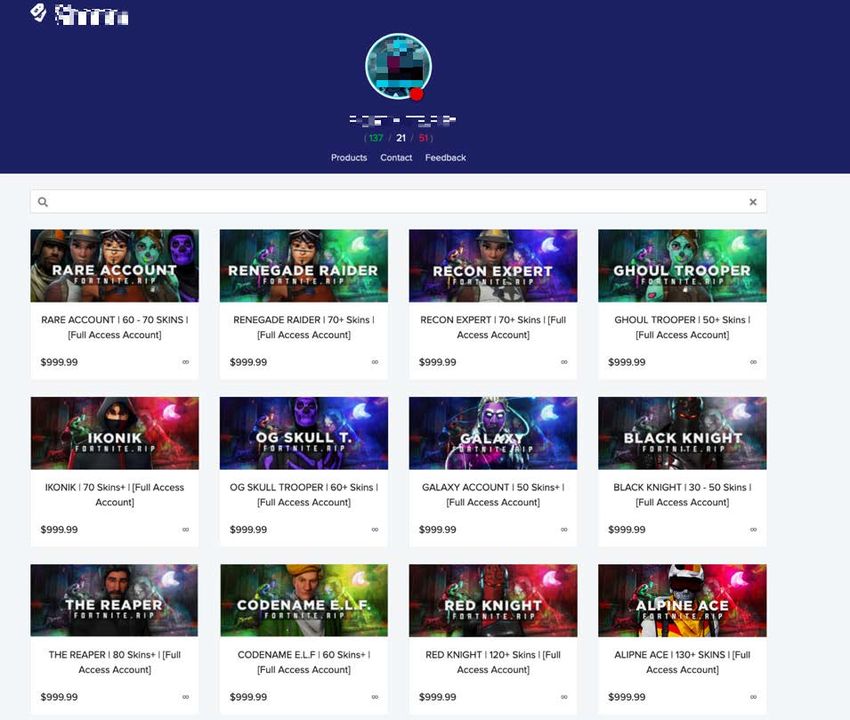
Figure 3. Lucifer botnet advertised in an Arabic and Russian language forum for US$100

        Figure 4. DDOS-as-a-service starting at US$50; the service includes 24/7 support, reseller services,
                                                  and target monitoring

7 | Shifts in Underground Markets: Past, Present, and Future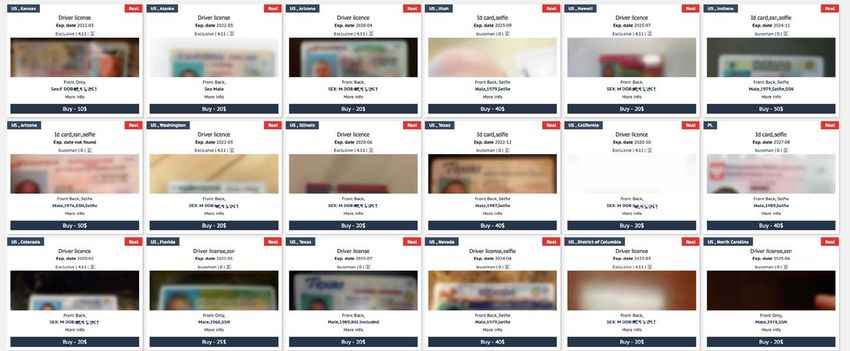
Botnet (non-Mirai) prices

                           Generic Android botnet                          Up to US$1,500

                           Generic DDOS botnet                             US$50 a day

                           Panel/builder for a form grabber botnet         US$100

                           Botnet rentals                                  US$5 and up

                           Generic botnet builds                           Free and up

Remote Access Tools
Remote access tools (RATs) allow cybercriminals to control a system remotely, and variations of these
tools are commonly sold in underground forums and sites. Buyers can purchase RATs with additional
features such as keylogging, downloading and executing commands, and capturing audio and video
using microphones or webcams. The cost of RATs remains unchanged since 2015, with prices still starting
at around US$5. Source code for older RATs like NJRat and RevengeRAT are often found for free — likely
because they have been around for many years — and security solutions are equipped to deal with them.
Spynote, which has been around since 2016, continues to be sold for US$2 and up. Generic RATs start
at around US$50 for a build.

                     Figure 5. Pentagon RAT offered for US$49.99 in an English language forum

8 | Shifts in Underground Markets: Past, Present, and Future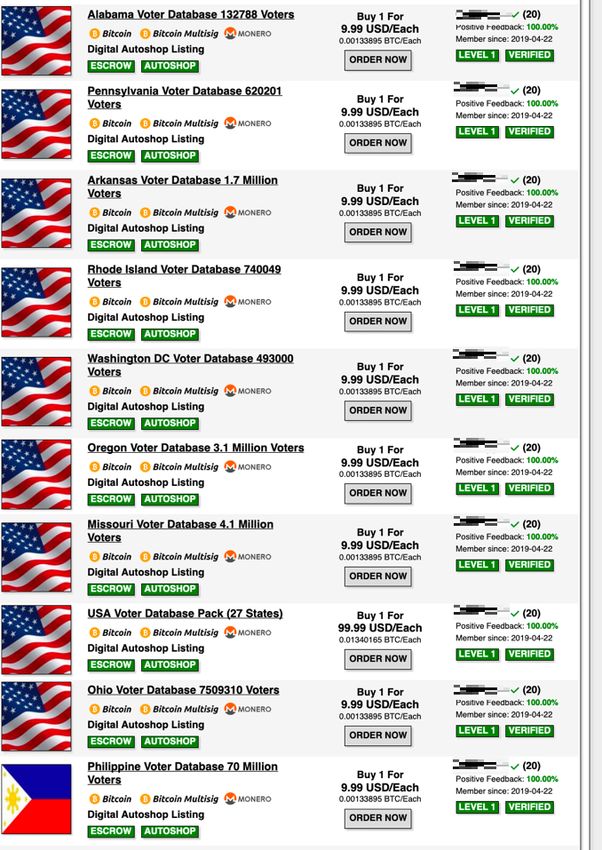
Figure 6. A dark web marketplace offering AndroRat install for US$1

                           Figure 7. Free RevengeRat offered in an Arabic language forum

                                                       RAT prices

                                RevengeRAT/NjRAT                    Free

                                Generic Android RATs                US$1 and up

                                Source code for a generic RAT       US$49 and up

                                Monthly RAT subscriptions           US$5 and US$25

9 | Shifts in Underground Markets: Past, Present, and Future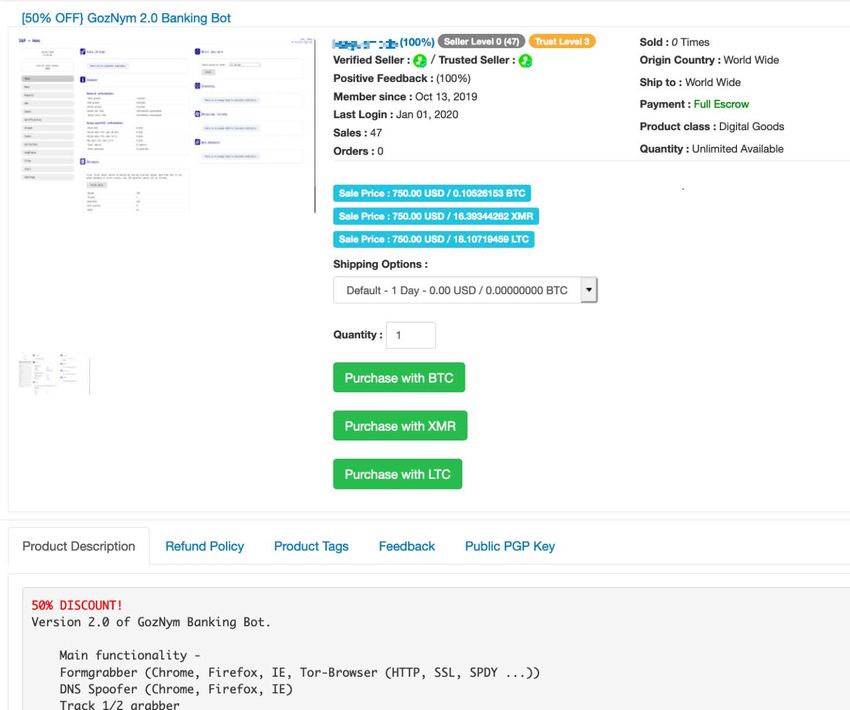
Ransomware
   In 2016, ransomware was estimated to have generated at least US$1 billion in global revenues.7 The
   affordability of ransomware during this period likely contributed to growth and earnings. In 2015, generic
   ransomware builds only cost around US$5. And now, in early 2020, the cost for generic builds still starts at
   around US$5. However, popular ransomware often mentioned in the news can cost more than US$1,000.

                                                                                   Jigsaw          19%
                                                                                   WannaCry        18%
                                                                                   Ryuk            16%
                                                                                   Cryptolocker    9%
                                                                                   Petya           9%
                                                                                   Dharma/Phobos   6%
                                                                                   Cerber          5%
                                                                                   GandCrab        4%
                                                                                   Locky           3%
                                                                                   Razy            2%
                                                                                   Cryptowall      2%
                                                                                   SamSam          2%
                                                                                   NotPetya        2%
                                                                                   CTB-Locker      1%
Dharma/Phobos                                                                      TeslaCrypt      1%
                                                                                   RobbinHood      1%

                                             Figure 8. Top ransomware offerings

   In 2019, ransomware prices varied depending on the family. Cryptolocker has been a pervasive threat since
   2013 and continues to be one of the top five ransomware actively attacking victims. Builds for this variant
   can be found for US$100 in Russian language forums. The Jigsaw ransomware family, which has been
   around since 2016, currently sells for US$3,000 in English language forums. The Ranion ransomware-as-
   a-service has been around since 2017, with a yearly subscription that can cost up to US$900. Wannacry
   is still available in the underground, but it’s usually distributed for free.

   10 | Shifts in Underground Markets: Past, Present, and Future
Figure 9. An offline version of Cryptolocker being sold for US$100
Figure 10. Ransomware subscription plan for Ghostly locker
11 | Shifts in Underground Markets: Past, Present, and FutureFigure 11. Zeppelin ransomware advertised in a Russian language forum
Figure 12. Jigsaw ransomware offered in an English language forum for US$3,000
12 | Shifts in Underground Markets: Past, Present, and FutureRansomware prices
Generic ransomware build US$5 and up
Ranion ransomware US$900 a year
Cryptolocker binary US$100-400
Cryptolocker source code US$3,000
Jigsaw ransomware source code US$3,000
Dharma binary US$100
Zeppelin builder US$2,000
Crypting Services
Our research paper on the North American Underground in 20158 found that monthly crypting services
were being sold for up to US$1,000 a month. The prices for these services have since become significantly
lower. The average cost for crypting is around US$100 a month, but some services can be found for as
low as US$20.
In the Russian underground, basic prices remain at around US$20, the same as in 2015. More sophisticated
crypters found in Russian language forums can sell for up to US$2,000.
Figure 13. Zeppelin crypto builder offered at US$2,000 in a Russian language forum
13 | Shifts in Underground Markets: Past, Present, and FutureFigure 14. A crypter source code offered for US$400 in a Russian language forum
Figure 15. Crypter service from US$25 a month in an English language forum
Crypter prices
Generic crypter builders US$99 and up
Crypter as a service US$20 and up
Banking Malware
We have been observing the banking malware landscape for years, independently and in collaboration
with Europol’s European Cybercrime Centre (EC3). Our most recent report, Crimeware for Sale: The
Commoditization of ATM Malware in the Cybercriminal Underground9 was released in June 2019.
Observing the landscape throughout 2019, we noted that the Cutlet Maker, Hello World, and WinPot
banking malware variants continue to be found on Russian-speaking underground markets, priced at
around US$2,000.
14 | Shifts in Underground Markets: Past, Present, and FutureThe Kronos banking trojan, which first appeared in 2014 in Russian language forums, evolved into Osiris
and offered for US$3,000 in 2019. Android banking trojans continue to be popular in the underground
for US$300 and up. And even though multiple GozNym cybercriminals were arrested in mid-2019,10 the
malware itself is still highly valued. GozNym continues to be sold in the underground at US$750.
Figure 16. Osiris, a Kronos banking variant, was offered for US$5,000 in the summer of 2019 and
then for US$3,000 in an English language forum later in the year
15 | Shifts in Underground Markets: Past, Present, and FutureFigure 17. Android banking malware bot offered for US$350 in a Russian language
Figure 18. ATM malware offered at US$2,500 in a dark web marketplace
16 | Shifts in Underground Markets: Past, Present, and FutureFigure 19. GozNym banking botnet sold in a dark web marketplace for US$750
Banking malware prices
Kronos based malware US$3,000 and up
Generic Android banking malware US$100 and up
ATM malware US$2,000 and up
GozNym US$750
Spamming Services
The price for spam distribution tools has not changed significantly since 2015. Typical spam services can
be found from US$20 and up. We have observed more spam offerings geared toward SMS messages
than email. The price of bulk mailer programs averages around US$50.
17 | Shifts in Underground Markets: Past, Present, and FutureFigure 20. Bulk SMS service starting at US$350 for 5,000 messages, advertised on an English language forum
Figure 21. Phone Flooder program sold for US$50
Figure 22. SMS Sender offered in an Arabic Forum for US$499
18 | Shifts in Underground Markets: Past, Present, and FutureSpamming Prices
Phone flooder US$50 and up
SMS bulk sender US$25 to US$500
SMS sender monthly US$2 and up
Online Account Credentials
Online account credentials for different services such as banking, food delivery, entertainment, and more,
continue to be sold for low prices. Users can find available credentials for popular media services such
as Netflix, Amazon, Hulu, and Spotify. The market is actually oversaturated—stolen accounts make up
32% of all underground offerings. Most accounts start from US$1, with only a few high tier accounts
demanding premium prices. Disney only launched their new streaming platform, Disney+, in November
2019, but available account credentials have already flooded the market.
Figure 23. Netflix account sold in a dark web marketplace
Figure 24. Streaming and food service account credentials for sale
19 | Shifts in Underground Markets: Past, Present, and FutureFigure 25. Disney+ account packages starting at US$1
Figure 26. Banking credentials sold in a carding shop
Online accounts credentials prices
Netflix US$2 and up
Online banking accounts US$5 and up
Spotify US$3 and up
Disney + US$1 and up
McDonalds US$1 and up
Domino’s US$1 and up
Grubhub US$3 and up
20 | Shifts in Underground Markets: Past, Present, and FutureCredit Card Credentials
The price of stolen credit card numbers, clones, or copies of credit card statements have dropped
significantly. This is likely because the underground market has been flooded with these services. Prices
for stolen credit card numbers in 2015 started from US$20 for U.S.-issued cards, but in 2020, most credit
cards cost only US$1. The majority of credit card services are sold in bulk. Premium credit cards that allow
large purchases (above US$5,000) and have been verified to work can cost as much as US$500 per card.
Figure 27. Japanese credit cards offered in an Arabic language forum
21 | Shifts in Underground Markets: Past, Present, and FutureFigure 28. Walmart credentials with credit card numbers for sale starting at US$1.50 per account
Figure 29. Worldwide credit cards from US$10 each
22 | Shifts in Underground Markets: Past, Present, and FutureFigure 30. High balance credit cards offered from US$200 and up
Credit card credential prices
Store credentials with credit cards US$1.50 and up
High balance credit cards US$100
Bulk credit cards US$1 each
Verified credit cards US$10 and up
Identity and Document Services
Undocumented immigrants and criminals flock to underground forums in search of identity and document
services. These include documents for supporting citizenship claims or other applications, obtaining lines
of credit to put up a business, opening untraceable bank accounts, proving residence status, committing
insurance fraud, purchasing illicit items, and others.
There have been no significant changes in pricing since 2015; scanned document services such as copies
of driver licenses, passports, and bill statements continue to sell for US$5 and up. Registered passport
services cost around US$2,500. Legitimate-looking counterfeit passports were popular in 2015, but the
increase in the number of global immigrants11 and the adoption of e-passports12 have since affected the
type of goods in demand. Underground services shifted to create “legal or registered” passports that can
pass a series of authentication tests.
23 | Shifts in Underground Markets: Past, Present, and FutureThe U.S. opioid crisis has also had an effect on underground goods and services. Opioid prescription has
gone down,13 thus making the drugs more difficult to obtain. This resulted in an increased demand for
forged prescriptions pads. Medical professionals have also started to move to e-prescriptions, which may
impact the market further.14 Forged prescription labels continue to be found in dark web marketplaces for
around US$60.
Figure 31. Service that offer registered pasports sold in a dark web marketplace
Figure 32. Russian-based forum selling identity kits
24 | Shifts in Underground Markets: Past, Present, and FutureFigure 33. Forged U.S. and U.K. Pharmacy prescription Rx labels offered in a dark web marketplace
Figure 34. A dark web marketplace selling U.S. driver’s license pictures from US$10 and up
Fake Documents prices
Fake credit card statement US$25
Registered passport service US$2,500
Scanned copies of real passports US$1 and up per copy
Forged pharmacy Rx labels US$60 and up
Identity kits US$20 and up
Driver’s license scans US$10 and up
25 | Shifts in Underground Markets: Past, Present, and FutureThe Present State of Underground Forums and Marketplaces Migration of Cybercrime E-commerce to Surface Web Platforms Over the past 18 months, we noticed that cybercriminals are increasingly using surface e-commerce shopping platforms. Sellers on underground forums post links to their online digital goods stores. One platform in particular has online stores selling malicious digital tools from Arabic, Russian, and English language-based forums. Spanish and Brazilian language-based forums have not adopted this trend. The specific online platform involved is an all-in-one payment processing and e-commerce solution registered to a company located in the Middle East. Anyone can sign up for an account to sell digital goods on the site. Also, the interface is easy to navigate and use fees are low. In December 2019, the site was ranked in the top 15,000 sites worldwide and 5,000 in the U.S., according to Alexa analytics. Alexa also showed that over half of traffic to the site came from cracked[.]to, a cybercriminal underground forum. The traffic data also showed a significant audience overlap with Nulled[.]to (another forum). This is unsurprising since the About information for Nulled[.]to refers users to the site, claiming that it is connected to one of the forum’s administrators. The e-commerce site’s terms and agreements state that it should only be used for lawful purposes. This implies that stores hosted on the site should be banned from selling illegal material. However, when we checked underground forum posts that linked to stores on the site offering illegal goods and services, they were up and running. The fact that the owner participates in underground forums may signal to others in the underground that this particular e-commerce platform can be trusted more than its competitors, and it is likely the reason why bans are uncommon. Forum users have mentioned being banned from e-commerce platforms for Digital Millennium Copyright Act issues brought on by major companies like Riot and Disney. Other notable e-commerce platforms are also used for cybercriminal transactions. While these platforms are legitimately registered businesses, cybercriminals also heavily use them. 26 | Shifts in Underground Markets: Past, Present, and Future
Figure 35. Overlap of visitors to the e-commerce site with two cybercriminal forums, Cracked[.]to and Nulled[.]to

The platform allows users to accept payments through PayPal or in digital currencies like Bitcoin,
Ethereum, Stripe, and Litecoin. It offers two options for digital sellers: pay as you go without a monthly
fee, or pay for an enterprise account. Items sold on the site are similar to goods and services offered
in popular cybercriminal underground forums. However, the e-commerce platform is significantly more
convenient for criminals because the seller can showcase various goods or services in one place instead
of having to create multiple threads for each individual offering in an underground forum.

Our research found that stores on the site offered stolen accounts, databases, streaming services, carding,
VPNs, crypters, banking malware, ransomware, and Mirai variants. The most expensive item we observed
was a banking malware sold for US$2,000. We also found rare limited edition Fortnite skin accounts being
sold for US$999.99.15 Similar to underground forums, Mirai botnet setups on this platform start at US$10.
Online streaming accounts such as Hulu, HBO, Netflix can also be bought from US$3 and up. Prices for
Android-based RATs start at around US$50.

                        Figure 36. Forum post advertising a store for video streaming services

27 | Shifts in Underground Markets: Past, Present, and Future
Figure 37. A store on the platform offering services for Qbot and Mirai variants
Figure 38. A store offering crypters and ransomware
28 | Shifts in Underground Markets: Past, Present, and FutureFigure 39. A store offering a banking trojan for US$2,000
Figure 40. A store offering the ransomware BlackRouter
29 | Shifts in Underground Markets: Past, Present, and FutureFigure 41. A store of rare Fortnite gaming accounts sold for US$999.99 each
Figure 42. A botnet store
30 | Shifts in Underground Markets: Past, Present, and FutureFigure 43. A store that specializes in RATs
Average Store Prices
Service Price
Mirai botnet build US$10
Ransomware US$400 and up
Custom bank trojan US$2000 and up
Crypters US$50
RATs US$30
Android-based RAT US$50
Rare Fortnite gaming accounts US$999
Botnet rentals US$10 and up
Hulu Premium US$3
Netflix US$5
NordVPN/TunnelBear US$3
Grammarly US$3
Spotify Family US$3
U.S. VISA/AMEX/Mastercard US$10
Japan VISA/AMEX/Mastercard US$15
31 | Shifts in Underground Markets: Past, Present, and FutureFake News and Cyber Propaganda Tools Gain Popularity In our 2017 paper, Fake News and Cyber Propaganda: The Use and Abuse of Social Media,16 we discussed services that threat actors used to spread fake news and steer public opinion. These manipulations served various motives, ranging from personal and financial to political. In 2019, these services became more prominent in cybercriminal underground forums. They offer a cost-effective alternative to traditional advertising and promotional efforts, often by manipulating social networks. Social media-related services, such as large scale social media promotions, the creation of fake comments, and crafting YouTube likes, are sold at very reasonable prices. For these manipulations, cybercriminals generally use autonomous bots, real people, or crowdsourcing programs. Prices start as low as US$1 for 10,000 likes. The Russian underground maintains the lowest-priced fake news services among the other forums, and prices have remained steady since 2017. In the era of fake news and cyber propaganda, outdated voter databases are often shared for free while more current databases are available for buyers. We noted an individual U.S. state database going for US$9.99, while a 2019 Turkish voter database costs US$400. One underground forum had over 300 database links containing 5 billion entries with information such as PII, credit card information, social security numbers, emails, and passwords. All this information came from data breaches that occurred between 2015 and 2019. Compromised voter databases combined with other data available in underground forums can help malicious actors create very effective cyber propaganda campaigns. For example, key data points can be used to create a target profile for a specific country’s electorate. Voter information is collected through various means, from outright hacking and stolen or lost devices, to unprotected or misconfigured servers, among others. The collected information is usually put up for sale in underground forums. Several breaches have affected voters across the globe over the past few years. In 2017, an exposed and unsecured Amazon S3 storage server owned by the data analytics firm Deep Root Analytics was discovered by the security firm UpGuard. It contained 1.1 terabytes of data (birthdates, home addresses, telephone numbers, and political views) of nearly 62% of the entire U.S. population.17 In March 2016, the Anonymous Philippines hacker collective and LulzSecPilipinas compromised the Philippines Commission on Elections (Comelec) database containing the information of 54.36 million registered voters for the 2016 elections. The compromised Philippine Comelec information and exposed Turkish 2016 voter databases are commonly found in cybercriminal underground forums.18 32 | Shifts in Underground Markets: Past, Present, and Future
Figure 44. An English language forum selling voter databases for Afghanistan and Tunisia at US$400 each

        Figure 45. A dark web marketplace offering voter databases for US$9.99 each (as of Nov 12, 2019)
                                           from a seller with 100% feedback

33 | Shifts in Underground Markets: Past, Present, and Future
Figure 46. Details of the voter database contents, which includes dates of birth, voter history, addresses,
and voter IDs
Services for increasing social media likes are common in the underground, across all languages. Some of
these services guarantee the quality of these manipulations and also specify the use of automated bots
or humans. Most of these types of tools are used to drive political agendas, but they can also be used for
social engineering.
We saw services that offer 1,000 Instagram likes for as low as 15 cents. We also saw offers for Facebook
and Instagram likes that cost US$3 for 1,000. Twitch likes start from 50 cents for 50 likes. Bot tools for
increasing likes or visitors cost US$25. In Arabic language-based forums, Russian actors occasionally
post offerings for VkTarget projects. VkTarget is a service for people who want to make money through
crowdsourcing. Users can advertise small tasks (like creating traffic for sites and liking social media
accounts) for others to complete.
Figure 47.Underground forum post advertising an exploit to increase Instagram likes
34 | Shifts in Underground Markets: Past, Present, and FutureFigure 48. Advertisement selling Instagram likes
Figure 49. A forum post offering to purchase social media followers
35 | Shifts in Underground Markets: Past, Present, and FutureFigure 50. Free bot tool for adding likes to YouTube, Instagram, Twitter, and Facebook offered in an
Arabic language forum
Figure 51. A Russian language forum post offering YouTube likes
Fake news and cyber propaganda prices
Service Price
United States voter databases Free to US$9.99
Non U.S.voter databases US$9.99-US$400
1,000 Facebook likes US$3 and up
1,000 Instagram likes US$0.15 and up
50 Twitch likes US$0.50 and up
Social media bot US$25 and up
36 | Shifts in Underground Markets: Past, Present, and FutureFake news and cyber propaganda prices
Service Price
1,000 YouTube likes US$26 and up
20,000 New visitor hits US$5 and up
Interest in Deepfake Scams Increase
Deepfake technology is an AI-generated technology that creates fake videos, images, or audio recordings
that look and sound genuine. Users in underground forums have expressed interest in finding ways to
monetize this technology. Deepfake services already exist in underground forums, but most posts involve
inquires and exchanges of information. Forum users often discuss how AI technology can be used for
“eWhoring,” also known as sextortion, and for bypassing photo verification requirements on dating sites.
In the past, sextortion was mostly about social engineering and reputation attacks.19 Criminals would send
emails threatening to expose a damaging or embarrassing recording to friends or family and demanding
money in exchange for keeping quiet.
People would be more likely to pay the extortion amount if cybercriminals started attaching or sending
links of realistic Deepfake images of their victim. A real image or video would be unnecessary. Virtually
blackmailing individuals is more efficient because cybercriminals wouldn’t need to socially engineer
someone into a compromising position. Deepfake videos can also be used to undermine the reputation
of a political candidate or senior executive.
A new emerging threat we expect to take off is the use of Deepfakes for extortion-based ransomware.
Here is a likely scenario: The attacker starts with an incriminating Deepfake video, created from videos
of the victim’s face and samples of their voice collected from social media accounts or publicly available
websites. To further pressure the victim, the attacker could start a countdown clock (24-48 hours is
common for ransomware) and include a link to a fake video. They would also likely include a Bitcoin
address to receive payment. If the victim does not pay before the deadline, all contacts in their address
books will receive the link. Although we have not seen this type of attack, it seems like a likely threat given
the direction of Deepfake queries in underground forums.
In March 2019, an executive of an unnamed U.K.-based energy company conversed with on the phone
with someone he thought was his boss (the CEO of the organization’s parent company). This person
asked him to urgently transfer €220,000 (US$243,000) to a Hungarian supplier. It turned out that the
executive was talking to a scammer that used Deepfake voice technology to impersonate his boss.20
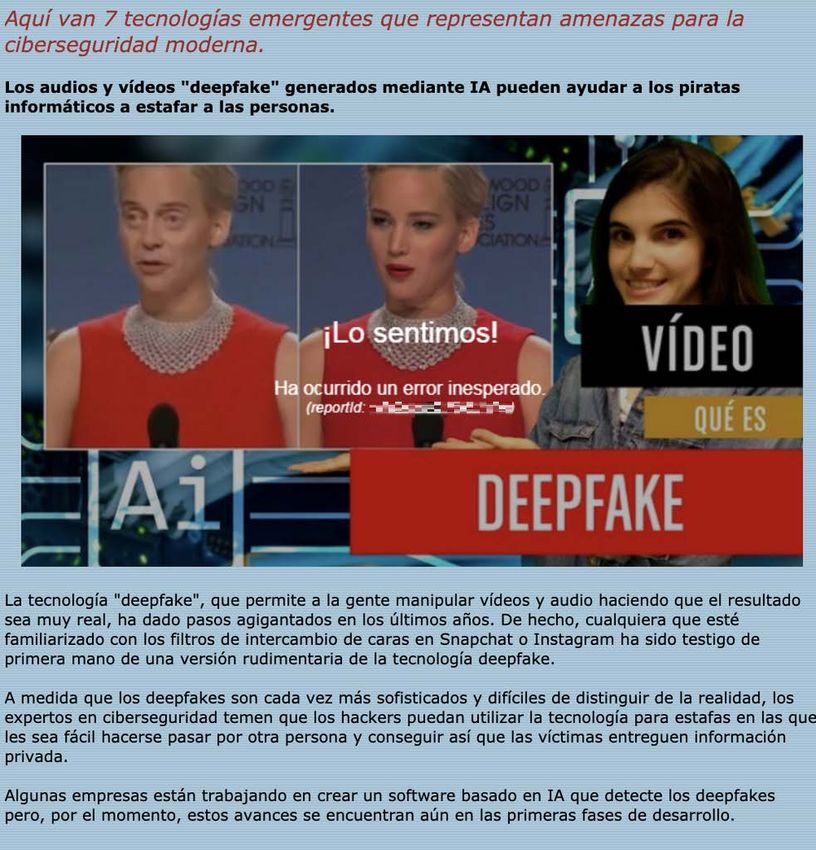
37 | Shifts in Underground Markets: Past, Present, and FutureFigure 52. A Spanish underground forum discussing seven emerging threats in 2019 that
includes a section on Deepfakes
Figure 53. Seller offering five users free Deepfake video services to start their business
38 | Shifts in Underground Markets: Past, Present, and FutureFigure 54. A Deepfake still image service Figure 55. Software to create nude Deepfake images by customizing the person’s measurements and features 39 | Shifts in Underground Markets: Past, Present, and Future
Figure 56. Deepfake services for nude pictures and videos offered through Dread

                                                    Deepfake prices

                                      Service                                Price

                       Deepfake videos                          From US$50

                       Deepfake still images                    From US$2.50 each

                       Software to create deepfakes             From US$25

Exploring Advanced AI and Using Current
Services for Gambling
As AI capabilities become more powerful, we expect cybercriminals to use AI technology to increase
targeting and improve malware infection rates in the future. However, the underground market discussions
currently revolve around information and inquiries about the AI technology itself rather than actual criminal
services. We found multiple listings of AI college books offered for sale and sometimes shared for free.

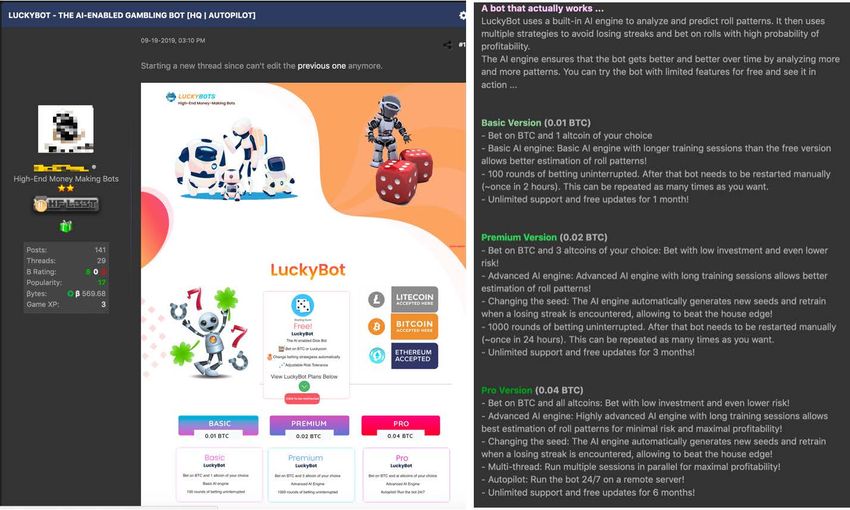
Most goods or services we encountered were related to the gambling sector. Advertisements for gambling
bot services mentioned the use of “advanced AI engines” and start at around US$80 for a basic one-
month subscription. One gambling bot, called Luckybot, uses AI to predict dice roll patterns. Another
advertisement we observed was the use of AI to solve complex Roblox CAPTCHA.

40 | Shifts in Underground Markets: Past, Present, and Future
Figure 57. AI-enabled bot for solving Roblox captchas
Figure 58. AI-enabled gambling tool for predicting dice roll patterns
41 | Shifts in Underground Markets: Past, Present, and FutureFigure 59. Free AI books shared in an English language forum
Figure 60. Sports betting service using AI
42 | Shifts in Underground Markets: Past, Present, and FutureAI prices
Service Price
Roblox From US$36
Gambling Bot From US$75
Sports Betting AI From US$30
Access-as-a-Service Becomes Popular
Access-as-a-service has evolved from remote desktop protocol (RDP) offerings to selling access to hacked
devices and corporate networks. While it has been around for years, there was an increase in offerings
in the last year. Access to different organizations and companies were obtained through ransomware,
credential-stealing malware, and botnets. We found multiple levels of access sold: executive-level
credentials, remote desktop access, administrative panels, cloud storage, email accounts, and even full
company network access.
Many of these offerings are found on the Russian forum Exploit[.]in. One actor was selling access to an
American insurance company for US$1,999, and a European software company for US$2,999. Prices for
Fortune 500 companies can reach up to US$10,000. Some offerings include access with read and write
privileges.
Figure 61. Network access to a U.K. company
43 | Shifts in Underground Markets: Past, Present, and FutureFigure 62. Actor selling access to cloud logs
Figure 63. Selling Fortune 500 network access
44 | Shifts in Underground Markets: Past, Present, and FutureFigure 64. Advertisement for admin access to a profitable online store Wearable Trackers Targeted In multiple English language-based forums, we found numerous advertisements for Fitbit user accounts and for the actual wearable device itself. Fitbits are priced in the U.S. between US$69.95 to US$279 and include a one-year warranty. Users can purchase an additional year of warranty for a fee. Fitbits sold in the EU can range from €79.97 to €299.9521 and include a two-year warranty.22 Underground prices for account information such as usernames and passwords are frequently available, but we have also found advertisements selling the devices’ captured data such as steps and GPS locations. Cybercriminals who purchase Fitbit user accounts are usually running a warranty scam, where they modify the email and address and then request a replacement device under the one or two-year warranty. These Fitbits are then sold in underground forums for a large discount. The Fitbit Iconic goes for US$249 in the U.S., but it can be purchased in the underground for US$40. We cannot confirm what cybercriminals are using the captured step data for, but we speculate it may be used to receive the special offers and discounts given after a certain amount of step activity. We even found an advertisement offering a class on how to social engineer customer service to obtain a replacement Fitbit for US$100 on an English language-based forum. 45 | Shifts in Underground Markets: Past, Present, and Future
Figure 65. A Fitbit user complaining their account information was changed

                                      Figure 66. Fitbit captured accounts for sale

46 | Shifts in Underground Markets: Past, Present, and Future
Figure 67. Fitbits sold in bulk
Figure 68. A class on social engineering, teaching others how to obtain Fitbits and sell them
47 | Shifts in Underground Markets: Past, Present, and FutureFigure 69. An advertisement for a Fitbit account validation service
Fitbit prices
Service Price
Fitbit social engineering course From US$100
Fitbit Ionic From US$40
Fitbit Versa From US$35
IoT Botnets are the New Norm
IoT botnets are now commonly found across underground forums. As IoT device use becomes
commonplace in households, enterprises, and the public sphere, Mirai and its variants continue to evolve
and adapt. They remain the dominant IoT threat, particularly because of landscape changes like the
adoption of 5G. Our recent IoT paper, The Internet of Things in the Criminal Underground,23 covered data
and active monetization schemes focused on consumer devices.
48 | Shifts in Underground Markets: Past, Present, and FutureMost IoT botnets found in underground forums are either based on the same leaked source code from the
Mirai malware, other similarly behaving malware, or a variant. We found multiple forum users asking for
links to the original Mirai source code or information on how to troubleshoot their own Mirai code. Older
Mirai variants are commonly shared for free. Newer undetected variants can go for up to US$5,000 when
first released.
Mirai botnet rentals start at just US$10. Low-cost rentals mean that this type of botnet is readily available
to all levels of cybercriminals, even those that may not have the skills to build and run their own botnets.
We also noticed that some of these Mirai botnet rentals come with bulletproof hosting as part of the
service. The predominant model for earning with these botnets is still distributed denial of service (DDOS),
however, we do expect criminals to innovate more over time.
Figure 70. Forum user asking for the Mirai source code
49 | Shifts in Underground Markets: Past, Present, and FutureFigure 71. Fbot botnet spots for sale using Satori, a Mirai variant24
Figure 72. Free Hilux Mirai variant download
50 | Shifts in Underground Markets: Past, Present, and FutureFigure 73. A Mirai botnet variant rental service starting at US$250 a month
Figure 74. A Mirai botnet stressor service
51 | Shifts in Underground Markets: Past, Present, and FutureFigure 75. IoT botnet setup service with Bulletproof servers
IOT Botnet prices
Service Price
Mirai botnet rentals US$10 and up
Original Mirai source code Free
Mirai based stressor US$20 and up
Fbot Mirai variant rental US$500 a week
Dark Web Marketplace Users Lose Trust
In March 2019, the dark web marketplace Dream Market announced that it was shutting down in April to
transfer its services to a partner company. Shortly after, Wall Street Market, Valhalla, and DeepDotweb
became part of the long list of marketplaces that law enforcement took down in May 2019. Wall Street
Market administrators were planning an exit scam using money held in escrow for current transactions
when law enforcement arrested them.25
52 | Shifts in Underground Markets: Past, Present, and FutureAfter a major marketplace shuts down, the dark web community usually migrates to other coexisting
markets. However, because of current volatility within the landscape, there is no dominant and stable
marketplace.
We observed multiple chats on Dread discussing slow sales after the May 2019 takedowns. Users
frequently posted about fears of exit scams and law enforcement involvement. Sites like Empire, which
became one of the top markets in the wake of the takedowns, are consistently battling login problems and
DDoS attacks. Forum users on Torum and Dread regularly express frustration at marketplaces because
of these issues (Torum is a crypto-driven, multi-functional, self-governing forum). The source of the DDoS
activity is rumored to be law enforcement. In November 2019, it was reported that the Berlusconi Market
was taken down by the Italian police, which discouraged dark web users even more.26
Figure 76.Torum post discussing why the Empire marketplace is frequently offline
Figure 77. Empire users are worried an exit scam is inevitable
53 | Shifts in Underground Markets: Past, Present, and FutureFigure 78.Torum post discussing distrust in the marketplace community
Figure 79. Dread discussion on exit scams
The marketplace community has been looking for ways to build trust. A new site called DarkNet Trust was
created to verify vendors’ reputations by searching through usernames and PGP fingerprints. DarkNet
Trust searches over 10,000 profiles from Dream, Empire, Nightmare, Berlusconi, Tochka, Cryptonia,
Apollon, Grey Market, and Agora.
54 | Shifts in Underground Markets: Past, Present, and FutureNew encrypted email services like Sonar and Elude have also suddenly appeared. Former favorite
Protonmail was accused of helping law enforcement in the past, prompting dark web users to look for
alternative email services.27
Administrators of new marketplaces are also adding new security features, for example: walletless
markets, multisignatures on BTC and Monero, and no-javascript policies. Grey Market and BitBazaar are
new walletless markets. Monopoly is a walletless market where payment is directly made between buyer
to vendor, and the market gets a monthly commission as opposed to transaction fees. The Cryptonia
marketplace uses multisignature wallets for transactions.
Figure 80. A DarkNet Trust search for a specific underground vendor
55 | Shifts in Underground Markets: Past, Present, and FutureFigure 81. Sonar, a new email encryption service
Figure 82. Elude, a secure email system
56 | Shifts in Underground Markets: Past, Present, and FutureUsers on dark web forums also suggested that blockchain technology could host decentralized
marketplaces. Sites that are hosted on blockchain are perceived to be less susceptible to law enforcement
takedowns and surveillance. One such decentralized blockchain DNS service is Blockchain-DNS, or BDNS,
which can access domains such as .bit, .bazar, .coin, .emc, as well as other domain name extensions
used by OpenNIC. (This echoes a prediction we made in 2013 that .bit domains are advantageous to
cybercriminals and could eventually be used for malicious activity.28) However, the idea of using these
types of markets hasn’t particularly caught on. Some dark web forum users say decentralized markets are
not easy to use, and it is harder to search for products.
So far, a few organizations have experimented with different structures and new features. We noted that
a popular carding site, Jokers Stash, moved to a blockchain DNS to avoid law enforcement surveillance.
OpenBazaar, an open-source, decentralized P2P market, has an Android and iOS app that allows users
to chat privately. It has experienced steady growth over the last three years but has yet to become a
top marketplace. Utopia is another new marketplace that was launched in late 2019. It is advertised
as a marketplace that can bypass online censorship, firewalls, and surveillance with its built-in use of
encrypted text, email, and messages.
Figure 83. OpenBazaar iOS app
57 | Shifts in Underground Markets: Past, Present, and FutureFigure 84. Utopia’s security features for gaining the user’s trust
Figure 85. Monopoly’s strict no javascript policy
Discord Used for Direct Messaging and Sales
Two years ago, we saw that many cybercriminals used the Telegram messaging app to facilitate their
malicious activity. In 2019, cybercriminals moved to Discord, a popular communication platform with
more than 250 million users as of May 2019. The platform is viewed as a safe place that allows users some
degree of anonymity.
Underground forums and dark web marketplaces have created their own Discord servers. While these
channels are not as busy as the forums themselves, we have observed the same goods and services
being offered for the same prices.
58 | Shifts in Underground Markets: Past, Present, and FutureFigure 86. Discord group for sellers
Figure 87. French underground forum Piratologie Discord channel
59 | Shifts in Underground Markets: Past, Present, and FutureFigure 88. Discord channel for OG forum African Cybercrime Increases In our 2017 research paper on the West African underground market29 we predicted that West African cybercriminals would shift to more elaborate crimes, complex operations, and business models. BEC and tax fraud are examples of such activities. Internet and mobile users have increased in Africa over the last two years, and more people are using online banking, online bill payments, and social media accounts. This, of course, is a ripe environment for cybercriminals. Several hacking groups have already emerged. In 2017, members of the Forkbombo group were arrested for exploiting banking infrastructure loopholes to steal millions from Kenyan banks. SilentCards, a group that supposedly spawned from Forkumbo, reportedly continues to siphon ATMs and target banks.30, 31 In West Africa, the group Silent Starling successfully infiltrated more than 500 organizations worldwide with BEC attacks in 2019. The group first started with romance scams.32 SIM Card Services Popular but Prices Remain Private SIM swapping and SIM-jacking will be a growing threat that takes advantage of remote employees and everyday users. Since mobile devices are used for enterprise authentication, hijacked SIM cards can give hackers access to a user’s enterprise email account as the hardware is “trusted.” This means that they will be able to access all manner of corporate data covertly.33 60 | Shifts in Underground Markets: Past, Present, and Future
Underground offerings vary from free tutorials to region-specific SIM card services. Many of the services
are offered in Russian language forums. In forums of other languages, they were not so visible. Prices for
these services are commonly unlisted and only available through private messages.

                          Figure 89. Russian language forum offering SIM swaps in Australia

                           Figure 90. Russian language forum asking for SIM swap hackers

61 | Shifts in Underground Markets: Past, Present, and Future
The Future of Seller Spaces Predicting how underground markets and forums will evolve is complicated, but we can reasonably anticipate certain issues with sufficient data and insight. We have identified several scenarios we expect to see in the cybercriminal underground economy within the next three years. Deepfake ransomware will be the evolution of sextortion. Deepfakes will move away from creating fake celebrity pornographic videos, and veer into manipulating company employees and teenagers. These tools will demand a higher price than non-sextortion ransomware builds. More cybercrime will hit Africa in the next three to five years. As more citizens use online platforms for banking and transactions, cybercriminals will develop tools and schemes to take advantage of them. Established hacking groups are already attacking financial institutions, and we predict more will follow. Cybercriminals will find a scalable business model that takes advantage of the IoT’s wide attack surface. Cybercriminals will move away from simple DDoS to data interception or using the machines as long-term infected proxies to make botnets harder to map out. Cybercriminals will hone in on IoT devices for espionage and extortion. We will see smart contracts in escrow offered in underground forums. Replacing escrow with a blockchain for trust could help guarantee that both parties get what they want out of the deal, without the need to establish trust through reputation. SIM card hijacking will increase and target high-level executives. Underground forums currently offer services involving the use of social engineering on telecommunication companies to swap SIMs. Many offerings exist for SIM card swaps, usually from a company insider. Gaining access to your account allows hackers to pass 2-step verification process in various platforms. 62 | Shifts in Underground Markets: Past, Present, and Future
Appendix of Prices
Past
                        Generic Android botnet                    Up to US$1,500

                        Generic DDOS botnet                       US$50 a day

                        Panel/builder for a form grabber botnet   US$100

                        Botnet rentals                            US$5 and up

                        Generic botnet builds                     Free and up

                        RevengeRAT/NjRAT                          Free

                        Generic Android RATS                      US$1 and up

                        Source code for a generic RAT             US$49 and up

                        Monthly RAT subscriptions                 US$5 and US$25

                        Generic ransomware build                  US$5 and up

                        Ranion ransomware                         US$900 a year

                        Cryptolocker ransomware                   US$100

                        Jigsaw ransomware                         US$3,000

                        Dharma ransomware                         US$100

                        Generic crypterbuilders                   US$99 and up

                        Crypteras a service                       US$20 and up

                        Kronos-based malware                      US$3,000 and up

                        Generic Android banking malware           US$100 and up

                        ATM Malware                               US$2,000 and up

                        GozNym malware                            US$750

                        Phone Flooder                             US$50 and up

                        SMS bulk sender                           US$25 to US$500

                        SMS sender monthly                        US$2 and up

                        Netflix accounts                          US$2 and up

                        Banking credentials                       US$5 and up

                        Spotify accounts                          US$3 and up

                        Disney+ accounts                          US$1 and up

                        McDonald’s accounts                       US$1 and up

                        Domino’s accounts                         US$1 and up

                        Grubhub accounts                          US$3 and up

                        Store credentials with credit cards       US$1.50 and up

                        High balance credit cards                 US$100

                        Bulk credit cards                         US$1 each

63 | Shifts in Underground Markets: Past, Present, and Future
Verified credit cards US$10 and up
Fake credit card statement US$25
Registered passport service US$2,500
Scan copies of real passports US$1 and up per copy
Forged Pharmacy Rx labels US$60 and up
Identity kits US$20 and up
Driver’s license scans US$10 and up
Present
United States Voter databases Free to US$9.99
Non-U.S. Voter databases US$9.99-US$400
1,000 Facebook likes US$3 and up
1,000 Instagram likes US$0.15 and up
50 Twitch likes US$0.50 and up
Social media bot US$25 and up
1,000 YouTube likes US$26 and up
20,000 new visitor hits US$5 and up
Deepfake videos From US$50
Deepfake still images From US$2.50 each
Software to create deepfakes From US$25
Roblox From US$36
Gambling bot From US$75
Sports Betting AI From US$30
Fitbit Social Engineering course From US$100
Fitbit Ionic From US$40
Fitbit Versa From US$35
Mirai botnet rentals US$10 and up
Original Mirai source code Free
Mirai based stresser US$20 and up
FbotMirai variant rental US$500 a week
64 | Shifts in Underground Markets: Past, Present, and FutureReferences 1 Trend Micro. (n.d.) Trend Micro Security News. “Cybercriminal Underground Economy Series.” Last accessed on 26 March 2020 at https://www.trendmicro.com/vinfo/us/security/news/cybercriminal-underground-economy-series. 2 Brian O’Connor. (9 May 2018). Experian. “Cybercrime: The $1.5 Trillion Problem.” Last accessed on 28 March 2020 at https:// www.experian.com/blogs/ask-experian/cybercrime-the-1-5-trillion-problem/. 3 Macrotrends. (n.d.) Macrotrends. “Apple Revemue 2006-2019 AAPL.” Last accessed on 26 March 2020 at https://www. macrotrends.net/stocks/charts/AAPL/apple/revenue. 4 Reuters. (12 July 2019). Reuters. “Saudi Aramco reports 2018 net income of $111.1 billion”. Last accessed on 26 March 2020 at https://www.reuters.com/article/us-saudi-oil-aramco-idUSKCN1TD12O. 5 Zak Stambor. (30 January 2020). Digital Commerce 360. “Amazon’s 2019 sales rise 20.5%.” Last accessed on 26 March 2020 at https://www.digitalcommerce360.com/article/amazon-sales/. 6 Max Goncharov. (28 July 2015). Trend Micro Security News. “The Russian Underground Today: Automated Infrastructure, Sophisticated Tools.” Last accessed on 26 March 2020 at https://www.trendmicro.com/vinfo/us/security/news/cybercrime- and-digital-threats/russian-underground-automized-infrastructure-services-sophisticated-tools. 7 Juliana De Groot. (24 October 2019). Digital Guardian. “A History of Ransomware Attacks: The Biggest and Worst Ransomware Attacks of All Time.” Last accessed on 26 March 2020 at https://digitalguardian.com/blog/history-ransomware-attacks- biggest-and-worst-ransomware-attacks-all-time. 8 Kyle Wilhoit and Stephen Hilt. (7 December 2015). Trend Micro Security News. “North American Underground: The Glass Tank.” Last accessed 26 March 2020 at https://www.trendmicro.com/vinfo/us/security/news/cybercrime-and-digital-threats/ north-american-underground-the-glass-tank. 9 Numaan Huq, Vladimir Kropotov, Mayra Rosario, David Sancho, and Fyodor Yarochkin. (28 June 2019). Trend Micro Security News. “Crimeware for Sale:The Commoditization of ATM Malware in the Cybercriminal Underground.” Last accessed on 26 March 2020 at https://www.trendmicro.com/vinfo/us/security/news/cybercrime-and-digital-threats/crimeware-for-sale-the- commoditization-of-atm-malware-in-the-cybercriminal-underground. 10 Jane Wakefield. (16 May 2019). BBC. “GozNym cyber-crime gang which stole millions busted.” Last accessed on 26 March 2020 at https://www.bbc.com/news/technology-48294788. 11 United Nations Department of Economic and Social Affairs. (17 Septemebr 2019). United Nations. “The number of international migrants reaches 272 million, continuing an upward trend in all world regions, says UN.” Last accessed on 26 March 2020 at https://www.un.org/development/desa/en/news/population/international-migrant-stock-2019.html. 12 Rachita Rake. (n.d.) Allied Market Research. “E-Passport Market Expected to Reach $57,061 Million, Globally, by 2023.” Last accessed on 26 March 2020 at https://www.alliedmarketresearch.com/press-release/E-passport-market.html. 13 Brian Owens. (13 May 2019). The National Center for Biotechnology Information. “Opioid prescriptions down but some patients fear doctors now too strict.” Last accessed on 26 March 2020 at https://www.ncbi.nlm.nih.gov/pmc/articles/PMC6520068/. 14 Paul Uhrig. (1 July 2019). Surescripts. “It’s Official: Hla fof All States Will Soon Require E- Perscribving to Combat the Opioid Epidemic.” Last accessed on 26 March 2020 at https://surescripts.com/news-center/intelligence-in-action/opioids/it-s-official- half-of-all-states-will-soon-require-e-prescribing-to-combat-the-opioid-epidemic/. 15 Best Fortnite. (April 2019). Best Gaming Settings. “25 Best Fortnite Skins—the Rarest Skins Ever!” Last accessed on 26 March 2020 at https://bestfortnitesettings.com/best-fortnite-skins/. 16 Lion Gu, Vladimir Kropotov, and Fyodor Yarochkin. (13 June 2017). Trend Micro Security News. “Fake News and Cyber Propaganda: The Use and Abuse of Social Media.” Last accessed on 26 March 2020 at https://www.trendmicro.com/vinfo/us/ security/news/cybercrime-and-digital-threats/fake-news-cyber-propaganda-the-abuse-of-social-media. 17 BBC Technology. (19 June 2017). BBC. “Personal details of nearly 200 million US citizens exposed.” Last accessed on 26 March 2020 on https://www.bbc.com/news/technology-40331215. 18 Alex Hern. (11 April 2016). The Guardian. “Philippine electoral records breached in ‘largest ever’ government hack.” Last accessed on 31 March 2020 at https://www.theguardian.com/technology/2016/apr/11/philippine-electoral-records-breached- government-hack. 19 Trend Micro. (24 April 2019). Trend Micro Security News. “New Sextortion Scheme Demands Payment in Bitcoin Cash.” Last accessed on 26 March 2020 at https://www.trendmicro.com/vinfo/ph/security/news/cybercrime-and-digital-threats/new- 65 | Shifts in Underground Markets: Past, Present, and Future
You can also read


